Writing an audio novel, part 2

I’m now three chapters into the writing of A Turn off the Path, and already I’ve noticed I’m handling the writing of it a little differently to when I write a novel intended to go to print. For a start, I am reading each chapter aloud as I finish writing it, and go back over it, reading it aloud again to check if the sentences sound right when they are spoken. Don’t get me wrong; I always ‘hear’ the sentences in my head when I write a novel, and very often I’ve read passages aloud to know exactly where the rhythm of a sentence is faltering. But this is much more marked, in this one.

I’m not finding that I’m writing shorter sentences, as I’d half-imagined when I started. There’s a mix, as usual, of short and long sentences, and I’ve always used punctuation, including the dreaded semi-colon(which I think is very much unfairly traduced!) to mark natural pauses in the soundtrack in my head that gets translated into words on the page, or rather screen, at this point. I’ve also always treated each chapter as a mini-story but with a twist, small or otherwise, that carries you onto the next. That’s the same, in this one. And I’ve often used different forms of narrative to carry a story forward and to express different points of view. That’s similar too, A Turn off the Path–the main narrative is from the point of view of Helen, who gets left behind in Saint Jean while her sister Alex keeps to the plan and the Camino, but you also hear Alex’s voice through the blog posts she writes to update family and friends about the walk. It’s working well, so far. I’m also very much a visual writer, and love to paint word-pictures of places and people and atmospheres; but in this novel, I’m also very focussed on sound, not just the way that the sentences sound, but also other things. For example, I’m putting in small references to Basque words in the novel: but I’m very much aware that it’s one thing to think of what you can put on the page, in an audio version you also have to consider how the narrator might pronounce such words, and give extra clues to it. There’s also other sound elements to flag, like saying that someone has a slight accent you can’t quite place, and the sound of bells over the town. It’s not that I wouldn’t include those things in a novel normally, because I do; it’s just that I’m more conscious of it in this one, and more conscious too of how it might sound coming through your earphones.

Listening to Saint Jean: photo by Sophie Masson

New blog series: Writing an audio novel, part 1

Introduction

Readers of this blog may remember that just before Christmas I got some very welcome news: I was awarded a grant by Create NSW, the NSW Government’s arts-funding body, to create the ms of A Turn off the Path, a short novel for adults which I’m writing specifically for the audio format. This will be then submitted by my agent to Audible for consideration for their Audible Originals list.

It’s an exciting new challenge for me and I’m so delighted to be able to work on over the next few months, thanks to the generous Create NSW grant. I’ve been doing a bit of background research for it since early this month but have now started work on it, with the draft of the first chapter begun yesterday. Over the next few months, as I write it, I’m also going to post regularly about the book and what it’s like to write a novel with an eye(or rather an ear!) to the audio format: thought that might be of interest to other writers contemplating the possibility of doing the same. This post introduces that series with a bit about what A Turn off the Path is about, and in future posts I’ll write about the background to it, why I wanted to write it, and how or indeed if the writing of an audio novel differs from one that you intend for print.

Something about the story:

Set in the picturesque French Basque town of Saint Jean Pied de Port (Donibane Garazi in Basque) in May 2017, A Turn off the Path is centred around twin Australian sisters, Helen and Alex Dorian, who are in the town at the start of their planned walk on the famous Camino, the pilgrim route to Santiago del Compostella. It’s something they’ve wanted to do since they were very young, but it’s only now, as they approach their fiftieth birthday, that they’ve finally found the time to do it. But when Helen injures her leg on the very day of their arrival, she has to stay behind in the town while Alex proceeds with their plans, and a very different experience to what they’d hoped for unfolds for the sisters. And when Helen unexpectedly meets an old schoolmate who is in Saint Jean to explore his Basque family roots, events really take ‘a turn off the path.’

This will be a lively, warm and thoughtful novel, exploring relationships, the past’s effect on the present, and the dream and reality of the modern pilgrim experience. It also has a strong sense ofplace and culture: as my mother’s family is part-Basque and has always lived in the Basque country, and two of my own sisters now live there too, I know the area well and I’ve been to Saint Jean Pied de Port itself many times from my childhood onwards.

A street in Saint Jean Pied de Port (Donibane Garazi): photo by Sophie Masson

Delighted to be featured on Story Scoop!

Delighted to be one of the featured creators in the latest episode of Story Scoop, the fabulous joint initiative between the Children’s Book Council of Australia, NSW branch and the Society of Children’s Book Writers and Illustrators ANZ. Story Scoop episodes are in three parts, and in this one, it features author Oliver Phommavanh talking about his humorous middle-grade books in Middle Grade Magic, illustrator Serena Geddes talking about her creative process in Illustrator Corner, and myself, in Picture Book Nook, talking about the inspiration and creation of my latest, very seasonal picture book, Santagram (illustrated by Shiloh Gordon and published by Little Hare). Lots of fun to make the clip and lots of fun to be part of this project–thank you so much, CBCA NSW and SCBWI ANZ, for the opportunity.

Watch the video here:

Video on the inspirations and sources behind French Fairy Tales

I’ve made a video presentation about the inspirations and sources behind my retellings in French Fairy Tales, which includes both personal and family connections, as well as information about the tales themselves. Hope you enjoy!

And by the way, on November 7, at 2-4 pm(Australian Eastern daylight saving time) I’m running an online creative workshop for the New England Writers’ Centre, via Zoom, on how to retell fairy tales and how to adapt them for your own fiction. You can check out details here.

My favourite French castle, an inspirational fairy tale setting

Cross-posted from my Fairytale Country site.

Today I want to write  a bit about the castle that for me, since childhood, has represented the absolute epitome of the classic French fairy tale setting: and that is the gorgeous small chateau of  Azay-le-Rideau, in the Loire Valley.  Of course the Loire Valley is full of beautiful castles; but this one is my favourite of them, indeed it’s my top favourite in all of France. Not only does this absolute jewel of a chateau represent for me that epitome of fairy tale magic and charm, but it’s also the setting for the Beast’s castle in my retelling of Beauty and the Beast, which is the longest story in French Fairy Tales.

Chateau d’Azay-le-Rideau, September 2018. Photo: Sophie Masson

Built in the early 16th century on the ruins of the previous fortress suited there, the castle of Azay-le-Rideau has a tumultuous history. It’s situated  within the charming little village of the same name, down a small road away from the main highway, amongst green fields and little woods. The castle is set on a small lake, in superb parkland, and I’ve visited it a number of times, the most recent being in September 2018. That time, in a glorious early autumn with blue skies and trees still green but starting to turn gold, we stayed in a lovely little hotel in the village, a few steps away from the castle. At the time we were there, an extraordinary, eerily beautiful art installation called ‘Les enchantements d’Azay‘, by artists Piet.sO  and Peter Keene, was displayed in the castle. Together, the castle, the parkland gardens, the art installation, and the amazing, magical feel of the whole place, were just the most perfect elements to help create the Beast’s world.

It isn’t just in Beauty and the Beast, however, that you will see the enchanting influence of Azay-le-Rideau; for in the next post, Lorena will be writing about how her own stay there and her visits to other places in the Loire Valley, became the source for her glorious illustrations in French Fairy Tales.

That moment when you write: The End

Yes: THAT moment! Every writer knows what it’s like, when you’ve worked on a novel for months and months, maybe even years, and finally you get to a point where you know, you just know, everything’s worked, all the strands have been woven in satisfactorily, your work for the moment is done–and you can write THE END! Even though I take out those words before I send the ms off to my agent, I do find it satisfying to type them in before that, as I actually finish, just for the sheer, if maybe childish 🙂 pleasure of seeing it there in black and white, even for a moment.

And with this particular novel I’ve just finished, it was even sweeter to do that. In a post last month for the international writing blog Writer Unboxed, I wrote about the difficulties I was having in finishing this novel, in these very ‘singular times’. Although it was literally almost finished–I had just written the second-last chapter- when the pandemic shutdown first started really making an impact on our lives here in Australia, back in mid-March, the novel just came to a stuttering halt and for weeks and weeks I just couldn’t bring myself to even go near it. It’s an adult novel this time, a multi-POV narrative with many enjoyable twists and turns, set in France, with both Australian and French characters, and I’d loved writing it up till that time. Coming to a stuttering halt wasn’t an experience I’d had before, not at this point in a novel, anyway–normally, when I get so close to the end, there’s no way I want to stop. But the turmoil of feelings brought on by the situation we were all so suddenly in had led to a lack of purpose, a sense of irrelevance, which made it pretty much impossible to finish the novel, try as I might. In the end I just laid it aside and worked on other things, as I describe in that Writer Unboxed post–creative activities to put online, journals, bits and bobs of all sorts. Slowly, doing that began to change things–and by the time I wrote the Writer Unboxed post in mid-May, I had gone back to the novel, advancing again, albeit much slower than I was used to. And then, just a few days later, suddenly, the ‘oomph’ for the novel came back, I knew exactly how to finish, and for days after I wrote and rewrote the last chapter and the epilogue and went back over the novel, carefully. Until yesterday, the first day of a new month, the first day of winter, when, filled with more than the usual exhilaration, I finally typed those magic words: THE END!


Celebrating new books in troublesome times 11: June Perkins

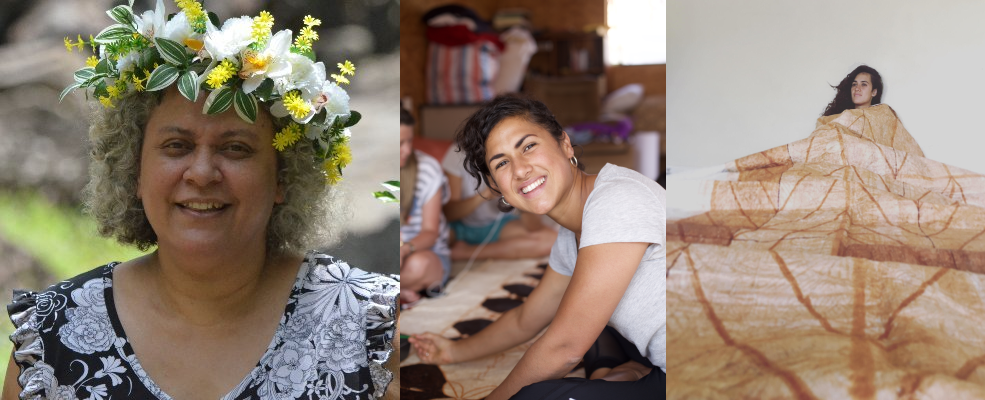
Today, I’m delighted to welcome June Perkins to my blog. June’s new book, Illuminations, which is a collaboration between her as a writer and illustrators Ruha and Minaira Fifita, comes out early next month, and in this guest post, June writes about the process of creating Hope, one of the poems from the collection, which is reproduced below.


Writing ‘Hope’ for Illuminations – June Perkins

My poem ‘Hope’ is a speculative imagining of how Emily Dickinson would respond to Cyclone Yasi if she had been a poet based in Far North Queensland and draws particular inspiration from her work 314, often titled ‘Hope’ although she didn’t give it a title.

I first heard of  Dickinson from a vinyl record, Parsley, Sage Rosemary and Thyme by Simon and Garfunkel, the song was’ The Dangling Conversation’ And yet it was years before I took the time to learn more about her poetry and life.

After Cyclone Yasi in 2011, I began to compose poetry in response to both its damage, and the way people and nature fared in its aftermath. Living in Far North Queensland in a rural community, I became acutely aware of birds – king fishers, cassowaries, curlews and more. We had a pet bird, Peep, who amused us and helped us keep calm during the cyclone.  He disappeared briefly to spend time with other birds before returning with all of them in tow as if we could put them all up in the house.  He died a few days after of shock.  I took solace in Dickinson’s poems.  I was particularly drawn to 314 because it speaks of hope as if it has feathers like a bird.

The poem used to live on my blog, but in recent times, joined part of the working collection for Illuminations and it made the final cut for the book. The poem fits well with the overall themes of the collection and picks up on the symbolism of birds. Over the last few years, since our move to Brisbane, the  poem has come to mean much more to me than a response to a cyclone’s aftermath, and an expression of respect to Emily Dickinson; it represents that wider theme of how poets can through their creativity bring hope to any situation including a pandemic.


More about Illuminations:

Author: June Perkins

Illustrators: Ruha and Minaira Fifita

ISBN: 9780980731194 (paperback)

ISBN: 9780648720508 (hard cover, dustcover)

Publication Date: 20/6/2020

80 pages

This collection captures the wonder of the act of creation, the burst of excitement associated with the birth of the new, and the challenges and sacrifice involved in bringing inspiration to fruition. Reflecting on the impact of the challenge of the new, in both the material and spiritual worlds, several of the poems refer to the advent of the Báb, the 19th century Prophetic figure, whose contemporary message inspired and challenged a sacrificial response on the part of those who embraced His Cause.

You can pre-order Illuminations here. The book is available for pre-order in Australia, New Zealand, the US, UK and Canada.

About the author:

Dr June Perkins is a multi-arts creative born to a Papua New Guinean Indigenous mother and Australian father. She was raised in Tasmania as a Bahá’i and combines poetry, blogging, photography, story and more to explore themes interesting her – peace, ecology, spirituality, cultural diversity, resilience and empowerment. Earlier poetry book is, Magic Fish Dreaming (2016). June has had poems published in Nineteen Months, Tokens, Voices in the North, Under One Sky, Etchings, Cracks in the Canopy, World Order, Spooktacular Stories, Creative Kids Tales, Story Collection 2, Writing the Pacific, ABC Open, The Queensland Art Galley, Ridvan is Everywhere,  and Talking Ink from Ochre.

About Illustrators Fifita Sisters / IVI Designs

 Ruha Fifita was born in Vava’u, Tonga and spent most of her life immersed in the culture and vibrancy of life in the Pacific. Her love for visual and performative forms of expression have been nurtured through the support and encouragement of her extended family and study of the writings of the Bahá’i Faith.

Minaira Fifita is a visual and performing artist whose work aspires to reflect her love of creation and faith in the unity of humanity. Her style of creativity blends together her Polynesian and Celtic roots and experiences of vibrancy, balance and harmony within the Pacific and her spiritual beliefs as a Bahá’i.

L to R: June Perkins, Ruha Fifita, Minaira Fifita


A writing life in singular times–my post on Writer Unboxed

Today, on Writer Unboxed, the international writing blog to which I am a regular contributor, I write about the impact that these very strange times we are all going through has has on my writing life, and how I’ve tried to deal with it in various ways.

I wrote it in the hope it may help other writers struggling with the same things, and on Writer Unboxed, I’ve asked to hear about other people’s experiences–and I hope readers of this blog might visit Writer Unboxed and consider sharing theirs.

Celebrating new books in troublesome times 9: Kate Forsyth and Lorena Carrington

Today is the publication day of Kate Forsyth and Lorena Carrington’s latest beautiful collection of fairy tales, Snow White, Rose Red and Other Tales of Kind Young Women, published by Serenity Press. It joins Kate and Lorena’s other fairy tale collections with Serenity Press, Vasilisa the Wise and Other Tales of Brave Young Women, and The Buried Moon and Other Tales of Bright Young Women. To celebrate, I’ve invited Kate and Lorena to write about their joint creation of the book. (There’s also an online launch of the book on Facebook today, see here for details).


Kate:

Snow White, Rose Red & Other Tales of Kind Young Women’ is the latest artistic collaboration between me and the photographic artist Lorena Carrington. This is a project born out of our shared love of fairy tales, and our fascination with their history and meaning. It’s the third book in a series we are calling ‘Long Lost Fairy Tales’, because it is our intention to discover and bring back to life beautiful old stories that have been unjustly forgotten.
It’s our plan to produce a new book in the collection every year. To begin with, we choose a theme. Book 1 was tales of brave young women, Book 2 was tales of bright young women, and we are currently working on Book 4 – the theme of which is tales of gentle young men.
Once we have our theme in place, Lorena and I start to fling ideas around. We read through our vast fairy tale collections looking for inspiration, and begin to play with possibilities. We send each other stories, and gradually compile a list of the ones we like. Each collection has seven tales in it, and we want them all to be different. Some will be light-hearted and humorous, others dark and terrifying. Some will have ancient oral roots, others are invented literary tales. Some will seem familiar, with echoes of other better known tales; others will be entirely fresh.  We also want a good spread of geographical sources for the tales – ‘Snow White, Rose Red’ has a Grimm tale from Germany, an old Slovakian folktale, one from Bavaria, two from Scotland, an English literary tale written in Victorian times, and an old oral tale from Ireland. Often I will choose a tale because I know it will inspire Lorena to create a truly extraordinary piece of art to accompany it, and she will choose a tale because she knows it will sing to my heart.

Sometimes we agree on a tale, and but then I find I cannot retell it – the story doesn’t spark with me.

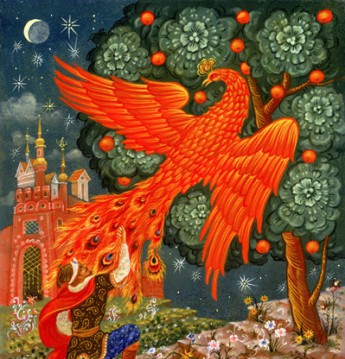
Illustration by Lorena Carrington

For example, we thought about working with Hans Christian Andersen’s ‘The Snow Queen’ – but when I began to work on it, I found the character of Gerda too passive. So I emailed Lorena, and we talked about it, and came up with other ideas, and ended up replacing that tale with another.

When I’m working with a fairy tale, I like to know where it came from, and who told it, and how it has changed over time. For many stories, there are dozens of variants, and I like to read them all. For example, ‘Strawberries in the Snow’ is one of my favourite stories in ‘Snow White, Rose Red’. It was inspired by a Slovenian fairy tale entitled ‘The Twelve Months’ but has many other variants – more than 1,000 of them!
I usually write the stories over the Christmas holidays, because all my children are home from school and university, and I have usually just delivered a novel, and want something different to write before I begin the next novel. Then I send the tales to Lorena, and she begins to think about creating her art – which are not simply illustrations of my stories, but her own expressive response to the inner meanings of the tales. We are always in constant communication, but we don’t criticise each other work much, or make suggestions, or ask for changes very often. We trust each other implicitly, and like to give each other complete creative freedom. This means it’s a free, joyous process in which we each inspire and respect each other. Together, our art creates something greater than it would be on its own. It’s a true collaboration.
I have just finished writing the tales for ‘The Gardener’s Son & the Golden Bird, & Other Tales of Gentle Young Men’ and cannot wait to see what glorious art Lorena creates for it!
Lorena:
My illustrations always start with what the landscape gives me. I head out with the camera, and often end up on my belly photographing the tiniest of landscapes: blades of grass against the sky, or fungus sprouting from the cracks of a rock. I also collect interesting things – sticks, leaves, tiny bones – and bring them home to photograph on a light box, which creates a sharp silhouette of each object. I montage these together in Photoshop to make the beasts and creatures that inhabit the tales. The illustrations are built up from many layers of photographs: backgrounds, human figures, creatures, looming silhouetted trees… sometimes more than a hundred separate photographs.
Of course the process begins long before this, in the choosing of stories, the to and fro about themes and ideas, in the delightful plotting and scheming that happens around the creation of a new book. As Kate has mentioned, we have a unique author/illustrator relationship, and for this I’m extraordinarily lucky and grateful. We weave our work together, sending stories and images back and forth throughout the process. It’s like a dance, and is a rare and beautiful way of working. Often the writer gives their work to the publisher, who passes it onto the illustrator and never the twain shall meet. One of the wonderful things about working with a small publisher like Serenity Press is the way we all work together to make the books that we do.
One of the most excited and inspirational parts of the process is when Kate sends me a new story. I make a cup of tea, build myself a nest on the couch, and immerse myself in her words. I try not to think too much about the illustrations on the first reading, though images do often spark in my brain. I try to get a feel of the shape and flow of the story, and a sense of the overall atmosphere. On second reading, I pull out my sketchbook to make notes and jot down any rough ideas. Sometime an illustration will flash fully formed into existence, and all I need to do is translate it from brain to screen. The Goblin, for example, just scrambled straight out of my head and plopped himself onto the riverbank.
One of the more interesting challenges was the illustration of the Glass Mountain (see picture below). At first I tried photographing glass (logically, you would think), but it was too transparent for a giant climbable mountain of glass. So I froze a block of ice to photograph the next day. It had the captured air bubbles that I wanted, but, as it was a 40 degree day, it kept melting before I could photograph any sharp edges! It was only that night, while serving jelly for dessert, that I noticed the way it sheared off into sharp edged pieces. I made up a batch of extra sturdy clear jelly, and let it set over night. Finally, after three days of experimentation, I had the perfect (if wobbly!) analogy for glass.
So, sometimes it’s easy and an illustration almost makes itself, and other times it’s like chipping a statue out of a cracked and temperamental block of marble. But never do I think I’d rather be doing anything else.
One of my very favourite things about illustrating is feeling something incredible grow out of our combined work. Kate has the most extraordinary gift in keeping the true essence of tales she retells, and also filling them with such new and shimmering delights. If I’m extraordinarily lucky, we be able to keep working together for many, many years to come.

Illustration by Lorena Carrington