The Girl on the Page–an interview with John Purcell

Today, I’m delighted to bring you a frank and fascinating interview with John Purcell, whose gripping new novel, The Girl on the Page, I read recently with much pleasure.

First of all John, congratulations on the publication of The Girl on the Page–and on writing such a gripping and immersive read! I thoroughly enjoyed it, as I know many other readers have done. Can you tell us a bit about how the idea first came to you?

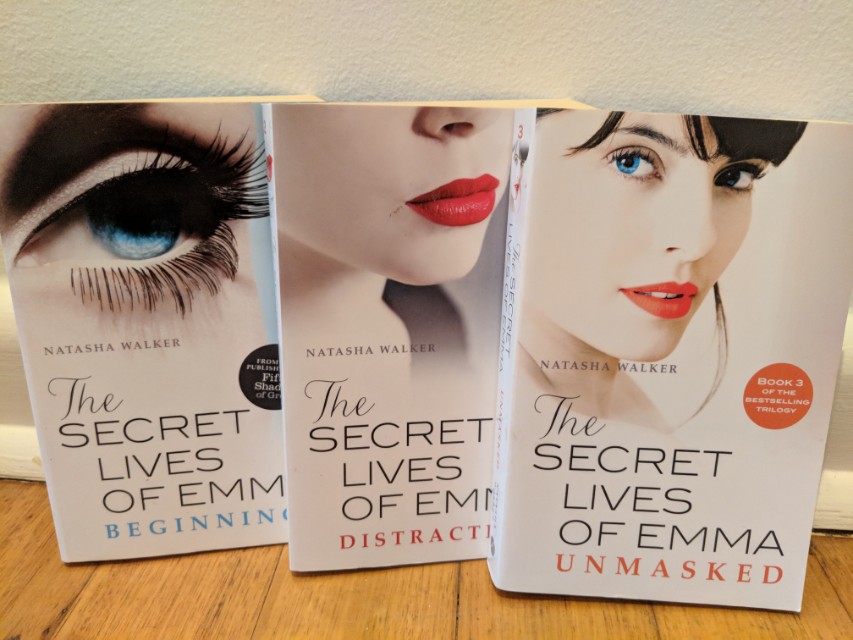
I didn’t know it but the idea for the novel The Girl on the Page had been with me for years. This idea had been in my preference for reading literature as a young man. It had been in the way I had run my little second-hand bookshop where I had to sell recent commercial fiction to pay my rent, when all I wanted to do was sell people beat up old Penguin Classics. It was in my decision to work for online bookseller, Booktopia after my shop closed. And it was certainly around when I signed a contract to publish the erotic series The Secret Lives of Emma under the pseudonym Natasha Walker. The idea is a simple one, What is the cost of selling out?

What was the road to publication like? And what has reader response been like so far?

The road to publication was long. After publishing The Secret Lives of Emma trilogy in 2012-13, I returned to a novel I had been working on for years called, A Gentleman of Sorts. This novel was set in 1815 in northern England. And although I was very happy with it, no one wanted to publish it. Like a fool, I persisted trying to get it published. I wrote nothing new between 2013 and 2017, I just kept working on the novel no one wanted. The spell was broken when a leading publisher offered me a contract for the book. It was a lukewarm offer. The book would be published, but it would sink like a stone. It was over. I rejected the offer and put A Gentleman of Sorts to bed.
Days later I started writing The Girl on the Page. The words came in a torrent.  Over the next six months, writing on weekends only, due to my full time job, I finished the book. My agent sent it out to publishers and we found ourselves in the middle of an auction with three major publishers bidding on the book.  HarperCollins were victorious and with the help of my publisher Catherine Milne, and her brilliant team of editors, we knocked the book into the shape it is now. I couldn’t be happier with the end result.

Publishers send out proof copies to reviewers before the final edits of the book are complete. So, with my head still in editing mode, the first reviews came in from booksellers. They didn’t hate the book, which was a relief. They seemed to understand what I was trying to do, too. Overall, since publication, the response has been positive. I love that readers love Helen and Malcolm as much as I do. Though I have been punched by some readers for that bit at the end. You’ll know what I mean when you read it.

The story is told in many voices: in Amy’s, Helen’s, Malcolm’s, Daniel’s and a little in Max’s. Quite a lot of juggling, but carried off very successfully! How did you balance the different voices?

The characters of Helen and Malcolm have been loitering around in my imagination for years. They are result of my interactions with all the Helens and Malcolms who used to frequent my second-hand bookshop. The old journalists, retired academics, and quarrelling novelists.  I found their voices were already quite defined and easy to write.

The character of Daniel had to be of Helen and Malcolm, but defiantly different, too. He is their son, but estranged. You can’t stop genetics, and so I had to make sure Daniel displayed some of the attributes of his parents, while his resentment and self-loathing coloured nearly everything he said and thought.

Amy strode onto the page. Hers was the loudest and surest of the voices in my head while writing. I had to restrain her. She had a tendency to dominate scenes and conversations. I surround myself with strong women. I wanted Amy to have a truckload of confidence around her work but needed her to be vulnerable in matters of the heart. My time with Amy was spent turning the volume down on her attitude and turning the volume up when she spoke from the heart.

Knowing the characters well helps with balancing the different voices. I sketched out backstories for these characters which don’t all make it into the novel. I knew them well before I let them speak.

You took quite a risk in making two of your main characters–Amy and Malcolm–rather monstrous really (though always human!) They made me think of the ‘monstre sacré’ concept we have in French–a term which describes a person given a free pass on selfishness and outrageously bad behaviour because of their talent and/or personal charisma.  And the more ‘likeable’ characters–Helen, Daniel and Max–face a great disadvantage when in the orbit of those ‘sacred monsters’, each in different ways. Do you think that’s a fair take, or do you have a different interpretation of those characters?

The funny thing is, many readers relate to Amy. They cheer for her. I have noticed a generational divide in the response to the novel. Younger readers in general have seen it as an Amy novel. Amy’s ambitions, her needs, her desires are those of her own generation. They align with her from the start and live the novel through her, thus she is absolved of all sins. They certainly don’t see her as a monster. In fact, the question of principles at the heart of the novel is largely overlooked by younger readers. There is no such thing as selling out to them, as of course you always take the cash. Every time. Older readers talk almost exclusively about Helen and Malcolm. The choice Helen makes and the consequences of that choice. The old novelists’ relationship is the central hub of the novel to older readers but the relationship between Helen and Malcolm and their son Daniel also figures in the discussion of the novel.

Daniel is reviled by younger readers. He and Julia, the publishing director, share monster status for them. While for the older readers, they find Malcolm to be the most difficult character to deal with. They understand Daniel, forgive Helen, put up with Amy but they find it hard to forgive Malcolm. I think Daniel would see both his parents as ‘monstre sacré’, while the reader only sees Malcolm.

I hope what I have done here is create characters who are as flawed as we all are. I certainly like how a character can be one reader’s heroine and another’s villain. That a book can be about one subject for a reader and be a completely different book for another. If I have done that, I will think myself extremely lucky.

The book revolves around a conflict between two extremes of the book world: the short-term gain of bestsellers versus the slow burn of ‘serious’  literature..Yet of course many of the writers we think of as great–Shakespeare, Dickens, Austen, the Brontes etc–had large mass followings and were seen primarily as entertainers in their day. Do you think the distinction between ‘downhill’ and ‘uphill’ books (a cogent term employed in your book) is not as simple as someone like Malcolm might see it? And with your own book, which depicts the tension between the two, making the case for more thoughtful books whilst successfully adopting the suspenseful thriller mode–do you see it as part of the conversation around these things?

Even Malcolm doesn’t see it as a simple distinction, it’s just a convenient way for him to explain the differences between certain types of books. We all divide novels up into easy reads and more difficult ones. Some novels just ask us to think from page one, they require concentration, and if you aren’t in the mood, if you’re tired, for example, you will put them down. In that same mood you might pick up a thriller and read late into the night. Malcolm points out that we aren’t talking about a large percentage of the population when we talk about readers. And when we talk exclusively about novels we are talking about a fraction of the small fraction of the population who reads regularly. Most regular readers of novels have the capacity to read ‘uphill’ but prefer ‘downhill’ novels because such reading offers a form of escape that appeals to them.

The Girl on the Page is a ‘downhill’ book about ‘uphill’ books, said one reviewer. Which I found interesting. There is no doubt in my mind that my novel is being labelled ‘commercial fiction’ by some readers and many booksellers – that is, fiction which is easy to read and is expected to have a large readership. And yet, as one reviewer said, the blurb on the back made it sound really boring. The blurb actually described the content pretty well. But it doesn’t give any indication of the way it is written. And this is definitely part of the conversation, as you say. I have written one of those books Helen and Max hate.

I made a conscious decision to open the door to my book as wide as I could to let any kind of reader in. I wanted to involve people in my story from page one. So I wrote short sharp chapters which dropped the reader into the middle of the action. I want readers to become invested in the story and for them to turn the pages quickly. How else was I going to get people into a book where the big question is, should a literary writer publish a commercial book for cash? The result is readers are reading the novel in a few sittings and the end of the novel knocks them sideways and leaves them thinking about some pretty hefty things. Which is cool, right?

I was struck by your (very accurate, in my experience) observation of the ‘book-loving millenials’ who nevertheless don’t read in the same way that people of Helen and Malcolm’s generation might have thought proper. Can you expand a little on that?

The way people consume information today is completely different from any other age. We absorb so much more information in a day, through so many different screens, mostly in small bite-sized chunks. It’s only natural that the way a millennial reader approaches a book would be different. They have grown up in an informational soaked, entertainment overloaded world.

A physical book is an ingenious device which exists separately to the internet. It is its own ecosystem for the time you’re reading it. It has one overall argument, or subject, or story and it is told outside time. This is very attractive to those who are almost always connected and who don’t often enjoy the luxury of concentrating all their attention on one thing.

As a book industry professional–both as an author and bookseller who has frequent dealings with publishers and editors-you have an insight into the publishing world which comes over very strongly in the book, in various amusing–and sometimes depressing!–vignettes. The post-takeover shenanigans at  your fictional publishing house and the short-termism it engenders of course strikes many echoes in other book industry insiders/observers of course, including me 🙂 Putting on your prophet’s hat, what do you think might come of such developments within publishing?

Publishing has one great advantage at the moment, they still publish physical books. For a while there it seemed likely that printed books would go the way of video cassette tapes. Thankfully this was averted by the ubiquity of the smartphone which seemed to kill off the ereader and ebooks before they really took hold. And since then something even worse happened. Donald Trump. His cry of fake news has made many people notice just how difficult it is to find answers on the internet. And here’s where publishers of physical books come in. Over hundreds of years they developed a vetting process whereby they force writers to proof, edit, fact check and better their writing before they will publish it. There are checks and balances because publishing physical books is an expensive business. Of course, some publishers are better than others and of course they don’t get it right all of the time. But a vetting process is better than no process, as we are discovering to our shame online. As such, I believe publishing will still have a very important role to play in the coming decades.

Finally,  I thought that the title, ‘the Girl on the Page’ mischievously echoes an element of various bestselling titles, as alluded to in an aside in your book–is that the case? And can you expand a little on that?

The Girl on the Page was my working title. The sheer number of novels about women that were being published with ‘girl’ in the title was absurd and many people in the book industry were getting sick of it. So calling the manuscript The Girl on the Page was a bit of joke between me, myself and I. But later, as I wrote the scene at the book signing where the characters discuss books with ‘girl’ in the title, I realised that The Girl on the Page kind of worked for the book. So when I sent it to my agent I left it there. I really didn’t expect HarperCollins to go for it. But they saw the irony of it, and loved it. So, there you have it.

About The Girl on the Page:

Two women, two great betrayals, one path to redemption. A punchy, powerful and page-turning novel about the redemptive power of great literature, from industry insider, John Purcell.

Amy Winston is a hard-drinking, bed-hopping, hot-shot young book editor on a downward spiral. Having made her name and fortune by turning an average thriller writer into a Lee Child, Amy is given the unenviable task of steering literary great Helen Owen back to publication.

When Amy knocks on the door of their beautiful townhouse in north west London, Helen and her husband, the novelist Malcolm Taylor, are conducting a silent war of attrition. The townhouse was paid for with the enormous seven figure advance Helen was given for the novel she wrote to end fifty years of making ends meets on critical acclaim alone. The novel Malcolm thinks unworthy of her. The novel Helen has yet to deliver. The novel Amy has come to collect.

Amy has never faced a challenge like this one. Helen and Malcolm are brilliant, complicated writers who unsettle Amy into asking questions of herself – questions about what she values, her principles, whether she has integrity, whether she is authentic. Before she knows it, answering these questions becomes a matter of life or death.

From ultimate book industry insider, John Purcell, comes a literary page-turner, a ferocious and fast-paced novel that cuts to the core of what it means to balance ambition and integrity, and the redemptive power of great literature.

About John Purcell:

While still in his twenties, John Purcell opened a second-hand bookshop in Mosman, Sydney, in which he sat for ten years reading, ranting and writing.
Since then he has written, under a pseudonym, a series of very successful novels, interviewed hundreds of writers about their work, appeared at writers’ festivals, on TV (most bizarrely in comedian Luke McGregor’s documentary Luke Warm Sex) and has been featured in prominent newspapers and magazines.
Now, as the Director of Books at booktopia.com.au, Australia’s largest online bookseller, he supports Australian writing in all its forms. He lives in Sydney with his wife, two children, three dogs, five cats, unnumbered gold fish and his overlarge book collection.
Twitter @bookeboy
Instagram @bookeboy


An interview with Cath Mayo

A couple of years ago, at the IBBY Conference in Auckland, I met New Zealand author Cath Mayo, whose novels based on the life of the Ancient Greek hero Odysseus were the basis for her fascinating conference paper exploring the unexpected commonalities between Ancient Greek and Pacific cultures. This month I finally caught up with her for a most interesting interview–enjoy!

You are very inspired by one of the most famous and ancient sagas of Western culture, Homer’s Odyssey, which you first encountered as a young reader in an adapted edition for children. Can you tell us about that, and what effect the story had on you as a child?

When I was a kid, Mum used to read aloud to us a lot, especially during the summer holidays. We’d be on the beach after lunch, itching to go for a swim, and she wanted to keep us out of the water for a while so we wouldn’t get cramp and drown.  So the books had to be pretty exciting, not just for me but for my two older brothers.

So I must have been about seven or eight when I first encountered Barbara Leonie Picard’s retelling of the Odyssey, with those fabulous illustrations by Joan Kiddell-Munroe. And I was instantly besotted – with Odysseus’s adventures and his resourcefulness and quirky cunning. As a cheeky kid trying to outwit my big brothers, I thought his impersonation of Nobody, when he was trying to escape the Cyclops, was magic.

As kids do, I started re-enacting – and got myself into various bits of bother by locking the rest of the family out of our only bathroom-cum-toilet, because that was where the towels were, and I could turn them into Greek tunics with the help of a couple of safety pins.

At night, after lights out, I started retelling the Odysseus stories to myself, naturally taking the title role. This soon led to various prequels and sequels, and all sorts of extra bits along the way that Homer had undoubtedly forgotten to put in to the official account.

What effect did these early reactions to the Odyssey have on you later, as an adult writer?

I gave up on the bath towels pretty soon, but I kept on with the retelling process. Odysseus was briefly supplanted by Beatle George Harrison, followed by a few other characters, real and invented. But Odysseus is a persevering sort of guy and he always comes back.

This habit of private story-telling – or fantasising if you will – is common with kids, but most people stop it at some point, to get on with the thorny business of adult life. I never did.

It took me a while, though, to realise that writers are not Gods – they live on Planet Earth like the rest of us – and I could dare to become one. So eventually I began to write the stories down.

What I still experience is that feeling of being totally inside the story as I imagine it and tell it. Which is what a good reading experience should give the reader as well.

Why do you think myths and legends and sagas are still important to us today?

They certainly were very powerful for me as a kid.

While I was busy reading and re-reading Picard’s retelling – and anything else remotely about Odysseus or the Troy story that I could lay my hands on – I also became a general Myths-and-Legends junky. The local library held a wonderful series of books put out by Oxford University Press, collections of myths and legends from just about every country you could imagine – India, Scandinavia, Egypt, Korea, Scotland, Africa, Russia, France…

They are amazing, exciting stories that have compelling stories and characters and resolutions, probably because they have developed and survived over long periods of time.

They also reveal the soul of the culture that engenders them, the values and the hopes and the fears and the disappointments and the successes. In troubled times they can be a rallying point of the spirit, a beacon for identity.

For New Zealanders, the myths swirling around Maui are colourful and resoundingly Maori; for Maori, Maui is more than just a fun story – this small, brave, wily underdog of a hero is an essential part of their ancestry and a powerful taonga – a great source of cultural pride.

At the IBBY conference in Auckland, you gave a very interesting paper, based on interviews and encounters with Maori and Samoan people, which drew connections and resonances between the Odyssey and Pacific Island culture. Can you tell readers a bit about that?

Growing up, I never consciously made the connection, even though I love Maori culture and mythology, and I’ve travelled and worked in the Pacific.

But one day, by chance, I met a sixteen year old Samoan student called Matt Nanai. Matt was crazy about sport – he’d just broken his leg playing rugby – and he was the lead singer in a school rock band. But he was holding a book – Rieu’s translation of The Odyssey. It turned out this was the first book he’d ever read cover to cover, and he thought it was choice.

This intrigued me no end. When I talked it through with Matt, we both realised that the world of Homer has far more parallels with traditional Maori and Polynesian culture than it does to my own Pakeha/European New Zealand society.

What are those parallels? Reverence for ancestry; a strong aural tradition; respect and hospitality; fierce family loyalty; speech-making; honour and pride; brave deeds; warrior values; sporting prowess and physical hardiness; the sea, coasts, islands and navigation; and song, music and dance.

Later on, I interviewed Tongan scholar and politician Sitivati Halapua and his daughter, Peau. They added fate, suffering, storytelling, wisdom and cunning, humour, and tapu/sacred things to my list.  I also questioned a Samoan paramount chief, Joe Annandale, and two Maori friends, Dean Martin and Sharon Hansen, and they too came up with insightful answers.

All of these themes can be matched by underlying values in The Odyssey and Iliad, backed by countless quotes from both poems.

I often think Maui and Odysseus are very similar heroic types. They’re not the big muscle-bound guys; instead they have to live on their smarts.

Your books for teenagers, The Bow, and Murder at Mykenai, are set in the Greek Bronze Age, or as it’s sometimes known, the Age of Heroes–the time of Odysseus, in fact, who is the main young character in the books.

I wanted to set these books, not only within the Greek mythological traditions but also in the social and political environment of the Greek Late Bronze Age, which is when the Trojan War is believed to have taken place.

Curiously, this isn’t the same world as the “Age of Heroes”. The latter is the one that Homer describes in his great Trojan War poems, the Iliad and the Odyssey, and it’s the one usually evoked by later retellings and illustrations.

But the “Age of Heroes” is a fantasy world, created through a jigsaw mix of different eras, ranging from around 1400BC right down to around 300BC – over a thousand years of changing customs and clothing, buildings and weapons. In pictures illustrating the “Age of Heroes”, men wear Corinthian-style helmets covering their faces, with narrow slots for their eyes, and women wear long, loose, white tunics.

I decided to return the Odysseus stories to Odysseus’s own time – a Late Bronze Age setting. So – for example – there are no big temples: gods were worshipped in shrines, which were either out in the wilds or inside palaces. Clothing was brightly coloured and often festooned with tassels and fringe, with women clad in fitted bodices and tiered flaring skirts cinched in at the waist with wide belts.

How do you go about researching the background of the stories? And how do you recreate the atmosphere of that time so long ago?

I love research. In fact, my husband had to force me to stop researching and start actually writing these books.

I majored in History at Uni, so I know my way around the local Uni library and the great collection of scholarly journals that gave me the in-depth knowledge I need to totally ground myself in this very different and often alien world. For the Bronze Age is separated from the world of Classical Greece by an abrupt cataclysm that saw the great palaces burnt to the ground, followed by a stretch of centuries known as the Dark Ages.

In the end, the amount of knowledge I have – photocopied articles stored in numerous file boxes and a whole bookcase of books – is far, far more than I would ever need to write my novels. What the reader sees is the tip of an iceberg. But the information iceberg is quick to inform me whenever something unusual crops up.

For example, in The Bow, Odysseus needs to enter a tomb. And I was able to put my hand immediately, not only on descriptions of various kinds of Late Bronze Age tombs but also what sorts of grave goods were deposited and how the bodies were treated – which was important for the plot. It meant that, instead of having to stop writing and spend a few evenings in the Uni library, I could look it up straightaway and get on with the story.

I also know that King Nestor, at Pylos, had a harbour excavated deep into the flat coastal plain near his palace, through which he diverted a river every winter to flush it out. I love this fact but I haven’t yet found a reason to use it!

What about the personality of young Odysseus?

Odysseus shines through so strongly in the Odyssey. Even in the Iliad, where he has more of a cameo role, we can see different sides of his personality.

But to capture the young Odysseus took some imagination. I had to try and wind the personality clock back, so to speak, and imagine him with the character traits we enjoy in the later stories – a quick wit, bravery, cunning, loyalty to family and friends, deviousness and a love of secrecy, strong emotions which he has to control, charm, eloquence, stubbornness, a sharp intelligence, an intolerance of fools, skill in disguise – but I had to imagine how those traits presented themselves before he added experience to the mix.

So he’s still learning, and he makes mistakes – not that he doesn’t later, in Homer’s poems!

You grew up by the sea, ‘mucking about in boats’ as you put it on your website, with your brothers. Did you always want to be a writer or was that something that came later?

I always felt like a storyteller, but it took me a long time to summon the courage to put words on a page. I grew up reading Rosemary Sutcliffe and Mary Renault, two monumental historical novelists, and I didn’t want to fall short of their standards. Fear of failing is something everyone has to conquer in order to reach for their dreams; I’m really glad I faced down my demons, and I only wish I had done it earlier.

When I was at school, nobody told us we could be writers. And nobody seemed to believe that NZ writing could be any good. I’m really pleased that’s changed!

What was the path to publication like?

It was hard but there were plenty of highs to balance the lows. I had some fantastic encouragement not long after I started – I won a short story competition and the judge, New Zealand YA and Children’s writer William Taylor, agreed to mentor me through my first book Murder at Mykenai. Bill was brilliant – blunt but also very encouraging. And the NZ Society of Authors awarded me a professional assessment, which also helped. So I was able to start dreaming that someone would get excited about the book enough to take it on.

I had seven rejections before Walker Books signed me up, but these rejections usually came with a page or two of detailed comments, which I could use to improve the book and my writing in general. So “no” isn’t always a bad thing, if you want the book to be as good as possible!

How do you think being a New Zealander influences your writing?

Good question! On the one hand, we can feel a bit inferior because we’re “only” New Zealanders and we live upside down on a small bunch of islands at the bottom of the world.

On the other hand being isolated means we get to “invent the wheel” quite a bit, so we feel confident about being creative and trying our hands at lots of different things. We’re not constantly being told we can’t do things because we’re not experts at it, so we just go ahead and do them!

New Zealanders often tend to be active, outdoorsy people and I’m no exception. I still muck about in boats, and when I was younger I did a lot of tramping, including some pretty adventurous stuff off the beaten track in the Southern Alps. This taught me how to survive in harsh conditions without any technological backup.

In my novel writing, my characters are living in a very low-tech world, and my heroes live physically active lives. So I can sometimes draw on my own experiences and feelings when things get tough for them.

You are also a musician and play in a band which tours the world. Can you tell us more about that?

Make that “played” in a band, past tense – in fact, several bands. I was mostly playing Country music, with bluesy, Bluegrassy, jazzy overtones, and those songs always have a story. I loved being part of a small group working together to take those stories to an audience. Nowadays I still play, but mostly for my own pleasure – my writing has taken over.

I love travelling, and while I enjoy being a tourist, it’s always more fun if I’ve got a purpose – I connect with people in a different way.  Back then, the connecting link was music, and now it’s research for my books. It was brilliant, when I visited Ithaca a few years ago, to talk with people about my books and what I hoped to see and find out about Odysseus’s own island. And when I wrote The Bow, I re-discovered a forgotten cave in Arcadia, and went through it with a bunch of Greek cavers.

Does your music ever inspire your writing and vice versa?

Only in a sideways kind of way.

I always did a lot of improvising as a musician – I hated the idea that I might step forward to take a solo and fake it by “joining the dots” – playing a calculated number of pre-learned patterns in a set order. It was all about listening like crazy and jumping off the cliff.  I never quite knew if my inner, creative ear would manage to hear enough to put up a parachute, so I could sail out over the abyss and land safely at the end. It was a fabulous experience when it did, and at least I didn’t die – except with embarrassment – if it didn’t.

Curiously, this is incredibly like the feeling I get when I’m writing. Somewhere in the non-logical part of my brain, there’s this great big ear that’s listening out for whatever is seething round in my subconscious mind, and these days it sends me stories rather than music.

The Ancient Greek singers must have experienced something very like this. When they sang their long, semi-improvised epics, they called on the Muse, as though it was the Muse singing the song, using the bard only as a mouthpiece.

What are you working on now?

I’m working hard on a co-writing project with David Hair, another Kiwi writer who’s had great success with YA writing and Adult Fantasy.

We’ve teamed up to create an Adult Fantasy series called Olympus. Once again, it’s about Odysseus, this time as a young man in his early twenties, in the years leading up to the Trojan War. The first three books have just been signed up by Canelo, a UK publisher.

The collaborative process with David has been very exciting, challenging and stimulating. We do a lot of brainstorming via Skype (we’re rarely in the same room, or even in the same country) and huge amounts of planning, backwards and forwards. Then David gets the first draft down – he’s very fast – and I do the next, “up” draft, to use Anne Lamott’s terms. After that, we bat it to and fro till I don’t know whose words and ideas are whose.

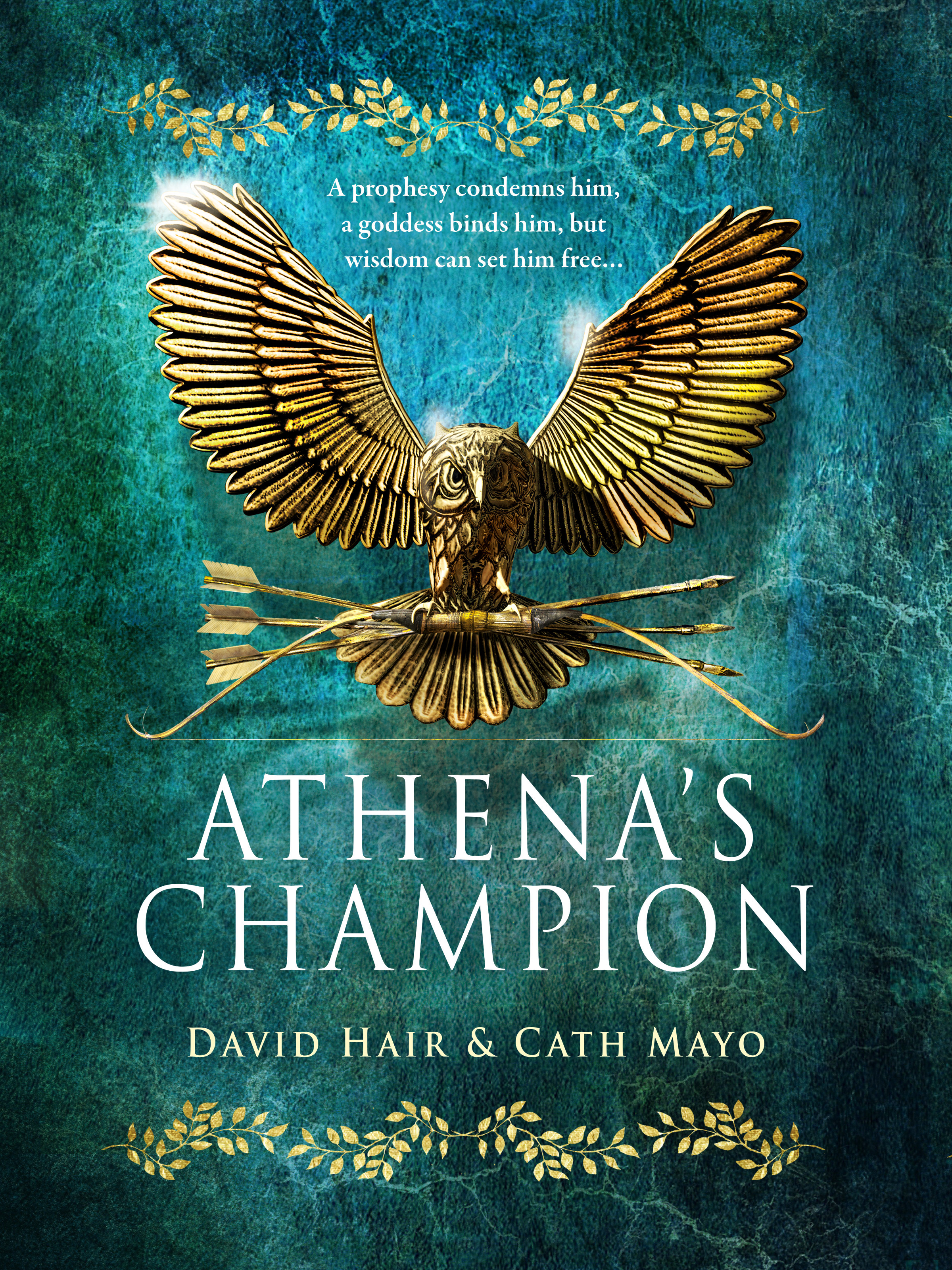
The first book Athena’s Champion comes out on November 8th – it has a cover to die for! And the second book Oracles War is already with Canelo for editing while we plan out Book Three.

New Zealander Cath Mayo is an award-winning author, writing YA historical novels, children’s plays and adult fiction. Much of her work is set in Ancient Greece, for which she has a life-long passion. After graduating in History, she returned to university to study Homeric Greek. Her YA novels, Murder at Mykenai and The Bow, star a youthful Odysseus, as does Athena’s Champion, the first book of a new adult fantasy series, Olympus, co-written with David Hair.

Such fun in poetry creation workshops for children!

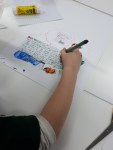
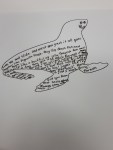
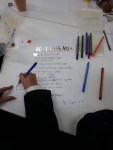
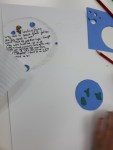
Recently I ran two poetry workshops for children 6-12 years old in my hometown public library. They were sequential workshops: in the first one, I talked about writing poetry, based on the gorgeous book A Boat of Stars, in which I have 7 poems–and talked about how  ideas from poetry can come from anywhere, then we orally created a (rather silly!) poem together, and then everyone chose their own subject and wrote their own poem. In the second workshop, I talked about how you can illustrate and decorate a poem to create an artwork out of it in all kinds of ways(again, that was inspired by A Boat of Stars!) And then the kids set to and created their own poem artwork, based on the poem they had written the previous week. The library had provided lots of coloured pencils and pens, stickers, magazine pictures to cut out, coloured shapes and paper and more. Everyone had a lot of fun and there were some amazing creations–have a look at the photo gallery!


Lovely first review for See Monkey!

Delighted to see this lovely first review for See Monkey, my picture book with Kathy Creamer(Little Pink Dog Books) . This short and sweet review is in the latest(June) edition of author, publisher and picture book expert Margaret Hamilton’s Pinerolo newsletter. 

SEE MONKEY by Sophie Masson & Kathy Creamer (Little Pink Dog Books). A toddler and his favourite friend, his monkey toy, are together all day and they do everything together. An endearing book for the very young, with warm and appealing illustrations.

http://www.pinerolo.com.au/PDF/Jun2018.pdf

UQP’s 70th birthday and my gratitude to them!

Just heard today that it’s UQP’s (University of Queensland Press)70th birthday this month–and wanted to celebrate this great achievement of a great publisher by thanking them for launching me on my career as a published author–in more ways than one!

My very first published book, The House in the Rainforest, an adult novel set on the North Coast of NSW in the 1970’s and ’80’s, was published by UQP in April 1990. I will never forget the day I got the letter of acceptance from the late and greatly missed UQP editor Roseanne Fitzgibbon! (It was an amazing year, because just a few weeks after hearing from UQP, I got a letter from the then publisher at Angus and Robertson, Brian Cook, accepting my first children’s novel, Fire in the Sky, a time slip novel which was published in June 1990)

UQP also published my very first young adult novel, Sooner or Later (1991), an event which came about after the then editor of UQP’s YA list, the wonderful Barbara Ker Wilson, had written to me whilst The House in the Rainforest was being edited, to ask if I had any ms suitable for that age group: she had really liked the voice of my main character Kate, who, when the book starts, is sixteen years old. Barbara felt it was a very authentic voice and she wondered if I had anything that might work. Well, I as it happens, I did have a ms which had grown out both of living at the time in a small Australian country town and also losing my beloved grandmother back in France. I was pretty excited at being actually encouraged to send it in! So I sent it, Barbara and the UQP team loved it, and it was published in 1991.

I had another two YA novels books published by UQP after that–A Blaze of Summer(1992), which unlike the other two was set in France, and had supernatural/fantastical elements; and The Sun is Rising(1996), a companion novel–though not, strictly speaking, a sequel–to Sooner or Later.

I went on to have books with quite a few other publishers after that–but I will never forget the debt I owe UQP. From a very grateful author: happy 70th birthday to a wonderful publishing house–and may there be at least another 70!

Interview with Louisa John-Krol

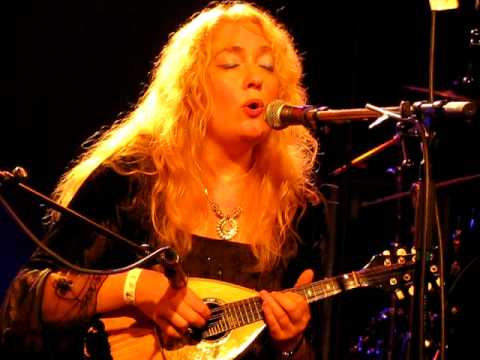
Today I’m delighted to feature an interview with multi-talented composer, musician, writer and fairy tale aficionado, Louisa John-Krol.

Louisa, you have had an amazing career writing and performing music and words over a long period of time. Can you share some of your journey? How did you start, and how did your work develop?

 Thanks, Sophie. It began with a hum. Singing plants and poems into melody, and believing in dryads, I made a garden with a wetland, frog pond and flowering vines, ripe for solitude. Fantasy chronicles of Earthsea, Middleearth and Narnia inspired me, as did Faeries co-written by Alan Lee (who went on to design sets for Tolkien films) and Brian Froud (who later made a music clip ‘Muse’ for my music). Life hasn’t felt like a linear journey. More a kaleidoscope with jumbled swirls that sometimes form patterns, hint at echoes, or slide into oblivion. Foreign indie labels released most of my music from the age of 30 onward. I got to perform, compose or record with brilliant eccentrics here and overseas; just as well, for I was never a virtuoso. Less a prodigy than a pixie. (Funny how in some circles it’s a contest as to how early one masters an instrument. Infancy, anyone?) The cliche of singing before we can talk, of dancing before we can walk, of surmounting setbacks, haunts Romantic notions. In some underground neo-medieval/ baroque/ classical/ gothic modern-primitive tribes I’ve inhabited, it’s customary to bemoan corruption. Perhaps I still revel in Voltaire’s ironic ‘best of all worlds’. But being a paid artist was no more admirable than other jobs. It all meant being present with a vast cross-section of humanity. Whether fairy storytelling at carnivals, teaching at disadvantaged schools, writing press releases for parliamentarians, liaising with ecologists, singing at festivals, or tapping royalties from boutique recording labels, I learned to respect time. Not sure I overcame bullying or disappointment, which abounds in corporations or bureaucracies. Whatever lands on a page, or screen, or reel, or disc, is stardust floating long after explosions that elude comprehension. A couple of years ago I signed off my record deal and ceased all employment. I’ve been volunteering, reading, rescuing cats, grooming manuscripts, listening tomusic and educating myself on fairy lore.

You have performed your work across the world, including with other artists. What have been some of your favourite experiences?

In France 2003 I performed at La Loco in the red district of Paris, the stomping ground of legendary cult bands like The Velvet Underground. Adjacent was the Moulin Rouge, to which we found a peep-hole while drinking beer backstage on red crimson sofas with our Swedish headliners, Arcana. Afterwards we went out with writers including Alyz Tale, then Editor of Elegy Magazine, who published her story entitled ‘Louisa’ about my song ‘Blackbird’, in her collection Mon dernier thé. I also cherish memories of Clisson, the medieval town of my record label Prikosnovénie, by the river Sèvre.

In Belgium at Trolls et Legendes festival 2009, meeting the British illustrator Brian Froud was a highlight. We presented a video Muse that he and his son made for my song ‘Which of these Worlds?’ with Robert Gould of Imaginosis who flew me to Oregon, USA, that same year to perform with the band Woodland at Faerieworlds, where the Frouds were guests again.It was moving to receive a message from José Géal of le Royal Théâtre de Toone, which is as old as Bruxelles itself, thanking me for my song ‘Poppet Plum’ being dedicated to his puppetry that I’d experienced six years earlier.

In Italy, on the borders of Umbria, Lazia and Tuscona, I stayed in a medieval castle overlooking the medieval town of Orte, belonging to the ambient artist Oophoi (Gianluigi Gasparetti), haunted by ghost and a white owl. Gigi later died of a rare blood disease, bereaving a loving wife, but the sonic alchemist’s legacy remains strong on the web, as in his masterpiece The Spirals of Time and our collaboration I hear the Water Dreaming.

There were wonderful experiences in other enchanting places, such as in Greece and Germany, but if I cover them all we’ll be here awhile!

 The interplay between music, poetry, folklore and fairy tales is very strong in your work.  Can you expand on that?

Let’s start with poetry. I love how the subconscious resonance of metaphors, layered in iconography over time, allows the imagination room to move, like a muse engaging in dalliance, in diaphanous gowns of Botticelli’s ‘Primavera’. Language can be musical, as with assonance or alliteration. How words ring together sometimes pivots on selection of synonyms, or arrangement. Just as a composer might let a melody leap from one player to another, so writers with an ear for melody recognise when a phrase sends a shiver down the spine. (A challenge in translation!) In folklore and fairy tales, as in poetry, I love economy of language: these modes are tightly packed seeds, full of symbols that leap across centuries and cultures with efficiency of memes. Hence the mother of Memory is the mother of Muses: Mnemosyne.

What’s coming up next for you, in terms of new work created and released?

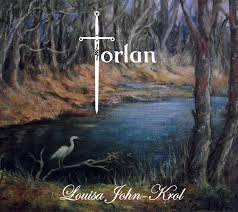
A magic-realist novella and other manuscripts are bubbling, but my aim is to groom the Elderbrook Chronicles: a series of fantasy volumes. Musically, having recently released two productions after a long hiatus – Torlan (a compilation of water music from our various albums) and Elderbrook (a double-album soundtrack for my aforementioned chronicles), I’m preparing to reprint our discography that sold out on French, German and American companies: an opportunity to revisit mixes, add bonus tracks, include more illustrations and try new eco-friendly packaging.

As a lover of fairy tales, why do you think they still appeal to people? And do you have you any favourites? If so, which–and why?

Fairy tales do more than soothe worldly worries; paradoxically, they offer perennial wisdom for facing them. Wrongly, some view them as escapist, whereas on the contrary I regard fairy tales as a way to delve deeper into life. For me they’re about re-enchantment, of falling in love with the world. As Marina Warner asserts, fairy stories have ‘staying power’, for ‘the meanings they generate are themselves magical shape-shifters, dancing to the needs of their audience’ (From the Beast to the Blonde), a point that Athena Bellas revisits in her article ‘Contemporary fairy tales: Prohibition, transgression, transformation’ in the catalogue of an exhibition All the better to see you with: Fairy tales transformed that she directed at the Ian Potter Museum of Art, Melbourne. The title-essay by its curator Samantha Comte also cites Warner, further emphasising the adaptability of fairy tales; their fluidity, amorphousness and responsiveness to social context. My favourite tales are open-ended or layered. They emit a diffused lunar light, rather than a laser beam. I’ve often claimed to have a more poetic than polemic approach. That doesn’t mean I shy away from politics, it’s just that I won’t let didactic messages dominate. I’m partial to Wilde, d’Aulnoy, Dunsany, Byatt and Calvino. As to contemporary Australians: I particularly enjoy your writing, Sophie.

You are closely involved with the Australian Fairy Tale Society. Tell us about it and its work.

As a founding member and President of this national charity, I cherish our inclusive spirit. Our members are writers, researchers, educators, storytellers, illustrators, puppeteers and other fey folk. One of our committee members is a glass artist, Spike Deane, based at Canberra Glassworks. We’ve attracted such internationally acclaimed fairy tale authors as Kate Forsyth, Carmel Bird and you; I’ll never forget your launch of the thrilling Snow White re-spin Hunter’s Moon at an AFTS conference, flying away with a signed copy and reading it during a recording session at Pilgrim Arts studio while visiting South Australia; I later bought a copy for the producer Brett Taylor’s daughter. I’ve since reviewed more of your novels. A lot of fairy tale people in Australia are nourishing each other’s knowledge. We discuss sensitivities around colonisation, immigration and ways of seeking mutual ground, respectfully acknowledging differences while fostering intercultural collaboration. We are interested in exploring definitions of the very term ‘Australian fairy tale’ itself. I recommend Dr Rebecca-Anne’s spiel on this at our website: We are delighted that you have accepted our invitation to contribute to our forthcoming fairy tale Anthology, which we’ll have more to say about publicly soon. Meanwhile, we’ve already produced six editions of an illustrated Ezine, available exclusively to members. Thanks for all you do, Sophie.

Explore more of Louisa’s work:

Homepage of ethereal music & faerielore: http://louisajohnkrol.com/

Welcome portal to unfolding Elderbrook Chronicles: http://www.elderbrook.com.au/

Fairy record label in France: http://www.prikosnovenie.com/inde.shtml

Froud/Louisa ‘Muse’ video: https://www.youtube.com/watch?v=ahBe3Znj8lY

Fairy Blog: http://victorianfairytalering.blogspot.com.au/

Australian Fairy Tale Society: https://australianfairytalesociety.wordpress.com/

Connect with Louisa on Facebook: https://www.facebook.com/louisa.johnkrol

Word of Mouth TV: an interview with Kate Forsyth and Sarah Mills

Today I’m delighted to bring you a great interview I recently conducted with writers–and now TV presenters!–Kate Forsyth and Sarah Mills, who very recently launched a book show with a difference. The Word of Mouth TV concept combines some of Kate’s and Sarah’s favourite things: food, books and friendship, to create lively, engaging TV, delicious in terms both of body and mind! The first episode, with authors and husband and wife writing team Graeme Simsion and Anne Buist, was most enjoyable, featuring great conversation, yummy food, and great literary–and cooking!-insights. I loved it, and am looking forward very much to the next episode. But while I’m waiting, I thought it would be great to talk to Kate and Sarah about why and how they’ve put together this excellent show with film-maker Claire Absolum. Enjoy! (And subscribe to Word of Mouth TV You Tube channel and website–it’s free!)

Photograph of Kate Forsyth and Sarah Mills by Claire Absolum.

Kate and Sarah, congratulations on the launch of Word of Mouth TV and the show’s first episode! It’s a fabulous concept–innovative and appealing, with so much scope for fun and warmth, and a great title too! How did you first come up with the idea?

Sarah: It was one of those ideas that took a long time to manifest. The idea struck me about six years ago when I was in one of my aimless dreaming phases. The idea kept revisiting me and I asked Kate about three years ago if she would be interested in doing it. We agreed it was something that the book industry desperately needed because there is so little good news and content serving this industry.

Kate: I thought it was such a brilliant idea, but I didn’t know how we would ever find the time to do it when we had such busy schedules. But we kept talking about it and tossing ideas around. We agreed we wanted it to have really good production values but we didn’t know how we would achieve that when we had no skills or experience in that area. Slowly the idea took hold of our imaginations, though. Once we had our title, it really seemed to come to life.

Sarah: We decided upon Word of Mouth as the title because the Sound Bites that accompany the show involve authors recommending the best books they’ve read lately and their favourite cookbooks – so viewers get their reading tips straight from the author’s mouth.

 Coming up with a great idea is one thing of course: bringing it to fruition quite another!  There must have been a lot of work involved in getting to the launch of the show. How did you get from concept to reality?

Sarah: Yes, well, the idea lay nascent for years because we were both writers and neither of us had camera or video-editing skills. Then former SBS and ABC producer Claire Absolum moved into my neighbourhood and we met through mutual friends. Claire was sitting with me on the day I called Kate: “Remember that idea we were talking about a few years ago about interviewing and cooking with authors? Are you still interested?” And to our relief, she said yes.

Kate: It was complete madness! I had such an intense workload and had sworn I would take on no new projects. But Sarah finding Claire just seemed like a sign from the universe. And I’d actually been thinking about how sad it was that there was no great book chat show anymore.

 Sarah: From there it was just a matter of putting everything together. We all have very complimentary skill sets. Claire obviously has the video production skills, I have creative direction and website production skills (I was a journalist for decades at Fairfax), and public relations, branding and marketing skills, and Kate had the contacts within the industry and styling skills from her time freelancing on magazines. And we are all reasonable cooks. We really liked the idea of three women working together to create the show – there is something magic about the number three. Perhaps we’ll be “Charmed”.

Kate: It just seemed to come together so well – I feel that we’ve found the sweet spot between people who love to watch cooking and lifestyle shows, and people who love to read. We’ve certainly had a great early reception!

The show has very high production values and works really well within its time frame. Not surprising, as you have such a skilled and experienced producer as Claire Absolum on board! Tell us what it’s like actually filming the show.

 Sarah: It’s fun and very tiring. It is only a 10-minute Youtube show but so much ends up on the cutting room floor. Particularly for the first episodes because we were a bit nervous and if it wasn’t one of us making bloopers, it was the other. Or the dog would start whining, or the neighbour would start up with a drill. It seemed a process of endless takes. We are still trying to hone the process.

Kate: We are really learning on the job, aren’t we, Sarah? It took us a while to work out a template for the show, and a balance between the cooking, the eating and the talking. We’ve learnt a huge amount in just a few months.

Sarah: It is also difficult because we all live so far away from each other (about two hours) and we are trying to shoot Word of Mouth TV in our spare time. On the upside, the food is divine and we are collecting recipes for a cookbook at the end of the year. And the champagne … it speaks for itself!

How do you go about choosing books, writers–and recipes? 

Sarah: Kate is plugged into the writing industry so this is her task. We try to interview a mix of authors from all different genres and levels of experience, and Kate is the best positioned to know who are likely to be producing good books.

Kate:  It helps that I have so many friends in the industry, and that I read so much anyway. It means I have a good general knowledge of who is launching new books and whether or not our audience is likely to be interested in it.

Sarah: If we don’t personally like the book, we don’t feature it because we have to review it and we want to be kind in our reviews – we are, after all, authors ourselves. We understand how much heart and soul goes into the production of a novel.

Kate: Our aim is to celebrate books and reading and writing, and to encourage people to read outside their comfort zone. This is after all, one of the great benefits of belonging to a book club.

Sarah: I occasionally suggest books that I think will fit the show too. We also recommend cookbooks on every episode. That process is pretty simple. We both have some well-used and well-loved cookbooks. Then we ask the authors to recommend their favourite books read lately and their favourite cookbooks.

Your motto is ‘food, books and friends’hip: it’s the perfect nurturing combination. What are you hoping viewers will get from it? And what’s the response been so far?

 Sarah: So far everyone who likes books has been really encouraging. We are steadily building a subscription base to the Youtube channel, the website, and to social media feeds such as Twitter and Facebook. The authors have been incredibly supportive as well. Mind you it is fun to be wined and dined and have the opportunity to talk about your book, and the subject of books generally, all at once.

 Kate: We hope to become an integral part of the Australian literary scene, a show that bookworms will love and recommend to their friends to watch. The show comes out every fortnight, so that means we are recommending books twice a month – our hope is that Book Clubs will start watching it together, or using it to help them choose books to read, or simply enjoy what we do on a regular basis.

How many episodes are you hoping to make in the series? 

Sarah: The first season will be 12 episodes, seven of which have already been filmed and the remaining five of which have already been scheduled. Hopefully, by the end of that time, we will have a big enough audience, and sponsorship, to continue filming. We really hope this happens as we’ve had more authors asking to be on the show and they are all so fantastic that we want to interview them all.

Kate: We hope there’ll be many more seasons to come!

 Anything else you’d like to add?

Sarah: Well, towards the end of the season, if we don’t get corporate sponsorship, we might run a crowd-funding campaign. In the meantime, it would be great if readers could subscribe to our Youtube channel www.youtube.com/wordofmouthTV000 because we need 1,000 subscriptions under Youtube’s new rules to be able to earn money from the site. If readers want to hear all the latest news, views and reviews, then they can also subscribe to our website at www.wordofmouthtv.com.au We also have a Facebook and Twitter page that we are having a bit of fun with.

Kate: Every fortnight we give away huge piles of books to our subscribers who help spread the word about the show. We want to foster an atmosphere of joy and excitement about the act of reading, and to support as many other authors as we can.

Writing about World War One…

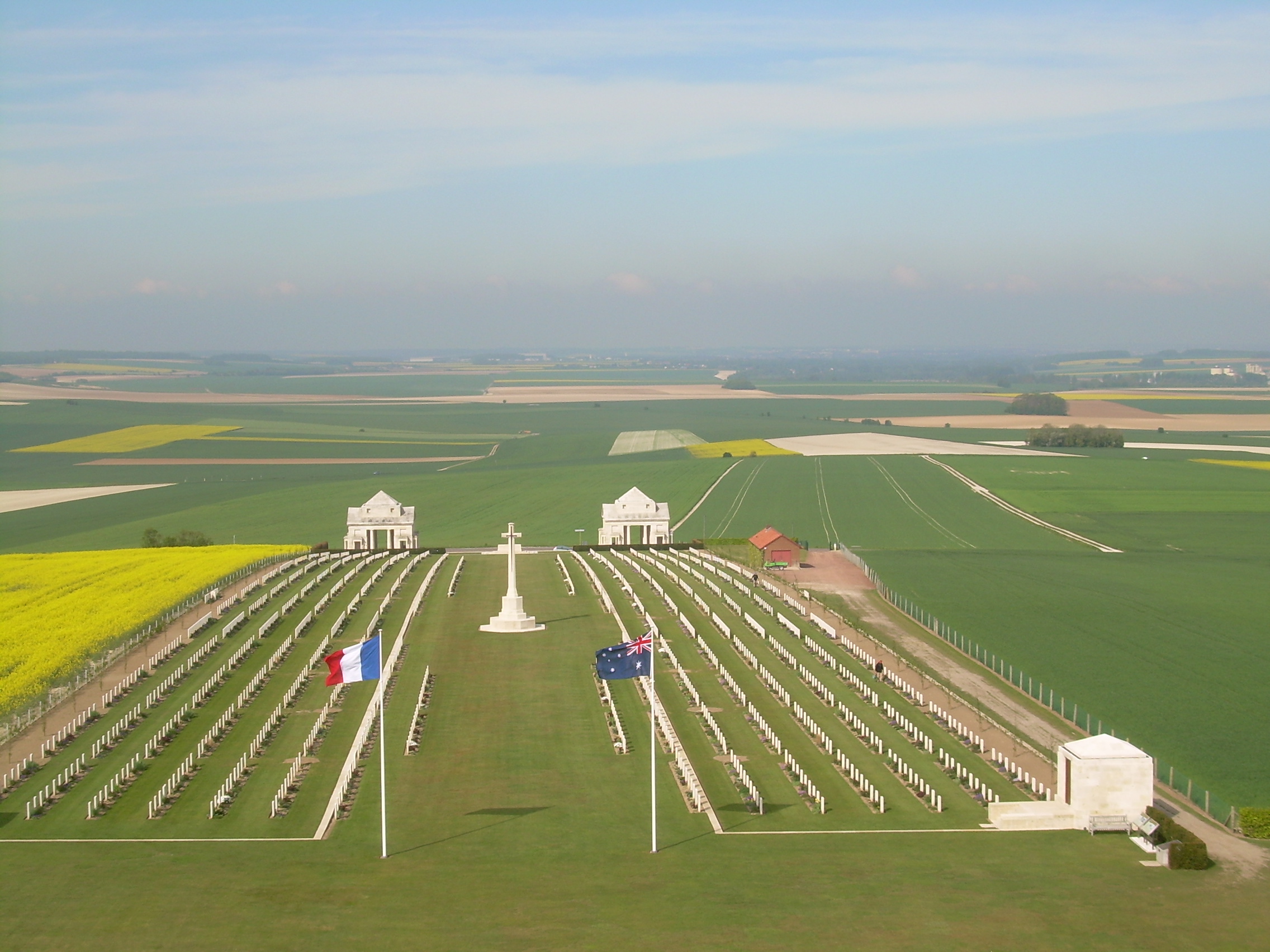
Today, April 25, is Anzac Day, and the hundredth anniversary of the battle at Villers Brettoneux in northern France on 25 April 1918, where Australian regiments were instrumental in helping to secure the liberation of that area of France. As someone brought up between Australia and France, it’s made me reflect not only on the joint experiences of French and Australian troops and civilians in that terrible war, but also on how difficult it is to try and convey, as a writer, something about those experiences, especially when you are writing for children.

Until a few years ago, I never expected to write about World War One. In both France and Australia, as a child I’d seen, in churches and memorials, the staggeringly long rollcalls of the dead in World War One; a war that seemed not only horrible and tragic but absolutely incomprehensible. World War Two seemed more understandable by comparison, in part because my parents were children during the German occupation of France. I could imagine myself writing about World War Two (though I didn’t, in fact until very recently) ) but not World War One. Partly, perhaps it was because in Australia, Gallipoli loomed large, of course, and I did not feel able to write about it, but also could hardly begin to understand, let alone depict, the ghastly long years of trench warfare on the Western Front.

What changed that was, first, a brief visit many years ago to the heartbreakingly big and neat Commonwealth war cemetery just outside Villers-Brettoneux. In the back of my mind, a seed was being planted–and years later, in 2010, it sprouted, inspired by a longer visit–a stay of a few days, in fact, in the pretty, and war-haunted, cathedral city of Amiens and the countryside beyond. Being on the spot, in the quiet streets of the city and the green and pleasant Somme countryside which yet saw so many deaths, looking at memorials and the French Australian museum’s collections of touching photographs of both Australian and French soldiers and the local civilian population, made me change my mind. And also I read about the last year of the war–the way in which in 1918, trench warfare, at least in northern France, gave way not to the pitched open battles of the very beginning of the war, but to a more ‘guerrilla’ style campaign, on both sides, with ambushes and surprise attacks and street-by-street battles in devastated villages. I began to see how I could perhaps tell a story, through the eyes of a young French-Australian character .

So that’s how my first World War One novel, My Father’s War(Scholastic Australia 2011), began. Set in 1918, it is told in the voice of eleven year old Annie, whose Australian soldier father, fighting on the Somme, goes missing, and who goes with her French mother to Amiens to try and find him. Through Annie’s diary unfolds the story of that last year in the war and the experiences of both soldiers and civilians in northern France. It was a story that both flowed naturally from having been in the areas I was writing about and being immersed in pictures and documents of the time, but was also very hard to write. This was a work of fiction so it had to work as an engaging story, especially given the age of my readers, but I also felt a great responsibility to tell it in a way that would not trivialise or falsify. It was a very delicate balance to strike and at times felt almost impossible(and saddening; I found myself weeping several times over scenes) but in the end it worked. Or at least, readers seem to think so–seven years after its release, it is still finding its way into libraries, schools, and homes.

Writing My Father’s War had made me see I could tell a story set in that time. Three years later, my second World War One novel was published. This was 1914 (Scholastic Australia 2014), which from the point of view of Louis Jullian, teenage son of a French diplomat and his Australian wife, told the story of the beginning of that ‘war to end all wars’. It was a very different book, because it was set in a very different time to that of My Father’s War. In 1918, four years of dreadful stalemate and horrendous slaughter had changed the face of Europe, destroying the old order forever.  In 1914, the old order was still there, sleepwalking towards disaster, and even by the end of that year, people imagined that the war might soon be over and things go back to what they’d been before. And my characters might both be French Australian, but they came from very different backgrounds and experiences. Annie had a difficult childhood dominated by war and her father’s absence; Louis, whose childhood was cosmopolitan and carefree, was coming of age at a time when everything would be thrown into question by a conflict that would engulf the world and truth itself. It was just as hard to write this novel as the first; harder even in a way, precisely because it was the beginning: reading about the causes of the war and the chain of events in those fateful few weeks from June 28 1914, when the Archduke Franz Ferdinand was assassinated in Sarajevo, you get a sense both of the so-called ‘inevitability’ of the war but also the fact that it need not have been so. There were times when the momentum could have been halted–but it was not. I chose to tell that story, and the way in which a carefree summer turned into a deadly winter, through Louis’ eyes as he goes from helpless witness of the attack in Sarajevo to scarred and determined young war correspondent on both the Western and Eastern fronts.

Both the novels have had unexpected offshoots: minor characters from My Father’s War inspired a short story of mine, The Other Anzac Day (set during the battle in Villers Brettoneux on 25 April 1918) which was published in a UK collection, Stories of World War One, edited by Tony Bradman(Orchard Books, UK, 2014). This story, told in the voice of Archie, a tough but troubled young Australian soldier, both echoes and contrasts with Annie’s own view of that ‘other Anzac Day’ in My Father’s War. And Louis’ daughter as well as the son of one of his pre-war Austrian friends will be featuring in a novel I’ve been writing, set at the beginning of World War 2 this time, to appear in 2019. In the novel, the experiences of World War One, which transformed the lives of Louis and his friends, haunt the lives of their families too–and of course, by extension, their communities and nations, as the drums of war beat yet again.


More about My Father’s War and 1914:

My Father’s War

By Sophie Masson

(My Australian Story, Scholastic Australia 2011)

ISBN 9781741698282

It scares me a lot, thinking of Dad out there, far away in that dangerous, terrible place, wondering how it will be when he comes back-if he comes back, that is . . .

Annie’s dad has been away for two years, fighting on the Somme battlefields in northern France. For months there has been no word from him, no letters or postcards. Annie and her mother are sick with worry, so they decide to stop waiting-and instead travel to France, to try to find out what has happened to him. There she experiences first-hand what war is like, as she tries to piece together the clues behind her dad’s disappearance. Will Annie ever see her father again?

Teacher’s Notes My Father’s War: http://resource.scholastic.com.au/resourcefiles/8005439_228.pdf

1914

By Sophie Masson

(Australia’s Great War, Scholastic Australia 2014)

ISBN 9781743622476

A small black bottle or a torch came sailing through the air, and landed on the side of the car, close to the Archduke. An instant later came a terrific bang, the road exploded in a shower of dust and stones, and tiny sharp things went flying through the air like angry bees.

In June 1914, Louis and his brother Thomas are enjoying the European summer in a small town near Sarajevo. In the shadow of the assassination of the heir to the Austrian throne, the world erupts into war and Louis’ life changes forever. Old Europe is torn apart and Louis finds himself in the midst of his own battle – and fighting for the truth in war means that sometimes even your own side is against you.

Teacher’s Notes 1914: http://resource.scholastic.com.au/resourcefiles/8284239_24164.pdf

The Spanish Wife: a short story

Today I’m republishing another story of mine–rather Gothic in feel, with a real twist in the tail. It was inspired by a very strange dream, in which I actually heard a voice saying, ‘He was such a grey man, till he came back with a Spanish wife” I woke on those words, intrigued: who was speaking? Who was the ‘grey man’? And what was it about the ‘Spanish wife’? This story was the result of answering those questions. Enjoy!

The Spanish Wife

by Sophie Masson

You’d never have credited it, of Moffat. He was such a grey, precise little man. The sort who is always at his desk a full fifteen minutes before anyone else. The kind whose desk ressembles some general’s abstract plan of attack—never the messy reality of the battlefield. The type of irreproachable bachelor who’s just that—not playing for the other side or anything, but a man who lived a blameless, virtuous, dull life, first with his widowed mother, then when she died, by himself, in a small Holborn flat as neat and grey as his person. He appeared to have no ambitions, no dreams, no hopes, no fears. He had risen in the company only in small steps but did not appear to be resentful of the fact that chaps like Jones or Carey, who’d come in at the same time as he, with pretty much the same qualifications, were streets ahead of him now. He had no enemies, but no friends, either. At least, unless you count me. I took an interest in the funny little chap, for no reason I can really explain, because he is a good deal older than I and not really interested in the same things as I am. My last lady friend, Cora, told me that it was because Moffat made me look good—that his greyness made me look much more sparkling, witty and charming than I really was. But as she said it just before saying I was the most immoral, most selfish man she’d ever met, and slamming the door in my face, we can probably discount that as an explanation. I suppose, if I was to be pushed for an explanation, I was intrigued by him, in a strange way. He seemed to live life in a kind of dream. No, not really a dream; he was like a shadow amongst the solid. Not like a ghost, mind you; ghosts are unexpected things, producing disturbance, fright, an upending of order, what have you. Moffat was the very soul of the expected; the very epitome of unchanging order, always there, never noticed. A nobody, in short.

Until the day when he returned from Spain, with a Spanish wife. The going to Spain was odd enough: the country was in the middle of a bitter civil war, with Reds and Brownshirts and I don’t know what other dismal colours battling it out for control. Why Moffat of all people would go there was a mystery big enough in itself. He was not political in any sense of the word—he’d no more have dreamed of joining one of those hotheaded foreign militias rushing over to drape themselves in the warring colours, than he’d have thought of dancing naked around the office. (The mind boggles!) He had no sense of romance either, none that I’d been able to discern, at least—and certainly the image of sultry senoritas with roses in their teeth and clicking heels and bullfights and all that sort of thing would, I’d have sworn it, simply failed to register with him. He had not, so far as I knew, ever travelled before beyond the various seaside resorts of the South of England. Oh, and once to Cornwall, I believe, but he hadn’t much liked that. Too foreign I suppose. And yet there it was—Moffat had not only gone to Spain, but he’d come back with a Spanish wife. A wife at his age—he was by then in his mid-fifties—was surprising enough. But a Spanish wife—that really took the biscuit. A real revolution, you might say.

Rather to my chagrin, I wasn’t the first to find out. Mrs Evans, the tea-lady, made the discovery. On the day Moffat returned from holidays, Mrs Evans had come in early, at the same time as Moffat himself, and had seen him sitting at his desk, gazing at a photograph. In the deft way of her kind, she had managed to contrive a glimpse.

‘And that’s when I saw her. Gave me quite a turn, I can tell you! Never would’ve thought Mr Moffat had it in him.’

Dolores, her name was, Moffat said. He did not seem at all put out at being caught by Mrs Evans. Indeed, she said, he seemed to positively relish the opportunity to talk about his sudden spouse. He’d met Dolores while on holiday in Spain. They’d ”clicked”, as the saying has it, at once. They married within the fortnight. Yes, he smilingly told the gaping Mrs Evans, she had come back with him to England. He was very happy. Everything was perfect.

‘I am sure it will all end in tears. It isn’t natural, ‘ said Mrs Evans, sagely, as we crowded around her, agog at her story. Moffat was out of the office, on some errand—rumour had it he’d gone to check on his Spanish wife, make sure she was still real, and not a dream. Some of the others in the office were inclined, despite the evidence of the photograph and Moffat’s words—the man had never spun a fantasy in his whole life—to believe that it couldn’t be true, that Moffat had somehow gone a bit senile or, for reasons of his own, was pulling the wool over our collective eyes. But I knew that it must be true—Moffat had no imagination, no mischief, no romance, as I said, in him. Continue reading