On fairytale inspirations: an interview with Kate Forsyth

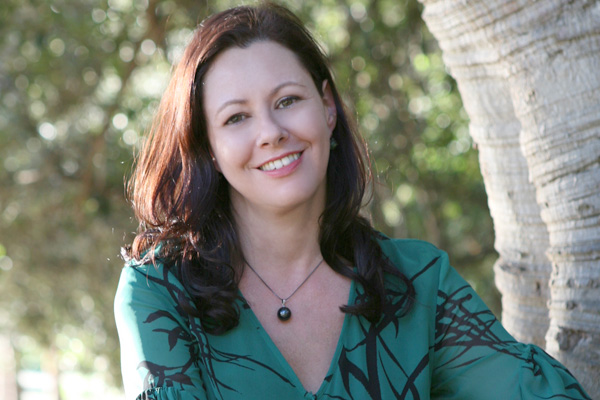
kateforsyth_0Kate Forsyth is not only one of Australia’s most well-known and popular novelists, but also a recognised expert in the field of fairy tale studies. Today, I’m interviewing her about that central fairy tale inspiration.

Kate, you have long had a great interest in fairy tales, with several of your books taking their inspiration from them, and your contribution to the field recognised in the new edition of the Oxford Companion to Fairy Tales. What is it about these stories that so attracts you?

I like the way these tales are so old, and yet still so powerful and relevant to us now. They are filled with beauty and enchantment and strangeness, taking place in worlds in which anything is possible, and yet on a deeper level they are psychological dramas in which desires and longings and fears oxford companion to fairy taleswhich are universally human are played out and resolved. I also like the way they speak in an archetypal language of symbol and metaphor, like dreams, or poetry, or paintings.

There are quite a number of Australian writers mentioned in the Oxford Companion, including of course yourself and myself too, but also Isobelle Carmody, Margo Lanagan, Garth Nix and Keith Austin (though rather to my dismay, they left out Juliet Marillier). What do you think Australian writers can bring to those traditional tales?

 I find it very interesting that so many Australian writers are drawn to retelling fairy tales. Perhaps it is because these stories are very old, and have never been confined by geographical borders. Perhaps it is because fairy tales connect us to a universal subconscious that speaks across cultural and ethnic divides. I don’t know why – I do know that I think they do it wonderfully well!

You recently completed a PHD which had both a creative component–the novel Bitter Greens, which was published a couple of years ago–and an academic exegesis on the theme of bitter greensRapunzel, which will also soon be published. How did you find it, combining the creative and the academic? What were the challenges along the way?

I wrote Bitter Greens first, and focused all my energies on discovering and writing the story. Bitter Greens retells the Rapunzel fairy tale in a Renaissance Venice setting, interwoven with the true life story of the woman who wrote the tale as it is best known, the 17th century French writer Charlotte-Rose de la Force. Told from the point of view of three very different women, who lived in three different times, it took a huge amount of research – particularly when trying to discover the life of Charlotte-Rose de la Force, who was largely forgotten by history.

While I was researching and writing the novel, I took careful notes and kept my bibliography in order, to make it easier once I began my exegesis. Then it was just a matter of systematically working on successive drafts of the exegesis, turning all my raw data into something readable. It was fascinating but exhausting, particularly since I had a very heavy publishing schedule as well (I also wrote my The Wild Girl, about the Grimm brothers, while working on my doctoral exegesis.) However, I loved every minute of it again, and would love to do it again – it’s a wonderful opportunity to really delve deeply into a subject that fascinates.

You have used Beauty and the Beast as a core inspiration in your most recent novel, The Beast’s Garden. Can you tell us a bit about how you worked in those fairytale elements into the midst of the darkness of the Nazi era?beasts garden

In The Beast’s Garden, I took the Grimm Brothers’ version of the ‘Beauty & the Beast’ fairy tale (which is an astonishingly beautiful tale called ‘The Singing, Springing Lark’), and used its structures and symbols to inspire and inform my own story, which is set in the German underground resistance to the Nazis in Berlin. The use of the fairy tale is subtle and oblique; it provides the symbolic scaffolding of my novel. I am interested in new ways of using old tales.

What are you working on at the moment?

I am working on a new fairytale-infused historical novel, set in the passions, scandals and tragedies of the Pre-Raphaelite circle of artists and poets. Tentatively called BEAUTY IN THORNS, it’s the story behind the creation of a famous series of paintings called ‘The Legend of Briar Rose’ by Edward Burne-Jones. ‘Briar Rose’ is, of course, the Grimm version of ‘Sleeping Beauty’, and so I am exploring its themes of love, death, and rebirth through the lives of thirteen women intimately connected to the Pre-Raphaelites – it is such a fascinating story I am utterly engrossed at the moment (I’m still writing the first draft so I have a long way to go!)

briar rose 1

briar rose 2

Write what you love best: an interview with Laura Whitcomb

laura whitcombIn the course of my reading for the PHD, I have come across some wonderful books, and one of them is American novelist Laura Whitcomb’s daring, touching and beautiful YA novel, A Certain Slant of Light, which is half ghost story, half romance. The main character, Helen, died over 100 years ago, and since then has existed  in a transitional place between life and death as one of the ‘Light’, haunting the ‘Quick’, living people who are her ‘hosts’ and immersing herself in literature as all her ‘hosts’ are writers of one kind or the other, so that she’s almost like a variety of muse. She’s forgotten most of her life history, and doesn’t understand why she’s stuck in this dimension but is afraid of finding out more, in case she gets moved on into hell. Then one day, in the class of her current host, a literature teacher, she meets a boy called James, who isn’t quite what he seems at first.

That meeting will transform Helen’s afterlife, as she learns more about herself, love, and salvation. The language is intensely poetic, and the compelling story well-integrated with exploration of such things as the intricacies of sexual relationships and the nature of religious hypocrisy. It’s such a gripping, unusual novel that, reading it on the train, I very nearly missed my stop!

The novel, which was Laura Whitcomb’s first, was very successful, and led to others, which have also done very well. Inspired by my reading, I contacted the author, and asked her a few questions.

A Certain Slant of Light was your first novel,but it is remarkably accomplished both in style and story. Can you tell us about  your  writing career before it,and how the novel was published?certain slant of light

In the 20 years before I sold my first novel I wrote 20 drafts of 20 unpublished novels. So I had lots of practice. Most of the time I was not actively trying to land an agent or sell a book. I was just writing because I loved to write.

The novel  is a bold and unique re-visioning of the traditional ghost story,infusing it with the passionate vivacity of romance. How did you first come up with the idea? And how difficult was it to maintain that balance between the wistful dread of the ghost story and the warm recklessness of romance?

I came up with the idea for SLANT while I was listening to an Anne Rice audio book while I did housework. I liked the way her vampire narrator was from an earlier period of history but reflecting on the contemporary world. But, I thought, you don’t have to be a vampire to do that. You could be a ghost. Next I tried to think what might be the strangest thing that could happen to a ghost. I decided it would be being seen. Next I wondered, why can just this one person see her? Let’s say it’s because he is like her–he’s dead but borrowing a human body. And then the story unfolded from there.

Your characters,both the Light and the Quick, are intensely real. How did you go about creating them and their worlds?

I think creating vivid characters and their worlds comes partly from having life experience and writing experience. And partly it comes from real people I’ve met and environments I have experienced. If you love the story you are writing, you will be compelled to craft that story with the heart and details that make it come to life.

under the lightThe novel is infused with the living, necessary,inspirational and consoling presence of literature and words–indeed Helen’s hosts have all been writers in one way or the other. Can you tell us about that?

The hosts in SLANT were similar to Emily Dickinson and other famous authors and Helen clung to them because she was a book lover, like I am.  When a soul is stuck, like the ghost of Helen, literature would be a healing escape, I thought.

You wrote a sequel to the book–Under the Light–quite a while after the publication of A Certain Slant of Light. Was it an unexpected thing,or did you always intend to write a sequel?

For years I thought there would never be a sequel to SLANT, but then I was haunted with the idea of what might have happened after that first story ended, what stories led up to it, and where the spirits of Jenny and Billy went, what they did, while the ghosts of Helen and James were borrowing their bodies. It became too appealing–I had to write it!

The book you wrote between those two,your second novel,The Fetch, was also very successful. Can you tell us about the inspiration behind it?the fetch

I got the idea for The Fetch while walking in a woodsy park along a river on a winter day. The scenery reminded me of Russia. I thought how strange it was that such fascinating real characters were involved in the same adventure: Anastasia and Alexis Romanov, youngest children of Tsar Nicholas II, and Rasputin, the controversial spiritual advisor to the children’s mother, Alexandra. I started to create a supernatural re-imagining of why it was nearly impossible to assassinate Rasputin and why, after the execution of the royal family, the bodies of the two youngest children were the only ones not found.

You have also written two non-fiction books on writing novels. What has been the reception to them?

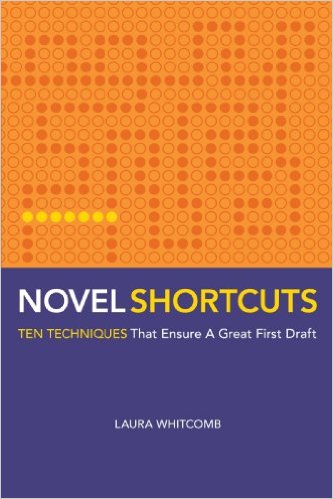
I have gotten lots of great feedback about my “how to” book Novel Shortcuts, but Your First Novel, co-authored with my agent Ann Rittenberg, has been even more popular probably because it not only covers how to write a novel, it includes fabulous insights into the career side of the business. And then there’s the wonderful forward written by another of Ann’s clients, Denis Lehane.

first novelSince your first novel came out ten years ago,there have been quite a few changes in the publishing industry. What’s your take on it, and how do you think authors can best cope with change?

I am not an expert on publishing trends, but my advice to novelists is to avoid chasing them. And write the story you love best. If it doesn’t sell right away, don’t fret, because you’re already working on your next novel and the more you write the better you get. You never know which book will be the one that launches your career.novel shortcuts


Read Laura’s blog here.

Like her Facebook author page.

Follow her on Twitter.


Writing ghost stories: an interview with Benedict Ashforth

When I was a child, we lived in a 1920’s house in Sydney that though not all that old, unlike our ancient house in France, had a kind of elusively sinister atmosphere, complete with creaking woodwork and sudden shadows glimpsed out of the corner of your eye. At night, sometimes, I would lie there and imagine those scary characters in the ghost stories I’d just read coming up the stairs, and pinned to my bedclothes in sheer fright, would tell myself I would never read another ghost story again! But I did, of course, drawn to the form by its addictive combination of sharp precision and high-stakes atmosphere, and stories like WW Jacobs’ The Monkey’s Paw and F.Marion Crawford’s The Upper Berth stayed in my reading memory for good.

As an adult, I still enjoy reading–and very occasionally writing!–ghost stories, but the genre does not allow for mistakes and meandering, and it’s not often that you come across really satisfying modern examples of the genre, accomplished in both story and style: such as the novellas of  the modern doyenne of the ghost story, Susan Hill, and the Gothic-flavoured genre-benders of John Harwood. But recently, on Amazon, I discovered the work of Benedict Ashforth, an English writer whose elegantly creepy, chillingly atmospheric, precisely-told ghost stories and novellas offer an intriguing blend of the classic and the contemporary; the gruesome and the melancholy; the sinister and the sad, allied to a strong sense of place which is characteristic of the well-turned ghost story. Intrigued by the stories, I wanted to know more about the writer behind them, and this fascinating interview is the result.

Benedict AshforthCan you tell us about your writing career? What attracted you to writing ghost stories?

I write about ghosts because I know that they exist. I know because I have seen one. I did not imagine it. Someone else was with me and she witnessed it too. Sceptics would argue that it is possible for two people to imagine the same thing, but I would not. As clearly as I see the page on which I now write, I tell you that we saw another person that night, in that room, who had no absolutely no right to be there. I recognised him immediately – I had known him well, before his sudden death six months earlier. The person with me did not recognise him. She had never met him, but she saw him all the same. How did I know that she had seen him? She was screaming just the same as I was. How do you explain that? There’s an old adage amongst authors that you should write about what you know, and I know ghosts. Whilst I might not always tell the tale exactly how everyone would like it told, at the very least I can tell it with authority because I know that it can happen.  

It was the most terrifying experience of my life, but also the most enlightening. It was no longer a matter of belief or disbelief. It was a matter of certainty and fact. We are not always alone here, however much we like to think that we are.

I have always loved writing. I began with short stories and had some success getting in print in anthologies created by small publishing houses. I began writing Abbot’s Keep around five years ago but then shelved it because I couldn’t make it work. When I revisited the project three years later everything fell into place and I had what I thought was a decent little ghost novella. It seemed to be well received and this encouraged me to write more. 

My latest ghost story is VERONA. It’s about an infertile couple who take a short break to Italy only to discover they have awoken an ancient evil.VERONA COVER 4

You write within the classic tradition of the English ghost story, yet you have placed your stories very firmly in contemporary times, unlike, say Susan Hill or John Harwood, who situate theirs in the past. How do you combine the traditional and contemporary in your work?

I am always trying to drag the classic English ghost story from the past, into a more contemporary world, without breaking the form. I like to write in an era prior to the technological boom that changed the way we communicate. By doing so, I hope to create an ‘old school’ feel to the material before then reaching further back into the ancient past. I especially like the 80’s because this was the era that saw Hammer brighten our screens with wonderful technicolour.

I also try to combine the traditional and contemporary by setting the correct tone in the writing. By emulating a Victorian/early Edwardian prose style, I could write about almost anything but the reader will still know, hopefully, somewhere deep inside, that he or she is reading a ghost story.    

Ghost stories are nearly always short–either novellas or short stories–and yours are no exception. What in your view is the reason for that?

Traditionally, ghost stories are told in an old house in front a glowing fire. Shadows dance and stretch about the walls like wretched souls. The tale cannot overstay its welcome but instead must be factual and to the point, building the atmosphere at the outset before gradually sucking the audience into the darkness. It cannot be too long, else the next person will not have their chance to tell their tale. I believe it is the same on the page. The expectation is that fear must be induced gradually but within a reasonable timescale.

The other factor here is that, as an author, you only have a certain length of time in which to suspend the reader’s disbelief. I might well be wrong about this and I probably am given that some ghost stories are full length novels but, from a personal viewpoint, the best ones that I have read are nearly always the shorter ones.

AK ASHFORTHMost of your stories are set in the English countryside. What is it about those settings that you find particularly inspiring?

The English countryside is brimming with history, both modern and ancient. I’ve always been fascinated with what lies just beneath the surface. Whilst Abbot’s Keep is a fictitious Tudor house nestled deep in Berkshire countryside, the actual setting is real enough. I grew up there. Furthermore, there really is a local legend that gold is buried in that area, hidden by an abbot during the Reformation shortly before he was hung drawn and quartered at King Henry VIII’s request.  And so whilst Abbot’s Keep is predominantly a distant homage to MR James’ The Treasure of Abbot Thomas it is also a story that grew from a local history and geography.

The other element I find inspiring about the English countryside is its loneliness. Whilst it is beautiful and green and unmistakeable, it does bring with it a sense of isolation. Again, hopefully this worked well in Abbot’s Keep. I wanted the bleak and remote location to reflect the main characters loss and loneliness. In my ghost story, VERONA, I wanted Dorset’s Jurassic coast to bring with it a sense of ancient history. There really is evidence of a Roman settlement in that area.

The English ghost story is far and away the most developed in the world. Do you think there’s a reason for that?

The ghost story has a tangible and well deserved place in English literature. Even Dickens couldn’t resist it.  Its form has developed and altered over the years but it always possesses the same emotion and tone. Aside from anything else, I think that the quiet, slightly proper and very English logic, juxta positioned against the, some might say, illogical concept of ghosts creates a unique concoction on the page.

Old sins casting long shadows, buried secrets coming back to haunt and someone hell-bent on finding the truth: the ghost story and the murder mystery have several things in common, yet one major difference of course is that there is no real solution to the central issue in a ghost story, and no order being restored. These days, there’s a lot of murder mysteries but not so many ghost stories published– why, do you think?

In simple terms I believe there is a bigger market for murder mysteries. But it shouldn’t be too much of a leap. As you say, ghost stories and mysteries are inseparably linked. I would love those readers who hardly ever read ghost stories to read more.DARKEST PAST COVER FINAL one-page-001

By bringing the ghost story into a more contemporary world, I hope to achieve this, although I know it is a very long way off. The massive success of Susan Hill’s Woman in Black has helped to bring ghost stories to the fore once again and if I can ever achieve half of what she has I would be forever happy.

What have the reactions of readers been like? And on a practical level, as an independent author, how  challenging–or not!– has it been to get the books noticed?

The reaction of the readers has been incredible. The amount of reviews, both good and bad, means I get a very clear and unbiased opinion of the work. As authors we all like a ‘good’ review, but in reality it’s the critical reviews that have had the biggest impact on my work. I read every single one and take something from it. I think you only get better when people are brutally honest in their views. I encourage every reader to review the work­ – whether it’s positive or negative – I want to hear it.  

It is immensely challenging to get your work noticed but it is rewarding if you get it right. I send paperback copies everywhere I can for review. I find that it’s pointless sending electronic copies. They hardly ever get read. I send something that the reviewer can touch and see. Hopefully, the recipient might just open and start reading and, even more hopefully, he or she might just like it enough to finish the book and even say something about it. 

I was lucky enough to be picked out for Kindle Singles for both VERONA and Abbot’s Keep and that has certainly helped my work to reach a wider audience. I will be looking for an agent shortly, once I’ve finished my debut novel, No Contrition.

Who are your favourite writers, whether classic or contemporary, in this genre? And your favourite stories?

In my view, MR James set the standard for storytelling in this field, using England’s rich history and abundance of ancient locations to best effect. His stories were mysterious and intriguing, building a sense of dread without giving too much information and letting the reader conjure the nightmarish detail in his or her mind.  I especially love Casting the Runes.

Jonathan Aycliffe is also brilliant and has been a great inspiration. My favourite of his stories is Whispers in the Dark. Michelle Paver’s Dark Matter is also superb as is the work of Ramsey Campbell, Roald Dahl, Adam Neville, Susan Hill and Graham Masterton to name just a few. I also loved Paul Torday’s The Girl on the Landing. That is a brilliant book.

Follow Benedict Ashforth on Twitter.

Find Benedict Ashforth’s books on Amazon:

Australia

UK

USA
Authors’ pick special edition reprise: Susanne Gervay

boy in striped pyjamasToday I’m reprising the authors’ pick series with a special post from Susanne Gervay, looking back at her favourite book of 2015.


A book that has left its mark on me is a small paperback with a simple blue and white striped cover. ‘The Boy in the Striped Pyjamas’ by John Boyne changed me and it will change you.

It’s  a simple fable like ‘Animal Farm’ that holds deep truths of humanity.  ‘Animal Farm’ exposed Russian communism. ‘The Boy in the Striped Pyjamas’ exposes the Holocaust. Through the friendship of two boys, Bruno and the boy in the striped pyjamas we see the beauty of friendship.  Within the landscape of their relationship, there is the background of the ‘Jewish solution’. The gripping climax to the story is poignant and compelling reading. This book is highly recommended for all ages, from children to adults. When you shut the book, it will remain with you, making you question prejudice, racism and war.

Multi-award-winning author Susanne Gervay’s books for children include the very popular I am Jack series, which has also been adapted into a play. She is co-president of the Society of Women Writers NSW, Regional Advisor for the Society of Children’s Book Writers and Illustrators, a Room to Read ambassador, and a former Chair of the NSW Writers’ Centre Board.

susanne gervay


So excited about my two picture books coming next year!

I had a great meeting in Sydney this week with the lovely publisher from Little Hare, Margrete Lamond, as well as my fabulous agent, Margaret Connolly. The topics under discussion were my two picture books with Little Hare, which will be both coming out next year, so exciting! And the illustrators who are going to work on them are fantastic–and both have very striking styles. Can’t wait to see what they come up with!

The first, Two Rainbows, about a child from a farm who now lives in the city, will be illustrated by Michael McMahon, and you can see a little bit of his illustration work here.

The second, Once Upon An Abc, which is a quirky ABC book based on characters from folk and fairy tales, will be illustrated by Christopher Nielsen, and his work both as an illustrator and designer is showcased here.


An interview with Jackie Hosking

pass it onLike many other children’s authors and illustrators in Australia, I’ve subscribed for quite a while to Pass It On, Jackie Hosking’s weekly ezine, which like Di Bates’ fortnightly Buzz Words, is full of useful information, news, interviews and tips. But Jackie is also very busy on many other fronts in the children’s book world, and in this interview, I speak to her about the wide breadth of her talents.

Jackie, you are well-known in the children’s book world for many things, but first, can I ask you about Pass It On, the weekly ezine for children’s authors and illustrators that you edit and publish? How and why did it start, who’s it aimed at, and what have been the challenges and pleasures of running such a publication? 

PASS IT ON was passed to me from the original owner in 2004. Before I ran it, it was only the subscribers who shared industry news that received the ezine each week. Being a newbie writer at the time, I made sure I shared something every week as I found the information invaluable. After 20 weeks the call was put out for someone to take the job over. I put my hand up (after a little trepidation) and ran the ezine on a voluntary basis for 12 months. It wasn’t until subscribers suggested that I should charge for my time that the ezine switched from being voluntary to paid but if you contributed at least once a month I offered a free subscription for the following year. PIO is aimed at anyone interested in the children’s book industry. With so much internet information out there, it acts as a bit of a filter as it only contains information relevant to this industry. So far, not too many challenges have popped up. Some weeks are easier to collate than others. The more subscribers share, the more interesting the ezine becomes. I have a picture of a little red hen at the beginning of the ezine to remind everyone that it takes a group effort to produce a tasty read. Overall PIO is mostly pleasure as I’ve met so many wonderful, generous people through it including your lovely self Sophie!

You are also well-known for your involvement in poetry for children, both as a writer and as a promoter. What attracts you about writing poetry for children? And how important do you think it is for children to read poetry?jackie hosking pic

I love poetry because it’s short. I can see the ending, or the image that I want to portray. I think I might have a short attention span which is possibly why I think children are able to enjoy poetry too. Bite sized pieces of writing, easy to digest. Poetry is painting with words; it’s about communicating an idea, or feeling to your reader in a succinct, yet flowing fashion. No waste. Complete.

You’re also very much a mentor and teacher for authors aspiring to write good children’s poetry. What are some of your top tips for aspiring poets?

While I call myself a poet, I wonder if that really describes me properly. Maybe I’m more of a percussion instrument. I write in rhyme and meter. and while I have written a couple of free verse poems I’m most comfortable rhyming away. So my top tips for aspiring rhyming children’s poets are…

Don’t waste words.

Don’t use boring words.

Use strong verbs.

Use metaphor and simile.

Get others to read your work to you aloud – this will show you where the meter is off.

Understand what meter is and in the beginning be very, very strict with it.

Read people like Seuss, Milne, Carroll, Dennis, Bland, any published children’s poet really.

As an editor, you have worked with authors to improve their work. What in your view are the challenges–and pleasures!–of editing? What does it take to be a good editor?

I love editing. I love reading a great rhyme and tweaking it to make is shine. I also love being able to explain why a rhyme is or isn’t working. It’s taken me a few years to learn how to do this, I used to just say, hmmm this line’s a bit bumpy, which probably wasn’t very helpful. Now I use words like foot and stressed syllables and trochaic tetrameter, much more professional 🙂

jackie hosking bookWith so many different skills, and working on so many different areas, often to help other authors and illustrators, how difficult–or easy!–do you find it to switch the many ‘hats’ you wear? 

What’s nice about wearing different hats is that I never get bored. Also different hats require different moods and once I’m in a mood there’s no stopping me.


Bringing a neglected time to life: an interview with Patricia Bracewell

PB_172-001Back in my late adolescence, driven by historical and linguistic curiosity and by having read Kevin Crossley-Holland’s and Jill Paton Walsh’s wonderful Wordhoard as a child, I studied Anglo-Saxon alongside Middle Welsh and Icelandic sagas as part of an Arts degree. I will never forget the extraordinary sound of Anglo-Saxon as the lecturer read it in such works as Beowulf, The Battle of Maldon and the Exeter Riddles, catching through it a glimpse of a time so long ago, so far away, yet in a sense quite close too. That interest surfaced from time to time even well after that, and I read Sile Rice’s vivid novel The Saxon Tapestry, and used Anglo-Saxon documents myself to create part of the background of one of my own books, The Stone of Oakenfast, part of the LayLines/Forest of Dreams trilogy.

My interest in Anglo-Saxon England was rekindled again late last year, with one of the great discoveries of my recent reading life–the wonderful historical novels of Patricia Bracewell, who has brought the neglected world of early eleventh century Anglo-Saxon England to vivid and memorable life in two books of a planned trilogy set around the extraordinary figure of Emma of Normandy.

And so today I am delighted to feature an interview with Patricia Bracewell herself. Enjoy!

Shadow on the Crown and The Price of Blood are major works of historical fiction about a period that is rarely written about: Anglo-Saxon England in the early eleventh century, before the Norman Conquest, but during a period of great strife, both internal and external. What first drew you to writing about this neglected but important period?

It was Emma of Normandy who piqued my interest in the Anglo-Saxon period. My knowledge of pre-Conquest England was relatively slim until the day about twenty years ago when I ran across an online post that referenced Emma, her royal husbands, and her children. I had never heard of her before that, even though I’d taken a course in English History at university. And when, intrigued, I did a little digging and began to get a glimmer of the role that Emma must have played in the first half of the 11th century, I was hooked. I had to know more and, beyond that, it seemed a crime to me that Queen Emma, who had herself commissioned a book about events that she had witnessed in her lifetime, should be virtually unknown today. I wanted to correct that if I could.

You preface each of the chapters in the novels with a quote from the Anglo-Saxon Chronicle, an invaluable but rather dry history of the time, written at the time. What other research did you have to do to create the rich texture of your books, in terms of cultural and historical background?shadow2

The research was considerable because I truly was starting from square one. My university degrees are in Literature, not Medieval History, so I had to begin by learning everything that I could about the 10th and 11th centuries in England, Normandy and Denmark. It took two years of preliminary research to convince myself that I could learn enough about Emma’s world to even attempt to write her story. In addition to academic books and journals about the period I studied translations of documents written at the time – Emma’s own book of course, the Encomium Emmae Reginae, but also charters, wills, leechbooks and lists of abbey treasures that provide insight into the culture. I made several research trips to Europe beginning with a two-week Anglo-Saxon history course at Cambridge that focused on the period from King Alfred to Edward the Confessor. In Normandy I visited museums, abbeys and the site of the ducal palace at Fécamp. In London, Canterbury, and Winchester, museum displays of archaeological finds – weapons, reliquaries, jewelry, and glassware as well as models and maps of towns – helped me visualize that Anglo-Saxon world. In York and in Denmark I learned about the vikings and their ships. I’m still researching even as I write the third book, and I’ll be back in London this coming summer for that very purpose.

The action of the novels is seen from the viewpoint of four main characters: Emma of Normandy, the young, spirited and intelligent Queen of England; Elgiva, manipulative daughter of English nobleman Aelfhelm;  Aelthelred, the tormented and cruel King of England, and Athelstan, his eldest son from his first marriage, a brave, honourable yet ambitious prince. How did you juggle these different viewpoints, and what were the challenges and pleasures in seeing the story from different pairs of eyes?

In terms of juggling the four viewpoints, the biggest question I asked myself when creating a scene was Who has the most to lose? That decided, I could write the scene from that character’s viewpoint. In order to write a different scene from another point of view I then had to accustom myself to that character’s attitude, voice, opinion, language – a switch that was never easy and usually involved a lot of re-writing. Nevertheless there were distinct advantages to utilizing this shifting third person viewpoint. It broadened my story by allowing me to go places with a second or third character when the main character – Emma – could not go there. The shifting viewpoint also added contours to the various characters because readers could see them through several pairs of eyes. Elgiva, Æthelred and Athelstan, for instance, all regarded Emma quite differently and interpreted her actions in different ways. I think (hope) it added a layer of complexity to the story.

You paint a remarkably compelling and nuanced picture of the many warring cultures of the time–Norman, Anglo-Saxon and Viking, to name just the main ones. How did you go about creating a picture that is engaging for modern readers yet historically authentic in feel?

This may seem simplistic, but I think it comes down to the fact that human beings haven’t changed all that much in a thousand years. It’s my belief that our emotional responses are pretty much the same now as they were in 1002, and it is that emotional charge that readers look for in fiction. So it’s a matter of building that historical and cultural world as accurately as possible, placing actors inside it, and then imagining how they will feel and how they will act in that situation.

Shadow on the Crown was your first novel. Can you tell us something about your career before the novel was published–and how it came to be published?

I wrote two romance novels (unpublished) before I attempted Shadow on the Crown. I think of them as my practice novels because writing them helped me learn my craft. (I’m still learning – with each revision!) Before that I wrote short stories, personal essays, and feature articles for local publications. Before that I was a high school English teacher, so I really have been involved in writing all my life.

I pitched Shadow on the Crown to an agent at a Historical Novel Society Conference in 2009, but for over a year we received nothing but rejections, mostly because editors didn’t believe they could sell a book set in Anglo-Saxon England. We were both determined, though, and after I made a number of pobukjulyrevisions my agent, God bless her, sent it out again. By that time the first season of Game of Thrones had aired. Did that make a difference? I don’t know; but two weeks later we had offers from two different publishers.

How have readers across the world reacted to the books?

I think that a great many readers have been surprised by Emma’s story simply because they’ve never heard of her. She wasn’t a Tudor or a Plantagenet, and readers seem to appreciate discovering not just Emma but the pre-Conquest world in which she lived. The Portuguese language edition of Shadow on the Crown (A Rainha Normanda) has fans in Brazil and one of them, to my delight, has created a Facebook page for it. The German language edition has done well enough that The Price of Blood (Die Königin) will be published this month, and a Russian edition is in the works as well. Given that my goal in writing the trilogy was to pull Emma out of anonymity, the number of foreign editions of the book has been enormously gratifying although completely unexpected.

You’re working on the third book in the Emma of Normandy trilogy. Are you dreading or looking forward to telling the rest of her story? And do you have plans for other novels set in that time?

I am very much looking forward to telling the rest of Emma’s story – at least, as much of her story as I’ve chosen to include in this trilogy. If there is any dread involved, it’s that nagging question of Am I a good enough writer to make a really good job of it? I hope and pray that I am! I’m writing toward a conclusion that I had in mind when I first began this project, but the devil is in the details, and I’ve never written the final book of a trilogy before. I want it to be fantastic, so I’m setting the bar for myself pretty darned high and giving myself all the time I need to do it well.

As for what comes next, I’m too consumed by the conclusion of Emma’s story just now to think about it. Nevertheless, I love the Anglo-Saxon period, and there is a wealth of unexplored material there, so I wouldn’t rule out another pre-Conquest novel.

Authors’ pick special edition: Angela Slatter

wolfwinterOkay, so I know I said that Matthew Thompson’s Authors’ Pick was the final in the series, but I’ve just received this fabulous review by Angela Slatter of her favourite book of 2015, and so here it is, in special edition!


“It’s the kind of winter that will remind us we are mortal,” he said. “Mortal and alone.”

One of the books that stuck with me from my 2015 reading pile was Wolf Winter by Cecilia Ekbäck (Hodder and Stoughton). http://www.ceciliaekback.com/

 Set in 1717 in Swedish Lapland Wolf Winter seamlessly blends history, mystery, and speculative elements. Recent settler Maija and her daughters Frederika and Dorotea are left alone on Blackåsen Mountain when Maija’s husband leaves to find work. The women must face a dreadful winter, roaming wolves, and, perhaps most terrifyingly, the other folk who live on Blackåsen.

 Life as outsiders is difficult enough, but when Frederika discovers one of the other settlers, Eriksson, murdered things become more complicated. Not only is Maija stubborn, refusing to let the mystery of Eriksson’s death go unsolved, but Frederika begins to manifest eldritch powers; worse still, Eriksson has returned as a ‘heavy’ ghost and only she can see him. He was not a nice man in life − death hasn’t improved him − and he insists that Frederika solve his murder. It’s the only way she can be free of him, but there’s more than one secret on the mountain and their keepers will do anything to ensure they remain hidden.

 There is a wonderful clarity to Ekbäck’s prose; it is stripped back to its essentials but still lovely. It never feels sparse or lacking or cold, the landscape and its characters come through strongly and always seem real and relatable. She covers the historical detail with a light hand so you never feel as if the writer’s going, “Look at all the research I did! Look at it!”, but rather it’s woven beautifully into the fabric of the tale. Highly recommended.

Angela Slatter is: the author of six short story collections and a debut novel that’s coming out in 2016; a PhD survivor; an occasional award-winner; a lover of coffee; http://www.angelaslatter.com/; @AngelaSlatter.

angela slatter


Authors’ pick 24: Matthew Thompson

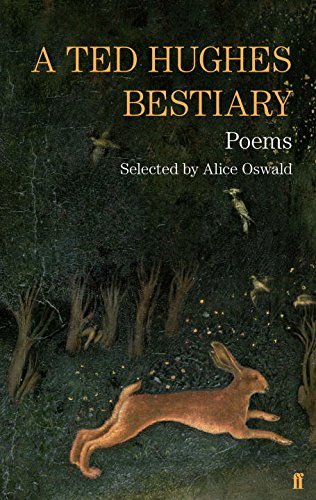
Ted Hughes Bestiary coverToday’s authors’ pick–and the final one in this series–has been chosen by Matthew Thompson.

A Ted Hughes Bestiary, poems selected by Alice Oswald.

The revelation of Ted Hughes and his exquisitely poised and powerful animal poetry was a long time coming. For decades a clear, open-hearted view appreciation of the crow poems and other work was not possible for me, due to the grip of Sylvia Plath’s fierce and tragic legend.

I did glance at Hughes’ poems now and then but my sight was displaced and distorted by the mythos of sadistic, maddening selfishness – even more so when I learned of how the woman that displaced Plath in Hughes’ affections, AssiaWevill, murdered their daughter and killed herself (and how quadruply weird to consider that Hughes and Plath’s son, Nicholas, eventually hanged himself in Alaska).

Age has taught me to let complexity be, even complexity of torment, instead of pruning it back to ready-understandability or by gripping isolated strands of it in order to haul oneself up to a fake height of mind.

So, a few months ago, decades after first reading Hughes, and while in Melbourne researching the life of a long-term recidivist prisoner for a book I’m writing, I slid from a bookstore shelf the slim hardback of A Ted Hughes Bestiary, Alice Oswald’s selection of Hughes’ animal poems.

Amidst the stark and ruthless crowscapes sat “The Jaguar”, a glimpse of a zoo-held beast seething with itself. I couldn’t help but think of my writing subject, a man who in his younger years could not be tamed, could not be contained, whose will was harder than the bars and walls around him.

…there’s no cage to him

His stride is wildernesses of freedom:

The world rolls under the long thrust of his heel.

Over the cage floor the horizons come.

But the prisoner’s jaguar days are gone.Sentenced again, this time to so long in isolation that even the judge said it would damage his mind, the man now sits spiritually detached from, but physically within spitting distance of, the predatory world of crime and jail. So attuned, he can sense when someone who, unlike battered old him, still hungers for prey: someone whosegrimacing face has not yet been smoothed. A blood-thirsty hunter in a moment that brings to mind the opening of Hughes’ “And Owl”:

Floats, a masked soul listening for death.

Death listening for a soul.

Yet it would be too limiting to keep relating these poems to men, to humans. Their centre is not anthropomorphic and in reading them, in handling them, DH Lawrence’s poem, “Fish”, comes to mind: specifically, its message that other beings inhabit their own universes, have not gods or not the same gods, are sometimes older and more purpose-made than we can comprehend. Lawrence’s narrator marvels at his witnessing of fish:

Loveless, and so lively!
Born before God was love,
Or life knew loving.
Beautifully beforehand with it all.

Joyce Carol Oates uses that line about a time “before God was love” to describe the severe and profound world of boxing, a world for its enthusiasts that remains beautifully before today’s widespread cringing avoidance of harm. The animals are not emotional about their pain or plight. They are clarity of instinct.

And over it all, unblinking in their exactitude, are not just Hughes’ famous crows but his hawk, who in “Hawk Roosting”, flies up to:

…revolve it all slowly –

I kill where I please because it is all mine.

Of course, there is so much more, including tales of animals lower on the food chain, but you’ll have to read them yourself. I have too much work to do.


Based in the small NSW town of Dungog, Matthew Thompson is the author of Running with the Blood God and My Colombian Death and a journalist whose recent work has focused on the violent intrigues of the Sulu Archipelago in the southern Philippines. For more information, see www.matthewthompsonwriting.com

Matthew Thompson

Authors’ pick 23: Sharon Rundle

asylum palaverToday’s authors’ pick has been chosen by Sharon Rundle.

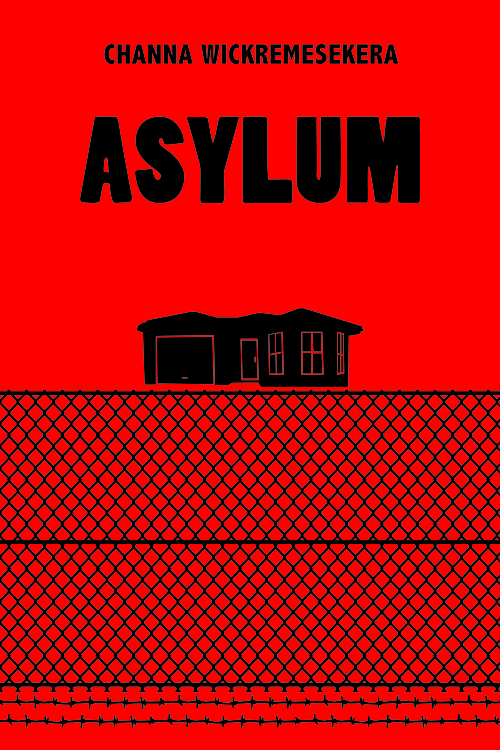
Asylum,  Channa Wickremesekera, Published by Palaver.

For the purpose of my research, I’ve been reading a lot of novels by South Asian-Australian authors with ties to Afghanistan, Bhutan, India, Nepal, Pakistan and Sri Lanka. I’ve read marvellous narratives from established and emerging writers. To choose one novel from this amazing array of fiction, is an enormous challenge. After long and difficult deliberation, I plumped for one that provided a new perspective, was surprisingly enjoyable, beautifully structured and written in a page-turning style.

Sometimes the best way to encourage discussion and provoke deeper thinking is through humour. Ideas that may seem simple on the surface havewider ripples and deeper currents than appear at first. So it is with Asylum by Channa Wickremesekera.

A young prison escapee decides to break into a home and take hostages,after the news that he is on the run with a gun is broadcast through media and police reports. The house he chooses is the home of Afghanis of Muslim faith. The mother wears a niqab, while her sometimes sullen, sometimes giggling young daughter, Aisha,wears a hijab. The mother understands English but prefers to speak in her Dari language.Through her family, she is the main negotiator with their captor. Khalid, the male teenage narrator with typical ‘attitude’, “I’ve seen bigger guns than that in Afghanistan with kids half his size” (p 23), is the perfect choice as the cynical observer. He is also a main player in the drama that unfolds as police surround the house. Negotiators are brought in to help, with mixed and sometimes hilarious results.

What could be a disaster turns into a tragi-comedy as the actions of the police and young man on the run with a gun become farcical when faced with this unexpected turn of events.

The Afghani family face another even deeper dilemma. Should they offer asylum to this person seeking refuge, as they believe they should? Should they lie to the police for the greater good? Which would give lesser offence to God? What to do in such an impossible situation? He is only a scared, tired, hungry, delinquent boy, after all. Khalid has heard it all before, “How you should look after people who take refuge with you, even if they are your worst enemies. Even if they had killed your own mother and father. I always thought that sort of thing happened only a long time ago and if it happened now it was only in the movies. Never thought we will have to practise it.”(p 40).

While the family debate the best plan, mum keeps cooking and feeding them all, including their captor Rusty.

This novel has impact and lingers in the mind long after it’s read. To my mind, ‘Asylum” should be on the HSC reading list. Suitable for both adults and young adults, the deceptively simple style and endearing narrator in “Asylum” allow for serious ideas to be discussed without polarising the audience. Many may be surprised by such a fresh perspective and by what they learn through humour.


Channa Wickremesekera is a Sri Lankan-Australian who has published three other novels, “Tracks” (published Sri Lanka, 2015), “Walls (Wasala, Sri Lanka, 2001)” and a novella “In the Same Boat” (Bay Owl Press, 2010).

A fun novel written in a jaunty teen voice—a novel that tries to tip our assumptions on their heads and succeeds.” —Anna Funder, author of Stasiland and All That I Am

“This is a timely novel, written with daring and imagination. It deals with themes that we urgently need to engage with and reflect upon, challenges that cry out for a long-overdue national conversation.” —Arnold Zable, author of Cafe Scheherazade, The Fig Tree, and Violin Lessons

Asylum Wickremesekera, Channa. Published by Palaver.

ISBN 10: 0994343108 ISBN 13: 9780994343109


Sharon Rundle has researched novels by South-Asian Australian authors published in Australia for a Doctorate of Creative Arts thesis. She is co-editor of Indo-Australian anthologies of stories published by Picador Pan Macmillan (2009 & 2010 India, Australia & UK), Rupa Publishing in India (2014) and Brass Monkey Books in Australia (2012 & 2014).

20151212_114715