Authors’ pick 21: Yangsze Choo

IMG_0189Today’s Authors’ Pick has been chosen by Yangsze Choo. 

I must confess that I haven’t read much fiction recently. This is because I’m struggling to finish my second novel, a giant doorstop which I keep telling myself is almost done, but continues to expand in alarming ways as I try to squeeze in just one more plot twist. The situation is worsened by my frequent attempts to seek “inspiration” in dark chocolate… I need to go on a diet in more ways than one, which is why my book pick for 2015 is a cookbook.

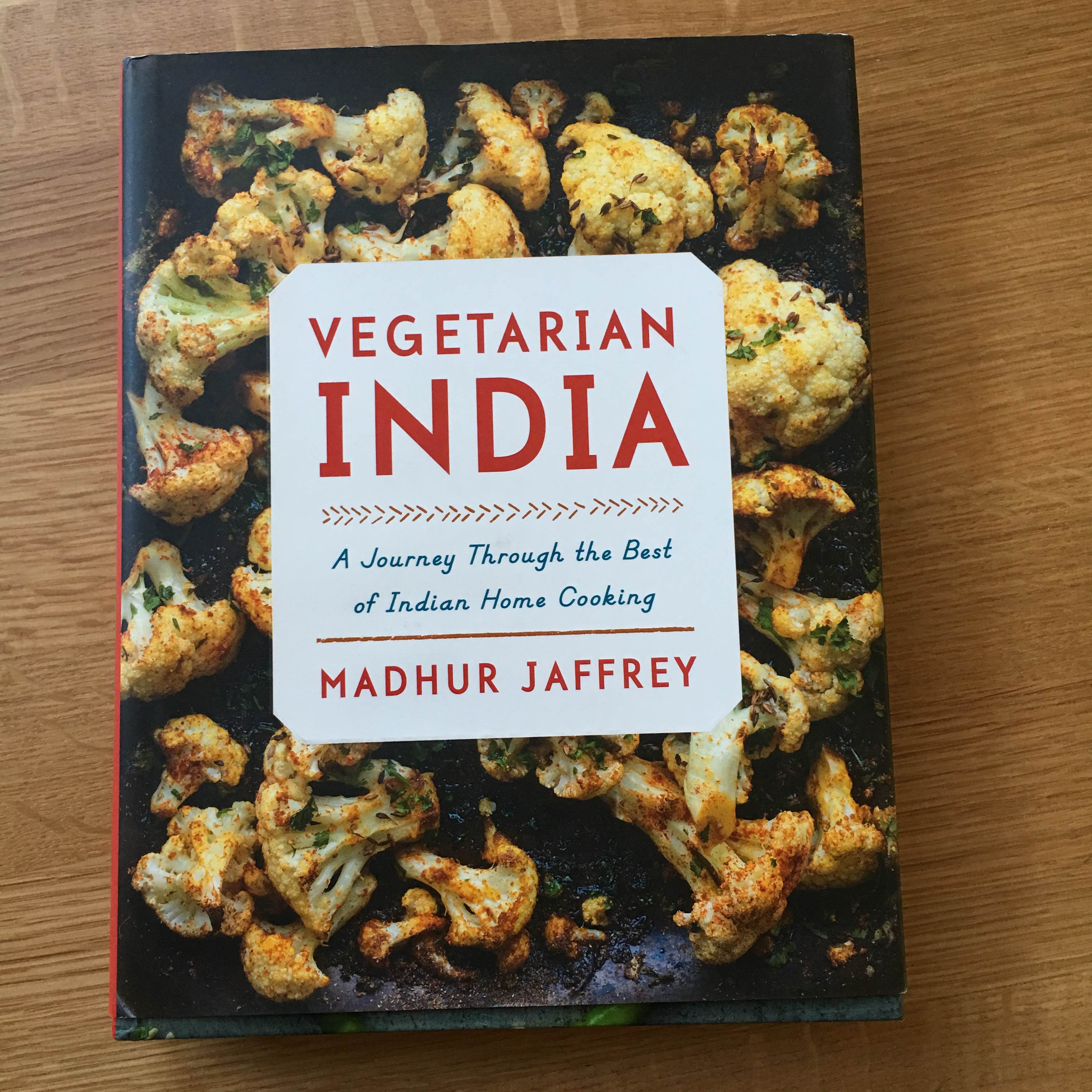
Madhur Jaffrey is my favourite Indian cookbook writer – over the years, I’ve cooked my way through many of her books, always with good and very authentic results – so when I realized that she had a cookbook called “Vegetarian India”, I rushed off to get it. Our family has been trying to move towards a more vegetarian diet (one of the reasons I’ve so enjoyed Sophie’s food blog featuring her lovely garden) and this book is stuffed with delicious ideas. In fact, when I first got it, I made the roasted cauliflower with Punjabi seasonings that’s featured on the cover three times in one week. Tossing cauliflower with lemon juice, cumin, coriander, ginger, turmeric and olive oil results in a sizzling pan of crusty goodness that’s quickly devoured in our house, even by small children who claim they will never, ever eat cauliflower.

Like Madhur Jaffrey’s other cookbooks, each recipe comes with a little backstory or some helpful tips, and there’s enough variety from rice dishes to hearty vegetarian mains and pulses, to cook an entire dinner banquet, if you’re so inclined. Or you can just do what I’ve been doing and add an extra veggie dish or two on weeknights.

So, if your New Year’s resolution is to eat less meat and more healthily, I highly recommend this book! Happy reading and eating 🙂

Yangsze Choo’s first novel, The Ghost Bride, was published in 2013. She loves to eat and read, and often does both at the same time. She lives in California with her husband and children, and a potential rabbit.
yangsze choo colour


Authors’ pick 19: Kelly Gardiner

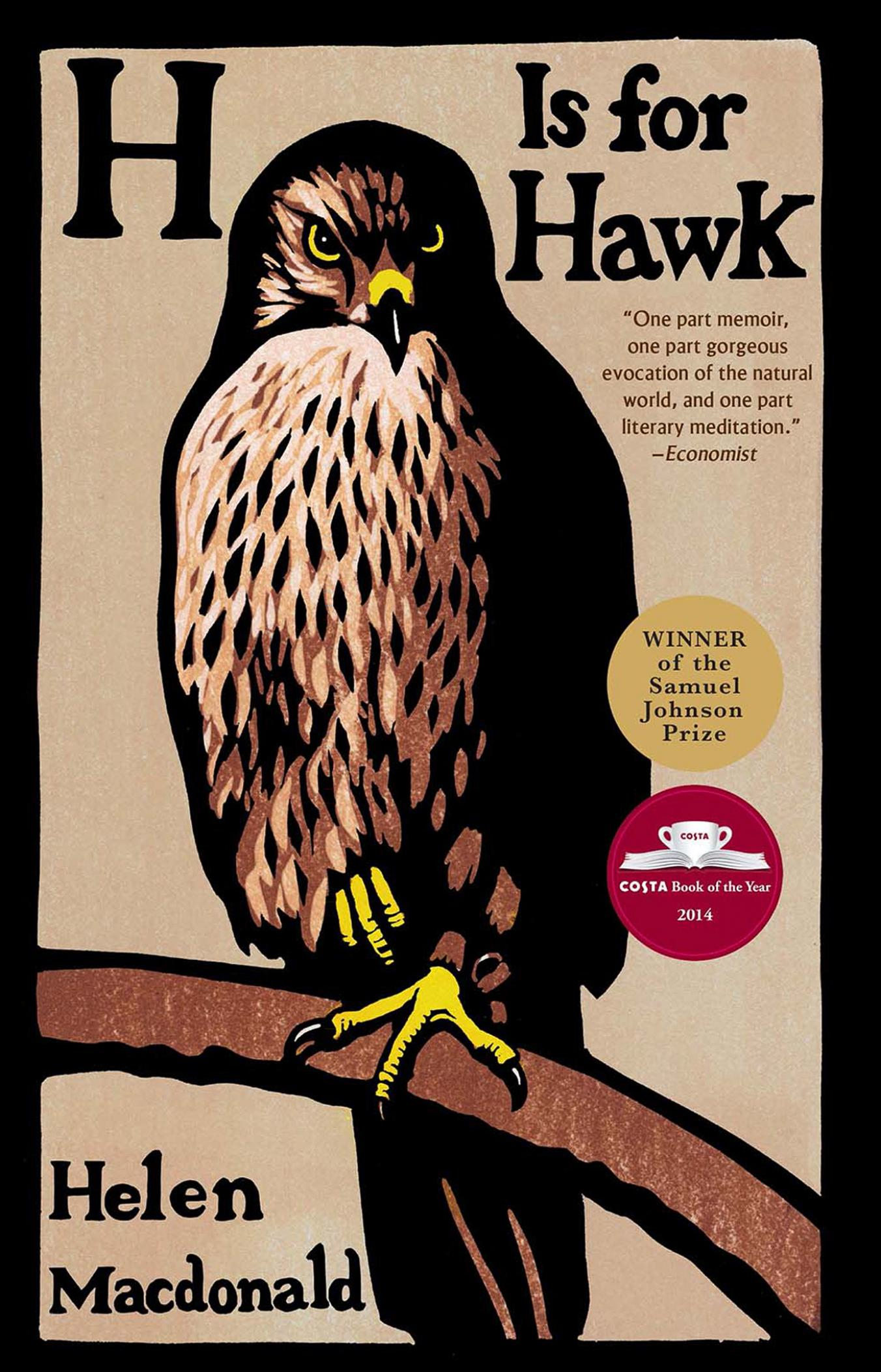
H_is_for_Hawk_cover-2Today’s Authors’ Pick has been chosen by Kelly Gardiner.

My favourite reading experience of the past year has been Helen Macdonald’s award-winning H is for Hawk, a memoir about grief, the vanishing British countryside, and a goshawk called Mabel. I’ve long been fascinated by the traditions of falconry, an ancient form of hunting in many cultures that became a sport of royalty in Europe in the middle ages.

H is for Hawk acknowledges this lineage, but more importantly it focuses on the relationship between raptor and trainer, taking us through the process and also tapping into the rich tradition of writing about hawks and falcons.

Chief among these is the work of T H White, author of The Once and Future King and other brilliant historical fantasies. His 1951 book, The Goshawk, was based on the journal tracing his own training of Gos – a troubled, tumultuous process that nearly finished off both of them.

Helen Macdonald weaves the story of White and Gos through her own reflections on the relationships between humans and wild creatures, and one another, as she learns to live with the sudden loss of her father, while Mabel and White reflect aspects of her own life back to her.

It’s brilliant, fascinating nature writing wrapped up in a poignant memoir about grief and belonging.

Kelly Gardiner’s books include Act of Faith and The Sultan’s Eyes, both of which were shortlisted for the NSW Premier’s Literary Awards. Her latest book is Goddess, a novel based on the life of the seventeenth century French swordswoman, cross-dresser and opera singer, Mademoiselle de Maupin.

2015-gardiner-kelly


Authors’ pick 18: Lucy Sussex

SutcliffToday’s Authors’ Pick has been chosen by Lucy Sussex.

I revisited Rosemary Sutcliff’s THE RIDER ON THE WHITE HORSE this year, after having mislaid it for some time. I wanted to know how I would read it after a long absence, if what I remembered still impressed, and what might have diminished with my increased craft/critical acuity. The answer is, very little.  The book is about the English Civil Wars, of two well-documented figures from the Roundhead side, General Sir Thomas Fairfax and his wife Anne. At the beginning of the conflict, in his native Yorkshire, Fairfax campaigned with his family, Anne and their small surviving daughter–which led to Anne being captured by the Royalists under the command of the Duke of Newcastle (later to marry another formidable woman, writer Margaret Cavendish). From the existing sources and her own imagination, Rosemary Sutcliffe wrote a portrait of a marriage, and with considerable emotional subtlety, for the romance is one-sided. The Fairfaxes have an arranged marriage, as was usual for the gentry, but while Anne loves Thomas, he is only grateful to her—or is he?

When working in the rare books section of a library, I had occasion to read some of Sutcliff’s source matter, Thomas Fairfax’s own memoirs. It showed me Sutcliffe’s fidelity to history, and at the same time how she imaginatively breathed life into it. In the battle of Wakefield town, Fairfax narrowly escapes capture by jumping his horse over a garden wall. In the book he finds the incident absurdly funny–as is quite clear from his own words. Sutcliff stages the scene brilliantly.

The novel is unquestionably for grown-ups, a story of unrequited love within a marriage. It also contains superbly realised battle scenes, vivid depictions of nature, and regional dialects reported without condescension.  It is immersive history, without the post-modern intrusion, as when Hilary Mantel has Henry VIII describe Jane Seymour as  his little “bun-face”. That is not Tudor language, and while absolutely right in terms of the lady, it jars. Similarly Cromwell, from his visual image–and Holbein was an acute observer–was a bit of a brute. Mantel depicts him as quite feminine in that people confide in him, and he listens, without interrupting. Fairfax is contradictory, a masculine man of war, a berserker in battle, but also gentle in his manners, kind.  Anne conforms to the gender expectations of her time, while not concealing her intelligence, nor her forcefulness–she is deeply involved in the political/religious struggle.  And yet she can be very obtuse.

Were this book published now, would it rate in the Bookers?  Surely yes, if the author’s genre/readership placement did not get in the way.

One final comment. Writing the pre-Enlightenment is tricky, as to be strictly accurate the religion would dominate the world-view, in a fashion incomprehensible to us rational post-moderns, wringing our hands over IS.  So while the title of Sutcliff’s book comes from Revelations, the wild religious discourse of the Civil Wars is downplayed.  But she does it, as she does with so much in this book, subtly and intelligently.

Lucy Sussex’s most recent book is the award-winning Blockbuster (Text, 2015), about crime writer Fergus Hume, and his Mystery of a Hansom Cab.

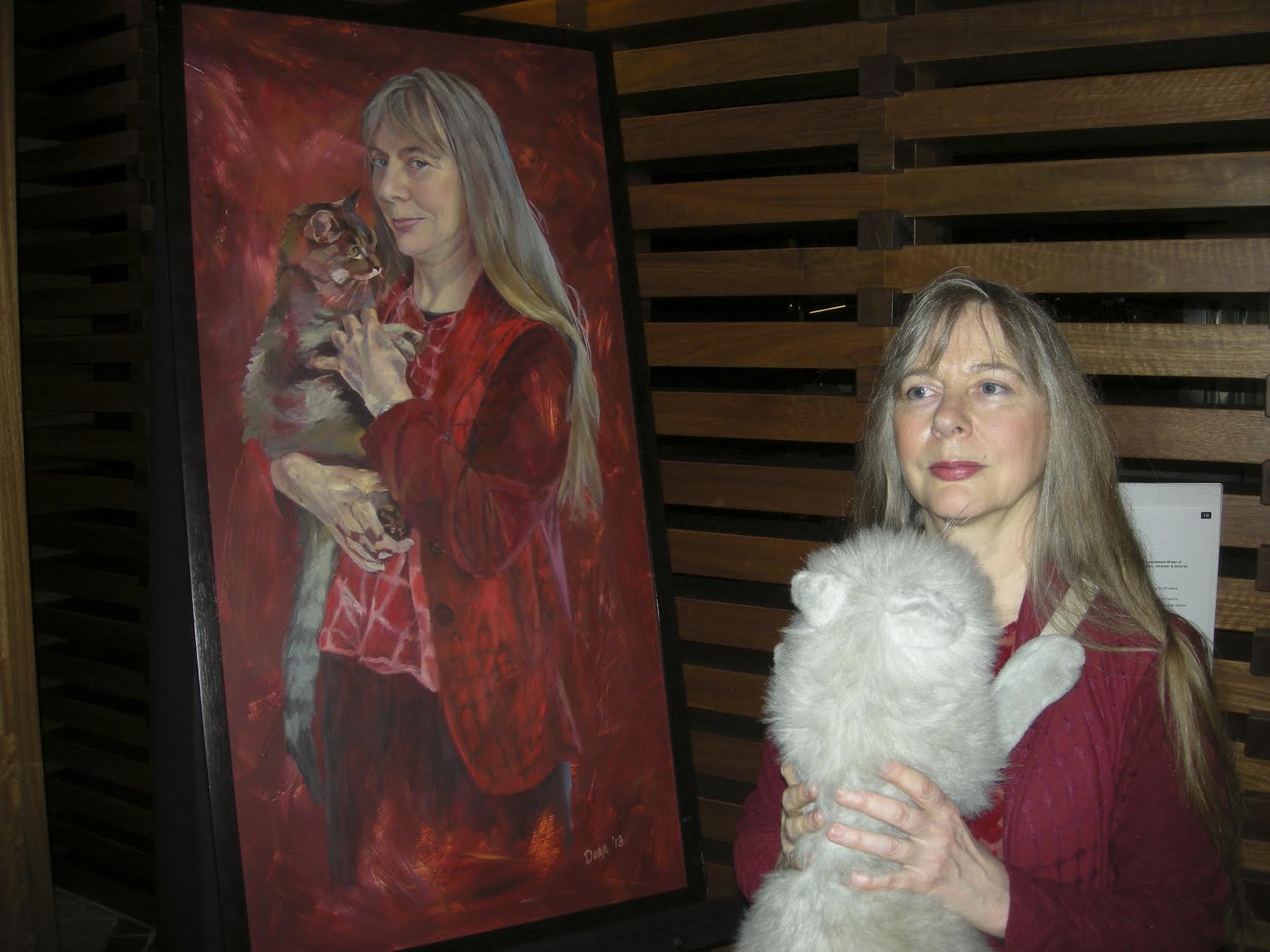
Lucy Sussex with portrait of herself by artist Dora Levakis, from the Archibald Prize's 'Salon des Refusés'

Lucy Sussex with portrait of herself by artist Dora Levakis, from the Archibald Prize’s ‘Salon des Refusés’

Authors’ pick 17: Amanda Bridgeman

Station-Eleven-CollageToday’s Authors’ Pick has been chosen by Amanda Bridgeman.

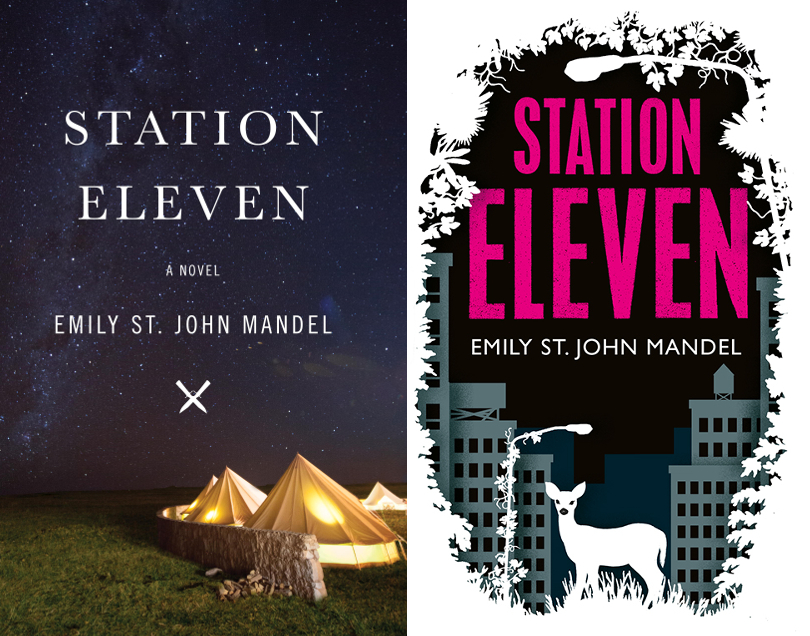
This year I really enjoyed reading Station Eleven by Emily St John Mandel. It’s the story of how a deadly flu epidemic sweeps the world killing the majority of the population. Told half in the post-apocalyptic world, and half in the pre-apocalyptic world, the story follows several characters who are linked in one way or another with one central character, an actor by the name of Arthur Leander. I thought Mandel captured the flu epidemic perfectly (it was scarily realistic), and I found the characters’ stories, of how they try to survive (or don’t as the case may be) in a world gone to hell, very interesting. It’s a great examination of the human spirit, of how through the chaos, hope can still shine on.

Amanda Bridgeman is the author of the character-driven space opera ‘Aurora’ series.

_MG_0298

Authors’ pick 16: Wendy J.Dunn

poldarkToday’s Authors’ Pick has been chosen by Wendy J.Dunn.

2015 has been a very good reading year – even if Goodreads keeps reminding me that I better hurry up if I am ever to reach my goal of reading 25 new novels this year. My problem is I like going back to old friends – those magical novels on my bookshelves to be re-read and re-read. Amongst the old friends I re-read this year were Winston Graham’s Poldark novels. That resulted from watching the new Poldark television series, when I yielded to the temptation to pull out the first Poldark novel from my home library. The first novel was followed by the second, until weeks later I closed the last page of the thirteenth novel, feeling sad again that Graham has left us. No more novels from his pen – novels demonstrating the power of a true storyteller.

This year, I also discovered novels I couldn’t put down by another great storyteller. Written by Barbara summerfoldGaskell Denvil, the first of these novels was Sumerford’s Autumn. Set at the beginning of the Tudor period, this gripping and richly researched novel kept me turning its pages until I reached the end. By then, Barbara Gaskell Denvil had gained a new fan and I couldn’t wait to read her other novels. What I loved about Sumerford’s Autumn was not only that it took me back to a period I love passionately and inspires my own fiction, but also how much Denvil’s wonderfully told story and well drawn fictional characters engaged me as a reader. The novel opening the door to a very lively and believable Tudor world, Sumerfold’s Autumn is pure escapism. Dialogue was another plus; perfectly pitched, evoking Shakespeare at times with its use of dark humour to help get the reader through those many tragic, poignant moments in the story, the dialogue powerfully made all the characters step off the page and into my imagination. Sumerfold’s Autumn doesn’t shy away from the violence and harshness of the Tudor period – or how death then was faced as a daily proposition. But it is also a novel of romance and adventure told through unforgettable characters.

Highly recommended.

Wendy J. Dunn is the author of two Tudor novels: Dear Heart, How Like You This?, the winner of the 2003 Glyph Fiction Award and 2004 runner up in the Eric Hoffer Award for Commercial Fiction, and The Light in the Labyrinth, her first young adult novel.

wendy j dunn

Authors’ pick 15: Emma Viskic

a-wrong-turn-at-the-office-of-unmade-listsToday’s Authors’ Pick has been chosen by Emma Viskic.

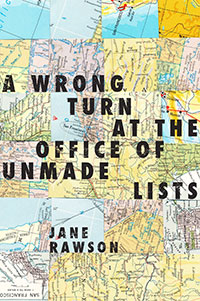
One of my favourite reads of the year was Jane Rawson’s A Wrong Turn At The Office of Unmade Lists. It’s a charming, disturbing, wonderful book, set partially in post-environmental collapse Melbourne. The novel begins with the day-to-day struggles of Caddy, then steps neatly sideways and deposits you into a world where stories can come true, and magical maps are portals to other places. A Wrong Turn won the 2014 Most Underrated Book Award and it’s easy to see why: it’s one of those novels that defies categorization, but stays with you. There are places in Melbourne I still can’t go without remembering it.

Emma Viskic is the author of the critically acclaimed crime novel, Resurrection Bay. She has won both the Ned Kelly SJ Harvey Award and the New England Thunderbolt Prize for her short form writing.

Emma Viskic author photo 4 - Version 2

Authors’ pick 14: Sherryl Clark

singing bonesToday’s Authors’ pick has been chosen by Sherryl Clark.

The Singing Bones
Shaun Tan

I always look forward to seeing what Shaun Tan will do next, and this book is amazing, even if you don’t have a special interest in fairy tales like me. What was even better – I was able to go and see the exhibition of sculptures/artworks that Shaun created for the book.
It’s a collection of photographs of the sculptures, along with short excerpts from the fairy tales they represent. Just when you thought you could guess what Tan might create for a certain tale, he will surprise you.
He initially created some of them to illustrate the German edition of Philip Pullman’s collection of tales, and there are now 75 of them in this book. Pullman wrote the foreword, and uses words such as “uncanny”, “strange” and “brilliant and grotesque weirdness” to describe the sculptures. Everyone I know who has seen the exhibition and/or read this book have their favourites. Mine include The Turnip, The Singing, Springing Lark, All Fur, Foundling, The Boy Who Left Home to Find Out About Fear and Hansel and Gretel.
The photographs are brilliant, using light and shadow to make the sculptures feel almost alive, about to jump off the page. Every time I go back to this book, it amazes me all over again.

Sherryl Clark writes children’s and YA books and poetry, and is currently undertaking a creative writing PhD focusing on fairy tales.

Sherryl

Authors’ pick 13: Narrelle M. Harris

THRIVE cover_0Today’s Authors’ pick has been chosen by Narelle M. Harris.

I nominate Thrive, by Mary Borsellino. Full disclosure – I did the edit on this book and launched it, in part because I’ve been a huge fan of Mary’s work for years and Lindy Cameron, the publisher at Clan Destine Press, knew that I would know how to approach the edit on it.

Thrive follows a privileged girl named Olivia, who at the outset is being held by kidnappers but befriends one of the teenagers holding her, Hannah, who introduced Olivia to the world of banned books. Olivia is rescued (and rescues Hannah) but the way she sees the world is fractured. Her new knowledge of the greater world, its unfairness and its suffering, leads her to abandon the comforting lie of her life and to some dark and dangerous places on the fringes – with the misfits, the queers, the rejects, the ones society has labelled as ‘a failure to thrive’.

Thrive is as compelling as Mary’s work usually is. It is filled with horror, violence, cruelty and loss but from that desolate ground, Thrive gives us a rich soil from which grows beauty, love, hope and ways to use ideas to fight for better times without destruction. Thrive is also a very smart book, literate and funny while cracking along with wonderful characters and huge energy. Delightfully, a re-read is guaranteed to add extra depth to your appreciation, as you realise how cleverly plotted it is, and how so many ideas are intricately woven into the cloth of the whole.

Narrelle M Harris writes crime, horror, fantasy, romance and erotica – find out more at www.mortalwords.com.au

Narrelle M Harris mid

Authors’ pick 12: Natalie Jane Prior

all fall downToday’s authors’ pick has been chosen by Natalie Jane Prior.

My book of the year, and certainly the one I was hanging out to see published, is Matthew Condon’s All Fall Down, the third in his series about police and political corruption in Queensland (the others are Three Crooked Kings and Jacks and Jokers). To be blunt, anyone who grew up in Queensland in the sixties, seventies and eighties should read these books. They are meticulously researched, incredibly readable, and notable (I think) for being very fair and even handed in their assessment of the events.

Natalie Jane Prior is the author of numerous books for children and young adults.


natalie


Authors’ pick 11: Kathy Creamer

motherlandReaders of this blog might remember an interview I did with writer, illustrator and publisher Kathy Creamer a few weeks ago. Today, it’s time for her to choose her favourite book of 2015, one she’s read several times!

My favourite book of the year: Mother Land by Dmetri Kakmi

 I first read this book a few years ago and loved it for its amusing characterization of people and their eccentricities, its search for personal identity, its strong sense of place and rich descriptive writing.

Mother Land is a memoir of a young boy’s childhood, set in the 1960’s, on the Turkish island of Bozcaada (formerly Tenedos). Born in Turkey of Greek parentage, Dmetri Kakmi reveals the deeply emotional battle with the two different cultures that dwell within him, and of the ever-increasing hostility of Turkish rule, and the raw injustices of adult authority.

What I loved most about Mother Land was the evocation of an idealistic isle of childhood, where bare-footed, sun-kissed children run free to roam through the summer countryside and the villages, experiencing all of its delights and horrors. A place where time is unhurried, and where everyone knows everyone else’s business in a community where people look out for each other – and gossip, whether out of genuine concern, or pure mischievousness. I adored the erratic episodes of unrequited love between the hirsute Ephigenia and the brooding fisherman, Zotico, which were deliciously amusing, and it is exactly those wonderfully fresh and descriptive elements about the intriguing human condition that keep me coming back to read this book again and again.


Kathy Creamer is a writer, illustrator and publisher. Her website is at http://kathycreamer.com/

Kathy Photo