Pitch Independent a fantastic success!

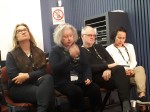
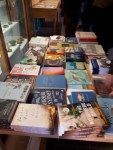
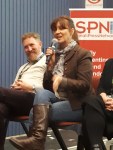
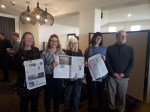
As one of the three co-ordinators for the New England Writers’ Centre’s big Pitch Independent program, I am happy to report that it was a brilliant success! The prep day two weeks ago went really well, with lots of people getting advice and practising their pitches in front of local publishing professionals. And last weekend, we hosted a fantastic lineup of some of Australia’s best small and independent book publishers and literary magazine editors, who participated in a lively and engaging symposium, heard lots of one-on-one pitches from writers in all genres as well as illustrators, and generally gave generously, and warmly, of their time, knowledge and expertise.

It was an inspiring, creative and fun weekend, and we are so grateful to all who participated–publishers, editors, pitchers, presenters, attendees, and University of New England staff and students. All of our participating publishers and editors came from a long way away, in some cases a very long way, from Western Australia, South Australia, and Victoria as well as various locations in NSW, and we are so very appreciative that they were willing to travel to our region. Thanks very much to all the people who supported Pitch Independent by attending the symposium, and/or pitching their work–we know it takes courage and we salute you for it, hope you felt encouraged, and wish you the very best for your work, whatever the outcome of your pitch. Big thanks goes to UNE for their generous and major support of the event, financially, promotionally and with venues; to the Small Press Network for its kind support and encouragement–and to SPN Chair Michael Webster for making the long trek from Melbourne to speak at the Symposium–and to the Armidale Bowling Club for sponsoring the great  venue for Saturday’s big pitch day. And of course huge thanks to the New England Writers’ Centre and all my fellow Board members who supported the creation of this event in so many ways. And to my fellow co-ordinators, John C.Ryan and Catherine Wright–hurrah! We made it! And it worked so well, worth all the hard work and all that midnight oil we burned 🙂

Pitch Independent was a unique event–nothing like it, with its focus on bringing creators and small and independent press and literary magazines together–has ever, to or knowledge, been held in Australia before. And the response has been amazing, from all, publishers, editors, pitchers, and attendees alike. It was a massive amount of work, but I am so proud to have been involved in initiating an event that we think people will be speaking about for a long time, and which will have a significant impact. We intend to continue building on the fantastic momentum created by Pitch Independent–watch this space!

Lovely first review for See Monkey!

Delighted to see this lovely first review for See Monkey, my picture book with Kathy Creamer(Little Pink Dog Books) . This short and sweet review is in the latest(June) edition of author, publisher and picture book expert Margaret Hamilton’s Pinerolo newsletter. 

SEE MONKEY by Sophie Masson & Kathy Creamer (Little Pink Dog Books). A toddler and his favourite friend, his monkey toy, are together all day and they do everything together. An endearing book for the very young, with warm and appealing illustrations.

http://www.pinerolo.com.au/PDF/Jun2018.pdf

Cover reveal for Black Wings, my adult historical novel

I am thrilled to reveal the beautiful cover of Black Wings, my adult historical novel which will be published in October by The Greystones Press in the UK. Can’t wait! Here’s the basic blurb(there will also be a fabulous cover quote by the lovely Kate Forsyth, which will be revealed later!)

It’s 1788 in the Vendée in western France, and change is in the air. Reform 
is being talked of in the great world beyond, in Paris, and even the peaceful village inhabited by Jacques Verdun and his friends – aristocratic painter Edmond de Bellegarde, his beautiful cousin Flora, and young farmer Pierre Bardon – seems touched by new possibilities. But as events both in Paris and in the local community start to gather pace, as revolution breaks out and the traditions of centuries start to break down, friendships will be severely tested in the most unexpected of ways. And when pitiless civil war comes, who will be left to testify to old feelings, and old loyalties? 


UQP’s 70th birthday and my gratitude to them!

Just heard today that it’s UQP’s (University of Queensland Press)70th birthday this month–and wanted to celebrate this great achievement of a great publisher by thanking them for launching me on my career as a published author–in more ways than one!

My very first published book, The House in the Rainforest, an adult novel set on the North Coast of NSW in the 1970’s and ’80’s, was published by UQP in April 1990. I will never forget the day I got the letter of acceptance from the late and greatly missed UQP editor Roseanne Fitzgibbon! (It was an amazing year, because just a few weeks after hearing from UQP, I got a letter from the then publisher at Angus and Robertson, Brian Cook, accepting my first children’s novel, Fire in the Sky, a time slip novel which was published in June 1990)

UQP also published my very first young adult novel, Sooner or Later (1991), an event which came about after the then editor of UQP’s YA list, the wonderful Barbara Ker Wilson, had written to me whilst The House in the Rainforest was being edited, to ask if I had any ms suitable for that age group: she had really liked the voice of my main character Kate, who, when the book starts, is sixteen years old. Barbara felt it was a very authentic voice and she wondered if I had anything that might work. Well, I as it happens, I did have a ms which had grown out both of living at the time in a small Australian country town and also losing my beloved grandmother back in France. I was pretty excited at being actually encouraged to send it in! So I sent it, Barbara and the UQP team loved it, and it was published in 1991.

I had another two YA novels books published by UQP after that–A Blaze of Summer(1992), which unlike the other two was set in France, and had supernatural/fantastical elements; and The Sun is Rising(1996), a companion novel–though not, strictly speaking, a sequel–to Sooner or Later.

I went on to have books with quite a few other publishers after that–but I will never forget the debt I owe UQP. From a very grateful author: happy 70th birthday to a wonderful publishing house–and may there be at least another 70!

Becoming a writer: three mini-essays

Today, I’m republishing three mini-essays which give glimpses into how I became a writer–a process that I was hardly aware of as a young person and which even now still seems mysterious, in the big picture sense anyway. It’s only in these little glimpses that you begin to get a feel for it–at least, that’s so for me. Hope you enjoy!
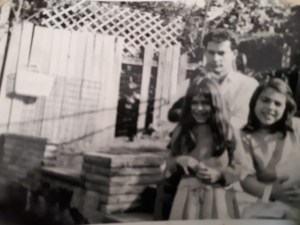
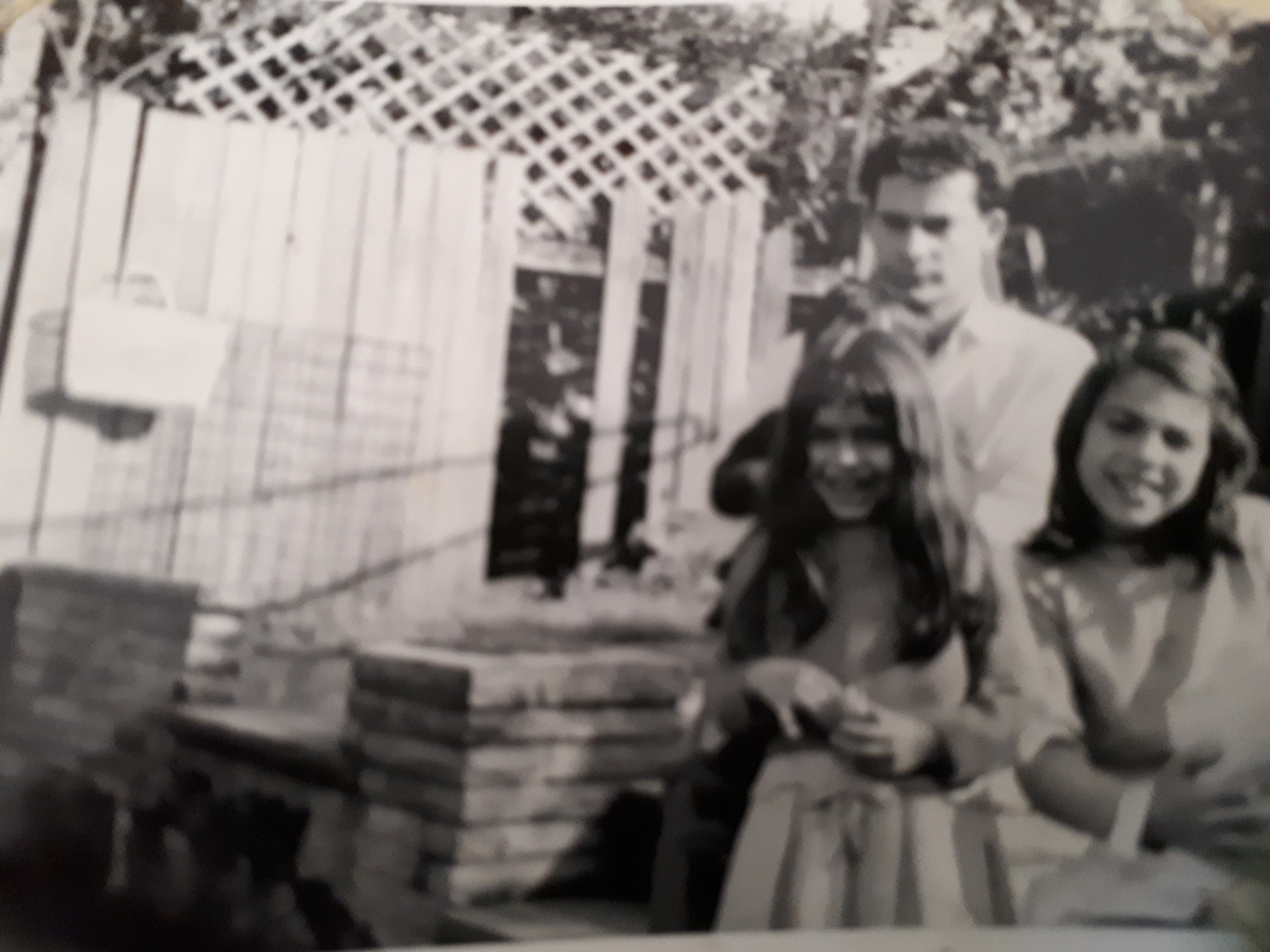
In Sydney, aged about 7 (in front, on the left, with long hair: sister Beatrice next to me and Dad behind us.)

Becoming a writer: three mini-essays by Sophie Masson

One: ‘Write about what you know’

As an eager scribbling kid, being given that classic bit of advice,  ‘write about what you know’,  I felt like this was one of those rules that adults invent to keep children in their place. I certainly didn’t want to write about school and squabbles with brothers and sisters and trying to avoid parents’ washing-up rosters. I didn’t even want to write about flying across the world to visit our family back in Europe; didn’t want to write about family secrets. Nobody else would be interested, I figured. Heck, I wasn’t interested myself. I wanted to write about princesses and curses, criminal masterminds and dashing young musketeers, magic wands and priceless jewels handed down through royal generations. I wanted to write about the world in my head, the enchanted, exciting world of my voracious reading,  that made dull routine disappear and the limitations of being a child vanish in a puff of fairy dust.

So I did just that. I ignored the advice, and my writing went at its own pace and my writing worlds passed through childhood fairyland and adventure to teenage love tragedy and myth, hoovering up every influence going, from Russian novels to Tintin, Celtic love poetry to Norse saga,. Shakespeare to Agatha Christie, Moomintroll to Bilbo Baggins, The Affair of the Diamond Necklace to Great Expectations, along with just about everything else I could pick up as I wrote reams of poetry, short stories, comics, songs, and embarked finally at the age of 17 on a major undertaking—a huge fantasy novel which would take in as many of the world’s mythologies as possible, and feature characters who came from the four corners of the world. I filled two exercise books and then ran dry unable to finish,but nothing daunted went on with many more, and at last finished one. And then two. And then three, and finally I was taking the plunge and sending my darlings out into the wild seas of publishing, trying to find safe harbour..which eventually appeared on the horizon.

But this is really about the gradual realisation over the years that ‘write about what you know’ doesn’t necessarily have to mean write about your everyday life. ‘What you know’ can mean what you know in terms of your family history, the rich freight of story and event, of comedy and tragedy, carries in the wake of its life down the generations. It can mean what you know in terms of your reading, just as I’d first instinctively deduced as a kid; it can mean ‘what you know’ from observation and plain old nosiness. But most of all it means ‘what you know’ from the inside. Your emotional life. The song of your heart. Of your soul. The emotions you share with every other human on the planet—and the ones you don’t. ‘Write about what you know’ was about that emotional heart without which every literary work, in whatever genre and however elegantly written, means nothing. It was about being true to the heart—because only then could you reach other people. Only then could your characters really live and breathe. It didn’t matter if you were writing about broken marriages or broken kingdoms; about office bullies or Dark Lords; that was merely a choice, an inclination. But the emotions had to ring true, whatever world your characters came from. You and your readers might never live the life of a young prince unexpectedly elevated to the throne; but all of us understand what it’s like to be suddenly thrust in a situation we weren’t expecting. All of us can sympathise with the nerves and doubts and excitement. All of us can feel what it’s like on the inside, even if we don’t all reach the same conclusions about it. Even if we feel differently about these things. It still feels real, and that’s what counts.

No, ‘write about what you know’ wasn’t a restriction; it wasn’t a hobbling, as I’d thought it had been as a rebellious child—but I still had to reach that conclusion in my own pace, at my own time, and the way I’d got there had been enriching in itself.

So that’s what I know now—that ‘write about what you know’ is indeed good advice. It is, indeed, true. But just as the best writing is understood with the heart as much as the head, then that’s how that classic little aphorism should be understood. Don’t restrict yourself—let your imagination soar. But write about what you know—from the inside.


Two:

A love song to libraries

I love libraries. Not only readers are nurtured there—but writers, too. This is a hymn of praise to those libraries, private and public, that have been instrumental in my own development.

The first library I remember was my father’s, in our beautiful old house deep in the countryside of south-western France. This was a hallowed place, a place of light and shadows, cool in summer, warm in winter. There was a fireplace and a large winged chair beside it, a desk made of fragrant Indonesian wood, quills and silver inkstand and leather-bound blotter at the ready; blue toile de Jouy curtains featuring scenes of 18th century country life; a Persian carpet decorated with birds alighting in trees; and of course, books. Books in large wide open shelves of beechwood, built by a local artisan; books in a large antique bookcase with doors that were like fretted screens, so that the books behind them looked as if they were in a kind of beautiful prison; books behind glass and in sandalwood chests. You weren’t allowed in on your own; but sometimes Dad would call you in, sit you on his knee and read from some old collection of Perrault’s stories, or the fables of Jean de la Fontaine, illustrated by Gustave Dore. Other times, he would take down the huge volume of reproductions of Hieronymus Bosch’s art, and point out to his quaking offspring the hellish consequences of misbehaving, or else, driven by another mood, pull out from the sandalwood chests bound copies of 19th century magazines and read out ancient faits divers, or human interest stories.

We children had our own ‘library’ of books elsewhere in the house, shelves crammed with the pink-backed children’s classic hardbacks of the Bibliothèque Rose, and the green backs of the more modern Bibliothèque Verte; dogeared paperback collections of traditional stories from all over the world, and magnificent illustrated editions of mythology; well-thumbed copies of Tintin and Asterix, and, later huge 19th century novels: by Balzac, Hugo, Feval, Gautier. On those shelves were journeys and escapes and spells; but they weren’t what we called the library. That word, spoken in rather overawed and excited tones, was reserved for Dad’s library. In that room was all the mystery and strangeness and ordered beauty of another world; a world you had to earn a place in, through patience and the gaining of wisdom, a world that beckoned, whose enchantment made time stand still. It is an image that stayed with me, and every time we went back to France as children – which was at last every two or three years – after having rushed around to rediscover toys and bedrooms, it was always the threshold of the library that drew me, to stand dreaming and hesitant looking in at the books, waiting for permission to be invited in.

In Australia, Dad had a room full of crowded bookcases, but it was not the same. The books were much less glamorous, there was no atmosphere in the room itself, and besides, I’d discovered another enchanted place. For the other world that drew me in Australia was our local public library. The children’s section was probably not very big, really, but in my memory it was huge, an enchanted kingdom, far away from the dull routine of school. At the rather modest Catholic parish primary school I went to, the only ‘library’ was a couple of sets of glass-fronted bookcases in the senior primary room. Insatiable reader that I was, I’d soon have dessicated from the need to imbibe stories if we had not discovered the local library. That was my real education in English, the library; left alone by Maman to make my own pathways through English-language children’s books, I made wonderful discoveries, but also missed out on some marvellous things. Magic and fairies and giants and trolls and other worlds and mysteries always attracted me; anything that smelt of mundane routine I cast aside, and thus it that was I met, and loved dearly, Tove Jannsson and CS Lewis and Alan Garner and Patricia Wrightson and Leon Garfield and James Thurber and a host of others; but missed out as a child on Laura Ingalls Wilder because I was sure a book with ‘house’ in the title must be about housework! (though I read the books as an adult, to my kids, and both they and I loved them).

I loved my high school library too. It was new, bright, sunny, airy, and the librarian was a very keen reader who did a lot to extend my reading range. Because in an earlier high school, I’d been severely bullied, I’d also taken to the library as a refuge from harshness and cruelty.  Libraries had always been associated with pleasure for me; now they also became islands of calm in the turbulent seas of

Aged about 16, in fantasy finery with my sister Camille, aged 14 (she is on the right, in the hat)

adolescence.

The first novel I ever wrote – for I had written lots of poetry, short stories, plays and illustrated tales before, but not novels, thinking I could never finish one – was started thus, at the age of 16, in the library. It was a vast fantasy novel – I’d discovered Tolkien and his ilk by then – in which I tried to incorporate as many of the mythologies of the world as I could manage! I never finished it, but I still have it, and I still remember those afternoons in the school library, bent over my notebook, lost in another world.

When I finished school, I left home after one too many arguments with my fiery father, and struggled in poverty for quite a while. I was trying both to meet the requirements of a tough university degree specialising in Middle Welsh, Anglo-Saxon, medieval romances, and Icelandic sagas, and to keep food in my mouth by doing all kinds of odd jobs, from folding clothes in a laundromat (where once a customer, seeing me read in a quiet moment, said to me, What! You work in a laundrette, and you read a book!) to delivering junk mail to looking after kids to trying to clean flats (me, the least domestically adept person ever!) to working in cafes and restaurants and in a candy factory. None of these jobs ever earnt more than a pitiful amount, and I was really quite poor. But I never felt poor in our local public library, which I had joined as soon as I could. There were many days when I felt very much like giving up the struggle and crawling back to Papa; but the library always put new heart into me. Not only was it free entertainment; but it also provided information on all kinds of literary possibilities. I entered many competitions advertised on its noticeboards, and spent many happy hours continuing on with my various enthusiasms. The library reminded me that there was a world beyond flat wallets and gritty pavements and people who thought laundry assistants must be illiterate. It gave me heart, too, by reminding me that somewhere, sometime, people had cared enough about literature and about their destinies as writers to struggle through even the most difficult periods of their lives. No way did I want to follow the safe and dull careers of routine that had been proposed for me; in the reckless way of youth, I wanted to do what I felt I was born to do – and the library, so quiet and demure in appearance, but with such a multi-chambered, raging heart of tumult and vision and destiny and heartbreak and magic and joy, gave me the courage to continue, and not to lose hope.

Since that time, libraries have continued to be amongst my favourite places. These days, I am a regular of the public library in our high cold university town in northern NSW, and I have a large and messy library scattered in all of the rooms in our house. I also love trawling through the vast virtual libraries that one may find on the Internet. I continue to follow overgrown, wild, exciting pathways through magical lands and undiscovered countries; many of my novels have started from something seen by chance in a library book. I have had a great deal of very pleasant interactions with librarians, and admire their great dedication, erudition and kindness to me who is often a rather disordered and awestruck traveller in their domains. Though I still love magic and mystery, I have come to understand, as I’ve grown up, fallen and stayed in love and had children; built a house of our own with my husband and cherished the garden we have made, that the world within the world incorporates all those things, that the flesh and the spirit are tightly woven together, and that the spell cast by the library, the spell that seems to stop time, is the spell not of old paper or old magical formulae, but of imagination, that greatest of all qualities, which makes us both fully human, fully mortal, yet immortal too. The library is the record, the garden, the house of souls; but it is also the place where the soul is helped to emerge from its chrysalis, to spread its wings and be truly free. And there is no price that can be put on that.

 Three: Other people’s books

Enjoying a good book in a perfect setting!

You sometimes hear writers say they never read the work of other authors, especially writing in the same genre as they are, and especially if they’re currently in the process of writing a book themselves. The reason given is usually that they are afraid of being influenced, whether consciously or unconsciously, by the other writer’s work. There’s a kind of fear that originality may be somehow diminished, and that your pristine work may be contaminated, as it were, by foreign authorial bacteria, or that a kind of helpless plagiarism may happen, which will then destroy your own literary integrity. Underlying this is a deeper fear: that you may discover that those other writers’ books are actually vastly better than yours, leading to a major paralysis in imagination and the feeling that as they’ve said it all anyway, why bother?

It’s a fear that is common in modern times—writers in Elizabethan times, for instance, rarely seemed to harbour such insecurities. And I understand those feelings—the writing life is quite often competitive, stressful, and prey to many fancies and fears–but I don’t share them. Partly, it’s because of the way I write: a process of complete and utter immersion. When I’m writing, I’m completely in the story, nothing else figures or intrudes, I’m away with the fairies. It quite blanks out anything going on around me–to the great frustration—and delight– of my children when they were growing up. My daughter says she could have asked for a huge rise in pocket money when I was in the middle of writing and I’d have said, Yes, dear, whatever you want, vaguely; and my youngest musician son loves to tell the story of the day he’d spent an entire morning practising drums loudly upstairs, and when he came down for lunch, and I emerged blinking from my work, I asked him brightly what he’d been doing all morning! Equally, though, it seems to blank out what I’ve been reading—perhaps because writing is such a different process to reading, perhaps because that’s the ‘safety switch’ that clicks on in my mind when I start to write.

But it’s only partly my experience of writing itself which makes me feel that those common writers’ fears are not only unfounded, but actually dangerous. Because how on earth can a writer not be a reader too? Though they are so different, the two things go together. Wide and frequent reading of other people’s work leads to the enrichment of a writer’s mental furniture, the deepening of their emotional range, the texturing of their intellectual potential. Whether that be classic authors or  modern ones, reading what other people have written, thinking about it, engaging with it, makes all the difference to the strength and power of your own writing. An author without ”influence”–if such a mythical beast can truly exist– would write merely hollow, navel-gazing books which would most likely fail to click with readers.

I can’t begin to estimate just how important other writers’ influence has been, and is, to me. From the very beginning, when as a non-English-speaking migrant child newly arrived in Australia, I was introduced to English-language children’s books, I was off and away on an extraordinary journey through the world of literature. I devoured books as fast as I could get them off the library shelves. I read in both English and in my native language, French, racing through CS Lewis, Hergé(Tintin books) ,Tove Jannsson, Leon Garfield, Alexandre Dumas, Roger Lancelyn Green, Jean de Brunhoff(Babar), Patricia Wrightson, Philippa Pearce, Louise May Alcott, Jules Verne, Enid Blyton, and lots lots lots more. From early on, I wanted to emulate my favourite writers, and wrote little comic strips a la Tintin, fairy stories, school stories, all sorts of bits and pieces, totally influenced by what I read. Later, when, as a teenager, I got into poetry and plays, I also tried my hand at writing in the styles and forms of those poets and playwrights I loved best: Shakespeare,  Yeats, Gerald Manley Hopkins, Tennessee Williams, William Blake, Robert Browning, and so on and on.  I counted sonnet lines and tried my hand at shoe-horning verse into ancient bardic forms, tried to write snappy dialogue and tragic scenes. I devoured Russian novels and Gothic novels and swashbuckling French novels and tried to create characters in their mould. And my writing was  highly influenced, highly coloured by what I’d read. But not only was I enriching my mental furniture by reading, I don’t think I could have found a better way of practising to become a writer. Challenging and extending myself, not staying within the narrow world of home-school-home that  I lived in as a kid but roaming the wide worlds of my, and other people’s imaginations.

And so, unconsciously, as I grew up, I came to understand a very important and liberating thing, which has stood me in good stead all my writing life. And it’s this. Voice, which is really where a writer’s originality lies, does not exist in a vacuum. Indeed, like Nature, it abhors a vacuum. Instead, it comes straight out of that rich mix of individuality and influence.
Interview with Louisa John-Krol

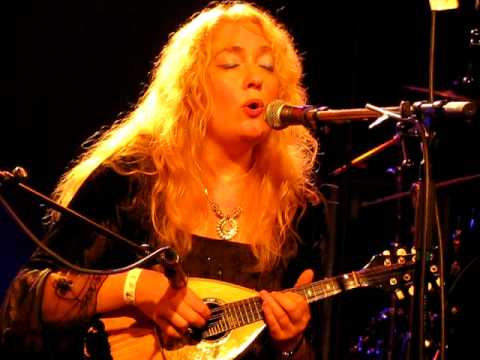
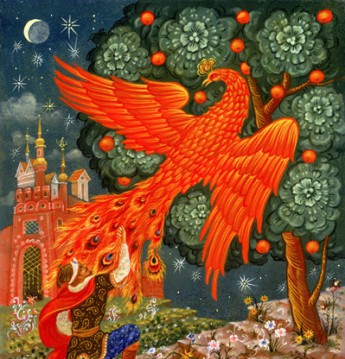
Today I’m delighted to feature an interview with multi-talented composer, musician, writer and fairy tale aficionado, Louisa John-Krol.

Louisa, you have had an amazing career writing and performing music and words over a long period of time. Can you share some of your journey? How did you start, and how did your work develop?

 Thanks, Sophie. It began with a hum. Singing plants and poems into melody, and believing in dryads, I made a garden with a wetland, frog pond and flowering vines, ripe for solitude. Fantasy chronicles of Earthsea, Middleearth and Narnia inspired me, as did Faeries co-written by Alan Lee (who went on to design sets for Tolkien films) and Brian Froud (who later made a music clip ‘Muse’ for my music). Life hasn’t felt like a linear journey. More a kaleidoscope with jumbled swirls that sometimes form patterns, hint at echoes, or slide into oblivion. Foreign indie labels released most of my music from the age of 30 onward. I got to perform, compose or record with brilliant eccentrics here and overseas; just as well, for I was never a virtuoso. Less a prodigy than a pixie. (Funny how in some circles it’s a contest as to how early one masters an instrument. Infancy, anyone?) The cliche of singing before we can talk, of dancing before we can walk, of surmounting setbacks, haunts Romantic notions. In some underground neo-medieval/ baroque/ classical/ gothic modern-primitive tribes I’ve inhabited, it’s customary to bemoan corruption. Perhaps I still revel in Voltaire’s ironic ‘best of all worlds’. But being a paid artist was no more admirable than other jobs. It all meant being present with a vast cross-section of humanity. Whether fairy storytelling at carnivals, teaching at disadvantaged schools, writing press releases for parliamentarians, liaising with ecologists, singing at festivals, or tapping royalties from boutique recording labels, I learned to respect time. Not sure I overcame bullying or disappointment, which abounds in corporations or bureaucracies. Whatever lands on a page, or screen, or reel, or disc, is stardust floating long after explosions that elude comprehension. A couple of years ago I signed off my record deal and ceased all employment. I’ve been volunteering, reading, rescuing cats, grooming manuscripts, listening tomusic and educating myself on fairy lore.

You have performed your work across the world, including with other artists. What have been some of your favourite experiences?

In France 2003 I performed at La Loco in the red district of Paris, the stomping ground of legendary cult bands like The Velvet Underground. Adjacent was the Moulin Rouge, to which we found a peep-hole while drinking beer backstage on red crimson sofas with our Swedish headliners, Arcana. Afterwards we went out with writers including Alyz Tale, then Editor of Elegy Magazine, who published her story entitled ‘Louisa’ about my song ‘Blackbird’, in her collection Mon dernier thé. I also cherish memories of Clisson, the medieval town of my record label Prikosnovénie, by the river Sèvre.

In Belgium at Trolls et Legendes festival 2009, meeting the British illustrator Brian Froud was a highlight. We presented a video Muse that he and his son made for my song ‘Which of these Worlds?’ with Robert Gould of Imaginosis who flew me to Oregon, USA, that same year to perform with the band Woodland at Faerieworlds, where the Frouds were guests again.It was moving to receive a message from José Géal of le Royal Théâtre de Toone, which is as old as Bruxelles itself, thanking me for my song ‘Poppet Plum’ being dedicated to his puppetry that I’d experienced six years earlier.

In Italy, on the borders of Umbria, Lazia and Tuscona, I stayed in a medieval castle overlooking the medieval town of Orte, belonging to the ambient artist Oophoi (Gianluigi Gasparetti), haunted by ghost and a white owl. Gigi later died of a rare blood disease, bereaving a loving wife, but the sonic alchemist’s legacy remains strong on the web, as in his masterpiece The Spirals of Time and our collaboration I hear the Water Dreaming.

There were wonderful experiences in other enchanting places, such as in Greece and Germany, but if I cover them all we’ll be here awhile!

 The interplay between music, poetry, folklore and fairy tales is very strong in your work.  Can you expand on that?

Let’s start with poetry. I love how the subconscious resonance of metaphors, layered in iconography over time, allows the imagination room to move, like a muse engaging in dalliance, in diaphanous gowns of Botticelli’s ‘Primavera’. Language can be musical, as with assonance or alliteration. How words ring together sometimes pivots on selection of synonyms, or arrangement. Just as a composer might let a melody leap from one player to another, so writers with an ear for melody recognise when a phrase sends a shiver down the spine. (A challenge in translation!) In folklore and fairy tales, as in poetry, I love economy of language: these modes are tightly packed seeds, full of symbols that leap across centuries and cultures with efficiency of memes. Hence the mother of Memory is the mother of Muses: Mnemosyne.

What’s coming up next for you, in terms of new work created and released?

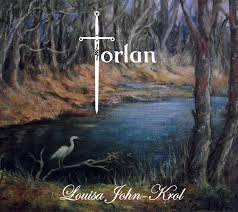
A magic-realist novella and other manuscripts are bubbling, but my aim is to groom the Elderbrook Chronicles: a series of fantasy volumes. Musically, having recently released two productions after a long hiatus – Torlan (a compilation of water music from our various albums) and Elderbrook (a double-album soundtrack for my aforementioned chronicles), I’m preparing to reprint our discography that sold out on French, German and American companies: an opportunity to revisit mixes, add bonus tracks, include more illustrations and try new eco-friendly packaging.

As a lover of fairy tales, why do you think they still appeal to people? And do you have you any favourites? If so, which–and why?

Fairy tales do more than soothe worldly worries; paradoxically, they offer perennial wisdom for facing them. Wrongly, some view them as escapist, whereas on the contrary I regard fairy tales as a way to delve deeper into life. For me they’re about re-enchantment, of falling in love with the world. As Marina Warner asserts, fairy stories have ‘staying power’, for ‘the meanings they generate are themselves magical shape-shifters, dancing to the needs of their audience’ (From the Beast to the Blonde), a point that Athena Bellas revisits in her article ‘Contemporary fairy tales: Prohibition, transgression, transformation’ in the catalogue of an exhibition All the better to see you with: Fairy tales transformed that she directed at the Ian Potter Museum of Art, Melbourne. The title-essay by its curator Samantha Comte also cites Warner, further emphasising the adaptability of fairy tales; their fluidity, amorphousness and responsiveness to social context. My favourite tales are open-ended or layered. They emit a diffused lunar light, rather than a laser beam. I’ve often claimed to have a more poetic than polemic approach. That doesn’t mean I shy away from politics, it’s just that I won’t let didactic messages dominate. I’m partial to Wilde, d’Aulnoy, Dunsany, Byatt and Calvino. As to contemporary Australians: I particularly enjoy your writing, Sophie.

You are closely involved with the Australian Fairy Tale Society. Tell us about it and its work.

As a founding member and President of this national charity, I cherish our inclusive spirit. Our members are writers, researchers, educators, storytellers, illustrators, puppeteers and other fey folk. One of our committee members is a glass artist, Spike Deane, based at Canberra Glassworks. We’ve attracted such internationally acclaimed fairy tale authors as Kate Forsyth, Carmel Bird and you; I’ll never forget your launch of the thrilling Snow White re-spin Hunter’s Moon at an AFTS conference, flying away with a signed copy and reading it during a recording session at Pilgrim Arts studio while visiting South Australia; I later bought a copy for the producer Brett Taylor’s daughter. I’ve since reviewed more of your novels. A lot of fairy tale people in Australia are nourishing each other’s knowledge. We discuss sensitivities around colonisation, immigration and ways of seeking mutual ground, respectfully acknowledging differences while fostering intercultural collaboration. We are interested in exploring definitions of the very term ‘Australian fairy tale’ itself. I recommend Dr Rebecca-Anne’s spiel on this at our website: We are delighted that you have accepted our invitation to contribute to our forthcoming fairy tale Anthology, which we’ll have more to say about publicly soon. Meanwhile, we’ve already produced six editions of an illustrated Ezine, available exclusively to members. Thanks for all you do, Sophie.

Explore more of Louisa’s work:

Homepage of ethereal music & faerielore: http://louisajohnkrol.com/

Welcome portal to unfolding Elderbrook Chronicles: http://www.elderbrook.com.au/

Fairy record label in France: http://www.prikosnovenie.com/inde.shtml

Froud/Louisa ‘Muse’ video: https://www.youtube.com/watch?v=ahBe3Znj8lY

Fairy Blog: http://victorianfairytalering.blogspot.com.au/

Australian Fairy Tale Society: https://australianfairytalesociety.wordpress.com/

Connect with Louisa on Facebook: https://www.facebook.com/louisa.johnkrol

First advance copy of See Monkey!


It was very exciting today to get my first advance copy of See Monkey, my picture book with Kathy Creamer, published by Little Pink Dog Books! It’s absolutely gorgeous! Will be out in the bookshops in two or three weeks, can’t wait!

Word of Mouth TV: an interview with Kate Forsyth and Sarah Mills

Today I’m delighted to bring you a great interview I recently conducted with writers–and now TV presenters!–Kate Forsyth and Sarah Mills, who very recently launched a book show with a difference. The Word of Mouth TV concept combines some of Kate’s and Sarah’s favourite things: food, books and friendship, to create lively, engaging TV, delicious in terms both of body and mind! The first episode, with authors and husband and wife writing team Graeme Simsion and Anne Buist, was most enjoyable, featuring great conversation, yummy food, and great literary–and cooking!-insights. I loved it, and am looking forward very much to the next episode. But while I’m waiting, I thought it would be great to talk to Kate and Sarah about why and how they’ve put together this excellent show with film-maker Claire Absolum. Enjoy! (And subscribe to Word of Mouth TV You Tube channel and website–it’s free!)

Photograph of Kate Forsyth and Sarah Mills by Claire Absolum.

Kate and Sarah, congratulations on the launch of Word of Mouth TV and the show’s first episode! It’s a fabulous concept–innovative and appealing, with so much scope for fun and warmth, and a great title too! How did you first come up with the idea?

Sarah: It was one of those ideas that took a long time to manifest. The idea struck me about six years ago when I was in one of my aimless dreaming phases. The idea kept revisiting me and I asked Kate about three years ago if she would be interested in doing it. We agreed it was something that the book industry desperately needed because there is so little good news and content serving this industry.

Kate: I thought it was such a brilliant idea, but I didn’t know how we would ever find the time to do it when we had such busy schedules. But we kept talking about it and tossing ideas around. We agreed we wanted it to have really good production values but we didn’t know how we would achieve that when we had no skills or experience in that area. Slowly the idea took hold of our imaginations, though. Once we had our title, it really seemed to come to life.

Sarah: We decided upon Word of Mouth as the title because the Sound Bites that accompany the show involve authors recommending the best books they’ve read lately and their favourite cookbooks – so viewers get their reading tips straight from the author’s mouth.

 Coming up with a great idea is one thing of course: bringing it to fruition quite another!  There must have been a lot of work involved in getting to the launch of the show. How did you get from concept to reality?

Sarah: Yes, well, the idea lay nascent for years because we were both writers and neither of us had camera or video-editing skills. Then former SBS and ABC producer Claire Absolum moved into my neighbourhood and we met through mutual friends. Claire was sitting with me on the day I called Kate: “Remember that idea we were talking about a few years ago about interviewing and cooking with authors? Are you still interested?” And to our relief, she said yes.

Kate: It was complete madness! I had such an intense workload and had sworn I would take on no new projects. But Sarah finding Claire just seemed like a sign from the universe. And I’d actually been thinking about how sad it was that there was no great book chat show anymore.

 Sarah: From there it was just a matter of putting everything together. We all have very complimentary skill sets. Claire obviously has the video production skills, I have creative direction and website production skills (I was a journalist for decades at Fairfax), and public relations, branding and marketing skills, and Kate had the contacts within the industry and styling skills from her time freelancing on magazines. And we are all reasonable cooks. We really liked the idea of three women working together to create the show – there is something magic about the number three. Perhaps we’ll be “Charmed”.

Kate: It just seemed to come together so well – I feel that we’ve found the sweet spot between people who love to watch cooking and lifestyle shows, and people who love to read. We’ve certainly had a great early reception!

The show has very high production values and works really well within its time frame. Not surprising, as you have such a skilled and experienced producer as Claire Absolum on board! Tell us what it’s like actually filming the show.

 Sarah: It’s fun and very tiring. It is only a 10-minute Youtube show but so much ends up on the cutting room floor. Particularly for the first episodes because we were a bit nervous and if it wasn’t one of us making bloopers, it was the other. Or the dog would start whining, or the neighbour would start up with a drill. It seemed a process of endless takes. We are still trying to hone the process.

Kate: We are really learning on the job, aren’t we, Sarah? It took us a while to work out a template for the show, and a balance between the cooking, the eating and the talking. We’ve learnt a huge amount in just a few months.

Sarah: It is also difficult because we all live so far away from each other (about two hours) and we are trying to shoot Word of Mouth TV in our spare time. On the upside, the food is divine and we are collecting recipes for a cookbook at the end of the year. And the champagne … it speaks for itself!

How do you go about choosing books, writers–and recipes? 

Sarah: Kate is plugged into the writing industry so this is her task. We try to interview a mix of authors from all different genres and levels of experience, and Kate is the best positioned to know who are likely to be producing good books.

Kate:  It helps that I have so many friends in the industry, and that I read so much anyway. It means I have a good general knowledge of who is launching new books and whether or not our audience is likely to be interested in it.

Sarah: If we don’t personally like the book, we don’t feature it because we have to review it and we want to be kind in our reviews – we are, after all, authors ourselves. We understand how much heart and soul goes into the production of a novel.

Kate: Our aim is to celebrate books and reading and writing, and to encourage people to read outside their comfort zone. This is after all, one of the great benefits of belonging to a book club.

Sarah: I occasionally suggest books that I think will fit the show too. We also recommend cookbooks on every episode. That process is pretty simple. We both have some well-used and well-loved cookbooks. Then we ask the authors to recommend their favourite books read lately and their favourite cookbooks.

Your motto is ‘food, books and friends’hip: it’s the perfect nurturing combination. What are you hoping viewers will get from it? And what’s the response been so far?

 Sarah: So far everyone who likes books has been really encouraging. We are steadily building a subscription base to the Youtube channel, the website, and to social media feeds such as Twitter and Facebook. The authors have been incredibly supportive as well. Mind you it is fun to be wined and dined and have the opportunity to talk about your book, and the subject of books generally, all at once.

 Kate: We hope to become an integral part of the Australian literary scene, a show that bookworms will love and recommend to their friends to watch. The show comes out every fortnight, so that means we are recommending books twice a month – our hope is that Book Clubs will start watching it together, or using it to help them choose books to read, or simply enjoy what we do on a regular basis.

How many episodes are you hoping to make in the series? 

Sarah: The first season will be 12 episodes, seven of which have already been filmed and the remaining five of which have already been scheduled. Hopefully, by the end of that time, we will have a big enough audience, and sponsorship, to continue filming. We really hope this happens as we’ve had more authors asking to be on the show and they are all so fantastic that we want to interview them all.

Kate: We hope there’ll be many more seasons to come!

 Anything else you’d like to add?

Sarah: Well, towards the end of the season, if we don’t get corporate sponsorship, we might run a crowd-funding campaign. In the meantime, it would be great if readers could subscribe to our Youtube channel www.youtube.com/wordofmouthTV000 because we need 1,000 subscriptions under Youtube’s new rules to be able to earn money from the site. If readers want to hear all the latest news, views and reviews, then they can also subscribe to our website at www.wordofmouthtv.com.au We also have a Facebook and Twitter page that we are having a bit of fun with.

Kate: Every fortnight we give away huge piles of books to our subscribers who help spread the word about the show. We want to foster an atmosphere of joy and excitement about the act of reading, and to support as many other authors as we can.

Writing about World War One…

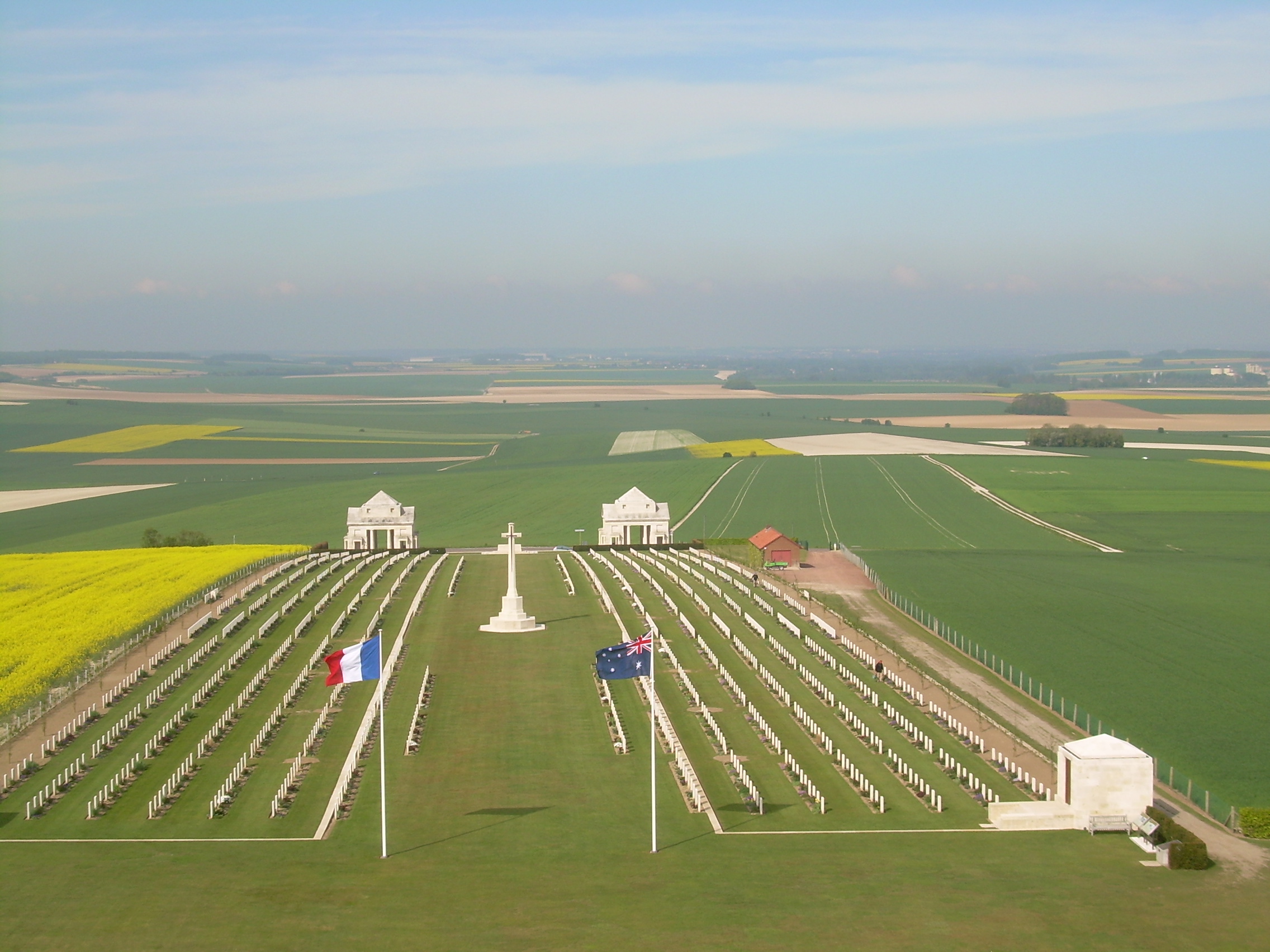
Today, April 25, is Anzac Day, and the hundredth anniversary of the battle at Villers Brettoneux in northern France on 25 April 1918, where Australian regiments were instrumental in helping to secure the liberation of that area of France. As someone brought up between Australia and France, it’s made me reflect not only on the joint experiences of French and Australian troops and civilians in that terrible war, but also on how difficult it is to try and convey, as a writer, something about those experiences, especially when you are writing for children.

Until a few years ago, I never expected to write about World War One. In both France and Australia, as a child I’d seen, in churches and memorials, the staggeringly long rollcalls of the dead in World War One; a war that seemed not only horrible and tragic but absolutely incomprehensible. World War Two seemed more understandable by comparison, in part because my parents were children during the German occupation of France. I could imagine myself writing about World War Two (though I didn’t, in fact until very recently) ) but not World War One. Partly, perhaps it was because in Australia, Gallipoli loomed large, of course, and I did not feel able to write about it, but also could hardly begin to understand, let alone depict, the ghastly long years of trench warfare on the Western Front.

What changed that was, first, a brief visit many years ago to the heartbreakingly big and neat Commonwealth war cemetery just outside Villers-Brettoneux. In the back of my mind, a seed was being planted–and years later, in 2010, it sprouted, inspired by a longer visit–a stay of a few days, in fact, in the pretty, and war-haunted, cathedral city of Amiens and the countryside beyond. Being on the spot, in the quiet streets of the city and the green and pleasant Somme countryside which yet saw so many deaths, looking at memorials and the French Australian museum’s collections of touching photographs of both Australian and French soldiers and the local civilian population, made me change my mind. And also I read about the last year of the war–the way in which in 1918, trench warfare, at least in northern France, gave way not to the pitched open battles of the very beginning of the war, but to a more ‘guerrilla’ style campaign, on both sides, with ambushes and surprise attacks and street-by-street battles in devastated villages. I began to see how I could perhaps tell a story, through the eyes of a young French-Australian character .

So that’s how my first World War One novel, My Father’s War(Scholastic Australia 2011), began. Set in 1918, it is told in the voice of eleven year old Annie, whose Australian soldier father, fighting on the Somme, goes missing, and who goes with her French mother to Amiens to try and find him. Through Annie’s diary unfolds the story of that last year in the war and the experiences of both soldiers and civilians in northern France. It was a story that both flowed naturally from having been in the areas I was writing about and being immersed in pictures and documents of the time, but was also very hard to write. This was a work of fiction so it had to work as an engaging story, especially given the age of my readers, but I also felt a great responsibility to tell it in a way that would not trivialise or falsify. It was a very delicate balance to strike and at times felt almost impossible(and saddening; I found myself weeping several times over scenes) but in the end it worked. Or at least, readers seem to think so–seven years after its release, it is still finding its way into libraries, schools, and homes.

Writing My Father’s War had made me see I could tell a story set in that time. Three years later, my second World War One novel was published. This was 1914 (Scholastic Australia 2014), which from the point of view of Louis Jullian, teenage son of a French diplomat and his Australian wife, told the story of the beginning of that ‘war to end all wars’. It was a very different book, because it was set in a very different time to that of My Father’s War. In 1918, four years of dreadful stalemate and horrendous slaughter had changed the face of Europe, destroying the old order forever.  In 1914, the old order was still there, sleepwalking towards disaster, and even by the end of that year, people imagined that the war might soon be over and things go back to what they’d been before. And my characters might both be French Australian, but they came from very different backgrounds and experiences. Annie had a difficult childhood dominated by war and her father’s absence; Louis, whose childhood was cosmopolitan and carefree, was coming of age at a time when everything would be thrown into question by a conflict that would engulf the world and truth itself. It was just as hard to write this novel as the first; harder even in a way, precisely because it was the beginning: reading about the causes of the war and the chain of events in those fateful few weeks from June 28 1914, when the Archduke Franz Ferdinand was assassinated in Sarajevo, you get a sense both of the so-called ‘inevitability’ of the war but also the fact that it need not have been so. There were times when the momentum could have been halted–but it was not. I chose to tell that story, and the way in which a carefree summer turned into a deadly winter, through Louis’ eyes as he goes from helpless witness of the attack in Sarajevo to scarred and determined young war correspondent on both the Western and Eastern fronts.

Both the novels have had unexpected offshoots: minor characters from My Father’s War inspired a short story of mine, The Other Anzac Day (set during the battle in Villers Brettoneux on 25 April 1918) which was published in a UK collection, Stories of World War One, edited by Tony Bradman(Orchard Books, UK, 2014). This story, told in the voice of Archie, a tough but troubled young Australian soldier, both echoes and contrasts with Annie’s own view of that ‘other Anzac Day’ in My Father’s War. And Louis’ daughter as well as the son of one of his pre-war Austrian friends will be featuring in a novel I’ve been writing, set at the beginning of World War 2 this time, to appear in 2019. In the novel, the experiences of World War One, which transformed the lives of Louis and his friends, haunt the lives of their families too–and of course, by extension, their communities and nations, as the drums of war beat yet again.


More about My Father’s War and 1914:

My Father’s War

By Sophie Masson

(My Australian Story, Scholastic Australia 2011)

ISBN 9781741698282

It scares me a lot, thinking of Dad out there, far away in that dangerous, terrible place, wondering how it will be when he comes back-if he comes back, that is . . .

Annie’s dad has been away for two years, fighting on the Somme battlefields in northern France. For months there has been no word from him, no letters or postcards. Annie and her mother are sick with worry, so they decide to stop waiting-and instead travel to France, to try to find out what has happened to him. There she experiences first-hand what war is like, as she tries to piece together the clues behind her dad’s disappearance. Will Annie ever see her father again?

Teacher’s Notes My Father’s War: http://resource.scholastic.com.au/resourcefiles/8005439_228.pdf

1914

By Sophie Masson

(Australia’s Great War, Scholastic Australia 2014)

ISBN 9781743622476

A small black bottle or a torch came sailing through the air, and landed on the side of the car, close to the Archduke. An instant later came a terrific bang, the road exploded in a shower of dust and stones, and tiny sharp things went flying through the air like angry bees.

In June 1914, Louis and his brother Thomas are enjoying the European summer in a small town near Sarajevo. In the shadow of the assassination of the heir to the Austrian throne, the world erupts into war and Louis’ life changes forever. Old Europe is torn apart and Louis finds himself in the midst of his own battle – and fighting for the truth in war means that sometimes even your own side is against you.

Teacher’s Notes 1914: http://resource.scholastic.com.au/resourcefiles/8284239_24164.pdf