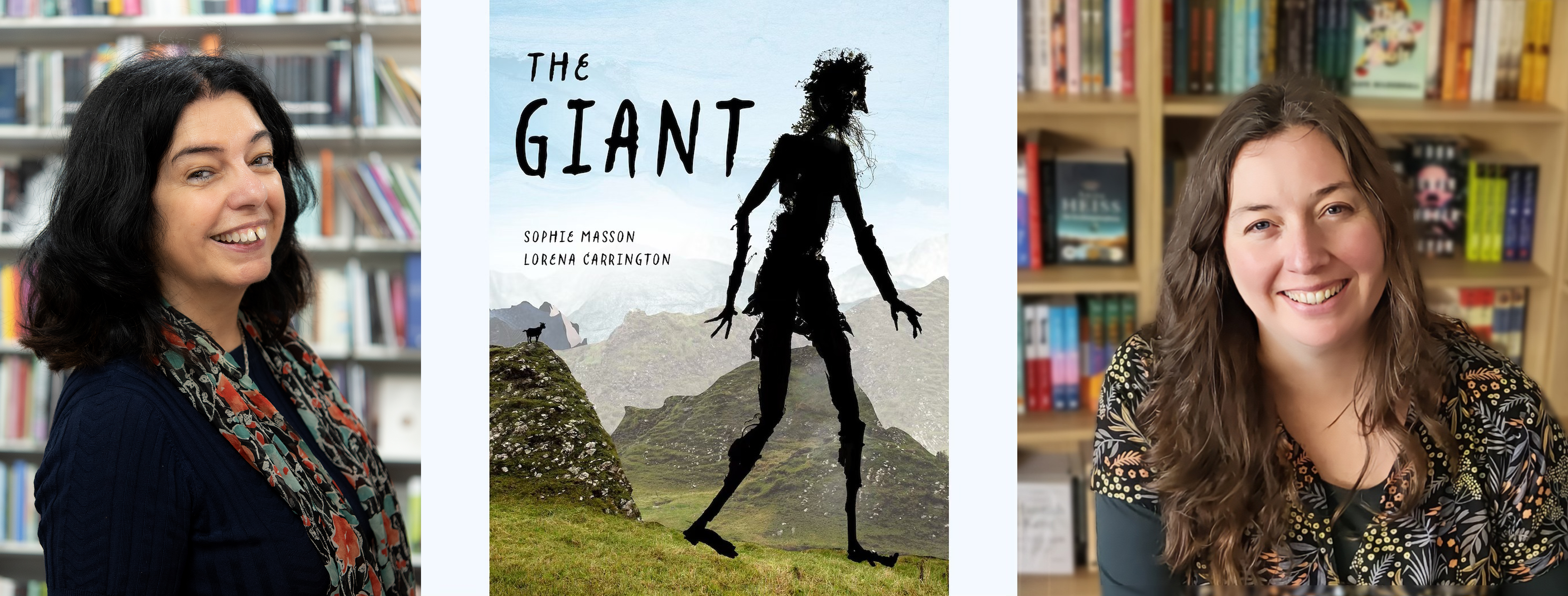
Today, August 1, is the official publication day for The Giant, my new picture book with the wonderful illustrator, Lorena Carrington, and we are so thrilled! Published by MidnightSun Publishing, The Giant is a fable about, yes, a giant! He wakes from a long sleep and happily walks down the mountain to find his old friends in the town–but alas, so much time has passed since he went to sleep that nobody remembers him and everyone runs away in fear–everyone, that is, except for–well, read the book to find out!
The Giant is my second picture-book collaboration with Lorena, after Satin (MidnightSun Publishing, 2023), which was awarded a Notable Books citation in the 2024 Children’s Book Council Book of the Year Awards. And as with Satin, creating The Giant was an absolute blast of a book to create together with our lovely publisher Anna Solding and her team at MidnightSun Publishing.
To celebrate the book’s publication, Lorena and I have written a bit about how it all came about. Hope you enjoy reading about it–and enjoy reading the book, too!
From Sophie:
The idea for the story of The Giant came into my head one day when I was walking up the road on a sunny but cold winter morning. He just arrived without warning; one minute I was strolling along, just enjoying the walk, the next minute I had stopped abruptly, seeing him so clearly, waking up, yawning and stretching after sleeping in his cave for a very, very long time.
As a child, I had read old stories where great heroes slept for centuries in caves but might wake up one day if they were needed to fight battles. But I knew my giant wasn’t about fighting battles, he was about finding his friends. And I could imagine his excitement as he went out into the sunshine, filled with joy as he thought he could see his friends again. And then his sadness as he realised nobody remembered him…I hurried home then so I could write his story down and find out what happened next to this gentle giant whose tears could make a river rise.
It was wonderful to write it and even more wonderful and thrilling to see the Giant and his world come to life in Lorena’s magical illustrations!
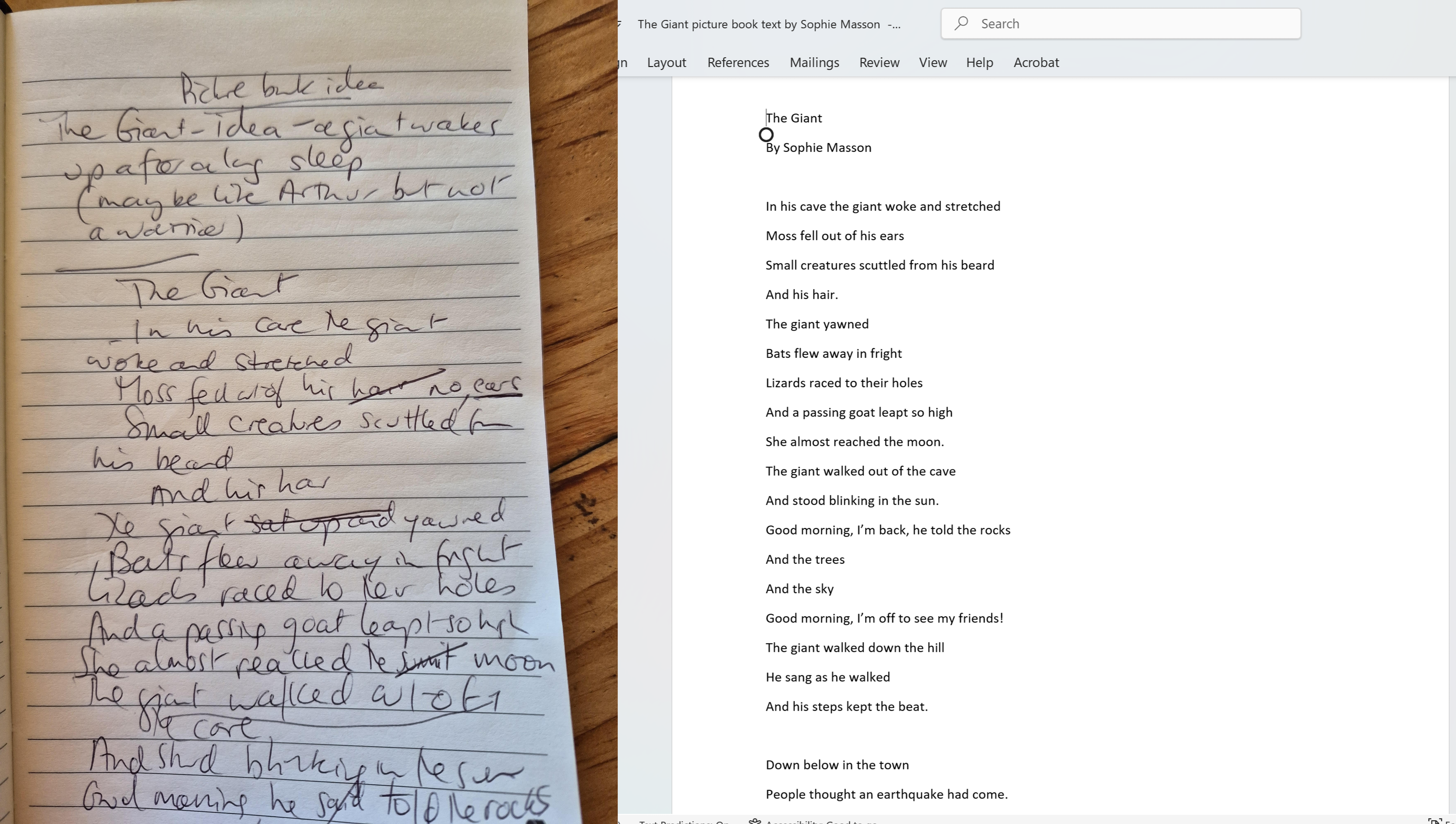
on left, part of the original first draft in my notebook, on right the finished draft on the computer
From Lorena:
I loved Sophie’s gentle giant from the first time I read her story, and I could picture him immediately in my mind. He is made up completely from elements of nature: moss, stick, leaves, little bits and pieces you might find out walking, so I like think of him as being real part of the landscape that he’s in. In fact, most of the illustrations in this book are made with photographs of nature montaged together, along with paper collage, and a little bit of drawing.
I also knew right from the start that I wanted the illustrations to be full of colour. Set over a full day, from sunrise to after dark, the colours change according to the time of day. If you look closely you can see I’ve used photographs of different landscapes to make up landscapes in the giant’s world, and also added some cut paper, little bits of drawings, and added little interesting things here and there. Look out for the drawing of the giant in the book, and see if the scene repeats itself in a different way later in the book. Can you find versions of the birds and the butterfly from the page borders too?
pages showing the changing of the light over the course of the book…contrasts: the Giant ‘in an old book’ and ‘in real life’...
The Giant, by Sophie Masson and Lorena Carrington, published by MidnightSun Publishing, August 1, 2025. ISBN 9781922858658. Available in all good bookshops around Australia! You can read a few fabulous early reviews here, here and here.
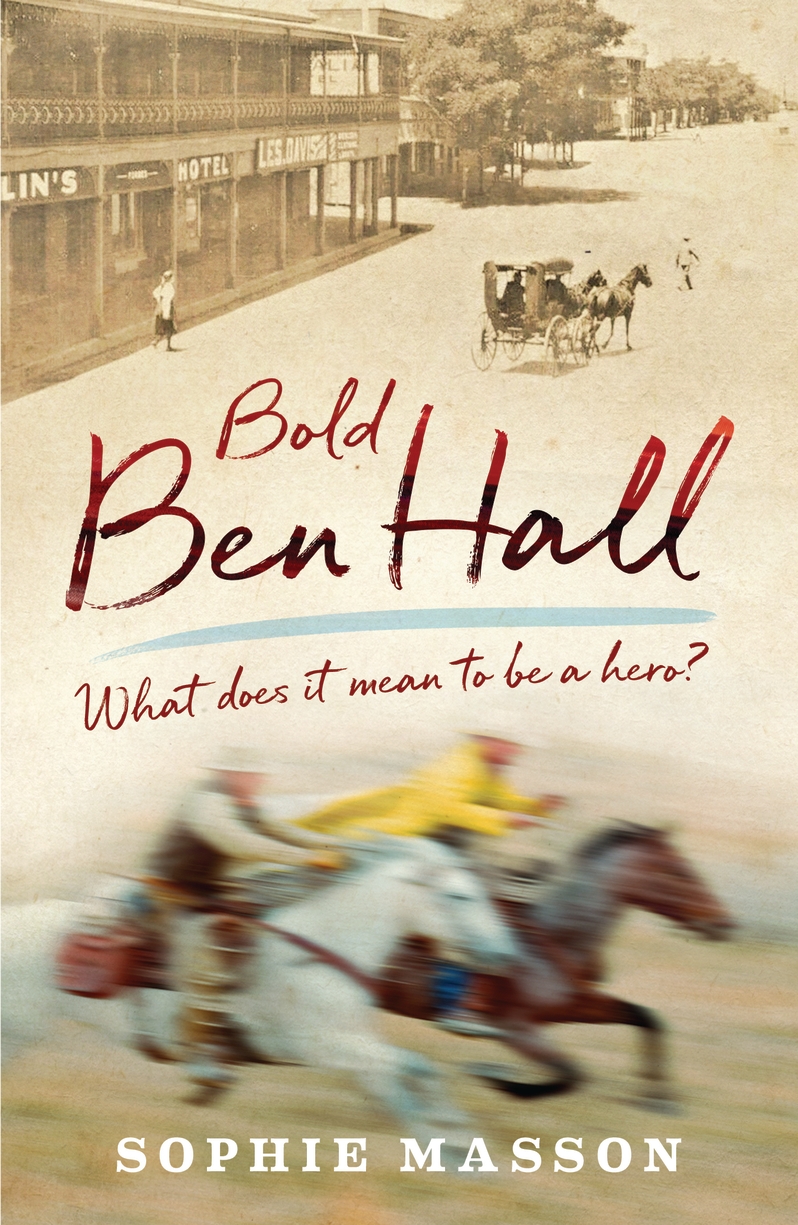
I’m delighted to say that I was interviewed by fellow writer Brenton Cullen on his blog, about Bold Ben Hall, research, writing about the past, and quite a few other things. Really enjoyed the interview, hope you do so too!
Here’s a short extract:
1. Congratulations on your latest fantastic historical novel Bold Ben Hall! What prompted you to write this book?
SM: Thank you, Brenton! Ever since I was a kid I have always been fascinated by the bushranger era, and the larger than life characters who inhabited it, especially those with an interesting backstory, like Ned Kelly (who features in two of my earlier novels, The Hunt for Ned Kelly and Ned Kelly’s Secret) and Ben Hall.
Both men were not ‘common criminals’ but complex figures with both ‘the dark and the bright’ in them (to quote something Ned Kelly once said). And it struck me that I could tell the story of Ben Hall in a way that would highlight that, through the differing viewpoints of two young people of his time.
On Saturday 25th January, in Sydney, I’ll be one of several guest authors at a special French-Australian literary dinner as part of a worldwide francophone event called Nuits de la Lecture (Nights of Reading)which celebrates books and reading and conversations between writers and readers. The event features literary games, book giveaways, a fun Q and A, and more, plus of course a nice meal (in our case, galettes and crepes at Four Frogs Creperie, Randwick). Much looking forward to it!
Note: This post of mine is reposted from Writer Unboxed, where it was published yesterday. On the WU site, you can also scroll down after the post to see comments, and can add your own. Hope you enjoy!
Working with an editor, by Sophie Masson
I’m just at the very end of the editing process for an upcoming novel of mine, and it’s got me thinking again about the extraordinary job of an editor, and how it’s such a wonderful thing working with them to unearth the final shape and polish of your creation. In my many years as a published author, with many books out there, I can count on less than the fingers of one hand the numbers of times I’ve had a less than good experience with editors. In my experience, they are dedicated, meticulous, intelligent, discreet yet honest professionals who respect both the creative work they are editing and the principles of their craft. In some cases, depending on the book, they’ve helped me to unlock a knotty problem of narrative; or saved me from a continuity error; or helped to polish a less-than-perfect phrase so that it shines as it was intended to.
Because I’m a writer whose first drafts are quite strong—mostly because in fact they are only first drafts in theory, as when I am writing I tend to go over the chapter I wrote the day before I start on the next chapter, and at the end of the week go over again the chapters I’ve written—I tend often not to get big structural edits, but rather more of a light going-over to check structure, then move straight into the first copy-editing. This is quite a forensic process, looking at every aspect of language, as well as continuity, errors of timing or description, and awkward phrasing, rather than plot architecture or characterization overview. It’s about detail, not big picture, and I love this stage, working with the editor to bring out the very best of the details in my novel, so that they can highlight and illuminate my story and my characters. I don’t always agree with the editor; sometimes I will decline a change, and explain my reasons; sometimes, too, the editor’s comments help to inspire me to find a new, different solution. Mostly, though, I agree with their suggestions, because they are based on such a close and careful reading of my work.
The first copy-edit is usually followed by one or two more copy-edits, then the proof, then final pages, each of which is sent to me for review. And each time, as the files go back and forth, something is caught by the editor, some tiny thing that slipped through in the first stages, or some tiny tweak that just gives that final, final buffing of polish. It’s a meticulous but also exhilarating process, as I go through the stages and each time there’s an improvement to my book, no matter how small or subtle. And that goes both for the long works, like novels, and the short works, like picture books (which can in my experience go through as many edits as a novel).
I know that there can be problems with writer/editor relationships; I know that sometimes they aren’t a good fit. In my own career, as I mentioned earlier, there have been a vanishingly small number of times when I haven’t felt comfortable about a particular editing experience and I’ve had to fight a particular interpretation quite strongly. But for the overwhelming majority of my books, working with the editor has been both pleasurable and challenging in the best way—the way that knows that in order for your book to be the best it can be, then you need to be able to see your work objectively, which is exactly the gift that the editor’s skill offers. The irony of course is that a good editor’s work is invisible to the reader–and yet its absence would be all too visible. So three cheers for editors all over—without whom both writers and readers would suffer!
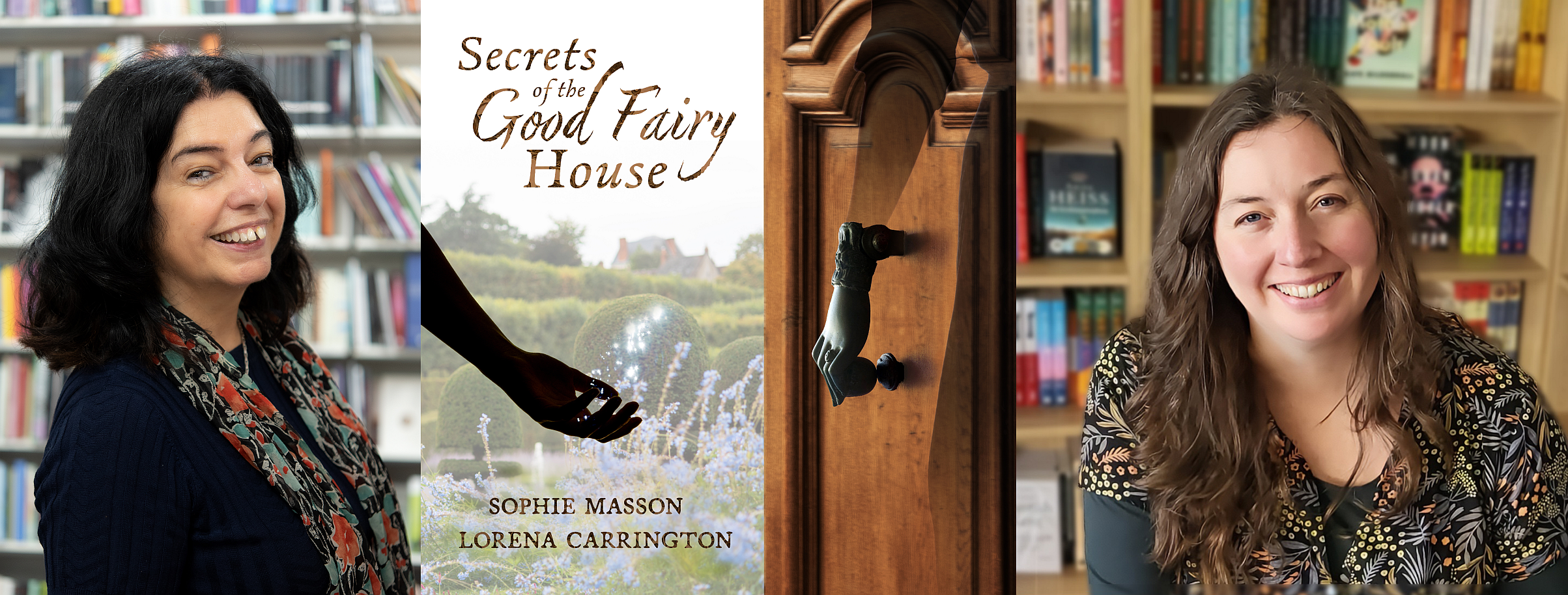
Today is the publication day of Secrets of the Good Fairy House, my new Pardalote Press production with Lorena Carrington. It’s been a real passion project for us both, and we’re so delighted to see the book out there! We hope lots of readers will take it to their hearts.
The book is available from any good bookshop across Australia, and can also be ordered directly from our Pardalote Press website, here. And to whet your appetite, here’s a beautiful review of the book, by writer and reviewer Ashleigh Meikle, of the popular Book Muse blog.
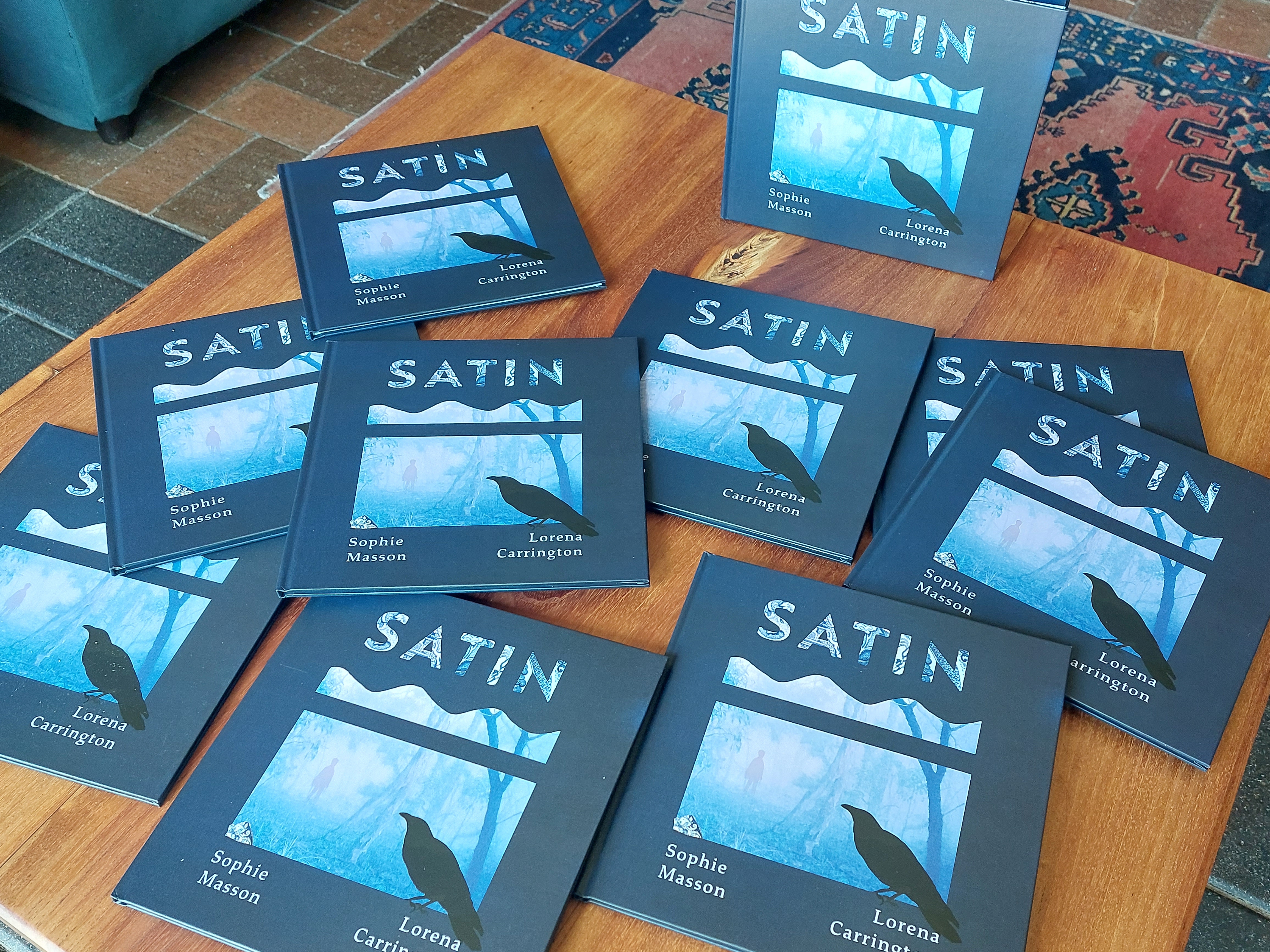
Lorena Carrington and I will be celebrating the launch of our picture book, Satin (MidnightSun Publishing)in Sydney on Tuesday March 14, 4pm at the lovely Better Read than Dead bookshop in Newtown. Lorena and I are both coming in person from our respective homes-mine in regional NSW, Lorena’s in regional Victoria–for it, and we’ll be reading the book, talking about how we created it, and of course signing books!
Everyone very welcome, children and adults, you just need to register(it’s all free of course) so the bookshop can have an idea of numbers. Here’s the link, to register.
I’ve had to sit on this super exciting news for ages, but now it’s been announced by the publisher, so I can announce it in my turn now!
In November 2023, my new novel for adults, The Paris Cooking School, will be published under my new pen-name of Sophie Beaumont, by wonderful Ultimo Press. It was acquired by them via my lovely agent Margaret Connolly, who has encouraged, supported and helped to inspire me every step of the way as I’ve been creating the novel. And it’s been an absolutely wonderful experience working with publisher Alex Craig and the Ultimo Press team, and I’m looking forward so much to the rest of the process!
This is a book that I have so loved writing, which has taken me in a new and exciting direction in terms of my writing, a delicious novel about love, hope, second chances–and food! And it’s also a love letter to the most beautiful city in the world.
Here below is the publisher’s announcement. I’ll be writing more about the book as the months go on, and starting a special page for it on this blog too, but in the meantime you can follow the Paris Cooking School on Facebook and/or Instagram, where I’ll be posting news, pics, bits and pieces.
The official announcement from Ultimo Press!
Oh la la, do we have a delicious novel on its way to you 🍓
It was impossible not to be enticed by The Paris Cooking School by Sophie Beaumont. It’s a treat for the soul – a delectable novel about love, hope and the consolations of the perfect strawberry tart.
Sophie says, ‘I love Paris. It’s as simple as that. Steeped in history, yet fresh as morning bread, elegant as spun sugar yet earthy as onion tart, it’s a city of delicious contrasts and magical charm. It’s also a place of potential and possibility: the perfect setting for a story of second chances. And of course, there’s the food! I loved writing this book so much: and I hope readers love it too.’
Publisher Alex says, ‘The Paris Cooking School is a sheer delight, and I couldn’t be happier working with Sophie on a gorgeous novel set in a city she knows inside out. Following three women’s stories during a springtime in Paris, this novel is for anyone who dreams of the what-ifs and second acts, escaping to the City of Lights, and learning to cook the French way.’
This piece of mine, about one of my favourite childhood books, was published in the wonderful books magazine, Slightly Foxed, in issue 18, in 2008. I know a lot of people share the same fond memory of Nicholas Stuart Gray’s gorgeous book, The Stone Cage(and his other lovely works) so thought I would republish it here, as a new year’s gift. Hope you enjoy!
Nicholas Stuart Gray
by Sophie Masson
first published in Slightly Foxed, issue 18, 2008.
If you were a bookworm as a child, your memories are measured not only in family or school or public events, but in stories you read. You remember vividly the smell, the touch, the sight of certain books. You clearly remember picking them up from the shelf—an ordinary act—and then the extraordinary happening, as you open the book and fall straight into another world. The pure pleasure of it, the immediate liberation. For me, who loved fairytales and fantasy, who longed to go through the looking-glass, the wardrobe, stepping through the borders into another world, where anything might happen, it was also a blessed escape from the confusing, disturbing and tumultuous family dramas that dominated my childhood. In those stories of other worlds, I found pleasure and consolation, transformation and possibility. And I found my own calling as a writer.
It can be dangerous revisiting those important, beloved stories, as an adult, for it’s not just a book that might be found wanting, but memory itself. And yet, when it works, when the barriers of time dissolve before the sheer magic of a real storyteller, it is probably the most thrilling experience a reader can have.
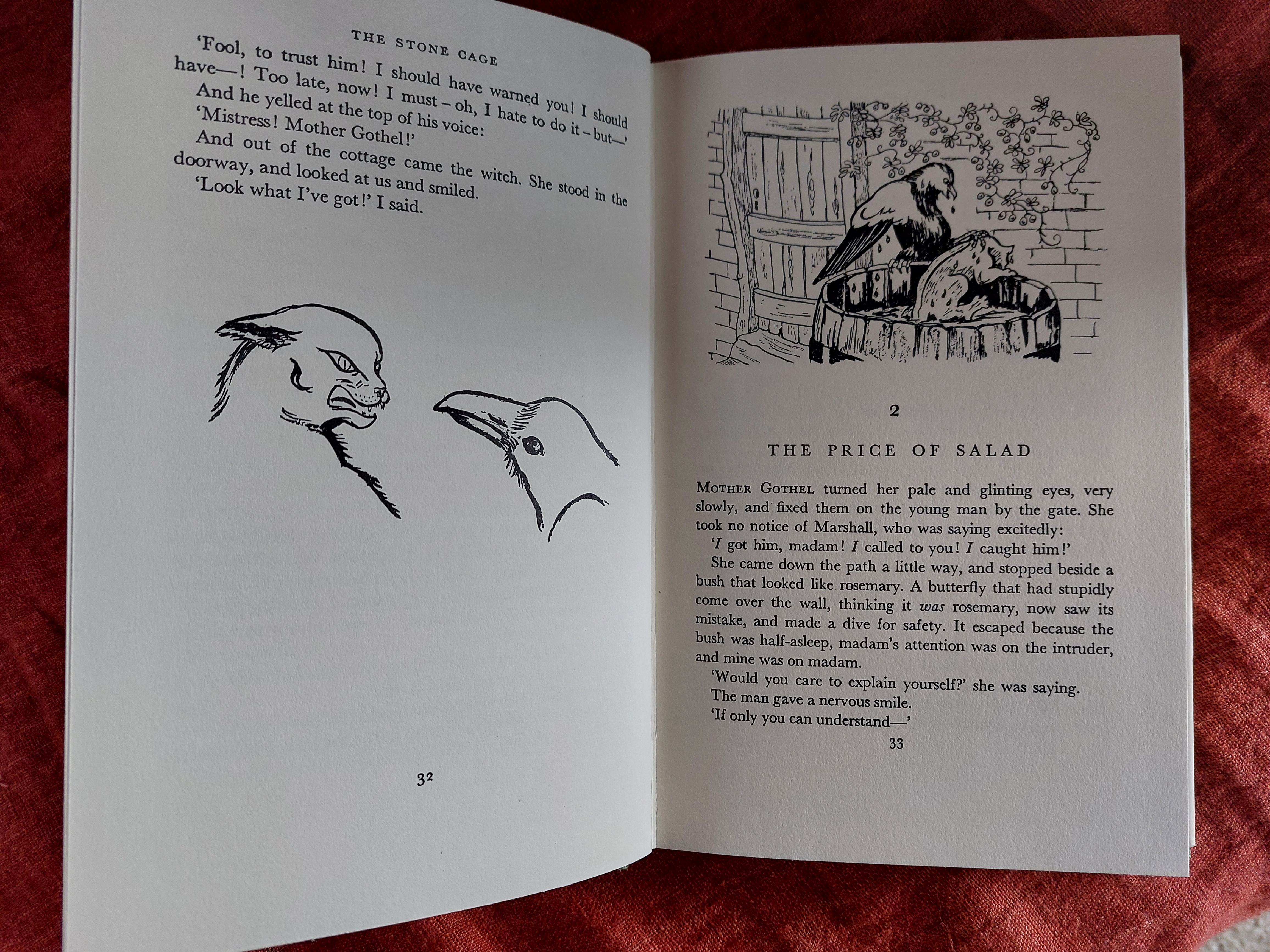
The Stone Cage, by Nicholas Stuart Gray, was one of those books that I remember clearly not only because they were so good to read, but because they were also so influential on me as a developing writer. Picking it up again after a gap of more than three decades was one of those magical moments that made me rediscover not only my childhood self, but also the reason why the book stands out in my memory. For from the very first sentence, you are plunged into a briskly unsentimental fairytale world, tartly guided by Tomlyn the witch’s cat:
Ever heard of a ‘dog’s life’? I’ll bet you have. Everyone has. Means a low, miserable kind of life. Full of kicks and curses, and nothing much to eat. I don’t know, I’m sure—what about a cat’s life, then? There’s not much said about that, is there? Nine lives, yes—but what sort of lives are these supposed to be? I’ll tell you the sort I had—a dog’s life.
I have to admit it isn’t every cat who lives with a witch, though.
And what a witch! Bad-tempered old —! No, it’s not fair to a cat or she-dog, to liken her to one of them. Let’s say she was a bad-tempered old beldam, and leave it at that. She hated people. She hated Marshall, her raven. She hated her bats and her toads. She hated me. Sometimes I think she even hated herself. A great old hater, was madam.
A naïve young stranger intrudes on this loveless, isolated mini-dictatorship, and is forced to pay a terrible price for his presumption, as he must give up his only child to the witch. And so the poor child is taken from her parents and put into a world where no-one trusts anyone else, love isn’t allowed to exist, and bitterness and cruelty reign. But all is not lost, for this is a very special child indeed, who will achieve an extraordinary miracle, greater than the greatest of spells, greater even than the most malevolent hatred.
As I read, I was swept along, just as in childhood, on the irresistible tide of a gripping story that for all its wit, humour, accessibility and clarity is also a compassionate, tender and complex evocation of the transforming power of love. But it’s certainly not all sweetness and light. Going way beyond a mere retelling of the fairytale of Rapunzel, on which it’s based, The Stone Cage reaches deep into the darkest, most painful aspects of life, as well as its most beautiful and joyous. In the way of the best children’s literature, it attains a profundity that’s all the more remarkable because of its sheer lucidity and unpretentiousness.
I finished The Stone Cage exactly as I’d done all those years ago: with tears in my eyes, and a thrilling heart, for the book also ends in one of the most perfectly judged, moving yet unsentimental scenes of its kind. Allied to my renewed love was a keenly increased admiration for the artistry of the author, which had easily stood the test of time. The characterisation is superb, the dialogue crisp, the pace good, the combination of light and dark subtly achieved. And the beauty of the style! Fluid, graceful, it is humble—in that it doesn’t draw attention to itself—and yet it’s fresh, distinctive, individual. The Stone Cage had been so important to me because everything in it worked. It was all so natural, so flowing, so multi-layered, its world richly imagined, yet delicately evoked. It was a real masterpiece, a novel just about perfect both in concept and execution, and timeless in its appeal, a novel that should have just as many young readers now as it did back then.
Aye, there’s the rub. For The Stone Cage is out of print, and has been for a long time. In fact, and rather astonishingly, in a culture like Britain’s that generally does value its children’s literature, all of Nicholas Stuart Gray’s books are presently out of print. Beautiful, original and accessible though The Stone Cage, Mainly in Moonlight, Grimbold’s Other World, Down in the Cellar, The Seventh Swan, and his other works are, they are unobtainable except through second-hand shops and the Internet, although some are still in libraries. It’s not as if modern children don’t like them, or don’t understand them, either; I know of lots of young readers who, introduced to Gray’s books by their parents, have loved them just as much, and have found them just as easy to read. It’s not as if there’s anything dated or offensive in them, no obvious or hidden misogyny or racism or class stuff or anything like that. There is nothing really to properly explain this puzzling situation, other than that they’ve simply been overlooked.
And yet, Gray’s work has deeply influenced many of today’s writers working in the fields of children’s literature and of fantasy—Garth Nix and Neil Gaiman and Cecila Dart-Thornton, for instance. I’m certainly not the only reader-turned-writer to remember Gray’s books with great love and respect. Australian children’s novelist Cassandra Golds, author of the acclaimed Clair de Lune, wrote to me about the huge impact on her of one of Gray’s books, Down in the Cellar :’I will never forget the Sunday afternoon on which I finished reading it. I remember feeling a kind of mysterious desolation, partly because I’d finished reading it and would never be able to read it for the first time again, but partly also because I KNEW I had now read the best book I was ever going to read. And I felt, then and still, that the only possible response to that experience was to become a children’s author myself.’ As an eighteen year old, Cassandra had written the author a fan letter, and she still treasures his modest, graceful reply, in which he said, amongst other things: ‘As all my books and plays are only written for myself and not for any imagined audiences, readers, age-groups, publishers, etc, it is always a delightful surprise to get proof that anyone BUT myself ever reads or sees them..’
Perhaps that answer gives a clue as to why Gray’s work is not recognised as it should be. This was not a man who blew his own trumpet, not a writer who sought publicity, but one who loved his work and felt privileged to be doing it, and who was too humble to thrust himself forward. Who was perhaps also at heart a rather private, reserved, even secretive person, despite his long association with theatre, which many people would consider the home of trumpet-blowing, egotistical extroverts. Certainly, when I went to research his life, I found precious little information.
Nicholas Stuart Gray was a Highland Scot, born in 1922, the eldest of four children. As a child, he wrote stories and plays for his siblings. Not one to bend easily to the routines of school, he left at the age of fifteen, to become an actor. He kept writing as well, and his first play was produced two years later. His first children’s play to be published was Beauty and the Beast(1951), and from then, he wrote and produced a good many plays for children, before turning his hand to novels and short stories(where I think his true gifts flowered). Some of his novels, like The Stone Cage (1963), he also adapted for the stage: he told Cassandra Golds that he himself played Tomlyn in the play’s premiere at the Edinburgh Festival and its subsequent successful seasons in London and on tour. (That would have been something to see! ) He never married or had children. His plays fell out of fashion, but his novels and short stories continued to be published until his untimely death from cancer in 1980, and right into the late 80’s, we were still seeing frequent reprintings of his books.
But in the last fifteen years or so, there have been no more new editions. In this new Golden Age of children’s literature, it’s more than time to bring his books back so that a whole new generation can fall under their spell. Any publishers out there listening?
As a present-day coda to the end of my piece: as I mentioned in the article, second-hand copies of The Stone Cage are not easy to track down–and I’m certainly hanging onto my own beautiful hardcover copy, found by chance in a secondhand bookshop in Oxford some years ago . So it always astonished me that The Stone Cage hasn’t been republished, but when, five years ago, on behalf of the little publishing house I’m involved in, I made enquiries as to who might own the rights, it appeared that no-one was actually sure what had happened to them. Gray had no direct descendants, though he did have extended family, but a letter to an address I was kindly given by the ALCS (Authors’ Licensing and Collecting Society) in the UK went unanswered.
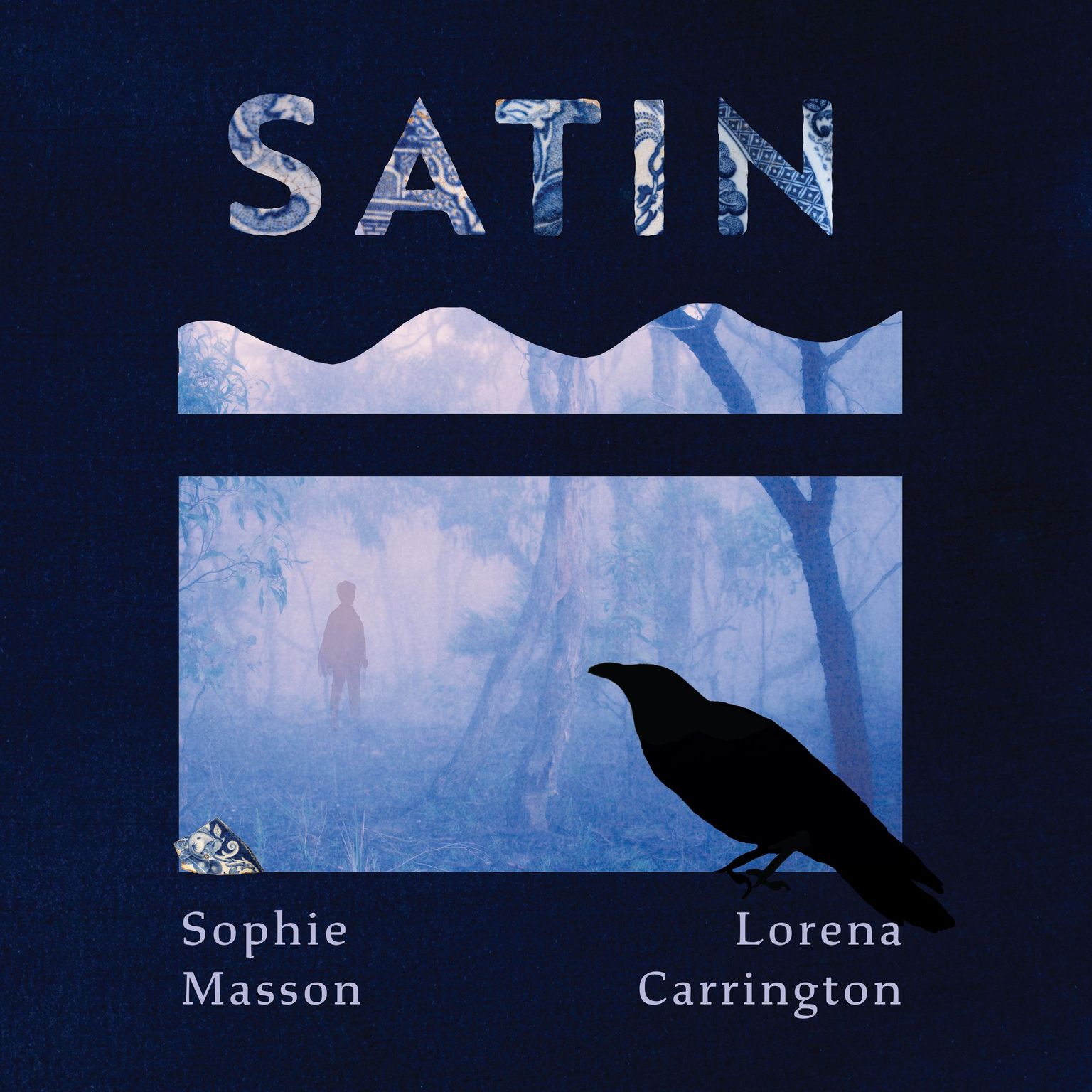
I am so looking forward to the publication next year of Satin, my forthcoming picture book with the wonderful illustrator Lorena Carrington, to be published by MidnightSun Publishing in March 2023. I am really excited about this book, which came about in the most magical way (which I’ll write about in another post, later), and which I think is going to be just loved by both children and adults.
Here’s the gorgeous cover:
And here’s the blurb:
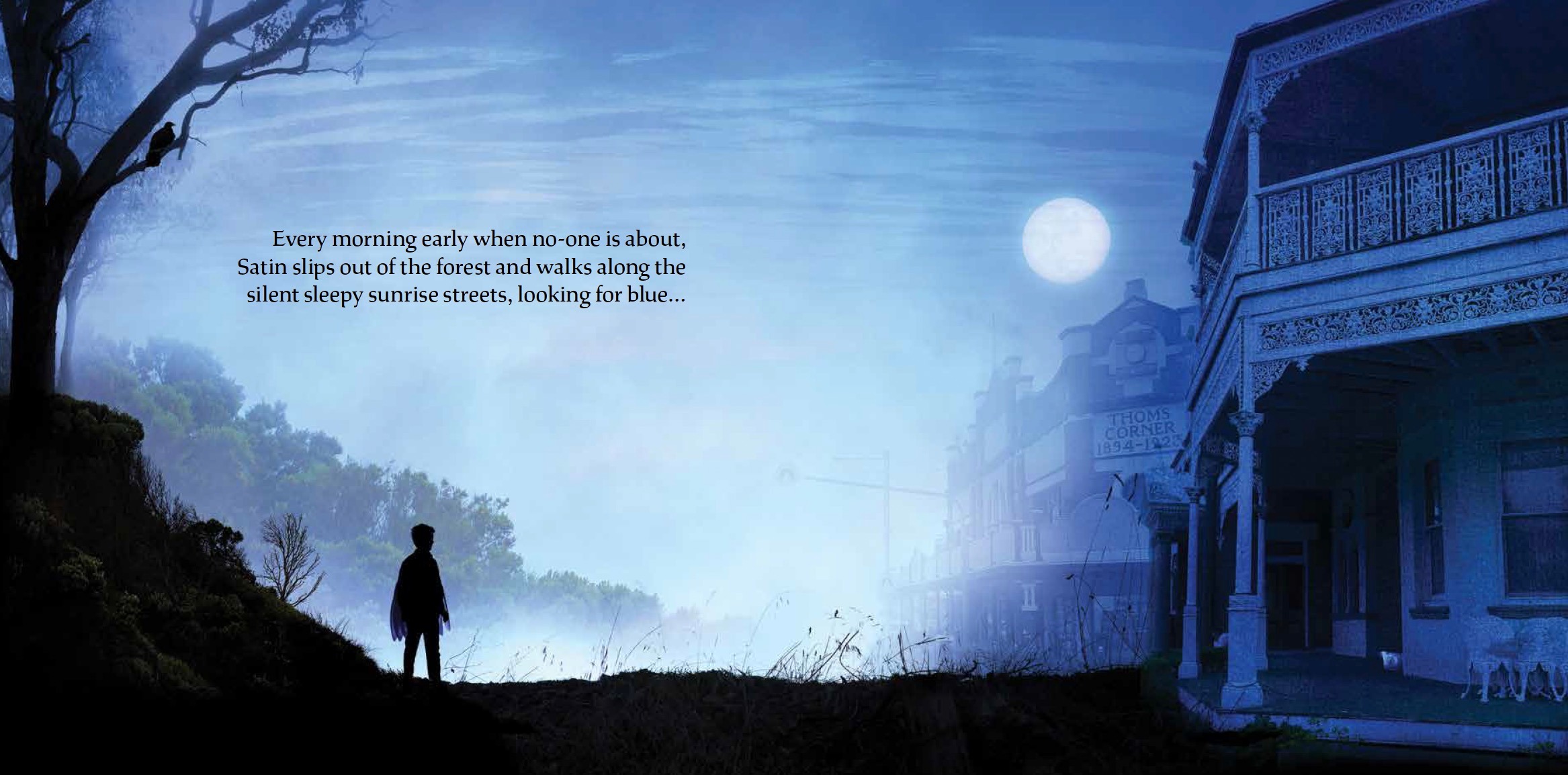
Every morning early, when no-one’s about, Satin slips out of the forest and walks along the sleepy sunrise streets, looking for blue…
He’s collected all kinds of blues, from all kinds of places. He’s making something beautiful, with all those blues. But something’s missing, and he doesn’t know what it is. And then, one day, he comes to a street he’s never been in before. And what he finds there will change his lonely life forever.
A beautiful, haunting fable by award-winning writer Sophie Masson and acclaimed illustrator Lorena Carrington.
Lorena’s exquisite, superb creation of Satin’s visual world is just stunning in its depth and beauty, conveying a mix of natural enchantment and human warmth which goes right to the heart of the story. (Below is a sneak peek at the first page spread)
I am so happy that Lorena is co-creator with me on this gorgeous book, and so happy too that it was taken on by such a wonderful publisher as Anna Solding of Midnight Sun.
I’m delighted to announce that just one week away from official release and our celebratory event, A Hundred Words for Butterfly is now available to buy at several online audiobook retailers across the world, including Authors Direct, Kobo, Nook, Google Play, Audible, Libro, Apple, Booktopia, and others.
The book is three hours and 10 minutes long, and superbly narrated by the wonderful voice artist Sarah Kennedy. Sound design and editing are by Martin Gallagher, and production is by Spineless Wonders Audio. Hope you enjoy it! And please do consider writing a review and sharing it on the retailer platforms, your social media, etc.







 Feathers of the Firebird