2017 Book Discovery 7: Jean Kent’s pick

Jean Kent writes about her 2017 book discovery today.

The Little Prince, by Antoine de Saint-Exupery, is my rediscovered gem for 2017.  For some time this book has been near the top of the tottering pile beside my bed, waiting for that mysterious moment that the best books have, when it would become just the right one for me to reach for.

I love the gentle wisdom and wit of this story of a pilot who has had to land his damaged plane in the desert and his encounter with a ‘little prince’ who has also fallen from the sky – from a very small asteroid, where he usually lives alone, with one rose for company and the possibility of watching forty-four sunsets in one day for consolation.

Although it has the lovely, simple clarity of a children’s story, there is so much poignant adult experience here as well.  I wasn’t very far into the book when I came across a friend whose wife had recently died, sitting beside Lake Macquarie, taking a photo of the sunset.  Every day, he said, he did this now.  I went home, read a little further and found the little prince saying: ‘You know, when a person is very, very sad, they like sunsets.’

This edition also has all the qualities that make a printed book more special to me than a digital version.  It is just slightly larger than my hand, which makes it a pleasure to hold.  The paper is silky and white, and the print and line drawings are so crisp it is as if the ink has just dried.  The cover, too, with its delicate painting of the wistful, golden-haired boy-prince, is irresistible.

I bought my copy at the Red Wheelbarrow bookshop in the Marais, Paris.  So even though this is an English translation, that connection immediately makes me feel as though I’m partly in France while I’m reading.  Which, of course, adds to the joy …


Jean Kent has published eight books of poetry.  Her most recent book is Paris in my Pocket (Pitt Street Poetry), a selection of poems written during a residency at the Literature Board’s Keesing Studio, Paris.  She lives at Lake Macquarie, NSW.  She also posts poems and occasional Jottings at http://jeankent.net/
2017 Book Discovery 6: Sandy Fussell’s pick

Sandy Fussell tells us about her 2017 book discovery today.

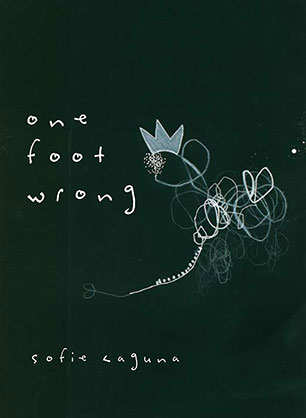
My 2017 Discovery Book is The Choke by Sofie Laguna, although to be honest, it’s more of a discovery trail that began in 2009 when I spotted the cover for One Foot Wrong in a bookstore. I read the blurb and was hooked.

A few years later, I read The Eye of the Sheep in August, and even though there were still four months of the year to go, I told everyone, even Facebook, that it was my favourite book for 2014. When it won the Miles Franklin the following year, I smiled a lot and said, “I told you so” whenever I thought I could get away with it.

Even though I write for children, I’d never read any of Sofie’s children’s books. So, I began to search backwards. There were lots of discoveries then. I was lucky to discover a copy of the out-of-print picture book Stephen’s Music, in a Canberra second-hand bookstore. It’s another favourite. Sofie has a magical way with words. For me words have always been a form of music. In Year 6, I asked for The Complete Works of Shakespeare for my birthday. Not because I was smart, in fact, I didn’t understand much of it at all. I just liked the music the words made when I read them aloud. That’s was Sofie does when she writes. She makes word music.

But back to 2017. As a reviewer, I received an advance copy of The Choke. It sat on my desk for a while because I wanted the luxury of reading it in one sitting. Most of my reading is very fractured, wedged into slivers of time in between things I’d rather not be doing.

For Book Week, I had a school visit that involved two-and-a-half hours train travel each way. I don’t mind that. It’s not travel time, it’s reading time. I read The Choke, all the way from the South Coast to Hawkesbury River Station.

The Choke is the story of ten-year-old Justine, who lives with her grandfather, a damaged veteran of the Burma Railway. The name of the book is a reference to a place on the Murray River where the banks narrow. Large chunks of my own childhood were spent on a narrow section of the Nepean River, with my sister and the girl next door. I would sit and read (no surprises there) and the others would fish, and we’d explore a little north and a little south. It was innocent fun. But for Justine, The Choke is place where good and evil happens.

Some parts of the story cut close to my bones. The isolation of being different and wanting different things with no-one to understand or help clear the obstacles. Recently, I read an interview where Sofie spoke about visiting the thin part of the Murray, how it always floods but the gums still grow under the water, like Justine does. Ultimately Justine’s issues were darker and more violent than my experience, and the story hurt on a level deeper than what I brought to it as the reader.

When I got to Hawkesbury River Station, I had one page to go. I’m always early for appointments so there was time to sit in the morning sun and read through to the end. And when I’d finished, I took a deep breath, and everything I’d read overwhelmed me. I was sobbing. Not crying. Sobbing.

So, here’s why The Choke is my 2017 favourite Book Discovery.  Adult books told through a child’s eyes always resonate with me, the language is beautiful, and the narrative is heartbreaking. Absolutely gut-wrenching.


Sandy Fussell is an internationally published children’s author who loves words, numbers and the Internet. Enthusiastic about school visits, cultural diversity in literature and ICT in education, she is often found in a school library waving her practice sword or teaching a Minecraft-based writing workshop. You can find her here www.sandyfussell.com

2017 Book Discovery 5: Yvonne Low’s pick

In the latest in this blog series, Yvonne Low is presenting her book discovery of the year.

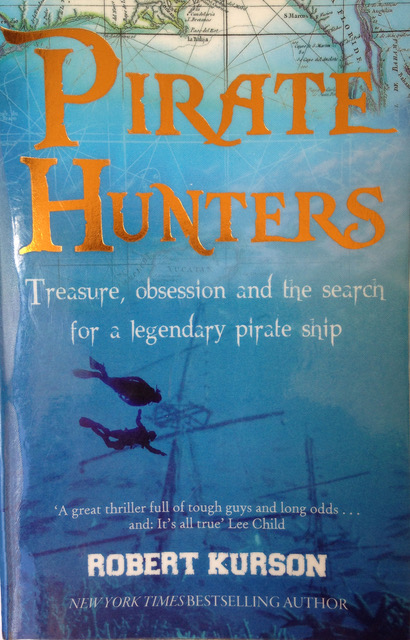
Pirate Hunters, by Robert Kurson, is a gripping read about real-life modern day divers, who are passionate to the point of obsession, about undersea diving and searching for sunken treasure.  The pirates of the old swash-buckling days have always held an interest for me from childhood when I used to love reading comic-strip stories of the pirate Blackbeard and other buccaneers.
The action takes place in the Dominican Republic, in the Caribbean Sea and details the tireless search for a long-lost pirate ship from the 1680s, during the Golden Age of Piracy.  The book was a real eye-opener about the lengths people will go to, to find the ultimate treasure and the fascinating historical research which helped the divers in their quest.
I love to travel and enjoy reading travel memoirs from exotic locations, so Pirate Hunters was the perfect book to take away with me on a recent beach holiday.  I could gaze out to sea and imagine what sunken galleons and buried history might be waiting to be discovered…
Yvonne Low is a writer and illustrator, whose illustrations have appeared in Christmas Press books, most recently for A Christmas Menagerie.  Yvonne is currently working on illustrations for another Christmas Press middle-grade novel, set in space!

Mermaid’s treasure, by Yvonne Low

2017 Book Discovery 4: Catherine Wright’s pick

Today, Catherine Wright tells us about her book discovery of 2017.

Alf Laylah wa Laylah (Tales of 1001 Arabian Nights)

As someone admittedly susceptible to the allure of all things exotic and especially Middle Eastern by nature, this collection of stories has been in my sights for some years. When the librarian showed me the size of each of the three volumes, I nearly lost my nerve and retreated to something less exhausting to hold up. How glad I am that I didn’t!

The stories of Scheherazade in their full glory (beyond the Disney-fied ones of Sindbad and Aladdin) are as mysteriously compelling and evocative as the hype would have it (I am reading the wonderful 2008 Penguin translation by Malcolm and Ursula Lyons). Not only are there the expected sumptuous scenes laden with precious gems, beautiful men and languid-eyed women bedecked in gorgeous silks and scented with musk and ambergris (which do not disappoint), but the nature of the storytelling is entrancing and quite hypnotic in it’s own right.

The indefatigably inventive Scheherazade stays her execution by her vengeful lover-king night after night with tales of tricksy djinns and the very human peccadilloes of its protagonists, interspersed with Rumi-like swatches of poetry and philosophy. No story is completed by the break of dawn, thus delaying her death for another day.

Nothing is linear in the experience of reading this text, with even minor characters telling stories within the main stories, so readers find themselves slipping deliciously down a narrative rabbit-hole, with each twist and turn more fascinating and lush than the last one in what feels a little like the opening of a sequence of Russian dolls. Although the exact provenance of these stories is still contested, it certainly feels very different to the Occidental, somewhat more logic-oriented style of narrative, which can seem a bit peely-wally by comparison. And these stories are unapologetically sensuous, sometimes startling with the very direct sexiness of the action and language.

The only thing that can stick in the craw about this (allegedly) medieval string of tales, is the regular description of women as scheming and untrustworthy (while the poor men are simply at their mercy) but, of course, this spin is not confined to Muslim or Arab stories (cf. Eve, the stories of Lilith and beyond…).

If you can put this to one side, Alf Laylah wa Laylah is a wild and glorious ride which often makes me catch my breath with its wisdom, insight, storytelling virtuosity and sheer beauty. Build up your biceps and give it a shot!

Catherine Wright was born in New England to a pioneering pastoral family, recently returning to live there after many years away. Her prose and poetry have been published in literary journals, installations and anthologies, as well as winning or being shortlisted for several awards, and a picture book of hers was produced for BBC Television CBeebies(Australia). She has been awarded a Varuna Residential Fellowship for 2018.


2017 Book Discovery, 3: Elizabeth Hale’s pick

Today, it’s the turn of Elizabeth Hale to write about her book discovery of 2017.

I’ve made a number of lovely rediscoveries this year, including Susan Cooper’s Over Sea, Under Stone​, about three children who become enmeshed a chase to find Arthurian objects, while on a family holiday in Cornwall.   It’s full of fascinating characters (the seemingly benign housekeeper Mrs Palk is my favourite), and gorgeous scenery, and an allusion to the Helston Furry Dance, which I’d heard of many times but not really looked up.  I spent a happy evening watching youtube clips of the Helston Furry (eg https://www.youtube.com/watch?v=qNdo6wT9Ers), and it brought back memories of reading all sorts of mid-century British fiction in which folk dances, mummers, and other mystical happenings feature.
Another rediscovery is Alan Garner’s wonderful The Weirdstone of Brisingamen, which I found while tidying up bookshelves at my parents’ house.  I read it over and over as a child; I think it was the first fantasy novel I really read by myself.  It’s set in Alderley Edge, in Cheshire, and again, the natural features of the land connect with a very plausible set of old folk beliefs and old magic.  I don’t think I breathed, while reading the scene where the children go through the underground (and sometimes underwater) caves that feature in that landscape.
And last rediscovery is Norton Juster’s divine The Phantom Tollbooth, another of my fantasy favourites as a child.  Here, Milo, a bored child, finds a phantom tolbooth in his apartment, and, getting into a mechanical car, pays the toll, and drives into the allegorical kingdoms of Dictionopolis and Digitopolis, where he works to bring back Rhyme and Reason to the warring kings.  I’ve always loved wordplay, and the wordplay in this is clever and keeps on coming.  A great book for literary kids.
Elizabeth Hale runs the Antipodean Odyssey: Explorations in Children’s Culture and Classical Antiquity​ blog as part of her role leading the Australasian Wing of the Our Mythical Childhood Project.  She teaches children’s and fantasy literature at the University of New England.  

2017 Book Discovery 2: Kathy Creamer’s pick

Kathy Creamer is writing about her 2017 book discovery today.

Cider with Rosie by Laurie Lee

 It was a world full of glass, sparkling and motionless. Vapours had frozen all over the trees and transformed them into confections of sugar. Everything was rigid, locked-up and sealed, and when we breathed the air it smelt like needles and stabbed our nostrils and made us sneeze.

I first discovered Cider with Rosie when I was fourteen, and I was immediately hypnotized by the glorious visions that Laurie Lee’s deliciously descriptive language created in my mind. Through his words, I can go back to the Cotswolds, re-enter childhood and remember the taste of snowflakes on my tongue, glimpse the shimmering icicles that once hung down from thatched roofs, smell the enticing spices of Christmas and touch the gentle face of my long departed grandmother.

I’ve read all of Laurie Lee’s other works, As I walked Out One Midsummer Morning, A Moment of War, I Can’t Stay Long, Village Christmas, and most of his poetry, but Cider with Rosie has remained one of my favourites, a feast for the senses, and it’s a place I like to go to for comfort. I’ve never been without a copy. This Christmas I shall be re-reading, and remembering that long ago, there was once a place as sweet and intoxicating as apple cider.

Kathy Creamer is an illustrator and writer whose work has appeared in numerous books, in Australia and overseas. Most recently, she has illustrated the new edition of Max Fatchen’s A Pocketful of Rhymes(Second Look, 2017) and her work has also appeared in the anthologies A Toy Christmas(Christmas Press, 2016) and A Christmas Menagerie(Christmas Press,2017).

2017 Book Discovery 1: Natalie Jane Prior’s pick

Today, Natalie Jane Prior is writing about her book discovery of 2017.

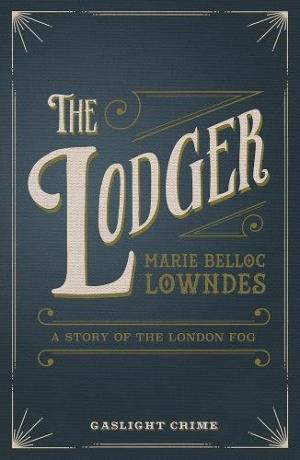
The Lodger, by Marie Belloc Lowndes, 1913.

I’d never heard of this book, or its author for that matter, but a passing reference in something else I was reading piqued my interest enough for me to download the ebook.

Mr and Mrs Bunting are at the end of their resources. Middle-aged former servants, their London lodging house has failed, and they have been reduced to surviving on furtive trips the pawnshop, when miraculously, a new lodger arrives and takes all four empty rooms in the house. Mr Sleuth is a gentleman of quiet habits, much given to Bible reading, an educated person who needs the space for his unspecified scientific “experiments”. Best of all, he pays his account regularly in gold sovereigns.

Of course, it’s all too good to be true. Mr Sleuth may be quiet, but he also has a habit of creeping out of the house in the middle of the night, and he does strange things like turning all Mrs Bunting’s chocolate box pictures of ladies to face the wall (so their eyes don’t follow him around). There is also the matter of sinister little bag he arrived with, his only luggage, which so mysteriously disappears soon after his arrival, and the horrible smelling smoke he creates in the kitchen in the early hours of the morning. It doesn’t take long for the Buntings to start suspecting there may be a link between their perfect lodger, and the Avenger, perpetrator of the string of horrific murders of women that is currently terrifying London.

While Marie Belloc Lowndes has loosely based her story on the Ripper murders of a generation before, The Lodger is surprisingly bloodless. It’s a psychological parlour piece, taking place almost entirely in the claustrophobic setting of the Buntings’ sitting room, bedroom and kitchen, in which first the wife, and then the husband move from relief and delight in their good fortune to unease, concern, suspicion, fear and finally, guilt and complicity. For underlying everything is the Buntings’ own vulnerability as respectable working class people with limited resources. The failure of their lodging house has pushed them to the very brink. They’ve stared the poorhouse in the face. Where will they find themselves, if they’re revealed to have harboured a monster?

It’s easy to see why this scenario attracted a young Alfred Hitchcock; he evidently made a silent film based on the book. I remain mystified, however, that The Lodger is not better known. I sat up until the small hours reading it, and my first reaction was to wonder why, when there are books like this about, anyone would bother reading modern period crime fiction. Not only because the novel itself is so good, but because a modern author, relying on research and bringing contemporary prejudices to the exercise, could not hope to get the nuances that are so effortlessly reproduced here. For example, one can immediately see why Buntings have failed to get lodgers just from the description of the furniture and interior decoration. They’ve taken a house in a “better” part of town to attract a “better” class of lodger, but the ugly secondhand Victorian furniture Mrs Bunting has filled it with (both because she can afford it, and because it will last—which indeed it does, because I’ve got a houseful of it) would clearly have been a total turnoff to her prospective clientele. Then there’s the Buntings’ precarious situation. Mr Bunting was a middle aged butler who married a middle aged maid. How could a modern author possibly latch onto the fact that their options are limited because positions in service for married couples are invariably for a manservant and cook?

 The Lodger is available as an ebook in the Gaslight Crime series. I hope lovers of crime fiction are tempted to give it a go; it deserves to be better known.

(Note from Sophie: it’s also available as a paperback online)

Natalie Jane Prior is the author of many books, and is best known for the Lily Quench series, which has half a million copies in print around the world. Her most recent titles are the picture book Lucy’s Book  and the picture story book The Fairy Dancers: Dancing Days, both illustrated by longtime collaborator, Cheryl Orsini. 

Announcing the illustrator for On My Way

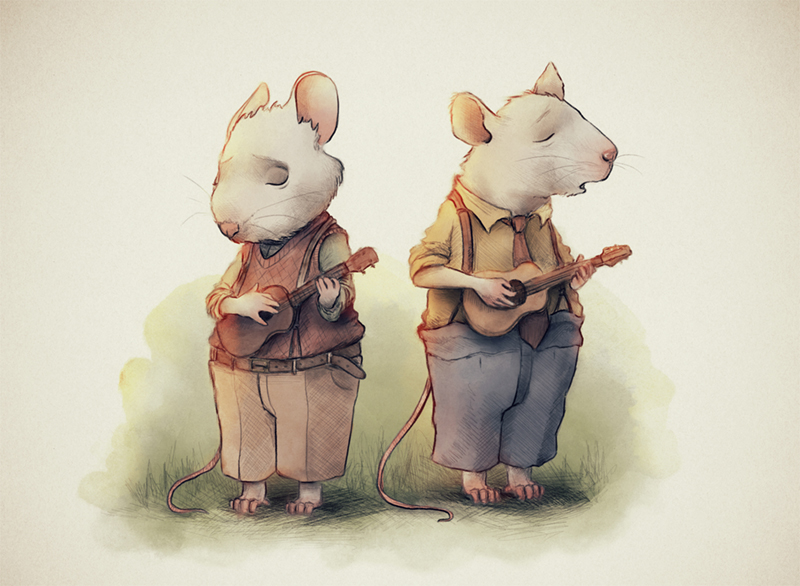
Two Sad Mice by Simon Howe(not from my book)

I’m delighted to announce that the illustrator for On My Way, my forthcoming picture book with Scholastic, is the fabulous Simon Howe. Just love his whimsical, magical work, very excited he will be creating the visual world of On My Way–which is a story in verse about the extraordinary people a child meets on their way to various places. And there’s a real twist at the end! The book will be out in the second half of 2018.

2017 Book Discovery: introduction to a new blog series

Today’s the start of a new series featuring the reading picks of writers and illustrators: their book discovery of 2017. It can be a new book out this year, or an older one discovered for the first time, or an old favourite re-read and re-discovered. And in the introduction today, I’m featuring a book I hadn’t read since childhood, but which I re-discovered, in a new edition, after this year visiting the place where it was actually set: the place which is so much more than a setting in the book, but is a character in its own right. Having been there now, I understand exactly why that is.

The name of the book? It’s The Children of Green Knowe, by Lucy M.Boston. And the name of the place? It’s the Manor at Hemingford Grey in Cambridgeshire. I always remembered reading that book with its dramatic wintry opening in the middle of floods and snow as seven year old Tolly, whose parents are overseas, arrives to stay for Christmas with his great-grandmother Mrs Oldknow at Green Knowe, the ancient family home. And there he gets to know and love his great-grandmother, the ancient, friendly, extraordinary house and the secret life of its ghostly inhabitants, the children of Green Knowe who lived there through the centuries and who are there still.

There was nothing frightening about this evocation of a haunted house; instead it was enchanting,  comforting and beautiful. I took to it immediately as a child not only because it’s very well-written and engaging and vivid but also because I think unconsciously it reminded me of our own ancient house in rural France, with its haunted yet warm atmosphere. Getting there for a holiday was always so exciting and I could totally identify with Tolly’s feelings. The book stuck in my head all those years because of it, but I had no idea that Lucy Boston had written it around an actual place.

It was when we were staying in Cambridge for a month this year that my friend and fellow writer Adèle Geras, who lives in Cambridge, told me about the house. So one beautiful June day we set off for

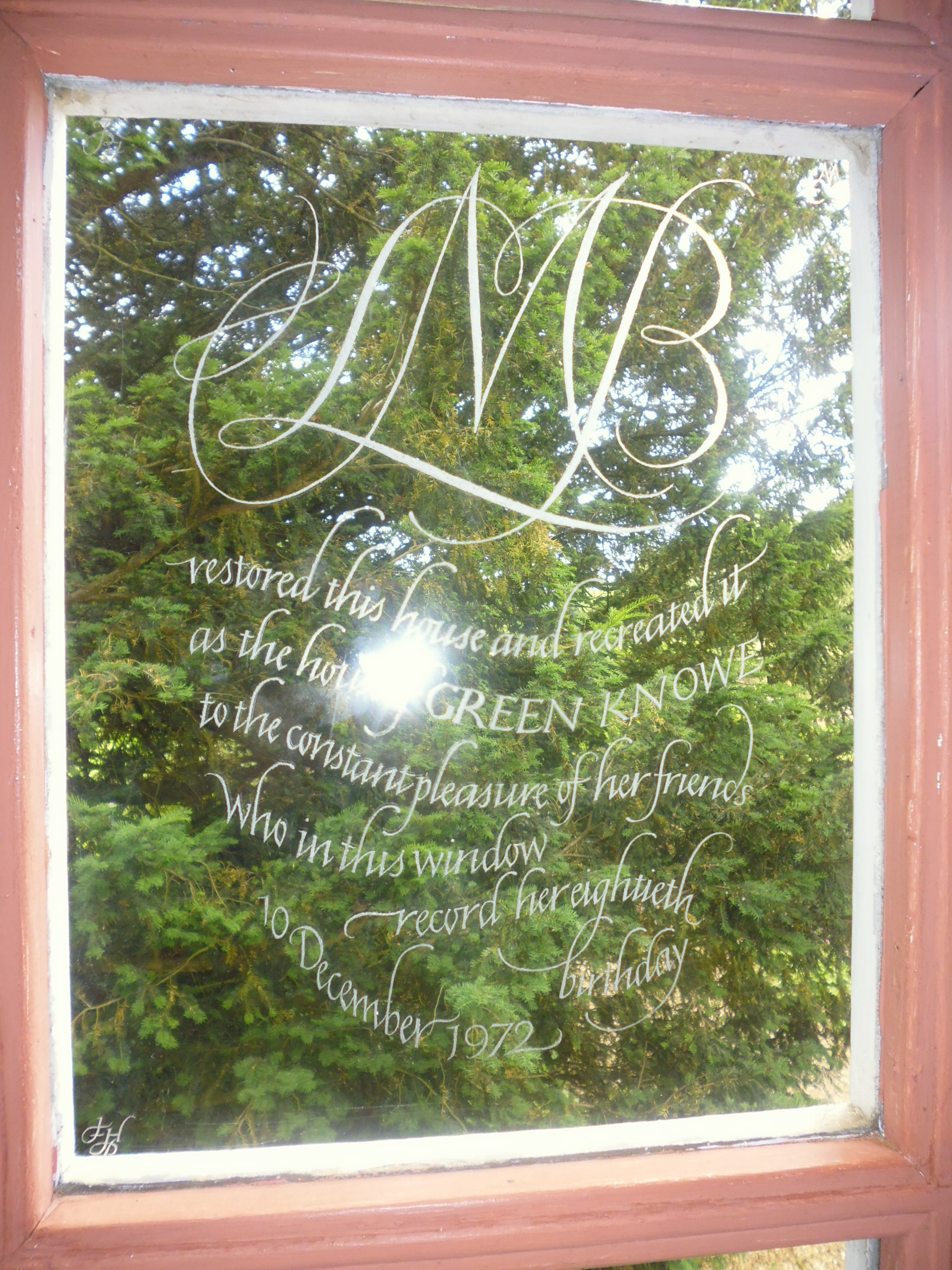
Green Knowe, aka the Manor, Hemingford Grey

Hemingford Grey and there, in that 900 year old house–the oldest continually inhabited house in Britain, apparently!–the book I’d loved came to life again in the most magical way. There, right there, was what Tolly had seen when he arrived that wild winter’s night, what he’d found when he explored that extraordinary house from top to bottom, what he’d seen when he looked out of the window at the glorious garden(though, granted, it was summer when we were there, not winter–but the Green Knowe series continued for another 5 books, and the summer garden certainly appeared in them.) Lucy Boston’s imagination had, it seemed, made visible what was there in those ancient stones, waiting to be evoked. And the fact that not only had her son Peter created the charming illustrations for the books on the spot as it were, but that his widow Diana still lived there and acted as tour guide for the pilgrims who came to the house, added to the wonder of it all. The strange thing was though that of all the people in the motley group Diana took around that day, we were the only ones who’d come for Green Knowe, for Lucy Boston the writer: all the others, mostly Americans, had come for Lucy Boston the patchwork artist! Her patchworks were famous it appeared…as famous as her books. At first it was disconcerting to me–and then I remembered Mrs Oldknow making patchwork by the fire and thought how extraordinarily apt it all was–a patchwork book of stories about a patchwork house whose elements from different centuries did not jar but worked as a harmonious whole..

I bought a new edition of the book from Diana at the Manor shop, as well as a couple of other books in the series. She told me that though the first two were still in print, the others had fallen out of print and so she’d taken the step of republishing them herself, and they sold ‘like hot cakes’. Back at our Cambridge flat, I re-read The Children of Green Knowe, and found its re-discovery deepened enormously by the experience I’d just had. Yet the original enchantment remained too. True reading magic indeed.

(I’m not the only one who loves this book; see this lovely review in The Guardian.)

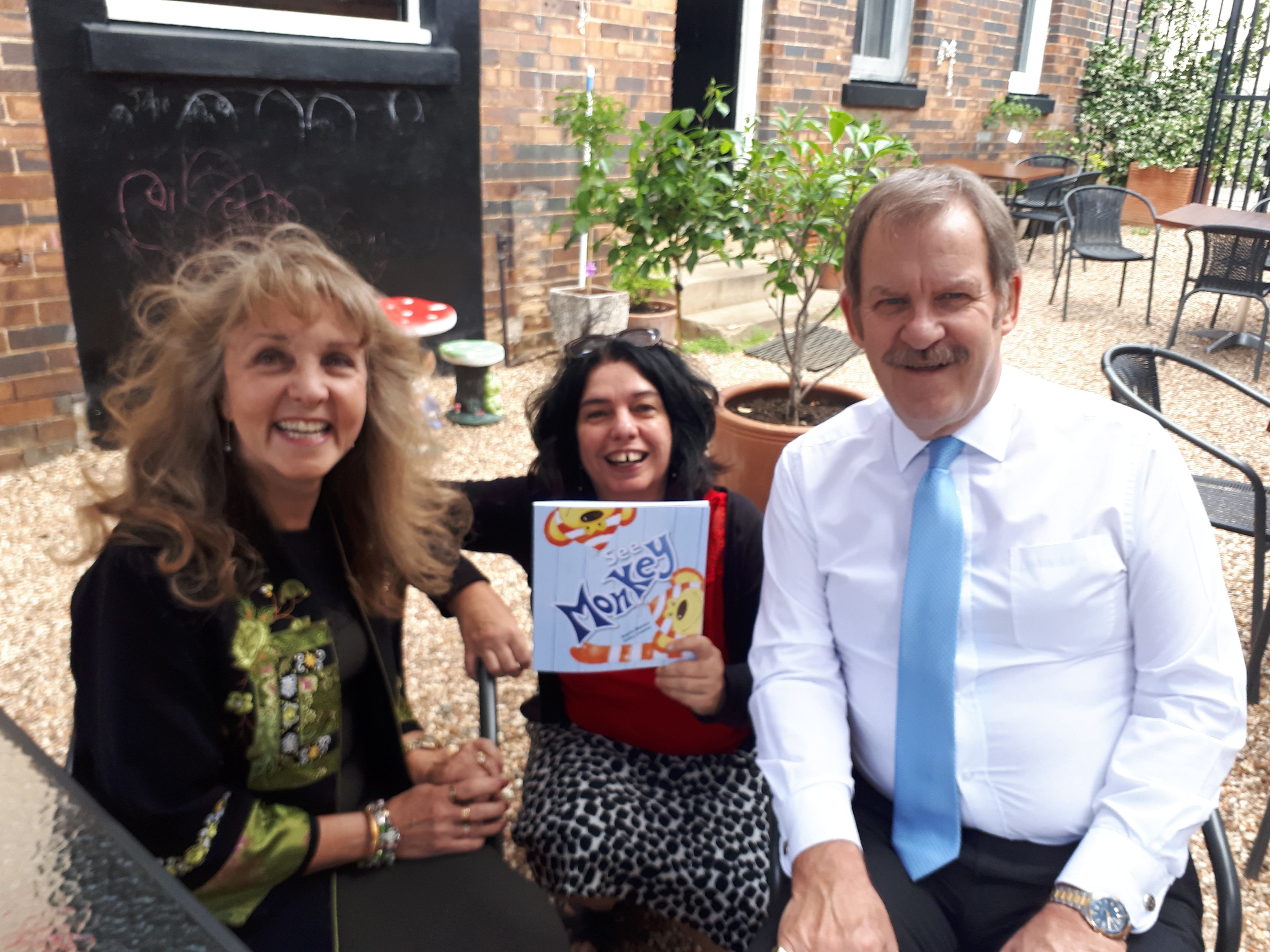
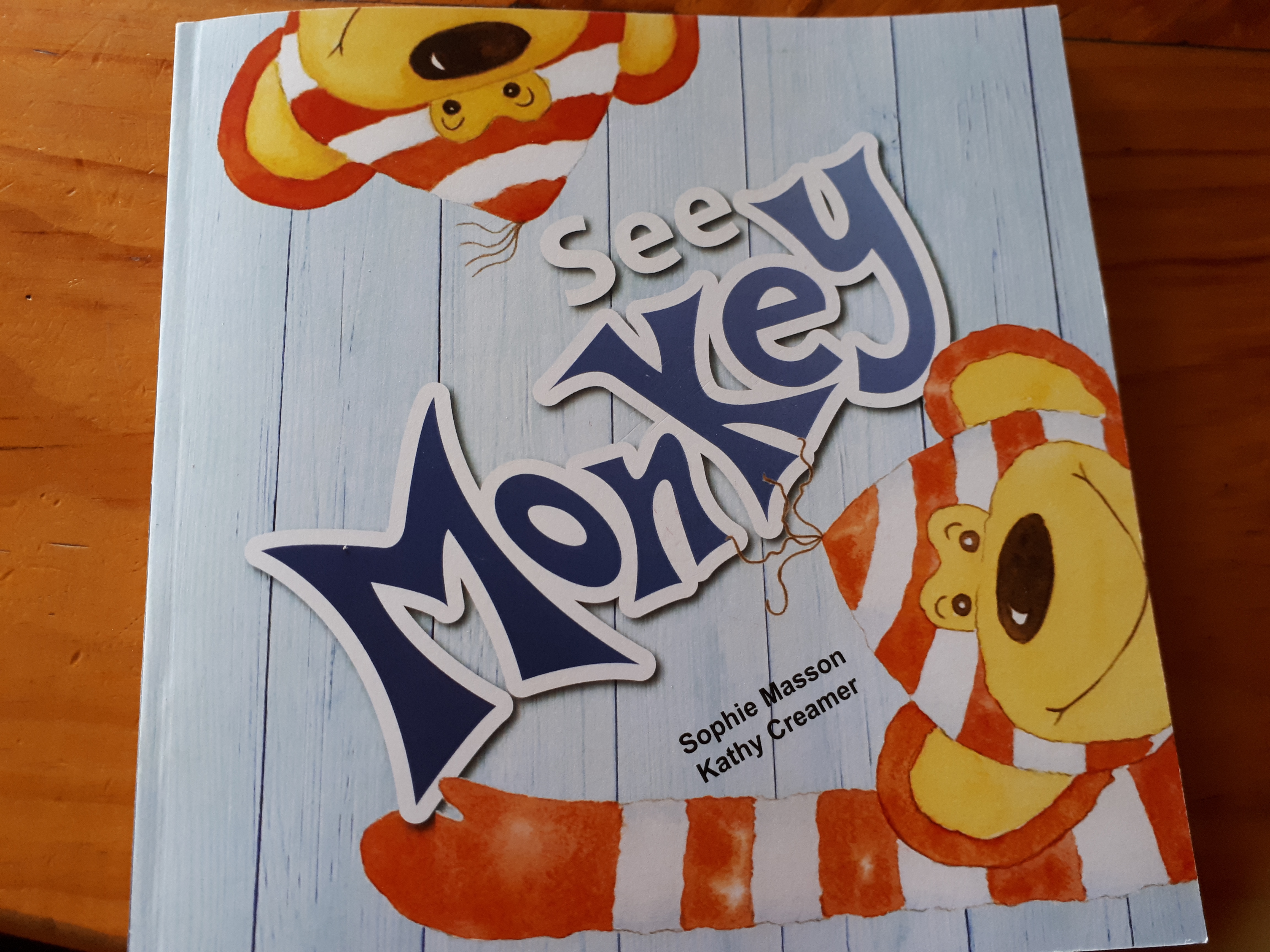
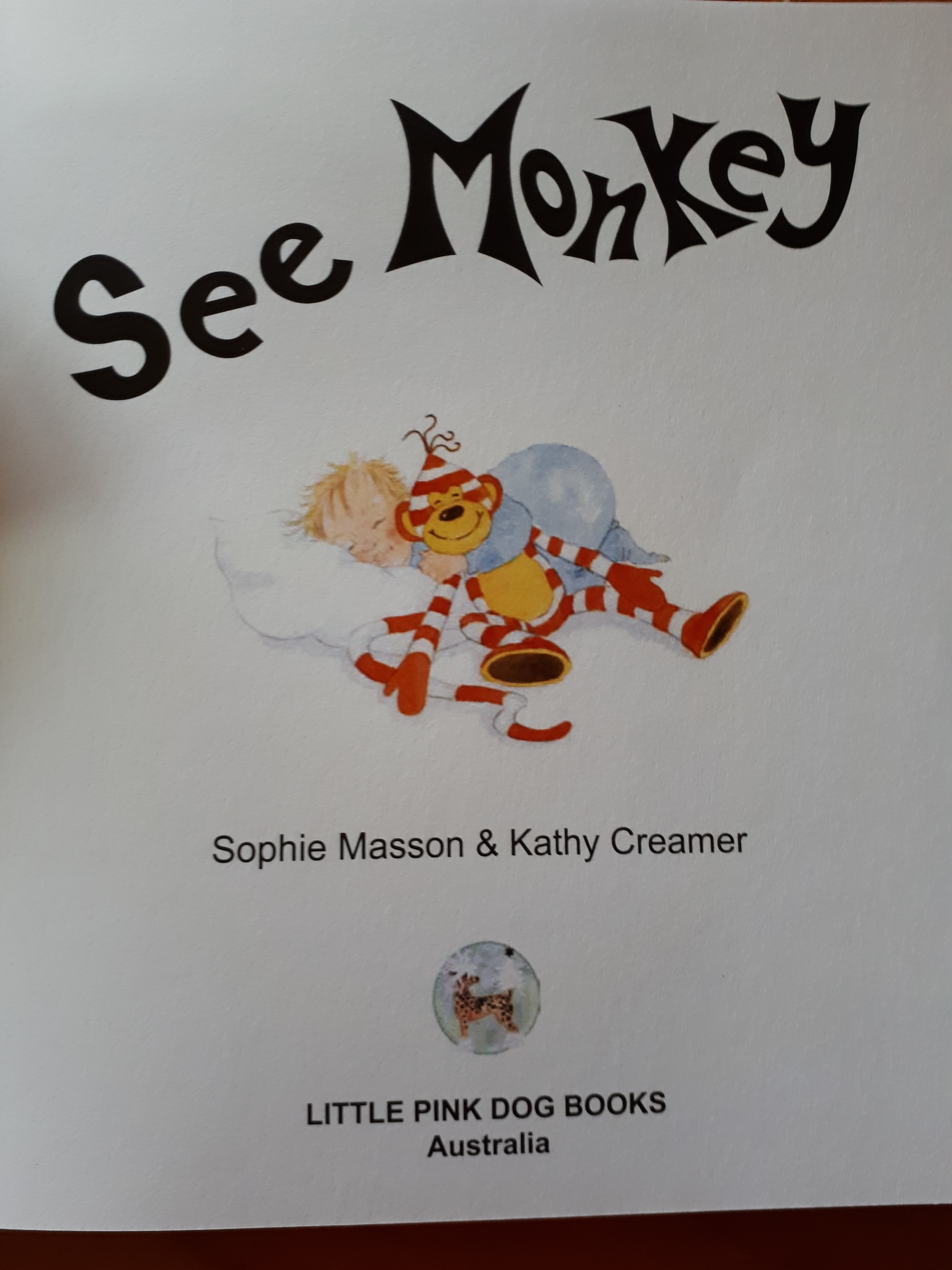
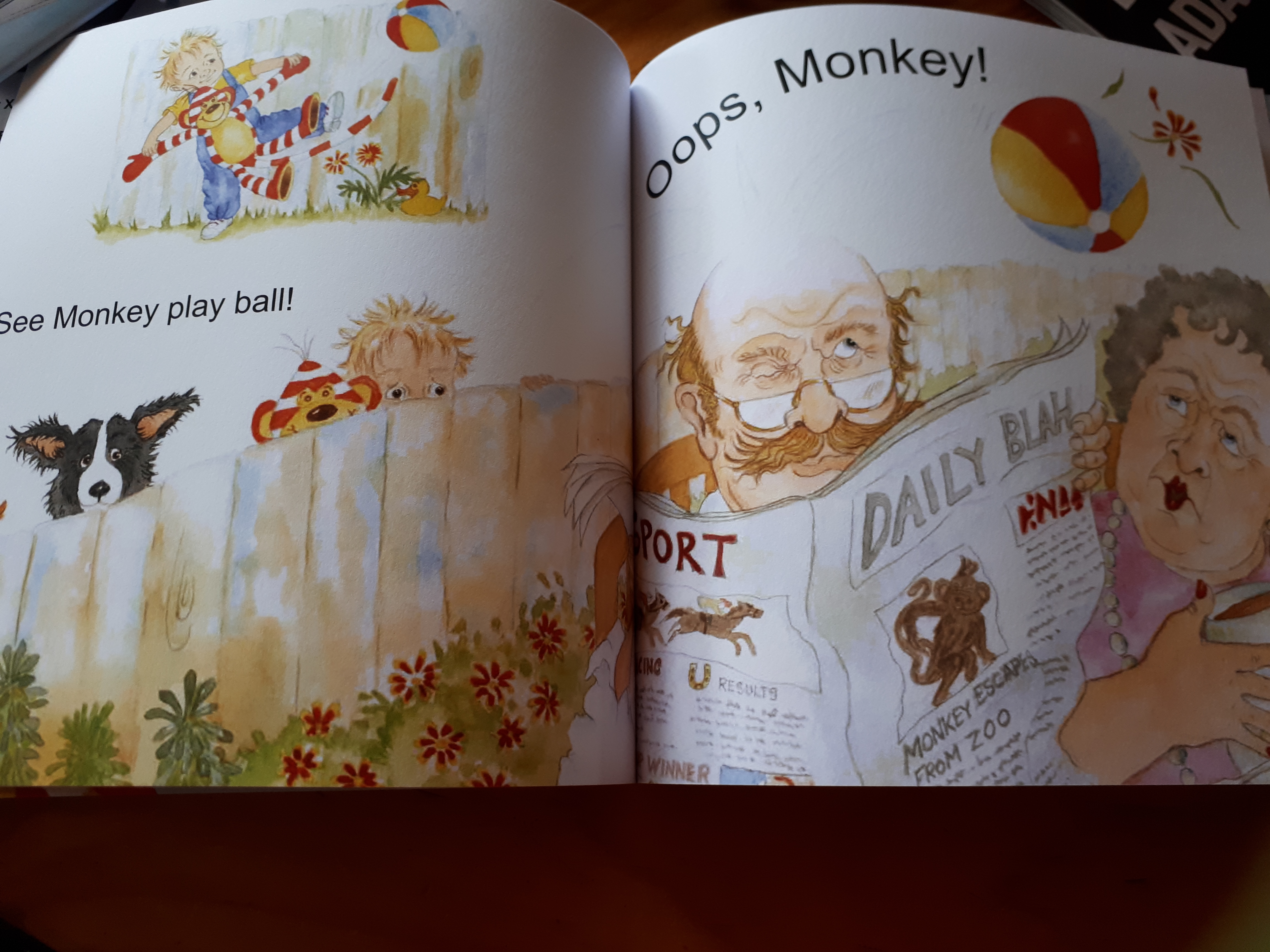
Exciting See Monkey first reveal of draft copy!

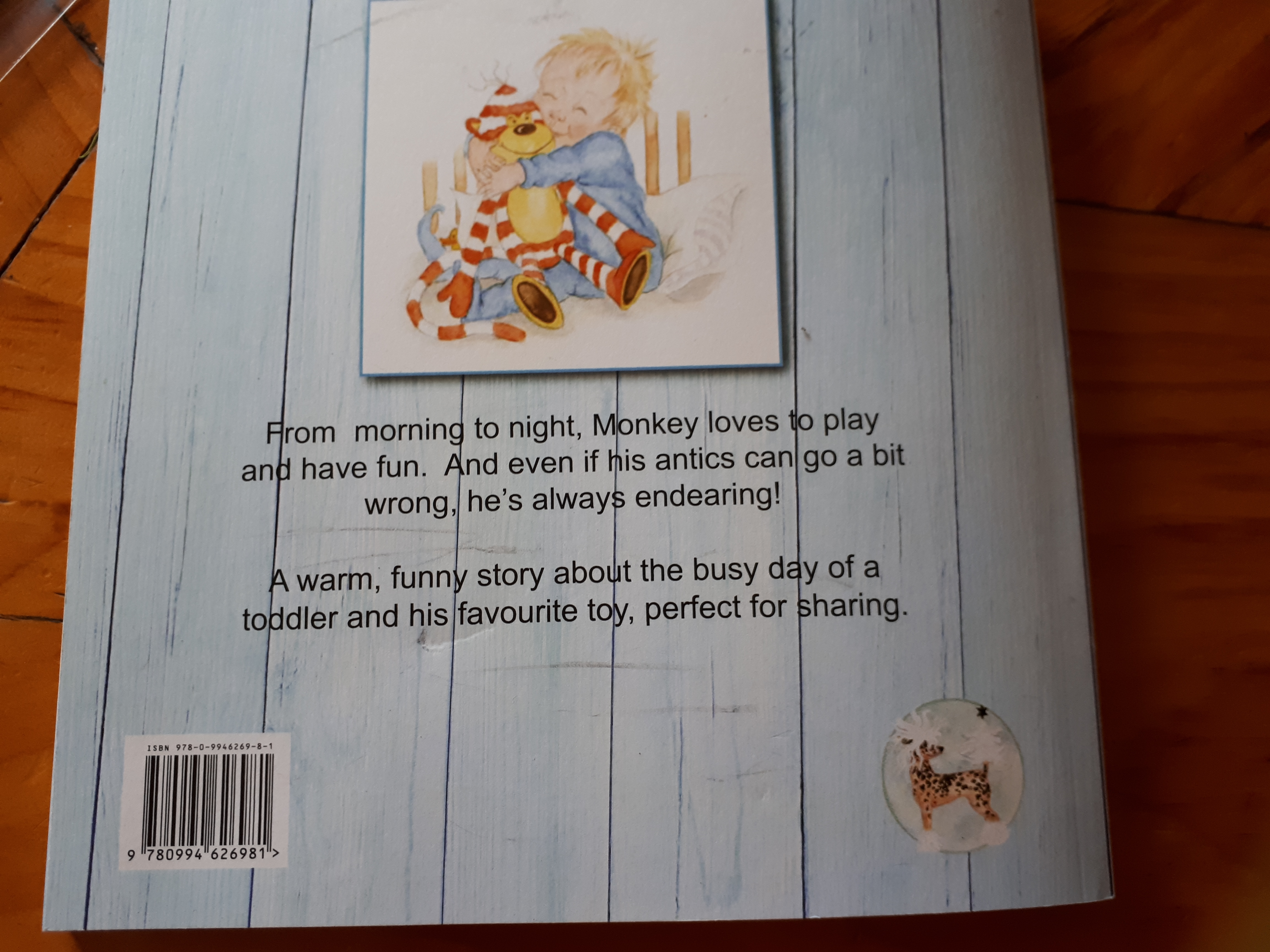
It was so exciting today to meet over a very convivial lunch with the fantastic Kathy and Peter Creamer from Little Pink Dog Books and be handed a draft copy/dummy book of See Monkey, my forthcoming picture book with Kathy, to be published by Little Pink Dog Books in early June next year. Here, with their permission, is a bit of a sneak peek at a few elements. I couldn’t be more thrilled with the warm, lively and funny visual world Kathy has conjured up to bring my text to full colourful life and can’t wait to see the book out next year!

(By the way the finalised book will be in hardcover–and the photos don’t do the final colours justice)