So excited about my two picture books coming next year!

I had a great meeting in Sydney this week with the lovely publisher from Little Hare, Margrete Lamond, as well as my fabulous agent, Margaret Connolly. The topics under discussion were my two picture books with Little Hare, which will be both coming out next year, so exciting! And the illustrators who are going to work on them are fantastic–and both have very striking styles. Can’t wait to see what they come up with!

The first, Two Rainbows, about a child from a farm who now lives in the city, will be illustrated by Michael McMahon, and you can see a little bit of his illustration work here.

The second, Once Upon An Abc, which is a quirky ABC book based on characters from folk and fairy tales, will be illustrated by Christopher Nielsen, and his work both as an illustrator and designer is showcased here.


An interview with Jackie Hosking

pass it onLike many other children’s authors and illustrators in Australia, I’ve subscribed for quite a while to Pass It On, Jackie Hosking’s weekly ezine, which like Di Bates’ fortnightly Buzz Words, is full of useful information, news, interviews and tips. But Jackie is also very busy on many other fronts in the children’s book world, and in this interview, I speak to her about the wide breadth of her talents.

Jackie, you are well-known in the children’s book world for many things, but first, can I ask you about Pass It On, the weekly ezine for children’s authors and illustrators that you edit and publish? How and why did it start, who’s it aimed at, and what have been the challenges and pleasures of running such a publication? 

PASS IT ON was passed to me from the original owner in 2004. Before I ran it, it was only the subscribers who shared industry news that received the ezine each week. Being a newbie writer at the time, I made sure I shared something every week as I found the information invaluable. After 20 weeks the call was put out for someone to take the job over. I put my hand up (after a little trepidation) and ran the ezine on a voluntary basis for 12 months. It wasn’t until subscribers suggested that I should charge for my time that the ezine switched from being voluntary to paid but if you contributed at least once a month I offered a free subscription for the following year. PIO is aimed at anyone interested in the children’s book industry. With so much internet information out there, it acts as a bit of a filter as it only contains information relevant to this industry. So far, not too many challenges have popped up. Some weeks are easier to collate than others. The more subscribers share, the more interesting the ezine becomes. I have a picture of a little red hen at the beginning of the ezine to remind everyone that it takes a group effort to produce a tasty read. Overall PIO is mostly pleasure as I’ve met so many wonderful, generous people through it including your lovely self Sophie!

You are also well-known for your involvement in poetry for children, both as a writer and as a promoter. What attracts you about writing poetry for children? And how important do you think it is for children to read poetry?jackie hosking pic

I love poetry because it’s short. I can see the ending, or the image that I want to portray. I think I might have a short attention span which is possibly why I think children are able to enjoy poetry too. Bite sized pieces of writing, easy to digest. Poetry is painting with words; it’s about communicating an idea, or feeling to your reader in a succinct, yet flowing fashion. No waste. Complete.

You’re also very much a mentor and teacher for authors aspiring to write good children’s poetry. What are some of your top tips for aspiring poets?

While I call myself a poet, I wonder if that really describes me properly. Maybe I’m more of a percussion instrument. I write in rhyme and meter. and while I have written a couple of free verse poems I’m most comfortable rhyming away. So my top tips for aspiring rhyming children’s poets are…

Don’t waste words.

Don’t use boring words.

Use strong verbs.

Use metaphor and simile.

Get others to read your work to you aloud – this will show you where the meter is off.

Understand what meter is and in the beginning be very, very strict with it.

Read people like Seuss, Milne, Carroll, Dennis, Bland, any published children’s poet really.

As an editor, you have worked with authors to improve their work. What in your view are the challenges–and pleasures!–of editing? What does it take to be a good editor?

I love editing. I love reading a great rhyme and tweaking it to make is shine. I also love being able to explain why a rhyme is or isn’t working. It’s taken me a few years to learn how to do this, I used to just say, hmmm this line’s a bit bumpy, which probably wasn’t very helpful. Now I use words like foot and stressed syllables and trochaic tetrameter, much more professional 🙂

jackie hosking bookWith so many different skills, and working on so many different areas, often to help other authors and illustrators, how difficult–or easy!–do you find it to switch the many ‘hats’ you wear? 

What’s nice about wearing different hats is that I never get bored. Also different hats require different moods and once I’m in a mood there’s no stopping me.


Bringing a neglected time to life: an interview with Patricia Bracewell

PB_172-001Back in my late adolescence, driven by historical and linguistic curiosity and by having read Kevin Crossley-Holland’s and Jill Paton Walsh’s wonderful Wordhoard as a child, I studied Anglo-Saxon alongside Middle Welsh and Icelandic sagas as part of an Arts degree. I will never forget the extraordinary sound of Anglo-Saxon as the lecturer read it in such works as Beowulf, The Battle of Maldon and the Exeter Riddles, catching through it a glimpse of a time so long ago, so far away, yet in a sense quite close too. That interest surfaced from time to time even well after that, and I read Sile Rice’s vivid novel The Saxon Tapestry, and used Anglo-Saxon documents myself to create part of the background of one of my own books, The Stone of Oakenfast, part of the LayLines/Forest of Dreams trilogy.

My interest in Anglo-Saxon England was rekindled again late last year, with one of the great discoveries of my recent reading life–the wonderful historical novels of Patricia Bracewell, who has brought the neglected world of early eleventh century Anglo-Saxon England to vivid and memorable life in two books of a planned trilogy set around the extraordinary figure of Emma of Normandy.

And so today I am delighted to feature an interview with Patricia Bracewell herself. Enjoy!

Shadow on the Crown and The Price of Blood are major works of historical fiction about a period that is rarely written about: Anglo-Saxon England in the early eleventh century, before the Norman Conquest, but during a period of great strife, both internal and external. What first drew you to writing about this neglected but important period?

It was Emma of Normandy who piqued my interest in the Anglo-Saxon period. My knowledge of pre-Conquest England was relatively slim until the day about twenty years ago when I ran across an online post that referenced Emma, her royal husbands, and her children. I had never heard of her before that, even though I’d taken a course in English History at university. And when, intrigued, I did a little digging and began to get a glimmer of the role that Emma must have played in the first half of the 11th century, I was hooked. I had to know more and, beyond that, it seemed a crime to me that Queen Emma, who had herself commissioned a book about events that she had witnessed in her lifetime, should be virtually unknown today. I wanted to correct that if I could.

You preface each of the chapters in the novels with a quote from the Anglo-Saxon Chronicle, an invaluable but rather dry history of the time, written at the time. What other research did you have to do to create the rich texture of your books, in terms of cultural and historical background?shadow2

The research was considerable because I truly was starting from square one. My university degrees are in Literature, not Medieval History, so I had to begin by learning everything that I could about the 10th and 11th centuries in England, Normandy and Denmark. It took two years of preliminary research to convince myself that I could learn enough about Emma’s world to even attempt to write her story. In addition to academic books and journals about the period I studied translations of documents written at the time – Emma’s own book of course, the Encomium Emmae Reginae, but also charters, wills, leechbooks and lists of abbey treasures that provide insight into the culture. I made several research trips to Europe beginning with a two-week Anglo-Saxon history course at Cambridge that focused on the period from King Alfred to Edward the Confessor. In Normandy I visited museums, abbeys and the site of the ducal palace at Fécamp. In London, Canterbury, and Winchester, museum displays of archaeological finds – weapons, reliquaries, jewelry, and glassware as well as models and maps of towns – helped me visualize that Anglo-Saxon world. In York and in Denmark I learned about the vikings and their ships. I’m still researching even as I write the third book, and I’ll be back in London this coming summer for that very purpose.

The action of the novels is seen from the viewpoint of four main characters: Emma of Normandy, the young, spirited and intelligent Queen of England; Elgiva, manipulative daughter of English nobleman Aelfhelm;  Aelthelred, the tormented and cruel King of England, and Athelstan, his eldest son from his first marriage, a brave, honourable yet ambitious prince. How did you juggle these different viewpoints, and what were the challenges and pleasures in seeing the story from different pairs of eyes?

In terms of juggling the four viewpoints, the biggest question I asked myself when creating a scene was Who has the most to lose? That decided, I could write the scene from that character’s viewpoint. In order to write a different scene from another point of view I then had to accustom myself to that character’s attitude, voice, opinion, language – a switch that was never easy and usually involved a lot of re-writing. Nevertheless there were distinct advantages to utilizing this shifting third person viewpoint. It broadened my story by allowing me to go places with a second or third character when the main character – Emma – could not go there. The shifting viewpoint also added contours to the various characters because readers could see them through several pairs of eyes. Elgiva, Æthelred and Athelstan, for instance, all regarded Emma quite differently and interpreted her actions in different ways. I think (hope) it added a layer of complexity to the story.

You paint a remarkably compelling and nuanced picture of the many warring cultures of the time–Norman, Anglo-Saxon and Viking, to name just the main ones. How did you go about creating a picture that is engaging for modern readers yet historically authentic in feel?

This may seem simplistic, but I think it comes down to the fact that human beings haven’t changed all that much in a thousand years. It’s my belief that our emotional responses are pretty much the same now as they were in 1002, and it is that emotional charge that readers look for in fiction. So it’s a matter of building that historical and cultural world as accurately as possible, placing actors inside it, and then imagining how they will feel and how they will act in that situation.

Shadow on the Crown was your first novel. Can you tell us something about your career before the novel was published–and how it came to be published?

I wrote two romance novels (unpublished) before I attempted Shadow on the Crown. I think of them as my practice novels because writing them helped me learn my craft. (I’m still learning – with each revision!) Before that I wrote short stories, personal essays, and feature articles for local publications. Before that I was a high school English teacher, so I really have been involved in writing all my life.

I pitched Shadow on the Crown to an agent at a Historical Novel Society Conference in 2009, but for over a year we received nothing but rejections, mostly because editors didn’t believe they could sell a book set in Anglo-Saxon England. We were both determined, though, and after I made a number of pobukjulyrevisions my agent, God bless her, sent it out again. By that time the first season of Game of Thrones had aired. Did that make a difference? I don’t know; but two weeks later we had offers from two different publishers.

How have readers across the world reacted to the books?

I think that a great many readers have been surprised by Emma’s story simply because they’ve never heard of her. She wasn’t a Tudor or a Plantagenet, and readers seem to appreciate discovering not just Emma but the pre-Conquest world in which she lived. The Portuguese language edition of Shadow on the Crown (A Rainha Normanda) has fans in Brazil and one of them, to my delight, has created a Facebook page for it. The German language edition has done well enough that The Price of Blood (Die Königin) will be published this month, and a Russian edition is in the works as well. Given that my goal in writing the trilogy was to pull Emma out of anonymity, the number of foreign editions of the book has been enormously gratifying although completely unexpected.

You’re working on the third book in the Emma of Normandy trilogy. Are you dreading or looking forward to telling the rest of her story? And do you have plans for other novels set in that time?

I am very much looking forward to telling the rest of Emma’s story – at least, as much of her story as I’ve chosen to include in this trilogy. If there is any dread involved, it’s that nagging question of Am I a good enough writer to make a really good job of it? I hope and pray that I am! I’m writing toward a conclusion that I had in mind when I first began this project, but the devil is in the details, and I’ve never written the final book of a trilogy before. I want it to be fantastic, so I’m setting the bar for myself pretty darned high and giving myself all the time I need to do it well.

As for what comes next, I’m too consumed by the conclusion of Emma’s story just now to think about it. Nevertheless, I love the Anglo-Saxon period, and there is a wealth of unexplored material there, so I wouldn’t rule out another pre-Conquest novel.
Authors’ pick special edition: Angela Slatter

wolfwinterOkay, so I know I said that Matthew Thompson’s Authors’ Pick was the final in the series, but I’ve just received this fabulous review by Angela Slatter of her favourite book of 2015, and so here it is, in special edition!


“It’s the kind of winter that will remind us we are mortal,” he said. “Mortal and alone.”

One of the books that stuck with me from my 2015 reading pile was Wolf Winter by Cecilia Ekbäck (Hodder and Stoughton). http://www.ceciliaekback.com/

 Set in 1717 in Swedish Lapland Wolf Winter seamlessly blends history, mystery, and speculative elements. Recent settler Maija and her daughters Frederika and Dorotea are left alone on Blackåsen Mountain when Maija’s husband leaves to find work. The women must face a dreadful winter, roaming wolves, and, perhaps most terrifyingly, the other folk who live on Blackåsen.

 Life as outsiders is difficult enough, but when Frederika discovers one of the other settlers, Eriksson, murdered things become more complicated. Not only is Maija stubborn, refusing to let the mystery of Eriksson’s death go unsolved, but Frederika begins to manifest eldritch powers; worse still, Eriksson has returned as a ‘heavy’ ghost and only she can see him. He was not a nice man in life − death hasn’t improved him − and he insists that Frederika solve his murder. It’s the only way she can be free of him, but there’s more than one secret on the mountain and their keepers will do anything to ensure they remain hidden.

 There is a wonderful clarity to Ekbäck’s prose; it is stripped back to its essentials but still lovely. It never feels sparse or lacking or cold, the landscape and its characters come through strongly and always seem real and relatable. She covers the historical detail with a light hand so you never feel as if the writer’s going, “Look at all the research I did! Look at it!”, but rather it’s woven beautifully into the fabric of the tale. Highly recommended.

Angela Slatter is: the author of six short story collections and a debut novel that’s coming out in 2016; a PhD survivor; an occasional award-winner; a lover of coffee; http://www.angelaslatter.com/; @AngelaSlatter.

angela slatter


Authors’ pick 24: Matthew Thompson

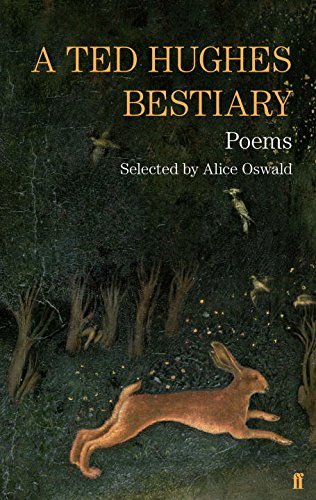
Ted Hughes Bestiary coverToday’s authors’ pick–and the final one in this series–has been chosen by Matthew Thompson.

A Ted Hughes Bestiary, poems selected by Alice Oswald.

The revelation of Ted Hughes and his exquisitely poised and powerful animal poetry was a long time coming. For decades a clear, open-hearted view appreciation of the crow poems and other work was not possible for me, due to the grip of Sylvia Plath’s fierce and tragic legend.

I did glance at Hughes’ poems now and then but my sight was displaced and distorted by the mythos of sadistic, maddening selfishness – even more so when I learned of how the woman that displaced Plath in Hughes’ affections, AssiaWevill, murdered their daughter and killed herself (and how quadruply weird to consider that Hughes and Plath’s son, Nicholas, eventually hanged himself in Alaska).

Age has taught me to let complexity be, even complexity of torment, instead of pruning it back to ready-understandability or by gripping isolated strands of it in order to haul oneself up to a fake height of mind.

So, a few months ago, decades after first reading Hughes, and while in Melbourne researching the life of a long-term recidivist prisoner for a book I’m writing, I slid from a bookstore shelf the slim hardback of A Ted Hughes Bestiary, Alice Oswald’s selection of Hughes’ animal poems.

Amidst the stark and ruthless crowscapes sat “The Jaguar”, a glimpse of a zoo-held beast seething with itself. I couldn’t help but think of my writing subject, a man who in his younger years could not be tamed, could not be contained, whose will was harder than the bars and walls around him.

…there’s no cage to him

His stride is wildernesses of freedom:

The world rolls under the long thrust of his heel.

Over the cage floor the horizons come.

But the prisoner’s jaguar days are gone.Sentenced again, this time to so long in isolation that even the judge said it would damage his mind, the man now sits spiritually detached from, but physically within spitting distance of, the predatory world of crime and jail. So attuned, he can sense when someone who, unlike battered old him, still hungers for prey: someone whosegrimacing face has not yet been smoothed. A blood-thirsty hunter in a moment that brings to mind the opening of Hughes’ “And Owl”:

Floats, a masked soul listening for death.

Death listening for a soul.

Yet it would be too limiting to keep relating these poems to men, to humans. Their centre is not anthropomorphic and in reading them, in handling them, DH Lawrence’s poem, “Fish”, comes to mind: specifically, its message that other beings inhabit their own universes, have not gods or not the same gods, are sometimes older and more purpose-made than we can comprehend. Lawrence’s narrator marvels at his witnessing of fish:

Loveless, and so lively!
Born before God was love,
Or life knew loving.
Beautifully beforehand with it all.

Joyce Carol Oates uses that line about a time “before God was love” to describe the severe and profound world of boxing, a world for its enthusiasts that remains beautifully before today’s widespread cringing avoidance of harm. The animals are not emotional about their pain or plight. They are clarity of instinct.

And over it all, unblinking in their exactitude, are not just Hughes’ famous crows but his hawk, who in “Hawk Roosting”, flies up to:

…revolve it all slowly –

I kill where I please because it is all mine.

Of course, there is so much more, including tales of animals lower on the food chain, but you’ll have to read them yourself. I have too much work to do.


Based in the small NSW town of Dungog, Matthew Thompson is the author of Running with the Blood God and My Colombian Death and a journalist whose recent work has focused on the violent intrigues of the Sulu Archipelago in the southern Philippines. For more information, see www.matthewthompsonwriting.com

Matthew Thompson

Authors’ pick 23: Sharon Rundle

asylum palaverToday’s authors’ pick has been chosen by Sharon Rundle.

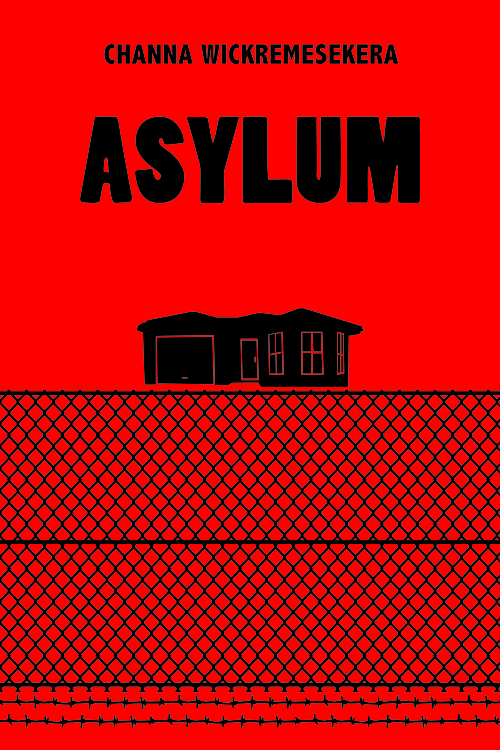
Asylum,  Channa Wickremesekera, Published by Palaver.

For the purpose of my research, I’ve been reading a lot of novels by South Asian-Australian authors with ties to Afghanistan, Bhutan, India, Nepal, Pakistan and Sri Lanka. I’ve read marvellous narratives from established and emerging writers. To choose one novel from this amazing array of fiction, is an enormous challenge. After long and difficult deliberation, I plumped for one that provided a new perspective, was surprisingly enjoyable, beautifully structured and written in a page-turning style.

Sometimes the best way to encourage discussion and provoke deeper thinking is through humour. Ideas that may seem simple on the surface havewider ripples and deeper currents than appear at first. So it is with Asylum by Channa Wickremesekera.

A young prison escapee decides to break into a home and take hostages,after the news that he is on the run with a gun is broadcast through media and police reports. The house he chooses is the home of Afghanis of Muslim faith. The mother wears a niqab, while her sometimes sullen, sometimes giggling young daughter, Aisha,wears a hijab. The mother understands English but prefers to speak in her Dari language.Through her family, she is the main negotiator with their captor. Khalid, the male teenage narrator with typical ‘attitude’, “I’ve seen bigger guns than that in Afghanistan with kids half his size” (p 23), is the perfect choice as the cynical observer. He is also a main player in the drama that unfolds as police surround the house. Negotiators are brought in to help, with mixed and sometimes hilarious results.

What could be a disaster turns into a tragi-comedy as the actions of the police and young man on the run with a gun become farcical when faced with this unexpected turn of events.

The Afghani family face another even deeper dilemma. Should they offer asylum to this person seeking refuge, as they believe they should? Should they lie to the police for the greater good? Which would give lesser offence to God? What to do in such an impossible situation? He is only a scared, tired, hungry, delinquent boy, after all. Khalid has heard it all before, “How you should look after people who take refuge with you, even if they are your worst enemies. Even if they had killed your own mother and father. I always thought that sort of thing happened only a long time ago and if it happened now it was only in the movies. Never thought we will have to practise it.”(p 40).

While the family debate the best plan, mum keeps cooking and feeding them all, including their captor Rusty.

This novel has impact and lingers in the mind long after it’s read. To my mind, ‘Asylum” should be on the HSC reading list. Suitable for both adults and young adults, the deceptively simple style and endearing narrator in “Asylum” allow for serious ideas to be discussed without polarising the audience. Many may be surprised by such a fresh perspective and by what they learn through humour.


Channa Wickremesekera is a Sri Lankan-Australian who has published three other novels, “Tracks” (published Sri Lanka, 2015), “Walls (Wasala, Sri Lanka, 2001)” and a novella “In the Same Boat” (Bay Owl Press, 2010).

A fun novel written in a jaunty teen voice—a novel that tries to tip our assumptions on their heads and succeeds.” —Anna Funder, author of Stasiland and All That I Am

“This is a timely novel, written with daring and imagination. It deals with themes that we urgently need to engage with and reflect upon, challenges that cry out for a long-overdue national conversation.” —Arnold Zable, author of Cafe ScheherazadeThe Fig Tree, and Violin Lessons

Asylum Wickremesekera, Channa. Published by Palaver.

ISBN 10: 0994343108 ISBN 13: 9780994343109


Sharon Rundle has researched novels by South-Asian Australian authors published in Australia for a Doctorate of Creative Arts thesis. She is co-editor of Indo-Australian anthologies of stories published by Picador Pan Macmillan (2009 & 2010 India, Australia & UK), Rupa Publishing in India (2014) and Brass Monkey Books in Australia (2012 & 2014).

20151212_114715

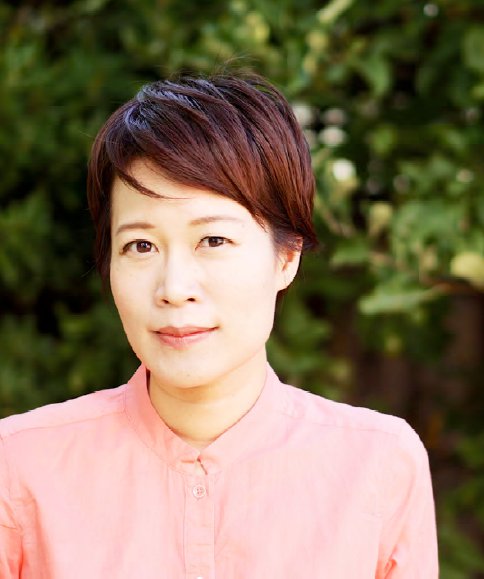
Authors’ pick 21: Yangsze Choo

IMG_0189Today’s Authors’ Pick has been chosen by Yangsze Choo. 

I must confess that I haven’t read much fiction recently. This is because I’m struggling to finish my second novel, a giant doorstop which I keep telling myself is almost done, but continues to expand in alarming ways as I try to squeeze in just one more plot twist. The situation is worsened by my frequent attempts to seek “inspiration” in dark chocolate… I need to go on a diet in more ways than one, which is why my book pick for 2015 is a cookbook.

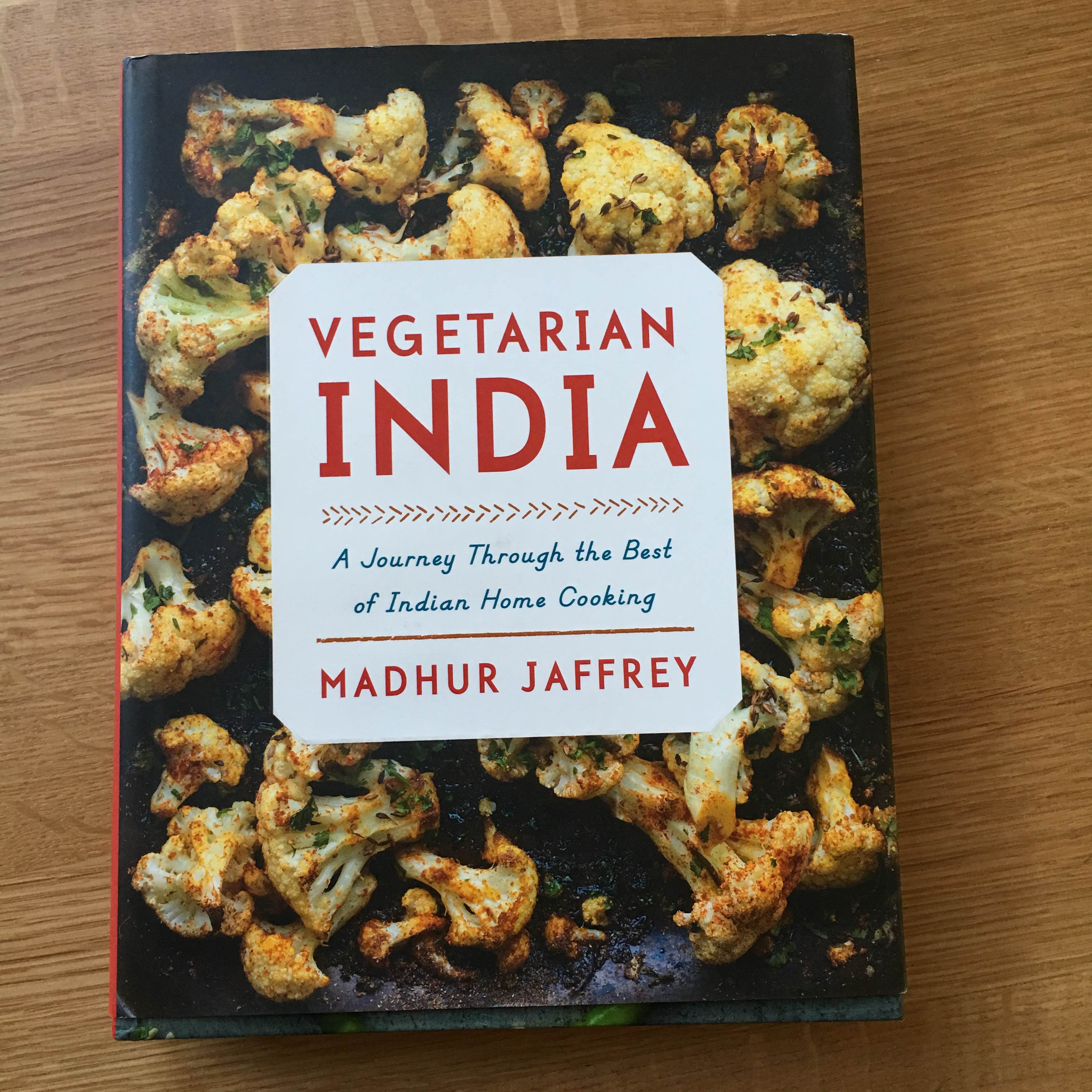
Madhur Jaffrey is my favourite Indian cookbook writer – over the years, I’ve cooked my way through many of her books, always with good and very authentic results – so when I realized that she had a cookbook called “Vegetarian India”, I rushed off to get it. Our family has been trying to move towards a more vegetarian diet (one of the reasons I’ve so enjoyed Sophie’s food blog featuring her lovely garden) and this book is stuffed with delicious ideas. In fact, when I first got it, I made the roasted cauliflower with Punjabi seasonings that’s featured on the cover three times in one week. Tossing cauliflower with lemon juice, cumin, coriander, ginger, turmeric and olive oil results in a sizzling pan of crusty goodness that’s quickly devoured in our house, even by small children who claim they will never, ever eat cauliflower.

Like Madhur Jaffrey’s other cookbooks, each recipe comes with a little backstory or some helpful tips, and there’s enough variety from rice dishes to hearty vegetarian mains and pulses, to cook an entire dinner banquet, if you’re so inclined. Or you can just do what I’ve been doing and add an extra veggie dish or two on weeknights.

So, if your New Year’s resolution is to eat less meat and more healthily, I highly recommend this book! Happy reading and eating 🙂

Yangsze Choo’s first novel, The Ghost Bride, was published in 2013. She loves to eat and read, and often does both at the same time. She lives in California with her husband and children, and a potential rabbit.

yangsze choo colour


Authors’ pick 19: Kelly Gardiner

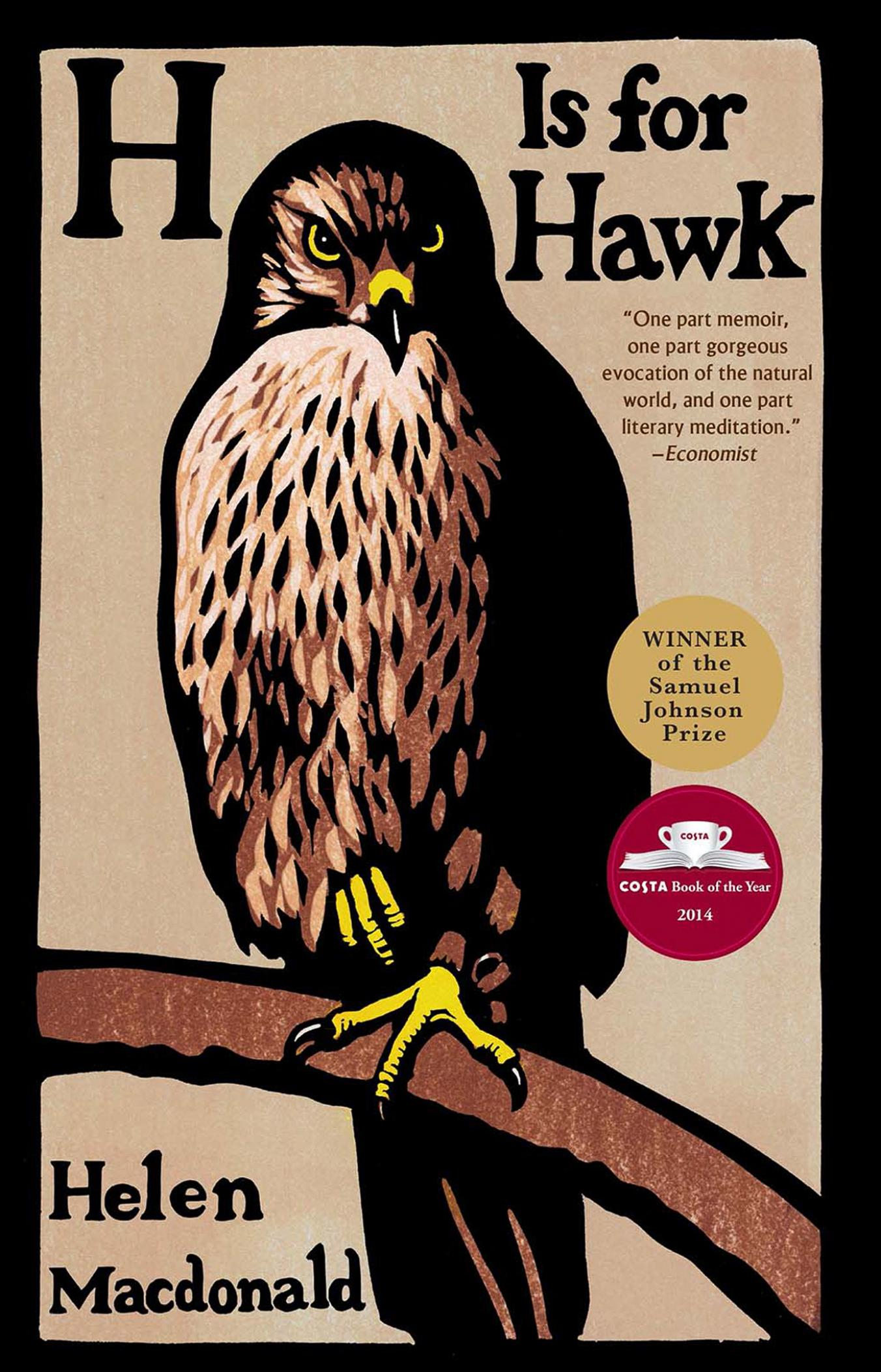
H_is_for_Hawk_cover-2Today’s Authors’ Pick has been chosen by Kelly Gardiner.

My favourite reading experience of the past year has been Helen Macdonald’s award-winning H is for Hawk, a memoir about grief, the vanishing British countryside, and a goshawk called Mabel. I’ve long been fascinated by the traditions of falconry, an ancient form of hunting in many cultures that became a sport of royalty in Europe in the middle ages.

H is for Hawk acknowledges this lineage, but more importantly it focuses on the relationship between raptor and trainer, taking us through the process and also tapping into the rich tradition of writing about hawks and falcons.

Chief among these is the work of T H White, author of The Once and Future King and other brilliant historical fantasies. His 1951 book, The Goshawk, was based on the journal tracing his own training of Gos – a troubled, tumultuous process that nearly finished off both of them.

Helen Macdonald weaves the story of White and Gos through her own reflections on the relationships between humans and wild creatures, and one another, as she learns to live with the sudden loss of her father, while Mabel and White reflect aspects of her own life back to her.

It’s brilliant, fascinating nature writing wrapped up in a poignant memoir about grief and belonging.

Kelly Gardiner’s books include Act of Faith and The Sultan’s Eyes, both of which were shortlisted for the NSW Premier’s Literary Awards. Her latest book is Goddess, a novel based on the life of the seventeenth century French swordswoman, cross-dresser and opera singer, Mademoiselle de Maupin.

2015-gardiner-kelly


Authors’ pick 18: Lucy Sussex

SutcliffToday’s Authors’ Pick has been chosen by Lucy Sussex.

I revisited Rosemary Sutcliff’s THE RIDER ON THE WHITE HORSE this year, after having mislaid it for some time. I wanted to know how I would read it after a long absence, if what I remembered still impressed, and what might have diminished with my increased craft/critical acuity. The answer is, very little.  The book is about the English Civil Wars, of two well-documented figures from the Roundhead side, General Sir Thomas Fairfax and his wife Anne. At the beginning of the conflict, in his native Yorkshire, Fairfax campaigned with his family, Anne and their small surviving daughter–which led to Anne being captured by the Royalists under the command of the Duke of Newcastle (later to marry another formidable woman, writer Margaret Cavendish). From the existing sources and her own imagination, Rosemary Sutcliffe wrote a portrait of a marriage, and with considerable emotional subtlety, for the romance is one-sided. The Fairfaxes have an arranged marriage, as was usual for the gentry, but while Anne loves Thomas, he is only grateful to her—or is he?

When working in the rare books section of a library, I had occasion to read some of Sutcliff’s source matter, Thomas Fairfax’s own memoirs. It showed me Sutcliffe’s fidelity to history, and at the same time how she imaginatively breathed life into it. In the battle of Wakefield town, Fairfax narrowly escapes capture by jumping his horse over a garden wall. In the book he finds the incident absurdly funny–as is quite clear from his own words. Sutcliff stages the scene brilliantly.

The novel is unquestionably for grown-ups, a story of unrequited love within a marriage. It also contains superbly realised battle scenes, vivid depictions of nature, and regional dialects reported without condescension.  It is immersive history, without the post-modern intrusion, as when Hilary Mantel has Henry VIII describe Jane Seymour as  his little “bun-face”. That is not Tudor language, and while absolutely right in terms of the lady, it jars. Similarly Cromwell, from his visual image–and Holbein was an acute observer–was a bit of a brute. Mantel depicts him as quite feminine in that people confide in him, and he listens, without interrupting. Fairfax is contradictory, a masculine man of war, a berserker in battle, but also gentle in his manners, kind.  Anne conforms to the gender expectations of her time, while not concealing her intelligence, nor her forcefulness–she is deeply involved in the political/religious struggle.  And yet she can be very obtuse.

Were this book published now, would it rate in the Bookers?  Surely yes, if the author’s genre/readership placement did not get in the way.

One final comment. Writing the pre-Enlightenment is tricky, as to be strictly accurate the religion would dominate the world-view, in a fashion incomprehensible to us rational post-moderns, wringing our hands over IS.  So while the title of Sutcliff’s book comes from Revelations, the wild religious discourse of the Civil Wars is downplayed.  But she does it, as she does with so much in this book, subtly and intelligently.

Lucy Sussex’s most recent book is the award-winning Blockbuster (Text, 2015), about crime writer Fergus Hume, and his Mystery of a Hansom Cab.

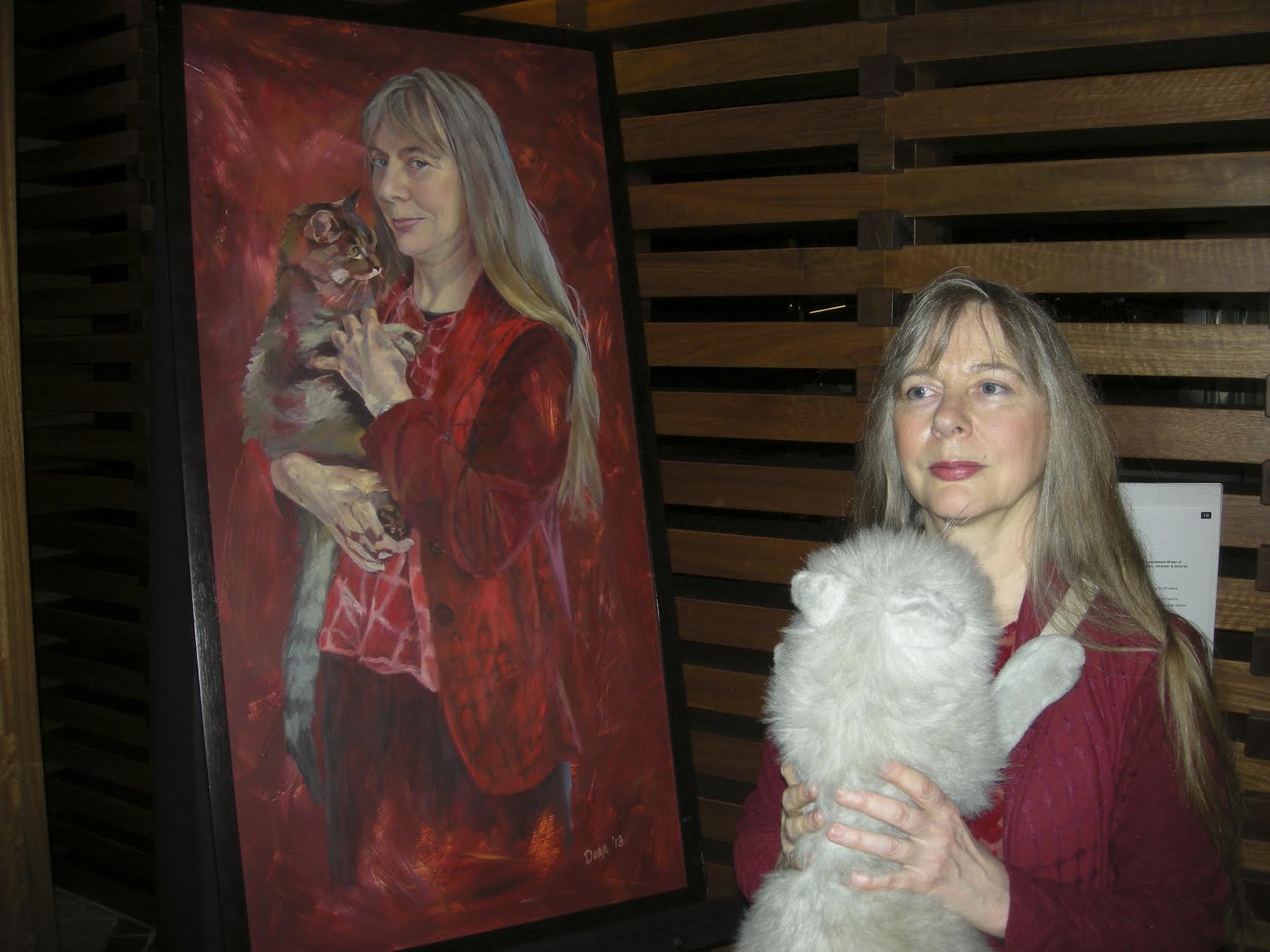
Lucy Sussex with portrait of herself by artist Dora Levakis, from the Archibald Prize's 'Salon des Refusés'

Lucy Sussex with portrait of herself by artist Dora Levakis, from the Archibald Prize’s ‘Salon des Refusés’

Authors’ pick 17: Amanda Bridgeman

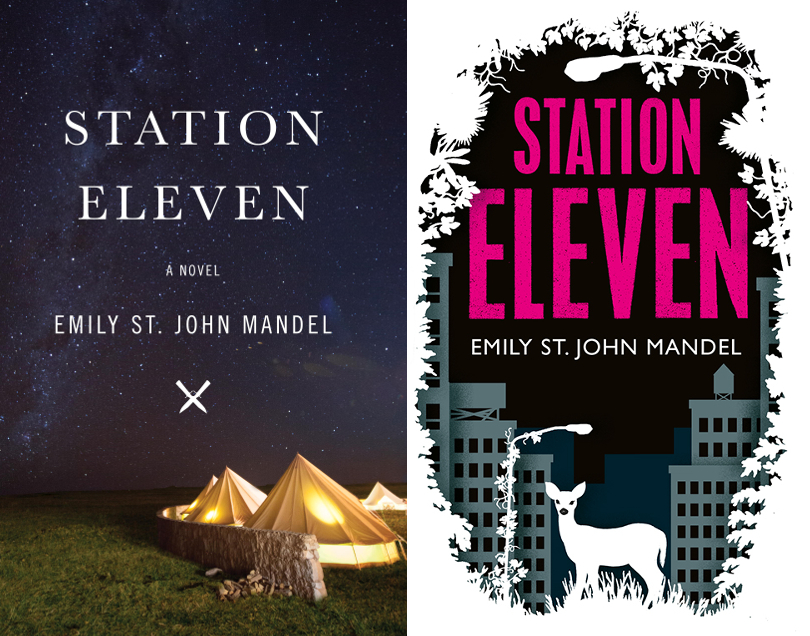
Station-Eleven-CollageToday’s Authors’ Pick has been chosen by Amanda Bridgeman.

This year I really enjoyed reading Station Eleven by Emily St John Mandel. It’s the story of how a deadly flu epidemic sweeps the world killing the majority of the population. Told half in the post-apocalyptic world, and half in the pre-apocalyptic world, the story follows several characters who are linked in one way or another with one central character, an actor by the name of Arthur Leander. I thought Mandel captured the flu epidemic perfectly (it was scarily realistic), and I found the characters’ stories, of how they try to survive (or don’t as the case may be) in a world gone to hell, very interesting. It’s a great examination of the human spirit, of how through the chaos, hope can still shine on.

Amanda Bridgeman is the author of the character-driven space opera ‘Aurora’ series.

_MG_0298