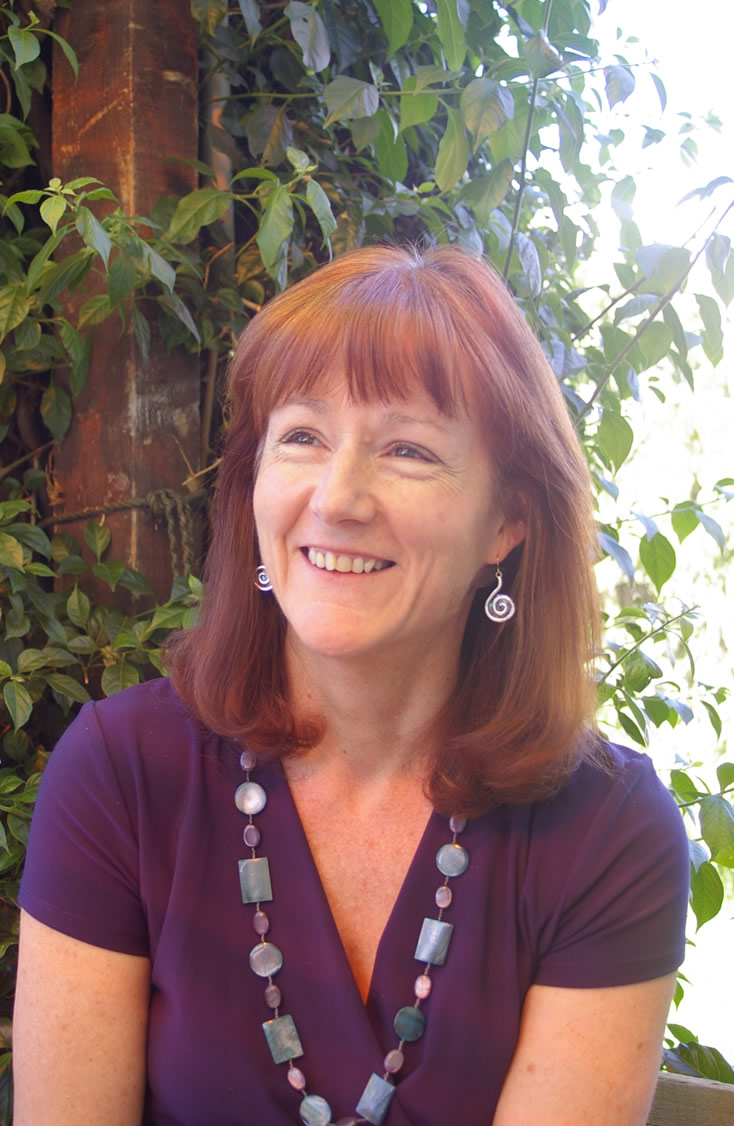
Across the Tasman 2: Sherryl Clark

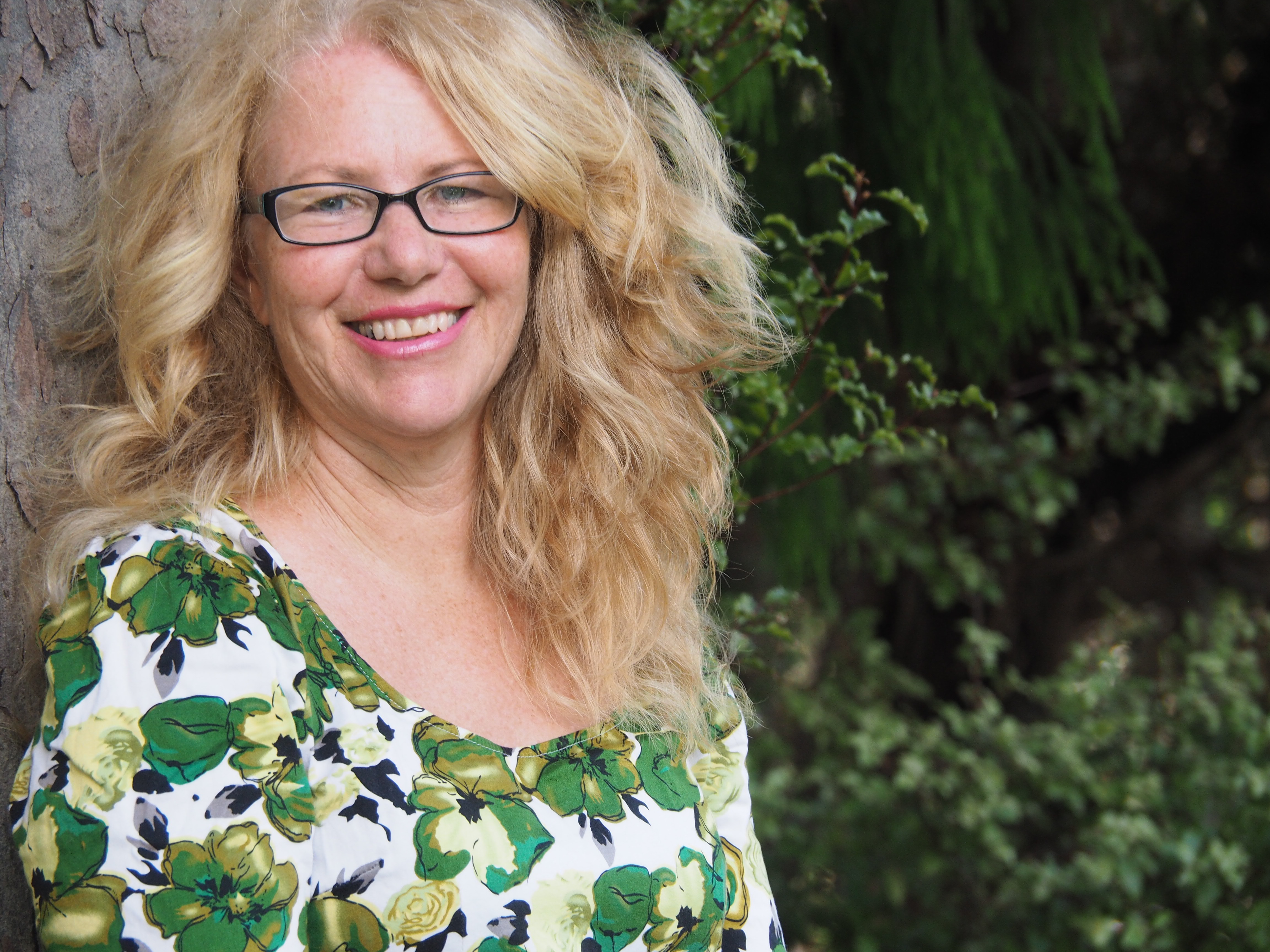
sherryl-1Sherryl Clark’s literary career is what might be called a trans-Tasman one; born and brought up in New Zealand, but living in Australia for many years, she is well-known in both Australia and New Zealand for the versatility and quality of her books, which range over many genres and age ranges. Today I talk to her about what it means to straddle those national cultures, and those different types of literature–as well as teaching literature, undertaking literary degrees, and lots more!

********************

Sherryl, you grew up in New Zealand but now live in Australia. Do you consider yourself an Australian or New Zealand writer, or both? And what similarities and differences do you think there are in terms of the literary world of each country?

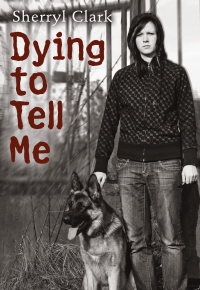
I’ve now lived in Australia for 37 years, but I think in my heart I am still a New Zealander, especially because I grew up on a farm and I think your first 18 years ‘imprint’ you. However I do think my stories are Australian, funnily enough, with some New Zealand elements. If I write about a farm (as in Farm Kid), it’s an Australian farm with drought and brown paddocks which you just don’t see in NZ like that. Not where I come from anyway. Dying to Tell Me is definitely Australian bush, and even my city stories, whether historical or contemporary, are very much set in Melbourne. I feel for NZ writers today – the publishing opportunities have narrowed so much. But at the same time I think many NZ writers are writing with real passion about their country, in very particular ways, and I don’t see that nearly so much in Australia.

You have written many children’s books in different genres, and for different age groups. Is there an age group/genre you most enjoy writing for, and why? Is there a book of yours that you think of particularly fondly? And how has what you write about changed over the years? (if indeed it has!)
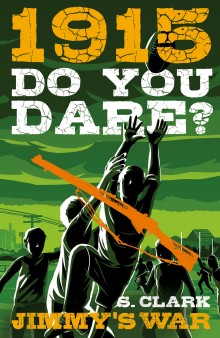
jimmys-warI love picture books because of the process – the challenge of so few words – and the amazing work that illustrators do. I love verse novels because I love how poetry expresses things that prose struggles with. I think my favourite age group to write for is 11-14. To me it’s a time when you become aware of the outside world, of what people are like, the value of friends, the idea of adventure and exploration – the whole world opens up, but at the same time it’s when the whole world can make your life very hard. Anything can happen and bad things do. To me, writing about those things is a way to tell kids they’re not alone, and I think that’s important. I agree with Neil Gaiman – kids need to believe they can be brave and win against the dragons. I think that’s why I like Dying to Tell Me, my murder mystery for upper middle grade readers. Sasha has made some stupid choices without understanding why, but now she learns to be brave and to use her wits. I think my writing has become braver, too! I turned a corner about four years ago, during the MFA, when I realised that I just had to start writing what really stirred me and obsessed me, and stop worrying about what might come after.  dyingtotellme
What’s your latest book, and what are you working on now?

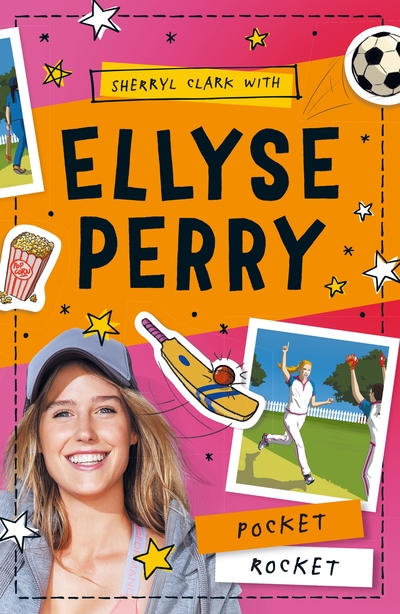
My latest book/s are a series based on Ellyse Perry (sportswoman). It was a commission, and I wanted to do it because I hated compulsory sport at high school, and so did lots of other girls. And I see someone like Ellyse being a huge influence on kids and getting them away from screens and participating in sports – and having fun. I wish that had been me! Plus adolescence and body changes have a lot to do with why girls stop playing sport and I wanted to explore that, too. I also have a picture book coming out next year with Allen & Unwin – The Night Tiger – which is being illustrated by Michael Camilleri. I’m very excited about that.
I’m always working on several things, so I can give manuscripts a ‘rest’ when they need some time out, so I’m able to able to look at them with a fresh eye. I’ve just finished a major revision of a SF novel (the ending still needs more work), and I’m doing another edit of a historical novel. I changed a large part of it into present tense and it’s still a bit clunky.

You’ve written poetry for both children and adults, and have edited a poetry magazine, Poetrix. Can you tell me something about both your poetry, and the magazine?

Poetry was the first thing I wrote when I realised what writing was. That probably sounds weird, but I’d been writing these dull short stories and an awful adult novel, and then I did a poetry workshop and thought – yes! I wrote this thing and the workshop leader said it was a nice metaphor and then I thought – what’s a metaphor? And since then (30 years ago, mind you!) I’ve been learning more and writing more, and it’s such an exploration of language and image. So much fun and so satisfying, and I just wish more schools would ask for poetry workshops. Truly. Most teachers have NO idea what poetry can open up for kids. And most importantly for those kids who don’t feel confident with language and prose. Poetry just excites them so much. They are the BEST poets!

We created Poetrix (Australia’s only magazine for women poets) back in 1993. I used to teach classes in self-publishing because it was a passion of mine, and I’d worked in community arts and for a printer. My writing group, Western Women Writers, were totally on board with creating a magazine, and we self-funded it with small catering jobs. We produced 40 issues of Poetrix, and we published a huge number of women who have gone on to have books published and won awards. But mostly we did it so women had a poetry voice. It was in reaction to some critic who’d said women only wrote poetry that was ‘domestic suburban vignettes’ and we thought – yes? So what’s wrong with that? It’s life as we know it and experience it, and of course you can write fabulous poems about it! So here are 40 issues of Poetrix and about 1400 poems about things that are important to us. To everyone, actually.

As well as writing books, over the years you’ve also run a lot of classes on writing and publishing. What kinds of things do you most enjoy helping people to learn? Do you teach mainly children, or adults, or a combination? And do you think that things have changed in terms of areas of interest–I mean, are people interested in learning about different things now than they were say 10 or 15 years ago?

I’ve been teaching in the Diploma and Cert IV of Professional Writing and Editing for nearly 20 years. But I did get to a point finally where I realised how much energy and focus teaching was sucking out of my writing. I went off to Hamline University in Minneapolis to do an MFA in writing for children and YA, and a very wise teacher there said, ‘It all comes from the same well. The more you teach, the less you have for your own writing.’ So in the past three years I have stopped teaching at TAFE, apart from substituting and helping out, and I think my own writing has received a huge boost because of that. It’s sad to say this, but it’s true. Teaching did detract from the energy I had for writing, and now with the whole onslaught of government paperwork requirements, more and more writing teachers are leaving TAFE because it’s overwhelming. Less time to teach and more time to fill out pointless forms. It makes me angry, to be honest.
Because I do love teaching and workshops. The people who come are so keen to write, and to learn. You can feel them soaking stuff up. I often see people start with an introductory class and five or ten years later, they’re getting published and doing so well. The one thing I love teaching is story structure. People get so mired in character and dialogue and just getting the words out, but structure (if you learn it and understand it) can fix just about everything. Mind you, it can’t fix voice, and in writing for children and YA, voice is so important. I think you only ‘get’ voice if you read a lot, read widely and read from a writer’s viewpoint. It astounds me when aspiring writers say they don’t read. There is so much to learn from astute reading. pocket-rocket
I teach mainly adults still – I do writing workshops in schools, yes, but a lot of schools want to spread their resources as widely as possible, of course, so I will do talks to 300+ students rather than workshops with 20. My dream is to create a portable poetry workshop I can take to school teachers and show them how to use poetry in the classroom, both reading and writing it. I have a website I started back in 2006 when I realised how little there was for schools – www.poetry4kids.net. I need to update it now and put a lot more material on it.

At the moment, you are undertaking a PHD themed around fairy tales, through an Australian university, after doing a Master of Fine Arts degree through an American university. What was your main focus in the MFA? What aspect of fairytales are you focussing on in the PHD? And how do the two university cultures compare?

When I chose to do the MFA in the US, it was because I knew it was the only way to do a Masters in the way I wanted. I didn’t want to be stuck doing one topic and one novel with one or two supervisors. Hamline meant I could do the things I really wanted: work with a different advisor every semester and learn from them (all published, experienced writers and teachers); work on a different project every semester to learn as much as possible (so I did a historical novel, picture books, a verse novel and a SF novel, plus a critical thesis on verse novels); go to intensive residencies in Minneapolis/St Paul where there were lectures, readings, workshops and a committed community of children’s writers; work at home via email in between and get detailed feedback on my writing; learn to write critical essays and a thesis that taught me more about the field from a critical viewpoint.

The PhD at Victoria University in Melbourne came from an essay I wrote during my picture book semester at Hamline. It was about picture books that are original, new fairy tales (Fox by Margaret Wild was my key text). Now my PhD asks that question – if I want to write new, original fairy tales myself, how do I achieve this? How do I write something that has the same resonance and unconscious signals that traditional tales like the Grimms’ do? So the creative writing (picture books and a novel) is informed by the research. Why have fairy tales endured? What is it that we respond to? How can I use this without being prescriptive or didactic or just plain boring?

Of course other aspects have come into it, especially the issue of publishers avoiding scary stories, and over-protective parenting that leads to a lack of resilience and coping skills in kids. I didn’t intend to venture into psychology, but then given that Bettelheim’s book, The uses of enchantment, was my starting point, I guess it was inevitable!

The two universities are poles apart, but that’s to be expected. Any Australian university would be entirely different to a US university that both specializes in children’s/YA writing and offers a low residency option. I think perhaps we’re not big enough here to be able to either specialize in that way or offer low residency on a wide scale. I’ve approached VU about running an MA similar to Hamline (indeed Hamline are keen to form a partnership), but with the government continually cutting tertiary funding and clearly having such an anti-arts agenda, I can’t see it happening anytime soon.

I think it’s so interesting that so many writers now are doing PhDs, because you can apply for a scholarship and it gives you an incredible amount of time to focus and create and innovate. Funded time that you don’t get hardly any other way. My bet is that in the next 10-15 years, Australian writing will see a huge growth in quality and innovation because of it. But if the government gets its scaly, arts-hating hands on the PhD program funding, they will kill it. Maybe I shouldn’t be telling them? Ssshhh.


Sherryl Clark’s first children’s book, The Too-Tight Tutu, was published in 1997, and she now has more than 65 published books. Her other titles include a number of Aussie Bites, Nibbles and Chomps, and novels. Her YA novels are Bone Song, published in the UK in 2009, and Dying to Tell Me (KaneMiller US 2011, Australia 2014).

Sherryl’s verse novel Farm Kid won the 2005 NSW Premier’s Literary Award for children’s books, and her second verse novel, Sixth Grade Style Queen (Not!) was an Honour Book in the 2008 CBCA Awards. Other recent titles include a picture book of poems, Now I Am Bigger, the middle grade novel Pirate X and the Rose series (Our Australian Girl). Her fourth verse novel, Runaways, was released March 2013.

Her latest books are the series featuring sportswoman Ellyse Perry. Pocket Rocket and Magic Feet are released in early October, with two more in January 2017.

Her books have been published in Australia and overseas, including the USA, UK, Spain, Mexico and China.

Her website is at www.sherrylclark.com

Facebook – https://www.facebook.com/Sherryl.Clark3

Twitter – @sherrylwriter

Instagram – sherrylwriter
Across the Tasman 1: Maria Gill

One of the great pleasures of international travel, for me, is the discovery of another country’s books, writers and illustrators. My latest trip, to New Zealand, was no exception. Through visits to schools, bookshops, libraries and attending the IBBY (International Board of Books for Young People) Conference in Auckland, I was introduced to the work of the country’s fabulous authors and illustrators for children, and also met several of them in person. To my shame I also discovered how little I knew about New Zealand books–I had read and loved the work of world-famous creators of children’s books like Margaret Mahy, Lynley Dodd, Pamela Allen and Maurice Gee, but otherwise I knew very little. I’m not alone in that, in Australia: our cousins across the Tasman might be so close but we know more about British or American children’s literature than we know about that of New Zealand. Anyway, I decided I’d do my small bit to remedy that, not only by buying and reading lots of books but also by presenting interviews with some of those fabulous creators!

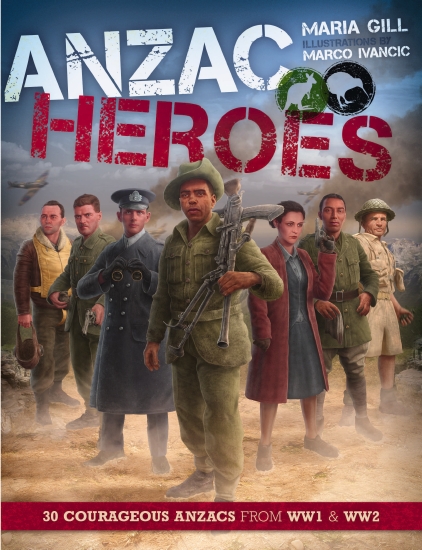
The first interview is with distinguished writer of non-fiction for children, Maria Gill. Her most recent book, Anzac Heroes, which is about the stories of great men and women from both New Zealand and Australia, from both World War One and World War Two, has recently won not only the top non-fiction award in the 2016 New Zealand Book Awards for Children and Young Adults but also the Margaret Mahy Book of the Year Award. The judges praised the book as ‘simply stunning’ with ‘carefully chosen material’, and it’s been flying off the shelves both in New Zealand and Australia. I caught up with Maria to talk to her about it.

How did you first get the idea for Anzac Heroes? How long did it take to go from concept to publication?

I had written two other books about the lives of famous people (New Zealand Hall of Fame, New Zealand Sports Hall of Fame) and when I saw the commemorations for WWI I decided to do another about Anzac Heroes. It was a year of solid writing (from 8am – 6pm, seven days a week), and I also spent two months applying for a grant, organising photographs, editing and getting experts to check the book.

Anzac Heroes is a major work of research but also selection. How did you go about that? What were your criteria in deciding who to include in the book? Did you have an initial list in mind, and did that change as you went along? What were the challenges and discoveries involved in the research?

First, I included army, navy and air force men who had won Victoria Cross medals that fought in a range of battles. However, as time went by my conscience was nagging me; I wanted to include indigenous soldiers and women. I looked closely at what being a hero means; it’s about being exceptionally brave, resilience in the face of extreme hardship, and putting your life at risk to save others. Even though Maori and Aboriginal soldiers were mostly given the jobs of digging trenches and tunnels they volunteered to fight or go out on scouting missions that were incredibly dangerous. Same with women; they weren’t allowed to fight in both wars, but they were near the front line, avoiding bomb and bullet fire to save other people’s lives. Indigenous soldiers and women didn’t receive the highest medals but they absolutely deserved to be included and the book is all the more richer for it.

I had difficulty finding information about some of the lesser known men and women in the book. It required detective work; but for me, the more difficult it is, the more determined I am to find their story. I investigated primary sources such as battalion log books, military records, diaries, and letters; as well as secondary sources such as historical books about certain battles. For Aboriginal soldier Albert Knight I rang people in his home town until I found a family member. They told me to ring other family members and between them we pieced together Albert’s story. They were really thrilled his story was finally being told.

The book is lavishly illustrated with pictures that are well-integrated with the text. Did you work with the illustrator, Marco Ivancic, on that, or were you both creating your part of the book separately?anzac-heroes

I was visiting a lot of museums to find information so every time I went I took my camera and shot lots of images for Marco to use as photo reference. I also spent a day with a military re-enactment group taking close-ups, mid-range and long-range shots of them at all different angles. I also sent him any photographs I had discovered online of the men and women.

The Anzac stories are still very inspiring and important to Australian and New Zealand readers. Why do you think that is?

I think it shows how human kind can survive in the harshest of conditions and be strong, brave, and kind despite what is going on around them. I’d like to think young people will read how difficult it was for the men and women during those two wars, and grow up thinking that war should not be an option to solve problems. The stories also tell of significant historical events that shaped our identity.

Your book has been very well-received, both in New Zealand and Australia, and has major awards.  What’s been the reaction from young readers?

Lots of boys have said how much they want to read the book or bring their own copy in for me to sign it. In a school in Brisbane a young girl came up to me and said she wanted to thank me for including indigenous soldiers because she was Aboriginal and it meant a lot to her that they were included.

Maria Gill talking about Anzac Heroes at The Children's Bookshop, Sydney

Maria Gill talking about Anzac Heroes at The Children’s Bookshop, Sydney

You specialise in non-fiction. Tell us about your other books. And what are you working on now?

I’ve written a picture book (The Last of Maui’s Dolphins), several creative non-fiction picture books (Operation Nest Egg Chick, Rangitoto, The Call of the Kokako) and over 40 educational books for children and teachers. At the moment I’m working on a follow-up to Anzac Heroes due to be published in 2018 with Marco Ivancic as the illustrator.

Maria Gill has written 60 books over the last 14 years. Seven of her books have been finalists in national children’s book awards including ‘Anzac Heroes’ in the 2016 New Zealand Children’s Book Awards. ‘Anzac Heroes’ won the non-fiction category and the Margaret Mahy Book of the Year Award. Maria trained as a Primary school teacher and journalist, but now writes children’s books and educational resources full-time in a small seaside village in New Zealand. www.mariagill.co.nz.


Cover reveal of Once Upon An ABC!

I am thrilled today to be able to reveal the spectacular front cover of Once Upon An ABC, the first of my two picture book titles to come out next year with Little Hare. It’s illustrated by the fantastic Chris Nielsen, whose gorgeous style, bursting with verve and vivid colour, is simply irresistible!

Here’s what the blurb will say: A romp through both the alphabet and the world of folklore..Sophie Masson’s lively verse gathers together a dazzling range of folklore, made vividly contemporary with Chris Nielsen’s striking artwork.

The book will be out in April 2017.

once-upon-an-abc-cover-final

An interview with Lisa Hayden, translator of Laurus

laurusThe greatest discovery of my reading life this year has been the extraordinary novel, Laurus, by Russian author Eugene Vodolazkin, beautifully translated by Lisa Hayden. Set in the Middle Ages, around the life of a Russian healer and mystic, it is bold, brilliant, spiritually profound and utterly absorbing. I’ve been raving about it to anyone who would listen ever since I read it–and thank you to my friend and fellow author, Natalie Jane Prior, for first drawing it to my attention!

And now I’m absolutely delighted to be bringing you an interview with Lisa Hayden, whose pitch-perfect English translation has so skilfully brought Laurus to readers all over the anglophone world( the book has of course collected many fantastic reviews). Fresh from a trip to Moscow where she won the prestigious Read Russia prize for translation, in the contemporary literature category, Lisa generously answered my questions with great insights and interesting observations. Enjoy!

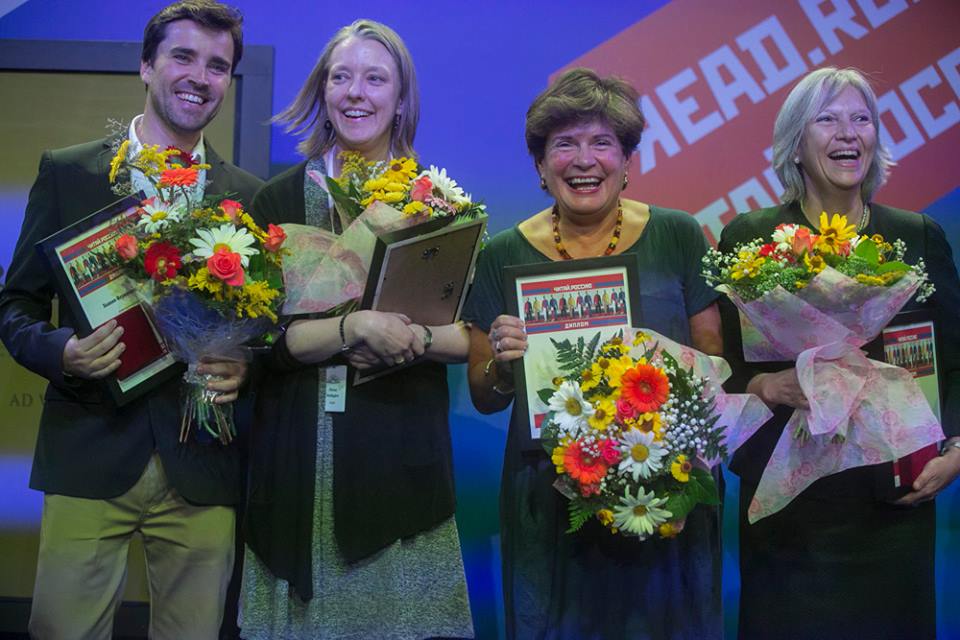
Lisa(second from left) at ceremony for the Read Russia Prize, with winners of other categories. Photo by Anatoli Stepanenko, used with his kind permission.

Lisa(second from left) at ceremony for the Read Russia Prize, with winners of other categories, Joaquin Fernandez-Valdez, Claudia Scandura, and Selma Ancira. Photo by Anatoly Stepanenko, used with his kind permission.


*********************************************************************************************************

First of all, Lisa, congratulations on your wonderful translation of Laurus! It must have been an extraordinary undertaking. How did you prepare for it, before you even started the writing work? And how long did the whole process take?

Thank you! I’m glad you and so many other readers have been enjoying the translation. Laurus was tremendous fun to translate and it seems like that comes through for readers.

 I don’t generally do much before starting a translation other than reading the entire book before signing a contract. I don’t do a lot of advance research since I prefer to take each difficulty as it comes, though I often find that author interviews give helpful insights into an author’s intentions. All that said, when I was starting Laurus, I gathered lots of books about the Middle Ages. Though I can’t say I sat down and read any of them cover to cover, I enjoyed paging through lots of them, reading passages, and getting a feel for medieval prose, herbals, and life. An anthology of medieval literature that I read in college was helpful, too, for background information, ideas on vocabulary, and a look at translations of a text or two that Eugene borrowed for Laurus. As for timing, if I remember correctly, I had about eight months from start to finish to work on the translation, with editing taking more time later on.

Were you in touch with the author, Eugene Vodolazkin, during the translation process?

Eugene and I first met in Moscow, in September 2014, and have kept in touch ever since—he and his wife have become friends and I love spending time with them. Eugene answered questions for me and even read through my entire manuscript, which was extraordinarily helpful. He’s just wonderful to work with because his English is very good and he understands the role of the translator. We think of each other as the co-authors of Laurus.

Laurus is an absolutely superb, moving novel with a richly evocative style, truffled with piquant language and a complex narrative chronology. Yet though it’s so artistically accomplished, and the best evocation of the mystical experience I’ve ever come across, it is also very readable and accessible. I imagine that it must have been very difficult to recreate that balance between art and accessibility. How did you do it?

To be honest, I don’t really know! Of course I knew what awaited me because I’d read the book before I began translating. Really, though, for me translating any book is, most of all, a matter of sitting down each day, hearing the text in my head (this sometimes includes reading it out loud), and finding English words that can combine into phrases and sentences that feel like they capture the meaning, energy, style, and spirit of the Russian text. I’m pretty intuitive, so I follow my instincts. I usually go through about five or six full drafts before turning in a final draft. I read the entire book aloud to myself at least once, edit it on paper several times, and read it once on an electronic reader.

 Before Eugene saw my draft, I showed it to two Russian colleagues: Liza Prudovskaya checks a draft of all my translations and Olga Bukhina specifically looked at the old language in Laurus. They answered questions, corrected mistakes, and gave me further ideas. They’re both just wonderful to work with. So are my editors at Oneworld: publisher and editor Juliet Mabey is very no-nonsense, a quality I value highly in an editor and she has a fantastic feel for books that’s won Oneworld numerous awards. And copyeditor Will Atkins is just phenomenal. Beyond straightening out twisted syntax and correcting grammar and stylistic slips, he asks tough questions about usage and vocabulary that help me sharpen my texts. I enjoy working collaboratively, so all the feedback, queries, and ideas from Liza, Olga, Juliet, Will, and Eugene freed me up to take appropriate risks with the language in Laurus. In the end, I think what happened is that I had my intuitive feel for the text, translated the book, and then, thanks to all the drafts and comments, felt confident that my translation fit with the original in terms of meaning and style. Each book is different but that’s my general approach to all of them.

Lisa signing copies of Laurus with the author, Eugene Vodolazkin, at a book event in New York

Lisa signing copies of Laurus with the author, Eugene Vodolazkin, at a book event in New York

You are currently working on the translation of another book by the same author, The Aviator, which will be published in 2018. Can you tell us a bit about it?

I love The Aviator! The novel begins when a man wakes up in a hospital suffering from amnesia. He gradually begins remembering his past and his identity, and those memories are especially interesting because of how they fit with Russian history. I don’t want to say much more because what’s happened to him is so, hmm, unusual. It’s a book with a Petersburg setting that fits beautifully with Laurus and Solovyov and Larionov, which will also be published by Oneworld: all three books look at time, history, and identity, forming a beautiful triptych. I’m working on a first draft of The Aviator now and enjoying how it translates.

Russian-French writer Andrei Makine, in one of his novels, Le Testament français, has his narrator say, ‘The translator of poetry is the poet’s rival; the translator of prose is the novelist’s slave.’ What is your opinion? Do you have a philosophy of translation?

I can’t say that I have a philosophy of translation other than very basic things like “be flexible” and “get the work done,” something that applies to all levels of the process itself. Each book is different so I feel like I work under unique unwritten guidelines for each. Most of those guidelines are subconscious and sometimes I don’t realize what I’ve been doing until rather late in the process.

 The line you mentioned from Makine’s book comes from Vasily Zhukovsky, a nineteenth-century poet and translator. I’ve heard and read this before and I suppose it always irritates me a bit because I’m a prose translator and, despite knowing what he’s saying, I don’t feel like I’m any novelist’s slave on even a metaphorical level! Of course I’m very fortunate that my authors tend to see their translators as co-authors: they encourage me to approach their texts creatively and we often make changes together. Translating fiction is very creative work: even though I’m not restructuring a plot or rewiring character development, I’m a writer who’s supporting the author’s plot structure and character development by choosing words and putting them in an order that feels appropriate for capturing the language and literary devices in the Russian text by establishing a poetics for the translation. It’s very complex work and it’s a tremendously interesting and gratifying form of writing that requires a lot of thought about and feeling for the text.

What other literary works have you translated?

I haven’t been translating for a long time so this will be fairly quick to answer, particularly if I stick to recent and upcoming novels. I’ve translated another book for Oneworld, Vadim Levental’s Masha Regina, a novel about a young woman from a small city who goes to St. Petersburg and eventually becomes a filmmaker. Since I’m from a very small town, I particularly identify with Masha’s provincial roots. I translated Marina Stepnova’s The Woman of Lazarus, a rather edgy family saga, for World Editions and am finishing up her Italian Lessons now. I love Marina’s feel for history and pain, not to mention her humor. Then there are three other books for Oneworld that are in various stages: Eugene’s Solovyov and Larionov, about a historian and a general who live in different times; Eugene’s The Aviator, which feels so close to me right now; and Guzel Yakhina’s Zuleikha Opens Her Eyes, about a kulak Tatar woman who’s exiled in the 1930s. Guzel’s book is a historical novel that looks at Soviet-era difficulties but it’s also very lyrical in places, with imagery and descriptions of nature that are very moving. I like to translate books that have the power to make me cry. That’s why I like all these books: they’re very different but they all move me.

You are a Russian language specialist, and as well as translating literary works such as Laurus, you have taught the language. What drew you to Russian in the first place?

Literarily speaking, stories about Baba Yaga were the first thing to draw me in, when I was very small, then I read my first Chekhov story, “The Bet,” in the sixth grade. I went to college hoping to be a biochemist but nearly failed calculus: I signed up for first-year Russian after loving a Russian history course and went to Russia, which was then the Soviet Union, for the first time in 1983. After that came grad school in Russian literature, though I dropped out with just an MA because I couldn’t picture myself teaching and researching for the rest of my life. I love Russian and I love writing but don’t have it in me to construct plots and develop characters, so translation feels like ideal work for me.

 Thank you, Sophie, for inviting me to answer these questions for you. I appreciate your interest in Laurus, Eugene’s writing, and my work. Happy reading to everyone!

Harry Ashton-Wolfe, true-crime writer of ‘the Golden Age’

ashton-wolfe-3For a bit of fun today I’m republishing a piece of mine that was first published some years ago, about Harry Ashton-Wolfe, an absolutely wonderful–and unintentionally hilarious!–true-crime writer of the so-called ‘Golden Age’ of the detective craze, in the 1920’s and 30’s. He inspired one of my own characters in The Case of the Diamond Shadow-and to all crime writers out there, he’s really worth rediscovering!

So here’s the article, below. Enjoy!

Harry Ashton-Wolfe

Some of my favourite book finds have come into my hands not by word of mouth or reviews or prior knowledge but by sheer chance: the eccentric jewel suddenly spotted amongst the lucky-dip gimcrack of  junk shop and school fete, car boot sale and charity shop shelf. And these days, very often in that virtual combination of all those venues, the Internet.

It was thus I made the serendiptous discovery of the priceless but sadly forgotten works of celebrity criminologist and true-crime writer of the 1920’s and early ’30’s, Harry Ashton-Wolfe. Browsing on the Net one day, looking up Conan Doyle sites with the vague notion of Sherlock Holmes appearing in a detective novel for young readers I was planning, I stumbled across a casual reference to a H.Ashton-Wolfe, writer of true-crime adventure bestsellers, who claimed to know not only Holmes’ creator, as well as the leading lights of the French Surete and Scotland Yard, but also just about every famous criminal and outlaw of the day!

Several hurried orders from second-hand bookshops later, I had built up a mini-library of Ashton-Wolfe’s books, with their gorgeously pulpy titles, such as Crimes of Love and Hate, The Thrill of Evil, Outlaws of Modern Days, and The Forgotten Clue. And I plunged into the addictive joys not only of the melodramatic and exotic cases recounted in racy prose, but the vain and boastful character of Ashton-Wolfe himself, which infused the stories with unintentional hilarity. So immediately engaging was this combination that I immediately dropped Sherlock in favour of a certain Philip Woodley-Foxe, whose adventures are legendary, not least to himself. No prizes for guessing who he was based on!

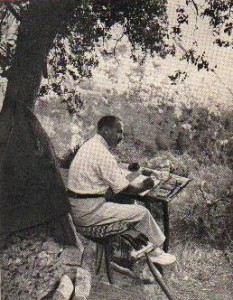
A marvellous combination of Action Man, cheerleader for ‘modern’ scientific detection, adventurous ashton-wolfemaster of disguise and shameless name-dropper, Harry Ashton-Wolfe doesn’t just recount the cases, he inhabits them. He’s an important part of investigating teams in Paris tracking down fiendishly cunning criminals, such as the Eurasian Hanoi Shan; he gets locked up and threatened with death by vicious gangsters; he is at the elbow of the greatest forensic scientists of the day, such as Edmond Locard of the Surete, and earlier, the legendary Alphonse Bertillon; he is allowed to peruse the ”secret archives” of the Paris Prefecture; by chance, he recognises a famous anarchist bandit, Jules Bonnot, as having once been his chauffeur; he dons disguises such as that of a Parisian apache or a Corsican bandit to infiltrate criminal rings(delightfully, his books sometimes include photographs of him in disguise, complete with picturesque hats and moustaches!)

Airily, he recognises that ‘It is rather strange, when I look back, to think how often I have found myself involved in events that later passed into history,’ (The Underworld—a Series of Reminiscences and Adventures in Many Lands), but he doesn’t let that slight improbability deter him in the least. Time after time, he’s in at the kill—helping to nail a vicious poisoner or uncovering a sensational tranvestite murder or catching a crook who’s passing off fake diamonds. He describes the most sensational murder methods—such as kittens whose claws have been tipped with deadly tetanus baccili; centipedes used as murder weapons; and in an echo of Edgar Allan Poe, an ape trained to kill! Rather scathing about most detective fiction—aside from Conan Doyle’s, to whom he dedicated Outlaws of Modern Days—he nevertheless uses every trick of sensational fiction, including catchy titles, breathless first-person narration, cheesy dialogue and moralising asides. He offers titillating portraits of famous murderers, gangsters and outlaws, and lovingly sketched examples of criminal wickedness. But there’s always a moral: not only are these bad people bad, but they will inevitably be brought to book by the superior methods of modern scientific crime-fighting. His touching faith in these methods—which he describes in detail in The Forgotten Clue– is such that he is convinced they will shortly put ashton-wolfe-2an end to all crime.

Mostly, he writes about modern cases(at least, from the 1890’s onwards) but in Tales of Terror—True Stories of Immortal Crimes, he looks at older real-life mysteries fictionalised by writers such as Alexandre Dumas: the Man in the Iron Mask, the Count of Monte-Cristo, the Affair of the Diamond Necklace…You get the distinct impression that he thinks modern scientific methods would surely have made short work of elucidating them!

So who was H.Ashton-Wolfe, this tireless go-getter chronicler of crime? In The Underworld he offers something of an  autobiography, and colourful it is too (sample chapter titles: The Episode of the Clairvoyant Countess’, ‘La Glu—Apache and Gentleman’; ‘The Motor Bandits’; The Blue Anchor Mystery’). He was born in 1881, of a Scottish father who had emigrated to New Mexico and who as a US soldier had participated in the historic final stand of the Sioux under Sitting Bull. His mother was an American, of half-Scottish, half-Spanish blood(Ashton-Wolfe makes much of this ”gipsy strain” which made him a ”wanderer, restless and ever seeking after excitement and novelty.”) Young Harry was born in London whilst his parents were on a visit there but he spent his childhood on the ‘prairies of Arizona and Colorado’—in The Forgotten Clue he also writes about how he was taught to ride and shoot there by “the red-skinned Sioux warriors, who, strangely enough, enjoyed showing a white boy their tricks”–then sent to school in Denver till the age of 14. He was then packed off to a boarding-school in Cannes, and thence to university in Heidelberg—giving him, as he points out, an unrivalled facility in three languages, and the love of travel, not to speak of European glamour to add to American derring-do.

But it’s a youthful holiday in Monte-Carlo that introduces him to his future career when, on nightly visits to the Casino, he befriends a ”dapper little Frenchman” , Monsieur Blanchard, who enlists his help in watching another gambler—an American named Big Jim Cowley. Of course, M. Blanchard turns out to be from the Surete, Big Jim is soon unmasked as a crook of the first order, and the adventure not only whets Ashton-Wolfe’s appetite for more excitement, but sees him eventually accepted as assistant to Dr Alphonse Bertillon, in Paris, working with him on many extraordinary cases. In this capacity, he also collaborates on occasion with detectives from Scotland Yard and the US. Later, due to his familiarity with foreign languages, he acts as ”interpreter to the civil and criminal courts” in Britain–in which capacity he appears to have written many of his books.

Perhaps he might have been able to retire though, for his books were best-sellers in the genre, going through many editions worldwide, and garnering glowing reviews: ‘Out-thrilling the thrillers’–‘Exciting studies in international crime’–‘Unsurpassed as a narrator of authentic crime stories’. The public’s appetite for true as well as fictional crime in the Golden Age of the detective novel was huge, and as well as his books, Ashton-Wolfe wrote articles for magazines such as The Strand as well as the true-crime magazines which flourished in the Golden Age of the detective novel. And his stories influenced other contemporary writers. For instance, ‘Sapper’, the creator of the Bulldog Drummond adventure series, was inspired by two of Ashton-Wolfe’s cases: the diabolical Hanoi Shan, and the anarchist bandits Jules Bonnot and Octave Garnier, for his 1929 novel,  The Temple Tower(as well as basing a character, Victor Matthews, on Ashton-Wolfe himself). And in a nice touch, Conan Doyle himself used a story recounted in Crimes of Love and Hate, about an Italian swindler who claimed to have created a death ray, as the basis for one of his Professor Challenger stories, The Disintegration Machine.

Ashton-Wolfe’s work was also the basis for a popular pot-boiler film, Secrets of the French Police(1932), where he is credited as writer. Other films may have been planned; but questions as to the authenticity of his recitals began to surface, and no others were produced. As well, with his style beginning to seem old-fashioned, his books started to fall out of favour, and eventually were forgotten so completely that not a single one remains in print.

Just how much—or how little–of his biography, let alone his claimed exploits, is authentic, I have no idea. Much of it, I suspect, needs to be taken with a fairly large grain of salt. Trying to find information that isn’t part of the persona Ashton-Wolfe built for himself is like trying to write on water. But it doesn’t really matter. For the books are truly wonderful period pieces, some of which  deserve to be reprinted in their full glory, cheesy photographs and all.

Jessica Whitman writes about Wild One

Wild One Blog Tour posterToday, I’m delighted to be part of a blog tour by popular fiction author Jessica Whitman, featuring her new novel, Wild One. In this guest post, she shares an experience many writers can relate to!

My writing ritual is not as glamorous as my heroine

by Jessica Whitman

Before I had kids, I wrote a bit like Kat does in the book. I had a very specific ritual for my writing, and heaven forbid everything was not just exactly so. I had to have a clean house, the right pot of tea (and I always drank out of the same cup), a room solely devoted to my work, a view from my window, loose, comfortable clothes, and glorious, uninterrupted, hours of night time silence. But now, I write catch as I can. The one thing I still do is work at night – which used to be a choice, but now is a necessity. Because I do need uninterrupted hours to really go deep, and it’s just about the only time I can get it.

As for losing my mojo, ironically, having children and having other work, has shown me that writer’s block was really just an indulgence on my part. When your time is severely limited, when you have deadlines to meet, when you are fighting for the hours you need to get your work done, the idea of wasting time sitting in front of a blank screen in pretty much unfathomable. And so I am far more productive since I had kids and jobs to juggle than I was before, when I had all the idle time in the world. The pressure has actually made me a better a writer.

Wild One by Jessica Whitman is published by Allen & Unwin, RRP $29.99, available now.

Thanks to Allen and Unwin, two lucky readers (Australian residents only) could win a copy of the book! Enter by filling in the contact form on my blog, putting in your name and street address(no PO Boxes please). Wild One cover

Read more about Wild One:


In the irresistible tradition of Jilly Cooper, Wild One is the second addictively readable novel in the glamorous, scandalous, romance-filled Polo Season series.

When Katherine ‘Kat’ Parker wrote and directed a blockbuster movie she became Hollywood’s ‘It Girl’ overnight – until with one flop she wasn’t. Now Kat is back living in Florida trying to find the inspiration to write what she hopes will be her comeback screenplay.

Despite being an exceptionally talented polo player, Sebastian Del Campo has never shared his famous family’s intense passion for the sport. He has, however, excelled at other polo-related activities – like partying hard and having liaisons with beautiful women.

When Sebastian meets Kat he finds her down-to-earth attitude refreshing. Keen to get to know her better, he regales Kat with stories of his trailblazing grandmother, Victoria, who was a pioneering polo player.

Kat’s imagination is fired by Victoria’s story and she realises she’d make a great subject for a screenplay. Seb agrees and the pair head to Hollywood to seek out funding for a film that could make or break both their careers – and their growing feelings for each other . . .

Wild One is a fun, sexy and entertaining novel about taking a risk to follow your passions in life – and love.


ABOUT THE AUTHOR

Jessica Whitman teamed up with the face of Ralph Lauren, world-famous polo player Ignacio ‘Nacho’ Figueras, to bring to life a romantic trilogy set in the glamorous world of international polo. ‘Nacho’ Figueras is the captain and co-owner of the award-winning Black Watch polo team. The ‘David Beckham of polo’, he has featured on Oprah, 60 Minutes and Gossip Girl, and was voted the second most handsome man in the world by Vanity Fair. Nacho lives in America and Argentina with his wife and their four children.

Where to buy the book:


How working in restaurants inspired Maggie’s Kitchen

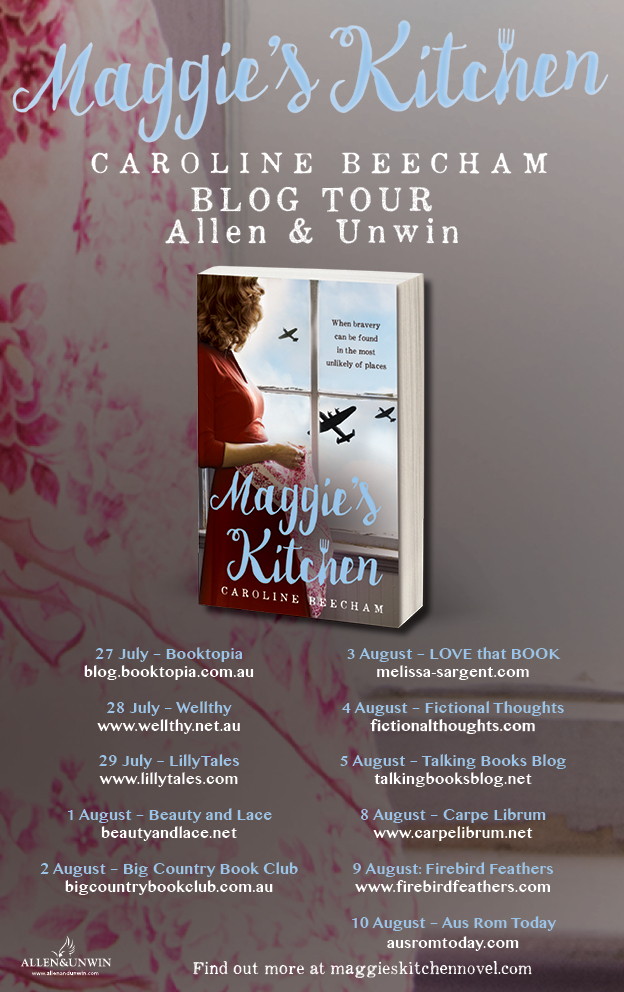
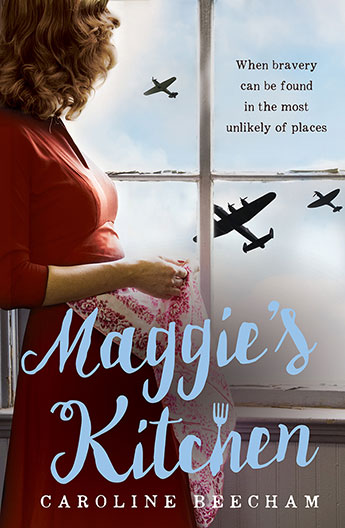
Maggies Kitchen Blog Tour posterToday I’m very pleased to be part of a blog tour by writer and producer Caroline Beecham, whose debut novel, Maggie’s Kitchen (Allen and Unwin), a most engaging historical novel about a most unusual restaurant, set against the background of World War Two, has just been published. In this interesting post, Caroline writes about one of the inspirations for her novel: and as a bonus to readers, provides a delicious recipe from the book!

How working in restaurants inspired Maggie’s Kitchen

 by Caroline Beecham

 Maggie’s Kitchen’ follows the fortunes of Maggie Johnson as she sets up and runs a British Restaurant in London during the Second World War. The story focuses on the relationships that develop with the community and in particular with Robbie, a twelve-year-old runaway, and Janek, a Polish refuge. Together they struggle through government red-tape to open the restaurant and then battle food shortages and community crisis to keep open their doors.

Caroline Beecham pic12Real events inspired me to write ‘Maggie’s Kitchen’; I was intrigued by these British Restaurants that the Ministry of Food set up during the Second World War to help with the food shortages. I felt that there was a story there, but my first thoughts were that it would be too difficult; how would you approach writing about people living on rations and not getting enough to eat and make it appealing? It was my experience working in restaurants while I was growing up that gave me the answer; you become like a family, working as a team, building relationships with regulars, dealing with difficult personalities and daily dramas—even when its not wartime! You become part of a community and I realised that it was through this microcosm that Maggie’s story could take hold.

I still had to keep a check on the food descriptions though; it didn’t seem appropriate to give mouthwatering accounts of the food so I had to restrain myself there, and I hope that I got the balance right. The research for the book took a long time as I read other fiction and non-fiction books, trawled the National Archives in London and visited Islington where the novel is set. Working through the original Ministry of Food recipes was also time-consuming as they all had to be checked and I wanted to make them so that if anyone asked me I could say that I had tasted and tested them all. With the help of friends and family, they were all tried and some adjustments made; there is no powdered egg these days!

One of my favourites is the Crisp Coated Scotch Eggs recipe below. There was a requirement for fast food that could be eaten in a hurry, hot or cold, and the humble Scotch egg fitted the bill. The recipe is also appealing because it evokes the nostalgia of childhood. That’s one of the reasons that food can be so comforting; if it’s a dish we ate often as children then it can take us back. This theme of memory and food, and courage and food, is central to the book. The comforting nature of food is emphasized through Maggie directly nurturing Robbie with food, in the same way that she is able to offer comfort and food to the community through the restaurant.

For Maggie, the simple act of cooking is nurturing for her senses; even when she is trapped underground in the air raid shelter she is: ‘rubbing the sodden dirt between her fingertips, feeling the same cold coarse texture as if she were simply making breadcrumbs for shortbread or the topping for a fresh fruit crumble.’ And again, later on: ‘By the time she was at home in her kitchen and had taken the potatoes from her pockets and washed them, she was beginning to feel more settled, soothed by the restorative act of cooking.’ In a moment of self-doubt, when she is questioning her abilities, it takes Janek to remind her that: ‘In crisis we focus on what is real. What can be more real than providing people with their most basic need?’

crisp coated scotch eggsCrisp Coated Scotch Eggs

Ingredients:

4 eggs

450 g sausage meat

Flour

Breadcrumbs

Preheat oven to 200°C/390°F. Hard-boil eggs and coat with sausage meat, moulding them into neat shapes. Dust with flour and roll in bread crumbs. Line a baking tray with baking paper and bake eggs until crispy. Serves 4.


·         Maggie’s Kitchen by Caroline Beecham is published by Allen & Unwin, RRP $29.99, available now.

Booktopia

·          Kindle

·          Apple iBooks

Maggie's Kitchen Book Cover

More about the book:

Amid the heartbreak and danger of London in the Blitz of WWII, Maggie Johnson finds her courage in friendship and food.

They might all travel the same scarred and shattered streets on their way to work, but once they entered Maggie’s Kitchen, it was somehow as if the rest of the world didn’t exist.

When the Ministry of Food urgently calls for the opening of British Restaurants to feed tired and hungry Londoners during World War II, Maggie Johnson is close to realising a long-held dream.

But after struggling through government red-tape and triumphantly opening its doors, Maggie’s Kitchen soon encounters a most unexpected problem. Her restaurant has become so popular with London’s exhausted workers, that Maggie simply can’t get enough supplies to keep up with demand for food, without breaking some of the rules.

With the support of locals, and the help of twelve-year-old Robbie, a street urchin, and Janek, a Polish refugee dreaming of returning to his native land, the resourceful Maggie evades the first threats of closure from the Ministry. As she fights to keep her beloved Kitchen open, Maggie also tries desperately to reunite Robbie with his missing father as well as manage her own family’s expectations. Until she can no longer ignore the unacknowledged hopes of her own heart, and the discovery that some secrets have the power to change everything.

More about Caroline Beecham:

Caroline Beecham grew up at the English seaside and relocated to Australia to continue her career as a writer and producer in film and television. She has worked on numerous productions including a documentary about Princess Diana lookalikes, a series about journeys to the ends of the earth, as well as a feature film about finding the end of the rainbow. Caroline decided on a new way of storytelling and studied the craft of novel writing at the Faber Academy in 2012. She has an MA in Film & Television and a MA in Creative Writing and lives with her husband and two sons by Sydney harbour. Maggie’s Kitchen is her first published adult novel.

ministry of war food


Interview with Anthony Horowitz

anthonyhorowitz06 (1)Today, I am absolutely delighted to present a great interview I did very recently with the multi-talented British author, Anthony Horowitz, starting with the creation of his current TV series, New Blood, and moving on to talk about his books and other projects. Known worldwide both for his book and screen writing, Anthony’s extensive creative credits include the Alex Rider best-selling spy series for young adults, the very successful long-running TV crime series, Foyle’s War, set in World War Two, penning the latest Bond novel as well as two Sherlock Holmes novels, many excellent books for young adults and younger readers including the Diamond Brothers series, the creation of gripping TV mini-series such as Collision and Injustice, plays such as the recent Dinner with Saddam, and the writing of many episodes of such classic TV series as Poirot and Midsomer Murders. In his ‘spare time’ Anthony also writes the occasional travel piece and newspaper article.

I’ve known Anthony for many years, since the publication of the first Alex Rider book in 2000, when I interviewed him for a magazine article, and we subsequently became friends. Over the years, we’ve frequently corresponded and caught up in person when possible, in London when I happen to be there or Sydney, when he happens to be there.

And over the years, we’ve exchanged not only personal news, but frank and wide-ranging views about books, the writing life, and the publishing industry. Anthony always has interesting things to say: lively and thoughtful, he also has wide cultural references and a generous clarity.  And his discussion of his own work, as you’ll see in this interview, is equally interesting, giving an insight into the imaginative passion and deft skill that are behind his extraordinary success as a writer.

Swapping books, Sydney 2015

Swapping books, Sydney 2015

Anthony, your current TV series, New Blood, has been airing on ABC TV here in Australia, after having been broadcast in Britain by the BBC. It’s had excellent reviews both from media outlets and individual viewers. Are you pleased with how it’s gone so far?

Broadly speaking, the response to New Blood has been fantastic. I set out to write a show that would break away from the dark, violent world of Scandi-noir and just give people an hour of TV that was enjoyable and entertaining – and I think we largely succeeded. That said, we haven’t yet heard if there will be a second series so I’m forced to reserve judgement…at least for a while.

How did you come up with the idea for the series?

For a long time, I’ve wanted to write about the so-called Y generation, the young people who, for the first time in history, may be worse off, with fewer opportunities than their parents. In London, in particular, there are real challenges. Getting a house. Getting a full-time job. Paying off tuition fees. This was my starting point. At the same time, I was thinking about ways to shake up the crime/police procedural genre. I was tired of middle-aged men with drink/marriage problems. I had this idea for an opening shot. A body is found in the street. A car pulls up. A grizzled detective gets out…but the camera slides past him and finds the young cop who’s standing in the rain, trying to keep the crowd under control. My show would be about that cop. It also occurred to me that all crime shows take place in one department. It might be vice, drugs, MI6…whatever. But what would happen if you had two departments – the police and the Serious Fraud Office? From that point, I began to think of a bromance – two young investigators who don’t know each other but who form a team, working outside the rules. This may all sound a little vague but I’m describing my thought process as best I can!

New Blood breaks refreshingly new ground in its portrayal of the two main characters, Rash and Stefan, young Londoners respectively of Iranian and Polish backgrounds. What I loved particularly, as someone who also grew up with a similar kind of double cultural world, is the fact both Rash and Stefan are comfortable with who they are, yet are also aware of other people’s misperceptions. They navigate their different worlds with a familiar yet never complacent ease, with certain things about their family/cultural backgrounds subtly brought new bloodout, yet never stereotyped. How did you go about creating these characters to make them feel so immediately authentic? And what part did finding the right actors for the roles–the excellent pair of Ben Tavossoli and Mark Strepan–have in that creation?

Thank you for this observation. Yes, I love the fact that London, more than almost any city in the world, is completely relaxed about its multi-cultural, multi-ethnic make-up. I knew from the start that my two main characters would be Eastern European and Iranian. It just struck me as fresh and modern. Rash was based on my son’s flat-mate who is himself Iranian and long before I started writing, I talked to him about his background and his experience of life in the UK. He actually appears as an extra in the fourth episode! We did our best to avoid the obvious stereotypes with both characters. Most young Londoners are just that. They’re young and they’re Londoners before you start layering in religion, politics, sexuality or whatever. As to casting, I always knew that the show would stand or fall by our choice of the two actors and I was very insistent that we shouldn’t cheat, that we should find the real thing….which we did! It was essential that the two actors should have a real chemistry. We cast Mark first…he has Polish blood and matched the character exactly. Then, when Ben came along (most of the parts he’d been offered until we came along were “young terrorist”!) we saw that the two fitted together perfectly. They became great friends almost at once and that friendship has continued throughout the filming and beyond. I cannot tell you how pleased I am with their performances and if I have one hope it’s that they’ll become the stars they deserve to be.

You have a stellar career as a writer both for screen and books. Do you have a preference for either form? Or does it depend on the story?

I love all my writing equally. I think that it’s impossible to write well without passion. That said, of all the writing I have done, I probably value my YA books – Alex Rider in particular – the most. Why? Because reading, a love of books can change your life. I meet so many adults now who grew up with Alex that I feel very proud to have been a small part of their lives.

Your most recent book for adults was Trigger Mortis, a new James Bond adventure, and before that, you penned two new Sherlock Holmes adventures, The House of Silk and Moriarty. What’s it like, writing new adventures for such classic characters? How do you keep true to the Sherlockian or Bond corpus whilst staying true to your own identity as a writer? And which of those characters did you most enjoy recreating?

Trigger Mortis by Anthony Horowitz.jpgI only wrote the two Holmes novels and the Bond novel because I so love the originals. These are what influenced me when I was in my teens. I loved writing all three books (see question 4). You ask how I keep my own identity but actually I don’t. I see it as an act of literary ventriloquism. Essentially I have to be invisible, I have to hide inside the world of the original creators, obeying the rules, doing nothing that will annoy/upset their worldwide fans. At the same time, I have to raise my game. How can I possibly write as well as Fleming or Doyle? I probably found Sherlock Holmes the easier of the two characters because he’s more distant: the world of the late 19th century is much more easily defined than the cold war. Bond comes with certain challenges…marrying some of the attitudes and values of his world with modern sensibilities. But I began all three books with nothing but admiration of the original authors and a determination to serve them as well as I could. It was a wonderful experience, spending six or seven months living with their brilliant creations.

You’ve recently finished writing a new crime novel, Magpie Murders. Can you tell me something about it? When is it out?

magpie murdersMagpie Murders is my next adult novel, being published by Orion in October. It’s both a whodunnit and an exploration into whodunnits – in particular, the relationship between the detective, the author and the reader. It’s partly inspired by Conan Doyle’s very mixed feelings about Sherlock Holmes! The book is in two parts. The first is set in the very Agatha Christie landscape of an English village in the 1950s where a detective called Atticus Pünd, a survivor of the concentration camps, investigates the murder of a local landowner. ..Sir Magnus Pye. The second part takes place in London in the present day and concerns an editor, Susan Ryeland, who is forced to investigate the death of one of her authors when the final pages of his latest manuscript go missing.  The fun of the book comes when those two worlds collide…and there are not just one but two very twisty mysteries to be solved. I’m very pleased that nobody has managed to guess the ending yet! I think it’s the most cunning book I’ve yet written.

Your Alex Rider series of spy novels for young readers have been big bestsellers, but the series was deemed to have ended with Scorpia Rising (with Russian Roulette being a spin-off). So I was excited and intrigued to hear that you are in the middle of writing a new Alex Rider adventure. What decided you to take up Alex’s story again? And how does it feel, being back in his world?

Last year my publisher asked me to pull together all the Alex Rider short stories for a collection. scorpia risingThey’d been published in newspapers and magazines and elsewhere. So I started work – but then two things happened. I realised that some of the early stories weren’t good enough. And there also weren’t enough of them. So – just for fun, really – I wrote a new story, Alex in Afghanistan…and suddenly I discovered that I loved writing about Alex and that I had missed him. I really was quite surprised. For what it’s worth, I think Alex in Afghanistan is the best story I’ve written. It’s only 15,000 words but it’s full of action and surprises. I wrote two more new stories and in doing do, I unlocked something and realised that, contrary to what I’d always said, there was an eleventh novel inside me. Well, I’m 40,000 words in and I think it’s going very well. It starts in San Francisco (where Scorpia Rising ended) and then moves to Egypt, the South of France and the UK. My publishers won’t allow me to say any more!

As well as being a wonderful fiction writer in all those genres, you are a great traveller and sometimes write about those travels in newspaper pieces. What kinds of things do you concentrate on when trying to distill the essence of a travel experience in the few words of a newspaper column?

Again, thank you for these kind words. I write travel pieces for an English newspaper largely for fun (the money goes to charity) and also to keep myself on my toes. I’m no expert and I try to avoid being negative. It’s really just a record of my feelings, hopefully written in an entertaining way. When I read a great book, my first instinct is to shout about it, to get people to share it. I suppose the same goes for the places that I’m fortunate enough to visit.

Anthony’s website.

Facebook author page.

Twitter page.


Taking the independent road: an interview with Jon Appleton

Jon_AppletonI’ve known Jon Appleton a long time: since I was a pretty newly-published writer, and he was an articulate teenager passionate about books and writing to the extent that while still at school he founded, wrote, and edited a fabulous magazine called Rippa Reading. Since those days, Jon has gone on to have a stellar career as a publisher, in Sydney and in London, working with great authors and illustrators. And now he’s embarking on a new challenge–taking the independent road, as a new author and self-publisher.

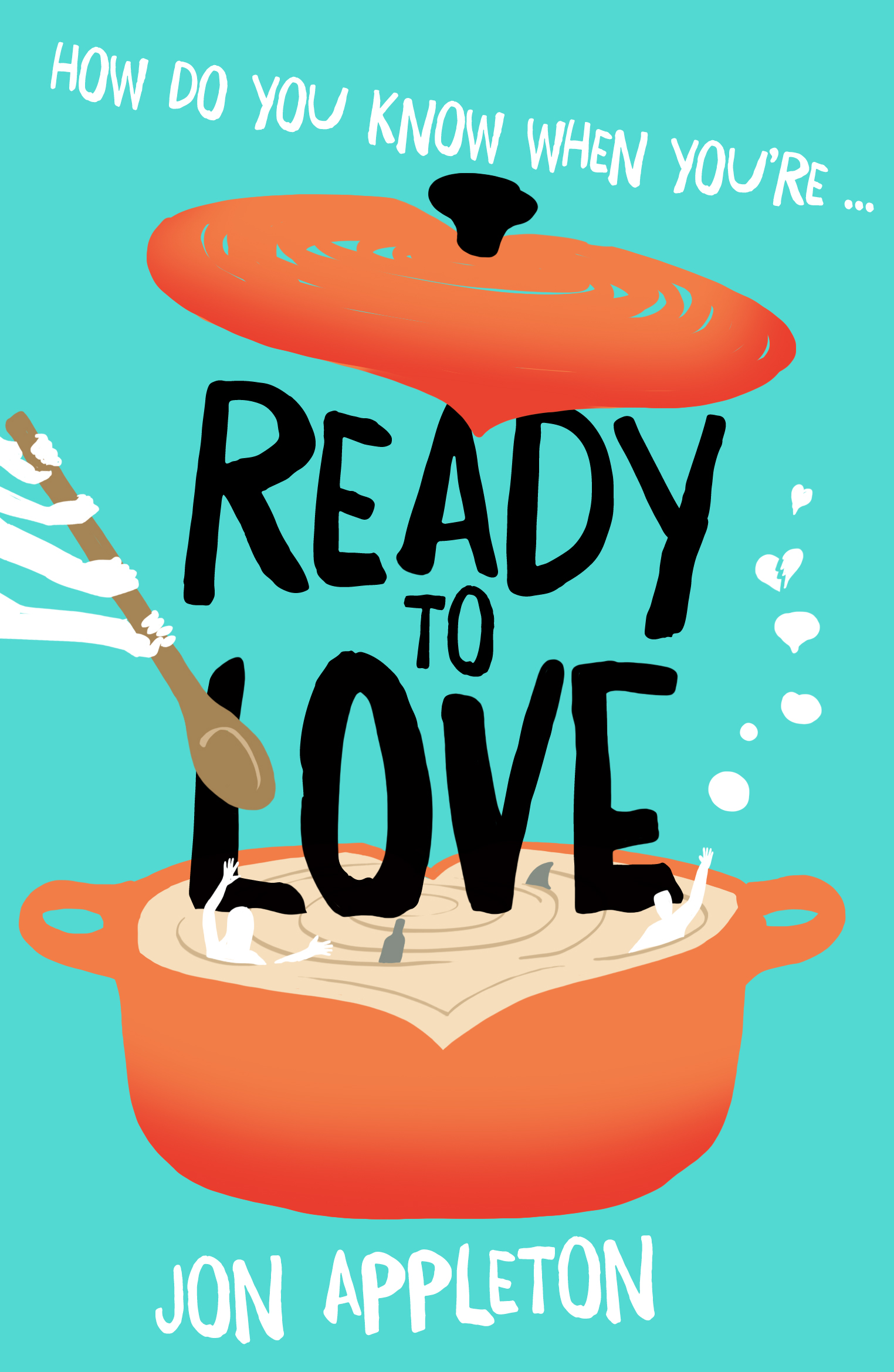
First of all, Jon, congratulations on the release of your first novel, Ready to Love! Can you tell us a bit about it, and its road to publication? 

Thanks, Sophie! Ready to Love is about the way we see ourselves and how we think other people see us, and the different kinds of attachments we form to those around us: family, friends, lovers, colleagues. Ultimately, it’s a rom-com.

Its London setting is quite important to me, and I began the book when I was living in Australia for a year in 2011, feeling quite homesick. I put it aside for twelve months when I came back to England, and then returned to it, working on it continuously for the next two-and-a-half-years.

Comedy is difficult to pitch to agents and publishers, I’m told, because it’s not viewed as a commercial genre. (Of course, we can all think of exceptions!) But I submitted it to agents nonetheless. Quite a few never replied (which I took to mean a ‘no’) but of those who did, several responded encouragingly from a reader’s perspective. I thought, ‘If only I could get past the gatekeepers, to readers, they would enjoy it too.’

Working in publishing, so much of my time was spent rejecting really good books (for reasons not dissimilar from those by which my own work had been rejected), and it was quite dispiriting dishing out ‘no’s all day only to come home to more ‘no’s from the other side of the desk. So I looked into the self-publishing option.

I knew the stigma of self-publishing has lessened dramatically in recent years. At the London Book Fair, there is a whole corner devoted to independent publishing that is reported on and taken very seriously. The timing was right.

I found the right outlet – Clays, the printer, recently established an independent publishing strand of their business – and began the process.

Putting together a book, from manuscript to finished product, is something you have a lot of experience of, in terms of other people’s work. But what was it like being in charge of your own?

I love the completeness of publishing a book – from discussing the concept with the author through to sending them advance copies. So the process of getting Ready to Love was extremely satisfying because I took a very hands-on route. Clays put me in touch with editors, designers, typesetters, Nielsen (who handled the bibliographic data), etc, but I did the legwork. It really helped maintain a sense of ownership of the process.

I sometimes think that writers feel they hand over their work without fully understanding the process – and why should they? But they can always ask! – and feel they’re being excluded. It’s never worse than when a book ends up with a cover a writer doesn’t like and the book fails to make it onto shortlists or in-store promotions. The author feels a sense of surrender when, in fact, the publisher really is on their side – or means to be.

I made all the decisions so I felt very much in control. Let’s hope I made the right decisions …9780993547317

You have just moved from the corporate publishing world to becoming a freelance, independent author/publisher. What has that move been like–the challenges and the pleasures? 

I’ve known so many authors – and freelancers – that I’ve always felt I sort of knew what it was like to be them. I appreciated how isolated authors could feel. I’d sit at my desk, and suddenly think, ‘Haven’t heard from Author X for a while. Wonder what they’re up to …’ and get in touch – particularly in the long periods when there wasn’t anything formal to do on their current book.

That’s changed, in recent years: there’s always something to do on a book, especially after it’s been published. You can revise your Amazon profile or write a blog, or reach out to potential new readers on Twitter. I’ve spent a lot of time in the past couple of years encouraging writers to be active on social media – and we’ve spent more time than ever on revising synopses and pitches (because, for many authors, it is harder to get published than ever before).

Now I’m learning, first-hand, exactly what all that entails. The main thing I’ve learned is to be focused and to think always: ‘What am I trying to do? Who am I trying to reach? What kind of writer/publisher do I want to be?’ I’ve got a blog that explores these questions – www.jonappletonsbooks.com – and it’s very much an exploration and I’d love people to join in. There are no finite, permanent answers!

You worked for a long time as a children’s publisher: but as an author, you are writing adult novels. Do you think your publishing experience has influenced your writing in any way? 

I think I realised early in my career that I love children’s books because I love the idea of children being confident and able through literacy, and cherishing the books they read when young their whole life through. I really like helping an author shape the sound of the voice of, say, an eleven-year-old boy. But I have no interest in trying to locate that youthful voice myself. I’m not one of those children’s editors who read only children’s books. My adult, reading self is nourished by other books which are more akin to the novels I want to write, and write about.

As a teenager you founded a respected literary magazine, Rippa Reading, which focused on books and authors. Can you tell readers about that, and some of your favourite stories from that time?

Rippa Reading was a fan magazine for authors which I began in late 1986 and edited until the end of 1995, just before I moved from Sydney to London. It was published and supported by my old school, SCECGS Redlands and, joyfully, the entire children’s publishing industry. It was an amazing time for which I am hugely grateful.

The magazine was born out of my desire to be a writer and to find out what writers were like, and it led to my career in publishing. Undoubtedly, it was inspired by The School Magazine which not only presented the best in new writing but made its creators available to readers through the magazine’s pages and especially to me with personal friendships with the staff.

There are so many highlights and stories from that time – genuine friendships with brilliant, creative people, many of whom now are no longer with us, but other connections endure 30 years later, like our own! It was fun being part of the CBC committee and appearing on TV and radio to talk about new books. It was an honour to receive awards, and even more so to be an early fan of brilliant new voices, like Jackie French to whom I was introduced by the wonderful Cathie Tasker (through whom you and I met, Sophie!), who was then at HarperCollins and Ursula Dubosarsky, who once taught at Redlands.

But the story I want to share now makes me happy because it brings my connection to Australian children’s books more or less up to date. When I joined Hachette Australia as Children’s Publisher at the end of 2010, I finally got the chance to publish books by Australian authors and illustrators – some of them award-winners but others, excitingly who were new to the industry. The concept for a children’s edition of the bestselling book about Tom Kruse the outback mailman had lingered for some time, but the concept hadn’t been fully realised, nor, crucially, the right illustrator found. I remembered Tim Ide from when I’d done work experience at Omnibus Books back in 1990. (Jane Covernton, who established Omnibus with Sue Williams, was always hugely supportive of Rippa Reading.) One afternoon at Omnibus, I’d been lucky enough to be taken to tea by Tim and Max Fatchen to celebrate their new book, A Country Christmas, which perfectly evoked the South Australian countryside in years gone by. So, many years later, I got in touch with Tim he agreed to work on the book. At that point, everyone in-house (and the author!) felt energised by the project, and it went on to win the Eve Pownall Award in 2012.

What’s your view on the situation for authors, and publishing today–the issues and the opportunities?

For the majority of writers, it’s tough to make a living. The obstacles are numerous: small advances, a paucity of review space, overstretched marketing budgets. More than ever, authors are expected to sell their own books – whether they publish independently, or through a mainstream publisher. That doesn’t suit everyone, I realise, but I do think that, usually, the author is his or her book’s best advocate, so it makes sense. And there are so many ways for authors to engage with readers – it’s not all about author visits and festivals. Authors need to be authorpreneurial, a term I hear a lot now. It takes time away from creative work, of course, but it’s necessary. It’s part of being a writer.

What are you working on next?

I’m planning a new novel, but I’m really aware of the need to make the most of the opportunity created by publishing Ready to Love. So I’m very happy to write about it or talk about it and to engage with people – anywhere! – in the hope that they might choose to read it, and to be receptive to further novels by me. At a practical level, I’d like to recoup some of the cost of publishing it by selling subsidiary rights – audio, translation, US and Canada and, of course, Australia!

I’m also in dialogue with writers’ groups and students who need help not just with writing, but preparing themselves for a writing life. People are aware of the challenges I outlined above (and many others), and part of my new work portfolio is helping them find ways to pitch themselves successfully and achieve an audience in the face of these challenges.

Small Beginnings 17: Meredith Costain

I was lucky enough to grow up in a house full of books. Stories were shared regularly around the kitchen table, and we were all encouraged to read verse out loud, particularly the works of A A Milne (‘James James Morrison Morrison Weatherby George Dupree’), Alfred Noyes (‘The highwayman came riding, riding . . . up to the old inn-door’)  and Hilaire Belloc (‘Matilda, Who Told Lies and was Burned to Death’).

So my head was always full of stories and words, rhythm and rhyme. Poems jumped into my brain when I was riding my bike to school along the banks of the Bunyip River (which is a story in itself!). I’d repeat them over and over until I knew them off by heart, then, when I got home, I’d grab an old exercise book and race up to the hay stack so I could scribble them down in private.


The girl, the bike and the haystack..

The girl, the bike and the haystack..

My early attempts at poetry were very much doggerel (and catterel!) and usually about animals.

Penelope was a pig

One day she ate a fig

She wasn’t fond of it

So she threw it in a pit

Naughty Penelope!

Then, when I was about eight, I sent in a longer poem called My Little Creek to the Junior Age section of The Age newspaper. Not only did they print it, they paid me 17 shillings and sixpence for it – a fortune back in the days when it took you and your brother six months of saving up your sixpence a week ‘job’ money to buy a Monopoly set.

It was my first paid publication – and I was determined it wouldn’t be my last. I sat in my bedroom munching on toasted cheese sandwiches, solemnly resolving there and then that I would become ‘A Writer’ when I grew up. I even had a ‘writerly’ pen name picked out – Gemma Craven – and a publisher – Penguin – whose Puffin books were among my favourites at the time. Especially Noel Streatfeild’s Ballet Shoes and Ivan Southall’s Ash Road and Hills End.

I kept writing poetry all through school, but most of it gushed out in Year 11 and 12 – pages and pages of teenage angst poetry when I should have been studying instead. And I wrote a long spoof of the Canterbury Tales based on the teachers at my school for our school magazine.


Still writing in exercise books after all those years..

Still writing in exercise books after all those years..


I enjoyed other kinds of writing as well. My cousins (who lived across the paddock) and I started our own newspaper called The Thrilling Three when were about nine or ten. It was full of interviews with the farm animals (how many eggs had been laid that day) and other important goings on. I wrote play scripts for my friends to perform at lunchtimes at school (complete with sound effects). And I started a romantic novel when I was eleven, called Those Who Wait, which sadly never developed past the first chapter.

It was all great practice for when I did finally grow up (highly questionable!) and became A Writer for real. And then strange things began to happen. I was asked to use a pen name for my first published book, Hot Licks, which was part of the Dolly Fiction series. There was already a well-known English actor called Gemma Craven by then, so I changed the Craven part to Carey instead.

The doggerel and catterel fed into my book of poems for the very young, Doodledum Dancing, published by . . . Penguin!

ddd latest020

And one night at a literary dinner, I met my childhood idol, Ivan Southall, who agreed to let me visit his home to interview him for a children’s magazine I was editing. And he made me a toasted cheese sandwich!!! 


Meredith Costain is a versatile writer whose work ranges from picture books through to novels, poetry and narrative non-fiction. Her books include CBCA Honour Book Doodledum Dancing, Mummies are Lovely, novelisations of Dance Academy, and the quirky illustrated series, The Ella Diaries. She enjoys presenting writing workshops in libraries and schools. Visit her (and meet her many pets!) at www.meredithcostain.com


0 Opening slide