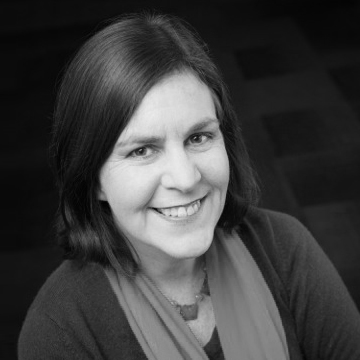
An interview with Rebecca Lang of the Alliance of Independent Authors

74121_462951207350_6316793_nThe book industry has changed a great deal over the last ten years or so, and self-publishing, or going it alone as an independent author, is something that has grown phenomenally during that time. It certainly no longer has the stigma once associated with it. It’s not only debut authors who go the independent route: many established authors, including, in Australia, such well-known writers as Isobelle Carmody, Steven Herrick and Hazel Edwards have all experimented with it for various projects, as indeed I have, with a couple of ebooks of short pieces produced with my micro-press Sixteen Press. But some writers choose to go the independent route not just for an experiment, but because they prefer it. And now there’s an organisation to support them: The Alliance of Independent Authors, or ALLI, which started and is based in the USA but which has chapters in several countries, including Australia.

I first came across it as one does, through a glancing mention in an internet article on publishing, and, intrigued, wanted to find out more. And so today I’m speaking to author Rebecca Lang, the Australian representative of ALLI, about the organisation and what it does.

The Alliance of Independent Authors (ALLi) is a fairly new organisation, isn’t it? Can you tell us a bit about how and why it started? And how long have you personally been involved?

ALLi was founded in 2012, I have been a member since the organisation’s inception, but I have personally been self-publishing since 2010.

I spent several years writing a book with my partner on Australian folklore – a niche interest area at the best of time – and shopped it around to a couple of Australian publishers, receiving a somewhat lukewarm response. As I used to work in newspapers as a journalist and editor, I decided to have a go at creating and project managing my own publication, and co-opted another friend into designing the book cover. I was really pleased with the end result. To date, I have produced three books and have another two in the pipeline this year, including my first foray into fiction.

I have also worked with other authors to guide and advise them on their own publishing journeys, editing books, refining book ‘blurbs’, assessing the quality of book covers, and creating successful marketing strategies.

As a writer and self-publisher I think my ALLi membership is one of the best investments I have ever made. Through ALLi I have been inspired, supported and most importantly connected to a community that by its very nature is ‘disruptive’ – it’s all about shaking up the publishing model to allow fresh and diverse voices to be heard.

Self-publishing – actually, ‘author-publishing’ is probably a better term given the number of hybrid and traditional authors who have now adopted the model (including successful children’s authors Cornelia Funke, and J.K. Rowling – the latter selling her Harry Potter ebooks exclusively through her Pottermore.com website) – tends to attract dynamic and energetic people who have a strong creative drive. I think it’s this passion to succeed that authors need to get their work into print and into the hands and minds of readers. After all, it’s a highly competitive industry.

What does membership of ALLi offer to authors? 

ALLi offers authors an unrivalled peer-to-peer author-publishing experience, allowing seasoned and first-timers alike to interact, share their expertise and network to promote each other’s work.

There’s a real esprit de corps, and its membership is highly informed about all the latest publishing developments in business and technology.

And it’s quite a diverse crowd – you have romance and fantasy writers rubbing shoulders, and authors of non-fiction and fiction keeping company and swapping marketing advice. And it’s not just writers. ALLi also counts graphic designers, editors, copywriters and publicists among its members.

I would go so far as to say an ALLi membership is almost compulsory if you’re going to strike out on your own and navigate the publishing trail. Why wouldn’t you tap into the best author-publishing network in the world?

What are ALLi’s relationships with other author organisations, such as, in Australia, the Australian Society of Authors (ASA), the Society of Children’s Book Writers and Illustrators (SCBWI) and others, such as the Writers’ Centres? 

There have been some early discussions with some of these groups, but author-publishing is still in many ways in its infancy in Australia, despite being a successful pathway for many now ‘traditional’ authors including the likes of thriller writer Matthew Reilly (Contest), sci-fi author Simon Haynes (his first three Hal Spacejock novels), cookbook authors Rachel Bermingham and Kim McCosker (of 4 Ingredients fame), Frank Hardy (Power Without Glory), and Patrick White (Flaws In The Glass).

ALLi is very much about encouraging its membership to not only produce quality, professional products but to use the channels open to them to more effectively market their books. ALLi welcomes professional partnerships with likeminded organisations.

Over the years I have been a member of the NSW Writers’ Centre, the NSW Society of Editors and the Society of Women Writers, and have attended countless writing festivals around Australia. I see real value in writers coming together to seriously tackle the business of writing – not just mastering it, celebrating it and sharing it, but actually coming to grips with the nuts and bolts of marketing it, selling it (into foreign markets and on multiple platforms), and navigating the world of digital publishing. This is where ALLi excels.

I’d love to see more Australian author-centric organisations embrace, include and work with ALLi members and the author-publishing model.

As the Australian representative for what is an international grouping of independent authors, how do you see your role? And what kinds of things have you participated in? 

Being a regional representative involves raising awareness about ALLi’s services and getting involved in Australian publishing life. Most importantly, it’s about helping to build a network of writers and author-publishers to share knowledge and champion each other’s work.

I have been involved with quite a few online conferences and blogs, but I would welcome the opportunity to speak with Australian writing groups, centres and organisations about the benefits of ALLi membership, the role of author-publishing, and the business of being an author.

What’s planned for ALLi in the future?

ALLi has quite a few irons in the fire for 2016, chief among them the free Indie Author Fringe events, featuring some of the world’s most successful self-published authors.
Indie Author Fringe (formerly known as IndieReCon) offers FREE online one-day conferences for any authors interested in self-publishing.

Over the course of 2016, ALLi will take authors through the entire indie author journey, from writing to promotion and beyond. There are three planned online international events in 2016 on the heels of London Book Fair (April 12th-14th 2016), Book Expo America (May 11th-13th 2016) and Frankfurt Book Fair (19th-23rd October 2016). But it doesn’t matter where you are in the world, if you have an internet connection you can join in.

Thanks Sophie for the chance to share what ALLI does. It’s a really exciting time to be a writer involved in self-publishing!
From publisher to author: an interview with Michael Johnson

Michael Johnson headshotToday, I’m interviewing Michael Johnson, publisher turned author.
Michael Johnson has lived in Bundeena for the last eighteen years. He graduated M.A. (Law Tripos) Trinity College Cambridge followed by four tumultuous, exciting years in Nigeria with British American Tobacco followed by then thirty years in book publishing & book selling in the U.K, Asia and Australia after moving to  Sydney in 1968 with his wife and three children. Retirement has seen him assume a variety of interests including book reviewer, slush pile reader, columnist with the late lamented Village Noise and now a published novelist, with a second novel in progress.
Michael, your first novel, Noah’s Park, has just been published. Can you tell us about it?
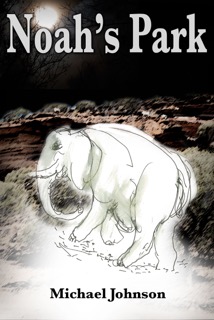
The trigger for Noah’s Park was a drive past a Circus setting up the Big Top. It looked bedraggled. The posters showing lions, tigers, and horses were plastered on every telegraph pole. Returning home through the National Park I started to muse about the feasibility of transporting those animals at night and releasing them. The ammunition was my twenty years living in a quiet seaside village at the heart of Australia’s oldest National Park. The lives, feuds, passions, friendships, pecadillos were a powerful incentive to create what one kind friend called ‘a beautiful example of magic realism…comparable with The Life Of Pi’. A faithful fan group know it as ‘That dirty book about Bundeena’! Perhaps due to some fairly explicit lesbian sex scenes, which caused several people to query my research. My many gay women friends are far more understanding. I stress that it is fiction, of my imagining. I pursue the effect of the Circus animals on the village, the Park Rangers, the State Government and the wider public. It is a light brush I use, gentle satire, hopefully perceptive of the human condition.
What was the journey to publication like? What challenges and discoveries did you make along the way? And what have the reactions of readers been like?
It took about a year to write. An agent showed interest but finally felt ‘it was not commercial enough’. Experienced in the use of the notorious ‘slush pile’ I made a decision to go the eBooks route, the Fifty Shades of Grey highway. My artist friend Garry Shead offered cover artwork and we settled on Rosie the elephant, the heroine of the plot.
 It was a good decision. Sales on Amazon and iBooks are steady. Friends of Bundeena Library launched Noah’s Park and more than 100 people seemed to enjoy the evening, listening to my stories about the book and my publishing/bookselling life. There may be a paperback edition on the horizon.noahs-park-cover
Before becoming a published novelist, you’ve had a long career in the book industry, as a publisher. Is writing something you’ve always wanted to do? Or something you have only recently been inspired to take up? And how does it feel, being on ‘the other side of the fence’, as it were?
I have always loved to write. In the 1970’s I wrote a cover story for Richard Walsh’s Nation Review, under a pseudonym. Titled The Sensuous Politician, modelled on the bestseller The Sensuous Woman. My piece is still scarily relevant today. I reviewed books for SMH, ABR, Herald Sun and had a regular ABR column. In retirement I, with like minds, ran a newspaper The Village Noise

There are no fences. For me publishing, bookselling, authors, readers, should be a seamless holistic experience.

I believe that over your many years in publishing, you met some extraordinary people. Can you tell us about some of them, and about some of your experiences over that time?
My memories?
*Being interviewed by Allen Lane, founder, with his brothers, of Penguin Books. I still have his signed letter of appointment to the Management Group in the U.K in 1964. ‘ 2000 pounds sterling p.a and an interest free loan to purchase a car’!

 I was entranced by the Albert Tucker painting on his wall which was the cover of The Lucky Country. He seemed intrigued by my sales technique in Nigeria with British American Tobacco, which involved standing on the roof of my Landrover, in some remote village market, blowing a hunting horn!

*My first appointment at Penguin as Export Manager for the World outside Europe.

*Setting up Granada Publishing here in Sydney.

* Key memories from this time include buying paperback rights for Frank Hardy’s Power Without Glory from Sphere and capitalising on the ABC TV series. Those unforgettable lunches with Frank

And

the-female-eunuch1In 1970 we published the Paladin edition with the iconic John Holmes cover of Germaine Greer’s The Female Eunuch.  The promotional tour I set up included events in Sydney, Brisbane, Melbourne and Adelaide (she taught me to love oysters), and I witnessed her literally change womens’ lives.

*Don Chipp phoning to tell me that he was releasing our Henry Miller titles from the prohibited import list. Griffin Press started printing two days later.

*Selling 500 copies of the hardback edition of Robert Ludlum’s first book The Scarlatti Inheritance firm sale to Hedley Jefferies at A&R.

*The great booksellers. Hedley, Ron & Eve Abbey, Jim Thorburn, Norma Chapman, Nan Jacka, Wattie Thompson, Cedric Pearce, Charley Dickens, Mark Rubbo, David Gaunt, Peter Milne, and those long lunches.

Do you think publishing has changed over the time you were a publisher, till now? In what way? How do you see the book industry at the moment–both from a publisher’s and an author’s points of view?
Publishing, bookselling, authors are a fluid formula in times of constant change and challenge. Existing models of distribution, retailing and the shibboleth of ‘sale or return’ need forensic examination. If, with honourable exceptions, the acceptance of a manuscript is wholly dependent on how many copies Big W is likely to take then a disruptive approach to the art, science and soul of publishing, that indescribable ‘gut’ feel, the awareness of the reader (o.k consumer), the awareness of a global revolution in the carriage of the written word become mandatory. In this the author should be an equal partner, dovetailing with his or her publisher in a symbiotic relationship. My daughter Lou Johnson, co-founder of The Author People is one face of this new thinking.
TAP_logo_pos (small)(ED Note: An interview with Lou was published on this blog a few months ago.)
What are you working on now?

I am writing another novel drawing on my experiences in Nigeria, linking the conquest and imposition of fundamental Islam in Northern Nigeria 200 years ago and the terrorism of today’s Boko Haram. It’s an ambitious project and I have dedicated 2016 to it.

An interview with Sue Woolfe and Bem Le Hunte of Wuthering Ink

logo_wutheringToday I am interviewing well-known authors Bem Le Hunte and Sue Woolfe, who are two of the founding partners in a new author-centred publishing enterprise, Wuthering Ink, which after several years of hard work, was launched in Sydney recently.

First of all, Bem and Sue, congratulations on the recent launch of Wuthering Ink! It’s been a massive undertaking, I know. Can you tell us about how it all started? 

It all started on a balcony in Sydney where we gathered one candlelit evening – a group of writers with unchecked revolutionary tendencies – all good at inventing worlds and thinking differently about possibilities. We were writers of novels, plays, poetry and children’s books, but on this occasion we gathered to write a manifesto…

I imagine it must have been quite a steep learning curve for you! What were the challenges you faced during the set-up? And what discoveries did you make along the way?

(BEM) In my other life I run a world-first, transdisciplinary, future-facing degree called the Bachelor of Creative Intelligence and Innovation at UTS – where students meet the challenges of a fully disrupted, open, complex, dynamic networked society, responding with creative interventions in a constantly evolving innovation ecosystem. (Phew, that sounded long-winded!)

bem le hunte

Bem Le Hunte

Anyway, one of the things we do is human-centred design, and then human-centred everything – that is, everything beyond design. In publishing that means an author-centric vision of what’s possible. It occurred to us that this had never been done before, and yet we were at a threshold moment when we could re-invent the system. The new, transformed digital publishing environment gave us that opportunity to create a portal that really put the writer at the centre of the deal, not at the end of a long system that allots a slot on a September list for your ‘title.’

So you can see, this is a re-vision of what publishing could be, from an author’s perspective. The only problem was that the world was already organising too-fast around the new intermediaries – giants like Amazon, who presented a new system for authors to slot into, on what is often described as a ‘long tail’ model of publishing. (The long tail is the million plus self-published authors selling no more than a hundred dollars worth of books, but still making money for Amazon.)

The only problem was to create a partnership with a company that could build us the portal – the back-end. For that, I approached Macmillan Publishing Solutions, in India, who have been incredibly supportive over this period of time. Not only did they understand our vision, they interpreted it through clever technology. For example, we didn’t want to just dump books on our site and leave them there to rot. We wanted to give authors the option to upload videos. And we wanted to be able to promote books to Wuthering Ink readers, which we will be doing through a regular newsletter. And we wanted to make it easy for authors to upload their books and liberate their backlists. Macmillan Publishing Solutions have helped Wuthering Ink to do all this and more.

Can you explain exactly what Wuthering Ink can do for authors? What can people expect if they sign up with you? And what are your criteria–if any–for works featured on Wuthering Ink?

*Higher royalties – 80% on your book. (When we began we rather cheekily called ourselves ‘The Royalties’ for this very reason.)

*A chance to be published in perpetuity – and possibly the chance to earn a living from your work, over time.

*A ‘book in a bag’ service, which allows authors with backlisted titles to easily and cheaply convert their titles through Macmillan Publishing Solutions in India.

*A truly international market with no barriers to overseas publication. (We know we’re as good as the best of American and British writers, but here’s a chance to prove it with sales!)

*The ability to publish outside the strictly commercial demands of traditional publishing. (A chance to experiment and take risks – the thrill of any creative practice.)

*More control over the production and promotion of work. (Long past the time allocated by publicists in publishing houses.)

How do you feel Wuthering Ink differs from similar services such as, for instance, the ASA’s Authors Unlimited?

We offer higher royalties than Amazon, and more generally an exclusive list of published authors – writers who all bring their readers with them. We also offer authors the ability to promote their work directly to readers who sign up for our regular newsletters. Traditional publishers, or even digital intermediaries, rarely allow this type of direct contact between writers and readers as it undermines their role and financial advantage in holding the ‘list’ of buyers. Our goal is to make the contact between readers and writers far more fluid and enriching for writers and readers. What we’re after is intimacy, and we need a community for this, which is why we are so keen to talk to other people in the community of readers – including your readers, Sophie!

Having said all this, we’re not exclusive. Wuthering Ink authors can have their book on any number of sites. We believe that this type of promiscuity promotes a thriving publishing ecosystem!

What have the reactions of authors been so far? And have you had any comments from publishers too?

Sue Woolfe

Sue Woolfe

 (SUE) Tom Keneally said it was “a grand concept”. Stephen Sewell said ‘we’re changing the world, one book at a time”. Our family of authors, who we’ve tested it all out on, who’ve been patiently waiting for our launch, sometimes for years – are delighted.

(BEM) I’ve had so many writers thank Sue and I for creating Wuthering Ink – especially since the launch. Time will tell how their responses develop – we’re still so new. I’d be very interested in what your readers think of it, and would really encourage them to get on board, test it out and join our push to transform the world of publishing!

What are you hoping Wuthering Ink might do, in the short and long term, for Australian authors and Australian literature?

 Well it’s a world first and it’s an Australian innovation, so Aussie writers are well-placed to benefit from this social enterprise from the word go. However, we’re hoping it will begin a worldwide phenomenon. If Wuthering Ink can help publish the work of established authors around the world – of every ilk – we’d love that. So if there’s a biography of a Tuareg Chief, a philosophy book that will help us understand how to survive capitalism, or a book of hand-written poems that have been dug up from the 16th Century, we’d welcome all these additions and more on our site! Please join us – check it out – upload your books and connect with your favourite authors.

On fairytale inspirations: an interview with Kate Forsyth

kateforsyth_0Kate Forsyth is not only one of Australia’s most well-known and popular novelists, but also a recognised expert in the field of fairy tale studies. Today, I’m interviewing her about that central fairy tale inspiration.

Kate, you have long had a great interest in fairy tales, with several of your books taking their inspiration from them, and your contribution to the field recognised in the new edition of the Oxford Companion to Fairy Tales. What is it about these stories that so attracts you?

I like the way these tales are so old, and yet still so powerful and relevant to us now. They are filled with beauty and enchantment and strangeness, taking place in worlds in which anything is possible, and yet on a deeper level they are psychological dramas in which desires and longings and fears oxford companion to fairy taleswhich are universally human are played out and resolved. I also like the way they speak in an archetypal language of symbol and metaphor, like dreams, or poetry, or paintings.

There are quite a number of Australian writers mentioned in the Oxford Companion, including of course yourself and myself too, but also Isobelle Carmody, Margo Lanagan, Garth Nix and Keith Austin (though rather to my dismay, they left out Juliet Marillier). What do you think Australian writers can bring to those traditional tales?

 I find it very interesting that so many Australian writers are drawn to retelling fairy tales. Perhaps it is because these stories are very old, and have never been confined by geographical borders. Perhaps it is because fairy tales connect us to a universal subconscious that speaks across cultural and ethnic divides. I don’t know why – I do know that I think they do it wonderfully well!

You recently completed a PHD which had both a creative component–the novel Bitter Greens, which was published a couple of years ago–and an academic exegesis on the theme of bitter greensRapunzel, which will also soon be published. How did you find it, combining the creative and the academic? What were the challenges along the way?

I wrote Bitter Greens first, and focused all my energies on discovering and writing the story. Bitter Greens retells the Rapunzel fairy tale in a Renaissance Venice setting, interwoven with the true life story of the woman who wrote the tale as it is best known, the 17th century French writer Charlotte-Rose de la Force. Told from the point of view of three very different women, who lived in three different times, it took a huge amount of research – particularly when trying to discover the life of Charlotte-Rose de la Force, who was largely forgotten by history.

While I was researching and writing the novel, I took careful notes and kept my bibliography in order, to make it easier once I began my exegesis. Then it was just a matter of systematically working on successive drafts of the exegesis, turning all my raw data into something readable. It was fascinating but exhausting, particularly since I had a very heavy publishing schedule as well (I also wrote my The Wild Girl, about the Grimm brothers, while working on my doctoral exegesis.) However, I loved every minute of it again, and would love to do it again – it’s a wonderful opportunity to really delve deeply into a subject that fascinates.

You have used Beauty and the Beast as a core inspiration in your most recent novel, The Beast’s Garden. Can you tell us a bit about how you worked in those fairytale elements into the midst of the darkness of the Nazi era?beasts garden

In The Beast’s Garden, I took the Grimm Brothers’ version of the ‘Beauty & the Beast’ fairy tale (which is an astonishingly beautiful tale called ‘The Singing, Springing Lark’), and used its structures and symbols to inspire and inform my own story, which is set in the German underground resistance to the Nazis in Berlin. The use of the fairy tale is subtle and oblique; it provides the symbolic scaffolding of my novel. I am interested in new ways of using old tales.

What are you working on at the moment?

I am working on a new fairytale-infused historical novel, set in the passions, scandals and tragedies of the Pre-Raphaelite circle of artists and poets. Tentatively called BEAUTY IN THORNS, it’s the story behind the creation of a famous series of paintings called ‘The Legend of Briar Rose’ by Edward Burne-Jones. ‘Briar Rose’ is, of course, the Grimm version of ‘Sleeping Beauty’, and so I am exploring its themes of love, death, and rebirth through the lives of thirteen women intimately connected to the Pre-Raphaelites – it is such a fascinating story I am utterly engrossed at the moment (I’m still writing the first draft so I have a long way to go!)

briar rose 1

briar rose 2

Write what you love best: an interview with Laura Whitcomb

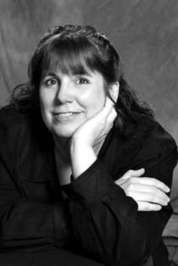
laura whitcombIn the course of my reading for the PHD, I have come across some wonderful books, and one of them is American novelist Laura Whitcomb’s daring, touching and beautiful YA novel, A Certain Slant of Light, which is half ghost story, half romance. The main character, Helen, died over 100 years ago, and since then has existed  in a transitional place between life and death as one of the ‘Light’, haunting the ‘Quick’, living people who are her ‘hosts’ and immersing herself in literature as all her ‘hosts’ are writers of one kind or the other, so that she’s almost like a variety of muse. She’s forgotten most of her life history, and doesn’t understand why she’s stuck in this dimension but is afraid of finding out more, in case she gets moved on into hell. Then one day, in the class of her current host, a literature teacher, she meets a boy called James, who isn’t quite what he seems at first.

That meeting will transform Helen’s afterlife, as she learns more about herself, love, and salvation. The language is intensely poetic, and the compelling story well-integrated with exploration of such things as the intricacies of sexual relationships and the nature of religious hypocrisy. It’s such a gripping, unusual novel that, reading it on the train, I very nearly missed my stop!

The novel, which was Laura Whitcomb’s first, was very successful, and led to others, which have also done very well. Inspired by my reading, I contacted the author, and asked her a few questions.

A Certain Slant of Light was your first novel,but it is remarkably accomplished both in style and story. Can you tell us about  your  writing career before it,and how the novel was published?certain slant of light

In the 20 years before I sold my first novel I wrote 20 drafts of 20 unpublished novels. So I had lots of practice. Most of the time I was not actively trying to land an agent or sell a book. I was just writing because I loved to write.

The novel  is a bold and unique re-visioning of the traditional ghost story,infusing it with the passionate vivacity of romance. How did you first come up with the idea? And how difficult was it to maintain that balance between the wistful dread of the ghost story and the warm recklessness of romance?

I came up with the idea for SLANT while I was listening to an Anne Rice audio book while I did housework. I liked the way her vampire narrator was from an earlier period of history but reflecting on the contemporary world. But, I thought, you don’t have to be a vampire to do that. You could be a ghost. Next I tried to think what might be the strangest thing that could happen to a ghost. I decided it would be being seen. Next I wondered, why can just this one person see her? Let’s say it’s because he is like her–he’s dead but borrowing a human body. And then the story unfolded from there.

Your characters,both the Light and the Quick, are intensely real. How did you go about creating them and their worlds?

I think creating vivid characters and their worlds comes partly from having life experience and writing experience. And partly it comes from real people I’ve met and environments I have experienced. If you love the story you are writing, you will be compelled to craft that story with the heart and details that make it come to life.

under the lightThe novel is infused with the living, necessary,inspirational and consoling presence of literature and words–indeed Helen’s hosts have all been writers in one way or the other. Can you tell us about that?

The hosts in SLANT were similar to Emily Dickinson and other famous authors and Helen clung to them because she was a book lover, like I am.  When a soul is stuck, like the ghost of Helen, literature would be a healing escape, I thought.

You wrote a sequel to the book–Under the Light–quite a while after the publication of A Certain Slant of Light. Was it an unexpected thing,or did you always intend to write a sequel?

For years I thought there would never be a sequel to SLANT, but then I was haunted with the idea of what might have happened after that first story ended, what stories led up to it, and where the spirits of Jenny and Billy went, what they did, while the ghosts of Helen and James were borrowing their bodies. It became too appealing–I had to write it!

The book you wrote between those two,your second novel,The Fetch, was also very successful. Can you tell us about the inspiration behind it?the fetch

I got the idea for The Fetch while walking in a woodsy park along a river on a winter day. The scenery reminded me of Russia. I thought how strange it was that such fascinating real characters were involved in the same adventure: Anastasia and Alexis Romanov, youngest children of Tsar Nicholas II, and Rasputin, the controversial spiritual advisor to the children’s mother, Alexandra. I started to create a supernatural re-imagining of why it was nearly impossible to assassinate Rasputin and why, after the execution of the royal family, the bodies of the two youngest children were the only ones not found.

You have also written two non-fiction books on writing novels. What has been the reception to them?

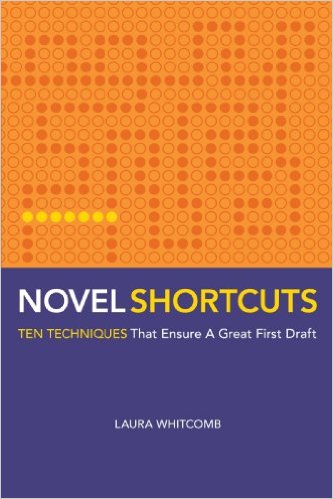
I have gotten lots of great feedback about my “how to” book Novel Shortcuts, but Your First Novel, co-authored with my agent Ann Rittenberg, has been even more popular probably because it not only covers how to write a novel, it includes fabulous insights into the career side of the business. And then there’s the wonderful forward written by another of Ann’s clients, Denis Lehane.

first novelSince your first novel came out ten years ago,there have been quite a few changes in the publishing industry. What’s your take on it, and how do you think authors can best cope with change?

I am not an expert on publishing trends, but my advice to novelists is to avoid chasing them. And write the story you love best. If it doesn’t sell right away, don’t fret, because you’re already working on your next novel and the more you write the better you get. You never know which book will be the one that launches your career.novel shortcuts


Read Laura’s blog here.

Like her Facebook author page.

Follow her on Twitter.


Writing ghost stories: an interview with Benedict Ashforth

When I was a child, we lived in a 1920’s house in Sydney that though not all that old, unlike our ancient house in France, had a kind of elusively sinister atmosphere, complete with creaking woodwork and sudden shadows glimpsed out of the corner of your eye. At night, sometimes, I would lie there and imagine those scary characters in the ghost stories I’d just read coming up the stairs, and pinned to my bedclothes in sheer fright, would tell myself I would never read another ghost story again! But I did, of course, drawn to the form by its addictive combination of sharp precision and high-stakes atmosphere, and stories like WW Jacobs’ The Monkey’s Paw and F.Marion Crawford’s The Upper Berth stayed in my reading memory for good.

As an adult, I still enjoy reading–and very occasionally writing!–ghost stories, but the genre does not allow for mistakes and meandering, and it’s not often that you come across really satisfying modern examples of the genre, accomplished in both story and style: such as the novellas of  the modern doyenne of the ghost story, Susan Hill, and the Gothic-flavoured genre-benders of John Harwood. But recently, on Amazon, I discovered the work of Benedict Ashforth, an English writer whose elegantly creepy, chillingly atmospheric, precisely-told ghost stories and novellas offer an intriguing blend of the classic and the contemporary; the gruesome and the melancholy; the sinister and the sad, allied to a strong sense of place which is characteristic of the well-turned ghost story. Intrigued by the stories, I wanted to know more about the writer behind them, and this fascinating interview is the result.

Benedict AshforthCan you tell us about your writing career? What attracted you to writing ghost stories?

I write about ghosts because I know that they exist. I know because I have seen one. I did not imagine it. Someone else was with me and she witnessed it too. Sceptics would argue that it is possible for two people to imagine the same thing, but I would not. As clearly as I see the page on which I now write, I tell you that we saw another person that night, in that room, who had no absolutely no right to be there. I recognised him immediately – I had known him well, before his sudden death six months earlier. The person with me did not recognise him. She had never met him, but she saw him all the same. How did I know that she had seen him? She was screaming just the same as I was. How do you explain that? There’s an old adage amongst authors that you should write about what you know, and I know ghosts. Whilst I might not always tell the tale exactly how everyone would like it told, at the very least I can tell it with authority because I know that it can happen.  

It was the most terrifying experience of my life, but also the most enlightening. It was no longer a matter of belief or disbelief. It was a matter of certainty and fact. We are not always alone here, however much we like to think that we are.

I have always loved writing. I began with short stories and had some success getting in print in anthologies created by small publishing houses. I began writing Abbot’s Keep around five years ago but then shelved it because I couldn’t make it work. When I revisited the project three years later everything fell into place and I had what I thought was a decent little ghost novella. It seemed to be well received and this encouraged me to write more. 

My latest ghost story is VERONA. It’s about an infertile couple who take a short break to Italy only to discover they have awoken an ancient evil.VERONA COVER 4

You write within the classic tradition of the English ghost story, yet you have placed your stories very firmly in contemporary times, unlike, say Susan Hill or John Harwood, who situate theirs in the past. How do you combine the traditional and contemporary in your work?

I am always trying to drag the classic English ghost story from the past, into a more contemporary world, without breaking the form. I like to write in an era prior to the technological boom that changed the way we communicate. By doing so, I hope to create an ‘old school’ feel to the material before then reaching further back into the ancient past. I especially like the 80’s because this was the era that saw Hammer brighten our screens with wonderful technicolour.

I also try to combine the traditional and contemporary by setting the correct tone in the writing. By emulating a Victorian/early Edwardian prose style, I could write about almost anything but the reader will still know, hopefully, somewhere deep inside, that he or she is reading a ghost story.    

Ghost stories are nearly always short–either novellas or short stories–and yours are no exception. What in your view is the reason for that?

Traditionally, ghost stories are told in an old house in front a glowing fire. Shadows dance and stretch about the walls like wretched souls. The tale cannot overstay its welcome but instead must be factual and to the point, building the atmosphere at the outset before gradually sucking the audience into the darkness. It cannot be too long, else the next person will not have their chance to tell their tale. I believe it is the same on the page. The expectation is that fear must be induced gradually but within a reasonable timescale.

The other factor here is that, as an author, you only have a certain length of time in which to suspend the reader’s disbelief. I might well be wrong about this and I probably am given that some ghost stories are full length novels but, from a personal viewpoint, the best ones that I have read are nearly always the shorter ones.

AK ASHFORTHMost of your stories are set in the English countryside. What is it about those settings that you find particularly inspiring?

The English countryside is brimming with history, both modern and ancient. I’ve always been fascinated with what lies just beneath the surface. Whilst Abbot’s Keep is a fictitious Tudor house nestled deep in Berkshire countryside, the actual setting is real enough. I grew up there. Furthermore, there really is a local legend that gold is buried in that area, hidden by an abbot during the Reformation shortly before he was hung drawn and quartered at King Henry VIII’s request.  And so whilst Abbot’s Keep is predominantly a distant homage to MR James’ The Treasure of Abbot Thomas it is also a story that grew from a local history and geography.

The other element I find inspiring about the English countryside is its loneliness. Whilst it is beautiful and green and unmistakeable, it does bring with it a sense of isolation. Again, hopefully this worked well in Abbot’s Keep. I wanted the bleak and remote location to reflect the main characters loss and loneliness. In my ghost story, VERONA, I wanted Dorset’s Jurassic coast to bring with it a sense of ancient history. There really is evidence of a Roman settlement in that area.

The English ghost story is far and away the most developed in the world. Do you think there’s a reason for that?

The ghost story has a tangible and well deserved place in English literature. Even Dickens couldn’t resist it.  Its form has developed and altered over the years but it always possesses the same emotion and tone. Aside from anything else, I think that the quiet, slightly proper and very English logic, juxta positioned against the, some might say, illogical concept of ghosts creates a unique concoction on the page.

Old sins casting long shadows, buried secrets coming back to haunt and someone hell-bent on finding the truth: the ghost story and the murder mystery have several things in common, yet one major difference of course is that there is no real solution to the central issue in a ghost story, and no order being restored. These days, there’s a lot of murder mysteries but not so many ghost stories published– why, do you think?

In simple terms I believe there is a bigger market for murder mysteries. But it shouldn’t be too much of a leap. As you say, ghost stories and mysteries are inseparably linked. I would love those readers who hardly ever read ghost stories to read more.DARKEST PAST COVER FINAL one-page-001

By bringing the ghost story into a more contemporary world, I hope to achieve this, although I know it is a very long way off. The massive success of Susan Hill’s Woman in Black has helped to bring ghost stories to the fore once again and if I can ever achieve half of what she has I would be forever happy.

What have the reactions of readers been like? And on a practical level, as an independent author, how  challenging–or not!– has it been to get the books noticed?

The reaction of the readers has been incredible. The amount of reviews, both good and bad, means I get a very clear and unbiased opinion of the work. As authors we all like a ‘good’ review, but in reality it’s the critical reviews that have had the biggest impact on my work. I read every single one and take something from it. I think you only get better when people are brutally honest in their views. I encourage every reader to review the work­ – whether it’s positive or negative – I want to hear it.  

It is immensely challenging to get your work noticed but it is rewarding if you get it right. I send paperback copies everywhere I can for review. I find that it’s pointless sending electronic copies. They hardly ever get read. I send something that the reviewer can touch and see. Hopefully, the recipient might just open and start reading and, even more hopefully, he or she might just like it enough to finish the book and even say something about it. 

I was lucky enough to be picked out for Kindle Singles for both VERONA and Abbot’s Keep and that has certainly helped my work to reach a wider audience. I will be looking for an agent shortly, once I’ve finished my debut novel, No Contrition.

Who are your favourite writers, whether classic or contemporary, in this genre? And your favourite stories?

In my view, MR James set the standard for storytelling in this field, using England’s rich history and abundance of ancient locations to best effect. His stories were mysterious and intriguing, building a sense of dread without giving too much information and letting the reader conjure the nightmarish detail in his or her mind.  I especially love Casting the Runes.

Jonathan Aycliffe is also brilliant and has been a great inspiration. My favourite of his stories is Whispers in the Dark. Michelle Paver’s Dark Matter is also superb as is the work of Ramsey Campbell, Roald Dahl, Adam Neville, Susan Hill and Graham Masterton to name just a few. I also loved Paul Torday’s The Girl on the Landing. That is a brilliant book.

Follow Benedict Ashforth on Twitter.

Find Benedict Ashforth’s books on Amazon:

Australia

UK

USA

Authors’ pick special edition reprise: Susanne Gervay

boy in striped pyjamasToday I’m reprising the authors’ pick series with a special post from Susanne Gervay, looking back at her favourite book of 2015.


A book that has left its mark on me is a small paperback with a simple blue and white striped cover. ‘The Boy in the Striped Pyjamas’ by John Boyne changed me and it will change you.

It’s  a simple fable like ‘Animal Farm’ that holds deep truths of humanity.  ‘Animal Farm’ exposed Russian communism. ‘The Boy in the Striped Pyjamas’ exposes the Holocaust. Through the friendship of two boys, Bruno and the boy in the striped pyjamas we see the beauty of friendship.  Within the landscape of their relationship, there is the background of the ‘Jewish solution’. The gripping climax to the story is poignant and compelling reading. This book is highly recommended for all ages, from children to adults. When you shut the book, it will remain with you, making you question prejudice, racism and war.

Multi-award-winning author Susanne Gervay’s books for children include the very popular I am Jack series, which has also been adapted into a play. She is co-president of the Society of Women Writers NSW, Regional Advisor for the Society of Children’s Book Writers and Illustrators, a Room to Read ambassador, and a former Chair of the NSW Writers’ Centre Board.

susanne gervay


So excited about my two picture books coming next year!

I had a great meeting in Sydney this week with the lovely publisher from Little Hare, Margrete Lamond, as well as my fabulous agent, Margaret Connolly. The topics under discussion were my two picture books with Little Hare, which will be both coming out next year, so exciting! And the illustrators who are going to work on them are fantastic–and both have very striking styles. Can’t wait to see what they come up with!

The first, Two Rainbows, about a child from a farm who now lives in the city, will be illustrated by Michael McMahon, and you can see a little bit of his illustration work here.

The second, Once Upon An Abc, which is a quirky ABC book based on characters from folk and fairy tales, will be illustrated by Christopher Nielsen, and his work both as an illustrator and designer is showcased here.


An interview with Jackie Hosking

pass it onLike many other children’s authors and illustrators in Australia, I’ve subscribed for quite a while to Pass It On, Jackie Hosking’s weekly ezine, which like Di Bates’ fortnightly Buzz Words, is full of useful information, news, interviews and tips. But Jackie is also very busy on many other fronts in the children’s book world, and in this interview, I speak to her about the wide breadth of her talents.

Jackie, you are well-known in the children’s book world for many things, but first, can I ask you about Pass It On, the weekly ezine for children’s authors and illustrators that you edit and publish? How and why did it start, who’s it aimed at, and what have been the challenges and pleasures of running such a publication? 

PASS IT ON was passed to me from the original owner in 2004. Before I ran it, it was only the subscribers who shared industry news that received the ezine each week. Being a newbie writer at the time, I made sure I shared something every week as I found the information invaluable. After 20 weeks the call was put out for someone to take the job over. I put my hand up (after a little trepidation) and ran the ezine on a voluntary basis for 12 months. It wasn’t until subscribers suggested that I should charge for my time that the ezine switched from being voluntary to paid but if you contributed at least once a month I offered a free subscription for the following year. PIO is aimed at anyone interested in the children’s book industry. With so much internet information out there, it acts as a bit of a filter as it only contains information relevant to this industry. So far, not too many challenges have popped up. Some weeks are easier to collate than others. The more subscribers share, the more interesting the ezine becomes. I have a picture of a little red hen at the beginning of the ezine to remind everyone that it takes a group effort to produce a tasty read. Overall PIO is mostly pleasure as I’ve met so many wonderful, generous people through it including your lovely self Sophie!

You are also well-known for your involvement in poetry for children, both as a writer and as a promoter. What attracts you about writing poetry for children? And how important do you think it is for children to read poetry?jackie hosking pic

I love poetry because it’s short. I can see the ending, or the image that I want to portray. I think I might have a short attention span which is possibly why I think children are able to enjoy poetry too. Bite sized pieces of writing, easy to digest. Poetry is painting with words; it’s about communicating an idea, or feeling to your reader in a succinct, yet flowing fashion. No waste. Complete.

You’re also very much a mentor and teacher for authors aspiring to write good children’s poetry. What are some of your top tips for aspiring poets?

While I call myself a poet, I wonder if that really describes me properly. Maybe I’m more of a percussion instrument. I write in rhyme and meter. and while I have written a couple of free verse poems I’m most comfortable rhyming away. So my top tips for aspiring rhyming children’s poets are…

Don’t waste words.

Don’t use boring words.

Use strong verbs.

Use metaphor and simile.

Get others to read your work to you aloud – this will show you where the meter is off.

Understand what meter is and in the beginning be very, very strict with it.

Read people like Seuss, Milne, Carroll, Dennis, Bland, any published children’s poet really.

As an editor, you have worked with authors to improve their work. What in your view are the challenges–and pleasures!–of editing? What does it take to be a good editor?

I love editing. I love reading a great rhyme and tweaking it to make is shine. I also love being able to explain why a rhyme is or isn’t working. It’s taken me a few years to learn how to do this, I used to just say, hmmm this line’s a bit bumpy, which probably wasn’t very helpful. Now I use words like foot and stressed syllables and trochaic tetrameter, much more professional 🙂

jackie hosking bookWith so many different skills, and working on so many different areas, often to help other authors and illustrators, how difficult–or easy!–do you find it to switch the many ‘hats’ you wear? 

What’s nice about wearing different hats is that I never get bored. Also different hats require different moods and once I’m in a mood there’s no stopping me.


Bringing a neglected time to life: an interview with Patricia Bracewell

PB_172-001Back in my late adolescence, driven by historical and linguistic curiosity and by having read Kevin Crossley-Holland’s and Jill Paton Walsh’s wonderful Wordhoard as a child, I studied Anglo-Saxon alongside Middle Welsh and Icelandic sagas as part of an Arts degree. I will never forget the extraordinary sound of Anglo-Saxon as the lecturer read it in such works as Beowulf, The Battle of Maldon and the Exeter Riddles, catching through it a glimpse of a time so long ago, so far away, yet in a sense quite close too. That interest surfaced from time to time even well after that, and I read Sile Rice’s vivid novel The Saxon Tapestry, and used Anglo-Saxon documents myself to create part of the background of one of my own books, The Stone of Oakenfast, part of the LayLines/Forest of Dreams trilogy.

My interest in Anglo-Saxon England was rekindled again late last year, with one of the great discoveries of my recent reading life–the wonderful historical novels of Patricia Bracewell, who has brought the neglected world of early eleventh century Anglo-Saxon England to vivid and memorable life in two books of a planned trilogy set around the extraordinary figure of Emma of Normandy.

And so today I am delighted to feature an interview with Patricia Bracewell herself. Enjoy!

Shadow on the Crown and The Price of Blood are major works of historical fiction about a period that is rarely written about: Anglo-Saxon England in the early eleventh century, before the Norman Conquest, but during a period of great strife, both internal and external. What first drew you to writing about this neglected but important period?

It was Emma of Normandy who piqued my interest in the Anglo-Saxon period. My knowledge of pre-Conquest England was relatively slim until the day about twenty years ago when I ran across an online post that referenced Emma, her royal husbands, and her children. I had never heard of her before that, even though I’d taken a course in English History at university. And when, intrigued, I did a little digging and began to get a glimmer of the role that Emma must have played in the first half of the 11th century, I was hooked. I had to know more and, beyond that, it seemed a crime to me that Queen Emma, who had herself commissioned a book about events that she had witnessed in her lifetime, should be virtually unknown today. I wanted to correct that if I could.

You preface each of the chapters in the novels with a quote from the Anglo-Saxon Chronicle, an invaluable but rather dry history of the time, written at the time. What other research did you have to do to create the rich texture of your books, in terms of cultural and historical background?shadow2

The research was considerable because I truly was starting from square one. My university degrees are in Literature, not Medieval History, so I had to begin by learning everything that I could about the 10th and 11th centuries in England, Normandy and Denmark. It took two years of preliminary research to convince myself that I could learn enough about Emma’s world to even attempt to write her story. In addition to academic books and journals about the period I studied translations of documents written at the time – Emma’s own book of course, the Encomium Emmae Reginae, but also charters, wills, leechbooks and lists of abbey treasures that provide insight into the culture. I made several research trips to Europe beginning with a two-week Anglo-Saxon history course at Cambridge that focused on the period from King Alfred to Edward the Confessor. In Normandy I visited museums, abbeys and the site of the ducal palace at Fécamp. In London, Canterbury, and Winchester, museum displays of archaeological finds – weapons, reliquaries, jewelry, and glassware as well as models and maps of towns – helped me visualize that Anglo-Saxon world. In York and in Denmark I learned about the vikings and their ships. I’m still researching even as I write the third book, and I’ll be back in London this coming summer for that very purpose.

The action of the novels is seen from the viewpoint of four main characters: Emma of Normandy, the young, spirited and intelligent Queen of England; Elgiva, manipulative daughter of English nobleman Aelfhelm;  Aelthelred, the tormented and cruel King of England, and Athelstan, his eldest son from his first marriage, a brave, honourable yet ambitious prince. How did you juggle these different viewpoints, and what were the challenges and pleasures in seeing the story from different pairs of eyes?

In terms of juggling the four viewpoints, the biggest question I asked myself when creating a scene was Who has the most to lose? That decided, I could write the scene from that character’s viewpoint. In order to write a different scene from another point of view I then had to accustom myself to that character’s attitude, voice, opinion, language – a switch that was never easy and usually involved a lot of re-writing. Nevertheless there were distinct advantages to utilizing this shifting third person viewpoint. It broadened my story by allowing me to go places with a second or third character when the main character – Emma – could not go there. The shifting viewpoint also added contours to the various characters because readers could see them through several pairs of eyes. Elgiva, Æthelred and Athelstan, for instance, all regarded Emma quite differently and interpreted her actions in different ways. I think (hope) it added a layer of complexity to the story.

You paint a remarkably compelling and nuanced picture of the many warring cultures of the time–Norman, Anglo-Saxon and Viking, to name just the main ones. How did you go about creating a picture that is engaging for modern readers yet historically authentic in feel?

This may seem simplistic, but I think it comes down to the fact that human beings haven’t changed all that much in a thousand years. It’s my belief that our emotional responses are pretty much the same now as they were in 1002, and it is that emotional charge that readers look for in fiction. So it’s a matter of building that historical and cultural world as accurately as possible, placing actors inside it, and then imagining how they will feel and how they will act in that situation.

Shadow on the Crown was your first novel. Can you tell us something about your career before the novel was published–and how it came to be published?

I wrote two romance novels (unpublished) before I attempted Shadow on the Crown. I think of them as my practice novels because writing them helped me learn my craft. (I’m still learning – with each revision!) Before that I wrote short stories, personal essays, and feature articles for local publications. Before that I was a high school English teacher, so I really have been involved in writing all my life.

I pitched Shadow on the Crown to an agent at a Historical Novel Society Conference in 2009, but for over a year we received nothing but rejections, mostly because editors didn’t believe they could sell a book set in Anglo-Saxon England. We were both determined, though, and after I made a number of pobukjulyrevisions my agent, God bless her, sent it out again. By that time the first season of Game of Thrones had aired. Did that make a difference? I don’t know; but two weeks later we had offers from two different publishers.

How have readers across the world reacted to the books?

I think that a great many readers have been surprised by Emma’s story simply because they’ve never heard of her. She wasn’t a Tudor or a Plantagenet, and readers seem to appreciate discovering not just Emma but the pre-Conquest world in which she lived. The Portuguese language edition of Shadow on the Crown (A Rainha Normanda) has fans in Brazil and one of them, to my delight, has created a Facebook page for it. The German language edition has done well enough that The Price of Blood (Die Königin) will be published this month, and a Russian edition is in the works as well. Given that my goal in writing the trilogy was to pull Emma out of anonymity, the number of foreign editions of the book has been enormously gratifying although completely unexpected.

You’re working on the third book in the Emma of Normandy trilogy. Are you dreading or looking forward to telling the rest of her story? And do you have plans for other novels set in that time?

I am very much looking forward to telling the rest of Emma’s story – at least, as much of her story as I’ve chosen to include in this trilogy. If there is any dread involved, it’s that nagging question of Am I a good enough writer to make a really good job of it? I hope and pray that I am! I’m writing toward a conclusion that I had in mind when I first began this project, but the devil is in the details, and I’ve never written the final book of a trilogy before. I want it to be fantastic, so I’m setting the bar for myself pretty darned high and giving myself all the time I need to do it well.

As for what comes next, I’m too consumed by the conclusion of Emma’s story just now to think about it. Nevertheless, I love the Anglo-Saxon period, and there is a wealth of unexplored material there, so I wouldn’t rule out another pre-Conquest novel.