A unique book project: an interview with romance writer Jan O’Hara

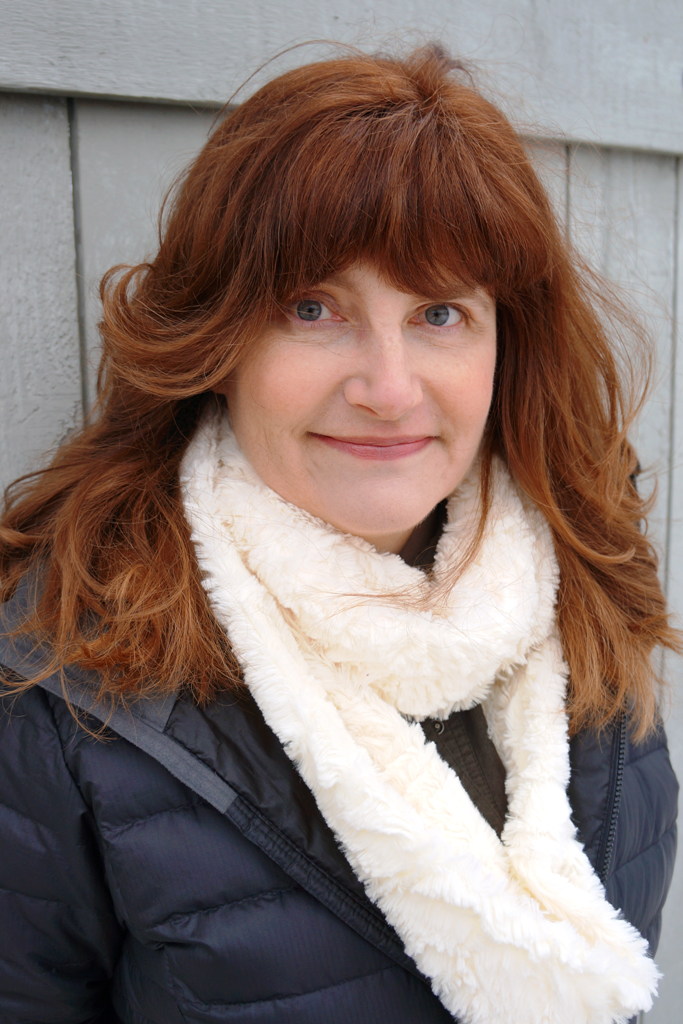
jan-ohara-writers-digestOnce a family doctor who prided herself on providing her patients with birth-to-death healthcare, Canadian writer Jan O’Hara has left medicine behind and now spends her days torturing people on paper. She writes for the popular blog, Writer Unboxed and lives in Alberta, Canada with her husband and two children.

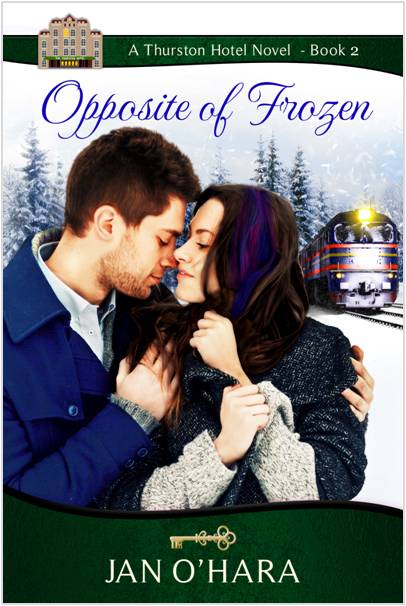
And today I’m interviewing her about her first novel, Opposite of Frozen, which has just been released and which is part of a unique and most intriguing series, the Thurston Hotel Books.

First of all, Jan, congratulations on the release of your novel, Opposite of Frozen! It’s the second in a unique, multi-author series. Can you tell us about that? How did it come about? And how did it develop?

Thank you for having me, Sophie. I’m honored.

My local chapter of the Romance Writers of America (https://www.calgaryrwa.com/) has a reputation for facilitating independent publishing and hybrid careers within its membership. In December of 2015, word went out that our treasurer, Brenda Sinclair, was looking to launch a group project, for which she had a very clear vision. I was interested because Brenda had participated in a similar project before, and had internalized many of the lessons learned during that time. Also, romance is a digital-friendly genre, and I was leaning toward independent publishing.

Accordingly, in a somewhat cloak-and-daggerish moment, the interested parties met secretly in a Calgary restaurant. Brenda loosely outlined the series idea: 12 standalone contemporary romances set in a fictitious town in the Alberta Rockies, revolving around the Thurston Hotel, its employees and long-term residents. Each author would take ownership of one month in the town’s life to tell their story. In addition to writing our own story arc, each book would tell a portion of a long-running series romance.

Brenda had already begun construction of a series bible—which she maintained throughout the entirety of the project. She had thought through the project deadlines, the cover artist, and the series editor. Her level of professionalism was vastly reassuring to this writer!

When all was said and done, 11 authors signed on, and Brenda, herself, agreed to write the first and last installments in the series. coverfinalmedwithgreyoof

Writing as part of such a unique series must have presented its own unique challenges! Tell us about how you constructed your story. And did the writing of your novel differ to other fictions you’ve written?

Though I have been writing a long time, I have never completed a piece of long-form fiction to what I consider publishable standards. As you might imagine, I was nervous about my abilities to do so while adapting my story to the requirements of 10 other writers. So from the first, I looked for a way to keep my story somewhat self-contained within the Thurston world. I wanted to limit the number of moving parts.

That was the impetus for having my characters arrive on a tour bus and depart from Harmony within the month I claimed. Also, for claiming an early month in the year, when I’d have to adapt to the fewest changes possible due to other author’s requirements. (In my case, I volunteered for February.)

Happily, those constraints ended up creating some of the story elements of which I’m most proud. For example, I needed a tour group to populate the bus, and who would most logically have the time for a prolonged multinational tour, but seniors? (I so enjoyed writing my seniors!) What unexpected event could complicate their February trip, but a hypothermic stowaway? What elements about the seniors’ lives could bring my co-protagonists together, and facilitate their healing? Etc.

I must say, it was thrilling and confidence-inducing to see how my brain could come up with story ideas to match the project’s requirements.

Also, I was dealing with time constraints and a gargantuan case of the Impostor Syndrome. Without a commitment to the other writers in the group, I’m not sure I’d have pushed through to completion. I do know OoF would not exist in its present form if not for the project’s boundaries and invitations.

The books are all set in the same town, although around different stories and characters. How did you all plan the background of the books–and will that evolve over time, or will you all keep to the same basic framework?

Between our first and second in-person meeting, each author wrote a story synopsis and shared it with the group, via private Facebook page. We also found avatars for our characters and constructed one-sheets, when applicable, so that other authors could use our characters in cameo appearances without much difficulty.

For more intensive cross-pollination, when using another writer’s characters, we sent relevant passages to one another, to ensure we weren’t violating a character’s personality or mannerisms. The same held true for micro-environments. For example, I borrowed Ellen Jorgy’ creation—a bar known as the Wobbly Dog—for several scenes in my book.

We made a good many decisions together, in-person, like the décor of the hotel, the final design of the cover art, the name of the town. Other decisions were made individually, and then coordinated with the group via Facebook.

For instance, I needed a store that sold computers, so I constructed the Tech and Tock, and invented its proprietors. One of the series continuity editors, Suzanne Stengl, then added it to the map of the town, which she maintained throughout the project.

I should mention that various authors contributed their skillset to make the project work on the whole. Win Day, for instance, used her technical background to construct the Thurston Hotel Books website. Sheila Seabrook helped with formatting issues. Everyone helped with title selection.

Without their direction, Opposite of Frozen would have been called Hypothermia and the Hottie. (A title which still makes me laugh, and would have been great for SEO, but doesn’t capture the spirit of the novel.)

Do authors in the group have input into each other other’s stories? Who edits the novels?

Beyond the planning I’ve mentioned, the group also benefited from the hard work of two continuity editors: Brenda Sinclair, who wore about five hats during this project, and Suzanne Stengl. They both read my book for continuity errors. Twice.

Then we all used the same editor, Ted Williams, for a final appraisal. He used the series bible for guidance and reportedly enjoyed seeing how Harmony came to life within different stories, told by different voices.

Tell us about the publication journey for the series. Will the books be available internationally?

We intend to put out a print version of the series in the near future. At present, the books are available exclusively in ebook via Amazon and the Kindle Lending Library, wherever Amazon exists.

The first installment was released September 29, 2016, and will be followed by another novel on each of the following 11 consecutive Thursdays. (We are using the hashtag #ThurstonThursday on Twitter and Facebook, if you’d like to follow along.)


******************

More about Opposite of Frozen:

Shepherd fifty-one seniors on a multinational bus tour, including a ninety-five-year-old with a lethal cane?

To preserve his sick brother’s travel business, retired pro athlete, Oliver Pike, would do far more. But then weather intervenes, forcing the tour bus off-route into the small mountain town of Harmony, Alberta.

In the hold of the bus, amid the walkers and luggage, lies a half-frozen stowaway. Page Maddux is commitment-averse and obviously lacking in common sense. Once revived, she’s also the person Oliver must depend upon to help him keep the “oldsters,” as she calls them, out of harm’s way.

When their week together is over, will Harmony recovery from the group’s escapades? And what of Oliver’s heart?

Jan’s website: http://janohara.net/

Facebook: http://facebook.com/janoharabooks/

Twitter: http://twitter.com/jan_ohara/

For more on the series itself: http://thurstonhotelbooks.com/

2BR02B: the journey of a dystopian film–an interview with Leon Coward

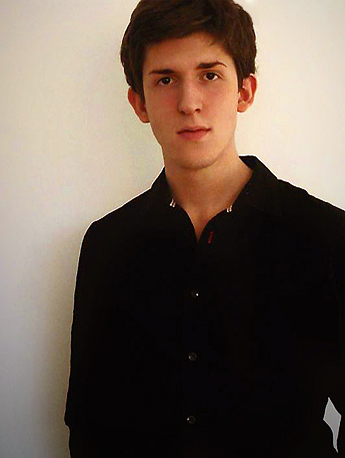
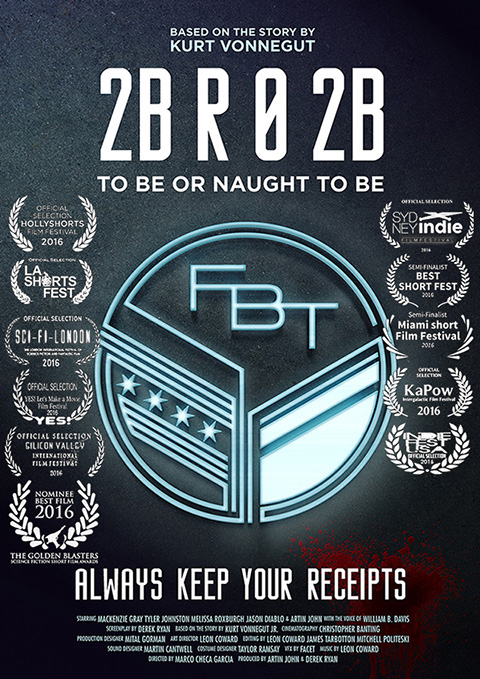
australian-artist-and-composer-leon-cowardI’ve known the extraordinarily talented young creator Leon Coward since he was a pre-teen reader/reviewer flatteringly enthusiastic about my books. Today, Leon’s love of creating art has  led him to work in many different fields–not only literature, but music, visual arts, and now film-making. Involved first as a concept artist for the short film 2BR02B–To Be or Naught to Be, a dystopian work based on one of Kurt Vonnegut’s short stories, Leon went on to take a much greater part in the creation of the film.

The Canadian production, which has already been selected for no less than 15 prestigious short film festivals, has its Australian premiere today, in Sydney. To mark this exciting occasion, I talked with Leon about the creative journey behind the film.

Leon, how did you become involved in the creation of  2BR02B: To be or Naught to Be? 

My background is in graphic design and traditional illustration. The producer Artin John is a childhood friend, and he began co-producing the film and asked for me to create a poster… then concept art… then the mural and other artwork. I had no idea how involved I would later become.

The film is based on a Kurt Vonnegut short story which imagines a dystopian world in which babies are only allowed to be born if another life is terminated. What were the particular challenges involved in adapting the story for film?

The tone was a challenge. It’s easy to show too little or be too graphic, be too nonchalant or be too sombre. You can try to be as true to Vonnegut’s material as possible, but at the end of the day also you’re working with the material that you as a team have generated, not just Vonnegut’s, and that’s what you’ve got to make work. There were a few things from the original story that confused our test audiences – in one instance it was putting jazz at the end of the film, and Vonnegut gets away with it because as a reader you don’t hear it, but we realised it just sounded like cinema lounge music and it spoiled the audience’s mulling over of events.

2br02b_federal-bureau-of-termination-poster2BR02B has an ensemble cast, so an editing challenge was working out the balance between them. We’d all thought the film would centre on Wehling and his internal conflict, because his dilemma motivates his actions which affect the other characters – the problem was that while we knew what he was thinking and what he’s gearing himself up to do, the audience didn’t. The first edit was melodramatic simply because the audience was asked to feel for a character they didn’t know. So I shook things up and this was hard because I took an edit to the team and, although the story itself hadn’t changed, what was emphasized had changed. For a long time we were also going for an emotional ending, but after test screenings it was clear the audience were frustrated. My grandmother suggested a twist, and I incorporated it and showed the team without warning them – that way they got to experience it as the audience would.

My own big challenges were creating the fictitious ‘Federal Bureau of Termination’ set in Chicago and the Painter’s 16-ft mural. The FBT is represented by Leora, a gas chamber hostess – but other than her and a brief shot of a gas chamber, the FBT doesn’t appear. So to convey the fact that this organization dominated the society, we gave them a brand identity that pervaded everything – corporate signage, posters, banners, badges, tags, earpieces and costume motifs. Vonnegut described a symbolic design for their logo (an ‘eagle perched on a turnstile’), but I approached it as a new branding commission and researched federal seals and local symbols for Chicago. There are a lot of references – the stars and stripes on the US and Chicago flags, the Chicago municipal device (which is a Y for their shaped river), even the wings of their state insect the Monarch butterfly. But there are also a lot of differences to real seals which make it very impersonal, very geometric, skeletal & circuit-like, and no natural symbols.

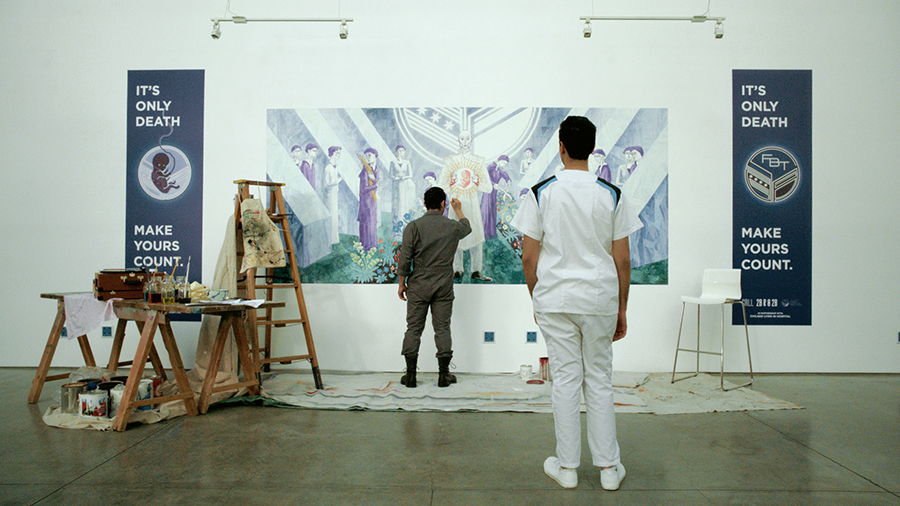
The mural took 6 months to design and finish. It was digitally painted in Sydney, then printed in Canada. All the characters discuss its symbolism and pose for it – if the mural didn’t come across as a genuine work of art, it’d devalue the acting. Its design was driven by story needs and Vonnegut’s prose. It shows a false utopian garden where nurses and FBT staff, dressed in white and purple, symbolically turn soil, plant seeds, and control life and death. Purple is traditional for sacrificial robes, and Dr. Hitz, who is the architect of population control, is painted as a ‘Zeus-like’ figure. The mural had to be recognizably propaganda and contemporary, so our director Marco instructed me to look at Russian war posters, Art Deco and Cubism. At the same time, I knew the mural had to have religious overtones. I’d experimented with a mix of Expressionism and William Blake-esque styles – trying to avoid the ‘communist cornfield worker’ interpretations I’ve seen in student versions of the film, or any specific garden-type, but I was going too far in that direction. My new layout was Art Deco-inspired, using diagonals and circles – essentially it’s an ‘X’ drawing your eyes to Hitz, and the FBT logo acts like a sun, framing Hitz’s head like a halo. I blended Cubism, Futurism and Brutalism with religious styles. The concrete flats, which also mimic the FBT logo, overpower the barest of gardens and help narrow the viewer’s focus, and the floating flower made it futuristic. The style of plants and their millefleur treatment came from The Lady and the Unicorn tapestry and the religiously-themed The Hunt of the Unicorn tapestry. Sir Edward Burne-Jones’ pilgrimage paintings, and especially his Wedding of Psyche, provided the inspiration for the figures, their poses, compositional distribution and costumes (I also referenced medical scrubs). Hitz needed a recognizable inference of himself as a messiah – so Byzantine iconography provided the inspiration for his hands (which are Christ’s) and the haloed foetus, as well as the mural’s forced perspective. For Hitz’s costume there was also a bit of SS uniform and Nehru jacket, dentist and Jedi, and a more contemporary influence from Gehn in Cyan’s Riven, a character who also sees himself as a god. Everywhere you look the message is there, and it was hard to make the mural function as a finished work of art yet still be visibly ‘in-progress’. The aim was to show a society where there is no respect for religious heritage – God is dead, and the FBT is filling the vacancy – and the mural needed to be created that way. It took months of digitally painting and scanning paint textures and brushstrokes, since the mural had to withstand close-ups. Halfway through, Paul Giamatti had scheduling conflicts, and I had to repaint the face for our Hitz replacement, Mackenzie Gray. The mural was printed in strips of paper which overlapped; clear hard-drying gel was applied to give it a texture, and Ferrero-Rocher wrappers (which have a great canvas texture) were used for the gold highlights.2br02b_mural-by-leon-coward-1

The project was an international collaboration over 3 years between crew in Australia, Canada, UK, Mexico and the Netherlands. What were the challenges and advantages involved in such a big undertaking over such distances and different time zones? What did you learn from the experience?

We had cast and crew in Vancouver, myself and other crew in Sydney, an artist in the Netherlands, and a VFX school in Mexico which did effects as part of their professional training. Footage was flown to me in Sydney and I began re-editing with James Tarbotton. Then Martin Cantwell, our brilliant sound designer in London, came onboard. The time differences were okay as calls were early morning or late night, so we’d avoid each others’ work hours – which was important since the film was not a paying project. The separation was a technical disadvantage, since exporting and transferring files adds a lot of time. It’s also important to be able to see, at least once, the person you’re communicating with, in person or Skype, because it makes email writing a lot easier. While there were disadvantages, I think the distance for me and my collaborators in Sydney allowed us to approach the project in a way we mightn’t have otherwise – especially in the editing, where we could respond as a fresh audience without preconceptions, or even knowing what the actors were like out of character.

You worked on many different aspects of the film, as art director, composer, film editor and associate producer. How did you navigate all these different roles? Was there one aspect you preferred above all?

2br02b_left-to-right_jason-diablo-and-australian-artin-johnIn a sense it hasn’t been hard to navigate between the roles because they were prepared for – I had this idea that the Painter would have a gramophone, and that he was listening to Schubert’s “Ave Maria”. When gun-shooting later ensues, the song could provide a macabre serenade. I stuck the gramophone in my concept art, and waited for the idea to take hold – it was influencing the film’s music to some extent without having to be the composer, but ironically I eventually found myself in the role and this wasn’t intentional! There is a some incidental music, but I pushed to have it that the only music was the ‘live’ gramophone so that the music was simply part of the world, and not an ‘invisible’ emotional narrator as film scores often are. The film and the Ave Maria recording were designed and edited around each other: while films are often edited to an existing temp track of unrelated music, this film was edited to a pre-existing recording of Ave Maria, which was later replaced with a tailor-made recording, post editing and sound design. It enabled us to go for a different interpretation too, which would greater contrast the action. We were fortunate to have my sister Imogen Coward, who is both a skilled soprano and conductor, record the version for us that appears in the finished film. We wanted to avoid any artificial stretching or splicing, so we had the unusual challenge of recording in one take, matching the timing of the temp version. We had 2 frames wriggle room, and the edit didn’t have any room to be changed for different timing. It was tiring, but it was worth it because it has a quality that is lost when music, especially singing, is heavily edited.

The film has so far received 5 nominations and 14 international festival selections, including for its Australian premiere at the Sydney Indie Film Festival on October 19. That’s quite an achievement! What do you think are the special qualities of the film which have made it attractive to festival selectors?

While Vonnegut created the story, it’s also the way the cast and crew have interpreted, realized and communicated the story. Derek Ryan, our screenwriter and co-producer, did a good job of cutting away story material that couldn’t be cinematic – so from the start we were all working with a document that concentrated our focus. 2BR02B really takes a cross-section of behaviours in a society where life and death are pushed to absurdities, but there’s no obvious political or moral position in its telling – just the drama of human action, and I think it allows the viewer in on their own terms. I think one of the things that’s helped is how the film feels when you watch it vs what is leaves you thinking about – cinematically it is very static up to a point, and then there’s this burst of drama and the music making it madness, and then just desolation, and that hits the audience. Vonnegut’s narrative was influenced by his experiences as a P.O.W. in Dresden, and even though his story is fiction, the themes are relevant and resonate because the wars have cast such a long shadow. It’s subtle in our film, but the hospital cross is actually a swastika, and the banners flanking the mural are inspired by Nazi banners –  Wehling’s cry “It’s only death” was used on our banners, so instead of his line being spontaneous, it becomes him quoting propaganda which the audience saw earlier.

2br02b_dystopian-chicago

What’s next for you, in terms of films, after this one?

I’m independently developing my own film project – an adaptation of Oscar Wilde’s “The Happy Prince”, and am shifting between generating its music and visual material.

You are also engaged in doing a PhD on aspects of film design. Can you tell us a bit about that?

It essentially provides an analytical process which teases apart a film’s design (if it has one) – whether the story, visuals, acting, music, sound or all their combination. The method is quite straightforward, but its theoretical justification and demonstration is very demanding. The method has had encouraging support from many industry practitioners.

As a multi-talented creator and performer, you are also involved in music, visual arts and literature. Tell us about some of your projects in those fields.

My sister Imogen is director of the chamber orchestra Camerata Academica of the Antipodes, which was founded by my siblings and a group of our young musician friends who we’ve played music together with since childhood. Our concert profits go towards helping support the Don Spencer’s Australian Children’s Music Foundation. Our orchestra has just celebrated its second anniversary and second regional tour in Australia. It’s been a very exciting time for the group. We love playing Baroque music – Vivaldi, Handel and Corelli – but our concerts also include music from a wide range of eras and styles, from the 1500s to today, and the orchestra has premiered some of my music that was written specially for the members. A lot of my own solo projects are on hold until after the PhD, including fine art prints and two picture books, written and illustrated by me, one which has been endorsed by Quentin Blake (Roald Dahl’s illustrator).

I know that you come from a family where the arts are highly valued, and your siblings are both also working in the arts. Can you tell us a bit about how you grew up, and what effect you feel it had on your adult career?

We’ve each ended up musicians – my sister  violin, viola, cello and voice, and she has her PhD in music. My brother has focused on violin, voice and guitar, and he’s also doing his PhD on music and magic performance (he’s been performing illusions for 10 years now). Our parents homeschooled us to university level, and were very keyed in to expanding our interests, skills and activities, but they didn’t try to turn us out as one thing or another and weren’t discouraging. My grandmother recently found some drawings from when I was 5, and I couldn’t draw for nuts. But I meet a lot of parents and kids who restrict activities because there’s no immediate interest or sign of potential. I think the effect it has had for my siblings and me is that we’re not afraid to venture beyond our immediate interests and skills, and that’s allowed us to develop the set of skills we have.

Leon Coward is a published artist and writer, and performed composer and choreographer. He performs on violin, viola, piano and voice with the chamber orchestra Camerata Academica of the Antipodes, and was recently art director, composer, editor and associate producer for the 2016 film adaptation of Kurt Vonnegut’s “2BR02B: To Be or Naught to Be”. He is undertaking a PhD at the University of New England, Australia, and has presented his creative work and research throughout Australasia and internationally, including for the TATE Liverpool UK. Since 2007 Leon has edited and designed the e-zine “The Online Book Group”. In 2009 Leon illustrated “Vietnam Reflections”, by award-winning author Libby Hathorn. In 2011 he was awarded a mentorship by the Australian Society of Authors.


Across the Tasman 6: Sarah Davis

unnamedToday in my New Zealand series, I’m delighted to be publishing an interview with the wonderful illustrator Sarah Davis. Sarah began illustrating picture books in 2008, and is now, as she puts it,  ‘ruined for any other career.’ She has an honours degree in literature, and her love of language and narrative underpins her illustration work – as a self-taught artist, she is constantly experimenting with new ways to tell stories visually. She has illustrated more than 37 books with major publishers and been shortlisted for about the same number of awards in Australia and New Zealand. Sarah is an ambassador for Room to Read, and the Illustrator Coordinator for the Society of Children’s Book Writers and Illustrators (Australia East/NZ) Sarah is represented by the Gallt Zacker Agency in the USA and Frances Plumpton Literary Agency in New Zealand.

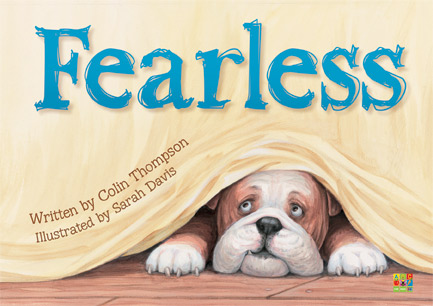
Sarah, you’ve said you are now spoiled for any other career other than illustration! Can you tell us about how that career started? What first drew you to illustration? And who were your main artistic influences?fearlesscover-copy

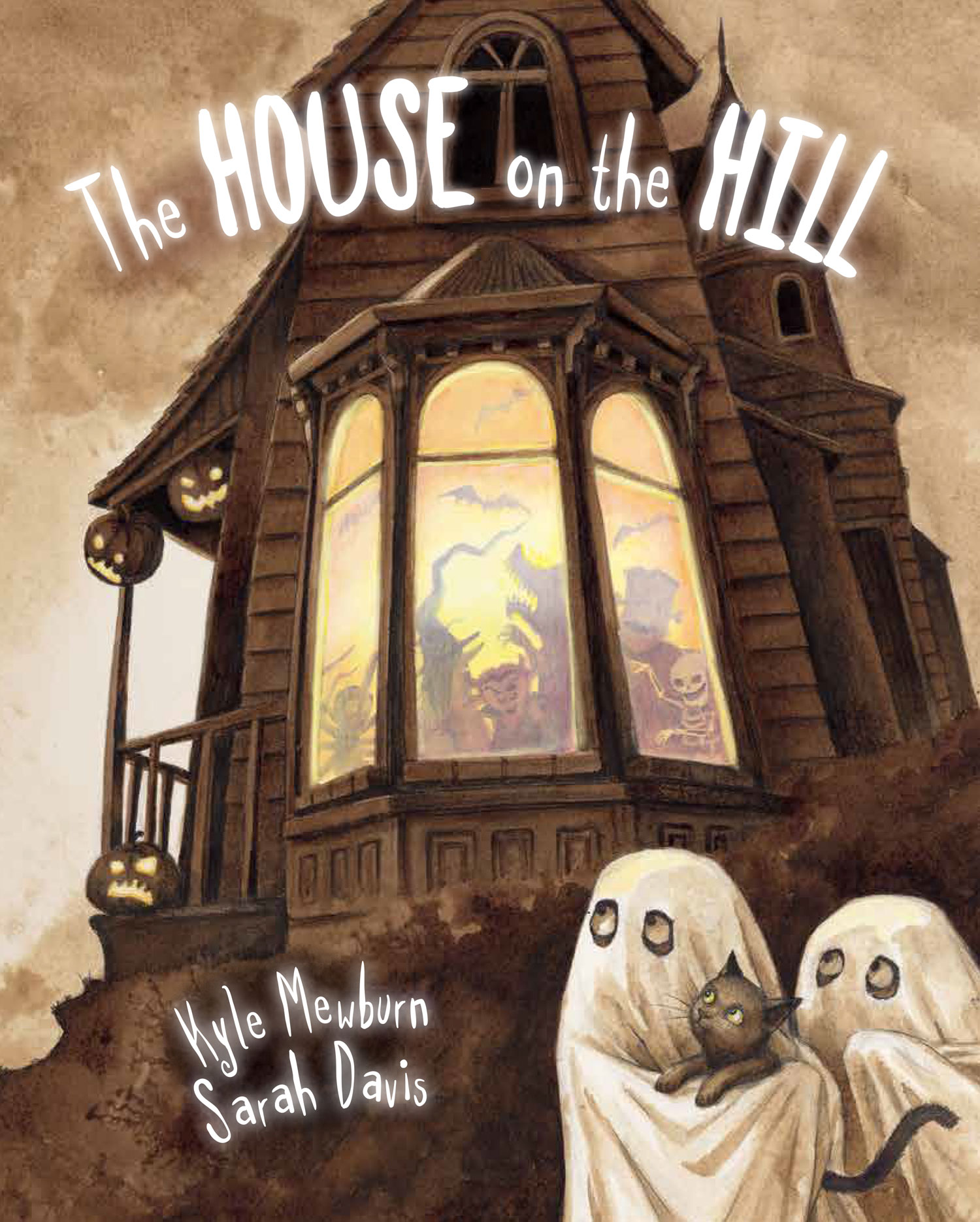
I think I’ve always been heading towards illustration, actually, but I got temporarily derailed by Life. I actually majored in English literature and creative writing at uni, and haven’t had much art training, and had my son when I was only 20, so went into teaching English at secondary school because it was something i felt passionate about and the hours were also good to fit around being a sole parent. I’d always drawn for fun and wanted to do more with it, but couldn’t really find the time.  I started dabbling in art a bit more seriously when I was about 26, but had our two lovely daughters in 2001 and 2003, and was still working part time, so it was hard to fit it in! When we moved to Sydney in 2004, I took time off work and that’s when illustration started to take off for me. I decided I’d go with the “fake it till you make it!’ philosophy, and set up a profile on some online freelancing sites, and got a bunch of jobs that way which taught me how it all worked and helped me start to build a portfolio. Then I decided to have a go at picture book illustration. I applied to the Stylefile with some truly horrible art samples, and they very sensibly and very kindly rejected me. Their rejection was accompanied by an A4 page of incredibly constructive criticism, and I took all their advice on board and built a much better portfolio, which i took to a critique at a SCBWI conference, and it all took off from there, thanks in a large part to my fairy godmother Susanne Gervay, who was incredibly kind and supportive and enthusiastically made connections and opportunities appear for me.soundsspooky_cover_hbk

What draws me to illustration is the opportunity it provides for narrative – I’m a sucker for story. My artistic influences are pretty varied, I think – I spend a lot of time online gazing at the awe-inspiring work of superior beings. I don’t think I really have a style, and seem to shift my approach based on the demands of the text, which I suppose is why the people whose work I admire also cover a broad spectrum of styles and periods.

You’ve become one of NZ’s busiest illustrators, with many books published, and lots more on the go. How do you manage your time with all the different projects?

Very badly! I call my system “surfing the tidal wave” – that feeling where you’re performing a very tricky balancing act, only just staying afloat, and there’s a weight of thundering chaos surging at your heels waiting to crash down on you. So far I haven’t totally wiped out and I’m still juuuust ahead of the wave. I’ve illustrated 37 trade picture and chapter books since 2008, as well as taking on commercial projects, books for educational publishers such as Cengage, and speaking at between 20-40 schools a year. Balancing that and family time has been very hectic – we’ve got three kids and 6 months ago we acquired a lovely extra teenager. There were quite a few occasions over the last few years when I had a deadline looming and I didn’t sleep at all for days in a row. I wouldn’t recommend it! I’m much better at achieving work/life balance now. I’m being very selective about what I take on, and trying to be much more disciplined with planning ahead. My son actually introduced me to bullet journalling this year, which is actually a wonderful way to be mindful and deliberate about how you spend your days. (http://bulletjournal.com/)

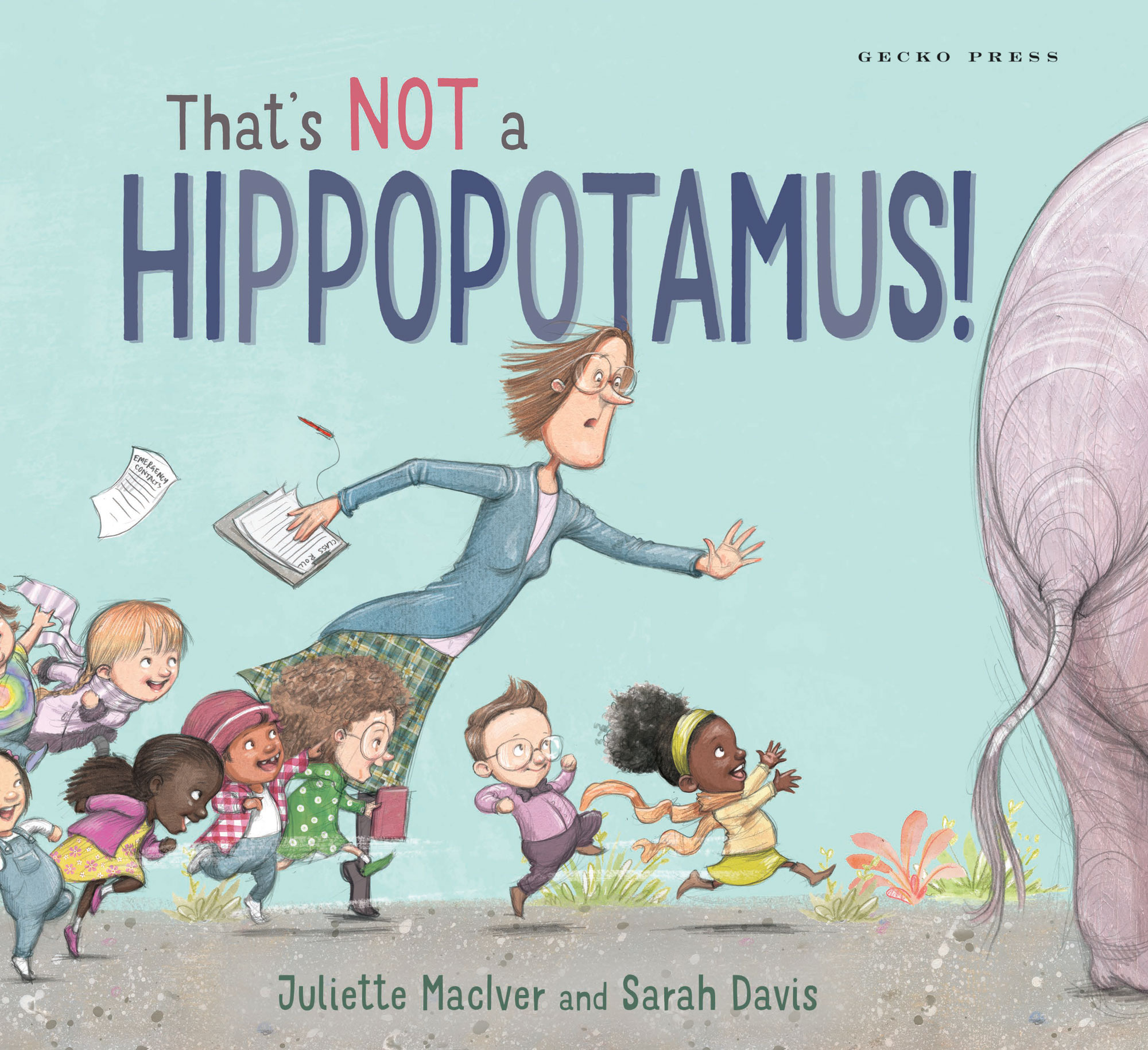
hippoWhat ‘sells’ you into agreeing to illustrating a text? What sorts of things do you look for? And do you have contact with authors at any stage during the process of creating the illustrations?

The text has to come to life in my head and make me feel something – it has to make me laugh or cry. I like texts that feel unusual and a little unhinged, or that feel as though they haven’t been done before. Vivid, evocative language and appealing characters. To be honest, a lot of the books I’ve done have been sequels – so I’ve initially signed on for one book, and then ended up locked in to doing 3 or 4, which is a brilliant problem to have, but also a little frustrating. I feel like it’s forced me to mark time a bit and cover old ground, when I really want to be moving on and trying something new. But I think I’m just coming to the end of that now!

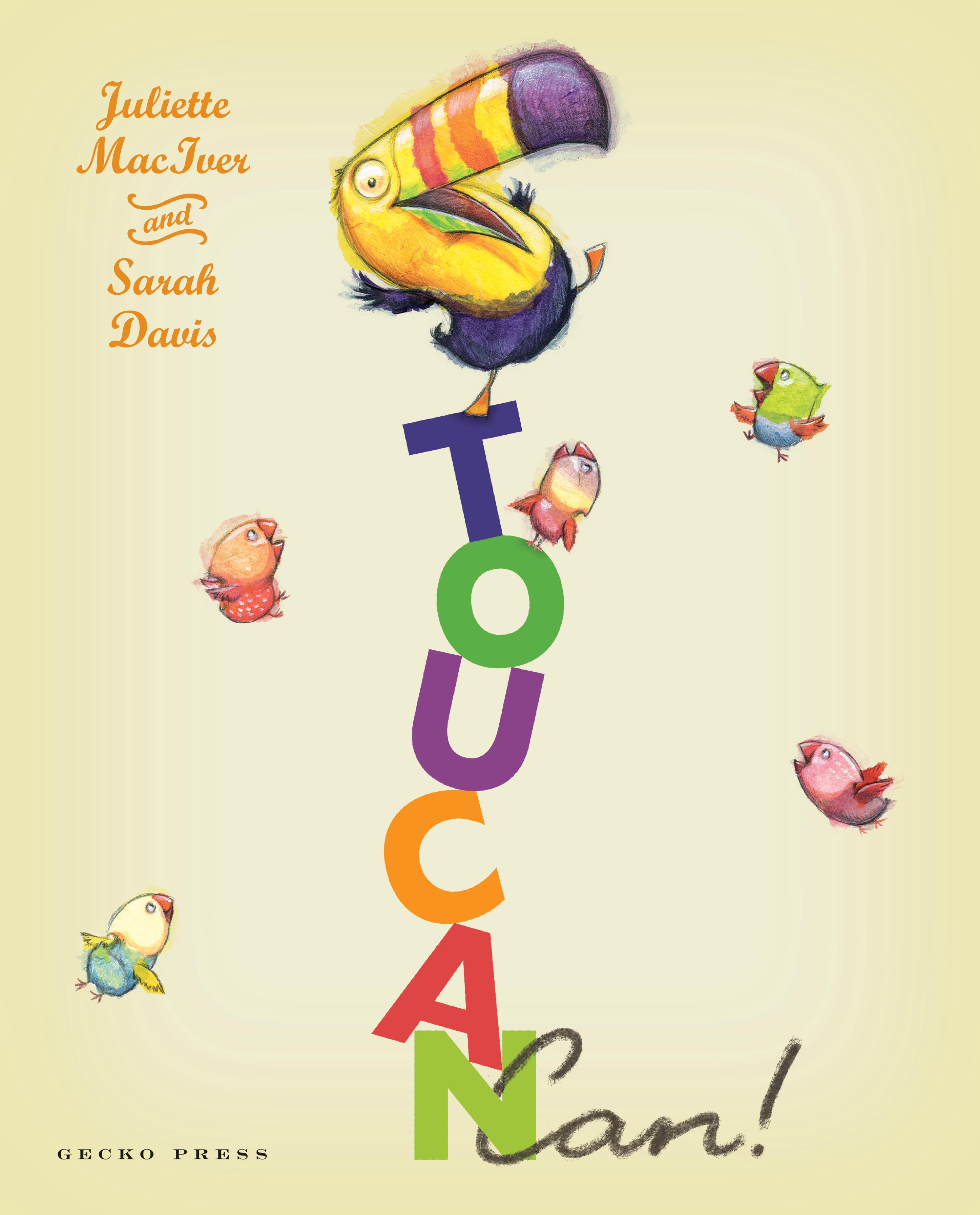
I usually don’t have a lot of contact with the authors through the process – the publisher usually liases with them, shows them the roughs, processes any feedback for me. It’s a bit odd, because that’s how it works even with authors I know quite well! Me and Juliette MacIver are a bit naughty though and we often have quite long consultations in which the publishers aren’t included, usually involving bottles of wine and ukeleles. (actually, we should include the publishers – they’re all great people and  good fun and can probably also drink wine and play the ukelele.)toucan-can-f-cvr-300dpi

You’ve illustrated both picture books and chapter books. What do you prefer doing? And how does the process differ between the two styles of books?

I much prefer picture books – there’s a lot more leeway for the illustrator to tell a story. Illustrating for chapter books is quite prescribed and proscribed – you basically get told what to draw and given a space in which to draw it on each page. It feels a lot more like  you’re just decorating the text. When you’re illustrating a picture book text you really have a huge interpretive role, and you have to bring the characters to life, draw out and enhance the themes of the text, work out how the action of the plot will play out visually. It’s much more challenging and fun. You can also subvert the text, add unexpected twists and turns and layers – then it becomes a wonderful sort of alchemy where the contributions of two creators meet and mix and create a new level of meaning.mdcc_hbk

You are published both in New Zealand and Australia, and your books have won awards in both countries. Do you see any differences between the two countries in terms of reception of books, and reader responses?

I’m not sure, really!  To be honest, I try not to think too much about how my books are being received, because it scares me! Best to keep my head down and just get on with it. Obviously, awards are always lovely – my favourite kind of award to get are the Children’s Choice awards. Kids are very wise and also really tough judges. As far as differences between the 2 countries go… um…. The Marmaduke Duck series became a really big hit in New Zealand and is a bit of a household name over there, but never really took off here. The quirky kiwi sense of humour might have something to do with that. I mean, it’s an entire 4 book series about a duck who makes jam! Doesn’t get much weirder than that…

mmd_wide-blue-seasDoes being a New Zealander impact on or influence your work? If so, in what way?

Well, I think it must, in the way that everyone’s childhood influences their work! I moved from England to Aotearoa when I was 6, and grew up mainly in Christchurch. The land had a huge effect on me. The mountains and bush and sea of Aotearoa have an really powerful presence – this brooding sense that the land is living, and aware of you.

I think for a little country it really punches above its weight creatively, and as a kid I remember there being a lot of emphasis in school on art and creative writing. I read voraciously, and a lot of my favourite authors were NZ writers. Gavin Bishop actually came to visit my school when I was about 9 or 10, and I remember he was working on Mrs McGinty’s Bizarre Plant, and showed us all his rough sketches – I was transfixed! (I actually wrote a blog post about it: http://sarah-davis.org/blog/2015/7/20/l0ef49s6lr8u1vcxogmnuqer1ommrd)

I should also mention my fabulous NZ publishers: Gecko Press and Scholastic NZ. Both extraordinary powerhouses of creativity and absolutely delightful to work with, and tireless in promoting their books and trying to get them out into the wider world, which is a necessity for NZ publishers since the local market is so small. An extra shout out must go to Julia Marshall at Gecko, who has built the company from the ground up and really does produce the most extraordinarily beautiful books.

What are you working on now?hoth

I’m working on a sequel to Be Brave Pink Piglet, published by Hachette, and a super-secret (and exciting!) project for Penguin, which is due in January. I also have a couple of educational titles on the go so that I can pay the bills. I’m working on a couple of series of paintings, too, and hoping to have an exhibition next year. But what I’m most excited about is that I’ve finally finished writing a picture book of my own, and am also going to be illustrating another that my son wrote. They’re both with a publisher now, going to acquisitions soon I hope!

Across the Tasman 2: Sherryl Clark

sherryl-1Sherryl Clark’s literary career is what might be called a trans-Tasman one; born and brought up in New Zealand, but living in Australia for many years, she is well-known in both Australia and New Zealand for the versatility and quality of her books, which range over many genres and age ranges. Today I talk to her about what it means to straddle those national cultures, and those different types of literature–as well as teaching literature, undertaking literary degrees, and lots more!

********************

Sherryl, you grew up in New Zealand but now live in Australia. Do you consider yourself an Australian or New Zealand writer, or both? And what similarities and differences do you think there are in terms of the literary world of each country?

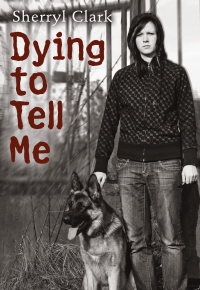
I’ve now lived in Australia for 37 years, but I think in my heart I am still a New Zealander, especially because I grew up on a farm and I think your first 18 years ‘imprint’ you. However I do think my stories are Australian, funnily enough, with some New Zealand elements. If I write about a farm (as in Farm Kid), it’s an Australian farm with drought and brown paddocks which you just don’t see in NZ like that. Not where I come from anyway. Dying to Tell Me is definitely Australian bush, and even my city stories, whether historical or contemporary, are very much set in Melbourne. I feel for NZ writers today – the publishing opportunities have narrowed so much. But at the same time I think many NZ writers are writing with real passion about their country, in very particular ways, and I don’t see that nearly so much in Australia.

You have written many children’s books in different genres, and for different age groups. Is there an age group/genre you most enjoy writing for, and why? Is there a book of yours that you think of particularly fondly? And how has what you write about changed over the years? (if indeed it has!)

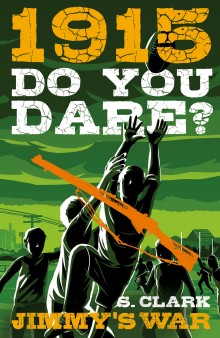
jimmys-warI love picture books because of the process – the challenge of so few words – and the amazing work that illustrators do. I love verse novels because I love how poetry expresses things that prose struggles with. I think my favourite age group to write for is 11-14. To me it’s a time when you become aware of the outside world, of what people are like, the value of friends, the idea of adventure and exploration – the whole world opens up, but at the same time it’s when the whole world can make your life very hard. Anything can happen and bad things do. To me, writing about those things is a way to tell kids they’re not alone, and I think that’s important. I agree with Neil Gaiman – kids need to believe they can be brave and win against the dragons. I think that’s why I like Dying to Tell Me, my murder mystery for upper middle grade readers. Sasha has made some stupid choices without understanding why, but now she learns to be brave and to use her wits. I think my writing has become braver, too! I turned a corner about four years ago, during the MFA, when I realised that I just had to start writing what really stirred me and obsessed me, and stop worrying about what might come after.  dyingtotellme

What’s your latest book, and what are you working on now?

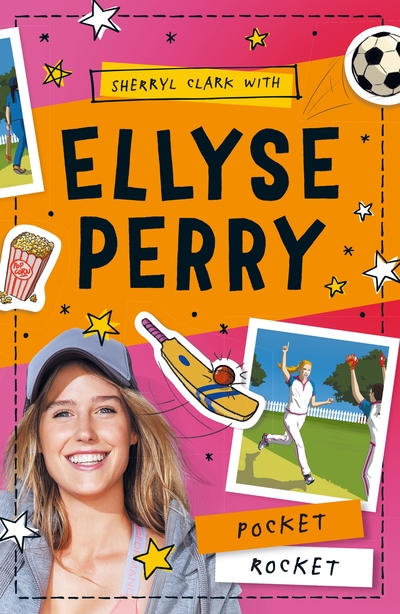
My latest book/s are a series based on Ellyse Perry (sportswoman). It was a commission, and I wanted to do it because I hated compulsory sport at high school, and so did lots of other girls. And I see someone like Ellyse being a huge influence on kids and getting them away from screens and participating in sports – and having fun. I wish that had been me! Plus adolescence and body changes have a lot to do with why girls stop playing sport and I wanted to explore that, too. I also have a picture book coming out next year with Allen & Unwin – The Night Tiger – which is being illustrated by Michael Camilleri. I’m very excited about that.
I’m always working on several things, so I can give manuscripts a ‘rest’ when they need some time out, so I’m able to able to look at them with a fresh eye. I’ve just finished a major revision of a SF novel (the ending still needs more work), and I’m doing another edit of a historical novel. I changed a large part of it into present tense and it’s still a bit clunky.

You’ve written poetry for both children and adults, and have edited a poetry magazine, Poetrix. Can you tell me something about both your poetry, and the magazine?

Poetry was the first thing I wrote when I realised what writing was. That probably sounds weird, but I’d been writing these dull short stories and an awful adult novel, and then I did a poetry workshop and thought – yes! I wrote this thing and the workshop leader said it was a nice metaphor and then I thought – what’s a metaphor? And since then (30 years ago, mind you!) I’ve been learning more and writing more, and it’s such an exploration of language and image. So much fun and so satisfying, and I just wish more schools would ask for poetry workshops. Truly. Most teachers have NO idea what poetry can open up for kids. And most importantly for those kids who don’t feel confident with language and prose. Poetry just excites them so much. They are the BEST poets!

We created Poetrix (Australia’s only magazine for women poets) back in 1993. I used to teach classes in self-publishing because it was a passion of mine, and I’d worked in community arts and for a printer. My writing group, Western Women Writers, were totally on board with creating a magazine, and we self-funded it with small catering jobs. We produced 40 issues of Poetrix, and we published a huge number of women who have gone on to have books published and won awards. But mostly we did it so women had a poetry voice. It was in reaction to some critic who’d said women only wrote poetry that was ‘domestic suburban vignettes’ and we thought – yes? So what’s wrong with that? It’s life as we know it and experience it, and of course you can write fabulous poems about it! So here are 40 issues of Poetrix and about 1400 poems about things that are important to us. To everyone, actually.

As well as writing books, over the years you’ve also run a lot of classes on writing and publishing. What kinds of things do you most enjoy helping people to learn? Do you teach mainly children, or adults, or a combination? And do you think that things have changed in terms of areas of interest–I mean, are people interested in learning about different things now than they were say 10 or 15 years ago?

I’ve been teaching in the Diploma and Cert IV of Professional Writing and Editing for nearly 20 years. But I did get to a point finally where I realised how much energy and focus teaching was sucking out of my writing. I went off to Hamline University in Minneapolis to do an MFA in writing for children and YA, and a very wise teacher there said, ‘It all comes from the same well. The more you teach, the less you have for your own writing.’ So in the past three years I have stopped teaching at TAFE, apart from substituting and helping out, and I think my own writing has received a huge boost because of that. It’s sad to say this, but it’s true. Teaching did detract from the energy I had for writing, and now with the whole onslaught of government paperwork requirements, more and more writing teachers are leaving TAFE because it’s overwhelming. Less time to teach and more time to fill out pointless forms. It makes me angry, to be honest.
Because I do love teaching and workshops. The people who come are so keen to write, and to learn. You can feel them soaking stuff up. I often see people start with an introductory class and five or ten years later, they’re getting published and doing so well. The one thing I love teaching is story structure. People get so mired in character and dialogue and just getting the words out, but structure (if you learn it and understand it) can fix just about everything. Mind you, it can’t fix voice, and in writing for children and YA, voice is so important. I think you only ‘get’ voice if you read a lot, read widely and read from a writer’s viewpoint. It astounds me when aspiring writers say they don’t read. There is so much to learn from astute reading. pocket-rocket

I teach mainly adults still – I do writing workshops in schools, yes, but a lot of schools want to spread their resources as widely as possible, of course, so I will do talks to 300+ students rather than workshops with 20. My dream is to create a portable poetry workshop I can take to school teachers and show them how to use poetry in the classroom, both reading and writing it. I have a website I started back in 2006 when I realised how little there was for schools – www.poetry4kids.net. I need to update it now and put a lot more material on it.

At the moment, you are undertaking a PHD themed around fairy tales, through an Australian university, after doing a Master of Fine Arts degree through an American university. What was your main focus in the MFA? What aspect of fairytales are you focussing on in the PHD? And how do the two university cultures compare?

When I chose to do the MFA in the US, it was because I knew it was the only way to do a Masters in the way I wanted. I didn’t want to be stuck doing one topic and one novel with one or two supervisors. Hamline meant I could do the things I really wanted: work with a different advisor every semester and learn from them (all published, experienced writers and teachers); work on a different project every semester to learn as much as possible (so I did a historical novel, picture books, a verse novel and a SF novel, plus a critical thesis on verse novels); go to intensive residencies in Minneapolis/St Paul where there were lectures, readings, workshops and a committed community of children’s writers; work at home via email in between and get detailed feedback on my writing; learn to write critical essays and a thesis that taught me more about the field from a critical viewpoint.

The PhD at Victoria University in Melbourne came from an essay I wrote during my picture book semester at Hamline. It was about picture books that are original, new fairy tales (Fox by Margaret Wild was my key text). Now my PhD asks that question – if I want to write new, original fairy tales myself, how do I achieve this? How do I write something that has the same resonance and unconscious signals that traditional tales like the Grimms’ do? So the creative writing (picture books and a novel) is informed by the research. Why have fairy tales endured? What is it that we respond to? How can I use this without being prescriptive or didactic or just plain boring?

Of course other aspects have come into it, especially the issue of publishers avoiding scary stories, and over-protective parenting that leads to a lack of resilience and coping skills in kids. I didn’t intend to venture into psychology, but then given that Bettelheim’s book, The uses of enchantment, was my starting point, I guess it was inevitable!

The two universities are poles apart, but that’s to be expected. Any Australian university would be entirely different to a US university that both specializes in children’s/YA writing and offers a low residency option. I think perhaps we’re not big enough here to be able to either specialize in that way or offer low residency on a wide scale. I’ve approached VU about running an MA similar to Hamline (indeed Hamline are keen to form a partnership), but with the government continually cutting tertiary funding and clearly having such an anti-arts agenda, I can’t see it happening anytime soon.

I think it’s so interesting that so many writers now are doing PhDs, because you can apply for a scholarship and it gives you an incredible amount of time to focus and create and innovate. Funded time that you don’t get hardly any other way. My bet is that in the next 10-15 years, Australian writing will see a huge growth in quality and innovation because of it. But if the government gets its scaly, arts-hating hands on the PhD program funding, they will kill it. Maybe I shouldn’t be telling them? Ssshhh.


Sherryl Clark’s first children’s book, The Too-Tight Tutu, was published in 1997, and she now has more than 65 published books. Her other titles include a number of Aussie Bites, Nibbles and Chomps, and novels. Her YA novels are Bone Song, published in the UK in 2009, and Dying to Tell Me (KaneMiller US 2011, Australia 2014).

Sherryl’s verse novel Farm Kid won the 2005 NSW Premier’s Literary Award for children’s books, and her second verse novel, Sixth Grade Style Queen (Not!) was an Honour Book in the 2008 CBCA Awards. Other recent titles include a picture book of poems, Now I Am Bigger, the middle grade novel Pirate X and the Rose series (Our Australian Girl). Her fourth verse novel, Runaways, was released March 2013.

Her latest books are the series featuring sportswoman Ellyse Perry. Pocket Rocket and Magic Feet are released in early October, with two more in January 2017.

Her books have been published in Australia and overseas, including the USA, UK, Spain, Mexico and China.

Her website is at www.sherrylclark.com

Facebook – https://www.facebook.com/Sherryl.Clark3

Twitter – @sherrylwriter

Instagram – sherrylwriter

Interview with Anthony Horowitz

anthonyhorowitz06 (1)Today, I am absolutely delighted to present a great interview I did very recently with the multi-talented British author, Anthony Horowitz, starting with the creation of his current TV series, New Blood, and moving on to talk about his books and other projects. Known worldwide both for his book and screen writing, Anthony’s extensive creative credits include the Alex Rider best-selling spy series for young adults, the very successful long-running TV crime series, Foyle’s War, set in World War Two, penning the latest Bond novel as well as two Sherlock Holmes novels, many excellent books for young adults and younger readers including the Diamond Brothers series, the creation of gripping TV mini-series such as Collision and Injustice, plays such as the recent Dinner with Saddam, and the writing of many episodes of such classic TV series as Poirot and Midsomer Murders. In his ‘spare time’ Anthony also writes the occasional travel piece and newspaper article.

I’ve known Anthony for many years, since the publication of the first Alex Rider book in 2000, when I interviewed him for a magazine article, and we subsequently became friends. Over the years, we’ve frequently corresponded and caught up in person when possible, in London when I happen to be there or Sydney, when he happens to be there.

And over the years, we’ve exchanged not only personal news, but frank and wide-ranging views about books, the writing life, and the publishing industry. Anthony always has interesting things to say: lively and thoughtful, he also has wide cultural references and a generous clarity.  And his discussion of his own work, as you’ll see in this interview, is equally interesting, giving an insight into the imaginative passion and deft skill that are behind his extraordinary success as a writer.

Swapping books, Sydney 2015

Swapping books, Sydney 2015

Anthony, your current TV series, New Blood, has been airing on ABC TV here in Australia, after having been broadcast in Britain by the BBC. It’s had excellent reviews both from media outlets and individual viewers. Are you pleased with how it’s gone so far?

Broadly speaking, the response to New Blood has been fantastic. I set out to write a show that would break away from the dark, violent world of Scandi-noir and just give people an hour of TV that was enjoyable and entertaining – and I think we largely succeeded. That said, we haven’t yet heard if there will be a second series so I’m forced to reserve judgement…at least for a while.

How did you come up with the idea for the series?

For a long time, I’ve wanted to write about the so-called Y generation, the young people who, for the first time in history, may be worse off, with fewer opportunities than their parents. In London, in particular, there are real challenges. Getting a house. Getting a full-time job. Paying off tuition fees. This was my starting point. At the same time, I was thinking about ways to shake up the crime/police procedural genre. I was tired of middle-aged men with drink/marriage problems. I had this idea for an opening shot. A body is found in the street. A car pulls up. A grizzled detective gets out…but the camera slides past him and finds the young cop who’s standing in the rain, trying to keep the crowd under control. My show would be about that cop. It also occurred to me that all crime shows take place in one department. It might be vice, drugs, MI6…whatever. But what would happen if you had two departments – the police and the Serious Fraud Office? From that point, I began to think of a bromance – two young investigators who don’t know each other but who form a team, working outside the rules. This may all sound a little vague but I’m describing my thought process as best I can!

New Blood breaks refreshingly new ground in its portrayal of the two main characters, Rash and Stefan, young Londoners respectively of Iranian and Polish backgrounds. What I loved particularly, as someone who also grew up with a similar kind of double cultural world, is the fact both Rash and Stefan are comfortable with who they are, yet are also aware of other people’s misperceptions. They navigate their different worlds with a familiar yet never complacent ease, with certain things about their family/cultural backgrounds subtly brought new bloodout, yet never stereotyped. How did you go about creating these characters to make them feel so immediately authentic? And what part did finding the right actors for the roles–the excellent pair of Ben Tavossoli and Mark Strepan–have in that creation?

Thank you for this observation. Yes, I love the fact that London, more than almost any city in the world, is completely relaxed about its multi-cultural, multi-ethnic make-up. I knew from the start that my two main characters would be Eastern European and Iranian. It just struck me as fresh and modern. Rash was based on my son’s flat-mate who is himself Iranian and long before I started writing, I talked to him about his background and his experience of life in the UK. He actually appears as an extra in the fourth episode! We did our best to avoid the obvious stereotypes with both characters. Most young Londoners are just that. They’re young and they’re Londoners before you start layering in religion, politics, sexuality or whatever. As to casting, I always knew that the show would stand or fall by our choice of the two actors and I was very insistent that we shouldn’t cheat, that we should find the real thing….which we did! It was essential that the two actors should have a real chemistry. We cast Mark first…he has Polish blood and matched the character exactly. Then, when Ben came along (most of the parts he’d been offered until we came along were “young terrorist”!) we saw that the two fitted together perfectly. They became great friends almost at once and that friendship has continued throughout the filming and beyond. I cannot tell you how pleased I am with their performances and if I have one hope it’s that they’ll become the stars they deserve to be.

You have a stellar career as a writer both for screen and books. Do you have a preference for either form? Or does it depend on the story?

I love all my writing equally. I think that it’s impossible to write well without passion. That said, of all the writing I have done, I probably value my YA books – Alex Rider in particular – the most. Why? Because reading, a love of books can change your life. I meet so many adults now who grew up with Alex that I feel very proud to have been a small part of their lives.

Your most recent book for adults was Trigger Mortis, a new James Bond adventure, and before that, you penned two new Sherlock Holmes adventures, The House of Silk and Moriarty. What’s it like, writing new adventures for such classic characters? How do you keep true to the Sherlockian or Bond corpus whilst staying true to your own identity as a writer? And which of those characters did you most enjoy recreating?

Trigger Mortis by Anthony Horowitz.jpgI only wrote the two Holmes novels and the Bond novel because I so love the originals. These are what influenced me when I was in my teens. I loved writing all three books (see question 4). You ask how I keep my own identity but actually I don’t. I see it as an act of literary ventriloquism. Essentially I have to be invisible, I have to hide inside the world of the original creators, obeying the rules, doing nothing that will annoy/upset their worldwide fans. At the same time, I have to raise my game. How can I possibly write as well as Fleming or Doyle? I probably found Sherlock Holmes the easier of the two characters because he’s more distant: the world of the late 19th century is much more easily defined than the cold war. Bond comes with certain challenges…marrying some of the attitudes and values of his world with modern sensibilities. But I began all three books with nothing but admiration of the original authors and a determination to serve them as well as I could. It was a wonderful experience, spending six or seven months living with their brilliant creations.

You’ve recently finished writing a new crime novel, Magpie Murders. Can you tell me something about it? When is it out?

magpie murdersMagpie Murders is my next adult novel, being published by Orion in October. It’s both a whodunnit and an exploration into whodunnits – in particular, the relationship between the detective, the author and the reader. It’s partly inspired by Conan Doyle’s very mixed feelings about Sherlock Holmes! The book is in two parts. The first is set in the very Agatha Christie landscape of an English village in the 1950s where a detective called Atticus Pünd, a survivor of the concentration camps, investigates the murder of a local landowner. ..Sir Magnus Pye. The second part takes place in London in the present day and concerns an editor, Susan Ryeland, who is forced to investigate the death of one of her authors when the final pages of his latest manuscript go missing.  The fun of the book comes when those two worlds collide…and there are not just one but two very twisty mysteries to be solved. I’m very pleased that nobody has managed to guess the ending yet! I think it’s the most cunning book I’ve yet written.

Your Alex Rider series of spy novels for young readers have been big bestsellers, but the series was deemed to have ended with Scorpia Rising (with Russian Roulette being a spin-off). So I was excited and intrigued to hear that you are in the middle of writing a new Alex Rider adventure. What decided you to take up Alex’s story again? And how does it feel, being back in his world?

Last year my publisher asked me to pull together all the Alex Rider short stories for a collection. scorpia risingThey’d been published in newspapers and magazines and elsewhere. So I started work – but then two things happened. I realised that some of the early stories weren’t good enough. And there also weren’t enough of them. So – just for fun, really – I wrote a new story, Alex in Afghanistan…and suddenly I discovered that I loved writing about Alex and that I had missed him. I really was quite surprised. For what it’s worth, I think Alex in Afghanistan is the best story I’ve written. It’s only 15,000 words but it’s full of action and surprises. I wrote two more new stories and in doing do, I unlocked something and realised that, contrary to what I’d always said, there was an eleventh novel inside me. Well, I’m 40,000 words in and I think it’s going very well. It starts in San Francisco (where Scorpia Rising ended) and then moves to Egypt, the South of France and the UK. My publishers won’t allow me to say any more!

As well as being a wonderful fiction writer in all those genres, you are a great traveller and sometimes write about those travels in newspaper pieces. What kinds of things do you concentrate on when trying to distill the essence of a travel experience in the few words of a newspaper column?

Again, thank you for these kind words. I write travel pieces for an English newspaper largely for fun (the money goes to charity) and also to keep myself on my toes. I’m no expert and I try to avoid being negative. It’s really just a record of my feelings, hopefully written in an entertaining way. When I read a great book, my first instinct is to shout about it, to get people to share it. I suppose the same goes for the places that I’m fortunate enough to visit.

Anthony’s website.

Facebook author page.

Twitter page.


Edible art: Anne Spudvilas’ pavlova volcano

anne spudvilasSomething a bit different today!

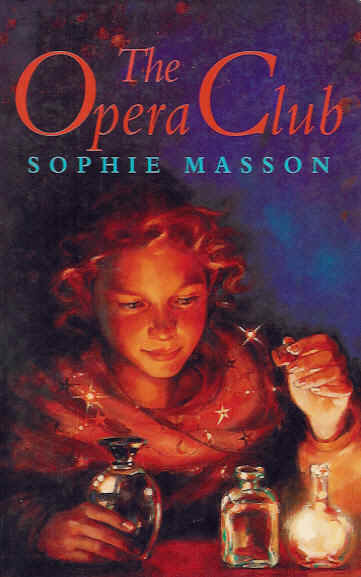
Anne Spudvilas is an absolutely wonderful illustrator based in regional NSW whose rich, gorgeous work has adorned the books of many Australian authors, including myself. I’m very happy to say by the way that the original painting of the glorious cover she did for my 1993 novel, The Opera Club, adorns one of our walls at home–a very kind gift from Anne herself.operaclub (1)

And today, with her permission, I’m presenting on this blog as well as my A la mode frangourou food blog, another gift, another rich and gorgeous work, this time of an edible kind! It’s the pavlova volcano, and it’s absolutely spectacular!

From Anne:

This recipe brings back memories of two wonderful New Year’s Eve celebrations on the Murray River when i first came here.   Julie Chambers, director of the Art Vault where i did two wonderful printmaking residencies,  makes this as the ‘piece de resistance’ at her long long New Year’s Eve dinner table.

 My version of Julie’s specialty.  

Make three pavlovas. Home made are best and if they don’t look too flash it doesn’t matter.  Break them into large pieces and begin to construct your volcano using vanilla icecream and whipped cream to hold it all together. Add 4 punnets of assorted richly coloured berries.  Pour over two more punnets of assorted berries, pureed with 1/2 cup orange juice and 1 tbspn of liqueur added (i love Cointreau).   

 Ah yes, a million calories but SO delicious 🙂
Annes pavolova volcano

Taking the independent road: an interview with Jon Appleton

Jon_AppletonI’ve known Jon Appleton a long time: since I was a pretty newly-published writer, and he was an articulate teenager passionate about books and writing to the extent that while still at school he founded, wrote, and edited a fabulous magazine called Rippa Reading. Since those days, Jon has gone on to have a stellar career as a publisher, in Sydney and in London, working with great authors and illustrators. And now he’s embarking on a new challenge–taking the independent road, as a new author and self-publisher.

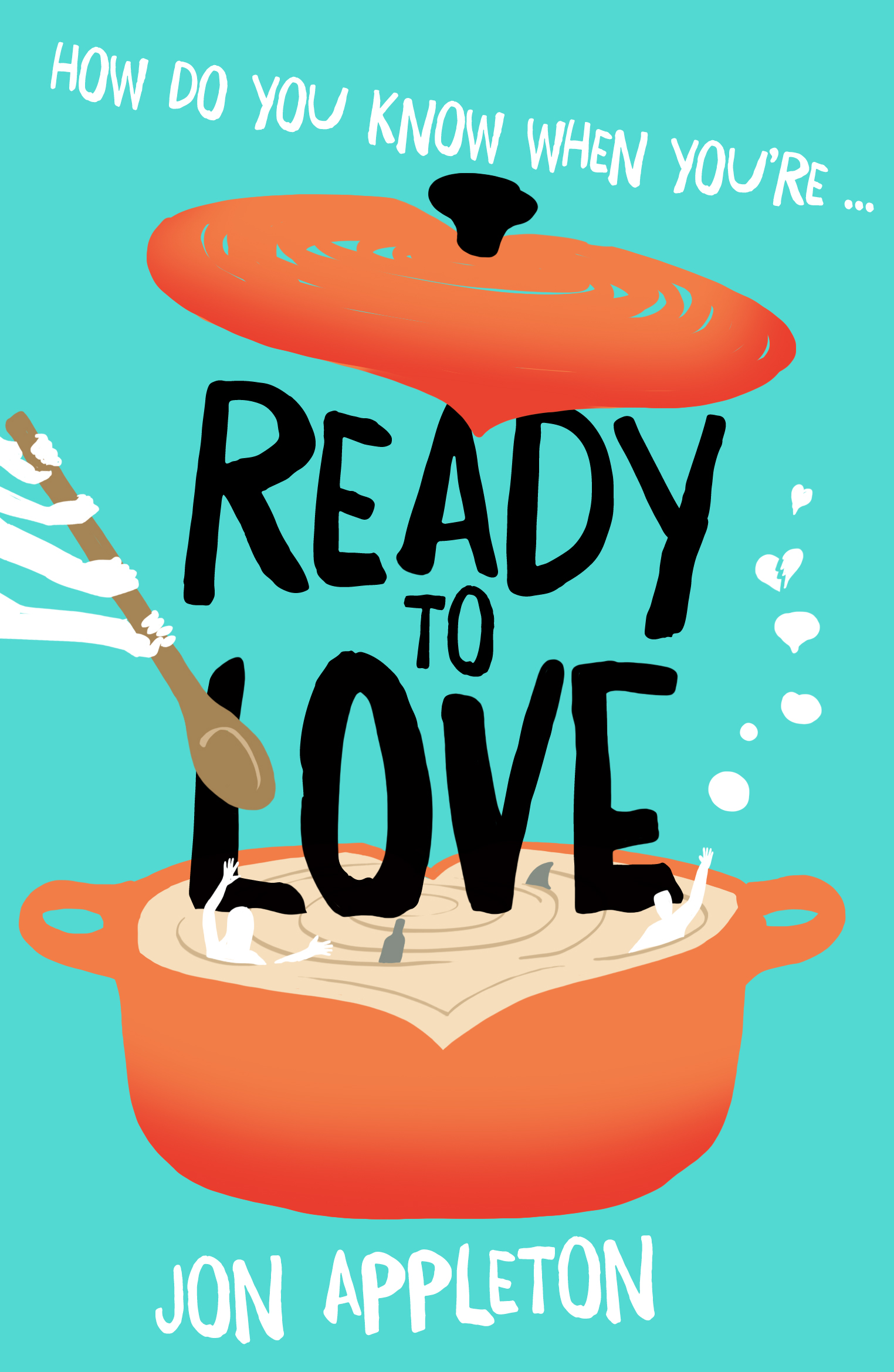
First of all, Jon, congratulations on the release of your first novel, Ready to Love! Can you tell us a bit about it, and its road to publication? 

Thanks, Sophie! Ready to Love is about the way we see ourselves and how we think other people see us, and the different kinds of attachments we form to those around us: family, friends, lovers, colleagues. Ultimately, it’s a rom-com.

Its London setting is quite important to me, and I began the book when I was living in Australia for a year in 2011, feeling quite homesick. I put it aside for twelve months when I came back to England, and then returned to it, working on it continuously for the next two-and-a-half-years.

Comedy is difficult to pitch to agents and publishers, I’m told, because it’s not viewed as a commercial genre. (Of course, we can all think of exceptions!) But I submitted it to agents nonetheless. Quite a few never replied (which I took to mean a ‘no’) but of those who did, several responded encouragingly from a reader’s perspective. I thought, ‘If only I could get past the gatekeepers, to readers, they would enjoy it too.’

Working in publishing, so much of my time was spent rejecting really good books (for reasons not dissimilar from those by which my own work had been rejected), and it was quite dispiriting dishing out ‘no’s all day only to come home to more ‘no’s from the other side of the desk. So I looked into the self-publishing option.

I knew the stigma of self-publishing has lessened dramatically in recent years. At the London Book Fair, there is a whole corner devoted to independent publishing that is reported on and taken very seriously. The timing was right.

I found the right outlet – Clays, the printer, recently established an independent publishing strand of their business – and began the process.

Putting together a book, from manuscript to finished product, is something you have a lot of experience of, in terms of other people’s work. But what was it like being in charge of your own?

I love the completeness of publishing a book – from discussing the concept with the author through to sending them advance copies. So the process of getting Ready to Love was extremely satisfying because I took a very hands-on route. Clays put me in touch with editors, designers, typesetters, Nielsen (who handled the bibliographic data), etc, but I did the legwork. It really helped maintain a sense of ownership of the process.

I sometimes think that writers feel they hand over their work without fully understanding the process – and why should they? But they can always ask! – and feel they’re being excluded. It’s never worse than when a book ends up with a cover a writer doesn’t like and the book fails to make it onto shortlists or in-store promotions. The author feels a sense of surrender when, in fact, the publisher really is on their side – or means to be.

I made all the decisions so I felt very much in control. Let’s hope I made the right decisions …9780993547317

You have just moved from the corporate publishing world to becoming a freelance, independent author/publisher. What has that move been like–the challenges and the pleasures? 

I’ve known so many authors – and freelancers – that I’ve always felt I sort of knew what it was like to be them. I appreciated how isolated authors could feel. I’d sit at my desk, and suddenly think, ‘Haven’t heard from Author X for a while. Wonder what they’re up to …’ and get in touch – particularly in the long periods when there wasn’t anything formal to do on their current book.

That’s changed, in recent years: there’s always something to do on a book, especially after it’s been published. You can revise your Amazon profile or write a blog, or reach out to potential new readers on Twitter. I’ve spent a lot of time in the past couple of years encouraging writers to be active on social media – and we’ve spent more time than ever on revising synopses and pitches (because, for many authors, it is harder to get published than ever before).

Now I’m learning, first-hand, exactly what all that entails. The main thing I’ve learned is to be focused and to think always: ‘What am I trying to do? Who am I trying to reach? What kind of writer/publisher do I want to be?’ I’ve got a blog that explores these questions – www.jonappletonsbooks.com – and it’s very much an exploration and I’d love people to join in. There are no finite, permanent answers!

You worked for a long time as a children’s publisher: but as an author, you are writing adult novels. Do you think your publishing experience has influenced your writing in any way? 

I think I realised early in my career that I love children’s books because I love the idea of children being confident and able through literacy, and cherishing the books they read when young their whole life through. I really like helping an author shape the sound of the voice of, say, an eleven-year-old boy. But I have no interest in trying to locate that youthful voice myself. I’m not one of those children’s editors who read only children’s books. My adult, reading self is nourished by other books which are more akin to the novels I want to write, and write about.

As a teenager you founded a respected literary magazine, Rippa Reading, which focused on books and authors. Can you tell readers about that, and some of your favourite stories from that time?

Rippa Reading was a fan magazine for authors which I began in late 1986 and edited until the end of 1995, just before I moved from Sydney to London. It was published and supported by my old school, SCECGS Redlands and, joyfully, the entire children’s publishing industry. It was an amazing time for which I am hugely grateful.

The magazine was born out of my desire to be a writer and to find out what writers were like, and it led to my career in publishing. Undoubtedly, it was inspired by The School Magazine which not only presented the best in new writing but made its creators available to readers through the magazine’s pages and especially to me with personal friendships with the staff.

There are so many highlights and stories from that time – genuine friendships with brilliant, creative people, many of whom now are no longer with us, but other connections endure 30 years later, like our own! It was fun being part of the CBC committee and appearing on TV and radio to talk about new books. It was an honour to receive awards, and even more so to be an early fan of brilliant new voices, like Jackie French to whom I was introduced by the wonderful Cathie Tasker (through whom you and I met, Sophie!), who was then at HarperCollins and Ursula Dubosarsky, who once taught at Redlands.

But the story I want to share now makes me happy because it brings my connection to Australian children’s books more or less up to date. When I joined Hachette Australia as Children’s Publisher at the end of 2010, I finally got the chance to publish books by Australian authors and illustrators – some of them award-winners but others, excitingly who were new to the industry. The concept for a children’s edition of the bestselling book about Tom Kruse the outback mailman had lingered for some time, but the concept hadn’t been fully realised, nor, crucially, the right illustrator found. I remembered Tim Ide from when I’d done work experience at Omnibus Books back in 1990. (Jane Covernton, who established Omnibus with Sue Williams, was always hugely supportive of Rippa Reading.) One afternoon at Omnibus, I’d been lucky enough to be taken to tea by Tim and Max Fatchen to celebrate their new book, A Country Christmas, which perfectly evoked the South Australian countryside in years gone by. So, many years later, I got in touch with Tim he agreed to work on the book. At that point, everyone in-house (and the author!) felt energised by the project, and it went on to win the Eve Pownall Award in 2012.

What’s your view on the situation for authors, and publishing today–the issues and the opportunities?

For the majority of writers, it’s tough to make a living. The obstacles are numerous: small advances, a paucity of review space, overstretched marketing budgets. More than ever, authors are expected to sell their own books – whether they publish independently, or through a mainstream publisher. That doesn’t suit everyone, I realise, but I do think that, usually, the author is his or her book’s best advocate, so it makes sense. And there are so many ways for authors to engage with readers – it’s not all about author visits and festivals. Authors need to be authorpreneurial, a term I hear a lot now. It takes time away from creative work, of course, but it’s necessary. It’s part of being a writer.

What are you working on next?

I’m planning a new novel, but I’m really aware of the need to make the most of the opportunity created by publishing Ready to Love. So I’m very happy to write about it or talk about it and to engage with people – anywhere! – in the hope that they might choose to read it, and to be receptive to further novels by me. At a practical level, I’d like to recoup some of the cost of publishing it by selling subsidiary rights – audio, translation, US and Canada and, of course, Australia!

I’m also in dialogue with writers’ groups and students who need help not just with writing, but preparing themselves for a writing life. People are aware of the challenges I outlined above (and many others), and part of my new work portfolio is helping them find ways to pitch themselves successfully and achieve an audience in the face of these challenges.

An interlude to introduce the Juvenilia Press

I’m delighted to learn today that the Small Beginnings series on this blog is being featured on the Facebook page and linked to the website of a wonderful specialist press publishing out of the University of NSW, the Juvenilia Press, which focusses on the very early writings of authors, including classic authors like Jane Austen! Here’s something about them:

The Juvenilia Press promotes the study of literary juvenilia, a category of literature that has been largely neglected. Its editions are slim volumes of early writings by children and adolescents (up to the approximate age of twenty), including published and unpublished works of young authors – both those who achieved greatness as adults and those who did not become adult writers but whose writing is full of percipience and zest.

Founded in 1994 by Juliet McMaster at the University of Alberta in Edmonton, the Press has since 2001 been based in the Faculty of Arts and Social Sciences at the University of New South Wales in Sydney, and has an international team of contributing editors from Britain, Canada, Japan, Spain, Switzerland, New Zealand, the United States, and Australia.

The volumes are normally devoted to one author and are edited by an expert in the field, with the assistance of one or more students, usually postgraduates. Student involvement in the research and editorial process is an essential part of the pedagogic aim of the Juvenilia Press; and the illustrations, often executed by young aspiring artists or by the original young authors themselves, aim to capture the tone of the original productions. By contributing to the recovery, publication, and critical exploration of childhood writings, the Juvenilia Press actively promotes literary research and the professional development of students. At the same time, they endeavour to provide, for a wide audience, an insight into the creative energy of this rich and varied body of writing.

Do check them out on Facebook, and visit their website for more information: https://www.arts.unsw.edu.au/juvenilia/


A new blog series, Small Beginnings: Introduction

I’m starting a great new series on this blog today. It’s called Small Beginnings and it’s a unique look at how authors and illustrators began creating–not their published work, but much earlier than that, as children, teenagers or even young adults (up to early twenties). I think that this is absolutely fascinating in terms of showing how an author or illustrator begins to shape their craft well before the time they even start to think about the possibility of sending off work for publication.

So I’ve asked a number of fellow authors and illustrators to write about what they created in their early years, and if they still have examples of such work, to show us extracts from them. The response has been fantastic and so I’m delighted to inaugurate the series today with something of mine, as an introduction to Small Beginnings.

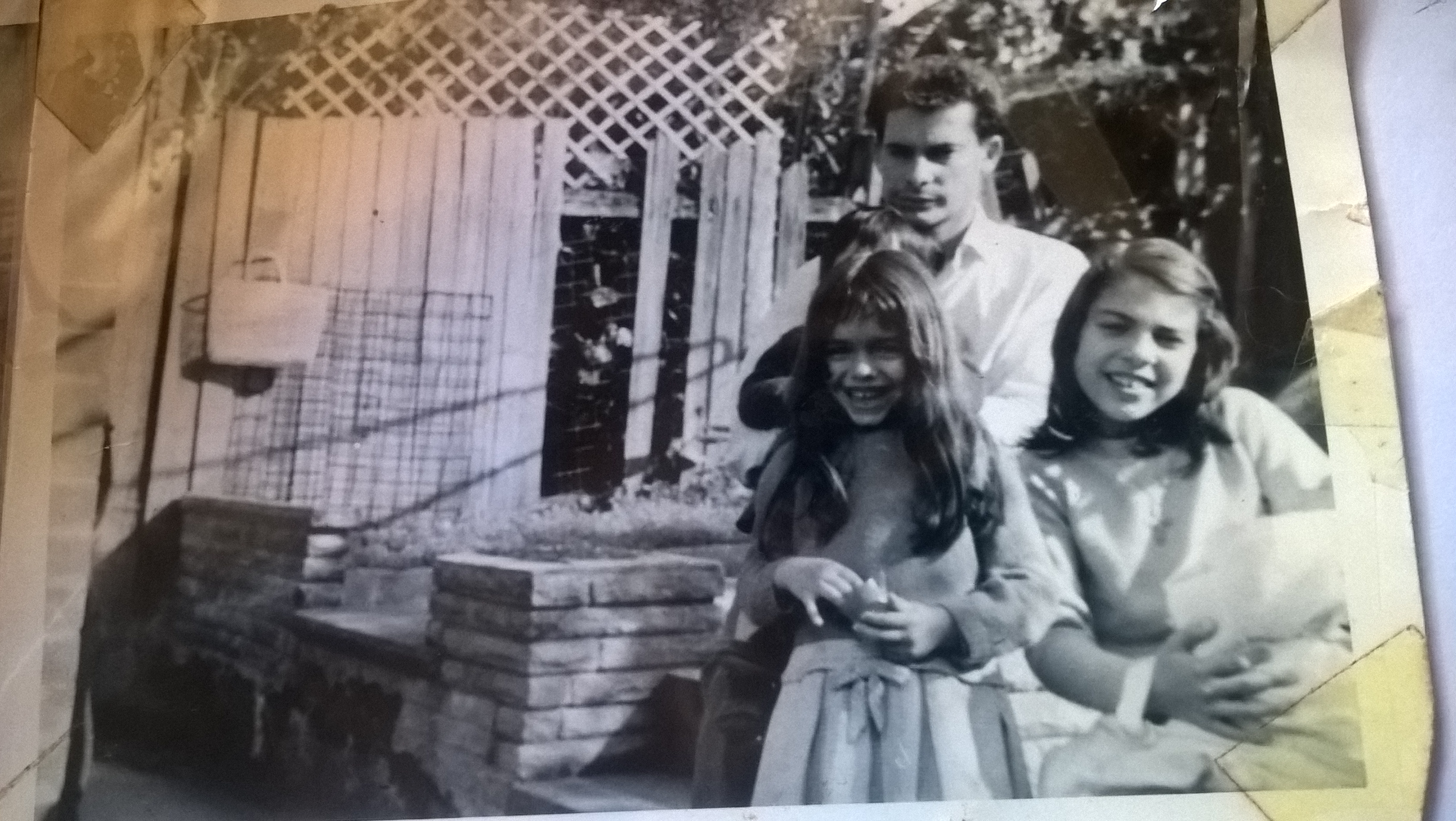
Me aged about 6, with older sister Beatrice(11) and my father.

I wrote a lot as a child and a teenager. I came to Australia from France with my parents and sisters when I was nearly five, and by then I could already read and write a little in French taught by my grandmother, who’d looked after me for some years(due to illness when I was a baby, making me unfit to stay in Indonesia where I’d been born and where my parents were working). I was already mad for stories–oral as well as written and I loved making up my own too. But it was arriving in Australia and starting to write in English that really got me going creatively speaking. I was lucky enough that in all the schools I went to, creative writing was very much encouraged, and at home, we were so surrounded by books and also by the great stories told by my parents that bathing in an atmosphere of story felt totally natural, though the idea that you could be a writer, as a job, didn’t really enter my head till I was well into my teens.

I don’t remember much of the very early stuff I wrote, but a few titles from primary school-age literary projects still stick in my mind: such as The Adventures of Princess Alicia–a lavishly illustrated, multi-episode comic strip story about a heroine who had two attributes I dearly wished I had–not, not a crown, but magic powers: and long blond hair (my hair was long but very dark!) I illustrated this masterpiece too I might add, in the days before I became embarassed by my lack of talent in that direction. And The Life of a Stamp, a

Aged 16, with younger siblings Gabrielle and Bertrand.

Aged 16, with younger siblings Gabrielle(10) and Bertrand (8)

mystery/travel story centred on yes, a wandering stamp which gets posted on the wrong letters and gets in some sticky situations..There was The Twins’ Highland Holiday which was heavily influenced by Enid Blyton’s Famous Five, and there were several poems including one about a ladybird that I got a gold star for in class(I presented the poem written on the back of an illustration of a ladybird). Much of it I remember ‘publishing’ in little books, simply sheets of paper stapled up with hand-drawn covers, with perhaps a little stamp or sticker added to make it look more ‘official’. For a while I even ran a little story club at primary school which I called ‘The Bluebell Club’ (no doubt influenced by Blyton!) in which members read out their own stories. We even had a competition once in which the prize was a book, bought by my mother, who judged the competition–I was very miffed that she didn’t choose mine! As I loved the theatre–I used to go to after school drama classes–I also wrote a lot of plays, very often adaptations of fairy tales, which I wrote, directed and produced and forced my siblings to act in and my parents to watch. My mother was always very kind about these thespian efforts but my father could be quite sardonic about it, slow-hand-clapping and pointing out the narrative flaws rather loudly: an experience which hardened me up for later and occasional poor reviews!

Unfortunately none of that early writing was kept. It’s only when I was in mid-high school that I WP_20160425_11_29_40_Proprotested about parents’ tidying-up urge to chuck everything out and hung on to my writings like a determined limpet! So I have quite a few things from that time–lots of poems, a few short stories, and the beginning of a massive fantasy novel started when I was around 16(and in which I WP_20160425_11_29_11_Prointended to reunite every mythology in the world: nothing like teenage ambition!). And then, from a little later, at 19, a picture book–the text written by me, the illustrations by my youngest sister, Gabrielle, who was 13 at the time. That one survives in its entirety(you can see some pages from it it below).

In all of this what I can see is a young writer who is trying her hand at all sorts of things, enjoying playing around with different forms, flitting around from fantasy to realism, contemporary to historical, light hearted to rather serious, long to short. The craft is rather wonky, but the passion and curiosity–yes, and persistence too!–is very much there. I see, in short, an apprenticeship taking place without my even being aware that it was happening; how could I, when it was so much fun?


A new way of writing: an interview with Simon Higgins

Simon Higgins Web Friendly Biog PicToday I am interviewing author Simon Higgins about his extraordinary new creation, DarkSpear, which features an intriguing way of writing combining several art and media forms.

Simon is an Australian screenwriter and author of books for young adults. Originally a police officer, then private investigator, he turned writer in 1998. He has 13 novels published so far, often combining crime, speculative fiction and historical adventure. His 2008 novel, Moonshadow: Eye of the Beast, was an Australian bestseller and was also published in the United States, Germany, Indonesia and England. He currently lives in China where he works in several creative fields.

Simon, this exciting new release of yours, DarkSpear, is what you have called a ‘visual novel’ . Can you explain what that means?

Sure, Sophie. Visual Novels (VNs) are something quite fresh and exciting for many in the Western world! I keep summing them up for people in these terms: they’re books you play, games you read, a hybrid of textual novel and interactive computer game.

They evolved originally in Japan, spread throughout East Asia, and are now gaining many appreciators in both Europe and English-speaking countries like the United States, Canada, Australia and New Zealand. But not enough yet, I say.  🙂  They have so much to offer!

VNs are, at the core, literary, but like computer games, they offer new ways to enjoy fiction by thatching in extra mediums to intensify the reader/player’s immersive experience. So although text heavy, they also employ elements like a short opening film, sumptuous backgrounds, detailed images of the characters, sophisticated music, and even sound effects, to intensify story impact.

They are also an interactive storytelling medium, kind of the cyber-era descendant of those delightful old ‘Choose Your Own Adventure’ style books and games from the 80s. This is what you could call their gaming side. A player must decide what the protagonist will do at certain points, choosing from two or three options that suddenly confront them.

Different choices lead to different storylines, which in VN jargon are called routes or paths. Should you pick one that eventually ends in some decidedly nasty fate, it’s okay…because you also choose ‘save points’ along the way, which you can return to anytime using the menu. Thus, having noted where you made that critical wrong turn, you’re able to just dive back into the story world again, land close to that point, and take a different path!

Depending on exactly how the VN has been written, you may, or may not, on behalf of the protagonist, get to cheat what we could call ‘the hero’s ultimate fate’, but with each route you try, the journey will certainly change. It’s a pity real life doesn’t offer such options sometimes, heh? 🙂

How did you come up with the concept, and why? How long was it in the making?

 I wish I could say I’d invented the concept, but alas, it was more a case of stumbling on it while living and working in creative circles in China, and immediately thinking, ‘Wow! So many imaginative people I know in the West have probably never heard of this medium, but would absolutely love it!’

Quickly thereafter it also occurred to me that this could be a powerful rescue tool for all those parents and teachers who bemoan having a clever, curious teenager in their lives who just-won’t-read while computer games stalk the face of the earth and compete with books for their brain space.DarkSpear1

Here, I thought, is a bridge between the two worlds, one immersive and engaging enough for anyone to want to cross it, at least once. Now I should warn that not all VNs I’ve seen are what you might call wholesome, just as can be said for books. But many are, some are utterly delightful, and a few are even pure art.

I also (as I sometimes formally testified in court, way back in the police force) ‘formed a certain suspicion on good grounds’. A suspicion that once writers in the West, be they self-published, emerging or established authors, read a VN with good storylines and dialogue and gripping ideas, a cry would go up that I’d be able to hear all the way from China. A cry of ‘I want one too!’

Once I’d developed that feeling, and of course, found the right creative partners, the process, from the birth of the dream to my VN’S first ‘draft’ in playable form, took about four or five months. That included writing the tale’s routes, and programming.

DarkSpear is a multi-arts, multi-media project. Who did you collaborate with, and how did the process go? What challenges did you face?

 I teamed up with Lava Entertainment, an ambitious, intensely creative young company based here in Guilin, China, who had set up shop, as fate would have it, just walking distance from my own office at Crane Animation.

That’s where I write for Gemini Fables, an animated TV show, coach the in-house writing team, fine-tune crucial subtitles, and get to participate -to various degrees- in a wide variety of awesome projects. I get to travel regularly with my work, and sometimes have the joy of meeting Chinese directors, screen writers, TV celebs and actors – so many lovely and stimulating people.

I’m Crane Animation’s chief creative consultant and my official designation, based on my track record in the West, is Foreign Expert. Kind of chuffed about that, seeing as the first one ever was Marco Polo. 🙂 Always nice to feel you’re following in a legendary author’s footsteps, though happily, unlike Marco, nobody ever points crossbows at me when I move between provinces for business travel. 🙂

My regular work can include tasks related to animation, filmmaking, educational and safety initiative creation, commercial branding character design, and all sorts of projects that harness story and imagination to help build international friendship ties between China and other parts of the world, including Australia and France.

But the Visual Novel project with Lava was aside from all that, out of my comfort zone you could almost say, because it required me to quickly get to know a brilliant young team of artists, programmers and business people who spoke, in some cases, minimal or no English. That was naturally an ongoing challenge as my Mandarin is very basic.

However, we all persevered, and as we worked on the project, they coached me in the technical side of putting together a VN, which at the outset, involved me, the author, not only writing the story but creating at least three primary variations to its overall arc and then designing a series of sub-deviations within each major ‘route’.

Along the way, I had to chart out where key moments would turn into decision-points for the reader/player, and depending on their choices, sweep them seamlessly into other paths, and possibly, back out again to the original route, later. At first, it was mind-bending. 🙂 I remember hunching over my notebook, in genuine zombie mode, after working on it intensively one weekend, my wife devotedly shovelling noodles into my mouth with chopsticks, murmuring, ‘You can keep working, but you gotta eat.’

I also had to conceive and storyboard all the major background art, and work with the Lava team on character design, choices of music, and desirable sound effects for heightening the drama at certain points. And, towards the end of the whole process, I had to script, storyboard and direct the promotional and opening-of-game short films.

So the mission took in elements of novel then script writing, computer game design, film production and directing. I totally loved it, such an intense creative stretch! 🙂 My wife Jen, who won her creative master’s degree at RMIT in Melbourne, gave me many fabulous ideas and edited the final short films, even organising a Beijing composer to create the videos’ original music while actually watching the footage in real time.

One interesting challenge was the area of writer’s vision v. artist’s vision, something I’m sure is familiar territory to anyone who’s ever worked collaboratively on a picture book or illustrated anthology. Two different styles of creative mind, coming at the same territory from two different frames of reference, well, it can easily become a Batman V Superman-level epic clash. So yes, I did end up negotiating, at times, with the team’s artists over story v. imagery.

Fortunately, Chinese artists, in my experience, are the absolute opposite of volatile. We did have the odd lengthy chat about why, in certain instances, it really was necessary to stick to what my text described, as opposed to the artist’s view that a more free-form interpretation of that passage ‘could look so beautiful.’

But there was a great spirit of teamwork prevailing overall, and in the end, I did- happily- make some concessions, including changing certain details in the story to fit the envisioned art. I just had to. So many of their random ideas were just great! And I really love their distinctive work. Kai, the chief artist, for instance, somehow manages to bring digital and classical art style elements together in a really absorbing way.

DarkSpear2 DarkSpear is set in a dystopian future, and centred around a feisty, talented heroine, Kitty Sato, who is drawn into a dangerous secret world. How did you create the character of Kitty, and research the interesting phenomenon of psi-gamma(ESP) ability?

In some ways, Katherine ‘Kitty’ Sato was all about coming full circle for me.

1998 saw my first novel, Doctor Id, hit the shelves courtesy of Random House, and its star was young Jade Draper, a policeman’s daughter and reluctant psychic, misguidedly drawn into a hazardous opportunity to bring down a serial killer, and, fittingly for one of my characters, doing so with the aid of her Asian best friend and some-time love interest, Wing Tran.

The story’s murderer used the internet, which in 98 was wild and ‘un-policed’ compared to this century, to select and stalk his victims. I’ve been told -and I don’t know if it’s true- that I was one of the first authors to employ the whole ‘killer harnesses the net’ device in a crime novel. It did seem to surprise reviewers.

Whatever the case, that ‘X-factor’ certainly gave the book, a young adult tome, a topical edge that kick-started my career and garnered a Notable listing from the Children’s Book Council of Australia -no mean feat I think, given its gritty elements, including visceral nightmares and strangulations with superhuman strength.

Flash forward to a different century. 🙂 Late 2015, me contemplating my 13th novel. This time, though I again wanted to write about a tough young woman with precognitive abilities, I felt that this time round, she should be of mixed racial heritage (Jade and Wing combined, or perhaps a parallel to their potential child) and in no way reluctant to delve into her latent though unmanageable powers. I decided that this time, rather than be up against a killer, my heroine should be up against THE killers…in some timely but ultimate sense. And who would they turn out to be? Sorry. You’ll have to read the book, AND make some sound choices, to help Kitty find that out. 🙂

Once I’d come up with Kitty’s profile, I knew that, in a world now more savvy and cynical than the one I was first published in, this new young psychic Miss would need a credible backbone for her paranormal abilities, so I hit the books and the net (while feeling very safe from the serial killer I long ago created, thanks to the Great Firewall of China) and did lots of research…

It is just plain fascinating to discover how long and hard humans, educated, science-based, sceptical ones included, have relentlessly pursued what is in essence a romantic idea. ‘I can foretell future events; I can sense what’s in your pocket; on the back of that card in your hand; in the depths of your heart.’ Really?

Never, it seems, in the lab, under the scrutiny of objective, careful observers using reliable, untampered-with equipment. So says history, lots of it. Of course, part of the mythos of special powers is that real psychics are indeed among us, but being the real deal, will always refuse to be tested, even though they’d pass with flying colours.

As an amateur sociologist, anthropologist and self-resigned poster child for OCE syndrome (Obsessive Compulsive Exploration) I found this area of study utterly riveting, and dived into it fanatically while developing Kitty Sato and her world.

And while reading around the subject, I relentlessly beset my poor wife with sudden, random ‘Hey! Did you know…?’ outbursts. To her great credit, even when my excited rants had reached the double numbers, she still responded with patient smiles as opposed to kung fu. 🙂

So I got to know a world so interesting to work with, it became the reason DarkSpear is subtitled The Prologue. Yes. Good news. Lava Entertainment and I are planning at least one, possibly two more VNs in this series.

There is another fascinating aspect to DarkSpear too, in which a player’s own psi-gamma levels are actually evaluated during it. Can you tell us more about that?

dark spear 3Me being me, I was, as the project unfolded, once again hoping to come up with some ‘X-factor’ element that would really enhance the VN’s immersive qualities… 🙂

Once I knew that one of the major themes in my story would be Kitty’s psychic powers and how they might be both detected and scientifically demonstrated, I did my research then laid quite a challenge on the brilliant young minds I was working with.

Why? Because the Lava crew had said to me early on, during an initial brainstorming session, ‘Please suggest some sort of appropriate puzzle that could be included in the VN. Sort of a game within a game, for added interest and value for our customers.’

There were some very interesting expressions around the table when, in a later meeting, I explained Zener Card experiments at Duke and Princeton universities, as well as under the auspices of the CIA, in the latter’s case, as part of their hunt for real psychics to recruit as spies -all of this, now well-documented history.

The eyebrows really went up when I asked Jie Deng, CEO of Lava, if he thought he could design a real, scientifically-credible ‘Zener test engine’ and embed it in the VN. Well, he burned the midnight oil and went at the challenge like a trooper, employing skills he’d learned studying gaming science in, of all places, Birmingham, England, where he also developed his great -and now frustrated- love of ‘real’ fish and chips.

Jie’s subsequent success was to become that longed-for ‘X-factor’ component, DarkSpear’s utterly unique feature that sets it aside from all other VNs! Yes, if you are that rare, rumoured to exist individual with latent psi-gamma capacity (parapsychology-speak for real ESP) this humble Visual Novel can scientifically prove it, and by way of screen shots, help you document it. But I wouldn’t necessarily suggest sending a triumphant email – with supporting attachments – to the CIA. 🙂

How would you summarise the main features or benefits your Visual Novel offers readers and/or game players?

 Firstly, it’s a true read but with something more added: sensory immersion. Music that alters with the story, striking visuals that shift and change, sparingly (and strategically) used sound effects. But not everything is shown or done for you…so imagination, visualisation, and engagement on a thought level remains a major factor.
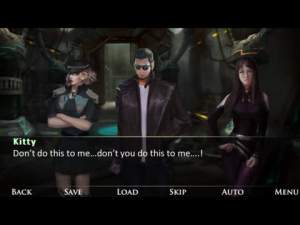
dark spear 4Secondly, while predominantly a book, it’s one you run on your phone or tablet for convenience, and also part-computer game, hence genuinely interactive. You help steer the story, and that’s exciting and unpredictable. You can ‘live it’ more than once, each journey as unique as the choices you make, but not too much is laid on you. The interactive aspect is not relentless, so you can still lose yourself in the tale.

Thirdly, it’s a kind of Trojan Horse. It has the potential to lure some, who just aren’t, in their own estimation, ‘reading types’ into an experience that may expand their habits to their lasting benefit. Put it on a young hard-core gamer’s Android, iPhone or iPad, and if they don’t delete the new ‘oddball’ game, they just may bring it inside the city walls of their personal culture, where, come nightfall, out will tumble the hidden warriors of readership. At least I pray as much, to all the gods, old and new. 🙂

Thanks so much for the interview, Sophie! As you know, I love YOUR work. 🙂 And by way of epilogue, I should probably also mention that anyone visiting the Official DarkSpear Page on my website, can download their own free 13 piece set of original artwork used in the VN. Just go to http://simonhiggins.net/darkspear-visual-novel/


Author site: www.sophiemasson.org