Authors’ pick 6: Beattie Alvarez

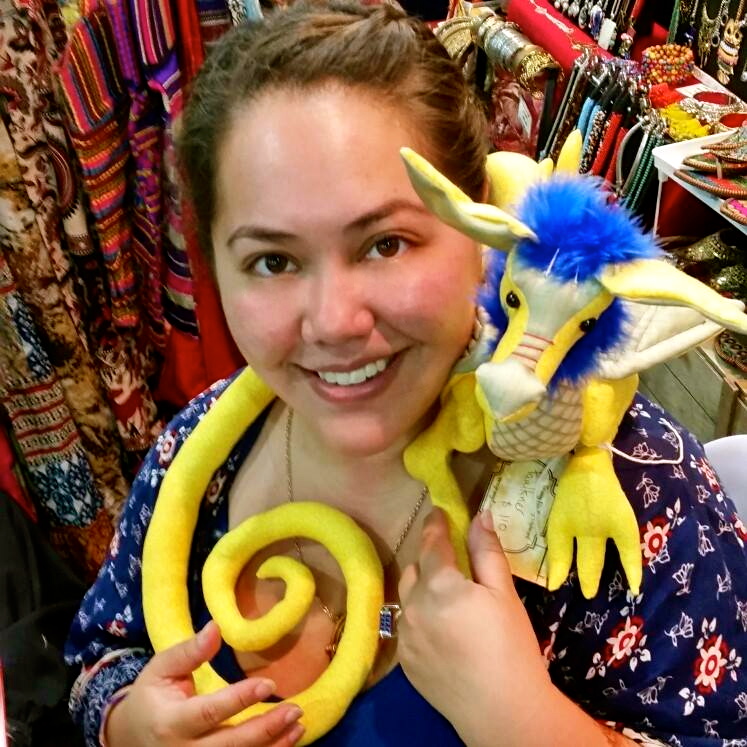
Annalie+child_2_Ivy+Cottage-1Readers of my blog will know that a couple of weeks ago I interviewed Beattie Alvarez, a multi-talented creator, and today she is talking about favourite books of 2015.

Favourite reading, by Beattie Alvarez

Two books have really stuck in my mind this year, neither of them written or published in 2015.

Last week I was exhausted. It was only 6:30pm and my eyes were drooping. All I wanted to do was crawl into bed and sleep until the next year.

But I couldn’t. My eleven-going-on-sixteen year old was fine.

‘You go to bed Mummy. I promise I’ll go to bed at the right time and not watch bad things on TV,’ she said. What a lovely child!

My three-going-on-eleven year old was another matter. She’s not old enough to put herself to bed, or to let her big sister put her to bed.

So I resorted to a bribe.

‘I’ll read you a Really Long Book if you go to bed now,’ I cajoled, begged, pleaded. ‘You can sleep in your dress!’

That worked. The mere thought of sleeping in my clothes makes me feel icky and grungy, but whatever! I just needed her in bed.

I pulled out the Really Long Book from my shelf and started to read. It was a book that my mum read me when I was a little girl, filled with cosiness and food and ivy covered houses.

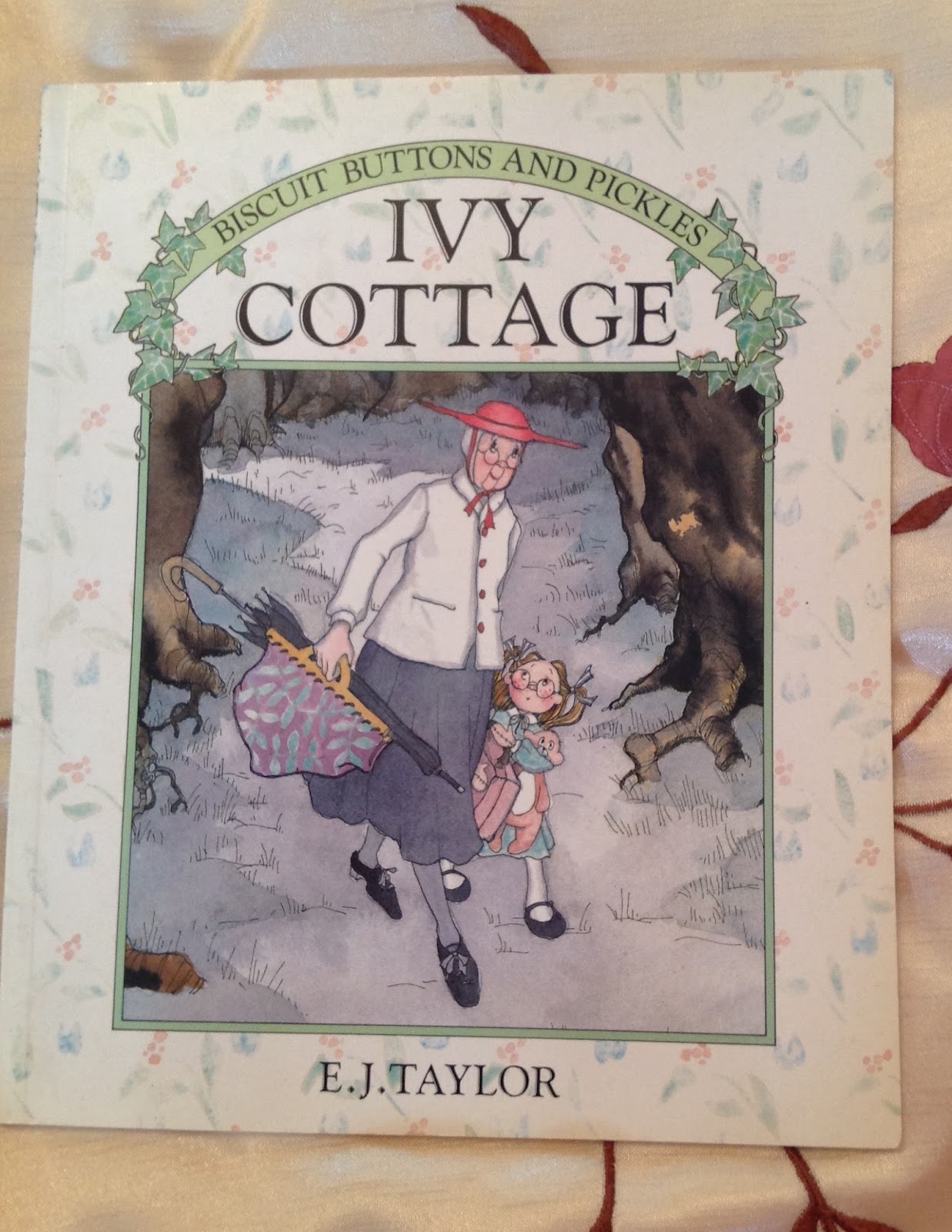
‘Ivy Cottage’ by E.J. Taylor is the story of Violet Pickles and her maker Miss Biscuit. When Miss Biscuit retires they move from the lovely, busy, bright city to the country, spending a wet night under an umbrella on their way because they couldn’t find their new house.

In the morning they search under the enormous mound of ivy that blocked their way only to find that the cottage was beneath it!

Violet gets very bored (she’s quite a spoilt doll who needs to be told ‘no’ a little more often) when it rains all day and she can’t play outside. So Miss Biscuit makes her a friend called Ruby Buttons.

This book is cosy reading at its finest.

When I had finished reading it I was instantly worried. It was still obviously light outside and how had I ever thought that Charlotte (Miss three-going-on-eleven) would agree to sleep?

Simple. She didn’t. She asked if she could read the book until it got dark.

I left her sitting bolt upright in bed, carefully turning the pages and telling her own handmade doll what was going on. I didn’t hear a peep from her until the morning when I went in and the book was carefully hidden under her pillow.

Now, the other book I’m going to talk about is completely different, and it starts with a confession: I read in the shower.

Yes, really. It’s simple really, just hold the book in one hand and turn the pages with the pinky of that hand — hold it out of the water of course.

The shower is the only place that I get any peace. So I have very long showers (yes, I know, I should save water).

This particular morning was a BAD morning. Everything was going wrong, everyone was running late and everyone was in bad moods.

It was freezing cold, the toilet was backing up again and I wasn’t wearing my glasses when I grabbed my shower book.latest

It was ‘Judgement of the Judoon’ by Colin Brake, a Doctor Who novel. I love Doctor Who, but I had been reading a different one and wanted to find out what happened. It took me a few pages to realise that I had the wrong one, but as I was already in the shower I was stuck with it.

And I did!

It was a beautiful medley of science fiction, adventure and nods to some of my other favourite shows. Specifically Veronica Mars.

Veronica Mars was the show that got me writing, oh so many years ago.

Doctor Who is the show that kept me alive when I was in the dark depths of post-natal depression, even more years ago.

So to have ‘Nikki Neptune’ solving mysteries with rhino-headed police and the Tenth (and best) Doctor in a galaxy far, far away was a very welcome surprise to start my morning!

When I got out of the shower — finally — the kids were fed, dressed and ready to go. The sky had clouded over, making it the perfect writing day. And I ended up writing almost 6000 words.

Judgement of the Judoon is a fun and easy book to read — in the shower or anywhere really!

Beattie Alvarez is an escape artist. She writes worlds that she wants to live in, but if she doesn’t ever get to be Queen of the Universe, she will settle for escaping to a pretty little cottage in lovely, damp England.

12313519_10153946858608287_6556033387383710522_n 2

Authors’ pick 5: Goldie Alexander

plainsongToday’s authors’ pick has been chosen by Goldie Alexander.

Plainsong, by Kent Haruf

Plainsong is the most perfectly named book imaginable. A simple story of individual struggle with human problems dealt with in a very human way. There is no clattering crescendo for the triumph of good over evil. Rather, the struggles we see detailed are wonderfully real and simply drawn with a story that hinges on homely challenges that the reading is a soothing passage to a quiet place.  The real triumph for Plainsong is not for the characters, but for their creator. Author Kent Haruf hones the feeling of simplicity with simple language — well used — and a sharp focus on character rather than place or even action Alternating chapters focus on eight compassionately imagined characters whose lives undergo radical change during the course of one year. High school teacher Tom Guthrie’s depressed wife moves out of their house, leaving him to care for their young sons. Ike, 10, and Bobby, nine, are polite, sensitive boys who mature as they observe the puzzling behaviour of adults they love. At school, Guthrie must deal with a vicious student bully  in a scene that will leave readers with palpitating hearts. Meanwhile, pregnant teenager Victoria Roubideaux, evicted by her mother, seeks help from kind-hearted, pragmatic teacher Maggie Jones, who convinces the elderly McPheron brothers, Raymond and Harold, to let Victoria live with them in their old farmhouse.

Goldie Alexander writes novels for both adults and youngsters of all ages. Her work covers many genres, though she is mostly known  for her historical fiction.

Goldie A1

Authors’ pick 4: Michael Pryor

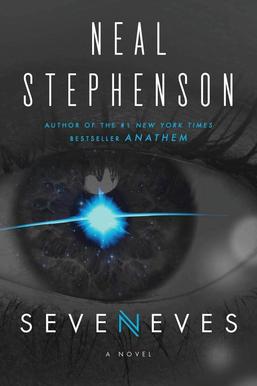
Seveneves_Book_CoverToday’s authors’ pick has been chosen by Michael Pryor.

Seveneves, By Neal Stephenson

Of all the books I read in 2015, I only gave five stars to one: ‘Seveneves’ by Neal Stephenson. I am an unashamed Stephenson fan – he’s one of the few authors that I will buy their next book sight unseen. ‘Seveneves’ is hard SF and is a book of two parts. It begins with the end of the world and ramps up from there … The human race is reduced to seven women and after a substantial time gap the second half of the book explores how these seven women – aided by technology – have managed to resurrect and preserve the human race. Absolutely fascinating, full of the hugest ideas, the sort of book that goes where mainstream titles wouldn’t even think of. And at nearly a thousand pages, it’s a great read for the holidays!

Michael Pryor writes fantasy and science fiction, mostly for teenagers. He has published more than thirty novels and 50 something short stories. He is one of the co-publishers of Aurealis, Australia’s longest running Fantasy and SF magazine. He has been shortlisted for the Aurealis Award six times, and seven of his books have been CBCA Notable books. His website is www.michaelpryor.com.au.

Pryor1cropped lo res

Authors’ pick 3: Meredith Costain

eleanor and parkToday, Meredith Costain is writing about her pick.
Eleanor and Park
by Rainbow Rowell
The endorsement on the front cover by John Green says it all, really: ‘Eleanor & Park reminded me not just what it’s like to be young and in love with a girl, but also what it’s like to be young and in love with a book.
Set in Nebraska in 1986, and told from alternating points of view with incredible detail, it’s a novel about first love, being a misfit, mix tapes and alternative music, raw emotion, comic books, bullying, and dysfunctional families. It’s also an addictive read. So addictive that I had to stay up until I’d finished reading it, worried about what would happen to Eleanor and Park if I stopped. 
 
The author says she writes about ‘people who talk a lot. And people who feel like they’re screwing up. And people who fall in love.’ If you like this book, you might also like Fangirl, another book by Rowell where the characters leap off the page. But for me, this is the one!
Meredith Costain is an Australian children’s author, whose books range from picture books to poetry, novels and non-fiction.
meredith and dogs

Authors’ pick 2: Hazel Edwards

hannaToday, popular children’s author Hazel Edwards, who I also interviewed on my blog a little while back, tells us about her favourite book for 2015.

Title: Hanna: My Holocaust Story

Author: Goldie Alexander

Publisher:  Scholastic

Publication Date: March 2015  $16.99 RRP

 Format: Paperback

ISBN: 9781743629673

Type:  Historical fiction


WHY THIS ONE? 

We need heroes.  And we need to know about ‘real’ events. But it’s so difficult to write authentically about historic ,tragic events from the perspective of a young person AND still retain 13 year old reader interest. And it’s hard to find historical books that are pitched at : ‘How would I react  if I were there then?’

The tone is appropriate in this book, ‘Hanna My Holocaust Story’ , and the telling is not emotionally overwhelming. Well paced.  Author got the balance right. Even the cover works.

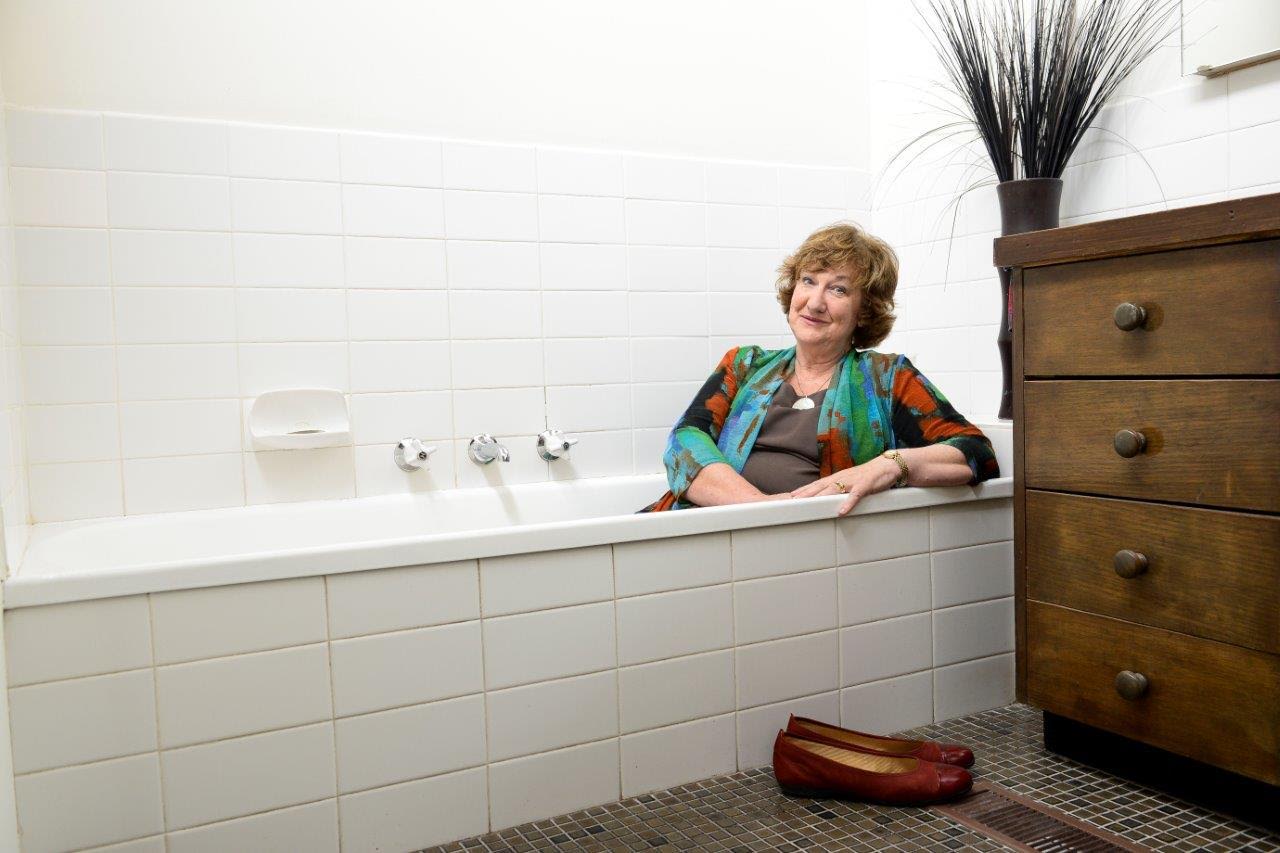
Hazel in bathHazel Edwards often reads in the bath (not usually with clothes on).This fun photo about author workspaces was taken by the Copyright Agency. Her memoir ‘Not Just a Piece of Cake:Being an Author’ (Brolga) is available in print & e-book. http://www.hazeledwards.com/page/not_just_a_piece_of_cake_being_an_author.html.

Authors’ pick 1: an introduction

ghost bride coverIt’s that time of the year when we are seeing a lot of ‘best books’ list, but in this new series I’m starting today, I’m doing something a little different: asking fellow writers and illustrators to write about a book they loved reading this year. It doesn’t have to be a new book: it can have been published this year, last year, last century, or any century, but old or new, it’s should have been special for that reader in some way.

And I’m starting with my own pick: The Ghost Bride, the wonderful first novel by Yangsze Choo, first published in 2013, which I missed when it first came out, but which I read this year. I first came across it as I was compiling a reading list for the PHD in creative writing I am currently undertaking, and was immediately intrigued by the concept. But that was nothing compared to the sheer pleasure and immersive excitement of reading this beautiful book, and I’ve been recommending it to everyone ever since!

Readers of this blog will know I interviewed Yangsze a few weeks ago, but here’s my mini-review of the book, taken from the introduction of the same interview:

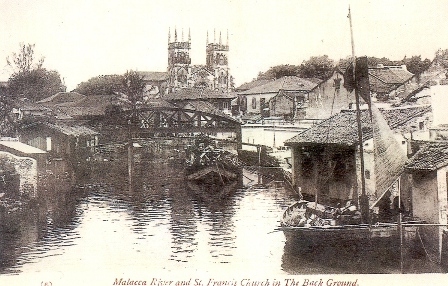
Set in 1890’s Malacca, in old Malaya, The Ghost Bride is the story of Li Lan, a young Chinese girl whose once-prosperous family has fallen on hard times: her mother is dead, her father has become an opium addict, and the little money there is in the family is dwindling fast, and will soon not be enough to support the household, including the few servants who are left. As a result of this, Li Lan’s father makes her agree to a terrible bargain: his only daughter will be betrothed to a dead man, the only son of the rich Lim family, who died some time before. Li Lan is desperate to escape this fate, and she tries every means to stop it from happening, especially as she has fallen in love with the new heir of the Lim family, their handsome nephew, Tian Bai. But in so doing, she must venture into the shadowy reaches of the afterlife–and soon places herself in terrible danger, as she plunges into an adventure like no other, from which there might be no return..

It’s one of the most beautiful and magical books I’ve read in a long time. In character, setting and story, it is rich, vivid and totally absorbing, and it ends very satisfyingly, as well. I’m not the only one who thinks so–first published in 2013, the book was a Carnegie Medal nominee, a New York Times bestseller, a favourite of Oprah Winfrey, and garnered all kinds of other acclaim and honours.


Double Act 6: Raghid Nahhas

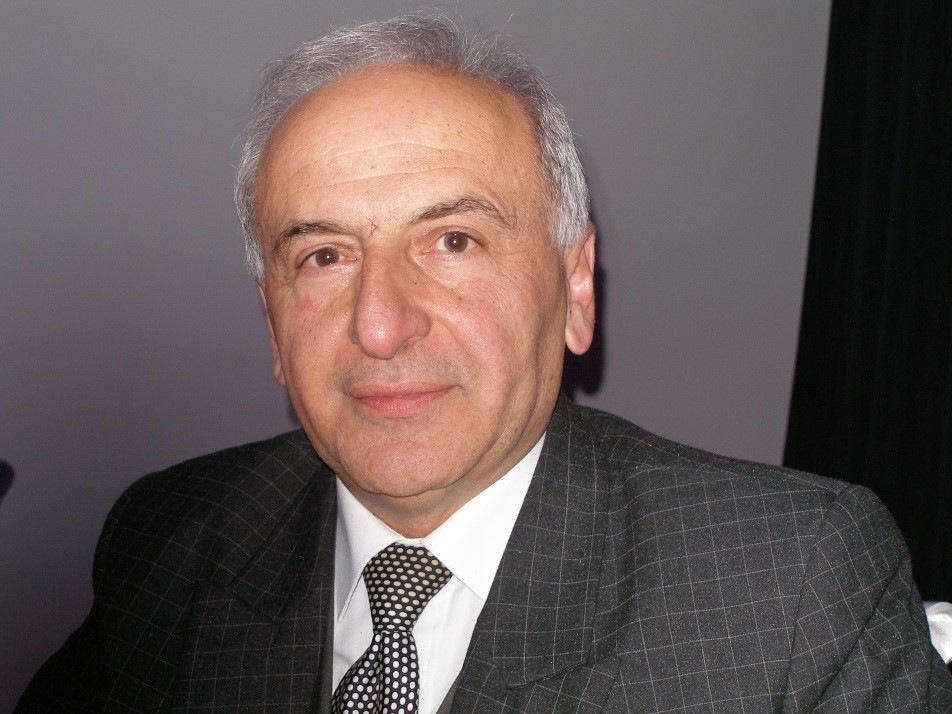
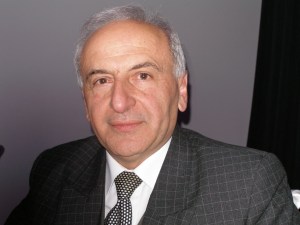
raghid picI first met writer, publisher, editor and translator Dr Raghid Nahhas some years ago when he was editor and publisher of a bilingual Arabic/English literary magazine, Kalimat. But publishing a magazine certainly isn’t the full extent of Raghid’s work, as readers will discover from this very interesting interview.

Raghid, for a number of years, you were the publisher and editor of a unique literary magazine, Kalimat, a bilingual Arabic/English production. Can you tell us how it started, what your aims for it were, and whether you felt those aims were achieved? And how was the magazine received, both in Australia and Lebanon? What are some of the scenes, that stand out, for you, in the time Kalimat was published?

I come originally from Syria, born to a Syrian father and a Lebanese mother. About 1998, a group of enthusiastic well-educated Australian-Syrians wanted me to group them in some sort of an organisation where they would feel useful to society. However, I was more inclined to reject any sort of another “ethnic” organisation added to the multitude of societies and even “political party groups” that are irrelevant to Australia (there are tens of such groups that carry the names of militias and political parties that have been active in the Lebanese civil war and its consequences. I find this very odd). I mentioned to those people that I would be interested in presiding over such a group if I had something meaningful to offer to Australian society at large, and that the group should be inclusive of any Australian who shares our aspirations.

Two years later, I felt I could realise an idea that was with me since I arrived in Australia in 1988. Back then, my scientific career and my occupation with supporting my family did not leave me much time for literary activities.

Perhaps the best answer to your question about the “aims” can be found in my first editorial titled Kalimat:Creativity, the Joy of the Word and Cultural Access (Kalimat 1, March 2000). Here are some excerpts:


Kalimat’ is the Arabic for ‘words’. It is the plural of ‘kalima’. We believe in the power and the beauty of words. We believe that the word is the gate of cultural heritage, and that writing is the key to its permanence. This is what the Arabic words on the back cover of this issue say.

Kalimat seeks to expose the beauty of words and explore their creative dimensions in poetry and prose, in any form or style. Kalimat will seek quality, without being too academic.

Kalimat, an Australian-Arabic Literary Quarterly, is produced alternately in English and Arabic. It seeks creativity in both languages, and fosters access between English-speaking and Arabic-speaking individuals and the worlds and cultures they represent. In doing so, Kalimat aims at providing direct enjoyment of the written word in either languages, or in both for those who are bilingual. Those who have one of the languages only, can have access to other ideas through translations and commentary. Kalimat’s mission is to provide a medium for cultural access and enhanced creative communications between writers from diverse communities, who are united by their quest to have their words read, heard and felt by everyone.

Kalimat will focus on Australian-Arab access by being representative of the widest possible contemporary writings in each culture. It will also attempt to promote Australian and Arabic writings throughout the migrant communities around the World.

We have already begun establishing links with major literary bodies and individuals in the Middle East and among migrant communities. The fruits of these contacts will start appearing in subsequent issues, ripe for everyone to enjoy.

We are very clear about what access means. A very dear friend who comes from a different background, holds some contrasting views to mine. We both believe that ‘boundaries’ are inevitable, or at least necessary or healthy. We believe that we are such good and close friends because we recognise each other’s boundaries. We are also able to cross those boundaries, move freely, enjoy their essence and move out again without undermining the integrity of the core.

The overwhelming response we have received indicates a great interest in the goal Kalimat is pursuing. It also indicates that there is a need for a new outlet for all those talents.

We would like to see more spontaneous, creative and emerging talents knocking on our door. To this end, we say that Kalimat is your words. And my word! Without you and your contributions to this exercise, it becomes null and void.


kalimat last issue

The last issue of Kalimat, in 2006

I would say that the aims were partially achieved, because they were limited to an elite group. This is due to two reasons in my opinion. One is the quality of the magazine. Another is our inability to market it on a wider scale. The latter was mainly due to severe financial difficulties at an era when digital printing was non-existent, making it costly to print. You see, my real aspiration was to make such a magazine popular without compromising its standards. In this way, I was hoping to engage the common reader with material of a more literary value than the one this reader was used to. I felt there was a need to make creative writing more accessible. I don’t think that we succeeded in that.

The magazine was received well in Australia, Canada, USA and England. It was also received well in some European countries, mainly by organisations and individuals with links to Arabic.

In the Middle East, it was received well by individuals and by one organisation in Syria that has links with Syrian migrants abroad. The Ministry for Culture in Syria subscribed to the magazine. Major Arab well-funded literary organisations never bothered to answer my mail despite sending them full sets and despite that some of their employees had material published in Kalimat.

I was interviewed by TV and radio whenever I visited Syria and Lebanon and the reception was excellent, but this was based on some individual initiatives by prominent people who appreciated the work.

Kalimat was published between 2000 and 2006. These years, and indeed the decade, will be remembered in history as truly fundamental in laying the foundation for a different world.

The year 2000 was prominent as the start of the 21st Century. It was preceded by a lot of anxiety about the “Millennium Bug” and the usual superstitions associated with “landmarks”. The real anxieties during that year were related to more real-world issues, mainly matters related to al-Qaeda and to Iraq. Between 2001 and 2006, the situation worsened with USA leading the war on Afghanistan after the 9/11 attacks, George W. Bush became president, a blast in Bali killed many Australians, the USA invaded Iraq with devastating consequence for years to come, a tsunami in south east Asia killed thousands of people, terrorism struck the heart of London, Syria withdrew its forces from Lebanon and the Lebanese prime minister was assassinated, Saddam Hussein was executed, Islamists captured the Somalian capital and Hamas won the elections in Gaza.

There were some bright moments. For example, the euro started circulation and a European spacecraft landed on Titan (a moon of Saturn). Add to this scientific discoveries and literary achievements, many of which might go unnoticed.

You are an author as well as a publisher. Tell us something about that. How did you start writing? What genres do you write in? And is your work mainly in Arabic or English?
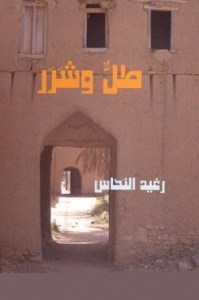
raghid dew and sparks

Dew and Sparks, a collection of writing by Raghid Nahhas


My main literary work is mainly in Arabic, but with Kalimat my English writings had a boost. I started writing at a very young age and I was known at school for my abilities in Arabic and English, despite my scientific choice of courses. I contributed to the school magazine in Damascus when I was in primary school and afterwards. Our school had a distinguished publication that was taken seriously. My first article in a leading Lebanese magazine was published in the sixties when I was fourteen. In England, whilst I was undertaking my PhD in Experimental Zoology, I met another Syrian who was undertaking a PhD in English literature. We became close friends and he showed me an issue of al-Adaab, the leading literary magazine in the Arab world at that time, with a short story of his published in it. This encouraged me to show him a short story I had written. He dismissed it as unpublishable by that magazine. Nevertheless, I did send it for publication and it was accepted. Ironically, it was my friend who broke the news to me, because he was a subscriber to the magazine.

I write short stories, prose, essays and socio-political articles. My work is full of social critique, sarcasm, humour and some dramatic sad stories from the start of the civil war in Lebanon where I lived for a while and escaped tragic circumstances on a few occasions. There is also a lot of happiness and love stories from Beirut between 1970 and 1975, a period during which I considered Beirut my darling city and the best place on earth.

In any piece I write, I mostly tend to include all the above elements. Although some of my work is a complete fiction, it is based on real experiences or understanding of real events. I believe in an integral approach to life: things are more related to each other than we think.

You come from a  well-read family, I believe. As a child, and a young person growing up, what books and writers inspired you? And what books and writers inspire you now?

My maternal grandfather was a distinguished journalist and a pioneer reformist in south Lebanon for the first half of the twentieth century until his death in 1960. Interestingly, my paternal grandfather was a business man and so was my father. My father, who only finished year five at school, was a devoted reader. I remember when TV was introduced to our household about 1960, the whole family would spend every evening watching, except for my father who would retire to bed and read for hours. We had many books, but mostly classical and traditional material and definitely nothing progressive, leftist or atheist. These I had to pursue myself. No one stopped me from doing that.raghid translation 2
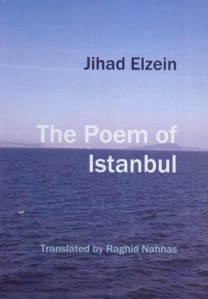
My mother had a collection of Shakespeare’s plays translated into Arabic. I read it all with fascination, particularly “Midsummer Night’s Dream”. I read translations of works by most of the renowned Russian novelists. War & Peace by Tolstoy comes to mind. Les Misérables by Victor Hugo was greatly admired by almost everyone. I loved it! I read Mariana Pineda by Federico Garcia Lorca.

One of the very first Arabic novels I read was Dua’ al-Karawan (The Call of the Curlew), by Taha Hussein, considered the most important literary figure in Arabic literature. He was not a novelist. His writings, however, are of a great literary integrity. Later (still a teenager) I read all of Naguib Mahfouz’ novels. One day, after class, a group of my classmates and I (four of us who were the best achievers) were discussing various issues as we always did during recess. I remember telling them that Naguib Mahfouz was soon going to get the Nobel Prize. Little had I known that politics would delay him the honour for twenty-five years!

Although I am not a poet, my main reading interest was poetry. I read a lot of the classical Arab poets, but I was more attracted to the modern ones, particularly Nizar Qabbany, a Damascene like me. I was born in the same locality where he was and in an architecturally Arabic house similar to his. I am very familiar with the Environment where he lived as a child and adult. Like him, I also lived in Beirut for a while.

In my twenties and until now, my major readings have been focused on science and philosophy. Examples of thinkers I admired over the years are (at no particular order): Rachel Carson, Bertrand Russell, Charles Darwin, Nizar Qabbani, Mahmoud Darwish, Adunis, Sadiq Jalal al-Azm, Simone de Beauvoir, Carl Sagan, Stephen Hawking, AC Grayling, Paul Davies, David Attenborough, Salman Rushdie, Noam Chomsky, Sigmund Freud and Albert Einstein.
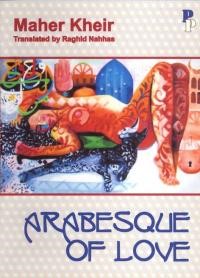
raghid translation 3My favourite person in history is Hypatia of Alexandria (died 415 AD), a philosopher, mathematician and astronomer. She was an advocate of the value of science and stood for her principles. She paid for this with her life when a Christian mob, including monks, tore her to death.

What’s the publishing scene like, not only in Lebanon but other Arabic-speaking countries?

Before the Lebanese civil war that started in 1975, Beirut had been the cultural centre of the Arab world due to the freedom of press and the relative democracy enjoyed. Many Arab intellectuals used Beirut to publish and some prominent ones moved there and established their own publishing houses, such as Nizar Qabbani and Ghada Samman.

Beirut still enjoys a lot of freedom in that respect, but it no longer occupies the same status as before. Dealing with publishers there would now cost you an arm and a leg. Not only do they want to sell you the number of copies you require, but also they force you to buy some 1000 copies and to forfeit any rights for a period of five years. I wanted to publish my recent Arabic books there (a logical thing to do), but aside from the few who never respond to you, some leading ones were difficult to deal with. I can see now why even some of the greatest of Arab writers opted to self-publish.

raghid verses across tasman

Verses across the Tasman, contemporary poetry from Australia and New Zealand, translated by Raghid Nahhas, 2015
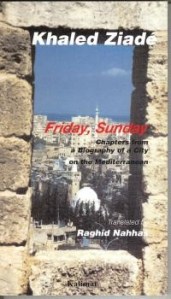
raghid translation 5

I don’t feel that the situation in other Arabic-speaking countries would be any different, but I am no expert on that except to say that some of the Gulf states have managed to publish literary magazines of a very high quality and they ought to be congratulated on their efforts. One example is the monthly Arrafid (published by the government of Sharjah, UAE). With every issue there are three extra little books, and each deals with a certain genre. The problem, of course, is whether they will be open minded about publishing material that does not meet their values. The problem I have with them is that so far I was not able to deal with them, because they don’t answer my emails or letters.

You have translated many works, from English to Arabic and vice versa. How do you view translation? What are its challenges and pleasures?

Unlike other literary translators who feel that once they put the work into the target language they possess it and it becomes their creative work, I consider myself a “trustee” of the work. The work is not mine and it can or should never be mine. I believe that a translation is a responsibility.

Integrity and honesty mean that a true translation should reflect the original work and never be better or worse. In the literary word, an accurate translation does not mean “a true copy of the original”. However, it should be a true reflection of the spirit of the original and as much as possible of the original style. This can never be achieved, particularly in poetry where the metre and musicality are very much dictated by how each language is established.

Creativity in translations is thus limited to how the translator is able to adapt the target language in order to meaningfully and structurally express the original work. Translators should remember that the most vital part of any piece is the ideas. Everything else is the “clothing”, and of course it can be as important as the ideas in creative terms. However, translators should not unnecessarily devise a different garment simply to stretch their linguistic muscle. What they should be doing, to re-introduce the original work, is to find equivalent phrases from the target language that match – in meaning – those of the original. I am stressing this because it is wrong to assume that the lexical meaning of a raghid translationword is going to convey the actual meaning of a phrase. This is a major issue in translations and a trap translators fall into very easily. As a simple example, in English you can say to someone you love, ‘You are my cup of tea!’ You can’t say the same in Arabic to convey the same meaning. You could say, ‘You are as tasty as a cup of tea!’ This, however, diminishes the power of the English phrase in my opinion. In Arabic, I would use something like, ‘You are my flower!’ Another example is one verse in Arabic I had to translate. It starts by ‘A citizen whose profession is to write…’ The Arabic version sounds great and seems acceptable, possibly because of its musicality. Left as it is, it sounds bizarre in English. It should simply be ‘A writer…’
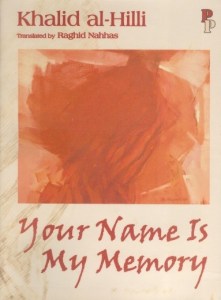
As well as your work as a publisher, editor, author and translator, you also worked as a scientist for many years. Do you think all of these strands complemented each other, or did you have to struggle to fit them all together?

I don’t believe it is a question of “fitting together” or “complementing each other”. Some people, like me, have varied interests. As such, the “struggle” is to find time to achieve in every case. No, I did not have to struggle, because for twenty-five years my involvement was with research and consulting. It did not leave me much time to consider my other main hobby in writing. This remained dormant and I was happy doing what I was doing. As soon as I had the opportunity, I embarked on a more serious literary path by publishing Kalimat.

raghid thirty four tales

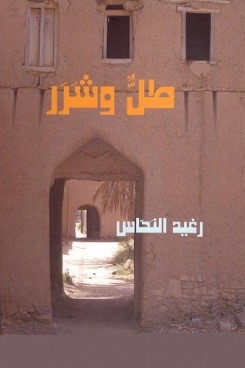
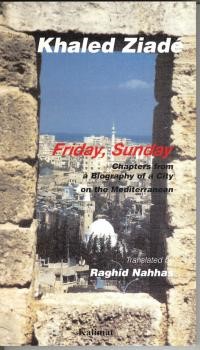
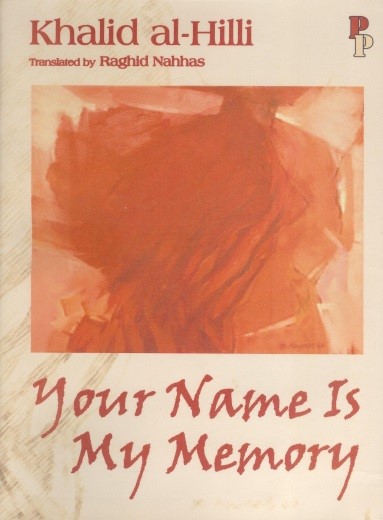
Thirty-four tales from Australia, translated by Raghid Nahhas, published 2015

My philosophy in life is very much dominated by “integration of disciplines”. I believe that we can specialise in certain fields and this is necessary for achieving specific goals and targets. Specialists, however, must not lose sight of the total picture if they want their achievements to be better and more accessible. For example, a geneticist must be conversed in the ethics associated with the consequences of genetic engineering.

What are your current publishing and writing projects?

This year I published three translation works: two into Arabic (short stories, poetry) and one into English (poetry). From now on, I hope to have the time to complete two novels, one in English and one in Arabic.

Anything else you’d like to add?

I would like to express my appreciation of a number of writers, poets and academics who stood by me when I published Kalimat. This was the best reward I received, because it meant that those people appreciated the value of what I was doing. I am saddened, however, by the fact that since Kalimat ceased publication, only a handful kept in touch.


Creative pleasures: an interview with Beattie Alvarez

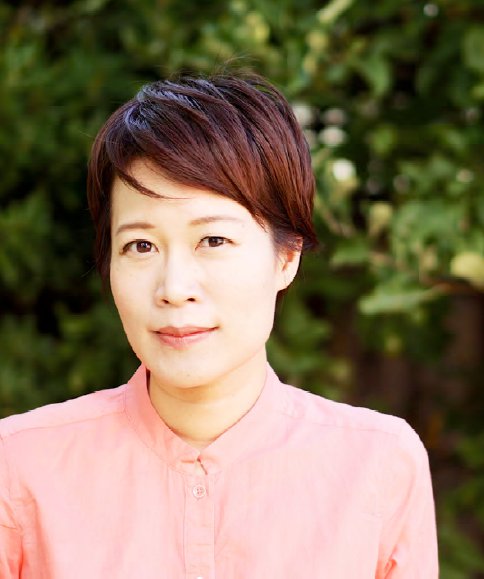
Beattie AlvarezToday it’s my great pleasure to feature an interview with Beattie Alvarez, a brilliantly creative and dynamic young woman whose talents lie in many different directions. Beattie and I work together at Christmas Press, but she’s also juggling many other creative and professional roles, as you’ll soon discover in this fascinating interview.  (Oh and by the way, she’s also the mother of two young and very lively daughters!)

Beattie, you are involved in many creative pursuits–writing, illustration and toymaking. How did it all begin?

SONY DSC

There are actually a few answers to this! I have always loved all of the above; my parents (Mum, Dad, and Carl, my stepdad) are all talented artists. I grew up at Julian Ashton’s art school, entertaining myself by shoving rolled up tissue paper in my nose while they drew naked people.

When I was four… or five… I saw Coppélia performed at the Opera House. I went home and wrote, illustrated and ‘published’ my own version of it while Mum sewed toys. By the time I was ten I had a whole shelf of self-published books!

I started writing as an adult when my favourite TV show ended abruptly, with a very dissatisfying ending. I was heartbroken! So I went out, sold my soul for a loan to get my first computer, and wrote my own ending. Then I discovered that it was actually called Fan Fiction and there was a website I could upload it to! The response from other fans was overwhelming. As of 2015 those stories have been read almost 100,000 times!

After that I was hooked!

Tell us about your writing. What have you had published, and what are you working on now? Do you write in particular genres only or do you like to try your hand at many things?

I’m new to being published and it’s so exciting! My first published story was in Reader’s Digest magazine… and it paid! Almost $1 per word! I thought I’d be rich in no time.

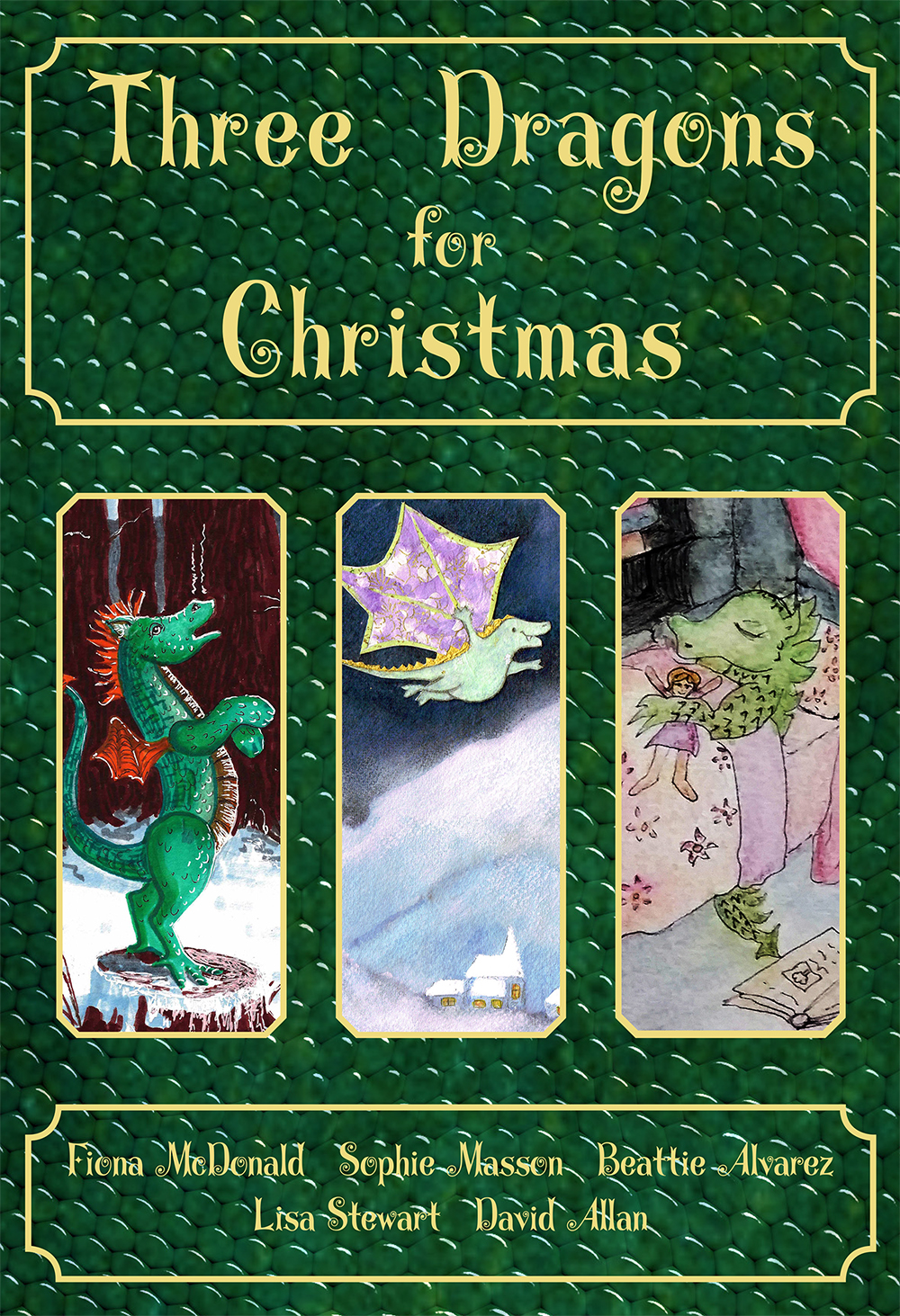
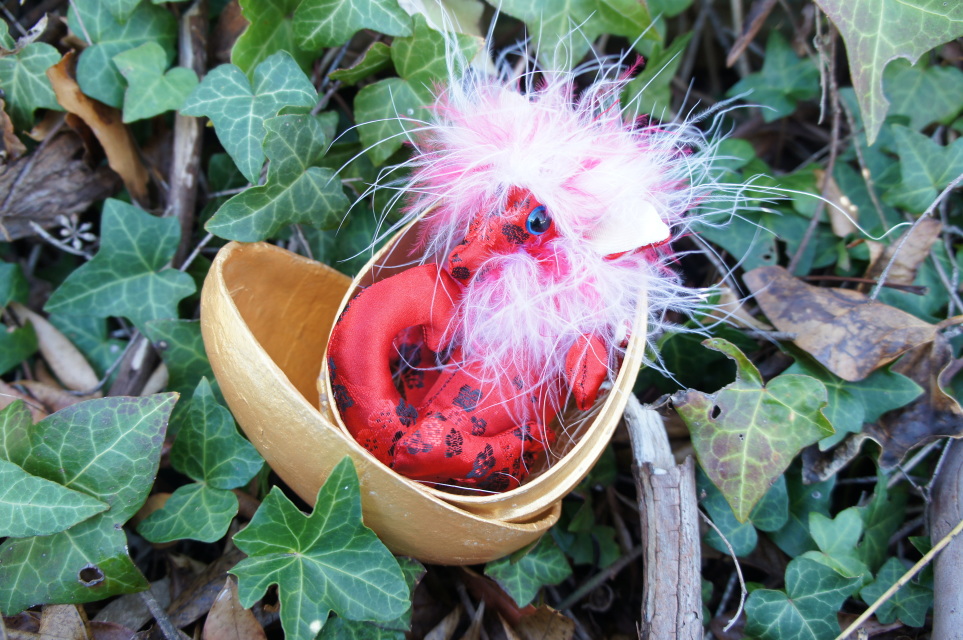
Since then I’ve had a few short stories, poems and illustrations published in anthologies and in November I was one of three authors with a story in ‘Three Dragons for Christmas’ by Christmas Press Picture Dragons Front Cover MediumBooks — I got to fully illustrate my story as well, which was a lot of fun.

I write anything and everything! Fantasy is my preferred genre, having lived in a fantasy world for most of my life. I’ve got one fantasy novel about the Queen of the Universe that will probably take the rest of my life to finish. I keep going back to add or change or edit.

When my brain is being stubborn I write, what I call, ‘mini murders’.  I write them to kick-start my brain — or when I’m in a particularly bad mood! They’re short stories where one — or many — people are murdered, ranging from twenty words to five thousand! One day I hope to be able to publish them in a book called ‘Murder on the Run’, the idea being that you can read one on your lunch break or between train/bus stops.

Then there’s the series of picture books I’ve written about Marguerite MacDougall… and my ‘magical murder’ novel that I’m working on!  I’m also waiting for responses from agents and publishers over a non magical, non fantasy YA novel that I finished earlier this year. It was my first attempt at something with no murder and no magic.

You are also an experienced editor of other people’s work. What effect do you think this has had on your own writing?

It gets me writing! I like editing for two reasons: the first is to help other writers out there polish their work and get the best manuscript they possibly can. The other is because sometimes it’s a hard job and I all I want to do is write my own stuff after weeks of writer’s block! Working on someone else’s manuscript that really needed a good edit BEFORE they sent it to me is the best way to get over an imagination blockage.

Tell us about your illustration work, and who has influenced you as an artist.

dragons beattie Christmas-Day-Brighter

From Three Dragons for Christmas

For years and years I refused to do art. Partly due to growing up at gallery openings and falling asleep under the food table when they went on too long and partly due to school. I hated art — and English — in high school. They tried to force me to see things that weren’t there and make assumptions about the artist. A curtain is allowed to just be blue! It doesn’t have to mean that the artist was depressed and in an unhappy marriage. It MIGHT mean that blue looked best there or that they wanted to open a new bottle of paint. So I butted heads with both my art teachers and my English teacher (who didn’t pass me once, for the record in year 12!) a few times over that. I became really disheartened when people with talent got lower grades than those who put a black spot on white canvas, twelve dancing princessesbut wrote an essay over why that was a real piece of art.

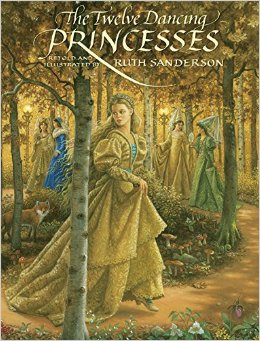
My parents, obviously, all influenced me when it comes to art and brambly hedgeillustration. But so did books! I love Ruth Sanderson’s ‘Twelve Dancing Princesses’ and the ‘Brambly Hedge’ books by Jill Barklem, where you can see the full story in the pictures, but there are also other side stories going on, only visible in the illustrations.

As well as being a writer, editor and illustrator, you have also worked as a book designer and lay-out artist. How did you learn those crafts, and what are the challenges in those aspects of book production?

It turns out that I LOVE book designing! Carefully choosing where the words go to make the pictures stand out (and vice-versa!) is very therapeutic and rewarding.

I learnt on the job with David Allan from Christmas Press Picture Books when we were working on ‘Once Upon a Christmas’. Thankfully I picked it up quickly or we might have been in front of the computer UNTIL Christmas! Since then I’ve helped design several books for Christmas Press and can’t wait for the next book so I can do it again!

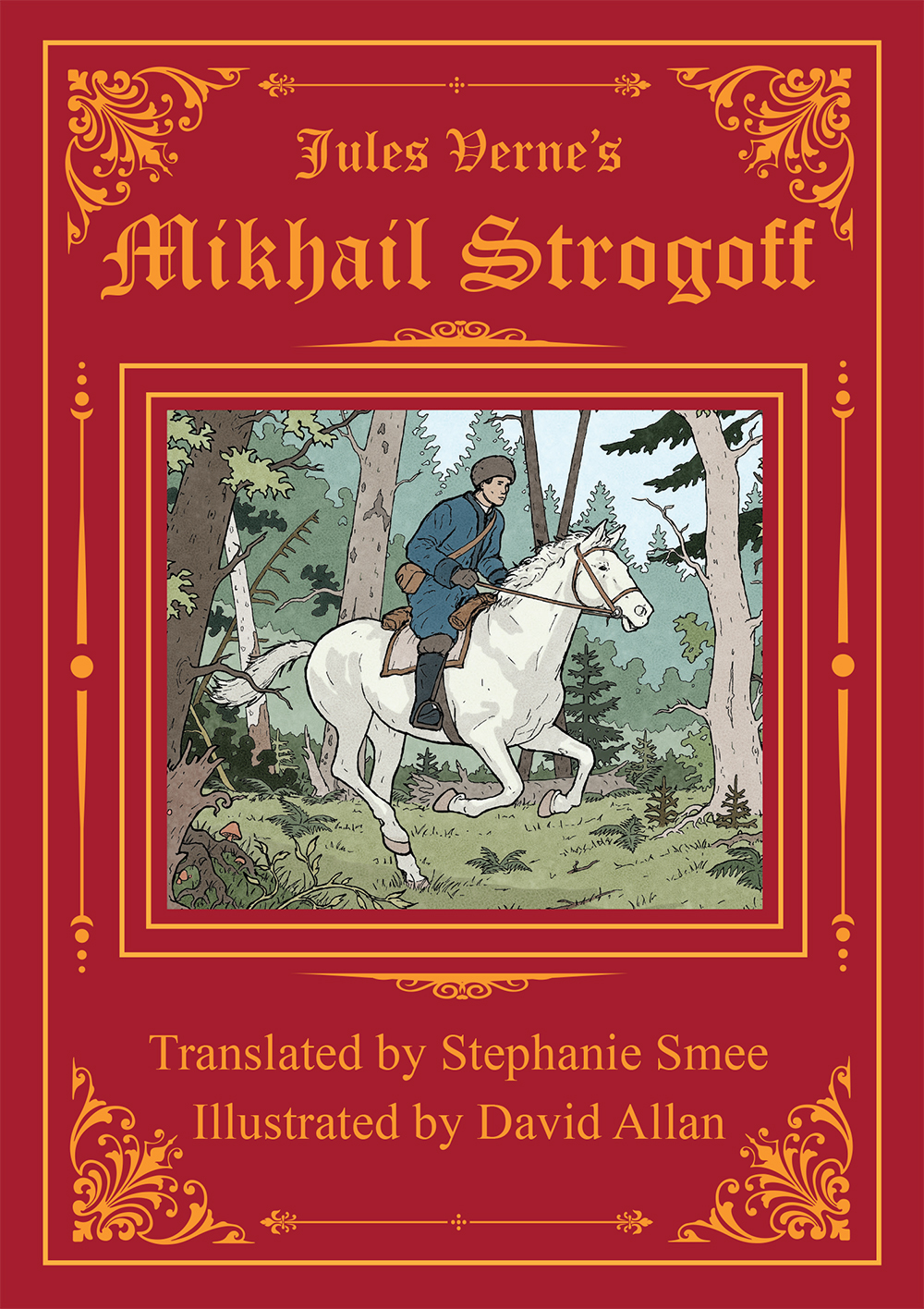
Mikhail Strogoff Cover Front Medium

A forthcoming book co-designed by Beattie Alvarez and David Allan

Seeing the finished book is the best part of that and knowing that I had a hand in bringing someone’s words to life is very satisfying.

That said, it requires a fair bit of coffee and chocolate, and maybe some naughty words slip out when Adobe and I disagree!

You also run a number of Facebook pages for businesses and organisations, including the New England Writers’ Centre, for which you also run the website. What is your key advice for businesses and organisations wanting to get the most out of social media and the Internet?

Do it! That’s my main piece of advice. So many creative types out there don’t use social media and I don’t know why! They say they don’t know how and what’s the point? There’s a saying from before the digital age ‘any publicity is good publicity’. Social media is free (unless you choose to pay for their ads). Your friends see it and like it. Then their friends see it and like it… etc! It’s about getting your work/business/organisation seen, the more people who see it, then the more sales/contacts you make. It’s simple!

The other piece of advice I have is to keep with the times. A website made ten years ago will probably not look as professional as one built now. There are a lot more options for web design now than there used to be. Buttons so that the user can interact with you and your business, so they can buy things, so that the site is user friendly. People are busy these days! They don’t bother with hard-to-use sites, they’ll just go somewhere easier and faster. So much is digital in this world that you have to keep up.

You are the deputy Chair of the New England Writers’ Centre, a non profit arts organisation. How do you view the issue of successfully steering a small arts organisation through challenging times?

Being willing to change with the times!  It’s very similar to what I wrote above, in that you have to keep up with what people want and need. This year the New England Writers’ Centre branched out and tried some new things, updated their website and Facebook pages and we did brilliantly! We’ve received several grants (yay!) this year to ensure that we can keep operating. That’s because we’ve had great grant writers, but also because we’ve changed and can prove that we’re willing to try new things.


You work with your mother, Fiona McDonald, to create unique hand made soft toys. Can you tell us something about that? beattie with toys

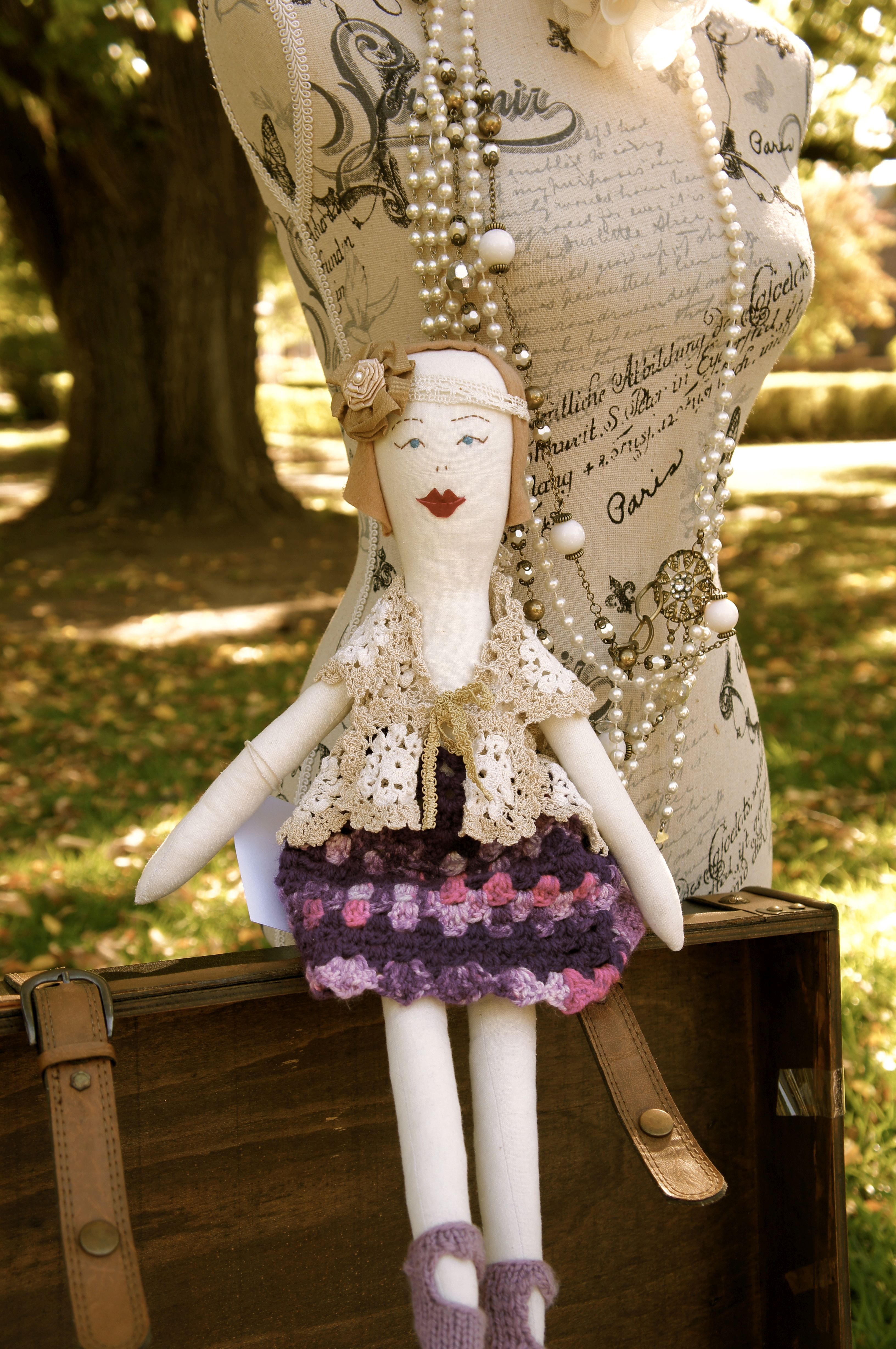
Mum and I work at everything together! And we work well. She decided to open a toy shop a few years ago and so we did! I didn’t really do any sewing before that, but now I do a lot! We felt there was a gap in the market for good quality toys that aren’t just for playing with, but for being companions for life. We like toys that can go into battle with you, have tea parties, sit quietly and read a book on a rainy day, toys that inspire play and friendship.

SONY DSC

And we’re doing so well that I’ve got calluses on my fingers from sewing so much!

You also help to run the shop, Granny Fi’s Toy Cupboard. What are the challenges and pleasures of running such a unique business in a regional town?

The pleasures far outweigh the challenges! Having a shop filled with beautiful, handcrafted toys, books, hats and all the like make going to work a treat! We’ve also branched out into some merchandise, having spotted yet another gap in the local market. We are now known as either ‘the dragon shop’ or ‘the nerd shop’! We have a great selection of Harry Potter, Doctor Who and Star Wars (to name a few!) merchandise that appeals to the ‘grown ups’ that come into the shop. Although, to be fair, those ‘grown ups’ also buy the toys!granny-fi-toy-cupboard-logo

It is hard in a small town to get a lot of walk by trade. The main pedestrian mall is sadly very empty of shops, mainly due to the exorbitant rents that the landlords are asking. Words that I don’t completely understand have been thrown around like ‘negative gearing’. Places like Centro, which was built off the main drag, have severely damaged the shopping strip due to its air-conditioning and under cover parking. People like the ‘one stop shop’.

And of course, there are people who just don’t understand us. We get questions like ‘but you just made this yourself, shouldn’t it be cheaper?’ and ‘but it’s not a real toy, it has no packaging’. Times like that are disheartening, but (after the first few times!) I no longer want to cry when people like that come in. Our toys deserve to go to homes that will love

SONY DSC

them!

What I have found very interesting is the response from tourists. Those that come from cities really DO understand us and our toys! They can’t believe how cheap our prices are and suggest that we open a shop in Melbourne or Newtown in Sydney.

But for all the hard times there are always more people that love what we’re trying to do in Armidale. They love our toys and the fact that 90% of what we stock is handmade in the area and that their money is going to support the local economy.


Maybe one day we will open shops in cities, but we will always be based in Armidale. It is our home and we love it.

Beattie's older daughter Isobel, with a hand-made friend!

Beattie’s older daughter Isobel, with a hand-made friend!

Interview with Yangsze Choo, author of The Ghost Bride

ghost bride coverRecently, I read an extraordinary novel called The Ghost Bride. Set in 1890’s Malacca, in old Malaya, it is the story of Li Lan, a young Chinese girl whose once-prosperous family has fallen on hard times: her mother is dead, her father has become an opium addict, and the little money there is in the family is dwindling fast, and will soon not be enough to support the household, including the few servants who are left. As a result of this, Li Lan’s father makes her agree to a terrible bargain: his only daughter will be betrothed to a dead man, the only son of the rich Lim family, who died some time before. Li Lan is desperate to escape this fate, and she tries every means to stop it from happening, especially as she has fallen in love with the new heir of the Lim family, their handsome nephew, Tian Bai. But in so doing, she must venture into the shadowy reaches of the afterlife–and soon places herself in terrible danger, as she plunges into an adventure like no other, from which there might be no return..

It’s one of the most beautiful and magical books I’ve read in a long time. In character, setting and story, it is rich, vivid and totally absorbing, and it ends very satisfyingly, as well. I’m not the only one who thinks so–first published in 2013, the book was a Carnegie Medal nominee, a New York Times bestseller, a favourite of Oprah Winfrey, and garnered all kinds of other acclaim and honours.

Enthralled by the novel, I wanted to know more about its author, first-time novelist Yangsze Choo, and so I went to her website, which is a most engaging blend of posts on books and posts on food: clearly an author after my own heart! After that, I contacted Yangsze and asked her if she’d be interested in an interview. I was very pleased when she agreed. And so, today, I am delighted to present this interview. Enjoy!yangsze choo colour

Your first novel, The Ghost Bride, is a remarkably accomplished and assured debut, and was a stunning success, garnering great acclaim.  Can you tell us about the first steps towards the novel? How did you begin your career as a writer? And what was the journey towards publication like?


That’s very kind of you – I’m so grateful and appreciative to be a novelist, though sometimes I still pinch myself in disbelief! I’d been writing bits and pieces ever since I was a child, but always thought of it as a hobby, one which gave me private satisfaction and which occasionally amused friends and family. The whole journey towards publication was really thanks to my husband, who started circulating part of The Ghost Bride to friends, and a lovely writer friend who encouraged me to look for an agent. So I googled “how to find an agent” and starting looking things up on a couple of websites. I think agentquery.com was one of them and querytracker as well.

Perhaps it was good to be ignorant, because I didn’t realize how daunting the whole cold-querying process sounds like – if I’d known, I might have given up before I started! However, I’d like to encourage aspiring writers to keep writing and submit your work. In fact, you don’t need any special contacts. I didn’t have any, and there are plenty of authors who came from the slush pile, just like me – it happens surprisingly often and you mustn’t give up!

The idea of the ‘ghost bride’–of a living girl being promised in marriage to a dead man– is both intensely creepy and arrestingly strange. How did you first come across the notion, and was it the initial inspiration for the book? How did you develop or vary it for the purposes of your novel?

Before I wrote The Ghost Bride, I spent 8 years working on a long and terrible novel about an elephant detective. In the course of writing this disaster, I happened to be digging around in the local newspaper archives (those were the days of scrolling around in microfiche) in search of elephant trivia when I happened to read a line about how spirit marriages had declined amongst the Chinese. At first I was confused. Then I realized “Ohh… this is the marriage of the dead” which I’d heard about before. And right away, I saw this scene in my head. This girl writing in her diary, in a dark room lit by a flickering oil lamp, about how she was going to be married to a ghost. I went home and pretty much wrote the first chapter of The Ghost Bride as is. Then I tried to shoehorn it into a subplot for my elephant novel (a bad, bad idea). And eventually, it became the novel that it is.

Li Lan, the main character and first-person narrator, is an attractive and very believable character. How did she first come to you?

I’m so glad you enjoyed her! It really was a scene and a narrative voice that suddenly appeared, so that I felt that I was recording what was unfolding. I think that’s important for characters, when you feel that they’re talking and making decisions by themselves. I tend to write by the seat of my pants, without planning, which is awful when things go badly and you’re stuck (I once got stuck for more than a year!), but wonderful when things really start to move and it feels like you’re watching a movie unwind. And then I also had to try to keep her in historical character. I think there’s a penchant for kick-ass heroines now who can do kungfu and break doors down, but I tried to give Li Lan experiences in keeping with what a young lady in 1890s colonial Malaya might have known and done. So sometimes she sat down and cried, which wasn’t always the most exciting thing, but I felt was probably accurate for someone who was going to be dismally married off to a dead man.

Er Lang is a wonderfully enigmatic and romantic character, with that disturbing yet playful and earthy quality of fairytale, too. How did he come to life?

Oh dear! Er Lang started off as a minor character who then started taking over various scenes, dispensing advice, and generally trampling all over my vague plans for Someone Else, but he was very fun to write. I realized that I looked forward to whenever he appeared because events always took an unexpected turn, and so he got to stay. By the way, initially the book had less romance and a lot more food, and my agent and editor both said that it could do with a romantic boost and, um, fewer nine-course banquets… I have to say they were probably right!

hell bank noteThe evocation of the afterlife and the afterworld in The Ghost Bride is extraordinary, and in your afterword, you mention that it’s a mix both of traditional Chinese beliefs, and your own imaginative creation. Yet it feels completely seamless to the reader, with the logic of dreams as well. How did you go about combining all those elements?

There’s a long tradition of strange, ghostly stories in Chinese literature, such as Pu Songling’s classic “Tales of Liaozhai”, which I was fascinated with when I was younger. It’s a rich and marvelous world, where beautiful women turn into foxes and palaces into beehives, and I was always deeply curious about what happened in these stories, which were often presented as actual histories. When I was writing The Ghost Bride, I wanted to bring the reader to that colourful world, where dreams and reality mix and you’re no longer sure exactly where you’ve wandered.

You know modern Malaysia well, but how did you go about recreating the rich texture of the atmosphere of 1890’s Malaya, specifically Malacca, which is the this-world setting of the novel?

My uncle used to live in Malacca, and we’d go and visit him when I was a child. It’s a port city with a fascinating past, especially since it changed hands so often. There are old houses and lots of ghost stories associated with it, which together with the ruins of the fort and the open grave where St. Francis Xavier was temporarily buried, gave me all sorts of lurid ideas when I was younger. In addition, my dad liked to collect old books, and growing up our house was filled with history books and old malacca 2accounts of British travelers in SE Asia. When we’d run out of things to read on rainy days and were feeling absolutely desperate, we kids would start on the history books. In retrospect, that was very helpful in establishing the time and setting! Later, when I was writing the book I also went to the Peranakan Museum in Singapore, which was having a fantastic exhibition on old batik sarong. Harvard’s Widener and Yen Ching libraries were also troves of information.

What are you working on next?

I think the challenge of writing a book for the first time is that one is so tempted to put everything and the kitchen sink into it. In fact, the current novel that I’m working on is also derived from a subplot of my ill-fated elephant detective novel (it’s rather horrifying how many things I tried to squeeze into it!) but I’m grateful because it’s subject matter that I’m interested in. I wonder whether you’ve ever felt like that yourself: if in some ways we’re all writing one enormously long, complicated book, even if it jumps through time and settings? I get that feeling, for example, from authors like Haruki Murakami and Isak Dinesen.

In any case, my new book is another strange tale of colonial Malaya, this time set in 1931, but still full of ghosts and murders and bizarre superstitions. I’ve always wanted to write a murder mystery, so that’s part of it, though I’ve learned my lesson and there are no pachyderm detectives in it. Ahem!

And anything else you’d like to add!

Thank you so much for having me – it’s been a pleasure and an honour! 🙂

Yangsze’s website is here.

Follow her on Facebook.

Buy signed print copies of the two Trinity books!

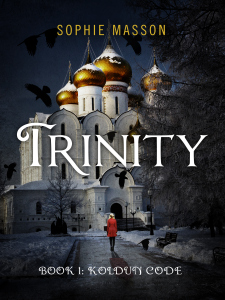
Trinity - The False PrinceThe print edition of Trinity: The False Prince has just been released–hurrah! And as it’s not always easy for Australian readers to get the Trinity books (Booktopia have the first one, but not the second so far, and Amazon will have it in both UK and US), I’ve decided to offer both it and the first one directly to Australian readers only (as postage is too high for overseas )from this blog. There’ll be a discount of 15 percent on RRP offered(making the books $21.20 instead of $24.95, with postage additional). And I’ll sign all copies purchased that Trinity Koldun Code coverway and dedicate them to your nominated person too if you want. A perfect Christmas gift!


If you’re interested, get in touch with me via contact@sophiemasson.org, and I’ll let you know full details including payment options.