Celebrating new books in troublesome times 5: Richard Yaxley

Today’s guest post is by Richard Yaxley, whose powerful new YA novel, A New Kind of Everything, has recently come out.

Brotherly Love

by Richard Yaxley

I wanted to write about brothers. I don’t mean my own experience, nor do I mean writing in a hokey, folksy manner about boys chiacking together. I mean: the phenomenon. The flux of being brothers. Determining the dynamic, the way brothers are.

I mean the way they can ignore and trick and hurl abuse and punch on but then, a minute later, defend each other with an absolute conviction of muscle, vitriol and, if necessary, blood. I mean the constant, simmering resentment of being forced to share rooms, rituals, families and histories; the bitter scramble for top place in the presumed apex of a mother’s heart; the need to be different to each other and their father while at the same time being praised by each other and their father.

That weird feeling of never being in control as you slide back and forth along a tightrope that stretches between slashes of pain and circles of affection.

My novel, A New Kind of Everything, published by Scholastic Australia in February, features the Gallagher brothers. Seventeen-year-old Carl and fourteen-year-old Dinny are dealing with the sudden loss of their father in a car accident. At a surface level, their methods of grieving are as far apart as their characters. Carl is aggressive, independent and filled with a violent anger for his father. Dinny is lost, pliable and manifestly uncertain about what his relationship with his dad ever was.

Yet, as much as they are a study in contrasts, so too are they the same in that, ultimately, it is the love that they feel, more so than their often instinctive actions and reactions, that defines them. Carl and Dinny have a deep love for each other and for their mother – and, they come to realise, for their father. This was what I discovered as I was constructing the novel; that the exploration of grief that I had planned to write became, by necessity, an exploration of familial love, because it is that love in its many forms which makes us grieve as we do. The two are utterly intertwined.

In Ann Patchett’s wonderful novel, Commonwealth, Theresa believes that the genuine measure of a life is how well we cope with the inevitable series of losses that all lives bring. Carl and Dinny lose a great deal in my novel: their father, of course, but also determinations about their futures and the chance to properly understand their past and its intricate engagement with their father’s hitherto untold story. With his death comes the difficult realisation that their imprint upon the Earth is instantly lightened and so it will remain. However, despite all of that, and the many challenges tossed up by the narrative, the brothers never lose each other.

In Commonwealth, when her daughter Holly reminds Theresa that she ‘got through’ the grief of losing her first-born, her mother responds: ‘We all did, I guess, in our own ways. You don’t think you’re going to but then you do. You’re still alive. That was the thing that caught me in the end: I was still alive.’

Alive to love, I think she means. And to love again, and again, until we are no more.


Reference

Anne Patchett. 2016. Commonwealth. Bloomsbury, London, p. 286

Connect with Richard:

Website: Richard Yaxley

Social Links:

Facebook

Twitter

Instagram

Buy Links:

Scholastic Shop

Readings

Riverbend Books

Dymocks

Angus and Robertson

QBD

Booktopia


Celebrating new books in troublesome times 4: Alison Booth

Today I am featuring a guest post by Alison Booth, writing about the inspirations of and background to her new novel, The Philosopher’s Daughters, whose official publication date is actually today–happy book release day, Alison!

A tale of two very different sisters

By Alison Booth

The Philosopher’s Daughters is a tale of two very different sisters whose 1890s voyage from London into remote outback Australia becomes a journey of self-discovery, set against a landscape of wild beauty and savage dispossession.

For years the idea for The Philosopher’s Daughters just wouldn’t let me alone. I kept imagining 1890s London and two strong young women, the daughters of a widowed moral philosopher. Someone like John Stuart Mill, a great advocate for the emancipation of women. Someone who gives the girls a relatively modern upbringing. Then I thought of altering the sisters’ circumstances so that they separately choose to journey into remote and wild Australia. What might happen to them?  How might they see life at the ‘frontier’ once they are confronted with the brutal dispossession of the Indigenous population? How would their characters develop as they faced danger?

The second half of the novel, set in 1893, mostly takes place in the Northern Territory of South Australia. Together with the top of Western Australia, this was one of the last areas of the continent to be appropriated by white colonisers.  At that time and in that part of Australia, the frontier wars were still being fought, largely over the establishment of the cattle industry, although they weren’t recognised as frontier wars back then. Indeed, only relatively recently has the full extent of settlement massacres and beyond been documented. See this article: https://www.theguardian.com/australia-news/ng-interactive/2019/mar/04/massacre-map-australia-the-killing-times-frontier-wars

A theme that has long fascinated me is how children are shaped by the preferences and attitudes of their parents. And the closer we are to a parent the harder it can be to move away from their influence and develop in one’s own right. This is the burden in The Philosopher’s Daughters that is carried by Harriet Cameron, the older of the two daughters. It takes her some time – and a journey to Australia – to learn who she is and to slough off some of her father’s expectations about what she should do with her life.

The Northern Territory has for many years held a particular attraction for me. This began with my own father’s reminiscences of the years he spent there as a very young man after the 1942 bombing of Darwin by the Japanese, an experience that was crystallised into his evocative novel Up the Dusty Track, published by what was then the NTU Press. I visited the Northern Territory for the first time in 2002 for the Darwin launch of his novel.

On that Darwin visit I not only fell in love with the Territory landscape but also witnessed a level of casual racism that I found quite shocking. I wanted to write about it, but it took me some years to work out how I was going to do it, although right away I knew it had to be historical.

In doing the background research for the novel, I was aware that, for our history, we rely upon the words of others. And when we read those words we should ask ourselves whose stories are missing. Typically, it will be the stories of those who held no power at the time. The women and of course the Indigenous inhabitants. They are who The Philosopher’s Daughters is about.

Connect with Alison on social media:

Website: https://www.alisonbooth.net/

Facebook: https://www.facebook.com/AlisonBoothAuthor/

Twitter: @booth_alison

Instagram: https://www.instagram.com/alisonboothauthor9723/

Blog: https://www.alisonbooth.net/blog

Buy Links:

Booktopia: https://www.booktopia.com.au/the-philosopher-s-daughters-alison-booth/book/9781913062149.html

Fishpond: https://www.fishpond.com.au/Books/Alison-Booth/9781913062149

RedDoor Press: https://reddoorpress.co.uk/books/the-philosophers-daughters/

Waterstones: https://www.waterstones.com/book/the/alison-booth/9781913062149

Celebrating new books in troublesome times 3: AJ Collins

Today, I’m featuring a guest post by Melbourne-based author AJ Collins, whose first book, a crossover YA/adult novel, Oleanders Are Poisonous, has just been released. A recipient of first prize and several commendations for the Monash WordFest awards, AJ has been published in various short story anthologies and magazines, and was awarded a place at Hardcopy 2018, a national professional development program for writers. Her work has also been read on Radio Queensland. AJ graduated from RMIT’s Professional Writing and Editing Associate Degree in 2014 and has since established a successful editing and publishing business, AJC Publishing. Previous to this, AJ had an eclectic career from managing commercial mortgages, to working in a legal tribunal, to fronting her own function band for over twenty years. A one-time devotee of adrenaline sports, including bungee, skydiving, parasailing, sky-walking, sky-jumping, and volcano climbing, AJ is now happy to be settled at home with her hubby and two fur-kids, writing her adventures instead of living them. In her guest post, AJ muses about inspiration and process in the writing of her first book.

Red soil and music

by AJ Collins

Red soil runs through my veins. It happens when the South Australian outback is your childhood playground. It’s no surprise then, it sifted its way into my first book. And later in life, when I spent hours driving through the Mallee to visit my parents, again the red soil was there, hardened and cracked with drought in summer, tempered by the buttery glow of canola flowers in harvest season.

And the music, it also runs true in my family – my father a jazz muso, myself a soul singer. But like my protagonist, Lauren, I’ve always had to fight my self-doubt and lack of confidence. I don’t think that will ever change in my music or writing. Perhaps it’s what makes my work authentic.

It took me six years to reach the publishing stage of Oleanders are Poisonous, from first words to print. It would have been four years, but a hiccup with a brain tumour put me on the back foot. For the narrative, I’ve clearly drawn from my own experiences, but I’ve also leant heavily towards fiction to make the story more accessible, enjoyable, and remove my own self-consciousness.

When I’m asked who is my favourite character in the book, I always choose Snap. He’s the light that holds the darkness at bay. Irreverent, funny and fabulous, he’s the unwaveringly loyal best friend we all wish we had growing up, though he has his own dark side, as we all do.

The stories I’ve enjoyed most in my own readings have been ones that have moved me in some way, rekindled emotions, or taught me something about myself or the world around me. With Oleanders are Poisonous, and its sequel Magnolias don’t Die, I hope to show readers they’re not alone, that others have suffered similarly, and it’s always okay to talk about your fears, no matter how dark they may be. It takes bravery to open up to family and friends, especially when we project our own thoughts of rejection in their heads, but you must do it in order to heal. I wish you resilience and joy.

Connect with AJ:

Twitter: https://twitter.com/AJCollinsAuthor

Facebook: https://www.facebook.com/ajcollinsauthor

Instagram: https://www.instagram.com/ajcollinsauthor/

Website: https://www.ajcollinsbooks.com

Buying links for Oleanders are Poisonous:

Direct: AJC Publishing

Amazon Australia: AmazonAU

Amazon US: AmazonUS

Ebook retailers: Apple, Nook, Kobo, Scribd etc.


Celebrating new books in troublesome times 2: Sulari Gentill

Today I’m featuring a guest post by Sulari Gentill, whose new novel, A Testament of Character, the 10th book in her fabulous historical crime series, the Rowland Sinclair Mysteries, has just come out.  Sulari and her family, who live near the southern NSW town of Batlow, have only just come out of devastating experiences during the recent bushfires, only for this new crisis to hit just as something positive, an eagerly-anticipated new book release, was about to happen. But in this lovely post she writes with her usual light touch and deft thoughtfulness about what it’s like to write a long series that you never really expected to embark on in the first place. (By the way, the whole series is highly recommended, and the perfect candidate for binge reading in these stay-at-home times–and you can even join Rowly’s Facebook fan club here.)

’Til Death Do Us Part

by Sulari Gentill

Writing a novel is an exercise of new love, a mad, impulsive, passionate thing.  Consuming, and while it lasts, everything.  The decision to enter into the endeavour is so often irrational, made for now with no real thought of the future.  It is probably possible to be drunk throughout.

Writing a series is a more serious commitment, a pledge a fealty for good times and bad.  It has complications.  You are creating not just one story, but an institution, you are inviting reliance and expectation and scrutiny.  It is essentially a marriage.

So why would a writer, a mystery writer in particular, choose literary matrimony over the freedom of successive new loves?  After all, mysteries are by their very nature discreet stories.  And yet the genre seems rife with long-running series.  Like all affairs of the heart, there are reasons why both writers and readers choose to commit.

The Rowland Sinclair Mysteries now comprise ten books, the seventh of which—“Give the Devil His Due”— was released in the US in January 2020.  Of course, wedding rings are rarely exchanged on the first date, and I didn’t begin by writing a series—I was simply writing a novel, a standalone mystery set against all the social and political turbulence and upheaval of the 1930s.  I wanted to talk about a particular sequence of historical events, when Australia and the world teetered on the brink of Fascism, and into that I wrote a brutal murder and the struggle of one man to define where he stood in a world of increasing polarisation.

When the story that would become my debut novel — “A Few Right Thinking Men”— first caught my eye, I was inexperienced and woefully naïve about matters of pen and heart.  I was still a practising lawyer then, and I thought I was simply flirting with the literary arts.  I would write a novel, be able to say that I’d done so, and move on to another hobby—perhaps I’d restore a vintage car, or breed alpacas…  This would be a fling between a consenting adult and her imagination; Rowland Sinclair and I would enjoy each other’s company for a while, but in the end, both the book and I would stand alone.

So what happened?  Why did I settle down?

I suppose the answer is that I couldn’t forget him.   He presented me with a personal story arc that was greater than that one story, a larger mystery about how a man stands against a world that seems to be descending into extremism and violence, where democracy is being challenged, and entire peoples cast in villainy.  And he whispered that history repeats.

A trilogy, I thought.  This would be a trilogy!  Afterwards, I’d still be young enough to meet other imaginary people.

In the second book Rowland took me abroad on an ocean liner.  Dinner suits and dancing, romance, opulence, and an abundance of all things…  including bodies.  It was glamorous and exciting and dangerous.  He introduced me movie stars, mystics, and tycoons, and to the religious fundamentalism and intolerance that bubbled beneath the surface of the era.  It was intriguing and disturbingly familiar.   I began to recognise a pattern.

In the third book I took Rowland home “to meet the family”.   I introduced him to the Australian High Country where I live, led him into the rugged mountains where more than bodies were buried. And he showed me the growing political paranoia that that had permeated west into the outback, and that political principle was often entangled with personal hurt.

At some point during the writing of that novel, I came across a newspaper article which reported that Rowland’s nemesis from the first book, Eric Campbell, (an actual historical figure who led one of Australia’s largest Fascist movements) was travelling to Munich to meet Adolf Hitler and bring European Fascism to Australia.  And the man I’d created would not let that lie.  Rowland was determined to follow Campbell to Germany, to stop him. Well, I couldn’t very well let him go alone…   and so a fourth book was added to my “trilogy”.

Germany in 1933 proved to be a game-changer for Rowland and me.  As we stood together in the Königplatz, watching the Nazis burn books, I realised this would not be over anytime soon.

In the rhetoric of contemporary politicians, the growing divisions of today, I heard an unmistakeable echo of the 1930s, and I became scared.  And so I committed to seeing  this strange relationship through every mystery, every small murder that took place against the lead-up to mass murder,  to stand by Rowland Sinclair as he carried on investigating, resisting injustice and trying stop the world hurtling towards the disaster of humanity that was the second world war.  Of course, I knew that in this last thing, he would inevitably fail, but I decided to stay anyway.  Perhaps I could give him a voice to warn a different generation.  Or perhaps he would simply help me to understand the madness of my own time.

And so here we are: the author and hero of a long-running series.  This is no longer a new love, but a marriage, based on a common horror of then and now.  Occasionally, I dally with other novels, play the field a little in other genres, but I never to fail to return to Rowland, and he to me.  There are many more mysteries to be investigated, many issues we still need to talk and write about.  As each crime is solved, each novel concluded, I remain convinced, it’s not over yet.  I confess I am often still giddy and drunk with love when writing these books, but there is a sober direction, a message and purpose to all this murder.


Sulari’s website 

Connect with Sulari on her author page on Facebook

Follow Sulari on Instagram: @sularigentill

Celebrating new books in troublesome times 1: Lisa Walker

This new blog series, ‘Celebrating new books in troublesome times’ is about showcasing and celebrating promoting new books that have come out this year, especially but not only those coming out in these next few months, books whose authors were looking forward to celebrating with launches and other events, which have now been cancelled in the face of the situation we all face due to COVID-19. It’s also about giving authors a promotional space with guest posts which I hope may help them to connect with readers.

I first suggested the idea in the fantastic Facebook group set up to help Australian authors with new and upcoming books, Writers Go Forth. Launch. Promote. Party.Several authors contacted me about it, and today I’m featuring the first of them, Lisa Walker, who writes for both adults and young adults, and whose new novel, The Girl with the Gold Bikini  is out with Wakefield Press.

Enjoy! And remember–bookshops are still open for orders, even if online!

Surfing the words to the shore

by Lisa Walker

Writing a book with a surfer-girl heroine has made me reflect on the relationship between surfing and writing in my life. One of my favourite authors, Haruki Murakami, has famously said that everything he knows about writing he has learned from running. For me, it’s surfing.

My surfing and writing journeys both started when I moved to the north coast of New South Wales. The surf was at my doorstep, it seemed a shame to waste it. My hometown is world-famous for its waves. A looming basalt headland captures the big swell and a rocky reef creates smaller waves on the inside. With such waves at my doorstep, what else could I do but buy a surfboard?

So I bought myself a beginner’s surf board – soft and fat. Each time I took it out I challenged myself to stay in the water for a little longer. I floundered around in the whitewash, falling off and getting pummelled by the waves, emerging with nostrils full of saltwater and hair caked in sand. But then I started catching little waves. I glided over the reef. I was hooked.

For twenty years now, I have surfed almost-daily. If I count it up, allowing for times when I was away from home, or the surf wasn’t happening, by even a very conservative reckoning this is thousands of hours immersed in the water.

My process of learning to write was somewhat similar. I got less sand in my hair and water up my nose but the slap downs were still painful. With both writing and surfing, you need to be able to take a pounding and come back for more. It takes hours and hours of thankless practice. You are going to wipe out. Get used to it. I wrote three complete novels before I got my first one published. That’s a lot of words. A lot of practice. A lot of rejections. Every writer and every surfer is different. Different doesn’t mean wrong. You can learn from others, but there’s no point in trying to copy them.

You need to go out as often as possible, no matter the conditions. Some days are good, others not so good, but as long as you keep turning up, you will get somewhere. Once in a while everything goes right. The waves are perfect. The words flow. Those days are rare, but oh so beautiful.

Both writing and surfing are more about the journey than the destination. You don’t surf with the aim of getting to shore. Nor does it make sense to focus on the outcome – the book, rather than the process of getting there. That’s where the magic is. There is always another wave on the horizon, another story to tell.


My social links are:

Website: https://www.lisawalker.com.au/

Facebook: https://www.facebook.com/lisawalkerhome/

Twitter: https://twitter.com/LisaWalkerTweet

Instagram: https://www.instagram.com/lisawalkerwriter/?hl=en

Blog: https://lisawalkerwriter.wordpress.com/


Buy links

Wakefield Press, Booktopia, Readings, Amazon Australia, US, UK

Looking forward to Scone Literary Festival

I’m really looking forward to the Scone Literary Festival, which kicks off on Friday March 13 with a schools program and goes all through the weekend with a fabulous program of talks, readings, workshops and social events, with a great cast of speakers and presenters. There’s also a couple of writing comps, see here.

I’ll be presenting on the Friday at Scone schools and library with the fabulous illustrator Kathy Creamer, and on the Sunday, I’m giving a workshop called Journey of a Book, a practical and entertaining look at the whole writing and publishing process, based on my experience both as an author and a publisher. See the pic at left for all details of the workshop, and how to book.

You can check out the whole three-day program here. 


Revealing the gorgeous cover of French Fairy Tales

Absolutely delighted to be able to reveal the gorgeous cover of my forthcoming book, French Fairy Tales, illustrated by the wonderful Lorena Carrington, to be published by Serenity Press in late October this year!

The book is a collection of five French fairy tales which I’ve chosen, translated and retold. Each means something special to me, and they come from different parts of France, including those where my family originates. Some are stories that have never been translated into English before, and some you might think you know well but which in these entirely newly translated and retold versions will, I think, surprise, and hopefully, delight you!

This project has been a dream of mine for a long time, and creating the retellings was such a pleasure. I am just so thrilled that Serenity Press not only loved them, but also paired me with such a fantastic artist as Lorena, whose extraordinary illustrations, inspired not only by the stories but by her own visits to France, so astonishingly bring to enchanting visual life the magic of these beautiful tales.


A new article on publishing matters in New Writing

I’m pleased to announce that my scholarly research article, Signing on the dotted line: the lived experience of book contracts in contemporary Australian small-press publishing, has just been published in the prestigious international journal New Writing. You can read it here.

Thank you to everyone-authors, illustrators, agents, publishers and industry reps–I interviewed, whose frank and illuminating answers provided me with such great material!

The year’s favourite books: Leah Kaminsky

Today I’m delighted to welcome Leah Kaminsky to my blog, to tell us about her favourite book of the year.

My Favourite Read of 2019

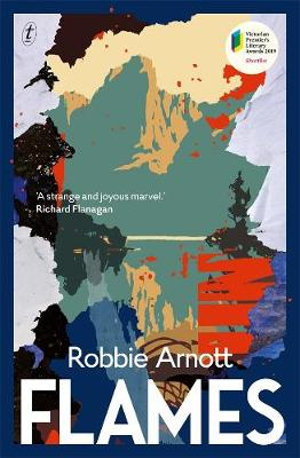
FLAMES by Robbie Arnott (Text Publishing)

I love brave, imaginative writing that takes wild risks, and Robbie Arnott’s Flames ticks all these boxes. Weaving magic and stark realism with suspense, he has created a polyphonous novel, that shifts from a generation of women who catch on fire when they are enraged, to a talking rakali and a curmudgeonly coffin-maker. The prose is poetic and fresh, without ever becoming pretentious. Flames captures the beauty of the wilds of Tasmania and calls us to pay urgent attention to both the awe and fragility of nature. A novel very much for our times.


Leah Kaminsky’s debut novel The Waiting Room won the Voss Literary Prize. The Hollow Bones won the 2019 International Book Awards in both Literary Fiction & Historical Fiction categories and the 2019 Best Book Awards for Literary Fiction.  She holds an MFA from Vermont College of Fine Arts. (www.leahkaminsky.com)


https://www.penguin.com.au/books/the-hollow-bones-9780143788911

The year’s favourite books: Jenny Blackford

Today I have the pleasure of welcoming Jenny Blackford to my blog, to introduce us to her favourite book of the year.

Kate Atkinson’s Life after Life (Doubleday, 2013) is a near-perfect historical novel, full of far more than the standard number of what-ifs through the magic of lives rerun over and over again. It’s also incredibly moving on the horrors of World War Two, particularly in blitzed London. The sequel, A God in Ruins, is even sadder and more beautiful.

Jenny Blackford’s middle-grade adventure novel full of spooky spiders has recently appeared from Christmas Press.