The translator’s art: an interview with Stephanie Smee

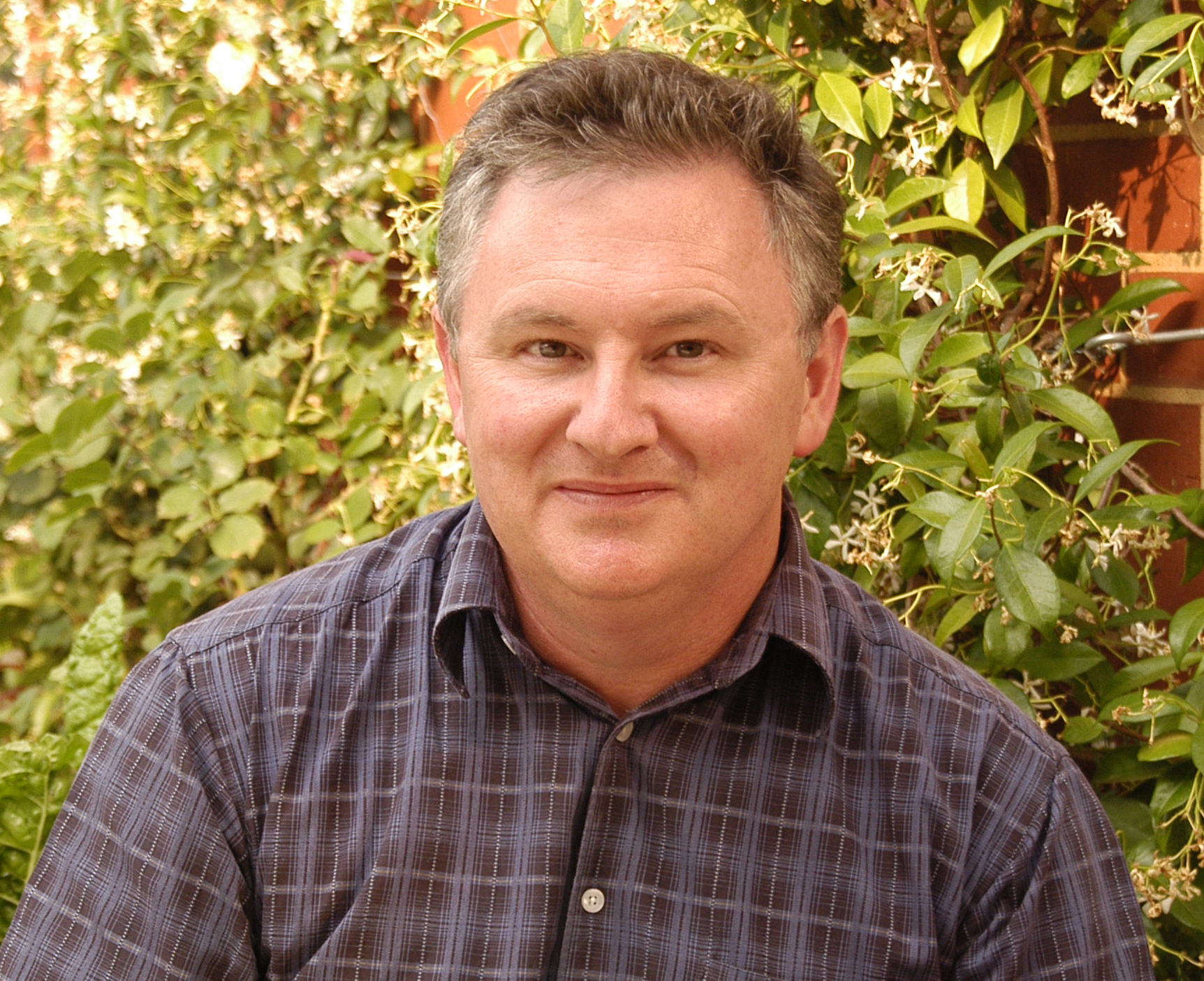
Stephanie Smee portraitTranslation is an art both precise and subtle, and the work of distinguished Australian translator Stephanie Smee has those qualities in abundance. Stephanie has translated several works of French literature into English, and I first met her some years ago, after the publication of her translations of classic French children’s titles by the Countess de Ségur. We got talking about other French classics, and I happened to talk to her about one of my favourite books growing up as a French-speaking child: Michel Strogoff, a great adventure novel by the legendary author Jules Verne.

Well, that conversation has led to today, and the publication by Eagle Books of Jules Verne’s Mikhail Strogoff. This is the first English translation of this wonderful book in over a hundred years, and as one of the publishing team at Eagle Books, I worked closely with Stephanie on the project, impressed as ever by her great attention to detail and her thoughtful and perceptive understanding of the literary work she was translating. And so today, to celebrate the release of Jules Verne’s Mikhail Strogoff, I talk to Stephanie about translating the book–and the art of translation in general.

Stephanie, translating Jules Verne’s Mikhail Strogoff was a massive and painstaking undertaking. How did you prepare for it initially?
Like many Anglophone readers, I was really only familiar with those books of Jules Verne that have always been popular with English readers… Around the World in Eighty Days, Twenty Thousand Leagues Under the Sea, and I confess it had been many years since I had read those tales.
So, when discussing with you possible ideas to pitch to English language publishers, your enthusiasm for this historical adventure tale took me a little unawares. However, after getting my hands on an original French edition, and spending some considerable time researching, I realised how enduringly popular Michel Strogoff has been with its French readers. And I became increasingly nonplussed as to how it had slipped from the catalogue of Verne’s other, perennially popular tales which had been translated into English.
How does one prepare for a translation task such as this? A number of readings of the text, of course, which serves to allow your mind to “relax” into the rhythm of the text, but then the close readings are required, and the true breadth of Verne’s rich vocabulary and sentence structure sinks in. At that point, there’s nothing for it but to “dive in”!
 What challenges came up for you as you worked on the book?
 
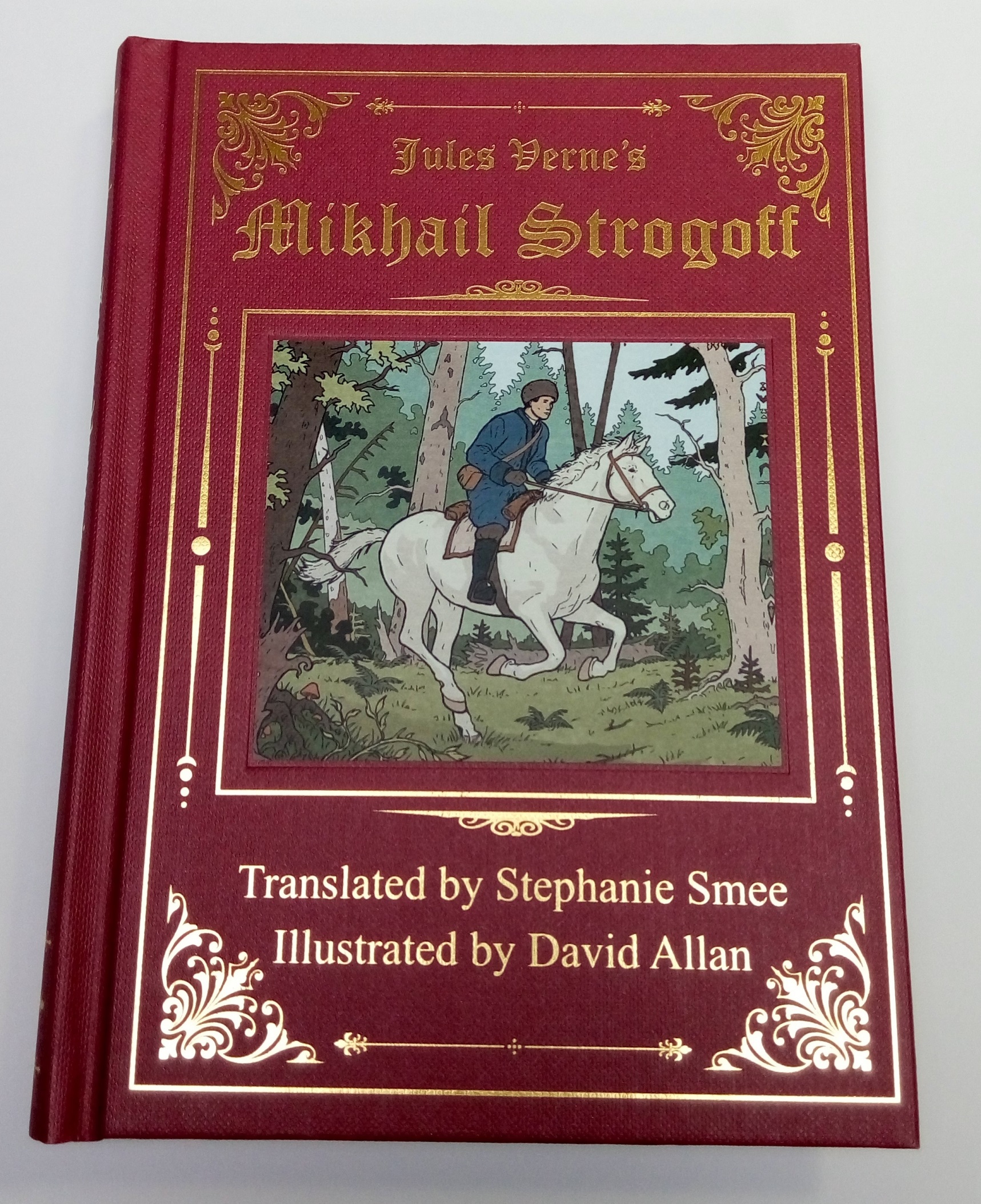
mikhail strogoff finished 1 front coverVerne’s vocabulary is encyclopaedic, and one can almost sense the glee with which he displays his research into the historical, geographical and cultural specificities of his setting. I was very fortunate to have been given some magnificent 19th century French/French and French/English dictionaries by my father-in-law, Jim Schoff, and there is no doubt these proved very useful in grappling with some of the more obscure terms that came up from time to time. I also found some of the 19th century maps of Russia, Siberia and “Independent Tartary” (again, supplied by my father-in-law) absolutely invaluable. One editorial challenge, with which you were very helpful, was determining the appropriate transliteration of place names. Of course, Verne had transliterated place names from the Russian cyrillic into 19th century French. We then had to settle upon the appropriate way of spelling all of these names for our 21st century Anglophone readership while remaining authentic to the historical setting of the novel. As readers will be aware, customs surrounding the spelling of Russian names can be a moveable feast and often differ from one current newspaper or novel to another, depending on the editorial decisions made. The historical maps I had at my disposal were certainly useful, but again, it was customary in the 19th century for many mapmakers to use French spelling of Russian place names, as it was assumed that educated readers and scholars would have French at their fingertips and unfortunately, we can’t make such assumptions for our readership anymore!  
 
I did often wonder how translators used to manage before the internet allowed us access to so many superb resources, including to such things as 19th century accounts of travellers making their way through the same or similar parts of the world as our hero, Mikhail Strogoff! Images of Tartar battle dress or Siberian towns which I was able to access through Google books often allowed me to create a mental picture of the word-image I was trying to paint with my translation of Verne’s detailed text.
Verne’s narrative is quite straightforward but his style is richly laced with idiomatic and other flourishes. How did you capture that very particular spirit?
 

The longevity of Verne’s popularity, in my opinion, derives from his masterful skills as a storyteller. His tales are built on a driving narrative force that reveals itself to the reader – and thus, to the translator – as we turn the pages. Verne is a great “scene-setter”. And so, he interlaces his chapters with scene-setting descriptions, often packed with information, followed by “lighter” chapters of spirited dialogue. There is nothing staid about his evocative descriptions. Rather, he successfully evokes a landscape which will then be the setting for the following dialogue between his characters, all of whom are very brightly drawn, from the main protagonists, Mikhail Strogoff and Nadia, to the testy muzhik responsible for leading them across the Urals, and to the jocular journalists who act as the entertaining Greek chorus to events as they unfold. All of this to say that the

Strogoff 6

Illustration by David Allan

translator’s task really has to be to imagine herself into the landscape, listen to the rhythm of the descriptions and the dialogue and try to render that same rhythm into English. Where there is a particular urgency to the events unfolding on the page, I’d like to think that a good translator will be able to reflect that same urgency – whether it’s as simple as adhering to similar sentence length, or perhaps through a choice of words that will help make the narrative pop and crackle with that same sense of urgency. Of course, 19th century literature often uses tenses  and moods that are rarely employed in modern literature and ideally, those grammatical nuances will be reflected in the English too, although there is a fine line to be drawn sometimes when translating tenses which would perhaps seem “clunky” or awkward to a modern reader’s ear. As for the dialogue, there is no doubt Verne’s own skill in drawing his characters rendered it a joy to translate their dialogue as it meant I had little difficulty imagining myself into their conversations and under their skins.

At this point, I should also underline my gratitude, not only to my editor and publisher–yourself!–but also to my father, Michael Smee, whose assistance in proof-reading – offering second and third pairs of eyes and ears to “hear” the rhythm of the text – were quite invaluable.
How different was it working on this translation as opposed to those you have worked on before, such as the Countess de Ségur’s classic children’s books?
 
The translation of Mikhail Strogoff was indeed quite an undertaking, and in this respect, it really felt quite different to sitting down to translate the Countess de Ségur’s books, which although quite lengthy for their genre, have a considerably younger target audience to that of Strogoff. (That said, I just received a very enthusiastic message from my 11 year old nephew telling me how much he loved this Mikhail Strogoff finished 2 back coverlatest translation, but that while he had been waiting for his copy to arrive in Boston, he had eagerly revisited all of my translations of the Countess’s books, so there is obviously a little bit of audience cross-over!) In attacking a work like Strogoff, there is a different level of stamina required both in respect of the novel‘slength and the complexity of its vocabulary. Julie Rose’s masterful translation of Les Misérables of course takes that degree of difficulty to a different place altogether! Verne and the Countess de Ségur did at least share some similarities of the epoch in which they were written, being works penned in the 19th century.
Russian-French writer Andrei Makine, in one of his novels, Le Testament Francais, has his narrator say ‘the translator of poetry is the poet’s rival; the translator of prose is the novelist’s slave.’ What is your opinion? Do you have a philosophy of translation? 
 
I can quite understand narrator’s standpoint in Makine’s novel. It suggests a degree of “freedom” that perhaps a translator of poetry might enjoy, compared to the prose translator. But I’m not sure I agree entirely.
While the quote from Makine acknowledges the “originality” of the poet/translator’s new work, I disagree with the suggestion that the translator of prose is in any way more the novelist’s slave, to use that same imagery.  The rules relating to the translation of the ‘form work’ and ‘scaffolding’ of prose might be different to that of a work of poetry but at the end of the day, translators of prose and poetry are both working creatively and originally, both limited by a desire to remain as faithful as possible, not only to the original text, but to its emotion and rhythm. In many ways, as illuminated by the comments below of John Edmunds, renowned translator of the verse-dramas of the likes of Racine and Corneille, translators of poetry might feel more “enslaved” by the need to adhere to the particular poetic structure and rhythm of the original work.
As a translator, I stand most in awe of those who translate poetry but are they the original poet’s “rival”? A good translator of poetry is truly not just any ordinary linguist – they must hear the poetic rhythm in the source language and be able to recreate that beauty, that mystery, that imagery in the target language. It requires decisions about meters, rhyming – whether it is best to try to retain those rhythms in the target translation or stray a little from the source language in order to recreate a rhythm that somehow best captures the original imagery and magic of the poetry.
I recently read John Edmunds’ notes on his extraordinary translations of the plays of Corneille, Racine and Molière (Penguin Classics, 2013). They are illuminating, and in fact suggest that the translator of these “verse-dramas” are, in a way, just as much these play-wright/poet’s slave as their rival. He says:
A translation intended for performance not only must be immediately intelligible to the listening ear, but ideally, I have always thought, should be capable of delivery by a putative bilingual cast in precisely the same way in either version. Like musical scores these verse-dramas have their crescendos, staccatos and rallentandos: in the new medium they need to be preserved. This can be achieved only by maintaining the sentence-structure so that the actor’s breathing-pattern is reproduced, because the pulsation of the performer’s vocal energy is the life of the play. And, clearly, the action has to flow at the same pace as the original. This necessitates a line-by-line rendering.
 
A play written in verse is truly recreated in another language only when it has the formality of disciplined verse-structure. Which form to employ?
 
And Edmunds then goes on to discuss his choice of Shakespearian blank verse “which has a driving impetus and the rhythm of colloquial speech” over the English alexandrine which, he suggests, is “too stately for drama; and the rhythmic beat of our heavily stressed language does not need rhyme to create form.” He also comments that rhyming couplets can sound jokey, at least to British theatre goers “reared on pantomime.” Ultimately, he says, the translator can only do his best with the tools available to him in his own language in reverence to the “supremely gifted authors” one has the privilege of translating.
My own “philosophy” of translating? Many scholars and practitioners have penned many thoughts on this topic and I’m not sure I should be so bold as to add my own. I do know, like John Edmunds, that I feel an enormous sense of privilege to be working as a literary translator, particularly translating the work of a literary figure such as Jules Verne. And even though I am not a translator of poetry, I also know that beautiful prose, too, has its own rhythm, its own fluidity, its own internal mysteries which any good translator must try to encompass in their work. So, if a translator can recreate that original sense of wonder and excitement generated by any good piece of literature, whether it be a work for children or the most fiendishly obscure piece of poetry, then perhaps the translator has succeeded in her task.
 
It’s been said that there aren’t enough novels from non-anglophone countries translated into English. Would you agree? And why do you think that is? 
 
Yes, indeed I do agree – as both an avid reader of translated literature and as a literary translator! Although I hasten to add that I have been very, very fortunate to have a number of my translations published beautifully by both Simon & Schuster (Aust) and of course, Eagle Books. That said, Linda Jaivin, in her essay Found in Translation published in the Quarterly Essay (issue #52, 2013), referred to statistics that are enough to make any literary translator cry.
 “[H]alf of all books available in translation around the world have been translated from English, and only 6 percent are translated into English. The rest are translations between non-English languages… In 1950, American publishers produced 11,022 books, of which 563 were translations. In 2010, the number of books published there climbed past 200,000, but only 341 were originally in other languages. … In 2012, according to Bloomberg, American publishers bought translation rights to only 453 foreign titles; figures in the UK are said to be similar.”
And, she goes on to say, there is no reason to believe the situation is any better in Australia – in fact, she says, it’s probably more dire.
Why is this the case? There are many reasons, but most of them come down to the fact that English has become the “default” language of the world. And at the same time as the rest of the world has adopted an educational approach that emphasises the need to learn English, largely for trade reasons, the number of people who still learn foreign languages in English speaking countries is plummeting. This can only lead to serious cultural insularity and, while learning a foreign language is not an easy task, as Jaivin acknowledges, “a sensible corrective is access to a rich body of global literature in translation.” Yet we are failing on that front, too. Monolingual publishers/editors make it difficult for foreign language publishers to sell their works into the English language market, as they are forced to rely on potted descriptions, quickly translated excerpts, and, only if they’re lucky, some healthy sales figures or reviews in the original language market. The same difficulties confront literary translators trying to pitch ideas to Anglophone publishers. Even when books have earned their stripes in sales and reviews in their native market, I have often been met with the response: “translations are very hard to find space for in the market”.
 
Why  they are any harder to find space for than untested English language books is quite mysterious to this literary translator. Sales in Anglophone markets of Pippi Longstocking and Asterix would, I’m sure, rival sales in their own market, due to their very skilled translators and to the fact that they are quite wonderful books! Yet I do know why. In a market where publishers are being forced to tighten their belts, there is little cash to spare to pay for English language publishing rights, as well as a skilled translator. And I can only assume also that sales and marketing teams must know there is an inherent reluctance or suspicion on the part of readers when it comes to foreign literature. Fortunately, at the same time as so many of the large publishing houses are publishing fewer and fewer works in translation, there are increasing numbers of independent publishers, like Eagle Books, who recognise the need to take a stand against the cultural hegemony of the Anglophone publishing industry and who are making it their business to publish works in translation.
Our wonderfully cosmopolitan and plural society deserves no less, particularly if we mean to engage in a meaningful, reciprocal and generous way with the billions of people on this planet for whom English is not their mother tongue. We need to be able to hear everybody’s stories!
What are you looking at translating next? 
 
I’ve in fact embarked on a terribly entertaining translation project with my Swedish mother. We are translating some very well-known (in the Swedish market) children’s stories by Gösta Knutsson about a little cat called Pelle whose tail was bitten off by a rat when he was a kitten. They were first published in Sweden in the late 1930’s-1940’s and Knutsson continued to write for many decades. They’ve been enormously popular in Sweden since they were first published.  The first three in the series are to be published next year by Piccolo Nero, the children’s imprint of Black Inc publishers.
I’m also working on some submissions involving the translation of some modern French novellas and short stories which I’m very excited about. They’re written in very different language to the 19th century text of Jules Verne, but I’m loving the challenge. They’re wry and erudite, fanciful and yet thoroughly modern… works that are very much for and of our time.

So excited about my two picture books coming next year!

I had a great meeting in Sydney this week with the lovely publisher from Little Hare, Margrete Lamond, as well as my fabulous agent, Margaret Connolly. The topics under discussion were my two picture books with Little Hare, which will be both coming out next year, so exciting! And the illustrators who are going to work on them are fantastic–and both have very striking styles. Can’t wait to see what they come up with!

The first, Two Rainbows, about a child from a farm who now lives in the city, will be illustrated by Michael McMahon, and you can see a little bit of his illustration work here.

The second, Once Upon An Abc, which is a quirky ABC book based on characters from folk and fairy tales, will be illustrated by Christopher Nielsen, and his work both as an illustrator and designer is showcased here.


Buy signed print copies of the two Trinity books!

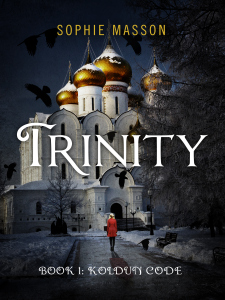
Trinity - The False PrinceThe print edition of Trinity: The False Prince has just been released–hurrah! And as it’s not always easy for Australian readers to get the Trinity books (Booktopia have the first one, but not the second so far, and Amazon will have it in both UK and US), I’ve decided to offer both it and the first one directly to Australian readers only (as postage is too high for overseas )from this blog. There’ll be a discount of 15 percent on RRP offered(making the books $21.20 instead of $24.95, with postage additional). And I’ll sign all copies purchased that Trinity Koldun Code coverway and dedicate them to your nominated person too if you want. A perfect Christmas gift!


If you’re interested, get in touch with me via contact@sophiemasson.org, and I’ll let you know full details including payment options.


Not Just a Piece of Cake: an interview with Hazel Edwards

hazel portraitHazel Edwards OAM is one of the most distinguished and popular authors of Australian children’s literature today, with a long and brilliant career spanning many decades–and many books! Today, I’m delighted to be featuring an interview I did with her to mark the release of her long-awaited memoir, Not Just A Piece of Cake: Being An Author, which is published this week.  

First of all, Hazel, congratulations on the publication of Not Just a Piece of Cake! Can you tell readers how it came about? And what was it like, as a writing experience? Did you find it difficult to get your life down on paper?

In a memoir, it’s acceptable to write only a slice of life. And that slice also fits the cake imagery. I’ve always preferred short, multi-layered pieces, with sub-text . ‘There’s a Hippopotamus on our Roof Eating Cake’ is 404 words and one less when ‘smack’ was censored out a few years ago.

But I prefer the term Questory (Quest + Story) rather than the more old –fashioned ‘memoir’. However, memoir is the genre convention for booksellers and makes the book easier for readers to find.
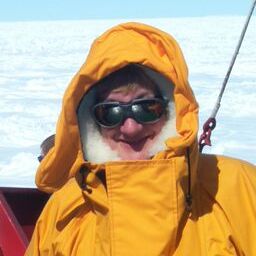
hazel in antarctica

Hazel in Antarctica

Health issues meant I couldn’t fly for a year, so I decided to ‘de-clutter’ stuff from my literary life. My other aim was to capture book-ish memories before they vanished from my hippocampus , the part of our brain where we store experiences. The recent dementia of some older writers worried me. And I’d been at funerals recently where some eulogies were works of fiction. I wanted a ‘real’ record with the flaws, doubts and candid dilemmas.

Originally I wasn’t sure whether I’d offer it for publication. It’s not a family history although it contains some of mine. It isn’t a how- to- write. It’s really a serendipitous map of the lifestyle process of writing longterm when you also have a family. Plus some ironic humour.

Until now I’ve avoided autobiography except when I was beset in the Antarctic polar ice  with 38 expeditioners (34  blokes and 4 other women )and it looked like we’d be there all year. ‘Antarctic Writer on Ice’ was the serendipitous result, based on e-mails sent under extreme expedition conditions. So the Map of Serendipity was a concept which appealed.

In ‘Not Just a Piece of Cake’  I’ve experimented in styling via anecdultery rather than chronological boredom. Anecdultery is my term of choice:crafted storytelling based on quirky incidents and characters. The extra-ordinary behind the ordinary. But not linear.

Having run workshops on ‘Writing a Non Boring Family History’ for decades, I’m wary of listing only significant birth and death dates which have readers yawning and shelving my book, forever.

I took on a different kind of intellectual challenge by experimenting with the structure of ideas. I’ve always dreamed in fractals. I wanted to explore the process of the process of longterm creativity. Honestly. Plus the specific creative time challenges when you also have a family. And to explore what sustains a writer. Issues like mentoring and being mentored. Fan mail.The thrill of creating a story which wasn’t there before.

I wanted to evaluate…what had been the most inspirational experiences…and which books & stories  had been personally most worth writing, instead of racing on with the next project as I generally do. Filing is not my strong point.  Neither is formatting.So this memoir was a change of pace and of style but also meant re-visiting articles as often I had written about experiences soon after, and these had an immediacy and details I had forgotten.

Thumb Cover Not Just a Piece of Cake jpgThis memoir is probably more candid than my earlier writing. Usually I write for a specific audience. This time I wrote for myself and in the beginning I was unsure whether anyone else would read it.

As a long term author, there’s a danger of answering in the same way to predictable questions–and by the way, Sophie, yours are NOT predictable :-). But after a few embellishments, the writer forgets what was true and what was value- added dramatised faction or even fiction.

So I decided to indirectly answer the most common queries about an author’s work style but also explore the diversity of experiences. Writers need to take risks, whether physically adventurous or intellectual risks. And often readers like to know ‘behind the book’.

In the original table of contents I had a conversational tone with sub-headings like  ( ‘Come and Meet My Camel’   ) and chose the chapter titles to indicate the diversity of an author work style.

The title is a playful reference both to the fact an author’s life is one of hard work as well as fun, and the title of your famous picture book, There’s a Hippopotamus on Our Roof Eating Cake. What’s it like, having written a book that has become such a popular classic?

Recently a Twitter fan complimented my ‘Not Just a Piece of Cake’ book cover, saying ‘The hippo was the elephant in the room’. That could be taken a couple of ways.

I believe a book belongs to the reader not the writer, so a ‘classic’ is owned by the audience. ‘Hippo’ has a life of its own, with fan mail too. Plus a film , Braille and Auslan versions and even a touring production.

But being known as the author of the Hippo series has enabled other projects.
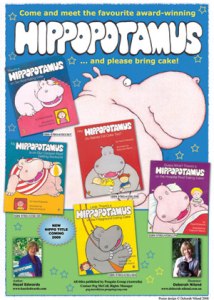
hippoposterFirst published in my late twenties, I had a baby and a first book in the same year, so there were many memories across 200 books ( 194 are non-hippo-ist). I wanted to explore some non-hippo experiences too, like crime or mystery writing or even scripting. I don’t always sit at a computer and ask What if?’  Nor do I eat cake, well, just occasionally.

In the original table of contents I had a conversational tone with sub-headings like and chose the chapter titles to indicate the diversity of an author work style.hazel with kids hippo party

Children’s authors are often under-valued. I struggled with an earlier W.I.P. title; ‘Let Hippos Eat Cake; Being a Children’s Author or Not?  I wanted to convey the dilemma of always having to defend writing for children because others assume that audience is less important. It isn’t. And the skills required to retain reader interest are greater.  Often I stop myself from adding the disclaimer, I write non fiction and crime & mystery for adults too.

But there is joy in some of the answers included in the 100 Hippo History incidents and also in the Literary Speed Dating chapter where I interview my own character.

Authors can also have fun. And are permitted to be a little eccentric. It comes with the job.

You have maintained a long and distinguished writing career over several decades, with hundreds of titles published. How do you keep your writing fresh and relevant? And what strategies do you employ, career-wise, to stay on top of the many changes in the publishing industry?

Diverse interests. Deliberately learn new things so I can write freshly with the response of an amateur. Become the naïve participant. And interview intriguing personalities or workers with unusual occupations like wedding-dove releaser, forensic pathologist or Antarctic station leader.Participant-observation is an important part of remaining relevant and also an excuse for visiting places as diverse as a fireworks farm, wholesale flower market or the pokies when I was investigating addiction and discovered I was an ideas addict.

Each year I research a new area and also collaborate with an expert in a field which is new for me. ‘f2m;the boy within’ the YA novel about transitioning gender was co-written on Skype between NZ and Australia. So the method as well as the gender content was new. Ryan Kennedy , my co-author is a family friend and also an ftm ( female to male).f2m_cover_big

Now I describe myself as Authorpreneur on my business card. Great talking point. And I pay credit to my marketing manager daughter Kim for upskilling me into this digital century, especially via website, online bookstore and social media.  For a format challenged author who thinks in abstract not pictures, this has been BIG. (It’s her real day job elsewhere luckily) Recently I’ve become a speaker-author and intend writing fewer works, but sharing them more, in different formats.

You are not only a distinguished writer but also an inspirational teacher of writing. Can you tell us something about the courses and workshops you are involved in running?

These days I mentor more than teach.

Hazelnuts is the self-adopted name for those I’ve mentored and they continue to help each other via workshopping and launches for their finally published books.  I’m told that a cultured hazelnut is called a Philbert.  70% reach publication or performance.

HazelandThePhilberts

a light-hearted interpretation by Felicity Marshall

My workshops on ‘Writing a Non Boring Family History; and Authorpreneurship;The Business of Creativity’ are popular. I enjoy being a panelist at Literary festivals and occasionally give keynotes. Next year I’ll talk about my memoir and the techniques involved for ‘family history ‘genies’,  Year 11/12 students looking at careers and also small business groups as well as new writers.

You’ve been an early experimenter in such things as e-publishing and app creation. What is your view of the challenges and opportunities in those fields?

I have an e-book store of my established  fiction, script, literacy and adult titles on my website. But the most successful have been the adult non-fiction How To…’ titles.

E-books and the implications of digital changes have been the greatest learning curve. There are new opportunities for beginning creators  and for those with backlists, but the e-administrivia is time consuming and detracts from original work. I try to list things once and make my website the focus of my literary information with FAQs,  an archived newsletter and links to publishers, bios and events.

When I was first published in my late twenties with a traditional, mainstream publisher, they did the PR, the marketing , acted as ‘minder’ and expected to ‘nurse’  an author’s next book via editorial input. These days, authors do 90% of the marketing and being media-worthy with a web presence is vital.

Having a mixed portfolio of skills helps retain freshness. The versatility of writing for all ages and in different formats  as well as a teaching background helps. But there are still times when doubts occur. I talk about ‘The Plateau of Boredom’ in my memoir. And also about Story Stealing and who owns which idea.authorpreneurship_cover_front_low_res

You have been a great contributor over the years to author and children’s literature organisations. How important do you think it is for authors to be involved in that kind of thing?

Vital. Give not just take. ‘Networking’ should be a mutual support.

How do you see the publishing industry, and specifically the children’s books world, today, as compared with what it was like when you started out as an author? And do you have any thoughts on what the future for the industry might look like?

Today, it’s  instantly possible to call yourself an author, but NOT easier to have long term quality work available to readers in multi-formats which return sufficient for the intellectual property which the artist has created.

Hazel’s fantastic website, where you can also order some of her books, is here.

Hazel’s Facebook page is here.


Double Act 3: Michael Wagner and Billy Goat Books

In the third of my series on author-publishers, I’m interviewing Michael Wagner.

wagnerMichael Wagner is the author of more than 70 books for children which include the much loved, 20-book Maxx Rumble series (still in print after 11 years); a collection of delightfully silly and warm-hearted stories about a family called The Undys; the best-selling picture bookWhy I Love Footy; and many more.

Prior to becoming a children’s author, Michael worked for ten years as radio broadcaster with the ABC, wrote and produced award-winning television animations, and wrote everything from copy to songs and comedy. His latest challenge is starting his own micro-publisher called Billy Goat Books, with the first book, Pig Dude: He Can Do Anything! published in late August this year.

First of all congratulations on starting Billy Goat Books! What motivated you to start your own publishing company?

Thanks Sophie. Well, to be honest I was motivated by two things: fear of rejection and the desire to, sometimes, just sometimes, have total creative control over my work.

By ‘fear of rejection’ I mean that I’ve recently discovered that some of my writing just doesn’t appeal to many publishers, even though it has widespread appeal to kids in schools. I speak in schools a lot and often test stories out. In 2014, I wrote a book called Pig Dude: He Can Do ANYTHING! When it felt ready to read, I tested it in a dozen different schools, and I was thrilled by how it went. It received an overwhelmingly positive, and very spontaneous reaction, maybe the best reaction I’ve ever received for any of my books. I felt like I was onto something.

But, when I sent it to a couple of publishers, it was fairly flatly rejected. Feeling a bit taken aback, I took it back into schools and tested it again. Once again, it got that big, positive reaction. But something told me sending it to more publishers was likely to be a time-consuming and, most likely, fruitless exercise. (I may have been wrong, but that’s what my instincts told me) And I didn’t really want to face a string of rejections with something that seemed particularly viable to me.

Now, having something of an entrepreneurial streak, I decided to publish it myself. It was a relief not to have to go through the submission process and I felt excited about being able to get started straightaway and about having so much more creative control over one of my books. Something about that really appealed. So I formed Billy Goat Books and published Pig Dude: He Can Do ANYTHING!Pig-Dude-Cover

What inspired the name of your press?

That’s actually a tough question. I tried about a million names, including Chilli Pepper Books (too suggestive of erotic fiction, apparently), Sparky Pepper Books (too random), Rocket Boy Books (too nothing), Bugle Books and Toot-Toot Books (both of which have flatulence connotations), etc, etc, and finally settled on Billy Goat Books. I like the playfulness of the name and the slight masculinity. My books are often quite boysie, so it felt right to me. And it hadn’t already been taken, which was a surprise, so I grabbed it.

What are your plans for the list? What will you be concentrating on?

As it costs quite a lot of money to created illustrated, printed books, I’ve decided to grow quite slowly – probably by only a book or two a year for the first few years. And, as I have a stockpile of my own stories ready to go, I plan to learn the business with books I’ve written.

I think, in a way, that’s fairer on other authors, because after a couple of years of learning how to create and sell books, I’ll be much better placed to provide a valuable service for others.

So, for now, it’ll just be my writing, but with the help of various illustrators, depending on who suit the different titles I have lined up.

What are the challenges and pleasures so far?

For me, there was an enormous learning curve. To minimise costs, I taught myself to design both the cover of a book and the interior pages – something I’ll have to learn all over again with each book, unless I employ a proper designer. That meant teaching myself software programs like InDesign and Photoshop – not easy!

And there are jobs like writing a contract for an illustrator, working out printing specifications, setting up distribution, creating Billy Goat Books, its brand and website, organising publicity, etc, etc, etc.

It’s a big job and probably best entered into completely naively, because knowing too much would be quite a disincentive. It’s best just to take it one job at a time.

On the other hand, if you’re creating a text-only ebook, the job is MUCH smaller. Printed books with illustrations are at the more difficult end of the publishing process, ebooks with only text are quite straightforward by comparison.

But, for me, learning new skills is exciting and having control over the product is extremely creatively satisfying. And when you hold what you’ve made in your hands for the first time, you know you did it yourself. So, on balance, I’ve enjoyed it immensely.

What do you think being an author can bring to your new career as a book publisher?

I think the big advantage many authors have is that they can test their material on their target audience. That takes a lot of the guesswork out of the publishing process.

Of course it’s not definitive. There are many successful books that would be incredibly difficult to read to an audience – like Goodnight Moon, for example. Really intimate books like that one are perfect for reading one-on-one, but might not work well with an audience. So not all fantastic books would test well. But when a book feels wonderful when it’s being read to an audience, chances are it’s worth publishing.

Being in front of kids many days a year allows authors to road test and refine some of their material and I think that’s a huge advantage. You really get the hang of what your audience likes when they’re sitting in front of you.

Any advice for aspiring author-publishers?

Hmm? Beware. If you’re printing illustrated books, it’s a lot of work and not cheap. But it’s very handy if you’ve been unable to land a publishing deal with something you truly believe in (having tested it with audiences), to be able to publish it yourself. Self-publishing or micro-publishing is a bit of a safety net, meaning you don’t have to simply shelve a manuscript you really feel is good enough (as far as any of us can tell that about our own work). It’s a fallback position, and that’s something authors have never really had before.


On inspiration: interview on Elisabeth Storrs’ blog

An interview looking at the sources of inspiration for me as a writer is up now on historical novelist Elisabeth Storrs‘ blog.

Here’s a short extract:

What is the inspiration for your current book?

I’d like to answer this for two books: my YA novel Hunter’s Moon, which came out in June; and my adult novel Trinity: The False Prince, coming out in October (e-book) and November (print). The first book, set in an alternative world-version of the late 19th century, is inspired by the fairy tale of Snow White, the second, which is also second in my Trinity series, and is set in modern Russia, was inspired by not only the earlier novel (Trinity: The Koldun Code) but also by the enigmatic figure of Rasputin, and also the history of magic in Russia.

Is there a particular theme you wish to explore in this book?

Well both books in a sense—and isn’t that funny, I hadn’t thought of it till now!—are about betrayal, and false appearances.

You can read the whole interview here.

Joint ticket: An interview with Archie Fusillo and Josie Montano

Archie Fusillo Archie Fusillo and Josie Montano are two fabulous Italian-Australian authors of books for children and young adults. Separately, they’ve published many great books, but very recently they teamed up on a collaborative YA novel, Veiled Secrets. I met these two lively and engaging authors at the 2015 Story Arts festival in Ipswich, Queensland last month, and later asked them for an interview on the subject of their collaboration. Here it is–enjoy!Josie Montano

You’ve recently collaborated on a novel, Veiled Secrets, which tells the story of two Italian-Australian teenagers from two different families, Nick and Lia, who on a trip back to Italy with their grandparents, meet each other and discover they have a lot more in common than they could have imagined. How did you come up with the idea for the book?

When we first met we discovered that our families come from villages in Italy 10 kilometres apart, we grew up with similar traditions, culture, dialect and life-styles as first generation Aussies. We had a brainstorming session and strangely came up with the same idea! A story about teens going back to Italy with their grandparents. We knew we had a story to tell! One that no other writer in Australia has told, one that our 1st generation of Italian migrants needed to share.

How did two authors who describe themselves as fiercely independent manage to work together with the harmony required for successful story-telling?

We just found that from the very beginning we meshed quite well. Actually the ‘fiercely independent’ writing styles came in handy as we took on a character each and were able to write independently as Archie and Josie with Veiled Secretsour own character and their world.

Tell us about the process of constructing your novel. Did you plan it carefully beforehand, or was it more organic?

Although Josie is an over-planner and Archie just get’s into it and writes, we were still able to put together an initial plot line and main characters (to keep Josie happy!) Archie started as his character in chapter 1, emailed to Josie and Josie wrote chapter 2, etc. It was like one of those patchwork quilts where various people work on it, but the end result is a beautiful creation. The story did progress organically but also strangely in a way that both of us had with plot ideas and scenarios in our minds.

What were the challenges, and the pleasures, of joint creation? Did your find your writing voice was different in this to that in your own sole-authored books?

The only challenge we may have had was getting it published in the Australian market. One of the major publishers was very keen, we were wined and dined by their editor but in the end marketing felt it wasn’t the right time. So Josie sent it to her US fiction publishers and the next day a contract was emailed!

Re voice, actually a few times it happened that we would write something about each other’s characters that would spin the other off into revenge writing where eg: Archie wrote that Josie’s character had dimples and Josie was like ‘oh does she now!?’ and then she wrote that Archie’s character had a big nose! It was great having someone else to share the experience with and to cast a different editing eye over the manuscript.

Josie and Archie StoryartsAre you planning on more writing collaborations? And would you recommend the experience to other authors?

Josie has co-written fiction and non-fiction with other authors but admits this was the easiest collaboration thus far. As writing can be a lonely occupation, co-writing can at times bring a shared experience allowing for learnings and growth. And we are chatting about possible future collaborations on other projects!


Josie’s Facebook author page.

Josie’s Twitter.

Josie’s website: www.booksbyjosie.com.au

Archie’s website: www.archimedefusillo.com

Veiled Secrets Facebook page.