I’m delighted to say that I was interviewed by fellow writer Brenton Cullen on his blog, about Bold Ben Hall, research, writing about the past, and quite a few other things. Really enjoyed the interview, hope you do so too!
Here’s a short extract:
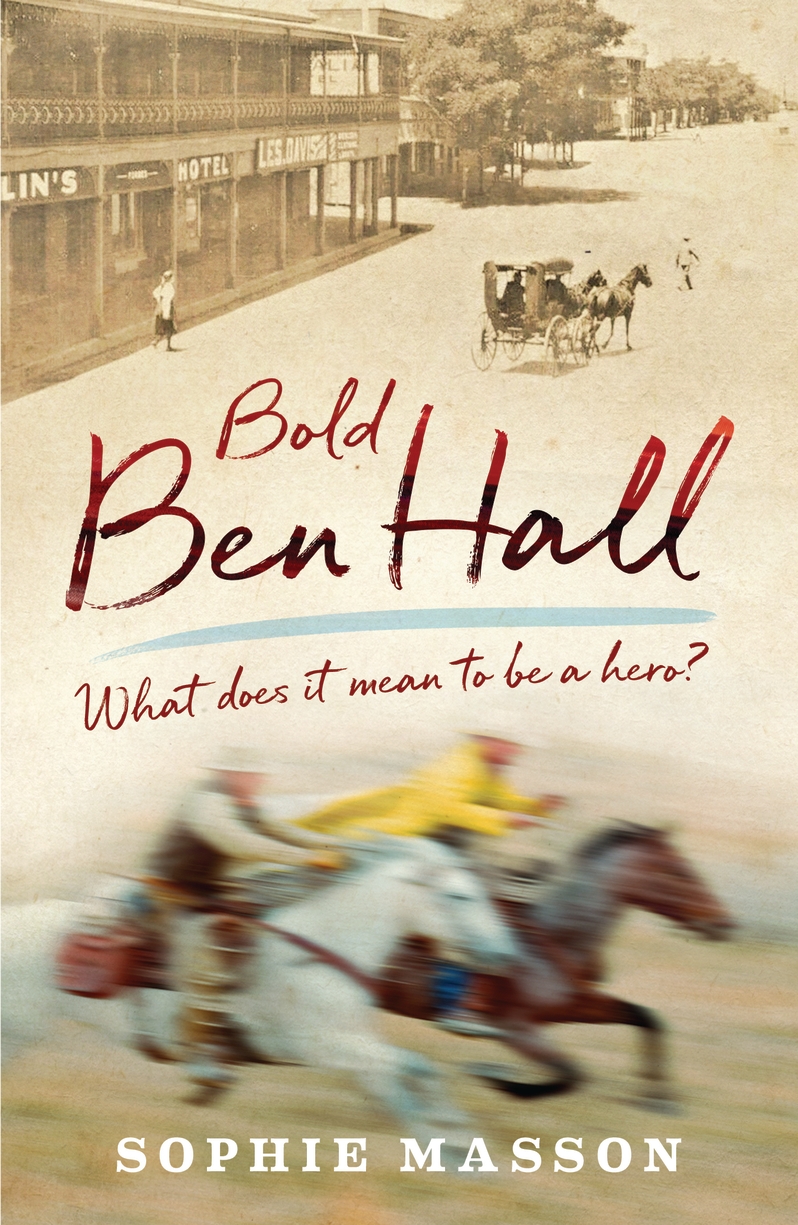
1. Congratulations on your latest fantastic historical novel Bold Ben Hall! What prompted you to write this book?
SM: Thank you, Brenton! Ever since I was a kid I have always been fascinated by the bushranger era, and the larger than life characters who inhabited it, especially those with an interesting backstory, like Ned Kelly (who features in two of my earlier novels, The Hunt for Ned Kelly and Ned Kelly’s Secret) and Ben Hall.
Both men were not ‘common criminals’ but complex figures with both ‘the dark and the bright’ in them (to quote something Ned Kelly once said). And it struck me that I could tell the story of Ben Hall in a way that would highlight that, through the differing viewpoints of two young people of his time.
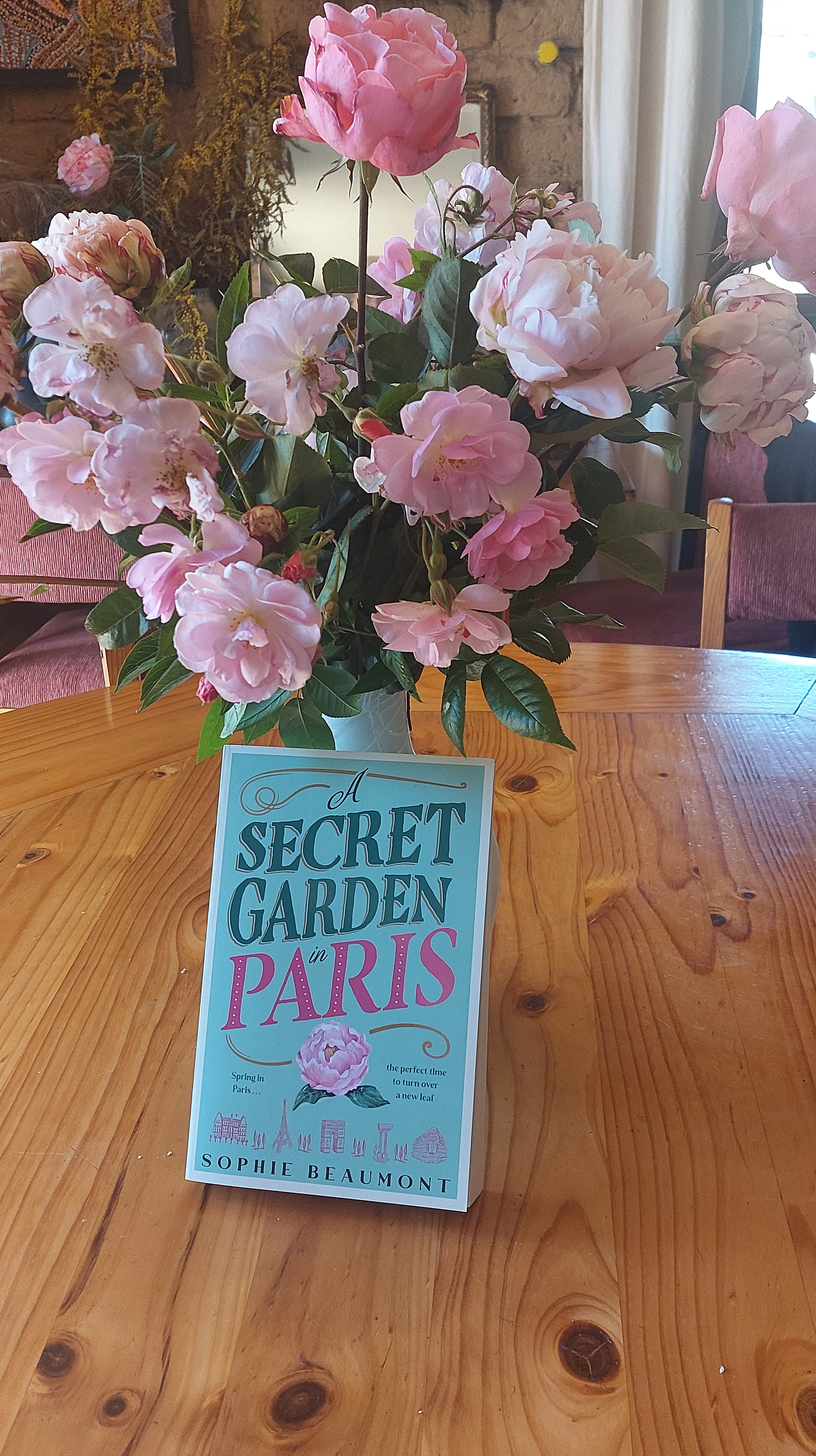
A couple of weeks ago, Barbie Robinson from Living Arts Canberra did an interview with me about A Secret Garden in Paris–an interview I thoroughly enjoyed, her questions were so interesting! It’s now up online, as is her lovely review of the book.
Here’s a short extract from the review:
This book is a complete delight. The author carries us with her characters through their trammels and triumphs, and provides hopeful and happy endings (thank you!). There is nothing trite about this story, though. We are ever conscious that fixing things requires work, intention and sweat playing equal roles in each of these stories and the correlation to our own reality is very clear.
You can read the whole review, and listen to the interview, here.
Here’s the second part of my interview with the wonderful Brenton–this one looks at the course of writing careers, at publishing, at rewriting etc. It really has been one of the most enjoyable interviews I’ve ever had!
I had a fantastic wide-ranging conversation over Zoom yesterday, with the wonderful writer, blogger and interviewer Brenton Cullen, about all kinds of things to do with my writing, books and career, and it’s now up on Brenton’s You Tube channel. It was such an invigorating and enjoyable experience!
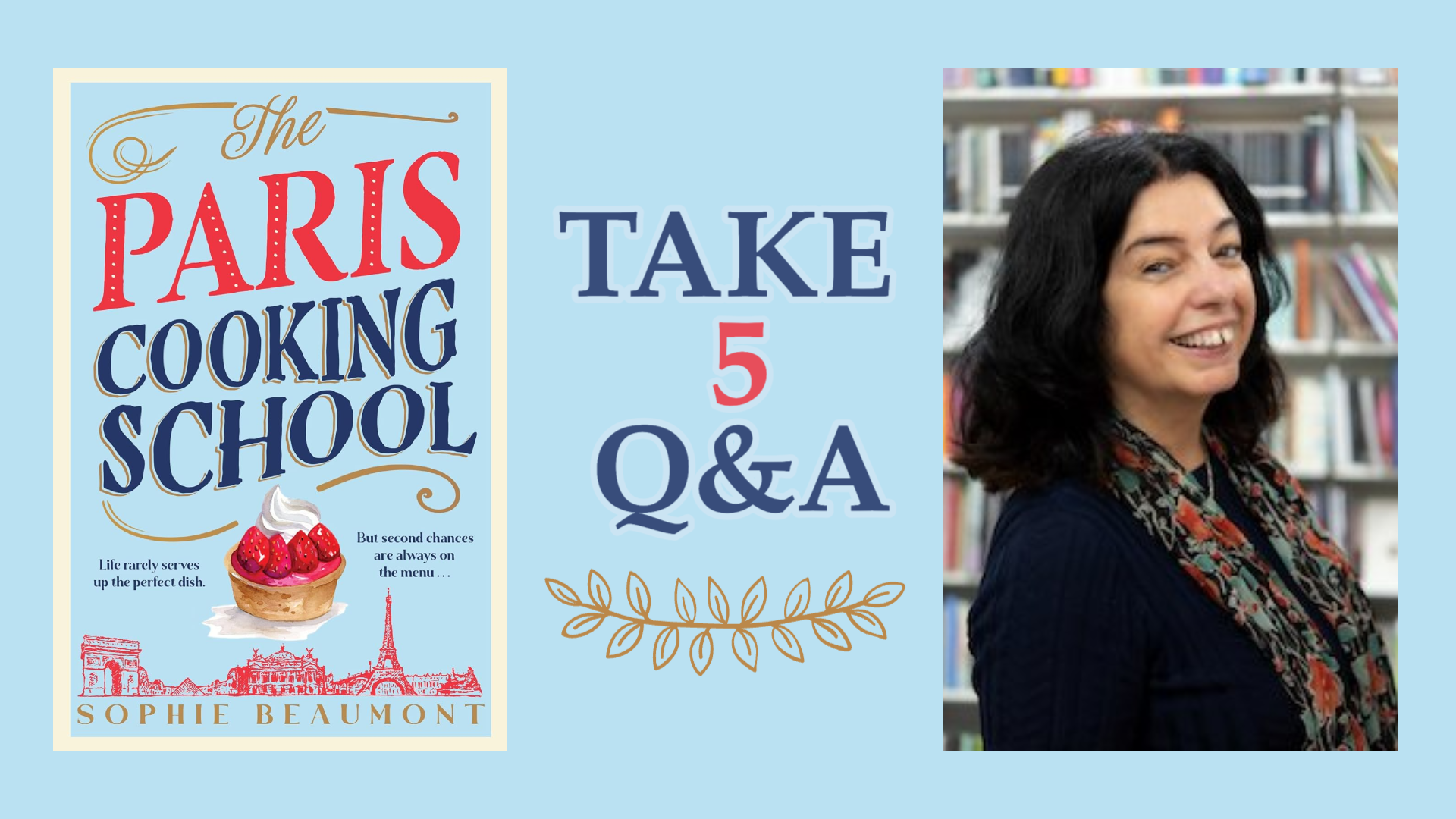
The Paris Cooking School comes out on August 6–not long to wait!–in the US and Canada, published by Alcove Press, and in the lead up to that, and to whet your appetite, there’s a great ‘Take Five’ interview with me on Writer Unboxed, the fabulous, award-winning US-based international writing blog. Here’s a short extract:
Q1: What’s the premise of your new book?
SM: My book, The Paris Cooking School (written under the pen-name of Sophie Beaumont) is an adult contemporary novel set, you guessed it, in Paris 😊 It features three main characters, Kate Evans, Gabi Picabea and Sylvie Morel, who are all at crossroads in their lives. Gabi and Kate have both come for the month-long course at Sylvie’s Paris Cooking School, after major crises in their lives—in Kate’s case, a bitter marriage breakup, in Gabi’s case a crippling creative block. Meanwhile, Sylvie is facing a worrying online harassment campaign targeting her business, and trouble from her commitment-shy lover Claude. What the three women find during that extraordinary April in Paris will change the course of their lives—and bring new love, too. Set against a gorgeous background of Paris in spring, and studded with delicious references to French food, it’s a novel that Australian readers have already taken to their hearts, and which I hope North American readers will just as much! The book comes out in the US and Canada on August 6, published by lovely Alcove Press.
I was interviewed recently for the fabulous bilingual blog, Matilda Marseillaise, and the interview has now been published, in both French and English (I spoke to Matilda in French and she translated back into English). Centering on The Paris Cooking School and its influences, it also focuses on my background and experiences, the creative process, and Paris itself. Here’s a short extract:
The book has three narratives, you might say, because the book tells the stories of the three main characters. Did you write them in the order we read them? Did you write separating the chapters of each character’s story?
No, I wrote it chronologically. So I knew I wanted to write one chapter from Gaby’s point of view and then one chapter from Sylvie’s point of view, and one chapter from Kate’s point of view.
And then, at the beginning, so in the first chapter, you’re introduced to the 3 characters, they’re in the same chapter, but then they each have a chapter until the end when they all come back together. I always write chronologically. I know there are writers who write a chapter here, a chapter there and then they put it all together. But I can’t.
I can’t because my experience is almost like watching a film and it has to unfold chronologically. I can’t simply make a flash here, a flash there and then put them together to make an image. I have to follow the story and so I say, OK, today I’m going to write the chapter from Gaby’s or Kate’s point of view and that’s it, that’s where it’s going to happen.
Often what I do is, I’ll go for a little 5-minute walk or something. It’s just to start the first paragraph of the chapter I’m going to write that day and then there it is, so Gaby does this, or Kate does that. I even talk to myself about everything. It’s a good thing there aren’t too many people passing by, otherwise they’d think I’d lost my mind!
There’s a really nice interview with me on writer and reviewer Cindy L Spear’s blog, about The Paris Cooking School, writing, food, and other matters! I really enjoyed doing it, her questions were really interesting. Here’s a short extract:
What inspired you to write The Paris Cooking School?
Paris itself! I love the city and have been there multiple times, several members of my family live there, plus I had the great good luck to be awarded a writer’s residency there for 6 months some years ago, so I really got to know it well. Also, of course, another inspiration is the food I grew up with as I’m from a French background (though we are from south-west France, not Paris). I loved putting my characters in the midst of this amazing city, discovering more about French food culture, and history, walking all over Paris—and falling in love.
Along with several other writers and literary professionals, I was interviewed recently by writer and journalist Thuy On for Arts Hub, about how Australian books get translated, and the article, which is very interesting, has now been published. You can find it here.
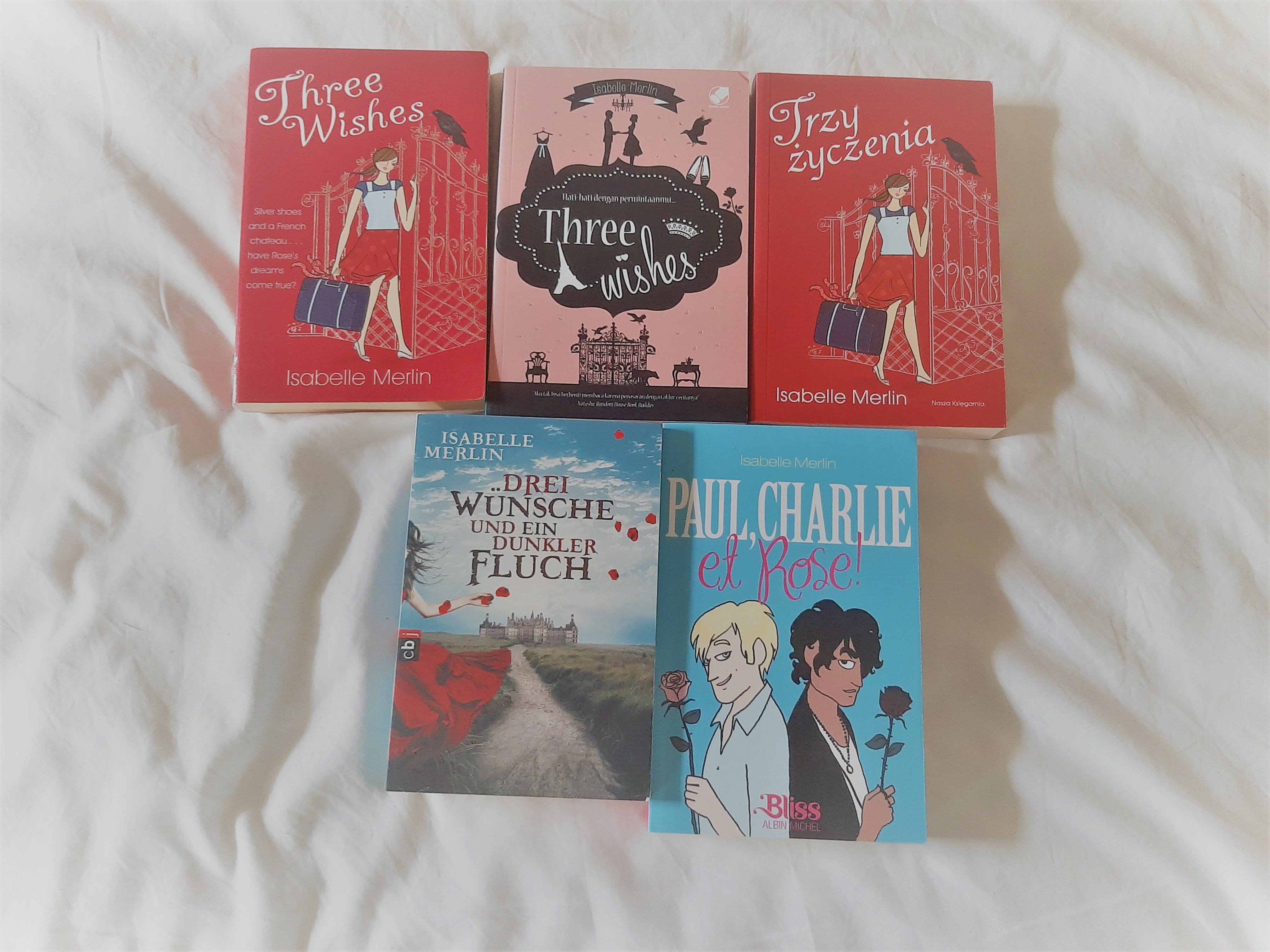
(Below is a pic which illustrates some of what I say regarding translation: it’s the five different editions of Three Wishes, a novel I wrote under the pen-name of Isabelle Merlin. From the top, left, you can see the original Australian edition, the Indonesian one, Polish one, and below them, the German edition and the French edition. )
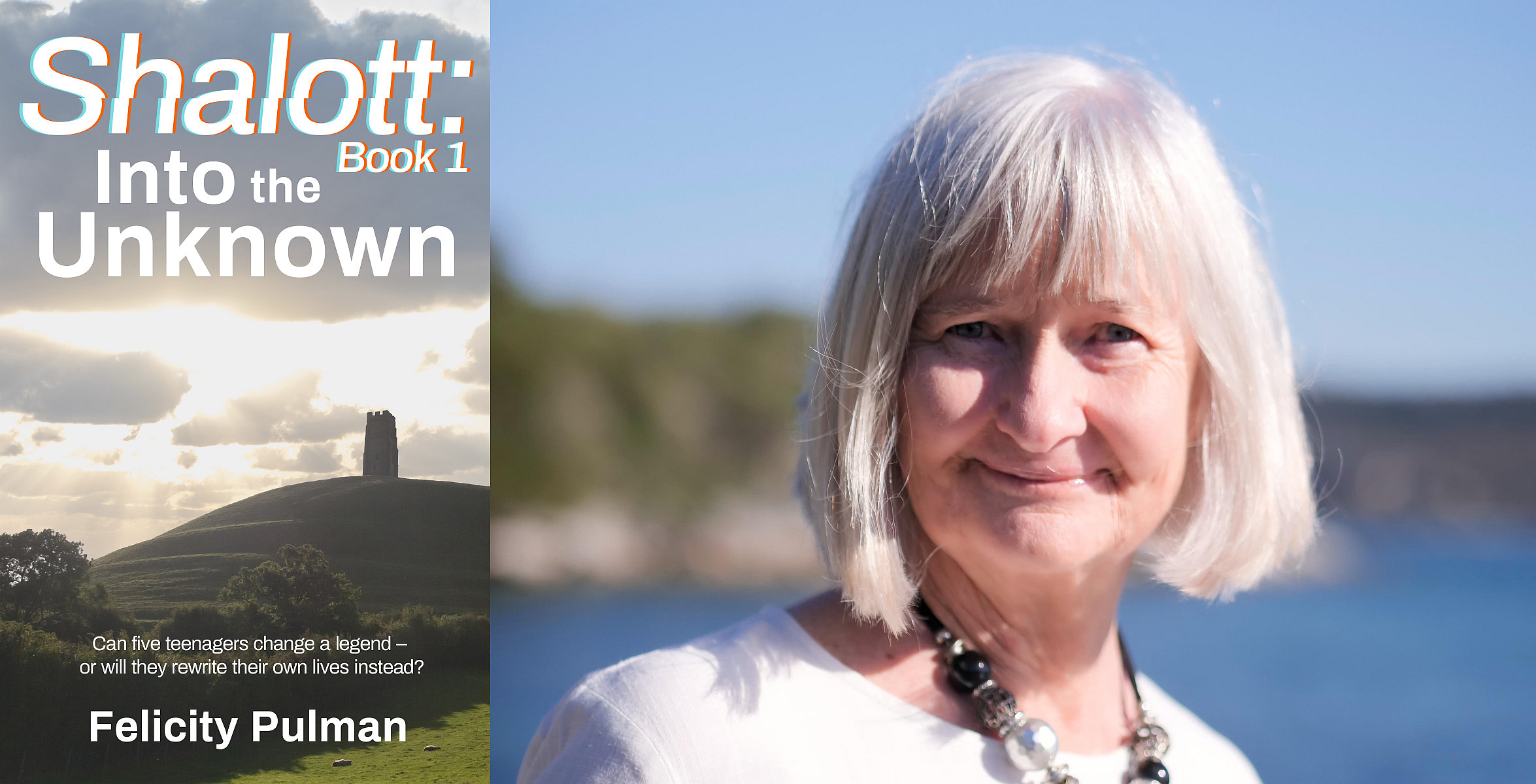
Today I’m delighted to be bringing you an interview with award-winning writer Felicity Pulman, who has embarked on a wonderful new project: republishing her popular young adult historical fantasy trilogy, Shalott, with new titles, new material and in new formats. The first book, Shalott: Into the Unknown, has just been released, and the other two Shalott: Dangerous Magic, and Shalott: End Play, will be published in September and November respectively.
Congratulations, Felicity! Why did you decide to republish the Shalott trilogy?
I wrote the first novel not realising there was more to come – and it was only when I got to the third novel that I understood what Callie’s quest was really all about. Rewriting and republishing the trilogy was my chance to ‘get it right’; to blend in a wonderful mix of magic and technology, and to seed in the ‘clues’ that there was much more to the teenagers’ quest than they first realised. It was also my chance to bring the books up to date for a new generation of readers, while introducing them to the timeless legend of King Arthur and his knights, and the mysterious and beautiful poem, The Lady of Shalott by Alfred, Lord Tennyson.
The original series came out in the early 2000s. You’ve changed the titles, but was there anything you decided to change within the stories themselves? And did you add any new material?
Basically the story remains the same, although I’ve strengthened the magical aspect, particularly from the points of view of Nimue and Morgan le Fay. Nimue’s magic helps to bring the teenagers to Camelot in order to thwart Morgan’s plans to divide the court through the love affair between Guinevere and Lancelot. But Morgan will stop at nothing to eliminate anything that gets in the way of her ambition for Mordred – and the teenagers are caught in the crossfire. I was also able to update the books to reflect society as we know it today in terms of hot button topics for teenagers, new technology, and even the deadly virus! A LOT has changed over the past twenty years.
Tell us about the process you went through in order to get the books back into print – what were the challenges? And discoveries?
I worked on an already formatted version while rewriting the novels, which caused all sorts of problems during editing and proof-reading. With hindsight I’d probably have been better off retyping all three novels! As a technotwit I knew I’d be better off asking for help rather than trying to navigate the self-publishing process on my own. Joel Naoum from Critical Mass Services has been a great help to me, finding editors, designers and printers, acting as a sounding board, and generally shepherding me through the whole publishing process. What I discovered was just how many decisions one has to make along the journey!
As a self-publisher this time, how are you promoting and publicising the books?
This is still a WIP. I’ve updated my website; I’m posting on facebook and other platforms, and also spreading the word via the various societies and writing organisations to which I belong. I need to make much more use of social media than I do, and I’m working on that, plus I’m also considering paying for some advertising. Friends like you have been really helpful with giving me ‘air time’ on your own platforms as well – much appreciated! Of course I always talk about my books at my workshops and author talks, with the age of the audience determining which books I mention. I’ll be canvassing local bookshops with copies of the trilogy, and also sending out press releases to local and any other media that I hope might be interested. Meantime I’m open to suggestions from everyone!
What advice would you have for other authors thinking of republishing their out-of- print titles?
It’s hard work but certainly worthwhile if you want to breathe new life into your books, especially if you’re technosavvy. But buyer beware: go with a reputable print company and make sure your books are readily available for purchase (as mine are through amazon and various other outlets.) If you’re outsourcing the publishing process, as I have, it can be expensive, and unless the book suddenly takes off for some reason you should realise that you’re unlikely to make any sort of profit, or even recoup your expenses.
Another of your novels is going to get a new lease of life, I believe, with your very first novel, Ghost Boy, optioned by a film production company. Can you tell us about that?
Ghost Boy is my most successful book to date, particularly as it now forms the basis of the very popular Ghost Boy tour up at the Quarantine Station in Manly, where part of the novel is set. The QS itself is a fabulous site – very cinematic, very historic, and very creepy, and students studying my novel find that the book really comes alive when they can walk in the footsteps of my characters. The film option was taken out several years ago, but I’ve now signed an option for the sale of my book, which means we’ve come one step closer to seeing my novel (and maybe its unpublished sequel: The Curse of the Quarantine Station) turned into a movie. Exciting – but I must admit I’m finding it very hard to let go!
Where you can buy Shalott: Into the Unknown, first volume of Felicity’s republished Shalott trilogy:
Alex Patrikios of the wonderful literary group #LoveOzYA interviewed me via Zoom the other day, to talk about The Ghost Squad–she had great questions, and I really enjoyed our chat! The interview is now up as a transcript on the #LOveOzYA website, and you can also see clips of the video, exploring such things as research, speculative fiction tropes, and the writing life, at their You Tube channel. Here’s an extract from the interview, about the inspiration and research behind the book:
Was there a particular moment of inspiration that sparked the idea for THE GHOST SQUAD?
A while back, I went to this little museum in Rome, which is called the Museum of Purgatory. Of course in Catholic doctrine, purgatory is a sort of halfway house between heaven and hell. This particular museum was quite a weird little place, and (I learned) this priest in the 19th Century had tried to show proof that purgatory existed and he did with burned handprints on a piece of fabric, supposedly of people who had tried to send messages from purgatory.
But this is now: people don’t believe a burned handprint on a piece of fabric is proof. So I thought, okay, what would cause a disturbance in the electronic systems — monitoring machines and other things like that in hospitals — so I had a look, and found out about electronic magnetic pulses(note: caused by solar storms). I found out about the Carrington Event, and also that a lot of governments actually have contingency plans for when the next one hits. I read stuff from both NASA and the British Government, about what they plan to do in the event of an electromagnetic pulse.
When I saw the Carrington Event had happened around the same time you saw this big interest in seances and spiritualism, in the Victorian times, I thought, okay, this is kind of ‘ghosty’ stuff — and maybe in my lifetime, it would trigger something similar.
Everything sort of fell into place after that.
Apart from that kind of research — NASA, government documents — did you also look at popular movies or shows that have that speculative flavour, and try to examine the genre itself?
Absolutely! Also the novel came out of a creative practice Phd, so that was the creative part of it, but the academic part of it was all about afterlife fiction for young adults. Really fantastic books, like Neal Shusterman’s Everlost trilogy, Yangsze Choo’s The Ghost Bride, and Lynette Lounsbury’s Afterworld.
I watched a lot of films and TV series — things like The Glitch, and the French series The Returned, and even Lost have examples of (afterlife fiction). That was fun! I had so much fun doing ‘research’, reading all these great books and watching all these terrific TV series and films.
I also read a lot of folklore and (material) from religious and spiritual traditions. I had three years to do the Phd, which was fantastic, because it meant I could really develop the book in the very rich and complex way that I wanted to do.



 Feathers of the Firebird