Guest post: Wendy J. Dunn on writing historical fiction

Today I’m delighted to welcome historical novelist Wendy J. Dunn to my blog, with an intriguing guest post about how she approaches creating the imaginative landscape of her books, whilst also recreating a very particular historical period.

Wendy is an Australian writer who has been obsessed by Anne Boleyn and Tudor History since she was ten years old. She is the author of two Tudor novels: Dear Heart, How Like You This?, the winner of the 2003 Glyph Fiction Award and 2004 runner up in the Eric Hoffer Award for Commercial Fiction, and The Light in the Labyrinth, her first young adult novel.

While she continues to have a very close and spooky relationship with Sir Thomas Wyatt, the elder (Tom told the story of Anne Boleyn in Dear Heart, How Like You This?), serendipity of life now leaves her no longer wondering if she has been channeling Anne Boleyn and Sir Tom for years in her writing, but considering the possibility of ancestral memory. Her own family tree reveals the intriguing fact that her ancestors – possibly over three generations – had purchased land from both the Boleyn and Wyatt families to build up their own holdings. It seems very likely Wendy’s ancestors knew the Wyatts and Boleyns personally.

Born in Melbourne, Australia, Wendy is married and the mother of three sons and one daughter—named after a certain Tudor queen, surprisingly, not Anne.

After successfully completing her MA (Writing) at Swinburne University Wendy became a tutor for the same course. She gained her PhD (Human Society) in 2014.

As a committee member of the Historical Novel Society of Australasia, Wendy was also part of the team who put together the very successful inaugural HNSA conference of historical fiction writers and readers, recently held in Sydney.

Welcome, Wendy!wendy dunn

Some Thoughts about Writing Historical Fiction.

by Wendy J.Dunn

I have now written two novels inspired by the story of Anne Boleyn. My first published novel, Dear Heart, How Like You This? tells her story through the voice of Sir Thomas Wyatt, the Elder. A real historical person, he was not only a Tudor diplomat, but also a very gifted and important Tudor poet. Reconstructing him in fiction became my means to explore the nature and cost of love, as well as how Tudor women’s lives were controlled by their gender. The Light in the Labyrinth, my first young adult novel, as well as being a coming of age story, also casts a light upon women’s lives.

Why two novels about Anne Boleyn? Well, she has fascinated me since childhood, from the moment I first watched the movie Anne of The Thousand Days, and came away inspired by its construction of a strong, intelligent and very brave woman. By the movie’s end, Anne had become my hero, alongside my very first hero, her daughter, Elizabeth Tudor.anne boleyn
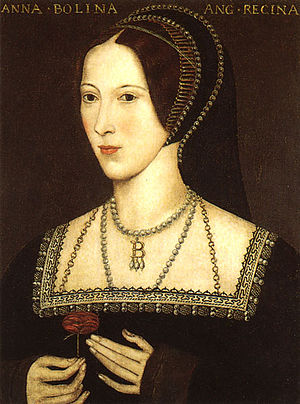
In my teenage and early adult years, I immersed myself in novels to do with the Tudor period. I also immersed myself in history books to help me learn more about the context that shaped the people of this era. These non-fiction books made it very clear that women in this period had very little ownership of their own lives. Even their identities came from their fathers, and then their husbands. More and more, Anne Boleyn stood out as a woman who was able to claim a true identity. While years of research have helped me to recognise her imperfections, it has also increased my reasons to love and respect her. Through my research, I now believe Anne’s insistence of her right to own and use her voice resulted in her death. This is the woman who lives in my imagination.

And this is the thing. Whilst my characters are birthed through research, and the knowledge I gain by research, I am a writer of fiction. Research is the key that opens the door to my imagination, when I begin typing up my daydream of another time and place. A time and place where my characters step forward and tell their story. For me, doing historical research has four main purposes: it deepens my well of historical knowledge; it gives me ideas turn into fiction; it takes me from the threshold of conceiving my first idea to the actual task of constructing historical fiction, when I build a world through imagination, and, finally, it continually fuels my imagination in the act of writing. It is my response to research that produces an imaginative reaction that takes me deeper into the process of story writing.dear heart

Writing The Light in the Labyrinth, a young adult novel, brought with it particular challenges. Young adult novels tend to be written in first person, and I tried to do this with Kate’s story. However, I decided to challenge myself by switching to third person limited. While the story was still revealed through Kate’s perspective, it was a very different structure to my usual way of writing.
Another challenge was giving voice to a 14-year-old girl from the Tudor period, a time very different from our own times. 14-year-old girls in Tudor England were considered old enough to be married and have children. The life of Catherine Willoughby, the Duchess of Suffolk, provides an example of this. Some historians claim Catherine was as young as fourteen when she married Charles Brandon, a man close to fifty. Kate’s experiences had to evoke that of a Tudor girl, yet also speak to girls today.
History seems to know very little about Katherine Carey’s early years. Like her aunt, Anne Boleyn, even her birth year is the subject of debate. This historical ‘silence’ allowed me imagine, at the start of The Light in the Labyrinth, Kate living with her mother at Rochford, a property owned by the Boleyns, and at least two days of riding from London. My research suggested this property was not well liked by the Boleyns (in the 16th century, it was situated in a very unhealthy area). Yet Mary lived there with her second husband, William Stafford, rather than be too close to her immediate family. I don’t believe it was simply because Mary had disgraced her family by her choice of a second husband – a man without wealth or title. While she seems to have married for love, her marriage could also be also be seen as an act of defiance, the claiming of her own life and identity.
I wondered what kind of mother she could have been for Kate – imagining that Kate saw her as a soft mother, but really Mary was not soft, rather too aware of the hardness of life. Through my knowledge of the lives of Mary and Anne Boleyn, I was able to imagine my Kate Carey, a girl influenced by admiration for her aunt, Anne Boleyn, and rebellious against what she saw represented by her mother.
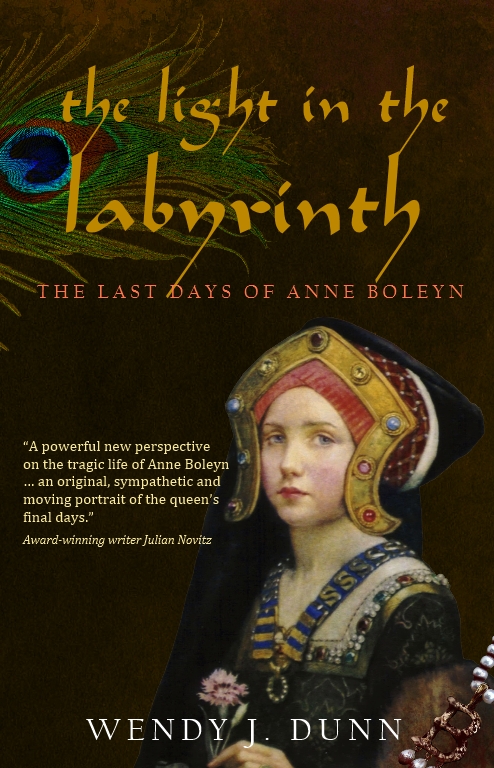
the-light-in-the-labyrinth-coverThe silences of history offer historical fiction writers those vital gaps to enter by use of their imagination; a time they can use “historical circumstances with the greatest economy” (Kundera 2003, p. 36). In my own practice, I also deepen my understanding of what William Styron means when he writes: “while it may be satisfying and advantageous for historians to feast on rich archival material, the writer of historical fiction is better off when past events have left him with short rations” (2010: 428).
By this I mean I know have done my research about the Tudors and their period. This research has had time to soak into the depths of my unconsciousness. These gaps in historical record are my invitation to allow my imagination free rein, when I can let my characters speak, and re-construct their lives.
This is why the “curious, alluring space between fact and fiction” (Parini 1998, p. B4) is vitally important for me as a writer: it gestates imagination. It takes me “back then” (Thom, 2010, p. 26). And if I am taken “back then”, as a writer, I believe it also follows I have the possibility of taking back my reader through the construction of my text.

Works cited:
Kundera, M, 2003, The Art of the Novel, Harper Perennial Modern Classics.
Parini, J 1998, ‘Delving into the World of Drewww.wendyjdunn.comams by Blending Fact and Fiction’, The Chronicle of Higher Education, February 27, p. B4.

Styron, W, 2010, The Confessions of Nat Turner, Kindle edition: Open Road.

Thom, J. A. 2010, The art and craft of writing historical fiction, Writer’s Digest Books, Cincinnati, Ohio.

Wendy’s website: www.wendyjdunn.com/
Like Wendy on Facebook: www.facebook.com/authorwendyjdunn
Goodreads author page: www.goodreads.com/author/show/197156.Wendy_J_Dunn

Follow on Twitter: @wendyjdunn

Guest post about Jules Verne’s Mikhail Strogoff, on Great Raven blog

sergei prokudin river boat

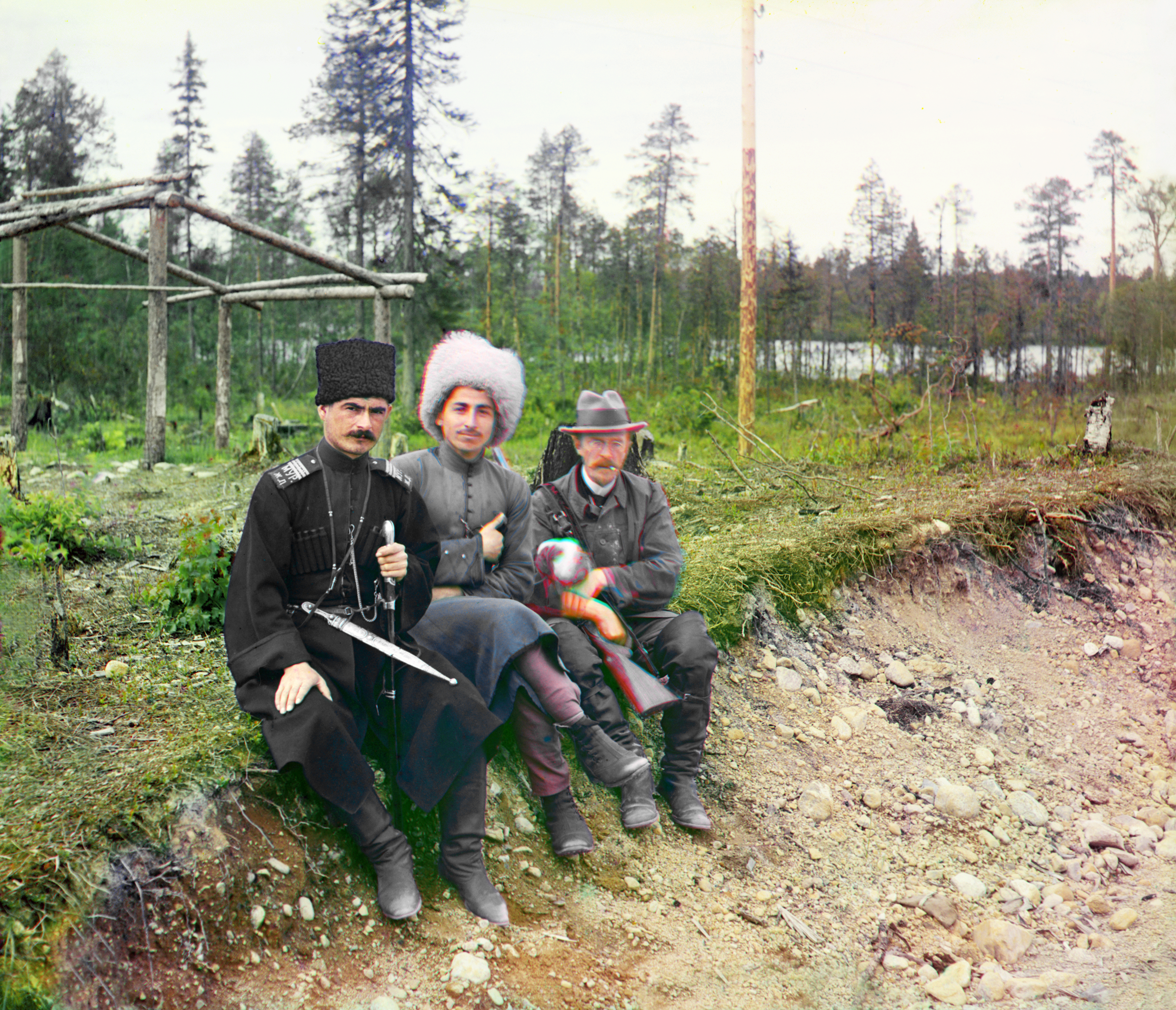
Photo of Russian riverboat by Sergei Prokudin-Gorsky, circa 1910.

I have a guest post on fellow author Sue Bursztynski’s Great Raven blog, about the impact on me of Jules Verne’s Mikhail Strogoff, and about being involved in bringing it back to English-speaking readers. Here’s a short extract:

I read the novel I don’t know how many times, swept away by the grandeur of the story, the fantastic adventure, with its wolves, bears, mountain storms, bandits, iced-up rivers, cruel torturers and traitors. I thoroughly enjoyed  the funny  rivalry and repartee between Alcide Jolivet and Harry Blount,  I thrilled to the love I could see developing between Nadia and Michel, both equally tough and brave. And I was swept away too by the description of the journey, which starts in Moscow and ends in Siberia — a journey over water, through forest and mountain and cities and villages: you get a real sense of the vastness and amazing diversity, both human and environmental, of Russia.  Basically, it’s a chase novel, and it has the breakneck pace of that, and lots of twists and turns, culminating in an especially unexpected and satisfyingly resolved one. But it is also beautifully written, as tight and clever and witty as Around the World in Eighty Days, and much more passionate and exciting. 

You can read the whole post here.

On writers 4: in loving memory and celebration of Lloyd Alexander

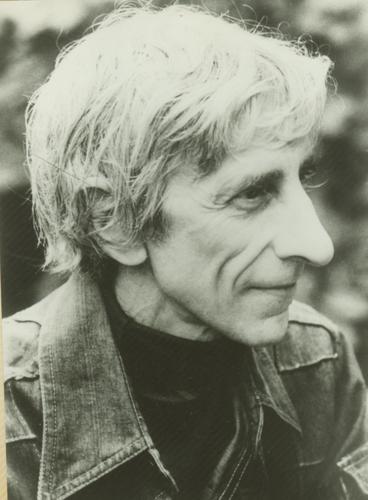
Lloyd_famous_pub_photo_gray_hairThis fourth republished article about writers I’ve been inspired by is a very personal one, because not only did I love the work of the great American children’s writer Lloyd Alexander, but I also knew him personally, at least by letter, as we corresponded over many years. This article was written after he died in 2007, and was originally published in Magpies magazine.

Vale Lloyd Alexander, 1924-2007

The world of children’s literature has lost a great light. On May 17, 2007, the American writer of many classic children’s novels, Lloyd Alexander, died of cancer at his home in Philadelphia, only two weeks after the death of his beloved wife Janine, with whom he’d shared sixty years. Beloved of readers and critics alike, his work spanned more than forty years, and more than forty books, and as a fantasy writer, he is reckoned to be in the ranks of such as JRR Tolkien, CS Lewis, TH White, and JK Rowling.
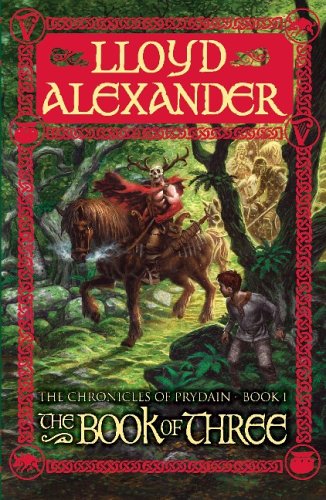
In fact, I’d go so far as to call him the greatest American writer of children’s fantasy of modern times. Many people would agree with me. He has a huge, devoted worldwide audience. His six-volume Chronicles of Prydain have been continuously in print since 1963, with the first two, The Book of Three and The Black Cauldron, made into the 1985 Disney movie, The Black Cauldron, which has always had a mixed reputation—many readers being disappointed by the fact that too many of the events of the books were shortened, and too many characters dropped.   book of three
The books themselves however have had no such mixed reviews. Who can resist Taran, assistant pig-keeper’, and his oracular pig, Hen Wen? The feisty Princess Eilonwy? The bard Fflewdur Fflam? And the noisy, messy creature, Gurgi? It’s not only the characters, though, or the action of the books—which is considerable—or the exciting plots, or the scary villains and mythological richness of the background that readers take to their hearts: it’s a warmth, a humour, a wit, a love of language, a lightness of touch and a playfulness, which is all too often lacking in fantasy. Yet he also doesn’t shirk the darker side of life, and of people. There’s an extraordinary honesty, yet a compassion, in all his work, which is immensely attractive. Readers love the Prydain books, and dearly: to the extent that I know of at least two people who so loved them as children that they were inspired to name their children after them. One friend named her first-born son Lloyd Alexander; another named her youngest son Taran, after the hero of the Chronicles.
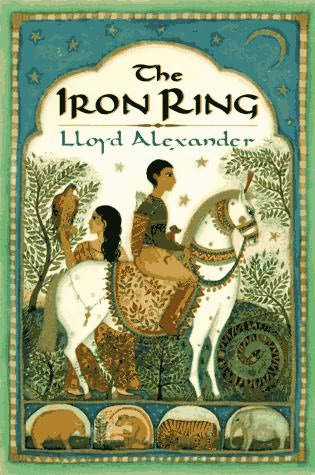
alexanderironringBut it’s not just the Chronicles of Prydain, with their earthy yet mystical Celtic mythological background, that Alexander is famous for. He wrote a large number of wonderful, versatile fantasy adventure novels, set against all kinds of backgrounds and inspired by all kinds of fairytale and mythological sources.
Long before it was fashionable, Lloyd Alexander delved into all sorts of multicultural influences. There’s The Iron Ring, for instance, inspired by Indian myth; The Remarkable Journey of Prince Jen, based on Chinese sources; The Marvellous Misadventures of Sebastian, with its Central European flavour; The First Two Lives of Lukas-Kasha, with its roots in the Arabian Nights; The Arkadians, with its source in Greek myth. And many, many more. There are certain recurring motifs in his books: cats, music, the quest for true courage and love. And fun. Pure, unadulterated fun. He is such a fun writer, in all sorts of ways: pure pleasure to read, beautiful to read, because everything is so well put together, so deft and exciting and funny and warm and moving and intelligent. And his considerable learning and experience are worn lightly. A man who had travelled very widely and was interested in all kinds of cultures and always curious and intrigued by the amazing richness of the human experience throughout the world, he was also very much a homebody, who dearly loved his city of Philadelphia, where he was born and bred, and where he lived with his family for most of his life, apart from a few years away in Europe.
That deep knowledge of ‘Philly’ as well as of other places shows up very strongly in his marvellous comic adventure series, set around determined 19th century Philadelphia schoolgirl detective Vesper Holly, and told in the rather flustered, fussy tones of her guardian Professor Brinton Garrett, known as illyrian adventure‘Brinnie’: these include The Illyrian Adventure, The El Dorado Adventure, The Drackenberg Adventure, and more. He also wrote a historical adventure series, The Westmark Trilogy, set in a world that rather ressembles Revolutionary France. He wrote several books that weren’t strictly speaking fantasy, including the delightful semi-autobiographical The Boy and the Gawgon. And he also wrote for adults, for the first few years of his career, until he switched to children’s books in 1963.
His first book, an autobiographical novel called And Let The Credit Go, was published in 1955. A fluent French speaker (his wife Janine, whom he met at university in Paris after World War Two, after a stint in the Army and in counterintelligence, was French) he is also the author of several translations of important French philosophical and poetic works, including Nausea, by Jean-Paul Sartre, Uninterrupted Poetry, by Paul Eluard, The Sea Rose by Paul Vialar.
golden dreamYes, the world of children’s literature has lost a great light. Readers everywhere have lost a great writer, though there is that wonderful backlist to enjoy. And his last book, The Golden Dream of Carlo Chuchio, will be published in August. But it’s more than that for me. I feel like I’ve lost a real friend, as well, because for the last ten years, I’ve been corresponding frequently with Lloyd, exchanging letters and cards(he didn’t like computers, and never used email)and swapping books with him. The bright row of Lloyd Alexander books on my bookshelf, all inscribed by him in his characteristically warm and friendly style, will be doubly precious to me now.
It’s not always true that a great writer is a great person, but when the two coincide, it’s pure magic. That was certainly the case with Lloyd. From the very first letter he sent me, in January 1997, in response to the enthusiastic missive I’d sent via Cricket magazine(with whom he was associated), after my children and I had finished reading The Chronicles of Prydain, you could tell that here was a generous, warm, intelligent and modest person, a real gentleman in the very best sense of the term. Finding we had a good deal in common—writing, France, music, Celtic myth, travel, and much more—we continued to correspond fairly often over the years, and sent each other signed copies of our recently-published books. Lloyd always replied to letters promptly, typing or handwriting on his own distinctive pale yellow letter-paper, with the drawing of a cat playing the violin(thereby combining two of his great loves, as well as indulging his sense of humour). The elegant envelopes postmarked ‘Drexel Hill, Pennsylvania’ were always welcome arrivals in our mailbox!
Lloyd was always ready with a kind word and a friendly remark, and his generous and perceptive understanding of my own books heartened me enormously, and meant a huge amount to me, as did the warm and intelligent quotes he provided for my publishers when my books started to be published in the USA. Over the years, we shared snippets of information, and exchanged news of family and of friends(he was tickled pink by the knowledge that two of our friends had been inspired to name their kids after him and his characters!) And we exchanged Christmas cards—his featured his own delightful coloured drawings of a fantasy cat world, from the poshest drawing-rooms to the rumbustious tavern, with each year a new scene.. WP_20150327_001[1]
It may surprise non-writers(or perhaps not!), but not all writers are as supportive or as friendly and generous towards other writers as Lloyd was. In a competitive industry where egos can be as big as houses, there is all too often an urge to ‘do down’ or at least ignore other writers. Even when it’s not as bad as that, there can be a sense that really, what do you have in common except that you both write books? But when you do connect on a real level—the personal as well as the artistic—it is a very special friendship, even if that is conducted long-distance, as ours was, for we never met in person. And so I grieve for a good friend and a good writer, a good man and one who will be sorely missed, but whose books will live for ever.

The years have passed, but we still miss you very much, Lloyd.

An exciting crowdfunding campaign bringing back the best adventure novel ever written!

Eagle Books logoI am thrilled to be part of an exciting publishing project: bringing back to English-speaking readers what many have called the best adventure novel ever written, the legendary French writer Jules Verne’s great book, Mikhail Strogoff. It will be the first English translation in over a hundred years!

First published in France in 1876 in Verne’s Extraordinary Voyages series, under the title of Michel Strogoff, the novel was an immediate hit with readers and has never been out of print in France and indeed in many other countries. But after the first English translation, published in the same year as the book, there has not been another full English translation of this classic, rip-roaring tale of adventure set in Tsarist Russia, and the original translation is stodgy and dated for modern tastes. Indeed, it does not capture the lively, sharp, immediate quality of the original work, which is perhaps why there hasn’t been another translation and why English-speaking readers have missed out on what so many other people in other countries have enjoyed!

All that is set to change with the publication by Eagle Books of a brand new translation by the fabulous translator and writer, Stephanie Smee. Mikhail Strogoff, as it will be titled, will appear in early 2016 and right at the moment a fabulous crowdfunding campaign has just launched to help fund the production of a special limited edition of the novel to mark and celebrate this major publishing event. People can contribute and get their own special copy of this pre-commercial-release exclusive edition, which will Sergei Prokudin and Cossacksbe a gorgeous collectible hardcover book, illustrated in black and white and with many special features.

I’m delighted to be a part of the Eagle Books publishing team, (the new fiction imprint of Christmas Press) and thrilled that Mikhail Strogoff will be our launch title. It was my favourite book as a young reader and since then I have read and re-read it many times, thrilling every time to the extraordinary journey of the brave and determined Siberian, Mikhail Strogoff, courier of the Tsar, and his friends and family who join him on an adventure like no other, set in the exhilerating vastness and diversity of Russia. The book was a big influence on me, triggering a lifelong interest in Russia and its culture, but it always frustrated me that my English-speaking friends had no real access to it. It is truly a dream come true to be helping to bring back this amazing novel back to English-speaking readers!

On writers: Anya Seton and Katherine

Katherine,_Anya_Seton_2006_edition_novelThis, the third of my republished articles on writers and classic works, focusses on the great American historical novelist Anya Seton, in particular her most famous and beloved book, Katherine. In the article, I also looked at Anya Seton’s fascinating family history. My article was first published in the Summer 2006 issue of the lovely UK books magazine Slightly Foxed.

A Grand Passion:
Anya Seton’s Katherine

by Sophie Masson

It was in the school library on a somnolent Sydney summer afternoon that I first met her. A passionate, but bookish and rather inarticulate child, I had recently discovered romantic novels—devouring Charlotte Bronte, Daphne du Maurier, Georgette Heyer, Jean Plaidy/Victoria Holt, and Mary Stewart, swept up into their worlds, loving them all. But meeting Anya Seton’s Katherine, as she set out on that ‘tender green time of April’, on a journey that was to take her from sheltered convent girl to controversial great lady, was the most wonderful delight of all.
Though Katherine de Roet, later Swynford, was, I was sure, infinitely more beautiful and gifted than me, though she lived in such a different time and place, I clicked instantly with her, and with the gorgeous book in which she lived and breathed with such intensity.
I was just about Katherine’s age–nearly sixteen–and I too had spent years in a convent—a convent school, in my case– and I was itching to go out into the world, and especially, fall in love. The separation between us—a gap of some six hundred years—seemed meaningless. I was with Katherine every step of the way, from her first introduction to the royal court, where she meets the man who will forever change her life, though she does not know it yet—John of Gaunt, Duke of Lancaster, the King’s dazzling third son. It is not love at first sight. But love is kindled between them, it is a passion as unstoppable as it is overwhelming, one that will bring in its train not just delight, but murder, madness, and exile. And the evocation of that grand passion by Anya Seton—particularly in the early stages of the affair, when Katherine and John spend several enchanted days in the remote castle of La Teste, in Les Landes, in Gascony (a region of France I knew well, as part of my family comes from there) was so thrilling to my adolescent self that I must have worn out those pages re-reading them, savouring each time that intoxicating mixture of languor and excitement, of sex and romance, of poetry and passion. This is not an uncommon reaction; lots of readers, and not only female readers, have felt this way—my husband tells me that as a 15 year old in England, he read Katherine twice, especially lingering on those passages! katherine 2
But though passionate love forms its incandescent centre, Katherine isn’t just about love. It is also an exceptionally rich, detailed, and utterly believable evocation of a tumultuous time—the mid to late 14th century, dominated by war, the Black Death, and religious and political rebellions. In its pages we meet not only Katherine and her royal lover, who are masterfully brought to life in all their complexity, but also a whole host of exquisitely-drawn characters: Katherine’s swinish, tormented husband, Sir Hugh Swynford; their daughter Blanchette, who will grow up to condemn her mother; John of Gaunt’s strange little Gascon squire Nirac, who takes it upon himself to perform a terrible service for his beloved master; Katherine’s brother in law, that brilliant observer of his time, Geoffrey Chaucer; John’s lovely, serene first wife Lady Blanche and his odd, spiky second wife, the Castilian princess Costanza; the English mystic Lady Julian of Norwich, who comforts Katherine in a period of extreme suffering—and many, many more. It’s not only characterisation at which the author excels, however; the historical setting, the background of major events, such as plague, war, and rebellion, as well as the innumerable details of ordinary life, are flawlessly recreated.
katherine 4Katherine not only enthralled me and made me interested in that time: it totally changed my idea of Chaucer. We had to study ‘The Knight’s Tale’ the year after I read the book, and it made the whole thing much easier, because rightly or wrongly I could visualise Geoffrey as a person. As well, it made the experience of Katherine even more real—reading the work of a man who had actually known her in life was exciting, a kind of reflected glory that quite reconciled me to the funny spellings!knights tale
Reading Katherine again now, not only as an adult, but as a writer myself, I am struck by how very good, even brilliant, it still is. There is nothing dated about it, either in style or in character or in essence. In certain ways, it reminds me of that other magnificent novel of fourteenth-century life, Sigrid Undset’s 1920’s trilogy Kristin Lavransdatter—in the rich evocation of a woman’s emotional, spiritual and intellectual journey as much as that of the time—and it is quite possible Seton was influenced by Undset’s work. But Katherine is also very much its own thing, distinctively beautiful, perfectly pitched, Seton’s masterpiece, and one of the great twentieth-century historical novels in English.

Back in my teens, after reading Katherine several times, I rushed off to look for other Anya Seton titles. Though none quite had the stunning impact of Katherine, I enjoyed them all. Two especially I still remember with great fondness, and have had much pleasure in re-reading: Green Darkness, a part-historical, part-fantasy novel, shuttling between the 20th and 16th centuries; and Dragonwyck, a rather Rebecca-like novel set in 1840’s upstate New York, centred around the haunted New York Dutch family, the Van Ryns, and their mansion, Dragonwyck. Though there are several editions of Seton novels still in print, it is those three—Katherine, Green Darkness and Dragonwyck—which have just(2006) been reprinted in beautiful new editions by Chicago Review Press in the US. Both Katherine and Dragonwyck feature forewords by the popular modern historical novelist, Philippa Gregory.dragonwyck

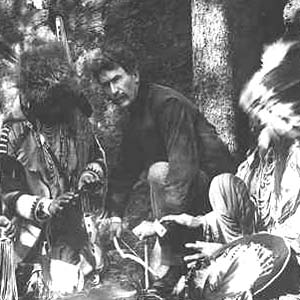
katherine 3It is only recently that I have learnt just who Anya Seton was, and realised that her life was as extraordinary as her fiction. Born in New York in 1906, she was christened Ann, the only child of two wealthy, prominent writers: Ernest Thompson Seton, and Grace Gallatin Thompson Seton. Ernest, who was born in Northumberland but migrated with his family to Canada as a child, was a world-famous naturalist and anthropologist, as well as an adventurer, an artist and writer. From an early age, he was fascinated by both the natural world and the world of the Native Americans, and as an adult, he spent a long time travelling, living in the wilderness of Manitoba, tracking animals and learning skills from the Cree Indians.

SetonANBA gifted artist who had exhibited in Europe and America, he had written and illustrated several natural history books before publishing the book that made both his fame and fortune: Wild Animals I have Known, published in 1898, and never out of print since. As well as publishing several books, he was a famous lecturer, was co-founder of the Boy Scouts of ernest thompson setonAmerica—an organisation he resigned from in protest against its militaristic stance when World War I broke out—as well as founder of the Woodcraft League, which he set up in opposition to the Scouts, and which was based on a respect for the natural world and also for Native American culture and knowledge. Ernest Thompson Seton is still well-known in America, and there is even an Institute dedicated to him, while his Woodcraft League continues to flourish.
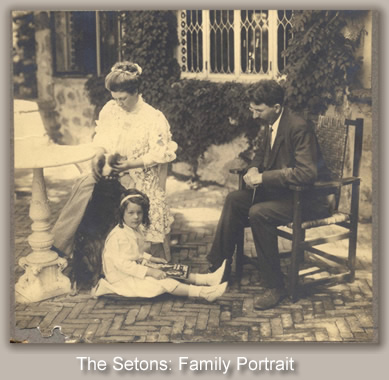
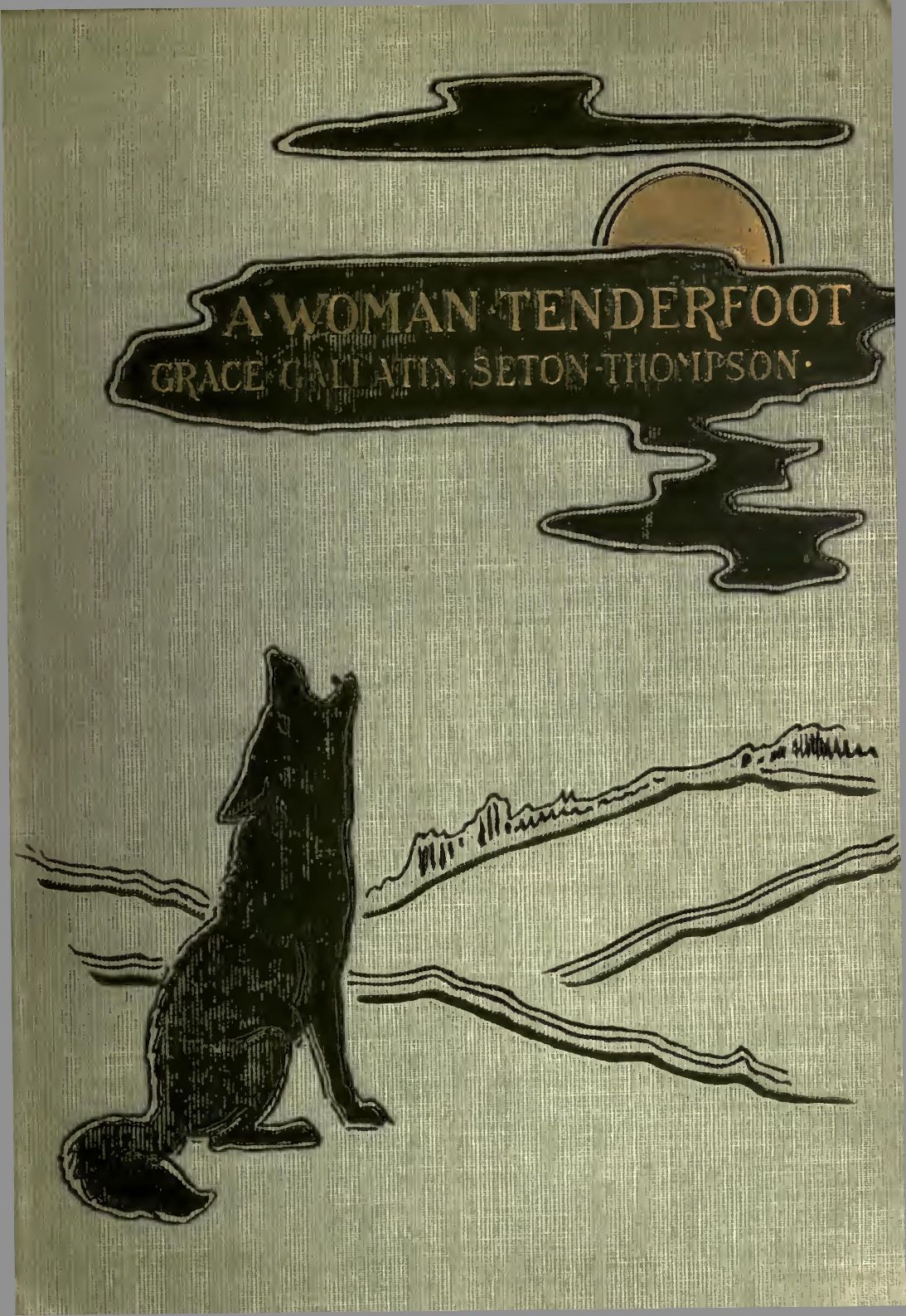
setonsHis wife Grace, daughter of a beautiful Californian socialite who, after her divorce, had come to live in New York, was no slouch either. She wrote several very popular and highly-regarded ‘personal travel’ books, recounting her own adventures in all kinds of wild and foreign parts.

grace setonShe was also president of the Connecticut Women’s Suffrage League, served two terms as president of the National League of American Pen Women, and organised, and later, commanded, a women’s mobile relief unit in France in World War I! Ann was brought up in the family mansion, under the care of a nanny, and later went to boarding school, but she also travelled a great deal with her parents. She was apparently a hauntingly beautiful and very intelligent child, but though she did well at school, did not go to college. Instead she got married at nineteen and ran away to Oxford with her new husband. Perhaps the artistic hothouse that was home was just a little too much for her! (As was perhaps not surprising given the strong wills and personalities of Ernest and Grace, they divorced in 1934).
anya seton weddingIt was not until Ann was in her early thirties, and herself already divorced, remarried, and with three children from those two marriages, that she fulfilled a long-held dream of becoming a writer. As Anya Seton, she published her first novel, My Theodosia, in 1941. She obviously had her father’s golden touch: the novel was an immediate bestseller. More successful novels followed, some of which, like Dragonwyck, were made into Hollywood films in the 40’s and 50’s. Over a 34-year career, which included many long periods travelling and researching, she wrote twelve novels, some of them ‘straight’ historical novels, like Katherine, others mixtures of fantasy, the supernatural, and history, like Green Darkness. Her last novel, Smouldering Fires, was published in 1975; the author herself lived for another fifteen years after that. Though all her novels were popular worldwide, it is definitely Katherine which to both critics and readers alike represents the high point of her considerable gifts, and which will live forever in the minds and hearts of thousands of once-were-teenagers, now grown men and women.

anya_setonkatherine 5


Picture That: Illustrators on food 3: Lisa Stewart

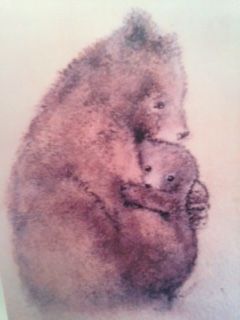
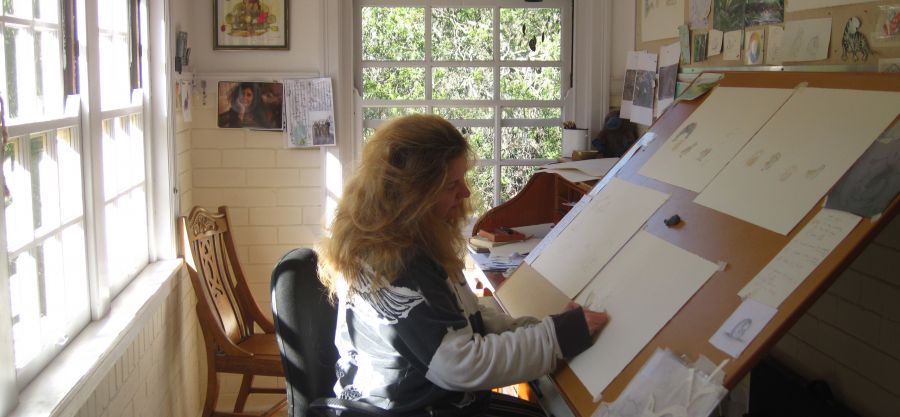
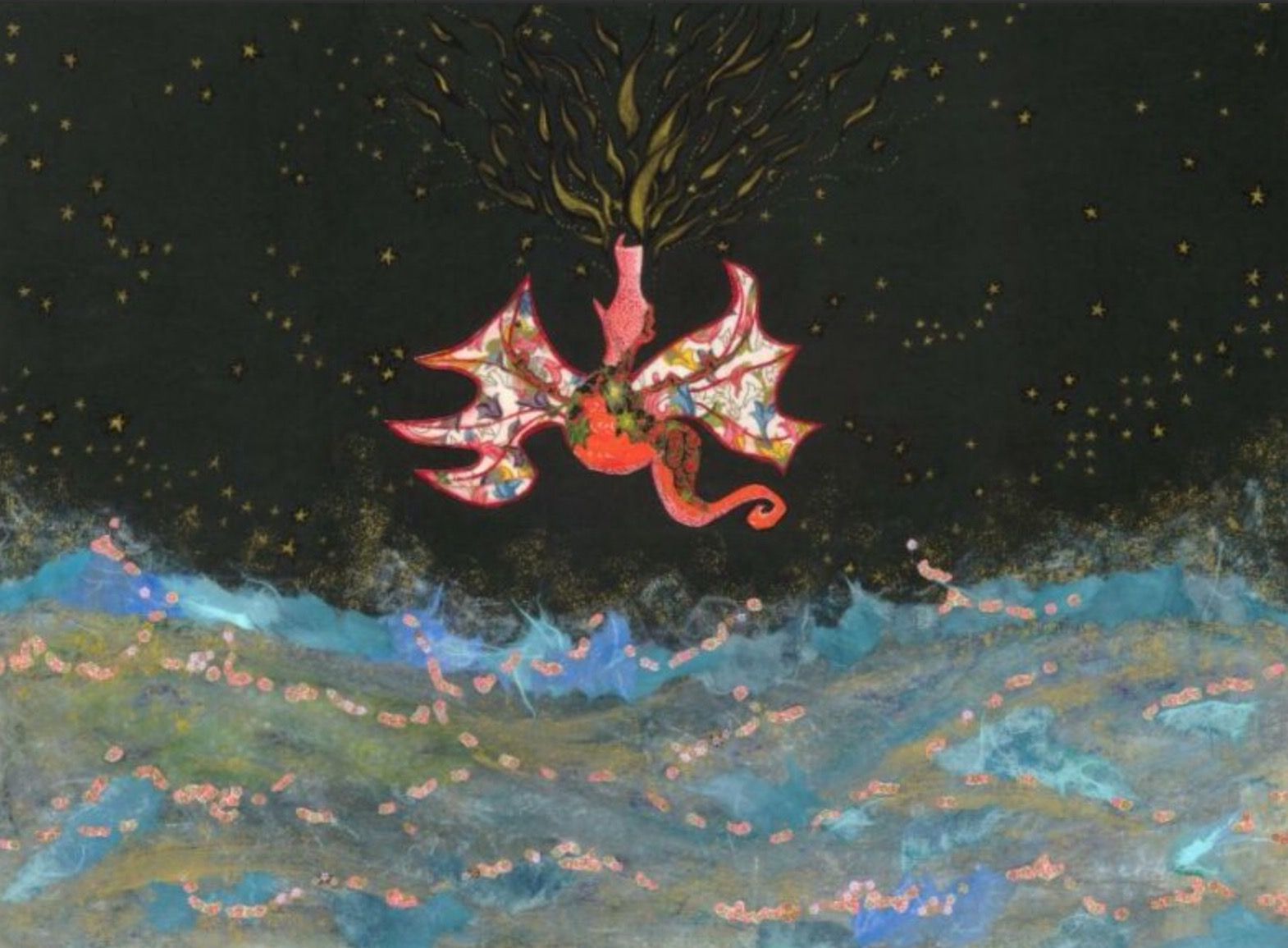
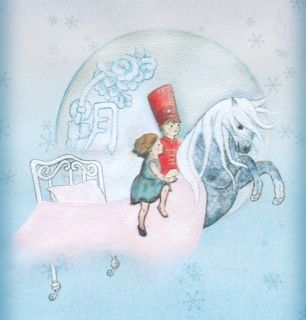
Lisa Stewart 4Today I’m featuring the touching, lively and beautiful work of Lisa Stewart, illustrator and musician. Lisa’s illustrated seven books, including five picture books and two illustrated books. And I’m thrilled to reveal that we are collaborating on an illustrated story together, to be published later this year by Christmas Press.

Lisa Stewart 2In this post Lisa tells us a bit about her journey to becoming an illustrator, offers a delicious family favourite recipe devised by her daughter Claire, and shares with us some of her gorgeous illustrations. Lisa’s website is at www.lisastewart.com.au

Lisa Stewart portraitLisa’s story

As a young mother, some 17 years ago, pushing my daughter in her pram to any paper, art supply, card or book store I could find I was instantly attracted to wrapping paper with illustrations by Jane Ray wonderful British illustrator and author). I adored her attention to detail and her animals, trees, water, sun, moon and stars. A new love was born, of children’s picture books and paper.

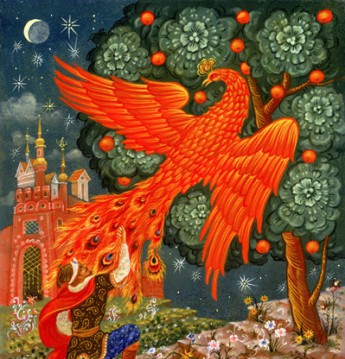
Later in Germany I sent a CD of mine (I play the violin ) and a letter of thanks to Jane for her artwork. To my delight she responded with five picture books and a glorious phoenix card of hers and a friendship was formed. Lisa Stewart love story 1
My family and I flew to England to meet her. Seeing her studio and her artwork (admired by her husband and her three children) framed and hung throughout their home filled me with joy. My secret dream was to become an illustrator and be like Jane.
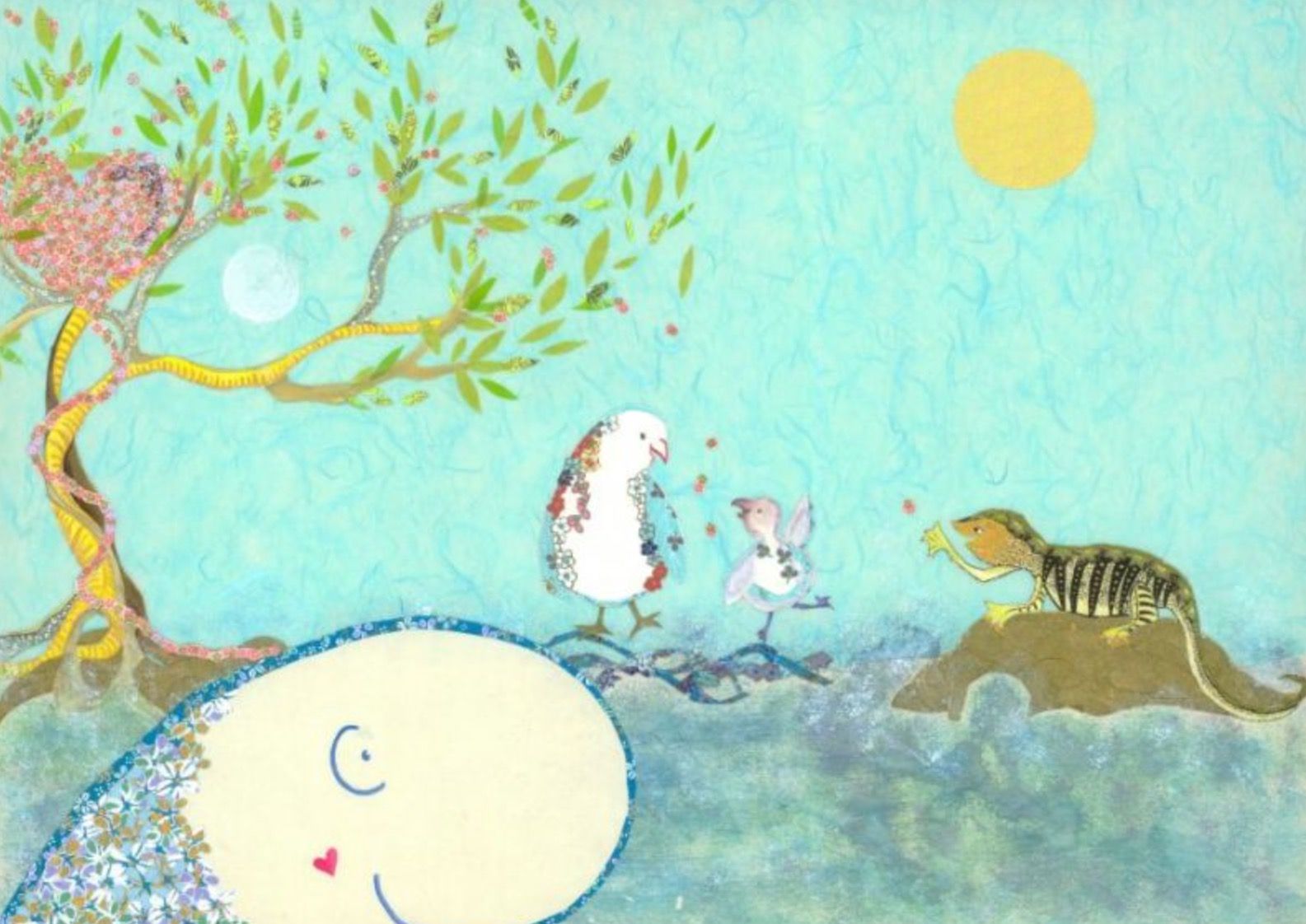
The illustrative style I use came about during the creation of a 20 page wordless love story. I began to cut out hundreds of tiny pieces of paper and create images. Friends and family were represented as trees, birds, fish, dragons and whales. A broken heart became thousands of little flowers and the night sky a full moon on black rice paper.Lisa Stewart love story 2
With support form my dear friend Lynndy Bennett at Gleebooks, I sent some publishers a few of the pictures from the love story and had a call from Ana Vivas from Scholastic Press. We met and I got to send in ideas for a book by Kerry Brown called ‘Can I Cuddle the Moon?’ I enjoyed doing some little drawings and to my amazement was chosen to illustrate it.

My dream of becoming an illustrator has come true. Lisa Stewart 8

Lisa Stewart 1

Here is the recipe for  a favourite family dish, ‘Claire’s Nachos’,  that my daughter has been making  from around the age of ten. She is nineteen now.

Claire’s Nachos

Ingredients:
> 1 medium to large brown onion
> 3 tins kidney beans
> 1 tin tomatoesLisa Stewart 3
> 1 small tin corn (optional)
> smoked chipotle in adobo sauce or other chilli e.g. chilli paste
> 2 tsp cumin or premixed Mexican seasoning
> Corn chips
>
> for the guacamole:
> 2 ripe avocadoes
> cumin
> salt and pepper to taste
> the juice of one whole lime
>
> for the pico de gallo:
> 3 to 4 medium tomatoes
> juice of one whole lime
> salt to taste
> chopped cilantro(coriander)
>Lisa Stewart recipe
>
> Instructions:
> Dice onion and fry in vegetable oil of your preference until translucent.
> Finely chop/mince half a chipotle chilli and add it to the onion.
> Drain the beans and fry them in with the onion and chilli until the beans soften.
> Roughly mash the beans, then add the tin of tomato and the cumin.
> Add the corn.
> Stir well and season to taste.
>
> Guacamole:
> halve the avocadoes and scoop out the flesh into a medium mixing bowl.
> Mash with a fork and add the lime juice, salt, pepper, and cumin.
> Mix well. Lisa Stewart 6
>
> Pico de Gallo:
> finely dice the tomatoes, and place in a bowl with the lime juice, cilantro and salt. mix well.
>
> To serve, place bean mix on top of corn chips, with pico de gallo and guacamole on top.


Lisa Stewart 5

Interview on Wordmothers site

sophie-masson-deskI was interviewed recently by Nicole Melanson of the fabulous Wordmothers site, which features interviews with female authors, artists and book industry professionals. She asked some great questions. Full interview is here, but below is a short extract.

WHY DO YOU WRITE?

As a child, I heard lots of stories—my family’s always told them—and I’ve always seen the world through that prism. To me, creating stories is as natural as breathing, and I need it pretty much as much! That is still exactly what compels me—creating stories, living in their world, and sharing them with other people.

WHAT IS THE HARDEST PART OF WHAT YOU DO?

It’s the same as it ever was—the constant challenge of staying published, of interesting publishers in your work, of reaching readers. I’ve been very lucky as a writer in that I’ve made a living at it for many years now, but I never take anything for granted and I keep an eye out for opportunities; I stay flexible while also never sacrificing my integrity.

Also, I never allow myself to dwell on rejections but simply pick myself up and try again. It doesn’t mean that it’s easy to do that though! There are always times when you think, what if the publishing dries up? What if I can’t get anyone interested? But I don’t dwell on that either. It sharpens the wits but you can’t allow it to sour the writing!


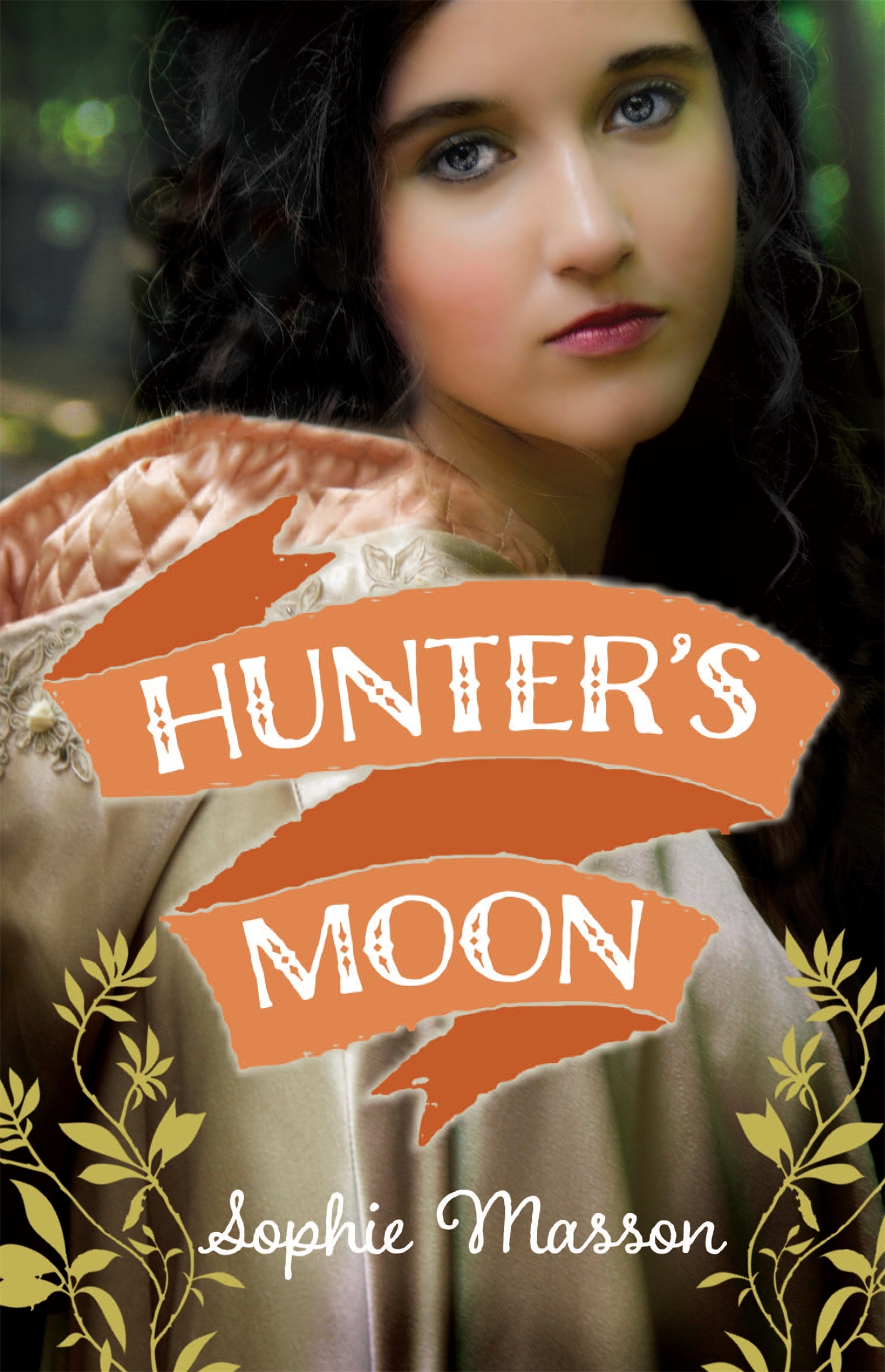
Thrilled to reveal the beautiful cover of Hunter’s Moon!

Hunter's Moon coverI’m thrilled to reveal the gorgeous cover of my upcoming novel, Hunter’s Moon, which is being released by Random House Australia on June 1.

Hunter’s Moon is a gripping YA fairytale thriller set in the same magical world as my earlier novels, The Crystal Heart(2014); Scarlet in the Snow(2013) and Moonlight and Ashes(2012), which are all set in a world inspired by the late 19th century in central and Eastern Europe, only with magic! Each book is set in a different country, and inspired by a different fairytale, and with Hunter’s Moon, that fairytale is Snow White. Here’s the blurb:

Bianca Dalmatin wants for nothing. As the heir to a department store empire and stepdaughter of the beautiful Lady Belladonna, the only thing Bianca longs for is a friend. It seems that her wish is granted at the duke’s Presentation Ball when she meets the handsome, mysterious Lucian Montresor.
But after The Mirror newspaper names Bianca as Lepmest’s new Fairest Lady, the true nature of her stepmother is revealed. Belladonna tells Bianca the shocking news that Bianca’s father is dying – and, when Bianca races to be by his side, Belladonna sends her faithful servant to kill her. Who is friend and who is enemy? Plunged into a terrifying world that will turn her from a daughter of privilege to a hunted creature in fear of her life, Bianca must find allies if she is to survive – and to expose Belladonna for who she really is.

Guest post: Michael E.Rose on a great place to set a spy thriller

The new Burma

Photo by Michael E.Rose

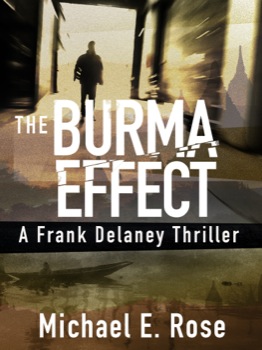
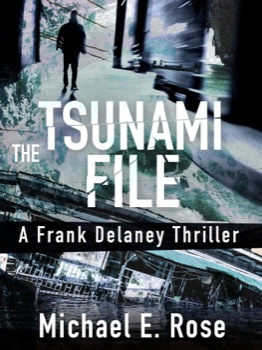
Michael RoseToday’s fascinating guest post is from thriller writer Michael E. Rose, author of the Frank Delaney series—The Mazovia Legacy, The Burma Effect and The Tsunami File–now being published by Momentum Books. Michael is the former Chief of Communications for Interpol and a former journalist, broadcaster and foreign correspondent. He draws on his years of experience in exotic locations around the world for his stories and characters. He’s recently back from a trip to Myanmar, where he set one of his books, and he reflects on the changes there.
When I sat down to write The Burma Effect some years ago, the place the military junta had decided would be called Myanmar, not Burma (just because they felt like it) was truly in a bad way. The generals held literally everything in an iron grip: opposition activists suffered appalling conditions in Insein Prison (great name for a bad prison); media censorship was absolute, the economy was in ruins, foreign journalists were not welcome, and Aung San Suu Kyi was under house arrest.
A great place to set a spy thriller, yes? And so it was. I had a great time researching and writing “The Burma Effect” and readers seemed to like it. So I was pleased and my agent was pleased and my publisher at the time was pleased. All was right with the world – except that conditions in Burma were still terrible and nobody was getting out of jail.
Now, over the past few years, there has been a breathtaking series of changes in Burma; sorry, “Myanmar”. I decided (once a journalist, always a journalist) that I would go up and see what was happening. Were the generals serious about moving toward democracy? Would they really be able to tolerate Aung San Suu Kyi now that she was a free woman again? Could people say what they liked there, at long last? Could a thriller writer find a good story there anymore?
Well, the answers are not simple. Yes, things are opening up. Tourists are pouring through Rangoon (sorry, Yangon) airport. Yes, journalists are allowed in and they can ask some tough questions and not get thrown out of the country like the bad old days. There’s a lot of new investment. You can even use credit cards now; some places, sometimes, and only if the power is on and there is a solid Internet connection.
But you still get a strong sense that just behind the new façade that is being constructed, there are very, very deep shadows.
The generals have rigged the new Constitution so they have 25 percent of members of Parliament, and it takes a vote of more than 75 percent to make any meaningful constitutional changes. Aung San Suu Kyi, clearly the most popular person in the country, bar none, is still forbidden from running for president because she has a couple of children who were born overseas. The generals, or their cronies, own just about all of the truly lucrative enterprises: mining, logging, airlines, hotels, key industrials.
They are also said to still have strong lines into the drug trade and other very shady goings-on. (Am I allowed to say that, about the new Myanmar? We’ll have to see.)
So, people on the streets of shabby, wonderful Yangon, or in a small market somewhere up-country in Shan state, or on a boat on the river near Mandalay, will tell you they are optimistic about the future. Elections are coming this year, there are more jobs around, the lights stay on longer than they used to, and fewer dissidents are in jail.
But people may still talk about such things with an almost imperceptible glance over their shoulder, to see who is listening. They may still choose carefully who they want to have a real conversation with. They aren’t going to rock the boat too much, for a while longer. They clearly know that things are still going to be rough, on a lot of levels, for quite a few years yet.
But there is hope, and that was in very short supply in the Burma where I put my series main character Frank Delaney a few years back. And there is hope there for thriller writers, because even the new Myanmar has a dark side and no-go areas and spies and guns and drugs and political chicanery.
A great place to set a spy thriller, yes?

Michael’s website: http://michaelrosemedia.com/

Twitter: @mrose_writer

About the Frank Delaney thrillers by Michael E.Rose, all now available through Momentum:

Mazovia

The Mazovia Legacy
The snow in a Montreal winter covers a multitude of sins …
In the icy depths of a Quebec winter, a harmless old Polish man dies in mysterious circumstances. His suspicious niece draws in Montreal investigative journalist, Frank Delaney, to help her find the truth behind the death, a story the authorities seem to want covered up.
The search for answers sweeps them into a dangerous web involving Canadian, Polish and Vatican agents who will use any means, even murder, to stop them. The catalyst for this international intrigue is the true story of Polish national art treasures secretly shipped to Canada to be hidden from the Nazis in the opening days of World War Two. This classic thriller combines fascinating history, deft storytelling and psychological depth.
The Mazovia Legacy was shortlisted for the Arthur Ellis Award for Best First Crime Novel, 2004.

BurmaThe Burma Effect
Sometimes an obsession can become a death wish …
In the second Frank Delaney thriller, the Montreal-based investigative journalist and sometime spy is assigned by the Canadian Security Intelligence Service to locate one of their agents gone missing in Bangkok.
The search for Nathan Kellner, a bohemian bon vivant with a taste for young women and a variety of illicit substances, brings Delaney first to London, then to Thailand and Burma, where evidence points to an elaborate plot to destabilize the Burmese military regime. Untangling that plot thrusts Delaney directly into the line of fire between the generals at the head of Burma’s all-powerful junta and those who would use any means to see them overthrown.


TsunamiThe Tsunami File
Not every victim is found to be innocent …
Frank Delaney, investigative journalist and sometime spy, is on assignment in Phuket, Thailand, in the aftermath of the tsunami that killed thousands of people, foreigners and locals alike. Disaster victim identification teams from police forces across the globe have descended on this idyllic holiday location to carry out their gruesome work.
Delaney discovers that, against all logic, someone is trying to prevent identification of one of the bodies lying in makeshift beachside morgues. His search for the reason follows a trail through Thailand’s seedy child sex trade to an elaborate cover-up in Germany and France, where those with everything to lose use increasingly desperate measures to stop him dead.
The Tsunami File was shortlisted for the Arthur Ellis Award for Best Crime Novel, 2008.


On writers: Leon Garfield

Over the next few weeks, I’m going to be republishing on my blog a number of articles I’ve written over the years, about writers, especially writers for young people, whose work I’ve loved and been inspired by, both as a child and into adulthood. These articles have been first published in a number of different places. The first of these I’m republishing, is on Leon Garfield and first appeared in Magpies Magazine some years ago.

leon_garfield black_jackLeon Garfield,

By Sophie Masson

I remember the first time I met Leon Garfield’s work. It was a Friday afternoon, I was about twelve or thirteen, and I was looking for something juicy to read at the local library for the weekend. The Garners I’d wanted were out; but browsing idly on the same shelf, I came across a title that looked good. Black Jack. By Leon Garfield. The cover was evocatively spooky, the blurb tasty, and as I ever judged books by their covers and blurbs at that age–I was willing to give it a go.
From the first sardonic, intriguing sentences, I was hooked:

There are many queer ways of earning a living; but none so quaint as Mrs Gorgandy’s. She was a Tyburn widow. Early and black on a Monday morning, she was up at the Tree, all in a tragical flutter, waiting to be bereaved.

Flung headlong into the strange, funny, terrifying, vivid world of seedy 18th century London from those first sentences, I could not put the book down all that night, even after stern paternal injunctions to turn the light off, this instant! I begged Mum to take me back to the library on Saturday, and snapped up Devil in the Fog, the only other Garfield that hadn’t been taken out, and read it too within a few hours, heart racing. As soon as I got back to school on Monday, I went to look in the library, to see if there were any other books by this extraordinary author. In the space of a few weeks, I managed to gobble up Jack Holborn, and Smith, and Mr Corbett’s Ghost, and The Drummer Boy, and The Strange Affair of Adelaide Harris. And then started again, with Black Jack, which even to this day remains my absolute favourite. I think that I must have read some of Garfield’s books five or six times over those years, and pounced on any new ones that came into the library.
Brought up on the strong meat of 19th century French picaresque adventure novels, I had taken to Garfield like a duck to water, amazed and delighted and whirled along with the inventive plots, wild casts of always believable though larger than life characters, skeins of mystery to unravel, bloodthirstiness and gruesomeness yet also humour, and the glorious language. Though his main characters were nearly always children or young people, they were never hived off into separation from the adult world; this is the opposite of the cosy boarding-school bubble. No; they had to fight, love, hold their own somehow in a harsh yet not completely unloving adult world, a world of tragedy and villainy, yet also compassion and joy and humour. The books, with their evocative illustrations by Anthony Maitland, became an indispensable part not only of my reading life, but of my writing life too, later.

Continue reading