
Book talk
In a world of wonders and terrors..

Who can she trust?

The hidden city..

An unexpected encounter turning to something far more sinister.

Revenge is a powerful motive..

Delighted to be part of this fantastic new anthology
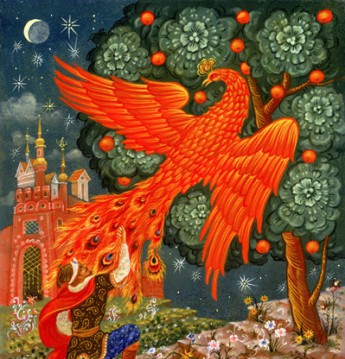
 Sneak peek–with the permission of Paul Collins at Ford Street Publishing–at a fantastic new YA anthology, Rich and Rare, coming out in October. The anthology features an amazing roll-call of some of Australia’s best writers and illustrators for young people, and I was honoured to be chosen to write the foreword. Don’t you just love the fabulous cover, created by the great Shaun Tan?
Interview with Peter Higgins about the Wolfhound Century series
One of the discoveries–and pleasures–of my recent reading life has been the extraordinary, genre-busting Wolfhound Century series, by British author Peter Higgins. Set in the Vlast, an alternative world inspired by the history and culture of Russia, where dying angels, giants, rusalki and forest spirits exist alongside revolutionary terrorists, mad scientists, rocket ships, spies and secret police, this magnificent trilogy(made up of Wolfhound Century; Truth and Fear; and Radiant State) is breathtaking in its ambition, scope, dazzling and sensual use of language, gripping and twisty plot–and sub-plots!–and wonderfully depicted array of characters. With its mix of thriller, alternative history and fantasy–both urban and quest–it’s simply the most exciting, assured and original debut I have read in a long time and in fact ranks high amongst the very best speculative fiction full stop. I’m not the only one who thinks so incidentally, as this review in The Guardian indicates!
The trilogy has recently concluded with Radiant State, and after finishing it I contacted the author and had the good fortune to interview him.
Interview with Peter Higgins

The Wolfhound Century trilogy is your first published work, is that right? Can you tell me a bit about your background and how you first came up with the idea for the books?
I had some short stories published before I started on Wolfhound Century, but these are my first novels. I was always a reader and wanted to write but for a long time I didn’t know how. Then I happened on a book in a junk shop by Joan Aiken (whose stories I love) called The Way To Write For Children and it was a revelation. She didn’t just tell you what a good story needed, she told you, quite simply, how practically to go about writing one. How to collect and store material, ask questions of your ideas, build them up bit by bit. Some people write a different way, or they just naturally fall into the process, but I didn’t. I needed that book.
Even then it took me years to work out what kind of stories I could write: I love the freedom and energy of fantasy, but I also love researching and evoking the atmosphere of historical periods and other places. It finally came together when I started building a fantasy world out of the materials of history. It’s very much the kind of thing that Guy Gavriel Kay or G R R Martin do, I guess, but I decided to use the twentieth century, and draw on that dark and strange and luminous and cruel experience in Europe and Russia, rather than look to some more distant period. And that’s how the Wolfhound Century series started to come together.
The series immerses the reader in a richly dark, complex and layered world of magical alter reality. I am not at all surprised you chose the extraordinary history, folklore and culture of Russia as the inspiration of the Vlast, imaginative world you created, but can you tell me how you went about bringing it to life?
When I’m writing I work on two parallel tracks. On the one hand, I immerse myself in the materials I want to work with: twentieth century history, spy novels, Russian literature and art and film and folklore, anything that grabs my attention. And on the other hand, at the same time, I’m planning the story, building characters, working out the plot, the themes, what’s at stake. And out of all that, basically, I grab what I want. Sometimes I come across something in my ‘research’ that really excites me, and I try to figure out how to bring it in to the story. Sometimes the story needs something – a setting, a particular kind of character – and I look around for what would be good.
If I take something from my research, I usually twist it, change it, mix it with something else, make it magical or fantastical, to bring out what I think is important. It’s about building an interesting, different world with compelling characters and situations, a world that has a kind of atmospheric resonance. It’s a very instinctive process.
 I’m struck by how seamlessly you have managed to evoke different periods of Russian history–from the late Tsarist period through the anarchist and Bolshevik period and full blown Stalinism–yet have telescoped it within the world of the series in a way that feels coherent. How difficult was that to achieve?
One way I found of making the whole thing hold together as a coherent story was to make it a thriller. Writing a thriller is a fantastic discipline: it cranks up the narrative pace, brings in mystery and conflict and danger, and makes you keep the characters moving. The story has to stay focused on the main event. As a writer, I found the thriller form very liberating, because there are clear principles and rules about plot and structure that other writers have worked out before you, which actually work. It gives you a solid framework that you can use to support the weirder and the wilder flights of imagination without losing the reader or yourself. Also, I’m a huge thriller fan, from John Buchan to Lee Child and Martin Cruz Smith.
Alongside the thriller plot, the telescoping comes from the sense, which becomes increasingly apparent as the trilogy unfolds, that time is subjective and moves at different speeds for different people and in different places. The presences from the forest, for example, the giants and so on, live long, slow lives. And the capital city of the Vlast, Mirgorod, is layered with traces of different times; it’s a kind of haunting. When Josef Kantor becomes the dictator Papa Rizhin, he’s able by sheer force of will to drive the Vlast to great social and technological changes very rapidly, but where his influence is weak time passes more slowly: people get caught in the past, trapped by memories or resentments, their lives get out of kilter, sometimes the dead wake and walk. I think the twentieth century was like that: huge and often disastrous advances driven fast by urgent necessity (the Manhattan project; Stalin’s industrial transformation of the Soviet Union; Mao’s Great Leap Forward) but people and places left stranded, trapped by history, recycling traumas, or simply refusing to share the common story.
I love the way too that you have used Russian myth, folklore and language to conjure a world that feels both strongly rooted yet wonderfully strange. Can you expand on that?
I grew up with the idea that Russia was a very strange, fascinating, dangerous place. During the Cold War the Soviet Union was, for me, a huge imaginative presence – inaccessible, threatening, vast, oppressive, but also the place where fantastic art and literature and folklore came from; the place of endless forests and oddly fairy-tale architecture alongside prison camps and concrete tower blocks. I felt it was the scary looking-glass world that was really there, behind the iron curtain. That’s the kind of feeling I wanted to capture in the Wolfhound Century series.
One of the many things I loved about the series too was the feeling that it was influenced by many other books and writers–Russians, of course, principally, but also I wondered if Joseph Conrad’s The Secret Agent, Alan Garner’s The Owl Service and Robert Holdstock’s The Hollowing had been influences? Any others as well?
That’s uncanny. Those are three of my favourite authors. The collision between Conrad’s murky, compromised city of anarchists and policemen and Holdstock’s ancient, endless, subconscious-made-real forest is in a way the starting point for the Wolfhound Century trilogy. And Alan Garner was my first really exciting private reading discovery: I found The Weirdstone of Brisingamen and The Moon of Gomrath in the library, and read them both over and over. I haven’t thought about The  Owl Service for years, but now you’ve mentioned it, I see there’s certainly a connection to my books: the electric, mysterious, mythic presences in the natural world reaching out and entangling the characters in a dark story larger than themselves. We did it at school and I remember seeing it on TV, and it spooked me a lot both times. I haven’t been back to it since but it seems to have been working away, below the surface.
 Another huge influence for me is Gene Wolfe’s The Book of the New Sun. I don’t think I write particularly like him, or about the same things, but I discovered The Book of the New Sun at a time when I really didn’t know what I was trying to do, and it hit me right between the eyes. That book opened up for me just how ambitious and adventurous and unlimited fantasy writing could be: the endless inventiveness, the ambition and the seriousness of his writing were a revelation. I realized I needed to try and write something that at least entertained the possibility of being that good.
 Your characters aren’t only human but also superhuman and non-human–angels, giants, forest spirits and more. You have poignantly and grippingly evoked their steadily-diminishing world. How did you go about it?
It’s about looking at everything that the Russian and central European imagination has produced – the folklore, the forest, the visionary paintings of an artist like Chagall, golems and rusalkas and talking wolves, as well as the revolutionaries and the state police and the prison camps and the mass hunger – and taking it as if it was all equally real and tangible and actually happening. The driving idea of the series is that an over-dominant state – any such state, it doesn’t have to be the Soviet Union particularly, the one in these books is called the Vlast – wants to impose a single way of thinking, wants to make everybody see the world the same way and be part of the one collective story, and uses its oppressive power to drive out and silence anything that doesn’t fit with that. But everywhere in the Wolfhound Century world things are alive and percipient – sentient rain, thinking rivers – and there are giants and spirits and intelligent shape-shifting wolves. For the characters this generates a lot of tension: how much reality do you accept? what do you close your mind to? It’s not ‘good natural world’ versus ‘bad government’: the wider, deeper world, like the individual human psyche, isn’t particularly morally good, it’s just unavoidably there; and much richer and more alive than any one way of organizing things will allow.
Josef Kantor, later Papa Rizhin, feels like a mix of Lenin and Stalin by way of the People’s Will anarchists. Is that a fair comment?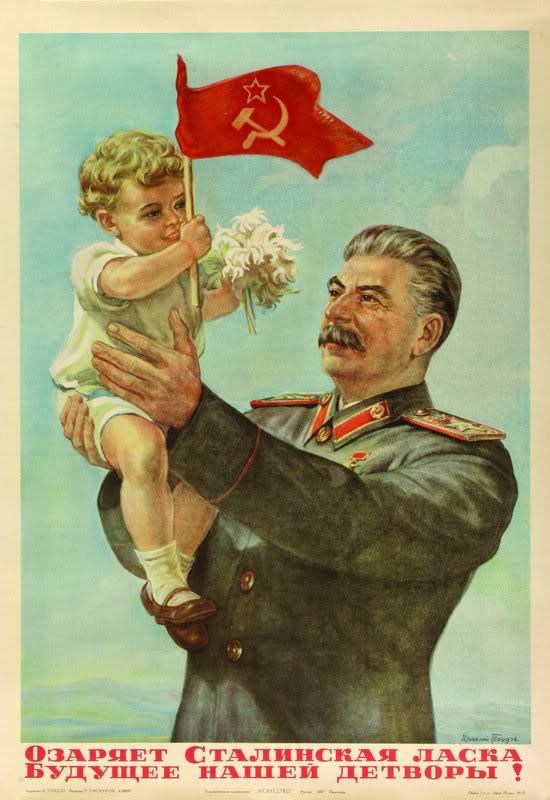
Yes, Stalin in particular. Kantor isn’t a portrait of Stalin, any more than the Vlast is a portrait of the Soviet Union, and some of the events surrounding him and the things he says and does are drawn from Lenin and other revolutionary writers and activists, but Kantor’s character and story – which in some ways is the spine of the whole trilogy – is largely built from aspects of Stalin that I think are particularly compelling.
Stalin’s journey from being Josef Djugashvili, revolutionary, poet, bank robber to being Stalin the Steel Man, terrorisor of the people and even his own supporters, then victorious war leader, then hugely-dominant avuncular dictator, is strange and oddly gripping. You can see in early photographs of him that he was very alive and engaged, very human, someone who might have been a good person. It’s as if something alien and appalling got into the machine, or something dark came out of the psyche.
Vissarion Lom and Maroussia Shaumian, the two heroes of the series, grow and change a great deal during the course of the three books. Can you expand a little on that?
Lom starts as an investigator in the political police, serving the Vlast in an obscure provincial town, and when we first meet Maroussia she’s working in a factory making uniforms. Both of them get unseated from those niches and driven to embark on a kind of exploratory journey/quest. Maroussia is the main ‘quester’, the driven Frodo-figure: Lom has to work hard to keep up with her and figure out what’s going on, what the bigger picture is. And there’s something magical, perhaps not entirely conventionally human, about Lom, which he doesn’t himself understand but grows into. That’s the spine of it. But a large part of what I was trying to do is to show them both unfolding under the  pressure of what happens to them and what they discover, opening up more and more to the world around them, becoming increasingly perceptive, connecting with what’s coming out of the endless forest, unlocking closed areas of the unconscious, extending the capacity of what people can do and perceive.
I felt that the ending of the third book, Radiant State, is left a little open–is there going to be more exploration of the world of the Vlast, or are you looking in other directions now?
Part of what I love about fantasy and science fiction is the feeling that the worlds the books build don’t stop when the books end. The particular struggle has come to a conclusion, the characters have changed in some fundamental way and so has their world, but nevertheless the world continues. It’s still there, somewhere. That’s the feeling I wanted to leave at the end of the trilogy. Maybe, possibly, I’ll revisit the Vlast one day, though I’m working on something else now. When I look back at the trilogy as a whole, I feel there’s a completeness to it, that I’ve done what I wanted to do and if I added more it wouldn’t be better.
Peter Higgins’ website is at http://www.wolfhoundcentury.com/
On writers 5: Agatha Christie
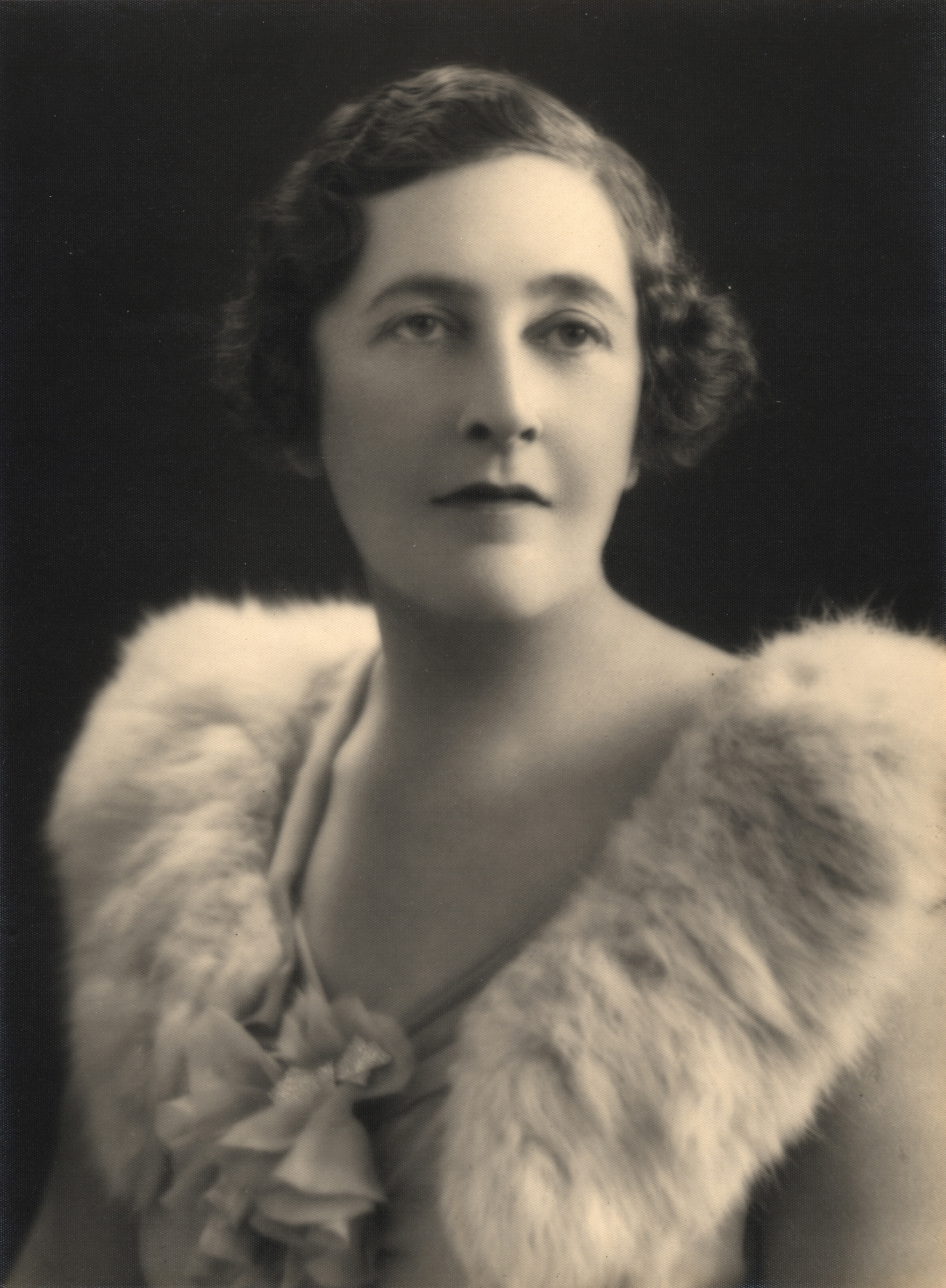
Agatha Christie as a young woman.
The latest in my republished series on favourite writers.
A celebration of Agatha Christie
Something odd is going on. In her home country, the writer who, death, J.K. Rowling and Dan Brown notwithstanding, is still the world’s most popular author, is disregarded by the literary establishment, if not by ordinary readers. Agatha Christie’s classic status is surely no longer in doubt, with two billion copies of her books still in print thirty years after her death, but in Britain it’s not enough to save her from being patronized – even by her literary-world fans – as a mere creator of ‘cosy’, ingenious puzzles, whose work ‘lacks art’. Sometimes it seems that if you are a self-respecting member of the modern British literary world, you should hide a predilection for Christie, or at the very least, apologize for a taste for ‘slumming it’, not in the mean streets, but in – these days – much more despised bourgeois ‘cosy’.
Across the Channel in France, however, it’s quite a different story. There, she is highly respected, not only as a writer of consummately clever detective stories, but as an artist of rare gifts and distinction, worthy of serious study and acclaim. Not only do Christie’s books sell four times as many copies in France as in Britain these days, but her work is championed by intellectuals and writers. Controversial writer Michel Houellebecq – who considers Christie to be one of the finest writers of the 20th century – is only the latest to do that; others have included the late philosopher Roland Barthes and the French-American doyen of literary criticism, Jacques Barzun. Pierre Bayard, a professor of literature at the University of Paris, typifies the French approach to Christie in his 1998 book, Qui a Tue Roger Ackroyd? (published in English in 2001 by Fourth Estate as, naturally, Who Killed Roger Ackroyd?). In a daring jeu d’esprit worthy of Christie herself, Bayard re-examines Christie’s groundbreaking novel, The Murder of Roger Ackroyd, and asks if Poirot could have got it wrong. This is the trigger for an unusual exploration of reading, and a detective story on the art of the Christie detective story itself: a fitting tribute to the intellectual brilliance and pleasurable artifice of a genius of popular art.
What can possibly explain this disjunction between French and British reactions to Christie as an artist? First, it is clear that the French, like the Americans, have always taken popular art much more seriously. Whether it’s, say, the work of Tintin creator Herge, the films of Alfred Hitchcock, or the books of Agatha Christie, the French have always been well ahead of the critical game. Second, Christie’s distinctive combination of gifts – her light touch, plotting unpredictability, clarity, playful intelligence, sense of the ridiculous, economical but elegant style, the lightning vignettes of social comedy coupled with a paradoxical, underlying macabre sense of dread – appeal particularly to the Cartesian mind. French critics don’t seem to resent the way she springs surprises, as all too many British critics seem to; the French expect the author to be cleverer than her readers, and delight in the intellectual challenge. Third, and perhaps most important in the context of our time, it seems to me that current British critical dismissal is very much a product of a shift in middle-class cultural attitudes. Far from reflecting a cosy, insular Little Englander mentality, as all too many British critics seem to imagine, Christie’s work actually reflects a confident, middle-class cosmopolitan sensibility, more common in Britain before, say, the 1960s, than now.
These days, in Britain, cosmopolitanism has long been replaced by earnest multiculturalism, which is not at all the same thing. Multiculturalism in the Anglo-Saxon sense is not popular in France, where it’s perceived as a threat to the one and indivisible French republic. But cosmopolitanism has long been something the French intellectual has prided himself or herself on, since at least the time of Voltaire. And so France has, willy-nilly, retained a kind of sensibility which to modern British eyes may well seem ‘old-fashioned’.
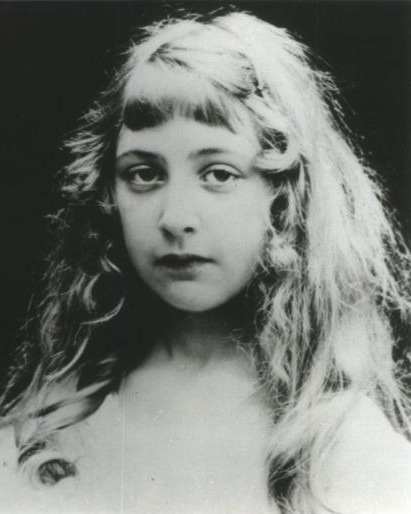
Agatha Christie as a child
In her personal life, Christie was far from being insular – her American father, frequent stays in France, other European countries and the Middle East, and her second marriage to a cosmopolitan intellectual, saw to that. She certainly knew far more about the world than her critics like to admit. Of course, in her fiction she does indeed play with ‘Englishness’ but in rather more surprising ways than English critics generally give her credit for. It’s true that the ‘Englishness’ of her books – the slightly fantastical, stylized, larger-than-life, never-never world she creates – is exotic and charming to foreigners. But in the past, especially pre-1960s, British critics seemed to enter into the fun; they did not seriously entertain the idea that the world Christie created was meant to be social realism. They understood it was an artifice, a kind of modern fairytale setting, but with all mod cons, as it were. But modern British critics, brought up with more literalistic expectations of the realism of detective fiction, wince at what they take to be an ‘old-fashioned’ view of both the English and foreigners and, keen to promote other, more politically correct or expedient views, want to dissociate themselves from it.
Moreover, it seems to me that the ‘Englishness’ of Christie is very much overstated by embarrassed English people. The author actually casts a very cool eye indeed on her own culture, and her own people. This is especially so in the Hercule Poirot novels. There is a common view in Britain that Poirot represents a caricatured English view of the French, or at least Francophones, remembering Poirot’s Belgian origins. But in my view, this could easily be turned around: what to an English eye might look like defects may very well, to a French eye, be seen as qualities. In fact, if Poirot is to be seen as a type at all, he could very well represent an archetype beloved of the French themselves. He is worldly, sophisticated, highly intelligent and logical, with a Cartesian clarity of thought. Fastidious and elegant to the point of dandy ridiculousness, but also a bon vivant who greatly appreciates good food, comfortable surroundings and beautiful women, he has a superb Gallic self-confidence, even braggadaccio at times. He also has a touch of melancholy – he is essentially solitary – and a touch of the mysterious, almost otherworldly. Yet he is very much of this world: his name itself holds that paradox, with the mythological Hercule juxtaposed with the solidly bourgeois Poirot.
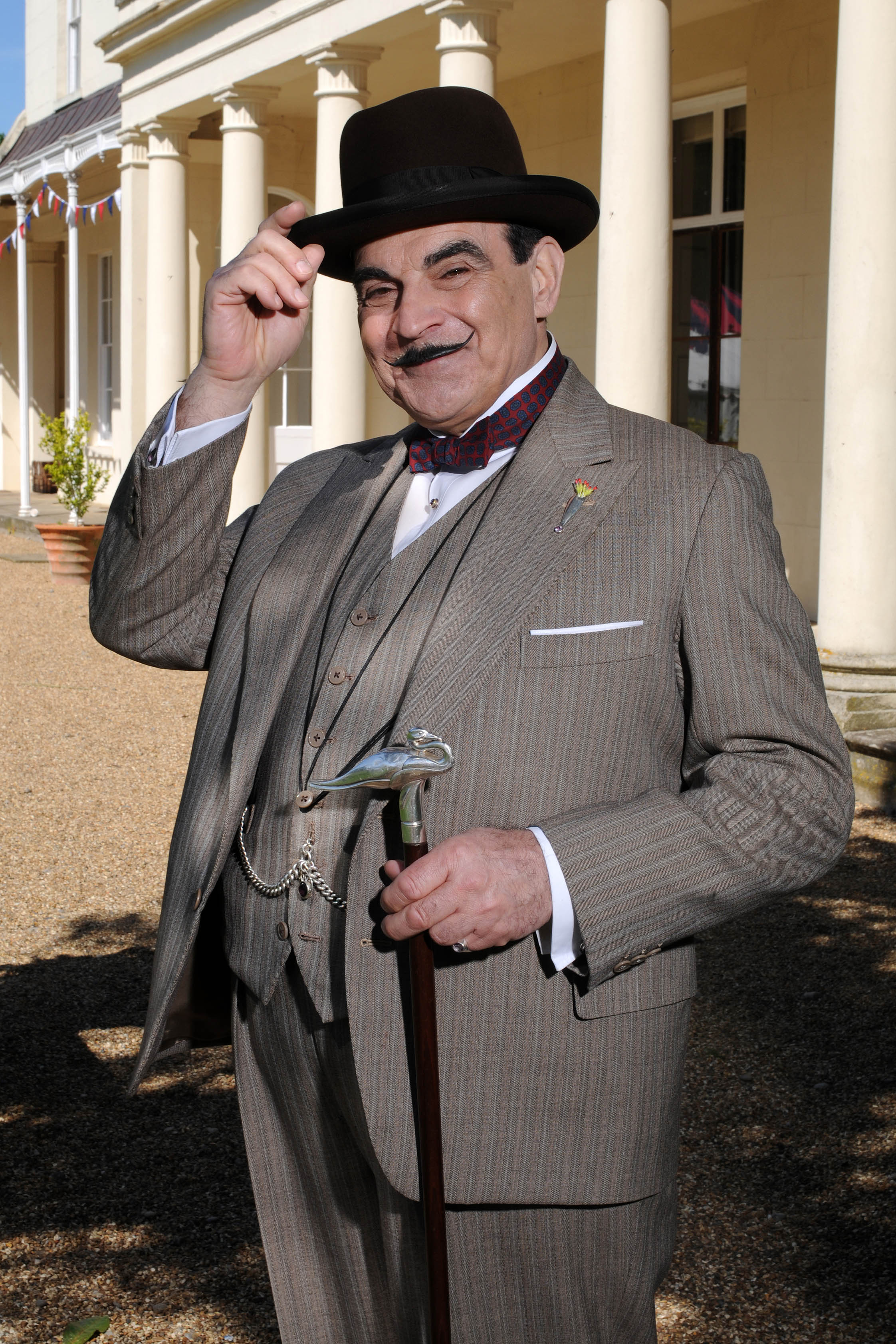
David Suchet as Hercule Poirot
Above all, Poirot is cosmopolitan. He does not try to ‘blend in’ but enjoys his status as a foreigner long resident in England – both outsider and insider. He is often derided as ‘ridiculous’ and ‘a mountebank’ but always puts egg on the faces of the tweedy Little Englanders who do not take him seriously. We see England through his eyes as much as he is seen through English eyes; and it is he who unerringly goes to the heart of the matter, and never his English detractors. How delicious it is for French-speaking readers that it is the ‘little grey cells’ of a Francophone detective that should solve all these knotty cases and totally rout all these English criminals and English bigwigs and policemen!
But it’s not just the fun elements of Christie, as relaxing and pleasurable to the mind as a Gershwin song, or a Baroque harmony, which appeal to French readers. In Michel Houellebecq’s novel Platform, the narrator, also called Michel, spends two pages describing the ‘Dickensian sense of wonder’ and the ‘magisterial portrayal of despair’ which Christie evokes. Houellebecq takes seriously her exploration of human character. This goes against the grain of received British wisdom, which consistently mocks her characters as being ‘cardboard’.
But French commentators rarely criticize Christie’s characterization, whether because they believe, like Jacques Barzun, that the traditional ‘bourgeois novel of character’, with its emphasis on ‘Protestant’ struggles with conscience and inwardness, is a poor, indeed, dangerous model for detective fiction (which Barzun considers essentially to be an art form of its own, away from the novel), or because, like Houellebecq, they actually think Christie gets her characters right. They like Christie’s understated, minimalist approach to characterization, which gives the reader an airy space in which to construct their own understandings. Coming from a Christie, one can feel suffocated by the sheer humourless mass of psychological and other detail in the work of many of the most admired detective fiction writers these days.
It’s not that Christie isn’t interested in character. Character, to her, is everything, in fact – it is what elucidates the mystery of why, as much as who, or how. But her fiction is animated by the deep-seated conviction that ‘all the world’s a stage’ – that people play roles, in life as much as in art. Her characters seem like types because they are playing roles, conventional roles. Murder disrupts not ‘order’, as British critics patronizingly assume, but the roles people play. The detection reveals the evil hidden under the reassuring mask of respectability, the suffering hidden under the careless manner.

Agatha Christie in her later years
Like Hitchcock, Christie believes that the Devil is in each of us – and that he may well find the whited sepulchre of hypocrite convention a more congenial abode than most. But also like Hitchcock, she never lectures you about it – she lets you draw your own existential and metaphysical conclusions. It’s a restrained approach that goes down well with French critics, who love the opportunity that’s thus opened, to speculate endlessly on the philosophical meanings and unpredictable possibilities of the Christie canon – right up to asking, like Professeur Bayard, as to whether the author herself was tricked by the real murderer of Roger Ackroyd!
In praise of Tintin
 A piece of mine I’m republishing, having just been reading some Tintins again!
Tintin of the ageless quiff and boundless enthusiasm, from the gorgeous comic books by the Belgian author and illustrator Herge has turned eighty-six this year ! Of course I have every single volume of his adventures, some in French, some in English, as well as quite a few associated books, including a gorgeous book of travel narratives and photographs retracing the steps of Tintin and his friends in such countries as Tibet, Scotland, the Congo and ‘Syldavia’, compiled by the French magazine Geo. This curiosity, along with Tintin encyclopedias, dictionaries, diaries and several figurines of Tintin and his friends, action figures, bookend the scruffiest, most loved-to-death collection of the Tintin adventures, which we never get tired of rereading.
The Tintin adventures are the books most often pulled out of the groaning family shelves when any of my kids come home to visit. When anyone’s feeling tired, discouraged, or simply at a loose end, Tintin is the prescribed remedy—a remedy of freshness, fun and escape that never fails to work. And when I canvass many of my writer friends as to favourite childhood reading, Tintin comes up again and again.
Translated into the world’s languages, over the four generations and more since his birth in the pages of an obscure children’s journal, Le Petit Vingtième, the immortal little reporter has proved remarkably adept at transcending all kinds of barriers of nationality, culture, religion, class, race, sex, ethnicity, age, whatever you will. The brainchild of the renowned Belgian cartoonist Hergé(his real name was Georges Rémi—and his pen-name comes from the phonetic French rendition of RG, his initials spelt backwards), Tintin’s now reached an iconic status. You rarely hear anymore the snobby, narrow-minded assertion that it’s not right for kids, because it’s—shock, horror!– a comic. Yes, some of the early work is very dated and patronising (my least favourites, for this reason, as well as incoherent story, are the early Tintin in the Congo and Tintin in America). But mostly, the Tintin corpus has aged remarkably well, because at the heart of Herge’s work is a realistic, amused but compassionate view of human nature, and a strong feeling for justice. Along with the social comedy and the crisp dialogue, there is also a horror of cruelty and bullying, and a tenderness for the ‘ordinary’ aspects of human life, as opposed to those who would have us valuing ideas over people.
Hergé very much kept up with what was going on in his times, something that is clear in the Tintin adventures. Yet it’s a curious fact about the Tintin stories that they’re both timeless and very much of their time. With consummate artistry, in both gorgeous pictures and crisp words, Herge managed to both document the realities of the twentieth century, and create his own world. The archetypal characters, social comedy, jaunty pace, inventive language, extraordinary command of line and colour, exciting, suspenseful plots, and clever dialogue of the books are all handled with the lightest of touches that belied the author/illustrator’s painstaking care with his work, both visual and written, and the immense amount of research he did to create such a seemingly effortless, pleasurable result. He combed dictionaries for words that could be used for the ever more colourful and bizarre invective of Captain Haddock; read umpteen atlases, books of science, folklore, geography and history to get exactly the nuances of the various places Tintin explores. Like Shakespeare, he did not visit the places he set the stories in, preferring to document himself in libraries and museums, but his own city of Brussels features anonymously many times at the beginnings of Tintin adventures.
The Tintin books have been highly influential in pop culture. Writers and film-makers have been greatly inspired by them. When I was compiling a series of columns for a book magazine a few years ago, on the favourite childhood books of several prominent children’s writers, Tintin came up many, many times as a major influence. Tintin has also helped to make the extraordinary art of comic books acceptable to a wide range of people(incidentally the massive success of such European books clearly shows that it’s certainly not just the US that calls the cultural tune).
But the Tintin alchemy has not yet been totally successfully distilled into decent film versions—of the abortive 1970’s cartoon series, the less said the better(indeed Herge himself, who had had no control over them, hated and despised them). The recent Steven Spielberg film was okay, but no more. It doesn’t matter We Tintinophiles have all those gorgeous stories to read again and again; a mixture of cinema and storytelling right there in front of our eyes, in a perfect blend of word and image.

