On writers 5: Agatha Christie

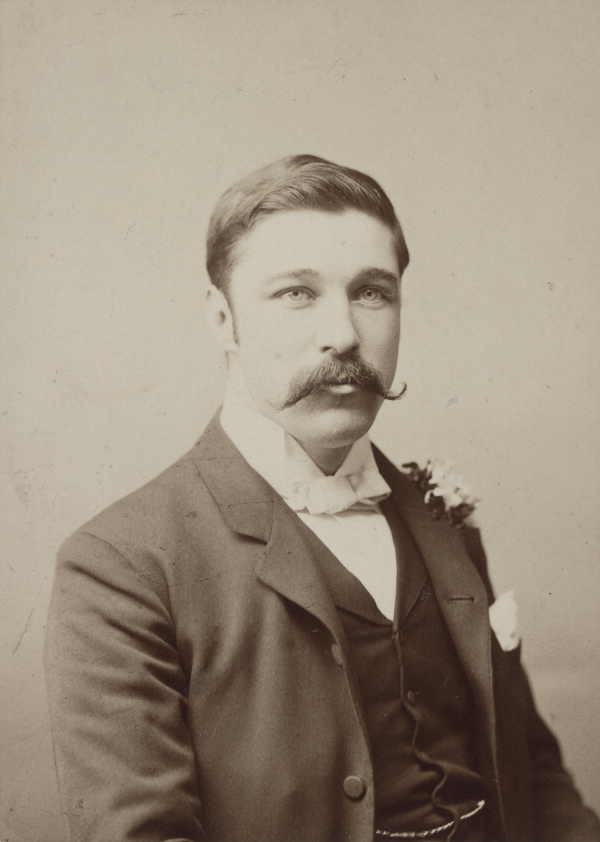
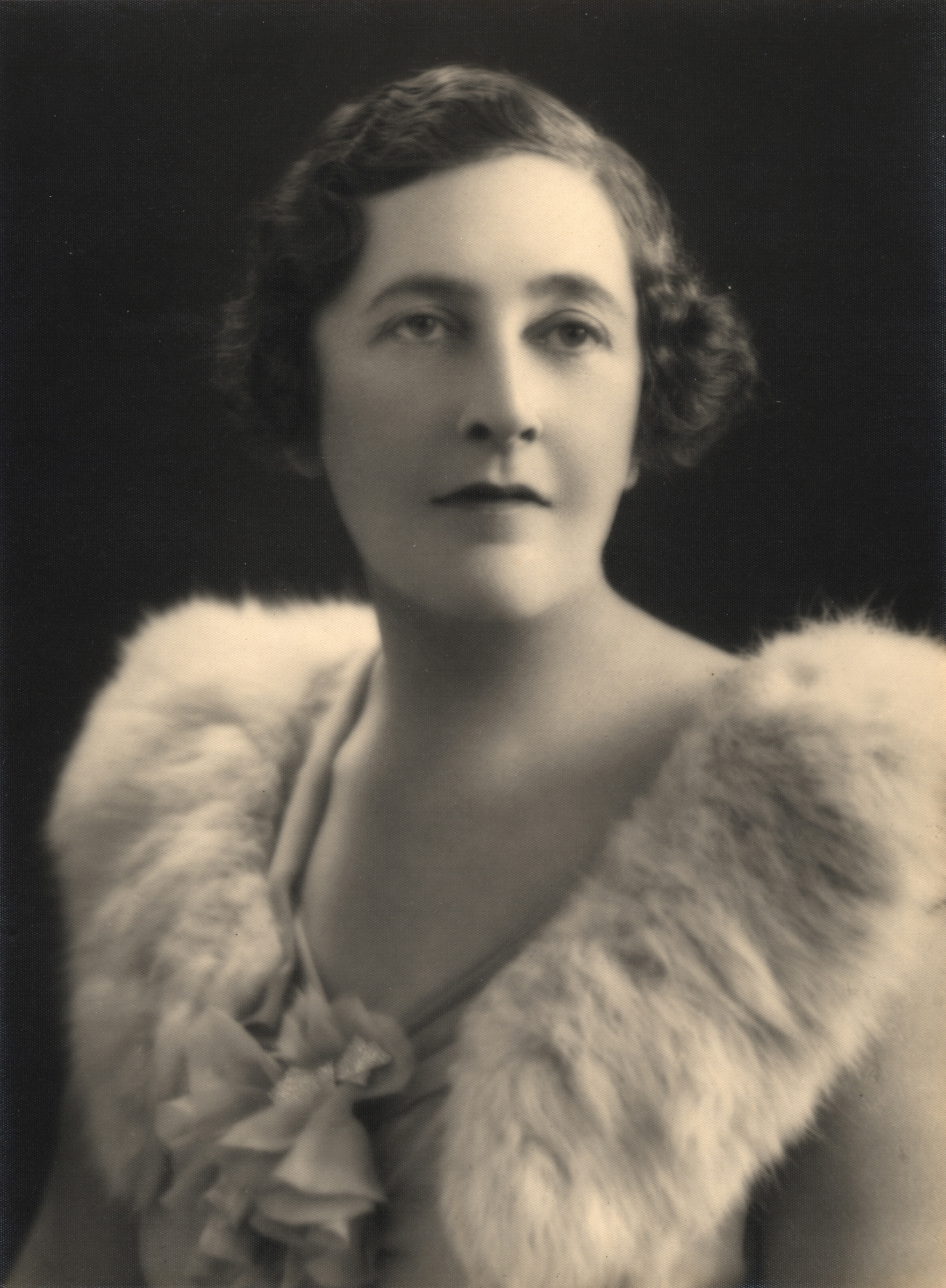
Agatha Christie as a young woman.

Agatha Christie as a young woman.

The latest in my republished series on favourite writers. 

A celebration of Agatha Christie

Something odd is going on. In her home country, the writer who, death, J.K. Rowling and Dan Brown notwithstanding, is still the world’s most popular author, is disregarded by the literary establishment, if not by ordinary readers. Agatha Christie’s classic status is surely no longer in doubt, with two billion copies of her books still in print thirty years after her death, but in Britain it’s not enough to save her from being patronized – even by her literary-world fans – as a mere creator of ‘cosy’, ingenious puzzles, whose work ‘lacks art’. Sometimes it seems that if you are a self-respecting member of the modern British literary world, you should hide a predilection for Christie, or at the very least, apologize for a taste for ‘slumming it’, not in the mean streets, but in – these days – much more despised bourgeois ‘cosy’.

Across the Channel in France, however, it’s quite a different story. There, she is highly respected, not only as a writer of consummately clever detective stories, but as an artist of rare gifts and distinction, worthy of serious study and acclaim. Not only do Christie’s books sell four times as many copies in France as in Britain these days, but her work is championed by intellectuals and writers. Controversial writer Michel Houellebecq – who considers Christie to be one of the finest writers of the 20th century – is only the latest to do that; others have included the late philosopher Roland Barthes and the French-American doyen of literary criticism, Jacques Barzun. Pierre Bayard, a professor of literature at the University of Paris, typifies the French approach to Christie in his 1998 book, Qui a Tue Roger Ackroyd? (published in English in 2001 by Fourth Estate as, naturally, Who Killed Roger Ackroyd?). In a daring jeu d’esprit worthy of Christie herself, Bayard re-examines Christie’s groundbreaking novel, The Murder of Roger Ackroyd, and asks if Poirot could have got it wrong. This is the trigger for an unusual exploration of reading, and a detective story on the art of the Christie detective story itself: a fitting tribute to the intellectual brilliance and pleasurable artifice of a genius of popular art.agatha christie books

What can possibly explain this disjunction between French and British reactions to Christie as an artist? First, it is clear that the French, like the Americans, have always taken popular art much more seriously. Whether it’s, say, the work of Tintin creator Herge, the films of Alfred Hitchcock, or the books of Agatha Christie, the French have always been well ahead of the critical game. Second, Christie’s distinctive combination of gifts – her light touch, plotting unpredictability, clarity, playful intelligence, sense of the ridiculous, economical but elegant style, the lightning vignettes of social comedy coupled with a paradoxical, underlying macabre sense of dread – appeal particularly to the Cartesian mind. French critics don’t seem to resent the way she springs surprises, as all too many British critics seem to; the French expect the author to be cleverer than her readers, and delight in the intellectual challenge. Third, and perhaps most important in the context of our time, it seems to me that current British critical dismissal is very much a product of a shift in middle-class cultural attitudes. Far from reflecting a cosy, insular Little Englander mentality, as all too many British critics seem to imagine, Christie’s work actually reflects a confident, middle-class cosmopolitan sensibility, more common in Britain before, say, the 1960s, than now.

These days, in Britain, cosmopolitanism has long been replaced by earnest multiculturalism, which is not at all the same thing. Multiculturalism in the Anglo-Saxon sense is not popular in France, where it’s perceived as a threat to the one and indivisible French republic. But cosmopolitanism has long been something the French intellectual has prided himself or herself on, since at least the time of Voltaire. And so France has, willy-nilly, retained a kind of sensibility which to modern British eyes may well seem ‘old-fashioned’.

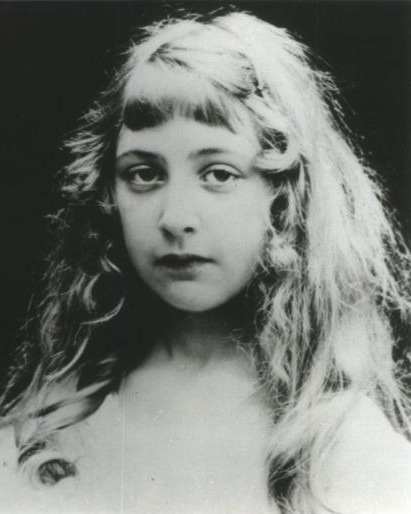
Agatha Christie as a child

Agatha Christie as a child

In her personal life, Christie was far from being insular – her American father, frequent stays in France, other European countries and the Middle East, and her second marriage to a cosmopolitan intellectual, saw to that. She certainly knew far more about the world than her critics like to admit. Of course, in her fiction she does indeed play with ‘Englishness’ but in rather more surprising ways than English critics generally give her credit for. It’s true that the ‘Englishness’ of her books – the slightly fantastical, stylized, larger-than-life, never-never world she creates – is exotic and charming to foreigners. But in the past, especially pre-1960s, British critics seemed to enter into the fun; they did not seriously entertain the idea that the world Christie created was meant to be social realism. They understood it was an artifice, a kind of modern fairytale setting, but with all mod cons, as it were. But modern British critics, brought up with more literalistic expectations of the realism of detective fiction, wince at what they take to be an ‘old-fashioned’ view of both the English and foreigners and, keen to promote other, more politically correct or expedient views, want to dissociate themselves from it.

Moreover, it seems to me that the ‘Englishness’ of Christie is very much overstated by embarrassed English people. The author actually casts a very cool eye indeed on her own culture, and her own people. This is especially so in the Hercule Poirot novels. There is a common view in Britain that Poirot represents a caricatured English view of the French, or at least Francophones, remembering Poirot’s Belgian origins. But in my view, this could easily be turned around: what to an English eye might look like defects may very well, to a French eye, be seen as qualities. In fact, if Poirot is to be seen as a type at all, he could very well represent an archetype beloved of the French themselves. He is worldly, sophisticated, highly intelligent and logical, with a Cartesian clarity of thought. Fastidious and elegant to the point of dandy ridiculousness, but also a bon vivant who greatly appreciates good food, comfortable surroundings and beautiful women, he has a superb Gallic self-confidence, even braggadaccio at times. He also has a touch of melancholy – he is essentially solitary – and a touch of the mysterious, almost otherworldly. Yet he is very much of this world: his name itself holds that paradox, with the mythological Hercule juxtaposed with the solidly bourgeois Poirot.

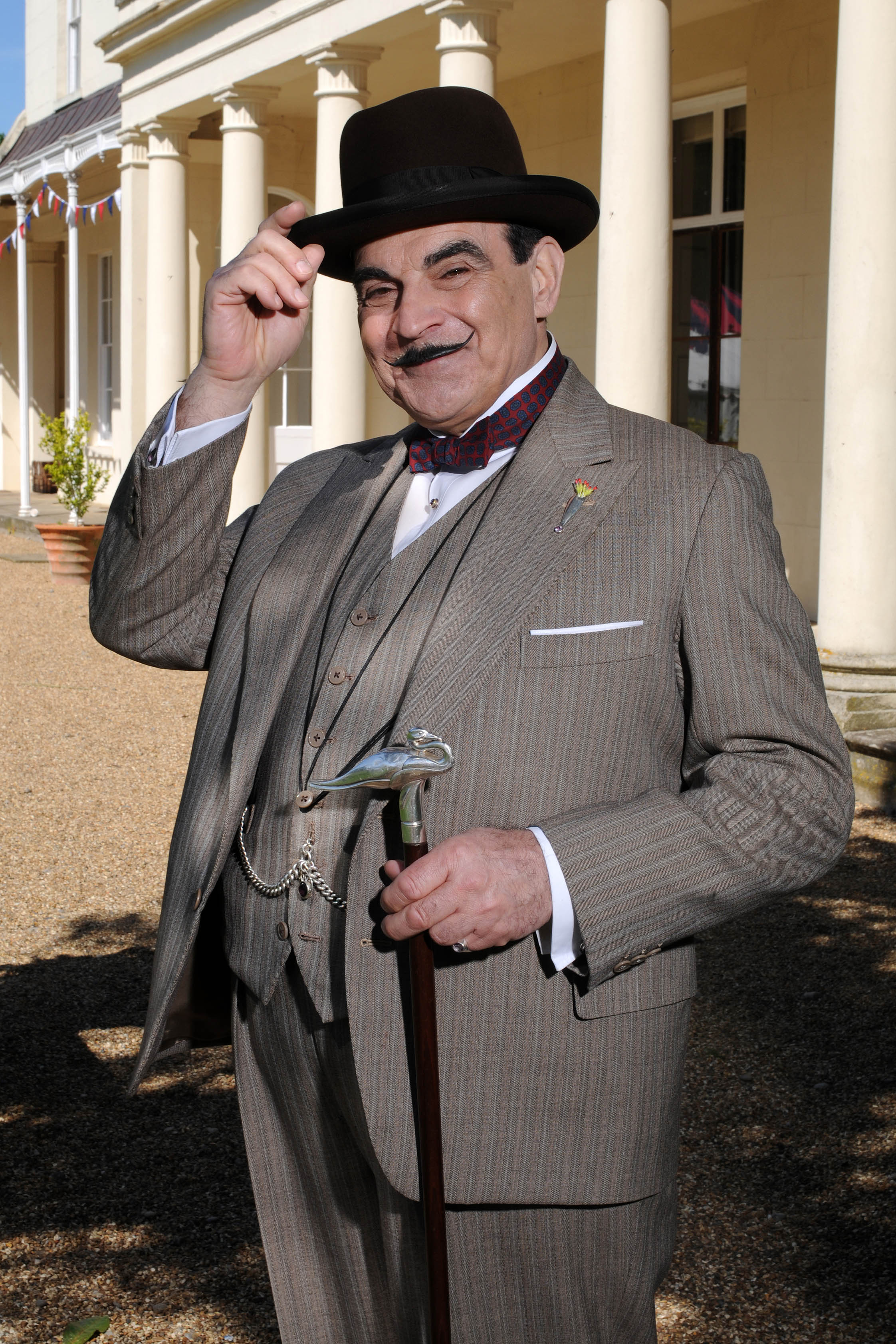
David Suchet as Hercule Poirot

David Suchet as Hercule Poirot

Above all, Poirot is cosmopolitan. He does not try to ‘blend in’ but enjoys his status as a foreigner long resident in England – both outsider and insider. He is often derided as ‘ridiculous’ and ‘a mountebank’ but always puts egg on the faces of the tweedy Little Englanders who do not take him seriously. We see England through his eyes as much as he is seen through English eyes; and it is he who unerringly goes to the heart of the matter, and never his English detractors. How delicious it is for French-speaking readers that it is the ‘little grey cells’ of a Francophone detective that should solve all these knotty cases and totally rout all these English criminals and English bigwigs and policemen!

But it’s not just the fun elements of Christie, as relaxing and pleasurable to the mind as a Gershwin song, or a Baroque harmony, which appeal to French readers. In Michel Houellebecq’s novel Platform, the narrator, also called Michel, spends two pages describing the ‘Dickensian sense of wonder’ and the ‘magisterial portrayal of despair’ which Christie evokes. Houellebecq takes seriously her exploration of human character. This goes against the grain of received British wisdom, which consistently mocks her characters as being ‘cardboard’.

But French commentators rarely criticize Christie’s characterization, whether because they believe, like Jacques Barzun, that the traditional ‘bourgeois novel of character’, with its emphasis on ‘Protestant’ struggles with conscience and inwardness, is a poor, indeed, dangerous model for detective fiction (which Barzun considers essentially to be an art form of its own, away from the novel), or because, like Houellebecq, they actually think Christie gets her characters right. They like Christie’s understated, minimalist approach to characterization, which gives the reader an airy space in which to construct their own understandings. Coming from a Christie, one can feel suffocated by the sheer humourless mass of psychological and other detail in the work of many of the most admired detective fiction writers these days.

It’s not that Christie isn’t interested in character. Character, to her, is everything, in fact – it is what elucidates the mystery of why, as much as who, or how. But her fiction is animated by the deep-seated conviction that ‘all the world’s a stage’ – that people play roles, in life as much as in art. Her characters seem like types because they are playing roles, conventional roles. Murder disrupts not ‘order’, as British critics patronizingly assume, but the roles people play. The detection reveals the evil hidden under the reassuring mask of respectability, the suffering hidden under the careless manner.

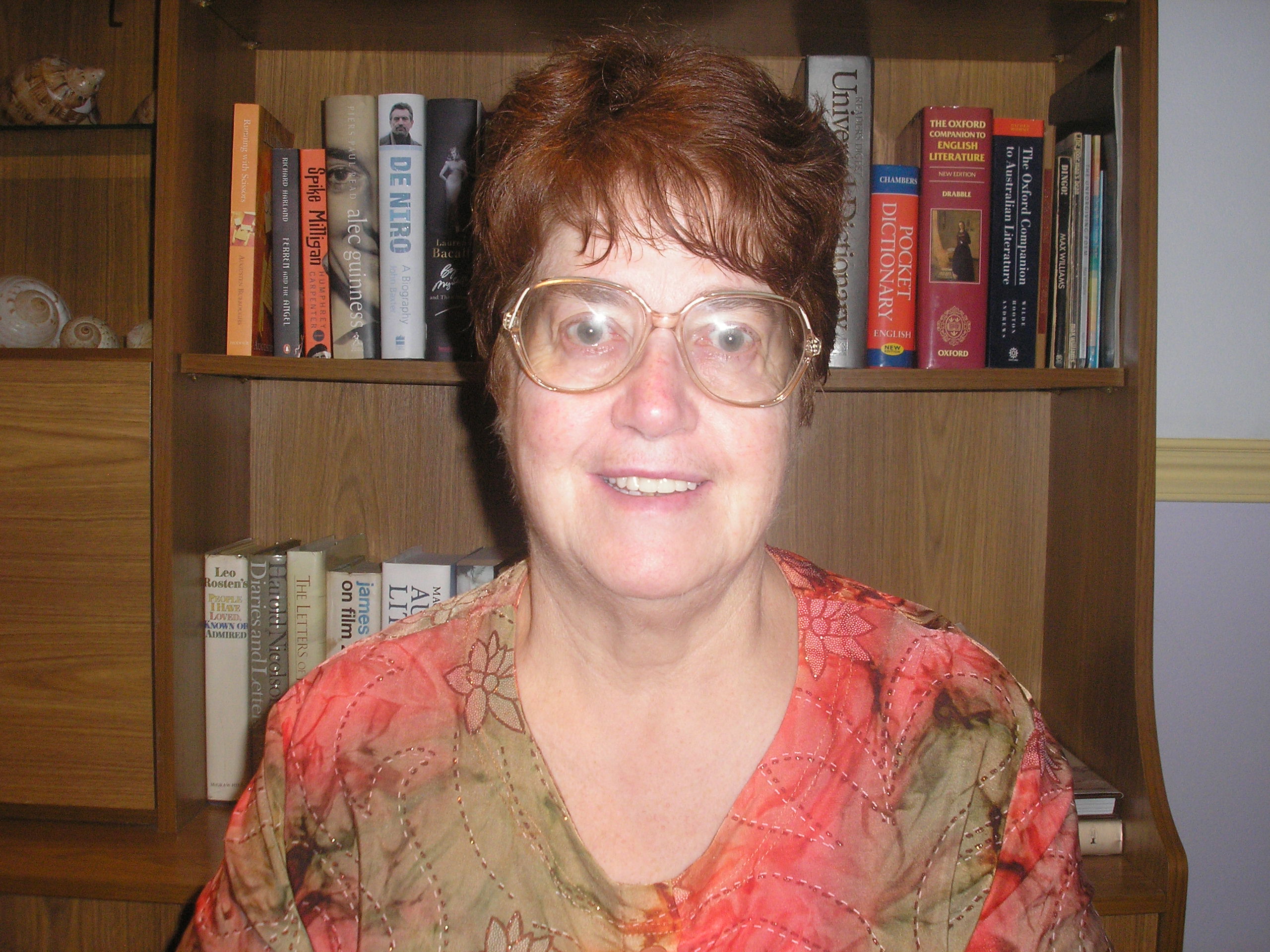
Agatha Christie in her later years

Agatha Christie in her later years

Like Hitchcock, Christie believes that the Devil is in each of us – and that he may well find the whited sepulchre of hypocrite convention a more congenial abode than most. But also like Hitchcock, she never lectures you about it – she lets you draw your own existential and metaphysical conclusions. It’s a restrained approach that goes down well with French critics, who love the opportunity that’s thus opened, to speculate endlessly on the philosophical meanings and unpredictable possibilities of the Christie canon – right up to asking, like Professeur Bayard, as to whether the author herself was tricked by the real murderer of Roger Ackroyd!


In praise of Tintin

tintin1A piece of mine I’m republishing, having just been reading some Tintins again!

Tintin of the ageless quiff and boundless enthusiasm, from the gorgeous comic books by the Belgian author and illustrator Herge has turned eighty-six this year ! Of course I have every single volume of his adventures, some in French, some in English, as well as quite a few associated books, including a gorgeous book of travel narratives and photographs retracing the steps of Tintin and his friends in such countries as Tibet, Scotland, the Congo and ‘Syldavia’, compiled by the French magazine Geo. This curiosity, along with Tintin encyclopedias, dictionaries, diaries and several figurines of Tintin and his friends, action figures, bookend the scruffiest, most loved-to-death collection of the Tintin adventures, which we never get tired of rereading.

The Tintin adventures are the books most often pulled out of the groaning family shelves when any of my kids come home to visit. When anyone’s feeling tired, discouraged, or simply at a loose end, Tintin is the prescribed remedy—a remedy of freshness, fun and escape that never fails to work. And when I canvass many of my writer friends as to favourite childhood reading, Tintin comes up again and again.

Translated into the world’s languages, over the four generations and more since his birth in the pages of an obscure children’s journal, Le Petit Vingtième, the immortal little reporter has proved remarkably adept at transcending all kinds of barriers of nationality, culture, religion, class, race, sex, ethnicity, age, whatever you will. The brainchild of the renowned Belgian cartoonist Hergé(his real name was Georges Rémi—and his pen-name comes from the phonetic French rendition of RG, his initials spelt backwards), Tintin’s now reached an iconic status. You rarely hear anymore the snobby, narrow-minded assertion that it’s not right for kids, because it’s—shock, horror!– a comic. Yes, some of the early work is very dated and patronising (my least favourites, for this reason, as well as incoherent story, are the early Tintin in the Congo and Tintin in America). But mostly, the Tintin corpus has aged remarkably well, because at the heart of Herge’s work is a realistic, amused but compassionate view of human nature, and a strong feeling for justice. Along with the social comedy and the crisp dialogue, there is also a horror of cruelty and bullying, and a tenderness for the ‘ordinary’ aspects of human life, as opposed to those who would have us valuing ideas over people.

Hergé very much kept up with what was going on in his times, something that is clear in the Tintin adventures. Yet it’s a curious fact about the Tintin stories that they’re both timeless and very much of their time. With consummate artistry, in both gorgeous pictures and crisp words, Herge managed to both document the realities of the twentieth century, and create his own world. The archetypal characters, social comedy, jaunty pace, inventive language, extraordinary command of line and colour, exciting, suspenseful plots, and clever dialogue of the books are all handled with the lightest of touches that belied the author/illustrator’s painstaking care with his work, both visual and written, and the immense amount of research he did to create such a seemingly effortless, pleasurable result. He combed dictionaries for words that could be used for the ever more colourful and bizarre invective of Captain Haddock; read umpteen atlases, books of science, folklore, geography and history to get exactly the nuances of the various places Tintin explores. Like Shakespeare, he did not visit the places he set the stories in, preferring to document himself in libraries and museums, but his own city of Brussels features anonymously many times at the beginnings of Tintin adventures.

The Tintin books have been highly influential in pop culture. Writers and film-makers have been greatly inspired by them. When I was compiling a series of columns for a book magazine a few years ago, on the favourite childhood books of several prominent children’s writers, Tintin came up many, many times as a major influence. Tintin has also helped to make the extraordinary art of comic books acceptable to a wide range of people(incidentally the massive success of such European books clearly shows that it’s certainly not just the US that calls the cultural tune).

But the Tintin alchemy has not yet been totally successfully distilled into decent film versions—of the abortive 1970’s cartoon series, the less said the better(indeed Herge himself, who had had no control over them, hated and despised them). The recent Steven Spielberg film was okay, but no more. It doesn’t matter We Tintinophiles have all those gorgeous stories to read again and again; a mixture of cinema and storytelling right there in front of our eyes, in a perfect blend of word and image.

Guest post: Elisabeth Storrs on Etruscan love

Today I’m delighted to welcome Elisabeth Storrs to my blog. Elisabeth is the author of The Wedding Shroud and The Golden Dice, the first two books in the Tales of Ancient Rome trilogy set in early Republican Rome and Etruria. The final book, Call to Juno, will be released in April 2016.Storrs-WeddingShroud-20148-CV-FT

00 ElisabethStorrsColor300Elisabeth has long held a passion for the history, myths and legends of the ancient world. She graduated from the University of Sydney with a degree in Arts Law having studied Classics along the way. She lives in Sydney with her husband and two sons and over the years has worked as a solicitor, corporate lawyer and governance consultant. She is the co-founder of the Historical Novel Society Australasia, and the Deputy Chair of the NSW Writers’ Centre.

Warding off Evil: The Power of A Loving Embrace.

by Elisabeth Storrs
I was inspired to write The Wedding Shroud and its sequel, The Golden Dice, when I found a photo of a C6th BCE sarcophagus of a man and women lying on their bed in a tender embrace. The casket (known as the Sarcophagus of the Married Couple) was unusual because, in this period of history, women were rarely commemorated in funerary art let alone depicted in such a pose of affection. The image of the lovers remained with me. What kind of culture exalted marital fidelity while showing such an openly sensuous connection? What ancient society revered women as much as men? Discovering the answer led me to the Etruscans, a society that existed from before archaic times in Italy and was mainly situated in the areas we now know as Tuscany and Lazio.

Married Couple                                              Sarcophagus of the Married Couple
                                                            Late C6th BCE

Etruscan women were afforded education, high status and independence. As a result they were often described as ‘wicked’ by Greek and Roman historians and travellers whose cultures repressed women. Etruscan women dined with their husbands at banquets and drank wine. In such commentators’ eyes, this liberal behaviour may well have equated with depravity. One famous account claims that wives indulged in orgies. And so modern historians continue to debate the contradictory depictions of Etruscan women –were they promiscuous adulterers or faithful wives?
Etruscan society clearly celebrated both marriage and sex. The image of men and women embracing is a constant theme in their tomb art and ranges from being demure, as in the case of the Married Couple, to the strongly erotic (Tomb of the Bulls) and even pornographic (Tomb of the Whippings.) The latter illustrations seem to confirm the more prurient view of Etruscan women but the symplegma or ‘sexual embrace’ was not a gratuitous portrayal of abandon but instead was an atropaic symbol invoking the forces of fertility against evil and death.
No better example of this is a particularly striking double sarcophagus found in Vulci in Italy and which is now located in the Museum of Fine Arts, Boston. Wrought in fine white limestone, the man and woman lie entwined in each other’s arms. However, unlike the anonymous Married Couple, this husband and wife can be identified. They are Larth Tetnies and Tanchvil Tarnai. The very fact that Tanchvil has two names is evidence of the status of Etruscan women. In early Rome, females only had one name – that of their father’s in feminine form. In Etruria, the bloodlines of both sides of a woman’s family were often recorded on their casket.

Tetnies Younger                                                       Larth Tetnies and Tanchvil Tarnai
                                                         Late C4th early 3rd BCE
The image of the couple is both intimate and yet openly erotic. The spouses are not young but are nevertheless beautiful. Tanchvil gently clasps the nape of Larth’s neck as the lovers gaze into each other’s eyes. They are naked, the outline of their limbs evident beneath the sculpted folds of the mantle that covers them. However nudity cannot hide their status. Their luxurious hairstyles and elegant jewellery declare their wealth, as does the wide, decorated double bed upon which they lie.
There was a second sarcophagus found in the sepulchre at Vulci. It is narrow and only held the remains of a woman, Ramtha Visnai, but its lid depicts her embracing her husband, Arnth Tetnies. They are the parents of Larth. This coffin is made of rough nenfro stone. Wrapped in their shroud, the figures embrace each other on their bed. Unlike the sexually charged younger couple, the older pair is more contemplative as they face each other although the sight of their feet peeping from beneath the covers hints at the relaxed familiarity of their marriage.

Tetnies Elder                                                  Ramtha Visnai and Arnth Tetnies
                                                          C450-400 BCE

The Married Couple inspired me to write my trilgy, but the two caskets in the Tetnies tomb were the inspiration for the title of The Wedding Shroud. For both couples lie beneath mantles that I came to understand could symbolise the large veil under which an Etruscan bride and groom stood when they took their vows. In effect the spouses were swathed in their wedding shroud for eternity, their union protecting them from the dark forces that lay beyond the grave.
As for the conflicting views of Etruscan women, it is clear from studying this society’s art that they celebrated life. Many worshipped the religion of Fufluns (the Greek Dionysus and Roman Bacchus) whose later cult adherents were famous for indulging in debauchery but in its purest form was a belief in the power of regeneration. So which version is correct? Sinners indulging in group sex or steadfast wives? Perhaps both, because the concept of a culture that condones female promiscuity while also honouring wives and mothers is not necessarily contradictory. For while it can be erroneous to compare modern societies with ancient ones, it could be argued that this attitude to females occurs in many present-day Western cultures today.
Either way, the erotic and sensual image of an embrace transcends any moralising in which historians might indulge. Ultimately I believe that the symplegma is not just an atropaic symbol but something more powerful. Whether sculpted in stone, moulded in terracotta or painted in a mural, the embrace of two lovers remains, above all, an eternal celebration of abiding love.

Tetnies Sarcophagi photographs © 2010 Museum of Fine Arts, Boston
The Married Couple courtesy Wikimedia Commons.Storrs-GoldenDice-20146-CV-FT

Elisabeth’s website http://www.elisabethstorrs.com
Twitter https://twitter.com/elisabethstorrs
Facebook https://www.facebook.com/elisabeth.storrs
Buy links on Amazon http://www.amazon.com/Elisabeth-Storrs/e/B005NVUWZ4/

Guest post: Dianne Bates on Buzz Words

Dianne (Di) Bates is one of the most hard-working and dedicated writers I know, and has been in the industry for decades. She has published over 120 books for children, some of which have won state and national awards, including two children’s choice book awards (WAYRBA and KOALA). She is married to award-winning children’s author Bill Condon; they share a website http://enterprisingwords.com.au

As well as being a writer, Di is also the founding editor of the highly-respected industry magazine Buzz Words, an invaluable resource for anyone involved in children’s books. In this guest post she profiles the magazine. I highly recommend subscribing to it!

Buzz Words: All the Buzz About Books

By Dianne Bates

In 2006 I started a subscriber-based twice-monthly online magazine exclusively for people in the Australian children’s book industry, such as writers, illustrators, librarians, publishers – in fact, anyone interested in children’s books. As editor I gather material from many sources and sometimes commission material. Buzz Words’ aim is to keep readers abreast of what’s currently happening in the children’s book industry and to give them as many opportunities to get informed and possibly published.

Every issue contains industry news, publisher profiles, profiles of people in the industry, an interview (editors, publishers, designers, etc), opportunities, markets, competitions and awards, recommended books and websites/blogs, festivals and conferences, workshops, article/s, subscribers’ achievements, letters to the editor and children’s book reviews. Links are frequently provided to help readers.

Buzz Words is as subscriber-friendly as possible. Preference for interviews, articles, profiles, etc is always given to subscribers. Subscribers are also given the opportunity to advertise for free if they have a product and/or service.

The magazine also has a children’s book review blog http://buzzwordsmagazine.com where a new children’s book review appears every day. Reviews are also linked through the magazine to the blog. Buzz Words has 20 reviewers; we review for most children’s publishers in Australia.

I am happy to send anyone the latest issue of the magazine to see if they would like to subscribe. Contact dibates@outlook.com. Cost is $48 per year (24 issues). The magazine is distributed on the 1st and 15th of every month.


Writing journals

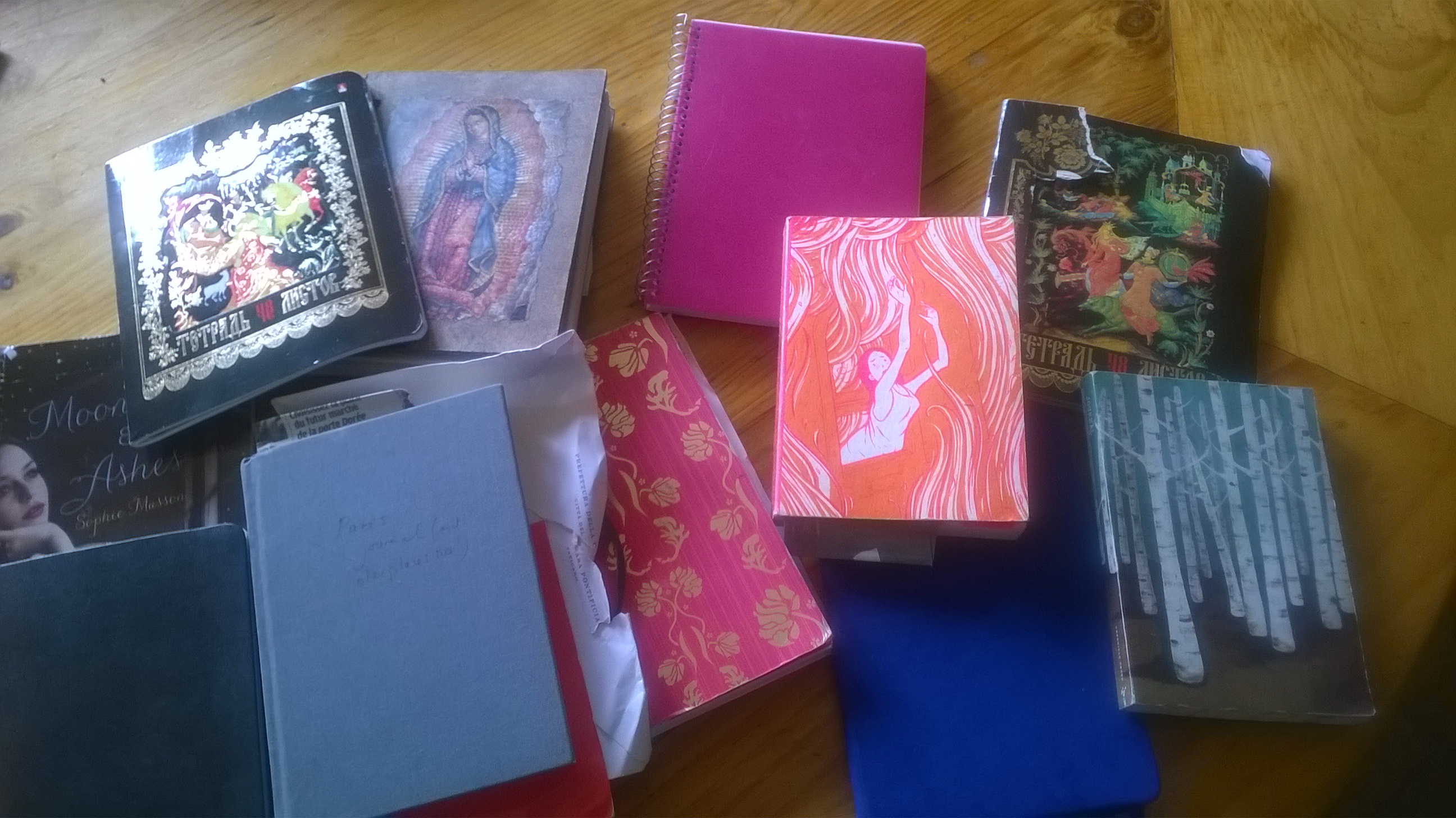
Just a small selection of my writing journals!

Just a small selection of my writing journals!

Writing journals: not all of us use them but many of us writers keep them, in one way or another: whether as a specific writing journal, as a diary, a notebook, or other. At various points I have kept, and continue to keep, all of these. I have diaries stretching back decades, amongst which is one dating from when I was 12. Amongst all the stuff about school and food(my mother is a fantastic cook and I was always writing down stuff about the cakes she’d made!) I also mention writing projects I’d undertaken, such as ‘The Twins’ Highland Holiday’ which I don’t remember at all but which sounds very much influenced by Enid Blyton! Meanwhile, a tattered  exercise book dating from around age 16-17 has notes and research as well as the first few chapters of a massive fantasy novel, never finished. Travel journals kept at various points have also included vignettes of scenes, ideas for stories, as well as observations of things I saw around me, many of which fed into stories later; while there’s piles of notebooks filled with often indecipherable scrawl about plots, characters, themes, sudden ideas, observations on chapters I’m working on, and more.

And in 2007, after having been given a gorgeous notebook by one of my publishers, Random House WP_20150612_004[1]Australia, I decided to start a different kind of writerly journal, which I call The Literary Life. This journal, which has now run into six volumes, is a chronicle of the literary life–my own, and within the wider literary world–and is an honest and unvarnished portrayal of life as a writer: the public and private, the festivals, launches, meetings with other authors and illustrators, publisher meetings, struggles and excitements of writing, challenges and pleasures of the publishing industry, emotional highs and lows, WP_20150612_007[1]talk about literary groups and news and yes a little gossip too! Though it isn’t strictly speaking a writing journal, keeping it has not only helped me to vent frustrations and express observations, it’s also helped to clarify my own writing trends and re-reading the journal’s back issues, as it were, has enabled me to reflect back onto projects I have worked on in the past.

Thinking about all that made me also curious about other people’s practices in this regard, so I emailed a few writer friends, asking them these questions:

Do you keep a writing journal? How long have you kept it? What medium is it in–hard copy or on screen?  And how useful do you find it? 

Here’s a selection of answers.

Kate Forsyth: 

Yes, I keep a writing journal … in that I keep a journal and all I really write about in it is my writing! I’ve kept my diary since I was 12 years old, and have always recorded my hopes, my dreams and daydreams, my disappointments, my ideas, my inspirations, my writing process … I use it to work out problems,  to make lists of things to do, to scribble down flashes of inspiration, to keep a record of the creative process. I write longhand in a notebook, and have about 60 volumes – I average 3-4 diaries a year. I also have a notebook for each novel, in which I keep a work every day as I’m writing – I stick in or draw  pictures, maps, diagrams – keep a record of my research … write character outlines … record word counts … all dated so I can see how long it takes me!
How useful do I find them – my diary and my notebook? I could not live without them, let alone write!
I have recently begun keeping a writing journal, just over the last six months or so. I have found it to be invaluable, especially in terms of reviewing my frustrations with time, what is hanging me up, and in terms of keeping track of some story possibilities that I might other wise lose. My journal is a hardcover, lined paper variety, which I much prefer to the computer for ease of reference. I also find it almost therapeutic to be able to put pencil to paper sometimes; writing longhand is its own form of creativity, I think.
I haven’t kept a journal for many years, though I think it’s an excellent thing to do. I stopped when I felt I didn’t need it any more … but it was my great salvation during my long, long period of writer’s block. After I’d failed to finish every piece of fiction I started for five or so years, I realised I had to write SOMETHING! So I began to keep a journal, setting myself not less than one page per day (but no maximum – some entries were 15-20 pages). Everything went into it – dreams, events, thoughts, self-analysis, pieces of description. I began it when I came to Australia – a new life in more than one way – and continued for ten years, plus a few shorter bursts after that. It didn’t see me out of my period of writer’s block, which went on for several years more, but it kept me sane and it kept me writing.
I don’t keep a journal now, but I do make notes on all sorts of ideas and experiences. Because I’m always planning books far far ahead, I can see where they’re going to find a fictional home by and by. So I’m not so interested in them as MY experiences – and although the kind of fantasy I write draws ultimately on feelings I’ve been through myself, it looks nothing like a memoir. Plus journal-writing takes so long! I need to give all my time to producing final stuff (after my 25 years of producing nothing at all)!
So, do I keep a journal now? No. Do I recommend keeping a journal? Yes, very definitely.
I don’t keep an actual writing journal, but I do have small notebooks – usually a few on the go at a time – where I jot down any random book-related thoughts. These tend to have to share space with other sorts of writing, though – generally of the domestic type, shopping lists, addresses, quickly dashed off school absentee notes etc. I also use the notes function on my phone. It’s great for those moments when brilliant ideas arrive unexpectedly – usually late at night when I’m about to drift off, and it’s too dark to write anywhere else. I’m waiting for a waterproof phone — so many good ideas lost in the shower, or while swimming.
I don’t keep a writing ‘journal’ but have several notebooks for different projects on the go at the same time. I write longhand in them but they are also full of post its, images, sketches, and random thoughts. Also loose pages and paper clips as I sometimes find I have the wrong notebook…In addition I  have an ideas ‘file’ on my computer. New ideas are jotted down so they can form an orderly queue…
I’ve done this for two years or so, and began doing so after going to workshops where several writers explained how useful they were.
They were right! I find them very useful both as a reference if I get stuck, or just to write longhand in. I find my style is a bit more relaxed using them in this way than it was writing exclusively on computer.


Kyle Mewburn on dragons and dinosaurs and boys who don’t read

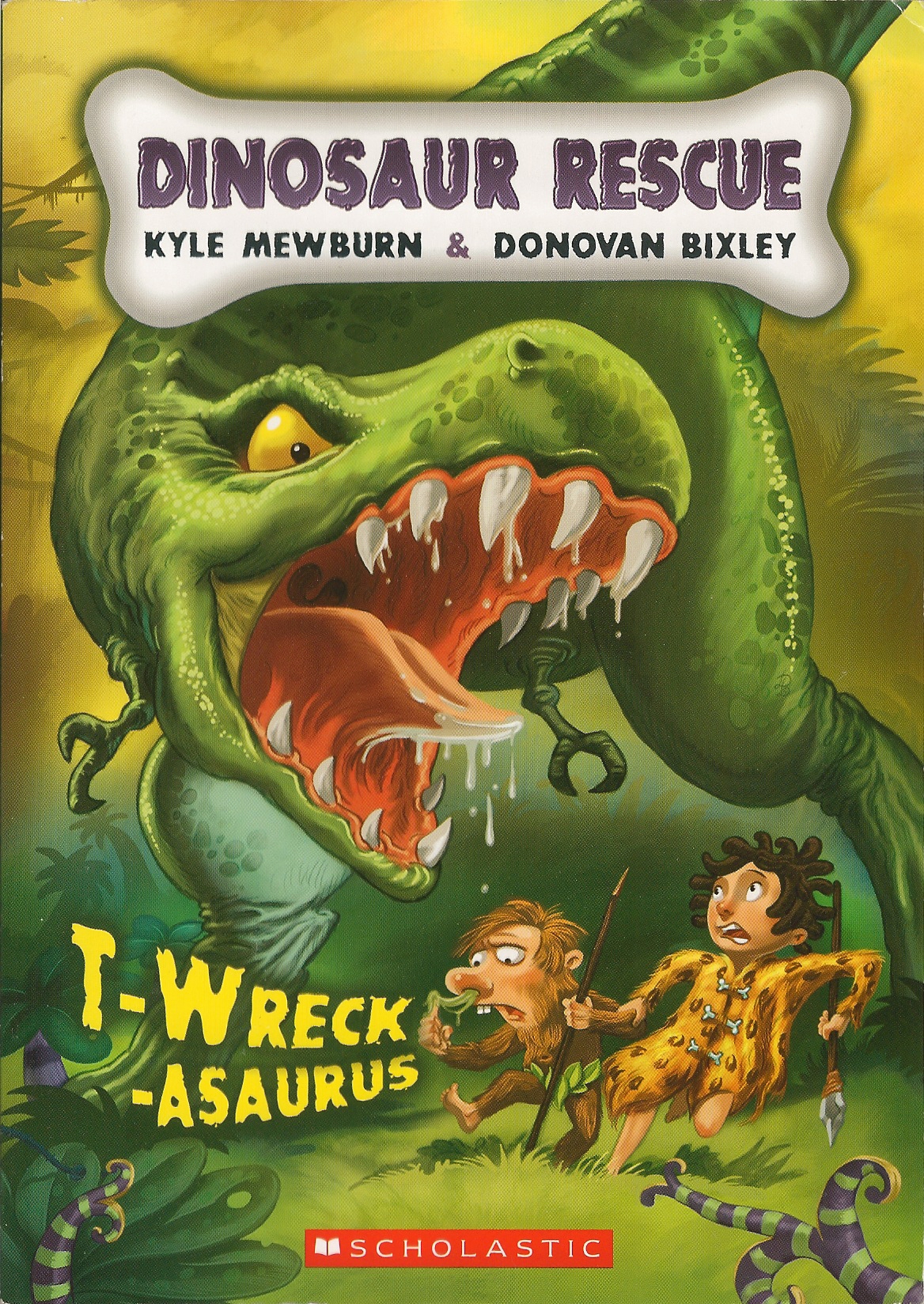
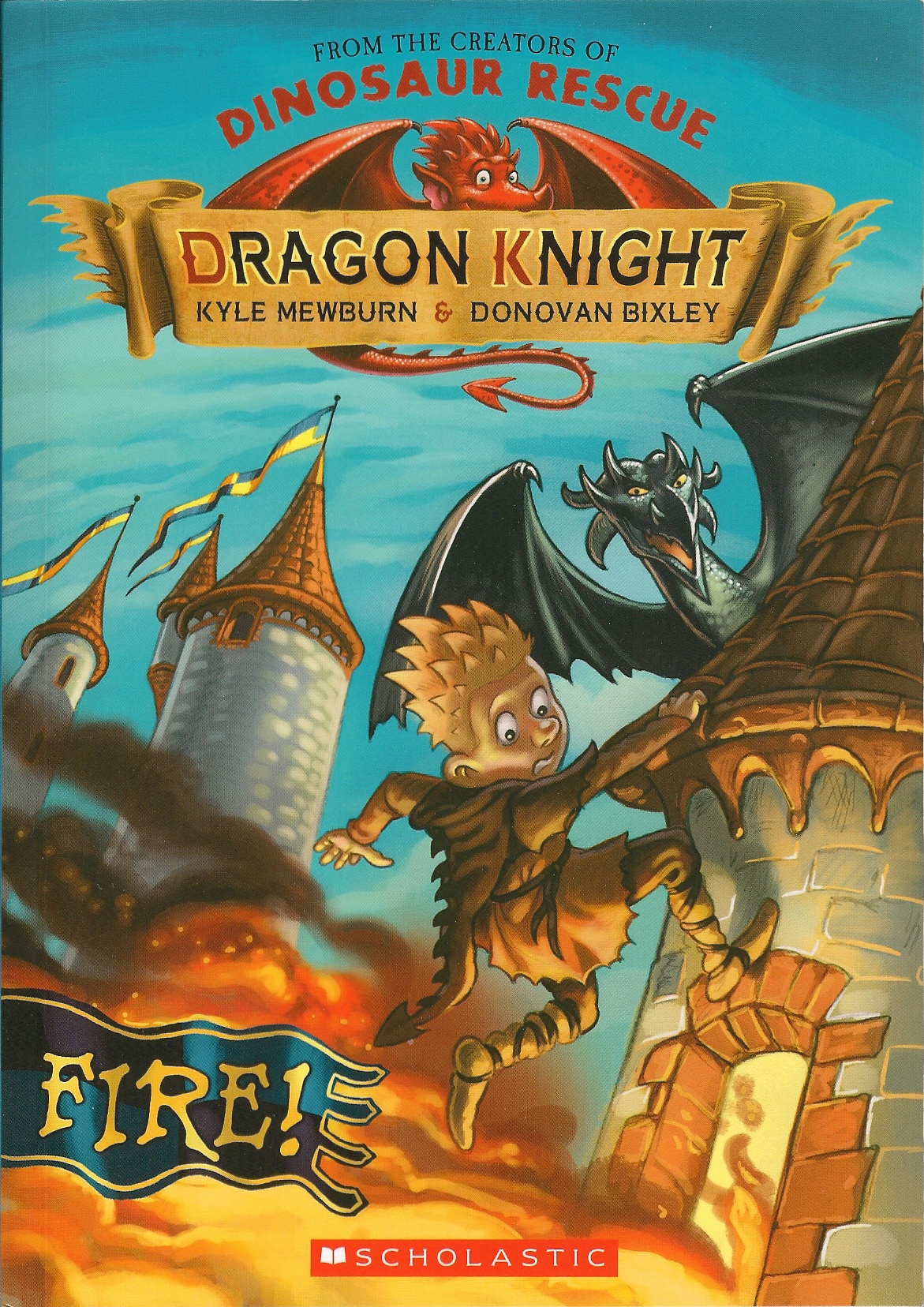
Kyle Mewburn is the author of over fifty titles including two bestselling junior fiction series. Dinosaur Rescue – about the only evolved boy in a neanderthal tribe who joins a talking T-rex on a mission to save the dinosaurs from extinction. And Dragon Knight – about a shape-shifting dragon boy who wants to go to Knight School. Originally from Brisbane, he now lives in a grass-roofed house in the deep south of New Zealand.

I met Kyle in person a couple of years ago, at the ASA Writers’ Congress–Kyle and I are both on the Boards of our respective authors’ organisations in Australia and New Zealand–and we’ve kept in touch ever since. On Facebook recently, he made some observations about boys’ reading which I found interesting, so I asked if he might like to write a guest post on the subject.

Welcome, Kyle!

DSC01530 (950x1280)Of dragons and dinosaurs and boys who don’t read

by Kyle Mewburn

Boys don’t like reading! Boys are falling behind! The sky is falling! Almost every day there’s another gloomy study, one more grim report and another grand theory on what we might do to avert catastrophe. Yet, when I recall my own childhood and the reading experiences of my peers, it always begs the question – was it ever any different? For some boys, reading was always a struggle. While for those like me, it was a wondrous escape – a delight.

As a writer of two successful junior fiction series broadly targeted at so-called reluctant readers, I think engaging this readership is akin to getting them to eat their vegetables. Take my mother. She was no Masterchef. She used to boil almost everything. For hours, sometimes. My lasting impression of broccoli was a slightly sulphuric-smelling mush with the consistency of gravel. She nearly put me off vegetables for life. If I hadn’t fallen in love with a talented, enthusiastic cook, I may never have recovered.

For lots of kids, especially boys, reading can quickly become something comparable to eating badly cooked vegetables. It’s something they’re supposed to do because it’s good for them. When I visit schools I’m regularly appalled by the diet on offer. Too often they are the literary equivalent of boiled-to-death cabbage.

In my experience, reluctant or struggling readers are by no means slow. And they’re certainly not dumb. More often than not the reverse is true – there’s a hell of a lot going on in their heads and their lives. If they only read under duress it’s often because they’ve got way more interesting things to do. Offering up trite, dumbed-down stories will turn them off reading for life.

Writing for this readership isn’t rocket science. Though a few rockets and some science never go astray. But nor is it as simple as some people think. Ever since my series Dinosaur Rescue came out, Dinosaur Rescue 1I’ve had lots of offhand comments saying basically – “If you want to appeal to boys all you have to do is add some fart jokes. They lap that stuff up.” Or “boys love anything with dinosaurs in it” – as though that explains everything.

That attitude really annoys me. For one, it suggests writing successfully for that readership is simple. Worse, it implies that readership, especially boys, are one-dimensional and an easy target.

All my stories are seat-of-your-pants stuff. I don’t actually have any idea what’s going to happen until I start writing. I think it’s important to retain a sense of spontaneity. My general theory is if I don’t know what’s happening next, then the readers can’t guess what’s going to happen either. That’s what keeps them turning the page – which is vitally important at that age. If they lose that momentum, their attentions can quickly wander off in other directions.

The series DOES contain a degree of scatological humour and some pretty gross stuff besides. I don’t make any apologies for that. It’s something most kids, especially boys, find funny. But stories with complex inter-personal relationships, especially friendships, are equally, if not more important.

Dragon Knight - Fire!In the end, re-readability is the key. The story has to be complex enough to sustain multiple readings. And it can only do that if it uses complex language, has multi-dimensional storylines, and various layers of meaning. A kid will only re-read a story if there is something new to discover with each reading. There needs to be thoughts and ideas which challenge them, with comprehension the reward for the effort of re-reading. If I can make them wet their pants laughing in the process, all the better.


The first Australian blockbuster: an interview with Lucy Sussex

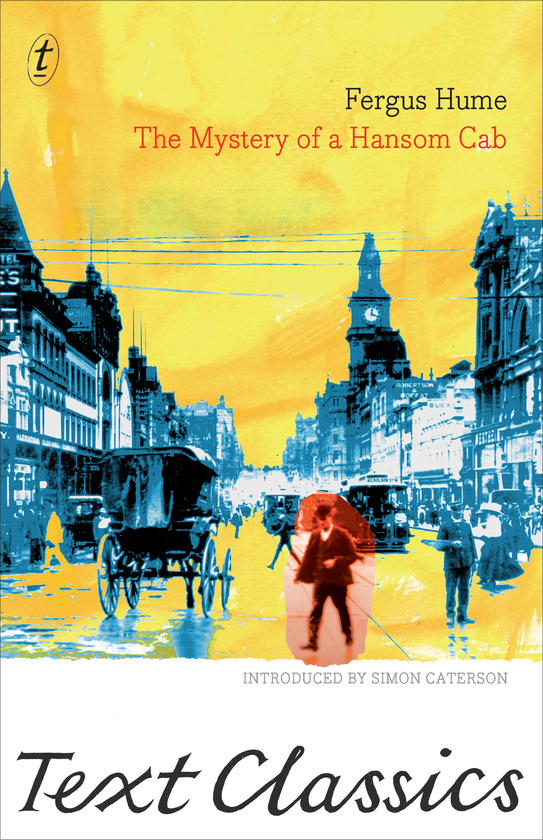
blockbuster lucy sussexThe Mystery of a Hansom Cab, by Fergus Hume, was Australia’s first blockbuster, selling out its first run almost at once, and in world terms too was a massive success, predating the Sherlock Holmes phenomenon and writing itself into the annals of detective fiction. Well over a hundred years after its first publication in 1886, it’s still in print–in many different editions, including worldwide–and the subject of a very successful ABC TV series. But its author, who due to an unfortunate decision, did not get to enjoy the fruits of his book’s success, is less well-known–until now, when Lucy Sussex’s new book, Blockbuster: Fergus Hume and the Mystery of a Hansom Cab (Text) lifts the veil on the untold story of both author and novel. The book is released next week, and as a great fan of Hume’s novel, I caught up with Lucy recently to ask her about it.

Lucy Sussex was born in New Zealand. She has edited four anthologies, including She’s Fantastical, shortlisted for the World Fantasy Award. Her award-winning fiction includes books for younger readers and the novel The Scarlet Rider. Lucy has five short-story collections, including My Lady Tongue, A Tour Guide in Utopia, Absolute Uncertainty and Matilda Told Such Dreadful Lies. Her latest book is Blockbuster! Fergus Hume and The Mystery of a Hansom Cab. She lives in Melbourne.

What first drew your interest to the story of Fergus Hume and his bestselling novel?

Hume said he ‘belonged to New Zealand’ but when I grew up there I never heard of him. That happened when I worked as a researcher for Stephen Knight’s history of Australian crime fiction. But I read the book then, and was intrigued—not least in the resonance it still had, and how people responded to it. For instance the 2012 telemovie was sparked by a Radio National program on the book, for which I was one of those interviewed. John Barnett of South Pacific Productions heard the program, bought a copy, read it on the way back across the Tasman, and decided to film it (with Ewan lucy sussexBurnett of Burberry Productions). Clearly there was life in the old Hansom Cab.

It happened I was working with Meg Tasker at Federation University on a research project about Australian and NZ writers and journalists in London at the turn of last century. We had a file on Hume, who moved to England in 1888, in the wake of Hansom Cab’s success. One day I started following digitised links re Hume across the web. It became very clear there was a book to be written on the Hansom Cab alone.

How did you go about researching the book?

The problem with Hume is that he left no diaries, there are few letters and the most relevant publishers’ records do not survive. Those who knew him are all dead now. I did use some archives, mainly in Dunedin, where his father ran the madhouse. But there was more than enough material using digitised newspapers—Papers Past in New Zealand and Trove in Australia, mainly. What was unclear in one source could be explained in another, across the Tasman.

And was there anything you discovered that surprised you?

Well, the people who kept asking me if Hume was gay! Which led me to queer theory, the history of rent boys in Sydney, and Little Buttercup from Gilbert and Sullivan, as performed in drag.

Another surprise was the rarity and value of first editions of Hansom Cab: only four survive, and even imperfect they go for five-figure sums. Go investigate your Granny’s attic!

The Mystery of A Hansom Cab predated the first Sherlock Holmes story, A Study in Scarlet, and some mystery of hansom cab bookcritics have said that Doyle was influenced by Hume’s book. Does your research support that? 

A Study in Scarlet was not published until after Hansom Cab’s great English success in late 1887. Doyle read Hume’s book, and jealously wrote to his mother “What a swindle ‘The Mystery of a Hansom Cab’ is. One of the weakest tales I have ever read, and simply sold by puffing.” [hype]. The evidence is that he and Hume had been submitting to the same publishers, around the same time, and both suffered rejections. What happened was probably synchronicity, not uncommon in crime fiction: a literary idea whose time has come. But the Hansom Cab helped create the market for Sherlock Holmes. Without it the Sherlock story might have ended with A Study in Scarlet.

I have read that Hume was inspired to write his book by the success of Emile Gaboriau’s novels–but was he also inspired by Wilkie Collins’ groundbreaking The Moonstone, published nearly 20 years previously?

He certainly read Wilkie Collins, but a bigger influence is Mary Braddon, Collins’ great rival and contemporary. She, not Collins, is cited in the Hansom Cab.

What happened to Hume and his book makes for salutary reading. Can you describe the process that led to his selling his copyright? 

Fergus Hume

Hume wrote the book to draw attention to himself as a playwright. Although he wrote it with care and flair, he didn’t really take it seriously, career-wise. So he only registered the copyright months after the Australian success. Whether we believe the sales figures cited—25,000 copies in the Austral colonies alone, a huge figure for that time and market—the Hansom Cab was drawing attention from overseas. Thus the Hansom Cab Co. was formed to publish the book in England, and at that point Hume sold the copyright, disbelieving it would be successful outside Australia. He had taken the cultural cringe too much to heart. What he did hold onto was the dramatic rights, because that was what he thought would be more important. And yes, the play of the Hansom Cab was successful, but not in the phenomenal way of the book

Not much has previously been known about Hume and his personal life. What was your impression of Hume himself, based on your research?

I said to my initial Text editor, Mandy Brett, that he would have been fun to know. Apart from him being so utterly on the make, she replied. From various accounts he was witty good company. He liked women, supported their rights, wrote often for actresses, but there was never any suggestion of romance.

And the Melbourne–and global–literary/publishing scene at the time?

Melbourne was a major centre for reading, with high literacy, numerous bookshops, and a population with disposal income and an appetite for fiction, particularly crime. Hume networked furiously, but couldn’t establish himself as a literary man until after the Hansom Cab. When he got to London he was a literary lion, in social demand. It would have been very difficult for him not to meet Oscar Wilde, for instance. But to his annoyance people wouldn’t take him seriously as a writer because he was associated with pulp.

Do you think that the odyssey of the book’s publication, from semi-self publication onwards, has parallels in today’s changing publishing climate?

Not really. At the time you could publish in three ways, firstly by subscription, getting money from friends and the well-connected and going to a printer. Vanity publishing in our terms. The book publishers themselves used two business models. Commission was where the author paid for initial printing costs and the advertisements. If the book was a success, any profits would be shared with the publisher. Jane Austen’s first novel Sense and Sensibility was published in this fashion. The alternate model had the publisher buy the copyright, taking the risk, but also, if the book sold well, all the profits. Such was the publishing fate of Pride and Prejudice and Arthur Conan Doyle’s A Study in Scarlet.

For the first Australian edition Hume didn’t have subscribers, not for a book with disreputable crime content. 5000 copies were allegedly printed, a huge amount, when most colonial books had print runs of 200 or less. He needed a large amount of money to do so, thousands in our terms. It came from playing the stock market, with advice from a friend, Alice Cornwell, a budding gold mining magnate, the C19th equivalent of Gina Rinehart.

But Hume didn’t really self-publish. Frederick Trischler, who had worked in publishing in Australia and the US, had the business initiative and nous, and ran the Hansom Cab operation, using a Melbourne printer, Kemp & Boyce. After he and Hume quarrelled Hume wrote him out of the book’s history. But Hansom Cab couldn’t have succeeded without Trischler, who was an advertising and marketing genius.

Trischler saw the overseas potential of the Hansom Cab, and formed the Hansom Cab Publishing Co, with some enterprising but also dodgy local capitalists. Financier Jessie Taylor bought the copyright from Hume. In London the company did spectacular business: 25,000 copies a month were printed and sold for fourteen months. But it wasn’t crowd-funded—more like bank robbery!mystery of hansom cab tv

What do you believe is the place of The Mystery of A Hansom Cab, in Australian literary history–and in that of the English-speaking world?

It was the first book from Australasia to become a global publishing phenomenon. It awoke English publishers to the potential of local writing. It also showed them the gold in detective fiction, and helped consolidate crime writing as a major publishing category.

The translations were worldwide, and still happen, with a recent Chinese edition. Hume was among the first Australasian writers to be translated into Chinese.

I might add, to finish off, that THE HANSOM CAB, in its initial Melbourne appearance, shows how an author can get everything right: researching his market, writing a very good and commercial book, encountering someone who believed in it enough to hazard a large print run, producing a good-looking product, timing its appearance carefully, and conducting an effective word-of-mouth campaign. They had very little money for advertising, but they did what they could, ie hiring a hansom cab to deliver the books to bookshops.

The subsequent story shows how an author can get things VERY wrong.


On comics and graphic novels: an interview with Bruce Mutard

Ever since I was a Tintin-devouring child, I’ve loved comics and graphic novels, so it’s a great pleasure today to be featuring a really interesting interview I did recently with Bruce Mutard, one of Australia’s most prominent creators in these genres.

Bruce has been writing and drawing comics for 25 years, producing 4 graphic novels: The Sacrifice (Allen & Unwin, 2008), The Silence (Allen & Unwin, 2009), A Mind of Love (Black House Comics, 2011), The Bunker (Image Comics, 2003) and a collection of short stories, Stripshow (Milk Shadow Books, 2012). He also has had short comics stories in Overland, Meanjin, The Australian Book DSC04353 copyReview and Tango among others, and has illustrated several books for Macmillan Education’s Stories From Australia’s History, series. He has just completed a Master of Design in comics studies on the interaction of words and pictures at Monash University. He has conducted many comic workshops, and given talks at Melbourne Writers Festival, NMIT, RMIT, Edith Cowan University, University of Melbourne, Monash University, and presented papers on comic theory at Oxford University, Loughborough University and University of Arts, London among others.

Bruce is an eloquent and knowledgeable advocate for comics and graphic novels generally, and holds the comics and graphic novels portfolio within the Australian Society of Authors. Recently, his passion has led him to a new direction. Read on!

Bruce, you’re about to launch a new imprint, Fabliaux. Can you tell us about it? What motivated you to start it? What has the journey been like so far? And what kinds of books will you be publishing?

The idea for Fabliaux started a few years ago when I was still thinking of self-publishing some of my own work that wasn’t suited or wanted by my existing publishers. This was primarily my short comics collection: Sex, Politics and Religion: Stories To Break Up Families By and Alice In Nomansland – a still unpublished graphic novel that is predominately naughty humour, and unlike any other I’ve done. Those books are still floating about, though I’d much rather other mutard alicepublishers took them on. Anyhow, I’d always nursed the possibility of publishing other people’s work if I thought it needed to take print form, and that there might be enough of a market to make the investment back. I chose the name Fabliaux because it has a literary pedigree and doesn’t have ‘comics’ in it, limiting the sorts of books I might be able to publish. I may one day do prose, poetry, artists books, art books or kids books. Anyhow, Fabliaux is a term given to a genre of ribald and comic tales told by jongleurs in France in the 12th and 13th Centuries; the precursors to similar bawdy tales in the Decameron and The Canterbury Tales.

from Roman de Renart, medieval French fabliau

from Roman de Renart, medieval French fabliau

So far the journey has been ‘artistic’, which is to say that I’ve blundered into publishing with the eye on the creative end-goal, satisfying my authors, but less concerned about the costs and how to market the work! To that end, my aim is to publish books that have a niche readership, but nevertheless one that is proven to exist, and to make sure the print quality is the best for the work. I’m an author first and foremost, so that is my main role, but since that often takes me to markets, fairs, conventions and the like, I might have an opportunity to sell some of these books. I won’t do mass-market books, as I have neither resources nor time to put into the marketing and administration of such an enterprise. I give my author’s contracts and generous terms, though no advances. I make no promises other than to publish and do my best to take the authors work to the world in my stumbling fashion. Don’t laugh, please.

The launch title of Fabliaux is the provocatively-titled Art is a Lie, by Carol Wood and Susan Butcher–a unique work indeed. Tell us about it–how did you discover it? What drew you to it so much that you chose it as the launch title of Fabliaux?

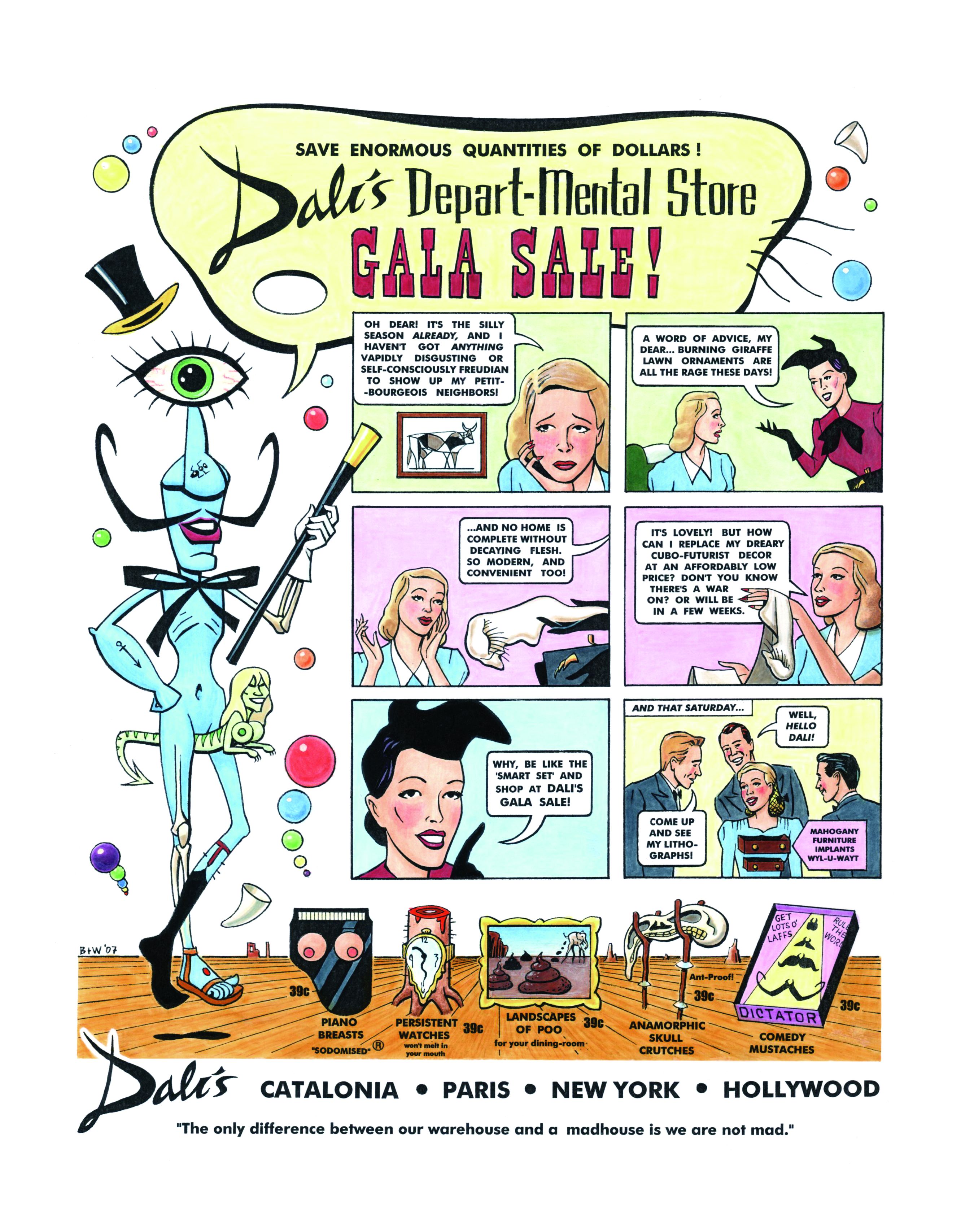
I’m pretty certain Art Is A Lie is unique. In short, it’s a collection of 1-3 page comics strips mostly first printed in a US art magazine, Artillery, over the past 9 years under the title, Dead or Alive. Essentially they are spoof biographies of famous artists, done in myriad of styles so no two Art is a Lie Dalistories look the same. Imagine Picasso as done by EC Segar (Popeye), Duchamp as a Dick Tracy story, Hieronymous Bosch as done by Don Martin (MAD), or the 5000 Fakes of Dr Seuss. Imagine Frida Kahlo as a Betty Boop cartoon, or if you can, Tom of Finland as done by George Herriman. You probably can’t imagine such things, but they do exist in this book. There’s fumetti of which a couple all the characters and backgrounds are intricately constructed models that Carol in particular, makes. The level of detail in these is astonishing. In short, they are brilliant and I think the world needs to know about it! As for discovering it, I’ve known Carol and Sue for perhaps 20 odd years on and off, so when they showed me the work they’dArt is a Lie Picasso been doing for Artillery, I was blown away – laughing. Since the magazine was not available in Australia, I wondered if there would ever be a collection of the strips so I could have a well thumbed, cup ring stained, annotated copy on my bookshelf. The magazine’s publisher was in no position to produce such a book, nor were the Pox Girls. For many years, nor was I, but as the old saying goes: ‘good things happen to people who wait.’
The rise of self-publishing has been talked about a lot in recent times, but not so much another phenomenon–the rise of small presses founded by creators: authors, illustrators, graphic novelists, who are publishing other people’s work. Why do you think this is happening? And do you have any thoughts on what it means for the literary landscape and the publishing industry?

It is probably a confluence of factors. Firstly, there is the general contraction of sales across the industry that has lead to a reluctance on the part of established publishers large and small to take on new projects, even from authors they’ve published. Unless an author has earned out their advances (assuming they got one), it’s hard to place a new work, especially something that is a challenging literary work. The old template publishers worked from by having commercially successful works subsidise the publication of works of merit has diminished. But those authors who have been fortunate enough to do well out of their literary career, generally love writers, good writing, good books and having been through the mill of building a career in writing, also know how much more difficult it is to get published today. So, I think their passion for literature means they are willing to set up imprints and publish those works that the established publishers have forgone, not to prove the latter wrong, but simply to ensure good work gets published, be it in print or digital. Some may have a better business head than others (like me), but I’m sure it’s passion for the art, craft and life of words and pictures, that drives them.

The comics/graphic novels scene has both expanded and contracted in recent years in Australia. There seems to be more creators than ever yet less opportunity for them to be exposed at the traditional showcase events, such as Comicon, Supanova etc. Can you comment on that? 

I would agree there has been a huge expansion in the number of creators and works being produced in recent years. The Ledgers committee (The Ledgers are the recently reinstituted annual Australian comics awards) had a long list of more than 250 to sift through last year, whittling that down to about 40 for the shortlist. There are so many more people considering comics as a medium with which to tell their stories or non-fiction. I would disagree that there are less opportunities to showcase their work; if anything, it’s the opposite. True, showcasing comics work is not overly rewarding at the pop culture expos like Supanova and Ozcomicon for the simple reason that they are nowhere near as popular as the other stuff on show. The main reason people to go to those is to dress up in cosplay, get photos and stuff signed by the stars, attend their speaking sessions, play some games, buy copslay merchandise, get prints, toys, books and dvds. It’s very rare that there is a comic guest that requires one to buy tokens in advance and line up for an hour or more to get something signed (Stan Lee is one such). stan lee signingAlthough comicons began with all comics, they have evolved with time to embrace all the pop culture that was largely born in comics, or spec fiction. It’s a case where the children of comics have gone and built a world that left its parents and grandparents long behind. Occasionally, these elders are known to express a little pique at being marginalised or forgotten. But there’s nothing wrong with that; evolution is healthy and the events bring joy to tens of thousands of people every time they are put on.
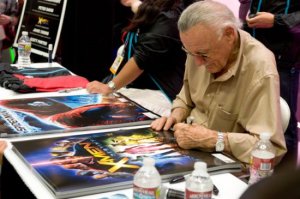
But in the last few years, a good number of comics only events have sprouted up which probably resemble the comicons of old in their early days. There’s Comic Gong in Wollongong (which may evolve to be more pop culture); Comic Con-Versation in Sydney in September, run across several library services; the Homecooked Comics Festival in Melbourne, put on by the City of Darebin; The Central West Comics Festival in Parkes; the Zine and Indy Comics home cookedSymposium in Brisbane, the Sticky Zine Fair in Melbourne and numerous zine fairs that are also very good places for comics creators to sell their work direct to the public. I suppose the biggest problem in Australia is that these forums are almost the only way most creators reach their public, for aside from those few of us whose work is published by mainstream book publishers, most are sold through a few local comic shops and/or online. There is no national comics distributor that reaches all the local comics shops, let alone high street bookshops that sell graphic novels. Most of the latter do not sell ‘floppies’ or mini-comics. The Australian comic shops buy 90-100% of their stock from Diamond Comics Distributors – a near monopoly comic distributor in the USA, where all the Marvel, DC, Image, Dark Horse, IDW and other popular titles come from. These stores very rarely set up accounts with anyone else, unless it’s manga, Anime, Dvds, figurines and other stuff they might sell. I know that you can’t find my books from Allen & Unwin in most Australian comic shops because they won’t set up accounts with Allied Distribution for a few local graphic novels. So, if you go to your local comics shop in your capital city (there’s a handful in major regional centres), then you’re most likely to find what is produced by creators who reside in that city, as they have personally taken their work to be sold there – usually on consignment. There have been a few attempts over the past couple of decades to create a national comics distribution system, but aside from one who failed at the first hurdle, the others foundered on the lack of support and interest from the comic shops. Australian comics are by and large marginal sellers compared to the American comics and Manga. The reasons for this are the simple fact that we don’t produce comics that compare with the slick overseas products (see question 6, below).

Tell us about your own books–and whether you’re working on something new.

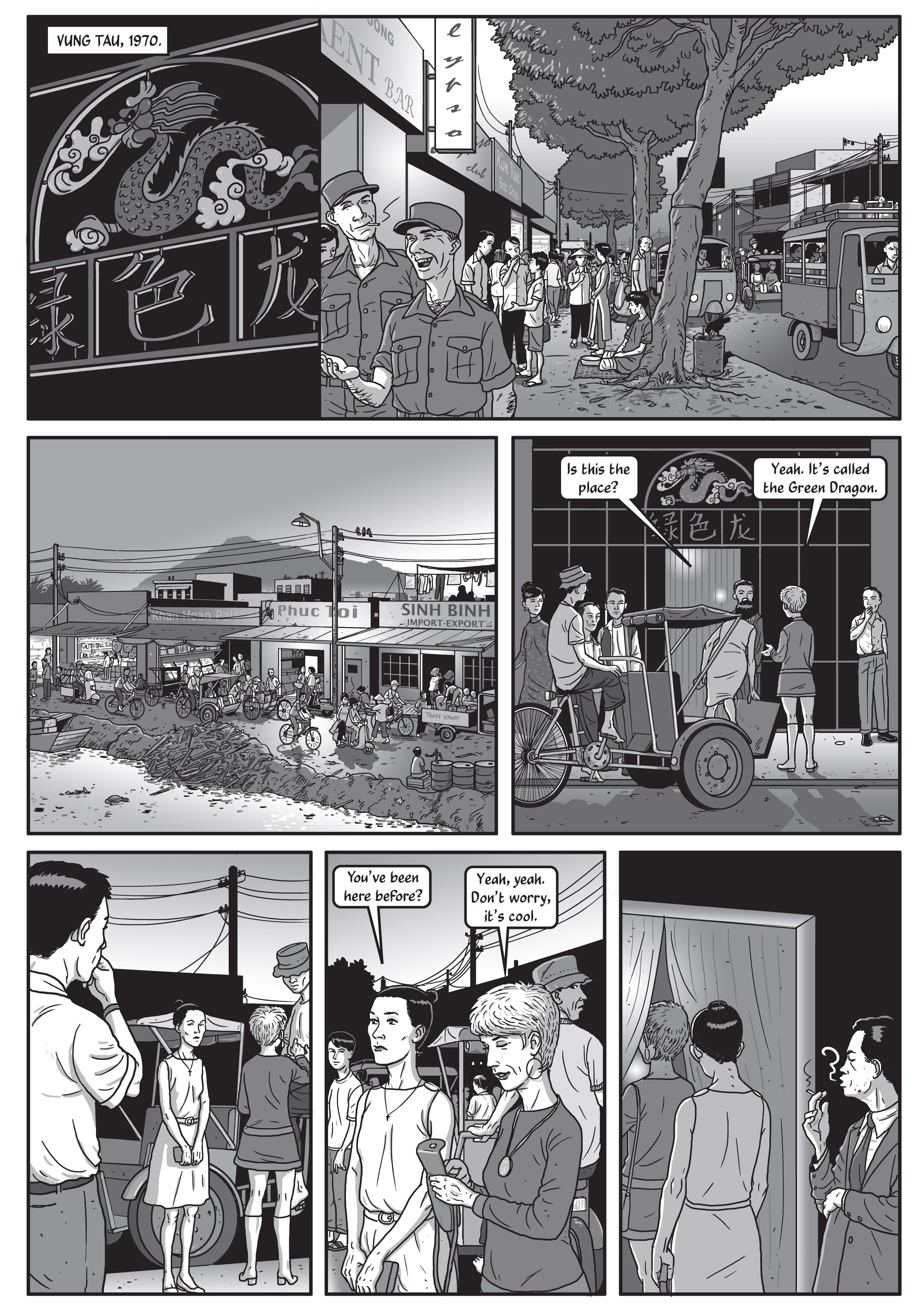
The-SacrificeMy own books to this point, have been very specifically set in Australia and dealing with Australian themes, which has been at times appreciated for that fact because it’s uncommon. For instance, my novel, The Sacrifice, is set very specifically in Melbourne, during the years 1939-1942, following the travails, loves and life of a dedicated pacifist, whose unwillingness to enlist is corroded by a rapidly changing cultural and societal matrix as a consequence of war, and of course, the influx of American troops. The Australia of that period: ‘white’, xenophobic, English, colonial and still a bit cocky even after the bruising taken by participating in WW1, is evoked with considerable detail, to the point where due to the presence of the juxtaposed narrative images, it is a major character in the story. My next book, follows the daughter of the principal in The Sacrifice as she serves as an army nurse in Vietnam during 1970 to 1975. But there are plenty of extended parts set in Melbourne during this period, which will show the changes from the previous era, but also how much it’s changing for the better, even if it was barely perceptible during that period. I have been working on this book for the better part of 8 years and there is a considerable way to go, due to having completely revamped the story twice. On the side, I on occasion do smaller projects by commission, usually silencecover if they offer me a challenge to do something that I’ve never drawn before, or it’ll mean comics appearing in a place where they’ve rarely, if ever appeared. So for that reason, it is not the money that motivates me, but what I might learn by doing the work. Examples are the all-comics issue of Cordite, where artists adapted contemporary poems into comics. For me, the challenge was to take words that are usually so visually evocative and allusive, into something actually visible, but without simply illustrating them. I adapted A Frances Johnson’s poem, Microaviary (about drone warfare of all things) because when I read it, all these images by association flooded into my consciousness from my unconscious, and it was immediately apparent to me that I should simply put those images down. To that end, about half the actual words disappeared into the Mutard_panel_1images, and where they remained, the images added new contexts and layers, so that in a sense, it was a new work. I would love to do more such ‘collaborations’ and there is talk of such.

Aside from that, I have also recently completed my Masters degree, researching what it means to ‘write with pictures’ which is how I actually think of my craft. It is another way of saying that in comics, the pictures need to do the bulk of the work of conveying the story. In cinema, they call it ‘show don’t tell’. It’s about the most sagely three words of advice I could give any budding comics artist, only it’s also one of the hardest balances to achieve. Words are easy to put down, cut and paste and have a sort of precision about them, especially compared to the polysemous nature of images. What I really learnt from my research was how little study had been made into the formal properties of what I called juxtaposed narrative images. Much ink and pixels have been devoted to the content via all sorts of prisms (feminist, Marxist, deconstructionist, structuralist, sociological, medical, Freudian, Friedman, etc.), but strangely, little has been done to place it within art theory or as a visual art. Rather than produce a new work for print, I took it into space as an exhibition, where there was no page  one, no need for the meta boundaries of the page – just walls, doors and of course, the space CD 01within the room itself. I really want to do a PhD and take this much further and develop a new theory of comics that starts with the proposition that it is a medium, not a genre of literature. So, this means technically, the answer to the question ‘Are comics literature?’ is actually, no. But I Stanley Bruce Mutard Space oddity 01try not to say that in polite company.

Is there a distinctive ‘Australian’ style and approach to comics and graphic novels? Do you see your own books as fitting within that?

While I wouldn’t say there was any overarching style in terms of appearance, such as manga has, or the ‘ligne claire’ (clear line) school of BD, or the sort weightless dynamism pioneered by Jack Kirby that signifies the superhero genre, I would say there is a characteristic idiosyncrasy in Australian comics. It may sound strange to say, but comics might be one area where the ‘tyranny of distance’ is still at play. By that I mean few creators here really think they have a chance of ever being able to make a living from comics, or getting hired to work for the big comics publishers in the USA, Europe or Japan. There are a number of writers and artists who comicozhave succeeded, particularly with the US comic publishers (speaking English helps). But since the Australian market is so small, and therefore the prospect of sales is limited to local readers, Australian creators tend to produce work that is not obviously aimed at readers in those other markets. They tend to produce comics for the sheer joy and pleasure of it, and garnering a few readers tends to satisfy them. Some might say that this elffin-cover-1displays a lack of ambition or professionalism, but it’s not. Those who really do want to make a living in comics doing work for hire, put in the long, hard yards at improving their skills, getting the feedback from industry professionals as they hawk their portfolios at the US shows (or European ones). As for selling ones own creator owned graphic novels to compare with say, Dan Clowes, Chris Ware, David B, Rutu Modan, Art Spiegelman and so on, have a harder row to plough. Even in the US market, few creators make a living exclusively from their comics, but at least there are substantially more and much larger comic’s shows with which to showcase and sell their work. In the last few years, some Australian creators (including myself) have made the trek to North America to sell work at shows like Toronto Comic Arts Festival, the Small Press Expo, CAKE and the like. It’s an expensive way to showcase ones work, and I’m not convinced it’s worth it given that any follow up sales have to be made via ones social media or site, necessitating shipping hard copies overseas, which has a frightful cost, (normally more than the margin between retail price and cost of production). There is no question that building a big reputation in comics would be easier if based in the USA, Canada or perhaps in Europe.
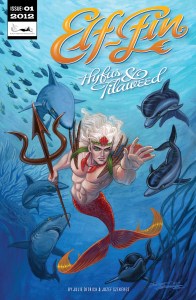
That said, not too many local works are specifically Australian in content or character either, often being set in imaginary worlds, mining the tropes of spec fiction genres. There is a strong trend to autobio comics, which depict the prosaic and quotidian with some reflective humour. I find autobio comics to be interesting in that with the presence of the image, the authors often depict themselves quite unfavourably and viscerally – a trend set by Robert Crumb. For some reason self-loathing almost seems to be a requirement for autobio comics, where the body and its liquids seem to feature prominently. I guess there is a safety in ink, where it is not possible to Mutard comic 2transmit physical infectious agents, though it is very prone to spreading infectious memes!
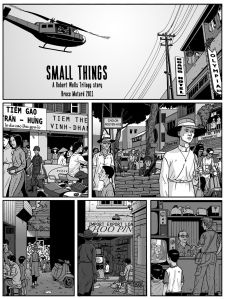
I was brought up reading within the strong French tradition of ‘bandes dessinées‘,or BD, as comics and graphic novels are known there. That whole area of publishing is mainstream in France, the books are sold in every bookshop, creators are routinely invited to general literary festivals as well as the BD-oriented ones, and the books cover many different genres and age ranges .In America and Japan, the other two great traditional centres of comics and graphic novels, the art form is similarly respected and accepted in the mainstream of publishing. But not in Britain or Australia, where the mainstream either ignores it, or looks down on it. Or both! What’s your take on this?

Long have some of us looked to France and wished the cultural acceptance of comics there, was replicated here. In Japan, it is certainly a similar case, although I believe it is not a career too many parents would hope their sons and (few) daughters would take up, as it’s punishing work and pays badly. I would disagree that comics are a respected art form in the USA. The same pejorative connotations that have tarred and feathered comics here and in the UK, applies to the Anglophone speaking world in general. This view generally runs along the lines that  little-nemo-19060812-s comics are mostly for kids, are superficial, sub-literate, containing very little content worthy of literary merit, nor give cause for and reward consideration by academia, literature festivals and arts grants bodies. And for much of the history of Anglophone comics, including a fair proportion of what is produced today as ‘mainstream’ or superhero/action/spec fic comics, you would not find much to convince you otherwise. Despite revisionist historical appreciation of the skills of George Herriman, Winsor McCay, EC Segar, Walt Kelly, Jack Kirby, Bill Gaines (as publisher), Harvey Kurtzman, Will Eisner and so on, very few people appreciated what they did at the time they produced their work, such that Roy Lichenstein could blatantly plagiarise comics artists work without attribution or reward.

It has only been since the revisionary comics of Alan Moore, Neil Gaiman, Grant Morrison, Bill Sienkewicz, Frank Miller and Art Spiegelman in the mid 1980s, did a wider appreciation of comics as a form of literature to be taken seriously, take root and found fertile soil in which to grow. Now there’s an abundance of academic studies mining a new field of comics studies (why not; it was a new field with ground to stake like a new unfarmed fertile valley), mainstream book publishers suddenly taking an interest in a genre they hitherto ignored and republishing collections of comics, graphic novels and studies (but mostly only those creators who had V_for_vendettaxachieved considerable acclaim and attention within the comics market first). Literary festivals started to invite a few of the leading lights of comics to participate, though I think still in a way that shows they don’t get comics in the same way they don’t understand spec fiction; they are generally programmed as a separate stream, not integrated into the main program. Most importantly for me, is the sudden appearance of often substantial comics collections in public libraries (and some school libraries, though there is still an inconsistency in how to shelve it: ideally as it’s own section, not within general fiction or non-fiction). All of this points to the steady progress comics have made to enter the arts mainstream in the Anglophone world. There is still a long way to go to attain a mass readership like the Franco-Belgian world has, and it will probably never get there given the plethora of new competing forms of content (and their delivery) for the public’s attention, but it’s no longer considered a juvenile activity. There’s a level of immediate Mausrespect for the medium and its makers now that was largely absent as recently as 15 years ago. There is no better time to be making comics than now – even if it’s almost impossible to make a living at it. But that’s the same as being an author in general!

Recently, a librarian told me something that astonished me–she said that she had no idea how to read comics and graphic novels. It seemed to me to encapsulate a major problem: that unlike in the strong European tradition of comics and graphic novels specifically directed at children, young Australians rarely get a chance to ‘learn to read’ in those genres. And there is in fact very little for children published in those areas in Australia. Yet at the same time it seems a very natural art/literary form for children to respond to. Why do you think so few Australian comics creators write for kids?

There could be a number of explanations to the librarian’s difficulty: a structural cognitive deficit where her mind simply couldn’t interpret the iconic recurrence, and therefore ‘sculpt’ space and time within her mind in the additive way that comics requires; a kind of visual dyslexia if you will. Or, she can read words, but not ‘read’ images. It may be that she has grown up having absorbed the pejorative tag on comics and therefore, unconsciously resistant to them (when I appeared on the First Tuesday Book Club with Jennifer Byrne, she told me she didn’t ‘get’ graphic novels, either).

But you’re right, it seems in the great effort of comics to persuade the Anglophone world that comics are NOT just for kids, we’ve forgotten to keep them. Once upon a time superhero comics were all suitable for kids thanks to the requirement to receive the imprimatur of the Comics Code Authority seal (and therefore, appear on American newsstands). In the mid 1980s, the revisionism of the genre allied with the bulk of American comics being sold in specialty comics shops patronized mostly by adolescent males of all ages, meant the arrival of mature readers labels on comics, which very soon grew to encompass all genre comics, as almost all the readers were adult males. Naturally, their interests are somewhat narrow, meaning the content was (and continues to be) largely a mix of violence, gore, swearing and captain congobadly drawn sexy women in contortionist poses to satisfy the male gaze. But that is modifying as the readership of comics expands to embrace women and a plurality of voices, there are now comics for everyone. Thank heavens!

Since most comic creators tend to love comics, there is no surprise that they write and draw the kind of material they like to read (for good or ill), which tends to the adult. I am one such creator; almost all the work I create is aimed at 15+ readers of all genders. Given what I said above regarding Australian comics and the book market here, there isn’t a lot of incentive to produce comics for kids in the way there is for picture books. But this is changing as there are few comics aimed at kids coming onto the market, like Gregory Mackay’s delightful Anders and the Comet , Sorab Del Rio’s Rudy Cool, Sarah Ellerton’s Finding Gossamyr, Ruth Starke and Greg Holfeld’s Captain Congo, (an adventure in the ‘Tin Tin’ mold).

andersThere has been a slowly building countervailing trend to produce comics for kids (like Toon Books, run by Francoise Mouly), especially in a pedagogical context, since many teachers I’ve spoken to are happy to find anything that kids will read. At long last the educational world has accepted that reading comics is still reading, and moreover, helps with reading by having words constantly associated with what they stand for, even emotions, smells, sounds, the sense of touch and the like. In that respect, the arguments put forward for picture books can be applied to comics as well. I hope this will lead to the presence of comics available to readers at all age groups in a manner found in Japan and Europe.
Guest post: Claire Boston on creating characters

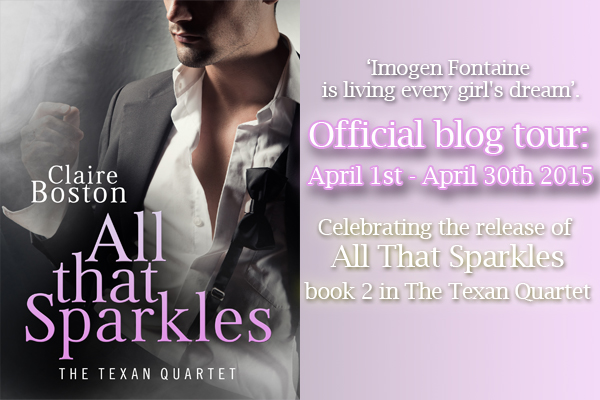
AllthatSparklesBTRomance novelist Claire Boston is a guest on my blog today as part of her blog tour, and she’s going to talk about creating fantastic characters with particular reference to her new novel, All that Sparkles, part of The Texan Quartet.

Claire was a voracious reader as a child, devouring anything by Enid Blyton as well as series such as Nancy Drew, Trixie Belden, The Baby-sitters Club and Sweet Valley High. Then one school holidays when she’d run out of books to read, her mum handed her ‘Hot Ice’ by Nora Roberts and she instantly fell in love with romance novels.
The love of reading soon turned to a love of writing and Claire struggled to keep within the 1500 word limit set by her teachers for any creative writing assignments. When she finally decided to become serious about her stories, she joined Romance Writers of Australia, found her wonderful critique group and hasn’t looked back.
When Claire’s not reading or writing she can be found in the garden attempting to grow vegetables, or racing around a vintage motocross track. If she can convince anyone to play with her, she also enjoys cards and board games.
Claire lives in Western Australia, just south of Perth, with her husband, who loves even her most annoying quirks, and her grubby, but adorable Australian bulldog.

Welcome, Claire! HeadShot

Creating characters that talk back to you

by Claire Boston
It’s my belief that characters are at the very centre of any story. Without good characters, the reader won’t care enough to read on, no matter how good the plot might be. So when it comes to crafting characters my process has grown over time.
When I first began writing I started with the obvious – name and physical appearance:
– Hair length, colour
– Eye colour
– Height
– Weight
– Age
I added in their occupation, maybe a little about the family background and got to work. Needless to say my characters didn’t leap off the page for my early stories.
Then someone recommended Goal, Motivation & Conflict by Debra Dixon. It’s a really easy read and I have gone on to recommend it to many others. I learnt my characters had to want something, there had to be a reason why they wanted it and there had to be something stopping them getting it. So the character’s goal, motivation and conflict were added to my character profile.
This helped me immensely and my characters definitely came to life, but last year I discovered Cherry Adair’s Writers Bible. This is a 59 page document that she uses to plot all her stories and is available from her website. She has ten pages dedicated to character development, which absolutely fascinated me. The questions she asks about her characters are in depth and comprehensive. Now, not all of it is relevant to my writing, but I’ve taken the bits I like and I’ve added it to my character profiles. I won’t go into detail about the questions because it’s copyrighted information, but I believe it has helped me shape my characters. (Oh and if you’re a plotter, you might love her 16 pages of plotting that’s also in the Writers Bible)
I really love to get involved with my characters and find out what makes them tick. Imogen and Christian in All that Sparkles were so much fun as was Imogen’s father, Remy. I know my characters have come to life when I’m writing dialogue and one of them says something and I think, “I didn’t know that about you.” Or they talk back to you and tell you they’re not going to do what you want them to do. (I don’t think I’m mad, as I’ve had other authors say that their characters talk to them as well!)
One of the reasons that All that Sparkles is part of The Texan Quartet is because I couldn’t bear to leave my characters behind and I had to find out what happened next with them. I hope you enjoy meeting Imogen and Christian as much as I did. You can let me know what you thought by contacting me:
www.claireboston.com
Twitter @clairebauthor
www.facebook.com/clairebostonauthor

You can buy All that Sparkles http://bit.ly/1EkAGL5

More about All that Sparkles:AllThatSparklesCover

Imogen Fontaine is living every girl’s dream.

She is a fashion designer for her family’s haute couture label, lives in a mansion, has a great circle of friends and is the apple of her father’s eye. Everything is perfect.

Until the day that Christian, the boy at the center of her childhood heartbreak, walks back into her life.

From there her life starts to unravel, as long-kept secrets are revealed. Imogen learns that her past was built on lies and betrayal, shattering the illusion of her perfect existence. She must seek out the truth if she has any hope of forging a new path for herself and discovering true freedom.

But can she convince Christian that there is a place for him in her new life?

Guest post: Adèle Geras on retelling fairy tales

FEAgerasToday I’m delighted to feature the wonderful Adèle Geras on my blog. Adèle is a renowned British author who has written more than 95 books for children, young adults, and adults. Her best-known works for young people are Troy(shortlisted for the Whitbread Prize and Highly Commended for the Carnegie Medal); Ithaka; Happy Ever After(previously published as the Egerton Hall trilogy) Silent Snow, Secret Snow, and A Candle in the Dark. Her novels for adults include Made in Heaven, Cover Your Eyes, and A Hidden Life.

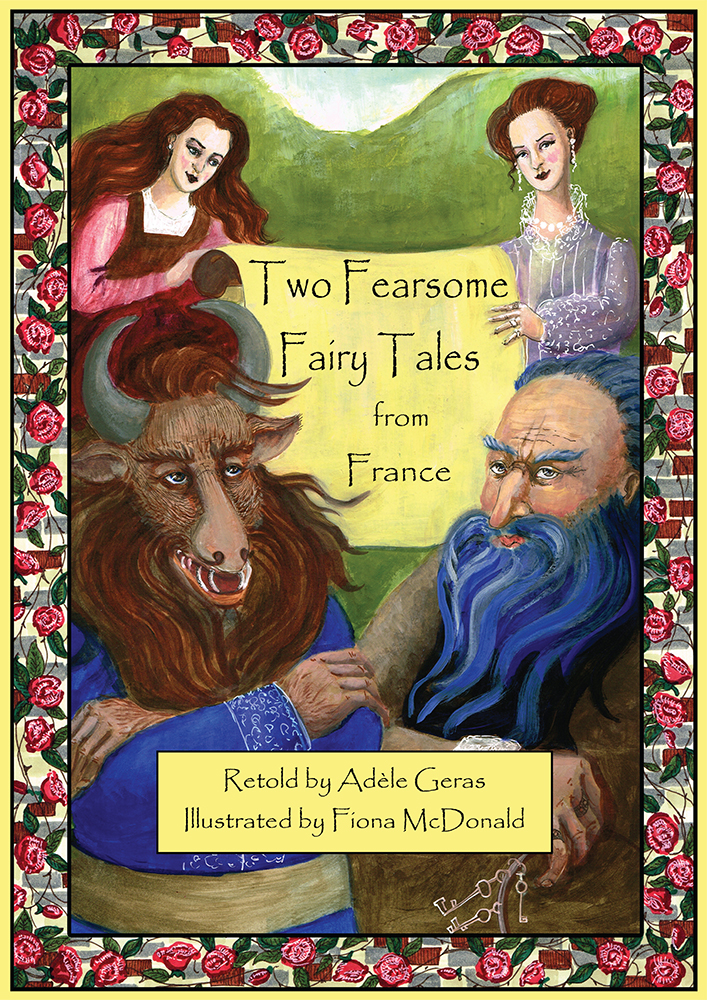
This week, her latest book, Two Fearsome Fairy Tales from France, with gorgeous illustrations by Fiona McDonald, comes out with Christmas Press, and to mark it Adèle has written about why she loves retelling fairy tales.

Retelling Fairy Tales

by Adèle Geras

 This week, two fairy tales, retold by me, are going to be published by Christmas Press in Australia.  The book is called Two Fearsome Fairy Tales from France.  They have been beautifully illustrated by Cover.inddFiona McDonald. I love the look of this book. The designers have found a fairytale font that I’d never seen before and the whole production is gorgeous. I can’t wait for it to appear.

I’m a bit evangelical about fairy tales. I was brought up on them. Almost the first thing I can remember reading for myself was a version of Rapunzel. I can bring to mind even now, decades later, the look of my edition of Andersen’s stories ( which are not all traditional, of course) with Rex Whistler’s illustrations. I think it is important that children can still read the story, and not just look at Hollywood versions of these tales.

Retelling fairy tales is one of the things I like doing most as a writer. The reason I’m often asked to do this is, I think, because back in the 90s, I wrote a trilogy of novels based on fairytales, set in my old boarding school, Roedean. They are now published together as a book called Happy Ever After.  Shortly after they came out I was commissioned to retell some fairytales and that book (Beauty and the Beast and Other Stories) is the one from which my Two Fearsome Fairy Tales from France  are taken. I’ve also retold The Six Swan Brothers as well as Cinderella and Sleeping Beauty. 

For a lazy writer like me, it’s a real pleasure not to have to think of a plot. I always find working out the plot the hardest thing of all. I  always have to scratch about a bit when I’m writing something original.  This is never a problem with fairy tales.  They are there, and the reason they have lasted for so long and have been passed down over the centuries is because they are very good stories, dealing as they do with the most basic aspects of human existence: love, death, ambition, jealousy, fear, etc. They teach us that good will triumph, that the wicked will be punished and that it never hurts to be polite….look what happened to the unfortunate sister who was rude to an old woman by a well and ended up spewing toads and vipers from between her rosy lips.

Wonderful characters abound in fairy tales. Princes, monsters, ogres, dwarves, dragons, beautiful damsels who turn out to be braver and cleverer than they know, dreadful mothers, wonderful nurturing mothers, horrible husbands (Bluebeard is a lulu!) and envious siblings. The writer has nothing to do but let the  narrative unfold and all is well.

This might be thought boring but it’s not.  Just as having a fourteen – line limit for a sonnet is liberating rather than restricting, so the fact that you can’t change things too much makes you concentrate on the language. And that’s where the fun starts. I strive to make the words themselves as resonant and beautiful; as suitable to the tale I’m telling as I possibly can.

I hope very much that everyone who reads my versions of Beauty and The Beast and Bluebeard goes on to read lots more fairy tales told by lots of other people.  And I hope that someone asks me to retell another fairy tale, one of these days….

Adèle’s website: www.adelegeras.com

Follow Adèle on Twitter: https://twitter.com/adelegeras