Double Act 3: Michael Wagner and Billy Goat Books

In the third of my series on author-publishers, I’m interviewing Michael Wagner.

wagnerMichael Wagner is the author of more than 70 books for children which include the much loved, 20-book Maxx Rumble series (still in print after 11 years); a collection of delightfully silly and warm-hearted stories about a family called The Undys; the best-selling picture bookWhy I Love Footy; and many more.

Prior to becoming a children’s author, Michael worked for ten years as radio broadcaster with the ABC, wrote and produced award-winning television animations, and wrote everything from copy to songs and comedy. His latest challenge is starting his own micro-publisher called Billy Goat Books, with the first book, Pig Dude: He Can Do Anything! published in late August this year.

First of all congratulations on starting Billy Goat Books! What motivated you to start your own publishing company?

Thanks Sophie. Well, to be honest I was motivated by two things: fear of rejection and the desire to, sometimes, just sometimes, have total creative control over my work.

By ‘fear of rejection’ I mean that I’ve recently discovered that some of my writing just doesn’t appeal to many publishers, even though it has widespread appeal to kids in schools. I speak in schools a lot and often test stories out. In 2014, I wrote a book called Pig Dude: He Can Do ANYTHING! When it felt ready to read, I tested it in a dozen different schools, and I was thrilled by how it went. It received an overwhelmingly positive, and very spontaneous reaction, maybe the best reaction I’ve ever received for any of my books. I felt like I was onto something.

But, when I sent it to a couple of publishers, it was fairly flatly rejected. Feeling a bit taken aback, I took it back into schools and tested it again. Once again, it got that big, positive reaction. But something told me sending it to more publishers was likely to be a time-consuming and, most likely, fruitless exercise. (I may have been wrong, but that’s what my instincts told me) And I didn’t really want to face a string of rejections with something that seemed particularly viable to me.

Now, having something of an entrepreneurial streak, I decided to publish it myself. It was a relief not to have to go through the submission process and I felt excited about being able to get started straightaway and about having so much more creative control over one of my books. Something about that really appealed. So I formed Billy Goat Books and published Pig Dude: He Can Do ANYTHING!Pig-Dude-Cover

What inspired the name of your press?

That’s actually a tough question. I tried about a million names, including Chilli Pepper Books (too suggestive of erotic fiction, apparently), Sparky Pepper Books (too random), Rocket Boy Books (too nothing), Bugle Books and Toot-Toot Books (both of which have flatulence connotations), etc, etc, and finally settled on Billy Goat Books. I like the playfulness of the name and the slight masculinity. My books are often quite boysie, so it felt right to me. And it hadn’t already been taken, which was a surprise, so I grabbed it.

What are your plans for the list? What will you be concentrating on?

As it costs quite a lot of money to created illustrated, printed books, I’ve decided to grow quite slowly – probably by only a book or two a year for the first few years. And, as I have a stockpile of my own stories ready to go, I plan to learn the business with books I’ve written.

I think, in a way, that’s fairer on other authors, because after a couple of years of learning how to create and sell books, I’ll be much better placed to provide a valuable service for others.

So, for now, it’ll just be my writing, but with the help of various illustrators, depending on who suit the different titles I have lined up.

What are the challenges and pleasures so far?

For me, there was an enormous learning curve. To minimise costs, I taught myself to design both the cover of a book and the interior pages – something I’ll have to learn all over again with each book, unless I employ a proper designer. That meant teaching myself software programs like InDesign and Photoshop – not easy!

And there are jobs like writing a contract for an illustrator, working out printing specifications, setting up distribution, creating Billy Goat Books, its brand and website, organising publicity, etc, etc, etc.

It’s a big job and probably best entered into completely naively, because knowing too much would be quite a disincentive. It’s best just to take it one job at a time.

On the other hand, if you’re creating a text-only ebook, the job is MUCH smaller. Printed books with illustrations are at the more difficult end of the publishing process, ebooks with only text are quite straightforward by comparison.

But, for me, learning new skills is exciting and having control over the product is extremely creatively satisfying. And when you hold what you’ve made in your hands for the first time, you know you did it yourself. So, on balance, I’ve enjoyed it immensely.

What do you think being an author can bring to your new career as a book publisher?

I think the big advantage many authors have is that they can test their material on their target audience. That takes a lot of the guesswork out of the publishing process.

Of course it’s not definitive. There are many successful books that would be incredibly difficult to read to an audience – like Goodnight Moon, for example. Really intimate books like that one are perfect for reading one-on-one, but might not work well with an audience. So not all fantastic books would test well. But when a book feels wonderful when it’s being read to an audience, chances are it’s worth publishing.

Being in front of kids many days a year allows authors to road test and refine some of their material and I think that’s a huge advantage. You really get the hang of what your audience likes when they’re sitting in front of you.

Any advice for aspiring author-publishers?

Hmm? Beware. If you’re printing illustrated books, it’s a lot of work and not cheap. But it’s very handy if you’ve been unable to land a publishing deal with something you truly believe in (having tested it with audiences), to be able to publish it yourself. Self-publishing or micro-publishing is a bit of a safety net, meaning you don’t have to simply shelve a manuscript you really feel is good enough (as far as any of us can tell that about our own work). It’s a fallback position, and that’s something authors have never really had before.


Double Act 2: Julian Davies and Finlay Lloyd

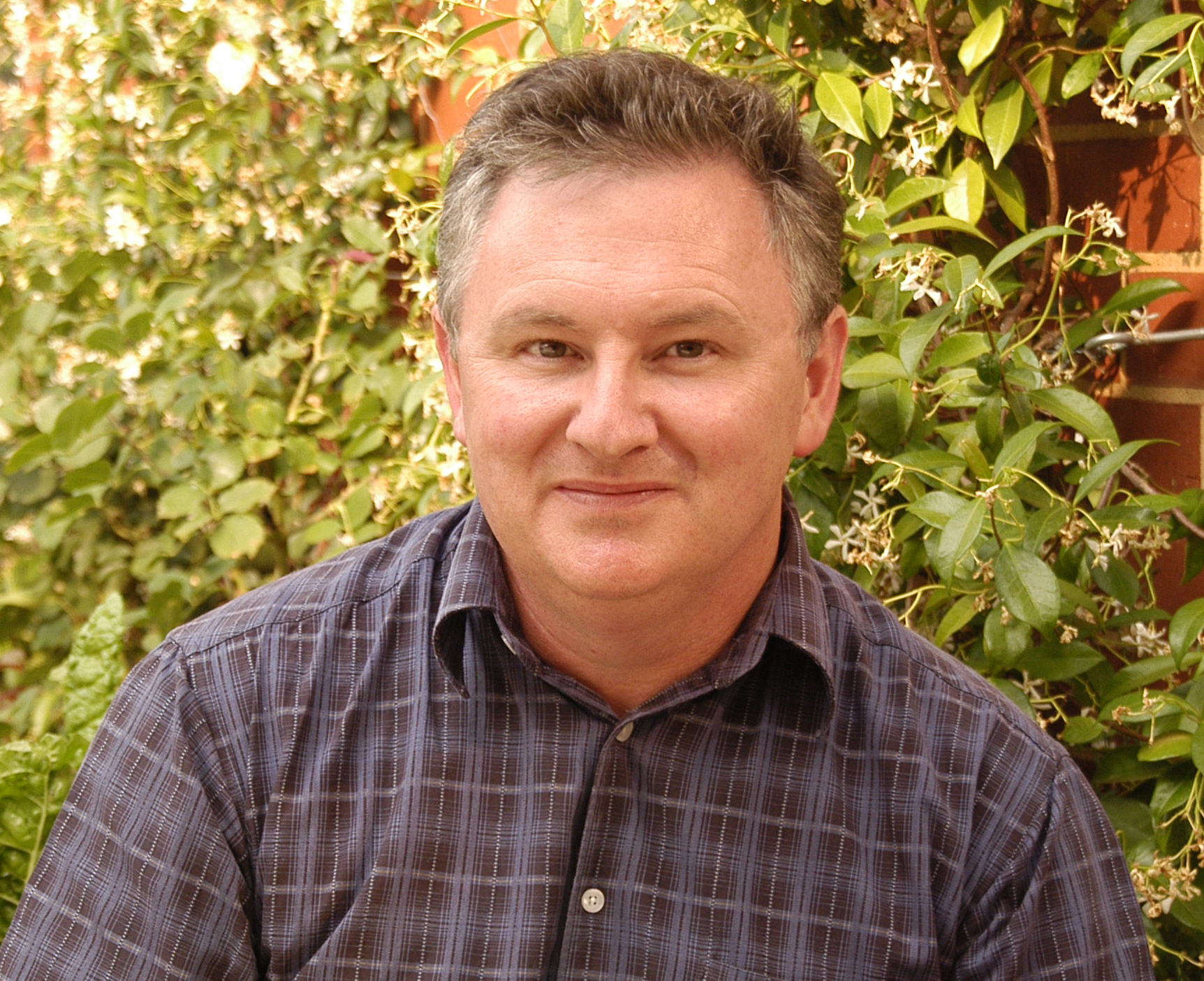
Julian Davies

In the second of my series on author-publishers, I’m interviewing Julian Davies, one of the owners and founders of Finlay Lloyd, a non-profit publisher which has been going for nine years.  Julian describes himself as jack of a number of trades – writer, potter, painter and front-man for a non profit art gallery, The Left Hand. As well as publisher of course! He has lived in the mountains near Braidwood, New South Wales, for much of his adult life. The author of five novels, he has also written various stories and essays.

When and how did Finlay Lloyd start? What motivated you in the first place to start your own publishing company?

Finlay Lloyd was begun by four people – Phil Day, Ingeborg Hansen, Robin Wallace-Crabbe and me – all with somewhat varied interests in making books, but joining together to form a press with different values from mainstream publishers. Phil and Ingeborg had a background in producing inventive, beautifully set and designed handmade books, and had an interest in publishing fiction and poetry. Robin, a well-known writer and artist, had also designed books in his youth. I wanted to offer a counter-model, however modest, to commercial publishing. Our aim was to make

Phil Day

Phil Day

well-designed paper books while encouraging and supporting the sort of inventive writing that the big presses were too risk averse to back. It was important to me that FL was non-profit – we do not pay ourselves at all – in contradiction of the dominant paradigm.

How did you initially persuade booksellers to stock your books?

I simply got on the phone and called every bookshop I could locate, explaining what our intentions were. I made it plain that we were supplying firm sale, but that we didn’t want shops to buy books they couldn’t sell.

Have your aims and strategies as a publisher changed from the beginning? How?

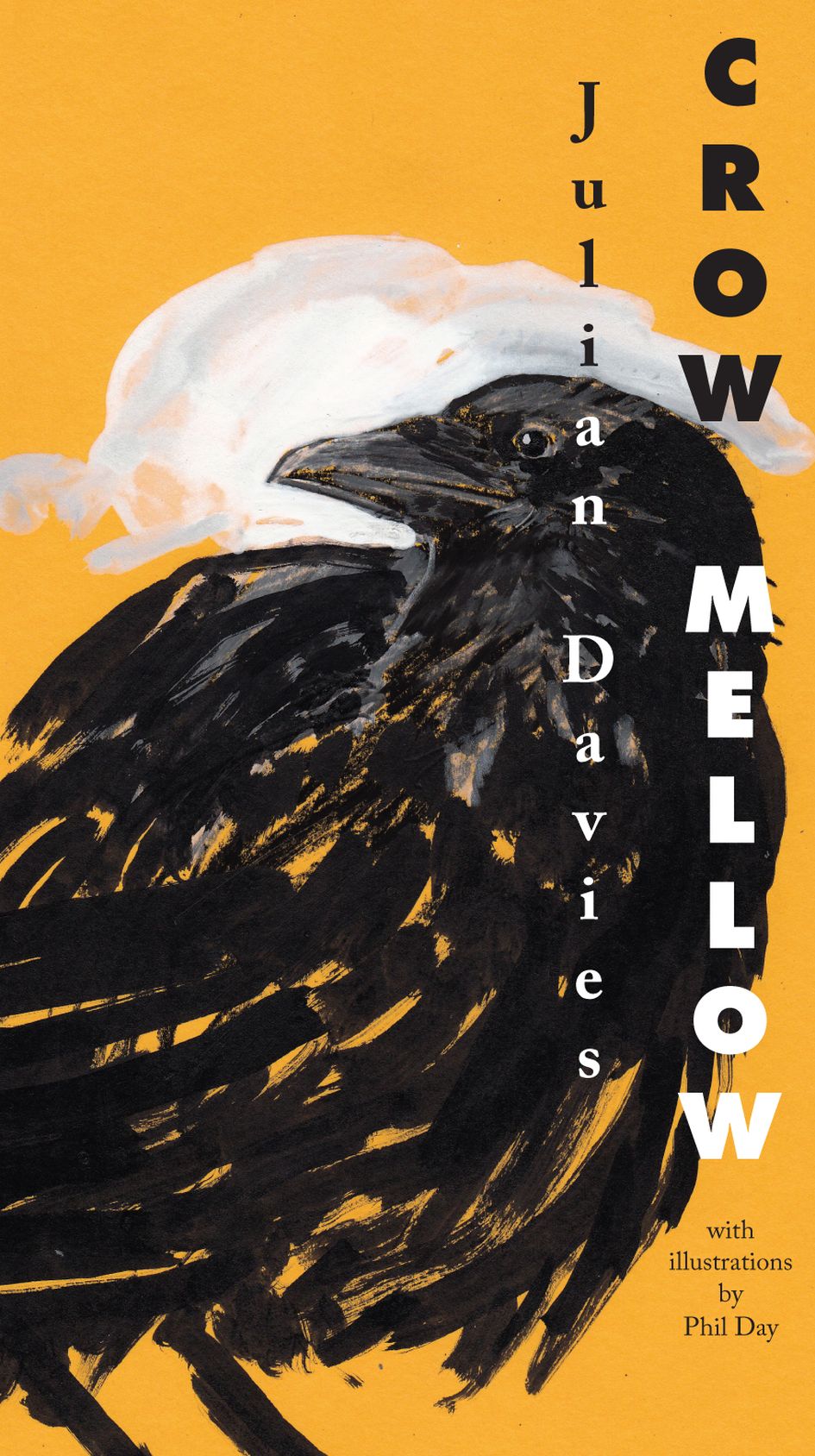
Through the nine years since the establishment of the press our values and methods have remained consistent, but with the departure of Ingeborg and Robin from Finlay Lloyd, Phil and I have settled into a pattern where we discuss everything but he sets and designs the books while I act as editor and deal with publicity and sales. Our partnership has become closer and more interactive (hence his doing almost 400 drawings for my novel Crow Mellow). We envisage the press evolving to mainly undertake collaborative projects, whether between us or with others.

Crow Mellow cover 2Has working as a publisher impacted on your own career as an author–whether that be positive or negative?

I’ve found helping other writers realise their projects as well as possible an intriguing and valuable experience. It has given me a greater perspective on writing, publishing, and bookselling. Although this was not my intention in starting the press, Finlay Lloyd has finally provided a means to publish my own books in an inventive, unconstrained way, free from the commercial imperatives of the big presses.

What are the challenges and pleasures of small-press publishing, in your experience? Any memorable anecdotes?

I’ve found the many aspects of making books both rewarding and challenging – the demands on my time have been considerable. I’ve often wished I could clone myself in order to cope better, but my family likes to remind me that one of me is quite enough. Perhaps the keenest pleasure has been learning at close quarters how other writers think as they respond to editorial input.

flsmallsAny advice for aspiring author-publishers?

Because the book industry has been in such flux in recent decades more room has opened up for small presses. With their business model under threat, the big presses have withdrawn from some aspects of publishing. Furthermore, computer setting and the reduced cost of printing have made the process far more accessible. With these factors in mind, I’d suggest that anyone entering publishing may be brave but not necessarily as foolish as it might appear. I’d also suggest that having a broad and perceptive curiosity about all aspects of writing, typography, design and book production is a prerequisite as rare as it is obvious and valuable. I can’t stress that enough. There is a plethora of badly made books out there in the world. Small publishers should be self-critical and nimble enough to reinvent what they do imaginatively

Thunderbolt Prize winners: Susan Bennett, winner of the Fiction prize

Susan BennettMy final interview with a Thunderbolt Prize winner is with Susan Bennett, winner of the Fiction category in the Thunderbolt Prize.

First of all, Susan, congratulations on your win! Your winning story, Bittersweet, was described by the Fiction judge, Felicity Pulman, as ‘making use of all five senses’ and being  ‘perfectly shaped, with sensual descriptions.’  How did you come up with the central character, Tilly, the food writer? And how did you create the rich texture of the story?

Tilly?  Well, I like my women characters to be strong and complex – flawed human beings rather than representations of ‘the fairer sex.’  And I think in part the story was a reaction to the pretension that is sometimes associated with cookery.  Tilly is a lot less concerned with those aspects than she is with the joyous celebration of life that cooking and food represents.  But as much her food epiphany gains her access to high society, Tilly never stops being the girl who came from nowhere.  Among all of the new found sensuality that food awakens in her, she retains a hard streak and survival instinct that means she’s fully prepared to deal with the man who crosses her, even if she loves him.

In terms of the texture, much of it came from my own experience.  I got into cooking Mexican food in a big way – proper Mexican food, not Tex-Mex.  Living in Australia I couldn’t find the necessary ingredients, so I had to grow them myself.  I ended up with over eighty chilli plants.

I’m inclined to sleepwalk, and my former partner used to catch me wandering out the bedroom door in the dead of night.  When he asked me where I was going, apparently I would answer, “I’m just off to re-pot that chilli.”   On another occasion he reported that I was tossing and turning in my sleep, crying out, “Bugger it!  I’m not re-potting it, I’m not!  I’m not!”  I figure I must have made it outside some nights without him catching me, because I used to find chilli seeds in the bed when I woke up in the morning.  My chilli crop attracted the attention of the police helicopter, but that’s another story.

Suffice it to say that learning to cook Mexican brought a whole new dimension to my love of cooking.

What attracts you to writing crime fiction?

Sometimes I think it’s because I get to bump people off on the page.  A while ago it dawned on me that my stories kept ending with people dying even when I don’t mean them to.  I noted that so far I have killed men by staking them, poisoning them, shooting them and by one other method that probably shouldn’t be mentioned here.  And more than one mother-in-law hasn’t fared too well in my stories.

Crime fiction is an interesting genre because it is so varied, encompassing every style from the very literary to the hardboiled or cosy.  I like the fact that a lot of crime fiction aimed at the mass market is so well-written.

Can you tell us a bit about your background and writing career?

In terms of work I’ve done everything from selling knives and camping equipment to working in technical support in the early days of personal computers.  I’ve spent a lot of time in mercantile agencies (business reporting, credit ratings, debt collection) and in software houses.  I’m at a crossroads at the moment and I’m not sure what my next step will be.

I settled on the idea of writing as a teenager, or more accurately, I was blessed with an inspirational English teacher who encouraged me to aspire to write professionally, and I will always be grateful to her.  She personally selected books for me from the school library in her own time so that I didn’t have to read what the rest of the class was reading.  Unfortunately I think you have to be an adult to appreciate the gift someone gave you as a kid.  I wish I could thank her now and tell her how much it meant to me.

My writing career has probably taken a different path to most in that I started off writing novels then moved on to short stories, whereas many writers tend to do that the other way around.  Writing short stories at first I missed the wriggle space a novel gives you.  On the other hand with short stories, you get to play around stylistically in a way that I don’t think can be sustained over the course of a novel if you want it to be readable.

What do you hope winning the Thunderbolt Prize for fiction will do for you as a writer?

Specifically, the win pleased me because Bittersweet has been written for the general reader.  It isn’t a particularly literary story, and until now I doubted that stories for mainstream readers could win competitions, so that made me happy.

As far as prizes go generally, I have been through every stage I think it’s possible to go through.  At first I only entered competitions because editors, publishers and agents want to see prizes and commendations, and as those are the people I have to deal with, I felt it necessary to go after those prizes and commendations, but I can’t say I enjoyed the experience at first.  I swore off entering for a while because it was just another source of rejection that I found discouraging.

Conventional wisdom has it that we should keep sending our work out, but I’d argue that if rejection is impacting on your ability to work, then there’s a case for taking a break from submitting, so that’s what I did for a while.  It occurred to me that I just wanted a period to develop a relationship with my own work, without worrying what anyone else thought about it for a while.  I asked myself some questions I hadn’t asked before, like why was I writing, who was it for and what did I want to get out of it – me – not anyone else.

It was an interesting and fruitful exercise because my work opened up a great deal more.  It occurred to me that I had been writing defensively.  When I went back to submitting after that hiatus, I started winning prizes immediately, which has had a surprising effect on my writing.  I suppose it’s the encouragement.  My work has opened up even more, become more ambitious.  I feel more confident about realising the potential in the story.

What do you look for in a good story or novel?

One of the drawbacks to being a writer is that you are so accustomed to looking for faults in your own work, it can tend to make you more sensitive to the flaws in other people’s work too.  I’ve been through stages where I can’t read because the smallest misstep spoils a book for me.  You know you’re in trouble if you can’t read Bill Bryson without nit-picking.

I’ll read everything from Charles Dickens (a favourite) to Silence of the Lambs, but the writing always has to be quality.

You have a food blog, http://fudgingthemenu.blogspot.com.au/ How did that start?

Largely to support a cook’s organiser I have developed, but also as another creative outlet.  Cooking and writing come from the same place with me, but that can be problematic.  Cooking is more immediately gratifying than writing – I mean what’s not to love?  First it makes the house smell great, then you get to taste it, then it leaves you feeling happy.  It’s so much more straightforward than writing and a lot less subjective, but if it satisfies the creative urge too much then I’m inclined not to write.

Conversely, sometimes writing satisfies me so much that I don’t want to cook.  That can be a problem too.  Fortunately, wine is always on hand to solve it.

Thunderbolt Prize winners: Madeleine Gome, winner of the Youth Award

Madeleine Gome Author PhotoToday, I am interviewing the winner of the Youth Award in the Thunderbolt Prize, Madeleine Gome.
First of all, Madeleine, congratulations on your win! How did you come up with the idea of your winning story, Scrap Metal?

My story was actually inspired by true events. I was with my dad, picking up our car from the mechanic. We gave the receptionist the numberplate and all he asked for was a credit card. Without needing any proof of identity we were given the keys and sent on our way.

What attracts you to writing crime fiction?
I don’t specifically set out to write crime fiction. I have never been especially attracted to traditional crime stories which follow the investigation of a crime. I’m more interested in characters and relationships, and the flow of words than creating a rigid storyline or structure.
Can you tell us a bit about your background and writing career?
I started writing before I could read, which seems slightly counterproductive. ‘How the Woodcutter Lived’ was apparently my first story. It was about a woodcutter, living in the forest with his partner and their children who got into all sorts of mischief. When I was seven, I wrote my own Harry Potter novella. The spelling was terrible—my parents only managed to translate it into English by reading everything I wrote with a thick Aussie accent! In terms of my writing career, I won the 2014 Hervey Bay Youth Writing Competition and a piece of my non-fiction will appear in an upcoming edition of The Big Issue.
Your mother, Emma Viskic, is also a crime writer(and winner of the fiction category in the inaugural Thunderbolt Prize in 2013). Do you read each other’s work?
Actually, no. My mum is not allowed to give me advice on three things: music, clothing and writing. Our relationship remains intact through a strict separation of powers! She is sometimes allowed to proofread my writing, for clarity and punctuation, but she knows not to comment on the content. I have read one of her short stories, which I loved, but the similarity between our writing was a little unnerving. We both like simple phrases and are interested in characters and relationships.
What do you hope winning the Youth Award will do for you as a writer?
Winning the Youth Award is incredibly thrilling. I have wanted to be an author for as long as I can remember, so receiving validation for my work is very encouraging. I see it primarily as encouragement to continue writing and continue putting my work out there, and to consider writing a viable part of my future and career.
What do you look for in a good story or novel?
I like novels that make me emotionally invested in the characters and their relationships. I enjoy writing which creates characters and situations I can relate to, and that I care about.  I have to want a certain outcome for the characters, and feel involved in their lives. I also love writing that makes me laugh.

Thunderbolt Prize winners: Lynne Cook, Emerging Author Award

Lynne CookToday, I’m interviewing Lynne Cook, winner of the Emerging Author Award in the Thunderbolt Prize. Her winning entry, Change of Plan, was also Highly Commended in the Fiction prize.

First of all, Lynne, congratulations on your win! How did you come up with the idea of your winning story, Change of Plan?

Thanks, Sophie! The idea for Change of Plan came – as many writers report! –from a news item; in my case, the report of a fatal cliff fall. I wanted to write a completely different outcome for the story, one which acknowledges the strength and resilience of those in dangerous relationships. We read that Pammy has had a less than satisfactory relationship history but – even though the resolution of the story isn’t one I’d generally recommend! – she survives. She acts to take control of her story. It’s very tempting for a writer to put on a (generally ill-fitting) super-hero outfit at times and try to change the course of history …

What attracts you to writing crime fiction?

Who doesn’t love solving a mystery, putting the pieces of a jigsaw together? For me, crime fiction is the writer setting the reader a challenge; the fun (and thrill) is in joining the suspenseful ride of working out just what the hell is going on, predicting the next move. Crime fiction throws up intriguing characters. I love the psychological play.

Can you tell us a bit about your background and writing career?

I’ve worked as an English teacher and have studied and taught German literature too. In the last couple of years I’ve had the opportunity to complete my first novel (Finding the Words), to work on a collection of short stories and begin a second novel. In 2014 I was one of 5 lucky writers to win a place at Varuna, the National Writers House in Katoomba, to take part in the Short Story Focus Week. It was a terrific experience. I’ve also been involved with the South Coast Writers Centre for the past 4 years; a dynamic and creative bunch of people.

 What do you hope winning the Emerging Author award will do for you as an author?

I hope that winning this award will give me the confidence to trust my instincts and voice in writing.  It is wonderful to be able to list the Emerging Author award (and being Highly Commended in the Fiction prize) on my writing CV!

What do you look for in a good story or novel?

I’m into quirky. A character or situation can be, on the surface, accessible, likeable, even predictable. But then the expectations and predictions are subverted. Character layers are progressively revealed; the situation is thrown open to other perspectives. I love also the way humour can deepen the impact of a text, even in its darkest moments.

Thunderbolt Prize Winners: Tony Sevil, winner of the New England Award

Tony SevilToday, I’m speaking to  Tony Sevil, winner of the New England Award in the Thunderbolt Prize for his short story, The Disappearance of Buck. As well, the story received a Highly Commended citation in the Fiction category.

First of all, Tony, congratulations on your win! How did you come up with the idea of your winning story, The Disappearance of Buck?

Thank you! Back in 2011 I did  an online creative writing course with the NSW Writers Centre. I found the course invaluable and the tutor, Laurine Croasdale, very encouraging.

One of the exercises in the course was to write a personals advertisement for an invented character. I invented the character of Alf Buccal, a competition brickthrower. He was looking for a ‘missus’, someone to settle down with. The exercise was designed to create a character’s voice. I got a bit carried away with the character and the story finished up longer than the guideline wordage.

Who knows where the character came from, but I have always been attracted to people who are passionate about what they do, no matter what that might be. I am a country boy whose family is still on the same property they selected in the 1840’s. I expect I am a bit of an observer and a listener, so I have probably picked up on the patterns of speech and mannerisms of people in rural Australia.

The tutor’s response was very encouraging:

“I laughed so much I nearly fell off my chair. It’s a hilarious piece! Love it!”

So I thought,”Well I think I will hang onto this character, store him away in the back of my mind.”

Tony Sevil's studio

Tony Sevil’s studio

Then earlier this year I saw the promo for the Thunderbolt Crime Writing Competition, and I started to think whether I might be able to weave my character, Alf Buccal, into a crime story. I decided to base the story around his favourite, precious brick, which is stolen. Then it is his search to try and find the culprit.

What attracts you to writing crime fiction?

This is my first attempt at writing crime fiction. It excited me. One part of the plot seemed to lead to the other rather seamlessly. It’s fun to write a mystery story where the reader might wonder “where in the hell is this story going”, especially when it’s just a story about a brickthrower whose special brick is stolen! It is fun to weave the story. Not giving too much away. Perhaps I am a bit of a trickster. I like telling verbally a story in a roundabout way so that people will listen to me!  And perhaps wonder what is coming next.

Crime fiction may not be where my writing future lies, but humour certainly will.

Can you tell us a bit about your background and writing career?

I studied Economics in the early 1960’s. Much later I did a Diploma of Social Science. I have worked in Market Research, Economic Research, public relations. I have been in selling. I have driven a cab and worked in restaurants. Coming from a farming background I have tried my hand at that. I worked and travelled in Europe and Africa for nearly three years. One of the more interesting jobs was taking livestock to South Africa. I was working on a Hereford stud farm in Hereford on the Welsh border. I heard that you could get a job as a stockman on a cargo ship taking animals to south Africa. An opportunity came up and for a couple of weeks I looked after 13 head of cattle, 3 horses and four dogs that were being exported to South Africa. The cargo ship dropped off cargo at the Canary Islands, Ascencion Island and Napoleon’s exile Island of St Helena on the way. Then I worked as a shunter on Rhodesian Railways for around 6 months. There were a number of other non economic jobs I took on.

When I returned to Australia I felt lost and found it hard to settle. Where do I go now? What work do I do? I felt mates from my school and Uni days were getting ahead with their careers, and I was floundering.

I eventually got a job as a public relations officer for a mining company at Gove on the north eastern tip of Arnhem Land. It was an escape for a couple of years. Just another job. Not really a career path.

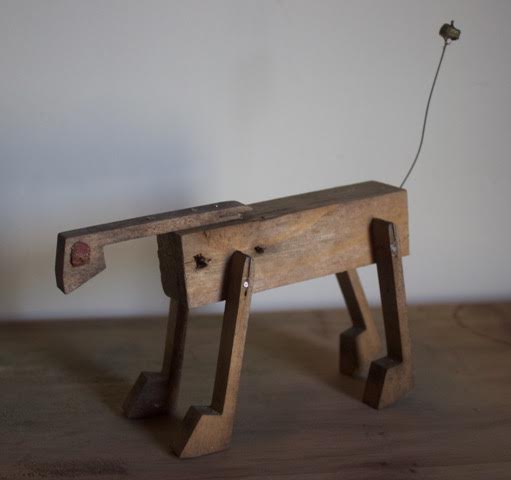
tony sevil art 1In more recent times I worked as a care worker for what was then The Challenge Foundation in Armidale, which was the most rewarding wage work I have ever done. During this time I was also progressing with my art making things out of found objects. This eventually became a passion.  I have exhibited in commercial galleries and also been in group exhibitions and a solo exhibition at NERAM. I have an exhibition coming up at Gallery 126 in Armidale in November and another solo exhibition at NERAM in September 2016.

All the way through I have written or tried to write. I have had stories and articles published, but I have never , until now, had any fiction published. I tried writing fiction but my stories seemed embarrassingly naïve and stilted. I think I got caught up too much in structure and not enough in letting a story flow. The Disappearance of Buck story seemed to flow rather seamlessly so I feel I may have found my voice in writing humorous fiction.

What do you hope winning the New England Award will do for you as a writer? 

I know I will be writing with a lot more confidence now. I will certainly be more confident about writing tony sevil art 2more humour. I will probably go back over my life and expand on humorous incidents in my life. And drag out half done stories from my drawers and maybe re work them. Perhaps a collection of humorous stories some day. Who knows. The prize has opened up so many possibilities.

I have a rather interesting project going at the moment. I love Facebook-Seeing the art and reading the thoughts of friends from around the world. It is a wonderful way to test the water with my artwork.

I noticed drawings of cute fat cats that I really liked by an Iranian artist from Tehran (who has not been published). I suggested to her that we try and write a children’s book together on cat behavior. She liked the idea and for the last year we have been sending emails backwards and forwards with drawings and text. I wanted a Persian name for the cat. So I asked Bahare if she could come up with some Persian names for me to chose from. I chose a name. But she said it was a female name and she thought the cat was male. So we have chosen the name Homayoun. I asked Bahare to pronounce it so I could possibly work out a rhyme for it. Her husband sent me an audio with the correct pronunciation. With my regular correspondence with Bahare I always now ask her to say g’day to the man with the lovely voice.

There are two aspects of this that appeal to me. Firstly is it possible to collaborate in this way and produce a book? Secondly I like the idea of reaching out to someone on a personal level who is from a different culture and nation to mine.

You are an artist too as well as a writer. How do those two practices work with each other?

I think making art and writing can go well together, especially with the way I operate. With my art I like to have several, sometimes many, projects going at the same time. I like to move freely between projects. If I get to a point in a project that requires more thought I will move to another project and then return to the other one with a fresh eye. Writing seems to fit ok into this ‘routine’. I often write tony sevil art 3early in the mornings. I don’t really sit down and slog away at a plot on the computer. I usually have quite a lot worked out in my head before I tap things into the computer. And these ideas for stories often come when I am working away on an artwork.

The trouble is my mind can get a bit full sometimes and I can get a bit ratty. That’s when I walk or do a little meditation. I always take a break, read the newspaper, start the crossword and have a nap after lunch.

As a reader, what do you look for in a good story or novel?

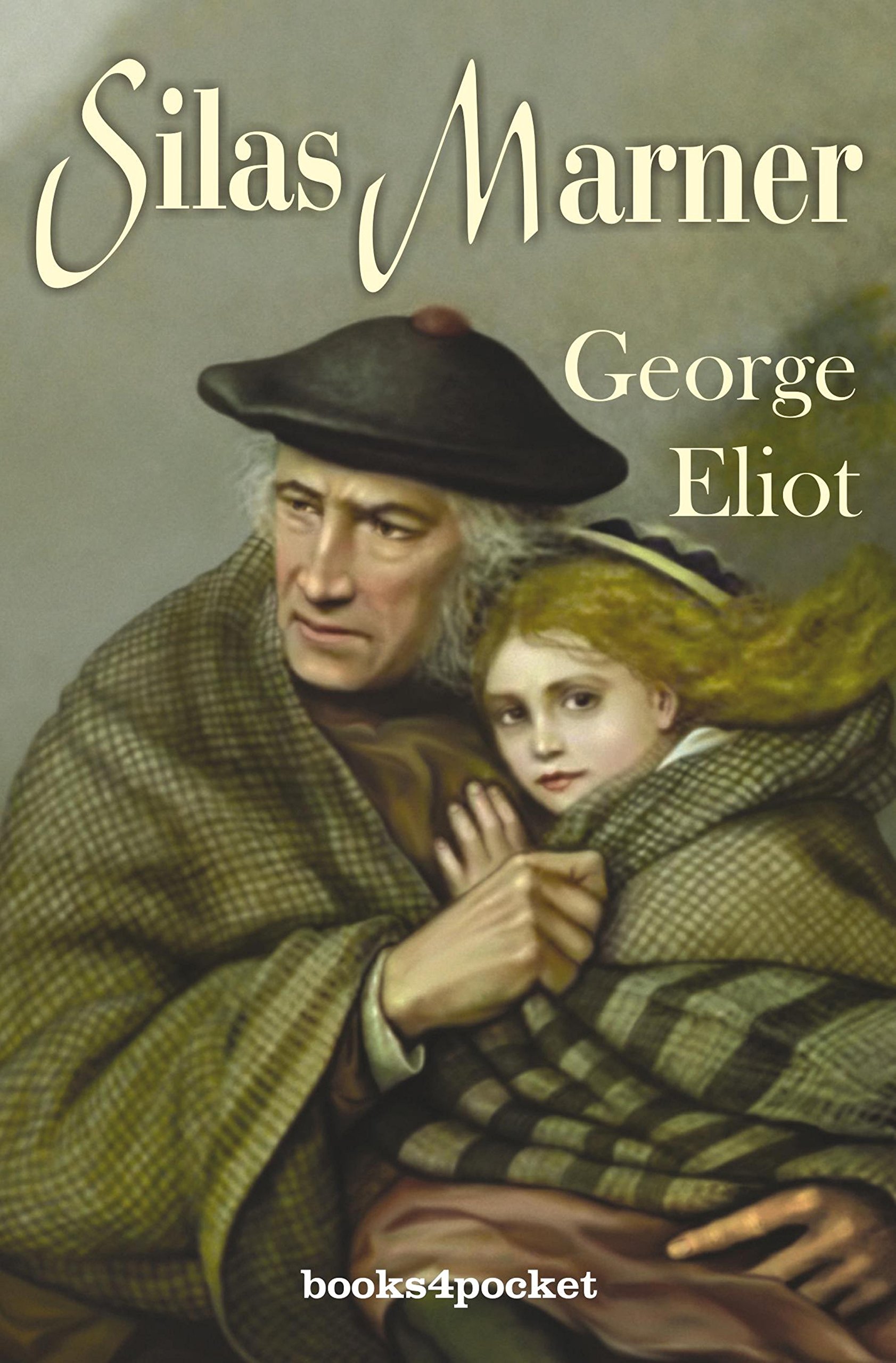
I am not an avid reader at all. I do read the newspaper from cover to cover. However some wonderful writers have sort of landed in my lap at important times in my life. Back in my school days I remember being mesmerized analyzing some of the set texts. One was Silas Marner, the other two were Shakespeare’s Julius Caesar and Macbeth. I thought English was up there with my best subject at school but did a bad leaving certificate exam, even though my English teacher in the then 4th year asked me if I was going to study English when I left school. I only got a B. That threw me a bit. So I silas marnerstudied Economics. I got an A in that 🙂

After high school and for a number of years, I cannot recall reading much at all other than the newspaper from cover to cover starting at the back page, the sport page. After  11 years at boarding school I just wanted to party. I did not do much study at UNE but I had some very bright mates. Come essay and exam time I would visit them, pick their brains and often borrow their lecture notes. They didn’t seem to mind.

I don’t like saying it but I don’t seem to have a lot of time to read novels. I cannot read during the day. Perhaps it is my farming background. The day was for physical work. I read at night in bed…sometimes. I usually fall asleep after a few pages. I tend to wind down in bed at night with the Herald crossword. Not the cryptic…

Sometimes I find my mind is working overtime on new ideas for an artwork, working out how I will put something together. I cannot seem to concentrate on reading. My partner suggested we should read your books, Sophie. I said to her perhaps you could read them and tell me all about them!  🙂

However I would like to mention a few books and authors that have made a huge impression on me.  Books seem to have landed on my lap at the right time in my life. I loved The Snow Leopard by Peter snow leopardMathiessen. Other writers I cannot put down include John Steinbeck, and more recent writers, Annie Proulx and Barbara Kingsolver. I love their characters. I love being immersed in the environment of the word pictures they paint. I love their characters.

I was hugely inspired by Nelson Mandala’ autobiography, Long Walk to Freedom. Years ago I read a historical novel on Ghandi, Freedom at Midnight, by Dominique Lapierre and Larry Collins, which I really enjoyed. It perhaps canonized Ghandi a bit. But he deserved it.

Tony’s website is here.

Thunderbolt Prize winners: P.S. Cottier, winner of the Poetry prize

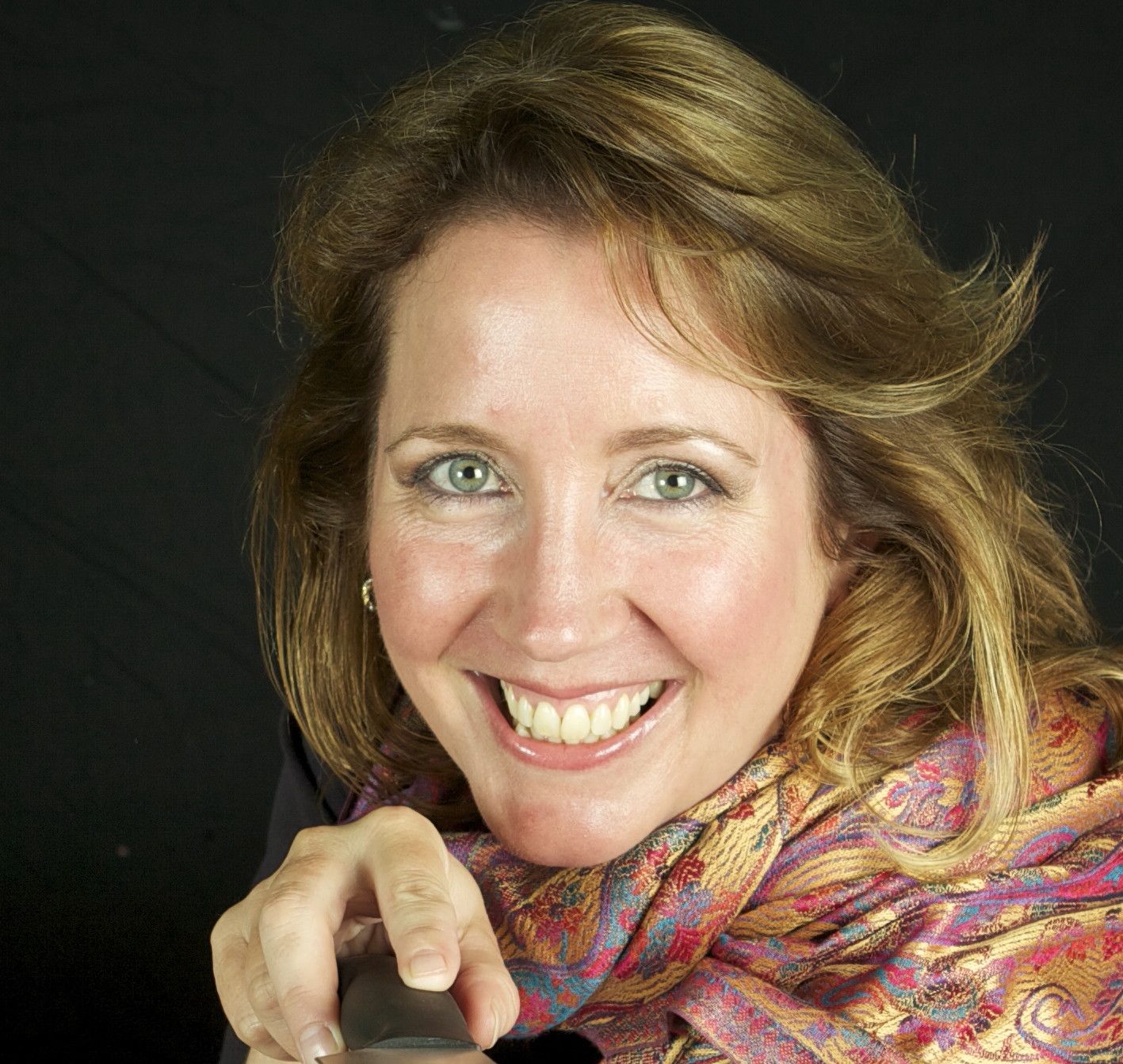
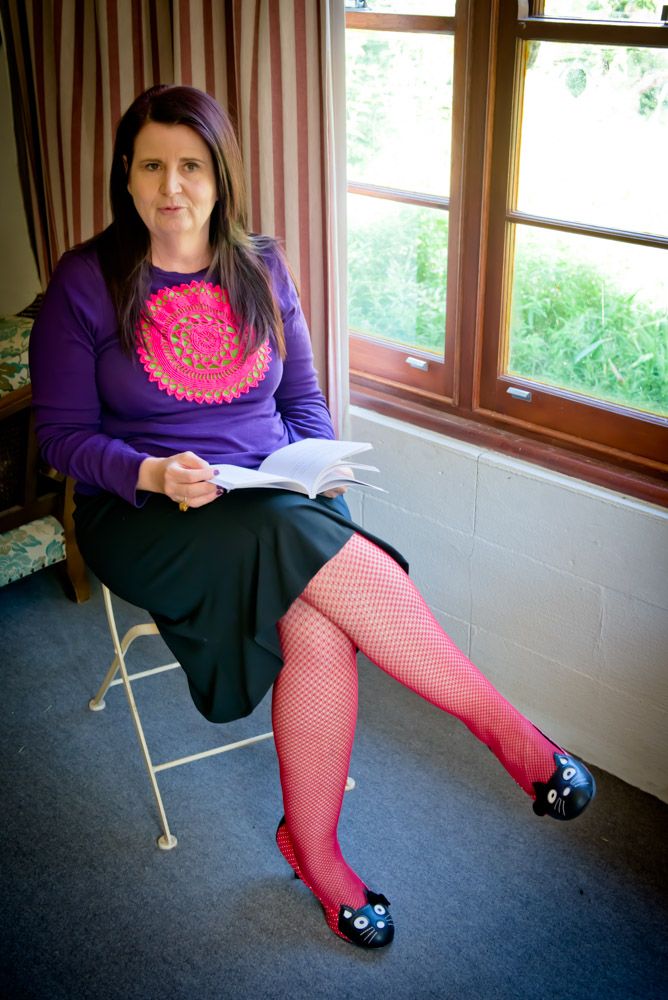
Penelope Cottier

The New England Thunderbolt Prize for Crime Writing is a respected national award for unpublished short-form crime writing in three Open categories: Fiction, sponsored by the School of Arts, University of New England; Non-Fiction, sponsored by The Armidale Express; and Poetry, sponsored this year by the New England Writers’ Centre and the Armidale Dumaresq Memorial Library. There are also three special awards: the New England Award for a writer resident in New England, sponsored by Reader’s Companion bookshop, Armidale; the Emerging Author Award, for an unpublished writer over 18, sponsored by Friends of Tamworth Libraries; and this year, the inaugural Youth Award, for writers under 18, sponsored by Granny Fi’s Toy Cupboard, Armidale.

The Prize, which in 2015 is in its third year, is run by the New England Writers’ Centre, of which I’m Chair, and as the results of the 2015 Prize have just been announced, I thought it would be interesting to interview each of the winning authors, and ask them about their stories, their writing careers, and what they hope winning an award within the Prize will do for them.

Here’s the first of the interviews, with P.S. (Penelope) Cottier, winner of the Poetry category in the Thunderbolt Prize.

First of all, Penelope, congratulations on your win! How did you come up with the idea of your winning poem, Criminals who are no longer criminals?

Thanks Sophie.  I was thinking about the way we incarcerate asylum seekers offshore, including children, and whether this would be classed as a crime in the future (it may already be in breach of various agreements, and lead to inarguable crimes such as murder and rape).  From that I started thinking about laws that had once seemed necessary, at least to some, and which later seemed cruel, pathetic, or simply very odd, and which are now repealed.  These laws include those against homosexuality, witchcraft, eavesdropping, and laws about found treasure which I vaguely remembered from studies in first year law.  Finding out that just walking around at night was once a crime was a total bonus, so far as the poem was concerned. I had a vivid image of all those who had been subject to these laws meeting, as ghosts, outside a court room.

The poetry judge, Les Murray, commented on the evocative nature of your descriptions. How did you go about creating that texture?

I try to put aside too much thought when writing a poem.  I like to have a fairly strong idea of what I will be doing before I start, but when I am writing my best work it is as if I am taking dictation from someone unseen.  Not automatic so much as going through the gears in a manual car without thinking about it.  You only become conscious if you miss a gear.

This intense cruising was more difficult here because of the law lurking around like a bore at a party.  (The sort of bore who wears a ‘funny’ bowtie and can’t wait to assail you with stories of his most awesome success.)  But the poem contains more than a whiff of smell, has some sounds I like, word play, and an element of surprise, co-existing with a strong sense of sorrow.  I think I avoided being too preachy or tedious, despite the research wedged in there.

I’m glad that Les liked it!

Have you written poetry themed around crime before? What attracted you to do so?

I was about to say ‘no’, and then I remembered that a poem that was the joint winner of the Arts ACT David Campbell Prize dealt with a father who had murdered his children.  Again it had a element of the dreamlike to it, while dealing with an unfortunately real situation.  It was called ‘Visitation’ and the dead children appear to the mother in her dreams.

Can you tell us a bit about your background and writing career?

I was born in England, raised in Melbourne and live in Canberra, a place I now love, after a long and intense struggle.  My latest publication is a pocket book called Paths Into Inner Canberra, which is an essay with two poems, looking at notions of nature and the way that wild animals can be found a few kilometres from Parliament House.  (Insert politician joke here.)  It gives me great joy that a piece of writing can be produced and sold for as little as $4, and that Ginninderra Press produces this type of publication.  This book can be ordered here.

Of relevance to this award is the fact that I have a law degree.  I go months without remembering that!  I also have a PhD in Literature from the ANU, written on images of animals in the works of Charles Dickens.

I write as P.S. Cottier, which sometimes stands for Post Script, as I started seriously seeking publication relatively late. (I almost forgot.)  I have had three books of poetry published, co-edited an anthology of poems, and have even stooped to prose fictional and non-fictional, as noted above.

What do you hope winning the Poetry prize will do for you as a writer?

This may sound a little cute, but writing poetry is an end in itself, particularly when someone gets to read it.  I am pleased that the poem is being published, and that I managed to write a poem about law reform and the cruelties of the past (and by extension, the current limitations of the law).

I try my hardest not to think in terms of a writing career.  That probably means my view of poetry is hopelessly romantic.  If I want to have a poem I have finished read, I will post it on my blog at pscottier.com as often as submitting to a journal.

But I will certainly buy something cool with the prize money.

As a reader of poetry, what do you look for in a poem? Which poets have influenced your own work?

Invention and surprise are my favourite aspects of poetry.  I like unexpected combinations of words and play.  Huge slabs of self reflection, or emotions thrown at the reader like sodden hankies, are not my favourite things.

I love Emily Dickinson because she avoids easy translation into a single message.

Byron is a favourite because he lurches between tenderness and sarcasm.

I read as widely as possible in contemporary poetry written in Australia and elsewhere.

Joint ticket: An interview with Archie Fusillo and Josie Montano

Archie Fusillo Archie Fusillo and Josie Montano are two fabulous Italian-Australian authors of books for children and young adults. Separately, they’ve published many great books, but very recently they teamed up on a collaborative YA novel, Veiled Secrets. I met these two lively and engaging authors at the 2015 Story Arts festival in Ipswich, Queensland last month, and later asked them for an interview on the subject of their collaboration. Here it is–enjoy!Josie Montano

You’ve recently collaborated on a novel, Veiled Secrets, which tells the story of two Italian-Australian teenagers from two different families, Nick and Lia, who on a trip back to Italy with their grandparents, meet each other and discover they have a lot more in common than they could have imagined. How did you come up with the idea for the book?

When we first met we discovered that our families come from villages in Italy 10 kilometres apart, we grew up with similar traditions, culture, dialect and life-styles as first generation Aussies. We had a brainstorming session and strangely came up with the same idea! A story about teens going back to Italy with their grandparents. We knew we had a story to tell! One that no other writer in Australia has told, one that our 1st generation of Italian migrants needed to share.

How did two authors who describe themselves as fiercely independent manage to work together with the harmony required for successful story-telling?

We just found that from the very beginning we meshed quite well. Actually the ‘fiercely independent’ writing styles came in handy as we took on a character each and were able to write independently as Archie and Josie with Veiled Secretsour own character and their world.

Tell us about the process of constructing your novel. Did you plan it carefully beforehand, or was it more organic?

Although Josie is an over-planner and Archie just get’s into it and writes, we were still able to put together an initial plot line and main characters (to keep Josie happy!) Archie started as his character in chapter 1, emailed to Josie and Josie wrote chapter 2, etc. It was like one of those patchwork quilts where various people work on it, but the end result is a beautiful creation. The story did progress organically but also strangely in a way that both of us had with plot ideas and scenarios in our minds.

What were the challenges, and the pleasures, of joint creation? Did your find your writing voice was different in this to that in your own sole-authored books?

The only challenge we may have had was getting it published in the Australian market. One of the major publishers was very keen, we were wined and dined by their editor but in the end marketing felt it wasn’t the right time. So Josie sent it to her US fiction publishers and the next day a contract was emailed!

Re voice, actually a few times it happened that we would write something about each other’s characters that would spin the other off into revenge writing where eg: Archie wrote that Josie’s character had dimples and Josie was like ‘oh does she now!?’ and then she wrote that Archie’s character had a big nose! It was great having someone else to share the experience with and to cast a different editing eye over the manuscript.

Josie and Archie StoryartsAre you planning on more writing collaborations? And would you recommend the experience to other authors?

Josie has co-written fiction and non-fiction with other authors but admits this was the easiest collaboration thus far. As writing can be a lonely occupation, co-writing can at times bring a shared experience allowing for learnings and growth. And we are chatting about possible future collaborations on other projects!


Josie’s Facebook author page.

Josie’s Twitter.

Josie’s website: www.booksbyjosie.com.au

Archie’s website: www.archimedefusillo.com

Veiled Secrets Facebook page.

Delighted to be part of this fantastic new anthology

RIch and Rare FRONT coverSneak peek–with the permission of Paul Collins at Ford Street Publishing–at a fantastic new YA anthology, Rich and Rare, coming out in October. The anthology features an amazing roll-call of some of Australia’s best writers and illustrators for young people, and I was honoured to be chosen to write the foreword. Don’t you just love the fabulous cover, created by the great Shaun Tan?

Interview with Peter Higgins about the Wolfhound Century series

One of the discoveries–and pleasures–of my recent reading life has been the extraordinary, genre-busting Wolfhound Century series, by British author Peter Higgins. Set in the Vlast, an alternative world inspired by the history and culture of Russia, where dying angels, giants, rusalki and forest spirits exist alongside revolutionary terrorists, mad scientists, rocket ships, spies and secret police, this magnificent trilogy(made up of Wolfhound Century; Truth and Fear; and Radiant State) is breathtaking in its ambition, scope, dazzling and sensual use of language, gripping and twisty plot–and sub-plots!–and wonderfully depicted array of characters. With its mix of thriller, alternative history and fantasy–both urban and quest–it’s simply the most exciting, assured and original debut I have read in a long time and in fact ranks high amongst the very best speculative fiction full stop. I’m not the only one who thinks so incidentally, as this review in The Guardian indicates!

The trilogy has recently concluded with Radiant State, and after finishing it I contacted the author and had the good fortune to interview him.

Interview with Peter Higgins

Peter Higgins

The Wolfhound Century trilogy is your first published work, is that right? Can you tell me a bit about your background and how you first came up with the idea for the books?

I had some short stories published before I started on Wolfhound Century, but these are my first novels. I was always a reader and wanted to write but for a long time I didn’t know how. Then I happened on a book in a junk shop by Joan Aiken (whose stories I love) called The Way To Write For Children and it was a revelation. She didn’t just tell you what a good story needed, she told you, quite simply, how practically to go about writing one. How to collect and store material, ask questions of your ideas, build them up bit by bit. Some people write a different way, or they just naturally fall into the process, but I didn’t. I needed that book.

Even then it took me years to work out what kind of stories I could write: I love the freedom and energy of fantasy, but I also love researching and evoking the atmosphere of historical periods and other places. It finally came together when I started building a fantasy world out of the materials of history. It’s very much the kind of thing that Guy Gavriel Kay or G R R Martin do, I guess, but I decided to use the twentieth century, and draw on that dark and strange and luminous and cruel experience in Europe and Russia, rather than look to some more distant period. And that’s how the Wolfhound Century series started to come together.

The series immerses the reader in a richly dark, complex and layered world of magical alter reality. I am not at all surprised you chose the extraordinary history, folklore and culture of  Russia as the inspiration of the Vlast, imaginative world you created, but can you tell me  how you went about bringing it to life?wolfhound century

When I’m writing I work on two parallel tracks. On the one hand, I immerse myself in the materials I want to work with: twentieth century history, spy novels, Russian literature and art and film and folklore, anything that grabs my attention. And on the other hand, at the same time, I’m planning the story, building characters, working out the plot, the themes, what’s at stake. And out of all that, basically, I grab what I want. Sometimes I come across something in my ‘research’ that really excites me, and I try to figure out how to bring it in to the story. Sometimes the story needs something – a setting, a particular kind of character – and I look around for what would be good.

If I take something from my research, I usually twist it, change it, mix it with something else, make it magical or fantastical, to bring out what I think is important. It’s about building an interesting, different world with compelling characters and situations, a world that has a kind of atmospheric resonance. It’s a very instinctive process.
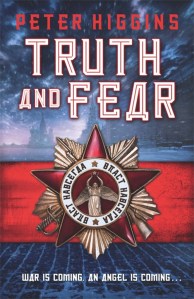
 truth and fearI’m struck by how seamlessly you have managed to evoke different periods of Russian history–from the late Tsarist period through the anarchist and Bolshevik period and full blown Stalinism–yet have telescoped it within the world of the series in a way that feels coherent. How difficult was that to achieve?

One way I found of making the whole thing hold together as a coherent story was to make it a thriller. Writing a thriller is a fantastic discipline: it cranks up the narrative pace, brings in mystery and conflict and danger, and makes you keep the characters moving. The story has to stay focused on the main event. As a writer, I found the thriller form very liberating, because there are clear principles and rules about plot and structure that other writers have worked out before you, which actually work. It gives you a solid framework that you can use to support the weirder and the wilder flights of imagination without losing the reader or yourself. Also, I’m a huge thriller fan, from John Buchan to Lee Child and Martin Cruz Smith.

Alongside the thriller plot, the telescoping comes from the sense, which becomes increasingly apparent as the trilogy unfolds, that time is subjective and moves at different speeds for different people and in different places. The presences from the forest, for example, the giants and so on, live long, slow lives. And the capital city of the Vlast, Mirgorod, is layered with traces of different times; it’s a kind of haunting. When Josef Kantor becomes the dictator Papa Rizhin, he’s able by sheer force of will to drive the Vlast to great social and technological changes very rapidly, but where his influence is weak time passes more slowly: people get caught in the past, trapped by memories or resentments, their lives get out of kilter, sometimes the dead wake and walk. I think the twentieth century was like that: huge and often disastrous advances driven fast by urgent necessity (the Manhattan project; Stalin’s industrial transformation of the Soviet Union; Mao’s Great Leap Forward) but people and places left stranded, trapped by history, recycling traumas, or simply refusing to share the common story.

 I love the way too that you have used Russian myth, folklore and language to conjure a world that feels both strongly rooted yet wonderfully strange. Can you expand on that?

I grew up with the idea that Russia was a very strange, fascinating, dangerous place. During the Cold War the Soviet Union was, for me, a huge imaginative presence – inaccessible, threatening, vast, oppressive, but also the place where fantastic art and literature and folklore came from; the place of endless forests and oddly fairy-tale architecture alongside prison camps and concrete tower blocks. I felt it was the scary looking-glass world that was really there, behind the iron curtain. That’s the kind of feeling I wanted to capture in the Wolfhound Century series.secret agent
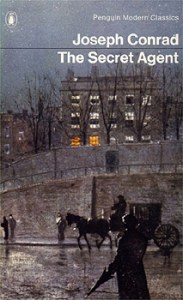
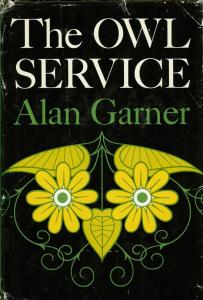
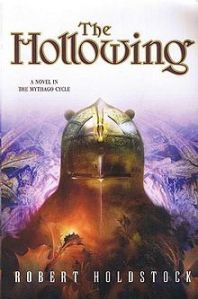
One of the many things I loved about the series too was the feeling that it was influenced by many other books and writers–Russians, of course, principally, but also I wondered if Joseph Conrad’s The Secret Agent, Alan Garner’s The Owl Service and Robert Holdstock’s The Hollowing had been influences? Any others as well?

That’s uncanny. Those are three of my favourite authors. The collision between Conrad’s murky, compromised city of anarchists and policemen and Holdstock’s ancient, endless, subconscious-made-real forest is in a way the starting point for the Wolfhound Century trilogy. And Alan Garner was my first really exciting private reading discovery: I found The Weirdstone of Brisingamen and The Moon of Gomrath in the library, and read them both over and over. I haven’t thought about The owl serviceOwl Service for years, but now you’ve mentioned it, I see there’s certainly a connection to my books: the electric, mysterious, mythic presences in the natural world reaching out and entangling the characters in a dark story larger than themselves. We did it at school and I remember seeing it on TV, and it spooked me a lot both times. I haven’t been back to it since but it seems to have been working away, below the surface.
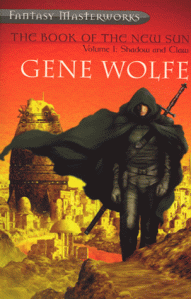
book of new sunAnother huge influence for me is Gene Wolfe’s The Book of the New Sun. I don’t think I write particularly like him, or about the same things, but I discovered The Book of the New Sun at a time when I really didn’t know what I was trying to do, and it hit me right between the eyes. That book opened up for me just how ambitious and adventurous and unlimited fantasy writing could be: the endless inventiveness, the ambition and the seriousness of his writing were a revelation. I realized I needed to try and write something that at least entertained the possibility of being that good.
hollowingYour characters aren’t only human but also superhuman and non-human–angels, giants, forest spirits and more. You have poignantly and grippingly evoked their steadily-diminishing world. How did you go about it?

It’s about looking at everything that the Russian and central European imagination has produced – the folklore, the forest, the visionary paintings of an artist like Chagall, golems and rusalkas and talking wolves, as well as the revolutionaries and the state police and the prison camps and the mass hunger – and taking it as if it was all equally real and tangible and actually happening. The driving idea of the series is that an over-dominant state – any such state, it doesn’t have to be the Soviet Union particularly, the one in these books is called the Vlast – wants to impose a single way of thinking, wants to make everybody see the world the same way and be part of the one collective story, and uses its oppressive power to drive out and silence anything that doesn’t fit with that. But everywhere in the Wolfhound Century world things are alive and percipient – sentient rain, thinking rivers – and there are giants and spirits and intelligent shape-shifting wolves. For the characters this generates a lot of tension: how much reality do you accept? what do you close your mind to? It’s not ‘good natural world’ versus ‘bad government’: the wider, deeper world, like the individual human psyche, isn’t particularly morally good, it’s just unavoidably there; and much richer and more alive than any one way of organizing things will allow.

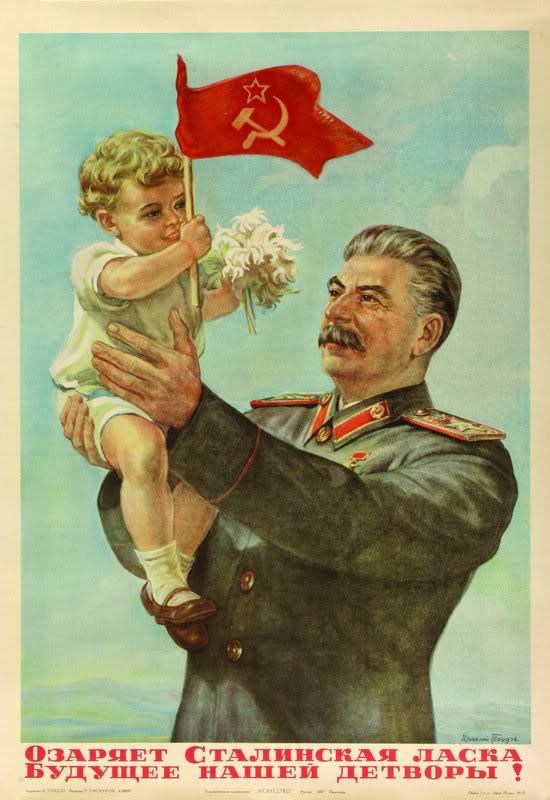
Josef Kantor, later Papa Rizhin, feels like a mix of Lenin and Stalin by way of the People’s Will anarchists. Is that a fair comment?stalin_poster

Yes, Stalin in particular. Kantor isn’t a portrait of Stalin, any more than the Vlast is a portrait of the Soviet Union, and some of the events surrounding him and the things he says and does are drawn from Lenin and other revolutionary writers and activists, but Kantor’s character and story – which in some ways is the spine of the whole trilogy – is largely built from aspects of Stalin that I think are particularly compelling.

Stalin’s journey from being Josef Djugashvili, revolutionary, poet, bank robber to being Stalin the Steel Man, terrorisor of the people and even his own supporters, then victorious war leader, then hugely-dominant avuncular dictator, is strange and oddly gripping. You can see in early photographs of him that he was very alive and engaged, very human, someone who might have been a good person. It’s as if something alien and appalling got into the machine, or something dark came out of the psyche.

Vissarion Lom and Maroussia Shaumian, the two heroes of the series, grow and change a great deal during the course of the three books. Can you expand a little on that?

Lom starts as an investigator in the political police, serving the Vlast in an obscure provincial town, and when we first meet Maroussia she’s working in a factory making uniforms. Both of them get unseated from those niches and driven to embark on a kind of exploratory journey/quest. Maroussia is the main ‘quester’, the driven Frodo-figure: Lom has to work hard to keep up with her and figure out what’s going on, what the bigger picture is. And there’s something magical, perhaps not entirely conventionally human, about Lom, which he doesn’t himself understand but grows into. That’s the spine of it. But a large part of what I was trying to do is to show them both unfolding under the radiant statepressure of what happens to them and what they discover, opening up more and more to the world around them, becoming increasingly perceptive, connecting with what’s coming out of the endless forest, unlocking closed areas of the unconscious, extending the capacity of what people can do and perceive.

 I felt that the ending of the third book, Radiant State, is left a little open–is there going to be more exploration of the world of the Vlast, or are you looking in other directions now?

Part of what I love about fantasy and science fiction is the feeling that the worlds the books build don’t stop when the books end. The particular struggle has come to a conclusion, the characters have changed in some fundamental way and so has their world, but nevertheless the world continues. It’s still there, somewhere. That’s the feeling I wanted to leave at the end of the trilogy. Maybe, possibly, I’ll revisit the Vlast one day, though I’m working on something else now. When I look back at the trilogy as a whole, I feel there’s a completeness to it, that I’ve done what I wanted to do and if I added more it wouldn’t be better.

Peter Higgins’ website is at http://www.wolfhoundcentury.com/