Simple Basque food: part 3

Today I’m posting the recipe for the final part of our Basque-themed meal. It’s probably the most famous dessert in the French Basque country, and is known simply as ‘Gateau Basque’. In A Hundred Words for Butterfly, my characters enjoy a slice or two of it more than once!

Rather than a ‘cake’ as such, the Gateau Basque is a pie with a yummy buttery, eggy pastry, filled with a lovely egg custard flavoured with rum. There’s also a less common black cherry-filled version in some areas of the Pays Basque which are known for their cherries. Today, the pastry sometimes incorporates almond meal as well as flour, but it’s more traditional not to use it, as almonds are not a traditional part of Basque cooking. But it’s up to you!

Found on family and celebration tables and in every patisserie across the region (with people flocking to the best examples of it in town and village patisseries and fervently discussing the relative merits of each!) it’s both simple and utterly delicious, a real treat to make and to eat!

Gateau Basque (this recipe serves 6-8 people)

Ingredients for the pastry: 300 g self-raising flour (or plain flour with one teaspoon baking powder), 125 g unsalted butter (chopped into pieces), 220g caster sugar, 3 egg yolks, grated zest of one lemon

For the custard cream: ¼ litre milk, 25 g plain flour, 60 g sugar, 3 egg yolks, one tablespoon rum

Method for the pastry:  In a bowl, tip in the flour, make a well in the centre, add the chopped butter, the egg yolks, and the lemon zest. (Also add in baking powder now if you are using plain flour). Mix thoroughly, working the pastry into an elastic, homogenous whole. (You can add a little water—a very small amount!– if you have trouble making it stick). Let the pastry rest for about half an hour.

Method for the cream: While the pastry is resting, mix the egg yolks, flour, sugar and rum in a bowl. Heat the milk to boiling point. Pour the hot milk onto the egg mix in the bowl, stirring the whole time. Tip the mix into a saucepan, and heat carefully, stirring as you go, till the mix is nicely thick. Do not let it catch. Turn off the heat, let cream cool.

Putting it together: Divide the pastry into two parts, roll out each of them to make two circles. Butter and lightly flour a springform cake pan, lay one of the pastry circles on the bottom, then put in the thick, cooled cream. Put the second circle on top, crimp the pastry edges together so cream is completely hidden. With a fork, score the top of the cake (without going right through), brush with a little reserved egg white and put in a hot oven for 30 minutes.

Serve warm or cold (the cake keeps really well–that is, if you can hold off eating it all!)

Simple Basque food: part 2

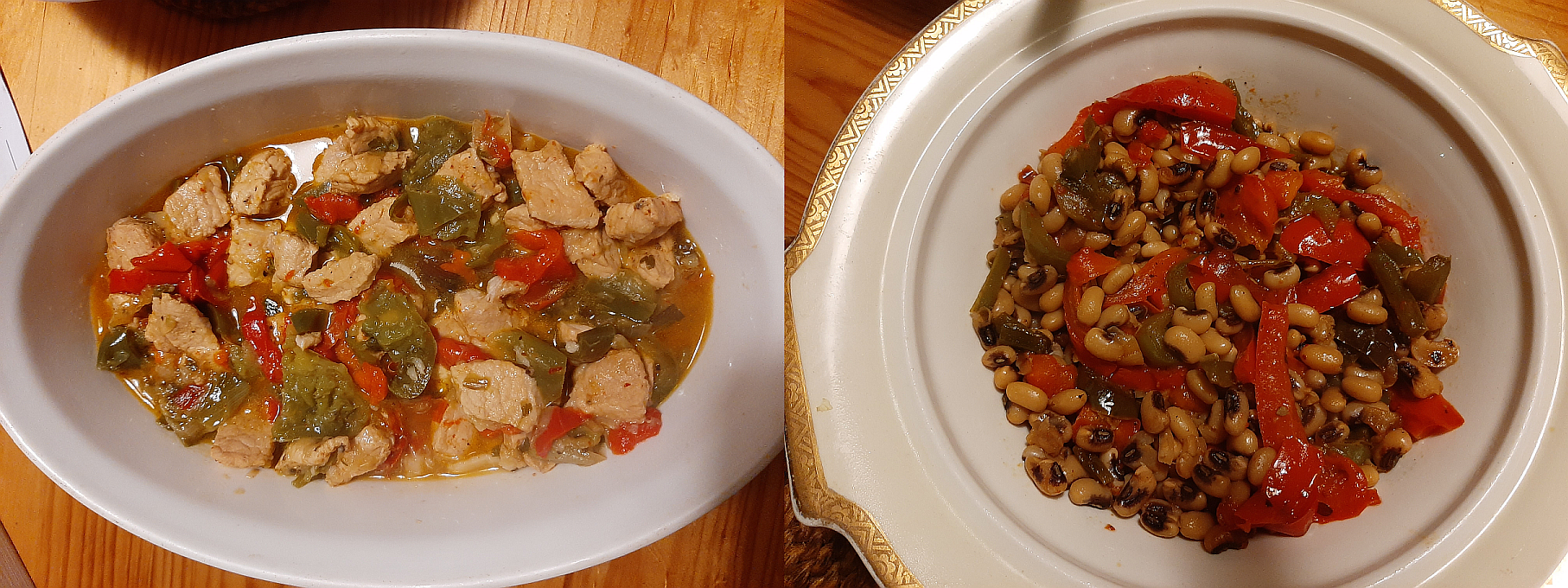
In a scene from A Hundred Words for Butterfly, my characters are in the charming village of Espelette and sit down to enjoy a very classic local dish: axoa (pronounced ‘atchoa’).

Traditionally served on market days, this simple and delicious Basque stew was popularised in Espelette, and in fact in recipe books is often called ‘axoa d’Espelette‘. This dish really highlights piment d’Espelette and in my previous post I indicated where you can easily buy it, but as I mentioned, hot paprika(non-smoked) will make a reasonable substitute (note that sweet paprika is too mild, and smoked paprika really doesn’t taste anything like the piment). The axoa really benefits from cooking ahead and letting it rest—for instance, you could cook it at lunchtime but serve it at dinner time. Even cooking it an hour or so ahead of serving and letting it sit will enhance the flavours. But don’t despair if you don’t have time–it’s excellent even if you don’t have time to cook ahead!

This recipe is my version of axoa, with a twist on tradition. Not only do I provide a vegetarian as well as a meat version, I use green capsicum (bell pepper) instead of the more traditional long pale green pepper (mild variety). Red capsicum however is a traditional part of the stew. And together they look just right, highlighting the traditional vibrant Basque colours of red and green! In the quantities given, the recipes each serve 3-4 people. (‘Axoa’ by the way means ‘chopped’ in Basque, referring to the meat).

Ingredients common to both versions: one large onion, 3 cloves garlic, 1 red capsicum, 1 green capsicum, olive oil, chopped herbs (parsley, thyme, bay leaf), piment d’Espelette, salt, 200 ml water or stock.

Other ingredients for meat version: 500 g diced veal (the traditional meat for this dish) or pork (which also goes well, in my experience), or 500 g minced veal or pork. Chicken could also be used.

Other ingredients for vegetarian version: 150 g soaked beans. I used black-eyed beans as they don’t take too long to cook (and we grew them!) but you could also use Lima beans (butter beans) or white haricot beans. Also, a bit of extra vegetable stock to cook the beans. If you are making the vegetarian version, cook the beans in stock first till they are at least three-quarters cooked, before adding to the basic mix to cook more.

So, first of all chop your onion, garlic and herbs. Deseed and dice the red and green capsicums. In a pan, cook the onion, garlic and capsicums in olive oil for 15 minutes then add the diced meat or the part-cooked beans, add the herbs, salt, and dash of piment d’Espelette. Reduce the heat and add the water or stock and cook at low heat, lid on, for about 45 minutes. The meat should be very tender but not falling apart, ditto the beans, and the sauce should be thick and reduced. After you turn off the heat, let the stew sit for as long as you can, before reheating, adding another sprinkle of piment d’Espelette, and serving with boiled potatoes or rice.

Simple Basque food: part 1

As I mentioned in my post about the piment d’Espelette last week, over the next few weeks I’ll be posting recipes for some simple Basque food, and thought I’d build it up so you could, if you want, create a whole Basque-inspired meal around it, similar to what my characters in A Hundred Words for Butterfly enjoy!

Today I’m introducing four simple dishes that can function either as snacks, entrees, lunch dishes or even grace a pintxo table if you want (pintxos are the Basque version of tapas). And by the way, don’t let anyone tell you that pintxos are ‘Spanish’–they are found on both sides of the French/Spanish border, just like the people who make them, because they are Basque 🙂

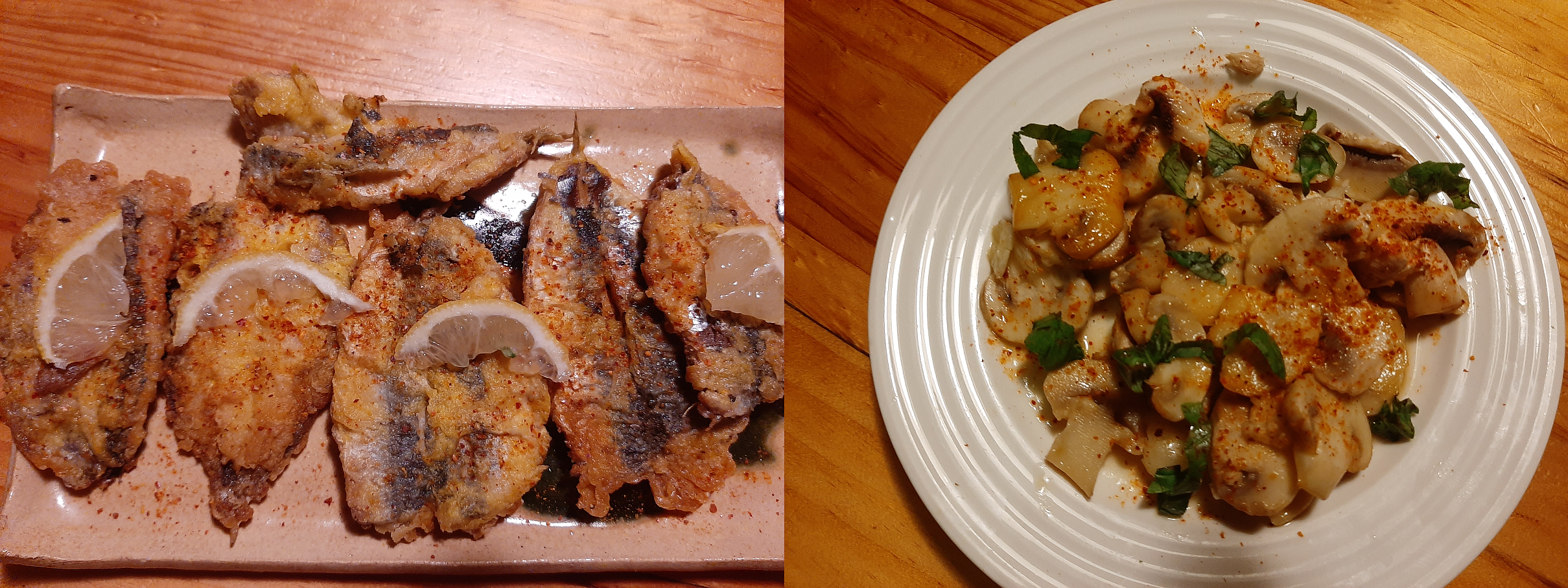
I’ve made all of these very recently and the photos are all my own, so you can see they are definitely home-made 🙂 All are very simple, very quick, and and very tasty! By the way, they all include a sprinkle of piment d’Espelette–great if you can obtain some, for example here or here, and I recommend it for that characteristic Basque taste. But you can certainly use good hot paprika if you don’t have any piment handy.

So here are the recipes!

Garlic and egg soup: Garlic cloves (up to 6 for 4 people); stock (chicken or vegetable) olive oil, thyme, bay leaf, eggs(1 per person) salt, piment d’Espelette, slices of bread. Cook the whole peeled garlic cloves in olive oil till they are golden, then add the hot stock. Add salt and a sprinkle of the pepper. Add chopped thyme and the bay leaf. Cook, uncovered, for 30 mins then crack the eggs into the soup to poach them. Fry the slices of bread and cut up to make croutons. And serve!

Simple Basque salad: On a plate arrange lettuce leaves with slices of Bayonne-style ham (Serrano ham is fine if Bayonne ham is unobtainable), and slices of roasted red and green capsicum. Sprinkle a vinaigrette made of olive oil and white wine or cider vinegar over the lettuce, and a small pinch of piment d’Espelette on the ham. For a vegetarian version, you can use sheep’s milk cheese (such as Manchego) instead of the ham, and you can also add other ingredients to the basics, such as tomatoes, artichokes and asparagus. 

Fried sardines: You need fresh sardines for this (can be either whole, gutted and boned sardines or ready-prepared fillets). For 2 people, I used 3 sardines each. You also need an egg and some flour, salt, and you guessed it, piment d’Espelette! Beat the egg, dip each sardine in it then into the flour, making sure it’s all coated, then fry till done. Serve with a sprinkle of salt, the Espelette pepper, and either lemon or vinegar.

Mushrooms with garlic: In the Basque country, ceps or other forest mushrooms would often be used, but field mushrooms are also fine. Simply slice them finely and cook in a little butter for about 2 minutes, add crushed garlic, salt, some chopped herbs—whatever you have on hand (I used basil) and yes, a sprinkle of that Famous Pepper!

The ‘Famous Pepper’ of the Basque country

My audio novel, A Hundred Words for Butterfly, is currently with Spineless Wonders Audio in the early stages of preparation for production though due to the current Sydney lockdown, actual recording has not started yet. I’m using the time at the moment to put together some ideas for interesting posts about different aspects of the book, and right now I’m thinking of posts around Basque food. In the novel, you get to hear quite a bit about it–the delicious hams and cheeses and stews and cakes of the region, and especially the aromatic powdered spice known as piment d’Espelette (Ezpeletako biperra in Basque), which is an absolutely central ingredient in a lot of Basque dishes. With its rich, deep, aromatic fruitiness and mild to moderate chilli warmth, piment d’Espelette is made from the long peppers grown in only ten villages, centred on Espelette, in the northern Basque country(ie the French Basque country) . It is so highly prized not only in the region but in the whole of France that it has it own AOP designation(which means it cannot be called or sold as Espelette pepper unless it is made from peppers grown by accredited producers in that small region). The pepper has a ‘confrerie‘ or fraternity dedicated to it and its protection, and it is celebrated in an annual festival that attracts ten of thousands of people every year to Espelette. From the very simplest use, sprinkled on boiled eggs and tomatoes to its pick-me-up presence in unctuous meat stews and rich fish soups or mixed in sauces, pâtés, mustards and even chocolates, it’s a very versatile and distinctive spice.

In A Hundred Words for Butterfly, there’s an important scene set in Espelette, proud home of the ‘Famous Pepper’ as my character Helen jokingly calls it, and in this first post around Basque food I thought readers of this blog might be interested to hear a little more about that celebrated spice. And in future posts, I’ll be putting up recipes for Basque dishes, many of which feature the Famous Pepper.

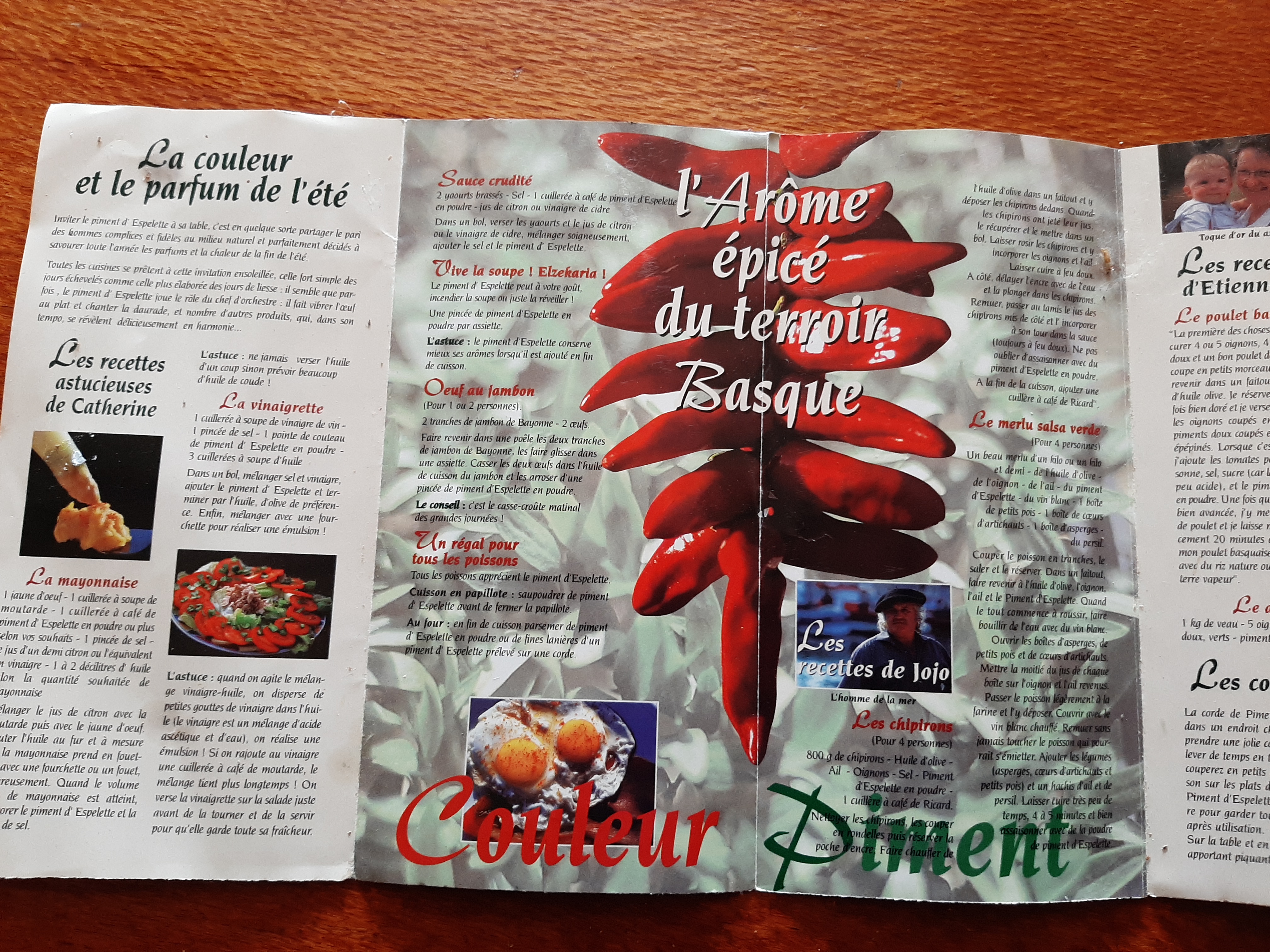
L to R: brochure about the pepper, me and youngest son Bevis in Espelette a few years ago; and dried peppers in a shop in Espelette.

Originally brought back to the Basque country from Mexico around four hundred years ago, the ancestor of the Ezpeletako biperra thrived in the soils of its new home and over time evolved to develop new characteristics that marked it as unique to that region. At the beginning, it was its medicinal qualities that were celebrated, but it very soon became the preferred spice in many Basque homes, as a substitute for black pepper which was then very expensive. And soon it started to colonise Basque cooking, but it was only in the 20th century that its central culinary and cultural importance was recognised, and its uniqueness protected and celebrated. In France, you can of course buy it pretty much everywhere; but you can also easily obtain it outside of France. In Australia, you can easily buy the ‘Famous Pepper’ powder online: for instance I’ve bought it here and here. It’s not exactly cheap outside of France but it is truly worth getting, if you’re interested in cooking Basque food: you can substitute high quality non-smoked hot paprika but it simply is not the same, and won’t have the same authentic taste.

Typically in the Basque country, Espelette peppers are sown in spring, with seedlings raised under glass in April, and planted out in mid-May when the soil has warmed up. Flowers appear in mid-June and then the fruit starts appearing. It starts off as green and gradually turns a deep red and is harvested from August to October and either sold fresh or kept to be dried. For this, the peppers are harvested with their stalks, which are then pierced to allow for food-quality string to be pushed through–the fruit is then hung to dry. Sometimes a whole lot of peppers are threaded on long ropes which are then hung on the front of houses to dry: you see these in several places in the season in the pepper area, especially in Espelette itself! Against the traditional white and red houses, it looks extremely picturesque. (But though it is still done to some extent, these days many producers dry the fruit in the air, but under glass). Then comes the next phase: making the powdered spice. Basically, once the peppers have dried in the air, they are then dried again in the oven for several hours and then ground to produce a grainy deep red or orangey-red powder. There are strict rules around it: no additive of any kind is allowed, the pepper powder must only be composed of the unadulterated ground dried fruit and as well, there can be no mixing of fruit from different growers: each accredited producer must use only their own peppers. Finally, the powder must be hermetically sealed into jars(this is how it’s mainly retailed) or shrink-wrapped packages(this is mainly for the larger quantities. )

So there you have it: the Famous Pepper! Incidentally, there are five other varieties of peppers which were brought back to the Basque country, north and south, by seafarers returning from the Americas. These include both mild and hot varieties which are rightly celebrated in their own regions. But none has quite achieved the worldwide celebrity of the piment d’Espelette 🙂

From brochure on piment d’Espelette

The audio novel is now with the publisher!

This week, the fully edited final ms of A Hundred Words for Butterfly went off to the publisher, Spineless Wonders Audio. It was an exciting moment, pressing ‘Send’. It’s been a real journey of discovery, writing the novel–or perhaps I should call it novella, given its length(just under 32,000 words)–and at times a bit of a challenge, but so enjoyable!

It’s turned out so well, pretty much exactly how I wanted it to be, and I think it will transfer beautifully to the audio form. I can’t wait for the next stage, as the book moves into production. And by the way, it was lovely recently to see it mentioned for the first time outside my blog, in an interview in Books+Publishing with Spineless Wonders publisher Bronwyn Mehan.

More soon!

Some great news for my audio novel!

I’m delighted to announce that I’ve signed an audio production contract for A Hundred Words for Butterfly, with the fabulous independent publisher, Spineless Wonders Audio.

Spineless Wonders Audio, which was launched in late 2020, is an enterprise of the innovative, award-winning digital publisher Spineless Wonders who, with founder Bronwyn Mehan at the helm, for the last ten years have not only consistently supported and promoted great short fiction, poetry, memoir and creative non-fiction, but found new and interesting ways to publish and showcase them. And Spineless Wonders Audio grew naturally out of that experience.

I am absolutely delighted to be working with Bronwyn and her fantastic team, and in the next few weeks will be telling you more about the novel’s journey to becoming an audio book. In the meantime, I’d better finish that last chapter 🙂

A new title for the audio novel

I’m two-thirds of the way through writing my audio novel now and it’s going really well. I’m also exploring next steps to make the actual audio book a reality(more on that another time, when plans have firmed up) but something that’s happened recently is a pretty important change: the title of the novel.

A Turn off the Path was a good working title to begin with. It conjured up for me quite a few things: the path literal(ie the Camino) and the path metaphorical(ie the different turns we take as we go along our life’s path). But after discussion with other people who suggested it might perhaps not quite be the right final title for it–not strong enough or memorable enough or unusual enough–I decided it was time to think of something else. For a while, it foxed me–titles can be tricky beasts to catch!–and then quite suddenly it came. It was there all along, hiding in plain sight, in a text message conversation between two of my main characters, Helen and Tony, and Tony tells Helen that there are a hundred words for butterfly, in Basque

I’d written that quite a while back, and just seen it as part of a conversation, though one that Helen really responds to, as an imaginative artist. But suddenly, I knew that’s what it had to be, the new title: A Hundred Words for Butterfly. It felt right, at once. It was simple yet enigmatic. Memorable yet not overdone. It could conjure up so many images in so many cultures yet was distinctively expressive of something from that place, that setting. I tried it out on other people, especially those who had expressed a certain dissatisfaction with the original title, and they confirmed their immediate affinity for this new one, too.

So that’s what it’s going to be. A Hundred Words for Butterfly…

Photo by David Leach.

The Basque elements of A Turn off the Path

My audio novel, A Turn off the Path, is set in the Pays Basque, the French Basque country, in the beautiful Pyrenean hill town of Saint Jean Pied de Port, or Donibane Garazi in Basque. I wanted to set it there not only because it is at the beginning of the famous Camino Frances, or French Way, to Compostella, but also for family reasons. On my mother’s family’s side, we have Basque heritage and though they’re not from Saint Jean, but rather from Biarritz (where my uncles, aunts, cousins and extended family still live) and also, further back, from the Spanish Basque side, from childhood onwards we have roamed across the beautiful Pays Basque, including several visits to Saint Jean, like this one to the markets there. As well, my sister Camille, who’s an artist, lives and works in Hasparren, and is a proud member of the Institut Culturel Basque.

Though we were not brought up speaking Basque ourselves, and we had other very important ethnic heritages–French (which dominated), French-Canadian, Spanish and Portuguese–our Basque heritage strand was always a rich and valued part of our family tapestry. It lived not only in our DNA but in our cultural references and lived experience. All of it fascinated me: the gorgeous landscape, the tumultuous history reaching way back into the millenia, the ancient culture whose ancient, non-Indo-European language still flourishes, and people both clannish and dynamic, tenacious and adaptable, traditional and innovative, fierce and businesslike, imaginative and reserved. And it influenced my writing: my first ever published piece was an article in Vogue Living on Basque cooking, which combined glimpses of Basque culture and places with delicious recipes. Over the years, I’ve sprinkled Basque references and characters in several of my novels, but in my alternative history YA novel The Hand of Glory, a Basque character is at central stage: a young undercover detective called Anje Otsoa. Through him, I was able to explore some aspects of Basque folklore, history and mythology. And now, in A Turn off the Path, I am exploring that Basque heritage again, not only through my main character Helen getting to know the region, its history and culture, but also through another character, another Australian, who’s come to investigate his family history and his Basque ancestors.

It’s an interesting challenge, both to include those elements yet not make it into some kind of Basque tourist guide or explanation of Basque culture. And in a novel like this one, where you always have to think of the auditory aspect as well, I have to think carefully about how I can present those important strands without overwhelming dialogue with information or having too much description. It’s very much about glimpses, and also emotion. For example, one of the scenes I’ve written recently has Helen walking through the streets one evening and suddenly hearing music floating from an open window: it’s a local Basque male choir practising. For like the Russians, the Welsh, Corsicans and others around the world, the Basques have a long-standing tradition of male choirs, and hearing a really good one is absolutely spine-tingling. That scene is only brief, but it anchors the action in something that is both concrete yet elusive, and emotional all the way through. (If you’re interested in hearing what such a choir sounds like, here’s the website of one, Gogotik, from Saint Jean Pied de Port itself)

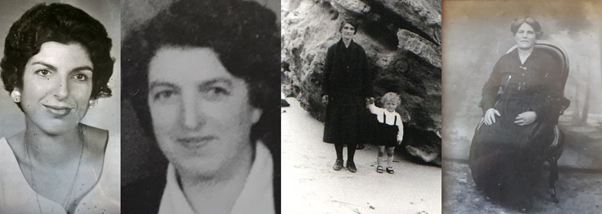
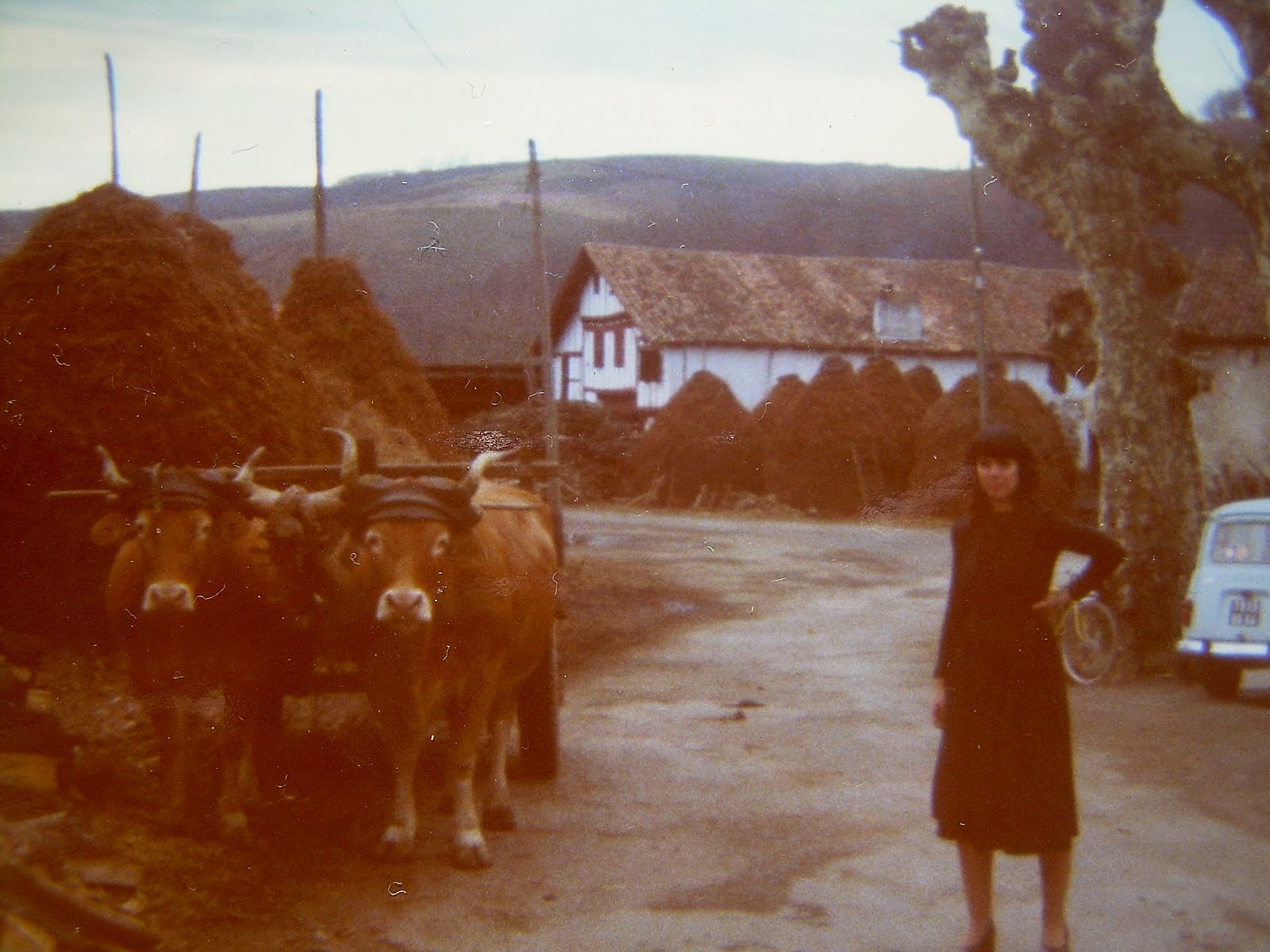
Below is a composite photo of my mother’s maternal side, on the Basque lineage. Going left to right, far left is my mother, Gisele; then her mother, Anna (both born in the French Basque country); her mother Antonina, and her mother Ama (both born in the Spanish Basque country, though Antonina came to live in the French Basque country as a young woman). And below that is me, as a teenager in the late 1970’s in the French Basque country, near the village of Ainhoa. Yes, you could still see the occasional ox cart there, back then!

Writing an audio novel, part 2

I’m now three chapters into the writing of A Turn off the Path, and already I’ve noticed I’m handling the writing of it a little differently to when I write a novel intended to go to print. For a start, I am reading each chapter aloud as I finish writing it, and go back over it, reading it aloud again to check if the sentences sound right when they are spoken. Don’t get me wrong; I always ‘hear’ the sentences in my head when I write a novel, and very often I’ve read passages aloud to know exactly where the rhythm of a sentence is faltering. But this is much more marked, in this one.

I’m not finding that I’m writing shorter sentences, as I’d half-imagined when I started. There’s a mix, as usual, of short and long sentences, and I’ve always used punctuation, including the dreaded semi-colon(which I think is very much unfairly traduced!) to mark natural pauses in the soundtrack in my head that gets translated into words on the page, or rather screen, at this point. I’ve also always treated each chapter as a mini-story but with a twist, small or otherwise, that carries you onto the next. That’s the same, in this one. And I’ve often used different forms of narrative to carry a story forward and to express different points of view. That’s similar too, A Turn off the Path–the main narrative is from the point of view of Helen, who gets left behind in Saint Jean while her sister Alex keeps to the plan and the Camino, but you also hear Alex’s voice through the blog posts she writes to update family and friends about the walk. It’s working well, so far. I’m also very much a visual writer, and love to paint word-pictures of places and people and atmospheres; but in this novel, I’m also very focussed on sound, not just the way that the sentences sound, but also other things. For example, I’m putting in small references to Basque words in the novel: but I’m very much aware that it’s one thing to think of what you can put on the page, in an audio version you also have to consider how the narrator might pronounce such words, and give extra clues to it. There’s also other sound elements to flag, like saying that someone has a slight accent you can’t quite place, and the sound of bells over the town. It’s not that I wouldn’t include those things in a novel normally, because I do; it’s just that I’m more conscious of it in this one, and more conscious too of how it might sound coming through your earphones.

Listening to Saint Jean: photo by Sophie Masson