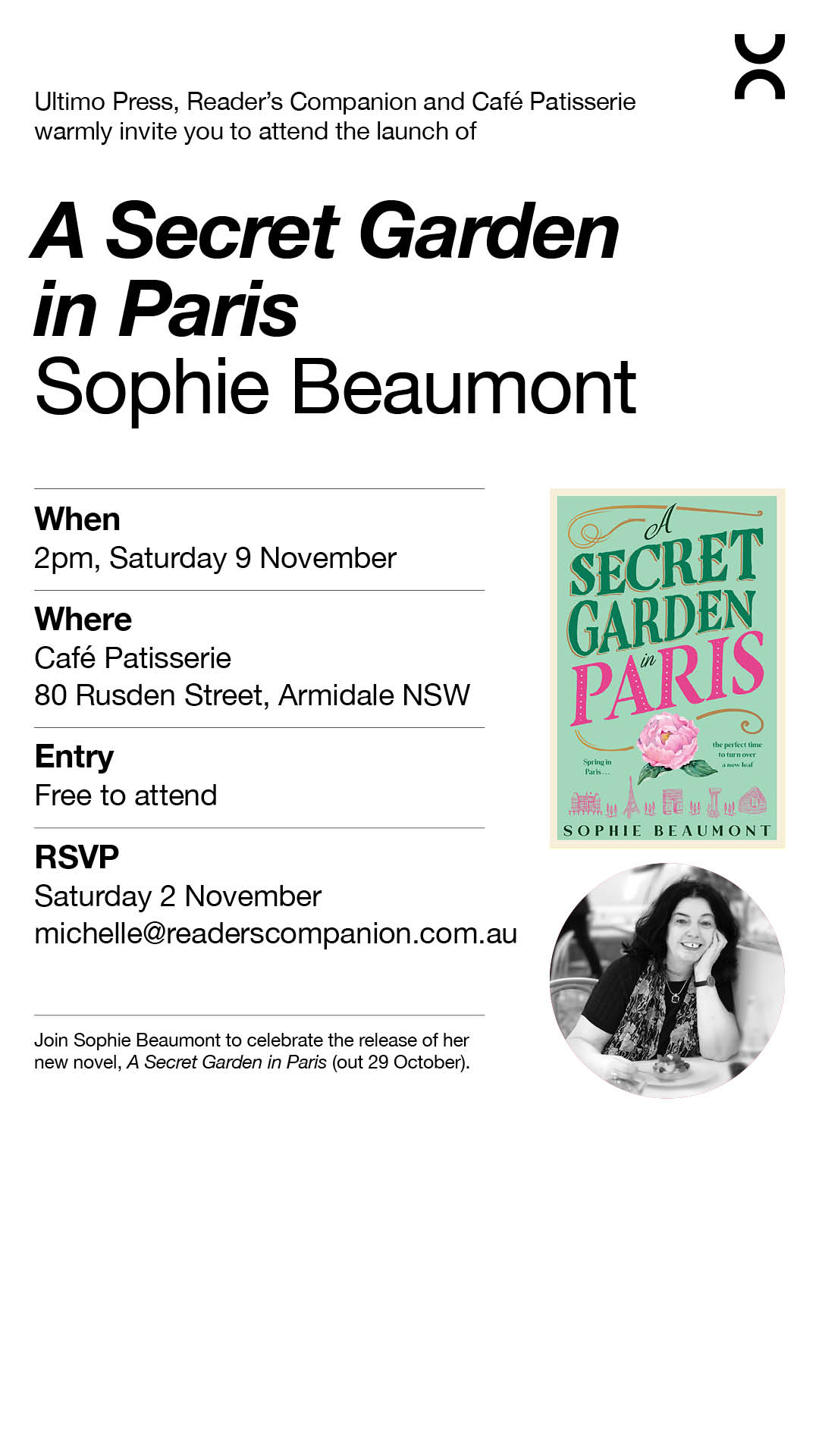
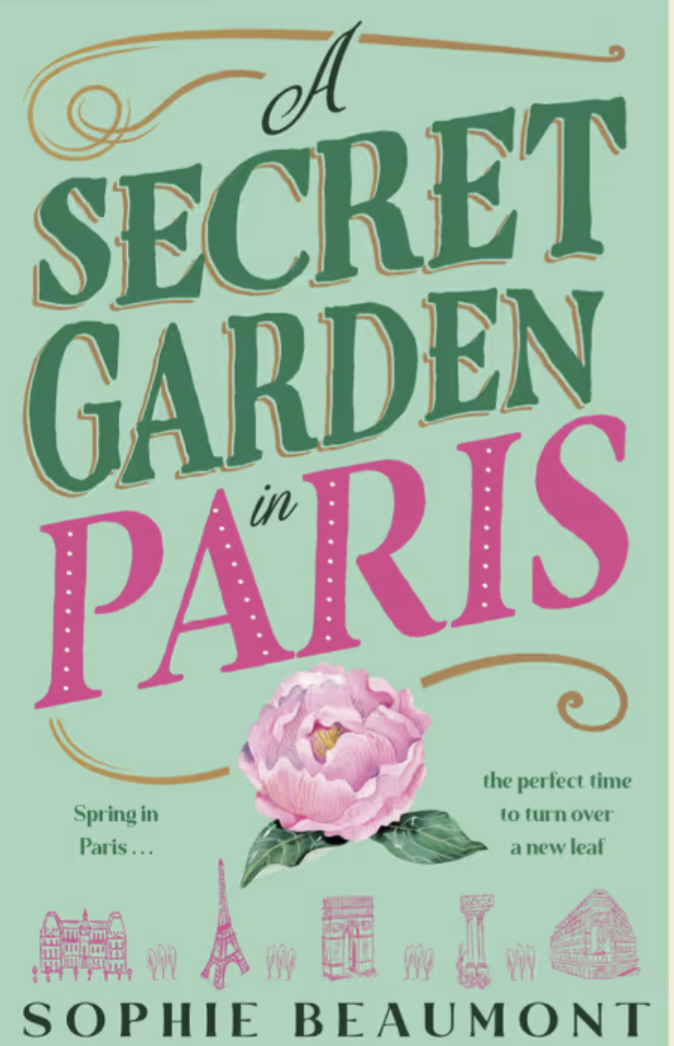
I’m really looking forward to two wonderful events that are going to be held in November, one in Armidale, one in Sydney, to celebrate the release of my new Sophie Beaumont book, A Secret Garden in Paris.
The first is the hometown launch, in Armidale, on Saturday November 9, at 2pm, and it’s going to be at the gorgeous Cafe Patisserie, where last year we had a fabulous launch for The Paris Cooking School. As with last year, our great independent bookshop, Reader’s Companion will be there to sell books, and there’ll be French wine, and other drinks, and little garden/spring inspired cakes created by Nathan at Cafe Patisserie, it’s going to be a lot of fun! Invitation is below the text of this post–all welcome!
The second will be held in Sydney, at Five Dock Library, on Thursday November 21, starting at 5.30 pm, and the fantastic Sydney independent bookshop, Better Read than Dead, will be there to sell book. There’ll be light refreshments, a talk from me about the book, and then book signing! All very welcome! The event is free, but you need to register here: https://www.eventbrite.com.au/e/author-talk-sophie-beaumont-tickets-956990011887
Here’s the second part of my interview with the wonderful Brenton–this one looks at the course of writing careers, at publishing, at rewriting etc. It really has been one of the most enjoyable interviews I’ve ever had!
I had a fantastic wide-ranging conversation over Zoom yesterday, with the wonderful writer, blogger and interviewer Brenton Cullen, about all kinds of things to do with my writing, books and career, and it’s now up on Brenton’s You Tube channel. It was such an invigorating and enjoyable experience!
My latest book for young readers, the chapterbook Sabina and the Cats of Rome, illustrated by Laura Wood, is being published today by Christmas Press. It was such a fun book to write, with the seeds of it first planted by seeing a whole bunch of cats communing in central Rome, at the spot where Julius Caesar was assassinated, no less! And that seed lay dormant for a few years before turning into the adventure of a little girl in Ancient Rome, a haughty little cat, a couple of confused dogs, and a dastardly plot by the King of the Rats!
Read a great review of Sabina and the Cats of Rome here.
My most recent post on Writer Unboxed is about the dedications in books, and it was fun writing it and going down the rabbit hole of research to do so! Here’s a short extract:
Some writers have it in mind from the beginning, for others it might be last-minute addition, prompted by a publisher’s question or a sudden impulse. To dedicate or not to dedicate—that is the question.
Dedications in books are certainly very common. Of the seven books on my bedside TBR pile, for example, just two lack a dedication. One of these features an epigraph instead, a line from a poem which expresses something at the heart of the book, and the other has no dedication at all. The dedications in the other five books are all personal, addressed to important people in the author’s life, which are in fact the most common kinds of dedications. Occasionally, though, you might see a more general type of dedication, in the vein of ‘to all those who have been there’. And it’s not just a modern thing—dedications in books have been common for hundreds of years. They started as statements of gratitude to patrons—for example, Shakespeare’s famous, enigmatic dedication for the Sonnets (though some say it wasn’t Shakespeare but the publisher who wrote the dedication). Or even further back, 12th century French writer Chrétien de Troyes’ dedication of his extraordinary seminal work, Le chevalier de la charrette (the Knight of the Cart), which simultaneously launched the character of Lancelot, a massive craze for Arthurian romance, and, for a francophone like me, the birth of the novel (‘roman’ being ‘novel; in French). Chrétien dedicated the work to his patron, Marie de Champagne, daughter of Eleanor of Aquitaine, writing it as a graceful, sprightly poem which cleverly manages to avoid outright flattery, and a light touch that combines humor and gratitude. (If you read French, you can see it here.)
But from at least the 19th century, book dedications tended to be more personal. Looking up some famous book dedications as I was preparing to write this post, I found some that were basically mini-letters to family members or friends, such as CS Lewis’ affectionate message to his god-daughter Lucy in The Lion, the Witch and the Wardrobe, and John Steinbeck’s touching letter, for East of Eden, to a friend who was also his editor. Others, like PG Wodehouse’s rather acidly humorous dedication to his daughter Leonora, were like a mini-version of the author’s characteristic style, or more surprising in their form, like Carl Sagan’s lovely, poetic tribute to his wife Annie. Although never as popular as personal dedications, general dedications also started to become more common in the 20th century and beyond. For example, Agatha Christie wrote a tongue-in-cheek dedication of The Secret Adversary to ‘all those who lead monotonous lives.’ She also wrote many personal dedications, and you can read a compilation here). Jack Kerouac wrote a pithily disillusioned dedication, ‘To America, whatever that is’, in his book, Visions of Cody. If you’re interested in reading about more famous book dedications and their backgrounds, this oldie-but-goodie article from the New York Times in 1982, is worth a look.
You can read the whole post, and comments on it, here.
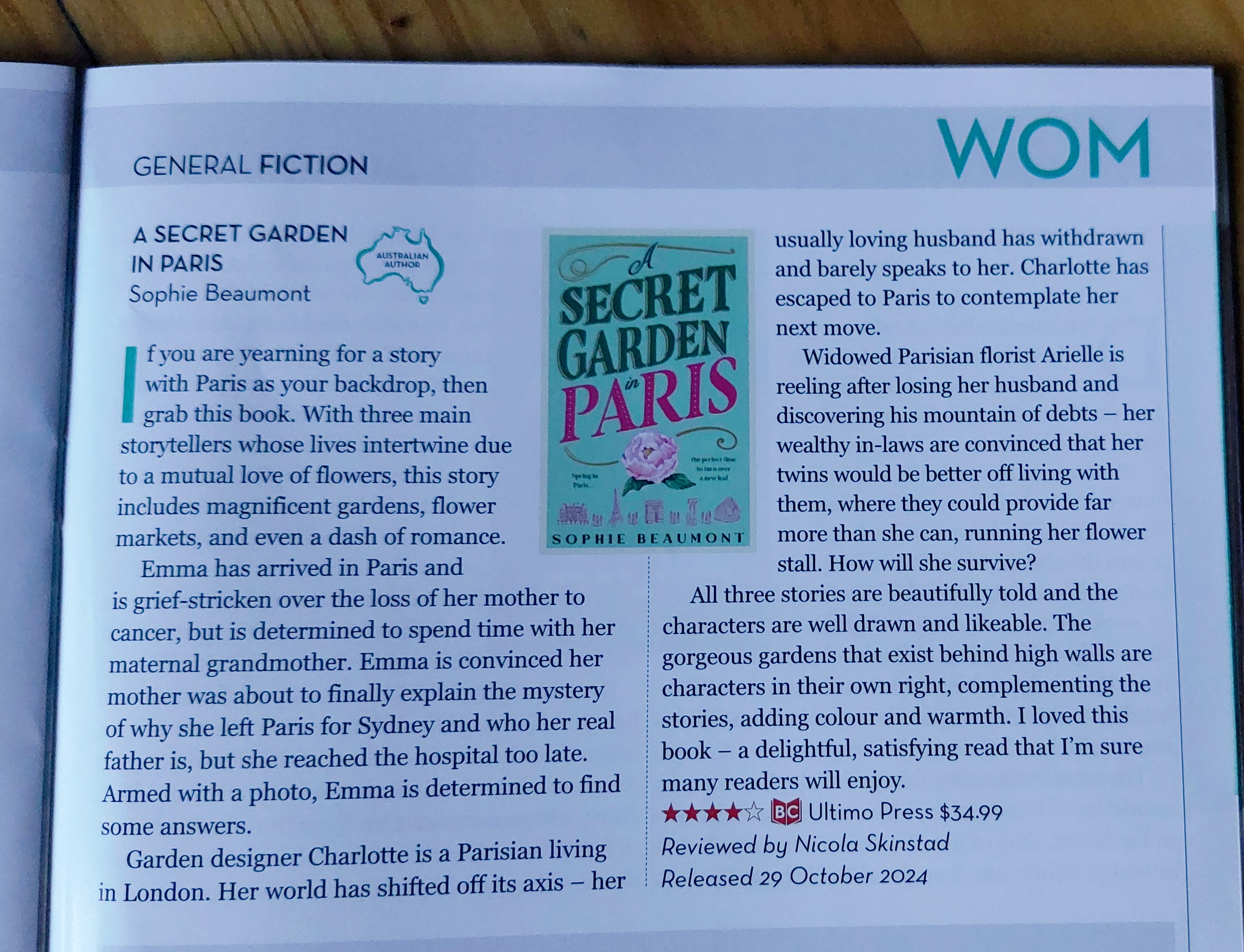
The first advance reviews of A Secret Garden in Paris are coming in on Goodreads, and they’re wonderful. I am so absolutely delighted!
Here’s some short extracts:
In A Secret Garden in Paris, Sophie Beaumont has shown gardens not only to be places of beauty and tranquility for all to enjoy but uses them as the setting for the characters to come to terms with problems and situations they are facing. Their involvement with gardens and flowers helps each of the women find peace and solutions to the challenges of life plus also making it an enjoyable book to read. (Vicki)
I loved learning about these women, where they had come from and what challenges they were dealing with in their lives. It was also amazing to discover how their lives intertwined. This truly is a story of love and loss, romance and revelations, and what better setting for it than a secret Paris garden. (Maree)
What an absolute joy to read. With Parisian grandmother Mattie as the central figure, surrounded by a collection of characters all dealing with sorrow while trying to move forward. I’m by no means an avid gardener, yet the descriptions of the beautiful gardens around Paris made it easy for me to feel like I was walking through them. With a healthy dose of romance, a few beautiful friendships and the strength of family this was a beautiful read that has left a huge smile on my face and joy in my heart. (Libby)
Check out this fun little trailer for Sabina and the Cats of Rome!
The illustrations in the trailer are from the book, and created by the fabulous Laura Wood, but the photos are ones I took myself in Rome some years ago–including the photos of some Roman cats that were hanging around at the spot where Julius Caesar was assassinated (there was a wreath at the spot marking where it was). It was seeing those cats that first planted the seed of this story…
The first advance review of Sabina and the Cats of Rome has just appeared, and it’s absolutely lovely! The review is by Brenton Cullen and has appeared in Books+Publishing this week. Here’s a short extract (full review is for B+P subscribers only):
Masson’s storytelling is engaging and accessible, offering simplicity for independent reading while maintaining a rich plot. Laura Wood’s black and white illustrations bring Sabina and Cleo to life, depicting seven scenes from the story...
It’s a great start for this fun little chapterbook, which is coming out with Christmas Press in October.
It’s the official publication day today, August 6, of the North American edition of The Paris Cooking School! It’s a lovely hardback production, published by Alcove Press, and distributed by Penguin Random House throughout the US and Canada. Here’s hoping it lands in the hands of many many readers who take it to their hearts!




 Feathers of the Firebird