A great opportunity for emerging authors

Christmas Press has a great opportunity for emerging authors open at the moment: a call for submissions to the 2017 anthology, A Christmas Menagerie, which will feature stories for children 6-9 years old, set at Christmas, around the theme of animals. But watch out, there’s only a short time left–you have to get in your story by midnight on January 6! You can get all details including where to submit to, here: https://christmaspresspicturebooks.com/2016/12/26/a-fabulous-opportunity-for-emerging-authors-in-our-2017-christmas-anthology/


Babushka and the Star–a story for Christmas

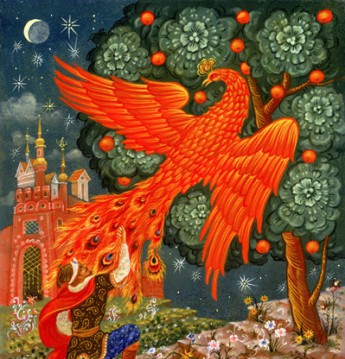
babushka-largeA story for Christmas–based on a beautiful Russian folktale which I retold and which was first published in  Once Upon A Christmas. The gorgeous illustration is by David Allan. Enjoy–and merry Christmas to everyone!

Babushka and the Star

a traditional Russian Christmas legend, retold by Sophie Masson

A long, long time ago, there lived an old woman whom everyone called Babushka, which means ‘Grandmother’ in Russian. Now Babushka was a widow who lived alone, and she was so house-proud that she spent nearly her whole time cleaning and sweeping, dusting and polishing, scrubbing and washing. Day and night, it was all the same to her, and she was so busy that she hardly had time to say good morning to her neighbours in the village, or to watch the sunset, or to hear the song of birds, or to delight in the play of children, or to smell the first roses of summer or the first fall of snow in winter. Her house was the cleanest and freshest and cosiest in all of the village, but though Babushka was kind and hospitable, and sometimes invited people in for a glass of tea, they would soon feel uncomfortable, for she would fuss with dishcloth and broom the moment they sat down.

One bright winter’s morning, Babushka was scrubbing her doorstep when out came the next door neighbour from her house. ‘Wasn’t it a beautiful star last night?’ she said.

‘What star?’ said Babushka. ‘I saw no star.’

The neighbour stared at her and said, ‘Oh! You must have seen it! It was so beautiful your heart might break just looking at it.’

Babushka shook her head. ‘I saw no star,’ she said, and having finished her doorstep, she started to dust her shutters. Soon, who should come by but the baker’s boy with his cart. Handing a loaf of bread to Babushka, he said, ‘What did you think of the star, Babushka?’

Again, Babushka said, ‘What star? I saw no star.’

The baker’s boy stared at her and said, ‘But it was big as this!’ and he spread his arms wide to show how much. ‘Big as the village! Big as the world!’

‘I saw no star,’ said Babushka, stubbornly. ‘And if you don’t mind, I’m busy.’

So off went the baker’s boy, shaking his head. Now Babushka finished dusting her shutters, and started work on polishing the brass door-knob. Soon, along came a little girl bouncing a ball.  ‘That knob is almost as bright as the star last night!’she said.

Once more, Babushka said,  ‘What star? I saw no star.’

‘Oh, but you must have done!’ said the little girl, staring. ‘It sparkled like the shiniest diamond in the world! What do you think it means?’

‘Nothing,’ said Babushka, crossly, ‘only that too many people don’t have enough to do with their time if they must stare at stars which you can see in the sky any night of the year!’

‘Oh but no!’ cried the little girl. ‘This star was not like the others! Nobody has ever seen it before, and..’

But she was talking to thin air, for Babushka had gone into her house and slammed the door.

How silly people are! Babushka thought to herself as she went about her cleaning and polishing indoors. So much work to be done, and they waste time staring at the night sky as though they’d never seen it before! Of course she could hardly remember the last time she’d looked at the night sky. But she was too busy for that.

Night had almost fallen by the time Babushka decided it was time to start cooking her dinner. She had just made a pot of mushroom soup when there came a knock on the door. She went to open it and stared in amazement for there on her well-scrubbed doorstep stood a tall black man dressed in fine golden robes, with a golden turban on his head. Behind him stood two other men, one round and blond with a bushy beard, fur-lined robes and a gold-trimmed fur hat, the other small and dark-haired and almond-eyed, with dark blue silk robes and a hat of the same colour with golden silk tassels hanging down. And behind them were three odd creatures Babushka had never set eyes on  before, tall and yellow-brown, with haughty faces and humps on their backs. Each of the beasts was richly saddled and bridled, and each of the men carried a small chest, inlaid with ivory and gold. Babushka had never seen such a sight. Why, they looked like three kings, she thought. And here they were on her very own doorstep!

‘Good evening,’ said the tall black man, very politely. ‘Is this the house of the lady Babushka?’

‘Why—why, yes,’ said Babushka. ‘And what may I do for you fine gentlemen?’

‘We are following the star,’ said the round blond man. Babushka sighed. Not the star again! She was about to say she knew nothing about it, when the dark-haired man chimed in, saying, ‘But we need a meal, and a rest, just for a few hours, just till the star comes out again.’

‘And your house is the best in the village, lady Babushka,’ said the tall black man, very politely indeed. ‘So we thought that maybe..’

Babushka beamed. She really was a kind and hospitable soul. ‘Of course! Of course!’ she said. ‘Welcome to my humble house, Your Majesties, and please make yourselves at home!’ She eyed the creatures outside. ‘And as to your—er—your animals, they can go in the cow-shed. It is warm there, and there is hay, if they do not mind sharing with the cow and the calf.’

The tall black man smiled. ‘I am sure the camels will not mind at all,’ he said.

No sooner said than done, and soon the three kings were settled in Babushka’s little kitchen, eating mushroom soup and good fresh bread and honey cakes to follow, with as much tea as they wanted. As they ate and drank, they talked, and Babushka listened in wonder. They had come from so far away, and travelled for such a long time, and all to follow that star! ‘But why?’ she asked. ‘Why did you do that?’

‘Because it heralds the birth of a great king,’ said the tall black man.

‘And we want to give the royal baby gifts,’ said the round blond man.

‘Gold and frankincense and myrrh,’ said the small dark-haired man.

‘Those are beautiful perfumes,’ said the tall black man, seeing she looked puzzled.

‘Gifts fit for a king,’ said the round blond man.

‘But aren’t you kings yourselves?’ asked Babushka, curiously.

‘Beside this child Jesus, ‘ said the dark-haired man, ‘we are just servants.’

‘Then he must be a mighty king indeed,’ said Babushka. ‘Yet he is only a baby.’

‘Yes,’ said the tall black man. ‘It is a mystery.’ He looked at Babushka and said, ‘Like the star.’

‘Oh, the star!’ said Babushka, shrugging.

‘Look,’ said the round blond man, pointing at the window. And now Babushka could see it, a star brighter than bright, shining in like the shiniest diamond, so beautiful your heart might break, seeming to get bigger even as she looked at it.  And she wondered how on earth she’d missed it before.

Now the tall black man rose to his feet and said, ‘We must leave now, lady Babushka, and follow the star, but we would like to ask you to come with us.’

Babushka looked at him and shook her head and said, ‘It is very kind of you, sire, but I really have too much work to go anywhere so soon. Maybe after tomorrow.’

‘We must go now,’ said the round blond man, ‘or else we will be too late.’

‘Oh no surely it will wait another day,’ said Babushka, ‘or maybe two, because if I am to go on a long journey, I must clean the house from top to bottom.’

‘We cannot wait two days or even one,’ said the dark-haired man. ‘We must go this very hour.’

‘Then I will follow later,’ said Babushka. ‘I will follow, with gifts of my own.’

‘Very well, as you wish,’ said the tall black man, rather sadly. ‘Make sure then to follow the star.’ And now the three kings thanked her, very politely, and left, riding on their camels just as though they were horses. How strange the world is, thought Babushka as she waved goodbye. And then she went back inside and shut her door.

But she could not sleep. So she scrubbed and cleaned. But her mind kept slipping from her work. Once, a long time ago, she’d had a baby of her own. But the child had become sick and died in his third winter. Babushka had not thought of the child in years and years. Now she could not stop. ‘I had some little toys for him,’ she thought. ‘A top, a ball, a drum, a little wooden soldier. Maybe I can bring those for the royal baby when I go to visit him. ‘ She went to the chest where they were kept. Oh! They were dusty and a little stained. They wouldn’t do. Not at all. Not in this state.

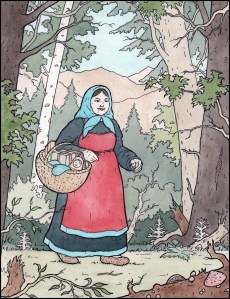
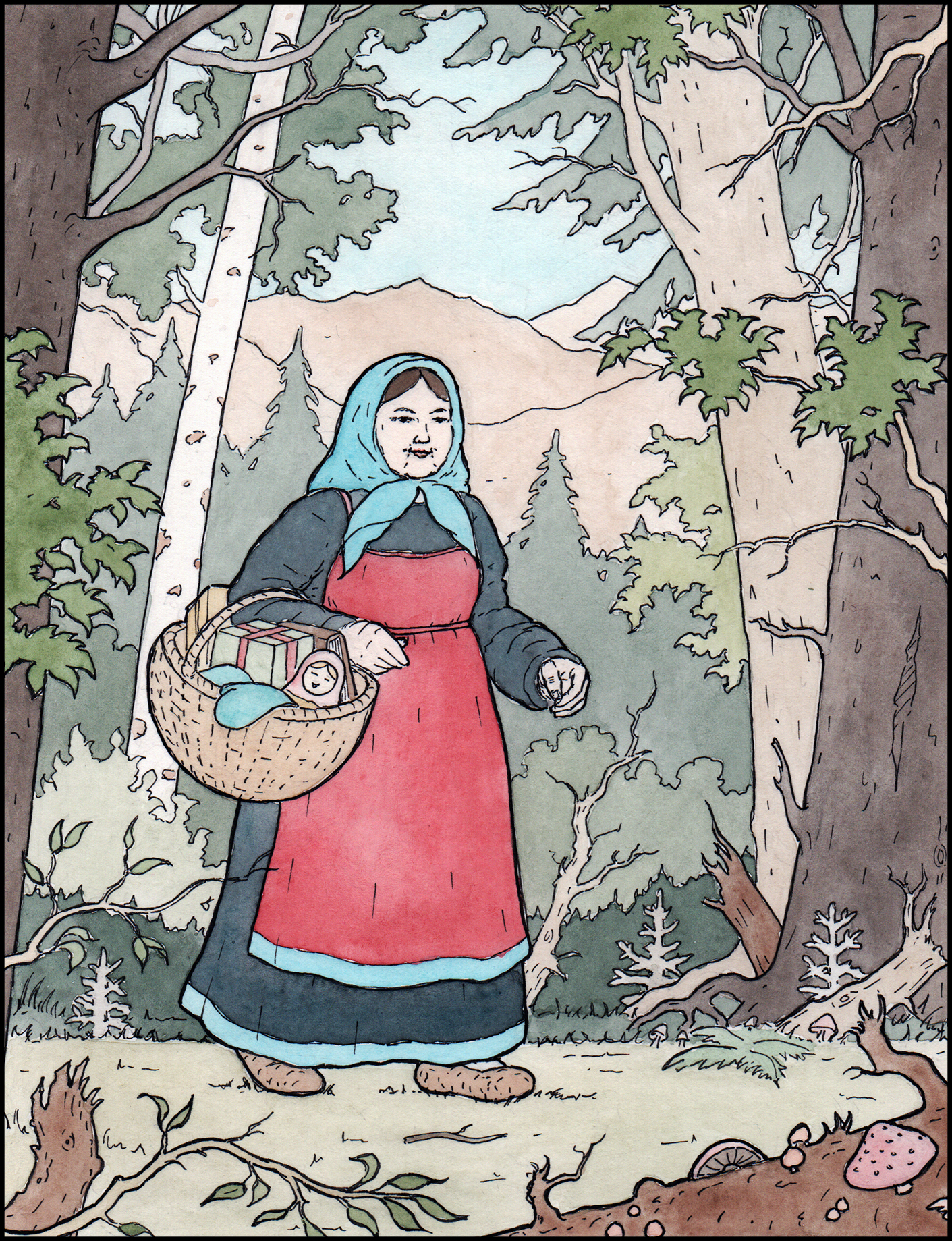
For hours, she worked on those toys. But she was so tired she fell asleep. When she awoke, it was early morning, and the star had gone. A strange feeling seized her. She could not wait. Not any longer. She had to follow those kings. She had to catch them up! So quickly she pulled on her warmest coat and hat and gloves, put all the money she had in her purse, packed all the toys in a basket and set off along the road the kings had taken.

She walked and walked and walked, for hours and hours and hours. She stopped in villages and towns to ask if they had seen the kings, and every time, people said, ‘Oh yes, they’ve only just passed, they’ve taken this road,’ and so, stopping only to buy a little food, and another toy to put in her basket, she would take the road they said, and hurry, hurry, trying to catch the three kings up. But always, they seemed to have just passed by, and she could not catch sight of them at all. When night fell, she waited for the star to come out, and sure enough it did. But it seemed fainter now, further away. Still Babushka kept walking.

Eventually she got to a place called Bethlehem. And there a man told her that only a few nights ago, the three kings had been there. They had come to give gifts to a baby, he said. Ah yes, nodded Babushka. ‘Where is the palace? I have gifts for the royal child.’

‘A palace? Oh no, this baby was born in a stable,’ said the man.

Babushka remembered what the tall black man had said, about it being a mystery. ‘Did the star shine above the stable?’ she asked.

‘Oh yes,’ said the man. ‘And there were angels. And shepherds too,’ he added.

‘And the three kings,’ said Babushka.

‘Them too,’ said the man. He looked at her. ‘And who are you?’

‘Babushka,’ she said, ‘I am just Babushka. I have come a long way to bring gifts for the child. Can you tell me where he is?’

‘He is gone,’ said the man. ‘With his parents, Mary and Joseph. They had to flee to Egypt. Because of King Herod. The three kings were to show them the way.’

‘Egypt,’ said Babushka, not listening to the rest. ‘Then Egypt is where I’ll go. Can you point out the road to me?’ And she set off again, walking, walking, walking.

She is still going, with her basket of toys on her arm. One day, maybe you might see her, trudging along the road, following a star that only she can see. She might stop in your town, and ask everyone if they have seen the three kings. And then, quietly, she will leave toys behind for all the children, to lighten her basket for the long road ahead. She will never give up. For she will never stop looking for the little child born under the miraculous star.
Guest post by Karly Lane: Life as a mum and full time writer

lane_karlyToday, I’m very pleased to present a great guest post by bestselling Australian author Karly Lane, as part of her blog tour for her new book, Third Time Lucky. 

Life as a mum and full time writer

by Karly Lane

Become a writer, they said. It’ll be fun, they said… oh, and just to make it extra interesting, do it while you have 4 kids at home and a part time job.

Writing with children…how do I explain this? Okay, picture a battlefield, with explosions and machine gun fire and bombs dropping from the air, all around you… and in the middle of all this you’re trying to write a deeply emotional love scene… that’s kinda what it’s like.

Mum! I’m hungry. Mum! He’s looking at me funny. Mum! She’s trying to put the chook into the freezer. Mum!!!!

Looking back at those first few crazy years of my writing career, I’m surprised that I managed to get one book written, little own four, before I was finally able to give up my part time job and work full time as a writer. Although giving up work was only one aspect, I still had my youngest at home for the first few years, and I can tell you with utmost confidence, Play School and Dora the Explorer DVD’s were a GODSEND. Although, I still have issues with Dora…why was this small child allowed to go exploring alone, where was her mother? She was probably and author, inside, writing a book. ‘Go outside and play, Dora…’

Those first few years were crazy. But it did teach me a lot of important things like; sleep… its completely overrated.

Coffee; will become the only vital food group. God help everyone in the household if we run out though…

It taught me to ignore the noise around you; if anyone ever tells you, you need softly playing piano music and scented candles in order to get you in a creative mood to write—they’ve obviously had far too much time on their hands and quite possibly—a nanny. I’ve written love scenes while refereeing fights between my children. You don’t need music—you need focus. If you’re a mother—you already know how to do more than one thing at a time. It’s called multitasking and if you can do that, you can write a novel while you have kids.9781760291822

I can honestly say, I got more productive writing done during the years I both worked part time and had children at home, than I’ve ever done since. Sure, now, with six hours of just me and the cat at home, writing is a lot more calmer and quiet…but it also gives me opportunities to ‘just go down and sniff the horses for a minute (they smell so good!) or, just go online and see what’s happening on facebook… All dangerous and time wasting ways not to get any writing done.

If there’s anything positive to take away from this, I hope that it’s to shut down that excuse about waiting until the kids go to school, before you start writing that book you want to write… Because putting it off—isn’t getting it written. There won’t ever be a perfect time to start writing—so find a DVD…turn on Playschool…and sit down and do it.

//cdn.thinglink.me/jse/embed.js


About Third Time Lucky:

When her marriage ends, December Doyle returns home to Christmas Creek. Will she conquer her fear of heartbreak? A heart-warming novel about betrayal, ambition and the power of love.

 After a disastrous marriage, December Doyle has returned to her home town to try to pick up the pieces of her life and start again. She’s also intent on helping breathe new life into the Christmas Creek township, so the last thing she needs is trouble.

Bad boy Seth Hunter has also returned to Christmas Creek, and trouble is his middle name. Wrongly convicted of a serious crime in his youth, Seth is now a successful businessman, but he’s intent on settling some old scores.

As teenagers, December and Seth were madly in love, and seeing each other again reawakens past feelings. But will Seth be able to overcome his destructive anger about the past, and can December conquer her fear of heartbreak to make their relationship third time lucky?

By the bestselling author of Second Chance Town, this compelling novel is about betrayal, ambition and the power of forgiveness – and love.

About Karly Lane:

Karly Lane is the best-selling author of nine novels including Second Chance Town, Gemma’s Bluff, and Bridie’s Choice. A certified small town girl, Karly is most happy in a little town where everyone knows who your grandparents were. Her novels range from romantic suspense to family saga, and she is passionate about writing stories that embrace rural Australia and the vast communities within it. She lives on the beautiful Mid North Coast of NSW with her husband and four children.

            Website: http://www.karlylane.com/


One Minute till Bedtime blog tour

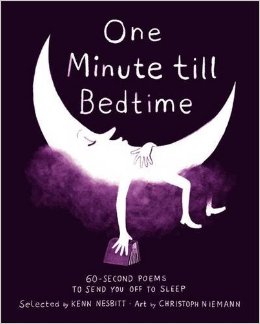
one-minute-till-bedtimeToday I’m taking part in an unusual kind of blog tour–highlighting a poem that was considered but not in the end accepted for the fabulous US-published children’s poetry anthology One Minute till Bedtime, chosen and compiled by prominent US poet Kenn Nesbitt. It’s the idea of well-known children’s poet and fellow Australian contributor to One Minute till Bedtime, Jackie Hosking–an unusual way of highlighting the poetic richness that’s out there!

The poem of mine that’s been chosen for the anthology is called Seagull Beach Party, and you can read it in the anthology–but this one, Windmills, though it wasn’t chosen, is still one I am pretty happy with! It was inspired by seeing heaps of the ‘white giants’ on a visit to Scotland.

Windmills

by Sophie Masson

The giants on the hill paddle in bright air,

Eddies of fine cloud flying everywhere.

A gust of wind excites them as they gather in the crop;

A sunny stillness quiets them, their arms go slow, then stop.

In humming rows they stand,

White giants across the land,

Waiting for a breeze to blow,

Waiting for a chance to show

They can thresh the wind without a care,

And harvest and mill the breath of air,

To turn into heat and light,

Far away and out of sight.

In humming rows they stand,

White giants across the land,

Looking across the seas,

Waiting for the breeze.


A Writer’s Dream, guest post by Glenice Whitting

glenice-whitting-jpgI’m delighted to publish today a guest post by author Glenice Whitting. Her debut novel Pickle to Pie was shortlisted for the Victorian Premier’s Literary awards and won the Ilura Press International Fiction Quest.  During her studies from VCE to PhD she was invited to become a member of The Golden Key International Honour Society and awarded an APA scholarship. Her latest novel, ‘Something Missing’ will be published by MadeGlobal Publishing and launched at Swinburne University 11th December 2016. 

A Writer’s Dream

by Glenice Whitting

Writers often dream of being published and getting their work ‘out there’. I am no exception and I am delighted that my second novel will be launched in December 2016 by MadeGlobal Publishing. ‘Something Missing’ began life as my artefact for my PhD at Swinburne University. It is the story of  two women who changed each other’s life through a friendship that spanned two countries and many decades.

I had just completed my Masters of Creative Writing at Melbourne Uni as a mature aged student when my first novel, Pickle to Pie co-won the Ilura Press International Fiction Quest. This meant a cash advance, plus publication and I was beside myself with excitement. Pickle to Pie was the story of a boy, a great-hearted German Grossmutter and a man caught between two worlds. I had promised myself, if Pickle to Pie was ever published that I would give up my day job. Hairdressing had always augmented the family income through good times and bad. After the book launch I stuck to my promise and sold the salon. I knew I was not a J K Rowling, but I was happy.pickle-to-pie

I had often toyed with the idea of studying for my PhD but never dreamt it could happen. However, to be awarded an APA scholarship meant the opportunity to study at Swinburne University and I grabbed it with both hands. With the help of two supervisors I could learn the craft of writing and understand all the rules. I would then know why I was breaking them. This was my chance to spread my writing wings and fly to the moon.

Did I follow on from the German Australian story? Did I build on the shoe-box of old postcards written in High German found in the bottom of dad’s wardrobe after he died? Or the bookcase filled with A4 folders containing years of German/Australian research? Of course not. Instead, I decided to do what so many writers do. I chose to write something close to my heart: something entirely different. This time it would be a women’s story based on my thirty-five year pen-friendship with an older American poet. It would be a story about two women, a life changing pen-friendship and the lies that led them both to truth.

I wrote in my journal,

‘I am writing an epistolary, autoethnographic novel grounded in both feminism and post modernist paradigms with the aim of revealing women’s hidden stories in the hope of instigating social change. I believe this embedded story of the journey of self discovery and friendship will carry with it the possibility of nothing less than the restoration of faith in human kind.

What lofty aims, but here was a chance to use our letters, interspersed with text, to explore the influence this elderly poet had on a young woman who left school at fourteen to become a hairdresser: a woman who unconsciously yearned for the education given to her brother and denied to her. My ongoing journey into epistolary fiction using letter, diary and journal extracts, plus snippets of poetry, had begun.

For four years I am caught up in a world where my mind keeps bouncing backwards and forwards between my creative writing of this novel and the formal academic exegesis. I try to remain true to my research title;  A Novel and an Exegesis Beyond Epistolarity.

Friends warned me that I would have a meltdown post PhD, but I was convinced that would not happen to me. I was too strong, too resilient. That sort of breakdown only happened to other people. The wail of the ambulance soon bought me back to earth with a thud. To leave my wheelchair and walk on stage wearing the hired floppy Tudor bonnet and colourful gown was a highlight in my life. I had an overwhelming feeling of achievement and self worth that no one could take away from me.

The mature aged student journey from VCE to PhD had required passion, dogged determination and guts, but it had also been the most exciting, exhilarating time in my life. I knew I would miss it and all the friends I’d made along the way.

I took a long hard look at what I’d written, and following the suggestions of American author/editor, Cindy Vallar, I inserted quotation marks to all the dialogue and renamed the manuscript ‘Something Missing’. But, had I, over the years of study, begun to sound as if I’d swallowed a dictionary?

book-cover-newThe third rewrite of the entire manuscript is the one that is being published. It was an invaluable lesson. To be a writer I had to be myself and write the way I really wanted to write, from the heart. I took out the overarching second person narrating character, made both Maggie and Diane third person narration, threw in a handful of suspense and Voilà… ’Something Missing’ was born. It had gone beyond academia, beyond epistolarity into popular fiction. I was over the moon with excitement the day I received the email that Tim Ridgway and Melanie V Taylor of MadeGlobal Publishing loved the story and would be sending a contract etc.

I will always be grateful to fellow colleague and wonderful friend, Wendy J Dunn, author of Author of Dear Heart How Like You This, The Light in the Labyrinth, and Falling Pomegranate Seeds  who recommended I send the manuscript of my novel to her publisher .

It is every writer’s dream to hold their book in their hand. It gives them a chance to thank all the people who have helped along the way. There have been so many people I could list who have patiently and painstakingly worked with me through all three versions of this novel. However, there is an indescribable joy in finally being able to thank them formally, via the acknowledgment page, in the soon to be published last reincarnation of the manuscript, ‘Something Missing’.

 I have asked Wendy Dunn if she will endorse my novel. Below is her generous reply:

 Something Missing narrates the story of a life changing friendship that spans decades and two continents. It is a powerful and beautifully told story of how we grow through the power of friendship – and how relationships change over time. Empathetic, full of life’s truths and wise – Something Missing is a work that stays with you, and speaks to our hearts.  

Anzac Stories: Behind the Pages Exhibition and my part in it

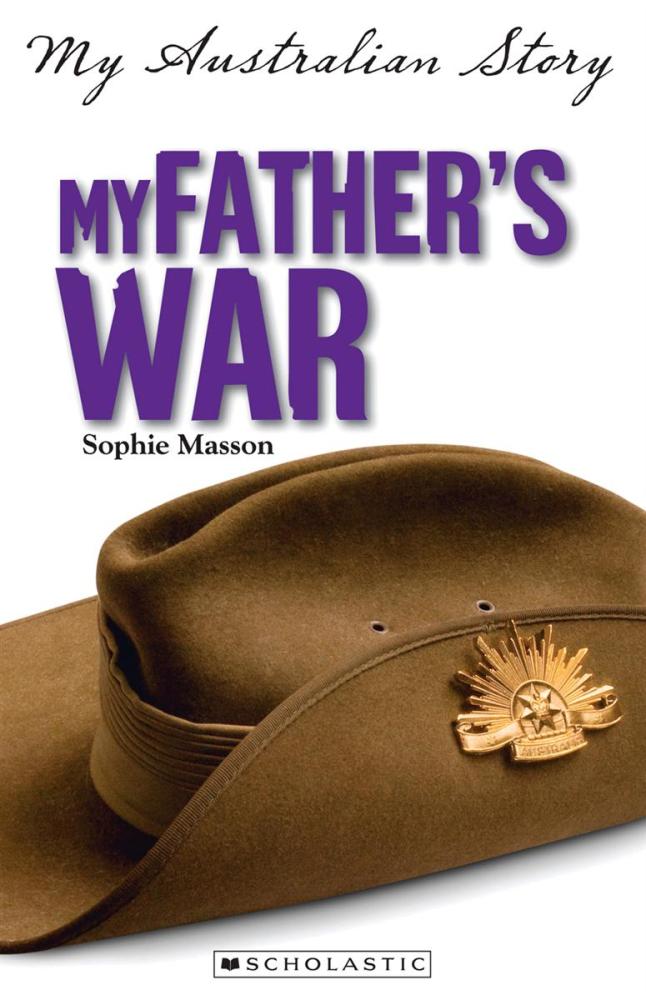
1914-coverI’m honoured to be part of the Anzac Stories: Behind the Pages exhibitions which will run throughout Australia in 2017 and 2018, and will showcase Australian and New Zealand contemporary children’s books set in wartime, and the stories behind the creation of those books. The exhibition is the brainchild of the fantastic New Zealand author Maria Gill, who initiated a similar exhibition in New Zealand earlier. Boards featuring individual books and writers will be exhibited in libraries across Australia. My two World War One novels, 1914 (Scholastic, 2014) and My Father’s War (Scholastic 2011) and the stories and research behind them, will be part of the exhibition. There’s also an Anzac Stories blog, with info about each book and a short interview with their writers. Here’s a little extract from minemy-father-s-war

Doing the research on the ground, in northern France especially, made it all become so real and so emotionally affecting. Both books blend my two main cultural influences: French and Australian, and that also felt like a very positive thing, especially as the ties between France and Australia forged during that terrible time are still very strong, particularly in the Somme region of northern France, where they have a saying, N’oublions jamais l’Australie : ‘Let us never forget Australia’

You can read the whole thing here.


Interview with Kenn Nesbitt, poet and compiler of One Minute till Bedtime

kennwithbooksIn 2014 I and many other writers received a lovely and unexpected invitation from prominent American children’s poet Kenn Nesbitt, asking if we would be interested in submitting poems for an anthology he was compiling, One Minute Till Bedtime, which would also include such contributors as Jack Prelutsky, Jon Scieszka, Jane Yolen, and Lemony Snicket. Talk about great company! And I was so thrilled when Kenn accepted my poem, Seagull Beach Party.

Two years later, and this week sees the publication of One Minute Till Bedtime. Containing the work of many poets from the US, UK, Australia and Canada, selected by Kenn, and beautifully illustrated by Christoph Niemann, the book is published by Little, Brown and is available around the world, including Australia. To celebrate its publication, I spoke to Kenn about the project, his own career, and children’s poetry in general.

First of all, congratulations on the publication of One Minute till Bedtime, Kenn! It’s lovely to see it out there. How did you come up with the idea for this unique poetry anthology?

Many years ago, the poet Bruce Lansky pointed out to me that most children’s poems can be read in an average of about one minute. Since then, I have tried to encourage teachers to take one minute of their school day to share a poem with their students.

When I was named Children’s Poet Laureate, I decided to create a website called PoetryMinute.org to give teachers a resource where they could easily find one-minute poems to share with their students for every day of the school year.

While I was in the process of creating this site, I was approached by Susan Rich at Little, Brown Books for Young Readers about creating a book around this idea of one-minute poems. She and I decided that bedtime might be the perfect time for a book of short poems, and One Minute till Bedtime was born.one-minute-till-bedtime

The contributing poets come from around the world. How did you go about sourcing poems for the anthology? 

Over the years that I have been writing children’s poems, I have developed relationships with many poets throughout the US, Canada, the UK and Australia. I called on many of these authors, and reached out to lots of other poets whose work I admire. Thank goodness for email and the Internet. A project like this would have been much more difficult 20 years ago!

With its wonderful poems, lively illustrations by Christoph Niemann, and attractive design, One Minute till Bedtime is a most appealing book for children and their parents. And obviously there’s a lot of work behind it. Can you tell us a bit about the process of putting together such a big project with the publisher, Little, Brown?

To begin, I wanted to create a collection that focused on the work of living, working children’s poets, rather than reprinting classic and public domain works. So I sent out a call for submissions to over 200 poets from around the world, looking for brand new poems that had never before appeared in print. I received submissions from roughly 170 different authors. I read them all, highlighting the ones that I thought might work. Once I knew which poems I wanted to include, I printed them all out and spread the papers around my dining room table, looking for natural pairings between poems and organizing them into sections.

Along the way, I tracked everything with spreadsheets, including submissions, selections, the order of the poems, and so on. While I was doing this, Little, Brown was on the hunt for just the right illustrator. Christoph Neimann was a truly inspired choice. His simple, yet incredibly clever illustrations compliment the poems perfectly.

Once the manuscript was completed, Little, Brown began working with Christoph on the illustrations and with me on the process of proofreading, editing, typesetting, and troubleshooting.

In the end, it all came together beautifully. I couldn’t be more proud of this book.

You are a popular and much-published poet. Can you tell us something about your own career, and how you started? What do you think has changed, if anything, over the time you’ve been published, in terms of attitudes to poetry for children?

I began writing poems as a hobby for my own amusement. I wrote for several years before I ever considered trying to get published. I also created a website, poetry4kids.com, in 1997 to share my work with readers online. I had my first poems published in 1998 in an anthology called Miles of Smiles. My first book, The Aliens Have Landed at Our School! was published in 2001. Since then, I have written many more books of children’s poetry, as well as a couple of picture books and a chapter book.

It seems that there are more poets writing for children today than ever before. At the same time, there are fewer individual poetry collections being published. Many children’s poets have instead turned their talents to writing picture books, novels in verse, etc. Large hardcover collections, such as those of Shel Silverstein and Jack Prelutsky, are becoming rare as hens’ teeth. Recent books by Alan Katz and Calef Brown are notable exceptions.

It is my hope that One Minute till Bedtime will not only introduce a new generation of parents and children to the joy of poetry, and showcase the works of today’s best children’s poets, but will also show publishers that poetry is worth pursuing.

You are the US Children’s Poetry Laureate and a tireless advocate for poetry. Why do you think poetry is so important for children? And what more do you think could be done to enhance children’s access to poetry?

I was the Children’s Poet Laureate from 2013-2015. Although I’ve passed that torch to my successor, Jacqueline Woodson, I continue to promote poetry to children, parents, and teachers around the world.

I believe poetry is important for children because it is short, fun, and memorable. (Everyone remembers something by Mother Goose, Dr. Seuss, and probably several other poets of childhood.) This combination makes poetry an easy springboard to reading and writing. Introducing children to poetry can help make them lifelong lovers of the written word.

The best champions for poetry are the earliest ones; parents and teachers. I believe the best way to enhance children’s access to poetry is to encourage parents to read to their kids, and to ask teachers to share poetry in their classrooms. Once they do, they will find that kids can’t get enough.

Interview with Therese Walsh, editor of Author in Progress

12803300_10207051919154843_5638323324479667397_nSome years ago–I think it was back in 2008–I was invited to become a regular contributor to the international writing blog, Writer Unboxed, founded by US writers Therese Walsh and Kathleen Bolton two years previously. Their idea was to create a community of writers who would find guidance, support and encouragement in WU, as well as great advice and tips. That’s certainly proven to be the case, and Writer Unboxed is one of the most popular and respected writing blogs in the world today, garnering several awards as well as an ever-increasing list of followers, a very active Facebook and Twitter presence, and the hosting of a unique conference–or Unconference, as it’s titled!

And now comes the next step: a book which gathers together a great deal of individual and collective wisdom and advice from Writer Unboxed contributors and community. Author in Progress: A No-Holds Guide to What it Really Takes to Get Published (Writers’ Digest Books), is being released today, November 1 and will be available from online booksellers such as Amazon, Barnes and Noble, etc, as well as the Writers’ Digest shop. Edited by Therese Walsh, and with an introduction by respected author James Scott Bell, it features over 50 essays from novelists, editors, agents and contributors from the WU community. The book goes well beyond the usual run of how-to-get-published books: from discussing reasons why people want to write right up to post-publication issues, and much more in between. I’m delighted to say by the way that I have an essay in the book, which is called ‘Writer as Phoenix’, and is in the final section of the book.

And today, I’m delighted to celebrate the publication day of Author in Progress by featuring an interview with its initiator: writer and editor extraordinaire, Therese Walsh.

***************

Welcome to my blog, Therese! How did the idea for Author in Progress come about? What was your vision for the book, and how did that evolve as time went on?

Thanks for having me, Sophie, and for the opportunity to talk about Author in Progress.

The book came about after I met with Phil Sexton at the Writer’s Digest conference last summer (2015). He mentioned the idea of doing a book with them, and that took root with me over a month or so. I had a follow-up phone call with Phil, and he mentioned the freedom we’d have to do the type of book we wanted to do. After that, the idea for Author in Progress fell into place rather quickly, as I considered what I knew to be true about writing a book – because there are some things I always say when someone who is not yet published asks, ‘How did you get published? What did you do?’

The book is broken into parts, following the stages a writer will likely go through on the road to publication: Pre-writing considerations, the writing itself, critique-related topics, educational considerations, rewriting, perseverance, and releasing the project once you’ve served the work.

Author in Progress is a very different kind of how-to writing book, as it doesn’t assume that the journey ends when your book is published. And it offers the advice and experience of many different contributors. How did you go about gathering and editing contributions from so many people?

Assigning essays was much easier than it might have been, in part because Writer Unboxed contributors are exceptional to work with (I’m not at all biased!). I think the other reason it was relatively easy was because of the adaptability of the contributors, in that many could write to several stages of the book. That said, there was a certain magic to the match-ups and I’m particularly pleased with how that went; everyone delivered something about an issue that resonated with them personally.

In terms of gathering and editing, I created a deadline for essayists to turn in their work and that deadline was met almost without exception. I then read over each essay, and suggested revisions when I thought they might make the book stronger. I then did a final edit for clarity—adding headers—and correcting for typos. This is what was then submitted to Writer’s Digest and our in-house editor there, who took everything to the next level in terms of polish and readiness for publication.

Author in Progress is aimed not only at aspiring authors, but also authors who have already been published. What do you think authors at different stages of their careers could get from this book?

One of the things authors will be able to see is that the stages of story creation are cyclical, repeating with every book. Sure, you learn things early on that you apply to each book thereafter, but that doesn’t mean you don’t hit each stage in some way. We’ve included some articles under a header called ‘Eye on the Prize,’ which addresses how a topic (e.g. critique) becomes important in a different way when you’re a published author (e.g. accepting notes from an agent, editor, even readers). We also have boxes throughout the book marked as ‘Pro Tips,’ which, again, help to root the reader in the reality of why something is important if you’re to make a career of writing.

All that said, I think the larger reason published novelists might want a copy of Author in Progress is because when we’re in the middle of a project—or at the start of one—we sometimes forget that all of this is normal. The anxiety, the doubt, the block, the research pitfalls, the need to go deep with character (and how to do that), the need to continue to learn and grow (and what steps you might take to push to the next level). I think even published authors need to remember that we’re not alone, and that the angst is part of the process, too.

Is there any particular tip or bit of advice that you would offer an author starting out on the journey–and those a bit further along?

I would tell that author starting out and an author a bit further along something similar. Writing a book is tough at times. Many of us might say, ‘If I knew how long it would take, what it would ask of me, maybe I wouldn’t have finished… But I’m glad that I did.” Perseverance is one of the key ingredients for any author in progress, and so I’d tell both of those writers to keep going, and remind them that they are not on that road alone. Truly, they are not.

The book is closely associated with Writer Unboxed, the writing blog you founded some years ago with Kathleen Bolton, which has become prominent and respected in both the author community and the publishing industry. Can you tell us about the blog, and about the insights into authorship it has given you?

Writer Unboxed  is my writing family, and it’s my hope that we are other writers’ online family as well. We are dedicated to producing content daily about the craft and business of fiction on our website, but it goes beyond that with our Facebook community (5,000+ writers strong in a promo-free zone) and our Twitter feed (@WriterUnboxed). Our ultimate goal is to provide positive and empowering support for writers of any genre.

I’ve learned a tremendous amount about writing simply by being present for the day-to-day business of the site, but I think the most crucial lesson is that it is truly a cyclical process. You envision. You create. You revise. You learn the lessons the book is there to teach you. You serve the work. You release. Repeat. As someone who hasn’t always had an easy road myself, there’s a lot of power for me personally in seeing that this process is what it is. It’s the job of being an author. It’s not always easy. In fact, it can be grueling and draining and crazy making at times. But it is a wonderful and gratifying thing to be able to do this job—build stories, reach readers. Writer Unboxed has helped me persevere to do just that.

Thank you again, Sophie. Write on!

redo-of-cover-copy


Visual writing or the joys of calligraphy, by Peter Taylor

Today I’m featuring an absolutely fabulous guest post by writer Peter Taylor, who’s also well-known as a calligrapher and artist-book constructor on how we can encourage children to create multi-faceted and unusual word magic. Enjoy!

Visual writing or the joys of calligraphy

Picture books are written to provide young children with a roller-coaster ride of emotions. Similarly, we plot a journey for the older reader, leaving spaces in the text so that they can use their imagination to see themselves beside the characters, but it’s by the way we tell the stories that we cause each reader to feel the characters’ pain, doubts and passion. In music, a simple change in key, harmony, melody or rhythm can shift a listener’s joy to deep despair (or the reverse) in a second, but it’s not so easy for a writer.  Perhaps it really is true that writers, who agonise over choosing perfect words, all wish they were musicians able to express themselves directly through their playing.

Calligrapher Ann Hechle has described how verbal orchestration in poetry also manipulates the depth of our feeling so that our mind, imagination and almost every part of us is engaged. The flow of Latinate words like ‘consider’ and ‘recognise’ contrasting with the thump in the guts Anglo-Saxon ‘gripe’, ‘groan’ and ‘grunt’; long and short vowels; tempo and stress; volume and density; onomatopoeia where sound shades into meaning–these are felt as physical sensations, stirring our brain’s deeper interpretation.

In such a world of feeling, it’s therefore surprising to me that children of all ages are not encouraged more often to interpret words visually, un-restrained by a standard size of letters and a requirement of regimented rows of words. Isn’t it natural to want to write about crashing waves by using letters and words that heave and tumble on …well …wave shaped lines, and in appropriate colours? And why not sometimes use larger and bolder letters for those words emphasised most in speech, as pioneered by Hechle in the 1960s? Such freedom may foster creative writing by children and adults alike, or engender an artistic response to any favourite text.

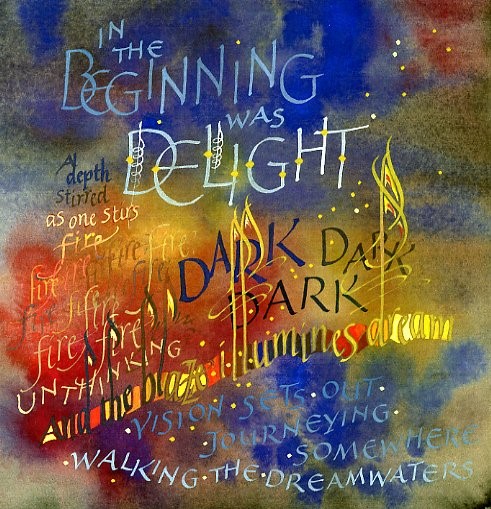
taylor-1

Text from Relearning the Alphabet by Denise Levertov

In the beginning was delight. A depth

stirred as one stirs fire unthinking.

Dark  dark  dark. And the blaze illumines dream.

Vision sets out

journeying somewhere,

walking the dreamwaters.

Designing the layout for words as an outward spiral may be appropriate for stories that unwind, such as: ‘Will you walk a little faster,’ said the whiting to a snail, ‘there’s a porpoise just behind us and he’s treading on my tail.’ Conversely, some stories wind up and can be written as an inward spiral, for example: ‘This is the cow with the crumpled horn that tossed the dog that worried the cat that killed the rat that lay in the house that Jack built.’ And as you will see, I have used this spiral technique and others in my combination of biblical passages.

taylor-2

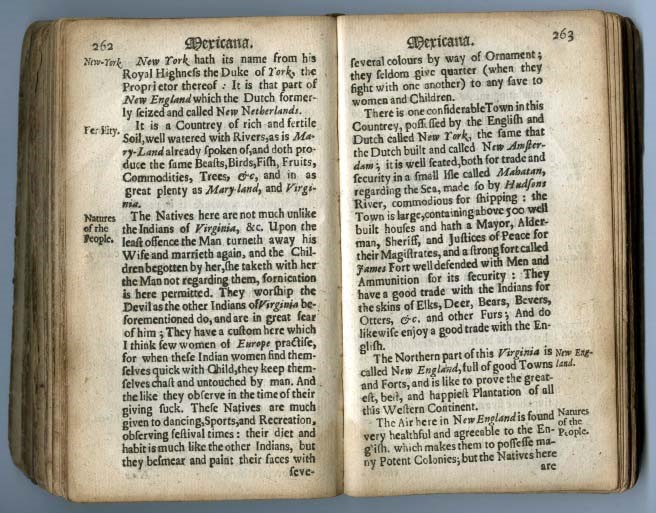
Not all children get hooked on reading and writing by initially listening to or reading stories. Some may arrive at the endpoint by predominantly first developing a love of words and of books as objects. When I stage a ‘Hands-on History of Books and Writing over 4000 Years’ experience in schools, even reluctant readers seem to enjoy handling a 2000 BC cuneiform clay sales docket, holding a hand-written vellum page from a 13th century medieval book without using white gloves, a page from one of the world’s first dictionaries printed in the 1480s, peeping inside Victorian picture books and deciphering a description of New York published in the 1679 that says that it has ‘…above 500 well-built houses’ amongst other treasures (and most then want to read more about early New York).


taylor-3-a


taylor-3


Some children may come to enjoy words and reading after calligraphic exploration. From playing with the word ‘rain’…taylor-4

…research could next find a poem that is fitting for similar presentation, with reading undertaken in the process enjoyed more than expected:

taylor-5

Poem: This Land by Ian Mudie

Designing calligraphic letter shapes can influence and add joy to creative writing, too. Letters with triangular serifs like webbed feet, for example, can give impetus to write about frogs, ducks or sea-gulls.

Verse by Peter Taylor, illustration by Anil Tortop

Verse by Peter Taylor, illustration by Anil Tortop

Sea fever, by John Masefield

Sea fever, by John Masefield

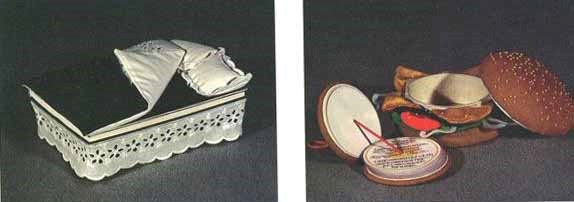
We can arouse young children’s interest in books with colour and quirkiness. But what sort of books are teens excited by? What kinds of bindings and book structures do they explore? I taught ‘Book Cover Design’ workshops to children aged 7 to 17 at the Queensland State Library. Participants used pens, scissors, paste and coloured and decorative papers to produce dust-jackets for Reference books of their choice (that were later re-shelved in their new covers). The children created the most eye-catching bold designs, but I wonder what they would have produced if they had been offered a wider range of materials and allowed more time, especially to read the books thoroughly. Would they have created a quilt cover for a book of poems titled On Going to Bed or placed hamburger recipes in a container shaped and covered to resemble a Big Mac?

taylor-8

Would they have modelled or sculpted mountain ranges to sit on top of the pages of Lord of the Rings, as famed designer-bookbinder Philip Smith has done?

taylor-10

Or designed a ‘Book Stack’, as Mike Stilkey does?

taylor-11

Maybe the children would have produced something even more original.

How many books do teens smell? Are they encouraged to write, design and bind their own books?

Is it possible that first creating a book with a special structure can provide the stimulus for writing a story to fit inside it? Or will a story provide ideas for a unique and satisfying way to display the text?

taylor-12


taylor-13


I hope children of all ages (and adults) are encouraged to explore the totality of the world of words, of language, writing, calligraphy, exciting layout designs and books of every form and structure until these become a rich, integral and important part of their lives. Sustenance for their creativity and creative thought. Let us give them experiences to savour and help them to respond with joy in their own way …to the extent that they want to bungee-jump into, read and devour our offerings of all genres with relish.

Peter Taylor’s first book was published in 1987 and he writes wacky verses, fiction and non-fiction for all ages. His picture book, ‘Once a Creepy Crocodile’ illustrated by Nina Rycroft and pub. The Five Mile Press was shortlisted for the 2015 Book of the Year award by Speech Pathology Australia. Peter is also an internationally respected calligrapher and artist’s book constructor, has been the Queensland Newsletter Editor for the Children’s Book Council of Australia, Co-ordinator of SCBWI Queensland and judge of the Dorothy Shaw Writing Competition for the deaf. He delights in sharing his extensive historical book and document collection and encouraging children and adults to love books, read, write and be creative. Peter offers workshops, talks and performances to libraries, schools and festivals. 


www.writing-for-children.com

http://brisbaneillustrators.com/peter-taylor.html

www.ptcalligraphy.com


A unique book project: an interview with romance writer Jan O’Hara

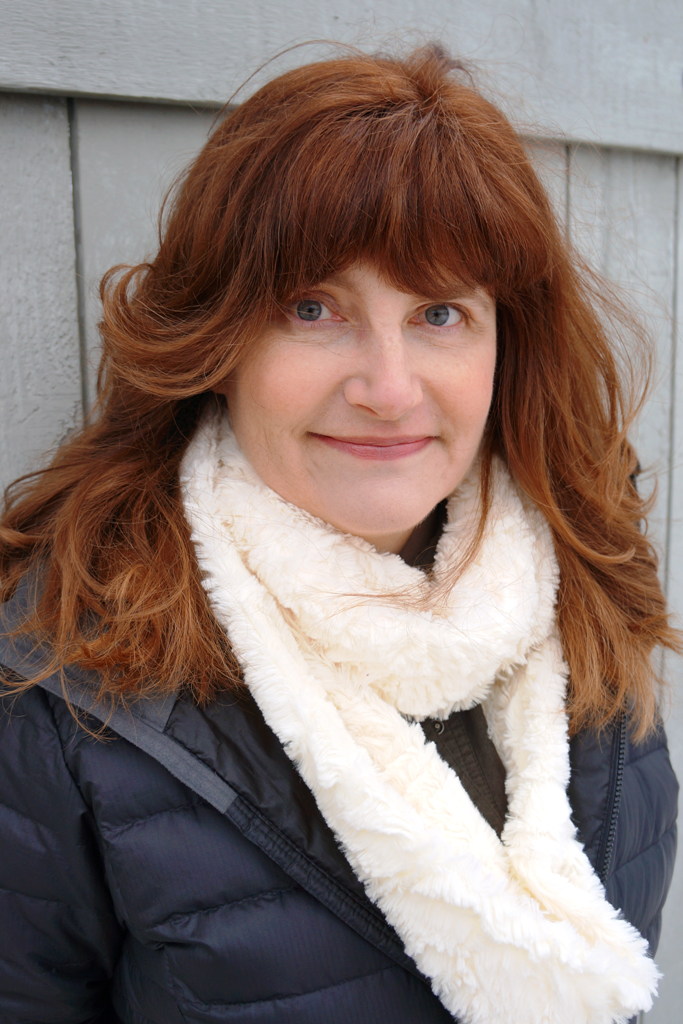
jan-ohara-writers-digestOnce a family doctor who prided herself on providing her patients with birth-to-death healthcare, Canadian writer Jan O’Hara has left medicine behind and now spends her days torturing people on paper. She writes for the popular blog, Writer Unboxed and lives in Alberta, Canada with her husband and two children.

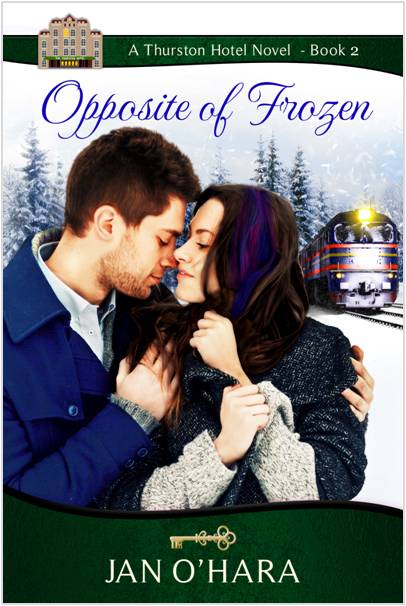
And today I’m interviewing her about her first novel, Opposite of Frozen, which has just been released and which is part of a unique and most intriguing series, the Thurston Hotel Books.

First of all, Jan, congratulations on the release of your novel, Opposite of Frozen! It’s the second in a unique, multi-author series. Can you tell us about that? How did it come about? And how did it develop?

Thank you for having me, Sophie. I’m honored.

My local chapter of the Romance Writers of America (https://www.calgaryrwa.com/) has a reputation for facilitating independent publishing and hybrid careers within its membership. In December of 2015, word went out that our treasurer, Brenda Sinclair, was looking to launch a group project, for which she had a very clear vision. I was interested because Brenda had participated in a similar project before, and had internalized many of the lessons learned during that time. Also, romance is a digital-friendly genre, and I was leaning toward independent publishing.

Accordingly, in a somewhat cloak-and-daggerish moment, the interested parties met secretly in a Calgary restaurant. Brenda loosely outlined the series idea: 12 standalone contemporary romances set in a fictitious town in the Alberta Rockies, revolving around the Thurston Hotel, its employees and long-term residents. Each author would take ownership of one month in the town’s life to tell their story. In addition to writing our own story arc, each book would tell a portion of a long-running series romance.

Brenda had already begun construction of a series bible—which she maintained throughout the entirety of the project. She had thought through the project deadlines, the cover artist, and the series editor. Her level of professionalism was vastly reassuring to this writer!

When all was said and done, 11 authors signed on, and Brenda, herself, agreed to write the first and last installments in the series. coverfinalmedwithgreyoof

Writing as part of such a unique series must have presented its own unique challenges! Tell us about how you constructed your story. And did the writing of your novel differ to other fictions you’ve written?

Though I have been writing a long time, I have never completed a piece of long-form fiction to what I consider publishable standards. As you might imagine, I was nervous about my abilities to do so while adapting my story to the requirements of 10 other writers. So from the first, I looked for a way to keep my story somewhat self-contained within the Thurston world. I wanted to limit the number of moving parts.

That was the impetus for having my characters arrive on a tour bus and depart from Harmony within the month I claimed. Also, for claiming an early month in the year, when I’d have to adapt to the fewest changes possible due to other author’s requirements. (In my case, I volunteered for February.)

Happily, those constraints ended up creating some of the story elements of which I’m most proud. For example, I needed a tour group to populate the bus, and who would most logically have the time for a prolonged multinational tour, but seniors? (I so enjoyed writing my seniors!) What unexpected event could complicate their February trip, but a hypothermic stowaway? What elements about the seniors’ lives could bring my co-protagonists together, and facilitate their healing? Etc.

I must say, it was thrilling and confidence-inducing to see how my brain could come up with story ideas to match the project’s requirements.

Also, I was dealing with time constraints and a gargantuan case of the Impostor Syndrome. Without a commitment to the other writers in the group, I’m not sure I’d have pushed through to completion. I do know OoF would not exist in its present form if not for the project’s boundaries and invitations.

The books are all set in the same town, although around different stories and characters. How did you all plan the background of the books–and will that evolve over time, or will you all keep to the same basic framework?

Between our first and second in-person meeting, each author wrote a story synopsis and shared it with the group, via private Facebook page. We also found avatars for our characters and constructed one-sheets, when applicable, so that other authors could use our characters in cameo appearances without much difficulty.

For more intensive cross-pollination, when using another writer’s characters, we sent relevant passages to one another, to ensure we weren’t violating a character’s personality or mannerisms. The same held true for micro-environments. For example, I borrowed Ellen Jorgy’ creation—a bar known as the Wobbly Dog—for several scenes in my book.

We made a good many decisions together, in-person, like the décor of the hotel, the final design of the cover art, the name of the town. Other decisions were made individually, and then coordinated with the group via Facebook.

For instance, I needed a store that sold computers, so I constructed the Tech and Tock, and invented its proprietors. One of the series continuity editors, Suzanne Stengl, then added it to the map of the town, which she maintained throughout the project.

I should mention that various authors contributed their skillset to make the project work on the whole. Win Day, for instance, used her technical background to construct the Thurston Hotel Books website. Sheila Seabrook helped with formatting issues. Everyone helped with title selection.

Without their direction, Opposite of Frozen would have been called Hypothermia and the Hottie. (A title which still makes me laugh, and would have been great for SEO, but doesn’t capture the spirit of the novel.)

Do authors in the group have input into each other other’s stories? Who edits the novels?

Beyond the planning I’ve mentioned, the group also benefited from the hard work of two continuity editors: Brenda Sinclair, who wore about five hats during this project, and Suzanne Stengl. They both read my book for continuity errors. Twice.

Then we all used the same editor, Ted Williams, for a final appraisal. He used the series bible for guidance and reportedly enjoyed seeing how Harmony came to life within different stories, told by different voices.

Tell us about the publication journey for the series. Will the books be available internationally?

We intend to put out a print version of the series in the near future. At present, the books are available exclusively in ebook via Amazon and the Kindle Lending Library, wherever Amazon exists.

The first installment was released September 29, 2016, and will be followed by another novel on each of the following 11 consecutive Thursdays. (We are using the hashtag #ThurstonThursday on Twitter and Facebook, if you’d like to follow along.)


******************

More about Opposite of Frozen:

Shepherd fifty-one seniors on a multinational bus tour, including a ninety-five-year-old with a lethal cane?

To preserve his sick brother’s travel business, retired pro athlete, Oliver Pike, would do far more. But then weather intervenes, forcing the tour bus off-route into the small mountain town of Harmony, Alberta.

In the hold of the bus, amid the walkers and luggage, lies a half-frozen stowaway. Page Maddux is commitment-averse and obviously lacking in common sense. Once revived, she’s also the person Oliver must depend upon to help him keep the “oldsters,” as she calls them, out of harm’s way.

When their week together is over, will Harmony recovery from the group’s escapades? And what of Oliver’s heart?

Jan’s website: http://janohara.net/

Facebook: http://facebook.com/janoharabooks/

Twitter: http://twitter.com/jan_ohara/

For more on the series itself: http://thurstonhotelbooks.com/