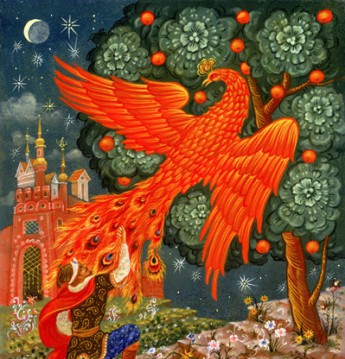
 Over at Read Me A Story Ink, the wonderful site run by booklover, bookseller and reader Robert Topp, there’s a whole searchable treasure-house of short stories for children, each carefully chosen for their quality and readability. The stories are available as printable PDFs, and some also as audio files(all with the full consent of the authors, of course). And I’m very happy to say several of my stories are available there, including a couple which are available both as PDFs and audios featuring Bob’s warm and lively readings. The latest of these is The Neptune Clock, one of my favourite stories, first published quite some years ago in ‘Tales of the Deep’ edited by Paul Collins and Meredith Costain, and since published another couple of times. And now you can listen to it at Read Me A Story Ink! Catch it here.
An interview with author Marina Osipova
 Today, I’m delighted to bring you an interview with award-winning historical fiction author Marina Osipova, whose first novel,The Cruel Romance, I read last year and loved. With its elegant writing, deeply evocative setting in wartime Russia, richly-drawn characters and tragic yet affirming story, it is an accomplished and memorable work. Marina has just released her second novel, How Dare the Birds Sing, and to celebrate I asked her a few questions about the book and her writing in general.
First of all, Marina, congratulations on the publication of How Dare the Birds Sing! It looks fantastic–I’ve just bought a copy and can’t wait to read it. Can you tell us about the novel and what inspired it?
Thank you, Sophie, for buying my book and for your readiness to allocate time in your extremely tight schedule to read it. I hope you’ll find the story interesting.
What inspired me? A difficult question for me to answer. It just happened. I was not yet done with The Cruel Romance when the story of Lyuba started germinating in my mind, or more accurately, in my heart. Unfortunately (you have to see me smile), it happens again and again. How Dare the Birds Sing was not published yet and already three other stories began pressuring me.
What was the road to publication like for this book? And how have readers responded to it so far?
The road to publication was not easy. First, and it was a month of thrilled anticipation, two editors from the Big Five requested The Cruel Romance and the ms of How Dare the Birds Sing for consideration. It was not out of the blue: one of my friends, an amazing author, recommended my work to them. Though they praised my writing and the stories . . . you can anticipate what their verdict was. Then, a small press publishing company from the UK expressed interest in How Dare the Birds Sing, but we did not agree on the terms. After spending tons of time researching possible publishers for my book, I chose Draft2Digital. Unfortunately, they help with e-publishing only. So, the process is not over for me. Despite that, I’m glad I decided to self-publish, which offers me more flexibility throughout the process. I like having control over all aspects of my career.
I am very pleased with the readers’ response to my newly published book. And the reviews are great. I’m humbled by praises from readers like: “A riveting WWII novel,” “A truly fascinating tale,” “The writing is excellent,” “Hard to put down.”
Your earlier novel, the wonderful, bold, memorable and tragic novel, The Cruel Romance, is also set in wartime and about the dreadful effects of war and occupation on people’s lives and potential–in all kinds of ways, including the possibility–or impossibility–of love in such circumstances. What draws you to tell these stories?
I hear this question time and again. It is known that wars are the most dramatic time in the history of humankind and WWII was the most brutal of them, full of universal and single-person drama. That’s what readers expect from fiction books—drama, right? Why WWII? I think, as a Russian, I inherited the horror and memory of that time. It’s in my blood. Besides, in the Soviet Union, preservation of the memory about the heroism of its people was a part of the broad propaganda. I, though, would call it nurturing patriotism and am thankful that the official policy of the state was to instill in the youth the feeling of respect and appreciation for what the prior generation sacrificed to preserve our life as an independent nation.
There is another reason for me to write about the Great Patriotic War: Thanks to The Nightingale, Lilac Girls, The Indigo Rebels, and other brilliant books, the stories of European women in their fight against the occupation of their countries has become broadly familiar. I believe ordinary Russian women who had to endure four years of Nazi invasion deserve the same.
Telling stories of unsung heroines is my humble tribute to the women who worked on the home front producing armaments, like Serafima from The Cruel Romance, or who were fighters on the front or partisans, like my heroine Lyuba from How Dare the Birds Sing who, after being captured by  Germans, was subjected to slavery in the Nazi labor camp as hundreds of thousands of others were.
As a writer of Russian origin, you are no doubt influenced by the extraordinary literary heritage of your native country—how would you characterise that influence in your own work?
The influence was and is enormous. Starting with Alexandr Pushkin, Leo Tolstoy, and Fyodor Dostoevsky, Aleksandr Ostrovsky and Ivan Turgenev, Anton Chekhov and Maxim Gorki and the writers who wrote about the Great Patriotic War, like Aleksandr Solzhenitsyn, Vasily Grossman, Lev Kopelev, Konstantin Simonov, Yuri Bondarev, to name a few, all of whom shaped (and continue shaping) me as a writer with their brilliant ability to look beyond the time and human psyche.
You have also lived around the world, both as you were growing up, and as an adult–how do you feel that cosmopolitan experience has influenced your work?
This is another highly interesting question of yours, Sophie. Living abroad gave me not only the factual knowledge and experience of different cultures and political systems but also the feeling of how much unites us—the same everyday problems, the same sources of joy and love. But most importantly what influences my work is that I can feel for both protagonists and antagonists in my stories. As one reviewer of The Cruel Romance said, “There are no good liberators or bad invaders—there are good and bad people.” This is my credo as a writer—no prejudices.
Did you always want to be a writer, even as a child? And how did you get started on your writing career?
To be a writer? No, as a child I wanted to be a doctor, maybe because my dolls didn’t object to my sticking them with needles; then a fisherman (that is a fisherwoman)—I lived with my parents on the Volga River then—later, an operetta singer-dancer (without having any ear for music at all although I endured three years in a music school); then my small child’s interest in learning German and the love of this language overwhelmed all my other numerous interests and I decided my future profession must be related to anything that would involve the German language. And it did until I immigrated to the United States in 2001. That’s when I started writing (first, some flash fiction). My English language teacher, who I fed a story to every week, was impressed and suggested I “must publish” them. I published my first book in 2016.
You have won many awards for your writing–can you tell us more about them?
Yes, to my delight, my first submissions to literary contests, most of them to Romance Writers of America, were well received. Every one of them, big or small, are dear to my author’s heart. The list of them can be found on my website, www.marina-osipova.com.
But I’d like to tell you briefly about one in particular. It was my very first manuscript, which title had undergone several transformations from Margarita and her Master to Ark of Hypocrites to Garden of Weeds. I sent it to Pacific Northwest Writers Association literary contest and, surprisingly, happened to find myself among the finalists in the mainstream category. At the conference in Seattle, in the huge hall during the announcement of the winners, the chair asked the finalist to rise to their feet one category after another. Mine was the very last. Eight finalists stood up. The chair congratulated us and offered us our seats again but immediately changed her mind. “Wait, get up again.” We stood up. “All men and only one woman among the finalists!” I remember she sounded incredulous. When my category came up, I held my breath. Then, “And the first-place award goes to Marina Osipova.” Later, another finalist told me I exclaimed loudly.
What’s coming next? What new projects are you working on?
There are so many stories I want to tell! After my WIP, which is the sequel to How Dare the Birds Sing with the working title, I’ve Got to Know Who I Am, there will be a third book, and I already have a clear idea about another story outside of the series.
Thank you, Sophie, for inviting me to participate in your interview. A big honor for me. I can’t help but express my admiration of you as a brilliant writer and a wonderful person who helps other writers achieve their goal—to be a good author. Congratulations on your astounding and well-deserved achievement, the Order of Australia for services to literature.
My latest poem in The School Magazine
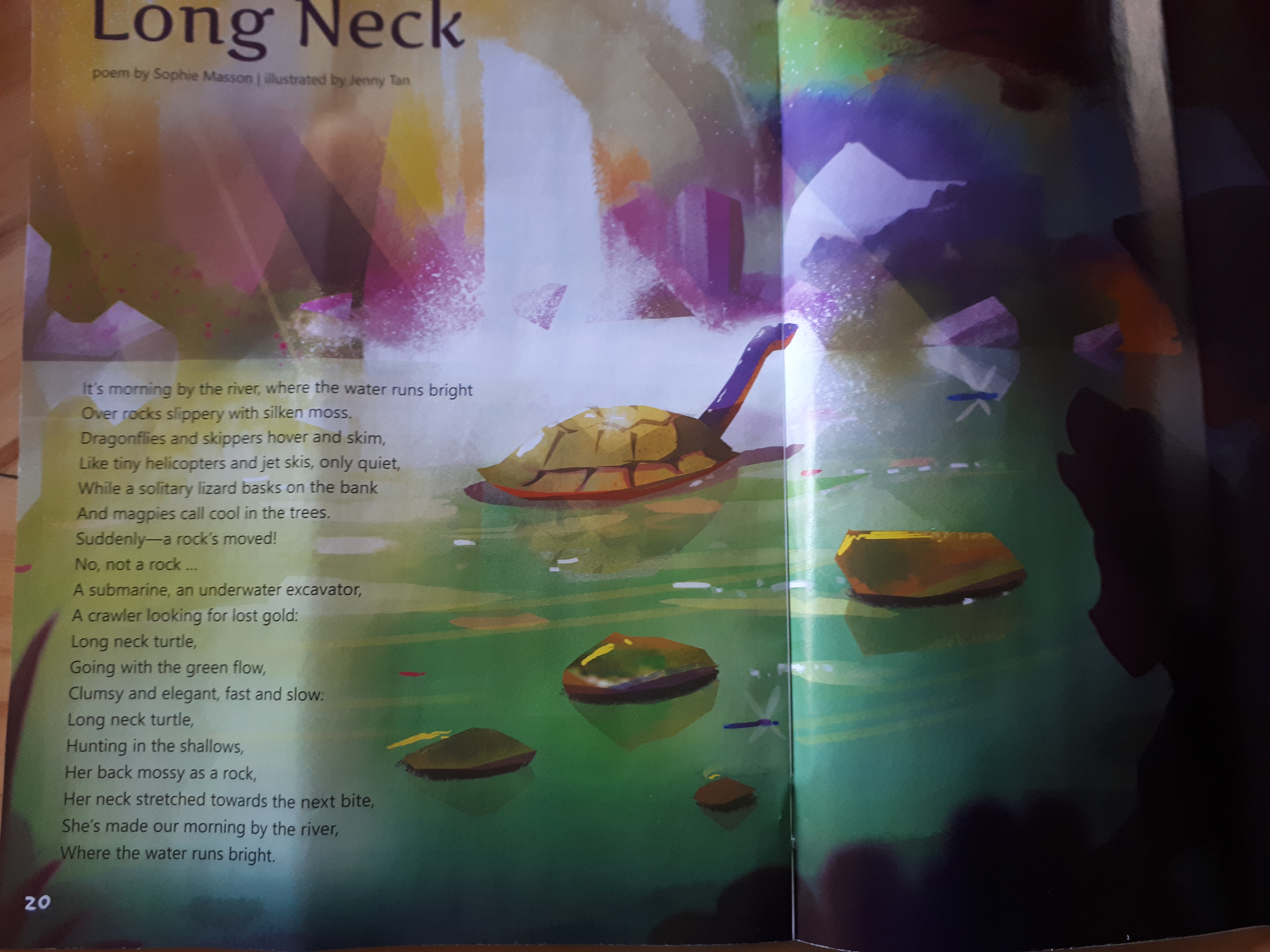
A lovely start to the publication year for me, with my poem for children, Long Neck, published in the first issue of ‘Orbit’ , part of the wonderful School Magazine, with a beautiful, atmospheric illustration by Jenny Tan.
Here, below, is the poem–hope you enjoy! And by the way, if you are interested in fabulous writing and illustration for children, and would like to support one of Australia’s great and longlasting literary treasures, consider subscribing to The School Magazine–you don’t have to have anything to do with schools to do so.
Lovely article in Le Courier Australien!
Really nice this week to talk to an excellent journalist from the French-Australian newspaper, Le Courier Australien(which, originally founded in 1892, is by the way the oldest foreign-language newspaper in Australia, though it is solely online these days, not in print format any more). Valentine Sabouraud, the journalist who did the interview, is herself an author, with her lively guidebook to Melbourne through its people published within an acclaimed series of French travel guides.
If you read French, check it out here.
Cover reveal for There’s a Tiger out There!
 I am thrilled to be able to reveal today the gorgeous cover of my picture book with the fabulous illustrator Ruth Waters, There’s a Tiger out There, to be published by Little Hare in July. The fantastic design is by Hannah Janzen.
The story, which is set around a pair of siblings–an older sister, a younger brother–and a tiger, the power of play, the imagination, and of love–first came to me in a dream, and it’s been a dream too to see my text morph as I worked on it with the wonderful editor Alyson O’Brien, and then so exciting to see it take shape and flesh and colour and such glorious vibrancy in the wonderful details of the visual narrative created by Ruth. Look forward so much to seeing it out there!
Here’s the blurb:
There’s a tiger out there/and her paws are so big
There’s a tiger out there/and her teeth are so sharp
There’s a tiger out there/and she’s about to pounce.
Run!
An amazing honour!
(This post is for the readers of my blog who haven’t seen this on social media yet. Apologies if you have already seen it)
Amazing news! I have been awarded an AM (General Division) in the Order of Australia, announced in the 2019 Australia Day Honours List. My citation reads: ‘For significant service to literature as an author and publisher, and through roles with literary organisations’. I couldn’t be more delighted, honoured, and grateful. Thank you so much to the lovely people who nominated me, to my dear family and friends who have always encouraged and supported me, to the many great people I’ve worked with in the literary and publishing communities–and to the wonderful country which has given me so much since I first set foot here as a wide-eyed non-English-speaking kid many years ago.
You can read more about it here.
Something different: cold soup recipes to fuel writing in hot weather :-)
Today I thought I’d do something really different and share a couple of recipes for cold soup which I’ve been making quite a bit in the recent heatwave we’ve been having and which have helped to fuel my writing! They’re made quickly using the pressure cooker(thus not heating up the house too much) and they are so refreshing, nutritious and delicious well-chilled, either for a main for lunch or for a dinner entree.
 The first one is of course gazpacho, probably my favourite cold soup and one my mother used to make to perfection. This is my version, super quick and easy, with a Basque touch to it in honour of my ancestry, and which never seems to fail 🙂 Make it the day before to eat the following day.
Ingredients for 2 or 4(if for 2, it gives two helpings; if for 4, 1 helping each): Three largeish ripe tomatoes or seven small ones; 1 good-sized capiscum, either green or red(the green one adds a subtle kick, the red a mild sweetness); 1 large cucumber or 2 smaller ones; 5 garlic cloves; one medium sized onion; handful basil, parsley, and garlic chives(or other mix of herbs as you like–though not rosemary as overwhelms other things too much); olive oil; salt, pepper, one and a half tablespoons vinegar, one tablespoon brown sugar, teaspoon piment d’Espelette(beautiful fruity and slightly spicy Basque pepper powder which you can get from specialist online stores like The Essential Ingredient–if unavailable you can use paprika instead, with a tiny bit of chilli added); and finally, tomato juice.
Chop all ingredients. In pressure cooker, heat some olive oil. Add all the ingredients except the tomato juice, stir for about a minute or so. Add the tomato juice so that it covers everything(but no more than that) and close the pressure cooker. Cook for 15 minutes at full pressure, then let cool till you can open the cooker(or run cold water over it to hasten the process). Then either blend the contents of the cooker, or crush with a potato masher and put through a sieve, crushing well to get every last bit of goodness out! Let cool, then put in fridge overnight.
Serve decorated with chopped basil and/or slices of cucumber.
 In contrast to the deep red of gazpacho, the second cold soup recipe I want to share is for a green soup. This versatile soup can have many variations, depending on the ingredients, and you can experiment as you wish. Here are a couple of variations I’ve tried.
Version 1: Ingredients: 1 large cucumber, 1 large potato, garlic, onions, handful herbs-I used mint, thyme and tarragon—salt, pepper, stock(vegetable or chicken, depending on your preference), butter or sunflower oil.
Chop all ingredients. Heat butter/oil in pressure cooker, add all ingredients except stock, stir. After a couple of minutes, add stock. Close up pressure cooker, cook for 15 mins, and then do the same as for gazpacho, including leaving in fridge overnight. Serve with a dab of sour cream and chopped mint.
Version 2: Ingredients: 1 large cucumber, 3 or 4 zucchini (green or yellow), 1 stick cucumber, salt, pepper, garlic, onions, chopped herbs(a mix of of three or four leaves of sorrel, plus some thyme, is good, or your preferred mix), stock, butter or sunflower oil.
To prepare and cook, proceed exactly as for the other soups!
Bon appétit–and happy writing!
New site for my writing and publishing presentations
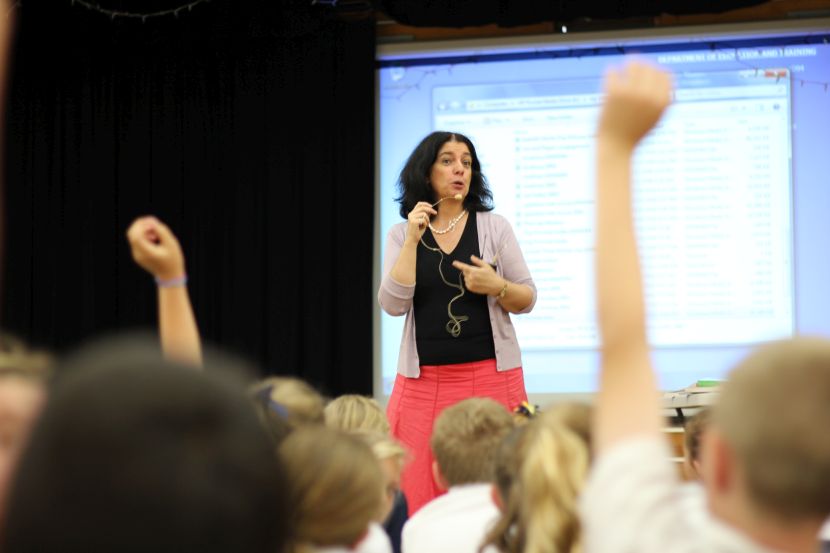 Some exciting news: I have a brand-new site, Sophie Masson Presents, focussing on the presentations I can offer to schools, libraries, writers’ centres, writers’ groups, teachers’ and librarians’ associations, and festivals and conferences, amongst others. These range from author talks to workshops on writing and publishing, aimed at different ages and interests. The site features pages on each type of presentation, with sample themes and topics listed, but presentations can also be tailored for individual requirements.
You can book directly through the site or through booking agents I also work with. There’s also a calendar of already-booked events to help with planning schedules.
A favourite Christmas memory…
Last year, at this festive time, I republished a piece I’d written in English and French for a magazine, about my childhood Christmasses. This year, as a favourite Christmas memory, I thought I’d offer instead a magical Christmas story, The Dolls’ First Christmas, which was published in the Random House Australia anthology, Stories for Seven Year Olds(, edited by Linsay Knight, 2014). It was inspired by my very talented friend Fiona McDonald giving me a beautiful handmade doll she’d created–and who I immediately named Esmeralda, after one of my favourite characters in a favourite childhood book of mine, Le Capitaine Fracasse, by Theophile Gautier..
Hope you enjoy–and the very best of wishes to you all for the festive season!
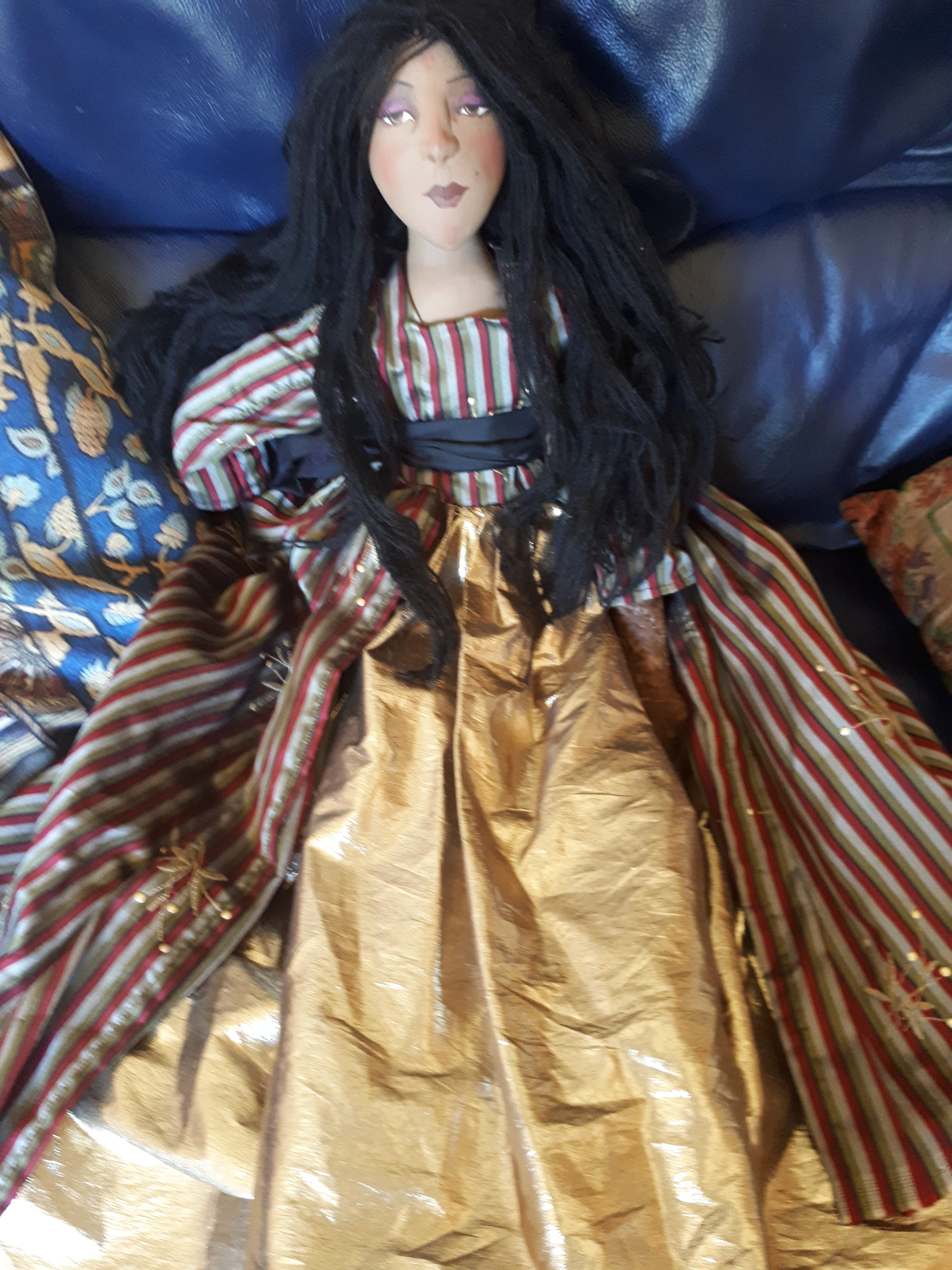
The original Esmeralda
The Dolls’ First Christmas
by Sophie Masson
Christmas Eve in the toyshop. In Miss Jeffries’ toy-shop, the last delivery had just arrived. Teddy-bears and tin toys. Puppets and pull-alongs. Rocking-horses and doll’s houses. And Esmeralda.
She arrived in an ordinary box, like the other dolls:
Sarah and
Donna and
Laura and
Clara and
Gloria.
Gloria, haughty queen of the dolls in Miss Jeffries’ toy shop, sat on her glittering throne in the window. Everyone gasped when they saw Gloria and said how beautiful she was. But no-one had bought her yet. She was too special. She cost too much.
Esmeralda was beautiful too, but in a different way. Her hair wasn’t golden, like Gloria’s, but black, in great long curls. Her skin wasn’t peaches and cream, like Gloria’s, but honey and tea. Her eyes weren’t sky blue, but nut-brown. Her stripy dress was splendid—but she did not have elegant satin slippers, like Gloria. Her feet were bare.
Miss Jeffries smiled as she set Esmeralda up on green velvet. ‘There, now, ‘ she said. ‘We’ll have two Queens. A snow queen. And a sun queen. You’ll be friends.’
But can two queens really be friends? Gloria didn’t think so. Esmeralda didn’t think so. Each thought she was better. Each sat in her splendour and looked haughtily away and thought she would be the first to go.
It was a long busy day. Sarah and Clara and Laura and Donna left and two boy dolls and six tin toys and eight teddy-bears and three puppets and two fairy dolls and a mermaid doll and two clowns and four baby dolls, plus a brace of Barbies. But not Gloria. And not Esmeralda, either.
At last, and very late, Miss Jeffries was about to close up. A man rushed in, shouting, ‘I work for Mr Darling, the millionaire. He sent me to buy a Christmas gift for his daughter Cherie. Her mother’s dead and her father has no time. I need your best doll. Your very best doll.’
‘There are two,’ said Miss Jeffries, calmly. ‘Esmeralda, and Gloria. Which one would Cherie like best? Sun queen or snow queen?’
The man stared. ‘Oh! I have no idea. But I know she’ll have a tantrum if she doesn’t like what I choose. She’s always having tantrums. Blow it. I’ll take the two.’
‘Good choice,’ beamed Miss Jeffries, ‘they belong together, no question.’ She put them in their boxes and tied a pretty ribbon around them and waved a cheerful goodbye as the man hurried out, muttering to himself, ‘After all, if that brat doesn’t like one of them, she can always give it to someone else. Or throw it away. They’re only dolls, after all.’
Poor Gloria and Esmeralda! They had been made with such care. Their dresses were hand-stitched, their hair hand-knotted, their faces hand-painted. They’d been made to be loved. And now here was someone saying they might just be thrown away, like some cheap, broken factory toy.
Dolls may not talk in words and their red satin hearts may not beat but they have other ways of communicating. Gloria and Esmeralda sensed each other’s fear. At first, each thought it didn’t matter. Whichever doll Cherie liked best would be safe. But then– what if Cherie got sick of her? She might be worse off, then. While the other one might have gone to a good home. To a little girl who loved her.
Most dolls are airheads, the space under their pretty china or plastic skulls quite hollow. But Gloria and Esmeralda had cloth faces, pulled tightly over wads of stuffing. In the middle of the stuffing, each had a long, bright pin, left in by mistake. So their thoughts were sharp and they each thought the same thing at the same moment. They were queens. Snow queen, sun queen. They might not be friends, but sometimes queens put rivalry aside for the good of all. They would do something together, not apart. But how?
At the Darling mansion, the man gave the boxes to the housekeeper. She took them to a room where a tall, twinkling Christmas tree stood, with piles of presents under it. The housekeeper shook her head, sadly. ‘More things going to waste on that spoilt child,’ she said.
The dolls lay under the tree for hours. No clever ideas came to them. Soon, they knew, it would be too late.
And then, just after midnight, there was a clatter of hooves on the roof above. Moments later a deep voice grumbled, ‘Why do I come? She has so much already!’
Now all toys, no matter how new, know what happens Christmas night. So Esmeralda and Gloria knew the grumbler wasn’t Mr Darling, or any of his staff. It was that jolly visitor, come from a magical world, whose job is to give every child in the world a present. The humans call him Santa Claus.
The dolls’ red satin hearts swelled and the sharp pin in their heads glittered as they tried to struggle out and beg for his help. They only made a tiny rustle, but Santa Claus’ sharp ears pricked up. And his kind eyes, that see into the heart of every child everywhere, saw right into those two red satin hearts. With a little chuckle, he opened the boxes. He gazed in at Esmeralda and Gloria. ‘A Christmas gift for you, little ones?’ he said. He touched each of them, very gently. A warm, golden stream of light seemed to flow from his fingers, into the dolls’ painted eyes. ‘Very well, then. I give you the power of love. And a very merry Christmas to you both.’
And with that, he was gone. The dolls heard the clatter of his reindeer’s hooves on the roof, then nothing. They waited in the warm piney darkness, filled with hope now.
Soon, it was morning. The dolls heard a man’s voice, trying to be jolly. ‘Well, Cherie, aren’t you going to open your lovely presents? Start with those two boxes.’
‘Yes, Daddy.’ A thin, flat, voice. Gloria and Esmeralda were afraid again. This child would not love them, no matter what Santa Claus said. All was lost.
Next thing, the wrapping-paper was roughly ripped, the lids of the boxes pulled off, so quickly that the dolls flipped helplessly out, onto their faces.
Mr Darling cried, ‘Really, Cherie, be careful! Look how beautiful they are! ‘
‘I don’t like dolls,’ shouted Cherie. ‘They stare and stare and they’re stupid! Stupid!’
‘Oh, nothing’s good enough for you, I’m tired of it, tired, do you hear!’ yelled her father. And he went out, slamming the door.
Cherie glared at the dolls. She picked them up, roughly. Gloria and Esmeralda thought their last hour had come. They would be torn limb from limb, their bodies shredded, their heads wrenched off. But as they helplessly looked up they suddenly saw in the child’s eyes, under the anger, a sadness that made their red satin hearts clench and their sharp minds ache. In that instant, something warm and golden and loving flowed from the dolls to the child, seeping into Cherie’s unhappy, lonely eyes.
She stared at them. Her lip trembled. She said, faintly, ‘I don’t like dolls..’ Shyly, she touched Esmeralda’s hair, then Gloria’s. She stroked their clothes. She held a doll in the crook of each arm. She whispered, ‘Most dolls are stupid,’ but then added, ‘not you,’ softly.
That is how Mr Darling found them when he came back, ashamed of shouting at his daughter on Christmas Day, wishing that he’d chosen her present himself, telling himself that he must try and understand, even if she made it hard.
But she smiled at him and said, ‘Daddy, do you know what their names are? Gloria and Esmeralda. I think they must be good friends, don’t you? Oh, Daddy, I love them already.’
And as Mr Darling sat happily with his daughter, Gloria and Esmeralda lay happily in her arms. Can two queens really be good friends? Why not? Anything was possible, on this beautiful Christmas morning.

My paper on the liminal world in young adult afterlife fiction
For those of you who are interested, my paper on the settings of young adult afterlife fiction, No Traveller Returns: The Liminal World as Ordeal and Quest in Contemporary Young Adult Afterlife Fiction, which is based in part on one of the chapters in my exegesis, is now accessible at the journal Papers, where it was published. You can read it here.
 Feathers of the Firebird