I am absolutely delighted to reveal the gorgeous cover of my upcoming audiobook, A Hundred Words for Butterfly, which will be published by Spineless Wonders Audio in just a couple of weeks: September 13. Isn’t it beautiful!
The cover is designed by the wonderful Bettina Kaiser, and later this week I’ll be publishing a fascinating interview with her about how she went about creating it. Today is all about celebrating an important milestone in the journey of my book: and I’m so thrilled about just how strikingly Bettina has captured the essence of the feeling and atmosphere of A Hundred Words for Butterfly!
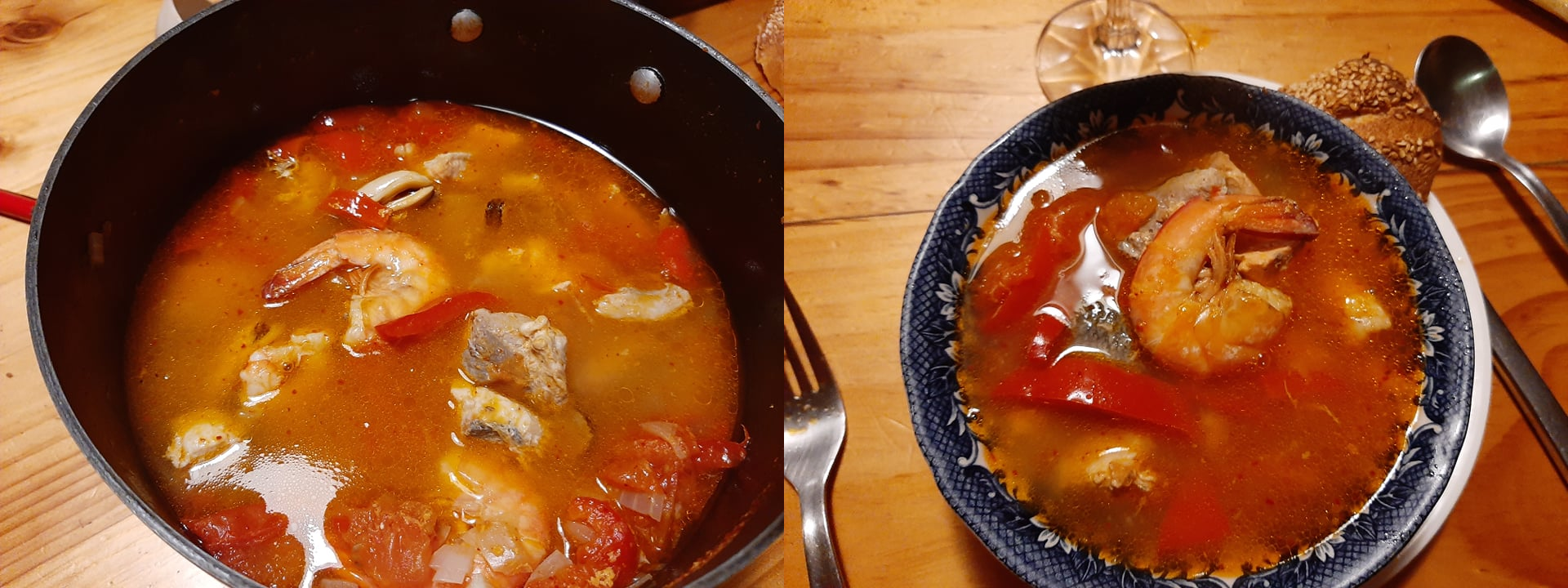
My Basque cookalong Live happened last night over Spineless Wonders Facebook and Zoom, and it was a lot of fun! I introduced people to the Basque country, or at least our family’s part of it, told stories–about my upcoming book, A Hundred Words for Butterfly, about my family and even told a Basque fairy tale!–and of course, I also cooked! The cookalong was built around creating the delicious Basque fish soup known as ‘ttoro’ (pronounced ‘tioro’) which is both delicious and easy to make, and judging from people’s messages afterwards, with accompanying photos, it was indeed deemed both by those who joined in the cookalong!
I thought today I’d put up my recipe so anyone who missed the cookalong can still make it if they want.
Ttoro soup from St Jean de Luz
(Basque fish soup)
This gorgeous but easy-to-make fish soup originates from the fishing port of St Jean de Luz, in the French Basque country, but is popular all over the Basque coast. You can find it in restaurants and in homes—everyone has their own version. My mother, who came from Biarritz, had her own, and this recipe is inspired by her gorgeous creation. And like all ttoros, it features the ‘magic ingredient’ of the Basques: piment d’Espelette, which comes from the lovely hills farms around the picturesque small town of Espelette, 24 kms inland from Biarritz. This delicious red pepper powder has a unique flavour, both warmly spicy and piquantly sweet and fruity, which is the reason why this traditional Basque spice has its own AOP appellation in France (the peppers can only be grown in the area around Espelette). Its gorgeous colour also imparts a beautiful red to the soup. You can easily obtain it online: in Australia, order from the Culinary Club or France At Home. However, if you can’t get piment d’Espelette, use a god hot paprika(non-smoked). It won’ be quite the same, but it will still be pretty nice.
So for two people, you’ll need:
*Two tomatoes, chopped
*One red capsicum, chopped
*One medium onion, chopped
*Four cloves garlic, sliced
*Olive oil
*Salt
*Piment d’Espelette or paprika(as above)
*Two fillets of fish, cut into pieces(your choice of fish)
*Around 8-10 prawns, peeled and cooked
*A bit of any other seafood you fancy: eg mussels, squid, scallops, etc
(To make it really easy you can simply use a good marina mix)
*3-4 cups of pre-prepared seafood/fish stock (home-made with fish heads/prawn shells, quickly fried with olive oil, salt and piment d’Espelette, then covered with water and boiled for about 20 mins, left to stand till used, then strained. Or you can simply use fish/seafood stock cubes)
Method:
In a good-sized pan, fry the onions and garlic in olive oil till starting to soften. Add the tomatoes and capsicum, stir, add salt and half a teaspoon of piment d’Espelette or paprika, and leave to cook for about 5-6 mins with lid on. Then pour in the hot stock, and allow to cook at a simmer for a further 5-6 mins, to absorb the flavours. Then add the pieces of raw fish, and cook for 2-3 mins. Add the rest of the seafood, including the prawns. Cook for about another 2-3 mins, at a simmer. Sprinkle more piment d’Espelette in. Taste, add salt if necessary. Then take off stove, and serve with bread! The soup also keeps well overnight in the fridge—you can eat the delicious leftover soup, heated up, the next day!
My artist sister Camille Masson Talansier lives in the small town of Hasparren in the Basque country, 25 kms inland from Biarritz. In this charming video, made for the run-up to the release of my audio novel A Hundred Words for Butterfly, you get a glimpse of her life in this beautiful region, and the things that are important to her: art, food, family.
To check out more of Camille’s art, visit her Instagram page here, and website here.
On Friday August 27, at 7pm Australian Eastern Standard time, as part of the events around my upcoming audio novel, A Hundred Words for Butterfly, I’ll be doing a Basque cookalong, as a Facebook Live on Spineless Wonders’ page. During the cookalong, we’ll be creating a simple and delicious Basque fish soup, based on the version my mother used to make and which I grew up with. So that you can have everything ready before the day, I’ve made a video which explains all the ingredients to gather and prep to do before the cookalong.
To join the cookalong, register your interest here or simply join on the day.
At 5.30 pm (Australian Eastern Standard Time) on my You Tube channel, I’m premiering My Basque Country, a little video clip I made, which is about what the Basque country means to me. It’s linked to my audio novel, A Hundred Words for Butterfly (coming out in September with Spineless Wonders Audio ) and gives you a bit of an insight into the setting of the story and my own strong connections to it.
It’s going to premiere at 5.30, and isn’t livestreamed, but I’ll be online at that time to answer questions and interact in the comments. All invited! Below is the link for the watch party. Hope you can join us!
And if you can’t–well the video will be available to watch on my channel any time after 5.30 pm today.
I am absolutely delighted to announce that today Spineless Wonders Audio, who are publishing my audio novel A Hundred Words for Butterfly(which will be out on September 13)are launching a fabulous writing competition linked to the novel. Called #100words4butterfly, it invites people to create ‘100 of your best words’, whether that be micro stories, poems, songs, etc, around four intriguing writing prompts: Pilgrimage; Fork in the Road; Blast from the Past; and Confession. (All the prompts gesture back to themes/motifs in the novel). And there must also be a reference to food and drink in each piece, as that too is a feature of the novel 🙂
The comp is free to enter (via Submittable), and the prizewinners in each category will each win a copy of the audio book of A Hundred Words for Butterfly, while both winners and runners-up will have their work published in a special ebook created for the occasion, as well as being invited to read their work at a fantastic online event celebrating the release of the novel.
Head over to the competition page here for all details. Have fun–and good luck!
I’m really looking forward to the 2021 conference of the Historical Novel Society of Australasia, which this year is fully online, and happening over two weekends, with bootcamps, manuscript assessments and masterclasses happening on the weekend of 16/17 October, and the main conference program on the weekend of 23 and 24 October. This is the first time the conference has been run online–it was a decision HNSA wisely made early this year, given the uncertainty surrounding the running of events.
HNSA runs absolutely wonderful conferences, and over the years I’ve had the privilege several times of presenting at these biennial events. This year is no exception, and I’m going to be appearing on both weekends, as part of an absolutely amazing program which I’m very proud to be involved in. Wearing my publisher hat, I’m going to be presenting the all-day Publishing Bootcamp on October 16, then, also wearing the publishing hat, I’ll be one of the judges in the popular First Pages Pitch Contest on October 23. Later on October 23 (quite late in fact!) I’ll be one of a group of people talking about translating historical novels in the Lost in Translation panel: I’ll be focussing there about the experience of being involved in helping to bring about the publication of a brand new English translation of the wonderful Jules Verne’s Mikhail Strogoff. Then on October 24 I’m chairing a panel called The Dark Heart, which looks at historical novels set in the 1830’s and 40’s in Australia, especially the convict period. It’s certainly going to be a very busy couple of weekends!
Check out all details of the wonderful program for the 2021 HNSA Conference here: it’s a real cornucopia of fabulous offerings! And of course, because it’s virtual, you can access it from anywhere. Registrations are open now: don’t miss out!
Today I’m posting the recipe for the final part of our Basque-themed meal. It’s probably the most famous dessert in the French Basque country, and is known simply as ‘Gateau Basque’. In A Hundred Words for Butterfly, my characters enjoy a slice or two of it more than once!
Rather than a ‘cake’ as such, the Gateau Basque is a pie with a yummy buttery, eggy pastry, filled with a lovely egg custard flavoured with rum. There’s also a less common black cherry-filled version in some areas of the Pays Basque which are known for their cherries. Today, the pastry sometimes incorporates almond meal as well as flour, but it’s more traditional not to use it, as almonds are not a traditional part of Basque cooking. But it’s up to you!
Found on family and celebration tables and in every patisserie across the region (with people flocking to the best examples of it in town and village patisseries and fervently discussing the relative merits of each!) it’s both simple and utterly delicious, a real treat to make and to eat!
Gateau Basque (this recipe serves 6-8 people)
Ingredients for the pastry: 300 g self-raising flour (or plain flour with one teaspoon baking powder), 125 g unsalted butter (chopped into pieces), 220g caster sugar, 3 egg yolks, grated zest of one lemon
For the custard cream: ¼ litre milk, 25 g plain flour, 60 g sugar, 3 egg yolks, one tablespoon rum
Method for the pastry: In a bowl, tip in the flour, make a well in the centre, add the chopped butter, the egg yolks, and the lemon zest. (Also add in baking powder now if you are using plain flour). Mix thoroughly, working the pastry into an elastic, homogenous whole. (You can add a little water—a very small amount!– if you have trouble making it stick). Let the pastry rest for about half an hour.
Method for the cream: While the pastry is resting, mix the egg yolks, flour, sugar and rum in a bowl. Heat the milk to boiling point. Pour the hot milk onto the egg mix in the bowl, stirring the whole time. Tip the mix into a saucepan, and heat carefully, stirring as you go, till the mix is nicely thick. Do not let it catch. Turn off the heat, let cream cool.
Putting it together: Divide the pastry into two parts, roll out each of them to make two circles. Butter and lightly flour a springform cake pan, lay one of the pastry circles on the bottom, then put in the thick, cooled cream. Put the second circle on top, crimp the pastry edges together so cream is completely hidden. With a fork, score the top of the cake (without going right through), brush with a little reserved egg white and put in a hot oven for 30 minutes.
Serve warm or cold (the cake keeps really well–that is, if you can hold off eating it all!)
In a scene from A Hundred Words for Butterfly, my characters are in the charming village of Espelette and sit down to enjoy a very classic local dish: axoa (pronounced ‘atchoa’).
Traditionally served on market days, this simple and delicious Basque stew was popularised in Espelette, and in fact in recipe books is often called ‘axoa d’Espelette‘. This dish really highlights piment d’Espelette and in my previous post I indicated where you can easily buy it, but as I mentioned, hot paprika(non-smoked) will make a reasonable substitute (note that sweet paprika is too mild, and smoked paprika really doesn’t taste anything like the piment). The axoa really benefits from cooking ahead and letting it rest—for instance, you could cook it at lunchtime but serve it at dinner time. Even cooking it an hour or so ahead of serving and letting it sit will enhance the flavours. But don’t despair if you don’t have time–it’s excellent even if you don’t have time to cook ahead!
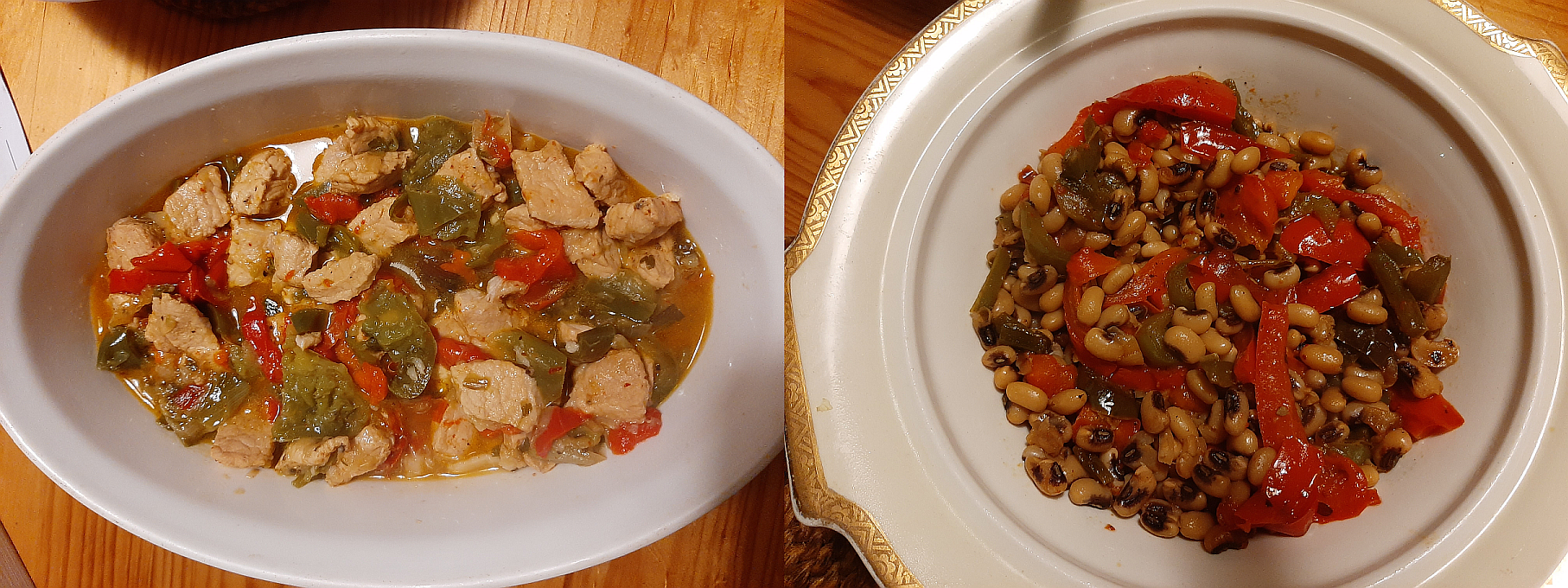
This recipe is my version of axoa, with a twist on tradition. Not only do I provide a vegetarian as well as a meat version, I use green capsicum (bell pepper) instead of the more traditional long pale green pepper (mild variety). Red capsicum however is a traditional part of the stew. And together they look just right, highlighting the traditional vibrant Basque colours of red and green! In the quantities given, the recipes each serve 3-4 people. (‘Axoa’ by the way means ‘chopped’ in Basque, referring to the meat).
Ingredients common to both versions: one large onion, 3 cloves garlic, 1 red capsicum, 1 green capsicum, olive oil, chopped herbs (parsley, thyme, bay leaf), piment d’Espelette, salt, 200 ml water or stock.
Other ingredients for meat version: 500 g diced veal (the traditional meat for this dish) or pork (which also goes well, in my experience), or 500 g minced veal or pork. Chicken could also be used.
Other ingredients for vegetarian version: 150 g soaked beans. I used black-eyed beans as they don’t take too long to cook (and we grew them!) but you could also use Lima beans (butter beans) or white haricot beans. Also, a bit of extra vegetable stock to cook the beans. If you are making the vegetarian version, cook the beans in stock first till they are at least three-quarters cooked, before adding to the basic mix to cook more.
So, first of all chop your onion, garlic and herbs. Deseed and dice the red and green capsicums. In a pan, cook the onion, garlic and capsicums in olive oil for 15 minutes then add the diced meat or the part-cooked beans, add the herbs, salt, and dash of piment d’Espelette. Reduce the heat and add the water or stock and cook at low heat, lid on, for about 45 minutes. The meat should be very tender but not falling apart, ditto the beans, and the sauce should be thick and reduced. After you turn off the heat, let the stew sit for as long as you can, before reheating, adding another sprinkle of piment d’Espelette, and serving with boiled potatoes or rice.
As I mentioned in my post about the piment d’Espelette last week, over the next few weeks I’ll be posting recipes for some simple Basque food, and thought I’d build it up so you could, if you want, create a whole Basque-inspired meal around it, similar to what my characters in A Hundred Words for Butterfly enjoy!
Today I’m introducing four simple dishes that can function either as snacks, entrees, lunch dishes or even grace a pintxo table if you want (pintxos are the Basque version of tapas). And by the way, don’t let anyone tell you that pintxos are ‘Spanish’–they are found on both sides of the French/Spanish border, just like the people who make them, because they are Basque 🙂
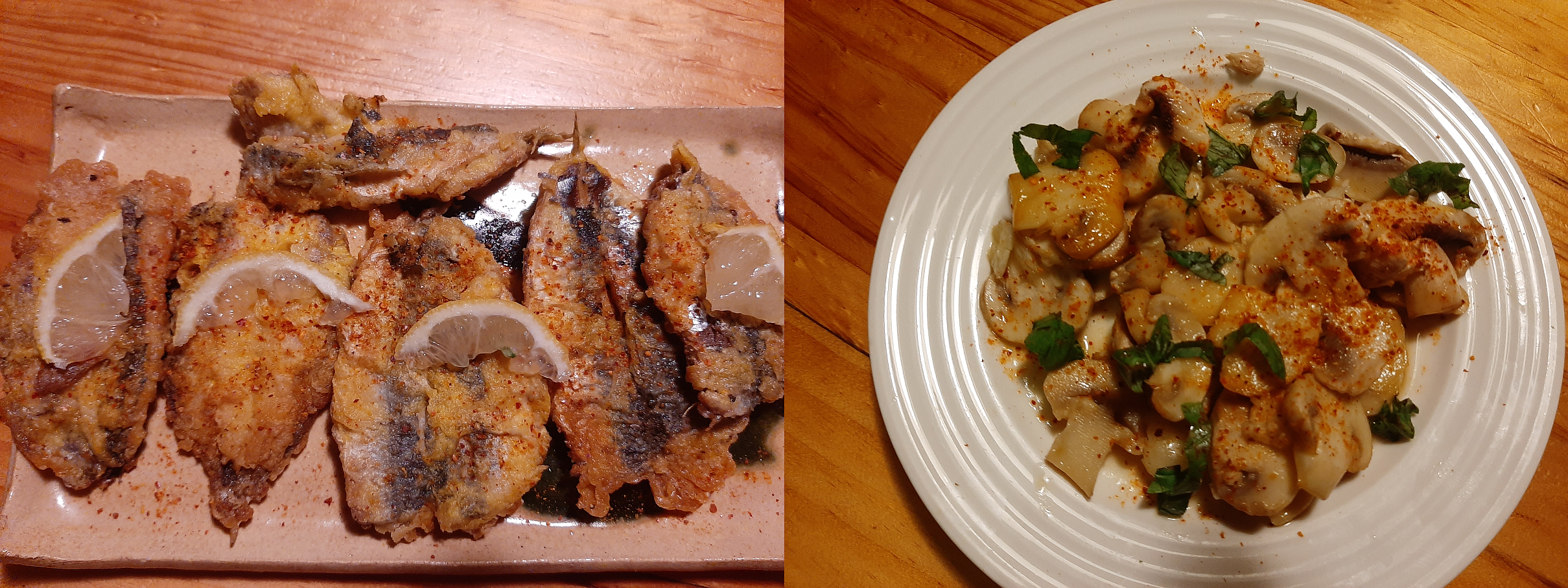
I’ve made all of these very recently and the photos are all my own, so you can see they are definitely home-made 🙂 All are very simple, very quick, and and very tasty! By the way, they all include a sprinkle of piment d’Espelette–great if you can obtain some, for example here or here, and I recommend it for that characteristic Basque taste. But you can certainly use good hot paprika if you don’t have any piment handy.
So here are the recipes!
Garlic and egg soup: Garlic cloves (up to 6 for 4 people); stock (chicken or vegetable) olive oil, thyme, bay leaf, eggs(1 per person) salt, piment d’Espelette, slices of bread. Cook the whole peeled garlic cloves in olive oil till they are golden, then add the hot stock. Add salt and a sprinkle of the pepper. Add chopped thyme and the bay leaf. Cook, uncovered, for 30 mins then crack the eggs into the soup to poach them. Fry the slices of bread and cut up to make croutons. And serve!
Simple Basque salad: On a plate arrange lettuce leaves with slices of Bayonne-style ham (Serrano ham is fine if Bayonne ham is unobtainable), and slices of roasted red and green capsicum. Sprinkle a vinaigrette made of olive oil and white wine or cider vinegar over the lettuce, and a small pinch of piment d’Espelette on the ham. For a vegetarian version, you can use sheep’s milk cheese (such as Manchego) instead of the ham, and you can also add other ingredients to the basics, such as tomatoes, artichokes and asparagus.
Fried sardines: You need fresh sardines for this (can be either whole, gutted and boned sardines or ready-prepared fillets). For 2 people, I used 3 sardines each. You also need an egg and some flour, salt, and you guessed it, piment d’Espelette! Beat the egg, dip each sardine in it then into the flour, making sure it’s all coated, then fry till done. Serve with a sprinkle of salt, the Espelette pepper, and either lemon or vinegar.
Mushrooms with garlic: In the Basque country, ceps or other forest mushrooms would often be used, but field mushrooms are also fine. Simply slice them finely and cook in a little butter for about 2 minutes, add crushed garlic, salt, some chopped herbs—whatever you have on hand (I used basil) and yes, a sprinkle of that Famous Pepper!





 Feathers of the Firebird