A short story for Anzac Day…

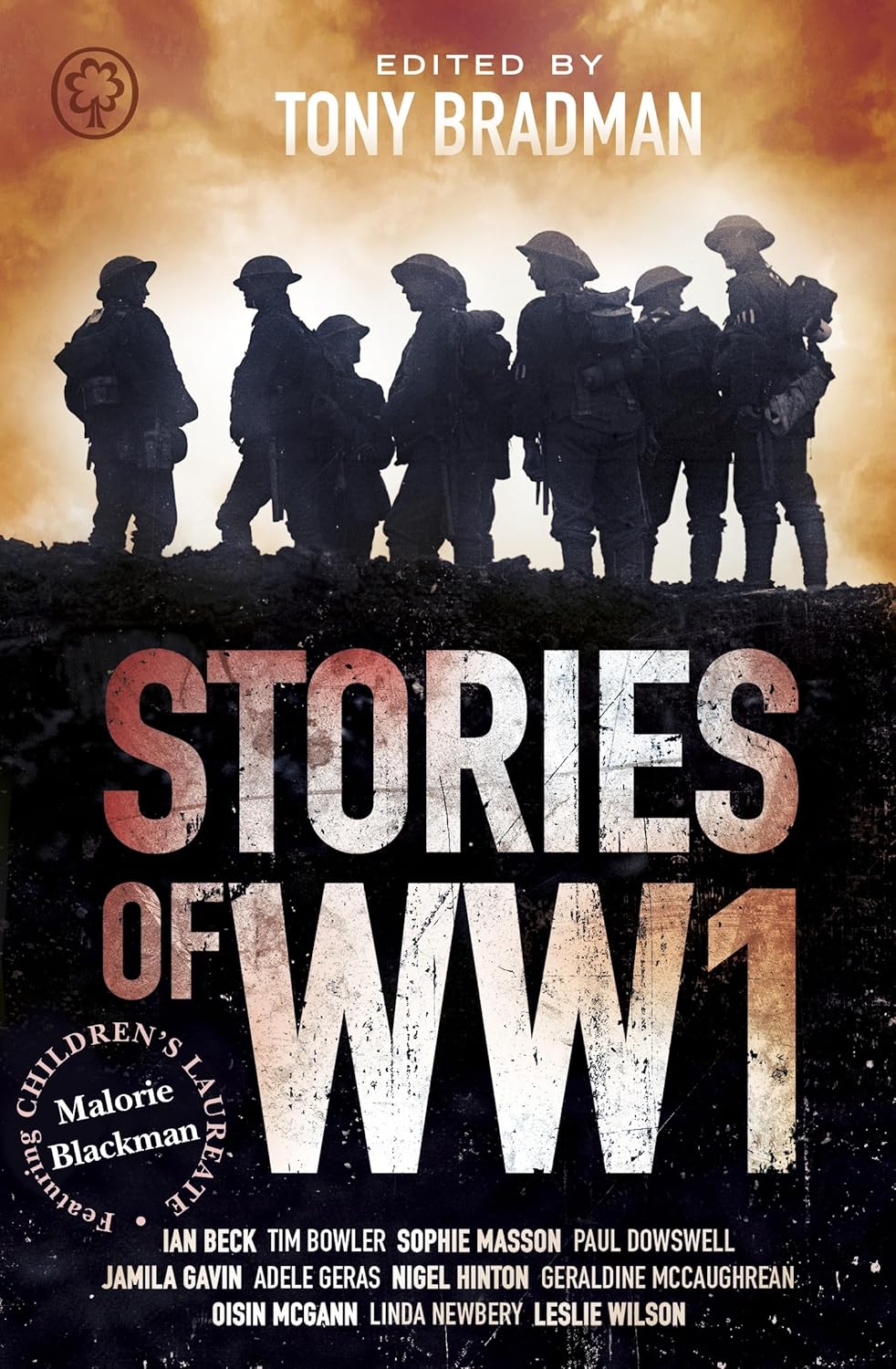
I wrote this story, ‘The Other Anzac Day’ for a 2014 UK anthology for middle-grade/YA readers, Stories of World War One, edited by fabulous British author Tony Bradman and published by Orchard Books. Set in Villers-Bretonneux in France in April 1918–in fact on Anzac Day 1918–it’s told in the voice of a young Australian soldier, Archie Bell, and though some of the other named characters come from my 2011 middle-grade novel, My Father’s War, it’s a completely standalone story. It’s both for young readers, and readers of all ages. It’s a story that I found both easy to write–in that it flowed incredibly naturally–and hard to write–in that it made me weep as I wrote it. And it’s one I’m still proud of, that I wouldn’t change a word in…

Anyway, here it is, for Anzac Day.
The Other Anzac Day

by Sophie Masson

Villers-Bretonneux, France, April 1918

Like shadows in single file we move silent as snakes through the wood, slipping down the sunken roads to take our positions. All is quiet. The machine guns are silent, thank Christ. Fritz is sleeping. We hope. The Poms are somewhere out there moving towards the town, and on the other side of us somewhere are the other Aussies. It’s a pincer movement, Owl had said. He’s our resident professor. Reads all about military strategy for fun, draws little diagrams for us. See, here, that’s how it’ll be done, the Aussie battalions from the left and right,  the Poms in the middle, no artillery attack first, right, just our weapons in hand, rifles and bayonets for most of us, machine guns for the gunners, total surprise. We knock out the machine gun nests, and we fall on Fritz before they even know we’re there. Like tigers in ambush, like wolves on the fold, says Pat, who’s something of a poet. Mate, says Snowy, snorting, them Boche aren’t what you’d call meek little lambs, they fight like demons and don’t you forget it.

There was a moon but the clouds have swallowed it up now. There’s a strange red light in the sky over the little town just past the wood and a smell that reminds me of last year when I was fighting that fire at the neighbour’s back home. Houses are burning in the town, shelling’s been going on for days and V-B is rubble and burning houses and smoking ruins now. But one old French bloke we spoke to the other day, old farmer who’s hung on and on like a tough tick on a cow, he told us that once the town was pretty and brisk as you please, a magnet for the little villages and farms around it, at least that’s what Owl said he said, and as he’s the only one of us who speaks proper Frog we got to trust him in that, hey? The town might be flattened but the fields around are full of grass and flowers growing over the deep scars of old trenches all over. There was a lot of trench fighting in this district before like in all of this Somme region but now that’s over. No animals of course right now but a few small crops starting to be planted. Looks like nice fertile country, you could get a mighty good yield here, my uncle back home would say.

It’s a different kind of war to before, no more trenches. In the past it was mud and trenches from end to end of the Somme. Men lived in trenches, died in them. Now it’s skirmishes and battles in woods and towns, more the sort like at the beginning of the war, Owl says. He says it’s changed again now cos there’s not so much a stalemate as before. The Yanks came in our side last year but there’s not enough of ‘em yet and now Jerry’s got the advantage. They’re stronger than for a long time. They’ve got lots of fresh new troops pouring in from the Eastern Front where the Russkies gave up fighting last year, and they’ve been launching lightning attacks all up and down the north of France and Belgium, pushing the Poms and the Frogs and us Colonials, Aussies and Canadians and New Zealanders, back and back.

That’s why we’re here cos earlier this month Fritz took Villers Bretonneux again, VB as we call it, and though it’s just a small town, it’s important. You have VB, you have a direct shelling line to the city of Amiens from the hill near here, Hill 104 they call it, and then there’s a Roman road straight as an arrow just right for an army to march right to the heart of that city once the way’s cleared. And from Amiens well you are not that far to Paris. It’s important not to lose Amiens. It’s important not to lose VB, no matter what, whatever it costs. And it’s cost plenty. The Poms took heavy heavy losses two weeks ago. Hundreds of the poor beggars killed and injured. That might happen to us today but you can’t think of that. You got to think, we got to take it back from Fritz. From Jerry. The Boche. Whatever you want to call them out there in the darkness, the Germans, dug into the town and the surrounding woods and countryside. They’re somewhere in here, with us. We got to find them before they find us…My hand tightens on my weapon. I’m ready for them. I’m more than ready..

‘Hey boys, it’s gone midnight,’ whispers Snowy. ‘It’s the 25th now. Anzac Day. ‘

‘Good omen, I reckon, ‘says Blue, and everyone nods.

‘Lest we forget,’ says Pat, and he says another few words, solemn-like, and for once no-one tells him to shut his trap. But forget? Not a chance. We’re all thinking of that very first Anzac Day. A surprise night attack, like this one. Gallipoli. The landing at the place we now call Anzac Cove. Three years to the day. Almost to the hour.

I remember the headlines in the newspapers the next day. Glorious Deeds! Unsurpassed Daring of the Anzacs! Miracle of Bravery! The day the Australian and New Zealand Army Corps really showed what we were capable of.  When we wrote our new nations proudly into the roll call of glory. Australia and New Zealand’s baptism of fire, a day to remember forever.

I devoured every word. I was so proud. My older brother Jamie was in one of the Anzac battalions there. I could just picture him as I read how after being given a good hot meal and a drink on board their ships the Anzacs had landed on that beach in the dead of night—a clear bright moonlit night though, not like this one. Everyone was calm, ran the reports. Everyone was itching for battle but calm as you like. There were only whispers among the men, quiet footfalls, no loud noises. The Turks up on the heights were not expecting it. They were taken by surprise as up and down the coast the Allied forces—the French, the British, including the Anzacs, moved in by sea at night. But they soon recovered and the landing was soon raked by rifle and machine gun fire from the cliffs. In some of the landing places the cliffs could be scaled more easily but at Anzac Cove the cliffs were so sheer so steep that it proved almost impossible. Heavy casualties, reported the correspondents gravely, and there will be grief in many households, but such feats of incredible courage against great odds will give comfort. 

I wish that had been true for my mother. Yet when she got the telegram that Jamie would not be coming home, that he had been killed at faraway Gallipoli, she did not cry. Did not scream, like the mother of Norm Penny, up the road. Her screams you could hear up and down the street. My mother said nothing. Sat in the chair with the telegram in her lap, staring into space. She sat like that for hours. Wouldn’t talk. Wouldn’t eat. Wouldn’t even take a cup of tea, she who lived on tea from morning till night. Strewth, I didn’t know what to do, so I went and fetched our next door neighbour Mrs Hunt who was good friends with Mum and who I thought might help. And she did, while sending me outside to chop up some firewood—you need to do something, love, she said, you’re all jumpy and you’re making it worse for her.

As I chopped and chopped, more wood than we’d use for weeks probably, though I was sweating from the effort, I could feel inside my throat something that sat like a hard cold lump. I knew what it was. I’d never see Jamie again. Never hear his laughing voice joshing me. Never have to put up with his calling me Kid Arch. Or Little Archie. Or Mini Bell. Six years older than me he was, and man of the house since Dad died when I was three.  When I was real little I used to follow him around. Even after I stopped being his faithful dog, I liked being around him. He was a real good fella though he could be blanky irritating with those nicknames. I would miss him, I knew that. I’d miss him so bad. But I was also so proud of him. So proud. My brother. My only brother. He was a real honest to God hero. A hero of Anzac Cove.

I tried to say that to Mum, later. Much later. Maybe it was the wrong thing to say. Women don’t see things the way we do. I wasn’t trying to say that it didn’t matter Jamie was gone. It mattered terribly. There would always be that empty place in me that was the ache for him. But it made it better, to know he’d died a hero. When the next year they started the ceremonies, the marches, to remember that day, I went proudly to them. I felt a part of it in a way that I had never felt part of something before, even our local footy team. (No wonder, kid, Jamie would’ve joked, given your footy skills!) And even after I heard some people saying that the landing at Anzac Cove had been a mistake, that the generals had led our boys into slaughter, even then that didn’t change a thing for me. Being a hero isn’t about doing great things when you’re certain of winning. When the odds are good. When the stars are aligned. It’s not about the glory the papers wrote about either. It’s about doing the right thing by your mates. Even when death is staring you in the face. No, not even. Especially then.

That’s what Snowy says. And Snowy was there. Like Jamie. He didn’t know Jamie, he was in a different battalion. But he’s told me about it. Made me feel it. Understand it. See it. Feel it, in my bones. Snowy’s been a soldier a long time. Comes from near Beechworth way. Kelly country. (His old man knew the Kellys in fact). He’s survived several injuries. Badly wounded at Gallipoli. Invalided to Britain. And then straight back only a few weeks later. To Belgium this time. The trenches. Got gassed there, survived that, came back for more punishment. This is the second time he’s been on the Somme. All the others, too, they’ve been in this for a good while. Me, only two months. I couldn’t join up before, though I really wanted to. Yeah, so I was too young really, only thirteen when Jamie died, but it wasn’t that. I could’ve lied about my age. I’m big for my age, they say. Tall. Broad shoulders like me dad. Like Jamie. Can’t play footy to save me life but boxing, I’m pretty good at. Strong. Not scared of Jerry or anything. Wanted to fight. But I couldn’t. Not with Mum the way she was. She never got over Jamie. She had what the doctor called a breakdown. Couldn’t go to work no more. Never really recovered. I had to leave school and get a job in the timber-mill, not that I minded, never much liked school. And I had to take care of her. There was this strange thing she did, where she wanted me to read to her, from the newspapers. Though she could read perfectly well. She wanted me to read every scrap, the news, the weather report, the advertisements, every blanky thing. I didn’t want to at first because the papers were of course full of news of the war and I feared it might upset her even more. But if I tried to leave that out she got angry. She would listen to the account of the battles and not say a word. Sometimes I’d make some comment on the blanky Germans or Turks or whoever and she’d nod as if she agreed but I don’t think her mind was on it. I don’t know where her mind was to be honest.  And when she died last year from a stroke, it was like what was started that day she got the telegram was finally ended. Like she’d been dying from that moment. Like it was almost a mercy. I went to the recruiting office the next week. Bumped my age up two years, told ’em I was eighteen. They didn’t ask too many questions. Embarked two weeks later. And so here I am now.

‘We’re goin’ forward.’ The word’s passed down the line. It’s on. Jerry can’t be far now, but still no artillery firing. Silently, we break off into three groups, a main body heading to the town, two on the flanks to protect us and mop up Fritz outposts before they give us too much grief. I’m in the main body close to Snowy, Blue and Owl are somewhere behind us with Jimbo their other friend and on the flanks, melting away into the darkness, Pat is with the ones who’ll be making the way safe for us. Or a little safer anyway.

Closer, and we can hear fighting now as Pat’s group and the others run into Fritz. We keep moving forward, bunching together because of the barbed wire fences that are everywhere, left behind by succeeding holders of the town, Fritz, the Frogs, the Poms, Fritz again, us, whoever. It’s like trying to fight your way through a giant spider’s web. Suddenly, a burst of flares. Red, green, white yellow. Someone says, and I think it’s Blue, ‘Hello, fireworks for Anzac Day, boys,’ and that raises a laugh. But of course we know it means Fritz has heard us. Seen us. We duck down, waiting for what must come next and right on cue it does, a storm of machine-gun fire from the right of us and in front. I’m running like the others, head down, trying not to get shot or entangled in the blanky barbed wire. Behind me I hear screams, looking back I see Blue and Owl have been hit and Jimbo’s trying to help them, but I can’t go back and help, now’s not the time, I’m in the heart of the mob of us, Snowy at my side. And all of us with our bayonets fixed to our rifles, yelling, snarling, howling like the demons of hell or the wolves and tigers Pat spoke of earlier, we charge at the Germans.

Faintly in the distance we hear cheers from the other side of the town and know that the other Aussie brigade has heard us. Straight at the Germans we charge, and so taken aback are they by this wild onslaught that they are slow to react and when they do it’ s too late. I can hardly describe what happens in the next half hour or so, no quarter given on our side or theirs. Fritz fights back bravely, gunners trying to fire even when they’re run through by bayonets like chickens on a spit. Sweat running down my face, I’m hardly Archie Bell from Castlemaine any more, but just part of a wild mob, parrying to left and right, trying to get in blows, to kill, to live, to win, to back up our mates. And then I get a Jerry, straight through the heart, a lucky blow, despite my wild thrust, and I see his eyes stare at me bewildered as he falls. His eyes are blue, the exact shade of Jamie’s, and though this is not the first time I have killed a man in battle it is the first time at such close quarters and for a heartbeat I feel that knowledge rise in my gorge like sick.

But there’s no time to think. Our rush has been so fast that we are too far in VB too soon and have to pull back a little. But the Germans in the town have seen what’s happened and from then on they start surrendering. Dozens of them, soon hundreds, so many prisoners that it becomes an embarrassment. They’ve got to be parked somewhere out of harm’s way—the order’s been given now we must take as many prisoners as we can—till the die-hard resisters and the snipers who’ve holed up behind rubble and in ruined buildings can be dealt with. That’s what Snowy’s sent to do, pick off snipers—he’s a blanky good shot but yours truly is put on guard duty, the last thing I want to do. I try to argue with the officer but he’s in no mood to listen and so I have to march off with three of our blokes and this column of dejected, ashen-faced Jerries to wait in a safe spot in the fields till the all-clear is given.

I’m simmering with annoyance at the thought I have to play nanny to this bunch while my mates are still out there fighting. That blanky officer knows I’m younger than the others. Less experienced. In his mind that qualifies me for the soft jobs.

Cos the Jerry prisoners are not going to be a problem any time soon. They look exhausted. Broken down. Some of them are wounded but only slightly—the really injured ones have been stretchered off, like our wounded. Their uniforms are dirty, stained, their eyes are empty. Crack Bavarian and Prussian troops were supposed to be stationed here, we were told. Well, these fellas don’t look like crack anything except cracked in spirit. They’ve given up. They don’t look at me but stare at the ground.

Time passes. Dawn breaks, the sun rises, the day advances. Dimly in the town behind us we can hear the occasional crack of a rifle or a burst of machine gun fire but it’s getting fewer. More prisoners join our lot. They all sit there, staring at the ground. I wonder what they’re thinking. Your average Jerry is a fanatic, I’ve read. Thinks his race are supermen. Some supermen this lot! My mind skitters around. If the Jerries hadn’t started the war then I wouldn’t be here. Owl and Blue’d be safe with their families. Snowy would’ve taken up that job as horse trainer, become a big shot. Jamie wouldn’t be dead. Mum would still be alive. I’d have a home. A family. I’d have trained to be a real proper boxer in Melbourne, I’d had offers. I might have a girl too. A pretty thing with long curls like my favourite film star, Lilian Gish. We would go around town with her on my arm and go to restaurants and the picture theatre and on Melbourne Cup Day we’d go to the races with Mum and Jamie down from the country, and we’d pick the winner. Which would be the horse Snowy had trained. We’d win big, there’d be champagne and cake and everything would be..

‘What the blanky blanky are you doing?’ hisses a voice in my ear. It’s Stevie, the one in charge of  guard duty. ‘Keep yer eyes open, mate.’

Eh? What’s he talking about? I’ve not been asleep. I glare at him but he doesn’t care. ‘Get up, have a walk around,’ he orders, as though he’s an officer or somethin’. Which he isn’t, just some cocky  from way out in the Mallee.

I shrug to show much I give about his orders but I get up anyway because it doesn’t look good in front of the prisoners to be arguing. I walk up and down and as I do I happen to see one of the prisoners staring at me. He’s small and dark and though he has a little moustache it’s clear he’s pretty young. I give him a glare to let him know I’m watching him and he better not be up to any tricks but he gives me this little gesture which looks like he’s waving me over. You have to be joking. If I’m not taking orders from some Mallee cocky, I’m sure not taking any from a blanky Fritz.

I see his mouth form a word. Please. Not bitte, which I know is German for please, but the good old English please. The magic word, Mum always said. What’s the magic word, boys? she’d say to Jamie and me.

‘Yeah, what?’ I say.

‘Please,’ he says, ‘will you come here? ‘

I look at Stevie. He shrugs. Go ahead.

I go over to the bloke. ‘What’d you want?’ I say, roughly.

For answer, he reaches inside his uniform. I don’t stop to think. I leap at him, grab him by the throat, my hands tighten around it, I’m going to choke the life out of him. Then I’m pulled off him and Stevie’s bellowing, ‘Cripes you mad bastard, what are you doin,’ and he’s shoving me away, to sprawl in the grass.

I thought he had a knife, I manage to say but Stevie shakes his head. ‘You’re touched, mate,’ he says, ‘now pull yerself together or yer’ll end up in the clink. Prisoners is prisoners, see, you don’t hurt them, not unless you want our blokes to be hurt too.’

I know that. I know all that. Shame is washing over me in cold crinkles of skin. Jeez, I’m not that sort. Not the kind that would go for an unarmed bloke. I want to explain. That I really thought he had a knife. But I know it wasn’t just that. Owl and Blue are dead and Jamie and Mum and countless many more and for an instant to me that bloke he looked to me like the one who done them all in. I know that’s mad. I know it is, but I hated him more in that moment than I hated the one I’d killed back there, the one with the blue eyes like Jamie’s. I wanted him to pay. I wanted someone to pay. Some bastard Jerry would-be superman. But now I look at the bloke and all I see is a frightened kid trying to look like a man and I feel sick to my stomach.

‘You goin to behave now, cobber?’ asks Stevie, not unkindly, and I nod. ‘Get away over the other side, then,’ he says, and I nod again. I’m about to go when I hesitate. Part of me wants to go to the prisoner and say—what? An apology? That would stick in my craw. No. I can’t say anything. There is nothing to say. I’m turning away when I hear this whisper from him, hoarse, because of his throat which must be sore. ‘It is a letter, yes? For my sister. Will you send it? ‘And he pulls it out of his pocket, and hands it to me.

I stare at him. He looks back. I can’t say what it is he has in his eyes. I can’t read people that well. But our eyes meet, just for that instant. Without a word, I nod, take that letter, and walk away, to the other side of the group of prisoners. There is such an ache in my chest. A feeling that grips me tight, like the killing fury, like the pain of memory. Cripes, it’s too big for me.  The pity of it all.
A short story for the festive season

As a festive gift to my readers, here’s a fun short story, which I hope you’ll enjoy!

It just goes to show

by Sophie Masson

Picture, if you will, a posh jewellery store, Sydney, early 1960’s, two weeks before Christmas.  Soft carpet, gleaming display cases, saleswomen in crisp black and white, manager hovering discreetly. The store is crowded with customers, including me, then nineteen-year-old office worker Irene Harold, sent by my obnoxious boss, Mr Glyn Masters, to pick up a sumptuous gift for his wife.

All at once the door flies open, and Dorothy Evesham wafts in.

Years before, she had been a minor film darling, all big blue eyes, platinum hair, and baby voice. As her gossamer career faded and she got older, Dorothy diversified. She invented ‘psychic portraits’. Instead of telling you your fortune, she’d paint it for you. It was all the rage for a while. People queued for a sitting. The social pages of magazines featured her constantly. And then interest began to wane. There were critical comments in the press. Even the beginning of ridicule…

But this morning, Dorothy is all sweetness and glamorous light. ‘Dear Mr Manning,’ she says to the manager, ‘I need a necklace for a special occasion. What can you show me?’

As we all watch, Mr Manning hands her a necklace of jade and pearls.

‘Hmm,’ she murmurs. ‘Strong psychic energies: jade for earth, pearl for water…’

She catches my eye. Can she see I’m a sceptic? She shoots me a melancholy look, and hands the necklace back to Mr Manning.

‘What else do you have?’

Mr Manning reaches into another display case.

‘This, Miss Evesham, is the finest we have.’ It’s a magnificent diamond necklace. A platinum setting, white diamonds surrounding a pink diamond.

Mr Manning murmurs, ‘It’s known as the Kimberley Star, and….’

He breaks off as Dorothy gives a little gasp and crumples to the floor. At that moment, I catch a glimpse of someone peering in at the window. A man with his hat pulled down over his face. He comes in. There’s a bang, a flash. Not from a gun: a camera. The noise revives Dorothy. She gets up, shouting, ‘Can’t you journalists ever leave me alone!’

She picks up her handbag from the display case and swings at him. He wrenches at the door, runs into the street. Dorothy runs after him. And the necklace, which Mr Manning had dropped on top of the display case, is gone. Pandemonium!

There were non-stop newspaper headlines for days:

DARING THEFT IN CITY JEWELLER! NECKLACE FOUND IN STAR’S BAG! PROTESTS INNOCENCE! CLAIMS PLOT AGAINST HER!  MYSTERIOUS MAN SENDS LETTER TO POLICE! CONFESSES ALL! STAR FREED!

Then there was the radio interview.

‘Welcome to the Leonard Lane Hour. Today, we are speaking to Dorothy Evesham, once a shining star of our stage and lately famed as the inventor of psychic portraits. Dorothy, you have been through a terrible experience.’

‘Yes, Leonard, I have. ’

‘Is it known who framed you?’

‘No. It must be someone in great psychic torment. I hold no grudge. Good can come out of evil, Leonard. For example, Mr Manning’s offered to lend me the Kimberley Star to wear at the opening of my exhibition—which, I will remind you all, is tomorrow night.’

Picture the crowded art gallery, next day. A storm of camera flashes as Mr Manning and Dorothy walk in. Mr Manning opens a silver box, takes out the necklace, clasps it around her neck. The crowd cheers.

Dorothy beckons to the gallery owner, who brings out a wrapped painting.  In a dramatic voice, he says, ‘Miss Evesham brought in this painting to us weeks ago. ‘

He whips off the covering. And there’s a portrait of Dorothy, behind bars, a sparkling pink star above her. And words, painted on the canvas: Beware of the Kimberley Star.

Into the hush, Dorothy says, ‘I painted my own fate. But I did not understand what it meant– until it was too late.’ A pause. ‘Now, ladies and gentlemen, please enjoy the show. And ponder this—there are stranger things in heaven and earth than the sceptic can ever dream of.’

She catches my eye. Suddenly, she knows that I know. But so what? Her show’s a triumph, her reputation assured. All her pictures will be sold. People will be queuing again, for her portraits. She’ll be back in all the social magazines. She’ll even be given her own weekly segment, on Leonard Lane’s radio show…

But that’s in the future. Back to our own last act:

Phone in Mr Masters’ office rings the morning after Dorothy’s show. I pick it up.

‘Miss Irene Harold? It’s Dorothy Evesham. Mr Manning told me where you worked.’

‘Yes?’

‘Will you sit for me, for free? For I believe you are destined for an unusual life.’

I laugh. ‘Miss Evesham, as far as I’m concerned, you can rest easy. No need for a bribe. It was the perfect crime—beneficial to you and yet victimless.’

‘Then… you won’t tell?’

‘That you set the whole thing up? Why would I tell? Everyone’s happy. I just hope your friend in the hat’s lying low.’

‘He is. But–how did you know?’

‘It was all so smooth, scripted just like one of your films. The false accusation. The injured innocent. The sensational revelation. Perfect acting, too, I might add better than any of your films. It was truly the performance of your life.’

‘Why thank you,’ she murmurs.

‘But there was just one small problem,’ I go on. ‘The question of motive. Why would someone target you? I started to think around that. And so I came to my conclusion.’

‘Which was?’

‘That you had targeted yourself. It was the only thing that made sense.’

A small tinkling laugh. ‘So young, but so smart! Miss Harold, you’re wasted in that office. Come and work for me.’

‘Thank you,’ I hear myself saying, ‘but no. I have my own plans. But I’m grateful to you, Miss Evesham, for you’ve inspired me. ‘

‘Ah. I’m glad to hear it. What are you going to do?’

‘I’m going to take a risk and change my life. I’m walking out of this office today and setting up as a private investigator.’

She laughed. ‘Perfect! I will recommend you to all my friends and clients. But think on this, Miss Harold. Clearly our paths were meant to meet. It was more than just my fortune, looking at you from the walls of the gallery.’

So now you know why there’s that photograph of her on my desk. She was my first case. Had it not been for Dorothy Evesham, I’d have grown old in the service of the Mr Masters of this world. I’d never have had the successful career I’ve had, over these last forty years, a career that has brought me respect, admiration, gratitude of victims of crime—and sown fear in the hearts of crooks and cheats and con artists right across this nation. I’d made it on my own, shown a woman could not only be as good as, but better, than a man, in this jungle that is the PI world.

Only, lately I’ve thought, maybe there was something after all in that mumbo-jumbo of hers, and it was indeed my own fortune that had been looking back at me from the walls of that gallery. It just goes to show, doesn’t it?

Story for the season: Christmas in the Kennels

Introduction: It’s a bit of a tradition for me to publish a Christmas story in this festive time of the year, and this year’s no exception. I first wrote this story quite a few years ago, but it’s never been published anywhere, not in print or online. To tell you the truth, I’d forgotten about it in fact until I came across it again in my files just a couple of weeks ago, and thought it still worked pretty well. It’s a story for a general audience, for both kids and adults.

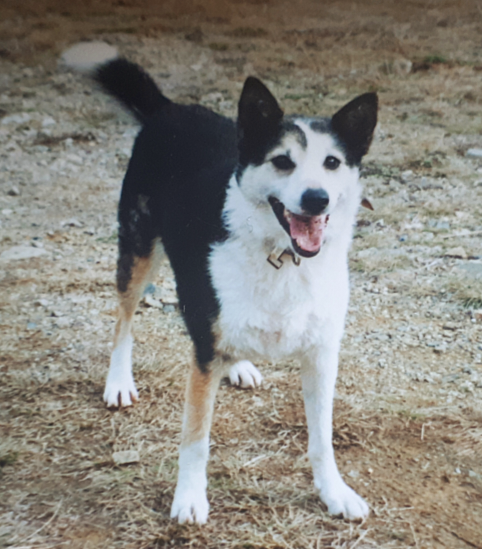
It’s a seasonal story with a difference, told from the point of view of dogs in boarding kennels and was inspired by the fact that when our kids were growing up, we had a lovely dog called Tess, a Border Collie cross(see pic just below) and when we occasionally went down to Sydney for Christmas, she had to go into boarding kennels nearby, as we couldn’t take her with us. The kennels were run by some very nice people who were always kind to the dogs, but Tess was not very keen on being there, she just loved being with us, of course. There were always lots of dogs there, of all sorts, and one day, as we were picking Tess up, the idea for this story jumped into my mind. (Tess by the way also features in my picture book with illustrator Katrina Fisher, A House of Mud , published by Little Pink Dog Books, 2020).

So now, without further ado, here’s the story: Christmas in the Kennels. Hope you enjoy!

CHRISTMAS IN THE KENNELS

by Sophie Masson.

Look, Tess, this is a nice place, lots of space, and those trees, aren’t they beautiful and shady!

You’ll be happy here. There’s lots of other dogs.

See?

Mum, Dad, do you think she understands we’re coming back? She looks sad…

Of course she does. Come on, children. We’re late. Bye-bye, sweet Tess. We’ll be back soon, we promise.

That would have to do, Tess supposed. It didn’t make it much easier, being left behind, but holding on to the promise would have to do. She had little choice anyway. What dog did?

That’s right, my dear, look on the bright side, said a gruff voice from the next cage, where a St Bernard sat with his chin on his paws, looking at her. Tess started, for she had not been aware she’d spoken out loud.

They look like good people, the St Bernard went on, kindly. They’ll be back.

Hmmm, sniffed an elegant black poodle on his other side, if they were so good, they wouldn’t leave you here, would  they, while they went off to their Christmas!

Please, Miss ffrench-French, said the St Bernard gravely, you must be patient and bear our lot with fortitude and show the world the true honour of a dog.

The poodle snorted loudly and was about to reply, when a mournful-looking Labrador broke in. It’s fine to think so, Professor, he said, turning to the St Bernard, but still, you must admit that it is strange. All year, they pet us and love us, but then disappear to this Christmas, and never take us. And I never stop wondering why. What is this place that wants no dogs near it?

I don’t know what it is, said Tess, perplexedly. This is the first time my people have left me here. I think they must only just have found how to get to Christmas.

It’s a place they go to every year, my people, said a Scottish terrier excitedly, they are bidden there by a fat man in a red suit, who you must never, never bark at.

Perhaps it’s a kind of kennel, suggested a timid-looking young spaniel, waving her plume-like tail.

Don’t be foolish, Carla, snapped the poodle. People don’t go to kennels. Only we do.

Christmas is a place wherever people are, said the Professor firmly. It is a place they carry with them, because even the kennel-people talk of it, and they do not move from their house.

Only people? said the spaniel. Not dogs?

Of course not, said the poodle. Whoever heard of dogs going to Christmas? No, it’s a place for people, and people only, whether they stay, or go away.

There was silence for a moment while they all thought about this, then the spaniel said anxiously, But even if people go away, they always come back, don’t they?

You are only ten moons old, Carla, said the poodle, contemptuously, what would you know? They don’t always come back.

Hush, hush, Miss ffrench-French , said the Professor, quickly, but too late.

All at once, a terrible sound tore into the air, a sound such as Tess had never heard before, not a yelp, not a bark, not even a howl, but a shriek, a scream, a veritable ululation of madness and grief.

And Tess saw that what she had taken to be an bundle of dark rags left in the empty cage opposite, was in fact a dog. A pitiful, shaking beagle, with a dull coat and thin legs and haunted eyes.

Tess was shaking too. She stared at the beagle, the dull coat, the haunted eyes. The terrible shriek rent the air again, and the same pain was on everyone’s faces, the pain of a big dark empty world, an endless space of lonely abandonment.

We can’t do anything, whispered the Professor sadly, nothing at all. You see…

But a woman was coming towards the dogs, rattling keys, tutting, and so he fell silent.

Now then, Bess, said the woman, opening the beagle’s door so that Tess saw the other dog was not even locked in; now then, Bess, what’s upset you this time, sweetie? And she got down on her knees, and gently patted the beagle’s shuddering head, and made her lie down on the little blue rug in the cage, and then she left. Once again, the beagle lay limp and listless, just like old clothes on the floor of her cage. Tess could not take her eyes off the pitiful sight.

 Her people left her here two moons ago, hissed Miss french­ French’s haughty voice. They left her here, and they didn’t come back.

Weren’t they good people? breathed Carla.

They seemed like good people, said the Professor heavily. I was there when they brought her. They  fussed  over her, petted her, said goodbye with many promises. But they didn’t come back . And they still haven’t come back.

Silence, while they all digested the awful fact, then Tess whispered, But why, why hasn’t someone else come to take her? Why is she still here?

They’re kind-hearted people, in the kennels, said the Professor gently . They tried to find her a home–they even tried to adopt her themselves. But she won’t leave her cage: you can see she’s not locked in. She won’t leave the rug her people left for her. she thinks that if she stays here, in the same spot, with that same rug, that they ‘ll be back one day. She can’t bear to go anywhere else, not even out in the yard, in case they do.

But, said the Labrador with a sob in his throat, they won’t be back , will they…

No, said the Professor sadly, I’m afraid they won’t. They can’t. He whispered something to Tess , then to the poodle , then down the line , and as he spoke, the same look flashed on all their faces , even the poodle’s. They were nearly all quiet, though; all but the spaniel, who lifted up her muzzle to howl in fear and pity, for she was too young to keep silent before the mention of death. But everyone gave her such a glare that she subsided, twitching.

It was not a pleasant night, that night, for Tess; and the next day was grey and damp and gloomy. But the kennel-people seemed cheerful enough, they hummed under their breath as they hosed out the cages and let the dogs out to run in the yard. Tess ran a few paces, more from habit than conviction; the other dogs did the same, all but Bess, who sat in her cage crouched over her blue rug.

Well, my friends, said the kennel -lady, when she’d herded them all back in, we’ll give you an extra big feed today, because I’ll have no time tonight. She seemed excited, and hummed whilst filling the dishes, and in her hurry to get back to the house, forgot to lock the shed where she kept the dog food.

The rain came in the afternoon, drizzling at first, then thick grey ropes of it. The dogs were all in their cages, chins on paws, looking out at the rain, talking softly of this and that and watching the glow of the kennel-people’s house, lit up already for the dark afternoon. Their keen eyes could see busy shadows passing across the lit windows and their sharp ears could hear cheerful noises, and somehow, it made them all feel strange, jumpy, even a little excited. Only Bess did not move, hunched in her corner.

The rain eased towards night, then stopped altogether as the big white moon began to rise in the clear sky over the trees. The dogs ‘ chatter eased with the rain and stopped in joyful wonder at the sight of the moon, and peace descended on the kennels, a strange deep hush that was made up of  tiny sounds, like the noisy silence of the sea.

All at once, ears pricked, heads turned, hackles rose. There was another sound, not made of moonlit night, but of something different. Tess sat bolt upright. A whisper.

Human. Rough, young. Normally, she would have barked, loudly, but tonight, she did no such thing, just rose stiffly to her feet and peered in silence at the people out there. A girl, a boy, stumbling a little; the girl round­ bellied, with a lovely face the colour of honey and long dark hair, the boy thin, pale, pinched face, sad blue eyes.

This is the place, Sal. I worked here once. The dogs were cool. There was a shed…it was dry, warm.

Oh, Tone, why don’t we just ask at the house? They’ll help us…and the dogs…I’m not sure about the dogs…Oh Tone, I’m afraid. I wish we could…

Tess could see the girl’s frightened brown eyes flashing over the kennels, the dogs silent and tense in their cages, listening but not barking at the intruders, not yet.

You know they’d call the cops, if we went to the house. And dogs are cool, repeated the boy. They’re kind. Not like people. Come on, Sal. You’ll be safe there, I promise. There’s hot water there, I remember. And spare blankets… I’ll help you. I won’t leave you.

There was a strangeness to his voice, thought Tess. A roughness that might turn fierce, that might be frightening, but with a timid tenderness in it , something not quite sure of itself, and deep underneath , a fear, a fear that all living creatures know well, the aching fear of loss. Held by the strange silver night, and the things she heard in the voices, Tess stayed quiet and, like the others, watched as the boy and girl made their way to the shed and disappeared into its darkness. Now the dogs stirred. We should bark and alert the kennel-people , whispered Miss ffrench-French. They should not be here, those people. They are intruders.

No, they’re just poor strays, said the Labrador, quietly.

Strays should go to the pound, Gelert, snapped the poodle.

Miss ffrench-French, said the Professor, that is not a fate to wish on one’s worst enemy. And that girl is carrying a pup in her belly, if I’m not mistaken.

All the same, sniffed the poodle, they should not be here. But despite her stern words, she did not bark, or yelp, or draw any attention from the brightly-lit house to the dark shed. Like the others, she waited, uneasily still in the moonlit night.

No-one took any notice of Bess, sitting huddled in her corner, almost as still as before, but with her ears twitching, feebly, once or twice.

Do you hear that, whispered the spaniel, presently, her body trembling all over. That noise, oh , what is it?

It’s the pup, said the Labrador, with his eyes huge in the moonlight. It’s the pup, coming. I remember when…

Spare us your stories, snapped the poodle. Oh, it really is too bad. We should bark. Someone should come, to help that girl.

We could help, said the Scottie excitedly, jumping up and down on the spot. We could do something …something, er…something really useful.

Oh, and what do you propose, my dear Jock? said the poodle with heavy sarcasm, silencing the Scottie.

The spaniel turned towards the Professor. Oh sir, what do you think?  What can we do?

Don’t call me sir, said the St Bernard, rather glumly. Professor is my title. Er…my dear , I think Miss ffrench­ French is right. We should bark, and alert the people in the house. I think it is the only thing to…

But all at once, a new voice interrupted him. An odd voice that sounded cracked or rusty, as if it had been left out too long in the rain.

My rug, said this voice. It’s a baby’s rug.

The dogs all turned in amazement. Bess was standing at the wire door of her cage, and she had a limp blue thing in her mouth. The rug.

After a while, the Professor said, gently, That’s a lovely thought, Bess, but a rug won’t do anything…

Then from the dark shed came muffled screams, and then a tiny, thin cry. That little cry was like the opposite of Bess’ shriek, before. Tiny as it was, it seemed to fill the whole world. It resounded in the dogs’ ears like fear, and like joy. Tess felt the mystery of it tingling in all of her being, so that she wanted to lift her muzzle to the sky and cry her heart to the moon. And she saw that the others did too.

No, said the cracked voice of the beagle, don’t do that, my friends. Tess looked at the beagle and saw that her haunted eyes were filled with the mystery too, and that the mystery, somehow, had reached her sooner than the others, and caused her to stagger up onto her feet at last. You’ll frighten the baby, and the mother too, if you howl, went on the beagle. My people always said I must be quiet, near the baby. They all stiffened at those words, but the beagle’s eyes were not mad with sorrow now but calm and determined.

But Bess, said the Professor, humbly, at last, you know we only wanted to mark the birth of the child.

I know that, said Bess, but they don’t. And they’ll be frightened. And you’ll alert everyone in the house.

That would be for the best, then, grumbled the poodle, and almost jumped back in astonishment when Bess replied, quietly, Why, so it would be, Miss ffrench-French. But later. Later. For now…

And she pushed at the wire door of her cage. It opened, and she stepped out. She picked up the blue rug and trotted off towards the shed. They all watched her go, in an aching silence. Only the poodle spoke.

Well, really, the ungrateful chit, after all we’ve done, you’d think she’d think of us…

Hush, Miss ffrench-French, said the spaniel, not timidly at all. And so determined was her voice that the poodle subsided without another word.

Tess stood behind the wire of her cage in the moonlight and watched the dark space at the mouth of the shed. She was thinking of the human pup in there, of its parents, and of her own people. Her people had little ones too, though they were not so small as that unknown one in there, and she had never seen them very small. But once, she’d had a pup herself; a little black one, with white-pointed ears. He had tumbled over her, and she had let him bite her ears, and her tail, and put up with his frantic barking, and his foolish tricks, for he was her pup. In time he had grown up, and gone away, and for a while she had missed him, and howled.

But after a time, she’d grown used to his being gone. Now, she remembered him again, his bright mischievous eyes, and the white points on his busybody ears. Somewhere in the world, he was, and perhaps had fathered pups of his own. The thought made her tail twitch, and her ears prick, and her body fill again with the tingling sensation that was like fear, and like joy.

Look, said the Professor, look, my friends…

And there was Bess, and the boy beside her. He staggered a little, his pale face was no longer pinched, but somehow puffy, his blue eyes shone with the bright strangeness of tears, and his voice trembled with a tenderness that was no longer timid, and no at all rough.

Oh dogs, dear dogs, he whispered, she’s so lovely, so lovely, like you wouldn’t believe!  So lovely, like her mum. So lovely, our little daughter. He paused for a while, then went on, An’ dogs, I think I’d better…I think we’d better go down to the house . She…they need proper care. They’ll call the cops, maybe, and then, well…His shoulders sagged. But otherwise it’s not fair to my love. Not fair to our little one.  No more runnin ‘, see? No more. No matter what.

The moon shone on his face, and there was a smile on it, growing and spreading. And it was as if the moonlight itself was in that smile, as if it grew from it, and filled the whole of that place. He reached  down to Bess, and stroked her ears, and he said, almost as though he was speaking to himself, Christmas…it’s Christmas. Never meant much to me, before. But I’ll never forget this one. Never.

The dogs watched him go, running towards the house, with Bess at his heels. Their sharp ears heard his knock, the surprised voices at the door, their keen eyes caught the succession of wary, then astonished, then urgent expressions on the faces of the kennel-people, caught in the yellow flood of light at the door. They saw how the people came hurrying across the lawn and into the shed to fill it with soft exclamations, and warm cries of delight and concern, with Bess making soft sounds, her nose pushed into the boy’s hand, and he was stroking her, his face filled with light.

The dogs stood there at their wire doors and watched the girl and her baby being helped gently, oh so gently, towards the welcoming house. They watched not in silence, this time, but with a chorus of joyful barks and shouts and yelps and howls that filled the moonlit night and made the people shrug a little, and smile, but not tell them to hush. And just as the people disappeared into the full yellow light of the house, the spaniel said, thoughtfully, Did you hear what he said, before? He said it was Christmas.

All eyes turned to the poodle, sitting silent on her haunches, staring up at the moon. Tess saw that Miss ffrench-French’s elegant nose twitched slightly, and her groomed black sides moved in and out rapidly, as if she’d been running. But when she spoke, the poodle’s voice was very quiet, and soft.

Yes, Carla, she said. That is quite right. It is Christmas, right here amongst us, in the kennels.

Text and photo copyright ©Sophie Masson.

The Buyers: a short story to enjoy

Well, here we are now in the festive season: Christmas, Hanukkah, Yule, New Year, all the lovely celebrations that happen at this time of the year. It’s not been the easiest of years for anyone, that’s for sure, but still we reach towards hope and joy as we approach the end of 2021. It’s a time when people like to relax and read, watch and listen to light, happy, warm stories full of love and magic and the unexpected. And it’s also a giving time. So I’d like to combine those things today and offer all my readers a short story I’ve written recently. It’s called The Buyers, it’s for adults, it’s set not long before Christmas, and I hope it will bring a smile to your face. You can download it from the link below.

(Do feel free to link to the story from this post but please note it is fully copyright-protected and cannot be used commercially. My authorship should also be acknowledged, if you share the story).

May you all have a peaceful and happy festive season, whatever you celebrate, and a relaxing and fun holiday break. And see you next year!

My reading from The Silver Apples of the Moon

In this short video, I read an extract from my short story, The Silver Apples of the Moon, which was published in the superb illustrated anthology, South of the Sun: Australian Fairy Tales for the 21st Century, released earlier this year by the Australian Fairy Tale Society and Serenity Press.

The story is a mix of fairytale, crime thriller, and the supernatural. Hope you enjoy the reading and that it stimulates you to want to read it all and seek out the anthology, which is packed full of extraordinary stories, poems, lyrics and illustrations from both established and emerging Australian writers and illustrators. (By the way, this is very much an adult book, not one for kids.)

A seasonal gift to readers: Rebecca Doiley-Bird and the Christmas Case

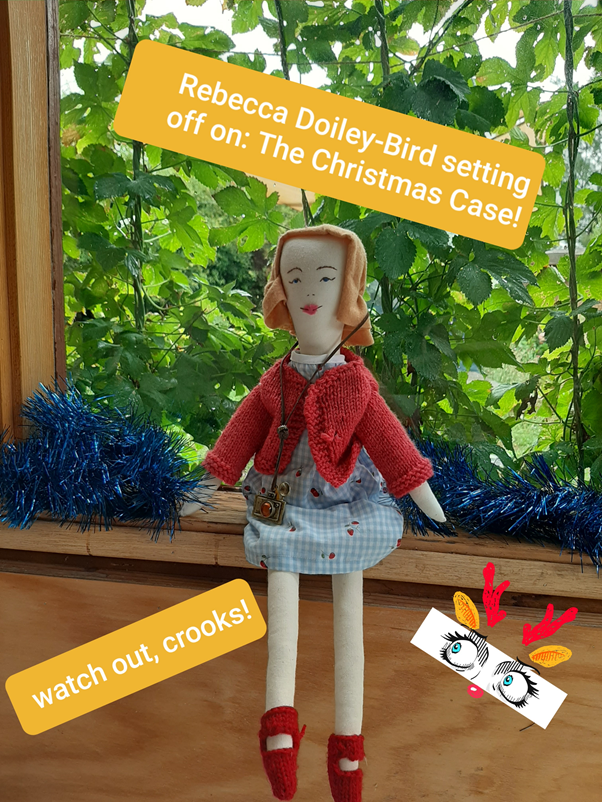
Every year, I like to offer readers a fun little seasonal story. This year, it’s Rebecca Doiley-Bird and the Christmas Case, featuring a doll from the gorgeous Doiley-Bird series created by my talented friends at Granny Fi’s Toy Cupboard.

Rebecca Doiley-Bird and the Christmas Case

By Sophie Masson

Rebecca Doiley-Bird was fed-up. Out of sorts. Bored. Restless. Frustrated. And just about every other kind of tedious feeling of that sort.

She shouldn’t be bored. She knew that. She was one of the famous Doiley-Birds, a family of world-famous girl detectives who solved mysteries big and small. And each of the sisters had their own special skill. Rebecca’s was photography. With her trusty camera, she had snapped more shots of fleeing criminals and dastardly deeds than most of us have had hot breakfasts. She’d been in all kinds of sticky situations, and unmasked all kinds of villains. But that was the problem. Right now she was on a different sort of case, all on her own, one her sisters didn’t even know about. But what it mostly meant was that she had to sit by a window and wait for her quarry to come out of the house opposite. And they hadn’t moved. Not one inch, not one second! Nobody came into that house, nobody came out of it. It was hours since Rebecca had first got here and in all that time not a soul had been and gone in the place across the street. She was beginning to think she had made a mistake and her hunch had not paid off.

To make matters worse, it was nearly Christmas and Rebecca had not even started shopping for presents. Each year, it was the same. Each year, she promised herself she’d start earlier. Each year, she was the last one to finish. Often it was at the last minute on Christmas Eve that she finally rushed out and bought something. The others all had such good ideas, and sometimes they didn’t even buy presents, but made them. Like Lizette, for instance, who created cool individual handbags—Rebecca treasured hers from last year—and Veronica, who made up new crossword puzzle books for everyone. Rebecca could have given photographs. But she didn’t think those were good enough presents, especially as all her photographs were of crime scenes and stolen loot and crooks caught on camera.

At that moment, there was a movement in the house opposite. Not much, just the twitching of a curtain, and the glimpse of a face, but it was enough. Rebecca raised her camera and took a quick shot, and another, and another. Her heart beat fast. This could mean the case was about to break at last.

Forgetting all about the agony of choosing Christmas presents, Rebecca watched with eagle eyes as the curtain twitched back and in a few moments longer, the front door of the house opposite opened and someone came out. Rebecca took photo after photo. As the person headed down the steps and into the street, Rebecca was already grabbing all her things and racing down the stairs and into the street herself. Keeping a discreet distance between herself and her quarry, she followed them with an unhurried step. 

On they went, into the next street and the next. And there they were, in front of the biggest department store in town. Rebecca’s quarry walked in. Her heart beating even faster, Rebecca took a quick shot of the person going into the store, then hurried after them.

The store glittered with Christmas garlands and lights. Green and white and red trees were decorated with shining baubles, and jolly music filled the air. The store was packed with people, with armfuls of gifts, wrapped with big bows, and children running around everywhere, saying, oh look at that! And that! And that!

But Rebecca took no notice. She was much too busy. Grimly, she followed her quarry up the escalators, to the next floor and the next and the next.  They didn’t turn around. They did not seemed to have noticed they were being tailed by a camera-wielding Doiley-Bird in red shoes. Thank goodness!

At last, the quarry reached their destination. After all the glitter and noise of downstairs, it was dark there, and quiet. The figure plunged through a doorway without looking behind them. Rebecca stopped. Dare she go in after them?

Of course she would. She was a Doiley-Bird! Taking a deep breath, she marched over to the doorway. As she did so, lights snapped on, revealing a sign. SANTA CLAUS CAVE. More lights came on. Rebecca blinked. Her heart beat the fastest it had ever done. And then she stepped boldly into the light and called out, ‘Diamond Dan, alias Santa Claus, you’re nicked!’

In the next breath she gasped, ‘Oof!’ as a figure in red and white came barrelling out of the Cave, sack over his shoulder, knocking her down. But either Diamond Dan was dazzled by the lights or it was Rebecca’s lucky day, but the thief tripped and fell, twisting his ankle as he went down. The sack flew out of his hands, and a glittering shower of jewels—necklaces, bracelets, rings, earrings, and even tiaras—spread all over the floor like a river of stars.

Rebecca’s hunch had been right. Diamond Dan had been using Santa’s sack to store all his ill-gotten gains and that was the very day he was planning on taking it all away!

‘How did you guess?’ croaked Diamond Dan, as Rebecca, snapping photos (for evidence, of course!) stood guard over him, before the police arrived to take him away. ‘Yes how did you?’ asked Rebecca’s sisters, later.

‘It was simple,’ said Rebecca. ‘I couldn’t stop thinking about Christmas shopping. And that made me think of Santa. And his sack. And so when I saw Diamond Dan come out of his house, dressed in a Santa suit, I knew what he was up to!’

‘Curses!’ said Diamond Dan, but Rebecca’s sisters said, ‘Wow!’ And that made Rebecca feel good. Very, very good. Until she remembered. She still had one case to solve. And that was a hard one to crack. What was she going to get her sisters for Christmas?

But maybe you can solve that for her 🙂

A Christmas story to enjoy: Barney Brown and the Christmas Cake

It’s become a bit of a tradition for me to feature on Christmas Eve on this blog one of my Christmas stories, and this year I’d like to feature one which was published in the fabulous anthology A Christmas Menagerie(edited by Beattie Alvarez, Christmas Press, 2017) and illustrated by the wonderful Ingrid Kallick. It’s called Barney Brown and the Christmas Cake. The gorgeous illustration featured here is from the published story in the anthology, and you can also get it as a poster, card, print, Tshirt, phone case and lots of other things at Ingrid’s Redbubble store. (By the way, the story is also available–without illustrations–at that fabulous site Read Me A Story, Ink.)

So here it is, my story of a young bear unexpectedly waking up to a surprise Christmas…Hope you enjoy it. Merry Christmas, happy New Year, and wonderful, peaceful holidays to all of you, and many thanks for visiting Feathers of the Firebird in 2019!

Barney Brown and the Christmas Cake

By Sophie Masson

Barney Brown woke up suddenly. The sun shone through the windows of his den and he thought it was spring. So up he got and looked out.

‘Oh my goodness,’ said Barney Brown. It didn’t look like spring out there. Yes, the sun was shining but the ground was all snowy and so were the fir trees. It was still winter!

‘Dearie me,’ said Barney Brown, and he was about to go back to bed when all at once he spotted something bright, at the corner of the glade. It was a tree, a small tree, but not covered in snow, like the others. This tree sparkled in the sun with what looked like red and green and silver berries. And under the tree was a little table, with a little man in a pointy cap standing behind it. On the table was a tray of round dark things.

‘What’s that?’ said Barney Brown, wrinkling his nose, for just then, a smell came to him. A rich, wonderful smell! A smell that made his stomach rumble and his mouth water.

Out stepped Barney Brown, into the winter snow. He’d never gone outside in the winter before and it felt funny, though of course he had a fur coat on so he wasn’t cold at all.

Pad, pad he went, making big paw-shaped patterns in the soft snow.

‘Mmm, mmm,’ said Barney Brown, as he got closer and closer to the sparkly tree, and the little table, and the glorious smell. Oh, the glorious SMELL!

‘Hello,’ said Barney Brown, politely, to the little man in the pointy cap. Now any other person might have run away, seeing a big brown bear come lumbering up, but not this person. Oh no! He was a Christmas elf, and they are not scared of anything.

‘Hello back,’ said the elf. ‘Have you come for one of my Christmas cakes?’

‘I think I have,’ said Barney Brown, happily, looking down at the table.

‘Good.’ The elf picked up a cake. ‘That will be one silver coin,’ he said.

‘I don’t have any money,’ Barney Brown said, sadly.

‘Then take a cake with my compliments,’ said the elf. ‘After all, it’s not every day a bear wakes up in winter.’

Barney Brown didn’t wait to be told twice. The cake tasted as delicious as it smelled and he licked his lips to catch the last crumb. Then he looked longingly at the rest of the cakes. He could easily have eaten them all!

‘Sorry,’ said the elf, ‘but that’s it. It’s Christmas Eve and all my other customers will be coming to pick up their Christmas cakes. Besides, they might be a bit scared if they see a bear out and about in winter.’

‘I see,’ said Barney Brown, even more sadly. But as he turned to plod off, the elf said, ‘Wait!’

Barney Brown thought he had changed his mind. But no, the elf just handed him a leaflet. ‘Christmas cake recipe’ it read.

‘Oh. Thank you,’ said Barney Brown, doubtfully.

‘Now you can make your own, with this magic recipe,’ said the elf. ‘Merry Christmas!’

Back home, Barney Brown looked at the recipe.

‘Flour, butter, sugar, eggs, dried fruit, nuts,’ he read out loud. ‘And some honey,’ he added. ‘It doesn’t say honey in the recipe, but I’m sure that’s a mistake. All cakes must have honey.’

He opened his cupboards. There was plenty of honey. Jars and jars of it. And some flour and sugar. Even frozen butter he’d forgotten in the back pantry. But no eggs. No dried fruits. No nuts.

The elf had said the recipe was magic. But how?

Barney Brown waved the recipe about. ‘I need eggs, fruit and nuts,’ he told it. Nothing happened. ‘Abracadabra, eggs, fruit, nuts!’ he tried again. Nothing happened.

‘Oh dear,’ said Barney Brown. ‘I think the elf made a mistake. The recipe isn’t magic at all. Now let me think. If it was spring, I could go into the forest and find birds’ eggs. If it was summer, I could find berries. If it was autumn, I could find nuts. But it’s winter, and I don’t know what I can find. Maybe I have to get someone to help me. Someone who is usually awake in the winter.’

He went out again. The table was gone, and the cakes, and the elf. But the sparkly tree was still there. And a fox was sitting under it. A fox with a beautiful white coat.

‘Hello,’ said Barney Brown.

‘Hello back,’ said the fox, a little surprised to see a bear out and about.

‘I wonder if you can help me,’ said Barney Brown. ‘I’m making a Christmas cake, and I don’t have any eggs or fruit or nuts.’

‘Well,’ said the fox, ‘There are some hens I know. They’ll give me eggs.’

‘Really?’ said Barney Brown, politely. ‘That is very kind of them.’

‘I will bring you back a basket full,’ said the fox, and she trotted off.

How nice people are, thought Barney Brown and he was about to plod off again when a voice said, ‘Has Belladonna gone?’

‘Er—maybe. Only I don’t know who Belladonna is,’ said Barney Brown, looking around for the person who had spoken.

‘That fox,’ said the voice. A lump of snow moved. Only it wasn’t a lump of snow, it was a hare, with pure white fur.

‘Hello,’ said Barney Brown.

‘Hello back,’ said the hare. ‘Why aren’t you sleeping? Bears always sleep in the winter.’

‘Yes. Only today I woke up. Because I smelled a smell,’ said Barney Brown. ‘Christmas cake smell! And now I’m going to make my own. Only I haven’t got any fruit, or nuts.’

‘I’ve got some fruit,’ said the hare, at once. ‘Blackberries in a jar. Will that do?’

‘Oh yes!’ said Barney Brown. ‘That will do very well.’

‘Then I’ll fetch it,’ said the hare, and off he bounded.

People are really very nice, thought Barney Brown, just as a squirrel hopped down from a branch of the sparkly tree. She had been hiding behind a red bauble almost the same colour as her fur.

‘Hello,’ she said.

‘Hello back,’ said Barney Brown.

‘I heard everything,’ said the squirrel.

‘Oh,’ said Barney Brown. ‘I’m sorry to disturb you.’

‘Not at all,’ said the squirrel. ‘Now then. Snowy has blackberries, and Belladonna has eggs. Guess what I have?’

‘Nuts?’ asked Barney Brown.

The squirrel looked a little disappointed that he’d guessed so easily, but she nodded. ‘Yes. I have nuts! Lots of nuts! A pantry full of them! How many do you need?’

‘I think a few,’ said Barney Brown, cautiously.

‘Very well. I’ll bring lots!’ said the squirrel. ‘Never let it be said that Hazel Conker is stingy!’ And off she scampered.

People are very very nice indeed, thought Barney Brown, as he went padded off. Now I can make my Christmas cake.

Back home, he took out a bowl, and put in the flour and the sugar. He melted the butter. Just then there was a knock on the door. It was Belladonna, with six eggs. Two brown eggs and two white eggs and two speckled eggs.

‘Thank you,’ said Barney Brown. ‘And please stay,’ he added politely.

Now came another knock on the door. It was Snowy the hare, with a jar of blackberries. ‘Thank you,’ said Barney Brown. ‘And please stay.’

Snowy looked at Belladonna warming herself by the stove. ‘It’s all right. We are all friends here,’ said Barney Brown. ‘Isn’t that right, Belladonna?’

‘Of course,’ grinned the fox.

Just then came the third knock on the door. And there was Hazel Conker, with a bag of nuts that was almost as big as she was.

‘Thank you,’ said Barney Brown. ‘And please stay.’

While his new friends watched, Barney Brown chopped and mixed and beat and stirred. In went the nuts and the fruit and the eggs, joining the butter and the sugar and the flour. ‘And last but certainly not least,’ said Barney Brown, ‘in goes the honey.’

‘It looks wonderful,’ said Hazel and Snowy and Belladonna, crowding around to look.

‘But the smell,’ said Barney Brown, anxiously. ‘What about the smell?’

‘You have to wait,’ Belladonna said.

‘For the cake to cook,’ said Snowy.

‘Put it in the oven,’ said Hazel.

So Barney Brown did. While they waited for that cake to cook, they played cards and drank pine tea and talked. When night fell and the stars came out, it was time for Barney Brown to open the oven. All his new friends crowded around, sniffing the air.

‘That smell!’ said Belladonna, as Barney Brown lifted the cake tin out.

‘That amazing smell!’ said Snowy, as Barney Brown put it on the table.

‘That is the best smell ever!’ said Hazel Conker.

But Barney Brown could not speak. That glorious smell was filling his nostrils and he had new friends around him to share the delicious cake they had made together. And it seemed to him he could hear an elf’s voice on the air: I told you it was a magic recipe. Merry Christmas, Barney Brown!

New page on my blog for Read Me A Story, Ink

Delighted to announce that I’ve got a new page on this blog  featuring links to stories of mine that you can read and/or listen to at the fabulous site, Read Me A Story, Ink, a great, free resource for parents, teachers and children, created and run by booklover, bookseller and reader Robert Topp.

At Read Me A Story, Ink, you can find searchable lists of short stories for children by hundreds of authors, with the full text available for download and print out, and some stories also provided as appealing audio readings by Bob himself. A guide to reading age is also given, along with the name of the publication the story first appeared in, and all authors have given their full consent for stories to appear on the site.

Eight of my stories appear on the site. Have a look at my page where you’ll find links to all of them.

A favourite Christmas memory…

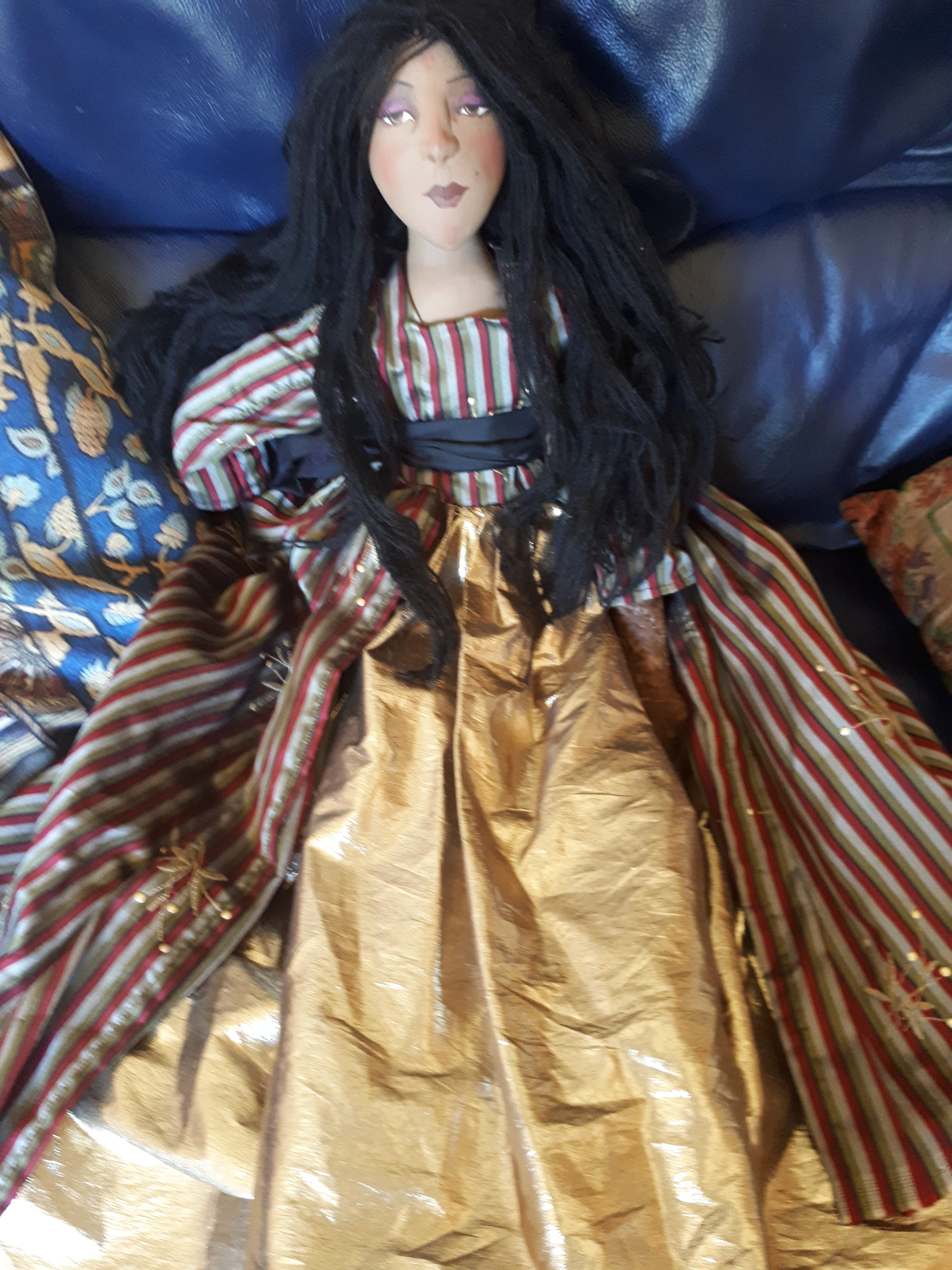
Last year, at this festive time, I republished a piece I’d written in English and French for a magazine, about my childhood Christmasses. This year, as a favourite Christmas memory, I thought I’d offer instead a magical Christmas story, The Dolls’ First Christmas, which was published in the Random House Australia anthology, Stories for Seven Year Olds(, edited by Linsay Knight, 2014). It was inspired by my very talented friend Fiona McDonald giving me a beautiful handmade doll she’d created–and who I immediately named Esmeralda, after one of my favourite characters in a favourite childhood book of mine, Le Capitaine Fracasse, by Theophile Gautier..

Hope you enjoy–and the very best of wishes to you all for the festive season!

The original Esmeralda

The Dolls’ First Christmas

by Sophie Masson

Christmas Eve in the toyshop. In Miss Jeffries’ toy-shop, the last delivery had just arrived. Teddy-bears and tin toys. Puppets and pull-alongs. Rocking-horses and doll’s houses. And Esmeralda.

She arrived in an ordinary box, like the other dolls:

Sarah and

Donna and

Laura and

Clara and

Gloria.


Gloria, haughty queen of the dolls in Miss Jeffries’ toy shop, sat on her glittering throne in the window. Everyone gasped when they saw Gloria and said how beautiful she was. But no-one had bought her yet. She was too special. She cost too much.

Esmeralda was beautiful too, but in a different way. Her hair wasn’t golden, like Gloria’s, but black, in great long curls. Her skin wasn’t peaches and cream, like Gloria’s, but honey and tea. Her eyes weren’t sky blue, but nut-brown. Her stripy dress was splendid—but she did not have elegant satin slippers, like Gloria. Her feet were bare.

Miss Jeffries smiled as she set Esmeralda up on green velvet. ‘There, now, ‘ she said. ‘We’ll have two Queens. A snow queen. And a sun queen. You’ll be friends.’

But can two queens really be friends? Gloria didn’t think so. Esmeralda didn’t think so. Each thought she was better. Each sat in her splendour and looked haughtily away and thought she would be the first to go.

It was a long busy day. Sarah and Clara and Laura and Donna left and two boy dolls and six tin toys and eight teddy-bears and three puppets and two fairy dolls and a mermaid doll and two clowns and four baby dolls, plus a brace of Barbies. But not Gloria. And not Esmeralda, either.

At last, and very late, Miss Jeffries was about to close up. A man rushed in, shouting, ‘I work for Mr Darling, the millionaire. He sent me to buy a Christmas gift for his daughter Cherie. Her mother’s dead and her father has no time. I need your best doll. Your very best doll.’

‘There are two,’ said Miss Jeffries, calmly. ‘Esmeralda, and Gloria. Which one would Cherie like best? Sun queen or snow queen?’

The man stared.  ‘Oh! I have no idea. But I know she’ll have a tantrum if she doesn’t like what I choose. She’s always having tantrums. Blow it. I’ll take the two.’

‘Good choice,’ beamed Miss Jeffries, ‘they belong together, no question.’ She put them in their boxes and tied a pretty ribbon around them and waved a cheerful goodbye as the man hurried out, muttering to himself, ‘After all, if that brat doesn’t like one of them, she can always give it to someone else. Or throw it away. They’re only dolls, after all.’

Poor Gloria and Esmeralda! They had been made with such care. Their dresses were hand-stitched, their hair hand-knotted, their faces hand-painted. They’d been made to be loved. And now here was someone saying they might just be thrown away, like some cheap, broken factory toy.

Dolls may not talk in words and their red satin hearts may not beat but they have other ways of communicating. Gloria and Esmeralda sensed each other’s fear. At first, each thought it didn’t matter. Whichever doll Cherie liked best would be safe. But then– what if Cherie got sick of her? She might be worse off, then. While the other one might have gone to a good home. To a little girl who loved her.

Most dolls are airheads, the space under their pretty china or plastic skulls quite hollow. But Gloria and Esmeralda had cloth faces, pulled tightly over wads of stuffing. In the middle of the stuffing, each had a long, bright pin, left in by mistake. So their thoughts were sharp and they each thought the same thing at the same moment. They were queens. Snow queen, sun queen. They might not be friends, but sometimes queens put rivalry aside for the good of all. They would do something together, not apart. But how?


At the Darling mansion, the man gave the boxes to the housekeeper. She took them to a room where a tall, twinkling Christmas tree stood, with piles of presents under it.  The housekeeper shook her head, sadly. ‘More things going to waste on that spoilt child,’ she said.

The dolls lay under the tree for hours. No clever ideas came to them. Soon, they knew, it would be too late.

And then, just after midnight, there was a clatter of hooves on the roof above. Moments later a deep voice grumbled, ‘Why do I come? She has so much already!’

Now all toys, no matter how new, know what happens Christmas night. So Esmeralda and Gloria knew the grumbler wasn’t Mr Darling, or any of his staff. It was that jolly visitor, come from a magical world, whose job is to give every child in the world a present. The humans call him Santa Claus.

The dolls’ red satin hearts swelled and the sharp pin in their heads glittered as they tried to struggle out and beg for his help. They only made a tiny rustle, but Santa Claus’ sharp ears pricked up. And his kind eyes, that see into the heart of every child everywhere, saw right into those two red satin hearts. With a little chuckle, he opened the boxes. He gazed in at Esmeralda and Gloria. ‘A Christmas gift for you, little ones?’ he said. He touched each of them, very gently. A warm, golden stream of light seemed to flow from his fingers, into the dolls’ painted eyes. ‘Very well, then. I give you the power of love. And a very merry Christmas to you both.’

And with that, he was gone. The dolls heard the clatter of his reindeer’s hooves on the roof, then nothing. They waited in the warm piney darkness, filled with hope now.

Soon, it was morning. The dolls heard a man’s voice, trying to be jolly. ‘Well, Cherie, aren’t you going to open your lovely presents? Start with those two boxes.’

‘Yes, Daddy.’  A thin, flat, voice. Gloria and Esmeralda were afraid again. This child would not love them, no matter what Santa Claus said. All was lost.

Next thing, the wrapping-paper was roughly ripped, the lids of the boxes pulled off, so quickly that the dolls flipped helplessly out, onto their faces.

Mr Darling cried, ‘Really, Cherie, be careful! Look how beautiful they are! ‘

‘I don’t like dolls,’ shouted Cherie. ‘They stare and stare and they’re stupid! Stupid!’

‘Oh, nothing’s good enough for you, I’m tired of it, tired, do you hear!’ yelled her father. And he went out, slamming the door.

Cherie glared at the dolls. She picked them up, roughly. Gloria and Esmeralda thought their last hour had come. They would be torn limb from limb, their bodies shredded, their heads wrenched off. But as they helplessly looked up they suddenly saw in the child’s eyes, under the anger,  a sadness that  made their red satin hearts clench and their sharp minds ache. In that instant, something warm and golden and loving flowed from the dolls to the child, seeping into Cherie’s unhappy, lonely eyes.

She stared at them. Her lip trembled. She said, faintly, ‘I don’t like dolls..’ Shyly, she touched Esmeralda’s hair, then Gloria’s. She stroked their clothes. She held a doll in the crook of each arm. She whispered, ‘Most dolls are stupid,’ but then added, ‘not you,’ softly.

That is how Mr Darling found them when he came back, ashamed of shouting at his daughter on Christmas Day, wishing that he’d chosen her present himself, telling himself that he must try and understand, even if she made it hard.

But she smiled at him and said, ‘Daddy, do you know what their names are? Gloria and Esmeralda. I think they must be good friends, don’t you? Oh, Daddy, I love them already.’

And as Mr Darling sat happily with his daughter, Gloria and Esmeralda lay happily in her arms. Can two queens really be good friends? Why not? Anything was possible, on this beautiful Christmas morning.

The Koldun’s Daughter

Today, I am posting something different: an enigmatic short story which appears in my novel, Trinity: The False Prince(Pan Macmillan, 2015). The Koldun’s Daughter is a story-within-a-story, supposedly  written by ‘A.I.Denisov’ an aspiring writer who had been killed many years before, and whose death is one of the mysteries investigated by my character, ex-policeman Maxim. I wrote it like a fairytale, against what appears to be a timeless background but which in fact subtly gestures to the very early years of the Bolshevik Revolution. It functions in my novel as both a real clue and a red herring, but it also works quite well as a story in its own right, so I thought readers might enjoy it as is!

And of course, if it whets your appetite for the novel itself, and its predecessor, that’s a bonus 🙂

(A ‘koldun’ by the way, is traditionally in Russia a sorcerer, or male witch. You can read a bit about the background to that here.)

The Koldun’s Daughter

There was once a young woman named Nadia who lived alone in a small cottage in a deep forest. The forest had been her home for as long as she could remember, though she had not been born there. Nadia’s mother had brought her there when she was just a baby, for safety.

Nadia’s father had died even before she was born. She did not know his name, for her mother said it was too dangerous to say it, but she knew he had been a famous koldun. ‘He was a great and kind man but he had deadly enemies,’ her mother said, ‘and the worst of them all was Lord Winter, who had vowed to destroy him.’

Even though the girl had never seen her father or known his name, she always felt close to him. Her mother had brought with her from that other place, far away, a small leather bag, finely tooled.

In it was a tooth, and a piece of bone, and a fragment of a wooden cross. They had all once belonged to the koldun. Nadia’s mother herself had gathered the relics one terrible night, when Lord Winter and his men had finally hunted down Nadia’s father, killed him, and burned his body to ashes. ‘They thought they would destroy his very soul,’ said her mother. ‘But it lives on in us, and especially in you. Never forget that, Nadia.’

The leather bag with its precious relics was kept in a metal box, buried near an old rose bush that grew at the cottage door, for the koldun had loved roses. In that special spot were also placed other things, such as birds’ eggs, and feathers, and the bones of certain animals, for extra protection. Nadia would sit there often, by the rose bush, and the spirit of her father, the great koldun, was with her then, by her side.

The koldun’s greatest gifts had been in healing and prophecy, and the girl’s gifts were close to that. She could heal a sore just by touching it, and her skills at bone-setting were second to none, as she showed by her work on injured birds and animals of the forest. But despite this she was not really a healer, and her path did not lie in prophecy either, though she sometimes caught flashes of things happening in the wide world beyond, things she could not really understand, for she had only ever lived in the forest. But her mother knew what it meant, and it made her believe even more that they must never leave the forest, for terrible things were happening in the world, and rivers of blood swept through the land. The koldun had predicted it all, she told Nadia, and it was all coming to pass, just as he’d said.

Nadia only saw those flashes because of her own special gift. Mostly, she heard those whose tongues were silent; she saw those whose presences were fleeting. In short, she saw and heard the dead. And so she never felt lonely, in that quiet place. It was not only her father whose presence she knew, but other people, who had once lived in that cottage, and in the great forest beyond. But Nadia did not just know human phantoms; she could also sense the long-gone animal ghosts of the forest, and the animals who lived there now sensed that too, so she could walk unmolested among wolves and bears as easily as among deer and rabbits.

Though her mother often spoke of the koldun, she never spoke of her own past, at least not the past before she had met Nadia’s father. ‘My true life began that day,’ she said. She had fallen in love and left her parents, her prospects, everything to follow the koldun. But their joy had not lasted long, for only a few short weeks after, he was dead. And Nadia’s mother, carrying Nadia in her belly, had fled far from her old home and come to the forest, for she knew that otherwise the koldun’s enemies would hunt them down too. She had come on the cottage, not long empty, and in that place had made a cozy home for herself and her child, trapping small animals, growing vegetables, gathering wood, cooking good food and teaching her daughter many beautiful songs, for music was Nadia’s mother’s special gift. And there they had stayed for sixteen long years.

But then one morning, not long before Nadia’s sixteenth birthday, her mother did not wake up. Her heart had suddenly given out in the night and she had gone to rejoin her beloved koldun. Nadia was now all alone. She buried her mother close to the rose bush and tried to live as before. It was what her mother wanted, she knew that, because she could see and hear her mother now in the ghost-world, just as with the others.

And for a time she managed it. She was a strong and clever girl, and a good hunter. She knew all the ways of the forest and to her it was like a larder might be to a city girl. And she still had the company of her ghosts.

But after a time, strange dreams began to come to her. Dreams filled with new things, new people, new places. And in many of them, the same two figures appeared. Two young men. One, a soldier called Philip. The other, a painter named Yannik. These names were strange to Nadia, and she did not know where they had come from, she only knew the names were on her lips when she awoke. Both young men were handsome, each in his own way – Philip dark and delicate of feature, Yannik blond and strong of face. In each dream, Nadia’s name was called by one or other of them, but while Philip called to her in a voice soft as sorrow, Yannik’s voice was a summons like the ringing of a bell.

Presently Nadia began to feel that these men were not just in her dreams but were real people, somewhere. It was not just in her own mind she thought this; her father the great koldun told her so. She who heard the voices of the dead was now hearing also the voices of her future, his spirit whispered to her, and she must answer those voices before it was too late. So the day of her seventeenth birthday, she made ready to leave the place that had been her home for as long as she could remember. She packed food and clothes and her old hunting rifle. She dug under the rose bush and took out the box. Gently removing the leather bag containing the precious relics, she wrapped it in soft cloth and placed it in her bodice, next to her heart. Around her neck she slipped the only thing her mother had kept from her old life: a small enamel locket, with a miniature painting of a house in its heart. And so Nadia’s mother and father would stay close and travel with her, wherever she went. She would never be alone in the big world beyond.

Before she left, she said goodbye to all the ghosts of the forest, and blessed their memory. She did not know if she would be back. She did not know what the future might hold. That was not her particular gift. She only knew that she must go on this path.

Leaving the cottage behind her, she walked and walked. After two days, she came to another lonely cottage and there met an old hunter who lived there with only his equally old dog for company. The hunter gave her some more food and told her that she should not try and leave the forest, for he had heard that many bad things were going on in the world outside. But Nadia did not trust the old hunter; there was a look in his eye that reminded her of an outcast lone wolf. Such creatures could be dangerous. So she bade a polite good day to him and kept on her way.

She passed a few more cottages on her way, but none of them had people in them. At last, three days later, Nadia emerged from the forest into a large village. The people who lived there were not a friendly lot, and neither were the ghosts who clustered around the living like sticky shadows. At first, the villagers would not answer Nadia’s questions about where she might find a soldier called Philip or a painter named Yannik; indeed, they looked at her as though she was mad. They were pinched-faced people with eyes that seemed made of stone and mouths of cold steel. But Nadia was not put off – she could sense the fear in them, and the pain, and she knew that they did not really wish her harm. She had no idea about money because she had never seen any but she knew that people might expect something for their answers. So she thought they might like a song in exchange; but when she started singing, their eyes grew round as the full moon and the fear was in them worse than before. ‘You must not sing such songs, someone might hear you,’ one of them whispered, at last.

‘You had better leave,’ added a woman, ‘or you will bring misfortune on us.’

And then a third person, a young boy, said, ‘We should tell him, we should, you know that!’

Nadia did not know who ‘him’ was but from the expressions on their faces, she knew she probably did not want to find out. So she took to her heels and fled from that mad village and she did not stop till she had left it far, far behind. She did not understand what she had seen and heard and for once her ghosts were not of use to her. Even her father, the koldun, did not speak or make himself known in any way, and the leather bag which contained his precious relics felt cold against her breast, as did her mother’s medal locket.

But as she went along the road that led far away from the village, a little cat came out of the bushes and joined her. At first, she did not take much notice of it, for it slipped like grey smoke in and out of the shadows behind her. But then she turned around and looked at it and the cat looked back. As their eyes met, she began to see them, all around them. Ghosts and more ghosts, more than she’d thought might exist in the whole world. They were streaming past her with their eyes vague and their mouths open, but they did not speak and neither did they look at her. It was as though she were the ghost, and not they. And she knew then that the cat had been sent to show her. Sent to her by the koldun, her father.

She whispered kind words to the cat, and it came fearlessly to her and weaved around her legs. She said to it, ‘Show me the way,’ and it did, stalking in front of her with its tail in the air. So on they went and on until they reached a town. To Nadia’s eyes, it seemed huge, though in truth it was just a small town, bigger than the village, but not by much. But that was not what struck her most. For in that town was a place that Nadia recognized from a story told by her mother. ‘It’s a citadel,’ she told the cat, ‘where great men lived a long time ago, and it is surely a sign, like you.’

The walls of this citadel were white, its domes were silver and in one tower there was a large bell. As Nadia and the cat came closer, the bell began to toll, and at once she thought she heard, in the sound of the bell, the voice of Yannik, the golden-haired man from her dream. ‘He is there, he and Philip,’ she told herself, and marched on.

They came to a stone archway, alive with figures that loomed like golden shadows beneath a veil of new white paint. Another eye but Nadia’s would not have seen the figures beneath the white paint, but her gift was to see ghosts, even those of hidden art. Standing in the archway were two men that she knew at once were like the old hunter, only worse, much worse, for around them swirled black-clad ghosts in long robes, weeping tears of blood. These guards had big moustaches and ugly uniforms and large rifles in their hands. They did not look at all welcoming. But she would not turn back, not now. Her father’s relics against her breast were warm again, the cat was at her heels like grey smoke, and she knew she was in the right place.

She had to find a way to get past the men at the gates. And she could not ask the ghosts to help. Not the ghosts of the people anyway, for the old world that they had lived in before they’d been killed was gone, and fear and confusion had trapped them in a place of endless mourning so they could neither hear nor see her. But the cat whispered in her mind that the animal ghosts were a different matter. They sensed her, as did the living ones, and it was them she called to distract the guards so she might slip through.

So that is what she did, and in through the gates she went then, with the cat still at her heels, while the guards, their attention taken by the sudden howl of a wolf, seemingly close by, and the skittering of dozens of small feet, seemingly all around them, swung wildly here and there, trying to get a fix on the sudden invasion of unseen animals. Later, they would tell each other, fearfully, that they had heard and seen nothing, and would never speak of it to any other living soul.

Nadia ran through the courtyard beyond the gate, heading for the most magnificent building she could see, with shining silver domes against the blue, blue sky. All around, she could see signs of devastation; barns with doors ripped open; great gouges in the earth; meadows strewn with bits of cloth and fragments of stone. Still she ran, till she came at last to what had once been a garden, now overgrown with weeds. In the midst of this wilderness was a man standing at an easel, and the sunlight glinted on his hair, which was golden as straw. ‘Yannik!’ called out Nadia, and the man turned and looked at her. His eyes were blue-grey, soft as mist.

But before he could say anything, another man came walking across the garden. Though he was tall, and dressed like an officer, with a peaked cap, his features were delicate under jet-black hair, and Nadia knew him at once, too. ‘Philip!’ she cried, and he stopped, and looked at her with eyes as blue-green as the sea.

Faintly, she heard her father’s ghost, saying in her heart, ‘It is as it should be, my daughter, and soon you will be with child. A great koldun, that child will become.’ But he did not say which man to choose, which would be the father. She looked for the cat, but it had vanished as suddenly as it had come.

Yet now she found she could look at the two men with the eyes of her gift, and she called out the ghosts from their pasts. And then she knew, and came towards them, smiling. ‘I am the koldun’s daughter,’ she said, ‘and I have come from the past so the future may live.’

Copyright Sophie Masson