On this Wednesday, September 15, at 6pm Australian Eastern Standard Time, we are going to be launching A Hundred Words for Butterfly with a fabulous online event, including interviews (of me and the narrator Sarah Kennedy), readings by the finalists of the #100words4butterfly comp, a virtual cocktail and pintxo party, games, and more!
You can join the event via the event page on Spineless Wonders Facebook or if you are not on Facebook, register via the booking link here (it’s free, but registering will mean you get all info, the link and a calendar reminder of the event).
Delighted to say that the first review of A Hundred Words for Butterfly has just appeared, on the Kobo website, which is one of the retailers where you can buy the book. It’s an absolutely lovely review by the fantastic artist Lorena Carrington. Here’s a short extract:
Sophie Masson’s A Hundred Words for Butterfly is a wonderful listen. The relationship and tension between twins Helen and Alex felt very real, and the gently unfurling relationship between Helen and Tony was refreshing and so lovely. And of course the wonderful descriptions of the towns and countryside – and food! – made me feel an intense longing for the Basque Country...
I am delighted to present to you the beautiful, atmospheric trailer made by Whiptail Productions for A Hundred Words for Butterfly. It features extracts from Sarah Kennedy’s lovely narration, to give you a taste for the feel of the audiobook. Enjoy!
Here are the perfect snacks to have with Abby’s gorgeous cocktails: pintxos!
Pinxtos (pronounced ‘pinchohs’) are the Basque version of tapas. They are very popular in the Basque country(and beyond!). San Sebastian, just across the Spanish border, is renowned for its pinxtos bars but there are lots of popular pinxtos bars in the French Basque country too, especially on the coast, in my mother’s family’s stamping ground of Biarritz, Bayonne, Anglet, St Jean de Luz and so on. And people make them at home for parties, family gatherings etc. They are pretty hearty and a plate of assorted ones can constitute a real meal! Pinxtos differ from tapas in that they are always served on bread( very often slices of baguette), with a toothpick holding down the topping(actually ‘pintxo ‘ literally means ‘spiked’). The toppings will often feature Basque staples such as tomatoes, ham, eggs, capsicums, fish, seafood, cheese, etc, but can be as simple or complicated as you like, and there’s no one right way to do it: it’s totally up to you what you do! Just the bread and the toothpick are the basics:-) Piment d’Espelette of course can add that authentic touch!
With most, brushing the bread with a bit of olive oil first is a good idea.
Here’s some ideas for simple Basque-inspired toppings to get you started:
Roasted capiscum with marinated squid/octopus;
Semi-dried tomatoes with soft goat’s cheese and a dab of cherry jam on top (the combination of cheese and cherries is very popular in the Basque country)
Black olive tapenade with Serrano-style ham or salami
Green olive tapenade with half a boiled egg and a sprinkle of piment d’Espelette or paprika
Grilled or barbecued prawns on cooked spinach
Marinated sardines or anchovies with caramelised onion
Mix of roasted vegs(eg capsicum, tomato, eggplant–or your choice) with roasted garlic
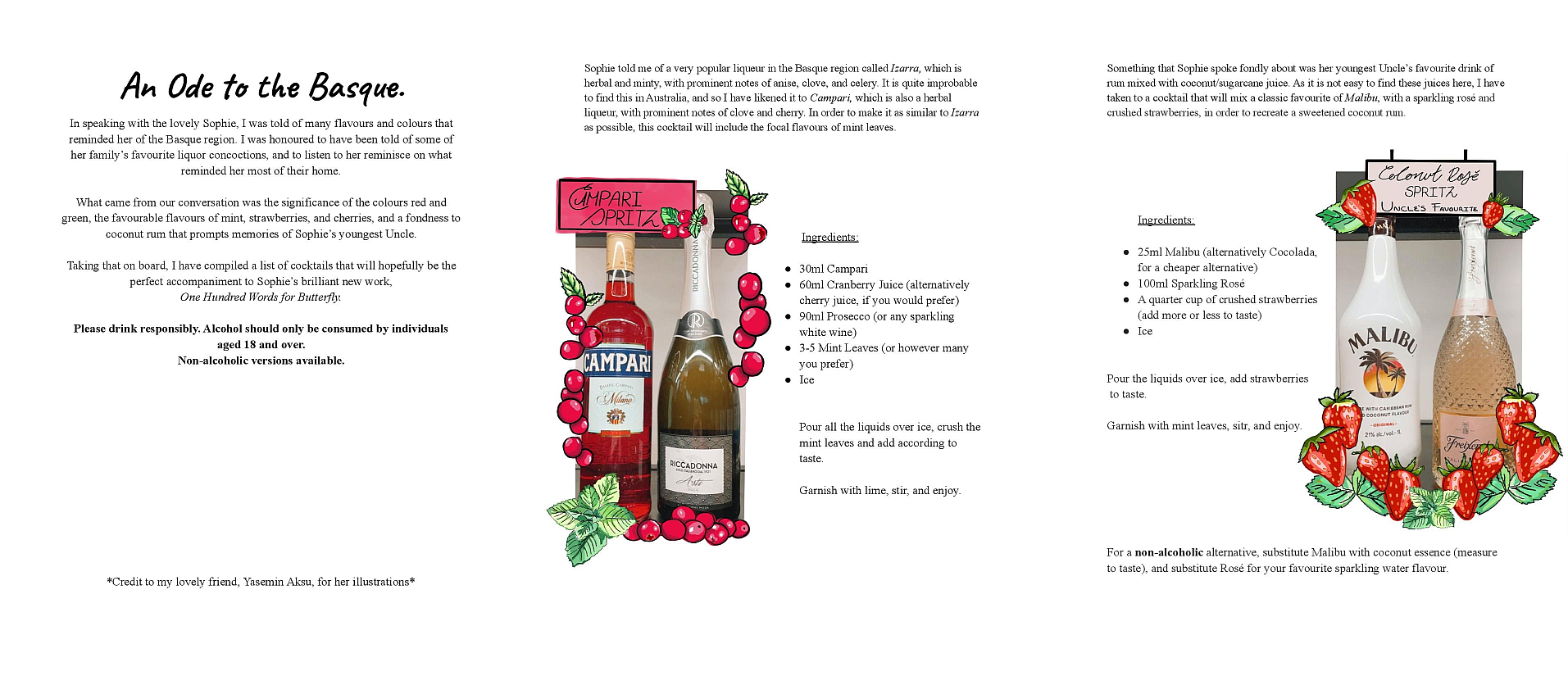
At the celebratory event online for A Hundred Words for Butterfly next week, there’s going to be a cocktail party, with everyone joining in from their own homes. And Abby Rose, marketing intern and a member of the wonderful Spineless Wonders team that have been creating the fabulous publicity for the book, has been busy concocting some fabulous cocktail recipes and ideas, themed around references to the Basque country and my family connections. Here, in images and words, are her fabulous creations, with explanations, ingredients and instructions! Thank you so much for this fantastic array, Abby!
I’m delighted to announce that just one week away from official release and our celebratory event, A Hundred Words for Butterfly is now available to buy at several online audiobook retailers across the world, including Authors Direct, Kobo, Nook, Google Play, Audible, Libro, Apple, Booktopia, and others.
The book is three hours and 10 minutes long, and superbly narrated by the wonderful voice artist Sarah Kennedy. Sound design and editing are by Martin Gallagher, and production is by Spineless Wonders Audio. Hope you enjoy it! And please do consider writing a review and sharing it on the retailer platforms, your social media, etc.
This week, the fully edited final ms of A Hundred Words for Butterfly went off to the publisher, Spineless Wonders Audio. It was an exciting moment, pressing ‘Send’. It’s been a real journey of discovery, writing the novel–or perhaps I should call it novella, given its length(just under 32,000 words)–and at times a bit of a challenge, but so enjoyable!
It’s turned out so well, pretty much exactly how I wanted it to be, and I think it will transfer beautifully to the audio form. I can’t wait for the next stage, as the book moves into production. And by the way, it was lovely recently to see it mentioned for the first time outside my blog, in an interview in Books+Publishing with Spineless Wonders publisher Bronwyn Mehan.
When I originally wrote The Ghost Squad, as part of my creative practice PhD, I also wrote a very short story called ‘The Ghost Ship’, which is mentioned in the novel as having been written in pre-Pulse days by Link, one of the devoted followers of ‘Hermes’, whose unpublished manuscript about the Hermes group appears as extracts throughout the book. Though it wasn’t included in the published novel (unlike in the PhD, where it appears as an appendix only) I thought readers might be interested to see it here. ‘The Ghost Ship’ is a story nested within a story nested within another story: because not only is it purportedly written by a fictional character in my novel, but also it is about another fictional writer creating a story while on an overnight stay in what may be a haunted house, the manor house of Fitton Howe.
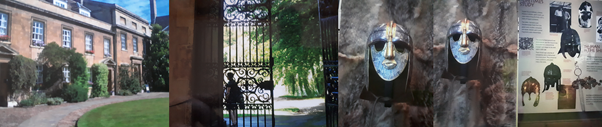
You may also be interested to know that the ‘Fitton Howe’ of the short story is inspired by the famous, evocative archaeological site of Sutton Hoo, in Suffolk in the UK, which I visited back in 2017 when I was in Cambridge on a month-long stay as a visiting scholar, during my PhD. (The site has recently also been the setting for a recent film called The Dig, which appeared on Netflix, but which does not mention the story of the spooky aspect of the extraordinary discovery of the buried ship, which you can read about here.)
Photo by Sophie Masson of replica of Sutton Hoo helmet at Sutton Hoo museum, 2017(original helmet held in British Museum)
The Ghost Ship
By ‘Link’
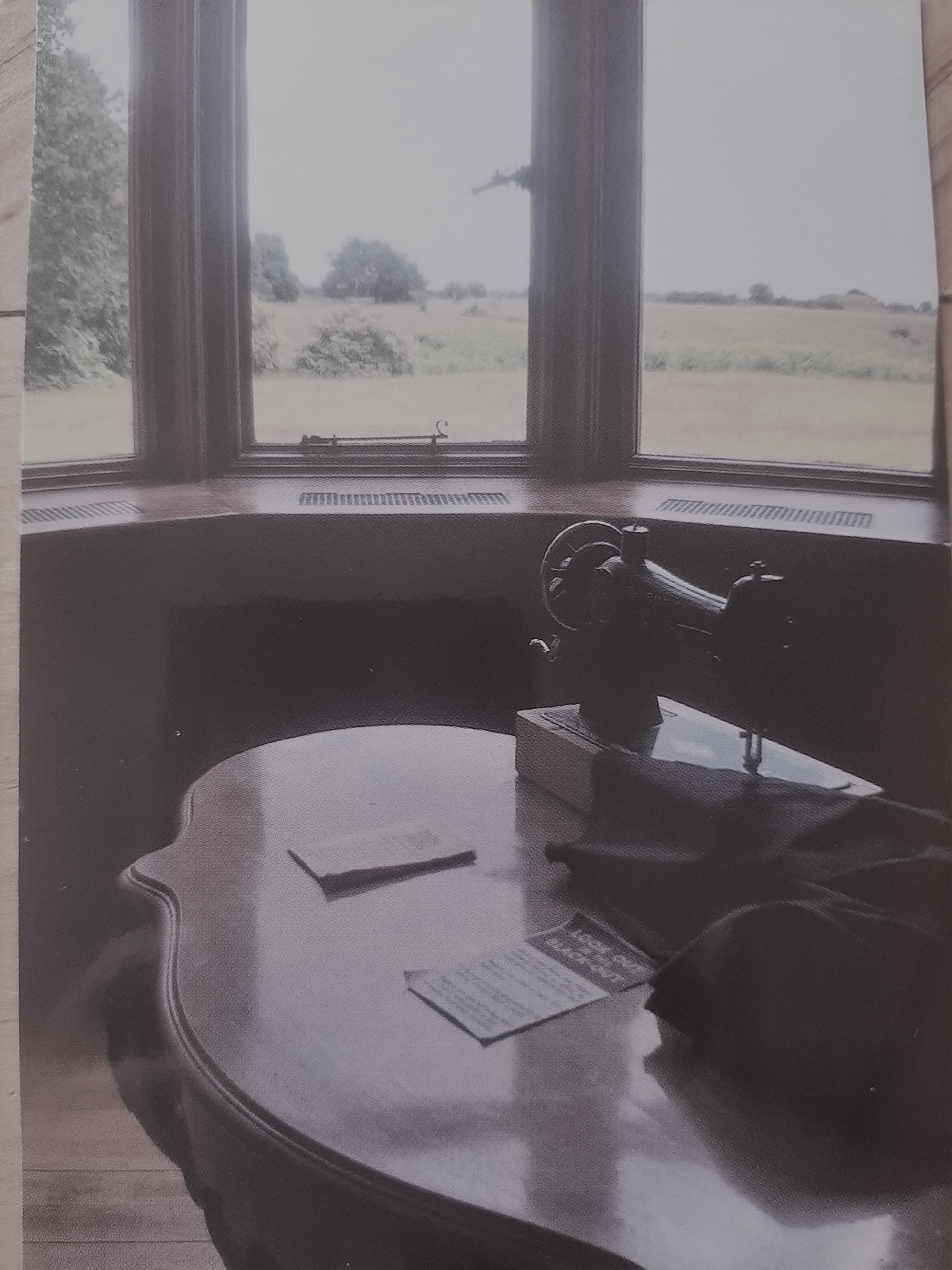
She’d often sat at that window, looking out at the ancient burial mounds, twenty of them or more, some mere shrugs of the ground, others like humped backs, that dotted the green fields in front of Fitton Howe Hall. She was missing her husband, dead these several years, his body not placed in a mound like his distant ancestors might have been, with all their worldly goods beside them, ready for their journey into the afterlife, but instead resting in a quiet churchyard. His spirit however was still here; and she spoke to it, frequently, alone or in the company of the medium who had become her closest friend. She had never seen his shade, though she longed to; but if ever he came back to her, it would be here, in this place he’d loved so much…
She stiffened. Someone was walking around the mounds. Yet her view of the fields commanded entry and exit and she had seen no-one coming. She couldn’t make out the figure well, only that it was a man, tall, with longer hair than was surely normal, dressed in a smock or tunic and leggings. It could be a local farm labourer or a gypsy perhaps, with that hair—but then he turned and she saw a flash of gold at his throat and a glint of silver at his waist and she knew instantly that she was looking at someone else. He stood there, outlined in the sunlight, not ghostly, but somehow not quite solid either and then he looked straight at her and made a strange gesture, a gesture that afterwards she could hardly describe but which she understood to mean, Do not be afraid.
And that’s how it started. That’s how Mrs Violet Manning, bereaved widow of a dearly beloved man whose passionate nature had given her too few years of delirious happiness before his untimely death, a man she could not bring herself to acknowledge was lost to her for ever, became the chosen vessel for the return of a long-dead king, a king so wealthy and honoured he had been buried not only with all his gold and silver and precious objects, but held in the embrace of his favourite ship, a massive vessel that had been dragged from its mooring place in the tidal river to here, miles inland.
The ghost ship. That’s what the press called it, when the archaeologists uncovered it after centuries in the sandy soil. Its imprint was still there, fixed in the sand like an ancient X-ray, dotted here and there with rusted rivets, the ghostly ribs suggesting the vessel whose material substance had sailed into the afterlife with its kingly captain at the helm. The king who had vanished into the misty lands beyond death but who had left behind, as a marker, the trove of treasure and a powerful mask of gold and silver that was to become famous the world over as a mysterious image of his vanished people. His people’s vision of the afterlife was reassuringly secure. Beyond death was a calm harbour where the great burial ship, with its kingly captain steering, would have moored, to be received with honour. In that world were meadows and woods and rivers and villages and great halls, just as in this one. His departed family would have met him, his ancestors, his vanished warriors and friends. Here he would have been happy and honoured as in life but freed of life’s cares. Some say this king kept to the old faith of his ancestors; others that he had taken the faith of Christ, others that he mixed the two. Whatever the truth, he was at peace, in the world beyond, even if the living world he had left behind had forgotten him. So why had he come back? Violet always said it wasn’t in fact the king who had stood on the mound that morning but one of his trusted warriors, sent by his lord from the afterlife with a message to a country teetering on the brink of war. Do not be afraid; wars have come and gone in this land. Be steadfast; your ancestors stand with you. Or that’s what she believed. Whatever the truth, she had certainly done what no-one else had: she had triggered a discovery so stupendous that for a few days it distracted the entire country from the sinister drums beating in the distance over the sea and getting closer, closer…As the archaeologists raced to secure the site and its treasures so it would be safe from harm, Violet watched from her seat by the window, and never had she felt her husband’s presence so close.
The countryside here is green, flat, peaceful, secretive. Though it’s known as a valley of kings, it’s not in truth a valley, though it lies by a river. It’s a place of contrasts: there are fertile crop fields and pig farms ressembling villages of free-ranging swine; there are quiet corners in little woods where you can pick up stone axeheads and shards of ancient pottery, the detritus of the Stone Age, Bronze Age, Iron Age, imperial ages, tribal kingdoms, settled societies, industrial ages—and further back, much further back, fossils from the time when humans did not rule the earth, and were not even a twinkle in God’s eye, and…
Thornley put his pen down, startled by a sudden noise. A creak, above his head. But he was alone in this house. He knew he was. He’d paid enough for the privilege. The trust which ran this place made sure of that. They might say that Mrs Violet Manning’s memory might live on in her house, even hint that it was haunted, but they made sure that writers after ambience and ghost hunters after sensation did more than pay lip service to it. Thornley had spent one night here. So far there had been nothing special to disturb his work. And today was a bright sunny day. Not a day for any self-respecting ghost, he thought, lip curling, as he gazed at the photograph of Violet Manning, over the mantelpiece, looking somewhere into the distance. Neither she nor anyone else haunted this place. Fitton Howe House was like any other old museum house where nobody lives any more. But it was his stock in trade, to build up atmosphere, tension, so that his readers would feel something was about to happen. Yes, that was it. He’d use the creak, and his own startlement, to add the right touch.
…and people who come to Fitton Howe House still report seeing things. Hearing things. The flash of a sword, in the morning mist. The muffled shouts of men, the gleam of gold, the creak of oars, as the ghost ship begins its journey to the afterlife laden with treasure. In her book Violet Manning says that….
The creak came again. A creak, followed by a squeak. Thornley half-rose from his seat, heart beating a little faster, till he realised what it must be. Mice! The trust might keep the place neat and tidy but it couldn’t shut out all life. Little, secret life, darting insects and scuttling spiders and nesting mice. How many of those so-called reports were down to the creatures who lived in the holes and nooks and crannies of the house?
This piece was due tomorrow. That’s why he’d shut himself away here. No distractions. He’d already missed one deadline. His editor would not let him miss another.
…says that the old king was full of sorrow when his favourite son died at sea and that it broke his heart so that he died and sailed off in the ghost ship to meet him. This what her medium friend had told her, claiming he’d spoken to the king’s shade. It’s a nice story, with the ring of poetry but sadly not a shred of evidence to….
Creak. Creak. Squeak. Thump. Not mice, with that noise. Rats. Thornley had never liked rats. He got up and closed all the doors that led into the room. They couldn’t get in, then. Then he banged on the walls. Just to make sure they knew he was there. He’d been so quiet, writing, that the rodents probably thought no-one was in and they could have a party. A rat party. Imagine that! He shuddered as an image came into his mind. Rats on a sinking ship, clinging to the wreckage–or cosying up to the dead in a buried ship, coming closer and closer and closer…
Stop it, he told himself. You’ll be seeing ghosts next. Like Mrs Violet Manning. Who only saw what she wanted to see. The pictures in her mind, a product of grief and suggestion. After all, everyone knew Fitton Howe had once been a burial place, long, long ago. Finding the ghost ship—that had been a happy accident, a fluke of history.
Yes. He felt calmer. He took up the pen again.
…not a shred of evidence to prove why or how the old king died. Or even if he was the one who had been buried there, in his ship, setting sail into the afterlife sunset, crewed by a ghostly band who had been sent for him from beyond death itself.
The creaks were louder now. The thumps. The squeaks. And now voices. He couldn’t hear what they said. Or at least understand. The language they spoke, it wasn’t English. Not quite. The sound was stranger, older. There was a smell now, too. Not a rodent smell, but something made up of wood, pitch, iron. And dust. The dust of ages. Of centuries. Of millennia. It filled his nostrils. Clogged his throat. The door handles rattled. The lights went out. He could not see anything but he knew they were coming. Coming for him, in their ghost ship. His breath rattled. His chest tightened. He groped for the lifesaver on his desk. It wasn’t there. They would…
Fitton Howe, Monday
Bestselling author Thornley Gordon was found dead this morning at Fitton Howe House, where he had been working on his latest publication. It is believed he died of an acute asthma attack. Tragically, the inhaler that might have saved his life was just out of reach, having rolled under his desk. Though there is no suggestion that anyone else was in the house at the time, police are puzzled as to why Mr Gordon’s unfinished manuscript was stained with what appeared to be salt water.
Photo taken by Sophie Masson at Sutton Hoo house, 2017
It’s always wonderful for a writer with a new book out to know that readers are enjoying it, and so I’m really delighted to find two new lovely reviews of The Ghost Squad this week. One is at Ashleigh Meikle’s Book Muse blog; the other at Claire Holderness’ Claire’s Reads and Reviews blog.
Here’s an extract from The Book Muse review:
Filled with secrecy and cover-ups, and with characters who have varying degrees of trustworthiness throughout the novel, to the point where you don’t know who you can trust other than Polly, Kel and Swan.
These relatable characters who are human and flawed drive the narrative, and invite us into their world. It is up to Polly and Swan to find out how to prevent the clandestine factions from controlling people more than they should, and how they go about it and returning to their lives as best they can is told with great gusto and flair, as their world starts to change forever. A great young adult read for teens aged 14 and over.
And here’s an extract from the review in Claire’s Reads and Reviews :
This book was full of twists and turns, conspiracies, relationships, secrets, danger and action. I really couldn’t foretell anything that was going to happen and it wasn’t always clear who to trust or who to believe. There were plenty of people and factions to be wary of along the way and there were some unexpected allies too.
I recommend this if you are looking for something engaging and different.
In the world of The Ghost Squad, named places like New Haven, Ferndale, Hot Springs, and, across the other side of the world, the University of Grantfen, whilst all being imaginary, are inspired by real places around the world which I have visited or know. I thought readers might like to know a bit more about those inspirations behind the novel’s settings.
For example, the steam-wreathed town of Hot Springs, with its mud pools, was inspired by Rotorua, in the North Island of New Zealand, which I visited in 2016. As well, an important inspiration for one of the revelations in the book also came from that same New Zealand visit: seeing, in Auckland Art Gallery, an extraordinary video installation by contemporary New Zealand artist Lisa Reihana, Tai Whetuki/House of Death Redux.
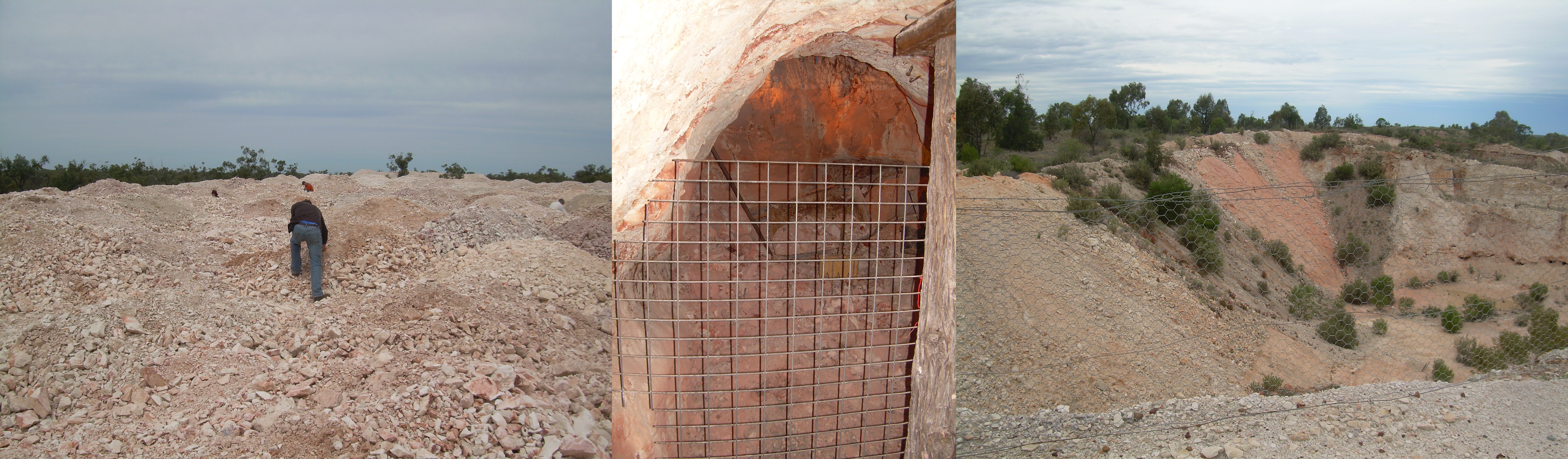
Meanwhile, New Haven was inspired in some ways by several small towns in both Australia and New Zealand, while some of the look of the landscape around the entrance to the base was partly inspired by the country around Lightning Ridge, also in Australia (see below).
The look of Bear’s cottage in the woods was inspired by Russian houses I saw on a visit to that country some years ago, while a reference to the Squadder Piper’s mother being from a family of pearl divers was inspired by a visit I made in 2018 to the town of Toba, in Japan, which is home to a famous guild of female pearl divers (see below).
The University of Grantfen, and the college of Gabrielhouse, in the epilogue, is based on colleges in the beautiful University of Cambridge in the UK, where Sophie spent a month in 2017. And Sutton Hoo, an ancient Anglo-Saxon burial site near Cambridge, also provided the inspiration for the title of Link’s short story, which is mentioned in the novel, and which is called The Ghost Ship. That’s because the big find at Sutton Hoo was of the very rich burial of a great Anglo-Saxon lord, maybe a king, who was buried in his magnificent ship, for him to set sail on a ghostly voyage into the afterlife.






 Feathers of the Firebird