On inspiration: interview on Elisabeth Storrs’ blog

An interview looking at the sources of inspiration for me as a writer is up now on historical novelist Elisabeth Storrs‘ blog.

Here’s a short extract:

What is the inspiration for your current book?

I’d like to answer this for two books: my YA novel Hunter’s Moon, which came out in June; and my adult novel Trinity: The False Prince, coming out in October (e-book) and November (print). The first book, set in an alternative world-version of the late 19th century, is inspired by the fairy tale of Snow White, the second, which is also second in my Trinity series, and is set in modern Russia, was inspired by not only the earlier novel (Trinity: The Koldun Code) but also by the enigmatic figure of Rasputin, and also the history of magic in Russia.

Is there a particular theme you wish to explore in this book?

Well both books in a sense—and isn’t that funny, I hadn’t thought of it till now!—are about betrayal, and false appearances.

You can read the whole interview here.

Joint ticket: An interview with Archie Fusillo and Josie Montano

Archie Fusillo Archie Fusillo and Josie Montano are two fabulous Italian-Australian authors of books for children and young adults. Separately, they’ve published many great books, but very recently they teamed up on a collaborative YA novel, Veiled Secrets. I met these two lively and engaging authors at the 2015 Story Arts festival in Ipswich, Queensland last month, and later asked them for an interview on the subject of their collaboration. Here it is–enjoy!Josie Montano

You’ve recently collaborated on a novel, Veiled Secrets, which tells the story of two Italian-Australian teenagers from two different families, Nick and Lia, who on a trip back to Italy with their grandparents, meet each other and discover they have a lot more in common than they could have imagined. How did you come up with the idea for the book?

When we first met we discovered that our families come from villages in Italy 10 kilometres apart, we grew up with similar traditions, culture, dialect and life-styles as first generation Aussies. We had a brainstorming session and strangely came up with the same idea! A story about teens going back to Italy with their grandparents. We knew we had a story to tell! One that no other writer in Australia has told, one that our 1st generation of Italian migrants needed to share.

How did two authors who describe themselves as fiercely independent manage to work together with the harmony required for successful story-telling?

We just found that from the very beginning we meshed quite well. Actually the ‘fiercely independent’ writing styles came in handy as we took on a character each and were able to write independently as Archie and Josie with Veiled Secretsour own character and their world.

Tell us about the process of constructing your novel. Did you plan it carefully beforehand, or was it more organic?

Although Josie is an over-planner and Archie just get’s into it and writes, we were still able to put together an initial plot line and main characters (to keep Josie happy!) Archie started as his character in chapter 1, emailed to Josie and Josie wrote chapter 2, etc. It was like one of those patchwork quilts where various people work on it, but the end result is a beautiful creation. The story did progress organically but also strangely in a way that both of us had with plot ideas and scenarios in our minds.

What were the challenges, and the pleasures, of joint creation? Did your find your writing voice was different in this to that in your own sole-authored books?

The only challenge we may have had was getting it published in the Australian market. One of the major publishers was very keen, we were wined and dined by their editor but in the end marketing felt it wasn’t the right time. So Josie sent it to her US fiction publishers and the next day a contract was emailed!

Re voice, actually a few times it happened that we would write something about each other’s characters that would spin the other off into revenge writing where eg: Archie wrote that Josie’s character had dimples and Josie was like ‘oh does she now!?’ and then she wrote that Archie’s character had a big nose! It was great having someone else to share the experience with and to cast a different editing eye over the manuscript.

Josie and Archie StoryartsAre you planning on more writing collaborations? And would you recommend the experience to other authors?

Josie has co-written fiction and non-fiction with other authors but admits this was the easiest collaboration thus far. As writing can be a lonely occupation, co-writing can at times bring a shared experience allowing for learnings and growth. And we are chatting about possible future collaborations on other projects!


Josie’s Facebook author page.

Josie’s Twitter.

Josie’s website: www.booksbyjosie.com.au

Archie’s website: www.archimedefusillo.com

Veiled Secrets Facebook page.

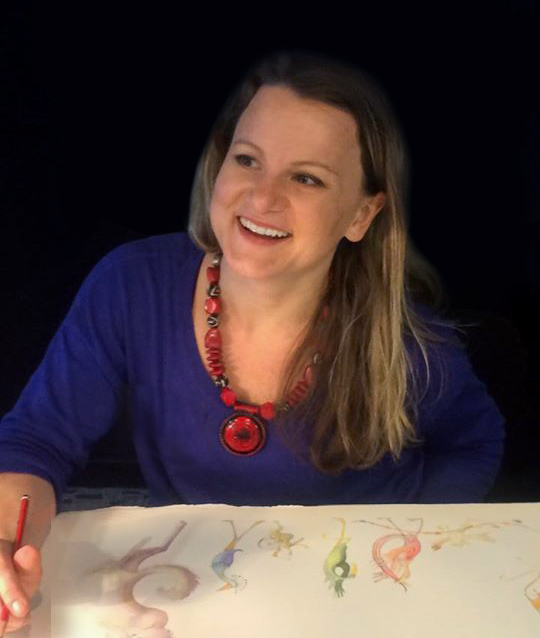
Interview with Nina Rycroft

Today, it’s my pleasure to present a very interesting interview I recently conducted with the fabulous illustrator Nina Rycroft, who I met at the recent Story Arts Festival in Ipswich. As well as being a versatile and internationally-published illustrator, Nina is soon to embark on an exciting new venture. Read on! 

Nina_new_verNina, you’re inaugurating a great illustration e-course through your new venture, TreeHouse. Can you tell us about it?

My interest in online teaching began back in 2010 when I became part of an E:lite and CAL funded a program training authors and illustrators with interactive white board and video conferencing equipment for online school-visits and workshops. I not only learnt how to use the technology, but also how to design and present talks and workshops specifically for online use.

I’ve been illustrating picture books since 2000 (13 picture books world wide and winner of the YABBA 2013). Since moving from Sydney to Auckland 5 years ago I’ve enjoyed teaching picture book illustration.This combined with my background in graphic design and love of technology (used as a tool to connect and share stories)…developing an online illustration programme with a focus on visual storytelling seemed the obvious next step.

Last year my husband and I bought our home on the edge of a bush reserve in Auckland. A pole house, so tall, that it looks out across the canopies and the harbour, onto Auckland’s Sky tower ― I’ve always called our home the Tree House. So when it came to naming my new venture, ‘the TreeHouse’ seemed like the perfect fit.

The TreeHouse is essentially an online place that people can visit, join a community, share stories and draw! Much like illustrating a picture book, the TreeHouse offers a place to reconnect to your childlike self. It’s a place to escape the grind of ‘real’ life and explore (and play) with your creativity. The TreeHouse offers a genuine experience where you can unpack your story ideas, play without any expectations, be supported and share the creative journey with like-minded participants, and learn some illustration techniques along the way.

How will it work? 

Being an illustrator, I know all too well how isolating this job can be. So I wanted to establish a place where participants can meet, share and support each other. The collective experience is designed to keep you connected, motivated and inspired by other. Participants will gain access to an online community nina rycroft dragonwhere they’ll be encouraged to share (set tasks) with others using a private FaceBook page and Instagram.

The Treehouse Character Development e-Course covers all aspects of character development including brainstorming ideas, character design, character mapping, drawing with gesture, animation techniques and anthropomorphism. The online programme will run for 4 weeks and lessons are posted daily. Each week is designed to build on the previous weeks skills-set giving you an in-depth experience on a particular topic, with video and drawing demonstrations, printable work sheets and daily tasks. I’ve designed this e-course in such a way that it can be used to develop character for any platform, whether it be for a game, a brand or a product. This programme is designed to expand your ideas encouraging you to think, feel, develop and discover character/s for any kind of story.

WEEK 1: Explore character through interviewing and visualisation techniques. Lean about face proportion, facial features and facial expression applying techniques that will bring your two-dimensional face into a three-dimensional format.

WEEK 2: Learn the character mapping process. Explore character within the context of a story. Learn how to use basic body proportions to your advantage.

WEEK 3: Learn techniques that will bring your character to life. Explore body movement, animation techniques and the art of drawing with gesture.

WEEK 4: Explore animal character and the wide use of anthropomorphism in storytelling. Learn a simple but effective drawing technique that can translate animal traits into the human form.

I would suggest participants set aside 5 hours each week for 4 weeks to get the most out of this course. There is no set time to start or finish weekly tasks, so please feel free to fit tasks in and around your treehouse_outonalimb_logo_smlifestyle.

This is an illustration programme- however you won’t be asked to draw every day. Mondays, will be an introduction and an overview for that particular week. Tuesdays and Thursday will be drawing days, Wednesdays visualisation and Fridays you will be encouraged to do a library visit and research.

Who is it aimed at? And what do you hope students will get from it?

The Character Development e-Course is designed for beginners as well as seasoned professionals. It allows you to take your individual skill sets and build on that. Whether you are a home schooled budding artist living in remote outback Australia, or an animation student looking to extend your skills and understanding, this course is the perfect accompaniment for your creative project. You may be a writer or a primary school teacher with a great idea for a picture book and have no previous art training. Or you may be a painter, a printmaker or perhaps you are gifted in textiles, clay, collage or glass. Whatever your creative endeavour, your experience will be a welcomed gift in the story telling arena.

Using my 15 years of experience illustrating picture books, I hope to offer participants access to a nina rycroft pigssupportive community as well as giving them a greater understanding of visual storytelling that will enable them to tell the best version of their story using both image and words.

You’ve illustrated the picture-book texts of many well-known writers. Can you describe the process of working with other people’s texts? Do you work closely with writers or only through the publisher?

I’ve had the pleasure of working with the likes of Margaret Wild and Jackie French. I enjoy visual storytelling, so my favourite type of work is when an author is willing to offer their story to me completely. Every story is different, and the process of working on a book really does depends on the individual publisher, the deadline and or course the joint vision for the story. Most of the time I am in regular contact with the publisher, I do have contact with some of the author, but mostly I meet them after I finish work on their story.

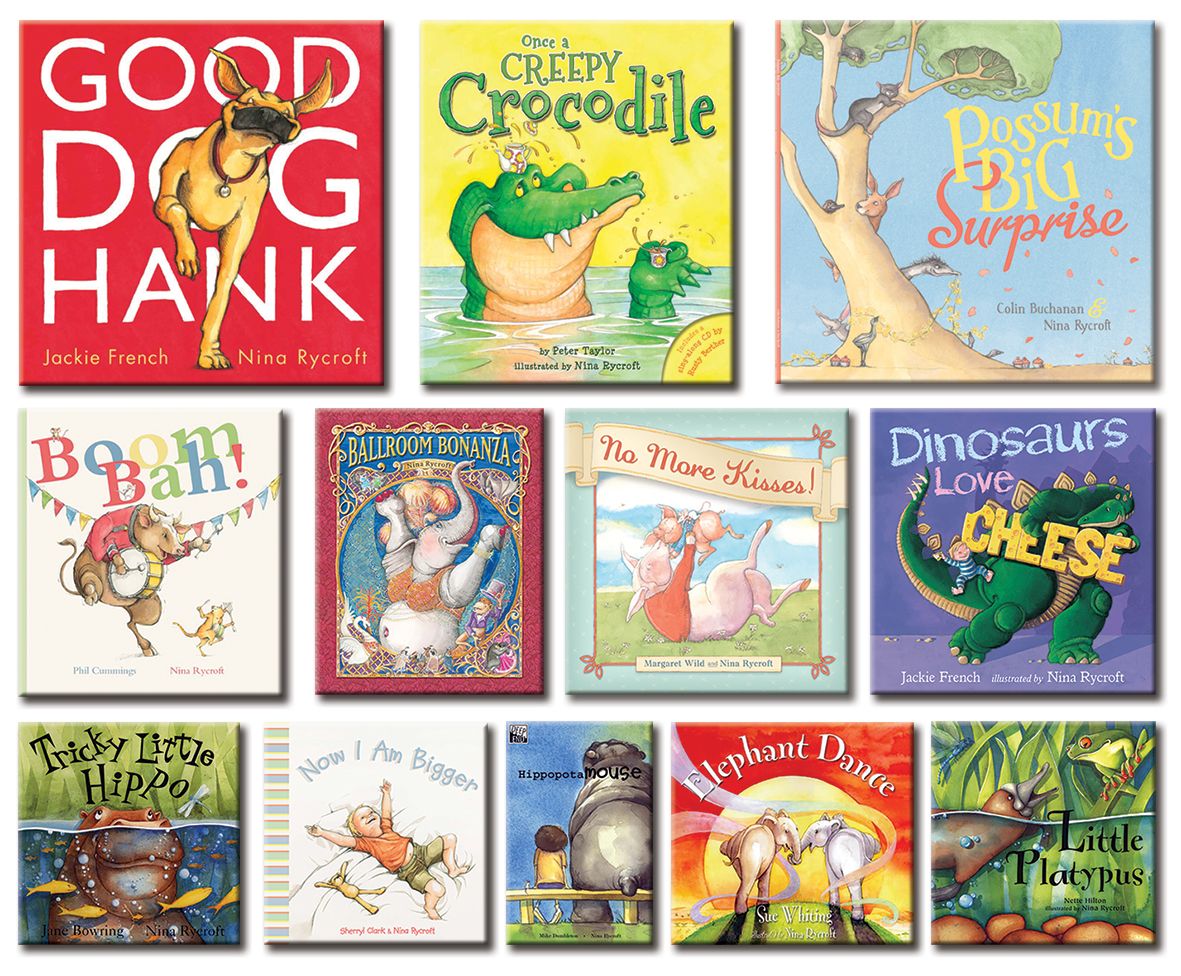
With ‘Dinosaurs Love Cheese’ (Jackie French, Harper Collins, 2013), after an initial conference call (with Jackie and the publisher), discussing the main character and his relationship with his imaginary dinosaur, Jackie was more than happy to let me run with my own interpretation of her text. With ‘Good Dog Hank ‘ (Jackie French, Harper Collins, 2014), Jackie sent me photos of her dog Hank as inspiration for the main character. With ‘Boom Bah!’, (Phil Cummings, Working Title Press, 2008). I was given a week by the publisher to come up with a story concept (using thumbnail sketches) using the author’s text. With ‘Grasshopper’s Dance’ (Julliette MacIver, Scholastic, 2015) I was lucky enough to be given free nina rycroft grasshoppersrein as far as the illustrations were concerned with Julliette (very kindly) changing a character (an orca playing an organ) I was struggling with. With ‘No more kisses’ (Margaret Wild, Little Hare, 2010), I worked entirely with the publisher. I initially illustrated human characters when the publisher was expecting animal characters. We also changed the setting from an imaginative setting ― with characters climbing up a very long ladder into the night sky, sliding down the crest of the moon, jumping from star to star ― into a more traditional setting of an English country garden. 

Given that the books you’ve illustrated are so different, how do you approach each individual text?

I would say that over the past 15 year my illustration have evolved. I started illustrating in 2000, when I wasn’t really sure what I was doing, so you see all of me out there in my work.

Over the years, I‘ve been given the opportunity to explore characters of every shape and size ― animal, human and everything in between. I’ve illustrated the milestones of a newborn through to age 5 in ‘Now I Am Bigger’ (Sherryl Clark, 2010), to a boy’s imaginary dinosaur friend in ‘Dinosaurs Love Cheese’. From Australian animal characters in ‘Little Platypus’ (Nette Hilton, 2000), animal character in a big brass band to ‘Ballroom Bonanza’ (Nina Rycroft, Working Title Press, 2007) where I had animals dancing through the letters of the alphabet at the Tower Ballroom in Blackpool.

I’ve explored different illustration techniques, depending on what the story required. ‘Pooka’ was heartfelt and needed a soft, delicate approach, whereas ‘Dinosaurs Love Cheese’ asked for brighter, nina rycroft dogsstronger colours, I decided to use a  smudged charcoal line in ‘Good Dog Hank’ as I wanted to have the messy mischievous side of Hank come through in the line. ‘Once a Creepy Crocodile’ was bright, playful and rhythmic. Illustrations really do set the tone and mood of a book, so really, the technique that I choose really does need to suit the story. Having said this, if you look at my initial character sketches and storyboards, my interpretation of idea and character onto paper is recognisably me.

When I first started illustrating picture books, I would take any job that was offered to me. I never had the privilege of picking and choosing. In fact when I didn’t have work on the horizon, I would create it, then go knocking on doors to find it. It is delicious to be handed a story that evokes a strong feeling in me. It’s rare, but when it does happen, I am more than happy to give the story 3-6 months. When I work on someone else’s text, I am always mindful that the story has already been on an incredible journey even before I received it. So when I do get a story to illustrate, I really do take the care and give it my all.

I approach each story in a very similar way. I make a point of giving myself the space to read any manuscript for the first time. I’d rather put it off, to make sure that I have time to fully comprehend what I am reading. It’s probably the only time that I don’t multi task. I find that my first ideas, the ones that pop into my head immediately after reading the story for the first time, are usually the best. Once reading a text, I then furiously start jotting down my ideas in whatever way I can. My initial thumbnail sketches usually take about a week. I make sure to warn my family as I’ve been known to forget to pick my kids up from school, clean, cook dinner, laundry etc. For that week, my mind is literally in the clouds. Personally I love the feeling of being lost in thought, it just doesn’t work very well in every day life!

Once I have my thumbnail sketches ironed out, I then start work on the main characters. I may do a series of character maps and send these off to the publisher and author for approval.

I then start work on larger, more detailed sketches. The publisher may have an idea how the text should be broken up, so I use this as a guide, along with my thumbnail sketches. Because it’s easier to scan and then email, I try to fit two double page spreads onto one A4 sheet of paper, working my way through the story from start to finish. I send these through to the publishers as I am working on them.

It the story requires, I use printouts of the larger sketches and make them into a dummy book, basically a mock up picture book with turning pages. Sometimes I need to feel how the book feels (and reads) with its turning pages. The sketches and mock-up picture books are the skeletons of the visual and can take anywhere between 2-3 months.

Once all of my character and layout sketches are approved and complete, I then need to consider colour Nina Rycroft booksand illustration technique. I choose a random illustration (one that shows the main characters). I then enlarge each smaller sketch to the size that it would appear in the book, and illustrate a double page spread. Once this is approved, I do this for the other 14 double page spreads. The ‘colouring-in’ process can take anywhere between 1-3 months, depending on the illustration technique I have decided to use. The front cover is always illustrated last ― the icing on the cake. Sometimes it’s very straight forward, other times, it can be a time-consuming process.

You have also worked as an author/illustrator. Can you describe your process there?

I’ve worked as an author/illustrator for my picture book titled ‘Ballroom Bonanza’. I got to a point where I had no work lined up and I was looking for a new challenge. The entire process from initial idea, writing, sketching through to illustrating, took much longer than I had first anticipated ― four-and-a-half-years longer than I had anticipated.

I came up with an idea for an animal alphabet picture book where the animals competed in a dance competition much like the film ‘Strictly Ballroom’. I wanted to explore illustrating all types of animals, so this project seemed like the perfect challenge. Working with image and text was a new experience and I nina rycroft zebraloved bouncing from one to the other. 

The initial story and sketches took three months to complete. I  then sent a dummy book to two publishers before getting a positive response. This is when the story took a life of its own. Everything from that first dummy book changed. The plot, the characters, the length of written story, even the format of the book went from 32 to 40 pages. A hide and seek element was added, and even the illustration technique became more elaborate and detailed. I would say the text and dummy book took 3 years to complete, then the final artwork took another year and a half. I thoroughly enjoyed the dance between word and image and hope to do this once again.

Which illustrators―past and present–have been an influence on your own work?

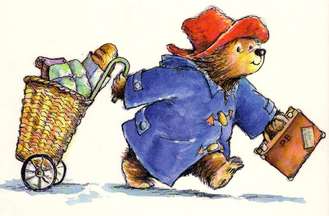
beatrix potter 2I spent my early childhood in London, so in a way I grew up on anthropomorphic characters, from Beatrix Potter’s Peter Rabbit series to the original Winnie the Pooh and Paddington Bear. I learnt about visual story-telling from reading Pat Hutchins picture books like ‘Rosie’s Walk’ and ‘Goodnight Owl’. Pamela Allen is also a wonderful visual storyteller, the most memorable being ’Mr. Archimedes’ Bath’ and ‘Who sank the Boat’. Julie Vivas’ ‘Possum Magic’ taught me how to use watercolour. I loved how she never overworked her paddington bearillustrations, and the watercolour wash was always so expressive and minimal. I’m always in awe of Armin Grede’s brave use of line and Lisbeth Zwerger’s design, composition and watercolour genius. And I love the child-like playfulness that Stephen Michael King and Bob Graham bring to their stories. To top off my long list of influential illustrators, Ron Brooks is a master artist that I have great admiration for: ‘Old Pig’ and ‘Motor Bill and the lovely Caroline’ are both illustrated with elegance and grace.


More on the Treehouse Character Development e-Course

Date: 15th February – 11th March 2016

  • 4 week illustration e-course with lessons posted daily
  • Daily video’s, drawing demonstrations, printable work sheets and set tasks
  • Access to all course work for 6 months upon enrolment
  • Access to a private community

Cost US$295.00

If you are interested in the Character Development e-Course, please contact Nina at ninarycroft@me.com

Like The Treehouse on Facebook https://www.facebook.com/thetreehouse.biz?fref=ts to be notified of The Treehouse website launch, e-courses and other Treehouse events.

Find Nina on Facebook https://www.facebook.com/nina.rycroft

Nina’s Redbubble page, where you can buy some of her prints, is here. 

Interview with Peter Higgins about the Wolfhound Century series

One of the discoveries–and pleasures–of my recent reading life has been the extraordinary, genre-busting Wolfhound Century series, by British author Peter Higgins. Set in the Vlast, an alternative world inspired by the history and culture of Russia, where dying angels, giants, rusalki and forest spirits exist alongside revolutionary terrorists, mad scientists, rocket ships, spies and secret police, this magnificent trilogy(made up of Wolfhound Century; Truth and Fear; and Radiant State) is breathtaking in its ambition, scope, dazzling and sensual use of language, gripping and twisty plot–and sub-plots!–and wonderfully depicted array of characters. With its mix of thriller, alternative history and fantasy–both urban and quest–it’s simply the most exciting, assured and original debut I have read in a long time and in fact ranks high amongst the very best speculative fiction full stop. I’m not the only one who thinks so incidentally, as this review in The Guardian indicates!

The trilogy has recently concluded with Radiant State, and after finishing it I contacted the author and had the good fortune to interview him.

Interview with Peter Higgins

Peter Higgins

The Wolfhound Century trilogy is your first published work, is that right? Can you tell me a bit about your background and how you first came up with the idea for the books?

I had some short stories published before I started on Wolfhound Century, but these are my first novels. I was always a reader and wanted to write but for a long time I didn’t know how. Then I happened on a book in a junk shop by Joan Aiken (whose stories I love) called The Way To Write For Children and it was a revelation. She didn’t just tell you what a good story needed, she told you, quite simply, how practically to go about writing one. How to collect and store material, ask questions of your ideas, build them up bit by bit. Some people write a different way, or they just naturally fall into the process, but I didn’t. I needed that book.

Even then it took me years to work out what kind of stories I could write: I love the freedom and energy of fantasy, but I also love researching and evoking the atmosphere of historical periods and other places. It finally came together when I started building a fantasy world out of the materials of history. It’s very much the kind of thing that Guy Gavriel Kay or G R R Martin do, I guess, but I decided to use the twentieth century, and draw on that dark and strange and luminous and cruel experience in Europe and Russia, rather than look to some more distant period. And that’s how the Wolfhound Century series started to come together.

The series immerses the reader in a richly dark, complex and layered world of magical alter reality. I am not at all surprised you chose the extraordinary history, folklore and culture of  Russia as the inspiration of the Vlast, imaginative world you created, but can you tell me  how you went about bringing it to life?wolfhound century

When I’m writing I work on two parallel tracks. On the one hand, I immerse myself in the materials I want to work with: twentieth century history, spy novels, Russian literature and art and film and folklore, anything that grabs my attention. And on the other hand, at the same time, I’m planning the story, building characters, working out the plot, the themes, what’s at stake. And out of all that, basically, I grab what I want. Sometimes I come across something in my ‘research’ that really excites me, and I try to figure out how to bring it in to the story. Sometimes the story needs something – a setting, a particular kind of character – and I look around for what would be good.

If I take something from my research, I usually twist it, change it, mix it with something else, make it magical or fantastical, to bring out what I think is important. It’s about building an interesting, different world with compelling characters and situations, a world that has a kind of atmospheric resonance. It’s a very instinctive process.

 truth and fearI’m struck by how seamlessly you have managed to evoke different periods of Russian history–from the late Tsarist period through the anarchist and Bolshevik period and full blown Stalinism–yet have telescoped it within the world of the series in a way that feels coherent. How difficult was that to achieve?

One way I found of making the whole thing hold together as a coherent story was to make it a thriller. Writing a thriller is a fantastic discipline: it cranks up the narrative pace, brings in mystery and conflict and danger, and makes you keep the characters moving. The story has to stay focused on the main event. As a writer, I found the thriller form very liberating, because there are clear principles and rules about plot and structure that other writers have worked out before you, which actually work. It gives you a solid framework that you can use to support the weirder and the wilder flights of imagination without losing the reader or yourself. Also, I’m a huge thriller fan, from John Buchan to Lee Child and Martin Cruz Smith.

Alongside the thriller plot, the telescoping comes from the sense, which becomes increasingly apparent as the trilogy unfolds, that time is subjective and moves at different speeds for different people and in different places. The presences from the forest, for example, the giants and so on, live long, slow lives. And the capital city of the Vlast, Mirgorod, is layered with traces of different times; it’s a kind of haunting. When Josef Kantor becomes the dictator Papa Rizhin, he’s able by sheer force of will to drive the Vlast to great social and technological changes very rapidly, but where his influence is weak time passes more slowly: people get caught in the past, trapped by memories or resentments, their lives get out of kilter, sometimes the dead wake and walk. I think the twentieth century was like that: huge and often disastrous advances driven fast by urgent necessity (the Manhattan project; Stalin’s industrial transformation of the Soviet Union; Mao’s Great Leap Forward) but people and places left stranded, trapped by history, recycling traumas, or simply refusing to share the common story.

 I love the way too that you have used Russian myth, folklore and language to conjure a world that feels both strongly rooted yet wonderfully strange. Can you expand on that?

I grew up with the idea that Russia was a very strange, fascinating, dangerous place. During the Cold War the Soviet Union was, for me, a huge imaginative presence – inaccessible, threatening, vast, oppressive, but also the place where fantastic art and literature and folklore came from; the place of endless forests and oddly fairy-tale architecture alongside prison camps and concrete tower blocks. I felt it was the scary looking-glass world that was really there, behind the iron curtain. That’s the kind of feeling I wanted to capture in the Wolfhound Century series.secret agent

One of the many things I loved about the series too was the feeling that it was influenced by many other books and writers–Russians, of course, principally, but also I wondered if Joseph Conrad’s The Secret Agent, Alan Garner’s The Owl Service and Robert Holdstock’s The Hollowing had been influences? Any others as well?

That’s uncanny. Those are three of my favourite authors. The collision between Conrad’s murky, compromised city of anarchists and policemen and Holdstock’s ancient, endless, subconscious-made-real forest is in a way the starting point for the Wolfhound Century trilogy. And Alan Garner was my first really exciting private reading discovery: I found The Weirdstone of Brisingamen and The Moon of Gomrath in the library, and read them both over and over. I haven’t thought about The owl serviceOwl Service for years, but now you’ve mentioned it, I see there’s certainly a connection to my books: the electric, mysterious, mythic presences in the natural world reaching out and entangling the characters in a dark story larger than themselves. We did it at school and I remember seeing it on TV, and it spooked me a lot both times. I haven’t been back to it since but it seems to have been working away, below the surface.

book of new sunAnother huge influence for me is Gene Wolfe’s The Book of the New Sun. I don’t think I write particularly like him, or about the same things, but I discovered The Book of the New Sun at a time when I really didn’t know what I was trying to do, and it hit me right between the eyes. That book opened up for me just how ambitious and adventurous and unlimited fantasy writing could be: the endless inventiveness, the ambition and the seriousness of his writing were a revelation. I realized I needed to try and write something that at least entertained the possibility of being that good.

hollowingYour characters aren’t only human but also superhuman and non-human–angels, giants, forest spirits and more. You have poignantly and grippingly evoked their steadily-diminishing world. How did you go about it?

It’s about looking at everything that the Russian and central European imagination has produced – the folklore, the forest, the visionary paintings of an artist like Chagall, golems and rusalkas and talking wolves, as well as the revolutionaries and the state police and the prison camps and the mass hunger – and taking it as if it was all equally real and tangible and actually happening. The driving idea of the series is that an over-dominant state – any such state, it doesn’t have to be the Soviet Union particularly, the one in these books is called the Vlast – wants to impose a single way of thinking, wants to make everybody see the world the same way and be part of the one collective story, and uses its oppressive power to drive out and silence anything that doesn’t fit with that. But everywhere in the Wolfhound Century world things are alive and percipient – sentient rain, thinking rivers – and there are giants and spirits and intelligent shape-shifting wolves. For the characters this generates a lot of tension: how much reality do you accept? what do you close your mind to? It’s not ‘good natural world’ versus ‘bad government’: the wider, deeper world, like the individual human psyche, isn’t particularly morally good, it’s just unavoidably there; and much richer and more alive than any one way of organizing things will allow.

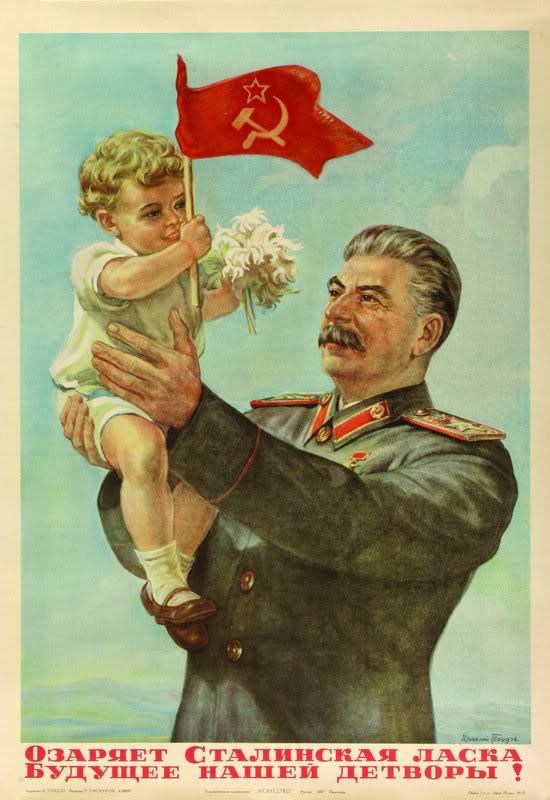
Josef Kantor, later Papa Rizhin, feels like a mix of Lenin and Stalin by way of the People’s Will anarchists. Is that a fair comment?stalin_poster

Yes, Stalin in particular. Kantor isn’t a portrait of Stalin, any more than the Vlast is a portrait of the Soviet Union, and some of the events surrounding him and the things he says and does are drawn from Lenin and other revolutionary writers and activists, but Kantor’s character and story – which in some ways is the spine of the whole trilogy – is largely built from aspects of Stalin that I think are particularly compelling.

Stalin’s journey from being Josef Djugashvili, revolutionary, poet, bank robber to being Stalin the Steel Man, terrorisor of the people and even his own supporters, then victorious war leader, then hugely-dominant avuncular dictator, is strange and oddly gripping. You can see in early photographs of him that he was very alive and engaged, very human, someone who might have been a good person. It’s as if something alien and appalling got into the machine, or something dark came out of the psyche.

Vissarion Lom and Maroussia Shaumian, the two heroes of the series, grow and change a great deal during the course of the three books. Can you expand a little on that?

Lom starts as an investigator in the political police, serving the Vlast in an obscure provincial town, and when we first meet Maroussia she’s working in a factory making uniforms. Both of them get unseated from those niches and driven to embark on a kind of exploratory journey/quest. Maroussia is the main ‘quester’, the driven Frodo-figure: Lom has to work hard to keep up with her and figure out what’s going on, what the bigger picture is. And there’s something magical, perhaps not entirely conventionally human, about Lom, which he doesn’t himself understand but grows into. That’s the spine of it. But a large part of what I was trying to do is to show them both unfolding under the radiant statepressure of what happens to them and what they discover, opening up more and more to the world around them, becoming increasingly perceptive, connecting with what’s coming out of the endless forest, unlocking closed areas of the unconscious, extending the capacity of what people can do and perceive.

 I felt that the ending of the third book, Radiant State, is left a little open–is there going to be more exploration of the world of the Vlast, or are you looking in other directions now?

Part of what I love about fantasy and science fiction is the feeling that the worlds the books build don’t stop when the books end. The particular struggle has come to a conclusion, the characters have changed in some fundamental way and so has their world, but nevertheless the world continues. It’s still there, somewhere. That’s the feeling I wanted to leave at the end of the trilogy. Maybe, possibly, I’ll revisit the Vlast one day, though I’m working on something else now. When I look back at the trilogy as a whole, I feel there’s a completeness to it, that I’ve done what I wanted to do and if I added more it wouldn’t be better.

Peter Higgins’ website is at http://www.wolfhoundcentury.com/

The first Australian blockbuster: an interview with Lucy Sussex

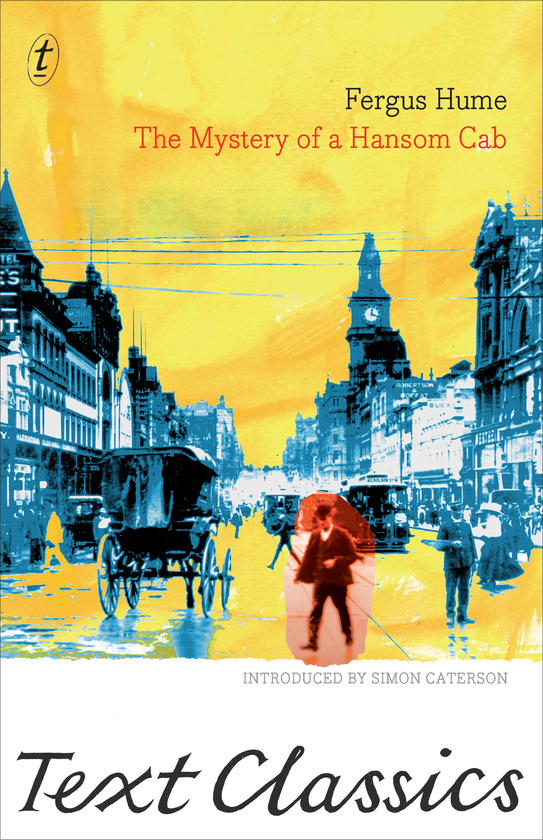
blockbuster lucy sussexThe Mystery of a Hansom Cab, by Fergus Hume, was Australia’s first blockbuster, selling out its first run almost at once, and in world terms too was a massive success, predating the Sherlock Holmes phenomenon and writing itself into the annals of detective fiction. Well over a hundred years after its first publication in 1886, it’s still in print–in many different editions, including worldwide–and the subject of a very successful ABC TV series. But its author, who due to an unfortunate decision, did not get to enjoy the fruits of his book’s success, is less well-known–until now, when Lucy Sussex’s new book, Blockbuster: Fergus Hume and the Mystery of a Hansom Cab (Text) lifts the veil on the untold story of both author and novel. The book is released next week, and as a great fan of Hume’s novel, I caught up with Lucy recently to ask her about it.

Lucy Sussex was born in New Zealand. She has edited four anthologies, including She’s Fantastical, shortlisted for the World Fantasy Award. Her award-winning fiction includes books for younger readers and the novel The Scarlet Rider. Lucy has five short-story collections, including My Lady Tongue, A Tour Guide in Utopia, Absolute Uncertainty and Matilda Told Such Dreadful Lies. Her latest book is Blockbuster! Fergus Hume and The Mystery of a Hansom Cab. She lives in Melbourne.

What first drew your interest to the story of Fergus Hume and his bestselling novel?

Hume said he ‘belonged to New Zealand’ but when I grew up there I never heard of him. That happened when I worked as a researcher for Stephen Knight’s history of Australian crime fiction. But I read the book then, and was intrigued—not least in the resonance it still had, and how people responded to it. For instance the 2012 telemovie was sparked by a Radio National program on the book, for which I was one of those interviewed. John Barnett of South Pacific Productions heard the program, bought a copy, read it on the way back across the Tasman, and decided to film it (with Ewan lucy sussexBurnett of Burberry Productions). Clearly there was life in the old Hansom Cab.

It happened I was working with Meg Tasker at Federation University on a research project about Australian and NZ writers and journalists in London at the turn of last century. We had a file on Hume, who moved to England in 1888, in the wake of Hansom Cab’s success. One day I started following digitised links re Hume across the web. It became very clear there was a book to be written on the Hansom Cab alone.

How did you go about researching the book?

The problem with Hume is that he left no diaries, there are few letters and the most relevant publishers’ records do not survive. Those who knew him are all dead now. I did use some archives, mainly in Dunedin, where his father ran the madhouse. But there was more than enough material using digitised newspapers—Papers Past in New Zealand and Trove in Australia, mainly. What was unclear in one source could be explained in another, across the Tasman.

And was there anything you discovered that surprised you?

Well, the people who kept asking me if Hume was gay! Which led me to queer theory, the history of rent boys in Sydney, and Little Buttercup from Gilbert and Sullivan, as performed in drag.

Another surprise was the rarity and value of first editions of Hansom Cab: only four survive, and even imperfect they go for five-figure sums. Go investigate your Granny’s attic!

The Mystery of A Hansom Cab predated the first Sherlock Holmes story, A Study in Scarlet, and some mystery of hansom cab bookcritics have said that Doyle was influenced by Hume’s book. Does your research support that? 

A Study in Scarlet was not published until after Hansom Cab’s great English success in late 1887. Doyle read Hume’s book, and jealously wrote to his mother “What a swindle ‘The Mystery of a Hansom Cab’ is. One of the weakest tales I have ever read, and simply sold by puffing.” [hype]. The evidence is that he and Hume had been submitting to the same publishers, around the same time, and both suffered rejections. What happened was probably synchronicity, not uncommon in crime fiction: a literary idea whose time has come. But the Hansom Cab helped create the market for Sherlock Holmes. Without it the Sherlock story might have ended with A Study in Scarlet.

I have read that Hume was inspired to write his book by the success of Emile Gaboriau’s novels–but was he also inspired by Wilkie Collins’ groundbreaking The Moonstone, published nearly 20 years previously?

He certainly read Wilkie Collins, but a bigger influence is Mary Braddon, Collins’ great rival and contemporary. She, not Collins, is cited in the Hansom Cab.

What happened to Hume and his book makes for salutary reading. Can you describe the process that led to his selling his copyright? 

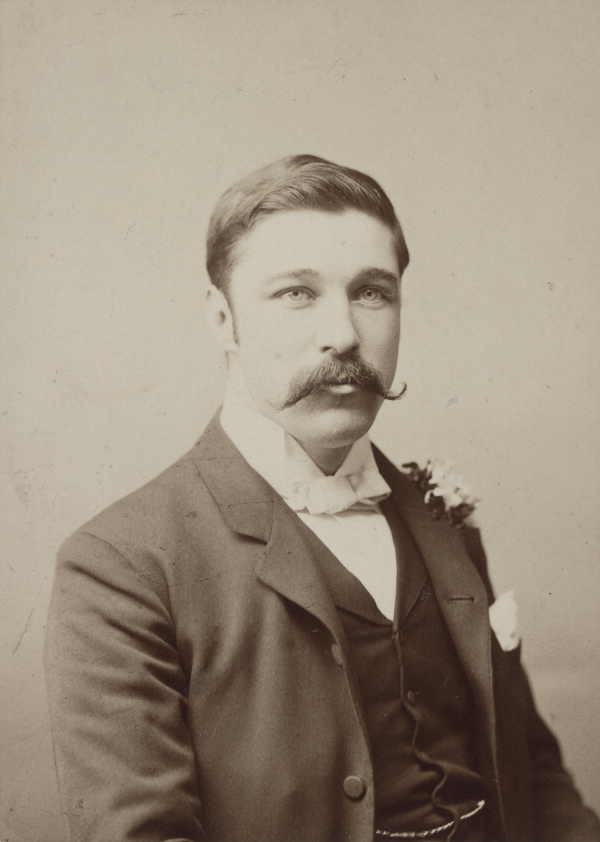
Fergus Hume

Hume wrote the book to draw attention to himself as a playwright. Although he wrote it with care and flair, he didn’t really take it seriously, career-wise. So he only registered the copyright months after the Australian success. Whether we believe the sales figures cited—25,000 copies in the Austral colonies alone, a huge figure for that time and market—the Hansom Cab was drawing attention from overseas. Thus the Hansom Cab Co. was formed to publish the book in England, and at that point Hume sold the copyright, disbelieving it would be successful outside Australia. He had taken the cultural cringe too much to heart. What he did hold onto was the dramatic rights, because that was what he thought would be more important. And yes, the play of the Hansom Cab was successful, but not in the phenomenal way of the book

Not much has previously been known about Hume and his personal life. What was your impression of Hume himself, based on your research?

I said to my initial Text editor, Mandy Brett, that he would have been fun to know. Apart from him being so utterly on the make, she replied. From various accounts he was witty good company. He liked women, supported their rights, wrote often for actresses, but there was never any suggestion of romance.

And the Melbourne–and global–literary/publishing scene at the time?

Melbourne was a major centre for reading, with high literacy, numerous bookshops, and a population with disposal income and an appetite for fiction, particularly crime. Hume networked furiously, but couldn’t establish himself as a literary man until after the Hansom Cab. When he got to London he was a literary lion, in social demand. It would have been very difficult for him not to meet Oscar Wilde, for instance. But to his annoyance people wouldn’t take him seriously as a writer because he was associated with pulp.

Do you think that the odyssey of the book’s publication, from semi-self publication onwards, has parallels in today’s changing publishing climate?

Not really. At the time you could publish in three ways, firstly by subscription, getting money from friends and the well-connected and going to a printer. Vanity publishing in our terms. The book publishers themselves used two business models. Commission was where the author paid for initial printing costs and the advertisements. If the book was a success, any profits would be shared with the publisher. Jane Austen’s first novel Sense and Sensibility was published in this fashion. The alternate model had the publisher buy the copyright, taking the risk, but also, if the book sold well, all the profits. Such was the publishing fate of Pride and Prejudice and Arthur Conan Doyle’s A Study in Scarlet.

For the first Australian edition Hume didn’t have subscribers, not for a book with disreputable crime content. 5000 copies were allegedly printed, a huge amount, when most colonial books had print runs of 200 or less. He needed a large amount of money to do so, thousands in our terms. It came from playing the stock market, with advice from a friend, Alice Cornwell, a budding gold mining magnate, the C19th equivalent of Gina Rinehart.

But Hume didn’t really self-publish. Frederick Trischler, who had worked in publishing in Australia and the US, had the business initiative and nous, and ran the Hansom Cab operation, using a Melbourne printer, Kemp & Boyce. After he and Hume quarrelled Hume wrote him out of the book’s history. But Hansom Cab couldn’t have succeeded without Trischler, who was an advertising and marketing genius.

Trischler saw the overseas potential of the Hansom Cab, and formed the Hansom Cab Publishing Co, with some enterprising but also dodgy local capitalists. Financier Jessie Taylor bought the copyright from Hume. In London the company did spectacular business: 25,000 copies a month were printed and sold for fourteen months. But it wasn’t crowd-funded—more like bank robbery!mystery of hansom cab tv

What do you believe is the place of The Mystery of A Hansom Cab, in Australian literary history–and in that of the English-speaking world?

It was the first book from Australasia to become a global publishing phenomenon. It awoke English publishers to the potential of local writing. It also showed them the gold in detective fiction, and helped consolidate crime writing as a major publishing category.

The translations were worldwide, and still happen, with a recent Chinese edition. Hume was among the first Australasian writers to be translated into Chinese.

I might add, to finish off, that THE HANSOM CAB, in its initial Melbourne appearance, shows how an author can get everything right: researching his market, writing a very good and commercial book, encountering someone who believed in it enough to hazard a large print run, producing a good-looking product, timing its appearance carefully, and conducting an effective word-of-mouth campaign. They had very little money for advertising, but they did what they could, ie hiring a hansom cab to deliver the books to bookshops.

The subsequent story shows how an author can get things VERY wrong.


Northern Russian splendours: an interview with photographer Richard Davies

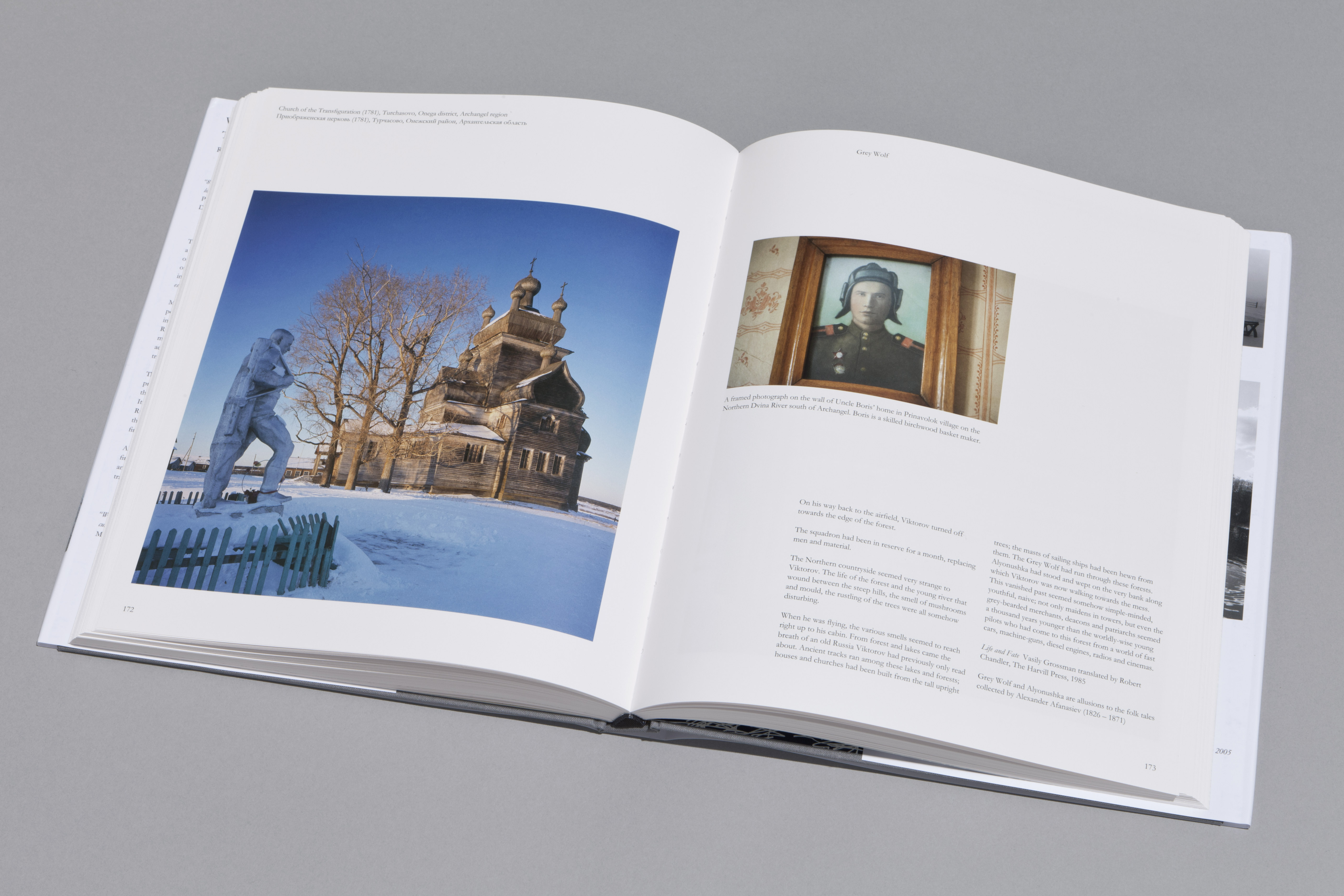
2(1)Recently I became aware of the magnificent work of  British photographer Richard Davies, who over several periods of travel in Northern Russia, has been documenting the everyday and extraordinary splendours and colours of the region, and especially its glorious wooden churches and colourful characters. Richard has published two beautiful books: Wooden Churches: Travelling in the Russian North 100 years after Bilibin(sadly out of print at the moment) and the recent Russian Types and Scenes, which you can get on Amazon (and which I can very highly recommend!). Inspired by the gorgeous work of this fellow Russophile, I got in touch with Richard, and this fascinating interview is the result. Enjoy!207RT_mod2[1]

Richard, can you tell us first about Northern Russia, which has inspired your work? How long have you been visiting the area? And what drew you to it?

I’m a Russophile! My standard story for explaining this is that one-day, my mother came home with an LP (long playing record) of Jascha Heifetz playing Mendelssohn’s violin concerto. On the flip side he was playing Prokofiev’s 2nd violin concerto. It was the most exciting thing I had ever heard and I played it continuously, day and night for weeks. It drove my father crazy, my mother was happy that I was happy. I was head banging to Prokofiev while my friends head banged to the Rolling Stones – very sad. The other influence, I remembered this recently, was our local dentist. He was an out and out Communist and a great dentist. The waiting room was strewn with copies of Soviet magazines and the patients were left to quietly soak up the propaganda. Danny Stalford, Red dentist, and local Communist Councillor obviously had some success with me – I fell in love with the country if not the system.

In the late 70’s and 80’s I took Intourist trips to Leningrad and Moscow to satisfy my Russophile needs. Concerts at the Philharmonia, opera at the Kirov, Maly and Bolshoi, art at the Hermitage, Russian, Pushkin and Tretyakov museums, day trips to Novgorod and the Golden Ring etc etc – but the countryside of Turgenev and Tolstoy was out of bounds

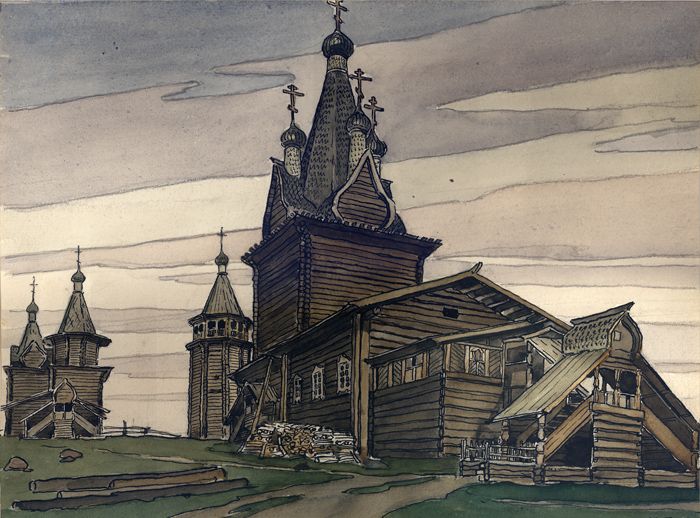
bilibin wooden church

Illustration by Ivan Bilibin

bilibin wooden church photo

Photograph by Ivan Bilibin


With the break of the Soviet Union, that changed. In 2001 I came across some postcards published at the beginning the 20th century of watercolours and photographs of wooden churches by the artist Ivan Bilibin. Bilibin had travelled to the Russian North in 1902, 1903 and 1904. Friends in St Petersburg found me a driver, Alex Popov the Professor of Atmospheric Physics at St Petersburg University, and in 2002 we set off in Bilibin’s coach tracks.

1a(1)Wooden Churches was published ten years later.

The wooden churches of northern Russia, which you have documented in your first book, are unique and fragile works of art as well as testaments of faith. What is being done both to preserve them as monuments and keep them alive as part of the distinctive religious life of the region? And what do you think might further be done?

Many of the churches that Bilibin had recorded were no more and those that had survived were in a perilous state.

During the war a wonderful book had been published in Russia celebrating the wooden architecture of the north – it was recognized as a facet of Russian culture that the armed forces where fighting to preserve. After the war, Stalin was able to blame the destruction of these cultural artifacts on the enemy and great efforts where made to restore those that had survived the revolution and the war. But with the break up of the Soviet Union funds disappeared and the churches where again left to rot, with rusting signs attached proclaiming that such and such a church was an ‘Historic Monument under the Protection of the State’.

47RTprint[1]Many churches are being re-inhabited by their local communities, roofs are being patched and plastic bagged cardboard icons are being pinned to walls but many churches, because of collectivisation, have been left with nobody to care for them.

In the summer volunteers now flock to the north, many under the flag of Obscheye Delo, an organization founded by the Moscow priest, Father Alexei, to do what they can to save the churches. There are very good professional restorers on hand but sadly the funds aren’t. The feeling is that the Church is more interested in building spanking new buildings than preserving archaic old wooden ones. And for the moment the State seems to be more interested in building up its nuclear arsenal than preserving historic churches in the far north.183RT_mod2[1]

The ‘Wooden Churches’ book has sold out – do you have plans to reprint?

I had a publisher for ‘Wooden Churches’ but they came back to me with terrible layouts– can you believe it they cropped my photographs!! So I ended up publishing the book myself. It was great fun but not a great money making venture (I did in fact get my money back) so I’m thinking hard before reprinting. I’m sure it would sell (the churches are so beautiful), but it would be good to reprint it on the back of an exhibition.

How have local people reacted to your work? 

The local people in the Russian North are naturally very kind and generous and I’m pleased to say that they have been very kind and generous to ‘Wooden Churches’. I’ve done my best to make sure that it is sitting on a good few shelves in Northern Russia. I haven’t yet had the chance to show ‘Russian Types’ to many people in Russia although I have had two reactions. 1/ The wife of the restorer Alexander Popov complained that the photograph of her husband showed his bottom and not his face. 2/Our translator on the last trip to Russia in April this year laughed out loud almost every time she turned a page – I took this as a compliment.

87RT_mod1(1)[1]What anecdotes or encounters particularly stand out for you in your travels throughout northern Russia?

Everyday, travelling in Russia is an adventure – I’ve yet to encounter a bear although I’ve heard many encountering-bear stories! I have been towed by snowmobile across a frozen lake horizontally on a sledge and arrived at our destination iced up like a frozen corpse. I’ve flown in a flimsy aircraft to land in a field next to a wooden terminal. I’ve been hauled in for questioning by the authorities at a town with an intercontinental ballistic missile site attached. I’ve venture across the White Sea to uninhabited islands and crumbling churches with twenty beautiful art history students from St Petersburg University. I’ve drunk more vodka than I should on occasions and eaten piles of bliny with honey and cream – my liver is shot and my cholesterol levels are sky high – I could go on…

In your second book, Russian Types and Scenes, you and your co-creator Alexander Mozhaev profile the everyday life and colourful characters of northern Russia in a wonderfully vivid way, through both photographs and texts. Can you tell us a bit about how the book came to be, and how you worked on it together?1_(1)

Having published one book myself, the only thing I could do was to publish another. I’d continued to travel to the North, with the students, filmmakers and friends. I had been taking photographs of people while photographing the churches and continued to do so on these trips. I love pure photographic books but I also love words so I wanted to put a book together gelling the two. Alexander Moshaev, a Moscow writer and architectural historian, was one of the friends who joined me on some of these trips. Sasha is very lively and I soon understood that he had insights into what we were seeing that I, as an Englishman, would never have (needless to say, many of the things I enjoyed he found rather banal). He would also interpret the content of my photographs in ways that I couldn’t. I read a lot of Russian stories in English, sadly I don’t speak Russian, and tracked down quotations that would fit into my photographic narrative. And as the book was coming together I would ask Sasha for suggestions and 28(1)stories.

I was also very lucky that one of the students from St Petersburg, Natasha Shalina, was studying in London while I was putting the book together. With a few deft taps on her iphone she would come up with wonderful things from Russian web sites that would inevitably lead to other wonderful things. She also helped with translating Sasha’s particular style.219ART_mod2[1]

Do you have any anecdotes about the people or occasions you’ve featured in that book?

The fun about putting these books together, ‘Wooden Churches’ over 9 years and ‘Russian Types’ over two years, is obviously that what you have at the end is the result of a great adventure. As a photographer you never know who or what will come in front of your camera each day. Matilda Moreton, the writer of Wooden Churches never knew who she would meet each day and what they would tell her. Researching the texts was equally exhilarating. I bought a copy of the New Yorker once on a whim and inside was a great story about Russian bells. I was reading the biography of a Russian children’s writer and suddenly he’s talking about wooden churches. It’s as though all these things are given to you if you loiter long enough. But then again there are the photos you missed, the people you didn’t talk to and the books you didn’t open.

Are you working on a new book at the moment?

I am. I will publish a book with a photograph I took in 1967 – by rights the book should appear in 2017. The book will have photographs and stories about seaside ‘Pleasure Piers’ – like Russian Churches they are often decorated with onion domes and they also attracts great writing and yarns!

Note: All photos aside from those by Ivan Bilibin pic are copyright to and courtesy of Richard Davies. 

On comics and graphic novels: an interview with Bruce Mutard

Ever since I was a Tintin-devouring child, I’ve loved comics and graphic novels, so it’s a great pleasure today to be featuring a really interesting interview I did recently with Bruce Mutard, one of Australia’s most prominent creators in these genres.

Bruce has been writing and drawing comics for 25 years, producing 4 graphic novels: The Sacrifice (Allen & Unwin, 2008), The Silence (Allen & Unwin, 2009), A Mind of Love (Black House Comics, 2011), The Bunker (Image Comics, 2003) and a collection of short stories, Stripshow (Milk Shadow Books, 2012). He also has had short comics stories in Overland, Meanjin, The Australian Book DSC04353 copyReview and Tango among others, and has illustrated several books for Macmillan Education’s Stories From Australia’s History, series. He has just completed a Master of Design in comics studies on the interaction of words and pictures at Monash University. He has conducted many comic workshops, and given talks at Melbourne Writers Festival, NMIT, RMIT, Edith Cowan University, University of Melbourne, Monash University, and presented papers on comic theory at Oxford University, Loughborough University and University of Arts, London among others.

Bruce is an eloquent and knowledgeable advocate for comics and graphic novels generally, and holds the comics and graphic novels portfolio within the Australian Society of Authors. Recently, his passion has led him to a new direction. Read on!

Bruce, you’re about to launch a new imprint, Fabliaux. Can you tell us about it? What motivated you to start it? What has the journey been like so far? And what kinds of books will you be publishing?

The idea for Fabliaux started a few years ago when I was still thinking of self-publishing some of my own work that wasn’t suited or wanted by my existing publishers. This was primarily my short comics collection: Sex, Politics and Religion: Stories To Break Up Families By and Alice In Nomansland – a still unpublished graphic novel that is predominately naughty humour, and unlike any other I’ve done. Those books are still floating about, though I’d much rather other mutard alicepublishers took them on. Anyhow, I’d always nursed the possibility of publishing other people’s work if I thought it needed to take print form, and that there might be enough of a market to make the investment back. I chose the name Fabliaux because it has a literary pedigree and doesn’t have ‘comics’ in it, limiting the sorts of books I might be able to publish. I may one day do prose, poetry, artists books, art books or kids books. Anyhow, Fabliaux is a term given to a genre of ribald and comic tales told by jongleurs in France in the 12th and 13th Centuries; the precursors to similar bawdy tales in the Decameron and The Canterbury Tales.

from Roman de Renart, medieval French fabliau

from Roman de Renart, medieval French fabliau

So far the journey has been ‘artistic’, which is to say that I’ve blundered into publishing with the eye on the creative end-goal, satisfying my authors, but less concerned about the costs and how to market the work! To that end, my aim is to publish books that have a niche readership, but nevertheless one that is proven to exist, and to make sure the print quality is the best for the work. I’m an author first and foremost, so that is my main role, but since that often takes me to markets, fairs, conventions and the like, I might have an opportunity to sell some of these books. I won’t do mass-market books, as I have neither resources nor time to put into the marketing and administration of such an enterprise. I give my author’s contracts and generous terms, though no advances. I make no promises other than to publish and do my best to take the authors work to the world in my stumbling fashion. Don’t laugh, please.

The launch title of Fabliaux is the provocatively-titled Art is a Lie, by Carol Wood and Susan Butcher–a unique work indeed. Tell us about it–how did you discover it? What drew you to it so much that you chose it as the launch title of Fabliaux?

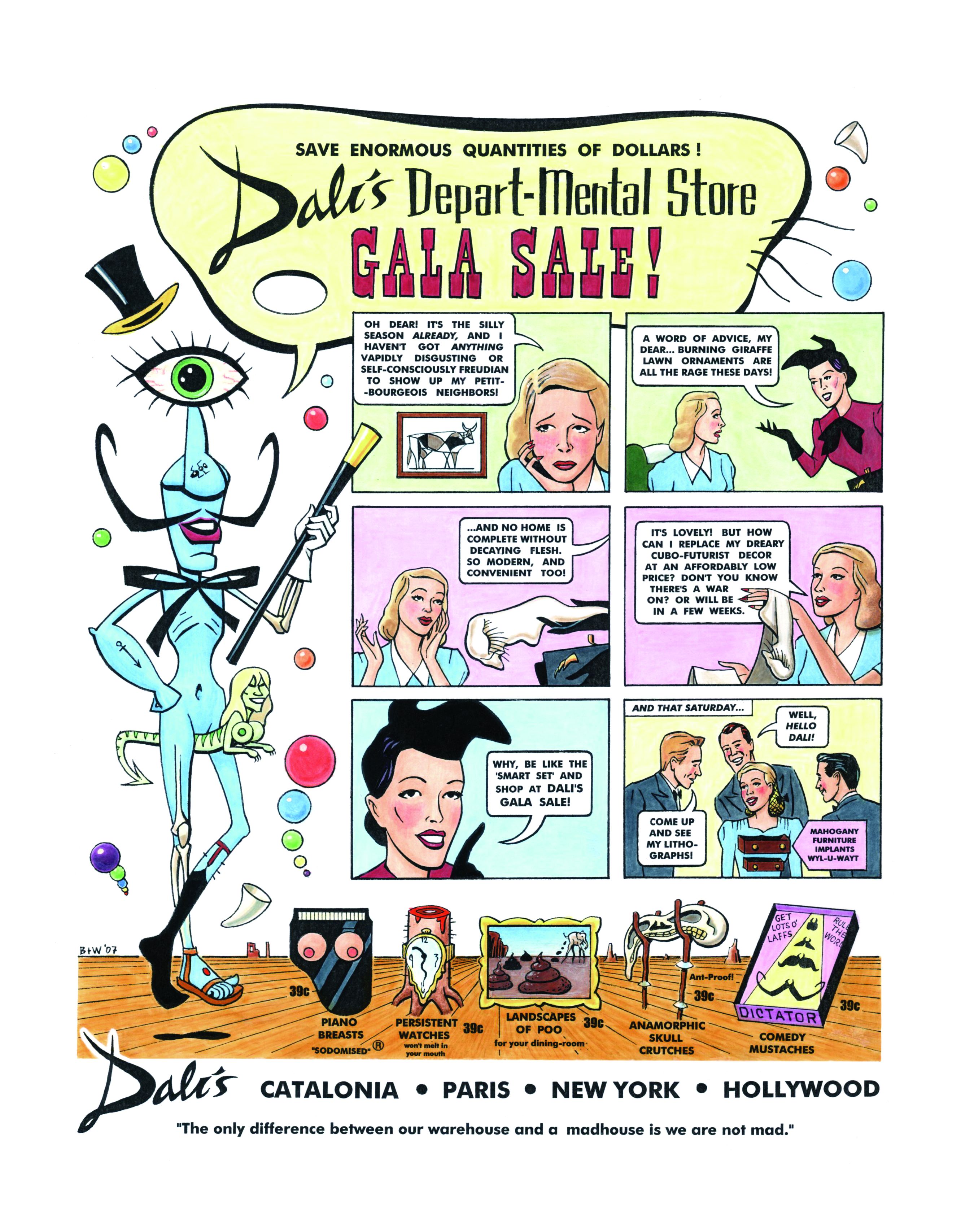
I’m pretty certain Art Is A Lie is unique. In short, it’s a collection of 1-3 page comics strips mostly first printed in a US art magazine, Artillery, over the past 9 years under the title, Dead or Alive. Essentially they are spoof biographies of famous artists, done in myriad of styles so no two Art is a Lie Dalistories look the same. Imagine Picasso as done by EC Segar (Popeye), Duchamp as a Dick Tracy story, Hieronymous Bosch as done by Don Martin (MAD), or the 5000 Fakes of Dr Seuss. Imagine Frida Kahlo as a Betty Boop cartoon, or if you can, Tom of Finland as done by George Herriman. You probably can’t imagine such things, but they do exist in this book. There’s fumetti of which a couple all the characters and backgrounds are intricately constructed models that Carol in particular, makes. The level of detail in these is astonishing. In short, they are brilliant and I think the world needs to know about it! As for discovering it, I’ve known Carol and Sue for perhaps 20 odd years on and off, so when they showed me the work they’dArt is a Lie Picasso been doing for Artillery, I was blown away – laughing. Since the magazine was not available in Australia, I wondered if there would ever be a collection of the strips so I could have a well thumbed, cup ring stained, annotated copy on my bookshelf. The magazine’s publisher was in no position to produce such a book, nor were the Pox Girls. For many years, nor was I, but as the old saying goes: ‘good things happen to people who wait.’
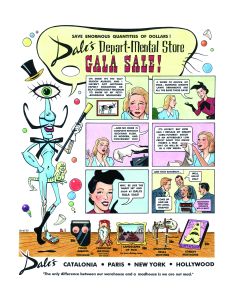
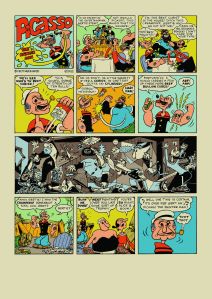
The rise of self-publishing has been talked about a lot in recent times, but not so much another phenomenon–the rise of small presses founded by creators: authors, illustrators, graphic novelists, who are publishing other people’s work. Why do you think this is happening? And do you have any thoughts on what it means for the literary landscape and the publishing industry?

It is probably a confluence of factors. Firstly, there is the general contraction of sales across the industry that has lead to a reluctance on the part of established publishers large and small to take on new projects, even from authors they’ve published. Unless an author has earned out their advances (assuming they got one), it’s hard to place a new work, especially something that is a challenging literary work. The old template publishers worked from by having commercially successful works subsidise the publication of works of merit has diminished. But those authors who have been fortunate enough to do well out of their literary career, generally love writers, good writing, good books and having been through the mill of building a career in writing, also know how much more difficult it is to get published today. So, I think their passion for literature means they are willing to set up imprints and publish those works that the established publishers have forgone, not to prove the latter wrong, but simply to ensure good work gets published, be it in print or digital. Some may have a better business head than others (like me), but I’m sure it’s passion for the art, craft and life of words and pictures, that drives them.

The comics/graphic novels scene has both expanded and contracted in recent years in Australia. There seems to be more creators than ever yet less opportunity for them to be exposed at the traditional showcase events, such as Comicon, Supanova etc. Can you comment on that? 

I would agree there has been a huge expansion in the number of creators and works being produced in recent years. The Ledgers committee (The Ledgers are the recently reinstituted annual Australian comics awards) had a long list of more than 250 to sift through last year, whittling that down to about 40 for the shortlist. There are so many more people considering comics as a medium with which to tell their stories or non-fiction. I would disagree that there are less opportunities to showcase their work; if anything, it’s the opposite. True, showcasing comics work is not overly rewarding at the pop culture expos like Supanova and Ozcomicon for the simple reason that they are nowhere near as popular as the other stuff on show. The main reason people to go to those is to dress up in cosplay, get photos and stuff signed by the stars, attend their speaking sessions, play some games, buy copslay merchandise, get prints, toys, books and dvds. It’s very rare that there is a comic guest that requires one to buy tokens in advance and line up for an hour or more to get something signed (Stan Lee is one such). stan lee signingAlthough comicons began with all comics, they have evolved with time to embrace all the pop culture that was largely born in comics, or spec fiction. It’s a case where the children of comics have gone and built a world that left its parents and grandparents long behind. Occasionally, these elders are known to express a little pique at being marginalised or forgotten. But there’s nothing wrong with that; evolution is healthy and the events bring joy to tens of thousands of people every time they are put on.
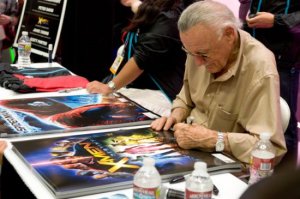
But in the last few years, a good number of comics only events have sprouted up which probably resemble the comicons of old in their early days. There’s Comic Gong in Wollongong (which may evolve to be more pop culture); Comic Con-Versation in Sydney in September, run across several library services; the Homecooked Comics Festival in Melbourne, put on by the City of Darebin; The Central West Comics Festival in Parkes; the Zine and Indy Comics home cookedSymposium in Brisbane, the Sticky Zine Fair in Melbourne and numerous zine fairs that are also very good places for comics creators to sell their work direct to the public. I suppose the biggest problem in Australia is that these forums are almost the only way most creators reach their public, for aside from those few of us whose work is published by mainstream book publishers, most are sold through a few local comic shops and/or online. There is no national comics distributor that reaches all the local comics shops, let alone high street bookshops that sell graphic novels. Most of the latter do not sell ‘floppies’ or mini-comics. The Australian comic shops buy 90-100% of their stock from Diamond Comics Distributors – a near monopoly comic distributor in the USA, where all the Marvel, DC, Image, Dark Horse, IDW and other popular titles come from. These stores very rarely set up accounts with anyone else, unless it’s manga, Anime, Dvds, figurines and other stuff they might sell. I know that you can’t find my books from Allen & Unwin in most Australian comic shops because they won’t set up accounts with Allied Distribution for a few local graphic novels. So, if you go to your local comics shop in your capital city (there’s a handful in major regional centres), then you’re most likely to find what is produced by creators who reside in that city, as they have personally taken their work to be sold there – usually on consignment. There have been a few attempts over the past couple of decades to create a national comics distribution system, but aside from one who failed at the first hurdle, the others foundered on the lack of support and interest from the comic shops. Australian comics are by and large marginal sellers compared to the American comics and Manga. The reasons for this are the simple fact that we don’t produce comics that compare with the slick overseas products (see question 6, below).

Tell us about your own books–and whether you’re working on something new.

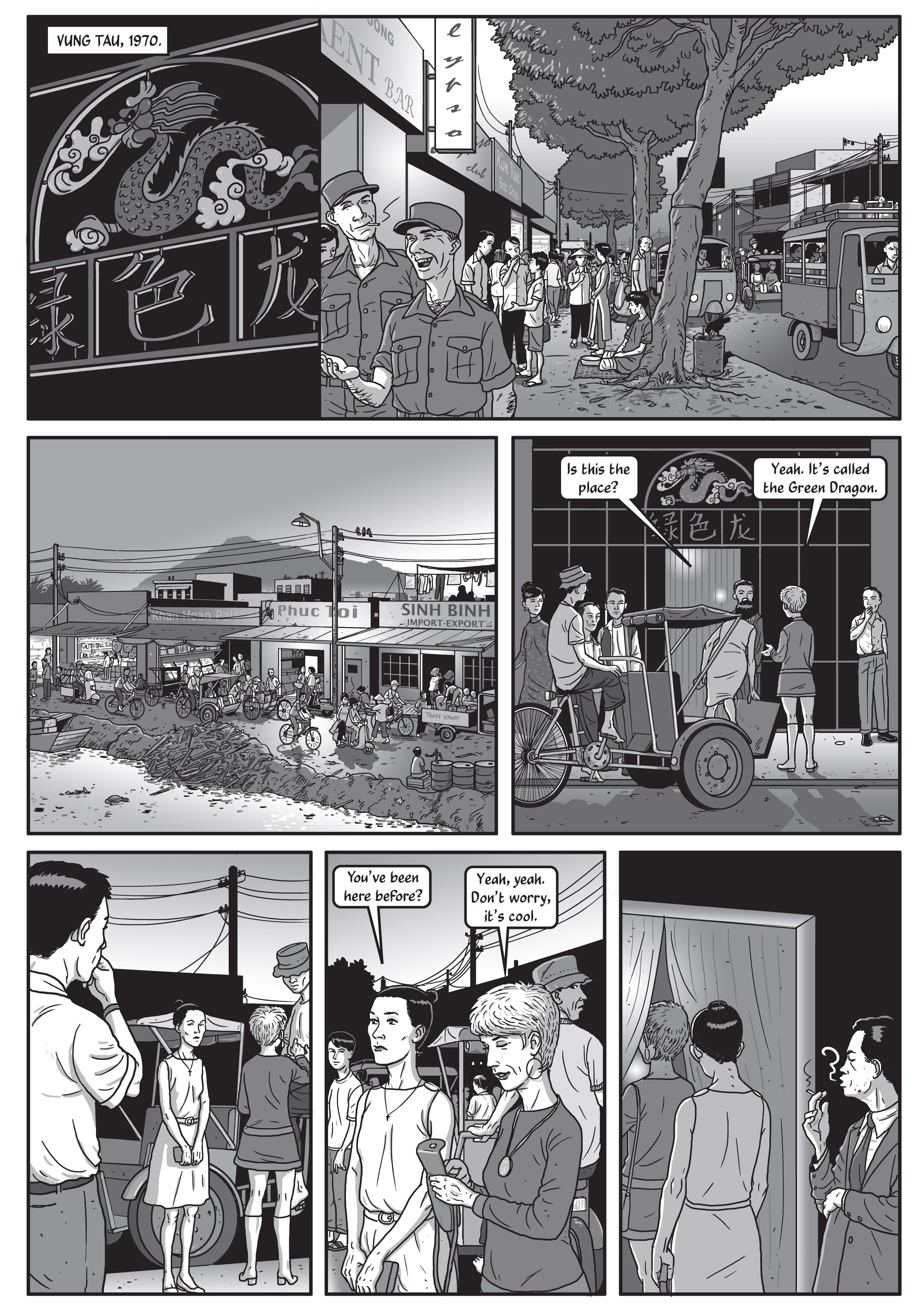
The-SacrificeMy own books to this point, have been very specifically set in Australia and dealing with Australian themes, which has been at times appreciated for that fact because it’s uncommon. For instance, my novel, The Sacrifice, is set very specifically in Melbourne, during the years 1939-1942, following the travails, loves and life of a dedicated pacifist, whose unwillingness to enlist is corroded by a rapidly changing cultural and societal matrix as a consequence of war, and of course, the influx of American troops. The Australia of that period: ‘white’, xenophobic, English, colonial and still a bit cocky even after the bruising taken by participating in WW1, is evoked with considerable detail, to the point where due to the presence of the juxtaposed narrative images, it is a major character in the story. My next book, follows the daughter of the principal in The Sacrifice as she serves as an army nurse in Vietnam during 1970 to 1975. But there are plenty of extended parts set in Melbourne during this period, which will show the changes from the previous era, but also how much it’s changing for the better, even if it was barely perceptible during that period. I have been working on this book for the better part of 8 years and there is a considerable way to go, due to having completely revamped the story twice. On the side, I on occasion do smaller projects by commission, usually silencecover if they offer me a challenge to do something that I’ve never drawn before, or it’ll mean comics appearing in a place where they’ve rarely, if ever appeared. So for that reason, it is not the money that motivates me, but what I might learn by doing the work. Examples are the all-comics issue of Cordite, where artists adapted contemporary poems into comics. For me, the challenge was to take words that are usually so visually evocative and allusive, into something actually visible, but without simply illustrating them. I adapted A Frances Johnson’s poem, Microaviary (about drone warfare of all things) because when I read it, all these images by association flooded into my consciousness from my unconscious, and it was immediately apparent to me that I should simply put those images down. To that end, about half the actual words disappeared into the Mutard_panel_1images, and where they remained, the images added new contexts and layers, so that in a sense, it was a new work. I would love to do more such ‘collaborations’ and there is talk of such.

Aside from that, I have also recently completed my Masters degree, researching what it means to ‘write with pictures’ which is how I actually think of my craft. It is another way of saying that in comics, the pictures need to do the bulk of the work of conveying the story. In cinema, they call it ‘show don’t tell’. It’s about the most sagely three words of advice I could give any budding comics artist, only it’s also one of the hardest balances to achieve. Words are easy to put down, cut and paste and have a sort of precision about them, especially compared to the polysemous nature of images. What I really learnt from my research was how little study had been made into the formal properties of what I called juxtaposed narrative images. Much ink and pixels have been devoted to the content via all sorts of prisms (feminist, Marxist, deconstructionist, structuralist, sociological, medical, Freudian, Friedman, etc.), but strangely, little has been done to place it within art theory or as a visual art. Rather than produce a new work for print, I took it into space as an exhibition, where there was no page  one, no need for the meta boundaries of the page – just walls, doors and of course, the space CD 01within the room itself. I really want to do a PhD and take this much further and develop a new theory of comics that starts with the proposition that it is a medium, not a genre of literature. So, this means technically, the answer to the question ‘Are comics literature?’ is actually, no. But I Stanley Bruce Mutard Space oddity 01try not to say that in polite company.

Is there a distinctive ‘Australian’ style and approach to comics and graphic novels? Do you see your own books as fitting within that?

While I wouldn’t say there was any overarching style in terms of appearance, such as manga has, or the ‘ligne claire’ (clear line) school of BD, or the sort weightless dynamism pioneered by Jack Kirby that signifies the superhero genre, I would say there is a characteristic idiosyncrasy in Australian comics. It may sound strange to say, but comics might be one area where the ‘tyranny of distance’ is still at play. By that I mean few creators here really think they have a chance of ever being able to make a living from comics, or getting hired to work for the big comics publishers in the USA, Europe or Japan. There are a number of writers and artists who comicozhave succeeded, particularly with the US comic publishers (speaking English helps). But since the Australian market is so small, and therefore the prospect of sales is limited to local readers, Australian creators tend to produce work that is not obviously aimed at readers in those other markets. They tend to produce comics for the sheer joy and pleasure of it, and garnering a few readers tends to satisfy them. Some might say that this elffin-cover-1displays a lack of ambition or professionalism, but it’s not. Those who really do want to make a living in comics doing work for hire, put in the long, hard yards at improving their skills, getting the feedback from industry professionals as they hawk their portfolios at the US shows (or European ones). As for selling ones own creator owned graphic novels to compare with say, Dan Clowes, Chris Ware, David B, Rutu Modan, Art Spiegelman and so on, have a harder row to plough. Even in the US market, few creators make a living exclusively from their comics, but at least there are substantially more and much larger comic’s shows with which to showcase and sell their work. In the last few years, some Australian creators (including myself) have made the trek to North America to sell work at shows like Toronto Comic Arts Festival, the Small Press Expo, CAKE and the like. It’s an expensive way to showcase ones work, and I’m not convinced it’s worth it given that any follow up sales have to be made via ones social media or site, necessitating shipping hard copies overseas, which has a frightful cost, (normally more than the margin between retail price and cost of production). There is no question that building a big reputation in comics would be easier if based in the USA, Canada or perhaps in Europe.
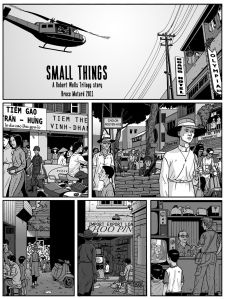
That said, not too many local works are specifically Australian in content or character either, often being set in imaginary worlds, mining the tropes of spec fiction genres. There is a strong trend to autobio comics, which depict the prosaic and quotidian with some reflective humour. I find autobio comics to be interesting in that with the presence of the image, the authors often depict themselves quite unfavourably and viscerally – a trend set by Robert Crumb. For some reason self-loathing almost seems to be a requirement for autobio comics, where the body and its liquids seem to feature prominently. I guess there is a safety in ink, where it is not possible to Mutard comic 2transmit physical infectious agents, though it is very prone to spreading infectious memes!
I was brought up reading within the strong French tradition of ‘bandes dessinées‘,or BD, as comics and graphic novels are known there. That whole area of publishing is mainstream in France, the books are sold in every bookshop, creators are routinely invited to general literary festivals as well as the BD-oriented ones, and the books cover many different genres and age ranges .In America and Japan, the other two great traditional centres of comics and graphic novels, the art form is similarly respected and accepted in the mainstream of publishing. But not in Britain or Australia, where the mainstream either ignores it, or looks down on it. Or both! What’s your take on this?

Long have some of us looked to France and wished the cultural acceptance of comics there, was replicated here. In Japan, it is certainly a similar case, although I believe it is not a career too many parents would hope their sons and (few) daughters would take up, as it’s punishing work and pays badly. I would disagree that comics are a respected art form in the USA. The same pejorative connotations that have tarred and feathered comics here and in the UK, applies to the Anglophone speaking world in general. This view generally runs along the lines that  little-nemo-19060812-s comics are mostly for kids, are superficial, sub-literate, containing very little content worthy of literary merit, nor give cause for and reward consideration by academia, literature festivals and arts grants bodies. And for much of the history of Anglophone comics, including a fair proportion of what is produced today as ‘mainstream’ or superhero/action/spec fic comics, you would not find much to convince you otherwise. Despite revisionist historical appreciation of the skills of George Herriman, Winsor McCay, EC Segar, Walt Kelly, Jack Kirby, Bill Gaines (as publisher), Harvey Kurtzman, Will Eisner and so on, very few people appreciated what they did at the time they produced their work, such that Roy Lichenstein could blatantly plagiarise comics artists work without attribution or reward.

It has only been since the revisionary comics of Alan Moore, Neil Gaiman, Grant Morrison, Bill Sienkewicz, Frank Miller and Art Spiegelman in the mid 1980s, did a wider appreciation of comics as a form of literature to be taken seriously, take root and found fertile soil in which to grow. Now there’s an abundance of academic studies mining a new field of comics studies (why not; it was a new field with ground to stake like a new unfarmed fertile valley), mainstream book publishers suddenly taking an interest in a genre they hitherto ignored and republishing collections of comics, graphic novels and studies (but mostly only those creators who had V_for_vendettaxachieved considerable acclaim and attention within the comics market first). Literary festivals started to invite a few of the leading lights of comics to participate, though I think still in a way that shows they don’t get comics in the same way they don’t understand spec fiction; they are generally programmed as a separate stream, not integrated into the main program. Most importantly for me, is the sudden appearance of often substantial comics collections in public libraries (and some school libraries, though there is still an inconsistency in how to shelve it: ideally as it’s own section, not within general fiction or non-fiction). All of this points to the steady progress comics have made to enter the arts mainstream in the Anglophone world. There is still a long way to go to attain a mass readership like the Franco-Belgian world has, and it will probably never get there given the plethora of new competing forms of content (and their delivery) for the public’s attention, but it’s no longer considered a juvenile activity. There’s a level of immediate Mausrespect for the medium and its makers now that was largely absent as recently as 15 years ago. There is no better time to be making comics than now – even if it’s almost impossible to make a living at it. But that’s the same as being an author in general!

Recently, a librarian told me something that astonished me–she said that she had no idea how to read comics and graphic novels. It seemed to me to encapsulate a major problem: that unlike in the strong European tradition of comics and graphic novels specifically directed at children, young Australians rarely get a chance to ‘learn to read’ in those genres. And there is in fact very little for children published in those areas in Australia. Yet at the same time it seems a very natural art/literary form for children to respond to. Why do you think so few Australian comics creators write for kids?

There could be a number of explanations to the librarian’s difficulty: a structural cognitive deficit where her mind simply couldn’t interpret the iconic recurrence, and therefore ‘sculpt’ space and time within her mind in the additive way that comics requires; a kind of visual dyslexia if you will. Or, she can read words, but not ‘read’ images. It may be that she has grown up having absorbed the pejorative tag on comics and therefore, unconsciously resistant to them (when I appeared on the First Tuesday Book Club with Jennifer Byrne, she told me she didn’t ‘get’ graphic novels, either).

But you’re right, it seems in the great effort of comics to persuade the Anglophone world that comics are NOT just for kids, we’ve forgotten to keep them. Once upon a time superhero comics were all suitable for kids thanks to the requirement to receive the imprimatur of the Comics Code Authority seal (and therefore, appear on American newsstands). In the mid 1980s, the revisionism of the genre allied with the bulk of American comics being sold in specialty comics shops patronized mostly by adolescent males of all ages, meant the arrival of mature readers labels on comics, which very soon grew to encompass all genre comics, as almost all the readers were adult males. Naturally, their interests are somewhat narrow, meaning the content was (and continues to be) largely a mix of violence, gore, swearing and captain congobadly drawn sexy women in contortionist poses to satisfy the male gaze. But that is modifying as the readership of comics expands to embrace women and a plurality of voices, there are now comics for everyone. Thank heavens!

Since most comic creators tend to love comics, there is no surprise that they write and draw the kind of material they like to read (for good or ill), which tends to the adult. I am one such creator; almost all the work I create is aimed at 15+ readers of all genders. Given what I said above regarding Australian comics and the book market here, there isn’t a lot of incentive to produce comics for kids in the way there is for picture books. But this is changing as there are few comics aimed at kids coming onto the market, like Gregory Mackay’s delightful Anders and the Comet , Sorab Del Rio’s Rudy Cool, Sarah Ellerton’s Finding Gossamyr, Ruth Starke and Greg Holfeld’s Captain Congo, (an adventure in the ‘Tin Tin’ mold).

andersThere has been a slowly building countervailing trend to produce comics for kids (like Toon Books, run by Francoise Mouly), especially in a pedagogical context, since many teachers I’ve spoken to are happy to find anything that kids will read. At long last the educational world has accepted that reading comics is still reading, and moreover, helps with reading by having words constantly associated with what they stand for, even emotions, smells, sounds, the sense of touch and the like. In that respect, the arguments put forward for picture books can be applied to comics as well. I hope this will lead to the presence of comics available to readers at all age groups in a manner found in Japan and Europe.

Interview with Jane Routley

JaneRoutleyToday it is my great pleasure to feature a really interesting interview I did recently with Jane Routley, multi-award-winning author of haunting and gripping fantasy novels, whose earlier books, I’m delighted to see, are enjoying a deserved comeback through ClanDestine Press, but who’s also hard at work on several new fantasy novel projects. And she’s also continuing with another wonderful side to her writing–Station Stories, intriguing non-fiction vignettes inspired by her day job. Read on!

Your new ebook, The Three Sisters, has just been released by ClanDestine Press. It was first published in 2004 under the pseudonym of Rebecca Locksley, and received fantastic reviews, including one from the great fantasy author Sara Douglass, who deemed it a ‘captivating read’. Can you tell us a bit about the book’s journey from its initial publication to its new release now? Did you make any changes to the original book, and how did you approach the question of pseudonyms for this new release?

The pseudonym Rebecca Locksley was an attempt to re-launch me for marketing reasons. At that time big bookshops like Borders were only ordering numbers of books on the strength of previous sales. Harper Collins had enough faith in me to think it might be worth re-launching me and making a big marketing push with posters and dump bins etc… In The Three Sisters I had wanted to write a three sistersprequel to my Dion Chronicles, to deal with the history of the Klementari and their contact with the Aramayans. The name change came when I was too deep in the book to change the story. To be honest even though I understood the reasoning, I wasn’t very happy about it. I changed the names and some of the geography, but the magic system and the characters – everything that mattered -remained the same.
Since the name change didn’t achieve what Harper Collins had hoped and publishing has changed enormously with the advent of ebooks, I thought I might as well consolidate and change my name back for the re-issue.
Oddly enough when Clan Destine offered to re-releaseThe Three Sisters under my own name,I started out changing the world back to that of the Dion Chronicles. Somehow it just felt wrong so I must have changed more than it seemed at the time. Also I was worried people would think I was setting out to deceive.
The Three Sisters has been re-copy edited and I’ve smoothed out some stylistic edges that seem rough to me now but otherwise it’s much the same book that was released in print.
There is a sequel to The Three Sisters which has never been in print, which I spent a lot of time writing and which people still write and ask me about. Fingers crossed Clan Destine will bring it out some time next year.

In both your earlier Dion Chronicles and this book, you have created vivid and intriguing characters, acting in richly-depicted fantasy settings. How do you go about creating the world of your books?

I usually start out with an idea or a character. I’ve always loved the vividness of Angela Carter and Vernon Lee and I’ve tried to emulate it. Fairy tale and history fuel my world building. I tend to imagine my self living in my worlds. I imagine daily life, the smell of fresh bread and the feel of velvet robes. Hence there must always be the sense that there are bakers and seamstresses in the back ground even if they are not described. You need to make sure that everything follows logically.
For instance, your characters need ways to earn livings, which leads to ideas about social structure and economies.
The Three Sisters is set in a kind of medieval world but one in which a country is being colonized. I’ve plundered a lot of my history reading for that. For instance the local women are regarded as valuable slaves because of their skill at weaving. The women captured after the fall of Troy were used in just such a way. Later in Medieval times the work of weavers was the basis of much of the wealth of the Medici’s and the English Monarchy. Hence my history reading fuelled that piece of world building.
On the other hand fairytales are the back ground for a lot of my writing about the Tari. But even though they are magical they still have to eat! And they are human enough to need something to do during the day. I always notice in fantasy books when someone is just sitting round in their castle/cottage/flat waiting for the plot to catch up with them and it always irritates me. Real people,even magical real people, get bored with nothing to do. Even if you never mention it, at least have an idea in your head for what they do every day.

As a writer, are you a plotter or a gambler’? Do you plan your journey into a book, or do you just set out and see what happens?

As a writer I’m more of a gambler than a plotter. I know what I’m interested in writing about and I usually have some idea of where I want to go, but I never have much idea of how I’m going to get there. Every book I start I try to be more of a plotter. It must save so much time and angst. I always get to a point where the book goes dead and I’ve learned that that’s because I’m trying to make the characters do something that doesn’t work. Gee it’s miserable when it happens! I wish I didn’t have to go through it. On the other hand I get bored easily, so perhaps it’s best if I don’t know how things are going to go.
As a gambler, I know I write stories and books to see what’s going to happen if… For instance I’m interested in female roles in fantasy. In The Three Sisters I wanted to subvert the idea of the beautiful woman everyone desires. My suspicion would be that it would be horrible to be so desired. Sort of like that famous photo by Ruth Orkin of an American girl in Italy 1951 running the gauntlet of leering men. Elena’s quality of fatal beauty deprives her of much of her chance for agency and forces her to make a horrible sacrifice that many women in history have had to make. And I wanted to portray what it mage heartwould be like to occupied by a colonizing force, which is an important theme in Australian History. So I keep asking what happens next when these conditions apply and over time I dig into the story and get closer and closer to the story that feels right for me. It’s a bit like being an archaeologist or painting an oil painting.

Are you working on a new novel now? If so, can you tell us about it?
My current project Shadow in the Empire of Light, is an example of the way I work. I was tired of reading traditional patriarchal gender roles and especially tired of the nice girls don’t have love affairs trope that is so much a part of traditional fantasy. It’s Fantasy for heaven’s sake!! Let’s live a little!! So I tried to design a world in which women are men’s equal and gender is less of an issue. At first it came out a bit dull. I hadn’t realized how much the sex war supplied tensions.
So I added the element of class. In the Empire of Light wealth is passed down the female line and all mages become nobles. Those without magic are peasants.
My heroine Shine Lucheyart is well born but she has no magic and no mother to leave her an inheritance. She works as a poor relation in the house of powerful sorcerer relatives. But she’s smart and feisty and in the first book she spends a lot of time getting sorcerer cousins out of trouble.
Her main aim is the cut loose from her family and, with her telepathic cat for company, make her fortune. I had a lot of fun with gendered language and also fun making it a sexy silky kind of book. I’m looking for a publisher now.

You are a multi-award winning, internationally-published author. How do you think the genre of fantasy fiction has changed over the years since you were first published?

The introduction of sparkly vampires and the growth of urban fantasy is one major new part of the genre. Fairy tales seems to have left nature and have become more and more entwined with our grungy urban settings. I’m not sure the type of historical fantasy I write has changed all that much. A lot of it seems just as sexist and humourless as it was when I started out. There are a lot of women centred fantasy novels nibbling away at the edges, but the mainstream….? Women are still being married off to save their brothers from ruination or in constant danger of being ravished by every man they meet. On the other hand there is the Game of Thrones phenomenon which can only be good for all fantasy writers simply because it’s gone so mainstream. Looking at G o T is a great way of looking at gender roles in Fantasy. A lot of women say that G o T is too rapey. That’s true. It’s set in a war and that’s what happens in the chaos of war. But there are a lot of strong women in the book. You have Aya, Danerys and even the appalling Cerci just to name the main ones. On the other hand you could accuse it of exceptionalism since all these ladies are exceptional and not the norm and the rapeiness is a drag to read if you’re a woman. Still compared with Tolkien we are definitely making progress. I guess one should be happy for small steps.fire angels

Separately to your fiction, you have created a wonderful compendium of non-fiction ‘Station Stories’ of vignettes and micro-stories inspired by your work as a station host at a Melbourne station host. How did ‘Station Stories’ start, and how do you see it as developing? Can you share with us one or two stories that stand out?

As a writer I’ve always wanted to celebrate everyday life – to make little photographs of it but with scents and sounds. Because everyday life is full of tiny transcendent jewel-like moments of delight and sorrow and interest. Fantasy writing doesn’t give you much scope for this. When I first started to work at a railway station (unfortunately my writing doesn’t pay the bills)I was delighted by all the little stories that played out on station platforms and kept a diary so that they wouldn’t be lost. Over time and with my discovery of social media these have metamorphosed into ‘Station Stories’. I really wrote them for my own pleasure. People tell me to look for a publisher for them and perhaps I will. But I already think of it as a small weekly column and I try to post one every weekend. I’d love to build up a following for them so that lots of people get this little story maybe on their mobiles maybe on Monday mornings as a bit of a sweetener. Without really planning it that seems to be what I’m working towards.
Here are two of my favourites.
A regular
G, one of our regulars is extremely disabled. He drives his wheelchair with a stick mounted on his head and communicates by tapping out words on a communicator. Were I so disabled, I think I’d be scared to leave the house, but G goes out to his job most days and has a busy social life. Recently I was tasteless enough to tease him about checking out the pretty girls. The way he tapped out “I’m engaged” and the dignified way he looked at me as it sounded out, made me feel rather small. Serves me right!
Yesterday he was waiting for a friend at the barriers and we got chatting. Hundreds of people headed for the Soundwave festival were going past and my task was to call out “Soundwave passengers – buses to the left!” at regular intervals.
I was startled to hear a little mechanical voice repeating my words. G had typed the words into his communicator and helpfully kept pressing the button at regular intervals until his friend arrived and he shot off in his wheel chair to greet him.

Station Heroics
Today the Crystal lady was in great distress (although not willing to miss her train) because she had dropped a container of freshly made organic peanut butter on the train tracks. I leapt in to help like the hero station host I am. Although these days railway employees are forbidden to enter the Pit (this is the evocative name we rail types use for the area of train track between the platforms) I do have a Scoopy Thing. This thing, created by some great hero station officer of times past,is a plastic milk bottle cut in half and attached to a pole. It enables me to fish all kinds of things – mostly mobile phones safely out of the Pit.
The ST performed admirably but to be honest, I’m not sure the Crystal Lady will want the peanut butter as the jar has a big germ emitting crack in it. Still that’s her decision for tomorrow.

Station Stories can be followed at www.janeroutley.com
https://janeroutley.wordpress.com/
https://www.goodreads.com/author/show/333390.Jane_Routley
http://www.linkedin.com/today/post/author/posts#published
https://www.facebook.com/jane.routley.5