On writers: Nicholas Stuart Gray and The Stone Cage

The Stone Cage 001This is the second in a series of republished articles of mine on writers. This one is about the wonderful, influential yet shamefully neglected British children’s author, Nicholas Stuart Gray, whose lively, magical fantasy novels and short stories kept me spellbound as a child, and whose work I still love. This article is particularly focussed on my favourite novel of his, The Stone Cage, which is an absolutely wonderful riff on the fairytale of Rapunzel through the eyes of the witch’s familiars, a cat named Tomlyn and a raven named Marshall.

The article was first published under the title ‘A Cat’s Life’ in the lovely British books magazine Slightly Foxed in their summer 2008 edition.


Nicholas Stuart Gray

by Sophie Masson

If you were a bookworm as a child, your memories are measured not only in family or school or public events, but in stories you read. You remember vividly the smell, the touch, the sight of certain books. You clearly remember picking them up from the shelf—an ordinary act—and then the extraordinary happening, as you open the book and fall straight into another world. The pure pleasure of it, the immediate liberation. For me, who loved fairytales and fantasy, who longed to go through the looking-glass, the wardrobe, stepping through the borders into another world, where anything might happen, it was also a blessed escape from the confusing, disturbing and tumultuous family dramas that dominated my childhood. In those stories of other worlds, I found pleasure and consolation, transformation and possibility. And I found my own calling as a writer.
It can be dangerous revisiting those important, beloved stories, as an adult, for it’s not just a book that might be found wanting, but memory itself. And yet, when it works, when the barriers of time dissolve before the sheer magic of a real storyteller, it is probably the most thrilling experience a reader can have.

The Stone Cage, by Nicholas Stuart Gray, was one of those books that I remember clearly not only because they were so good to read, but because they were also so influential on me as a developing writer. Picking it up again after a gap of more than three decades was one of those magical moments that made me rediscover not only my childhood self, but also the reason why the book stands out in my memory. For from the very first sentence, you are plunged into a briskly unsentimental fairytale world, tartly guided by Tomlyn the witch’s cat:

Ever heard of a ‘dog’s life’? I’ll bet you have. Everyone has. Means a low, miserable kind of life. Full of kicks and curses, and nothing much to eat. I don’t know, I’m sure—what about a cat’s life, then? There’s not much said about that, is there? Nine lives, yes—but what sort of lives are these supposed to be? I’ll tell you the sort I had—a dog’s life.
I have to admit it isn’t every cat who lives with a witch, though.
And what a witch! Bad-tempered old —! No, it’s not fair to a cat or she-dog, to liken her to one of them. Let’s say she was a bad-tempered old beldam, and leave it at that. She hated people. She hated Marshall, her raven. She hated her bats and her toads. She hated me. Sometimes I think she even hated herself. A great old hater, was madam.   Tomlyn 001

A naïve young stranger intrudes on this loveless, isolated mini-dictatorship, and is forced to pay a terrible price for his presumption, as he must give up his only child to the witch. And so the poor child is taken from her parents and put into a world where no-one trusts anyone else, love isn’t allowed to exist, and bitterness and cruelty reign. But all is not lost, for this is a very special child indeed, who will achieve an extraordinary miracle, greater than the greatest of spells, greater even than the most malevolent hatred.

As I read, I was swept along, just as in childhood, on the irresistible tide of a gripping story that for all its wit, humour, accessibility and clarity is also a compassionate, tender and complex evocation of the transforming power of love. But it’s certainly not all sweetness and light. Going way beyond a mere retelling of the fairytale of Rapunzel, on which it’s based, The Stone Cage reaches deep into the darkest, most painful aspects of life, as well as its most beautiful and joyous. In the way of the best children’s literature, it attains a profundity that’s all the more remarkable because of its sheer lucidity and unpretentiousness.

I finished The Stone Cage exactly as I’d done all those years ago: with tears in my eyes, and a thrilling heart, for the book also ends in one of the most perfectly judged, moving yet unsentimental scenes of its kind. Allied to my renewed love was a keenly increased admiration for the artistry of the author, which had easily stood the test of time. The characterisation is superb, the dialogue crisp, the pace good, the combination of light and dark subtly achieved. And the beauty of the style! Fluid, graceful, it is humble—in that it doesn’t draw attention to itself—and yet it’s fresh, distinctive, individual. The Stone Cage had been so important to me because everything in it worked. It was all so natural, so flowing, so multi-layered, its world richly imagined, yet delicately evoked. It was a real masterpiece, a novel just about perfect both in concept and execution, and timeless in its appeal, a novel that should have just as many young readers now as it did back then.

nicholas stuart grayAye, there’s the rub. For The Stone Cage is out of print, and has been for a long time. In fact, and rather astonishingly, in a culture like Britain’s that generally does value its children’s literature, all of Nicholas Stuart Gray’s books are presently out of print. Beautiful, original and accessible though The Stone Cage, Mainly in Moonlight, Grimbold’s Other World, Down in the Cellar, The Seventh Swan, and his other works are, they are unobtainable except through second-hand shops and the Internet, although some are still in libraries. It’s not as if modern children don’t like them, or don’t understand them, either; I know of lots of young readers who, introduced to Gray’s books by their parents, have loved them just as much, and have found them just as easy to read. It’s not as if there’s anything dated or offensive in them, no obvious or hidden misogyny or racism or class stuff or anything like that. There is nothing really to properly explain this puzzling situation, other than that they’ve simply been overlooked.

And yet, Gray’s work has deeply influenced many of today’s writers working in the fields of children’s literature and of fantasy—Garth Nix and Neil Gaiman and Cecila Dart-Thornton, for instance. I’m certainly not the only reader-turned-writer to remember Gray’s books with great love and respect. Australian children’s novelist Cassandra Golds, author of the acclaimed Clair de Lune, wrote to me about the huge impact on her of one of Gray’s books, Down in the Cellar :’I will never forget the Sunday afternoon on which I finished reading it. I remember feeling a kind of mysterious desolation, partly because I’d finished reading it and would never be able to read it for the first time again, but partly also because I KNEW I had now read the best book I was ever going to read. And I felt, then and still, that the only possible response to that experience was to become a children’s author myself.’ As an eighteen year old, Cassandra had written the author a fan letter, and she still treasures his modest, graceful reply, in which he said, amongst other things: ‘As all my books and plays are only written for myself and not for any imagined audiences, readers, age-groups, publishers, etc, it is always a delightful surprise to get proof that anyone BUT myself ever reads or sees them..’ nicholas stuart gray 2

Perhaps that answer gives a clue as to why Gray’s work is not recognised as it should be. This was not a man who blew his own trumpet, not a writer who sought publicity, but one who loved his work and felt privileged to be doing it, and who was too humble to thrust himself forward. Who was perhaps also at heart a rather private, reserved, even secretive person, despite his long association with theatre, which many people would consider the home of trumpet-blowing, egotistical extroverts. Certainly, when I went to research his life, I found precious little information.

Nicholas Stuart Gray was a Highland Scot, born in 1922, the eldest of four children. As a child, he wrote stories and plays for his siblings. Not one to bend easily to the routines of school, he left at the age of fifteen, to become an actor. He kept writing as well, and his first play was produced two years later. His first children’s play to be published was Beauty and the Beast(1951), and from then, he wrote and produced a good many plays for children, before turning his hand to novels and short stories(where I think his true gifts flowered). Some of his novels, like The Stone Cage (1963), he also adapted for the stage: he told Cassandra Golds that he himself played Tomlyn in the play’s premiere at the Edinburgh Festival and its subsequent successful seasons in London and on tour. (That would have been something to see! ) He never married or had children. His plays fell out of fashion, but his novels and short stories continued to be published until his untimely death from cancer in 1980, and right into the late 80’s, we were still seeing frequent reprintings of his books.

nicholas stuart gray 3But in the last fifteen years or so, there have been no more new editions. In this new Golden Age of children’s literature, it’s more than time to bring his books back so that a whole new generation can fall under their spell. Any publishers out there listening?nicholas stuart gray 4

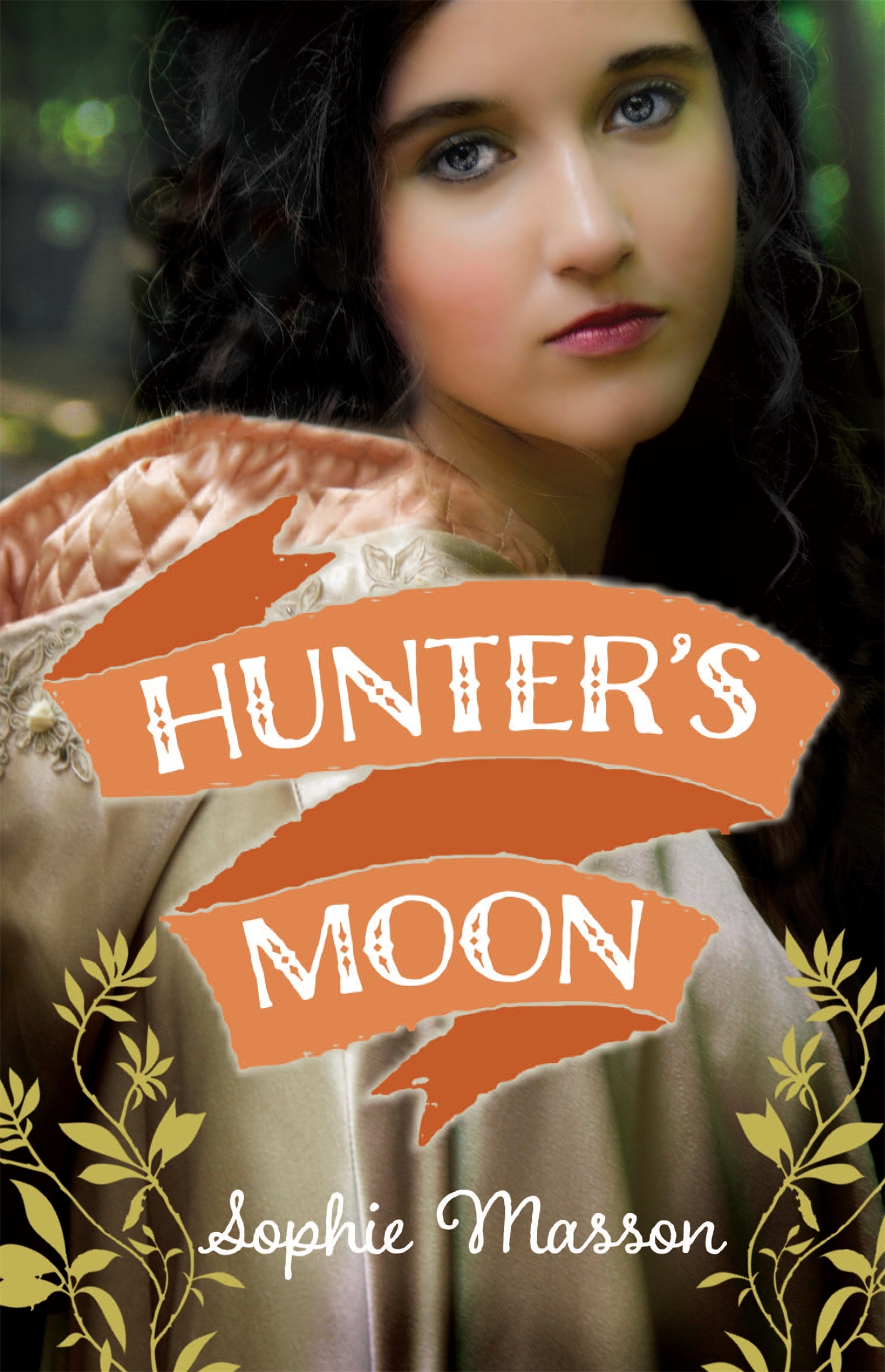
Thrilled to reveal the beautiful cover of Hunter’s Moon!

Hunter's Moon coverI’m thrilled to reveal the gorgeous cover of my upcoming novel, Hunter’s Moon, which is being released by Random House Australia on June 1.

Hunter’s Moon is a gripping YA fairytale thriller set in the same magical world as my earlier novels, The Crystal Heart(2014); Scarlet in the Snow(2013) and Moonlight and Ashes(2012), which are all set in a world inspired by the late 19th century in central and Eastern Europe, only with magic! Each book is set in a different country, and inspired by a different fairytale, and with Hunter’s Moon, that fairytale is Snow White. Here’s the blurb:

Bianca Dalmatin wants for nothing. As the heir to a department store empire and stepdaughter of the beautiful Lady Belladonna, the only thing Bianca longs for is a friend. It seems that her wish is granted at the duke’s Presentation Ball when she meets the handsome, mysterious Lucian Montresor.
But after The Mirror newspaper names Bianca as Lepmest’s new Fairest Lady, the true nature of her stepmother is revealed. Belladonna tells Bianca the shocking news that Bianca’s father is dying – and, when Bianca races to be by his side, Belladonna sends her faithful servant to kill her. Who is friend and who is enemy? Plunged into a terrifying world that will turn her from a daughter of privilege to a hunted creature in fear of her life, Bianca must find allies if she is to survive – and to expose Belladonna for who she really is.

Guest post: Duncan Lay on the reality of fantasy

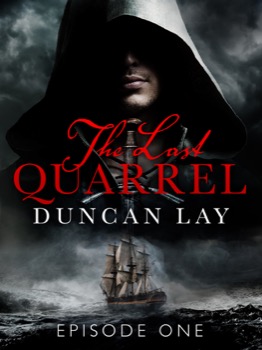
duncan lay Last-Quarrel-Episode-1_cover1An interview with legendary US fantasy author Raymond E Feist inspired Duncan Lay to begin writing fantasy. He is the author of two best-selling Australian fantasy series, the Dragon Sword Histories and the Empire Of Bones. He writes on the train, to and from his job as production editor of The Sunday Telegraph, Australia’s biggest-selling newspaper. He lives on the Central Coast of NSW with his wife and two children.

In this fabulous guest post, Duncan explores how he created the world of his new series, by inspiring himself from the real world.

When you begin to read a fantasy story, the author is asking you to put aside your disbelief when you crack open the front cover. What lies inside could include fantastical creatures, magic, non-human characters – really, it could be anything.
Personally I think fantasy is best when it comes with a layer of reality, as it gives the reader something to hold on to, something familiar to ground all the fantastic, amazing other things they are reading.
Part of that comes from the characters, making them as real as possible but I also think part of it needs to come from the world they are from.
I know that some authors lovingly construct a world from scratch and good on them, I say. Personally, I think that a touch of the real world in a fantasy story gives the reader something recognisable and allows them to more easily believe what else is happening.
In my new series, The Last Quarrel, there are two lands. Gaelland, which is based on Ireland and the Kotterman Empire, which is loosely based on the Ottoman (Turkish) Empire. In real life, these two countries had nothing to do with each other but this is fantasy, so anything can happen!
The beauty of basing your fantasy country on a real country is you instantly have no problem with character names. Those baby name websites not only offer you endless options but also helpfully say what the name means, which allows you to pick names that offer a hidden side to the character. Place names are also a breeze, although you can also mix those up a little so as not to represent actual places. Thus I have Lagway (Galway), Lunster (Munster), Meinster (Leinster), Londegal (Donegal) and so on.
Best of all, it allows you to learn from history. After all, people survived and thrived in those conditions, in that weather, through war, disease and famine. How they did it gives you an insight into how your characters might live, what they might wear and eat. It can influence their speech, their mannerisms and their history. Of course, being fantasy, you can pick and choose which aspects you keep and which you discard and replace with your own!
I loved the idea of Ireland for many reasons. The thought of a small, proud country that, through no fault of its own, is next to a larger more powerful one is obvious. How it deals with that larger country’s ambition is a matter of history. Ireland has a proud warrior tradition, its own songs and legends and a powerful national character. One of the main characters, Fallon, even uses the shillelagh, the traditional Irish fighting stick. Plus I was fascinated with the story of the sack of Baltimore, an Irish village that was stripped bare by Arab slavers. Putting the two together gave me a strong base for my story.
The Ottoman Empire also interested me. The way it was seen as the “sick man of Europe” during World War I, which led to the battle of Gallipoli and the forging of the Anzac legend, makes it instantly fascinating to anyone in Australia. The idea of a mishmash of an Empire, cobbled together from a variety of countries and held together by willpower and a steel fist, made it an obvious choice for me. Naturally there are heroes and villains on both sides!
History books are a great help with research but I also find books such as the Horrible Histories series are even more helpful, offering a really gritty view of life in different times.
And the best thing is, you can always mix and match things, as well as make them up if it comes to it. After all, it is fantasy and it only needs a little reality!

Duncan’s website: http://www.duncanlay.com/

Facebook: https://www.facebook.com/duncan.lay

Twitter: https://twitter.com/DuncanLay

About The Last Quarrel:

The Last Quarrel is a series in 5 episodes, the first of which came out on January 22, and further episodes will be released at fortnightly inteervals in February and March, with Episode 2 coming out this week! Keep an eye on Duncan’s Momentum page for more information as episodes are released.

Episode 1:(out now)

Gaelland is a nation gripped by fear.

In the country, fishing boats return with their crews mysteriously vanished, while farms are left empty, their owners gone into the night, meals still on the table. In the cities, children disappear from the streets or even out of their own beds. The King tells his people that it is the work of selkies, mythical creatures who can turn from seals into men and back again and witches. But no matter how many women he burns at the stake, the children are still being taken.

Fallon is a man who has always dreamed of being a hero. His wife Bridgit just wants to live in peace and quiet, and to escape the tragedies that have filled her life. His greatest wish and her worst nightmare are about to collide.

When an empty ship sails into their village, he begins to follow the trail towards the truth behind the evil stalking their land. But it is a journey that will take them both into a dark, dark place and nobody can tell them where it might end…

Episode2:

Prince Cavan is sure his younger brother, Swane, is behind the children going missing in the city. But his father refuses to listen and sends him away to investigate reports of selkies stealing people from the countryside. A furious Cavan fears this is part of a conspiracy. But then he meets Fallon, a simple country sergeant who has his own theories about the attacks on Gaelland. And what they cannot achieve apart, they must just do together …

On writers: Leon Garfield

Over the next few weeks, I’m going to be republishing on my blog a number of articles I’ve written over the years, about writers, especially writers for young people, whose work I’ve loved and been inspired by, both as a child and into adulthood. These articles have been first published in a number of different places. The first of these I’m republishing, is on Leon Garfield and first appeared in Magpies Magazine some years ago.

leon_garfield black_jackLeon Garfield,

By Sophie Masson

I remember the first time I met Leon Garfield’s work. It was a Friday afternoon, I was about twelve or thirteen, and I was looking for something juicy to read at the local library for the weekend. The Garners I’d wanted were out; but browsing idly on the same shelf, I came across a title that looked good. Black Jack. By Leon Garfield. The cover was evocatively spooky, the blurb tasty, and as I ever judged books by their covers and blurbs at that age–I was willing to give it a go.
From the first sardonic, intriguing sentences, I was hooked:

There are many queer ways of earning a living; but none so quaint as Mrs Gorgandy’s. She was a Tyburn widow. Early and black on a Monday morning, she was up at the Tree, all in a tragical flutter, waiting to be bereaved.

Flung headlong into the strange, funny, terrifying, vivid world of seedy 18th century London from those first sentences, I could not put the book down all that night, even after stern paternal injunctions to turn the light off, this instant! I begged Mum to take me back to the library on Saturday, and snapped up Devil in the Fog, the only other Garfield that hadn’t been taken out, and read it too within a few hours, heart racing. As soon as I got back to school on Monday, I went to look in the library, to see if there were any other books by this extraordinary author. In the space of a few weeks, I managed to gobble up Jack Holborn, and Smith, and Mr Corbett’s Ghost, and The Drummer Boy, and The Strange Affair of Adelaide Harris. And then started again, with Black Jack, which even to this day remains my absolute favourite. I think that I must have read some of Garfield’s books five or six times over those years, and pounced on any new ones that came into the library.
Brought up on the strong meat of 19th century French picaresque adventure novels, I had taken to Garfield like a duck to water, amazed and delighted and whirled along with the inventive plots, wild casts of always believable though larger than life characters, skeins of mystery to unravel, bloodthirstiness and gruesomeness yet also humour, and the glorious language. Though his main characters were nearly always children or young people, they were never hived off into separation from the adult world; this is the opposite of the cosy boarding-school bubble. No; they had to fight, love, hold their own somehow in a harsh yet not completely unloving adult world, a world of tragedy and villainy, yet also compassion and joy and humour. The books, with their evocative illustrations by Anthony Maitland, became an indispensable part not only of my reading life, but of my writing life too, later.

Continue reading →

Changes in genre publishing over 13 years

It’s been 13 years between my previous adult novel, Forest of Dreams, and my new one, Trinity: The Koldun Code. Though I’ve had lots of books for young people published in between, in that time, much has changed in the field of adult genre fiction publishing and in a post published at the international authorship blog, Writer Unboxed, I profile some of them. Have a read and see if you think I’m right–and if you have any comments or observations to add to it!

A short story for the holidays: The Great Deep

DN-SN-86-00740 welsh cliffs


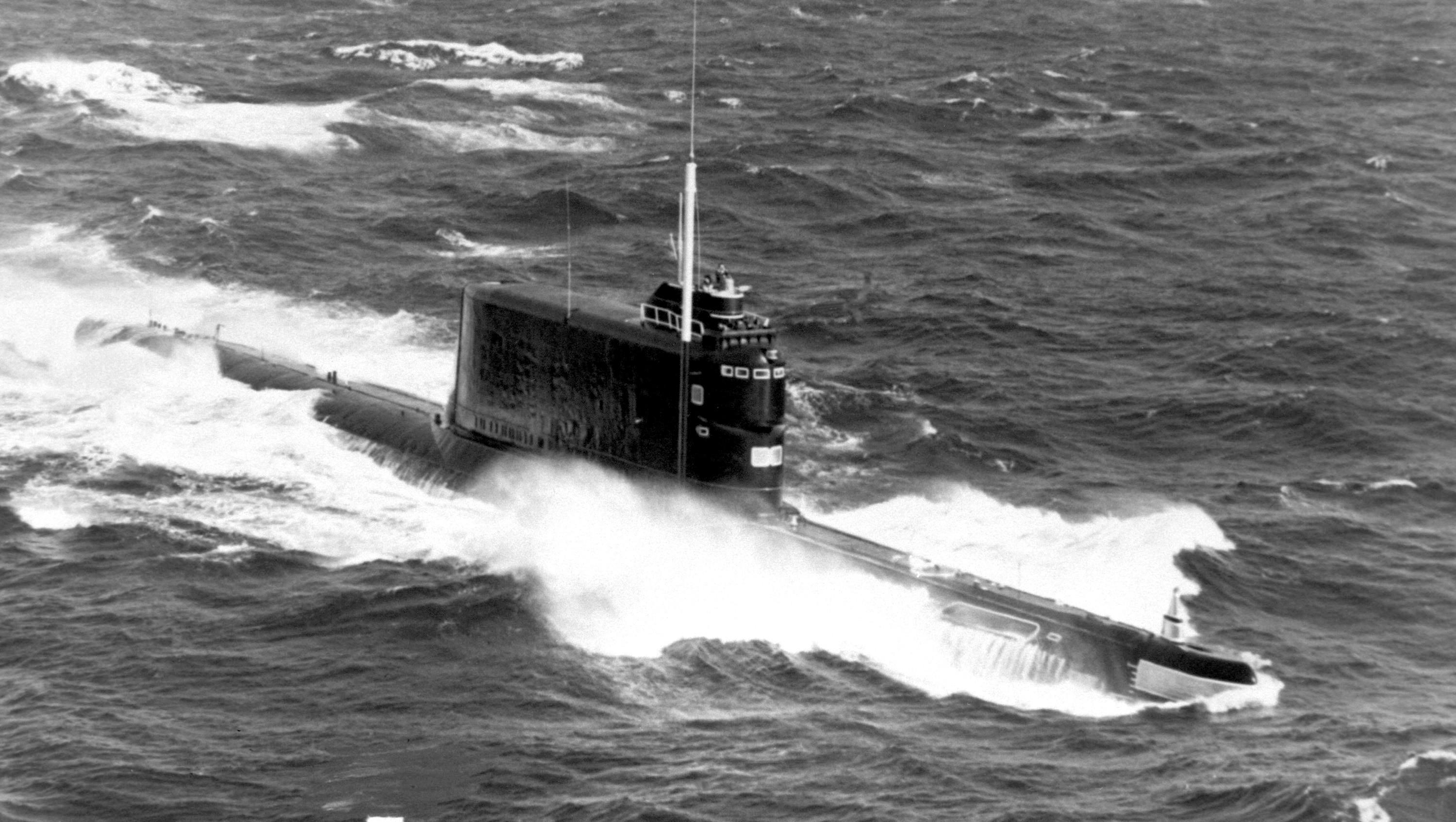
This story was triggered by something I read during the coverage of the tragedy of the downed Russian submarine ‘Kursk’ in the Barents Sea in 2000. It was noted that there had been other such incidents during Soviet times, and that the few submariners who had survived accidents of this sort reported feeling that when they were going up through the escape hatch through the layers of water above, they were entering a different world, out of time..
It is also very much inspired by traditional stories of selkies, which have fascinated me ever since I was a child.

Originally published in ‘The Mutant Files’ anthology(USA) in 2001, it was also republished in my collection, The Great Deep and Other Tales of the Uncanny. I hope you enjoy it–and a very happy and peaceful festive season to one and all!

Copyright notice: This story is copyright to Sophie Masson. It may be reproduced, with all proper acknowledgements, but may not be used for commercial purposes or adapted without permission. creative commons license


The Great Deep

by Sophie Masson.

Full fathom five thy father lies;
Of his bones are coral made;
Those are pearls that were his eyes;
Nothing of him that does fade
But doth suffer a sea-change
Into something rich and strange.
(from The Tempest, by William Shakespeare)

If it had not been for his son Henry’s broken heart, the Reverend Doctor William Featherstone would never have been on the remote little Welsh beach on that bright, fateful summer morning in the year 1712. If poor naive Henry had understood the nature of the light-footed, light-headed Imogen he had set his heart and soul on, Dr Featherstone would have been comfortably ensconced that day in his lodgings in Oxford, working busily on the notes for the latest chapter of his vast compendium of natural and unnatural history.
Now, a broken heart, despite the sufferer’s perception of it, is not usually fatal. But in Henry’s case, it very nearly was. The night after Imogen had laughed his love to scorn, Henry’s manservant Roley had found his young master insensible in his room, having taken what he presumed to be a lethal dose of laudananum—which fortunately it had not been, only enough to make him very ill indeed.
Henry had shown little gratitude at being pushed back into the world. ‘Why didn’t you leave me to die?’ he had cried out to his father from his sickbed.
‘You could hardly expect me to do that,’ pointed out his father, reasonably. ‘You are my only child, after all.’
Henry sighed bitterly.’Nothing in life has any savour any more, for Imogen will never love me; worse, she despises me.’
‘Why then, return the compliment, with interest,’ said Dr Featherstone, briskly.
‘Oh, father, how can you speak thus! But then, you don’t understand about love, at your age,’ said his son, closing his eyes .
Foolish, commonplace words: but they had stung Dr Featherstone deep inside a place he had thought carapaced long ago. He looked at his son’s face—the skin very pale, the dark, soft, cropped hair, the long, dark eyelashes curving on the hollow cheeks—and for one terrible moment, saw the face of his beloved wife Cristin, Henry’s mother, lying there in her last illness. ‘Water on the lungs,’ some quack doctor had called the strange illness that had made her waste away so quickly. He had not thought of her for years; had blocked her picture away from his mind. But now he spoke quickly, sharply, words he had not thought through, that he had no idea had been in his mind at all.
‘As soon as you are quite well, we will leave for Wales,’ he had said to Henry, making the young man’s eyes fly open again, and dispelling the grievous illusion, for Henry’s eyes were blue as Cristin’s had been dark brown and combative as hers had been gentle.
‘Wales! Why, Father…’ Henry stopped, confusedly. Perhaps he regretted the words he’d uttered; or perhaps he merely thought his father was acting as fathers do, according to their sons: in the way of another alien kind, another, mutant race.
‘I intended to go there this summer, in any case,’ said Dr Featherstone, in a willed return of his earlier briskness. ‘And now is as good a time as any. ‘
‘We will stay at the Red House, like in the old days?’ Henry’s sudden smile was as sweet as Cristin’s had been, and Dr Featherstone’s heart turned over most painfully.
‘Of course..’ Fussily, to hide his feelings, he went on, ‘And I hope that Mistress Llewellyn will have aired it well this spring, or we may look forward to some rather damp evenings.’
‘I am sure she will have done,’ said his son, listlessly, closing his eyes again; and Dr Featherstone saw that though Henry had him fixed again as an old fusspot, at least now the danger—to both of them–was past. Henry had not forgotten Imogen, of course; but he had something to look forward to, again. The Welsh coast; the Red House; and the smells and sights and sounds of a happy childhood. The young can easily start again, thought Dr Featherstone, rather bitterly, as he tiptoed out from the sick-room, leaving the rest of Henry’s recovery in Roley’s capable hands. Not so easy for us older folks, who must forget, for sheer survival’s sake, what it was really like to live for love.

And so it was that both Featherstones, senior and junior, found themselves back in the cliff-top Red House, on the remote south-west coast of Wales, facing the Irish Sea. The house had reputedly been built some two hundred and fifty years previously by Cristin’s legendary ancestor, Morgan Meredith. Sealmen and women, strange and wondrous mutants of the deep, were not unknown on that coast of marvels, and all who knew Morgan had no doubt he was one of them. As a baby, he had been recovered from the sea by the fisherman who became his adoptive father. More, he swam just like a sea-creature, and was always to be found in or near that element.
When he reached manhood, Morgan had taken employ in the King’s navy; and the stories of his bold exploits at sea came home to his own place, and filled the people there with pride. When he returned home, he took a bride from amongst the villagers, and built the Red House on the cliff overlooking the great green deep. None knew exactly when he had died; for one day, in old age, he had simply disappeared, never to be seen again. It was said by all that he had returned to the sea whence he had come.
Despite—or perhaps because of—the strange stories about their legendary ancestor, the Merediths were well-liked and respected in the area. Cristin, last of the Meredith line, had been loved too, and her English husband accepted, for her sake at first; and later for his own. Continue reading →