Bringing a neglected time to life: an interview with Patricia Bracewell

PB_172-001Back in my late adolescence, driven by historical and linguistic curiosity and by having read Kevin Crossley-Holland’s and Jill Paton Walsh’s wonderful Wordhoard as a child, I studied Anglo-Saxon alongside Middle Welsh and Icelandic sagas as part of an Arts degree. I will never forget the extraordinary sound of Anglo-Saxon as the lecturer read it in such works as Beowulf, The Battle of Maldon and the Exeter Riddles, catching through it a glimpse of a time so long ago, so far away, yet in a sense quite close too. That interest surfaced from time to time even well after that, and I read Sile Rice’s vivid novel The Saxon Tapestry, and used Anglo-Saxon documents myself to create part of the background of one of my own books, The Stone of Oakenfast, part of the LayLines/Forest of Dreams trilogy.

My interest in Anglo-Saxon England was rekindled again late last year, with one of the great discoveries of my recent reading life–the wonderful historical novels of Patricia Bracewell, who has brought the neglected world of early eleventh century Anglo-Saxon England to vivid and memorable life in two books of a planned trilogy set around the extraordinary figure of Emma of Normandy.

And so today I am delighted to feature an interview with Patricia Bracewell herself. Enjoy!

Shadow on the Crown and The Price of Blood are major works of historical fiction about a period that is rarely written about: Anglo-Saxon England in the early eleventh century, before the Norman Conquest, but during a period of great strife, both internal and external. What first drew you to writing about this neglected but important period?

It was Emma of Normandy who piqued my interest in the Anglo-Saxon period. My knowledge of pre-Conquest England was relatively slim until the day about twenty years ago when I ran across an online post that referenced Emma, her royal husbands, and her children. I had never heard of her before that, even though I’d taken a course in English History at university. And when, intrigued, I did a little digging and began to get a glimmer of the role that Emma must have played in the first half of the 11th century, I was hooked. I had to know more and, beyond that, it seemed a crime to me that Queen Emma, who had herself commissioned a book about events that she had witnessed in her lifetime, should be virtually unknown today. I wanted to correct that if I could.

You preface each of the chapters in the novels with a quote from the Anglo-Saxon Chronicle, an invaluable but rather dry history of the time, written at the time. What other research did you have to do to create the rich texture of your books, in terms of cultural and historical background?shadow2

The research was considerable because I truly was starting from square one. My university degrees are in Literature, not Medieval History, so I had to begin by learning everything that I could about the 10th and 11th centuries in England, Normandy and Denmark. It took two years of preliminary research to convince myself that I could learn enough about Emma’s world to even attempt to write her story. In addition to academic books and journals about the period I studied translations of documents written at the time – Emma’s own book of course, the Encomium Emmae Reginae, but also charters, wills, leechbooks and lists of abbey treasures that provide insight into the culture. I made several research trips to Europe beginning with a two-week Anglo-Saxon history course at Cambridge that focused on the period from King Alfred to Edward the Confessor. In Normandy I visited museums, abbeys and the site of the ducal palace at Fécamp. In London, Canterbury, and Winchester, museum displays of archaeological finds – weapons, reliquaries, jewelry, and glassware as well as models and maps of towns – helped me visualize that Anglo-Saxon world. In York and in Denmark I learned about the vikings and their ships. I’m still researching even as I write the third book, and I’ll be back in London this coming summer for that very purpose.

The action of the novels is seen from the viewpoint of four main characters: Emma of Normandy, the young, spirited and intelligent Queen of England; Elgiva, manipulative daughter of English nobleman Aelfhelm;  Aelthelred, the tormented and cruel King of England, and Athelstan, his eldest son from his first marriage, a brave, honourable yet ambitious prince. How did you juggle these different viewpoints, and what were the challenges and pleasures in seeing the story from different pairs of eyes?

In terms of juggling the four viewpoints, the biggest question I asked myself when creating a scene was Who has the most to lose? That decided, I could write the scene from that character’s viewpoint. In order to write a different scene from another point of view I then had to accustom myself to that character’s attitude, voice, opinion, language – a switch that was never easy and usually involved a lot of re-writing. Nevertheless there were distinct advantages to utilizing this shifting third person viewpoint. It broadened my story by allowing me to go places with a second or third character when the main character – Emma – could not go there. The shifting viewpoint also added contours to the various characters because readers could see them through several pairs of eyes. Elgiva, Æthelred and Athelstan, for instance, all regarded Emma quite differently and interpreted her actions in different ways. I think (hope) it added a layer of complexity to the story.

You paint a remarkably compelling and nuanced picture of the many warring cultures of the time–Norman, Anglo-Saxon and Viking, to name just the main ones. How did you go about creating a picture that is engaging for modern readers yet historically authentic in feel?

This may seem simplistic, but I think it comes down to the fact that human beings haven’t changed all that much in a thousand years. It’s my belief that our emotional responses are pretty much the same now as they were in 1002, and it is that emotional charge that readers look for in fiction. So it’s a matter of building that historical and cultural world as accurately as possible, placing actors inside it, and then imagining how they will feel and how they will act in that situation.

Shadow on the Crown was your first novel. Can you tell us something about your career before the novel was published–and how it came to be published?

I wrote two romance novels (unpublished) before I attempted Shadow on the Crown. I think of them as my practice novels because writing them helped me learn my craft. (I’m still learning – with each revision!) Before that I wrote short stories, personal essays, and feature articles for local publications. Before that I was a high school English teacher, so I really have been involved in writing all my life.

I pitched Shadow on the Crown to an agent at a Historical Novel Society Conference in 2009, but for over a year we received nothing but rejections, mostly because editors didn’t believe they could sell a book set in Anglo-Saxon England. We were both determined, though, and after I made a number of pobukjulyrevisions my agent, God bless her, sent it out again. By that time the first season of Game of Thrones had aired. Did that make a difference? I don’t know; but two weeks later we had offers from two different publishers.

How have readers across the world reacted to the books?

I think that a great many readers have been surprised by Emma’s story simply because they’ve never heard of her. She wasn’t a Tudor or a Plantagenet, and readers seem to appreciate discovering not just Emma but the pre-Conquest world in which she lived. The Portuguese language edition of Shadow on the Crown (A Rainha Normanda) has fans in Brazil and one of them, to my delight, has created a Facebook page for it. The German language edition has done well enough that The Price of Blood (Die Königin) will be published this month, and a Russian edition is in the works as well. Given that my goal in writing the trilogy was to pull Emma out of anonymity, the number of foreign editions of the book has been enormously gratifying although completely unexpected.

You’re working on the third book in the Emma of Normandy trilogy. Are you dreading or looking forward to telling the rest of her story? And do you have plans for other novels set in that time?

I am very much looking forward to telling the rest of Emma’s story – at least, as much of her story as I’ve chosen to include in this trilogy. If there is any dread involved, it’s that nagging question of Am I a good enough writer to make a really good job of it? I hope and pray that I am! I’m writing toward a conclusion that I had in mind when I first began this project, but the devil is in the details, and I’ve never written the final book of a trilogy before. I want it to be fantastic, so I’m setting the bar for myself pretty darned high and giving myself all the time I need to do it well.

As for what comes next, I’m too consumed by the conclusion of Emma’s story just now to think about it. Nevertheless, I love the Anglo-Saxon period, and there is a wealth of unexplored material there, so I wouldn’t rule out another pre-Conquest novel.
A literary gift for the festive season

For all the readers who have enjoyed my blog this year, and all those writers, illustrators and publishers who have so generously helped to make Feathers of the Firebird as interesting and informative as it can possibly be by giving of their time, expertise and experiences in fabulous interviews and guest posts, I’d like to thank you by offering a literary gift of mine for the festive season. And in the tradition of the season, which likes to weave in some delicious chills amongst the festive jollity, it’s a spooky story! Set amongst the pulsing heat of an Australian sub-tropical summer, this story, Mel, brings the shiver of ancient myth and legend into the everyday…

Enjoy! And very best wishes to all for a wonderful Christmas, Hanukkah, New Year and all other seasonal festivities!

creekMEL

by Sophie Masson ©


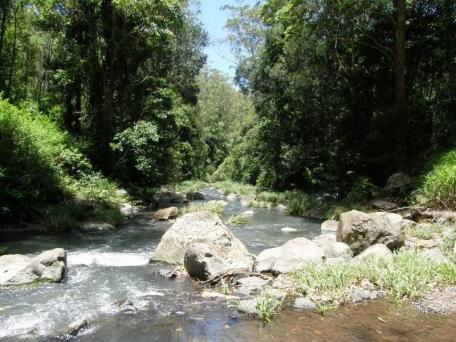
Every summer evening, we village kids used to meet down at the creek. Most days, you could strip off and have a swim, or if you didn’t feel like that, just lie on the grass and drink Coke out of paper cups, and talk. The creek was a great place, really private, with high banks and tall trees growing right to the edge of the water. All of us used to come–from the smallest Grant kid to Mary, my sister, who at 18, and apprenticed to a hairdresser in town, considered herself rather above us all.

Last summer was a really hot one, one which started early. A corrugated iron sky, a sunflare of white fire. A bit of a disaster for our parents, whose avocados and bananas were shrivelling up before they could be properly formed. A bit of a disaster for school, because the teachers were all as unpredictably shrill as cicadas. But a wonderful time for our creek meets, for in that place, the tall trees shaded us from the worse of the glare, and the water was always there, cool as a magpie’s call. We spent as much time as we could down there, eating huge slices of watermelon, drinking huge slices of watermelon, and talking our heads off. Sometimes the little kids would come and drip coldly on to us, and then run away, yelling with laughter, but it didn’t stop our talk. There was more than usual to talk about that summer. Well, the heat, and the strange feeling of heavy waiting in the air, and a tiny prick of danger at the thought of the snake.

We were used to snakes, we sub-tropical North Coast kids. Some of us even kept carpet snakes as pets. But the one we were talking about, then, was different. It had already bitten a couple of people,two middle-aged women from the surrounding area. Both had died. .

Taipan. One of the deadliest snakes in the world. Not supposed to live this far south, it wasn’t, but this one had somehow found its way. It had bitten its second victim one hot night, as she walked barefoot over the grass to the outdoor toilet. Her husband had seen it, rearing, its bright body twisting. That’s how they’d known it had been a taipan. But since then, no-one had seen it, or come across it at all. Taipans were quiet snakes, kept out of the way, experts told us. But if they were cornered, or if you came on them unawares. .

The creek bank was beautiful, not only to us but to other creatures. We knew that snakes came down there to drink, in the cool of the evening. It had never bothered us before. But that summer, we were all a bit jumpy, and the gossip that filled our mouths was sharp and a bit spiteful. If Mary, my sister, wasn’t there, the others would start on her, on her impossible beauty, her impossible haughtiness, her impossible impossibility. And Mary was impossible. When she came down to the creek, she would lie there in her white bikini, her bright, fine hair like red ferns on her brown shoulders. She paid no attention to us. She just wanted us to admire. I know that, even if I am her sister.

Ever since I can remember, people had flocked around Mary. Teachers gave her silver stars simply for being who she was. Strangers in the street stopped and said, ‘Oh, what a lovely child!’ their glance sliding past me, fat little baby and plump toddler that I was. My parents gazed at her sometimes as if they couldn’t believe their eyes. And as she grew older, boys came to her, blundering like moths around a light. And they burnt themselves, too, I can tell you. For our Mary is bright and pitiless as a flame. Sometimes, she’d talk to me, late at night, and giggle about the latest moth that had knocked itself out, and even though I was flattered to be confided in by Mary(see, I was bitten by the same bug as everyone else!)I couldn’t help squirming. There was something sad and embarassing about the thought of those boys, something which I knew Mary couldn’t see. And the strange thing was that I started to feel afraid, somehow, for Mary. I couldn’t have told you why I did; I suppose it was some sort of vague feeling that she was going too far, was tempting fate, if you like. . .

One day Mary turned up with a boy–actually, more a young man, whom none of us had seen before. He was tall, his cap of hair the colour of honey, his eyes a light, rich brown. He was beautiful. I’d never seen such a beautiful person before–except for Mary. Together they stood, seemingly serenely unaware of the effect they were having on the rest of us.

Naomi from next door nudged me painfully in the ribs. ‘What a hunk, hey!’ she mouthed. I didn’t say anything. I didn’t want anyone to say anything. I could just stare at him, mesmerised, and as if he knew, he gave me a little corner smile that vanished almost as soon as it had appeared.

‘This is Mel,’ Mary said. ‘He’s come to live in the old Stevens place. ‘

That dump! It was an old house that had not been lived in for a long time. When we were little, we used to sometimes go up there to play games of let’s pretend. Now, hardly anyone used it, because the forest had just about taken it over, and there was something odd about the place, something that kept even the secret smokers or lovers away. I think it was because it was almost house, almost forest, not quite one or the other, just something in between, that you couldn’t put a name to. . Fancy anyone wanting to live there!

‘I inherited it,’ Mel said. He had a soft, slow voice, and I let its softness wash over me, like a wave. ‘I like it there. It’s very quiet. ‘ Continue reading →

Authors’ pick 7: Alan Baxter

2187560Today’s authors’ pick has been chosen by Alan Baxter.

I read a lot of great books in 2015, some old, some new, some fresh, some rereads. It was pretty hard to pick one that I would consider the best, as that’s likely to change on any given day. So I thought about picking one that maybe deserved more attention than it had previously received, at least to my knowledge. So for that reason, I’m picking Tom Piccirilli’s noir masterpiece, The Cold Spot. Sadly, Tom died this year after a bitter fight with cancer, and that’s a massive loss not only to his family and friends, but to the literary world in general. He’s an amazing writer.

The Cold Spot is a book that showcases Piccirilli’s incredible ability to paint with language. It’s a powerful, character-driven noir that hits hard and low, and just keeps coming at you, relentless. There’s a sequel, equally good, called The Coldest Mile, and there was clearly supposed to be a third that we’ll sadly never see now. All of Piccirilli’s work is worth checking out and this is a great place to start.

Alan Baxter writes dark fantasy, horror and sci-fi, rides a motorcycle and loves his dog. He also teaches Kung Fu. He lives among dairy paddocks on the beautiful south coast of NSW, Australia. Read extracts from his novels, a novella and short stories at his website – www.warriorscribe.com – or find him on Twitter @AlanBaxter and Facebook.

alan-by-nicole-web-crop-small


Authors’ pick 1: an introduction

ghost bride coverIt’s that time of the year when we are seeing a lot of ‘best books’ list, but in this new series I’m starting today, I’m doing something a little different: asking fellow writers and illustrators to write about a book they loved reading this year. It doesn’t have to be a new book: it can have been published this year, last year, last century, or any century, but old or new, it’s should have been special for that reader in some way.

And I’m starting with my own pick: The Ghost Bride, the wonderful first novel by Yangsze Choo, first published in 2013, which I missed when it first came out, but which I read this year. I first came across it as I was compiling a reading list for the PHD in creative writing I am currently undertaking, and was immediately intrigued by the concept. But that was nothing compared to the sheer pleasure and immersive excitement of reading this beautiful book, and I’ve been recommending it to everyone ever since!

Readers of this blog will know I interviewed Yangsze a few weeks ago, but here’s my mini-review of the book, taken from the introduction of the same interview:

Set in 1890’s Malacca, in old Malaya, The Ghost Bride is the story of Li Lan, a young Chinese girl whose once-prosperous family has fallen on hard times: her mother is dead, her father has become an opium addict, and the little money there is in the family is dwindling fast, and will soon not be enough to support the household, including the few servants who are left. As a result of this, Li Lan’s father makes her agree to a terrible bargain: his only daughter will be betrothed to a dead man, the only son of the rich Lim family, who died some time before. Li Lan is desperate to escape this fate, and she tries every means to stop it from happening, especially as she has fallen in love with the new heir of the Lim family, their handsome nephew, Tian Bai. But in so doing, she must venture into the shadowy reaches of the afterlife–and soon places herself in terrible danger, as she plunges into an adventure like no other, from which there might be no return..

It’s one of the most beautiful and magical books I’ve read in a long time. In character, setting and story, it is rich, vivid and totally absorbing, and it ends very satisfyingly, as well. I’m not the only one who thinks so–first published in 2013, the book was a Carnegie Medal nominee, a New York Times bestseller, a favourite of Oprah Winfrey, and garnered all kinds of other acclaim and honours.


Interview with Yangsze Choo, author of The Ghost Bride

ghost bride coverRecently, I read an extraordinary novel called The Ghost Bride. Set in 1890’s Malacca, in old Malaya, it is the story of Li Lan, a young Chinese girl whose once-prosperous family has fallen on hard times: her mother is dead, her father has become an opium addict, and the little money there is in the family is dwindling fast, and will soon not be enough to support the household, including the few servants who are left. As a result of this, Li Lan’s father makes her agree to a terrible bargain: his only daughter will be betrothed to a dead man, the only son of the rich Lim family, who died some time before. Li Lan is desperate to escape this fate, and she tries every means to stop it from happening, especially as she has fallen in love with the new heir of the Lim family, their handsome nephew, Tian Bai. But in so doing, she must venture into the shadowy reaches of the afterlife–and soon places herself in terrible danger, as she plunges into an adventure like no other, from which there might be no return..

It’s one of the most beautiful and magical books I’ve read in a long time. In character, setting and story, it is rich, vivid and totally absorbing, and it ends very satisfyingly, as well. I’m not the only one who thinks so–first published in 2013, the book was a Carnegie Medal nominee, a New York Times bestseller, a favourite of Oprah Winfrey, and garnered all kinds of other acclaim and honours.

Enthralled by the novel, I wanted to know more about its author, first-time novelist Yangsze Choo, and so I went to her website, which is a most engaging blend of posts on books and posts on food: clearly an author after my own heart! After that, I contacted Yangsze and asked her if she’d be interested in an interview. I was very pleased when she agreed. And so, today, I am delighted to present this interview. Enjoy!yangsze choo colour

Your first novel, The Ghost Bride, is a remarkably accomplished and assured debut, and was a stunning success, garnering great acclaim.  Can you tell us about the first steps towards the novel? How did you begin your career as a writer? And what was the journey towards publication like?


That’s very kind of you – I’m so grateful and appreciative to be a novelist, though sometimes I still pinch myself in disbelief! I’d been writing bits and pieces ever since I was a child, but always thought of it as a hobby, one which gave me private satisfaction and which occasionally amused friends and family. The whole journey towards publication was really thanks to my husband, who started circulating part of The Ghost Bride to friends, and a lovely writer friend who encouraged me to look for an agent. So I googled “how to find an agent” and starting looking things up on a couple of websites. I think agentquery.com was one of them and querytracker as well.

Perhaps it was good to be ignorant, because I didn’t realize how daunting the whole cold-querying process sounds like – if I’d known, I might have given up before I started! However, I’d like to encourage aspiring writers to keep writing and submit your work. In fact, you don’t need any special contacts. I didn’t have any, and there are plenty of authors who came from the slush pile, just like me – it happens surprisingly often and you mustn’t give up!

The idea of the ‘ghost bride’–of a living girl being promised in marriage to a dead man– is both intensely creepy and arrestingly strange. How did you first come across the notion, and was it the initial inspiration for the book? How did you develop or vary it for the purposes of your novel?

Before I wrote The Ghost Bride, I spent 8 years working on a long and terrible novel about an elephant detective. In the course of writing this disaster, I happened to be digging around in the local newspaper archives (those were the days of scrolling around in microfiche) in search of elephant trivia when I happened to read a line about how spirit marriages had declined amongst the Chinese. At first I was confused. Then I realized “Ohh… this is the marriage of the dead” which I’d heard about before. And right away, I saw this scene in my head. This girl writing in her diary, in a dark room lit by a flickering oil lamp, about how she was going to be married to a ghost. I went home and pretty much wrote the first chapter of The Ghost Bride as is. Then I tried to shoehorn it into a subplot for my elephant novel (a bad, bad idea). And eventually, it became the novel that it is.

Li Lan, the main character and first-person narrator, is an attractive and very believable character. How did she first come to you?

I’m so glad you enjoyed her! It really was a scene and a narrative voice that suddenly appeared, so that I felt that I was recording what was unfolding. I think that’s important for characters, when you feel that they’re talking and making decisions by themselves. I tend to write by the seat of my pants, without planning, which is awful when things go badly and you’re stuck (I once got stuck for more than a year!), but wonderful when things really start to move and it feels like you’re watching a movie unwind. And then I also had to try to keep her in historical character. I think there’s a penchant for kick-ass heroines now who can do kungfu and break doors down, but I tried to give Li Lan experiences in keeping with what a young lady in 1890s colonial Malaya might have known and done. So sometimes she sat down and cried, which wasn’t always the most exciting thing, but I felt was probably accurate for someone who was going to be dismally married off to a dead man.

Er Lang is a wonderfully enigmatic and romantic character, with that disturbing yet playful and earthy quality of fairytale, too. How did he come to life?

Oh dear! Er Lang started off as a minor character who then started taking over various scenes, dispensing advice, and generally trampling all over my vague plans for Someone Else, but he was very fun to write. I realized that I looked forward to whenever he appeared because events always took an unexpected turn, and so he got to stay. By the way, initially the book had less romance and a lot more food, and my agent and editor both said that it could do with a romantic boost and, um, fewer nine-course banquets… I have to say they were probably right!

hell bank noteThe evocation of the afterlife and the afterworld in The Ghost Bride is extraordinary, and in your afterword, you mention that it’s a mix both of traditional Chinese beliefs, and your own imaginative creation. Yet it feels completely seamless to the reader, with the logic of dreams as well. How did you go about combining all those elements?

There’s a long tradition of strange, ghostly stories in Chinese literature, such as Pu Songling’s classic “Tales of Liaozhai”, which I was fascinated with when I was younger. It’s a rich and marvelous world, where beautiful women turn into foxes and palaces into beehives, and I was always deeply curious about what happened in these stories, which were often presented as actual histories. When I was writing The Ghost Bride, I wanted to bring the reader to that colourful world, where dreams and reality mix and you’re no longer sure exactly where you’ve wandered.

You know modern Malaysia well, but how did you go about recreating the rich texture of the atmosphere of 1890’s Malaya, specifically Malacca, which is the this-world setting of the novel?

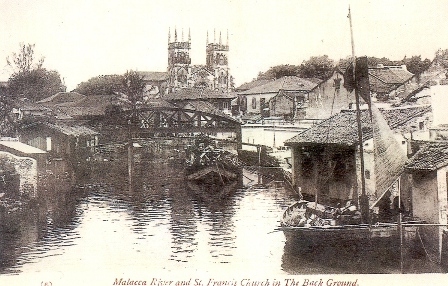
My uncle used to live in Malacca, and we’d go and visit him when I was a child. It’s a port city with a fascinating past, especially since it changed hands so often. There are old houses and lots of ghost stories associated with it, which together with the ruins of the fort and the open grave where St. Francis Xavier was temporarily buried, gave me all sorts of lurid ideas when I was younger. In addition, my dad liked to collect old books, and growing up our house was filled with history books and old malacca 2accounts of British travelers in SE Asia. When we’d run out of things to read on rainy days and were feeling absolutely desperate, we kids would start on the history books. In retrospect, that was very helpful in establishing the time and setting! Later, when I was writing the book I also went to the Peranakan Museum in Singapore, which was having a fantastic exhibition on old batik sarong. Harvard’s Widener and Yen Ching libraries were also troves of information.

What are you working on next?

I think the challenge of writing a book for the first time is that one is so tempted to put everything and the kitchen sink into it. In fact, the current novel that I’m working on is also derived from a subplot of my ill-fated elephant detective novel (it’s rather horrifying how many things I tried to squeeze into it!) but I’m grateful because it’s subject matter that I’m interested in. I wonder whether you’ve ever felt like that yourself: if in some ways we’re all writing one enormously long, complicated book, even if it jumps through time and settings? I get that feeling, for example, from authors like Haruki Murakami and Isak Dinesen.

In any case, my new book is another strange tale of colonial Malaya, this time set in 1931, but still full of ghosts and murders and bizarre superstitions. I’ve always wanted to write a murder mystery, so that’s part of it, though I’ve learned my lesson and there are no pachyderm detectives in it. Ahem!

And anything else you’d like to add!

Thank you so much for having me – it’s been a pleasure and an honour! 🙂

Yangsze’s website is here.

Follow her on Facebook.

Buy signed print copies of the two Trinity books!

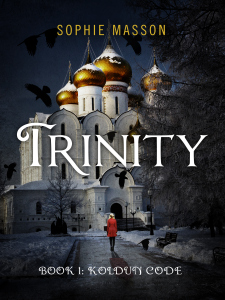
Trinity - The False PrinceThe print edition of Trinity: The False Prince has just been released–hurrah! And as it’s not always easy for Australian readers to get the Trinity books (Booktopia have the first one, but not the second so far, and Amazon will have it in both UK and US), I’ve decided to offer both it and the first one directly to Australian readers only (as postage is too high for overseas )from this blog. There’ll be a discount of 15 percent on RRP offered(making the books $21.20 instead of $24.95, with postage additional). And I’ll sign all copies purchased that Trinity Koldun Code coverway and dedicate them to your nominated person too if you want. A perfect Christmas gift!


If you’re interested, get in touch with me via contact@sophiemasson.org, and I’ll let you know full details including payment options.


Thunderbolt Prize winners: Madeleine Gome, winner of the Youth Award

Madeleine Gome Author PhotoToday, I am interviewing the winner of the Youth Award in the Thunderbolt Prize, Madeleine Gome.
First of all, Madeleine, congratulations on your win! How did you come up with the idea of your winning story, Scrap Metal?

My story was actually inspired by true events. I was with my dad, picking up our car from the mechanic. We gave the receptionist the numberplate and all he asked for was a credit card. Without needing any proof of identity we were given the keys and sent on our way.

What attracts you to writing crime fiction?
I don’t specifically set out to write crime fiction. I have never been especially attracted to traditional crime stories which follow the investigation of a crime. I’m more interested in characters and relationships, and the flow of words than creating a rigid storyline or structure.
Can you tell us a bit about your background and writing career?
I started writing before I could read, which seems slightly counterproductive. ‘How the Woodcutter Lived’ was apparently my first story. It was about a woodcutter, living in the forest with his partner and their children who got into all sorts of mischief. When I was seven, I wrote my own Harry Potter novella. The spelling was terrible—my parents only managed to translate it into English by reading everything I wrote with a thick Aussie accent! In terms of my writing career, I won the 2014 Hervey Bay Youth Writing Competition and a piece of my non-fiction will appear in an upcoming edition of The Big Issue.
Your mother, Emma Viskic, is also a crime writer(and winner of the fiction category in the inaugural Thunderbolt Prize in 2013). Do you read each other’s work?
Actually, no. My mum is not allowed to give me advice on three things: music, clothing and writing. Our relationship remains intact through a strict separation of powers! She is sometimes allowed to proofread my writing, for clarity and punctuation, but she knows not to comment on the content. I have read one of her short stories, which I loved, but the similarity between our writing was a little unnerving. We both like simple phrases and are interested in characters and relationships.
What do you hope winning the Youth Award will do for you as a writer?
Winning the Youth Award is incredibly thrilling. I have wanted to be an author for as long as I can remember, so receiving validation for my work is very encouraging. I see it primarily as encouragement to continue writing and continue putting my work out there, and to consider writing a viable part of my future and career.
What do you look for in a good story or novel?
I like novels that make me emotionally invested in the characters and their relationships. I enjoy writing which creates characters and situations I can relate to, and that I care about.  I have to want a certain outcome for the characters, and feel involved in their lives. I also love writing that makes me laugh.

Guest post: Charlotte McConaghy on educating writers

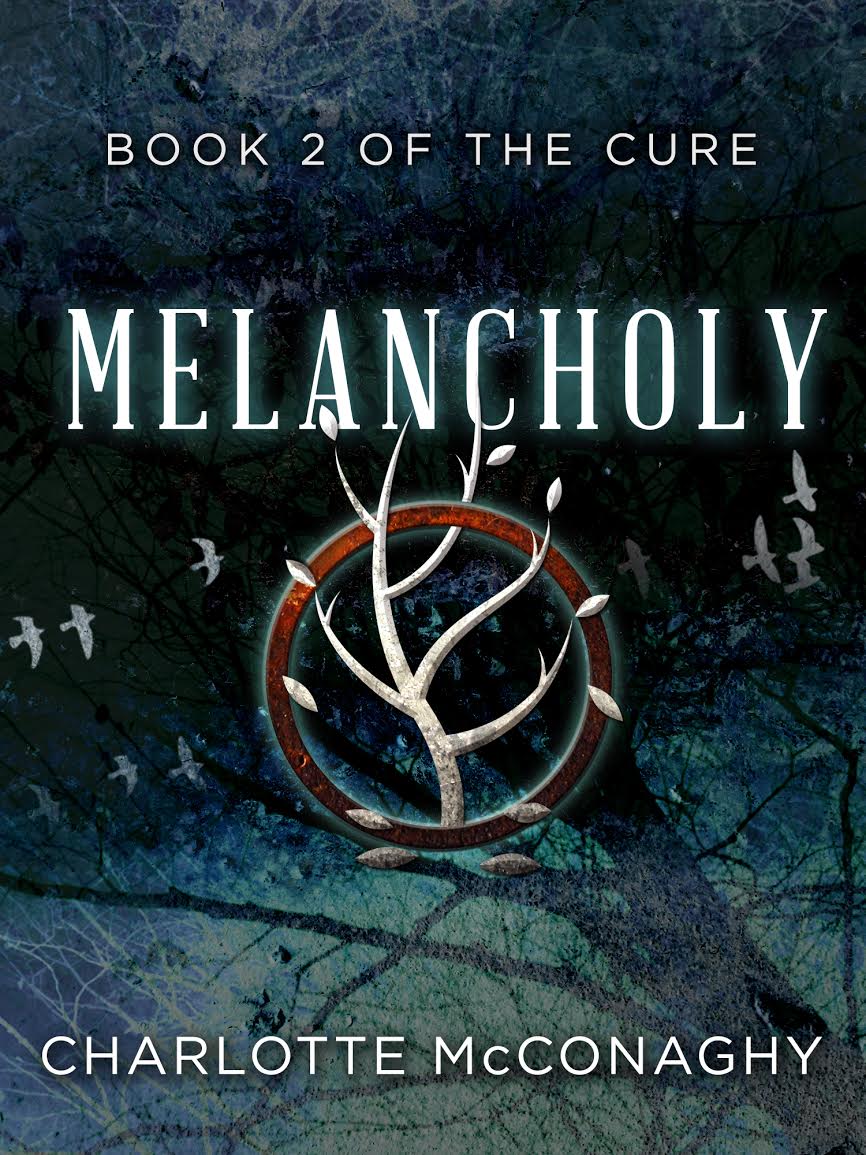
Celebrity_photographers_sydney_glamour_nudes_art_photography_SeductiveToday, I’m delighted to be hosting the fabulous young author Charlotte McConaghy to my blog, as the last stop on her blog tour for her new novel with Momentum, Melancholy, book 2 of the Cure, released today!

I’ve known Charlotte for quite a while, ever since she was in high school in fact–we come from the same town and she’s a school friend of my middle child, Xavier (they are still good friends, incidentally!)

From her early teenage years, Charlotte was a keen and dedicated writer, and her first novel was published when she was only 17! I’m proud to reveal that when she was in Year 12, she came to me for some advice on a piece of writing–fantasy fiction–which she was creating for an Extension English major work. I was really impressed with her work and felt it also showed great promise–which was clearly the case, as though she’s still only in her twenties, Charlotte has since gone on to publish several more books, including Descent, The Shadows, Avery(first in the Chronicles of Kaya)and now The Cure series. It’s been such a joy to watch the progress of her career. And what’s more, as well as being a novelist, Charlotte also holds a Masters in Screenwriting, so maybe one day she can even be 9781760082567_Melancholy_coverinvolved in bringing one of those great novels of hers to the screen!

Congratulations on the release of the new book, Charlotte, and welcome to my blog!


The Importance of Education in Perfecting Your Craft
Whether it be advanced degrees, continuing education, or workshops, how important is it to continue to learn and grow in your writing?
By Charlotte McConaghy

Thanks for having me on the blog today! To celebrate the release of my new novel Melancholy – Book Two of The Cure series, I thought I’d talk about something I get asked about a lot by aspiring writers: the importance of education in perfecting your craft.

A lot of new writers are keen to get opinions and perspectives on the education of writing – and whether or not you really need it. This is a tricky subject because many people will tell you not to go anywhere near creative writing courses, and I sort of agree with this. The reason people say it is because these sorts of courses can really mess with your voice, and as we all know, this is arguably the most important aspect of writing. Voice is essentially the personality in your writing, the style and tone and the way it feels for someone to read your work. When you start to play with the finer details of prose – grammar, punctuation, sentence structure, syntax etc – sometimes a writer will lose confidence in their original, natural style, and their voice can be lost.

There’s also a culture of negativity imbued in a lot of degrees, because in essence, education is about teaching people to critique works in order to learn frameworks for distinguishing quality versus non-quality. It’s an aesthetic at the end of the day. What often isn’t taken into account is the fact that there are other frameworks, including emotional connection and engagement, which are difficult to formulate or identify – these are instinctive, and they tie back in with voice.

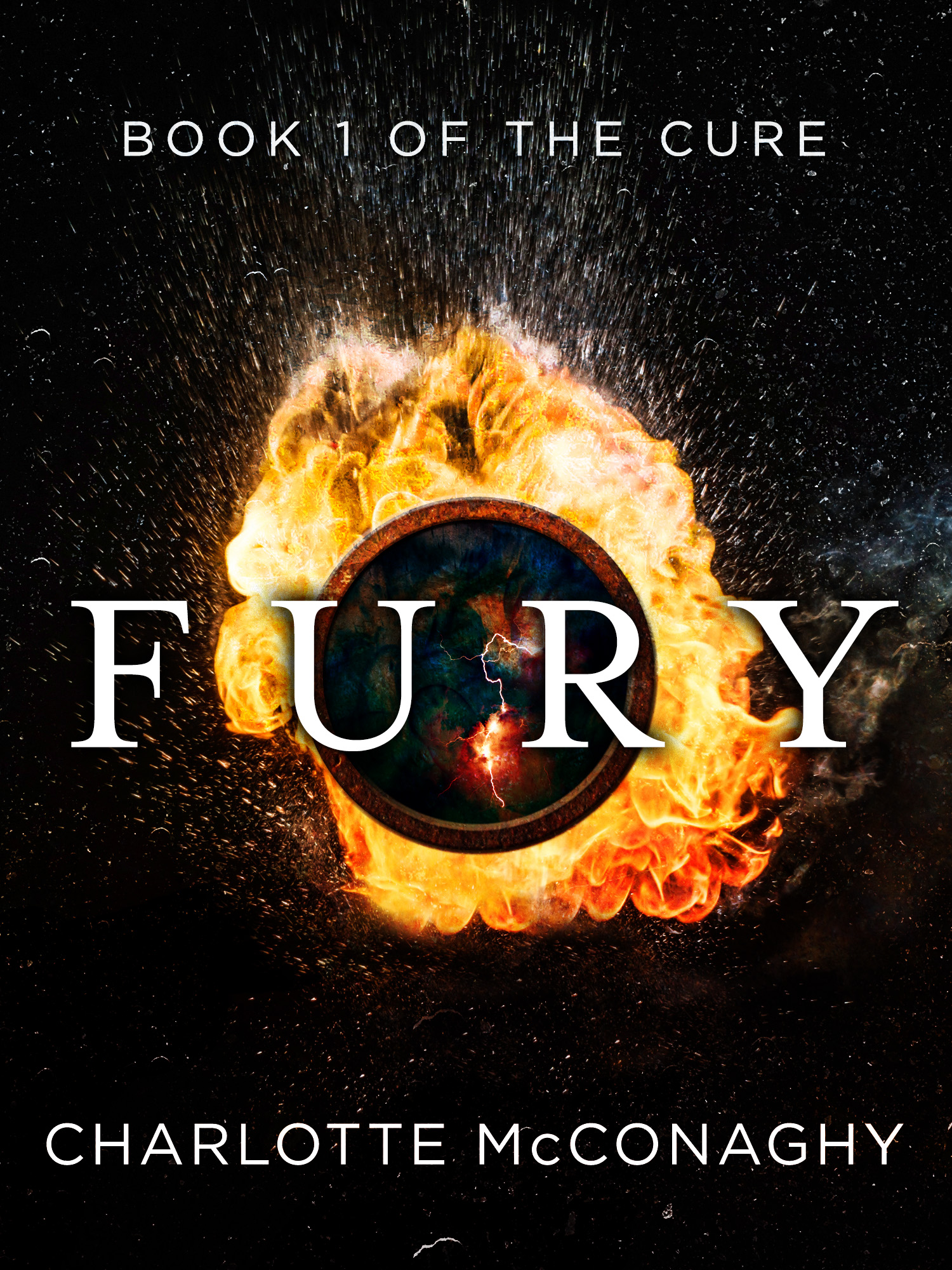
furySO, we understand that voice is hard to quantify – we can’t learn this, except through practicing getting to the heart of ourselves in our work, and allowing the essence of who we are to infuse our writing. Being true to what we love is the most important thing in any creative field.

HOWEVER, I do believe that in order to elevate our work from something that is more private – a piece of ourselves, in our voice, written for ourselves – we have to understand craft principles. After all, a novel is designed to be read, so you must take into account your audience, and using tried and tested tools will help you to engage your audience on an emotional level.

Early in my career (I say that like I’m a seasoned and wise old expert at 26 – ha!) I avoided creative avery-the-chronicles-of-kaya-1-by-charlotte-mcconaghywriting courses, but I did do a Masters degree in screenwriting, which improved my writing enormously. It taught me the tools for understanding things like character development and transformation, story structure, genre, setting, world-building and POV.

So in summary, I guess what I’m trying to say here is I believe that in terms of the larger- scale aspects of writing, education is absolutely necessary to improve your work. Certain degrees, as well as workshops and courses, will keep you in touch with these tools, and remind you to be mindful of craft principles when you write. Keep learning – you can never learn too much, or hear too many personal opinions that might trigger an epiphany of your own. Go to workshops, readings, festivals etc. Connect in with your people. But I also believe that in terms of your prose, the best thing you can do is to read daily and write daily. Reading will develop your taste and teach you what inspires you, and writing will develop your own personal style. Practice, practice, practice – and you will never stop improving.  arrival


More about Melancholy and buy links here.

Visit Charlotte’s website here.

Follow Charlotte on Twitter.

Charlotte’s Facebook author page here.

Guest post: Amanda Pillar on heroines

Today, I’m welcoming the fabulous Amanda Pillar to the blog, to talk about a most important subject: the creation of heroines readers will care about!

Amanda is an award-winning editor and author who lives in Victoria, Australia, with her husband and two cats, Saxon and Lilith.
Amanda has had numerous short stories published and has co-edited the fiction anthologies Voices (2008), Grants Pass (2009), The Phantom Queen Awakes (2010), Scenes from the Second Storey (2010), Ishtar (2011) and Damnation and Dames (2012). Her first solo anthology was published by Ticonderoga Publications, titled Bloodstones (2012). Amanda is currently working on the sequel, Bloodlines, due for publication in 2015.
Amanda’s first novel, Graced, was published by Momentum in February 2015.
In her day job, she works as an archaeologist.
Amanda_small-1

Heroines

by Amanda Pillar
Writing female characters – as a woman – should be a piece of cake. Supposedly. But like any character (male, female, transgender, agender, young, old) you need to really get to know the person you’re creating/writing. Some women are strong and overbearing, some are soft with spines of steel. No one person is the same; even identical twins are different when it comes to their personalities.
So how do you create a female character that people can relate to?
Well, in my experience, you create a person. Someone who is sympathetic to the reader. Their gender, while important in forming identity, should be a part of a whole, rather than a defining characteristic. If a reader were to discard a book simply because the main character is a woman…well, it speaks of a few things: inability to relate, inability to try and experience new ways of thinking, and well, perhaps some deeper personal issues. Of course, it could just represent bad writing or poor character development.
In Graced, I have four main characters: three male and one female. There was no deliberate choice in that representation, although as the author, I guess you could say it is all deliberate. But I am a character driven novelist; characters form in my mind and I try to be true to them as individuals. So while I could have had two male and two female characters, that wouldn’t have been representative of how the characters should be. And so there was one female lead. Graced Ebook High Res
Elle Brown.
Elle is complex; she’s tough but vulnerable, pig-headed but able to learn new ways, individual yet part of a team. She’s also a badass with a steel baton and has no problem bashing heads when the circumstances call for it. All in all, I wanted to make Elle very human. In a universe where there are four different races of people (weres, vampires, Graceds and humans), Elle was to be relatable. She was never going to be a woman who just stood by and let life happen to her, because in the Graced universe, that could mean dying young. Mental strength is something that is important in survival, and if Elle is anything, she’s a survivor.
And so Elle was almost as tough as can be; she works as a city guard, cleaning up the more unsavoury parts of her home town, Pinton. But she’s also just a person – frightened of her powerful and over-bearing grandmother, and desperate to protect her little sister, who she treats more like a daughter due to their 20 year age difference.
All in all, to create a sympathetic heroine, you want someone who is likeable (although not always necessary), relatable, and believable. As a reader, you don’t always have to agree with everything the heroine thinks or does – because in reality, people rarely do what they should, more what they want – but someone whose reasons can be understood.

More about Graced:

Life, however, doesn’t always go to plan, and when Elle meets Clay, everything she thought about her world is thrown into turmoil. Everything, that is, but protecting Emmie, who is Graced with teal-colored eyes and an unknown power that could change their very existence. But being different is dangerous in their home city of Pinton, and it’s Elle’s very own differences that capture the attention of the Honorable Dante Kipling, a vampire with a bone-deep fascination for a special type of human.

Dante is convinced that humans with eye colors other than brown are unique, but he has no proof. The answers may exist in the enigmatic hazel eyes of Elle Brown, and he’s determined to uncover their secrets no matter the cost…or the lives lost.

Buy here.

Visit Amanda’s website.

Amanda’s Facebook author page is here.

Follow her on Twitter.

Firebird way station on Amanda Bridgeman’s Aurora: Centralis blog tour!

AuroraCentralis BTFBDelighted to announce that today my blog’s a way station on bestselling science-fiction author Amanda Bridgeman’s  official blog tour celebrating the release of Aurora: Centralis, fourth instalment in the Aurora series, published by Momentum. Aurora_centralis_FA

Born and raised in the seaside/country town of Geraldton, Western Australia, Amanda hails from fishing and farming stock. The youngest of four children, her three brothers raised her on a diet of Rocky, Rambo, Muhammad Ali and AC/DC. Naturally, she grew up somewhat of a tomboy, preferring to watch action/sci-fi films over the standard rom-com, and liking her music rock hard. But that said, she can swoon with the best of them and is really not a fan of bugs! 

The three earlier books in the Aurora series: Darwin, Pegasus, Meridian have been bestsellers and received rave reviews, and just recently, the third book in the series, Aurora: Meridian, was shortlisted in  the science fiction category of the prestigious Aurealis Awards.

Congratulations, and welcome, Amanda!

_MG_0298_Compressed

Living with The Afterlife

by Amanda Bridgeman
The afterlife, or what happens to us once we die, plays a part in the Aurora series. A hint of it appears in Aurora: Darwin and as the series progresses, more and more light is shed upon it, until finally it comes to the forefront in Aurora: Centralis. This particular plot thread weaves is way through Harris’ story. He dreams of his deceased grandmother and great-grandmother, and feels their ‘presence’ during his waking hours. This particular part of Harris’ story was inspired by tales and experiences relating to my own grandmother and great-grandmother.
My first true experience of the death of a loved one came at the age of 15 when my grandmother, my mother’s mother, passed away in her sleep in the early hours of the morning. My grandfather was up early that day, readying for a planned trip to the Abrolhos Islands with his son. He went to shake my grandmother awake to tell her he was leaving, but alas she never awoke. Upon receiving the news, my parents had stolen away to their house to see my grandmother, and then they came back to the house to wake me and tell me the news. I remember being in shock and jumping out of bed to make my mother a coffee. I had spent much time with my grandmother and her passing was a loss to all.
Strangely enough, that night when I went to sleep I had a dream. It was a strange dream, but a nice one none-the-less. I stood in a car park and some distance away I saw my grandmother standing with my pop. They were about to get into a car and drive away somewhere. I called out to her but my voice didn’t carry. Somehow she heard me though. She looked over to me, smiled, and raised her hand to wave at me. It was very much a goodbye wave. I smiled and waved back, and then they drove away. And I remember thinking at the time that that wasn’t just a dream. I truly believed it was my grandmother making contact from ‘the other side’ to say goodbye to me.
But wait, there’s more. There’s a lot more.
When my father was young he contracted polio. He was living on a farm in the small country town of Northampton and had to be transferred to a hospital in Perth, some 5-6 hours away by car. His father had to manage their farm and his mother had to take care of his 4 siblings, so they couldn’t visit with my father all the time. My father’s grandmother (his mother’s mother) however, lived in what was then an outer suburb of Perth and she made it her business to catch the train in every Sunday to visit him in hospital. He was only 6 years old at the time, and the two become close. Years later, when I was about 9 years old, his grandmother passed away, but it would seem she did not leave him.
One night my father was in the local pub in Geraldton, and the man – let’s call him Ron – who had recently bought and moved into our old house called him over to his table to speak with him. Ron said to my father that he was probably going to think him crazy, but he asked if our house had been haunted. My father told him no, that we had never experienced anything. Ron said that his wife – let’s call her Kelly – kept telling him she had seen the ghost of an old woman, standing by the fridge as though looking inside. Whenever Kelly entered the room, she would see this old lady look up and smile, then just fade away. Kelly said she never felt threatened by this apparition – it was just an old woman with gentle smile. Ron thought her crazy until one night, in the middle of the night, he awoke to see an image of an old woman standing beside the bed and leaning over Kelly who lay beside him. Ron said he wasn’t afraid, just shocked, as this old woman seemed to checking on them, looking for someone. And the way Ron described the woman to my father, it was the spitting image of his grandmother: she wore a quaker style of dress, round glasses, her hair was pulled into a bun, and she had a shawl pulled across her shoulders. And the funny thing is, my father’s grandmother was known for her appetite – even in her 90’s – so visions of her standing by the fridge are rather hilariously on the mark!
So, although she had passed, my great-grandmother was still checking on my father. But alas he had moved house, and she was obviously wondering where he’d gone.
Now my mother eventually told me this story years later when I was an early-mid teen. My brother, Ross, had been there at the time as well and I remember us looking at each other wide-eyed and, to be honest, a little freaked out. I distinctly remember my brother saying ‘I wish you hadn’t told us that!’. Of course for the next little while we found ourselves scouring every room we entered for her presence – you know, just in case she found our new address…
Now, however, I look back on that story with warmth. The fact that a love, a family bond could be so strong as to hold through different worlds, different realms, is really quite phenomenal. If I hadn’t dreamed that dream of my own grandmother, or heard this story of my father’s grandmother, I probably wouldn’t have believed in ghosts or the afterlife. But now I have, I find it hard to ignore.
Are ghosts real? Does the afterlife exist? Or is it simply that they live on in our hearts and minds and that is how we see them – that is what becomes the true place of the afterlife: within us. Based on my real life experiences, this is what I explore in the Aurora series with the character of Captain Saul Harris – whether or not that doorway exists.

Amanda’s website: http://amandabridgeman.com.au/

Facebook page: https://www.facebook.com/AmandaBridgemanAuthor

Twitter: https://twitter.com/bridgeman_books