Across the Tasman 2: Sherryl Clark

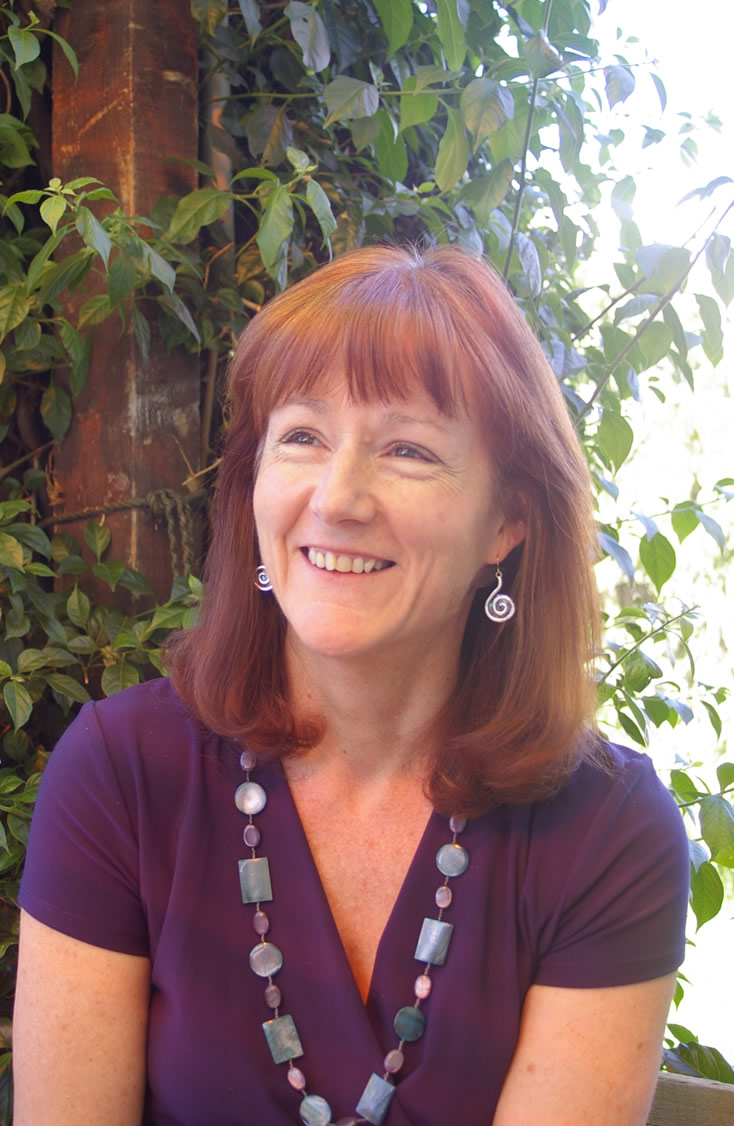
sherryl-1Sherryl Clark’s literary career is what might be called a trans-Tasman one; born and brought up in New Zealand, but living in Australia for many years, she is well-known in both Australia and New Zealand for the versatility and quality of her books, which range over many genres and age ranges. Today I talk to her about what it means to straddle those national cultures, and those different types of literature–as well as teaching literature, undertaking literary degrees, and lots more!

********************

Sherryl, you grew up in New Zealand but now live in Australia. Do you consider yourself an Australian or New Zealand writer, or both? And what similarities and differences do you think there are in terms of the literary world of each country?

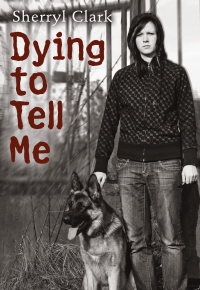
I’ve now lived in Australia for 37 years, but I think in my heart I am still a New Zealander, especially because I grew up on a farm and I think your first 18 years ‘imprint’ you. However I do think my stories are Australian, funnily enough, with some New Zealand elements. If I write about a farm (as in Farm Kid), it’s an Australian farm with drought and brown paddocks which you just don’t see in NZ like that. Not where I come from anyway. Dying to Tell Me is definitely Australian bush, and even my city stories, whether historical or contemporary, are very much set in Melbourne. I feel for NZ writers today – the publishing opportunities have narrowed so much. But at the same time I think many NZ writers are writing with real passion about their country, in very particular ways, and I don’t see that nearly so much in Australia.

You have written many children’s books in different genres, and for different age groups. Is there an age group/genre you most enjoy writing for, and why? Is there a book of yours that you think of particularly fondly? And how has what you write about changed over the years? (if indeed it has!)

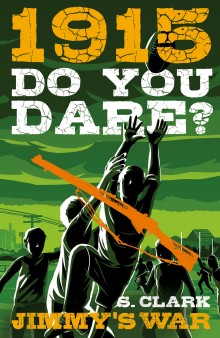
jimmys-warI love picture books because of the process – the challenge of so few words – and the amazing work that illustrators do. I love verse novels because I love how poetry expresses things that prose struggles with. I think my favourite age group to write for is 11-14. To me it’s a time when you become aware of the outside world, of what people are like, the value of friends, the idea of adventure and exploration – the whole world opens up, but at the same time it’s when the whole world can make your life very hard. Anything can happen and bad things do. To me, writing about those things is a way to tell kids they’re not alone, and I think that’s important. I agree with Neil Gaiman – kids need to believe they can be brave and win against the dragons. I think that’s why I like Dying to Tell Me, my murder mystery for upper middle grade readers. Sasha has made some stupid choices without understanding why, but now she learns to be brave and to use her wits. I think my writing has become braver, too! I turned a corner about four years ago, during the MFA, when I realised that I just had to start writing what really stirred me and obsessed me, and stop worrying about what might come after.  dyingtotellme
What’s your latest book, and what are you working on now?

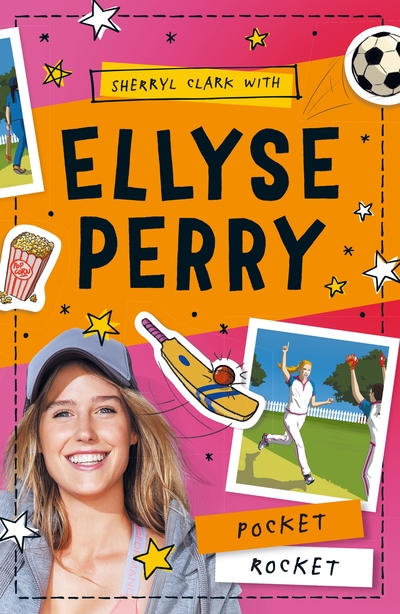
My latest book/s are a series based on Ellyse Perry (sportswoman). It was a commission, and I wanted to do it because I hated compulsory sport at high school, and so did lots of other girls. And I see someone like Ellyse being a huge influence on kids and getting them away from screens and participating in sports – and having fun. I wish that had been me! Plus adolescence and body changes have a lot to do with why girls stop playing sport and I wanted to explore that, too. I also have a picture book coming out next year with Allen & Unwin – The Night Tiger – which is being illustrated by Michael Camilleri. I’m very excited about that.
I’m always working on several things, so I can give manuscripts a ‘rest’ when they need some time out, so I’m able to able to look at them with a fresh eye. I’ve just finished a major revision of a SF novel (the ending still needs more work), and I’m doing another edit of a historical novel. I changed a large part of it into present tense and it’s still a bit clunky.

You’ve written poetry for both children and adults, and have edited a poetry magazine, Poetrix. Can you tell me something about both your poetry, and the magazine?

Poetry was the first thing I wrote when I realised what writing was. That probably sounds weird, but I’d been writing these dull short stories and an awful adult novel, and then I did a poetry workshop and thought – yes! I wrote this thing and the workshop leader said it was a nice metaphor and then I thought – what’s a metaphor? And since then (30 years ago, mind you!) I’ve been learning more and writing more, and it’s such an exploration of language and image. So much fun and so satisfying, and I just wish more schools would ask for poetry workshops. Truly. Most teachers have NO idea what poetry can open up for kids. And most importantly for those kids who don’t feel confident with language and prose. Poetry just excites them so much. They are the BEST poets!

We created Poetrix (Australia’s only magazine for women poets) back in 1993. I used to teach classes in self-publishing because it was a passion of mine, and I’d worked in community arts and for a printer. My writing group, Western Women Writers, were totally on board with creating a magazine, and we self-funded it with small catering jobs. We produced 40 issues of Poetrix, and we published a huge number of women who have gone on to have books published and won awards. But mostly we did it so women had a poetry voice. It was in reaction to some critic who’d said women only wrote poetry that was ‘domestic suburban vignettes’ and we thought – yes? So what’s wrong with that? It’s life as we know it and experience it, and of course you can write fabulous poems about it! So here are 40 issues of Poetrix and about 1400 poems about things that are important to us. To everyone, actually.

As well as writing books, over the years you’ve also run a lot of classes on writing and publishing. What kinds of things do you most enjoy helping people to learn? Do you teach mainly children, or adults, or a combination? And do you think that things have changed in terms of areas of interest–I mean, are people interested in learning about different things now than they were say 10 or 15 years ago?

I’ve been teaching in the Diploma and Cert IV of Professional Writing and Editing for nearly 20 years. But I did get to a point finally where I realised how much energy and focus teaching was sucking out of my writing. I went off to Hamline University in Minneapolis to do an MFA in writing for children and YA, and a very wise teacher there said, ‘It all comes from the same well. The more you teach, the less you have for your own writing.’ So in the past three years I have stopped teaching at TAFE, apart from substituting and helping out, and I think my own writing has received a huge boost because of that. It’s sad to say this, but it’s true. Teaching did detract from the energy I had for writing, and now with the whole onslaught of government paperwork requirements, more and more writing teachers are leaving TAFE because it’s overwhelming. Less time to teach and more time to fill out pointless forms. It makes me angry, to be honest.
Because I do love teaching and workshops. The people who come are so keen to write, and to learn. You can feel them soaking stuff up. I often see people start with an introductory class and five or ten years later, they’re getting published and doing so well. The one thing I love teaching is story structure. People get so mired in character and dialogue and just getting the words out, but structure (if you learn it and understand it) can fix just about everything. Mind you, it can’t fix voice, and in writing for children and YA, voice is so important. I think you only ‘get’ voice if you read a lot, read widely and read from a writer’s viewpoint. It astounds me when aspiring writers say they don’t read. There is so much to learn from astute reading. pocket-rocket

I teach mainly adults still – I do writing workshops in schools, yes, but a lot of schools want to spread their resources as widely as possible, of course, so I will do talks to 300+ students rather than workshops with 20. My dream is to create a portable poetry workshop I can take to school teachers and show them how to use poetry in the classroom, both reading and writing it. I have a website I started back in 2006 when I realised how little there was for schools – www.poetry4kids.net. I need to update it now and put a lot more material on it.

At the moment, you are undertaking a PHD themed around fairy tales, through an Australian university, after doing a Master of Fine Arts degree through an American university. What was your main focus in the MFA? What aspect of fairytales are you focussing on in the PHD? And how do the two university cultures compare?

When I chose to do the MFA in the US, it was because I knew it was the only way to do a Masters in the way I wanted. I didn’t want to be stuck doing one topic and one novel with one or two supervisors. Hamline meant I could do the things I really wanted: work with a different advisor every semester and learn from them (all published, experienced writers and teachers); work on a different project every semester to learn as much as possible (so I did a historical novel, picture books, a verse novel and a SF novel, plus a critical thesis on verse novels); go to intensive residencies in Minneapolis/St Paul where there were lectures, readings, workshops and a committed community of children’s writers; work at home via email in between and get detailed feedback on my writing; learn to write critical essays and a thesis that taught me more about the field from a critical viewpoint.

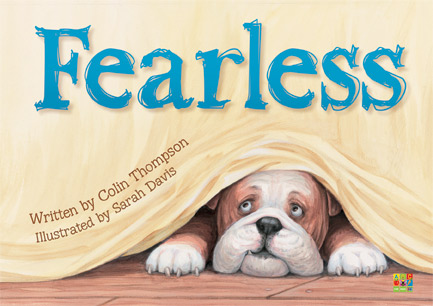
The PhD at Victoria University in Melbourne came from an essay I wrote during my picture book semester at Hamline. It was about picture books that are original, new fairy tales (Fox by Margaret Wild was my key text). Now my PhD asks that question – if I want to write new, original fairy tales myself, how do I achieve this? How do I write something that has the same resonance and unconscious signals that traditional tales like the Grimms’ do? So the creative writing (picture books and a novel) is informed by the research. Why have fairy tales endured? What is it that we respond to? How can I use this without being prescriptive or didactic or just plain boring?

Of course other aspects have come into it, especially the issue of publishers avoiding scary stories, and over-protective parenting that leads to a lack of resilience and coping skills in kids. I didn’t intend to venture into psychology, but then given that Bettelheim’s book, The uses of enchantment, was my starting point, I guess it was inevitable!

The two universities are poles apart, but that’s to be expected. Any Australian university would be entirely different to a US university that both specializes in children’s/YA writing and offers a low residency option. I think perhaps we’re not big enough here to be able to either specialize in that way or offer low residency on a wide scale. I’ve approached VU about running an MA similar to Hamline (indeed Hamline are keen to form a partnership), but with the government continually cutting tertiary funding and clearly having such an anti-arts agenda, I can’t see it happening anytime soon.

I think it’s so interesting that so many writers now are doing PhDs, because you can apply for a scholarship and it gives you an incredible amount of time to focus and create and innovate. Funded time that you don’t get hardly any other way. My bet is that in the next 10-15 years, Australian writing will see a huge growth in quality and innovation because of it. But if the government gets its scaly, arts-hating hands on the PhD program funding, they will kill it. Maybe I shouldn’t be telling them? Ssshhh.


Sherryl Clark’s first children’s book, The Too-Tight Tutu, was published in 1997, and she now has more than 65 published books. Her other titles include a number of Aussie Bites, Nibbles and Chomps, and novels. Her YA novels are Bone Song, published in the UK in 2009, and Dying to Tell Me (KaneMiller US 2011, Australia 2014).

Sherryl’s verse novel Farm Kid won the 2005 NSW Premier’s Literary Award for children’s books, and her second verse novel, Sixth Grade Style Queen (Not!) was an Honour Book in the 2008 CBCA Awards. Other recent titles include a picture book of poems, Now I Am Bigger, the middle grade novel Pirate X and the Rose series (Our Australian Girl). Her fourth verse novel, Runaways, was released March 2013.

Her latest books are the series featuring sportswoman Ellyse Perry. Pocket Rocket and Magic Feet are released in early October, with two more in January 2017.

Her books have been published in Australia and overseas, including the USA, UK, Spain, Mexico and China.

Her website is at www.sherrylclark.com

Facebook – https://www.facebook.com/Sherryl.Clark3

Twitter – @sherrylwriter

Instagram – sherrylwriter

Interview with Anthony Horowitz

anthonyhorowitz06 (1)Today, I am absolutely delighted to present a great interview I did very recently with the multi-talented British author, Anthony Horowitz, starting with the creation of his current TV series, New Blood, and moving on to talk about his books and other projects. Known worldwide both for his book and screen writing, Anthony’s extensive creative credits include the Alex Rider best-selling spy series for young adults, the very successful long-running TV crime series, Foyle’s War, set in World War Two, penning the latest Bond novel as well as two Sherlock Holmes novels, many excellent books for young adults and younger readers including the Diamond Brothers series, the creation of gripping TV mini-series such as Collision and Injustice, plays such as the recent Dinner with Saddam, and the writing of many episodes of such classic TV series as Poirot and Midsomer Murders. In his ‘spare time’ Anthony also writes the occasional travel piece and newspaper article.

I’ve known Anthony for many years, since the publication of the first Alex Rider book in 2000, when I interviewed him for a magazine article, and we subsequently became friends. Over the years, we’ve frequently corresponded and caught up in person when possible, in London when I happen to be there or Sydney, when he happens to be there.

And over the years, we’ve exchanged not only personal news, but frank and wide-ranging views about books, the writing life, and the publishing industry. Anthony always has interesting things to say: lively and thoughtful, he also has wide cultural references and a generous clarity.  And his discussion of his own work, as you’ll see in this interview, is equally interesting, giving an insight into the imaginative passion and deft skill that are behind his extraordinary success as a writer.

Swapping books, Sydney 2015

Swapping books, Sydney 2015

Anthony, your current TV series, New Blood, has been airing on ABC TV here in Australia, after having been broadcast in Britain by the BBC. It’s had excellent reviews both from media outlets and individual viewers. Are you pleased with how it’s gone so far?

Broadly speaking, the response to New Blood has been fantastic. I set out to write a show that would break away from the dark, violent world of Scandi-noir and just give people an hour of TV that was enjoyable and entertaining – and I think we largely succeeded. That said, we haven’t yet heard if there will be a second series so I’m forced to reserve judgement…at least for a while.

How did you come up with the idea for the series?

For a long time, I’ve wanted to write about the so-called Y generation, the young people who, for the first time in history, may be worse off, with fewer opportunities than their parents. In London, in particular, there are real challenges. Getting a house. Getting a full-time job. Paying off tuition fees. This was my starting point. At the same time, I was thinking about ways to shake up the crime/police procedural genre. I was tired of middle-aged men with drink/marriage problems. I had this idea for an opening shot. A body is found in the street. A car pulls up. A grizzled detective gets out…but the camera slides past him and finds the young cop who’s standing in the rain, trying to keep the crowd under control. My show would be about that cop. It also occurred to me that all crime shows take place in one department. It might be vice, drugs, MI6…whatever. But what would happen if you had two departments – the police and the Serious Fraud Office? From that point, I began to think of a bromance – two young investigators who don’t know each other but who form a team, working outside the rules. This may all sound a little vague but I’m describing my thought process as best I can!

New Blood breaks refreshingly new ground in its portrayal of the two main characters, Rash and Stefan, young Londoners respectively of Iranian and Polish backgrounds. What I loved particularly, as someone who also grew up with a similar kind of double cultural world, is the fact both Rash and Stefan are comfortable with who they are, yet are also aware of other people’s misperceptions. They navigate their different worlds with a familiar yet never complacent ease, with certain things about their family/cultural backgrounds subtly brought new bloodout, yet never stereotyped. How did you go about creating these characters to make them feel so immediately authentic? And what part did finding the right actors for the roles–the excellent pair of Ben Tavossoli and Mark Strepan–have in that creation?

Thank you for this observation. Yes, I love the fact that London, more than almost any city in the world, is completely relaxed about its multi-cultural, multi-ethnic make-up. I knew from the start that my two main characters would be Eastern European and Iranian. It just struck me as fresh and modern. Rash was based on my son’s flat-mate who is himself Iranian and long before I started writing, I talked to him about his background and his experience of life in the UK. He actually appears as an extra in the fourth episode! We did our best to avoid the obvious stereotypes with both characters. Most young Londoners are just that. They’re young and they’re Londoners before you start layering in religion, politics, sexuality or whatever. As to casting, I always knew that the show would stand or fall by our choice of the two actors and I was very insistent that we shouldn’t cheat, that we should find the real thing….which we did! It was essential that the two actors should have a real chemistry. We cast Mark first…he has Polish blood and matched the character exactly. Then, when Ben came along (most of the parts he’d been offered until we came along were “young terrorist”!) we saw that the two fitted together perfectly. They became great friends almost at once and that friendship has continued throughout the filming and beyond. I cannot tell you how pleased I am with their performances and if I have one hope it’s that they’ll become the stars they deserve to be.

You have a stellar career as a writer both for screen and books. Do you have a preference for either form? Or does it depend on the story?

I love all my writing equally. I think that it’s impossible to write well without passion. That said, of all the writing I have done, I probably value my YA books – Alex Rider in particular – the most. Why? Because reading, a love of books can change your life. I meet so many adults now who grew up with Alex that I feel very proud to have been a small part of their lives.

Your most recent book for adults was Trigger Mortis, a new James Bond adventure, and before that, you penned two new Sherlock Holmes adventures, The House of Silk and Moriarty. What’s it like, writing new adventures for such classic characters? How do you keep true to the Sherlockian or Bond corpus whilst staying true to your own identity as a writer? And which of those characters did you most enjoy recreating?

Trigger Mortis by Anthony Horowitz.jpgI only wrote the two Holmes novels and the Bond novel because I so love the originals. These are what influenced me when I was in my teens. I loved writing all three books (see question 4). You ask how I keep my own identity but actually I don’t. I see it as an act of literary ventriloquism. Essentially I have to be invisible, I have to hide inside the world of the original creators, obeying the rules, doing nothing that will annoy/upset their worldwide fans. At the same time, I have to raise my game. How can I possibly write as well as Fleming or Doyle? I probably found Sherlock Holmes the easier of the two characters because he’s more distant: the world of the late 19th century is much more easily defined than the cold war. Bond comes with certain challenges…marrying some of the attitudes and values of his world with modern sensibilities. But I began all three books with nothing but admiration of the original authors and a determination to serve them as well as I could. It was a wonderful experience, spending six or seven months living with their brilliant creations.

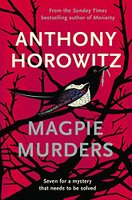
You’ve recently finished writing a new crime novel, Magpie Murders. Can you tell me something about it? When is it out?

magpie murdersMagpie Murders is my next adult novel, being published by Orion in October. It’s both a whodunnit and an exploration into whodunnits – in particular, the relationship between the detective, the author and the reader. It’s partly inspired by Conan Doyle’s very mixed feelings about Sherlock Holmes! The book is in two parts. The first is set in the very Agatha Christie landscape of an English village in the 1950s where a detective called Atticus Pünd, a survivor of the concentration camps, investigates the murder of a local landowner. ..Sir Magnus Pye. The second part takes place in London in the present day and concerns an editor, Susan Ryeland, who is forced to investigate the death of one of her authors when the final pages of his latest manuscript go missing.  The fun of the book comes when those two worlds collide…and there are not just one but two very twisty mysteries to be solved. I’m very pleased that nobody has managed to guess the ending yet! I think it’s the most cunning book I’ve yet written.

Your Alex Rider series of spy novels for young readers have been big bestsellers, but the series was deemed to have ended with Scorpia Rising (with Russian Roulette being a spin-off). So I was excited and intrigued to hear that you are in the middle of writing a new Alex Rider adventure. What decided you to take up Alex’s story again? And how does it feel, being back in his world?

Last year my publisher asked me to pull together all the Alex Rider short stories for a collection. scorpia risingThey’d been published in newspapers and magazines and elsewhere. So I started work – but then two things happened. I realised that some of the early stories weren’t good enough. And there also weren’t enough of them. So – just for fun, really – I wrote a new story, Alex in Afghanistan…and suddenly I discovered that I loved writing about Alex and that I had missed him. I really was quite surprised. For what it’s worth, I think Alex in Afghanistan is the best story I’ve written. It’s only 15,000 words but it’s full of action and surprises. I wrote two more new stories and in doing do, I unlocked something and realised that, contrary to what I’d always said, there was an eleventh novel inside me. Well, I’m 40,000 words in and I think it’s going very well. It starts in San Francisco (where Scorpia Rising ended) and then moves to Egypt, the South of France and the UK. My publishers won’t allow me to say any more!

As well as being a wonderful fiction writer in all those genres, you are a great traveller and sometimes write about those travels in newspaper pieces. What kinds of things do you concentrate on when trying to distill the essence of a travel experience in the few words of a newspaper column?

Again, thank you for these kind words. I write travel pieces for an English newspaper largely for fun (the money goes to charity) and also to keep myself on my toes. I’m no expert and I try to avoid being negative. It’s really just a record of my feelings, hopefully written in an entertaining way. When I read a great book, my first instinct is to shout about it, to get people to share it. I suppose the same goes for the places that I’m fortunate enough to visit.

Anthony’s website.

Facebook author page.

Twitter page.


Edible art: Anne Spudvilas’ pavlova volcano

anne spudvilasSomething a bit different today!

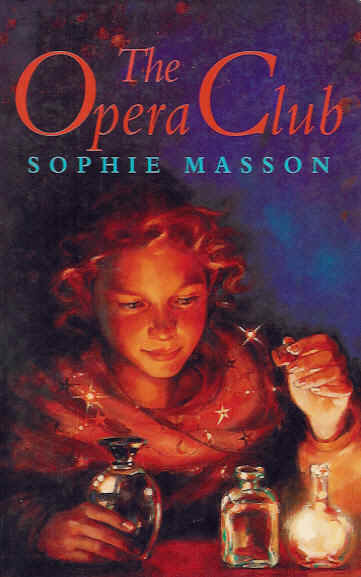
Anne Spudvilas is an absolutely wonderful illustrator based in regional NSW whose rich, gorgeous work has adorned the books of many Australian authors, including myself. I’m very happy to say by the way that the original painting of the glorious cover she did for my 1993 novel, The Opera Club, adorns one of our walls at home–a very kind gift from Anne herself.operaclub (1)

And today, with her permission, I’m presenting on this blog as well as my A la mode frangourou food blog, another gift, another rich and gorgeous work, this time of an edible kind! It’s the pavlova volcano, and it’s absolutely spectacular!

From Anne:

This recipe brings back memories of two wonderful New Year’s Eve celebrations on the Murray River when i first came here.   Julie Chambers, director of the Art Vault where i did two wonderful printmaking residencies,  makes this as the ‘piece de resistance’ at her long long New Year’s Eve dinner table.

 My version of Julie’s specialty.  

Make three pavlovas. Home made are best and if they don’t look too flash it doesn’t matter.  Break them into large pieces and begin to construct your volcano using vanilla icecream and whipped cream to hold it all together. Add 4 punnets of assorted richly coloured berries.  Pour over two more punnets of assorted berries, pureed with 1/2 cup orange juice and 1 tbspn of liqueur added (i love Cointreau).   

 Ah yes, a million calories but SO delicious 🙂
Annes pavolova volcano

Taking the independent road: an interview with Jon Appleton

Jon_AppletonI’ve known Jon Appleton a long time: since I was a pretty newly-published writer, and he was an articulate teenager passionate about books and writing to the extent that while still at school he founded, wrote, and edited a fabulous magazine called Rippa Reading. Since those days, Jon has gone on to have a stellar career as a publisher, in Sydney and in London, working with great authors and illustrators. And now he’s embarking on a new challenge–taking the independent road, as a new author and self-publisher.

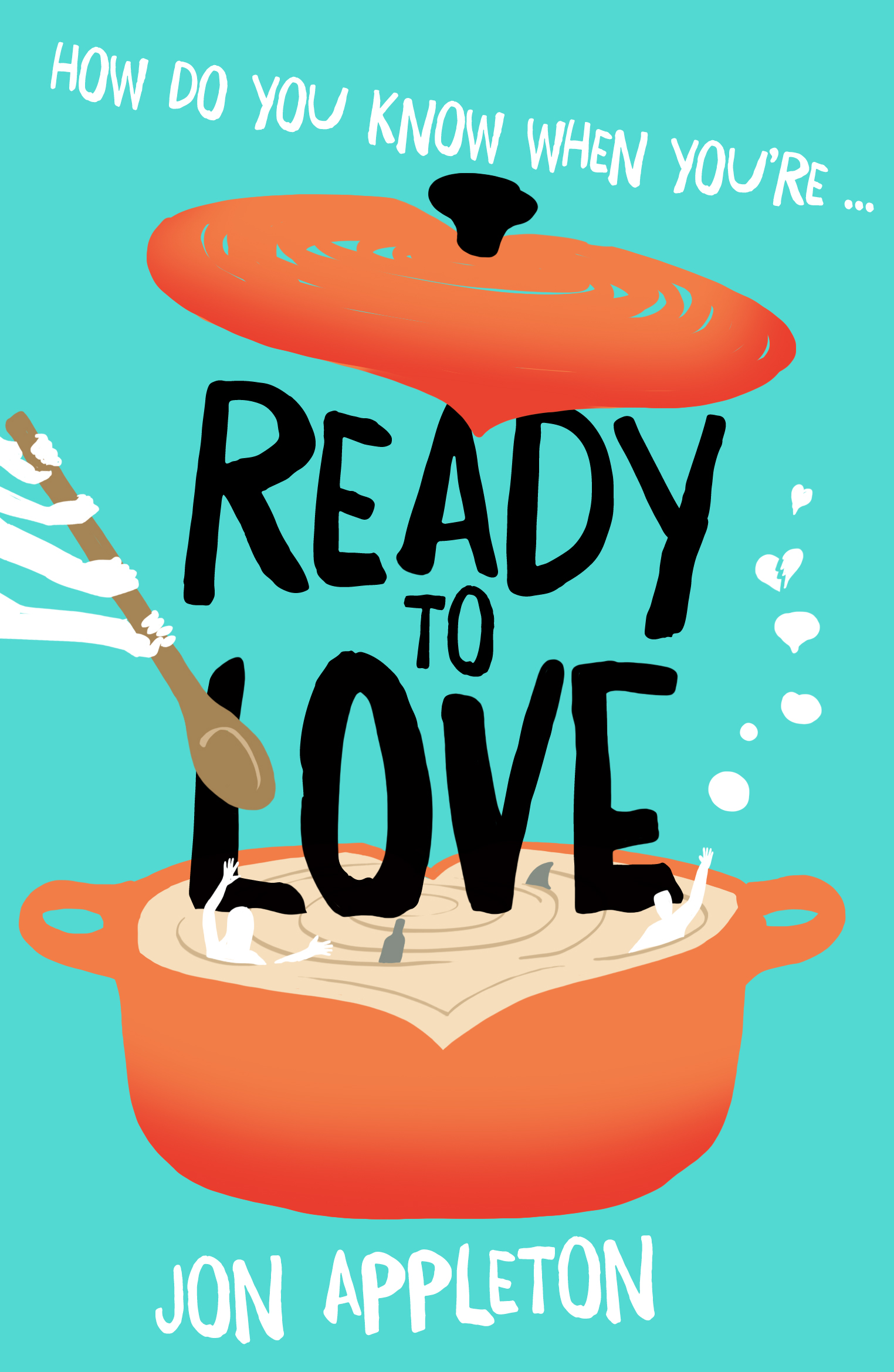
First of all, Jon, congratulations on the release of your first novel, Ready to Love! Can you tell us a bit about it, and its road to publication? 

Thanks, Sophie! Ready to Love is about the way we see ourselves and how we think other people see us, and the different kinds of attachments we form to those around us: family, friends, lovers, colleagues. Ultimately, it’s a rom-com.

Its London setting is quite important to me, and I began the book when I was living in Australia for a year in 2011, feeling quite homesick. I put it aside for twelve months when I came back to England, and then returned to it, working on it continuously for the next two-and-a-half-years.

Comedy is difficult to pitch to agents and publishers, I’m told, because it’s not viewed as a commercial genre. (Of course, we can all think of exceptions!) But I submitted it to agents nonetheless. Quite a few never replied (which I took to mean a ‘no’) but of those who did, several responded encouragingly from a reader’s perspective. I thought, ‘If only I could get past the gatekeepers, to readers, they would enjoy it too.’

Working in publishing, so much of my time was spent rejecting really good books (for reasons not dissimilar from those by which my own work had been rejected), and it was quite dispiriting dishing out ‘no’s all day only to come home to more ‘no’s from the other side of the desk. So I looked into the self-publishing option.

I knew the stigma of self-publishing has lessened dramatically in recent years. At the London Book Fair, there is a whole corner devoted to independent publishing that is reported on and taken very seriously. The timing was right.

I found the right outlet – Clays, the printer, recently established an independent publishing strand of their business – and began the process.

Putting together a book, from manuscript to finished product, is something you have a lot of experience of, in terms of other people’s work. But what was it like being in charge of your own?

I love the completeness of publishing a book – from discussing the concept with the author through to sending them advance copies. So the process of getting Ready to Love was extremely satisfying because I took a very hands-on route. Clays put me in touch with editors, designers, typesetters, Nielsen (who handled the bibliographic data), etc, but I did the legwork. It really helped maintain a sense of ownership of the process.

I sometimes think that writers feel they hand over their work without fully understanding the process – and why should they? But they can always ask! – and feel they’re being excluded. It’s never worse than when a book ends up with a cover a writer doesn’t like and the book fails to make it onto shortlists or in-store promotions. The author feels a sense of surrender when, in fact, the publisher really is on their side – or means to be.

I made all the decisions so I felt very much in control. Let’s hope I made the right decisions …9780993547317

You have just moved from the corporate publishing world to becoming a freelance, independent author/publisher. What has that move been like–the challenges and the pleasures? 

I’ve known so many authors – and freelancers – that I’ve always felt I sort of knew what it was like to be them. I appreciated how isolated authors could feel. I’d sit at my desk, and suddenly think, ‘Haven’t heard from Author X for a while. Wonder what they’re up to …’ and get in touch – particularly in the long periods when there wasn’t anything formal to do on their current book.

That’s changed, in recent years: there’s always something to do on a book, especially after it’s been published. You can revise your Amazon profile or write a blog, or reach out to potential new readers on Twitter. I’ve spent a lot of time in the past couple of years encouraging writers to be active on social media – and we’ve spent more time than ever on revising synopses and pitches (because, for many authors, it is harder to get published than ever before).

Now I’m learning, first-hand, exactly what all that entails. The main thing I’ve learned is to be focused and to think always: ‘What am I trying to do? Who am I trying to reach? What kind of writer/publisher do I want to be?’ I’ve got a blog that explores these questions – www.jonappletonsbooks.com – and it’s very much an exploration and I’d love people to join in. There are no finite, permanent answers!

You worked for a long time as a children’s publisher: but as an author, you are writing adult novels. Do you think your publishing experience has influenced your writing in any way? 

I think I realised early in my career that I love children’s books because I love the idea of children being confident and able through literacy, and cherishing the books they read when young their whole life through. I really like helping an author shape the sound of the voice of, say, an eleven-year-old boy. But I have no interest in trying to locate that youthful voice myself. I’m not one of those children’s editors who read only children’s books. My adult, reading self is nourished by other books which are more akin to the novels I want to write, and write about.

As a teenager you founded a respected literary magazine, Rippa Reading, which focused on books and authors. Can you tell readers about that, and some of your favourite stories from that time?

Rippa Reading was a fan magazine for authors which I began in late 1986 and edited until the end of 1995, just before I moved from Sydney to London. It was published and supported by my old school, SCECGS Redlands and, joyfully, the entire children’s publishing industry. It was an amazing time for which I am hugely grateful.

The magazine was born out of my desire to be a writer and to find out what writers were like, and it led to my career in publishing. Undoubtedly, it was inspired by The School Magazine which not only presented the best in new writing but made its creators available to readers through the magazine’s pages and especially to me with personal friendships with the staff.

There are so many highlights and stories from that time – genuine friendships with brilliant, creative people, many of whom now are no longer with us, but other connections endure 30 years later, like our own! It was fun being part of the CBC committee and appearing on TV and radio to talk about new books. It was an honour to receive awards, and even more so to be an early fan of brilliant new voices, like Jackie French to whom I was introduced by the wonderful Cathie Tasker (through whom you and I met, Sophie!), who was then at HarperCollins and Ursula Dubosarsky, who once taught at Redlands.

But the story I want to share now makes me happy because it brings my connection to Australian children’s books more or less up to date. When I joined Hachette Australia as Children’s Publisher at the end of 2010, I finally got the chance to publish books by Australian authors and illustrators – some of them award-winners but others, excitingly who were new to the industry. The concept for a children’s edition of the bestselling book about Tom Kruse the outback mailman had lingered for some time, but the concept hadn’t been fully realised, nor, crucially, the right illustrator found. I remembered Tim Ide from when I’d done work experience at Omnibus Books back in 1990. (Jane Covernton, who established Omnibus with Sue Williams, was always hugely supportive of Rippa Reading.) One afternoon at Omnibus, I’d been lucky enough to be taken to tea by Tim and Max Fatchen to celebrate their new book, A Country Christmas, which perfectly evoked the South Australian countryside in years gone by. So, many years later, I got in touch with Tim he agreed to work on the book. At that point, everyone in-house (and the author!) felt energised by the project, and it went on to win the Eve Pownall Award in 2012.

What’s your view on the situation for authors, and publishing today–the issues and the opportunities?

For the majority of writers, it’s tough to make a living. The obstacles are numerous: small advances, a paucity of review space, overstretched marketing budgets. More than ever, authors are expected to sell their own books – whether they publish independently, or through a mainstream publisher. That doesn’t suit everyone, I realise, but I do think that, usually, the author is his or her book’s best advocate, so it makes sense. And there are so many ways for authors to engage with readers – it’s not all about author visits and festivals. Authors need to be authorpreneurial, a term I hear a lot now. It takes time away from creative work, of course, but it’s necessary. It’s part of being a writer.

What are you working on next?

I’m planning a new novel, but I’m really aware of the need to make the most of the opportunity created by publishing Ready to Love. So I’m very happy to write about it or talk about it and to engage with people – anywhere! – in the hope that they might choose to read it, and to be receptive to further novels by me. At a practical level, I’d like to recoup some of the cost of publishing it by selling subsidiary rights – audio, translation, US and Canada and, of course, Australia!

I’m also in dialogue with writers’ groups and students who need help not just with writing, but preparing themselves for a writing life. People are aware of the challenges I outlined above (and many others), and part of my new work portfolio is helping them find ways to pitch themselves successfully and achieve an audience in the face of these challenges.

An interlude to introduce the Juvenilia Press

I’m delighted to learn today that the Small Beginnings series on this blog is being featured on the Facebook page and linked to the website of a wonderful specialist press publishing out of the University of NSW, the Juvenilia Press, which focusses on the very early writings of authors, including classic authors like Jane Austen! Here’s something about them:

The Juvenilia Press promotes the study of literary juvenilia, a category of literature that has been largely neglected. Its editions are slim volumes of early writings by children and adolescents (up to the approximate age of twenty), including published and unpublished works of young authors – both those who achieved greatness as adults and those who did not become adult writers but whose writing is full of percipience and zest.

Founded in 1994 by Juliet McMaster at the University of Alberta in Edmonton, the Press has since 2001 been based in the Faculty of Arts and Social Sciences at the University of New South Wales in Sydney, and has an international team of contributing editors from Britain, Canada, Japan, Spain, Switzerland, New Zealand, the United States, and Australia.

The volumes are normally devoted to one author and are edited by an expert in the field, with the assistance of one or more students, usually postgraduates. Student involvement in the research and editorial process is an essential part of the pedagogic aim of the Juvenilia Press; and the illustrations, often executed by young aspiring artists or by the original young authors themselves, aim to capture the tone of the original productions. By contributing to the recovery, publication, and critical exploration of childhood writings, the Juvenilia Press actively promotes literary research and the professional development of students. At the same time, they endeavour to provide, for a wide audience, an insight into the creative energy of this rich and varied body of writing.

Do check them out on Facebook, and visit their website for more information: https://www.arts.unsw.edu.au/juvenilia/


A new blog series, Small Beginnings: Introduction

I’m starting a great new series on this blog today. It’s called Small Beginnings and it’s a unique look at how authors and illustrators began creating–not their published work, but much earlier than that, as children, teenagers or even young adults (up to early twenties). I think that this is absolutely fascinating in terms of showing how an author or illustrator begins to shape their craft well before the time they even start to think about the possibility of sending off work for publication.

So I’ve asked a number of fellow authors and illustrators to write about what they created in their early years, and if they still have examples of such work, to show us extracts from them. The response has been fantastic and so I’m delighted to inaugurate the series today with something of mine, as an introduction to Small Beginnings.

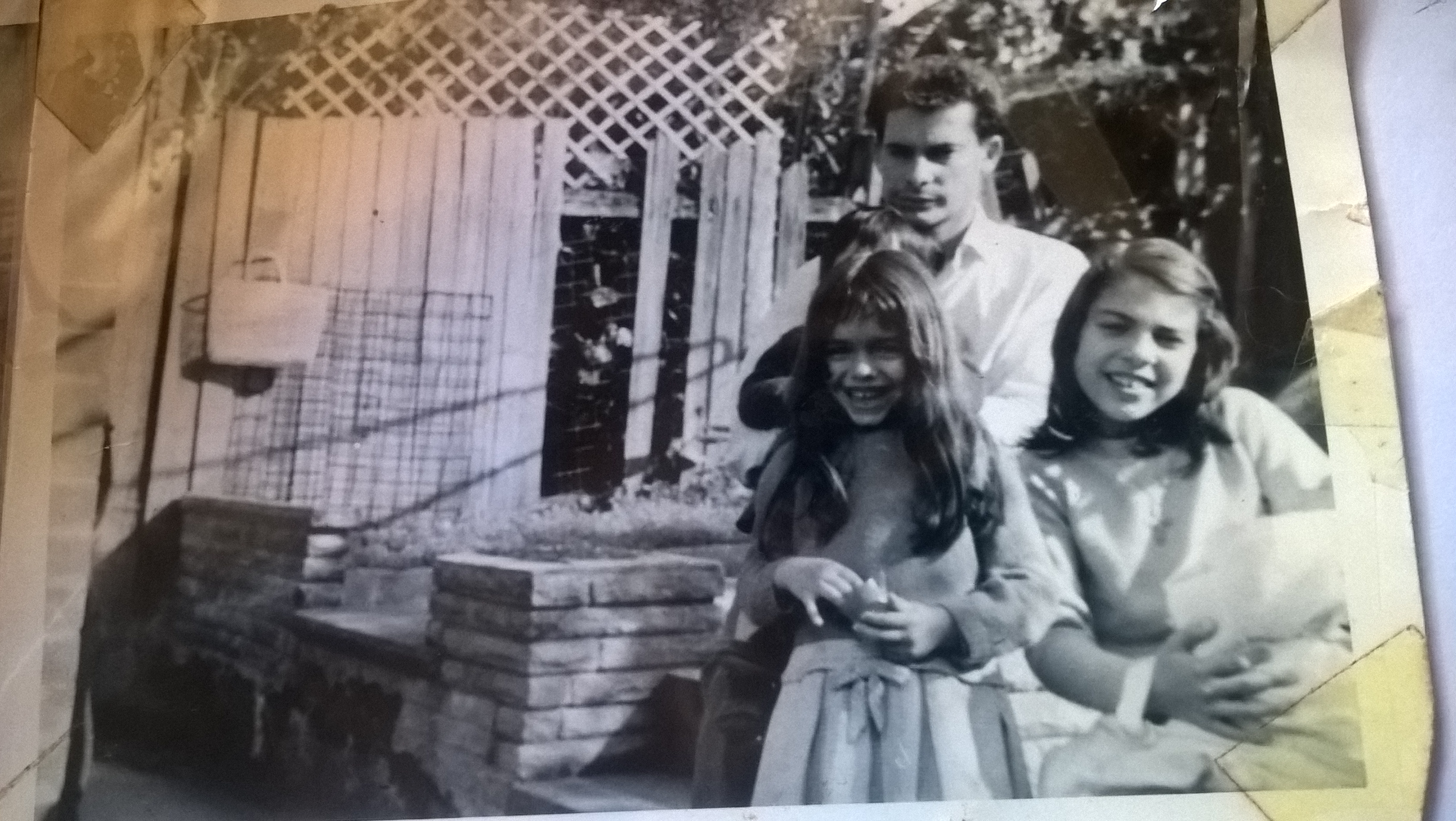
Me aged about 6, with older sister Beatrice(11) and my father.

I wrote a lot as a child and a teenager. I came to Australia from France with my parents and sisters when I was nearly five, and by then I could already read and write a little in French taught by my grandmother, who’d looked after me for some years(due to illness when I was a baby, making me unfit to stay in Indonesia where I’d been born and where my parents were working). I was already mad for stories–oral as well as written and I loved making up my own too. But it was arriving in Australia and starting to write in English that really got me going creatively speaking. I was lucky enough that in all the schools I went to, creative writing was very much encouraged, and at home, we were so surrounded by books and also by the great stories told by my parents that bathing in an atmosphere of story felt totally natural, though the idea that you could be a writer, as a job, didn’t really enter my head till I was well into my teens.

I don’t remember much of the very early stuff I wrote, but a few titles from primary school-age literary projects still stick in my mind: such as The Adventures of Princess Alicia–a lavishly illustrated, multi-episode comic strip story about a heroine who had two attributes I dearly wished I had–not, not a crown, but magic powers: and long blond hair (my hair was long but very dark!) I illustrated this masterpiece too I might add, in the days before I became embarassed by my lack of talent in that direction. And The Life of a Stamp, a

Aged 16, with younger siblings Gabrielle and Bertrand.

Aged 16, with younger siblings Gabrielle(10) and Bertrand (8)

mystery/travel story centred on yes, a wandering stamp which gets posted on the wrong letters and gets in some sticky situations..There was The Twins’ Highland Holiday which was heavily influenced by Enid Blyton’s Famous Five, and there were several poems including one about a ladybird that I got a gold star for in class(I presented the poem written on the back of an illustration of a ladybird). Much of it I remember ‘publishing’ in little books, simply sheets of paper stapled up with hand-drawn covers, with perhaps a little stamp or sticker added to make it look more ‘official’. For a while I even ran a little story club at primary school which I called ‘The Bluebell Club’ (no doubt influenced by Blyton!) in which members read out their own stories. We even had a competition once in which the prize was a book, bought by my mother, who judged the competition–I was very miffed that she didn’t choose mine! As I loved the theatre–I used to go to after school drama classes–I also wrote a lot of plays, very often adaptations of fairy tales, which I wrote, directed and produced and forced my siblings to act in and my parents to watch. My mother was always very kind about these thespian efforts but my father could be quite sardonic about it, slow-hand-clapping and pointing out the narrative flaws rather loudly: an experience which hardened me up for later and occasional poor reviews!

Unfortunately none of that early writing was kept. It’s only when I was in mid-high school that I WP_20160425_11_29_40_Proprotested about parents’ tidying-up urge to chuck everything out and hung on to my writings like a determined limpet! So I have quite a few things from that time–lots of poems, a few short stories, and the beginning of a massive fantasy novel started when I was around 16(and in which I WP_20160425_11_29_11_Prointended to reunite every mythology in the world: nothing like teenage ambition!). And then, from a little later, at 19, a picture book–the text written by me, the illustrations by my youngest sister, Gabrielle, who was 13 at the time. That one survives in its entirety(you can see some pages from it it below).

In all of this what I can see is a young writer who is trying her hand at all sorts of things, enjoying playing around with different forms, flitting around from fantasy to realism, contemporary to historical, light hearted to rather serious, long to short. The craft is rather wonky, but the passion and curiosity–yes, and persistence too!–is very much there. I see, in short, an apprenticeship taking place without my even being aware that it was happening; how could I, when it was so much fun?


A new way of writing: an interview with Simon Higgins

Simon Higgins Web Friendly Biog PicToday I am interviewing author Simon Higgins about his extraordinary new creation, DarkSpear, which features an intriguing way of writing combining several art and media forms.

Simon is an Australian screenwriter and author of books for young adults. Originally a police officer, then private investigator, he turned writer in 1998. He has 13 novels published so far, often combining crime, speculative fiction and historical adventure. His 2008 novel, Moonshadow: Eye of the Beast, was an Australian bestseller and was also published in the United States, Germany, Indonesia and England. He currently lives in China where he works in several creative fields.

Simon, this exciting new release of yours, DarkSpear, is what you have called a ‘visual novel’ . Can you explain what that means?

Sure, Sophie. Visual Novels (VNs) are something quite fresh and exciting for many in the Western world! I keep summing them up for people in these terms: they’re books you play, games you read, a hybrid of textual novel and interactive computer game.

They evolved originally in Japan, spread throughout East Asia, and are now gaining many appreciators in both Europe and English-speaking countries like the United States, Canada, Australia and New Zealand. But not enough yet, I say.  🙂  They have so much to offer!

VNs are, at the core, literary, but like computer games, they offer new ways to enjoy fiction by thatching in extra mediums to intensify the reader/player’s immersive experience. So although text heavy, they also employ elements like a short opening film, sumptuous backgrounds, detailed images of the characters, sophisticated music, and even sound effects, to intensify story impact.

They are also an interactive storytelling medium, kind of the cyber-era descendant of those delightful old ‘Choose Your Own Adventure’ style books and games from the 80s. This is what you could call their gaming side. A player must decide what the protagonist will do at certain points, choosing from two or three options that suddenly confront them.

Different choices lead to different storylines, which in VN jargon are called routes or paths. Should you pick one that eventually ends in some decidedly nasty fate, it’s okay…because you also choose ‘save points’ along the way, which you can return to anytime using the menu. Thus, having noted where you made that critical wrong turn, you’re able to just dive back into the story world again, land close to that point, and take a different path!

Depending on exactly how the VN has been written, you may, or may not, on behalf of the protagonist, get to cheat what we could call ‘the hero’s ultimate fate’, but with each route you try, the journey will certainly change. It’s a pity real life doesn’t offer such options sometimes, heh? 🙂

How did you come up with the concept, and why? How long was it in the making?

 I wish I could say I’d invented the concept, but alas, it was more a case of stumbling on it while living and working in creative circles in China, and immediately thinking, ‘Wow! So many imaginative people I know in the West have probably never heard of this medium, but would absolutely love it!’

Quickly thereafter it also occurred to me that this could be a powerful rescue tool for all those parents and teachers who bemoan having a clever, curious teenager in their lives who just-won’t-read while computer games stalk the face of the earth and compete with books for their brain space.DarkSpear1

Here, I thought, is a bridge between the two worlds, one immersive and engaging enough for anyone to want to cross it, at least once. Now I should warn that not all VNs I’ve seen are what you might call wholesome, just as can be said for books. But many are, some are utterly delightful, and a few are even pure art.

I also (as I sometimes formally testified in court, way back in the police force) ‘formed a certain suspicion on good grounds’. A suspicion that once writers in the West, be they self-published, emerging or established authors, read a VN with good storylines and dialogue and gripping ideas, a cry would go up that I’d be able to hear all the way from China. A cry of ‘I want one too!’

Once I’d developed that feeling, and of course, found the right creative partners, the process, from the birth of the dream to my VN’S first ‘draft’ in playable form, took about four or five months. That included writing the tale’s routes, and programming.

DarkSpear is a multi-arts, multi-media project. Who did you collaborate with, and how did the process go? What challenges did you face?

 I teamed up with Lava Entertainment, an ambitious, intensely creative young company based here in Guilin, China, who had set up shop, as fate would have it, just walking distance from my own office at Crane Animation.

That’s where I write for Gemini Fables, an animated TV show, coach the in-house writing team, fine-tune crucial subtitles, and get to participate -to various degrees- in a wide variety of awesome projects. I get to travel regularly with my work, and sometimes have the joy of meeting Chinese directors, screen writers, TV celebs and actors – so many lovely and stimulating people.

I’m Crane Animation’s chief creative consultant and my official designation, based on my track record in the West, is Foreign Expert. Kind of chuffed about that, seeing as the first one ever was Marco Polo. 🙂 Always nice to feel you’re following in a legendary author’s footsteps, though happily, unlike Marco, nobody ever points crossbows at me when I move between provinces for business travel. 🙂

My regular work can include tasks related to animation, filmmaking, educational and safety initiative creation, commercial branding character design, and all sorts of projects that harness story and imagination to help build international friendship ties between China and other parts of the world, including Australia and France.

But the Visual Novel project with Lava was aside from all that, out of my comfort zone you could almost say, because it required me to quickly get to know a brilliant young team of artists, programmers and business people who spoke, in some cases, minimal or no English. That was naturally an ongoing challenge as my Mandarin is very basic.

However, we all persevered, and as we worked on the project, they coached me in the technical side of putting together a VN, which at the outset, involved me, the author, not only writing the story but creating at least three primary variations to its overall arc and then designing a series of sub-deviations within each major ‘route’.

Along the way, I had to chart out where key moments would turn into decision-points for the reader/player, and depending on their choices, sweep them seamlessly into other paths, and possibly, back out again to the original route, later. At first, it was mind-bending. 🙂 I remember hunching over my notebook, in genuine zombie mode, after working on it intensively one weekend, my wife devotedly shovelling noodles into my mouth with chopsticks, murmuring, ‘You can keep working, but you gotta eat.’

I also had to conceive and storyboard all the major background art, and work with the Lava team on character design, choices of music, and desirable sound effects for heightening the drama at certain points. And, towards the end of the whole process, I had to script, storyboard and direct the promotional and opening-of-game short films.

So the mission took in elements of novel then script writing, computer game design, film production and directing. I totally loved it, such an intense creative stretch! 🙂 My wife Jen, who won her creative master’s degree at RMIT in Melbourne, gave me many fabulous ideas and edited the final short films, even organising a Beijing composer to create the videos’ original music while actually watching the footage in real time.

One interesting challenge was the area of writer’s vision v. artist’s vision, something I’m sure is familiar territory to anyone who’s ever worked collaboratively on a picture book or illustrated anthology. Two different styles of creative mind, coming at the same territory from two different frames of reference, well, it can easily become a Batman V Superman-level epic clash. So yes, I did end up negotiating, at times, with the team’s artists over story v. imagery.

Fortunately, Chinese artists, in my experience, are the absolute opposite of volatile. We did have the odd lengthy chat about why, in certain instances, it really was necessary to stick to what my text described, as opposed to the artist’s view that a more free-form interpretation of that passage ‘could look so beautiful.’

But there was a great spirit of teamwork prevailing overall, and in the end, I did- happily- make some concessions, including changing certain details in the story to fit the envisioned art. I just had to. So many of their random ideas were just great! And I really love their distinctive work. Kai, the chief artist, for instance, somehow manages to bring digital and classical art style elements together in a really absorbing way.

DarkSpear2 DarkSpear is set in a dystopian future, and centred around a feisty, talented heroine, Kitty Sato, who is drawn into a dangerous secret world. How did you create the character of Kitty, and research the interesting phenomenon of psi-gamma(ESP) ability?

In some ways, Katherine ‘Kitty’ Sato was all about coming full circle for me.

1998 saw my first novel, Doctor Id, hit the shelves courtesy of Random House, and its star was young Jade Draper, a policeman’s daughter and reluctant psychic, misguidedly drawn into a hazardous opportunity to bring down a serial killer, and, fittingly for one of my characters, doing so with the aid of her Asian best friend and some-time love interest, Wing Tran.

The story’s murderer used the internet, which in 98 was wild and ‘un-policed’ compared to this century, to select and stalk his victims. I’ve been told -and I don’t know if it’s true- that I was one of the first authors to employ the whole ‘killer harnesses the net’ device in a crime novel. It did seem to surprise reviewers.

Whatever the case, that ‘X-factor’ certainly gave the book, a young adult tome, a topical edge that kick-started my career and garnered a Notable listing from the Children’s Book Council of Australia -no mean feat I think, given its gritty elements, including visceral nightmares and strangulations with superhuman strength.

Flash forward to a different century. 🙂 Late 2015, me contemplating my 13th novel. This time, though I again wanted to write about a tough young woman with precognitive abilities, I felt that this time round, she should be of mixed racial heritage (Jade and Wing combined, or perhaps a parallel to their potential child) and in no way reluctant to delve into her latent though unmanageable powers. I decided that this time, rather than be up against a killer, my heroine should be up against THE killers…in some timely but ultimate sense. And who would they turn out to be? Sorry. You’ll have to read the book, AND make some sound choices, to help Kitty find that out. 🙂

Once I’d come up with Kitty’s profile, I knew that, in a world now more savvy and cynical than the one I was first published in, this new young psychic Miss would need a credible backbone for her paranormal abilities, so I hit the books and the net (while feeling very safe from the serial killer I long ago created, thanks to the Great Firewall of China) and did lots of research…

It is just plain fascinating to discover how long and hard humans, educated, science-based, sceptical ones included, have relentlessly pursued what is in essence a romantic idea. ‘I can foretell future events; I can sense what’s in your pocket; on the back of that card in your hand; in the depths of your heart.’ Really?

Never, it seems, in the lab, under the scrutiny of objective, careful observers using reliable, untampered-with equipment. So says history, lots of it. Of course, part of the mythos of special powers is that real psychics are indeed among us, but being the real deal, will always refuse to be tested, even though they’d pass with flying colours.

As an amateur sociologist, anthropologist and self-resigned poster child for OCE syndrome (Obsessive Compulsive Exploration) I found this area of study utterly riveting, and dived into it fanatically while developing Kitty Sato and her world.

And while reading around the subject, I relentlessly beset my poor wife with sudden, random ‘Hey! Did you know…?’ outbursts. To her great credit, even when my excited rants had reached the double numbers, she still responded with patient smiles as opposed to kung fu. 🙂

So I got to know a world so interesting to work with, it became the reason DarkSpear is subtitled The Prologue. Yes. Good news. Lava Entertainment and I are planning at least one, possibly two more VNs in this series.

There is another fascinating aspect to DarkSpear too, in which a player’s own psi-gamma levels are actually evaluated during it. Can you tell us more about that?

dark spear 3Me being me, I was, as the project unfolded, once again hoping to come up with some ‘X-factor’ element that would really enhance the VN’s immersive qualities… 🙂

Once I knew that one of the major themes in my story would be Kitty’s psychic powers and how they might be both detected and scientifically demonstrated, I did my research then laid quite a challenge on the brilliant young minds I was working with.

Why? Because the Lava crew had said to me early on, during an initial brainstorming session, ‘Please suggest some sort of appropriate puzzle that could be included in the VN. Sort of a game within a game, for added interest and value for our customers.’

There were some very interesting expressions around the table when, in a later meeting, I explained Zener Card experiments at Duke and Princeton universities, as well as under the auspices of the CIA, in the latter’s case, as part of their hunt for real psychics to recruit as spies -all of this, now well-documented history.

The eyebrows really went up when I asked Jie Deng, CEO of Lava, if he thought he could design a real, scientifically-credible ‘Zener test engine’ and embed it in the VN. Well, he burned the midnight oil and went at the challenge like a trooper, employing skills he’d learned studying gaming science in, of all places, Birmingham, England, where he also developed his great -and now frustrated- love of ‘real’ fish and chips.

Jie’s subsequent success was to become that longed-for ‘X-factor’ component, DarkSpear’s utterly unique feature that sets it aside from all other VNs! Yes, if you are that rare, rumoured to exist individual with latent psi-gamma capacity (parapsychology-speak for real ESP) this humble Visual Novel can scientifically prove it, and by way of screen shots, help you document it. But I wouldn’t necessarily suggest sending a triumphant email – with supporting attachments – to the CIA. 🙂

How would you summarise the main features or benefits your Visual Novel offers readers and/or game players?

 Firstly, it’s a true read but with something more added: sensory immersion. Music that alters with the story, striking visuals that shift and change, sparingly (and strategically) used sound effects. But not everything is shown or done for you…so imagination, visualisation, and engagement on a thought level remains a major factor.

dark spear 4Secondly, while predominantly a book, it’s one you run on your phone or tablet for convenience, and also part-computer game, hence genuinely interactive. You help steer the story, and that’s exciting and unpredictable. You can ‘live it’ more than once, each journey as unique as the choices you make, but not too much is laid on you. The interactive aspect is not relentless, so you can still lose yourself in the tale.

Thirdly, it’s a kind of Trojan Horse. It has the potential to lure some, who just aren’t, in their own estimation, ‘reading types’ into an experience that may expand their habits to their lasting benefit. Put it on a young hard-core gamer’s Android, iPhone or iPad, and if they don’t delete the new ‘oddball’ game, they just may bring it inside the city walls of their personal culture, where, come nightfall, out will tumble the hidden warriors of readership. At least I pray as much, to all the gods, old and new. 🙂

Thanks so much for the interview, Sophie! As you know, I love YOUR work. 🙂 And by way of epilogue, I should probably also mention that anyone visiting the Official DarkSpear Page on my website, can download their own free 13 piece set of original artwork used in the VN. Just go to http://simonhiggins.net/darkspear-visual-novel/


Author site: www.sophiemasson.org

An interview with Sandra Teles of City Writers Room

Finding opportunities to connect with readers, and overcoming a feeling of isolation, are twin challenges in the early stages of a writing career, when you are still finding your feet–and your voice! Recently, an informal writers’ group formed in London(of which my son Xavier is a member) launched an enterprise to rise to the challenge of both those things: City Writers’ Room, a curated blog site showcasing their writing, starting with narrative non-fiction. Today, I talk to Sandra Teles, one of the City Writers Room group.

Sandra Teles is an actress. Having worked in areas of film, television and theatre, she continues taking her experience to the field of writing.

First of all, congratulations to you and the other editors on the launch of City Writers Room! How did it start? And what were the challenges–and discoveries– you faced along the way to launching the site? 

Thank you for talking to us about our new venture. We attended a narrative non-fiction writing course at City University London last Summer. Many of us said we’d keep in touch, as most people hope to after they finish a course. Amanda Riddick took the initiative and got everyone together. Some of us continued to meet once a month to discuss our writing. Few months later, we talked about putting our writing on a kind of writers’ forum to critique it, giving each other feedback, etc. It very soon snowballed into creating our own blog. We discussed why we wanted to do this, who were we writing for, what were we going to write about? And finally, we settled on writing about city living — people, places, the challenges, the insights, topics hidden that we tend to deflect because they may not be mainstream.

The big challenge was finding the headroom to write consistently, and it still is. Many will agree the hardest part about writing is the discipline to write, actually sitting down patiently and being able to face a blank screen and not have anything coming to you — until it does.

You could also have viable ideas but they vanish quickly if you don’t write them down. There’s something to be said about scribbling on paper an idea that crosses your mind, or taking a photo of something that captures your imagination. It could give rise to a topic worth exploring. Ideas are abundant, but it’s a numbers game as only very few stick. So getting involved in this venture together has made us more attentive to those seeds of ideas.

City Writers Room is particularly focussed on narrative non-fiction writing about cities, in all kinds of aspects. Can you tell us more about that?

Since we worked on the narrative non-fiction course at City University, we’ve started with non-fiction. We’re still exploring topics that interest us like travel, history, politics, people, even film; and their relation to cities. I write fiction mostly; but it’s been a fruitful exercise reading and writing non-fiction. Both feed off each other so it would be a shame to not include fiction. The other writers (Carole Allsop, Xavier Masson-Leach, Ellen O’Hara and Amanda Riddick) have a strong point of view with regard to the non-fiction topics they choose to write about.

Can you tell us about how City Writers Room works, as a writing showcase?

We talked about City Writers Room being a forum for ideas, writing about people and places. In that we have the freedom to be as creative as we want so we can fine tune our craft as writers. We all have a voice and finding it takes time. We’ve all been writing in one way or another for years, but all of us felt ready to publish at this point in time. It does leave us feeling exposed but there’s comfort in knowing that we support each other in the endeavor.

Your writers are all very different in their approach to writing. Can you expand on that?

We’re very lucky to have come together on this venture. All our styles are different which showcases more variety. Interestingly, we’ve all traveled and lived in a number of cities. And although we have different interests, our strengths don’t clash, only complement. A couple of us really enjoy writing character profiles, so it might even lead to a further collaboration of some sort. For the time being, we are keeping things flexible. It’s an exciting time for all of us. There’s no expectation to be a particular kind of writer. We can stay true to our sensibilities and explore all kinds of writing styles if we want.

What’s the reaction of readers been like so far?

The feedback we’ve gotten has been hugely positive. We already have writers who’ve approached us to write articles for City Writers Room. That’s a big deal — when you get people excited to collaborate. Everyone has a story to tell and hopefully they see this as a platform to express those stories.

What does City Writers Room hope to achieve in the future?

It would be fantastic to bring together a community of writers (local to international) who are willing to share their stories. City Writers Room aims to uplift, entertain and even question the status quo. It would be great to build a space where writers can feel passionate about their work, feel like they can test their material to see what sticks. We’re taking small steps to get there and for now, we’re keeping an open mind as to the direction it might lead. In the very least, if we are able to kick start a process of writing consistently for ourselves, we will have succeeded in the venture. 


Creative pleasures: an interview with Beattie Alvarez

Beattie AlvarezToday it’s my great pleasure to feature an interview with Beattie Alvarez, a brilliantly creative and dynamic young woman whose talents lie in many different directions. Beattie and I work together at Christmas Press, but she’s also juggling many other creative and professional roles, as you’ll soon discover in this fascinating interview.  (Oh and by the way, she’s also the mother of two young and very lively daughters!)

Beattie, you are involved in many creative pursuits–writing, illustration and toymaking. How did it all begin?

SONY DSC

There are actually a few answers to this! I have always loved all of the above; my parents (Mum, Dad, and Carl, my stepdad) are all talented artists. I grew up at Julian Ashton’s art school, entertaining myself by shoving rolled up tissue paper in my nose while they drew naked people.

When I was four… or five… I saw Coppélia performed at the Opera House. I went home and wrote, illustrated and ‘published’ my own version of it while Mum sewed toys. By the time I was ten I had a whole shelf of self-published books!

I started writing as an adult when my favourite TV show ended abruptly, with a very dissatisfying ending. I was heartbroken! So I went out, sold my soul for a loan to get my first computer, and wrote my own ending. Then I discovered that it was actually called Fan Fiction and there was a website I could upload it to! The response from other fans was overwhelming. As of 2015 those stories have been read almost 100,000 times!

After that I was hooked!

Tell us about your writing. What have you had published, and what are you working on now? Do you write in particular genres only or do you like to try your hand at many things?

I’m new to being published and it’s so exciting! My first published story was in Reader’s Digest magazine… and it paid! Almost $1 per word! I thought I’d be rich in no time.

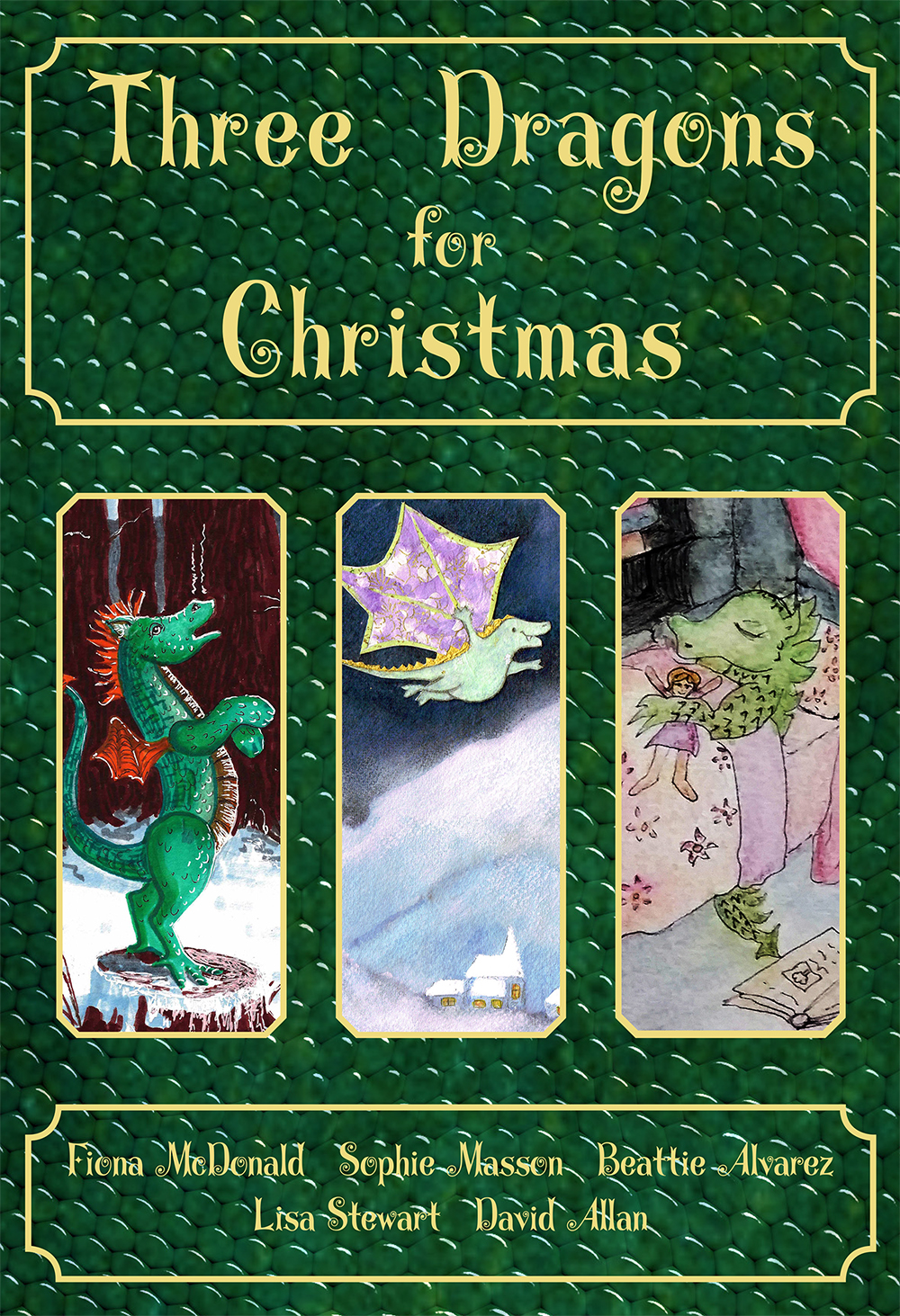
Since then I’ve had a few short stories, poems and illustrations published in anthologies and in November I was one of three authors with a story in ‘Three Dragons for Christmas’ by Christmas Press Picture Dragons Front Cover MediumBooks — I got to fully illustrate my story as well, which was a lot of fun.

I write anything and everything! Fantasy is my preferred genre, having lived in a fantasy world for most of my life. I’ve got one fantasy novel about the Queen of the Universe that will probably take the rest of my life to finish. I keep going back to add or change or edit.

When my brain is being stubborn I write, what I call, ‘mini murders’.  I write them to kick-start my brain — or when I’m in a particularly bad mood! They’re short stories where one — or many — people are murdered, ranging from twenty words to five thousand! One day I hope to be able to publish them in a book called ‘Murder on the Run’, the idea being that you can read one on your lunch break or between train/bus stops.

Then there’s the series of picture books I’ve written about Marguerite MacDougall… and my ‘magical murder’ novel that I’m working on!  I’m also waiting for responses from agents and publishers over a non magical, non fantasy YA novel that I finished earlier this year. It was my first attempt at something with no murder and no magic.

You are also an experienced editor of other people’s work. What effect do you think this has had on your own writing?

It gets me writing! I like editing for two reasons: the first is to help other writers out there polish their work and get the best manuscript they possibly can. The other is because sometimes it’s a hard job and I all I want to do is write my own stuff after weeks of writer’s block! Working on someone else’s manuscript that really needed a good edit BEFORE they sent it to me is the best way to get over an imagination blockage.

Tell us about your illustration work, and who has influenced you as an artist.

dragons beattie Christmas-Day-Brighter

From Three Dragons for Christmas

For years and years I refused to do art. Partly due to growing up at gallery openings and falling asleep under the food table when they went on too long and partly due to school. I hated art — and English — in high school. They tried to force me to see things that weren’t there and make assumptions about the artist. A curtain is allowed to just be blue! It doesn’t have to mean that the artist was depressed and in an unhappy marriage. It MIGHT mean that blue looked best there or that they wanted to open a new bottle of paint. So I butted heads with both my art teachers and my English teacher (who didn’t pass me once, for the record in year 12!) a few times over that. I became really disheartened when people with talent got lower grades than those who put a black spot on white canvas, twelve dancing princessesbut wrote an essay over why that was a real piece of art.

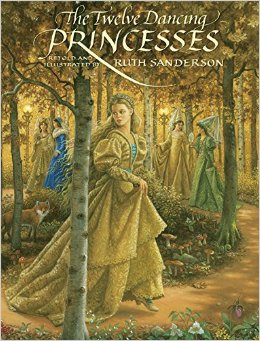
My parents, obviously, all influenced me when it comes to art and brambly hedgeillustration. But so did books! I love Ruth Sanderson’s ‘Twelve Dancing Princesses’ and the ‘Brambly Hedge’ books by Jill Barklem, where you can see the full story in the pictures, but there are also other side stories going on, only visible in the illustrations.

As well as being a writer, editor and illustrator, you have also worked as a book designer and lay-out artist. How did you learn those crafts, and what are the challenges in those aspects of book production?

It turns out that I LOVE book designing! Carefully choosing where the words go to make the pictures stand out (and vice-versa!) is very therapeutic and rewarding.

I learnt on the job with David Allan from Christmas Press Picture Books when we were working on ‘Once Upon a Christmas’. Thankfully I picked it up quickly or we might have been in front of the computer UNTIL Christmas! Since then I’ve helped design several books for Christmas Press and can’t wait for the next book so I can do it again!

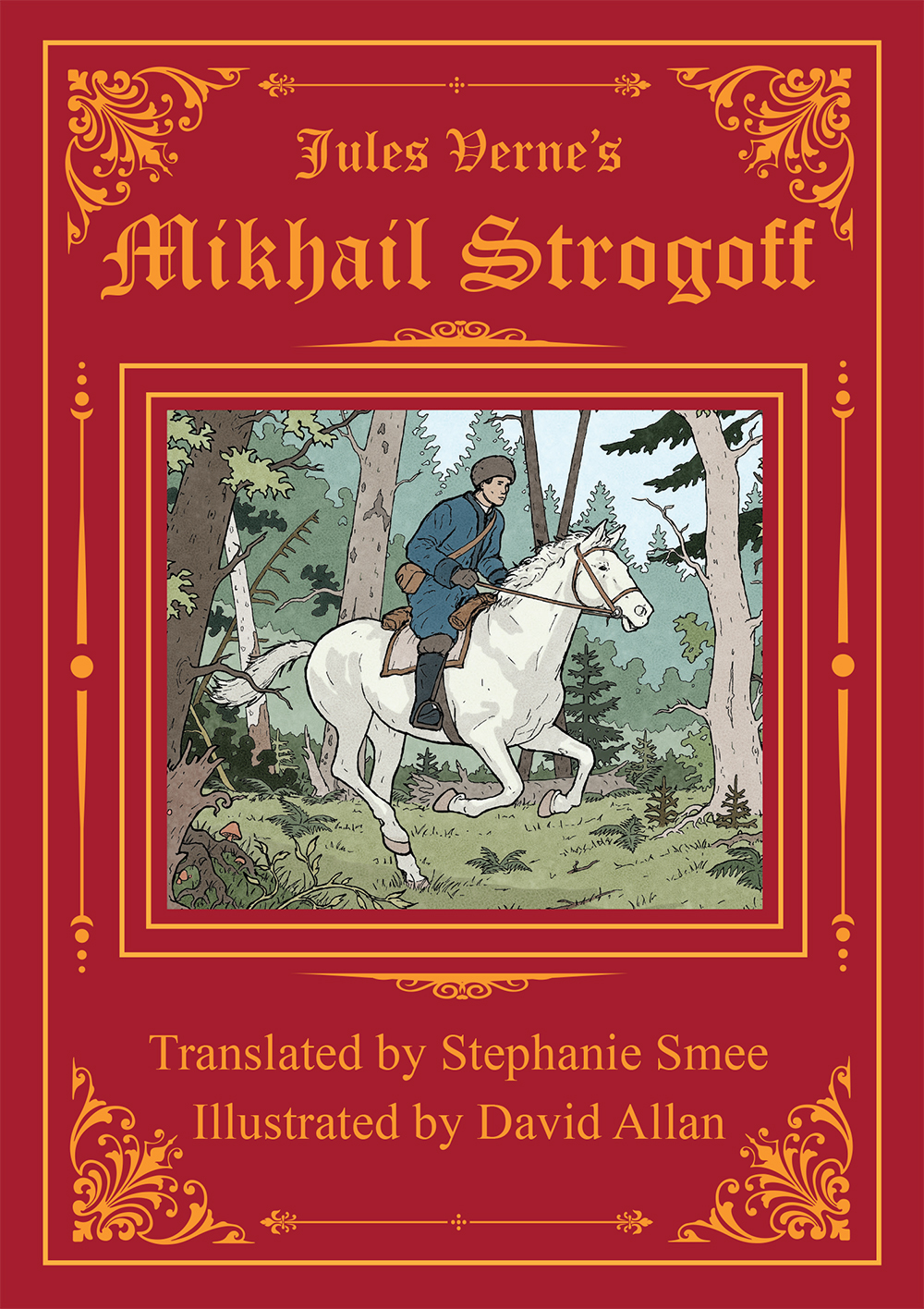
Mikhail Strogoff Cover Front Medium

A forthcoming book co-designed by Beattie Alvarez and David Allan

Seeing the finished book is the best part of that and knowing that I had a hand in bringing someone’s words to life is very satisfying.

That said, it requires a fair bit of coffee and chocolate, and maybe some naughty words slip out when Adobe and I disagree!

You also run a number of Facebook pages for businesses and organisations, including the New England Writers’ Centre, for which you also run the website. What is your key advice for businesses and organisations wanting to get the most out of social media and the Internet?

Do it! That’s my main piece of advice. So many creative types out there don’t use social media and I don’t know why! They say they don’t know how and what’s the point? There’s a saying from before the digital age ‘any publicity is good publicity’. Social media is free (unless you choose to pay for their ads). Your friends see it and like it. Then their friends see it and like it… etc! It’s about getting your work/business/organisation seen, the more people who see it, then the more sales/contacts you make. It’s simple!

The other piece of advice I have is to keep with the times. A website made ten years ago will probably not look as professional as one built now. There are a lot more options for web design now than there used to be. Buttons so that the user can interact with you and your business, so they can buy things, so that the site is user friendly. People are busy these days! They don’t bother with hard-to-use sites, they’ll just go somewhere easier and faster. So much is digital in this world that you have to keep up.

You are the deputy Chair of the New England Writers’ Centre, a non profit arts organisation. How do you view the issue of successfully steering a small arts organisation through challenging times?

Being willing to change with the times!  It’s very similar to what I wrote above, in that you have to keep up with what people want and need. This year the New England Writers’ Centre branched out and tried some new things, updated their website and Facebook pages and we did brilliantly! We’ve received several grants (yay!) this year to ensure that we can keep operating. That’s because we’ve had great grant writers, but also because we’ve changed and can prove that we’re willing to try new things.


You work with your mother, Fiona McDonald, to create unique hand made soft toys. Can you tell us something about that? beattie with toys

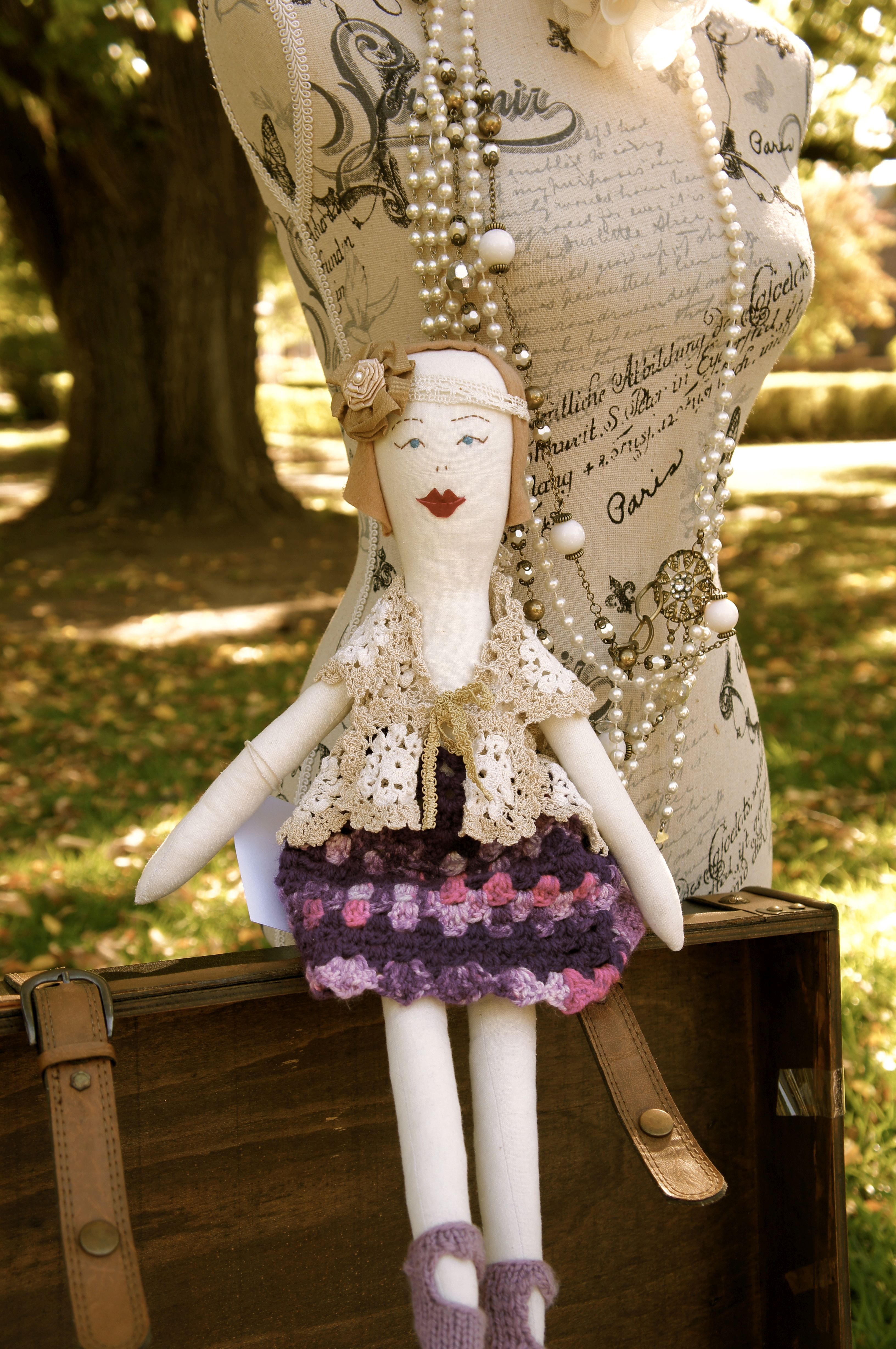
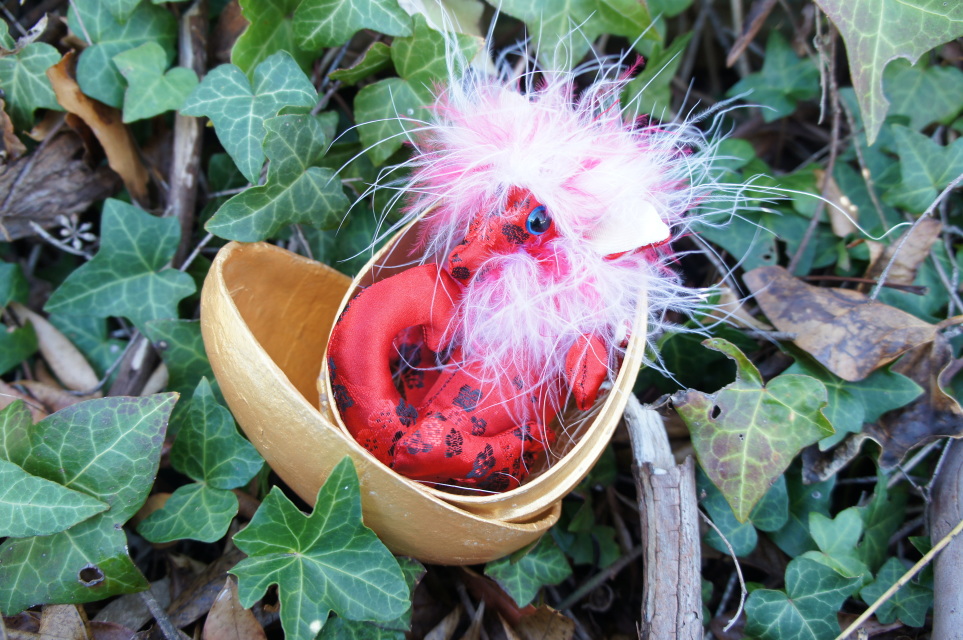
Mum and I work at everything together! And we work well. She decided to open a toy shop a few years ago and so we did! I didn’t really do any sewing before that, but now I do a lot! We felt there was a gap in the market for good quality toys that aren’t just for playing with, but for being companions for life. We like toys that can go into battle with you, have tea parties, sit quietly and read a book on a rainy day, toys that inspire play and friendship.

SONY DSC

And we’re doing so well that I’ve got calluses on my fingers from sewing so much!

You also help to run the shop, Granny Fi’s Toy Cupboard. What are the challenges and pleasures of running such a unique business in a regional town?

The pleasures far outweigh the challenges! Having a shop filled with beautiful, handcrafted toys, books, hats and all the like make going to work a treat! We’ve also branched out into some merchandise, having spotted yet another gap in the local market. We are now known as either ‘the dragon shop’ or ‘the nerd shop’! We have a great selection of Harry Potter, Doctor Who and Star Wars (to name a few!) merchandise that appeals to the ‘grown ups’ that come into the shop. Although, to be fair, those ‘grown ups’ also buy the toys!granny-fi-toy-cupboard-logo

It is hard in a small town to get a lot of walk by trade. The main pedestrian mall is sadly very empty of shops, mainly due to the exorbitant rents that the landlords are asking. Words that I don’t completely understand have been thrown around like ‘negative gearing’. Places like Centro, which was built off the main drag, have severely damaged the shopping strip due to its air-conditioning and under cover parking. People like the ‘one stop shop’.

And of course, there are people who just don’t understand us. We get questions like ‘but you just made this yourself, shouldn’t it be cheaper?’ and ‘but it’s not a real toy, it has no packaging’. Times like that are disheartening, but (after the first few times!) I no longer want to cry when people like that come in. Our toys deserve to go to homes that will love

SONY DSC

them!

What I have found very interesting is the response from tourists. Those that come from cities really DO understand us and our toys! They can’t believe how cheap our prices are and suggest that we open a shop in Melbourne or Newtown in Sydney.

But for all the hard times there are always more people that love what we’re trying to do in Armidale. They love our toys and the fact that 90% of what we stock is handmade in the area and that their money is going to support the local economy.


Maybe one day we will open shops in cities, but we will always be based in Armidale. It is our home and we love it.

Beattie's older daughter Isobel, with a hand-made friend!

Beattie’s older daughter Isobel, with a hand-made friend!

My post on mentoring, on Writer Unboxed

Today, I have a post on mentoring, from both sides of the fence–the mentor and the mentoree–on Writer Unboxed.

Here’s a short extract:

Nobody writes in isolation. Writers experience mentoring in one way or the other at every stage in their careers. Early writing mentors are usually teachers, family and friends. Later, as we take our first steps towards trying to build a career as a writer, other, more professional mentors can improve our understanding of craft, as well as give us the confidence to take those first tentative steps.

You can read the whole thing here.