Five Favourites 6: Margrete Lamond

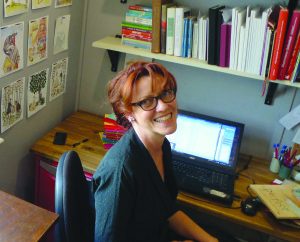
Today Margrete Lamond remembers her five favourites from childhood.

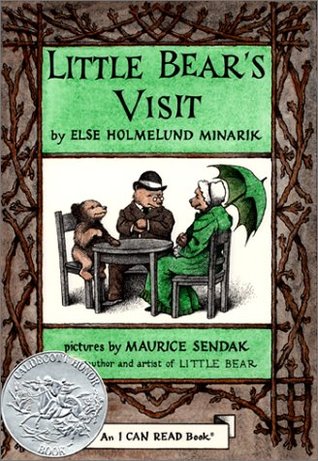
Little Bear’s Visit by Elsa Minarik and Maurice Sendak
This is the first book I remember poring over, around the age of three or four, before I could even read. The pictures fascinated me: they were friendly but also slightly weird and a little bit scary. I had to leave the book behind in Norway when we emigrated, and I only recently tracked down a first edition copy to pore over again.
The Family from One-end Street by Eve Garnett
My mother used to read to us from this book, and when I was a better reader I read and re-read it for myself. It gave me a powerful sense of cheerful poverty in mid-20th-century London. I can barely remember what it was about, but laundry and steam in the kitchen is a strong image I seem to have retained. Still have the book. Must reread!
Tørris. Gutten fra Storlidalen by Berit Braenne
A Norwegian classic, given to me on the day of our departure for Australia to remind me of the Old Country. A romanticised but also somewhat realistic account of remote mountain life in early 20th century Norway, again deeply impoverished families making do and finding joy in small things. Memories of this book are redolent with the scent of warm pine needles. Still have this book.
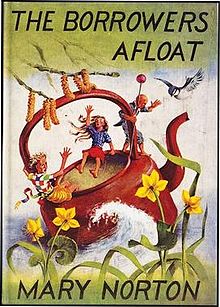
The Borrowers Afloat by Mary Norton
There was just something fascinating about their tininess, and about the inverted view of the human world that the story presented. I loved how they made do with all sorts of ‘borrowed’ items, including their funny names. ‘Homily’ sticks fast in the mind.
Longtime Passing by Hesba Brinsmead
Continuing the theme of being enamoured of stories about families struggling to make ends meet under harsh circumstances … my love affair with the Blue Mountains and the (unrealistic) romance of remote rural country life began with this book. I adored the Victor Ambrus illustrations, too. (So exciting to recently see his artwork on Time Team!)


Delighted to announce a new picture-book contract

I’m delighted to announce that I’ve signed a contract with Little Pink Dog Books for my picture-book text, See Monkey. It’s a fun text for very young children, focussed on the hectic day of a toddler’s favourite toy. I’m thrilled that it will be illustrated by the fantastic Kathy Creamer, gifted and experienced illustrator who along with her husband Peter is one of the principals of Little Pink Dog Books. It was lovely to be able to sign the contract yesterday in person with Peter and Kathy, in the very conducive surroundings of Granny Fi’s Toy Cupboard in Armidale!

Five Favourites 5: Adele Geras

Today, it’s the turn of Adèle Geras to tell us about her five favourites.

Is there a woman writer of a certain age who won’t have LITTLE WOMEN by Louisa May Alcott among her favourites? I don’t think so. They generally love the book because of Jo, and her burning ambition to be a writer, but for me the attraction was more the four sisters living together through good times and bad and getting irritated with one another but still remaining loving throughout.  I am an only child and this book paints a portrait of life with siblings that felt magical to me when I was very young and still does.

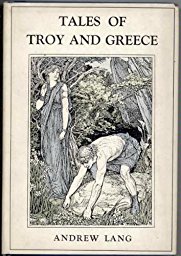
TALES OF TROY by Andrew Lang.  This book was given to me in 1951  when I was 7. It has coloured my entire life. It’s the story of the Trojan War with the most beautiful illustrations by H.J. Ford. I knew whole passages of it by heart by the time I was 8.  It was the beginning of my love affair with the legends and stories of Ancient Greece and then later, Rome. But this was the start of it and I still have the book on my shelves. It’s been a huge inspiration to me, leading directly, I think to my own books set in Ancient Greece: TROY, ITHAKA and DIDO.
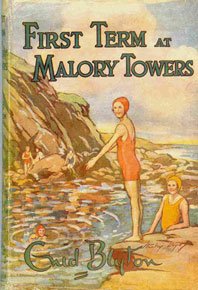
 THE MALORY TOWERS series by Enid Blyton.   I had to re- read one of these books about twenty years ago for a conference at which I spoke about them. And I was shocked to discover that (unlike Little Women and Tales of Troy) they did not stand up to adult scrutiny. They struck me as paper thin, rather shoddily written and clichéd in every way. But….but but but. I loved them with a passion as a child, and this passion didn’t dim when I went to boarding school myself and found it to be not a bit like Malory Towers. Blyton has created a world that swallows up young girls and transports them. She fills it with characters who are readily identifiable and when I was about 8, this was so enchanting that I hold the world the books made in my head  quite separately from the rather thin gruel of the actual text. That is Blyton’s magic. She created more readers than anyone before or since, except for J. K. Rowling.
BALLET SHOES by Noel  Streatfeild. Oh, my goodness how I adored this book! I’ve also read it as an adult and it’s just as good as it ever was because Streatfeild was such a wonderful writer. Here again we have siblings, albeit not birth siblings but three girls collected by an eccentric explorer with a kind heart. The whole set up struck me as thrilling. The grown ups were amazing: different from most other grown ups in books. They were bohemian and strange and did unexpected things. And the dramas of the ballet classes and the fact that one of the sisters went on to become a pilot…it was, in every way, a brilliant wish -fulfilment book and also beautifully written.  When I first read it I was determined to be a STAR and I identified with  that side of the novel  completely.
Nowadays, we have box sets. Back in the late 50s and early 60s we had series of books. I loved John Galsworthy’s FORSYTE saga but mostly at school the books that kept us  going, that we passed around the class, discussing every turn and twist of the plots till we were blue in the face, the books that preoccupied us most were the WHITEOAKS books by Mazo de la Roche.  They were set in Canada and the house the Whiteoaks family lived in was called Jalna. I can’t now recall how many books there were but they seemed never to stop. My own favourite character was Rennie, who was a dangerously attractive red-headed man and RENNIE’S DAUGHTER was my favourite of the series, though I also loved FINCH’S FORTUNE. Finch was the pale, rather more weedy and intellectual brother of Rennie, if I remember correctly. These books were, in the words of my elder daughter: heaven on a stick. Big house, slightly tyrannical matriach, lots of different siblings and assorted in – laws. Difficult children. And lots of romantic sexual simmerings. Fabulous stuff!  I have never revisited these books. I daren’t…I want the spell to be unbroken. I doubt if anyone under 60 will ever have heard of Mazo de la Roche. Sic transit gloria…

Five Favourites 3: Hazel Edwards

Today Hazel Edwards tells us about her five favourites from childhood.

The Land of Far Beyond by Enid Blyton

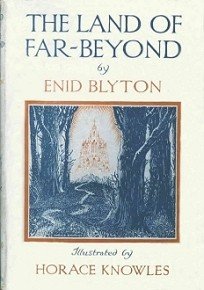
My grandfather had a private lending library and the children’s section was a wall of Enid Blyton. So I devoured the Famous Five and the Secret Seven, and then moved onto flying with Biggles. I wasn’t that keen on horses, so missed out on the Mary Grant Bruce books. But the book which impacted on my early life was Enid Blyton’s ‘The Land of Far Beyond.’ This was my first experience with an allegorical story, which was a quest, and where the characters had the names of their attributes. E.g. Mr Doubt, and the giant’s page boy called Fright. Even the places they travelled matched their names.As an adult, when we orienteered on a real map with Mt Disappointment labelled, it reminded me of ‘The Land of Far Beyond.’ Because I no longer have my own copy, I Googled the title and had a feeling of familiarity as I looked at the cover on the Enid Blyton Society  webpage.  http://www.enidblytonsociety.co.uk/book-details.php?id=358

Today’s children would  consider this cover bland, but I loved the sense of a journey conveyed in the artwork.  I liked the economy of a story with several meanings and layers. But the story ALSO needed adventure and danger with eccentric characters to interest me

The Rubaiyat of Omah Khayyam

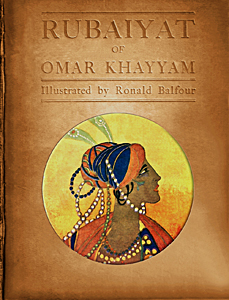
My father encouraged me to read. He shared ‘The Rubaiyat of Omah Khayyam’ with me by reading it aloud. I didn’t really understand it. But I liked the shape of the ideas. And the idea of a door to which there was no key. Maybe that encouraged me to co-write Hijabi Girl later.

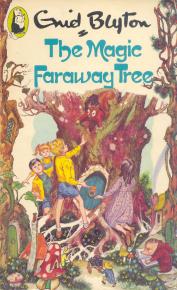
The Magic Far-Away Tree, by Enid Blyton.

The atttraction there was the food and the variety of different lands.

Animal Farm, by George Orwell

Read the other levels later as an adult. But as a child I thought it was about pigs.

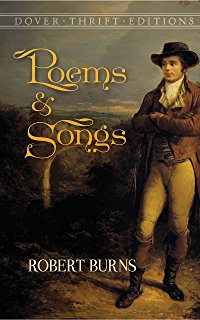
The poetry of Robbie Burns

My father read this in his Glaswegian accent and I didn’t understand a word of it, but I knew he liked it.

My other reading was Biblical stories because I went to Baptist Sunday school. So my reading was fairly diverse as a child. Now I prefer biographies and well-plotted mysteries.


Five Favourites 2: Libby Gleeson

Today’s selection of childhood favourites is by Libby Gleeson.


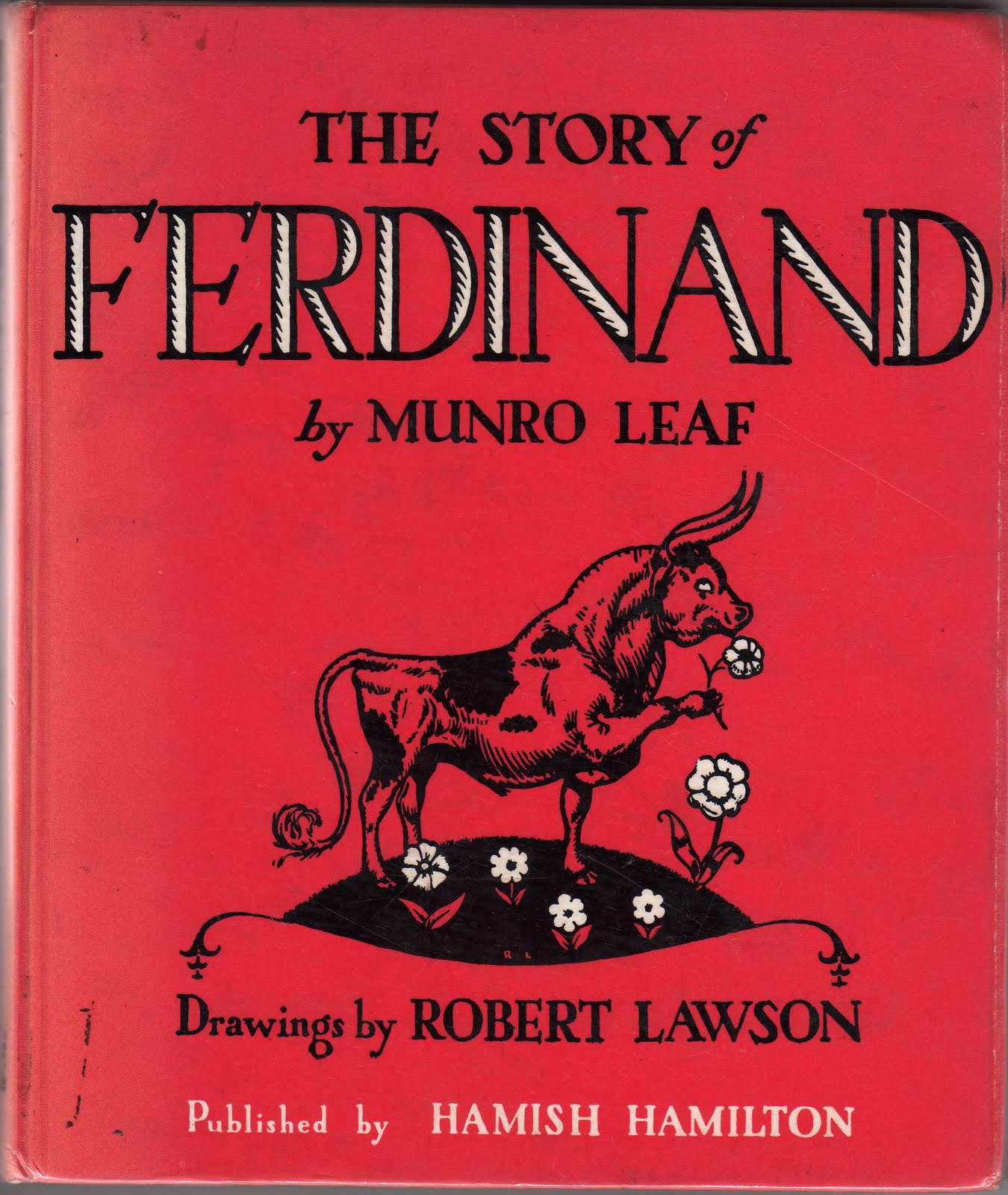
The Story of Ferdinand Author: Munro Leaf. Illustrator: Robert Lawson
        This one of a bull which didn’t want to fight in the bull ring but rather to sit and smell the flowers really delighted me. He grows up to be the biggest and strongest bull    in the field but still remains one who would rather smell flowers. He sits on a bee on one occasion and the sting sends him leaping and charging around the field and so he’s seen as aggressive and is taken to the bull ring. He still only wants to smell flowers and so those organising the bull fight are thwarted.

Anne of Green Gables. L M Montgomery

       I loved this story of a red headed outsider who was determined to make her way. Anne had been adopted by Mathew and Marilla to help on their farm but they had  thought they were adopting a boy. Despite initial difficulties, Anne – with an ‘e’ – stays and develops friendships. I loved her disdain for her classmate Gilbert, knowing they’d get together in the end.

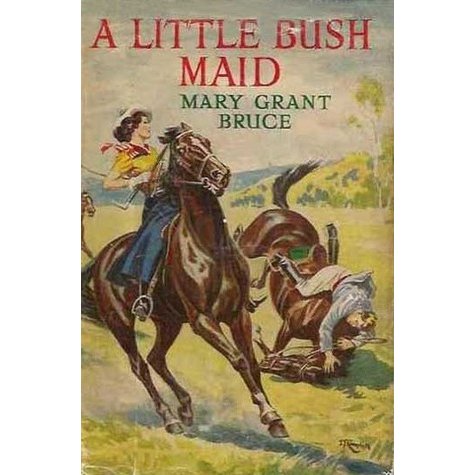
A Little Bush Maid. Mary Grant Bruce
        This is the first in the long series of Billabong Books and I devoured every one. Norah Linton is growing up on a station in Victoria in the early years of the twentieth century. She is doted on by her widowed father and her brother Jim when he comes home from boarding school on holidays. He brings his friend Wally with him and  the three of them have fairly standard bush adventures together.  Old fashioned values towards race and class persist and I remember feeling a bit uncomfortable but   I envied Norah, wild on her horse, and so I ignored them when I was a child.

The Enchanted Wood. Enid Blyton
        I read all the Enid Blyton books I could get my hands on but this is the one that stayed with me. I think it’s the best book she ever wrote – and she wrote hundreds. It’s the first in the Faraway Tree series and introduces us to Jo, Bessie and Fanny and their cousin Dick. (names are sanitised in modern editions.) The children find a tree in a wood and when they climb it they meet all kinds of fantasy creatures such as Mrs Washalot, Moonface and Saucepan Man. A ladder at the top of the tree  leads to lands that circulate so a different land may be at the top at any time. The children must leave before the land moves on from the top of the tree. I thought  it was brilliant when I was a child and I still do!

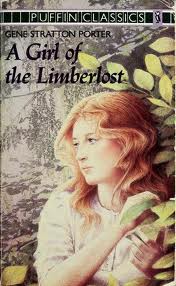
A Girl of the Limberlost.  Gene Stratton Porter
        This was my most favourite novel of my early teenage years. Elnora Comstock lives with her widowed mother on the edge of the Limberlost swamp land. Elnora is   bright and wants an education but her mother believes it to be a waste of time for a girl. Elnora fights and argues with her mother and pays for her education by gathering artifacts and moths from the swamp. She grows in her understanding of the world of nature and in her confidence as she becomes a woman. This is a dramatic, gothic novel, so unlike the sweet rolling green hills of much English fiction I read. I loved it.

The Blue Cat: an interview with Ursula Dubosarsky

Today I am delighted to be interviewing dear friend and fellow writer Ursula Dubosarsky as she celebrates the release this week of her latest novel for children, The Blue Cat (Allen and Unwin) Set in 1942, it’s a beautiful, haunting novel whose limpid prose takes us into the mind and heart of an imaginative and observant child, Columba, as she experiences the disruptions of wartime Sydney with her bossy friend Hilda and forms a touching and tentative bond with a disorientated, motherless young refugee, Ellery. Perfectly-pitched, with a vivid portrayal of Columba’s small world, touches of humour and a subtle evocation of the horrors that Ellery and his father have fled from in ‘You-rope’, The Blue Cat is also a mysterious, even mystical work whose heart-wrenching, enigmatic ending stays in your mind long after you close the book. It is another triumph for one of Australia’s most acclaimed authors of children’s fiction, and will no doubt appear on many award lists.

First of all, Ursula, congratulations on the publication of The Blue Cat! Can you tell us a little about how the idea for the story came to you?

Thanks Sophie. Always nerve-wracking when a book comes out!  Like any story the ideas come at you from all sides until finally, mysteriously, you start to write it. When I was a child I was fascinated as all children are by the various tale their parents let slip about their own childhood. My parents both grew up in Sydney during World War Two, which is the time and setting of ‘The Blue Cat’. My mother told us once (and I think she only mentioned it once, or perhaps twice) about the arrival of a German-Jewish refugee in her class one day at Our Lady of Mercy College in Parramatta. Perhaps that’s when it started…

The image of the blue cat is woven throughout the book. Uncanny yet real, creature of dream and creature of fur, it appears and disappears at various times, and seemed to me to bring a feeling both of protection and dread. Is that what you intended? Or did you have something else in mind?

The cat sprang in my mind on a very long flight home to Sydney from Berlin – in the form of the poem that is at the beginning of the book.  I have to say I’ve always been afraid of this cat. Right from the start I thought that there was something sinister, even evil about him,   but I realized when I re-read the book that in fact he’s more ambiguous than that. Sometimes he’s even almost a comforting presence, as you say. So perhaps he’s both. I know that people can be shocked at this apparent indecision of an author about her own work! But I’m afraid all of my books are like that – open windows, (oops! out jumps the cat) perhaps, rather than closed doors.

Columba’s voice is both sharp and dreamy. She sees a lot but doesn’t always understand what she sees. She is very much a child and yet at a certain level in her consciousness she perceives what Ellery and his father have gone through in a more empathetic and certainly more extraordinary way than the adults. How did you balance these different aspects of her character to create such a believable yet unusual presence?

When I’ve taught creative writing, I’ve noticed that if there is one thing I seem quite UNABLE to articulate, that is how to create character. For me this is the most intuitive part of writing – or at least the most hidden and buried from myself. I always feel as if the characters simply exist somewhere else and I’m just putting them on stage. You’re quite right about Columba, who sees and doesn’t understand, but she feels and yet knows something despite that. “The Cloud of Unknowing” one might say – that by surrendering oneself to not knowing you might perhaps get a glimpse of some truth.

You have included authentic documents from 1942 in the book, such as ads, government pamphlets, a letter from the Free French in The School Magazine and an editorial in the Schoolboys Chronicle which I believe was written by your father as a young person! What do you think primary, contemporary documents add to the texture of a historical novel? And can you also briefly comment on some of the other extra material you’ve included, such as pictures?

The book in a way is a kind of collage. I note the definition of collage in Wikipedia:‘A collage may sometimes include magazine and newspaper clippingsribbonspaint, bits of colored or handmade papers, portions of other artwork or texts, photographs and other found objects, glued to a piece of paper or canvas.’ In ‘The Blue Cat’ there is the story of course, written by me, but then there are all those bits and pieces of the past, pasted in between the lines.  I adored making collages as a child at school – that feeling of excitement with the blank page, the glue and all the little bits and pieces of things to be stuck on where and how you chose.

Again, as a student in history classes I always responded very strongly to “primary sources”, those original documents, often ephemeral, that speak directly to us from the period in which they were created. I wanted readers also to have that experience, of reading and seeing the same things that the characters would have read and seen. The editorial by my dad you refer to was from a newspaper that he created and edited at Neutral Bay Public School during the war – as soon as I read it (only a few years ago when it turned up amongst various of his papers) I knew I HAD to include it. I went into the Department of Education office of the School Magazine to read through all the issues of the period of the book. (Thanks School Magazine!) The photograph of Ellery’s watch – I actually bought a vintage watch of the period on the internet, to make sure it was the real thing. I also managed to get a copy of the original air raid advice pamphlet on ebay – as well as the little prayer card of Columba. The copy of Vergil’s Aeneid with those wonderful ghostly annotations in pencil I bought years ago at the Salvation Army in Tempe…

The Blue Cat never specifically mentions the Holocaust, yet it is inevitably in the subtext. How difficult was it to approach the writing of the story in a way that neither overtly flags the horror of what was happening, nor elides it?

When I was a child in the 1960s I knew nothing about the Holocaust, but we all knew that the word Hitler was terrifying. That was something we understood from popular culture – adults are not going to tell children the details of the Holocaust. After all it’s a natural and I think good instinct to protect children from the various horrors of human behavior. The Holocaust is something you learn about, piece by piece, as you grow up. The adults in Columba’s life are not going to tell her what they know, what they guess, about Ellery’s situation. But they are not going to tell her lies either. I suppose in this book I have had to tread that same narrow path.

There is a touch of fairy tale, in its most mysterious yet immediate aspect, in much of The Blue Cat, but especially in the final sections. Can you tell us something about that?

For me not it’s not so much a fairytale as a mythical landscape, some very blessed place.  When I began writing I had in mind this medieval poem by Petronius Arbiter, translated by Helen Waddell. It always summons up Sydney to me, and how the experience of its beauty is a gift that can never be take away from you.

 O SHORE more dear to me than life! O sea!

Most happy I that unto my own lands

Have leave to come at last. So fair a day!

Here it was long ago I used to swim

Startling the Naiads with alternate stroke.

Here is the pool, and here the seaweed sways.

Here is the harbour for a stilled desire.

Yea, I have lived: never shall Fate unkind

Take what was given in that earlier hour.

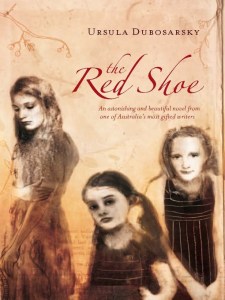
The Blue Cat is one of a trio of your recent novels, The Golden Day and The Red Shoe being the other two, which are set at very particular points in Australian history, and are focussed around children’s limited yet luminous understanding of the events going on around them. Can you expand a little on that, and what attracted you to writing about those historical periods in particular? And also, and forgive me if this is a silly question—given the ‘colour’ theme of the titles, did you intend them to be a triptych somewhat like the ‘Three Colours’ series of films by the French-Polish film-maker Krzysztof Kieślowski?

I started with ‘The Red Shoe’, set in 1954, and this was purely the result of hearing a program on the radio. I’d had no thought of writing a novel set in the 1950s, but the idea appeared and I got to work. You are right to evoke ‘Three Colours’ – that was something I did have in mind – a dreamy thought of three novels, set in Sydney harbour,  each one a different colour and set in a different decade. In the course of history a decade is nothing! But for a child a decade is their whole lifetime.
Finally, you wrote part of this novel while in Paris, during an Australia Council-funded writer’s residency in the Keesing Studio—a wonderful experience for you I know as it was for me when I was there in 2010! Aside from mention of the fall of France, and the notorious photograph of Hitler in front of the Eiffel Tower, which is reproduced in the book, there is no obvious connection to Paris. But do you feel something of what you experienced in Paris got into the texture of your story?

Before I went to Paris I had imagined that Paris itself would be a more significant part of the book. It didn’t work out that way though, and I have no explanation for that. It just didn’t happen. But the flat we were living in was right next door to the Paris Holocaust Museum, which I visited often and I think perhaps that will be another book altogether.


You can see a trailer for The Blue Cat here and some very interesting snippets, including videos, about the historical background of the book on Ursula’s website, here. You can also read an interview I did with Ursula about her Paris residency on my blog, here.
The journey of a picture book text…

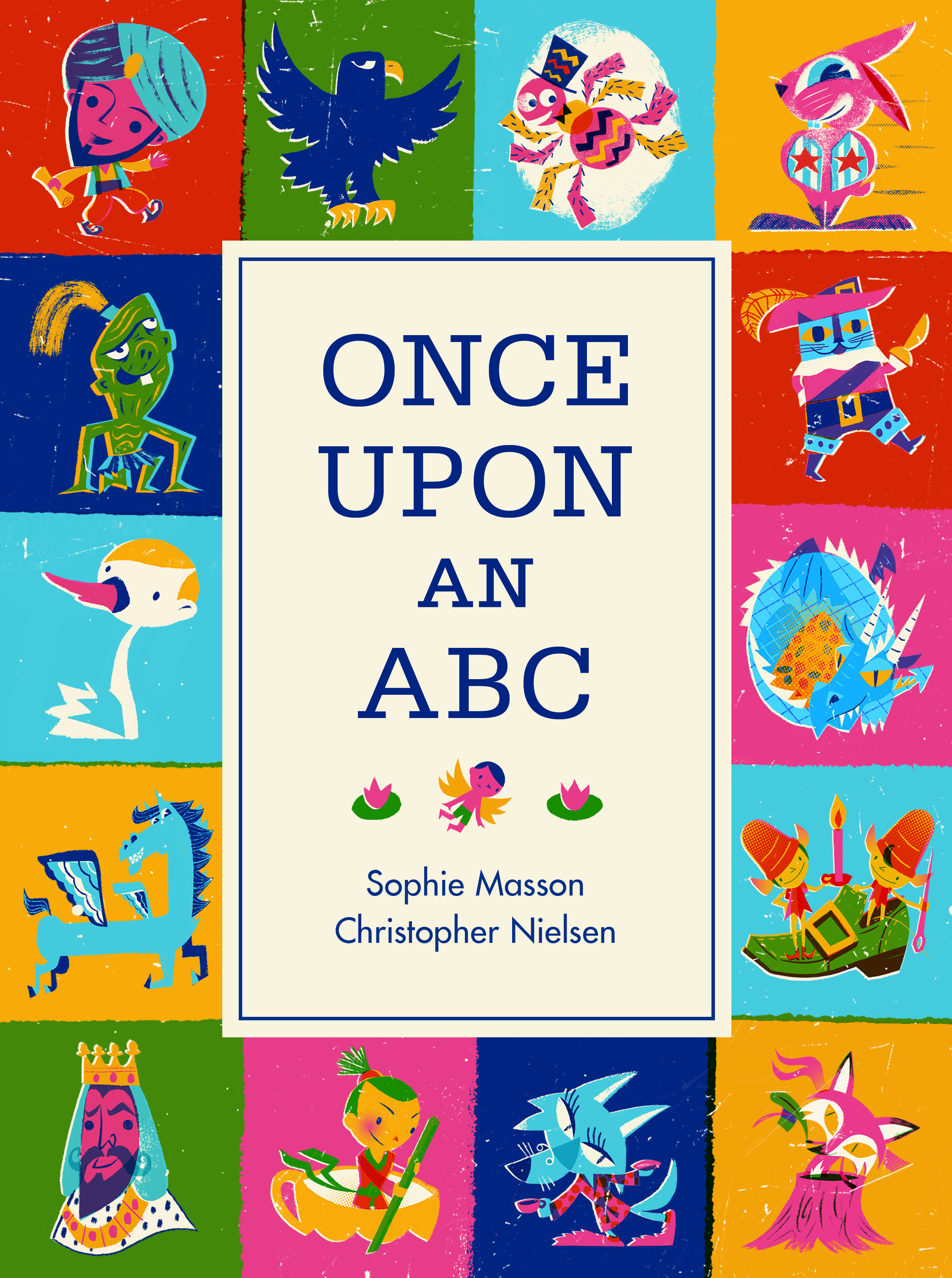
My picture book with Christopher Nielsen, Once Upon An ABC (published by Little Hare), will very soon be officially released(though we had a pre-release launch on March 18!) and to celebrate I thought I’d write about the journey of my text, and how it developed over the two years since I first scribbled down the idea in my notebook. Because picture-book texts may look easy; but let me tell you, they are not!

So–the first glimmer came on a car trip to Sydney in March 2015–I was, I hasten to reassure you, the passenger, not the driver–when I suddenly thought of a great idea: what about an ABC book featuring characters from fairy tale, folk tale and legend? Now anyone who knows me knows I love my traditional tales, but you may not know I also love ABC books, when they’re clever..my favourite being Colin Mc Naughton’s hilarious, brilliant ABC and Things, published in the 90’s. What fun, I thought, and as I always travel with a notebook, out it came and I started scribbling down a few ideas for each letter, as well as a working title, Once upon a Time/Storytime ABC… Below is what that first handwritten draft looks like:

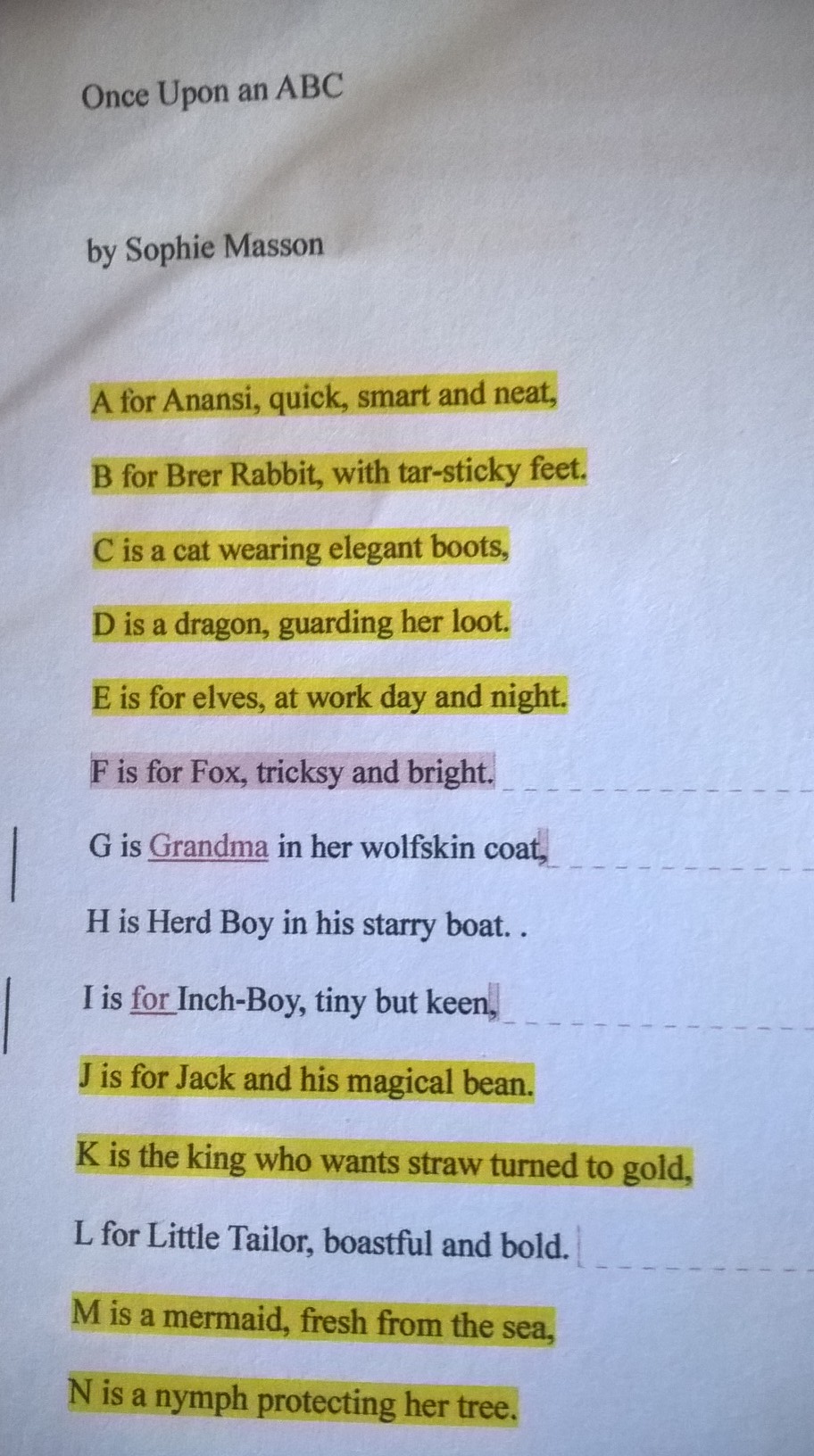
As you can see, it was still embryonic, with a few letters missing and a long way from the final text. But when I got back home, I edited the scribbles, added bits, subtracted others, tweaked the title to ‘Once Upon a Time ABC’, then typed everything up, and here’s the result of that:

It was at this stage that my agent Margaret Connolly first sent the text to Margrete Lamond at Little Hare who responded very positively, loving the idea and the feel of it. But she had a few comments and suggestions to make, such as that I should rethink the mention of Alice at the beginning and Nutcracker at N–that it was better to stick to genuine fairytale and folktale figures, rather than literary ones like those or legendary ones like Robin Hood (The vampires and yeti, too, went) And to replace Alice as A, she suggested, how about Anansi, that wonderful trickster spider-god from African folktale? I agreed very happily–and that gave me the inspiration to give the text a much more multicultural flavour generally.

Over the next few weeks, Margrete and I batted the text backwards and forwards over email, to get it into the best possible shape before it would be presented to an acquisitions meeting. This was a fantastic opportunity for me and my text, for Margrete is an absolutely brilliant and inspirational editor, with a very fine ear. It wasn’t just the characters and wording we discussed, but scansion and metre–the music of a text in verse, without which it sounds banal or clumsy. And the title changed too, to the much better ‘Once Upon An ABC.’ During this time, quite a few of the original characters left the scene, to be replaced by others, but many remained all the way through: for example, Puss in boots at C (cat) Dragon at D, Jack and his beanstalk, Rapunzel, Ogre, Trolls–and Zero the hero! Here’s a new draft, much closer to the final, but not quite there:

After this draft more changes were made, such as that Issun-boshi would be changed to ‘Inch Boy’ which is what it means in Japanese, and Brer Rabbit got ‘tar-sticky ‘rather than ‘very sticky’ feet–so much better! The fairies left the scene and Grandmother and Fox were split up 🙂 The next draft was closer still, but still not quite right:


Still there were tweaks–Grandma in the wolfskin coat was, Margrete felt, too dark for the age group, so I had to think of a different way of putting it–and the ‘tricksy’ fox was changed to ‘crafty’ while the nymph would be brought out from hiding! Meanwhile, Margrete was looking for the right illustrator for the text, so as to present the book as a package at acquisitions–and soon sent me a link to a wonderful new illustrator called Christopher Nielsen who she thought would be perfect. And so did I! And very happily indeed, Chris loved the text!

By now the text was deemed ready enough to go to acquisitions–and in due and very exciting course, I got the good news that it had been accepted, and that Chris could start work on the illustrations!

With Christopher Nielsen at the Children’s Bookshop, Beecroft

But that wasn’t the end of the work on the text, which I kept tweaking here and there with suggestions from Margrete and from another excellent Little Hare editor, Alyson O’Brien, till the text finally reached its final form(and to read that you’ll have to read the book!). On his side Christopher was beavering away on the illustrations. Then one day I got a very exciting email sending me samples of what he had been working on, some of which you can see here at his website. To say I was thrilled by the gorgeous world Chris had created to visually express and extend my text is to understate my feelings as I pored over his illustrations, with their striking blend of retro and contemporary, verve and humour, colour and dynamic movement.

And so now, two and a little bit years from that first scribble in the notebook, my text is in its final shape: as part of the beautiful picture book, Once Upon an ABC, where text and illustrations work together perfectly to create a world of magic, fun, mischief and surprise. It was a wonderful journey, that journey of the text, and I learned a lot from it. But it also reinforced something else for me: how very appreciative of the input of inspired, sensitive editors we writers should always be!


Story behind the story 1: And Then authors on their contributions

As part of the celebrations around the publication of the fabulous And Then adventure story anthologies, published by Clan Destine Press, I thought I’d ask my fellow contributors to write a few words for readers about the ‘story behind the story’ to tell a little about their individual creation. So I’ll be publishing these in a few instalments, starting today with words from Lucy Sussex, Jason Nahrung, and Emilie Collyer. Oh, and a word or two from me! All of these authors’ stories(including mine) appear in Volume 1.

To recap: each one of us contributing And Then authors was invited by Clan Destine’s Lindy Cameron to create an adventure story which would feature a ‘dynamic duo’, but otherwise we were left pretty much to our own devices as to the rest, and the result is a sparkling and wonderful diversity in two fantastic fat volumes! My own story, The Romanov Opal, was inspired by a conjunction of things: a visit I made to the extraordinary opal mining town of Lightning Ridge some time ago; a fascination with Russian culture and history; a love of classic Agatha Christie half-mystery, half-adventure stories like The Man in the Brown Suit, and an even greater love of Tintin-style adventures. Mix that in with the elegant and turbulent 1950’s, a pair of feisty twins and a legendary jewel, and I had the perfect ingredients for a story that was simply huge fun to write.

So what was the story behind the story for other authors? Read on!

Lucy(left) and Meredith Sussex in Borneo

Lucy(left) and Meredith Sussex in Borneo


Batgirl in Borneo, Lucy Sussex

In 2015 I went to a wedding in Sabah, Borneo. After the ceremony, assorted guests went on a bus ride across north-east Borneo. We saw orangutans and sun-bears, and narrowly avoided a meeting with terrorists. Two days after we ate at a beachside restaurant in Sandakan, Abu Sayyef came raiding across the straits from the Muslim Phillippines, in a rubber dinghy. They kidnapped the manageress, Thien Nyuk Fun and a customer, Bernard Then.  She was released months later, after a ransom, Then got beheaded.

I heard another interpretation of that story only after ‘Batgirl in Borneo’ was copyedited.  In that reading, by a Sabah expat, our visit to the restaurant was the catalyst for events.

If I write that, it would be a very different tale.

jason_bw-webMermaid Club, Jason Nahrung
This is the second of my short stories starring detective Shane Hall and her accidental partner Manasa Chalmers as they negotiate a paranormal Brisbane. This one draws on a memory of how one of my favourite venues in the city was gentrified, as well as looking for an idea of mermaids different to the fairy tale. The story also builds on a larger plot involving my dynamic duo — I really must finish that, one day!
tansybwDeath at the Dragon Club, Tansy Rayner Roberts
My story is one I had been toying with for a while — about a pair of retired assassins and siblings-of-choice who run away from their violent profession and end up joining a circus full of dragons… only to have their old and new worlds collide all over again. This book was a great excuse to write that story, and I’m so glad I did. I hold Kurt and Inga Frostad, and their beloved dragons and their snarky dialogue, very close to my heart, to the point that I got all soppy and nostalgic while proofing. And then I promptly started planning the sequel…

ecollyer_photopiajohnson_051The Panther’s Paw, Emilie Collyer

With so much dystopian fiction around – and feeling increasingly like we are living in a dystopic world of our own creation – I really wanted to write a piece set in a future where we’ve started to get a few things right. I was inspired by what I’d read of the genres solar punk and eco punk so that was my starting point. One of the wonderful things about writing is getting to play god. I had a LOT of fun constructing the social, environmental and cultural norms of this world to reflect what I think would be a fair, sustainable and enlightened way to live. In regards to the characters I wanted to explore a mismatch. Two people who would normally never spend time together but who have complementary attributes. I really love the world I have created in this story and feel there is room to expand the adventures of Eliza Wild and Dash Besen. So look out for more …

Guest post by Karly Lane: Life as a mum and full time writer

lane_karlyToday, I’m very pleased to present a great guest post by bestselling Australian author Karly Lane, as part of her blog tour for her new book, Third Time Lucky. 

Life as a mum and full time writer

by Karly Lane

Become a writer, they said. It’ll be fun, they said… oh, and just to make it extra interesting, do it while you have 4 kids at home and a part time job.

Writing with children…how do I explain this? Okay, picture a battlefield, with explosions and machine gun fire and bombs dropping from the air, all around you… and in the middle of all this you’re trying to write a deeply emotional love scene… that’s kinda what it’s like.

Mum! I’m hungry. Mum! He’s looking at me funny. Mum! She’s trying to put the chook into the freezer. Mum!!!!

Looking back at those first few crazy years of my writing career, I’m surprised that I managed to get one book written, little own four, before I was finally able to give up my part time job and work full time as a writer. Although giving up work was only one aspect, I still had my youngest at home for the first few years, and I can tell you with utmost confidence, Play School and Dora the Explorer DVD’s were a GODSEND. Although, I still have issues with Dora…why was this small child allowed to go exploring alone, where was her mother? She was probably and author, inside, writing a book. ‘Go outside and play, Dora…’

Those first few years were crazy. But it did teach me a lot of important things like; sleep… its completely overrated.

Coffee; will become the only vital food group. God help everyone in the household if we run out though…

It taught me to ignore the noise around you; if anyone ever tells you, you need softly playing piano music and scented candles in order to get you in a creative mood to write—they’ve obviously had far too much time on their hands and quite possibly—a nanny. I’ve written love scenes while refereeing fights between my children. You don’t need music—you need focus. If you’re a mother—you already know how to do more than one thing at a time. It’s called multitasking and if you can do that, you can write a novel while you have kids.9781760291822

I can honestly say, I got more productive writing done during the years I both worked part time and had children at home, than I’ve ever done since. Sure, now, with six hours of just me and the cat at home, writing is a lot more calmer and quiet…but it also gives me opportunities to ‘just go down and sniff the horses for a minute (they smell so good!) or, just go online and see what’s happening on facebook… All dangerous and time wasting ways not to get any writing done.

If there’s anything positive to take away from this, I hope that it’s to shut down that excuse about waiting until the kids go to school, before you start writing that book you want to write… Because putting it off—isn’t getting it written. There won’t ever be a perfect time to start writing—so find a DVD…turn on Playschool…and sit down and do it.

//cdn.thinglink.me/jse/embed.js


About Third Time Lucky:

When her marriage ends, December Doyle returns home to Christmas Creek. Will she conquer her fear of heartbreak? A heart-warming novel about betrayal, ambition and the power of love.

 After a disastrous marriage, December Doyle has returned to her home town to try to pick up the pieces of her life and start again. She’s also intent on helping breathe new life into the Christmas Creek township, so the last thing she needs is trouble.

Bad boy Seth Hunter has also returned to Christmas Creek, and trouble is his middle name. Wrongly convicted of a serious crime in his youth, Seth is now a successful businessman, but he’s intent on settling some old scores.

As teenagers, December and Seth were madly in love, and seeing each other again reawakens past feelings. But will Seth be able to overcome his destructive anger about the past, and can December conquer her fear of heartbreak to make their relationship third time lucky?

By the bestselling author of Second Chance Town, this compelling novel is about betrayal, ambition and the power of forgiveness – and love.

About Karly Lane:

Karly Lane is the best-selling author of nine novels including Second Chance Town, Gemma’s Bluff, and Bridie’s Choice. A certified small town girl, Karly is most happy in a little town where everyone knows who your grandparents were. Her novels range from romantic suspense to family saga, and she is passionate about writing stories that embrace rural Australia and the vast communities within it. She lives on the beautiful Mid North Coast of NSW with her husband and four children.

            Website: http://www.karlylane.com/


A Writer’s Dream, guest post by Glenice Whitting

glenice-whitting-jpgI’m delighted to publish today a guest post by author Glenice Whitting. Her debut novel Pickle to Pie was shortlisted for the Victorian Premier’s Literary awards and won the Ilura Press International Fiction Quest.  During her studies from VCE to PhD she was invited to become a member of The Golden Key International Honour Society and awarded an APA scholarship. Her latest novel, ‘Something Missing’ will be published by MadeGlobal Publishing and launched at Swinburne University 11th December 2016. 

A Writer’s Dream

by Glenice Whitting

Writers often dream of being published and getting their work ‘out there’. I am no exception and I am delighted that my second novel will be launched in December 2016 by MadeGlobal Publishing. ‘Something Missing’ began life as my artefact for my PhD at Swinburne University. It is the story of  two women who changed each other’s life through a friendship that spanned two countries and many decades.

I had just completed my Masters of Creative Writing at Melbourne Uni as a mature aged student when my first novel, Pickle to Pie co-won the Ilura Press International Fiction Quest. This meant a cash advance, plus publication and I was beside myself with excitement. Pickle to Pie was the story of a boy, a great-hearted German Grossmutter and a man caught between two worlds. I had promised myself, if Pickle to Pie was ever published that I would give up my day job. Hairdressing had always augmented the family income through good times and bad. After the book launch I stuck to my promise and sold the salon. I knew I was not a J K Rowling, but I was happy.pickle-to-pie

I had often toyed with the idea of studying for my PhD but never dreamt it could happen. However, to be awarded an APA scholarship meant the opportunity to study at Swinburne University and I grabbed it with both hands. With the help of two supervisors I could learn the craft of writing and understand all the rules. I would then know why I was breaking them. This was my chance to spread my writing wings and fly to the moon.

Did I follow on from the German Australian story? Did I build on the shoe-box of old postcards written in High German found in the bottom of dad’s wardrobe after he died? Or the bookcase filled with A4 folders containing years of German/Australian research? Of course not. Instead, I decided to do what so many writers do. I chose to write something close to my heart: something entirely different. This time it would be a women’s story based on my thirty-five year pen-friendship with an older American poet. It would be a story about two women, a life changing pen-friendship and the lies that led them both to truth.

I wrote in my journal,

‘I am writing an epistolary, autoethnographic novel grounded in both feminism and post modernist paradigms with the aim of revealing women’s hidden stories in the hope of instigating social change. I believe this embedded story of the journey of self discovery and friendship will carry with it the possibility of nothing less than the restoration of faith in human kind.

What lofty aims, but here was a chance to use our letters, interspersed with text, to explore the influence this elderly poet had on a young woman who left school at fourteen to become a hairdresser: a woman who unconsciously yearned for the education given to her brother and denied to her. My ongoing journey into epistolary fiction using letter, diary and journal extracts, plus snippets of poetry, had begun.

For four years I am caught up in a world where my mind keeps bouncing backwards and forwards between my creative writing of this novel and the formal academic exegesis. I try to remain true to my research title;  A Novel and an Exegesis Beyond Epistolarity.

Friends warned me that I would have a meltdown post PhD, but I was convinced that would not happen to me. I was too strong, too resilient. That sort of breakdown only happened to other people. The wail of the ambulance soon bought me back to earth with a thud. To leave my wheelchair and walk on stage wearing the hired floppy Tudor bonnet and colourful gown was a highlight in my life. I had an overwhelming feeling of achievement and self worth that no one could take away from me.

The mature aged student journey from VCE to PhD had required passion, dogged determination and guts, but it had also been the most exciting, exhilarating time in my life. I knew I would miss it and all the friends I’d made along the way.

I took a long hard look at what I’d written, and following the suggestions of American author/editor, Cindy Vallar, I inserted quotation marks to all the dialogue and renamed the manuscript ‘Something Missing’. But, had I, over the years of study, begun to sound as if I’d swallowed a dictionary?

book-cover-newThe third rewrite of the entire manuscript is the one that is being published. It was an invaluable lesson. To be a writer I had to be myself and write the way I really wanted to write, from the heart. I took out the overarching second person narrating character, made both Maggie and Diane third person narration, threw in a handful of suspense and Voilà… ’Something Missing’ was born. It had gone beyond academia, beyond epistolarity into popular fiction. I was over the moon with excitement the day I received the email that Tim Ridgway and Melanie V Taylor of MadeGlobal Publishing loved the story and would be sending a contract etc.

I will always be grateful to fellow colleague and wonderful friend, Wendy J Dunn, author of Author of Dear Heart How Like You This, The Light in the Labyrinth, and Falling Pomegranate Seeds  who recommended I send the manuscript of my novel to her publisher .

It is every writer’s dream to hold their book in their hand. It gives them a chance to thank all the people who have helped along the way. There have been so many people I could list who have patiently and painstakingly worked with me through all three versions of this novel. However, there is an indescribable joy in finally being able to thank them formally, via the acknowledgment page, in the soon to be published last reincarnation of the manuscript, ‘Something Missing’.

 I have asked Wendy Dunn if she will endorse my novel. Below is her generous reply:

 Something Missing narrates the story of a life changing friendship that spans decades and two continents. It is a powerful and beautifully told story of how we grow through the power of friendship – and how relationships change over time. Empathetic, full of life’s truths and wise – Something Missing is a work that stays with you, and speaks to our hearts.