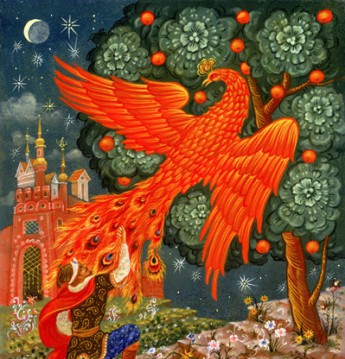
Harry Ashton-Wolfe, true-crime writer of ‘the Golden Age’

ashton-wolfe-3For a bit of fun today I’m republishing a piece of mine that was first published some years ago, about Harry Ashton-Wolfe, an absolutely wonderful–and unintentionally hilarious!–true-crime writer of the so-called ‘Golden Age’ of the detective craze, in the 1920’s and 30’s. He inspired one of my own characters in The Case of the Diamond Shadow-and to all crime writers out there, he’s really worth rediscovering!

So here’s the article, below. Enjoy!

Harry Ashton-Wolfe

Some of my favourite book finds have come into my hands not by word of mouth or reviews or prior knowledge but by sheer chance: the eccentric jewel suddenly spotted amongst the lucky-dip gimcrack of  junk shop and school fete, car boot sale and charity shop shelf. And these days, very often in that virtual combination of all those venues, the Internet.

It was thus I made the serendiptous discovery of the priceless but sadly forgotten works of celebrity criminologist and true-crime writer of the 1920’s and early ’30’s, Harry Ashton-Wolfe. Browsing on the Net one day, looking up Conan Doyle sites with the vague notion of Sherlock Holmes appearing in a detective novel for young readers I was planning, I stumbled across a casual reference to a H.Ashton-Wolfe, writer of true-crime adventure bestsellers, who claimed to know not only Holmes’ creator, as well as the leading lights of the French Surete and Scotland Yard, but also just about every famous criminal and outlaw of the day!

Several hurried orders from second-hand bookshops later, I had built up a mini-library of Ashton-Wolfe’s books, with their gorgeously pulpy titles, such as Crimes of Love and Hate, The Thrill of Evil, Outlaws of Modern Days, and The Forgotten Clue. And I plunged into the addictive joys not only of the melodramatic and exotic cases recounted in racy prose, but the vain and boastful character of Ashton-Wolfe himself, which infused the stories with unintentional hilarity. So immediately engaging was this combination that I immediately dropped Sherlock in favour of a certain Philip Woodley-Foxe, whose adventures are legendary, not least to himself. No prizes for guessing who he was based on!

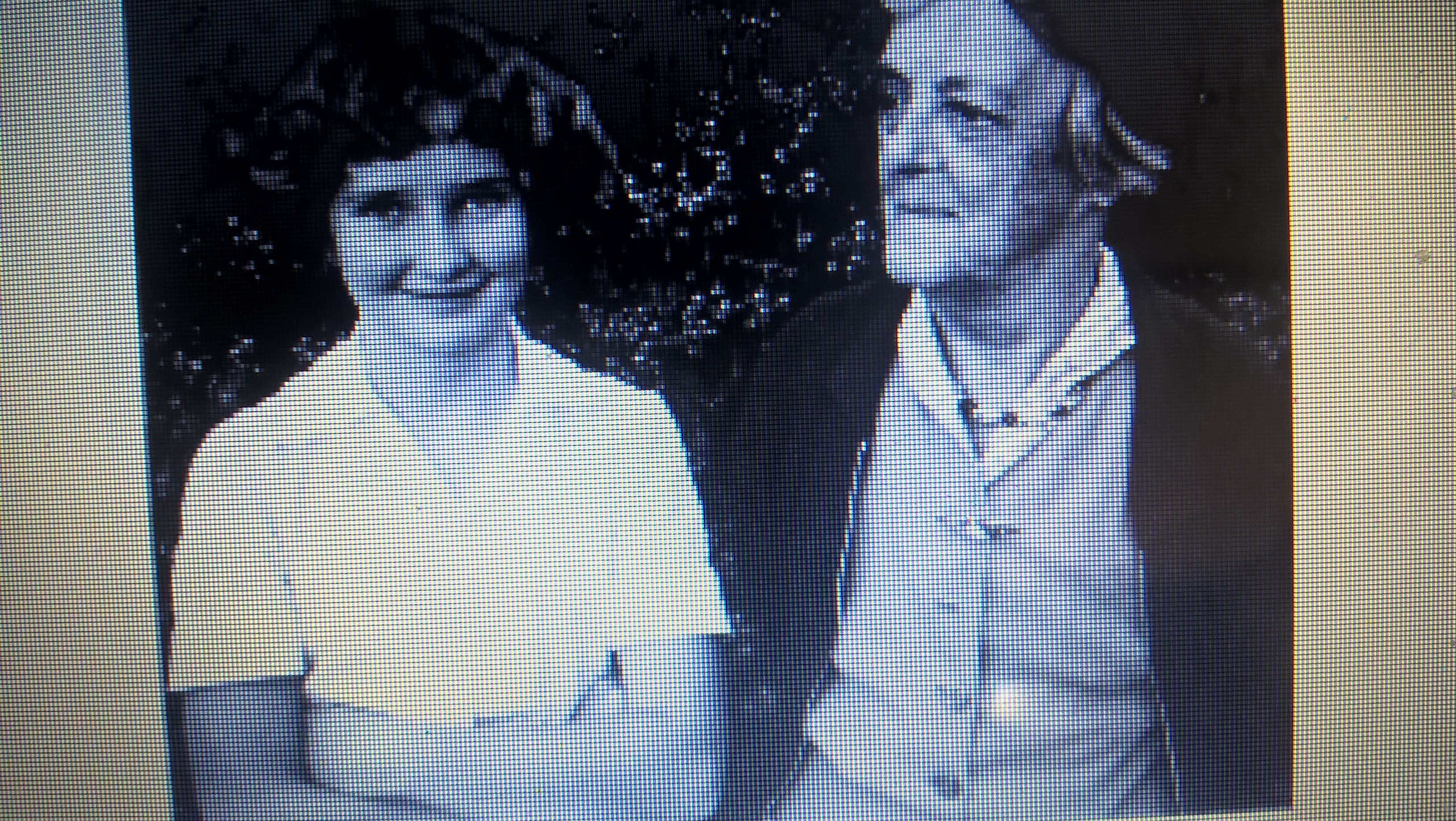
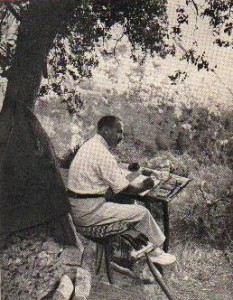
A marvellous combination of Action Man, cheerleader for ‘modern’ scientific detection, adventurous ashton-wolfemaster of disguise and shameless name-dropper, Harry Ashton-Wolfe doesn’t just recount the cases, he inhabits them. He’s an important part of investigating teams in Paris tracking down fiendishly cunning criminals, such as the Eurasian Hanoi Shan; he gets locked up and threatened with death by vicious gangsters; he is at the elbow of the greatest forensic scientists of the day, such as Edmond Locard of the Surete, and earlier, the legendary Alphonse Bertillon; he is allowed to peruse the ”secret archives” of the Paris Prefecture; by chance, he recognises a famous anarchist bandit, Jules Bonnot, as having once been his chauffeur; he dons disguises such as that of a Parisian apache or a Corsican bandit to infiltrate criminal rings(delightfully, his books sometimes include photographs of him in disguise, complete with picturesque hats and moustaches!)
Airily, he recognises that ‘It is rather strange, when I look back, to think how often I have found myself involved in events that later passed into history,’ (The Underworld—a Series of Reminiscences and Adventures in Many Lands), but he doesn’t let that slight improbability deter him in the least. Time after time, he’s in at the kill—helping to nail a vicious poisoner or uncovering a sensational tranvestite murder or catching a crook who’s passing off fake diamonds. He describes the most sensational murder methods—such as kittens whose claws have been tipped with deadly tetanus baccili; centipedes used as murder weapons; and in an echo of Edgar Allan Poe, an ape trained to kill! Rather scathing about most detective fiction—aside from Conan Doyle’s, to whom he dedicated Outlaws of Modern Days—he nevertheless uses every trick of sensational fiction, including catchy titles, breathless first-person narration, cheesy dialogue and moralising asides. He offers titillating portraits of famous murderers, gangsters and outlaws, and lovingly sketched examples of criminal wickedness. But there’s always a moral: not only are these bad people bad, but they will inevitably be brought to book by the superior methods of modern scientific crime-fighting. His touching faith in these methods—which he describes in detail in The Forgotten Clue– is such that he is convinced they will shortly put ashton-wolfe-2an end to all crime.

Mostly, he writes about modern cases(at least, from the 1890’s onwards) but in Tales of Terror—True Stories of Immortal Crimes, he looks at older real-life mysteries fictionalised by writers such as Alexandre Dumas: the Man in the Iron Mask, the Count of Monte-Cristo, the Affair of the Diamond Necklace…You get the distinct impression that he thinks modern scientific methods would surely have made short work of elucidating them!

So who was H.Ashton-Wolfe, this tireless go-getter chronicler of crime? In The Underworld he offers something of an  autobiography, and colourful it is too (sample chapter titles: The Episode of the Clairvoyant Countess’, ‘La Glu—Apache and Gentleman’; ‘The Motor Bandits’; The Blue Anchor Mystery’). He was born in 1881, of a Scottish father who had emigrated to New Mexico and who as a US soldier had participated in the historic final stand of the Sioux under Sitting Bull. His mother was an American, of half-Scottish, half-Spanish blood(Ashton-Wolfe makes much of this ”gipsy strain” which made him a ”wanderer, restless and ever seeking after excitement and novelty.”) Young Harry was born in London whilst his parents were on a visit there but he spent his childhood on the ‘prairies of Arizona and Colorado’—in The Forgotten Clue he also writes about how he was taught to ride and shoot there by “the red-skinned Sioux warriors, who, strangely enough, enjoyed showing a white boy their tricks”–then sent to school in Denver till the age of 14. He was then packed off to a boarding-school in Cannes, and thence to university in Heidelberg—giving him, as he points out, an unrivalled facility in three languages, and the love of travel, not to speak of European glamour to add to American derring-do.

But it’s a youthful holiday in Monte-Carlo that introduces him to his future career when, on nightly visits to the Casino, he befriends a ”dapper little Frenchman” , Monsieur Blanchard, who enlists his help in watching another gambler—an American named Big Jim Cowley. Of course, M. Blanchard turns out to be from the Surete, Big Jim is soon unmasked as a crook of the first order, and the adventure not only whets Ashton-Wolfe’s appetite for more excitement, but sees him eventually accepted as assistant to Dr Alphonse Bertillon, in Paris, working with him on many extraordinary cases. In this capacity, he also collaborates on occasion with detectives from Scotland Yard and the US. Later, due to his familiarity with foreign languages, he acts as ”interpreter to the civil and criminal courts” in Britain–in which capacity he appears to have written many of his books.

Perhaps he might have been able to retire though, for his books were best-sellers in the genre, going through many editions worldwide, and garnering glowing reviews: ‘Out-thrilling the thrillers’–‘Exciting studies in international crime’–‘Unsurpassed as a narrator of authentic crime stories’. The public’s appetite for true as well as fictional crime in the Golden Age of the detective novel was huge, and as well as his books, Ashton-Wolfe wrote articles for magazines such as The Strand as well as the true-crime magazines which flourished in the Golden Age of the detective novel. And his stories influenced other contemporary writers. For instance, ‘Sapper’, the creator of the Bulldog Drummond adventure series, was inspired by two of Ashton-Wolfe’s cases: the diabolical Hanoi Shan, and the anarchist bandits Jules Bonnot and Octave Garnier, for his 1929 novel,  The Temple Tower(as well as basing a character, Victor Matthews, on Ashton-Wolfe himself). And in a nice touch, Conan Doyle himself used a story recounted in Crimes of Love and Hate, about an Italian swindler who claimed to have created a death ray, as the basis for one of his Professor Challenger stories, The Disintegration Machine.

Ashton-Wolfe’s work was also the basis for a popular pot-boiler film, Secrets of the French Police(1932), where he is credited as writer. Other films may have been planned; but questions as to the authenticity of his recitals began to surface, and no others were produced. As well, with his style beginning to seem old-fashioned, his books started to fall out of favour, and eventually were forgotten so completely that not a single one remains in print.

Just how much—or how little–of his biography, let alone his claimed exploits, is authentic, I have no idea. Much of it, I suspect, needs to be taken with a fairly large grain of salt. Trying to find information that isn’t part of the persona Ashton-Wolfe built for himself is like trying to write on water. But it doesn’t really matter. For the books are truly wonderful period pieces, some of which  deserve to be reprinted in their full glory, cheesy photographs and all.

Interview with Anthony Horowitz

anthonyhorowitz06 (1)Today, I am absolutely delighted to present a great interview I did very recently with the multi-talented British author, Anthony Horowitz, starting with the creation of his current TV series, New Blood, and moving on to talk about his books and other projects. Known worldwide both for his book and screen writing, Anthony’s extensive creative credits include the Alex Rider best-selling spy series for young adults, the very successful long-running TV crime series, Foyle’s War, set in World War Two, penning the latest Bond novel as well as two Sherlock Holmes novels, many excellent books for young adults and younger readers including the Diamond Brothers series, the creation of gripping TV mini-series such as Collision and Injustice, plays such as the recent Dinner with Saddam, and the writing of many episodes of such classic TV series as Poirot and Midsomer Murders. In his ‘spare time’ Anthony also writes the occasional travel piece and newspaper article.

I’ve known Anthony for many years, since the publication of the first Alex Rider book in 2000, when I interviewed him for a magazine article, and we subsequently became friends. Over the years, we’ve frequently corresponded and caught up in person when possible, in London when I happen to be there or Sydney, when he happens to be there.

And over the years, we’ve exchanged not only personal news, but frank and wide-ranging views about books, the writing life, and the publishing industry. Anthony always has interesting things to say: lively and thoughtful, he also has wide cultural references and a generous clarity.  And his discussion of his own work, as you’ll see in this interview, is equally interesting, giving an insight into the imaginative passion and deft skill that are behind his extraordinary success as a writer.

Swapping books, Sydney 2015

Swapping books, Sydney 2015

Anthony, your current TV series, New Blood, has been airing on ABC TV here in Australia, after having been broadcast in Britain by the BBC. It’s had excellent reviews both from media outlets and individual viewers. Are you pleased with how it’s gone so far?

Broadly speaking, the response to New Blood has been fantastic. I set out to write a show that would break away from the dark, violent world of Scandi-noir and just give people an hour of TV that was enjoyable and entertaining – and I think we largely succeeded. That said, we haven’t yet heard if there will be a second series so I’m forced to reserve judgement…at least for a while.

How did you come up with the idea for the series?

For a long time, I’ve wanted to write about the so-called Y generation, the young people who, for the first time in history, may be worse off, with fewer opportunities than their parents. In London, in particular, there are real challenges. Getting a house. Getting a full-time job. Paying off tuition fees. This was my starting point. At the same time, I was thinking about ways to shake up the crime/police procedural genre. I was tired of middle-aged men with drink/marriage problems. I had this idea for an opening shot. A body is found in the street. A car pulls up. A grizzled detective gets out…but the camera slides past him and finds the young cop who’s standing in the rain, trying to keep the crowd under control. My show would be about that cop. It also occurred to me that all crime shows take place in one department. It might be vice, drugs, MI6…whatever. But what would happen if you had two departments – the police and the Serious Fraud Office? From that point, I began to think of a bromance – two young investigators who don’t know each other but who form a team, working outside the rules. This may all sound a little vague but I’m describing my thought process as best I can!

New Blood breaks refreshingly new ground in its portrayal of the two main characters, Rash and Stefan, young Londoners respectively of Iranian and Polish backgrounds. What I loved particularly, as someone who also grew up with a similar kind of double cultural world, is the fact both Rash and Stefan are comfortable with who they are, yet are also aware of other people’s misperceptions. They navigate their different worlds with a familiar yet never complacent ease, with certain things about their family/cultural backgrounds subtly brought new bloodout, yet never stereotyped. How did you go about creating these characters to make them feel so immediately authentic? And what part did finding the right actors for the roles–the excellent pair of Ben Tavossoli and Mark Strepan–have in that creation?

Thank you for this observation. Yes, I love the fact that London, more than almost any city in the world, is completely relaxed about its multi-cultural, multi-ethnic make-up. I knew from the start that my two main characters would be Eastern European and Iranian. It just struck me as fresh and modern. Rash was based on my son’s flat-mate who is himself Iranian and long before I started writing, I talked to him about his background and his experience of life in the UK. He actually appears as an extra in the fourth episode! We did our best to avoid the obvious stereotypes with both characters. Most young Londoners are just that. They’re young and they’re Londoners before you start layering in religion, politics, sexuality or whatever. As to casting, I always knew that the show would stand or fall by our choice of the two actors and I was very insistent that we shouldn’t cheat, that we should find the real thing….which we did! It was essential that the two actors should have a real chemistry. We cast Mark first…he has Polish blood and matched the character exactly. Then, when Ben came along (most of the parts he’d been offered until we came along were “young terrorist”!) we saw that the two fitted together perfectly. They became great friends almost at once and that friendship has continued throughout the filming and beyond. I cannot tell you how pleased I am with their performances and if I have one hope it’s that they’ll become the stars they deserve to be.

You have a stellar career as a writer both for screen and books. Do you have a preference for either form? Or does it depend on the story?

I love all my writing equally. I think that it’s impossible to write well without passion. That said, of all the writing I have done, I probably value my YA books – Alex Rider in particular – the most. Why? Because reading, a love of books can change your life. I meet so many adults now who grew up with Alex that I feel very proud to have been a small part of their lives.

Your most recent book for adults was Trigger Mortis, a new James Bond adventure, and before that, you penned two new Sherlock Holmes adventures, The House of Silk and Moriarty. What’s it like, writing new adventures for such classic characters? How do you keep true to the Sherlockian or Bond corpus whilst staying true to your own identity as a writer? And which of those characters did you most enjoy recreating?

Trigger Mortis by Anthony Horowitz.jpgI only wrote the two Holmes novels and the Bond novel because I so love the originals. These are what influenced me when I was in my teens. I loved writing all three books (see question 4). You ask how I keep my own identity but actually I don’t. I see it as an act of literary ventriloquism. Essentially I have to be invisible, I have to hide inside the world of the original creators, obeying the rules, doing nothing that will annoy/upset their worldwide fans. At the same time, I have to raise my game. How can I possibly write as well as Fleming or Doyle? I probably found Sherlock Holmes the easier of the two characters because he’s more distant: the world of the late 19th century is much more easily defined than the cold war. Bond comes with certain challenges…marrying some of the attitudes and values of his world with modern sensibilities. But I began all three books with nothing but admiration of the original authors and a determination to serve them as well as I could. It was a wonderful experience, spending six or seven months living with their brilliant creations.

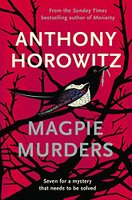
You’ve recently finished writing a new crime novel, Magpie Murders. Can you tell me something about it? When is it out?

magpie murdersMagpie Murders is my next adult novel, being published by Orion in October. It’s both a whodunnit and an exploration into whodunnits – in particular, the relationship between the detective, the author and the reader. It’s partly inspired by Conan Doyle’s very mixed feelings about Sherlock Holmes! The book is in two parts. The first is set in the very Agatha Christie landscape of an English village in the 1950s where a detective called Atticus Pünd, a survivor of the concentration camps, investigates the murder of a local landowner. ..Sir Magnus Pye. The second part takes place in London in the present day and concerns an editor, Susan Ryeland, who is forced to investigate the death of one of her authors when the final pages of his latest manuscript go missing.  The fun of the book comes when those two worlds collide…and there are not just one but two very twisty mysteries to be solved. I’m very pleased that nobody has managed to guess the ending yet! I think it’s the most cunning book I’ve yet written.

Your Alex Rider series of spy novels for young readers have been big bestsellers, but the series was deemed to have ended with Scorpia Rising (with Russian Roulette being a spin-off). So I was excited and intrigued to hear that you are in the middle of writing a new Alex Rider adventure. What decided you to take up Alex’s story again? And how does it feel, being back in his world?

Last year my publisher asked me to pull together all the Alex Rider short stories for a collection. scorpia risingThey’d been published in newspapers and magazines and elsewhere. So I started work – but then two things happened. I realised that some of the early stories weren’t good enough. And there also weren’t enough of them. So – just for fun, really – I wrote a new story, Alex in Afghanistan…and suddenly I discovered that I loved writing about Alex and that I had missed him. I really was quite surprised. For what it’s worth, I think Alex in Afghanistan is the best story I’ve written. It’s only 15,000 words but it’s full of action and surprises. I wrote two more new stories and in doing do, I unlocked something and realised that, contrary to what I’d always said, there was an eleventh novel inside me. Well, I’m 40,000 words in and I think it’s going very well. It starts in San Francisco (where Scorpia Rising ended) and then moves to Egypt, the South of France and the UK. My publishers won’t allow me to say any more!

As well as being a wonderful fiction writer in all those genres, you are a great traveller and sometimes write about those travels in newspaper pieces. What kinds of things do you concentrate on when trying to distill the essence of a travel experience in the few words of a newspaper column?

Again, thank you for these kind words. I write travel pieces for an English newspaper largely for fun (the money goes to charity) and also to keep myself on my toes. I’m no expert and I try to avoid being negative. It’s really just a record of my feelings, hopefully written in an entertaining way. When I read a great book, my first instinct is to shout about it, to get people to share it. I suppose the same goes for the places that I’m fortunate enough to visit.

Anthony’s website.

Facebook author page.

Twitter page.


Taking the independent road: an interview with Jon Appleton

Jon_AppletonI’ve known Jon Appleton a long time: since I was a pretty newly-published writer, and he was an articulate teenager passionate about books and writing to the extent that while still at school he founded, wrote, and edited a fabulous magazine called Rippa Reading. Since those days, Jon has gone on to have a stellar career as a publisher, in Sydney and in London, working with great authors and illustrators. And now he’s embarking on a new challenge–taking the independent road, as a new author and self-publisher.

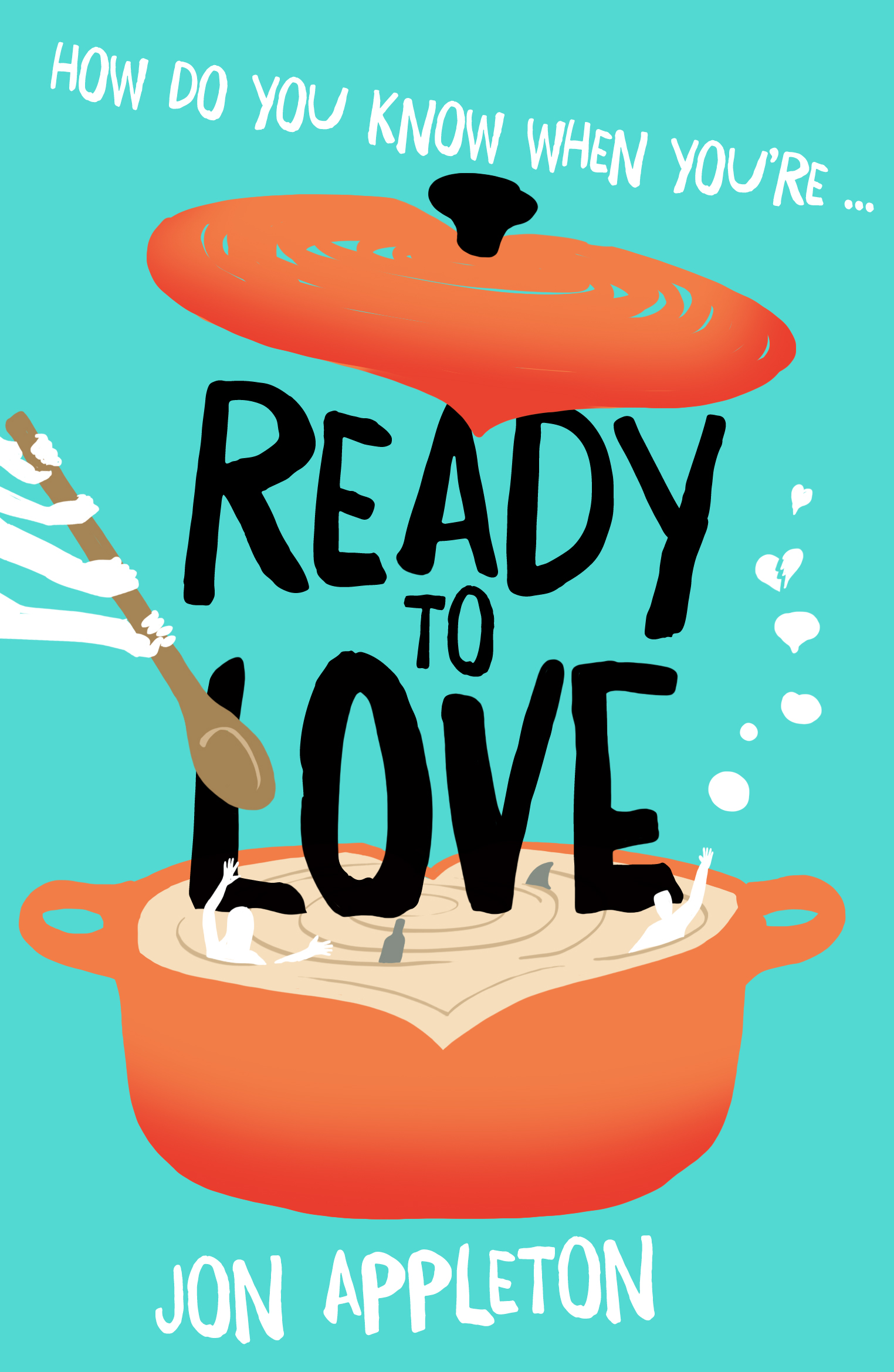
First of all, Jon, congratulations on the release of your first novel, Ready to Love! Can you tell us a bit about it, and its road to publication? 

Thanks, Sophie! Ready to Love is about the way we see ourselves and how we think other people see us, and the different kinds of attachments we form to those around us: family, friends, lovers, colleagues. Ultimately, it’s a rom-com.

Its London setting is quite important to me, and I began the book when I was living in Australia for a year in 2011, feeling quite homesick. I put it aside for twelve months when I came back to England, and then returned to it, working on it continuously for the next two-and-a-half-years.

Comedy is difficult to pitch to agents and publishers, I’m told, because it’s not viewed as a commercial genre. (Of course, we can all think of exceptions!) But I submitted it to agents nonetheless. Quite a few never replied (which I took to mean a ‘no’) but of those who did, several responded encouragingly from a reader’s perspective. I thought, ‘If only I could get past the gatekeepers, to readers, they would enjoy it too.’

Working in publishing, so much of my time was spent rejecting really good books (for reasons not dissimilar from those by which my own work had been rejected), and it was quite dispiriting dishing out ‘no’s all day only to come home to more ‘no’s from the other side of the desk. So I looked into the self-publishing option.

I knew the stigma of self-publishing has lessened dramatically in recent years. At the London Book Fair, there is a whole corner devoted to independent publishing that is reported on and taken very seriously. The timing was right.

I found the right outlet – Clays, the printer, recently established an independent publishing strand of their business – and began the process.

Putting together a book, from manuscript to finished product, is something you have a lot of experience of, in terms of other people’s work. But what was it like being in charge of your own?

I love the completeness of publishing a book – from discussing the concept with the author through to sending them advance copies. So the process of getting Ready to Love was extremely satisfying because I took a very hands-on route. Clays put me in touch with editors, designers, typesetters, Nielsen (who handled the bibliographic data), etc, but I did the legwork. It really helped maintain a sense of ownership of the process.

I sometimes think that writers feel they hand over their work without fully understanding the process – and why should they? But they can always ask! – and feel they’re being excluded. It’s never worse than when a book ends up with a cover a writer doesn’t like and the book fails to make it onto shortlists or in-store promotions. The author feels a sense of surrender when, in fact, the publisher really is on their side – or means to be.

I made all the decisions so I felt very much in control. Let’s hope I made the right decisions …9780993547317

You have just moved from the corporate publishing world to becoming a freelance, independent author/publisher. What has that move been like–the challenges and the pleasures? 

I’ve known so many authors – and freelancers – that I’ve always felt I sort of knew what it was like to be them. I appreciated how isolated authors could feel. I’d sit at my desk, and suddenly think, ‘Haven’t heard from Author X for a while. Wonder what they’re up to …’ and get in touch – particularly in the long periods when there wasn’t anything formal to do on their current book.

That’s changed, in recent years: there’s always something to do on a book, especially after it’s been published. You can revise your Amazon profile or write a blog, or reach out to potential new readers on Twitter. I’ve spent a lot of time in the past couple of years encouraging writers to be active on social media – and we’ve spent more time than ever on revising synopses and pitches (because, for many authors, it is harder to get published than ever before).

Now I’m learning, first-hand, exactly what all that entails. The main thing I’ve learned is to be focused and to think always: ‘What am I trying to do? Who am I trying to reach? What kind of writer/publisher do I want to be?’ I’ve got a blog that explores these questions – www.jonappletonsbooks.com – and it’s very much an exploration and I’d love people to join in. There are no finite, permanent answers!

You worked for a long time as a children’s publisher: but as an author, you are writing adult novels. Do you think your publishing experience has influenced your writing in any way? 

I think I realised early in my career that I love children’s books because I love the idea of children being confident and able through literacy, and cherishing the books they read when young their whole life through. I really like helping an author shape the sound of the voice of, say, an eleven-year-old boy. But I have no interest in trying to locate that youthful voice myself. I’m not one of those children’s editors who read only children’s books. My adult, reading self is nourished by other books which are more akin to the novels I want to write, and write about.

As a teenager you founded a respected literary magazine, Rippa Reading, which focused on books and authors. Can you tell readers about that, and some of your favourite stories from that time?

Rippa Reading was a fan magazine for authors which I began in late 1986 and edited until the end of 1995, just before I moved from Sydney to London. It was published and supported by my old school, SCECGS Redlands and, joyfully, the entire children’s publishing industry. It was an amazing time for which I am hugely grateful.

The magazine was born out of my desire to be a writer and to find out what writers were like, and it led to my career in publishing. Undoubtedly, it was inspired by The School Magazine which not only presented the best in new writing but made its creators available to readers through the magazine’s pages and especially to me with personal friendships with the staff.

There are so many highlights and stories from that time – genuine friendships with brilliant, creative people, many of whom now are no longer with us, but other connections endure 30 years later, like our own! It was fun being part of the CBC committee and appearing on TV and radio to talk about new books. It was an honour to receive awards, and even more so to be an early fan of brilliant new voices, like Jackie French to whom I was introduced by the wonderful Cathie Tasker (through whom you and I met, Sophie!), who was then at HarperCollins and Ursula Dubosarsky, who once taught at Redlands.

But the story I want to share now makes me happy because it brings my connection to Australian children’s books more or less up to date. When I joined Hachette Australia as Children’s Publisher at the end of 2010, I finally got the chance to publish books by Australian authors and illustrators – some of them award-winners but others, excitingly who were new to the industry. The concept for a children’s edition of the bestselling book about Tom Kruse the outback mailman had lingered for some time, but the concept hadn’t been fully realised, nor, crucially, the right illustrator found. I remembered Tim Ide from when I’d done work experience at Omnibus Books back in 1990. (Jane Covernton, who established Omnibus with Sue Williams, was always hugely supportive of Rippa Reading.) One afternoon at Omnibus, I’d been lucky enough to be taken to tea by Tim and Max Fatchen to celebrate their new book, A Country Christmas, which perfectly evoked the South Australian countryside in years gone by. So, many years later, I got in touch with Tim he agreed to work on the book. At that point, everyone in-house (and the author!) felt energised by the project, and it went on to win the Eve Pownall Award in 2012.

What’s your view on the situation for authors, and publishing today–the issues and the opportunities?

For the majority of writers, it’s tough to make a living. The obstacles are numerous: small advances, a paucity of review space, overstretched marketing budgets. More than ever, authors are expected to sell their own books – whether they publish independently, or through a mainstream publisher. That doesn’t suit everyone, I realise, but I do think that, usually, the author is his or her book’s best advocate, so it makes sense. And there are so many ways for authors to engage with readers – it’s not all about author visits and festivals. Authors need to be authorpreneurial, a term I hear a lot now. It takes time away from creative work, of course, but it’s necessary. It’s part of being a writer.

What are you working on next?

I’m planning a new novel, but I’m really aware of the need to make the most of the opportunity created by publishing Ready to Love. So I’m very happy to write about it or talk about it and to engage with people – anywhere! – in the hope that they might choose to read it, and to be receptive to further novels by me. At a practical level, I’d like to recoup some of the cost of publishing it by selling subsidiary rights – audio, translation, US and Canada and, of course, Australia!

I’m also in dialogue with writers’ groups and students who need help not just with writing, but preparing themselves for a writing life. People are aware of the challenges I outlined above (and many others), and part of my new work portfolio is helping them find ways to pitch themselves successfully and achieve an audience in the face of these challenges.

Small Beginnings 18: George Ivanoff

george_1984

In 1984

Later this year I will have a story published in The X Files: Secret Agendas, an official tie-in anthology for the television series. So it seems like a good time to reflect upon how writing fan fiction within the universes of my favourite television shows and movies, sparked off my interest in writing.

Long before I even entertained the possibility of being professionally published — in the dim, distant days of the 1970s — I was enthralled by a television series called Doctor Who. I discovered it in late primary school and became… just a little bit obsessed with it. I would watch it every weeknight on the ABC; I would collect and read (and re-read) the episode novelisations; I would pore over the tie-in magazines; and most importantly, I would dream up my own storylines.

It wasn’t long before I began tapping out ideas on my family’s old manual typewriter. I wrote stories and scripts, and even indulged in some illustrating – mostly for my own amusement. I found it all so indescribably exciting and empowering.

A little later, I discovered that there were other people just as obsessed as me. I joined the Doctor Who Fan Club of Victoria (which is still in existence, by the way) and inundated the organisers with my artistic creations. From there, I went on to join a swag of other fan clubs dedicated to all thing sci-fi, from Star Trek to Star Wars.

In high school — in the slightly brighter, and not quite so distant 1980s — I was lucky enough to spend a whole term on creative writing in English class one year. This is where I discovered that I really loved making stuff up. I learned about the craft of story writing (you know… that whole ‘beginning, middle and end’ thing); and although I now also wrote my own original stories, I still focused mostly on Doctor Who and Star Trek.fanfic

It was this fan-fic that gave me my first amateur publications – a huge boost in confidence and a thrilling taste of what it was like to have others read my writing. I wrote more and more stories for these fanzines, and even ended up editing a few myself. It was a wonderful training ground in which to develop my skills and an enormous encouragement.

Eventually, many years later in the 1990s, I would make my first professional sale. And many years after that, in 2008, I would have a story published in Short Trips: Defining Patterns, an officially licensed Doctor Who anthology. [insert fanboy squee-ing] Things have progressed well. But I will never forget that it was the creation of those early fan stories that ignited my interest in writing. Reading them now, after all these years, I can say without a doubt that they are truly awful (I don’t mean just a little bit bad – they are gobsmackingly atrocious) – but, nevertheless, their importance to me is undeniable and unquantifiable… and I look back on them with much fondness.


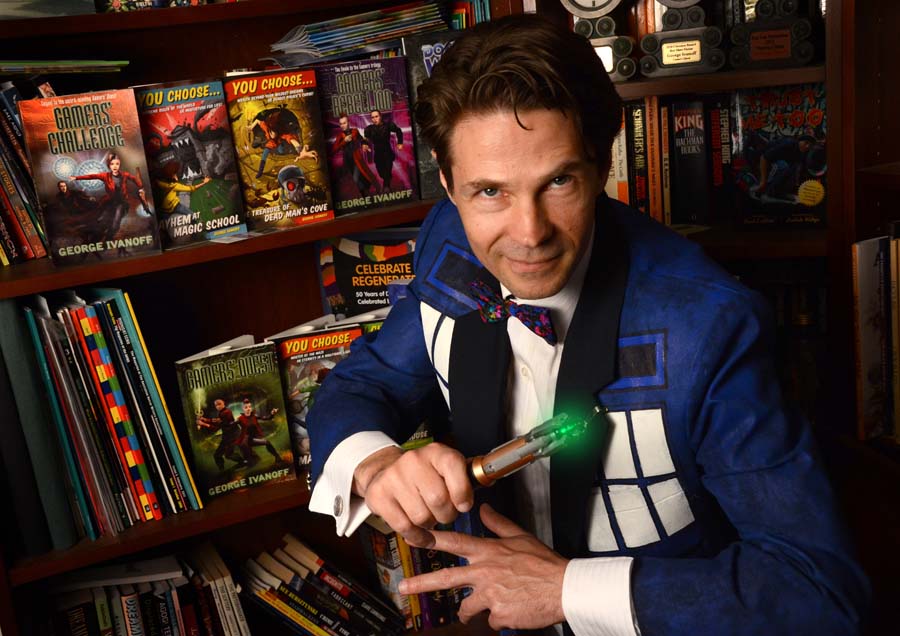
george_2014George Ivanoff is an author and stay-at-home dad residing in Melbourne. He has written more than 90 books for kids and teens, including school readers, non-fiction books and novels. He is best known for the RFDS Adventures, the You Choose series and the Gamers trilogy. You Choose: The Treasure of Dead Man’s Cove won the 2015 Fiction for Younger Readers YABBA. You Choose: Alien Invaders From Beyond the Stars has been shortlisted for the same award in 2016.

George drinks too much coffee, eats too much chocolate and watches too much Doctor Who. Check out his website: http://georgeivanoff.com.au

Small Beginnings 17: Meredith Costain

I was lucky enough to grow up in a house full of books. Stories were shared regularly around the kitchen table, and we were all encouraged to read verse out loud, particularly the works of A A Milne (‘James James Morrison Morrison Weatherby George Dupree’), Alfred Noyes (‘The highwayman came riding, riding . . . up to the old inn-door’)  and Hilaire Belloc (‘Matilda, Who Told Lies and was Burned to Death’).

So my head was always full of stories and words, rhythm and rhyme. Poems jumped into my brain when I was riding my bike to school along the banks of the Bunyip River (which is a story in itself!). I’d repeat them over and over until I knew them off by heart, then, when I got home, I’d grab an old exercise book and race up to the hay stack so I could scribble them down in private.


The girl, the bike and the haystack..

The girl, the bike and the haystack..

My early attempts at poetry were very much doggerel (and catterel!) and usually about animals.

Penelope was a pig

One day she ate a fig

She wasn’t fond of it

So she threw it in a pit

Naughty Penelope!

Then, when I was about eight, I sent in a longer poem called My Little Creek to the Junior Age section of The Age newspaper. Not only did they print it, they paid me 17 shillings and sixpence for it – a fortune back in the days when it took you and your brother six months of saving up your sixpence a week ‘job’ money to buy a Monopoly set.

It was my first paid publication – and I was determined it wouldn’t be my last. I sat in my bedroom munching on toasted cheese sandwiches, solemnly resolving there and then that I would become ‘A Writer’ when I grew up. I even had a ‘writerly’ pen name picked out – Gemma Craven – and a publisher – Penguin – whose Puffin books were among my favourites at the time. Especially Noel Streatfeild’s Ballet Shoes and Ivan Southall’s Ash Road and Hills End.

I kept writing poetry all through school, but most of it gushed out in Year 11 and 12 – pages and pages of teenage angst poetry when I should have been studying instead. And I wrote a long spoof of the Canterbury Tales based on the teachers at my school for our school magazine.


Still writing in exercise books after all those years..

Still writing in exercise books after all those years..


I enjoyed other kinds of writing as well. My cousins (who lived across the paddock) and I started our own newspaper called The Thrilling Three when were about nine or ten. It was full of interviews with the farm animals (how many eggs had been laid that day) and other important goings on. I wrote play scripts for my friends to perform at lunchtimes at school (complete with sound effects). And I started a romantic novel when I was eleven, called Those Who Wait, which sadly never developed past the first chapter.

It was all great practice for when I did finally grow up (highly questionable!) and became A Writer for real. And then strange things began to happen. I was asked to use a pen name for my first published book, Hot Licks, which was part of the Dolly Fiction series. There was already a well-known English actor called Gemma Craven by then, so I changed the Craven part to Carey instead.

The doggerel and catterel fed into my book of poems for the very young, Doodledum Dancing, published by . . . Penguin!

ddd latest020

And one night at a literary dinner, I met my childhood idol, Ivan Southall, who agreed to let me visit his home to interview him for a children’s magazine I was editing. And he made me a toasted cheese sandwich!!! 


Meredith Costain is a versatile writer whose work ranges from picture books through to novels, poetry and narrative non-fiction. Her books include CBCA Honour Book Doodledum Dancing, Mummies are Lovely, novelisations of Dance Academy, and the quirky illustrated series, The Ella Diaries. She enjoys presenting writing workshops in libraries and schools. Visit her (and meet her many pets!) at www.meredithcostain.com


0 Opening slide

Small Beginnings 16: Gillian Rubinstein(Lian Hearn)

Jocelyn & Gillian

With my sister

My father loved poetry and had a store of favourite lines. He also knew a lot of Shakespeare by heart, and all the words to Gilbert and Sullivan songs. Books on the shelves that influenced me – because I read them over and over again – included the blue bound Oxford Books: Light Verse, Ballads and English Verse. Many I didn’t understand, some I found boring, others remained mostly unfathomable, being in dialect. But I loved their mystery and their fierce emotions. My favourite poems were Sir Patrick Spens, the Golden Vanity and the Lyke-Wake Dirge.

Making up rhymes came naturally to me. Some are still famous in my family – an early masterpiece for example about Jim my friend (a dog). I made up stories but mostly it was too much trouble to write them down, so my friends and I played them out sometimes over weeks.

Fragments of poems I wrote still remain in my memory. This is from an epic on the coming of the Romans to Britain (I was 12)

Just after dawn we came in sight of land

Dim in the morning mist on either hand

Lay strange white cliffs rising up from a stony shore

The rest has disappeared, except for the final line:


And we followed him and that great eagle on the standard that he bore

Just before my 15th birthday I went for my first time to Nigeria. I would spend six weeks here every year for the next seven years. It was only two months since my father’s sudden death. I wrote a poem about vultures which appeared in the school magazine.

But the glory of it when they fly

Carving circles in a lapis lazuli sky

In utter timelessness they wheel and climb

Their element is eternity not time.

Drifting on air, effortless and slow

The vultures fly and men below

Go on living and loving and dying

Blind to the beauty of the vultures flying.

Family

Family

When I was 15 I won a prize (3rd) at school in a short story competition. My story was about a man who becomes a priest so he can kill his lover’s husband and not be punished beyond being excommunicated. But he finds his true love is God, so his punishment in the end becomes worse than death. The judge’s comment was ‘write about what you know’. But I’ve never really followed that advice.


Gillian Rubinstein was born in England and has lived in Australia since 1973. Her first book, Space Demons, was published in 1986 and she produced many works for children of all ages until 2002, when the first book of the Tales of the Otori appeared under the name Lian Hearn. As well as the five books in this series, she has also written two historical novels set in 19th century Japan. Her latest book is The Tale of Shikanoko which is coming out in two parts in 2016: Emperor of the Eight Islands  and Lord of the Darkwood.

Small Beginnings, 15: Belinda Murrell

Me(left) and my sister Kate(right)

Me and my sister Kate

I grew up in a household full of books. I am the eldest of three children and we were the sort of kids who would dress up as our favourite characters and have sword fights up and down the stairs, or creep through the undergrowth pretending to have adventures. We were often in trouble for falling asleep over our schoolbooks after staying up half the night reading, or getting caught with a book hidden on our laps during maths class.

As a child I read voraciously, borrowing piles of books from both school and the local library every week. We were so lucky because, while we didn’t always have lots of money, my parents always bought us books as presents and rewards. I read stories about ponies, adventure, mystery, fantasy, history, animals, romance, spies, fairy tales and the classics – in fact pretty much anything I could get my hands on.

My very favourite authors were Enid Blyton, particularly the Famous Five and Magic Faraway Tree series, and CS Lewis, and his magical Narnia books. My absolute favourite was probably The Lion, The Witch and The Wardrobe. It was these beloved books which inspired me to start writing when I was about eight.Treasury of poems

I wrote poems and plays, stories and novels that I wrote in exercise books which I’d illustrate by hand. My early ‘books’ had colourful covers, title pages, and were apparently ‘published’ in Paris, London and New York, as well as the North Shore of Sydney!! I also co-authored a number of stories over the years with my younger sister Kate, although she swears I always made her cry by completely re-writing her work with my red pen.

All through school I kept writing stories and poems, and was often thrilled to have them published in the school newsletter. My parents always encouraged my writing, and my mother would often ask us to write a story or a poem as a present for my grandparents or family friends.

I often say that I had the best childhood in the world – a childhood filled with love, adventures, joy and books. So perhaps that is why all three of us grew up to become published authors. My sister Kate Forsyth, is the internationally published, best-selling author of more than 35 books, while my brother, Nick Humphrey, is a lawyer, who has also written ten best-selling business books. One of our greatest joys is still to get together and talk about the books we are writing.

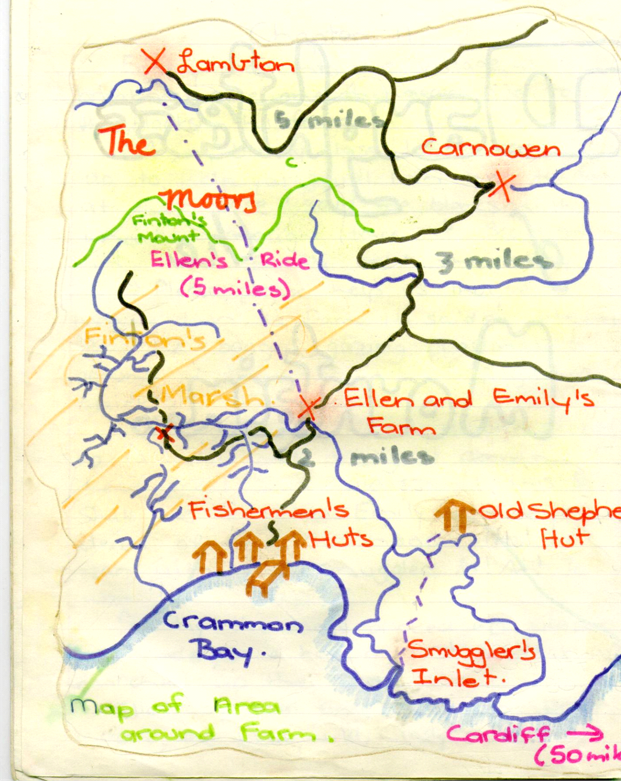
I believe that the books that I loved as a child inspire my writing now. Books that make you laugh out loud, or cry with grief and keep you up all night reading. Books full of adventure and mystery, with characters who are like best friends. Most of all, I hope my books create that magical sense of slipping into another fascinating world, just like Lucie Pevensie when she stepped through the door in the back pnovel 14 mapof the wardrobe and discovered Narnia.

Poem written when I was about 10

My Retreat

Once I found a secret place

Of light and shade and filtered sun

I always seek that secret place

When there is thinking to be done

The fronds of willow brush my face

The soft green grass beneath my feet

And here and there a dairy face

Or buttercup or violet sweet

I’ll always love my secret place

The babbling brook, my tree trunk seat

And if my troubles I can’t face

I’ll hasten back to my retreat

  • Belinda Humphrey


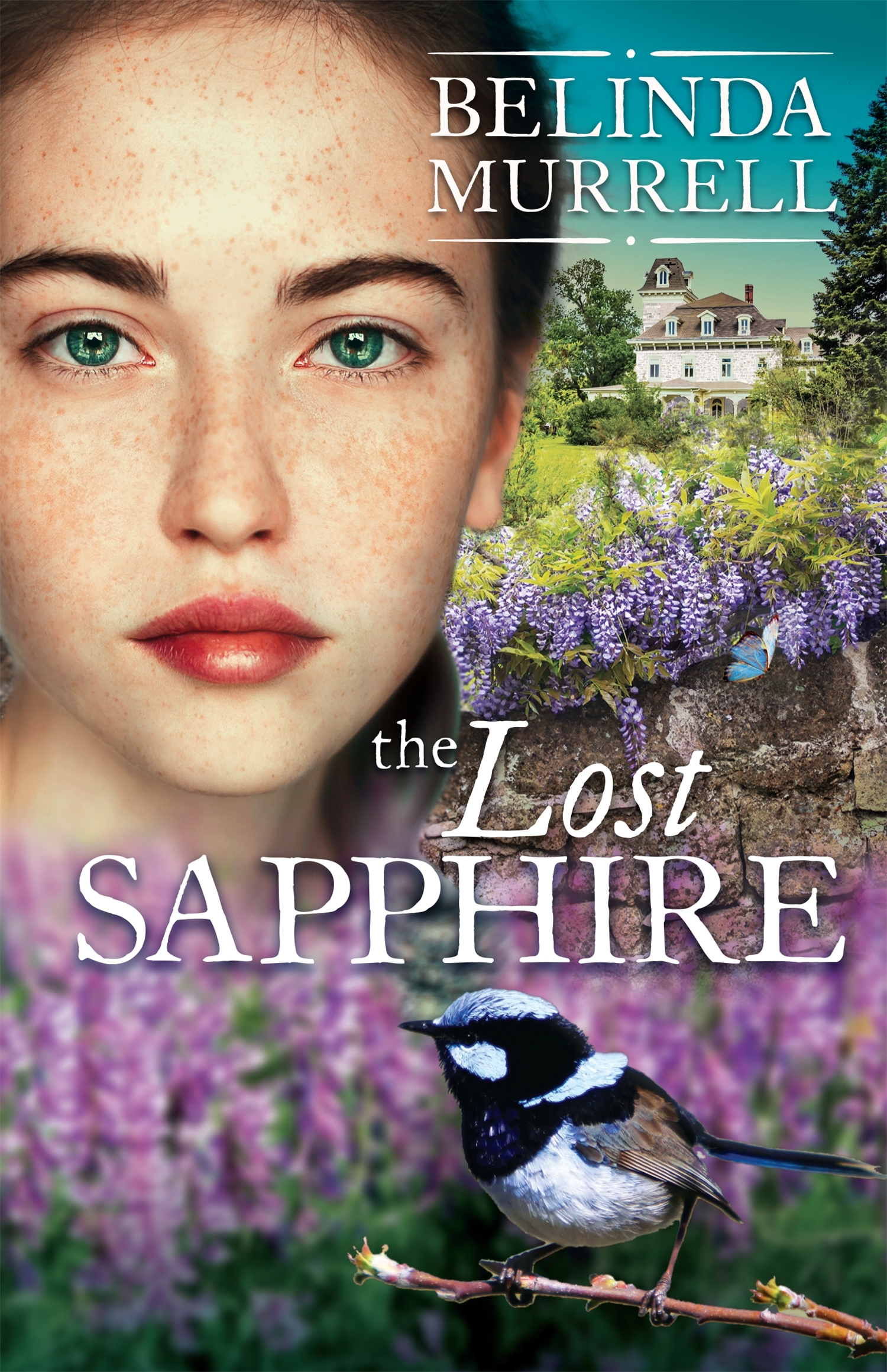
Belinda has just finished writing her 27th book, called The Lost Sapphire.

What is the fascinating secret of a long-lost sapphire ring?

Marli is staying with her dad in Melbourne, and missing her friends. Then she discovers a mystery – a crumbling, abandoned mansion is to be returned to her family after ninety years. Marli sneaks into the locked garden to explore, and meets Luca, a boy who has his own connection to Riversleigh.lost sapphire

A peacock hatbox, a box camera and a key on a velvet ribbon provide clues to what happened long ago . . .

In 1922, Violet is fifteen. Her life is one of privilege, with boating parties, picnics and extravagant balls. An army of servants looks after the family – including new chauffeur Nikolai Petrovich, a young Russian émigré.

Over one summer, Violet must decide what is important to her. Who will her sister choose to marry? What will Violet learn about Melbourne’s slums as she defies her father’s orders to help a friend? And what breathtaking secret is Nikolai hiding?

Violet is determined to control her future. But what will be the price of her rebellion?

Belinda Murrell – Children’s Author

At about the age of eight, Belinda Murrell began writing stirring tales of adventure, mystery and magic in hand illustrated exercise books. Now Belinda is a bestselling, internationally published children’s and YA author with a legion of loyal fans and a history of writing in her family that spans over 200 years. After studying Literature at Macquarie University, Belinda worked as a travel journalist, editor and technical writer. A few years ago, she began writing stories for her own three children – Nick, Emily and Lachlan. Her 27 books include The Sun Sword fantasy trilogy as well as the popular Lulu Bell series for younger readers. She is also known for her collection of historical timeslip tales including The River Charm, The Locket of Dreams, The Forgotten Pearl, and The Ivory Rose, which have been recognised by various awards, including Honour Book KOALAS 2013, shortlisted KOALAS 2015, 2014, 2011, and 2012, CBCA Notable List and highly commended in the PM’s Literary Awards. Her latest book The Lost Sapphire is set in Melbourne in the 1920s. Her website is www.belindamurrell.com.au

BM On rocks

Small Beginnings, 14: Sheryl Gwyther

Small Beginnings–in the wilds of far north Queensland, by Sheryl Gwyther

With sisters and cousin--I'm the cheeky one!

With sisters and cousin–I’m the cheeky one!

Is creativity part of our genetic makeup? Perhaps. But I know for sure – living an unrestricted, happy-go-lucky childhood in far north Queensland in the early 60s was the genesis of my creative life.

I’ve always made things, even when I was small – from doll-houses out of cardboard boxes and miniature furniture out of matchboxes, drawing and painting pictures, to building cubbyhouses in trees that doubled as Tarzan’s home, pirate ships, smugglers’ caves, dragon lairs or a princess’s castle.

My younger sisters (Meryl and Robyn), and I didn’t own many kids’ books. Our Aladdin’s Cave was the Innisfail public library in far north Queensland. It’s where I discovered the joys of Narnia and Enid Blyton el al, and where my journey to being a writer began.

Those stories fed our adventures. Being the eldest of a mob of sisters, cousins and neighbourhood children meant I instigated and led many escapades. We roamed the streets and the scrub surrounding our town on the weekends, dodging ticks, taipans and cane toads, the smell of burning sugarcane in the air – only coming home to eat and sleep.

We were Tarzan swinging from ropes strung in the neighbourhood’s huge tropical fig tree; the Swiss Family Robinson on their deserted island; pirates and smugglers, cowboys and Indians. I told ghost stories to scare the hell out of the littlies; and wrote stories about princesses and witches which we acted out, with me bossing everyone around, of course.Night_page1_writing

Once I pretended to be a journalist – that idea likely came from observing Lois Lane in an early Superman movie we’d seen at the Saturday matinees. I interviewed the milkman and the rubbish-man, with my trusty spiral-bound notebook (bought especially for the occasion) and a pencil behind my ear.

Then one day, at 11-years-old, I discovered a small book my mother had kept from her college days. It was a play about Lady Jane Grey who in 1554 was beheaded after being Queen for a few days – the first time I’d seen the format of how a script was written. What an epiphany! All you had to do was follow the directions.

I guess I must’ve been an over-zealous director. Or the antiquated dialogue was too much. The neighbourhood kids disappeared, then the cousins – until just before we were to put on the play under our stilt house with its hard dirt floor, the only actors left were my two sisters and I. Luckily, the lure of dressing up in costumes was enough Night_page2_writingto enthral and keep them.

The show went on. We gave up trying to follow the play’s real script, making up the words as we went, with great hilarity, giving Lady Jane Grey (me, of course) a truly dramatic send-off.

Memories that spark images in my brain, that feed my stories, even today.

My home territory--crocodile country

My home territory–crocodile country

Small Beginnings 13: Emma Viskic

Aged about 12

Aged about 12

I grew up in a half-built suburb on the outskirts of Melbourne. Stories lurked everywhere: in the swamp at the bottom of the hill, the building sites surrounding my home, and the endless, awkward hours at school. Once I learned to read, I began writing the stories down. As an eleven-year-old heathen, I talked my way out of the weekly RE class in order to write in the library. Those hours bashing away on the librarian’s clunky Olivetti typewriter were my happiest at school.

Photo on 21-05-2016 at 7.55 pm

From the ms in question!

I wrote everything: fantasy and science fiction, thrillers and spy stories, including a John le Carré rip off, complete with atrocious English accents: “Beany, the drug operation’s gone rotten, the tip off was a bad egg, a no goer.” But a common thread ran through it all, and is still central to my work today—the observing outsider. In going through my writing for this blog, I unearthed a story from primary school about a blind man; one from my early teens with mute protagonist; and, from my late teens, one featuring a girl who becomes invisible: I spent the day watching, observing others’ blindness of me. I was unnoticed, unseen. I was invisible. I said not one word the entire day. No-one noticed.”


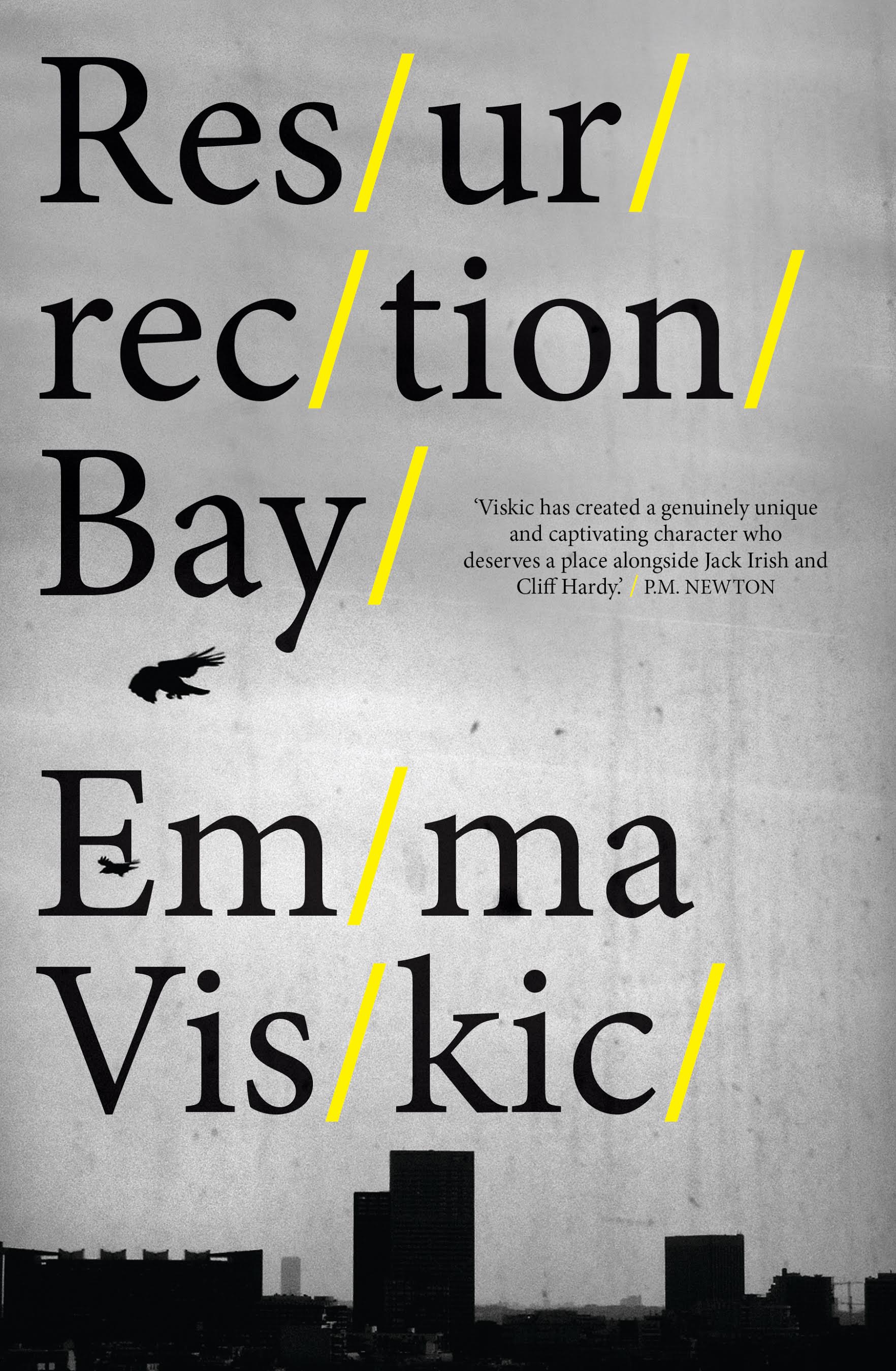
Last year my debut novel, Resurrection Bay, was published. It features a profoundly deaf detective, Caleb Zelic, who, to quote the blurb, “has always lived on the outside – watching, picking up telltale signs people hide in a smile, a cough, a kiss.”

Put together like that, it all looks a bit troubling, but luckily I’m a writer, so I get to call it a unifying theme.Res Bay cover

Emma Viskic is the author of the critically acclaimed crime novel, Resurrection Bay. She has won the Ned Kelly S.D. Harvey Award, and the New England Thunderbolt Prize for her short form fiction, and been published in Review of Australian Fiction and Award Winning Australian Writing. Also a classical clarinettist, Emma divides her time between writing, performing and teaching.
emma-viskic-author-2

Small Beginnings, 12: Felicity Pulman

FP early writing_0002I began writing stories in primary school, using exercise books stolen from the classroom stationery cupboard.  I’ve always loved stories but, growing up a long time ago in a small town in Africa, books for children were expensive and not readily available and so, when I ran out of my own, my friends’ books and library books to read, I wrote and illustrated my own stories and poems.

I loved Enid Blyton’s boarding school stories, and this illustration comes from ‘Belinda Joy at The Towers’. (Unfortunately it’s copied in black & white so you can’t see the green dresses, trees and grass which are still vivid in the original.) Ironically, Belinda’s first letter home reads ‘Dearest Mum and Dad, I love it here …’  My boarding school sagas stopped when I actually went to boarding school some 200 miles away in Salisbury (Harare), aged 11.  The reality was so awful, so very different from what I’d read about, that I rather lost faith in stories, and these stories in particular.

What amuses me, looking back on them, is the sorts of activities I gave my characters. My elder sister’s wedding was mixed up with ice skating (the most exotic thing I could imagine from tropical Zimbabwe!) and playing tennis – both sports played within a couple of pages. Clearly I had no real concept of climate or geography, but at least I was still making use of my own observations and experiences!

Learning to surf on annual childhood beach holiday in Natal

Learning to surf on annual childhood beach holiday in Natal

Another huge favourite was The Magic Faraway Tree, which has influenced me throughout my writing career.  I was always on the edge of my chair waiting for the characters to be trapped when the land at the top of the tree moved on, taking them with it – as it inevitably did!  I realise now how powerful was the influence of these novels, as most of my stories are about finding a home, trying to fit in and to belong somewhere. And pervading most of my writing is my early indoctrination in all things English.

In the Shalott trilogy, five teenagers find themselves trapped in medieval Camelot after fooling around with a Virtual Reality programme (shades of The Magic Faraway Tree!)  In the Janna Mysteries (now released as the Janna Chronicles) Janna is left alone and abandoned in 12th century England at the time of the civil war between King Stephen and the Empress Matilda. And, exploring my love of magic and fantasy, history and legend, are tales of ghosts (Ghost Boy & A Ring Through Time, both set partly in Australia’s past) and my latest novels (for adults) I, Morgana and The Once & Future Camelot, which are a partial rewriting of Arthurian legend – and what came after!

Fashionable new perm, with grandmother

Fashionable new perm, with grandmother

My biggest regret is that my loss of faith in telling stories lasted through my teenage years and through my early married life, and it was only in my forties that I once again found the joy of creating characters and writing their stories. But my early childhood reading, perhaps combined with my experience as a migrant coming to Australia shortly after I was married, has left an indelible mark. Thanks to Enid Blyton’s stories I learned to read at an early age and also discovered the joy of writing stories of my own – a blessing, but also a warning, perhaps, to be careful what you choose for your own children and grandchildren to read!

Although it took me a long time to recover the joy of writing stories and to take my ‘hobby’ seriously, I’ve discovered that my imaginary life is sometimes far more real (and rewarding) than my real life as I travel to far off lands and become the person I’d like to be (depending on which character I’m writing!)

www.felicitypulman.com.au