On the popular Buzz Words site, there’s a great new review, by Debra Williams, of The Key to Rome. Here’s a very short extract:
This is a first-class middle-grade historical adventure…..Multi-award-winning author Sophie Masson has carefully crafted a believable and suspenseful adventure. Her details of the period have been thoroughly researched to create an intriguing historical mystery.
The Key to Rome, my historical mystery novel for middle-grade readers set in Roman Britain, has just got its first review, one week ahead of official release, and it’s an excellent one! It’s reviewed by Heather Zubek in the West Australian. Here’s what she said:
A dying man’s promise, a mysterious key, and a dangerous journey in ancient times; The Key to Rome is a story that will keep you reading until way past your bedtime. Set in the Roman Province of Britannia in AD84, the story sees 12-year-old Livia keeping a promise to her dying father to deliver a key to her estranged uncle. Along her perilous journey, Livia meets Mato, a boy who needs to see his dying mother before it’s too late. Together the two travellers make their way through ancient lands where they learn that the key may hold a dreadful secret. Multi award-winning author Sophie Masson has created a thrilling historical adventure that not only excites but teaches us about the troubled times in which the story is set. For ages 9+.
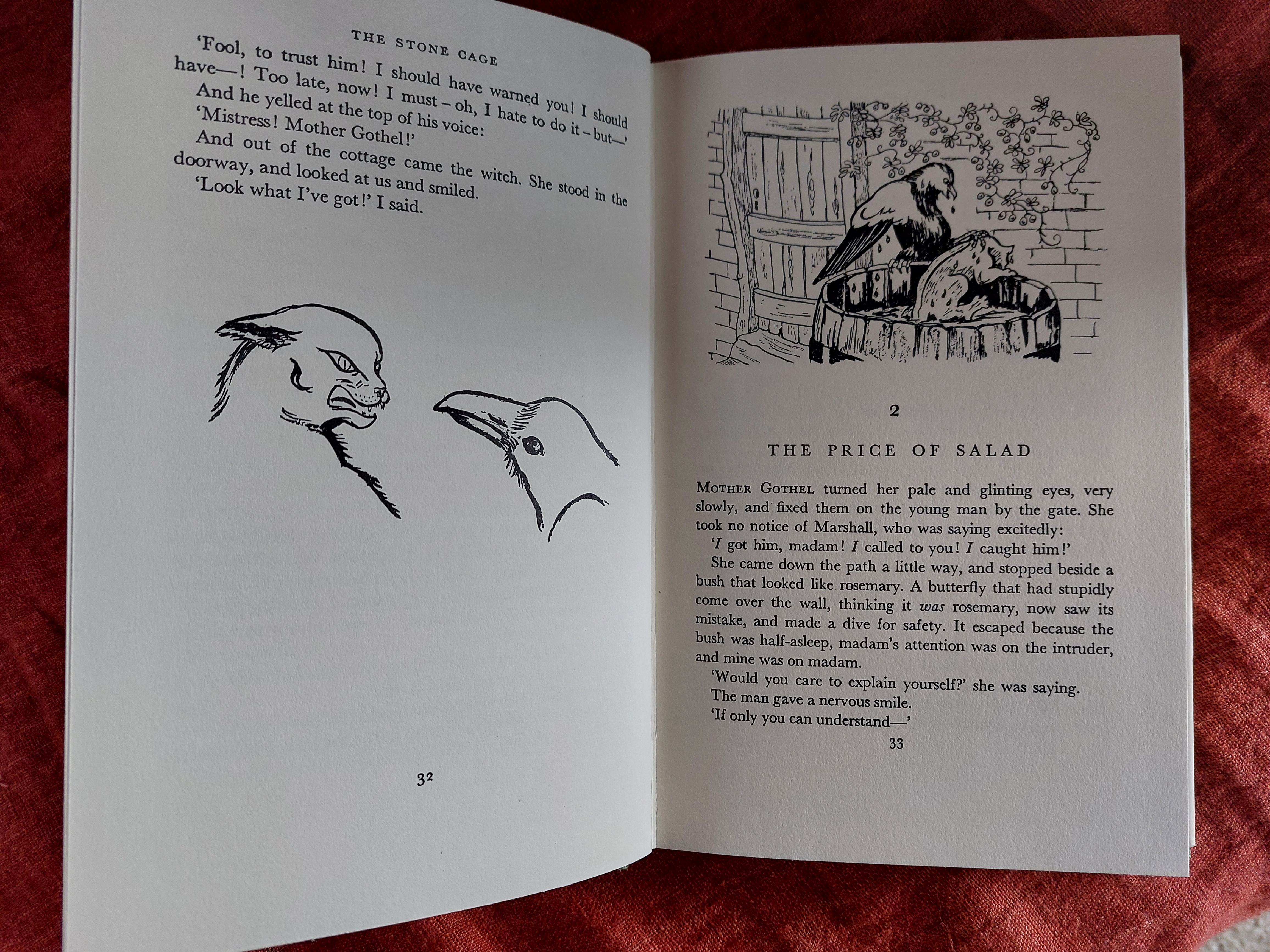
This piece of mine, about one of my favourite childhood books, was published in the wonderful books magazine, Slightly Foxed, in issue 18, in 2008. I know a lot of people share the same fond memory of Nicholas Stuart Gray’s gorgeous book, The Stone Cage(and his other lovely works) so thought I would republish it here, as a new year’s gift. Hope you enjoy!
Nicholas Stuart Gray
by Sophie Masson
first published in Slightly Foxed, issue 18, 2008.
If you were a bookworm as a child, your memories are measured not only in family or school or public events, but in stories you read. You remember vividly the smell, the touch, the sight of certain books. You clearly remember picking them up from the shelf—an ordinary act—and then the extraordinary happening, as you open the book and fall straight into another world. The pure pleasure of it, the immediate liberation. For me, who loved fairytales and fantasy, who longed to go through the looking-glass, the wardrobe, stepping through the borders into another world, where anything might happen, it was also a blessed escape from the confusing, disturbing and tumultuous family dramas that dominated my childhood. In those stories of other worlds, I found pleasure and consolation, transformation and possibility. And I found my own calling as a writer.
It can be dangerous revisiting those important, beloved stories, as an adult, for it’s not just a book that might be found wanting, but memory itself. And yet, when it works, when the barriers of time dissolve before the sheer magic of a real storyteller, it is probably the most thrilling experience a reader can have.
The Stone Cage, by Nicholas Stuart Gray, was one of those books that I remember clearly not only because they were so good to read, but because they were also so influential on me as a developing writer. Picking it up again after a gap of more than three decades was one of those magical moments that made me rediscover not only my childhood self, but also the reason why the book stands out in my memory. For from the very first sentence, you are plunged into a briskly unsentimental fairytale world, tartly guided by Tomlyn the witch’s cat:
Ever heard of a ‘dog’s life’? I’ll bet you have. Everyone has. Means a low, miserable kind of life. Full of kicks and curses, and nothing much to eat. I don’t know, I’m sure—what about a cat’s life, then? There’s not much said about that, is there? Nine lives, yes—but what sort of lives are these supposed to be? I’ll tell you the sort I had—a dog’s life.
I have to admit it isn’t every cat who lives with a witch, though.
And what a witch! Bad-tempered old —! No, it’s not fair to a cat or she-dog, to liken her to one of them. Let’s say she was a bad-tempered old beldam, and leave it at that. She hated people. She hated Marshall, her raven. She hated her bats and her toads. She hated me. Sometimes I think she even hated herself. A great old hater, was madam.
A naïve young stranger intrudes on this loveless, isolated mini-dictatorship, and is forced to pay a terrible price for his presumption, as he must give up his only child to the witch. And so the poor child is taken from her parents and put into a world where no-one trusts anyone else, love isn’t allowed to exist, and bitterness and cruelty reign. But all is not lost, for this is a very special child indeed, who will achieve an extraordinary miracle, greater than the greatest of spells, greater even than the most malevolent hatred.
As I read, I was swept along, just as in childhood, on the irresistible tide of a gripping story that for all its wit, humour, accessibility and clarity is also a compassionate, tender and complex evocation of the transforming power of love. But it’s certainly not all sweetness and light. Going way beyond a mere retelling of the fairytale of Rapunzel, on which it’s based, The Stone Cage reaches deep into the darkest, most painful aspects of life, as well as its most beautiful and joyous. In the way of the best children’s literature, it attains a profundity that’s all the more remarkable because of its sheer lucidity and unpretentiousness.
I finished The Stone Cage exactly as I’d done all those years ago: with tears in my eyes, and a thrilling heart, for the book also ends in one of the most perfectly judged, moving yet unsentimental scenes of its kind. Allied to my renewed love was a keenly increased admiration for the artistry of the author, which had easily stood the test of time. The characterisation is superb, the dialogue crisp, the pace good, the combination of light and dark subtly achieved. And the beauty of the style! Fluid, graceful, it is humble—in that it doesn’t draw attention to itself—and yet it’s fresh, distinctive, individual. The Stone Cage had been so important to me because everything in it worked. It was all so natural, so flowing, so multi-layered, its world richly imagined, yet delicately evoked. It was a real masterpiece, a novel just about perfect both in concept and execution, and timeless in its appeal, a novel that should have just as many young readers now as it did back then.
Aye, there’s the rub. For The Stone Cage is out of print, and has been for a long time. In fact, and rather astonishingly, in a culture like Britain’s that generally does value its children’s literature, all of Nicholas Stuart Gray’s books are presently out of print. Beautiful, original and accessible though The Stone Cage, Mainly in Moonlight, Grimbold’s Other World, Down in the Cellar, The Seventh Swan, and his other works are, they are unobtainable except through second-hand shops and the Internet, although some are still in libraries. It’s not as if modern children don’t like them, or don’t understand them, either; I know of lots of young readers who, introduced to Gray’s books by their parents, have loved them just as much, and have found them just as easy to read. It’s not as if there’s anything dated or offensive in them, no obvious or hidden misogyny or racism or class stuff or anything like that. There is nothing really to properly explain this puzzling situation, other than that they’ve simply been overlooked.
And yet, Gray’s work has deeply influenced many of today’s writers working in the fields of children’s literature and of fantasy—Garth Nix and Neil Gaiman and Cecila Dart-Thornton, for instance. I’m certainly not the only reader-turned-writer to remember Gray’s books with great love and respect. Australian children’s novelist Cassandra Golds, author of the acclaimed Clair de Lune, wrote to me about the huge impact on her of one of Gray’s books, Down in the Cellar :’I will never forget the Sunday afternoon on which I finished reading it. I remember feeling a kind of mysterious desolation, partly because I’d finished reading it and would never be able to read it for the first time again, but partly also because I KNEW I had now read the best book I was ever going to read. And I felt, then and still, that the only possible response to that experience was to become a children’s author myself.’ As an eighteen year old, Cassandra had written the author a fan letter, and she still treasures his modest, graceful reply, in which he said, amongst other things: ‘As all my books and plays are only written for myself and not for any imagined audiences, readers, age-groups, publishers, etc, it is always a delightful surprise to get proof that anyone BUT myself ever reads or sees them..’
Perhaps that answer gives a clue as to why Gray’s work is not recognised as it should be. This was not a man who blew his own trumpet, not a writer who sought publicity, but one who loved his work and felt privileged to be doing it, and who was too humble to thrust himself forward. Who was perhaps also at heart a rather private, reserved, even secretive person, despite his long association with theatre, which many people would consider the home of trumpet-blowing, egotistical extroverts. Certainly, when I went to research his life, I found precious little information.
Nicholas Stuart Gray was a Highland Scot, born in 1922, the eldest of four children. As a child, he wrote stories and plays for his siblings. Not one to bend easily to the routines of school, he left at the age of fifteen, to become an actor. He kept writing as well, and his first play was produced two years later. His first children’s play to be published was Beauty and the Beast(1951), and from then, he wrote and produced a good many plays for children, before turning his hand to novels and short stories(where I think his true gifts flowered). Some of his novels, like The Stone Cage (1963), he also adapted for the stage: he told Cassandra Golds that he himself played Tomlyn in the play’s premiere at the Edinburgh Festival and its subsequent successful seasons in London and on tour. (That would have been something to see! ) He never married or had children. His plays fell out of fashion, but his novels and short stories continued to be published until his untimely death from cancer in 1980, and right into the late 80’s, we were still seeing frequent reprintings of his books.
But in the last fifteen years or so, there have been no more new editions. In this new Golden Age of children’s literature, it’s more than time to bring his books back so that a whole new generation can fall under their spell. Any publishers out there listening?
As a present-day coda to the end of my piece: as I mentioned in the article, second-hand copies of The Stone Cage are not easy to track down–and I’m certainly hanging onto my own beautiful hardcover copy, found by chance in a secondhand bookshop in Oxford some years ago . So it always astonished me that The Stone Cage hasn’t been republished, but when, five years ago, on behalf of the little publishing house I’m involved in, I made enquiries as to who might own the rights, it appeared that no-one was actually sure what had happened to them. Gray had no direct descendants, though he did have extended family, but a letter to an address I was kindly given by the ALCS (Authors’ Licensing and Collecting Society) in the UK went unanswered.
The rest of the program is great too, with sessions on true crime, historical fiction, how to get a book project back on track, and more. See the full program here. Concurrently with the Festival also is the High Country Writers’ Retreat.
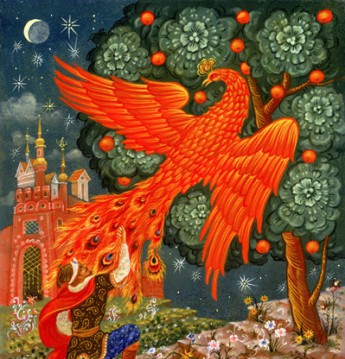
Absolutely delighted to announce that this week marks the publication of the new print editions of two of my earlier fairytale novels, The Green Prince and The Firebird, published by Brio Books in the Untapped Australian Classics list. The Green Prince was originally published in 2000, was shortlisted in the Aurealis Awards, and also turned into a stage play. It was chosen to be republished as an ebook in the wonderful Untapped Australian Literary Heritage Project, and from there was selected for inclusion in the print republication by Brio Books. The Firebird was first published in 2001, and was produced as an audio book in 2005. It also was chosen to be republished as an ebook by the Untapped project, and from there selected for inclusion for a new print edition by Brio Books. Aren’t both covers gorgeous!
It’s so wonderful to see these books back in circulation, both as print and e-editions, and hopefully they will find their way into the hands of a new generation of readers, as well as earlier fans whose previous copies might have worn out :-)Thank you so much to Untapped and to Brio Books for keeping the books alive, available and accessible!
Later, in late October, will come the new print edition of Cold Iron. Watch this space!
There’s a great first review for Four Up In Lights in Buzz Words. Here’s a short extract:
Award-winning author of over 70 books, Sophie Masson has clearly had a lot of fun creating these four endearing characters, putting them in all sorts of trouble and helping them find their way out with plenty of chuckles and adventure along the way.
Cheryl Orsini’s fun illustrations bring the characters to life and capture both the tension and celebration of the story as it unfolds.
Perfect for young readers, aged 5–8, Maxie, Flash, Fergie, and Lady once again demonstrate the importance of friendship and the joy of adventure. With a hot-wheeling pace, Four Up in Lights will keep readers engaged and wanting to read the story in one sitting.
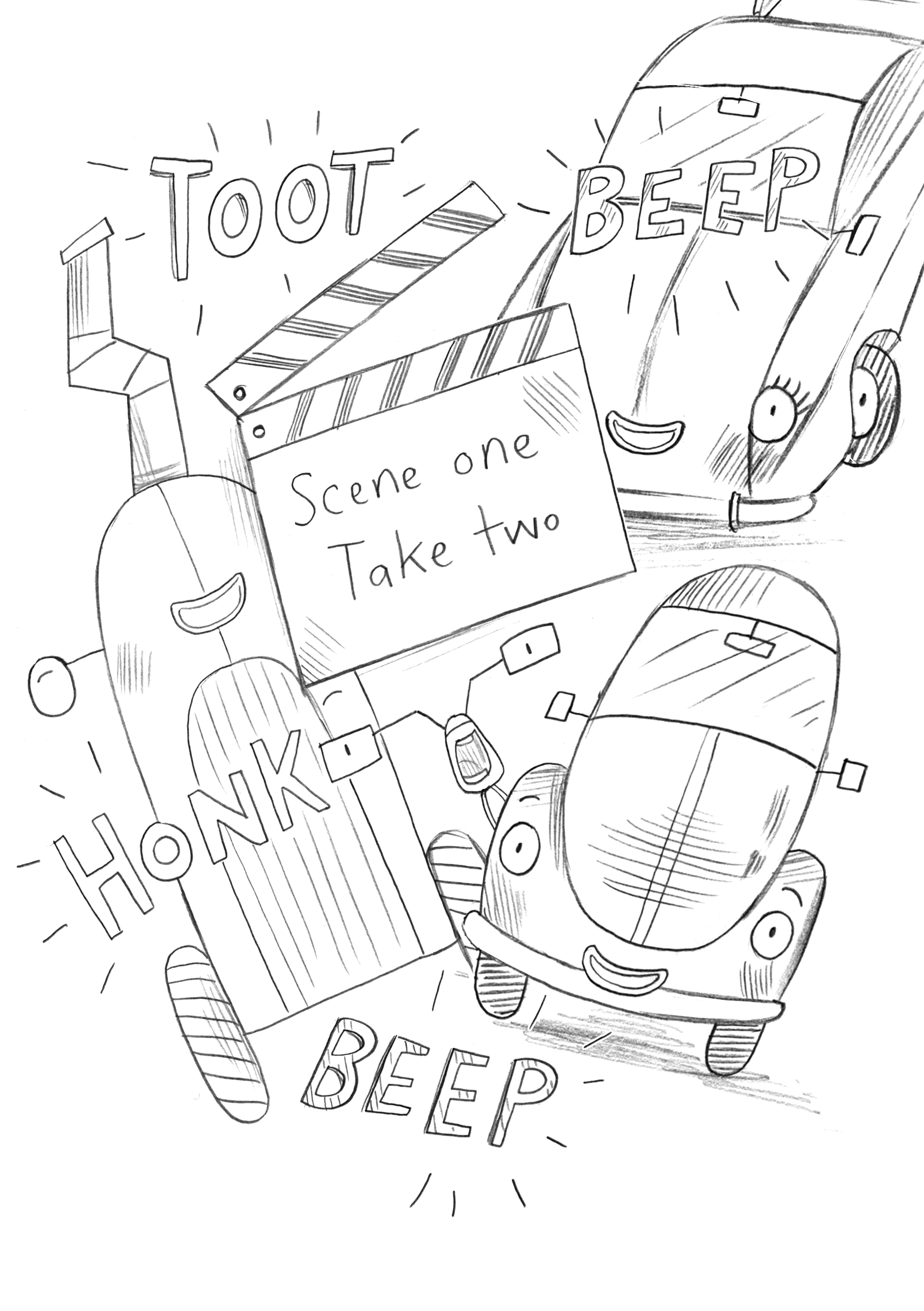
Yay! Today is publication day for Four Up In Lights, the third and final book in a little series I created with illustrator Cheryl Orsini, about the adventures of four friends who happen to be vintage vehicles! Published by Christmas Press, Four Up In Lights follows on from Four All At Sea(2021) and Four On the Run(2020) and were huge fun to write.
Here’s hoping the four friends’ final adventure finds many many readers, as the earlier books have done! And cheers to Maxie, Fergie, Lady and Flash, four fabulous characters who drove their way into my imagination quite a while ago–and who have been brought to such fantastic visual life by the wonderful Cheryl Orsini!
Four Up In Lights is available from any bookshop around Australia, as are the earlier two books. And you can find a fun little trailer for Four Up In Lightshere.
Christmas Press have just put up a great little trailer for Four Up In Lights, my chapterbook with Cheryl Orsini, which comes out in September. Have a look!
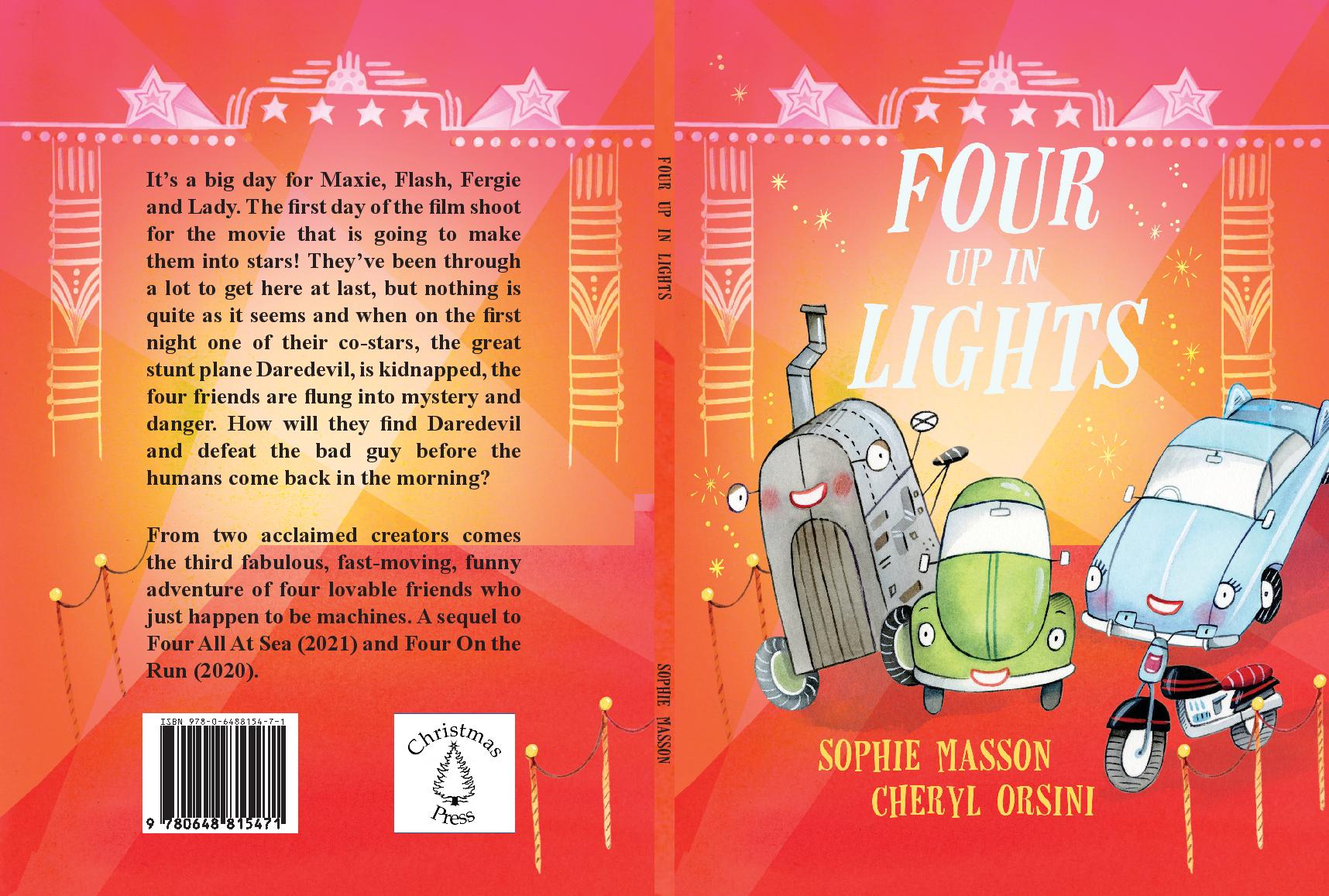
I’m delighted to reveal the gorgeous cover of Four Up In Lights, the third and final in the fun little chapter-book series I’ve created with the wonderful illustrator Cheryl Orsini. The series, which has been very popular with young readers, is about the funny, fast-paced adventures of four friends who just happen to be vintage vehicles–two cars, a motorbike and a tractor–and I’ve really loved writing it, and loved, too, collaborating with Cheryl, who has made our four friends come to such lively, characterful and endearing life! Four Up In Lights will be released in September by Christmas Press, and is a sequel to Four On The Run(2020) and Four All At Sea (2021).
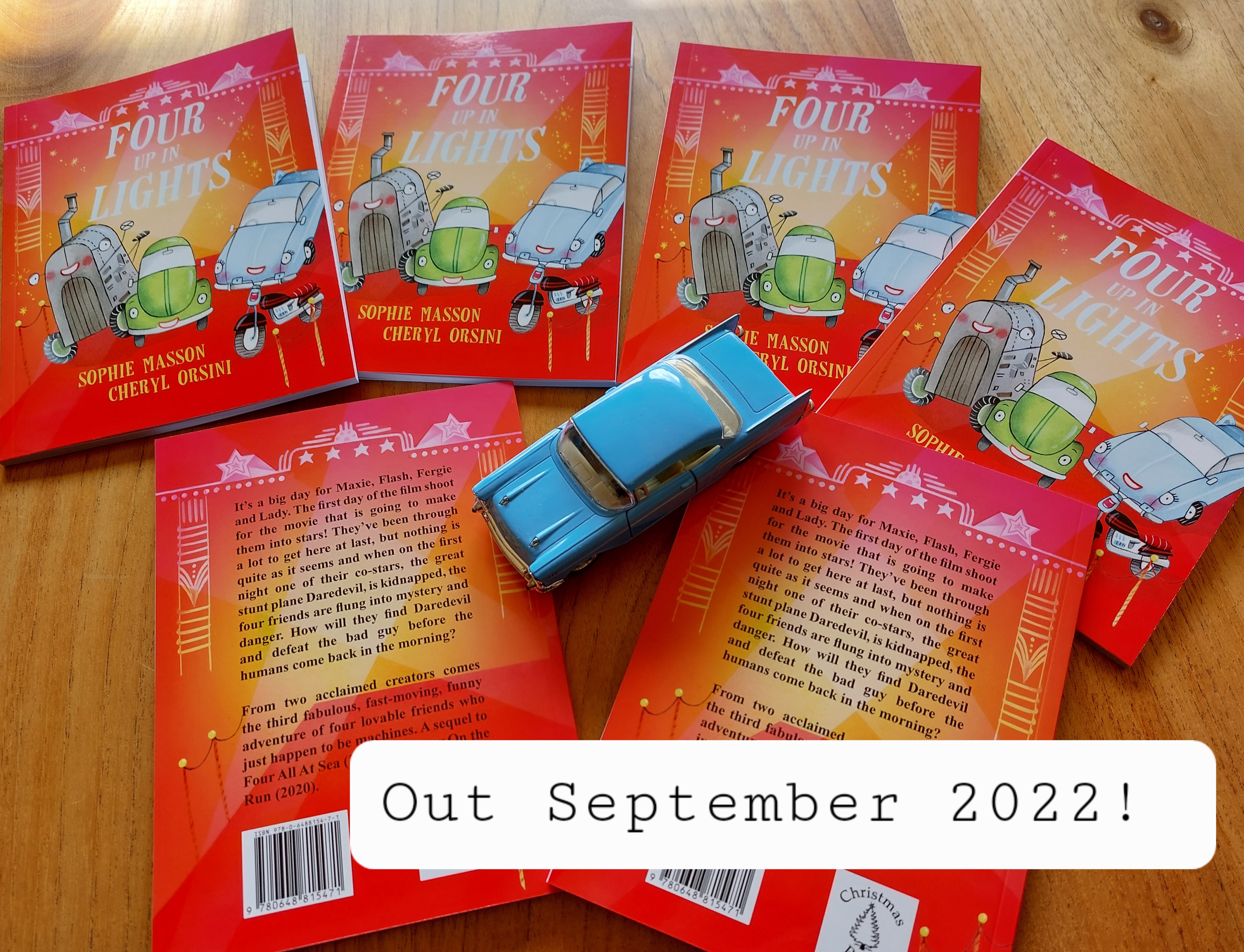
Isn’t the cover just beautiful! And below the cover you can also see the books as a set–they look pretty good together, don’t they!
My new historical novel for children, Sydney under Attack, comes out in early March(Scholastic Australia) and in anticipation I’ve made a little trailer for the book–hope you enjoy!






 Feathers of the Firebird