Small Beginnings 3: Goldie Alexander

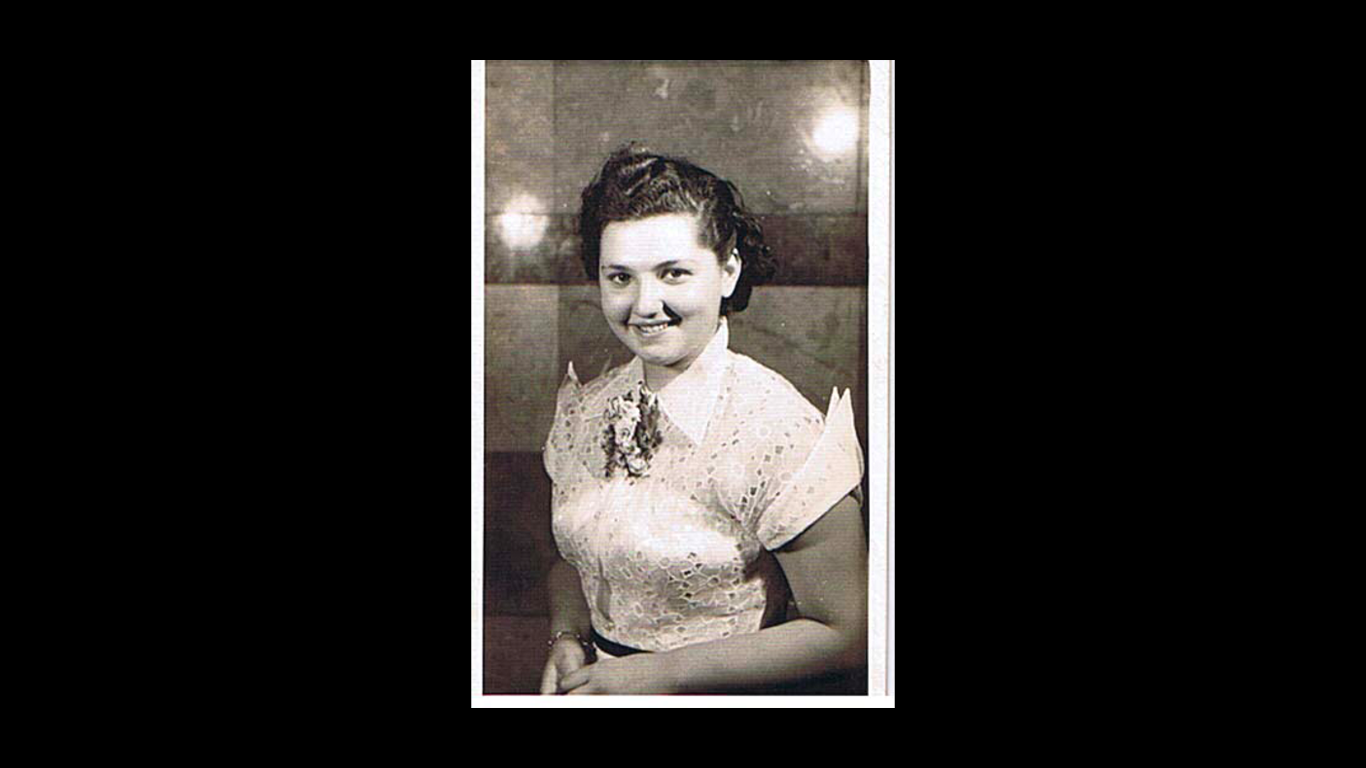
Goldie at age 16

Goldie at age 16

I didn’t really start writing my own stuff until quite late in life. Somehow there was nothing in my schooling that encouraged any form of creativity. If ever I tried to write an essay that contained a story, I was actively discouraged, told to leave that to ‘proper’ writers. We kids were instructed to keep to discursive essays.

So what I did when I was young, and still do when life gets me down, is read. And all that reading produced a wealth of imagination. I had always been a voracious reader. But when I was a kid reading was considered ‘a big waste of time’ when one ought to be doing something more ‘useful’. I got into so much trouble for always having a book with me, in fact was almost expelled from a small private school for calling the sewing teacher (I hated sewing)  a ’fat pig’ when she caught me reading under the desk instead of learning to hemstitch.

I read everything I could lay my hands on. Looking back, some books would have been regarded as inappropriate, such as ‘The Body’s Rapture’ by Jules Romains which I found in my mother’s bookshelf.   It did explain something about sex to a generation kept in blissful ignorance.

So my first true experience with writing came in my third year at university when, between countless and very boring essays, one assignment was to write a play. That was it. I fell in love with writing.

Goldie today

Goldie today

One would think all that early reading would have encouraged me to write wonderfully well right from the start. Unfortunately, that didn’t happen. I started with adult short stories, even had one accepted by ‘The Australian Literary Supplement’ that was never actually printed. But given I was now teaching English and History to secondary students and at the time there was so little written for kids in an Aussie setting I had a go at my first novel.

I don’t have it any more. All I can say is that it had a very long title – this was fashionable at the time – and questionable plot and characters. I remember when asked by a publisher what it was about, being left totally tongue tied.

What did fall into my lap was being commissioned by Greenhouse Publications in the early 90’s to write young adult novels.

I was given very specific instructions. They had to be no more than thirty two thousand words. The setting was to be contemporary. Though the story should show girls becoming more empowered – this was at the height of women’s lib – it must contain some romantic element.

Such specific instructions meant I had something to hang onto, as back then there were no creative writing classes. If it was still a matter of hit and miss, I had a terrific editor who ‘fixed up’ my mistakes.

So my very first novel called ‘EVERYTHING CHANGES’, and written under the pseudonym Gerri Lapin, opens like this:

****

JOIN DONABEL’S MUSICAL PRODUCTION OF GREASE

AUDITIONS FOR SPEAKING PARTS AND CHORUS FRIDAY 23 JUNE

“Christie and I pushed our way through the group of people milling about the noticeboard, then headed toward the canteen.

‘I saw that film on video last year’, Christie was saying. ‘The girls wear fab fifties gear; tight pants, dresses with necklines right down to here,’ she pointed to a spot barely above her waist, ’Tiny waists and full skirts.’

          We found Christie’s boyfriend Wayne, sprawled out on a chair, halfway through a Mars bar. ‘How about Donabel putting on its own production?’ Christie asked, flopping down beside him.  ‘Jo reckons we should get into it.’

***

Of course it had some romantic twists though everything ended in a satisfying way. I was so proud of my first novel that I showed it to all my friends. I remember one telling me he had picked it up in a bookshop.

I asked, ’Did you read it?’

He gave me a disdainful look. ‘Hardly,’ he said. ‘Not the sort of stuff that interests me.’

Ah well. Those books gave me, and quite a number of other well known writers, the start we needed. Since then, I have never stopped writing.


Goldie Alexander writes award winning short stories, articles, radio scripts, plays and books. Her novels are published both in Australia and overseas for readers of all ages. Her latest book, a fantasy/scifi novel for older children, is Cybertricks. Her books for adults include: ‘The Grevillea Murder Mysteries’ ‘Lilbet’s Romance’,  Dessi’s Romance’,Penelope’s Ghost

and ‘Mentoring Your Memoir’. Her first YA novel ‘Mavis Road Medley’ was a Notable CBCA, was shortlisted for by the Office of Multi-Cultural Affairs and is listed as one of the best YA books in the Victorian State Library. Her best known book for children is: ‘My Australian Story: Surviving Sydney Cove’. Her fiction for children includes three collections of short stories and several mysteries, fantasies and science fictions. Her other historical fictions include: ‘The Youngest Cameleer’, ‘That Stranger Next Door’, My Holocaust Story: Hanna’ and the verse novel ‘In Hades’. She has also co-authored a non-fiction book, The Business of Writing for Young People, with fellow writer Hazel Edwards.

Small Beginnings, 2: Nick Earls

A young Nick(foreground), with friends

A young Nick(foreground), with friends

I’ve taken Small Beginnings literally and gone back to the earliest existing examples of me coming to grips with the written word. In fact, written letters.

I turned up at school six weeks short of five years old. Storytelling was already a big part of my life by then – the revelation that it might actually be A JOB took another few years to happen. My family had always been big on books and full of stories, so I’d had a formula story that I’d told most days at Ballyholme Playgroup before lining up for one of the two classrooms at the sternly Victorian-looking Grangee School in 1968. In my stories, the central character, a bird called Tommy, would tumble into a toilet and be flushed all the way to a sewage treatment plant and another adventure among the poo and big orange diggers. My audience had all been four too, and what do four year olds love? Poo and big orange diggers. Since then,  I don’t think I’ve ever been quite so astute about writing effectively for a market.

jotter 1But Grangee wasn’t about stories, at least not that first day. It was about taking the first faltering step up the steep slope that led to literacy. I opened my school jotter (it says ‘Jotter’ on the front) and, as Mrs Pollock directed, wrote a page of ‘O’s. Note the big pink tick. Mission accomplished. Then I turned over and wrote a page of ‘X’s. Another tick. Then we went home for lunch.

Afterwards I was horrified to learn that I’d be going back. And not just going back – going back most days for the next twelve years. I thought I’d had the school experience. I’d turned up, done my page of ‘X’s and my page of ‘O’s, got my two ticks. What more could there be to know?

jotter 2Quite a bit, it turned out. How to manage a page, for a start, as my increasingly huge and truncated attempts to write ‘Dick Has the Dog’ demonstrate.

Less than two years later, I’d learned enough to write the work that could, with generous definitional stretching, be called my first book. It’s a journal of a holiday with my grandparents in Yorkshire. I can remember sitting and writing it each night at the kitchen tables of elderly relatives and family friends – people who had featured in the books of James Herriot – putting a lot of thought and work into it, even though it comes across as just the facts:


Tuesday 7th July 1970.
It was hot and sunny so we went to Knaresboro’ to see Mother Shiptons dropping well, wishing well and cave
In the afternoon we went to Ripon and looked round the Cathedral and then on to Studley Royal Park where there is a large herd of deer.


If it had been overcast, would we still have gone to  Knaresborough (I’m sure I picked up ‘Knaresboro’’ from a road sign)? I don’t know, but I can still remember the dropping well and its petrifying socks and teddy bears on strings. That stuff comes back to you in dreams at that age.

Since those days, I’ve turned to fiction, Grangee School has long closed and business seems to remain good at Mother Shipton’s, now in its 386th year as a tourist attraction. And my son, at the age of 6 1/2, is about to take a week off school for us to go to Hong Kong. In lieu of schoolwork, he’s been giving the assignment of keeping a journal of the trip.

Nick Earls has written more than twenty books for adults, teenagers and children. His latest project is the novella series Wisdom Tree, with a novella released (as a paper book, ebook and audiobook) on the first of each month from May to September 2016.

yorkshire journal


Small Beginnings 1: Dianne(Di) Bates

WP_20160426_15_08_59_Pro

Di as a child

The first writing I did as a child was, I’m told, a letter to Santa Claus. My mother said I asked for ‘a typewriter and a good temper’. I’m not sure how old I was, probably about 5 or 6. When I was in sixth grade at a new one-teacher school, I wrote an essay about my ideal home. After the teacher read it aloud, children came up to me in the playground and accused me of plagiarism. Their accusations hurt me so much I can’t remember working hard at writing thereafter.

However, in my first year of high school, I befriended Pamela, the daughter of our English head-teacher. Pamela and I loved a series that was currently showing on TV – Adventures in Paradise. We both imagined ourselves the love interest of the leading man, Troy Donaghue. Consequently we spent hours in the playground co-writing TV scripts where Troy Donaghue would fall in love with each of us.

I wish when I was young someone would have given me books – both to read and to write in. But books were simply absent from my home. Their substitute was hard work on our farm. The only books I read as a child were borrowed once a week when I took myself to the local public library. I don’t remember the librarian ever offering me any books to read other than my regular diet of Enid Blyton books. Nowadays I am never without a book in my hands! Unless I’m writing, of course.

Di Bates is the author of 130+ books, mostly for young readers. Her website, which she shares with her YA author husband, Bill Condon, is http://www.enterprisingwords.com.au. Since 2006, Di has been producing a twice monthly magazine, Buzz Words, for those in the Australian children’s book industry http://www.buzzwordsmagazine.com She is a recipient of the Lady Cutler Award for distinguished services to children’s literature.

A new blog series, Small Beginnings: Introduction

I’m starting a great new series on this blog today. It’s called Small Beginnings and it’s a unique look at how authors and illustrators began creating–not their published work, but much earlier than that, as children, teenagers or even young adults (up to early twenties). I think that this is absolutely fascinating in terms of showing how an author or illustrator begins to shape their craft well before the time they even start to think about the possibility of sending off work for publication.

So I’ve asked a number of fellow authors and illustrators to write about what they created in their early years, and if they still have examples of such work, to show us extracts from them. The response has been fantastic and so I’m delighted to inaugurate the series today with something of mine, as an introduction to Small Beginnings.

Me aged about 6, with older sister Beatrice(11) and my father.

I wrote a lot as a child and a teenager. I came to Australia from France with my parents and sisters when I was nearly five, and by then I could already read and write a little in French taught by my grandmother, who’d looked after me for some years(due to illness when I was a baby, making me unfit to stay in Indonesia where I’d been born and where my parents were working). I was already mad for stories–oral as well as written and I loved making up my own too. But it was arriving in Australia and starting to write in English that really got me going creatively speaking. I was lucky enough that in all the schools I went to, creative writing was very much encouraged, and at home, we were so surrounded by books and also by the great stories told by my parents that bathing in an atmosphere of story felt totally natural, though the idea that you could be a writer, as a job, didn’t really enter my head till I was well into my teens.

I don’t remember much of the very early stuff I wrote, but a few titles from primary school-age literary projects still stick in my mind: such as The Adventures of Princess Alicia–a lavishly illustrated, multi-episode comic strip story about a heroine who had two attributes I dearly wished I had–not, not a crown, but magic powers: and long blond hair (my hair was long but very dark!) I illustrated this masterpiece too I might add, in the days before I became embarassed by my lack of talent in that direction. And The Life of a Stamp, a

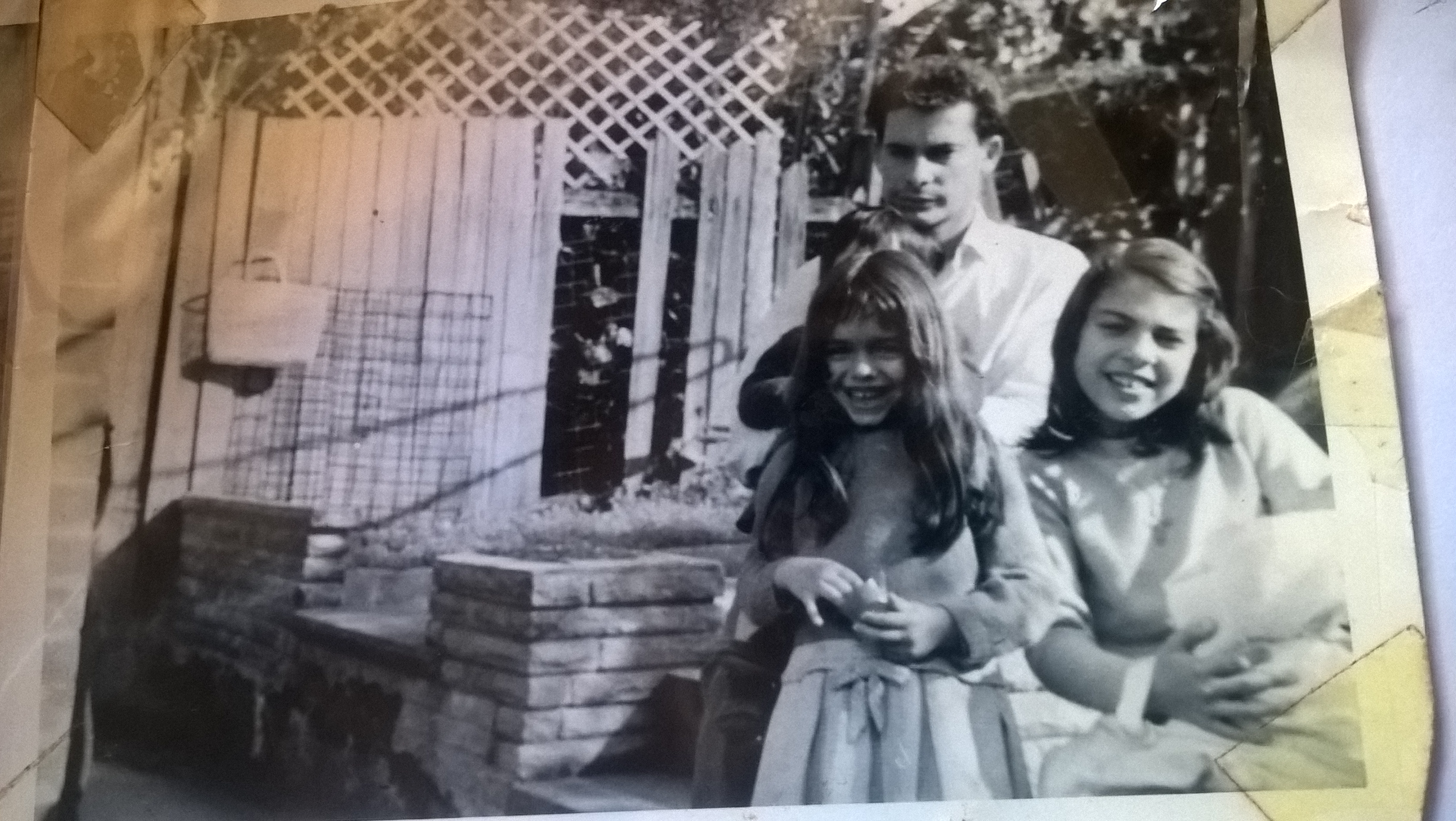
Aged 16, with younger siblings Gabrielle and Bertrand.

Aged 16, with younger siblings Gabrielle(10) and Bertrand (8)

mystery/travel story centred on yes, a wandering stamp which gets posted on the wrong letters and gets in some sticky situations..There was The Twins’ Highland Holiday which was heavily influenced by Enid Blyton’s Famous Five, and there were several poems including one about a ladybird that I got a gold star for in class(I presented the poem written on the back of an illustration of a ladybird). Much of it I remember ‘publishing’ in little books, simply sheets of paper stapled up with hand-drawn covers, with perhaps a little stamp or sticker added to make it look more ‘official’. For a while I even ran a little story club at primary school which I called ‘The Bluebell Club’ (no doubt influenced by Blyton!) in which members read out their own stories. We even had a competition once in which the prize was a book, bought by my mother, who judged the competition–I was very miffed that she didn’t choose mine! As I loved the theatre–I used to go to after school drama classes–I also wrote a lot of plays, very often adaptations of fairy tales, which I wrote, directed and produced and forced my siblings to act in and my parents to watch. My mother was always very kind about these thespian efforts but my father could be quite sardonic about it, slow-hand-clapping and pointing out the narrative flaws rather loudly: an experience which hardened me up for later and occasional poor reviews!

Unfortunately none of that early writing was kept. It’s only when I was in mid-high school that I WP_20160425_11_29_40_Proprotested about parents’ tidying-up urge to chuck everything out and hung on to my writings like a determined limpet! So I have quite a few things from that time–lots of poems, a few short stories, and the beginning of a massive fantasy novel started when I was around 16(and in which I WP_20160425_11_29_11_Prointended to reunite every mythology in the world: nothing like teenage ambition!). And then, from a little later, at 19, a picture book–the text written by me, the illustrations by my youngest sister, Gabrielle, who was 13 at the time. That one survives in its entirety(you can see some pages from it it below).

In all of this what I can see is a young writer who is trying her hand at all sorts of things, enjoying playing around with different forms, flitting around from fantasy to realism, contemporary to historical, light hearted to rather serious, long to short. The craft is rather wonky, but the passion and curiosity–yes, and persistence too!–is very much there. I see, in short, an apprenticeship taking place without my even being aware that it was happening; how could I, when it was so much fun?


Double Act 7: Anna Solding of Midnight Sun

anna soldingToday,  I’m revisiting my ‘Double Act’ series of interviews with authors who are also publishers, and who started their own publishing houses.  And I’m interviewing Anna Solding of Midnight Sun Publishing, a small press that has gone from strength to strength since it started a few short years ago.

Anna, when and how did Midnight Sun start? What motivated you to start your own publishing company?

It started one day when I had lunch with a close friend who is an entrepreneur. Even though my novel manuscript The Hum of Concrete had been nominated for three awards for unpublished manuscripts, no publisher had picked it up. My friend thought this was a shame so he suggested: ‘Why don’t we start a publishing company?’ You know, as you do, over lunch, just like that. My, quite logical and heartfelt, reply was: ‘Because we are not crazy…’ Five years later, we are crazier than ever and MidnightSun is beginning to take off in a big way. My friend’s initial expertise and help was invaluable and I would never have contemplated starting a publishing company if he hadn’t come up with the idea. My novel The Hum of Concrete went on to be nominated for another three awards once it was published, including the Commonwealth Book Awards, which meant we were off to a promising start and we felt that perhaps we could keep doing this.

How did you initially persuade booksellers to stock your books?

I was lucky enough to convince Wakefield Press, another independent Adelaide publisher, to distribute our books nationwide. It’s not really what they normally do so they only did it to be kind and give me a break, which was very nice of them. For the last couple of years our books have been distributed by NewSouth Books, who do a terrific job, getting our books into bookshops (and occasionally even into discount departments stores) around Australia and New Zealand.

Have your aims and strategies as a publisher changed from the beginning? How?

Yes and no. The aim has always been to publish amazing books, both in terms of content and design; books that you can lose An-Ordinary-Epidemic-Amanda-Hickie-The-Clothesline-192x300yourself in, books that look stylish and feel good in your hand. That is still our main aim. On our website we say: ‘MidnightSun Publishing has grown out of a disenchantment with the established publishing houses in Australia. We know there are plenty of fabulous manuscripts about unusual topics floating around, but publishing new and unknown writers poses a big risk. MidnightSun is prepared to take that risk. We want our readers to be entertained. We want to challenge, excite, enrage and overwhelm.’

When we started, we were mainly focused on adult literary fiction but now we also publish a wide range of books for children, from picture books to YA. I have always said that I will only publish books that I love and I think that is a good strategy for a small publisher. Because we spend so much time with each book, we really need to be comfortable talking about all aspects of it to anyone who will listen. Originally, I thought we’d just publish one or two books to see how they went but as all our books have made a profit it has always been easy to keep moving on to the next project. The more well-known MidnightSun becomes, the more high quality manuscripts are sent our way and the more projects we take on. When we started publishing in 2012, we did two books per year, in 2017 we are planning to do five. To publish five or six books per year would secure a more regular cash flow situation, which is something MidnightSun is still struggling with. The more I learn about the business, the more confident I get about all the small steps that need to happen for each book, including the metadata, the AI sheet, different ways to promote the book and which festivals and media contacts to approach.

Has working as a publisher impacted on your own career as an author–whether that be positive or negative?

Yes, I don’t think of myself as a writer first and foremost any more. Publishing has taken over my life, but I have let it happen and I love my job passionately so I’m certainly not complaining. I work with interesting people who all love books, so that has to count for something. Last year, I was fortunate enough to be awarded two writers’ retreat residencies, one month in Finland and one month in Perth, which were both fantastic months when I felt like a writer again. For years, I’ve been working on a ‘companion novel’ to The Hum of Concrete, also set in Sweden where I grew up, and it’s almost finished but I think I need one more retreat to get there. I would like to incorporate more writing into my everyday life, but when I can’t even get a Q&A like this one written until weeks after I should have delivered it, I’m not quite sure how to manage it.

What are the challenges and pleasures of small-press publishing, in your experience? Any memorable anecdotes?

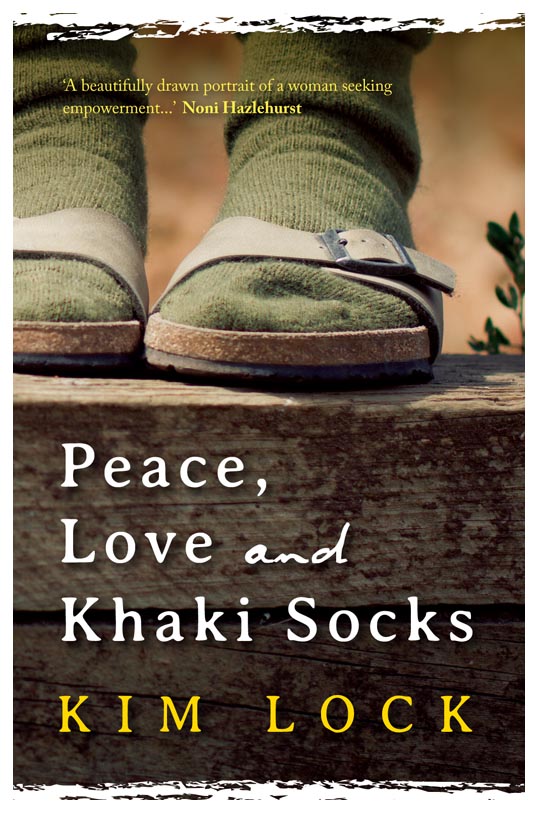
IPLKS_cover love finding new talent and nurturing the writers from the beginning. Kim Lock, whose novel Peace, Love and Khaki Socks, was published by MidnightSun in 2013 has since evolved into being our regular designer. Her new novel has recently been published by big publisher Macmillan, which we think is fantastic. Last year, we published Amanda Hickie’s An Ordinary Epidemic and that book will come out with a new cover and new title (Before This Is Over) in the US next year. There are so many pleasures.

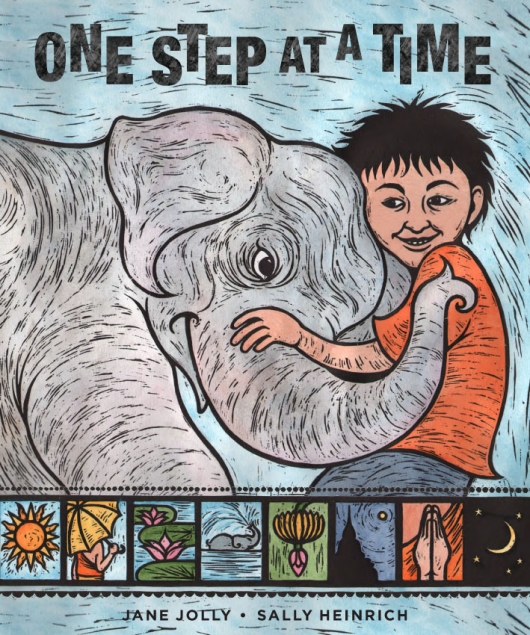
The challenges are plentiful, as they should be. It took almost a year to design the cover for Cameron Raynes’ First Person Shooter and we finally decided on one we all liked after rejecting about 30 others. Fortunately, we have a very patient designer. However, one of the biggest challenges for small publishers is to get noticed in the mainstream press. MidnightSun has a loyal following in Adelaide but it’s always a struggle to even get a tiny review in the larger newspapers, let alone a feature article. The other main challenge, at least for us, is to manage our cash flow. Because MidnightSun is doing really well, our first picture book One Step at a Time by Jane Jolly and Sally Heinrich has been nominated for several awards including the important CBCA award, we are in a position where we need to reprint the book but we have had to take out a loan to be able to do so.

As much as there are plenty of challenges for small publishers, the pleasures of seeing a project through from manuscript form to the final product, a beautiful and thought-provoking book, clearly outweigh the challenges. The buzz of opening a box from the printer to see a new book for the first time is very special and I don’t think I’ll ever get tired of that feeling.

Any advice for aspiring author-publishers?

Go for it! If you are passionate about books and have some sense of business, publishing might be the perfect place for you. I’m not going to pretend that it is easy, because it certainly isn’t, but if you surround yourself people who can help you with aspect that you might be less familiar with, it could be worth giving publishing a go. I have had a bookkeeper and a designer from the start as those were two aspect of the business that I didn’t know that much about. Other than that, you have to learn to wear many different hats; as editor, publicist, sales director, head of marketing and the one who is ultimately responsible – whether things go fabulously or the complete opposite.

Distribution is extremely important and it’s very hard to find a distributor so it’s worth doing some research on this before you take the plunge. Dennis Jones distributes many small publishers. Talk to other small publishers, research printers, become a member of Small Press Network, learn the terminology (what is metadata? AI sheets? ISBN?), subscribe to the daily newsletter from Books+Publishing and, most importantly, find amazing manuscripts to publish. Without intriguing content One-Stepand stunning production your books won’t be noticed. MidnightSun started in 2011 and we published our first book a year later, which felt right as that is how long it took to learn a bit about how the business works. The longer you have to prepare for a book, with marketing material, review copies, interviews, the better. Now that we are more established, we often work on a book for two years before publication. But don’t be scared, if publishing is your passion, just go for it!

Anna Solding

P.S. Metadata is the information that is put into search engines so that it will be easy to find. AI sheets are advance information sheets about the book, which often contain the cover image, a blurb, an author bio and photo, size, price, publication date and the all-important ISBN. The ISBN is the 13 digit number that is under the barcode, which is used by booksellers to identify the book.

The power of fairy tales: an interview with Katherine Langrish

katherine langrishToday I have the pleasure of interviewing Katherine Langrish, author of a number of wonderful fantasy novels for older children, who has just released her new book–a collection of essays on fairy tale.

Your new book, Seven Miles of Steel Thistles, has just been published by Greystones Press, and unlike your other books, it’s a work of non-fiction: but like your other books, it shares a common element–a fascination with fairy tale and folklore. Why are you so interested in them?

Quite simply, I’ve loved fairy tales and folklore ever since I was a child.  I’ve never understood why some people feel it’s a taste adults ought to grow out of, unless perhaps the only fairy tales they’ve encountered have been the simplest versions retold for very little children.  Fairy tales can be profound and as inexplicable as poetry. As I discuss in the book, a story like the Grimms’ tale ‘The Juniper Tree’ deals with enormous themes – murder, jealousy and abuse as well as birth, resurrection, and joyful communion with the natural world.  It will ‘mean’ something slightly different to everyone who reads or hears it, because it elicits from each person their own emotional and spiritual response.  In fact, this story was probably rewritten by a German romantic poet, but that’s the other fascination of fairy tales.  They don’t ‘belong’ to anyone, they’re anonymous, so they adapt to the voice of whoever’s telling the story. And they’re so old!  People have been telling stories like these for centuries.

It’s such a large topic–did you try to pursue a particular line of inquiry or reflection in the book, or is it more organic? And what challenges and pleasures did you find in putting together the collection?

Many of the essays in the book began life on my blog (see below), although for this collection they were massively rewritten and extended. I did not think I had chosen any specific line of enquiry, but to my own fascination I found as I went through the rewrites that a theme was in fact emerging: that of ‘authenticity’. What does, what can that mean in terms of traditional tales?  Is the ‘earliest’ version of a Seven Miles of Steel Thistlesparticular tale ‘more authentic’ than a later one?  My conclusion was, repeatedly, that while it can be fascinating to trace the history and analogues of a tale, it renews itself on the lips of the latest storyteller.

Did any particular fairy tale or folklore scholars influence you in terms of interpretation and reflection?

There are so many wonderful fairy tale and folklore scholars, an embarrassment of riches, but I have to mention the great Katherine Briggs, whose four volume ‘Dictionary of British Folk-Tales’ is a Bible in the field, and whose other books of fairy lore I love – such as ‘The Anatomy of Puck’ and ‘The Vanishing People’. I like her insistence on the primacy of narrative.  I also love Max Lüthi’s ‘The European Folk Tale’ which so clearly illuminates the form and content of the classic European fairy tale.  Most of the interpretations and reflections in ‘Seven Miles of Steel Thistles’ are my own, however – if only because I read the stories long before I read any of the scholars.

You’ve maintained a blog with the same name as the book, over several years. It’s a wonderful title. Where does it come from, and was the blog a bit of a testing-ground for the book?

The title of both the book and the blog comes from an old Irish fairy tale, ‘The King Who Had Twelve Sons’. In it, the hero has to ride ‘over seven miles of hill on fire, and seven miles of steel thistles, and seven miles of sea’.  I love it as a metaphor for overcoming life’s difficulties, including the sometimes endless-seeming struggle to write well.  I suppose the blog has become a testing-ground for the book, though I never expected a book to come of it. I began the blog simply as a place where I could write about the things I love – children’s literature, fantasy, fairy tales and folk-lore – and where I could talk with others who love them too.  Does it sound too fey a comparison, if I say that the blog turned into a fairy garden and the book has grown up out of it like a tree?

Do you have particular favourites in terms of fairy tales? If so, which–and why?

I do – and I’ve written about some of them in the book.  I’ve already mentioned ‘The Juniper Tree’, and I also love ‘Briar Rose’ and ‘Jorinda and Joringel’.  But the story I love best to tell aloud is the English fairy tale ‘Mr Fox’, a very old version of Bluebeard with a far more intelligent and courageous heroine.

What are your favourite folkloric creatures?

My absolute favourites are the household fairies – the brownies, nisses, tomtes and domovoys which live with human beings and help (and sometimes hinder) them. I’ve written about then in several of my books for children: they’re an independent, mischievous, yet devoted race. They offer their services freely and will stay for so long as they are treated with respect and a dish of cream or oatmeal is left out for them on the hearth.  I love the way stories about them mingle Otherness with domesticity.  And I think they’re very, very old – as old as the story of Rachel in Genesis, who steals the household gods from her father Laban.

Your novels and short stories borrow from several different cultural traditions–can you tell us a little about that?

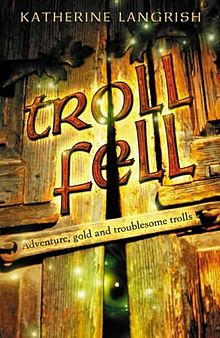
I began with Scandinavian folk-tales about trolls.  I’d been trying to write a story about a young Viking boy which involved him encountering some of the Norse gods. The story just went completely dead on me – I couldn’t find the way forward at all.  If a god befriends your character, why shouldn’t everything go smoothly for him or her? It seemed to me I was having to find complicated explanations for my hero’s predicaments. Then I began reading folk tales about trolls, and realised the book ought to be about them.  I got rid of the gods entirely as an unwanted extra supernatural level, and the book – ‘Troll Fell’ – worked much better as a fairy tale rather than a fantasy.troll fell

When I came to write the third book in the trilogy, I wanted to take my characters over the sea to ‘Vinland’ – North America – something we know Norse men, and probably Norse women too, actually did.  And there my characters would inevitably encounter Native American people, just as the Greenlanders’ Saga describes. It seemed to me legitimate to introduce Native American characters into the book: it was that or pretend North America was unpopulated, a clear impossibility. What may not have been so legitimate – yet it seemed to me important – was to introduce, as players on the North American scene, creatures in some way parallel to the trolls my Norse characters cohabited with. I thought long and hard about it and spent months of research, trying my best to respect and faithfully represent the culture I described. Whether or not I succeeded is not for me to say. The one thing I was sure about was that there would be no ‘white saviour’ in the book.  My Norse hero owes his life to the Native American characters he meets, not the other way around.  I wrote at length about this issue in an essay called ‘Cultural Appropriation and the White Saviour’, and though the discussion has moved on over the last few years, I still cautiously hold to what I said there.  Here’s the link:

http://steelthistles.blogspot.co.uk/2010/06/cultural-appropriation-and-white.html

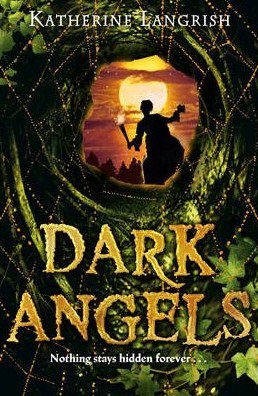
In books such as Dark Angels and the Troll trilogy you explore the worlds of what might be called ‘the hidden people’ and their interactions with humans. The idea of a ‘hidden people’ with a wide range of magical powers (from large to small) and alien intelligence but with many similarities to humans and who appear to be drawn to us–if only to exploit us at times–is part of the traditional folklore and stories of many cultures right across the world. Why do you think this is such a universal notion?

Wow, that’s a huge question… and yet maybe it’s a small one too.  Haven’t we all had the experience of laying something down and then minutes later not being able to find it?  It’s so, so frustrating: ‘It has to be there! I know perfectly well I put it there, just before the phone rang!  And now I’ve looked everywhere – and it’s gone!’  The temptation is to blame borrowers, or gremlins, which we know is a joke – but it still makes us feel better to be able to focus the frustration on some invisible, tricksy thing that’s sitting there laughing at us. Maybe it’s a human trait to imagine the universe as personal rather than impersonal. We can deal with the personal, we can understand it and negotiate with it – we humans are very good at that.  Such feelings must have been far, far stronger in the past, before science began coming up with ‘rational’ explanations for everything.dark angels

Incidentally, just where have I put my keys?

You have been a storyteller as well as a writer. How does that influence your fiction?

I began story-telling years ago when I lived in France and our children were small.  I joined a a weekly English-language story session at the Bibliotheque de Fontainebleau for children aged three years and up. It can be quite hard to keep the attention of a group of fifteen to twenty little ones when reading from a picture book: you’re facing them, and you have to keep stopping and turning the book around so they can see the pictures, and that interrupts the flow.  An inspirational friend suggested that we all tried telling stories ‘from the heart’ instead of reading aloud. I loved it. I found you could keep the children’s attention better and they make the pictures in their heads. I continued to tell stories to older groups of children for many years, and learned a lot about pacing a story, about narrative structure, and about the kinds of things children enjoyed – what got them excited, what made them laugh. So yes, I think it really did help my writing, which loosened up and at the same time became more confident. I just – love telling stories.

A new way of writing: an interview with Simon Higgins

Simon Higgins Web Friendly Biog PicToday I am interviewing author Simon Higgins about his extraordinary new creation, DarkSpear, which features an intriguing way of writing combining several art and media forms.

Simon is an Australian screenwriter and author of books for young adults. Originally a police officer, then private investigator, he turned writer in 1998. He has 13 novels published so far, often combining crime, speculative fiction and historical adventure. His 2008 novel, Moonshadow: Eye of the Beast, was an Australian bestseller and was also published in the United States, Germany, Indonesia and England. He currently lives in China where he works in several creative fields.

Simon, this exciting new release of yours, DarkSpear, is what you have called a ‘visual novel’ . Can you explain what that means?

Sure, Sophie. Visual Novels (VNs) are something quite fresh and exciting for many in the Western world! I keep summing them up for people in these terms: they’re books you play, games you read, a hybrid of textual novel and interactive computer game.

They evolved originally in Japan, spread throughout East Asia, and are now gaining many appreciators in both Europe and English-speaking countries like the United States, Canada, Australia and New Zealand. But not enough yet, I say.  🙂  They have so much to offer!

VNs are, at the core, literary, but like computer games, they offer new ways to enjoy fiction by thatching in extra mediums to intensify the reader/player’s immersive experience. So although text heavy, they also employ elements like a short opening film, sumptuous backgrounds, detailed images of the characters, sophisticated music, and even sound effects, to intensify story impact.

They are also an interactive storytelling medium, kind of the cyber-era descendant of those delightful old ‘Choose Your Own Adventure’ style books and games from the 80s. This is what you could call their gaming side. A player must decide what the protagonist will do at certain points, choosing from two or three options that suddenly confront them.

Different choices lead to different storylines, which in VN jargon are called routes or paths. Should you pick one that eventually ends in some decidedly nasty fate, it’s okay…because you also choose ‘save points’ along the way, which you can return to anytime using the menu. Thus, having noted where you made that critical wrong turn, you’re able to just dive back into the story world again, land close to that point, and take a different path!

Depending on exactly how the VN has been written, you may, or may not, on behalf of the protagonist, get to cheat what we could call ‘the hero’s ultimate fate’, but with each route you try, the journey will certainly change. It’s a pity real life doesn’t offer such options sometimes, heh? 🙂

How did you come up with the concept, and why? How long was it in the making?

 I wish I could say I’d invented the concept, but alas, it was more a case of stumbling on it while living and working in creative circles in China, and immediately thinking, ‘Wow! So many imaginative people I know in the West have probably never heard of this medium, but would absolutely love it!’

Quickly thereafter it also occurred to me that this could be a powerful rescue tool for all those parents and teachers who bemoan having a clever, curious teenager in their lives who just-won’t-read while computer games stalk the face of the earth and compete with books for their brain space.DarkSpear1

Here, I thought, is a bridge between the two worlds, one immersive and engaging enough for anyone to want to cross it, at least once. Now I should warn that not all VNs I’ve seen are what you might call wholesome, just as can be said for books. But many are, some are utterly delightful, and a few are even pure art.

I also (as I sometimes formally testified in court, way back in the police force) ‘formed a certain suspicion on good grounds’. A suspicion that once writers in the West, be they self-published, emerging or established authors, read a VN with good storylines and dialogue and gripping ideas, a cry would go up that I’d be able to hear all the way from China. A cry of ‘I want one too!’

Once I’d developed that feeling, and of course, found the right creative partners, the process, from the birth of the dream to my VN’S first ‘draft’ in playable form, took about four or five months. That included writing the tale’s routes, and programming.

DarkSpear is a multi-arts, multi-media project. Who did you collaborate with, and how did the process go? What challenges did you face?

 I teamed up with Lava Entertainment, an ambitious, intensely creative young company based here in Guilin, China, who had set up shop, as fate would have it, just walking distance from my own office at Crane Animation.

That’s where I write for Gemini Fables, an animated TV show, coach the in-house writing team, fine-tune crucial subtitles, and get to participate -to various degrees- in a wide variety of awesome projects. I get to travel regularly with my work, and sometimes have the joy of meeting Chinese directors, screen writers, TV celebs and actors – so many lovely and stimulating people.

I’m Crane Animation’s chief creative consultant and my official designation, based on my track record in the West, is Foreign Expert. Kind of chuffed about that, seeing as the first one ever was Marco Polo. 🙂 Always nice to feel you’re following in a legendary author’s footsteps, though happily, unlike Marco, nobody ever points crossbows at me when I move between provinces for business travel. 🙂

My regular work can include tasks related to animation, filmmaking, educational and safety initiative creation, commercial branding character design, and all sorts of projects that harness story and imagination to help build international friendship ties between China and other parts of the world, including Australia and France.

But the Visual Novel project with Lava was aside from all that, out of my comfort zone you could almost say, because it required me to quickly get to know a brilliant young team of artists, programmers and business people who spoke, in some cases, minimal or no English. That was naturally an ongoing challenge as my Mandarin is very basic.

However, we all persevered, and as we worked on the project, they coached me in the technical side of putting together a VN, which at the outset, involved me, the author, not only writing the story but creating at least three primary variations to its overall arc and then designing a series of sub-deviations within each major ‘route’.

Along the way, I had to chart out where key moments would turn into decision-points for the reader/player, and depending on their choices, sweep them seamlessly into other paths, and possibly, back out again to the original route, later. At first, it was mind-bending. 🙂 I remember hunching over my notebook, in genuine zombie mode, after working on it intensively one weekend, my wife devotedly shovelling noodles into my mouth with chopsticks, murmuring, ‘You can keep working, but you gotta eat.’

I also had to conceive and storyboard all the major background art, and work with the Lava team on character design, choices of music, and desirable sound effects for heightening the drama at certain points. And, towards the end of the whole process, I had to script, storyboard and direct the promotional and opening-of-game short films.

So the mission took in elements of novel then script writing, computer game design, film production and directing. I totally loved it, such an intense creative stretch! 🙂 My wife Jen, who won her creative master’s degree at RMIT in Melbourne, gave me many fabulous ideas and edited the final short films, even organising a Beijing composer to create the videos’ original music while actually watching the footage in real time.

One interesting challenge was the area of writer’s vision v. artist’s vision, something I’m sure is familiar territory to anyone who’s ever worked collaboratively on a picture book or illustrated anthology. Two different styles of creative mind, coming at the same territory from two different frames of reference, well, it can easily become a Batman V Superman-level epic clash. So yes, I did end up negotiating, at times, with the team’s artists over story v. imagery.

Fortunately, Chinese artists, in my experience, are the absolute opposite of volatile. We did have the odd lengthy chat about why, in certain instances, it really was necessary to stick to what my text described, as opposed to the artist’s view that a more free-form interpretation of that passage ‘could look so beautiful.’

But there was a great spirit of teamwork prevailing overall, and in the end, I did- happily- make some concessions, including changing certain details in the story to fit the envisioned art. I just had to. So many of their random ideas were just great! And I really love their distinctive work. Kai, the chief artist, for instance, somehow manages to bring digital and classical art style elements together in a really absorbing way.

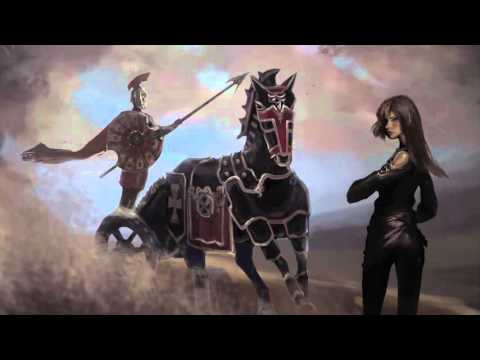
DarkSpear2 DarkSpear is set in a dystopian future, and centred around a feisty, talented heroine, Kitty Sato, who is drawn into a dangerous secret world. How did you create the character of Kitty, and research the interesting phenomenon of psi-gamma(ESP) ability?

In some ways, Katherine ‘Kitty’ Sato was all about coming full circle for me.

1998 saw my first novel, Doctor Id, hit the shelves courtesy of Random House, and its star was young Jade Draper, a policeman’s daughter and reluctant psychic, misguidedly drawn into a hazardous opportunity to bring down a serial killer, and, fittingly for one of my characters, doing so with the aid of her Asian best friend and some-time love interest, Wing Tran.

The story’s murderer used the internet, which in 98 was wild and ‘un-policed’ compared to this century, to select and stalk his victims. I’ve been told -and I don’t know if it’s true- that I was one of the first authors to employ the whole ‘killer harnesses the net’ device in a crime novel. It did seem to surprise reviewers.

Whatever the case, that ‘X-factor’ certainly gave the book, a young adult tome, a topical edge that kick-started my career and garnered a Notable listing from the Children’s Book Council of Australia -no mean feat I think, given its gritty elements, including visceral nightmares and strangulations with superhuman strength.

Flash forward to a different century. 🙂 Late 2015, me contemplating my 13th novel. This time, though I again wanted to write about a tough young woman with precognitive abilities, I felt that this time round, she should be of mixed racial heritage (Jade and Wing combined, or perhaps a parallel to their potential child) and in no way reluctant to delve into her latent though unmanageable powers. I decided that this time, rather than be up against a killer, my heroine should be up against THE killers…in some timely but ultimate sense. And who would they turn out to be? Sorry. You’ll have to read the book, AND make some sound choices, to help Kitty find that out. 🙂

Once I’d come up with Kitty’s profile, I knew that, in a world now more savvy and cynical than the one I was first published in, this new young psychic Miss would need a credible backbone for her paranormal abilities, so I hit the books and the net (while feeling very safe from the serial killer I long ago created, thanks to the Great Firewall of China) and did lots of research…

It is just plain fascinating to discover how long and hard humans, educated, science-based, sceptical ones included, have relentlessly pursued what is in essence a romantic idea. ‘I can foretell future events; I can sense what’s in your pocket; on the back of that card in your hand; in the depths of your heart.’ Really?

Never, it seems, in the lab, under the scrutiny of objective, careful observers using reliable, untampered-with equipment. So says history, lots of it. Of course, part of the mythos of special powers is that real psychics are indeed among us, but being the real deal, will always refuse to be tested, even though they’d pass with flying colours.

As an amateur sociologist, anthropologist and self-resigned poster child for OCE syndrome (Obsessive Compulsive Exploration) I found this area of study utterly riveting, and dived into it fanatically while developing Kitty Sato and her world.

And while reading around the subject, I relentlessly beset my poor wife with sudden, random ‘Hey! Did you know…?’ outbursts. To her great credit, even when my excited rants had reached the double numbers, she still responded with patient smiles as opposed to kung fu. 🙂

So I got to know a world so interesting to work with, it became the reason DarkSpear is subtitled The Prologue. Yes. Good news. Lava Entertainment and I are planning at least one, possibly two more VNs in this series.

There is another fascinating aspect to DarkSpear too, in which a player’s own psi-gamma levels are actually evaluated during it. Can you tell us more about that?

dark spear 3Me being me, I was, as the project unfolded, once again hoping to come up with some ‘X-factor’ element that would really enhance the VN’s immersive qualities… 🙂

Once I knew that one of the major themes in my story would be Kitty’s psychic powers and how they might be both detected and scientifically demonstrated, I did my research then laid quite a challenge on the brilliant young minds I was working with.

Why? Because the Lava crew had said to me early on, during an initial brainstorming session, ‘Please suggest some sort of appropriate puzzle that could be included in the VN. Sort of a game within a game, for added interest and value for our customers.’

There were some very interesting expressions around the table when, in a later meeting, I explained Zener Card experiments at Duke and Princeton universities, as well as under the auspices of the CIA, in the latter’s case, as part of their hunt for real psychics to recruit as spies -all of this, now well-documented history.

The eyebrows really went up when I asked Jie Deng, CEO of Lava, if he thought he could design a real, scientifically-credible ‘Zener test engine’ and embed it in the VN. Well, he burned the midnight oil and went at the challenge like a trooper, employing skills he’d learned studying gaming science in, of all places, Birmingham, England, where he also developed his great -and now frustrated- love of ‘real’ fish and chips.

Jie’s subsequent success was to become that longed-for ‘X-factor’ component, DarkSpear’s utterly unique feature that sets it aside from all other VNs! Yes, if you are that rare, rumoured to exist individual with latent psi-gamma capacity (parapsychology-speak for real ESP) this humble Visual Novel can scientifically prove it, and by way of screen shots, help you document it. But I wouldn’t necessarily suggest sending a triumphant email – with supporting attachments – to the CIA. 🙂

How would you summarise the main features or benefits your Visual Novel offers readers and/or game players?

 Firstly, it’s a true read but with something more added: sensory immersion. Music that alters with the story, striking visuals that shift and change, sparingly (and strategically) used sound effects. But not everything is shown or done for you…so imagination, visualisation, and engagement on a thought level remains a major factor.
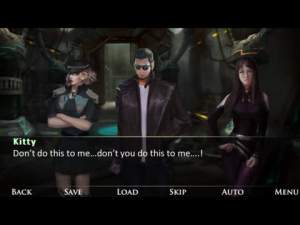
dark spear 4Secondly, while predominantly a book, it’s one you run on your phone or tablet for convenience, and also part-computer game, hence genuinely interactive. You help steer the story, and that’s exciting and unpredictable. You can ‘live it’ more than once, each journey as unique as the choices you make, but not too much is laid on you. The interactive aspect is not relentless, so you can still lose yourself in the tale.

Thirdly, it’s a kind of Trojan Horse. It has the potential to lure some, who just aren’t, in their own estimation, ‘reading types’ into an experience that may expand their habits to their lasting benefit. Put it on a young hard-core gamer’s Android, iPhone or iPad, and if they don’t delete the new ‘oddball’ game, they just may bring it inside the city walls of their personal culture, where, come nightfall, out will tumble the hidden warriors of readership. At least I pray as much, to all the gods, old and new. 🙂

Thanks so much for the interview, Sophie! As you know, I love YOUR work. 🙂 And by way of epilogue, I should probably also mention that anyone visiting the Official DarkSpear Page on my website, can download their own free 13 piece set of original artwork used in the VN. Just go to http://simonhiggins.net/darkspear-visual-novel/


Author site: www.sophiemasson.org
The translator’s art: an interview with Stephanie Smee

Stephanie Smee portraitTranslation is an art both precise and subtle, and the work of distinguished Australian translator Stephanie Smee has those qualities in abundance. Stephanie has translated several works of French literature into English, and I first met her some years ago, after the publication of her translations of classic French children’s titles by the Countess de Ségur. We got talking about other French classics, and I happened to talk to her about one of my favourite books growing up as a French-speaking child: Michel Strogoff, a great adventure novel by the legendary author Jules Verne.

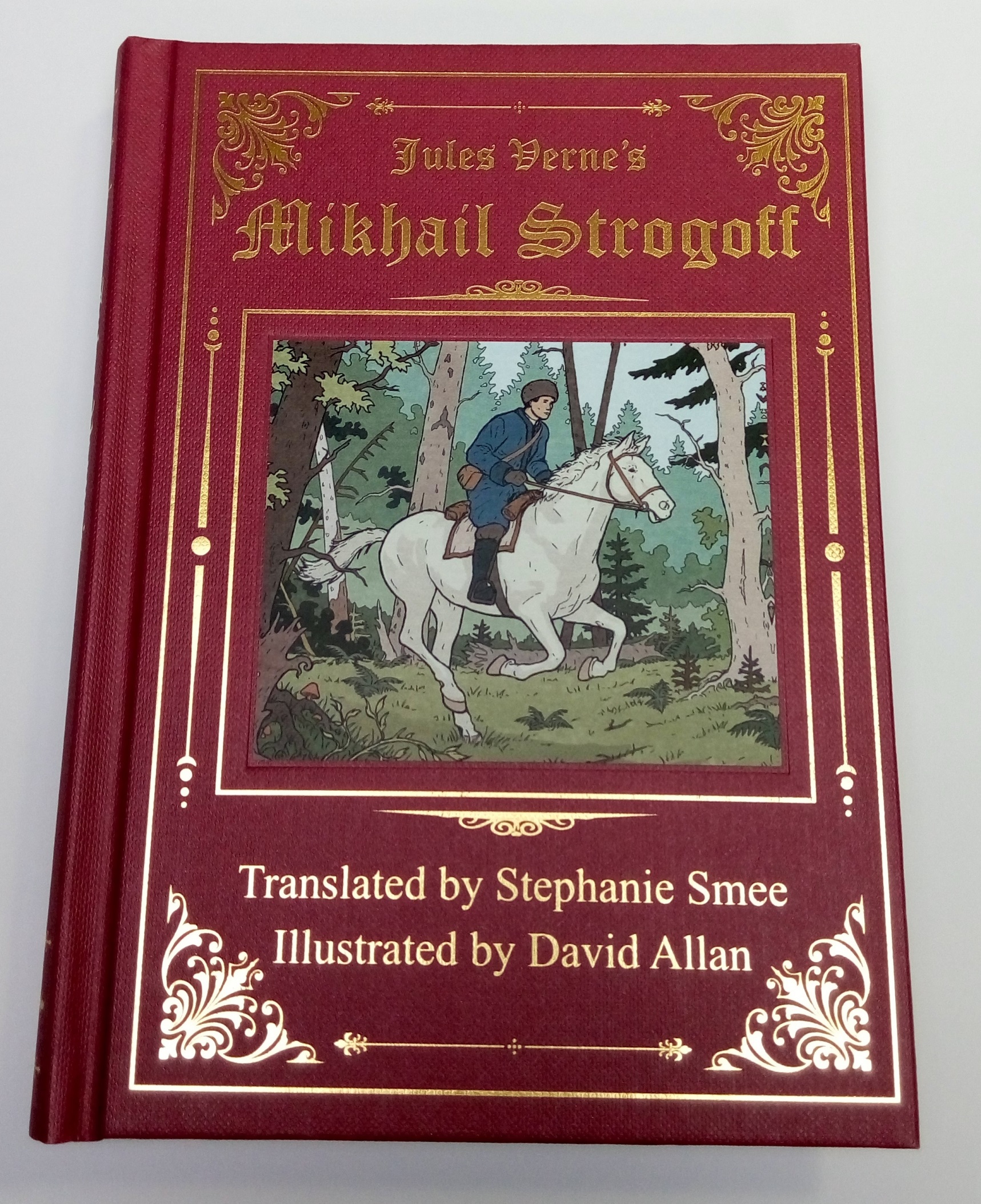
Well, that conversation has led to today, and the publication by Eagle Books of Jules Verne’s Mikhail Strogoff. This is the first English translation of this wonderful book in over a hundred years, and as one of the publishing team at Eagle Books, I worked closely with Stephanie on the project, impressed as ever by her great attention to detail and her thoughtful and perceptive understanding of the literary work she was translating. And so today, to celebrate the release of Jules Verne’s Mikhail Strogoff, I talk to Stephanie about translating the book–and the art of translation in general.

Stephanie, translating Jules Verne’s Mikhail Strogoff was a massive and painstaking undertaking. How did you prepare for it initially?
Like many Anglophone readers, I was really only familiar with those books of Jules Verne that have always been popular with English readers… Around the World in Eighty Days, Twenty Thousand Leagues Under the Sea, and I confess it had been many years since I had read those tales.
So, when discussing with you possible ideas to pitch to English language publishers, your enthusiasm for this historical adventure tale took me a little unawares. However, after getting my hands on an original French edition, and spending some considerable time researching, I realised how enduringly popular Michel Strogoff has been with its French readers. And I became increasingly nonplussed as to how it had slipped from the catalogue of Verne’s other, perennially popular tales which had been translated into English.
How does one prepare for a translation task such as this? A number of readings of the text, of course, which serves to allow your mind to “relax” into the rhythm of the text, but then the close readings are required, and the true breadth of Verne’s rich vocabulary and sentence structure sinks in. At that point, there’s nothing for it but to “dive in”!
 What challenges came up for you as you worked on the book?
 
mikhail strogoff finished 1 front coverVerne’s vocabulary is encyclopaedic, and one can almost sense the glee with which he displays his research into the historical, geographical and cultural specificities of his setting. I was very fortunate to have been given some magnificent 19th century French/French and French/English dictionaries by my father-in-law, Jim Schoff, and there is no doubt these proved very useful in grappling with some of the more obscure terms that came up from time to time. I also found some of the 19th century maps of Russia, Siberia and “Independent Tartary” (again, supplied by my father-in-law) absolutely invaluable. One editorial challenge, with which you were very helpful, was determining the appropriate transliteration of place names. Of course, Verne had transliterated place names from the Russian cyrillic into 19th century French. We then had to settle upon the appropriate way of spelling all of these names for our 21st century Anglophone readership while remaining authentic to the historical setting of the novel. As readers will be aware, customs surrounding the spelling of Russian names can be a moveable feast and often differ from one current newspaper or novel to another, depending on the editorial decisions made. The historical maps I had at my disposal were certainly useful, but again, it was customary in the 19th century for many mapmakers to use French spelling of Russian place names, as it was assumed that educated readers and scholars would have French at their fingertips and unfortunately, we can’t make such assumptions for our readership anymore!  
 
I did often wonder how translators used to manage before the internet allowed us access to so many superb resources, including to such things as 19th century accounts of travellers making their way through the same or similar parts of the world as our hero, Mikhail Strogoff! Images of Tartar battle dress or Siberian towns which I was able to access through Google books often allowed me to create a mental picture of the word-image I was trying to paint with my translation of Verne’s detailed text.
Verne’s narrative is quite straightforward but his style is richly laced with idiomatic and other flourishes. How did you capture that very particular spirit?
 

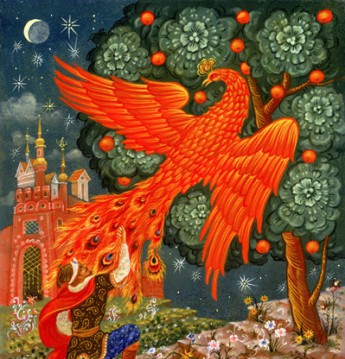
The longevity of Verne’s popularity, in my opinion, derives from his masterful skills as a storyteller. His tales are built on a driving narrative force that reveals itself to the reader – and thus, to the translator – as we turn the pages. Verne is a great “scene-setter”. And so, he interlaces his chapters with scene-setting descriptions, often packed with information, followed by “lighter” chapters of spirited dialogue. There is nothing staid about his evocative descriptions. Rather, he successfully evokes a landscape which will then be the setting for the following dialogue between his characters, all of whom are very brightly drawn, from the main protagonists, Mikhail Strogoff and Nadia, to the testy muzhik responsible for leading them across the Urals, and to the jocular journalists who act as the entertaining Greek chorus to events as they unfold. All of this to say that the

Strogoff 6

Illustration by David Allan

translator’s task really has to be to imagine herself into the landscape, listen to the rhythm of the descriptions and the dialogue and try to render that same rhythm into English. Where there is a particular urgency to the events unfolding on the page, I’d like to think that a good translator will be able to reflect that same urgency – whether it’s as simple as adhering to similar sentence length, or perhaps through a choice of words that will help make the narrative pop and crackle with that same sense of urgency. Of course, 19th century literature often uses tenses  and moods that are rarely employed in modern literature and ideally, those grammatical nuances will be reflected in the English too, although there is a fine line to be drawn sometimes when translating tenses which would perhaps seem “clunky” or awkward to a modern reader’s ear. As for the dialogue, there is no doubt Verne’s own skill in drawing his characters rendered it a joy to translate their dialogue as it meant I had little difficulty imagining myself into their conversations and under their skins.

At this point, I should also underline my gratitude, not only to my editor and publisher–yourself!–but also to my father, Michael Smee, whose assistance in proof-reading – offering second and third pairs of eyes and ears to “hear” the rhythm of the text – were quite invaluable.
How different was it working on this translation as opposed to those you have worked on before, such as the Countess de Ségur’s classic children’s books?
 
The translation of Mikhail Strogoff was indeed quite an undertaking, and in this respect, it really felt quite different to sitting down to translate the Countess de Ségur’s books, which although quite lengthy for their genre, have a considerably younger target audience to that of Strogoff. (That said, I just received a very enthusiastic message from my 11 year old nephew telling me how much he loved this Mikhail Strogoff finished 2 back coverlatest translation, but that while he had been waiting for his copy to arrive in Boston, he had eagerly revisited all of my translations of the Countess’s books, so there is obviously a little bit of audience cross-over!) In attacking a work like Strogoff, there is a different level of stamina required both in respect of the novel‘slength and the complexity of its vocabulary. Julie Rose’s masterful translation of Les Misérables of course takes that degree of difficulty to a different place altogether! Verne and the Countess de Ségur did at least share some similarities of the epoch in which they were written, being works penned in the 19th century.
Russian-French writer Andrei Makine, in one of his novels, Le Testament Francais, has his narrator say ‘the translator of poetry is the poet’s rival; the translator of prose is the novelist’s slave.’ What is your opinion? Do you have a philosophy of translation? 
 
I can quite understand narrator’s standpoint in Makine’s novel. It suggests a degree of “freedom” that perhaps a translator of poetry might enjoy, compared to the prose translator. But I’m not sure I agree entirely.
While the quote from Makine acknowledges the “originality” of the poet/translator’s new work, I disagree with the suggestion that the translator of prose is in any way more the novelist’s slave, to use that same imagery.  The rules relating to the translation of the ‘form work’ and ‘scaffolding’ of prose might be different to that of a work of poetry but at the end of the day, translators of prose and poetry are both working creatively and originally, both limited by a desire to remain as faithful as possible, not only to the original text, but to its emotion and rhythm. In many ways, as illuminated by the comments below of John Edmunds, renowned translator of the verse-dramas of the likes of Racine and Corneille, translators of poetry might feel more “enslaved” by the need to adhere to the particular poetic structure and rhythm of the original work.
As a translator, I stand most in awe of those who translate poetry but are they the original poet’s “rival”? A good translator of poetry is truly not just any ordinary linguist – they must hear the poetic rhythm in the source language and be able to recreate that beauty, that mystery, that imagery in the target language. It requires decisions about meters, rhyming – whether it is best to try to retain those rhythms in the target translation or stray a little from the source language in order to recreate a rhythm that somehow best captures the original imagery and magic of the poetry.
I recently read John Edmunds’ notes on his extraordinary translations of the plays of Corneille, Racine and Molière (Penguin Classics, 2013). They are illuminating, and in fact suggest that the translator of these “verse-dramas” are, in a way, just as much these play-wright/poet’s slave as their rival. He says:
A translation intended for performance not only must be immediately intelligible to the listening ear, but ideally, I have always thought, should be capable of delivery by a putative bilingual cast in precisely the same way in either version. Like musical scores these verse-dramas have their crescendos, staccatos and rallentandos: in the new medium they need to be preserved. This can be achieved only by maintaining the sentence-structure so that the actor’s breathing-pattern is reproduced, because the pulsation of the performer’s vocal energy is the life of the play. And, clearly, the action has to flow at the same pace as the original. This necessitates a line-by-line rendering.
 
A play written in verse is truly recreated in another language only when it has the formality of disciplined verse-structure. Which form to employ?
 
And Edmunds then goes on to discuss his choice of Shakespearian blank verse “which has a driving impetus and the rhythm of colloquial speech” over the English alexandrine which, he suggests, is “too stately for drama; and the rhythmic beat of our heavily stressed language does not need rhyme to create form.” He also comments that rhyming couplets can sound jokey, at least to British theatre goers “reared on pantomime.” Ultimately, he says, the translator can only do his best with the tools available to him in his own language in reverence to the “supremely gifted authors” one has the privilege of translating.
My own “philosophy” of translating? Many scholars and practitioners have penned many thoughts on this topic and I’m not sure I should be so bold as to add my own. I do know, like John Edmunds, that I feel an enormous sense of privilege to be working as a literary translator, particularly translating the work of a literary figure such as Jules Verne. And even though I am not a translator of poetry, I also know that beautiful prose, too, has its own rhythm, its own fluidity, its own internal mysteries which any good translator must try to encompass in their work. So, if a translator can recreate that original sense of wonder and excitement generated by any good piece of literature, whether it be a work for children or the most fiendishly obscure piece of poetry, then perhaps the translator has succeeded in her task.
 
It’s been said that there aren’t enough novels from non-anglophone countries translated into English. Would you agree? And why do you think that is? 
 
Yes, indeed I do agree – as both an avid reader of translated literature and as a literary translator! Although I hasten to add that I have been very, very fortunate to have a number of my translations published beautifully by both Simon & Schuster (Aust) and of course, Eagle Books. That said, Linda Jaivin, in her essay Found in Translation published in the Quarterly Essay (issue #52, 2013), referred to statistics that are enough to make any literary translator cry.
 “[H]alf of all books available in translation around the world have been translated from English, and only 6 percent are translated into English. The rest are translations between non-English languages… In 1950, American publishers produced 11,022 books, of which 563 were translations. In 2010, the number of books published there climbed past 200,000, but only 341 were originally in other languages. … In 2012, according to Bloomberg, American publishers bought translation rights to only 453 foreign titles; figures in the UK are said to be similar.”
And, she goes on to say, there is no reason to believe the situation is any better in Australia – in fact, she says, it’s probably more dire.
Why is this the case? There are many reasons, but most of them come down to the fact that English has become the “default” language of the world. And at the same time as the rest of the world has adopted an educational approach that emphasises the need to learn English, largely for trade reasons, the number of people who still learn foreign languages in English speaking countries is plummeting. This can only lead to serious cultural insularity and, while learning a foreign language is not an easy task, as Jaivin acknowledges, “a sensible corrective is access to a rich body of global literature in translation.” Yet we are failing on that front, too. Monolingual publishers/editors make it difficult for foreign language publishers to sell their works into the English language market, as they are forced to rely on potted descriptions, quickly translated excerpts, and, only if they’re lucky, some healthy sales figures or reviews in the original language market. The same difficulties confront literary translators trying to pitch ideas to Anglophone publishers. Even when books have earned their stripes in sales and reviews in their native market, I have often been met with the response: “translations are very hard to find space for in the market”.
 
Why  they are any harder to find space for than untested English language books is quite mysterious to this literary translator. Sales in Anglophone markets of Pippi Longstocking and Asterix would, I’m sure, rival sales in their own market, due to their very skilled translators and to the fact that they are quite wonderful books! Yet I do know why. In a market where publishers are being forced to tighten their belts, there is little cash to spare to pay for English language publishing rights, as well as a skilled translator. And I can only assume also that sales and marketing teams must know there is an inherent reluctance or suspicion on the part of readers when it comes to foreign literature. Fortunately, at the same time as so many of the large publishing houses are publishing fewer and fewer works in translation, there are increasing numbers of independent publishers, like Eagle Books, who recognise the need to take a stand against the cultural hegemony of the Anglophone publishing industry and who are making it their business to publish works in translation.
Our wonderfully cosmopolitan and plural society deserves no less, particularly if we mean to engage in a meaningful, reciprocal and generous way with the billions of people on this planet for whom English is not their mother tongue. We need to be able to hear everybody’s stories!
What are you looking at translating next? 
 
I’ve in fact embarked on a terribly entertaining translation project with my Swedish mother. We are translating some very well-known (in the Swedish market) children’s stories by Gösta Knutsson about a little cat called Pelle whose tail was bitten off by a rat when he was a kitten. They were first published in Sweden in the late 1930’s-1940’s and Knutsson continued to write for many decades. They’ve been enormously popular in Sweden since they were first published.  The first three in the series are to be published next year by Piccolo Nero, the children’s imprint of Black Inc publishers.
I’m also working on some submissions involving the translation of some modern French novellas and short stories which I’m very excited about. They’re written in very different language to the 19th century text of Jules Verne, but I’m loving the challenge. They’re wry and erudite, fanciful and yet thoroughly modern… works that are very much for and of our time.

Do It Yourself Book Publicity: An interview with Emma Noble

diy book pr guideGetting your book written and published is one thing. Getting it noticed in the flood of new titles is quite another! Today, I’m interviewing publicity specialist Emma Noble, who’s just released a book that answers a lot of questions about how to plan and run a great book publicity campaign. It’s a book that will be of much interest both to authors and small publishers.

Emma, your book, The DIY Book PR Guide: The Happier Guide to Do-It-Yourself Book Publicity in Seven Easy Steps, has just been published. Can you tell us something about it, how it came about, and who it’s aimed at?

 It’s aimed at self-published authors mostly, but also at traditionally published writers who want to better understand what their inhouse publicist is doing for them, and perhaps even to support their efforts. I wrote it out of sheer frustration, actually, at the number of authors I wasn’t able to take on because of time constraints. I wanted to try to help them in some other way. Book publicity is most definitely not rocket science but it’s convoluted and time-consuming if you don’t know what you’re doing. The DIY Book PR Guide lays down the basics of planning and executing a campaign that is tailormade for your book.

You run a boutique communications and book publicity agency, Noble Words.  What kind of services do you offer writers and publishers? And what sorts of projects have you been involved with?

I mostly work with big publishers who need a helping hand during busy periods, and I tend to be given campaigns that might be slightly more complex or time-consuming than usual; for example, footballer Chris Judd’s nationwide tour to promote My Story in late 2015. I also work with an increasing number of self-published authors on promoting their books. This month, I’m working with: social enterprise Thankyou on their book-slash-crowdfunding campaign Chapter One; self-published YA urban fantasy writer Karyn Sepulveda on Choosing Xaverique; novelist Lynnette Lounsbury on her modern take on a beatnik road-trip, We Ate the Road Like Vultures, published by indie outfit Inkerman & Blunt; ReadHowYouWant, the Australian company responsible for bringing the dyslexie font (which greatly improves the ability of dyslexics to read) to a huge range of local titles; the Little Darlings Childcare Centres on their self-pubbed cookbook, Yia Yia’s Kitchen Secrets; parenting expert Maggie Dent’s first picture book for kids, My Cool Plastics Cupboard; and, last but not least, I’ve been running courses on DIY book PR for the Australian Society of Authors and the NSW Writers’ Centre.

Phew.

Self-published authors often ask me about other aspects of the publishing process, too – distribution, bookshop ranging, a little marketing, and so on – and I find myself offering informal advice but I try to connect them with other specialists in these areas instead.

Before starting your own business, you worked for publishers in Australia and the UK. Can you tell us about that? What writers did you work with? And what prompted you to start your own publicity agency?

I started out in editorial for illustrated non-fiction with Phaidon and Quadrille Publishing in the UK, before deciding publicity was where all the real action was and moving sideways across departments. I worked with Orion Publishing in London for about five years, before moving to Sydney to head up publicity for Orion’s Australian office within Hachette Australia. I was lucky enough to have worked with some incredible writers, with a particular specialty in crime fiction, and celebrities.

Very few publicity director roles exist in Australian publishing so, when none of these jobs came up during my four years at Hachette Australia, the obvious step seemed to be to use my contacts and experience to best effect and start my own agency.

What in your view are the top publicity challenges for small press and self-published writers? 

Organisation and planning are huge challenges for self-published authors and small presses. When you’re responsible for every aspect of a book’s production, carving out time to sit down and nut out a comprehensive publicity plan can be hard. What’s more, self-published authors often have little PR experience so it’s all new to them. The planning phase is really crucial; spend your time well here and you’ll end up with a handful of great story ideas and a plan for which media to pitch them to, resulting in a campaign timeline that you can simply plug into your email calendar so you never miss a media organisation’s deadline.

Competing with larger publishers with marketing budgets and established relationships with media can also be challenging. But the beauty of book publicity is that it is an option for absolutely every author, and will cost you little more than your time and a few free copies of your book.

What are your top tips for book publicity?

a) Answer these two questions – what is my story and who is my audience – and you’re well on your way to creating a winning campaign. The first gives you your story ideas, the unique ‘angles’ arising from your book or personal history, that you will use to promote yourself. The second tells you who you should be trying to talk to and, by extension, the media you should be targeting. That’s half the battle.

b) Be honest. Firstly, with yourself; it’s a rare book that genuinely appeals to everybody and being frank about your target market will help you avoid wasting time pitching ideas to media who will simply never cover your book. Secondly, with media; it’s hard to keep track, in this increasingly multiplatform-oriented media world, of who publishes what and where so let journalists know when they indicate interest in your story what else you have lined up and let them decide if they want to proceed.

c) Work up a killer elevator pitch. This is a short, succinct and persuasive description of what your book is about and how it is different from others on the market. You’ll use variations of this description as the basis for all your interviews, press releases and pitches to journalists so it’s worth spending time on getting it right.

WIN! One lucky reader of this blog will win a copy of The DIY Book PR Guide, kindly donated by Emma Noble. To enter, simply contact me (through form on Contact page), with a comment on any aspect of book publicity–could be an anecdote, an observation or your own tip! 


International Authors Forum: an interview with Katie Webb

IAF-logoThe increasing global challenges to authors’ rights and livelihoods in many different spheres has had one very positive result: the formation of the International Authors Forum, an organisation whose membership consists of national author organisations from across the world, and which exists to ensure authors’ rights and interests are represented worldwide.​​Today I interview Katie Webb, Executive Administrator of the IAF, about the important work the IAF is doing for the cause of authors globally.

Katie Webb holds an MA in Medieval English from King’s College London and a diploma in EU, US and UK copyright law. She has worked extensively with British writer and authors’ rights campaigner Maureen Duffy. Since 2012 Katie has coordinated the International Authors Forum.

Note: All images are from the IAF website, and used with permission.

The IAF is a fantastic initiative, and feels like an idea whose time has really come. Can you tell us about how and why it started? 

IAF was established formally in April 2014 but had been meeting informally since 2009. Its purpose is to give a worldwide voice to authors, in particular to writers and visual artists. It is a federation of organisations representing authors all over the world, and in particular their interests in copyright (or droit d’auteur in Civil Law countries) and access to fair contracts.

IAF started with a coming together of authors’ organisations in different countries – at that stage mainly Anglo-American and European – who met regularly, along with publishers and organisations which manage their rights collectively, through the International Federation of Reproduction Rights Organisations (IFRRO). This group decided that their members needed an international platform that was independent from publishers (who already have their own well-established international organisation) where they could be represented at WIPO (the World Intellectual Property Organisation) in Geneva, which is the UN special agency that regulates the international copyright framework. (http://www.wipo.int) WIPO also recognised this lack of representation from the very group for whom the rights it looks after were created to protect, and has been very supportive of the initiative. Another very important reason for establishing IAF was to work for authors to achieve fair contract terms with Promo-pic-Version-2-e1453989402672publishers, unfair contracts being a near universal problem for authors, which is only getting worse in these global, digital times as the publishing industry is increasingly driven by the corporate interests of shareholders and only authors who will produce bestsellers and write works for the ‘mainstream’ get a look in.

IAF is here not only to tackle the problems though, but to give more authors the means to take advantage of the wonderful opportunities for finding audiences and making a living from their work independently, which are available thanks to new technology and the internet. We do this through solidarity, information exchange, creating a worldwide network and encouraging authors to strengthen their collective representation in their own countries. We also have partnerships with relevant organisations. For example, we have recently entered into partnership with the International Public Lending Right (PLR) Network and are working to promote the benefits of PLR to authors worldwide, as PLR is a right which is currently only available to authors in certain countries. The same goes for the re-sale right for artists, the campaign for which we also support, and are hoping will eventually be enjoyed by artists in all countries.

Links:

PLR International – https://www.plrinternational.com

Artists Resale Right Campaign – http://resale-right.org


What challenges did you face along the way to establishing the IAF?

Creators are not by their nature necessarily given to operating within organisational frameworks, as the businesses which work with their rights are, so it is always going to be a challenge to create an organisation made up of authors. However, despite the individualistic nature of their work, working together to preserve the diversity so essential to their profession by advocating for their rights is a necessity most authors recognise and support.

Tavores-MakoreOf course, the more immediate and frustrating challenge is of resources. Creators of course need to spend most of their time creating, and it is a notoriously difficult profession in which to make ends meet – so of course the same goes for an organisation representing them – we are really pleased with the progress we’ve made so far, and have been lucky to have secured the funds to get as far as we’ve got, but getting IAF onto a sustainable footing is an ongoing challenge and one that won’t go away, so we are always open to opportunities for ways to make our limited resources through partnerships and joint projects. And, of course, we have to channel some of those resources into fundraising!

What is the aim or philosophy of the IAF?

IAF is here to give authors a voice worldwide.

The vision is to ensure the world is an environment where authors can create, in which their work is appropriately acknowledged for the value it brings to society, and that authors have the opportunity to be fairly paid for all uses of their work so that they can continue doing it.

Our mission is to preserve individual, independent creative expression and enable authors to exercise their human rights in the moral and material interests in their work (the wording used in Article 27 (2) of the Universal Declaration of Human Rights (UDHR), to which a well-functioning copyright regime makes a fundamental contribution, and also ensures that everyone can enjoy the access to science and culture to which the counterpart of this right (Article 27(1) UDHR) grants them.

We’d also like to remedy the perception among ‘free culture’ advocates that copyright is somehow ‘anti-access’ and bring the creator back to the heart of the rights in their work and the discourse about those rights.

Which author organisations are in the IAF? How is membership determined? And how do you go about holding meetings when members are scattered across the world and in different time zones?

Currently we represent 56 author organisations – unions and societies of writers and artists – in different countries, who between them have over 600,000 individual author members. We have members in all regions – we are pleased to say after a meeting in Mexico last year our first members in Latin America joined – they are from Panama, Belize and Mexico. A full list of members is available on our website.

Link: http://internationalauthors.org/iaf/iaf-members/

To become a member, the criteria is straightforward: an organisation must represent only or primarily authors. We aim to be as inclusive as possible. We are lucky that our current Chair (just re-elected for the next two years) is the wonderful poet, novelist and Executive Director of The Writers’ Union of Canada, John Degen.

We hold two physical meetings a year alongside the International Federation of Reproduction Rights Organisations (IFRRO), which many of our members attend because they are also IFRRO members – so this cuts down on travel costs. Our Annual General Meeting is always attended by the majority of members by teleconference. This year it was in Sweden, which meant our members in Sweden and neighbouring countries could come. But to keep costs down we communicate with members mainly through regular newsletters and our website. We attend the Copyright Committee at WIPO in Geneva, which has two meetings a year, at one of which we usually hold a ‘side event’ on a particular topic relevant to authors, which are made up of presentations by authors from different countries describing their work and why their rights are so important.

For example:

http://internationalauthors.org/business-author-iaf-reports-event-geneva-latest-sccr/

We invite these authors to come to Geneva to meet IAF and the Government Delegates at WIPO who are members of the Committee – nearly 200 countries are represented on this Committee in total.

If we could get everyone together in one place at one time, that would be wonderful, but for now we have to see each other when we can, and make do with all the other ways to connect of which, luckily, there are plenty.

What are some of the issues affecting authors that the IAF is currently working on?

Authors’ rights are under attack on many levels worldwide. These can be seen in the issues arising at national and international levels.

Our members identified the priorities for IAF’s work in a survey we carried out in 2012 – 13. These are still relevant and determine the focus of our work.

They are:

  • For IAF to lobby to ensure that any exceptions to copyright are balanced properly with authors’ rights and enable them to be paid fairly for all uses of their work. Certain governments, particularly in Africa and South America, have proposed worldwide treaties for copyright exceptions for libraries and in education, which are currently being discussed at WIPO. Whilst the motivation for such exceptions comes from the good intentions to improve standards of education and access to information, if these efforts do not include the means to compensate creators for providing the essential ‘content’ upon which they depend – which could be the effect of overly broad copyright exceptions – the quality, quantity, variety and locally authored nature of such resources are severely threatened. This can be seen from the unfortunate case of Canada, where the broadening of the exception for education in copyright law in 2012 led schools and universities to abandon their copyright licenses and has resulted in losses of tens of millions of dollars to Canadian authors and has diminished the Canadian educational publishing industry. This change, intended to benefit education, has in fact seen costs to students rise at the same time as it is eroding the quality of materials to which they have access.

IFRRO has produced this valuable case study on what’s happened in Canada, and in February this year, the Copyright Board in Canada made the devastating decision to severely cut the tariffs set on its educational copyright licenses.

Link – IFRRO Study: http://ifrro.org/sites/default/files/canada_after_the_changes_to_the_copyright_legislation_in_2012.pdf

Link – Canada Copyright Board decision:

http://internationalauthors.org/new-blow-to-canadian-educational-writers-incomes/

IAF is working to ensure delegates at WIPO know of these dangers and consider the impact of any decisions they make on the creator, especially with regard to copyright exceptions. Last year we produced a booklet of testimonials from authors around the world focusing on this issue which is available on our website (http://internationalauthors.org/wp-content/uploads/Copyright-Works.pdf) along with the truth behind some popular ‘copyright myths’ http://internationalauthors.org/wp-content/uploads/copyright-myths-website-full-version-english.pdf by our very own John Degen. Both are available in English, French and Spanish.

Kevin-Francisco-Maureen-Maggie-7-Dec-2015-e1450277962780We have also developed ten principles for fair contracts for authors, which are applicable to authors in all countries.

Link: http://internationalauthors.org/wp-content/uploads/IAFs-Ten-Principles-for-Fair-Contracts.pdf

Authors’ organisations in some countries are very active working with publishers to achieve fairer contract terms, but IAF’s principles are broad enough that they can be useful to any author who is confronted with the daunting prospect of signing a publishing contract that asks for their rights.  When this happens, although authors are pleased to have a contract, they are often in the position of being unfamiliar with the legal language used and up against a team of powerful business people who have access to their own legal support, when the author has none.  It is a joint venture in which the partners are not very equal. Ultimately, though, publishers are the authors’ means of getting their work to an audience and so they are often too willing to sign away more than they need to, or is fair to ask them for. Our fair contracts campaign aims to stop this exploitation and ask for fair contracts for authors, like those which are offered by the many responsible publishers out there.

About the campaign: http://internationalauthors.org/3105-2/

Another counter to this, self-publishing is being adopted by an increasingly significant number of authors and we are thrilled that the Alliance of Independent Authors (ALLi) (http://allianceindependentauthors.org), became our first member working specifically in the interests of self-publishing authors last year.

We are about to publish a set of guidelines for authors on how to publish their works in formats which are accessible for people who are blind or have ‘print disabilities’, meaning they cannot read text in conventional formats, as part of our work on the Accessible Books Consortium (ABC). http://www.accessiblebooksconsortium.org

ABC is facilitated by WIPO and has arisen in the wake of the Marrakesh Treaty adopted at WIPO in 2013, which represents a global commitment to ending the ‘famine’ of books available to people with such disabilities. ABC is dedicated to making this ambition a reality. We are very excited about our guidelines. By making their books accessible, self-published authors can ensure their work reaches as wide an audience as possible, which is after all what most authors set out to do.3-Maribel-in-red-jacket-updated-photo-April-20151-e1439914511681

The concerns of IAF and our members are not limited to the challenges and opportunities of technology, however. Our activities also include supporting and strengthening the representation of authors in so-called ‘developing’ countries. For example, we are currently supporting our member in Sudan, the Sudanese Writers Union (SWU), whose license to operate was last year revoked by the Government. The Union is struggling to be reinstated but of course, IAF and its members still recognise the SWU as a legitimate and important representative of Sudanese authors.

http://internationalauthors.org/iaf-appeals-shows-solidarity-dissolved-sudanese-writers-union/

How do you see the future for the IAF?

I would like IAF to continue to grow and to represent authors in all countries in order to ensure the preservation and on-going operation and evolution of their rich and diverse cultures. Using the expertise and experience of its well established and active member organisations, we would like to encourage authors in countries whose collective action is not so strong, to take an interest in, understand and advocate for their own rights. Of course, this all strengthens IAF’s voice at WIPO, but we would also like to begin working more closely with relevant intergovernmental organisations such as the United Nations Commission on Human Rights (UNHCR) and UNESCO – so that they too, through IAF, have access to the perspective of real, working creators and are encouraged to give their rights appropriate weight in the decision-making processes that work toward the objectives which governments the world over are trying to achieve, especially at this time of such geo-political instability. That everybody can access the work of professional, independent, working creators – whose job is to communicate new ideas, foster tolerance and cross-cultural understanding and innovate with information – is such an important part of working towards a world with less of it.