An interlude to introduce the Juvenilia Press

I’m delighted to learn today that the Small Beginnings series on this blog is being featured on the Facebook page and linked to the website of a wonderful specialist press publishing out of the University of NSW, the Juvenilia Press, which focusses on the very early writings of authors, including classic authors like Jane Austen! Here’s something about them:

The Juvenilia Press promotes the study of literary juvenilia, a category of literature that has been largely neglected. Its editions are slim volumes of early writings by children and adolescents (up to the approximate age of twenty), including published and unpublished works of young authors – both those who achieved greatness as adults and those who did not become adult writers but whose writing is full of percipience and zest.

Founded in 1994 by Juliet McMaster at the University of Alberta in Edmonton, the Press has since 2001 been based in the Faculty of Arts and Social Sciences at the University of New South Wales in Sydney, and has an international team of contributing editors from Britain, Canada, Japan, Spain, Switzerland, New Zealand, the United States, and Australia.

The volumes are normally devoted to one author and are edited by an expert in the field, with the assistance of one or more students, usually postgraduates. Student involvement in the research and editorial process is an essential part of the pedagogic aim of the Juvenilia Press; and the illustrations, often executed by young aspiring artists or by the original young authors themselves, aim to capture the tone of the original productions. By contributing to the recovery, publication, and critical exploration of childhood writings, the Juvenilia Press actively promotes literary research and the professional development of students. At the same time, they endeavour to provide, for a wide audience, an insight into the creative energy of this rich and varied body of writing.

Do check them out on Facebook, and visit their website for more information: https://www.arts.unsw.edu.au/juvenilia/


Small Beginnings, 7: Simon Higgins

My ceaseless passion to tell stories and use images, myths and legends to excite and inspire, came online at an early age, thanks mostly to my mother. Though mum only much later published one book -her awesome memoirs of life in India, Africa and mid-revolutionary Cyprus- while a widow in a nursing home, she’d always been a gifted storyteller, the person who taught me to speak, draw, read and write.

By the age of three, I was a precocious (but creative) little monster.

One of the pictures accompanying this piece(right) shows me on the migrant ship bound for Australia, three 3 yr old Simonyears old, concentrating intensely on my first (illustrated) novel, which  mum later told me was a reboot, superhero style, of the legend of Robin Hood. In my version, Robin had weird powers, made animals help him fight the rich bad guys, and if cut with swords or shot with arrows, he could come back to life nine times, like a cat.

Apparently, a very dignified English fellow passenger, older fellow, quizzed me about my work, then commented, ‘Not the true story of Robin Hood, young chap.’ Mum, at age ninety in the nursing home, told me I leaned towards her and whispered, ‘He’s a bloody fool.’ To be honest, I still don’t always take criticism of my work that well. 🙂


When I was ten, by then a big comic/graphic novel fan, I went to hospital to have my tonsils out. While there, I wrote and illustrated my own unlicensed Marvel comic epic, ‘The Hulk Takes Asgard’ in which Thor’s brother Loki kidnaps Doctor Bruce Banner and unleashes him, brainwashed, as the spearhead of a coup to put himself on the throne. I remember being outraged when I came back from the toilet and caught three nurses sitting on my bed, hunched over my comic, reading intently. I’m fortunately a lot less precious about such things these days. I even like the fan fiction based on my stuff. 🙂


At twelve I entered an international poetry competition coordinated by the Women’s Weekly. One had to write a poem about Jose Feliciano, the blind guitarist (BTW he says ‘I’m blind’ so please, no silly PC ‘vision impaired’ lectures, thanks). The finalists were read to Jose, and the top ten global winners received autographed sets of his albums AND publication in the Women’s Weekly. Yeah, my first published work! Bagged with a poem, that in part, went like this:


A man alone, a famous star.

A man alone with his guitar.

He has no sight, yet he can see,

in a way that stuns and puzzles me


Anyhow, the important bit was that this made me a star at school for about twenty minutes, until our cricket team defeated our hated rival, and the fickle crowd forgot my greatness. Hosanna! Not for long. 🙂


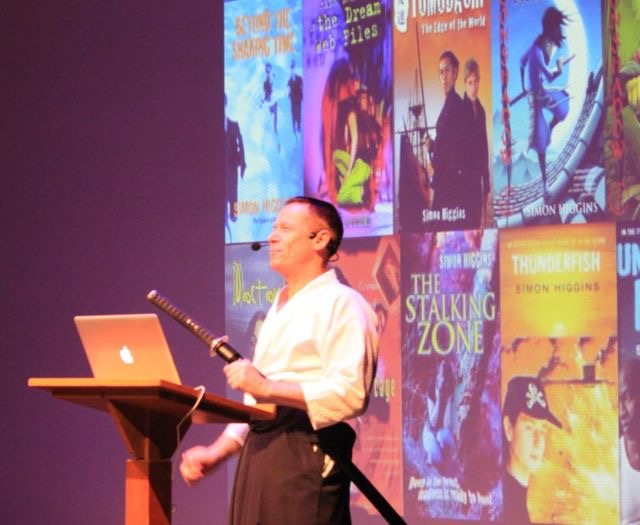
IMG_3466Flash forward beyond several careers that I sometimes describe as ‘lives.’ Marketing manager, police officer, private investigator and so on. In my maturity I turned to writing full time and out tumbled the same obsessions. I trained in martial arts. No bows and arrows like Robin, but swords and unarmed combat. Several kinds.


I spent a lot of time in Asia, where I now live, in fact, and penned a bestseller called Moonshadow about a ninja who controlled animals, whose ally was a cat. The kind of beast that would have nine lives. Sound vaguely familiar? 🙂


I just saw my thirteenth novel published, DarkSpear, my first Visual Novel, text-centred but image, music and sound effects enhanced, an exciting, evolving medium. Seems I am still that same little boy storyteller; my DarkSpear heroine, living in the near future, has special powers, and is caught up in a conspiracy of the One World Government (the new rich bad guys).IMG_3467


What do I make of this? Put simply, I was born and this is what I am. The hiatus in between the early years and professional creativity was destined input time. I grabbed life experience, reading, other forms of learning, which informed my later, somewhat more refined work.


At the core, I remained that imagining, legend-rebooting, cartooning kid.


If people don’t get my stuff, they’re bloody fools.  🙂           


DarkSpear Bannerwww.simonhiggins.net

Small Beginnings, 5: Hazel Edwards

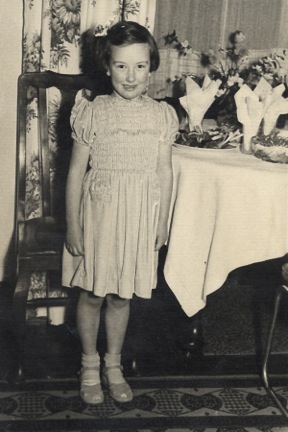
Hazel, aged 6

Hazel, aged 6

I always knew I wanted to be an author, but wasn’t sure how to do it.

My first writing was for the children’s page in the local newspaper where you got credits & certificates. I also belonged to the ABC Radio Argonauts children’s program, where stories were read out on the wireless. Probably I was about 8, when my first writing went in the newspaper. It was about a para long. But each Saturday morning I’d race to pull out the Children’s page. I’ve always been a messy newspaper reader.

I was fascinated that black squiggles on paper were the code to get inside a writer’s head.

My Grandma read to me and I learnt to read myself before I started school.

I started diaries on January 1st but they’d usually been forgotten by the end of that month.  I was more interested in other worlds. (That’s probably why I like co-writing now).

I can’t remember what I wrote about, because I was writing most of the time.

The first book-length story I remember finishing in about Grade 6 was a kind of Enid Blyton style mystery with a group of children down a mine. I didn’t know how to finish the story, so I left them there.

Maybe that’s why I now like well plotted mysteries.

Hazel’s latest books are her memoir ‘Not Just a Piece of Cake; Being an Author’   and the co-written ‘Hijabi Girl’. ‘Hippo!Hippo! the Musical’ is touring nationally.

http://www.hazeledwards.com/page/hijabi_girl.html

http://www.hazeledwards.com/page/not_just_a_piece_of_cake_being_an_author.html   ‘Anecdultery’ the first chapter in the memoir explains the challenges  of exaggerating childhood stories.

Small Beginnings, 4: Wendy Orr

Putting on play for parents

Putting on play for parents

I started writing stories and poems as soon as I learned to read and write in English, when I turned seven. Before that, as a Canadian Anglophone child going to school in France, I wrote only in French – my mother still has letters I wrote while she was in hospital – and I wrote only letters. But English was not simply the language we spoke at home, it was the language of stories: both bedtime books, and my father’s crazy made-up

OLYMPUS DIGITAL CAMERA

stories. Learning to read in it gave me the freedom to create my own.

OLYMPUS DIGITAL CAMERA


Spring Island text 1

From ‘Spring Island’

What I remember most is not the stories – or poems or plays – themselves, but the act of creating: the taste of the thoughtfully chewed pencil, the sun coming through the window onto my paper, the never being quite comfortable kneeling to work on the coffee table – but most of all, the joy of creating something new. Something I never doubted would be extraordinary, at least until I lost interest in it and moved on to the next piece. (The project to write a poem for every letter of the alphabet fizzled out after Puppies).  But some persevered for years. When I visited my parents in Canada after a US tour for the Nim’s Island movie premiere, my mother found the story I’d written at 8 or 9: ‘Spring Island. From the changes in handwriting in the notebooks, we guessed that it covered two school years.

I quite deliberately channeled this story when I was writing Nim’s Island: not so much the story itself – a girl and boy meet after running away from their orphanages, and live alone on an island until they get adopted and get horses. In fact, until I saw the notebooks I’d forgotten that there was a boy in the story, although I then remembered his primary purpose: to kill fish. I identified too strongly with the girl to have her do it. (Don’t condemn me, this was 1963. When Nim needs to eat a fish, she kills it herself.)

Spring Island Text 2

More from ‘Spring Island’

Instead, what I drew on was the psyche of the child who wrote the original story. The child who wanted to be competent, adventurous, resourceful, or, as I heard it in my head, ‘who could do stuff.’ (Which was not necessarily me in real life.)

Early on, I started writing poetry to express emotion, a habit I’ve continued till this day.

OLYMPUS DIGITAL CAMERA

Stories and plays were written more for fun; for that joy of creating a new world, finding evil villains and, as I got older, handsome heroes. But there was always the drive to find out


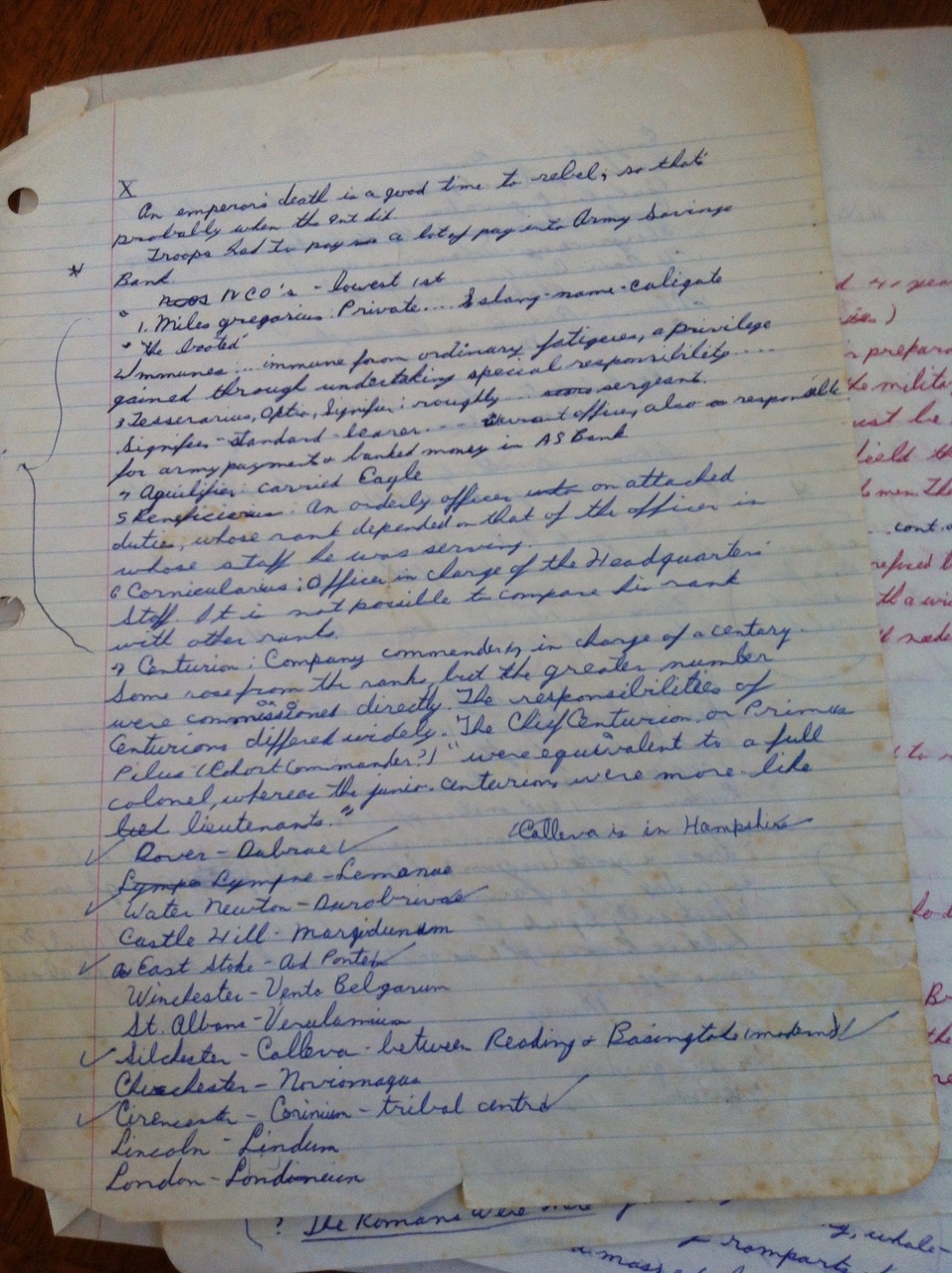
more as I explored these worlds, and even when I was revelling in a dramatic adventure or bossing the neighbourhood children into acting or watching my plays, I remember the strong sense of dedication and purpose. At twelve, I discovered Rosemary Sutcliff and started writing my own story of Roman Britain. We were living near the US Air Force Academy in Colorado at the time, so my long-suffering mother used to drive me to the library there to research Roman military history. I still have the notes, a clear image of the protagonist – and the memory of the conviction that I

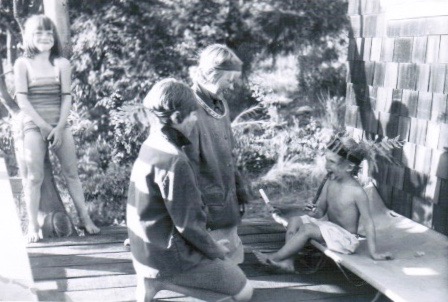
Putting on play for neighbourhood children

Putting on play for neighbourhood children

would become a historical novelist.

Now, a frighteningly long period later, I’ve finally written the sort of book that the thirteen year-old me thought I might grow up to write. Dragonfly Song, to be published with Allen & Unwin in July, is set in on an Aegean island in 1450 BC – a very different setting and roughly fifteen hundred years earlier than the Roman era in Britain. However, I believe that everything we write with care and passion is laid down as a foundation for all the works that come later. The years of private poetry have led me to use sustained verse for the first time – and creating my young centurion’s world, through a mixture of research and imagination, was one of the steps that led me to this new story.

A young Wendy's notes for her Roman story

A young Wendy’s notes for her Roman story

Small Beginnings 3: Goldie Alexander

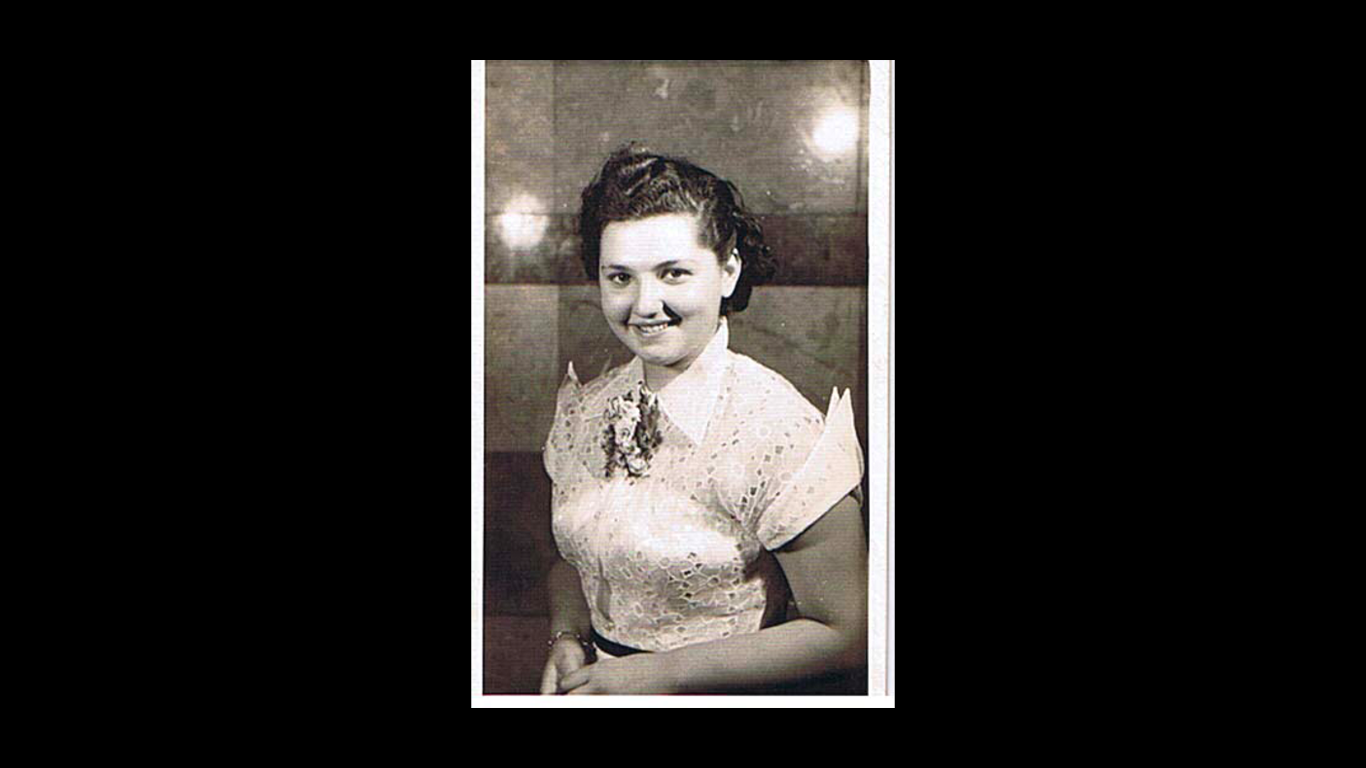
Goldie at age 16

Goldie at age 16

I didn’t really start writing my own stuff until quite late in life. Somehow there was nothing in my schooling that encouraged any form of creativity. If ever I tried to write an essay that contained a story, I was actively discouraged, told to leave that to ‘proper’ writers. We kids were instructed to keep to discursive essays.

So what I did when I was young, and still do when life gets me down, is read. And all that reading produced a wealth of imagination. I had always been a voracious reader. But when I was a kid reading was considered ‘a big waste of time’ when one ought to be doing something more ‘useful’. I got into so much trouble for always having a book with me, in fact was almost expelled from a small private school for calling the sewing teacher (I hated sewing)  a ’fat pig’ when she caught me reading under the desk instead of learning to hemstitch.

I read everything I could lay my hands on. Looking back, some books would have been regarded as inappropriate, such as ‘The Body’s Rapture’ by Jules Romains which I found in my mother’s bookshelf.   It did explain something about sex to a generation kept in blissful ignorance.

So my first true experience with writing came in my third year at university when, between countless and very boring essays, one assignment was to write a play. That was it. I fell in love with writing.

Goldie today

Goldie today

One would think all that early reading would have encouraged me to write wonderfully well right from the start. Unfortunately, that didn’t happen. I started with adult short stories, even had one accepted by ‘The Australian Literary Supplement’ that was never actually printed. But given I was now teaching English and History to secondary students and at the time there was so little written for kids in an Aussie setting I had a go at my first novel.

I don’t have it any more. All I can say is that it had a very long title – this was fashionable at the time – and questionable plot and characters. I remember when asked by a publisher what it was about, being left totally tongue tied.

What did fall into my lap was being commissioned by Greenhouse Publications in the early 90’s to write young adult novels.

I was given very specific instructions. They had to be no more than thirty two thousand words. The setting was to be contemporary. Though the story should show girls becoming more empowered – this was at the height of women’s lib – it must contain some romantic element.

Such specific instructions meant I had something to hang onto, as back then there were no creative writing classes. If it was still a matter of hit and miss, I had a terrific editor who ‘fixed up’ my mistakes.

So my very first novel called ‘EVERYTHING CHANGES’, and written under the pseudonym Gerri Lapin, opens like this:

****

JOIN DONABEL’S MUSICAL PRODUCTION OF GREASE

AUDITIONS FOR SPEAKING PARTS AND CHORUS FRIDAY 23 JUNE

“Christie and I pushed our way through the group of people milling about the noticeboard, then headed toward the canteen.

‘I saw that film on video last year’, Christie was saying. ‘The girls wear fab fifties gear; tight pants, dresses with necklines right down to here,’ she pointed to a spot barely above her waist, ’Tiny waists and full skirts.’

          We found Christie’s boyfriend Wayne, sprawled out on a chair, halfway through a Mars bar. ‘How about Donabel putting on its own production?’ Christie asked, flopping down beside him.  ‘Jo reckons we should get into it.’

***

Of course it had some romantic twists though everything ended in a satisfying way. I was so proud of my first novel that I showed it to all my friends. I remember one telling me he had picked it up in a bookshop.

I asked, ’Did you read it?’

He gave me a disdainful look. ‘Hardly,’ he said. ‘Not the sort of stuff that interests me.’

Ah well. Those books gave me, and quite a number of other well known writers, the start we needed. Since then, I have never stopped writing.


Goldie Alexander writes award winning short stories, articles, radio scripts, plays and books. Her novels are published both in Australia and overseas for readers of all ages. Her latest book, a fantasy/scifi novel for older children, is Cybertricks. Her books for adults include: ‘The Grevillea Murder Mysteries’ ‘Lilbet’s Romance’,  Dessi’s Romance’,Penelope’s Ghost

and ‘Mentoring Your Memoir’. Her first YA novel ‘Mavis Road Medley’ was a Notable CBCA, was shortlisted for by the Office of Multi-Cultural Affairs and is listed as one of the best YA books in the Victorian State Library. Her best known book for children is: ‘My Australian Story: Surviving Sydney Cove’. Her fiction for children includes three collections of short stories and several mysteries, fantasies and science fictions. Her other historical fictions include: ‘The Youngest Cameleer’, ‘That Stranger Next Door’, My Holocaust Story: Hanna’ and the verse novel ‘In Hades’. She has also co-authored a non-fiction book, The Business of Writing for Young People, with fellow writer Hazel Edwards.

Small Beginnings, 2: Nick Earls

A young Nick(foreground), with friends

A young Nick(foreground), with friends

I’ve taken Small Beginnings literally and gone back to the earliest existing examples of me coming to grips with the written word. In fact, written letters.

I turned up at school six weeks short of five years old. Storytelling was already a big part of my life by then – the revelation that it might actually be A JOB took another few years to happen. My family had always been big on books and full of stories, so I’d had a formula story that I’d told most days at Ballyholme Playgroup before lining up for one of the two classrooms at the sternly Victorian-looking Grangee School in 1968. In my stories, the central character, a bird called Tommy, would tumble into a toilet and be flushed all the way to a sewage treatment plant and another adventure among the poo and big orange diggers. My audience had all been four too, and what do four year olds love? Poo and big orange diggers. Since then,  I don’t think I’ve ever been quite so astute about writing effectively for a market.

jotter 1But Grangee wasn’t about stories, at least not that first day. It was about taking the first faltering step up the steep slope that led to literacy. I opened my school jotter (it says ‘Jotter’ on the front) and, as Mrs Pollock directed, wrote a page of ‘O’s. Note the big pink tick. Mission accomplished. Then I turned over and wrote a page of ‘X’s. Another tick. Then we went home for lunch.

Afterwards I was horrified to learn that I’d be going back. And not just going back – going back most days for the next twelve years. I thought I’d had the school experience. I’d turned up, done my page of ‘X’s and my page of ‘O’s, got my two ticks. What more could there be to know?

jotter 2Quite a bit, it turned out. How to manage a page, for a start, as my increasingly huge and truncated attempts to write ‘Dick Has the Dog’ demonstrate.

Less than two years later, I’d learned enough to write the work that could, with generous definitional stretching, be called my first book. It’s a journal of a holiday with my grandparents in Yorkshire. I can remember sitting and writing it each night at the kitchen tables of elderly relatives and family friends – people who had featured in the books of James Herriot – putting a lot of thought and work into it, even though it comes across as just the facts:


Tuesday 7th July 1970.
It was hot and sunny so we went to Knaresboro’ to see Mother Shiptons dropping well, wishing well and cave
In the afternoon we went to Ripon and looked round the Cathedral and then on to Studley Royal Park where there is a large herd of deer.


If it had been overcast, would we still have gone to  Knaresborough (I’m sure I picked up ‘Knaresboro’’ from a road sign)? I don’t know, but I can still remember the dropping well and its petrifying socks and teddy bears on strings. That stuff comes back to you in dreams at that age.

Since those days, I’ve turned to fiction, Grangee School has long closed and business seems to remain good at Mother Shipton’s, now in its 386th year as a tourist attraction. And my son, at the age of 6 1/2, is about to take a week off school for us to go to Hong Kong. In lieu of schoolwork, he’s been giving the assignment of keeping a journal of the trip.

Nick Earls has written more than twenty books for adults, teenagers and children. His latest project is the novella series Wisdom Tree, with a novella released (as a paper book, ebook and audiobook) on the first of each month from May to September 2016.

yorkshire journal


Small Beginnings 1: Dianne(Di) Bates

WP_20160426_15_08_59_Pro

Di as a child

The first writing I did as a child was, I’m told, a letter to Santa Claus. My mother said I asked for ‘a typewriter and a good temper’. I’m not sure how old I was, probably about 5 or 6. When I was in sixth grade at a new one-teacher school, I wrote an essay about my ideal home. After the teacher read it aloud, children came up to me in the playground and accused me of plagiarism. Their accusations hurt me so much I can’t remember working hard at writing thereafter.

However, in my first year of high school, I befriended Pamela, the daughter of our English head-teacher. Pamela and I loved a series that was currently showing on TV – Adventures in Paradise. We both imagined ourselves the love interest of the leading man, Troy Donaghue. Consequently we spent hours in the playground co-writing TV scripts where Troy Donaghue would fall in love with each of us.

I wish when I was young someone would have given me books – both to read and to write in. But books were simply absent from my home. Their substitute was hard work on our farm. The only books I read as a child were borrowed once a week when I took myself to the local public library. I don’t remember the librarian ever offering me any books to read other than my regular diet of Enid Blyton books. Nowadays I am never without a book in my hands! Unless I’m writing, of course.

Di Bates is the author of 130+ books, mostly for young readers. Her website, which she shares with her YA author husband, Bill Condon, is http://www.enterprisingwords.com.au. Since 2006, Di has been producing a twice monthly magazine, Buzz Words, for those in the Australian children’s book industry http://www.buzzwordsmagazine.com She is a recipient of the Lady Cutler Award for distinguished services to children’s literature.

A new blog series, Small Beginnings: Introduction

I’m starting a great new series on this blog today. It’s called Small Beginnings and it’s a unique look at how authors and illustrators began creating–not their published work, but much earlier than that, as children, teenagers or even young adults (up to early twenties). I think that this is absolutely fascinating in terms of showing how an author or illustrator begins to shape their craft well before the time they even start to think about the possibility of sending off work for publication.

So I’ve asked a number of fellow authors and illustrators to write about what they created in their early years, and if they still have examples of such work, to show us extracts from them. The response has been fantastic and so I’m delighted to inaugurate the series today with something of mine, as an introduction to Small Beginnings.

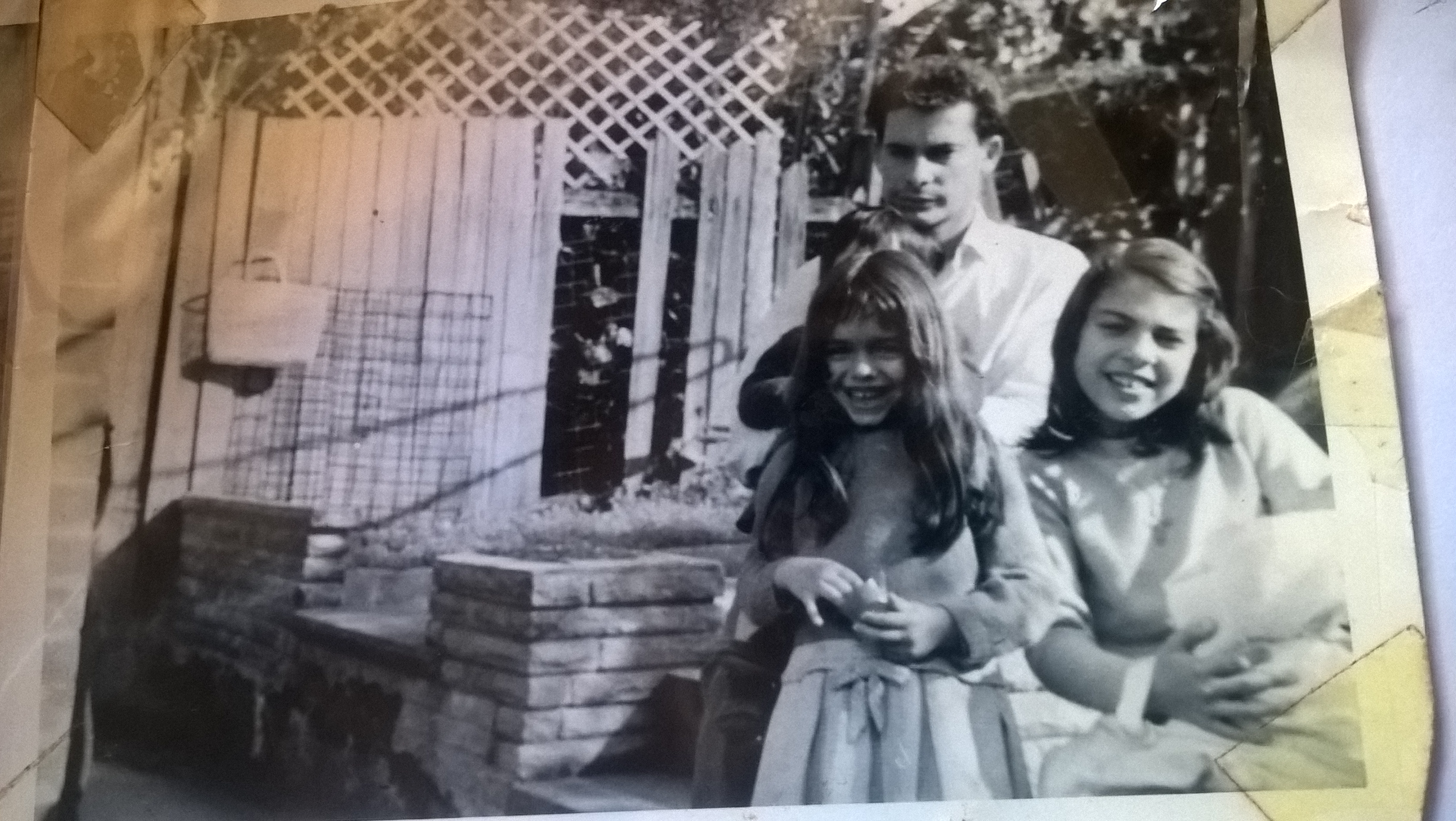
Me aged about 6, with older sister Beatrice(11) and my father.

I wrote a lot as a child and a teenager. I came to Australia from France with my parents and sisters when I was nearly five, and by then I could already read and write a little in French taught by my grandmother, who’d looked after me for some years(due to illness when I was a baby, making me unfit to stay in Indonesia where I’d been born and where my parents were working). I was already mad for stories–oral as well as written and I loved making up my own too. But it was arriving in Australia and starting to write in English that really got me going creatively speaking. I was lucky enough that in all the schools I went to, creative writing was very much encouraged, and at home, we were so surrounded by books and also by the great stories told by my parents that bathing in an atmosphere of story felt totally natural, though the idea that you could be a writer, as a job, didn’t really enter my head till I was well into my teens.

I don’t remember much of the very early stuff I wrote, but a few titles from primary school-age literary projects still stick in my mind: such as The Adventures of Princess Alicia–a lavishly illustrated, multi-episode comic strip story about a heroine who had two attributes I dearly wished I had–not, not a crown, but magic powers: and long blond hair (my hair was long but very dark!) I illustrated this masterpiece too I might add, in the days before I became embarassed by my lack of talent in that direction. And The Life of a Stamp, a

Aged 16, with younger siblings Gabrielle and Bertrand.

Aged 16, with younger siblings Gabrielle(10) and Bertrand (8)

mystery/travel story centred on yes, a wandering stamp which gets posted on the wrong letters and gets in some sticky situations..There was The Twins’ Highland Holiday which was heavily influenced by Enid Blyton’s Famous Five, and there were several poems including one about a ladybird that I got a gold star for in class(I presented the poem written on the back of an illustration of a ladybird). Much of it I remember ‘publishing’ in little books, simply sheets of paper stapled up with hand-drawn covers, with perhaps a little stamp or sticker added to make it look more ‘official’. For a while I even ran a little story club at primary school which I called ‘The Bluebell Club’ (no doubt influenced by Blyton!) in which members read out their own stories. We even had a competition once in which the prize was a book, bought by my mother, who judged the competition–I was very miffed that she didn’t choose mine! As I loved the theatre–I used to go to after school drama classes–I also wrote a lot of plays, very often adaptations of fairy tales, which I wrote, directed and produced and forced my siblings to act in and my parents to watch. My mother was always very kind about these thespian efforts but my father could be quite sardonic about it, slow-hand-clapping and pointing out the narrative flaws rather loudly: an experience which hardened me up for later and occasional poor reviews!

Unfortunately none of that early writing was kept. It’s only when I was in mid-high school that I WP_20160425_11_29_40_Proprotested about parents’ tidying-up urge to chuck everything out and hung on to my writings like a determined limpet! So I have quite a few things from that time–lots of poems, a few short stories, and the beginning of a massive fantasy novel started when I was around 16(and in which I WP_20160425_11_29_11_Prointended to reunite every mythology in the world: nothing like teenage ambition!). And then, from a little later, at 19, a picture book–the text written by me, the illustrations by my youngest sister, Gabrielle, who was 13 at the time. That one survives in its entirety(you can see some pages from it it below).

In all of this what I can see is a young writer who is trying her hand at all sorts of things, enjoying playing around with different forms, flitting around from fantasy to realism, contemporary to historical, light hearted to rather serious, long to short. The craft is rather wonky, but the passion and curiosity–yes, and persistence too!–is very much there. I see, in short, an apprenticeship taking place without my even being aware that it was happening; how could I, when it was so much fun?


Double Act 7: Anna Solding of Midnight Sun

anna soldingToday,  I’m revisiting my ‘Double Act’ series of interviews with authors who are also publishers, and who started their own publishing houses.  And I’m interviewing Anna Solding of Midnight Sun Publishing, a small press that has gone from strength to strength since it started a few short years ago.

Anna, when and how did Midnight Sun start? What motivated you to start your own publishing company?

It started one day when I had lunch with a close friend who is an entrepreneur. Even though my novel manuscript The Hum of Concrete had been nominated for three awards for unpublished manuscripts, no publisher had picked it up. My friend thought this was a shame so he suggested: ‘Why don’t we start a publishing company?’ You know, as you do, over lunch, just like that. My, quite logical and heartfelt, reply was: ‘Because we are not crazy…’ Five years later, we are crazier than ever and MidnightSun is beginning to take off in a big way. My friend’s initial expertise and help was invaluable and I would never have contemplated starting a publishing company if he hadn’t come up with the idea. My novel The Hum of Concrete went on to be nominated for another three awards once it was published, including the Commonwealth Book Awards, which meant we were off to a promising start and we felt that perhaps we could keep doing this.

How did you initially persuade booksellers to stock your books?

I was lucky enough to convince Wakefield Press, another independent Adelaide publisher, to distribute our books nationwide. It’s not really what they normally do so they only did it to be kind and give me a break, which was very nice of them. For the last couple of years our books have been distributed by NewSouth Books, who do a terrific job, getting our books into bookshops (and occasionally even into discount departments stores) around Australia and New Zealand.

Have your aims and strategies as a publisher changed from the beginning? How?

Yes and no. The aim has always been to publish amazing books, both in terms of content and design; books that you can lose An-Ordinary-Epidemic-Amanda-Hickie-The-Clothesline-192x300yourself in, books that look stylish and feel good in your hand. That is still our main aim. On our website we say: ‘MidnightSun Publishing has grown out of a disenchantment with the established publishing houses in Australia. We know there are plenty of fabulous manuscripts about unusual topics floating around, but publishing new and unknown writers poses a big risk. MidnightSun is prepared to take that risk. We want our readers to be entertained. We want to challenge, excite, enrage and overwhelm.’

When we started, we were mainly focused on adult literary fiction but now we also publish a wide range of books for children, from picture books to YA. I have always said that I will only publish books that I love and I think that is a good strategy for a small publisher. Because we spend so much time with each book, we really need to be comfortable talking about all aspects of it to anyone who will listen. Originally, I thought we’d just publish one or two books to see how they went but as all our books have made a profit it has always been easy to keep moving on to the next project. The more well-known MidnightSun becomes, the more high quality manuscripts are sent our way and the more projects we take on. When we started publishing in 2012, we did two books per year, in 2017 we are planning to do five. To publish five or six books per year would secure a more regular cash flow situation, which is something MidnightSun is still struggling with. The more I learn about the business, the more confident I get about all the small steps that need to happen for each book, including the metadata, the AI sheet, different ways to promote the book and which festivals and media contacts to approach.

Has working as a publisher impacted on your own career as an author–whether that be positive or negative?

Yes, I don’t think of myself as a writer first and foremost any more. Publishing has taken over my life, but I have let it happen and I love my job passionately so I’m certainly not complaining. I work with interesting people who all love books, so that has to count for something. Last year, I was fortunate enough to be awarded two writers’ retreat residencies, one month in Finland and one month in Perth, which were both fantastic months when I felt like a writer again. For years, I’ve been working on a ‘companion novel’ to The Hum of Concrete, also set in Sweden where I grew up, and it’s almost finished but I think I need one more retreat to get there. I would like to incorporate more writing into my everyday life, but when I can’t even get a Q&A like this one written until weeks after I should have delivered it, I’m not quite sure how to manage it.

What are the challenges and pleasures of small-press publishing, in your experience? Any memorable anecdotes?

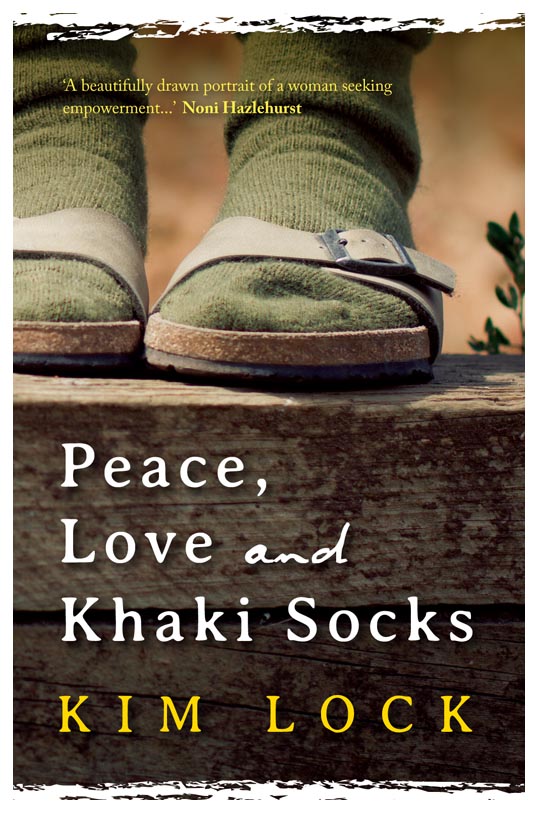
IPLKS_cover love finding new talent and nurturing the writers from the beginning. Kim Lock, whose novel Peace, Love and Khaki Socks, was published by MidnightSun in 2013 has since evolved into being our regular designer. Her new novel has recently been published by big publisher Macmillan, which we think is fantastic. Last year, we published Amanda Hickie’s An Ordinary Epidemic and that book will come out with a new cover and new title (Before This Is Over) in the US next year. There are so many pleasures.

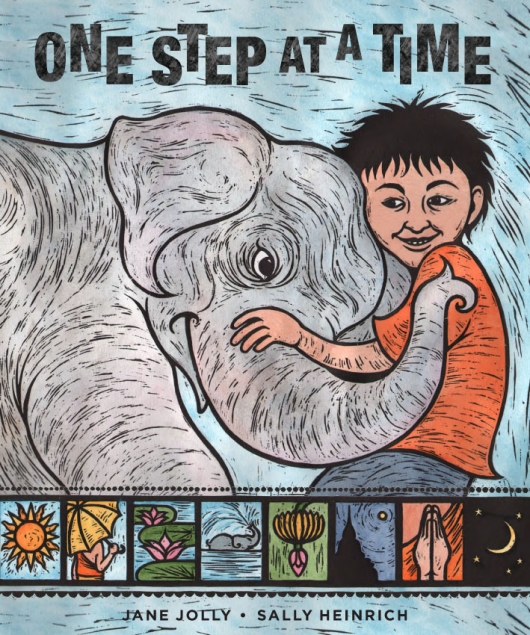
The challenges are plentiful, as they should be. It took almost a year to design the cover for Cameron Raynes’ First Person Shooter and we finally decided on one we all liked after rejecting about 30 others. Fortunately, we have a very patient designer. However, one of the biggest challenges for small publishers is to get noticed in the mainstream press. MidnightSun has a loyal following in Adelaide but it’s always a struggle to even get a tiny review in the larger newspapers, let alone a feature article. The other main challenge, at least for us, is to manage our cash flow. Because MidnightSun is doing really well, our first picture book One Step at a Time by Jane Jolly and Sally Heinrich has been nominated for several awards including the important CBCA award, we are in a position where we need to reprint the book but we have had to take out a loan to be able to do so.

As much as there are plenty of challenges for small publishers, the pleasures of seeing a project through from manuscript form to the final product, a beautiful and thought-provoking book, clearly outweigh the challenges. The buzz of opening a box from the printer to see a new book for the first time is very special and I don’t think I’ll ever get tired of that feeling.

Any advice for aspiring author-publishers?

Go for it! If you are passionate about books and have some sense of business, publishing might be the perfect place for you. I’m not going to pretend that it is easy, because it certainly isn’t, but if you surround yourself people who can help you with aspect that you might be less familiar with, it could be worth giving publishing a go. I have had a bookkeeper and a designer from the start as those were two aspect of the business that I didn’t know that much about. Other than that, you have to learn to wear many different hats; as editor, publicist, sales director, head of marketing and the one who is ultimately responsible – whether things go fabulously or the complete opposite.

Distribution is extremely important and it’s very hard to find a distributor so it’s worth doing some research on this before you take the plunge. Dennis Jones distributes many small publishers. Talk to other small publishers, research printers, become a member of Small Press Network, learn the terminology (what is metadata? AI sheets? ISBN?), subscribe to the daily newsletter from Books+Publishing and, most importantly, find amazing manuscripts to publish. Without intriguing content One-Stepand stunning production your books won’t be noticed. MidnightSun started in 2011 and we published our first book a year later, which felt right as that is how long it took to learn a bit about how the business works. The longer you have to prepare for a book, with marketing material, review copies, interviews, the better. Now that we are more established, we often work on a book for two years before publication. But don’t be scared, if publishing is your passion, just go for it!

Anna Solding

P.S. Metadata is the information that is put into search engines so that it will be easy to find. AI sheets are advance information sheets about the book, which often contain the cover image, a blurb, an author bio and photo, size, price, publication date and the all-important ISBN. The ISBN is the 13 digit number that is under the barcode, which is used by booksellers to identify the book.

The power of fairy tales: an interview with Katherine Langrish

katherine langrishToday I have the pleasure of interviewing Katherine Langrish, author of a number of wonderful fantasy novels for older children, who has just released her new book–a collection of essays on fairy tale.

Your new book, Seven Miles of Steel Thistles, has just been published by Greystones Press, and unlike your other books, it’s a work of non-fiction: but like your other books, it shares a common element–a fascination with fairy tale and folklore. Why are you so interested in them?

Quite simply, I’ve loved fairy tales and folklore ever since I was a child.  I’ve never understood why some people feel it’s a taste adults ought to grow out of, unless perhaps the only fairy tales they’ve encountered have been the simplest versions retold for very little children.  Fairy tales can be profound and as inexplicable as poetry. As I discuss in the book, a story like the Grimms’ tale ‘The Juniper Tree’ deals with enormous themes – murder, jealousy and abuse as well as birth, resurrection, and joyful communion with the natural world.  It will ‘mean’ something slightly different to everyone who reads or hears it, because it elicits from each person their own emotional and spiritual response.  In fact, this story was probably rewritten by a German romantic poet, but that’s the other fascination of fairy tales.  They don’t ‘belong’ to anyone, they’re anonymous, so they adapt to the voice of whoever’s telling the story. And they’re so old!  People have been telling stories like these for centuries.

It’s such a large topic–did you try to pursue a particular line of inquiry or reflection in the book, or is it more organic? And what challenges and pleasures did you find in putting together the collection?

Many of the essays in the book began life on my blog (see below), although for this collection they were massively rewritten and extended. I did not think I had chosen any specific line of enquiry, but to my own fascination I found as I went through the rewrites that a theme was in fact emerging: that of ‘authenticity’. What does, what can that mean in terms of traditional tales?  Is the ‘earliest’ version of a Seven Miles of Steel Thistlesparticular tale ‘more authentic’ than a later one?  My conclusion was, repeatedly, that while it can be fascinating to trace the history and analogues of a tale, it renews itself on the lips of the latest storyteller.

Did any particular fairy tale or folklore scholars influence you in terms of interpretation and reflection?

There are so many wonderful fairy tale and folklore scholars, an embarrassment of riches, but I have to mention the great Katherine Briggs, whose four volume ‘Dictionary of British Folk-Tales’ is a Bible in the field, and whose other books of fairy lore I love – such as ‘The Anatomy of Puck’ and ‘The Vanishing People’. I like her insistence on the primacy of narrative.  I also love Max Lüthi’s ‘The European Folk Tale’ which so clearly illuminates the form and content of the classic European fairy tale.  Most of the interpretations and reflections in ‘Seven Miles of Steel Thistles’ are my own, however – if only because I read the stories long before I read any of the scholars.

You’ve maintained a blog with the same name as the book, over several years. It’s a wonderful title. Where does it come from, and was the blog a bit of a testing-ground for the book?

The title of both the book and the blog comes from an old Irish fairy tale, ‘The King Who Had Twelve Sons’. In it, the hero has to ride ‘over seven miles of hill on fire, and seven miles of steel thistles, and seven miles of sea’.  I love it as a metaphor for overcoming life’s difficulties, including the sometimes endless-seeming struggle to write well.  I suppose the blog has become a testing-ground for the book, though I never expected a book to come of it. I began the blog simply as a place where I could write about the things I love – children’s literature, fantasy, fairy tales and folk-lore – and where I could talk with others who love them too.  Does it sound too fey a comparison, if I say that the blog turned into a fairy garden and the book has grown up out of it like a tree?

Do you have particular favourites in terms of fairy tales? If so, which–and why?

I do – and I’ve written about some of them in the book.  I’ve already mentioned ‘The Juniper Tree’, and I also love ‘Briar Rose’ and ‘Jorinda and Joringel’.  But the story I love best to tell aloud is the English fairy tale ‘Mr Fox’, a very old version of Bluebeard with a far more intelligent and courageous heroine.

What are your favourite folkloric creatures?

My absolute favourites are the household fairies – the brownies, nisses, tomtes and domovoys which live with human beings and help (and sometimes hinder) them. I’ve written about then in several of my books for children: they’re an independent, mischievous, yet devoted race. They offer their services freely and will stay for so long as they are treated with respect and a dish of cream or oatmeal is left out for them on the hearth.  I love the way stories about them mingle Otherness with domesticity.  And I think they’re very, very old – as old as the story of Rachel in Genesis, who steals the household gods from her father Laban.

Your novels and short stories borrow from several different cultural traditions–can you tell us a little about that?

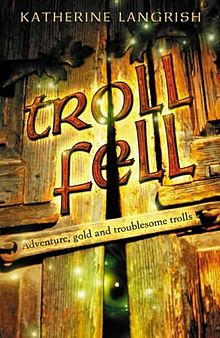
I began with Scandinavian folk-tales about trolls.  I’d been trying to write a story about a young Viking boy which involved him encountering some of the Norse gods. The story just went completely dead on me – I couldn’t find the way forward at all.  If a god befriends your character, why shouldn’t everything go smoothly for him or her? It seemed to me I was having to find complicated explanations for my hero’s predicaments. Then I began reading folk tales about trolls, and realised the book ought to be about them.  I got rid of the gods entirely as an unwanted extra supernatural level, and the book – ‘Troll Fell’ – worked much better as a fairy tale rather than a fantasy.troll fell

When I came to write the third book in the trilogy, I wanted to take my characters over the sea to ‘Vinland’ – North America – something we know Norse men, and probably Norse women too, actually did.  And there my characters would inevitably encounter Native American people, just as the Greenlanders’ Saga describes. It seemed to me legitimate to introduce Native American characters into the book: it was that or pretend North America was unpopulated, a clear impossibility. What may not have been so legitimate – yet it seemed to me important – was to introduce, as players on the North American scene, creatures in some way parallel to the trolls my Norse characters cohabited with. I thought long and hard about it and spent months of research, trying my best to respect and faithfully represent the culture I described. Whether or not I succeeded is not for me to say. The one thing I was sure about was that there would be no ‘white saviour’ in the book.  My Norse hero owes his life to the Native American characters he meets, not the other way around.  I wrote at length about this issue in an essay called ‘Cultural Appropriation and the White Saviour’, and though the discussion has moved on over the last few years, I still cautiously hold to what I said there.  Here’s the link:

http://steelthistles.blogspot.co.uk/2010/06/cultural-appropriation-and-white.html

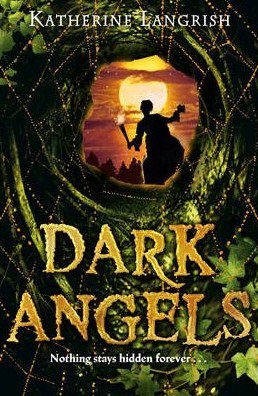
In books such as Dark Angels and the Troll trilogy you explore the worlds of what might be called ‘the hidden people’ and their interactions with humans. The idea of a ‘hidden people’ with a wide range of magical powers (from large to small) and alien intelligence but with many similarities to humans and who appear to be drawn to us–if only to exploit us at times–is part of the traditional folklore and stories of many cultures right across the world. Why do you think this is such a universal notion?

Wow, that’s a huge question… and yet maybe it’s a small one too.  Haven’t we all had the experience of laying something down and then minutes later not being able to find it?  It’s so, so frustrating: ‘It has to be there! I know perfectly well I put it there, just before the phone rang!  And now I’ve looked everywhere – and it’s gone!’  The temptation is to blame borrowers, or gremlins, which we know is a joke – but it still makes us feel better to be able to focus the frustration on some invisible, tricksy thing that’s sitting there laughing at us. Maybe it’s a human trait to imagine the universe as personal rather than impersonal. We can deal with the personal, we can understand it and negotiate with it – we humans are very good at that.  Such feelings must have been far, far stronger in the past, before science began coming up with ‘rational’ explanations for everything.dark angels

Incidentally, just where have I put my keys?

You have been a storyteller as well as a writer. How does that influence your fiction?

I began story-telling years ago when I lived in France and our children were small.  I joined a a weekly English-language story session at the Bibliotheque de Fontainebleau for children aged three years and up. It can be quite hard to keep the attention of a group of fifteen to twenty little ones when reading from a picture book: you’re facing them, and you have to keep stopping and turning the book around so they can see the pictures, and that interrupts the flow.  An inspirational friend suggested that we all tried telling stories ‘from the heart’ instead of reading aloud. I loved it. I found you could keep the children’s attention better and they make the pictures in their heads. I continued to tell stories to older groups of children for many years, and learned a lot about pacing a story, about narrative structure, and about the kinds of things children enjoyed – what got them excited, what made them laugh. So yes, I think it really did help my writing, which loosened up and at the same time became more confident. I just – love telling stories.