Big congratulations to poet Stephen Whiteside for winning the Book of the Year (also known as The Golden Gumleaf) for his collection of poems for children, The Billy That Died with its Books On and Other Australian Verse(Walker Books). The award was announced last night in Tamworth during the big Tamworth Country Music festival. More info here.
Guest post: Fiona Price on adapting fairytale settings
 Intro from Sophie:
I have always been interested in the use of fairy tales as an inspiration for fiction. Fairy tales are so rich that they can be mined again and again without losing any of their magic; and they are also so full of hidden depths that they can be interpreted in many different kinds of ways. I’ve used them myself repeatedly, in my fiction; and I love reading the work of other fairytale-inspired writers, such as Angela Carter, Tanith Lee, Kate Forsyth, Robin McKinley, Juliet Marillier, and many many more.
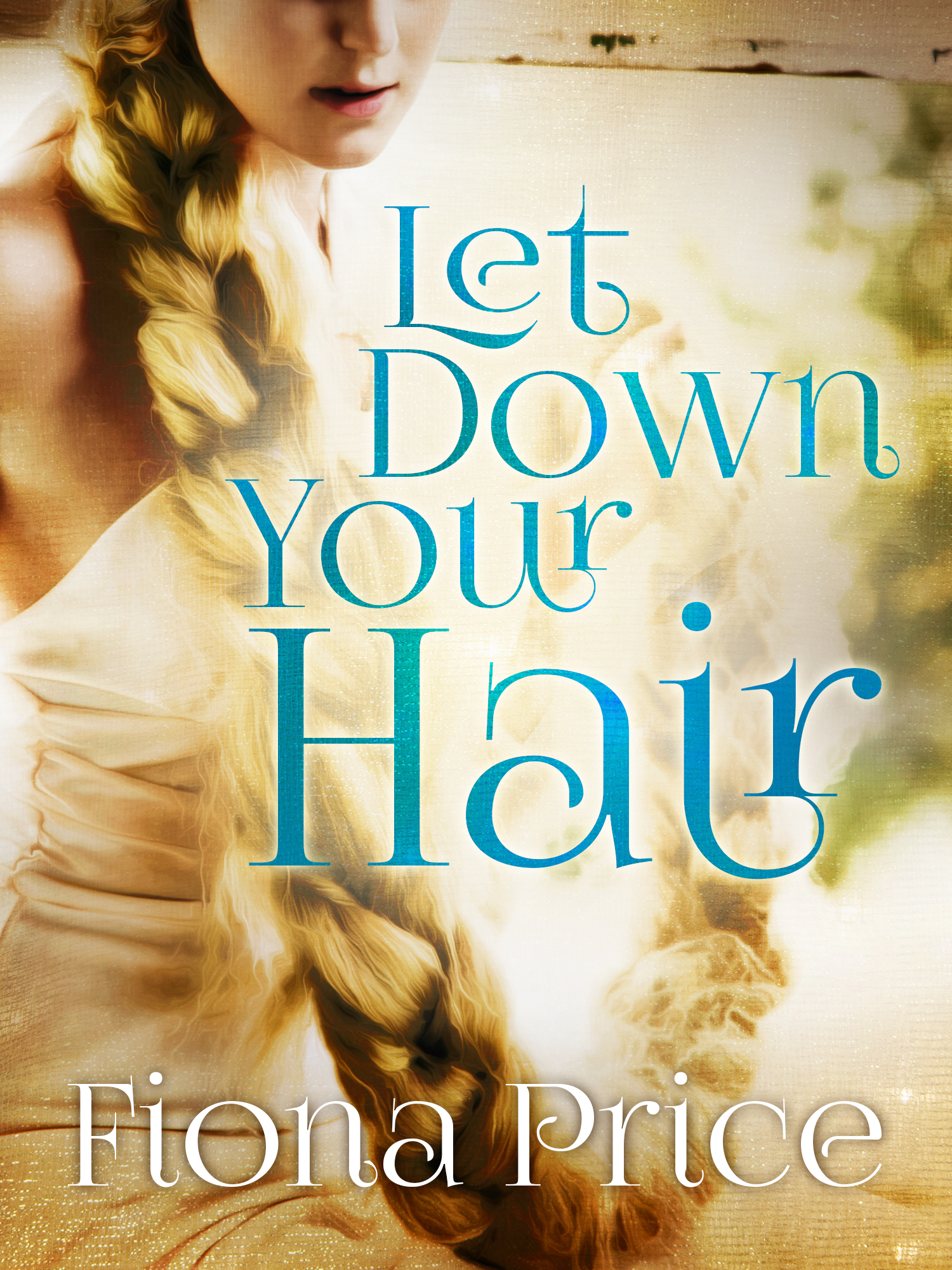
Interestingly, in recent times the theme of Rapunzel has come up several times: in the beautiful historical novel by Kate Forsyth, Bitter Greens; in one of the motifs in my own (YA) fairytale novel, The Crystal Heart; and most recently in a fabulous and clever modern adaptation of the Rapunzel theme, Fiona Price’s Let Down Your Hair. As the blurb for the book has it, it is a timely re-telling of the Rapunzel fairytale in the era of selfies and smartphones. And in this interesting guest post Fiona writes about how the setting she created helped to really focus the novel.
Welcome, Fiona!

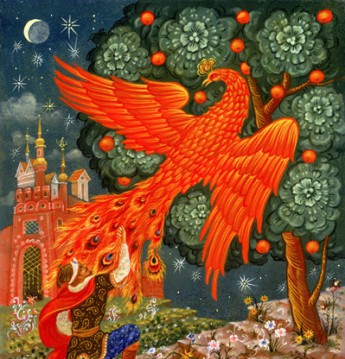
A big thanks to Sophie for inviting me to write a post for her blog. My name’s Fiona Price, and my novel Let Down Your Hair was published last month by Momentum. It’s a coming of age story based on the Rapunzel fairytale and set in the twenty-first century. I was inspired by the beautiful Russian building on the cover of Sophie’s latest book Trinity: The Koldun Code to write about the setting for my book.
When I decided to retell Rapunzel in the present, the first thing I needed was a tower. I considered a range of tall buildings for the job, and even toyed with making it a plane. But when I recalled the phrase “the ivory tower”, I decided I had to set Let Down Your Hair in a university. What better prison for Rapunzel than a place where scholars live lofty lives cut off from the world?
Setting ‘Rapunzel’ in a university worked on a couple of levels. For one thing, old-style prestige universities are built like storybook castles. Their buildings are made from ivy-covered stone, with giant libraries and halls lined with portraits. The other thing I liked was that it gave me an idea of who the witch was going to be. She’d be a senior professor, the type on a mission to change the world one conference at a time. A woman like the witch I created for my novel: Professor Andrea Rampion.
What would make a female professor lock a girl up in a tower? In the fairytale, the witch seems driven by the need to protect Rapunzel’s virginity. She locks Rapunzel up when she hits the age of puberty, and throws her out in a rage when she learns of Rapunzel’s affair with the Prince.
Protecting a girl’s virtue was never going to work as a motivation for Andrea. Most female professors would see dwelling on girls’ sexual behaviour as dated and patriarchal. I worked around this problem by shifting Andrea’s focus to something more progressive and intellectual: protecting her abandoned granddaughter Sage (my Rapunzel) from the sexist messages in the media.
Shielding a girl from all sexist messages wouldn’t be easy today. Sexualised pictures of women are on every smartphone, billboard and TV. Andrea would have to be ruthless about controlling everything Sage watched and read. She’d also have to monitor Sage’s company and movements, so she didn’t hear those messages anywhere else. Doing these things would cut Sage off from the world as surely as locking her in a tower.
What would Sage be like after twenty-two years of Andrea’s regime? With so few distractions and a dedicated teacher, she’d be brilliant at all things academic. Politically aware, with the ability to spot male privilege at seventy paces. But when it came to youth culture, technology and men, she’d be hopelessly ignorant and naïve. And both terrified and thrilled when she looks out a top floor window and a naked young man smiles up at her.
Once I’d found my tower and cast my main characters, I needed to think about the wilderness. In the fairytale, this is where the witch banishes Rapunzel when she learns of her affair with the Prince. When ‘Rapunzel’ was published, the ‘wilderness’ would have meant the forests of northern Europe. Presumably the witch hoped that Rapunzel would be punished for her sins by getting lost or attacked by wolves.
I let myself be guided by Andrea’s obsessions when choosing my modern-day wilderness. For Andrea, this would be a place where women are degraded and exploited by men: the red light district. Which is where Sage eventually finds herself, homeless, lost and surrounded by men on the prowl.
Retelling ‘Rapunzel’ as a present-day novel was a challenge I really enjoyed. If you’d like to take a look at Let Down Your Hair it’s available on all major digital platforms. Thanks again to Sophie, and I’d like to wish her and all of her readers a wonderful 2015!
Thanks, Fiona! And the same to you. (Sophie)
To find out more, check out Fiona’s blog: dressingthesalad.wordpress.com
Follow her on Twitter: @FionaSLPrice
Trinity: The Koldun Code now available on Booktopia!
For Australian readers: I’m pleased to announce that my new adult novel, Trinity: The Koldun Code, book 1 in the Trinity series, is now available at Booktopia.
Extraordinary and devastating stories
Some of the survivors of the Charlie Hebdo massacre have started telling their stories, in lucid, chilling, heartbreaking words.
Sigolène Vinson, legal affairs writer for the magazine, speaks in a radio interview, republished in Le Monde, about how events unfolded, and how she came face to face with one of the killers. And Philippe Lançon, who writes for both Libération and Charlie Hebdo, and was seriously injured in the attack, writes poignantly in Libération of the last moments before the gunmen burst in, and of what happened afterwards. Both are extraordinary, devastating accounts. At the moment the full accounts are in French only and if you can read French it’s much better to read those, but there are some partly paraphrased translations of Sigolène Vinson’s testimony here and here.
Changes in genre publishing over 13 years
It’s been 13 years between my previous adult novel, Forest of Dreams, and my new one, Trinity: The Koldun Code. Though I’ve had lots of books for young people published in between, in that time, much has changed in the field of adult genre fiction publishing and in a post published at the international authorship blog, Writer Unboxed, I profile some of them. Have a read and see if you think I’m right–and if you have any comments or observations to add to it!
Moving and beautiful piece by Adam Gopnik
I was moved to tears by Adam Gopnik’s lucid, beautiful, passionate and perceptive piece in the BBC’s Point of View blog. So many things have been written about these cruel attacks, but this is outstanding. Read it here.
Je suis Charlie
 The ghastly events in Paris at the offices of Charlie Hebdo have shaken me deeply, and I pay tribute to the memory of the writers, cartoonists, police officers and others who were so viciously murdered in the cruel attack on Charlie Hebdo in Paris.
And I hope and pray for the injured, such as Simon Fieschi, beloved boyfriend of Maisie, daughter of my very good friend and fellow author, Ursula Dubosarsky. Simon was badly hurt after being shot in the attack and the family is still waiting on news of his prognosis after he was put in an induced coma.
We know this area of Paris quite well. My sister lives only a minute or two’s walk away, and she often goes that route to the shops. In fact, as my brother in law told me yesterday, she almost went that way, at that time, on the 7th–it was sheer chance that she decided to go another way that morning.
The irreverence of Charlie Hebdo was not to everyone’s taste. So what? Why should everything be to everyone’s taste, and offend no-one? Mockery is a salutary thing in any culture. The magazine is in a great French tradition of calling everything into question, and not taking anything for granted. And the brave and witty people who worked there were upholding one of the great rights of a truly civilised society.
Those who think to silence free speech can never win if we stand in solidarity against them.
Life imitates art: Russian mystery rings a Trinity bell!
Life imitating art: just caught up with an extraordinary story from the Wall Street Journal by journalist Bradley Hope, about a Russian mystery revolving around a business, and which rang some Trinity bells for me! You can read the full article here, but here’s the beginning:
Blackfield Capital CJSC was one of Moscow’s hottest hedge funds, hosting glitzy parties and embarking on ambitious plans to expand to the U.S.
The firm’s founder in 2013 even rented a Manhattan apartment for a record-setting price, according to a real-estate broker, and instructed his U.S. staff to buy a $300,000 sports car.
Now, the founder is missing, allegedly along with all of the firm’s assets, according to former employees, in an international mystery that has captivated Moscow’s investment community.
The firm’s employees didn’t know anything was amiss until mid-October, when three men charged into Blackfield’s offices in an upscale complex along the Moscow River in central Moscow, said people who were there.
Incidentally, the central mystery around the deaths of the three Trinity founders was inspired by yet another weird Russian enigma, this time set in Australia: the unsolved murder of ex-KGB colonel and shady businessman Gennady Bernovski on the Gold Coast in 2014. Police have recently re-opened this cold case, but without success so far. Read more here.
In the heat for Booktopia poll on Australia’s favourite author
I have the honour of having been nominated in Booktopia’s Favourite Australian author poll, and am in Heat 1, so if you feel like voting for me–and any of the other authors in the heat, go here.
Using dreams in your writing

 The other day, I had one of those amazing story-style vivid dreams that when you wake up, you know is going to feature in a novel or story. And that’s exactly what’s happened: it’s gone into the Trinity sequel, and in doing so has pretty much cracked a particular problem I had with part of the plot. Those kinds of dreams are gifts, and they come rarely; but even smaller, less powerful dreams can help to enrich your writing, and so today I thought I’d reproduce on this blog, a workshop piece about how to best make use of those dreamy opportunities for your fiction! I first wrote it as a blog post some time ago, and it’s also been republished in my non-fiction ebook, By the Book: Tips of the Trade for Writers.
A short dream workshop
From time immemorial, human beings have dreamed–every night we go into what one of my sons’ friends once referred to as ‘those brilliant eight hours of free entertainment.’ And from time immemorial, writers have used images or scenes from dreams, or entire dreams, to enrich and expand their creative work in waking life. I’m certainly no exception. My night-imagination has always enriched my day-imagination. Several of my short stories have started directly as dreams, for example, ‘Restless’, a chilling ghost story I wrote not long ago, began as a really creepy and unforgettable nightmare. Another disturbing story, ‘The Spanish Wife’, a vampire story set in the 1930’s, started as a dream in which someone said, very clearly, ‘No-one took any notice of him till he brought home a Spanish wife,’ and that turned into the very first sentence of the short story. Images and scenes from dreams have also gone into my novels, and in one case, a very vivid and intriguing dream inspired an entire six-book children’s fantasy series of mine, the Thomas Trew series. It’s not always fantasy or supernatural stories that have sprung out of dream-compost for me, though; everything from family stories to thrillers to historical novels has benefited from it.
Over the years, I’ve learned quite a few techniques on how to best use vivid, scary, tantalising or intriguing dream sequences in my writing, and how to investigate them for best effects. Here’s a short workshop based on some of the techniques I’ve developed over the years:
*Think of a dream you’ve had. Any dream. It doesn’t have to be anything
exciting or unusual. Go back over the dream-scenes, as if you were a police witness being asked to remember an event. Who was in it? What did they look like? What were they wearing?
Were they people you knew or strangers? Were there any animals in it? What sort? What was the setting like? Indoors, outdoors? What could you see? Smell? Touch? Hear? Taste even? What were you in it—a participant, a helpless observer, a godlike figure?
*If you did something supernatural, like flying, what did it feel like, physically? (I’ve often had flying dreams and in them I feel a strong pull in the chest, arms stretching. Once I even woke up with what felt like an actual slight ache in the arm muscles—very spooky indeed!)
*Were there any machines in your dream? If so, what sort?
*Did anyone speak, and if so what did they say? Many dreams in my experience are like silent movies, with thought-subtitles and maybe some music, but a few have dialogue, even if it’s often minimalistic and quite enigmatic.
* Knowledge: Do you know why you were in that particular place, at that time? If you had some supernatural ability, did you know why? If there are interesting objects or gadgets in the setting of your dream, do you know what they can do, and why, and who made or used them? Backstory is very often missing in dreams, but is very important in a story, even if you only spend a few lines on it.
*Now, once you’ve written down as many descriptive details as you can about what was there in the
dream, think about what wasn’t there, and write that down. While you were dreaming, did you
know for instance why you or other people were doing things(even if it was a kind of weird dream-logic?) Did you understand the sequence of events? Was there a sense the dream was moving towards some conclusion, or just randomly jumping about? Motive, continuity and plot—all very important in actual stories—are often missing from dreams.
*Think of your own self in the dream, however you appeared in it: did you
recognise yourself? Did you feel it was fully you or something that was only partly you, or a stranger? Did characters behave randomly? Character development is usually absent in dreams
too though it very much needs to be present in a story.
*What about the setting? Were there things missing: for instance, if you were in a house, were there doors? Windows? Furniture? If you were outside, was anything odd: for instance trees growing upside down, or a wall of water appearing out of nowhere?
*Now put those two things together—the things that were there, the ones that weren’t—and you have the beginnings of a real story framework, where the wild imagination of the night and the more disciplined one of the day cross-fertilise and turn into something amazing and wonderful.

