Je suis Charlie

je suis charlieThe ghastly events in Paris at the offices of Charlie Hebdo have shaken me deeply, and I pay tribute to the memory of the writers, cartoonists, police officers and others who were so viciously murdered in the cruel attack on Charlie Hebdo in Paris.

And I hope and pray for the injured, such as Simon Fieschi, beloved boyfriend of Maisie, daughter of my very good friend and fellow author, Ursula Dubosarsky. Simon was badly hurt after being shot in the attack and the family is still waiting on news of his prognosis after he was put in an induced coma.

We know this area of Paris quite well. My sister lives only a minute or two’s walk away, and she often goes that route to the shops. In fact, as my brother in law told me yesterday, she almost went that way, at that time, on the 7th–it was sheer chance that she decided to go another way that morning.

The irreverence of Charlie Hebdo was not to everyone’s taste. So what? Why should everything be to everyone’s taste, and offend no-one? Mockery is a salutary thing in any culture. The magazine is in a great French tradition of calling everything into question, and not taking anything for granted. And the brave and witty people who worked there were upholding one of the great rights of a truly civilised society.

Those who think to silence free speech can never win if we stand in solidarity against them.


Life imitates art: Russian mystery rings a Trinity bell!

Life imitating art: just caught up with an extraordinary story from the Wall Street Journal by journalist Bradley Hope, about a Russian mystery revolving around a business, and which rang some Trinity bells for me! You can read the full article here, but here’s the beginning:

Blackfield Capital CJSC was one of Moscow’s hottest hedge funds, hosting glitzy parties and embarking on ambitious plans to expand to the U.S.

The firm’s founder in 2013 even rented a Manhattan apartment for a record-setting price, according to a real-estate broker, and instructed his U.S. staff to buy a $300,000 sports car.

Now, the founder is missing, allegedly along with all of the firm’s assets, according to former employees, in an international mystery that has captivated Moscow’s investment community.

The firm’s employees didn’t know anything was amiss until mid-October, when three men charged into Blackfield’s offices in an upscale complex along the Moscow River in central Moscow, said people who were there.

Incidentally, the central mystery around the deaths of the three Trinity founders was inspired by yet another weird Russian enigma, this time set in Australia: the unsolved murder of ex-KGB colonel and shady businessman Gennady Bernovski on the Gold Coast in 2014. Police have recently re-opened this cold case, but without success so far. Read more here.


Using dreams in your writing

DSCN21310001 DSCN27170001The other day, I had one of those amazing story-style vivid dreams that when you wake up, you know is going to feature in a novel or story. And that’s exactly what’s happened: it’s gone into the Trinity sequel, and in doing so has pretty much cracked a particular problem I had with part of the plot. Those kinds of dreams are gifts, and they come rarely; but even smaller, less powerful dreams can help to enrich your writing, and so today I thought I’d reproduce on this blog, a workshop piece about how to best make use of those dreamy opportunities for your fiction! I first wrote it as a blog post some time ago, and it’s also been republished in my non-fiction ebook, By the Book: Tips of the Trade for Writers.

A short dream workshop

From time immemorial, human beings have dreamed–every night we go into what one of my sons’ friends once referred to as ‘those brilliant eight hours of free entertainment.’ And from time immemorial, writers have used images or scenes from dreams, or entire dreams, to enrich and expand their creative work in waking life. I’m certainly no exception. My night-imagination has always enriched my day-imagination. Several of my short stories have started directly as dreams, for example, ‘Restless’, a chilling ghost story I wrote not long ago, began as a really creepy and unforgettable nightmare. Another disturbing story, ‘The Spanish Wife’, a vampire story set in the 1930’s, started as a dream in which someone said, very clearly, ‘No-one took any notice of him till he brought home a Spanish wife,’ and that turned into the very first sentence of the short story. Images and scenes from dreams have also gone into my novels, and in one case, a very vivid and intriguing dream inspired an entire six-book children’s fantasy series of mine, the Thomas Trew series. It’s not always fantasy or supernatural stories that have sprung out of dream-compost for me, though; everything from family stories to thrillers to historical novels has benefited from it.
Over the years, I’ve learned quite a few techniques on how to best use vivid, scary, tantalising or intriguing dream sequences in my writing, and how to investigate them for best effects. Here’s a short workshop based on some of the techniques I’ve developed over the years:

*Think of a dream you’ve had. Any dream. It doesn’t have to be anything
exciting or unusual. Go back over the dream-scenes, as if you were a police witness being asked to remember an event. Who was in it? What did they look like? What were they wearing?
Were they people you knew or strangers? Were there any animals in it? What sort? What was the setting like? Indoors, outdoors? What could you see? Smell? Touch? Hear? Taste even? What were you in it—a participant, a helpless observer, a godlike figure?

*If you did something supernatural, like flying, what did it feel like, physically? (I’ve often had flying dreams and in them I feel a strong pull in the chest, arms stretching. Once I even woke up with what felt like an actual slight ache in the arm muscles—very spooky indeed!)
*Were there any machines in your dream? If so, what sort?
*Did anyone speak, and if so what did they say? Many dreams in my experience are like silent movies, with thought-subtitles and maybe some music, but a few have dialogue, even if it’s often minimalistic and quite enigmatic.
* Knowledge: Do you know why you were in that particular place, at that time? If you had some supernatural ability, did you know why? If there are interesting objects or gadgets in the setting of your dream, do you know what they can do, and why, and who made or used them? Backstory is very often missing in dreams, but is very important in a story, even if you only spend a few lines on it.
*Now, once you’ve written down as many descriptive details as you can about what was there in the
dream, think about what wasn’t there, and write that down. While you were dreaming, did you
know for instance why you or other people were doing things(even if it was a kind of weird dream-logic?) Did you understand the sequence of events? Was there a sense the dream was moving towards some conclusion, or just randomly jumping about? Motive, continuity and plot—all very important in actual stories—are often missing from dreams.
*Think of your own self in the dream, however you appeared in it: did you
recognise yourself? Did you feel it was fully you or something that was only partly you, or a stranger? Did characters behave randomly? Character development is usually absent in dreams
too though it very much needs to be present in a story.
*What about the setting? Were there things missing: for instance, if you were in a house, were there doors? Windows? Furniture? If you were outside, was anything odd: for instance trees growing upside down, or a wall of water appearing out of nowhere?
*Now put those two things together—the things that were there, the ones that weren’t—and you have the beginnings of a real story framework, where the wild imagination of the night and the more disciplined one of the day cross-fertilise and turn into something amazing and wonderful.

25 years since my first book came out

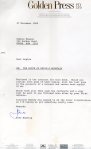
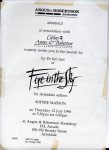
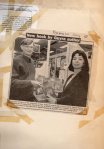
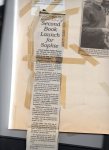
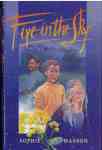
2015 is a big year for me, for it marks 25 years since my first book, The House in the Rainforest(University of Queensland Press, adult novel) came out, in April 1990; followed just a few months later by my second book, Fire in the Sky(Angus and Robertson, children’s novel) which came out in July 1990. At the time, I was living in Guyra, in the high cold country of New England in northern NSW, with my husband David and three young children–in fact, the youngest, Bevis, born in September 1989, was a very small baby when my first book came out, while Xavier had just turned three and Pippa was eight. It was an amazing, thrilling, hectic, productive, extraordinary time, and today, I want to celebrate that wonderful milestone with a bit of a gallery of pics of significant documents from that time. The first is from The House in the Rainforest; the second from Fire in the Sky. Many of them are from my scrapbooks, so a bit tatty at times!


Fire in the Sky


Chris Cheng’s blog series The Twelve Days of Christmas–and my contribution!

DSCN9544Every year, Christopher Cheng, wonderful children’s author, runs a fantastic series, The Twelve Days of Christmas, on his blog, in which he invites fellow authors and illustrators to contribute a piece about their favourite Christmas memory.

And I’m one of the contributors, writing about some favourite childhood Christmases. You can read my piece here.

A short story for the holidays: The Great Deep

DN-SN-86-00740 welsh cliffs


This story was triggered by something I read during the coverage of the tragedy of the downed Russian submarine ‘Kursk’ in the Barents Sea in 2000. It was noted that there had been other such incidents during Soviet times, and that the few submariners who had survived accidents of this sort reported feeling that when they were going up through the escape hatch through the layers of water above, they were entering a different world, out of time..
It is also very much inspired by traditional stories of selkies, which have fascinated me ever since I was a child.

Originally published in ‘The Mutant Files’ anthology(USA) in 2001, it was also republished in my collection, The Great Deep and Other Tales of the Uncanny. I hope you enjoy it–and a very happy and peaceful festive season to one and all!

Copyright notice: This story is copyright to Sophie Masson. It may be reproduced, with all proper acknowledgements, but may not be used for commercial purposes or adapted without permission. creative commons license


The Great Deep

by Sophie Masson.

Full fathom five thy father lies;
Of his bones are coral made;
Those are pearls that were his eyes;
Nothing of him that does fade
But doth suffer a sea-change
Into something rich and strange.
(from The Tempest, by William Shakespeare)

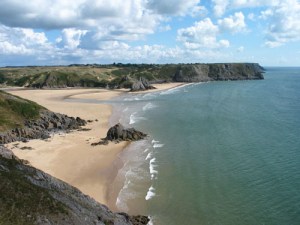
If it had not been for his son Henry’s broken heart, the Reverend Doctor William Featherstone would never have been on the remote little Welsh beach on that bright, fateful summer morning in the year 1712. If poor naive Henry had understood the nature of the light-footed, light-headed Imogen he had set his heart and soul on, Dr Featherstone would have been comfortably ensconced that day in his lodgings in Oxford, working busily on the notes for the latest chapter of his vast compendium of natural and unnatural history.
Now, a broken heart, despite the sufferer’s perception of it, is not usually fatal. But in Henry’s case, it very nearly was. The night after Imogen had laughed his love to scorn, Henry’s manservant Roley had found his young master insensible in his room, having taken what he presumed to be a lethal dose of laudananum—which fortunately it had not been, only enough to make him very ill indeed.
Henry had shown little gratitude at being pushed back into the world. ‘Why didn’t you leave me to die?’ he had cried out to his father from his sickbed.
‘You could hardly expect me to do that,’ pointed out his father, reasonably. ‘You are my only child, after all.’
Henry sighed bitterly.’Nothing in life has any savour any more, for Imogen will never love me; worse, she despises me.’
‘Why then, return the compliment, with interest,’ said Dr Featherstone, briskly.
‘Oh, father, how can you speak thus! But then, you don’t understand about love, at your age,’ said his son, closing his eyes .
Foolish, commonplace words: but they had stung Dr Featherstone deep inside a place he had thought carapaced long ago. He looked at his son’s face—the skin very pale, the dark, soft, cropped hair, the long, dark eyelashes curving on the hollow cheeks—and for one terrible moment, saw the face of his beloved wife Cristin, Henry’s mother, lying there in her last illness. ‘Water on the lungs,’ some quack doctor had called the strange illness that had made her waste away so quickly. He had not thought of her for years; had blocked her picture away from his mind. But now he spoke quickly, sharply, words he had not thought through, that he had no idea had been in his mind at all.
‘As soon as you are quite well, we will leave for Wales,’ he had said to Henry, making the young man’s eyes fly open again, and dispelling the grievous illusion, for Henry’s eyes were blue as Cristin’s had been dark brown and combative as hers had been gentle.
‘Wales! Why, Father…’ Henry stopped, confusedly. Perhaps he regretted the words he’d uttered; or perhaps he merely thought his father was acting as fathers do, according to their sons: in the way of another alien kind, another, mutant race.
‘I intended to go there this summer, in any case,’ said Dr Featherstone, in a willed return of his earlier briskness. ‘And now is as good a time as any. ‘
‘We will stay at the Red House, like in the old days?’ Henry’s sudden smile was as sweet as Cristin’s had been, and Dr Featherstone’s heart turned over most painfully.
‘Of course..’ Fussily, to hide his feelings, he went on, ‘And I hope that Mistress Llewellyn will have aired it well this spring, or we may look forward to some rather damp evenings.’
‘I am sure she will have done,’ said his son, listlessly, closing his eyes again; and Dr Featherstone saw that though Henry had him fixed again as an old fusspot, at least now the danger—to both of them–was past. Henry had not forgotten Imogen, of course; but he had something to look forward to, again. The Welsh coast; the Red House; and the smells and sights and sounds of a happy childhood. The young can easily start again, thought Dr Featherstone, rather bitterly, as he tiptoed out from the sick-room, leaving the rest of Henry’s recovery in Roley’s capable hands. Not so easy for us older folks, who must forget, for sheer survival’s sake, what it was really like to live for love.

And so it was that both Featherstones, senior and junior, found themselves back in the cliff-top Red House, on the remote south-west coast of Wales, facing the Irish Sea. The house had reputedly been built some two hundred and fifty years previously by Cristin’s legendary ancestor, Morgan Meredith. Sealmen and women, strange and wondrous mutants of the deep, were not unknown on that coast of marvels, and all who knew Morgan had no doubt he was one of them. As a baby, he had been recovered from the sea by the fisherman who became his adoptive father. More, he swam just like a sea-creature, and was always to be found in or near that element.
When he reached manhood, Morgan had taken employ in the King’s navy; and the stories of his bold exploits at sea came home to his own place, and filled the people there with pride. When he returned home, he took a bride from amongst the villagers, and built the Red House on the cliff overlooking the great green deep. None knew exactly when he had died; for one day, in old age, he had simply disappeared, never to be seen again. It was said by all that he had returned to the sea whence he had come.
Despite—or perhaps because of—the strange stories about their legendary ancestor, the Merediths were well-liked and respected in the area. Cristin, last of the Meredith line, had been loved too, and her English husband accepted, for her sake at first; and later for his own. Continue reading

‘Tis the season to be jolly–and eat delicious cake!

Cross-posted from my food blog, A la mode frangourou.

Two gorgeous and easy cakes for festive celebrations!

The first is a chocolate and cherry cake I’ve adapted from a Black Forest style, the second an adaptation of the traditional French Christmas log–a cake I make every year for the family Christmas lunch. Both are easy–the log particularly so, as it does not even require any baking–and super delicious of course!

WP_20141219_002Chocolate and cherry cake

150 g dark cooking chocolate

150 g castor sugar

150 g unsalted butter

3 heaped tablespoons self raising flour, sifted

5 eggs

pinch salt

Melt the chocolate in a pan over low heat(add a little water first to stop it from sticking). Still over low heat, stir in the sugar. When all sugar mixed in, take pan off heat and cut the butter into small pieces. Put pan back on heat and stir in the butter a little at a time. Now slowly add in the flour, stirring constantly, and continue stirring even when mixed in, till it begins to thicken. Take pan off heat. Heat oven to 180 C, and get a round cake tin ready, buttering the bottom and sides and dusting with flour, or using baking paper.

Separate the eggs one by one–put the egg whites in a bowl, but add each egg yolk to the chocolate mix and stir in. When all egg yolks are used up, beat the egg whites till stiff, adding the pinch of salt, and fold into the cake mix. Put mixture into the tin and bake for about 40–45 mins. (Test if cooked by inserting knife into mix after about 40 mins)

Make a coating for the cake of more melted dark chocolate(I actually used Lindt’s dark chocolate with orange pieces, delicious!) -You melt the chocolate over low heat with around 25 g of unsalted butter, a tablespoon of full cream and a tablespoon of icing sugar. Coat the cake with it when it’s cold, and add halved sweet black cherries as decoration. Serve with whipped cream and/or icecream.


buche de noelSuper easy, super delicious frangourou Christmas Log cake(requires no baking, can be made Christmas Eve).

This was my mother’s invention, we had it every Christmas when we were kids, and I still make it every Christmas.

Ingredients:

1 packet sponge finger biscuits

200 g unsalted butter, melted

1 or 2 eggs(depending on how much mixture you have)

half to 3/4 cup hot strong sweet coffee(a good instant coffee works fine)

Cooking chocolate, melted with a little cream.

Crush all the biscuits, add the hot sweet coffee, the melted butter, and mix well. Add the slightly beaten egg(or two). You need to obtain a good stiff mix that you can easily shape into a log. That’s what you do then–shape it into a log, and then put it in fridge till it is set. Meanwhile melt the chocolate over a low heat with a little cream, stir till all melted and glossy. Spread over the cake, on the top and sides. Put in fridge to set overnight. You can also decorate the top with angelica leaves, almonds, rose petals, sugar holly, whatever you feel like!

Tomorrow I’ll be offering readers another delicious morsel, one for the literary taste buds this time–a short story for the holidays.

A watery bush summer: piece of mine in Sydney Morning Herald

dragonfliesToday, a piece of mine about the watery joys of a bush summer appeared in the Sydney Morning Herald, in the first edition of their Summer Herald special section.

Here is a short extract:

So much has changed in the country – farms are bigger, shopping streets smaller, the coffee’s got better, the milk bars have vanished. Because many people shop online, the post office is often the busiest place in town with long queues for Ebay and Amazon parcels, while local retailers languish and struggling local newspapers just as often get news tips by text and tweet and email as on the traditional grapevine.

Yet through it all one thing doesn’t change, and that’s how summers, especially for kids, revolve around water. Some of that is about the town swimming pool, but a good deal is around natural water-courses. And that’s quite a different experience to the beach-centred summer culture of Sydney.

You can read the full piece here.

Print

Our Home is Dirt by Sea

Di Bates is a fantastic advocate of Australian children’s poetry and poets.

australianchildrenspoetry's avatarAustralian Children’s Poetry

The following is an interview conducted by Rebecca Newman of Alphabet Soup with Dianne (Di) Bates, the founder of Australian Children’s Poetry blog about an Australian children’s poetry anthology Di has compiled.

RN: You are the commissioning editor for a poetry anthology for children coming out with Walker Books. What was your role in the book?                                                                                                                                                                                                   DB:I spent many hours finding poems which were written by Australians and which would suit the themes I’d decided on for the anthology (such as sport, families, being a kid). I had to record the source of each poem (if it was in a single poet collection, an anthology, a magazine or if it was unpublished). I also tracked down contact addresses of the poets, gave the anthology a title (Our Home is Dirt by Sea) and then had to find a publisher for the whole anthology. This all sounds easy, but…

View original post 379 more words