Memories of an inspirational childhood home

empeauxI am in France at the moment and the other day, as always when I am back here, I went back to the village where we used to spend all our time as children, when we were back in France on our periodic holidays from Australia. The beautiful old house where we used to live has been highly important to me not only personally but as a writer too, so today I thought I would republish here a piece I wrote a little while back, about the house and its place in my imagination.

The good-fairy house

The very year I was born, my parents, who were then working as expatriates in Indonesia, bought their first house, with the help of my paternal grandmother Marie-Louise Masson. A few months later, as a sickly baby, I was left with her, for the sake of my health—and stayed with her till I was five years old and my parents took me with them to Australia.
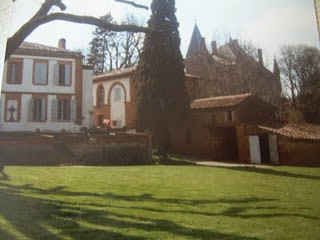
La Nouvelle Terrebonne, as my parents named their French house(after my father’s wealthy French-Canadian ancestors’ manor at Terrebonne near Montreal)was at the time a large, beautiful but damaged late-eighteenth house, with crumbling seventeenth century outbuildings, in a south-western French village called Empeaux.
It wasn’t common at the time for people to buy a country house so far out ‘in the sticks’ , especially when it was in such bad condition. Not only would the house need restoring from top to bottom, but there was massive work to do as well in its enormous overgrown garden, dotted with ancient trees including a rather sinister yew and a magnificent elm planted by one of Henri IV’s advisers, as well as fruit trees. (The garden was so big everyone called it ‘the park.’ )
Well, nothing daunted, my parents set to work, devoting a large part of their expatriate salaries to pay a succession of masons, tilers, electricians, plumbers, painters, carpenters and other local tradesmen. Slowly but surely, and with the help of much cash, the house turned from Cinderella in rags to beautiful princess admired by all. And it became our family base, our French base, to which we returned every two-three years, for two-three months.
We loved that house. In its warm, enchanted space, everything was extraordinary. The house was full of stories: some sad, like that of the heartbroken young man who’d hung himself in one of the bedrooms(haunted, it was nevertheless a beautiful room, and a great family favourite); some scary, like the well in the garden where a witch had been thrown, long ago; some touching, like that of the old gentleman who tapped at the front door once and told us how he’d spent his childhood in the house(I still dream about it, he said); some amazing, like that of the elm tree which because of its origin featured in the heritage of France(named a National Monument, it died, sadly, in the Dutch elm epidemic of the 1980’s).
The old wooden stairs creaked, the attic was spooky, the cellar smelled of the earth. In the storage antechambers that ran the length of each main room, there were lots of things to discover: the Indonesian baskets full of Balinese dance costumes in red and gold and green and gold, with their assorted jewellery made in gilded leather decorated with bits if glass; a huge oak wardrobe full of old fur coats, including one made of Canadian wolfskins; a wicker cradle with my aunt Geneviève’s lovely 1940’s doll in it, sporting a wig made of her own, blond childhood hair; and the big pottery and glass jars where in the winter goose and duck confit slept under layers of fat, for it was so cold in those unheated antechambers that they might as well have been fridges. In the ‘park’ we ran riot, screaming, running, climbing the fruit trees to gorge ourselves on cherries, greengages, figs..And sometimes we’d take our bikes and go off for hours exploring, in a freedom that we never had in our Sydney suburb. 
As my mother still says, that house had a soul. The soul of a good fairy, despite the many terrible stories associated with it. It was a house that welcomed its people, which did them good, especially children. Grown up now, we regret it greatly—for our parents sold it in the late 1990’s—but nevertheless our memories are not bitter, but rather filled with the joy of having known so well a house which so enchanted our childhood. And for myself, I know that not only did La Nouvelle Terrebonne greatly enrich my childhood memories, it has forever become a part of my imaginative DNA as a writer.

Windmills: a poem for children

Inspired by seeing so many windmills in Europe–in Germany, France, and the UK–I wrote this little poem–for children, but I hope enjoyable for everyone!

Windmills

by Sophie Masson

The giants on the hill paddle in bright air,
Eddies of fine cloud flying everywhere.
A gust of wind excites them as they gather in the crop;
A sunny stillness quiets them, their arms go slow, then stop.
In humming rows they stand,
White giants across the land,
Waiting for a breeze to blow,
Waiting for a chance to show
They thresh the wind without a care,
And harvest and mill the breath of air,
To turn into heat and light,
Far away and out of sight.
In humming rows they stand,
White giants across the land,
Looking across the seas,
Waiting for the breeze.

Copyright Sophie Masson, 2015.

An adventurous life and a notorious true crime in Faversham, Kent

Michael-Greenwood-plaqueVisited Faversham in Kent recently and whilst on a walk through this very historic town, came across two very interesting stories, literally plastered on the walls of two ancient houses. One told the story of Michael Greenwood, who at the age of 17 in 1748, was press-ganged into the Navy, then his ship, the Litchfield, was wrecked off the Barbary Coast, and he and his shipmates were captured by Moors, and enslaved for 17 months till they were ransomed. After that he returned to Faversham where he worked as an oyster dredger, but during his captivity he kept an extensive diary which is apparently still in existence and is owned by his descendants in Queensland! Would love to read it..

The other story is of a notorious crime in Tudor times–the murder of a man named Thomas Arden by his wife Alice and her lover Mosby. This was a bungled affair–several attempts were made which failed until finally the murderous pair hired two hitmen, returned English soldiers from Calais known amazingly as Black Will and Loosebag, who killed Arden but bungled it so badly that the murderers, all of them, were quickly discovered and executed, except for Loosebag, who managed to get away. Not surprisingly, this gruesome and bizarre crime was not only the talk of the country but it inspired a play, Arden of Faversham, which though anonymously published, is thought variously to have been written by Christopher Marlowe, Thomas Kyd and William Shakespeare–either solely or collaboratively. The play has been produced many times over the centuries–the latest of which was last year, when it was performed by the Royal Shakespeare Company, updated to modern times. ardens_house

Such great stories! Am sure they will find their way somehow into my writing, somewhere..

Guest post: Elisabeth Storrs on Etruscan love

Today I’m delighted to welcome Elisabeth Storrs to my blog. Elisabeth is the author of The Wedding Shroud and The Golden Dice, the first two books in the Tales of Ancient Rome trilogy set in early Republican Rome and Etruria. The final book, Call to Juno, will be released in April 2016.Storrs-WeddingShroud-20148-CV-FT

00 ElisabethStorrsColor300Elisabeth has long held a passion for the history, myths and legends of the ancient world. She graduated from the University of Sydney with a degree in Arts Law having studied Classics along the way. She lives in Sydney with her husband and two sons and over the years has worked as a solicitor, corporate lawyer and governance consultant. She is the co-founder of the Historical Novel Society Australasia, and the Deputy Chair of the NSW Writers’ Centre.

Warding off Evil: The Power of A Loving Embrace.

by Elisabeth Storrs
I was inspired to write The Wedding Shroud and its sequel, The Golden Dice, when I found a photo of a C6th BCE sarcophagus of a man and women lying on their bed in a tender embrace. The casket (known as the Sarcophagus of the Married Couple) was unusual because, in this period of history, women were rarely commemorated in funerary art let alone depicted in such a pose of affection. The image of the lovers remained with me. What kind of culture exalted marital fidelity while showing such an openly sensuous connection? What ancient society revered women as much as men? Discovering the answer led me to the Etruscans, a society that existed from before archaic times in Italy and was mainly situated in the areas we now know as Tuscany and Lazio.

Married Couple                                              Sarcophagus of the Married Couple
                                                            Late C6th BCE

Etruscan women were afforded education, high status and independence. As a result they were often described as ‘wicked’ by Greek and Roman historians and travellers whose cultures repressed women. Etruscan women dined with their husbands at banquets and drank wine. In such commentators’ eyes, this liberal behaviour may well have equated with depravity. One famous account claims that wives indulged in orgies. And so modern historians continue to debate the contradictory depictions of Etruscan women –were they promiscuous adulterers or faithful wives?
Etruscan society clearly celebrated both marriage and sex. The image of men and women embracing is a constant theme in their tomb art and ranges from being demure, as in the case of the Married Couple, to the strongly erotic (Tomb of the Bulls) and even pornographic (Tomb of the Whippings.) The latter illustrations seem to confirm the more prurient view of Etruscan women but the symplegma or ‘sexual embrace’ was not a gratuitous portrayal of abandon but instead was an atropaic symbol invoking the forces of fertility against evil and death.
No better example of this is a particularly striking double sarcophagus found in Vulci in Italy and which is now located in the Museum of Fine Arts, Boston. Wrought in fine white limestone, the man and woman lie entwined in each other’s arms. However, unlike the anonymous Married Couple, this husband and wife can be identified. They are Larth Tetnies and Tanchvil Tarnai. The very fact that Tanchvil has two names is evidence of the status of Etruscan women. In early Rome, females only had one name – that of their father’s in feminine form. In Etruria, the bloodlines of both sides of a woman’s family were often recorded on their casket.

Tetnies Younger                                                       Larth Tetnies and Tanchvil Tarnai
                                                         Late C4th early 3rd BCE
The image of the couple is both intimate and yet openly erotic. The spouses are not young but are nevertheless beautiful. Tanchvil gently clasps the nape of Larth’s neck as the lovers gaze into each other’s eyes. They are naked, the outline of their limbs evident beneath the sculpted folds of the mantle that covers them. However nudity cannot hide their status. Their luxurious hairstyles and elegant jewellery declare their wealth, as does the wide, decorated double bed upon which they lie.
There was a second sarcophagus found in the sepulchre at Vulci. It is narrow and only held the remains of a woman, Ramtha Visnai, but its lid depicts her embracing her husband, Arnth Tetnies. They are the parents of Larth. This coffin is made of rough nenfro stone. Wrapped in their shroud, the figures embrace each other on their bed. Unlike the sexually charged younger couple, the older pair is more contemplative as they face each other although the sight of their feet peeping from beneath the covers hints at the relaxed familiarity of their marriage.

Tetnies Elder                                                  Ramtha Visnai and Arnth Tetnies
                                                          C450-400 BCE

The Married Couple inspired me to write my trilgy, but the two caskets in the Tetnies tomb were the inspiration for the title of The Wedding Shroud. For both couples lie beneath mantles that I came to understand could symbolise the large veil under which an Etruscan bride and groom stood when they took their vows. In effect the spouses were swathed in their wedding shroud for eternity, their union protecting them from the dark forces that lay beyond the grave.
As for the conflicting views of Etruscan women, it is clear from studying this society’s art that they celebrated life. Many worshipped the religion of Fufluns (the Greek Dionysus and Roman Bacchus) whose later cult adherents were famous for indulging in debauchery but in its purest form was a belief in the power of regeneration. So which version is correct? Sinners indulging in group sex or steadfast wives? Perhaps both, because the concept of a culture that condones female promiscuity while also honouring wives and mothers is not necessarily contradictory. For while it can be erroneous to compare modern societies with ancient ones, it could be argued that this attitude to females occurs in many present-day Western cultures today.
Either way, the erotic and sensual image of an embrace transcends any moralising in which historians might indulge. Ultimately I believe that the symplegma is not just an atropaic symbol but something more powerful. Whether sculpted in stone, moulded in terracotta or painted in a mural, the embrace of two lovers remains, above all, an eternal celebration of abiding love.

Tetnies Sarcophagi photographs © 2010 Museum of Fine Arts, Boston
The Married Couple courtesy Wikimedia Commons.Storrs-GoldenDice-20146-CV-FT

Elisabeth’s website http://www.elisabethstorrs.com
Twitter https://twitter.com/elisabethstorrs
Facebook https://www.facebook.com/elisabeth.storrs
Buy links on Amazon http://www.amazon.com/Elisabeth-Storrs/e/B005NVUWZ4/

Land of the Black Douglas

In Scotland at the moment and in that green forested part of it known as Galloway,which despite its romantically bucolic appearance has a history of fierce raiding lords like the Black Douglas,whose stronghold was at Castle Douglas,only a few kilometres away. Eventually he was brought to heel by James II of Scotland(this was in 15th century) and his land redistributed amongst other lords. We went to one of those places, at Orchardton–the very fortified tower showed the area wasn’t quite pacified!

The enigma of the Pied Piper

WP_20150626_058[1]The other day, I went to Hamelin, the lovely Renaissance town on the River Weser in Westphalia in Germany which is famous for one thing all over the world: the spooky story of the enigmatic figure known in English as the Pied Piper and in German as the Rattenfänger, or ratcatcher. Everyone knows the story, so I will not repeat it, but it has always struck me as one of the most mysterious and chilling stories in the fairy tale corpus. People have tried to ‘explain’ it with reference to the Children`s Crusade or young settlers disappearing into Eastern Europe, but though unusually for a fairy story there is both a date–1284–and a place–Hamelin–definitely attached to it, in most other ways it has that shifting, mysterious feel of fairy tale and the Piper surely has most of the attributes of a faery being–the music, the bargain, the irresistible magic, the vanishing into a hill, and the snatching of children.

The Museum of Hamelin has some interesting displays around the story, and some striking set pieces including a wall of children´s shoes which sent a shiver up my spine as I remembered seeing a chilling, heart-clenching exhibit of abandoned shoes at Auschwitz..There is also a weird and creepy but effective performance piece, played by mechanical figures built out of scrap iron, and a montage of voices and music, with the vanished children represented by empty shirts floating slowly by..The horror which is so close to the surface in this story is clearly brought out there. But lest you get too overwhelmed,in the town there are also shops selling cheerfully tacky souvenirs, especially rats in all guises, made of felt wood plastic china and marzipan! And a couple of times a day, the glockenspiel bell array on the registry office plays a carillon to accompany the mechanical figures of the Piper, the rats, and then the Piper and the children, from behind metal doors high up on a wall. Hamelin has lived off the Piper for a very long time, and perhaps that was, in true fairy style, his final gift.

As an aside, it struck me recently that the theme of the Pied Piper runs like a silver thread trough several Australian novels: Picnic at Hanging Rock by Joan Lindsay, The Doubleman, by Christopher Koch, The Green Piper by Victor Kelleher, and The Golden Day, by Ursula Dubosarsky. A strange coincidence indeed, that this story should find so many echoes so far away..

Guest post: Dianne Bates on Buzz Words

Dianne (Di) Bates is one of the most hard-working and dedicated writers I know, and has been in the industry for decades. She has published over 120 books for children, some of which have won state and national awards, including two children’s choice book awards (WAYRBA and KOALA). She is married to award-winning children’s author Bill Condon; they share a website http://enterprisingwords.com.au

As well as being a writer, Di is also the founding editor of the highly-respected industry magazine Buzz Words, an invaluable resource for anyone involved in children’s books. In this guest post she profiles the magazine. I highly recommend subscribing to it!

Buzz Words: All the Buzz About Books

By Dianne Bates

In 2006 I started a subscriber-based twice-monthly online magazine exclusively for people in the Australian children’s book industry, such as writers, illustrators, librarians, publishers – in fact, anyone interested in children’s books. As editor I gather material from many sources and sometimes commission material. Buzz Words’ aim is to keep readers abreast of what’s currently happening in the children’s book industry and to give them as many opportunities to get informed and possibly published.

Every issue contains industry news, publisher profiles, profiles of people in the industry, an interview (editors, publishers, designers, etc), opportunities, markets, competitions and awards, recommended books and websites/blogs, festivals and conferences, workshops, article/s, subscribers’ achievements, letters to the editor and children’s book reviews. Links are frequently provided to help readers.

Buzz Words is as subscriber-friendly as possible. Preference for interviews, articles, profiles, etc is always given to subscribers. Subscribers are also given the opportunity to advertise for free if they have a product and/or service.

The magazine also has a children’s book review blog http://buzzwordsmagazine.com where a new children’s book review appears every day. Reviews are also linked through the magazine to the blog. Buzz Words has 20 reviewers; we review for most children’s publishers in Australia.

I am happy to send anyone the latest issue of the magazine to see if they would like to subscribe. Contact dibates@outlook.com. Cost is $48 per year (24 issues). The magazine is distributed on the 1st and 15th of every month.


Writing journals

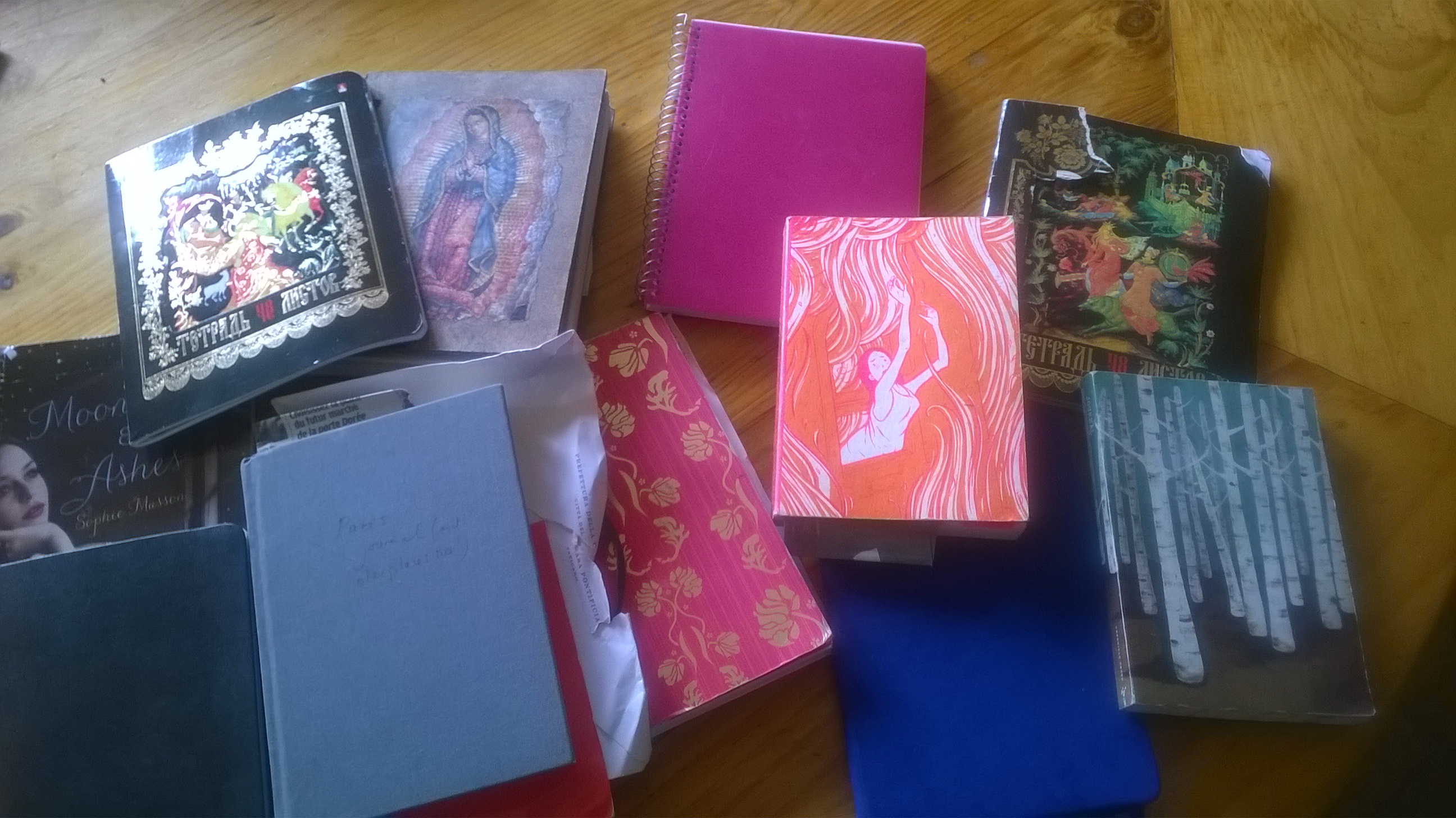
Just a small selection of my writing journals!

Just a small selection of my writing journals!

Writing journals: not all of us use them but many of us writers keep them, in one way or another: whether as a specific writing journal, as a diary, a notebook, or other. At various points I have kept, and continue to keep, all of these. I have diaries stretching back decades, amongst which is one dating from when I was 12. Amongst all the stuff about school and food(my mother is a fantastic cook and I was always writing down stuff about the cakes she’d made!) I also mention writing projects I’d undertaken, such as ‘The Twins’ Highland Holiday’ which I don’t remember at all but which sounds very much influenced by Enid Blyton! Meanwhile, a tattered  exercise book dating from around age 16-17 has notes and research as well as the first few chapters of a massive fantasy novel, never finished. Travel journals kept at various points have also included vignettes of scenes, ideas for stories, as well as observations of things I saw around me, many of which fed into stories later; while there’s piles of notebooks filled with often indecipherable scrawl about plots, characters, themes, sudden ideas, observations on chapters I’m working on, and more.

And in 2007, after having been given a gorgeous notebook by one of my publishers, Random House WP_20150612_004[1]Australia, I decided to start a different kind of writerly journal, which I call The Literary Life. This journal, which has now run into six volumes, is a chronicle of the literary life–my own, and within the wider literary world–and is an honest and unvarnished portrayal of life as a writer: the public and private, the festivals, launches, meetings with other authors and illustrators, publisher meetings, struggles and excitements of writing, challenges and pleasures of the publishing industry, emotional highs and lows, WP_20150612_007[1]talk about literary groups and news and yes a little gossip too! Though it isn’t strictly speaking a writing journal, keeping it has not only helped me to vent frustrations and express observations, it’s also helped to clarify my own writing trends and re-reading the journal’s back issues, as it were, has enabled me to reflect back onto projects I have worked on in the past.

Thinking about all that made me also curious about other people’s practices in this regard, so I emailed a few writer friends, asking them these questions:

Do you keep a writing journal? How long have you kept it? What medium is it in–hard copy or on screen?  And how useful do you find it? 

Here’s a selection of answers.

Kate Forsyth: 

Yes, I keep a writing journal … in that I keep a journal and all I really write about in it is my writing! I’ve kept my diary since I was 12 years old, and have always recorded my hopes, my dreams and daydreams, my disappointments, my ideas, my inspirations, my writing process … I use it to work out problems,  to make lists of things to do, to scribble down flashes of inspiration, to keep a record of the creative process. I write longhand in a notebook, and have about 60 volumes – I average 3-4 diaries a year. I also have a notebook for each novel, in which I keep a work every day as I’m writing – I stick in or draw  pictures, maps, diagrams – keep a record of my research … write character outlines … record word counts … all dated so I can see how long it takes me!
How useful do I find them – my diary and my notebook? I could not live without them, let alone write!
I have recently begun keeping a writing journal, just over the last six months or so. I have found it to be invaluable, especially in terms of reviewing my frustrations with time, what is hanging me up, and in terms of keeping track of some story possibilities that I might other wise lose. My journal is a hardcover, lined paper variety, which I much prefer to the computer for ease of reference. I also find it almost therapeutic to be able to put pencil to paper sometimes; writing longhand is its own form of creativity, I think.
I haven’t kept a journal for many years, though I think it’s an excellent thing to do. I stopped when I felt I didn’t need it any more … but it was my great salvation during my long, long period of writer’s block. After I’d failed to finish every piece of fiction I started for five or so years, I realised I had to write SOMETHING! So I began to keep a journal, setting myself not less than one page per day (but no maximum – some entries were 15-20 pages). Everything went into it – dreams, events, thoughts, self-analysis, pieces of description. I began it when I came to Australia – a new life in more than one way – and continued for ten years, plus a few shorter bursts after that. It didn’t see me out of my period of writer’s block, which went on for several years more, but it kept me sane and it kept me writing.
I don’t keep a journal now, but I do make notes on all sorts of ideas and experiences. Because I’m always planning books far far ahead, I can see where they’re going to find a fictional home by and by. So I’m not so interested in them as MY experiences – and although the kind of fantasy I write draws ultimately on feelings I’ve been through myself, it looks nothing like a memoir. Plus journal-writing takes so long! I need to give all my time to producing final stuff (after my 25 years of producing nothing at all)!
So, do I keep a journal now? No. Do I recommend keeping a journal? Yes, very definitely.
I don’t keep an actual writing journal, but I do have small notebooks – usually a few on the go at a time – where I jot down any random book-related thoughts. These tend to have to share space with other sorts of writing, though – generally of the domestic type, shopping lists, addresses, quickly dashed off school absentee notes etc. I also use the notes function on my phone. It’s great for those moments when brilliant ideas arrive unexpectedly – usually late at night when I’m about to drift off, and it’s too dark to write anywhere else. I’m waiting for a waterproof phone — so many good ideas lost in the shower, or while swimming.
I don’t keep a writing ‘journal’ but have several notebooks for different projects on the go at the same time. I write longhand in them but they are also full of post its, images, sketches, and random thoughts. Also loose pages and paper clips as I sometimes find I have the wrong notebook…In addition I  have an ideas ‘file’ on my computer. New ideas are jotted down so they can form an orderly queue…
I’ve done this for two years or so, and began doing so after going to workshops where several writers explained how useful they were.
They were right! I find them very useful both as a reference if I get stuck, or just to write longhand in. I find my style is a bit more relaxed using them in this way than it was writing exclusively on computer.


Kyle Mewburn on dragons and dinosaurs and boys who don’t read

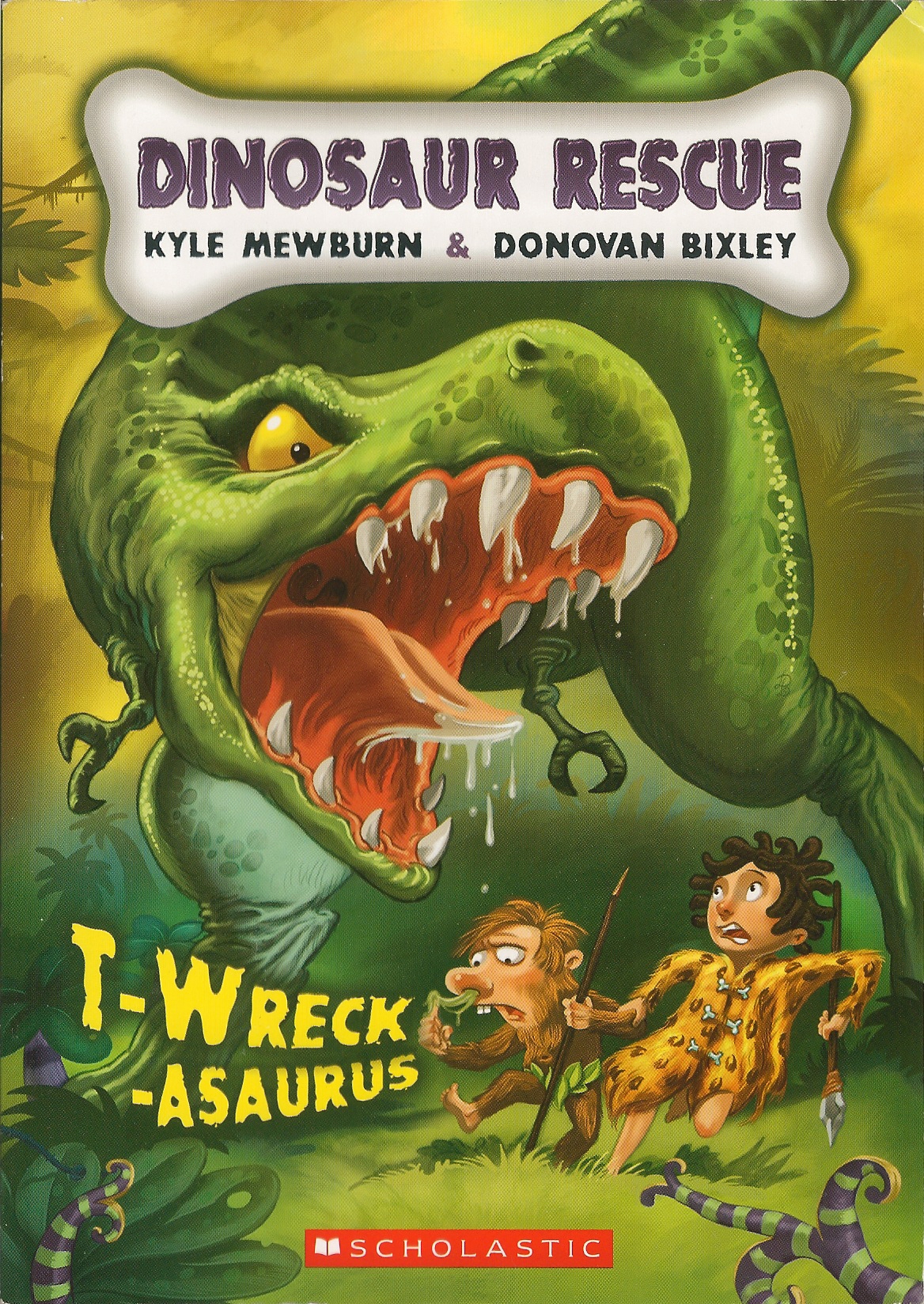
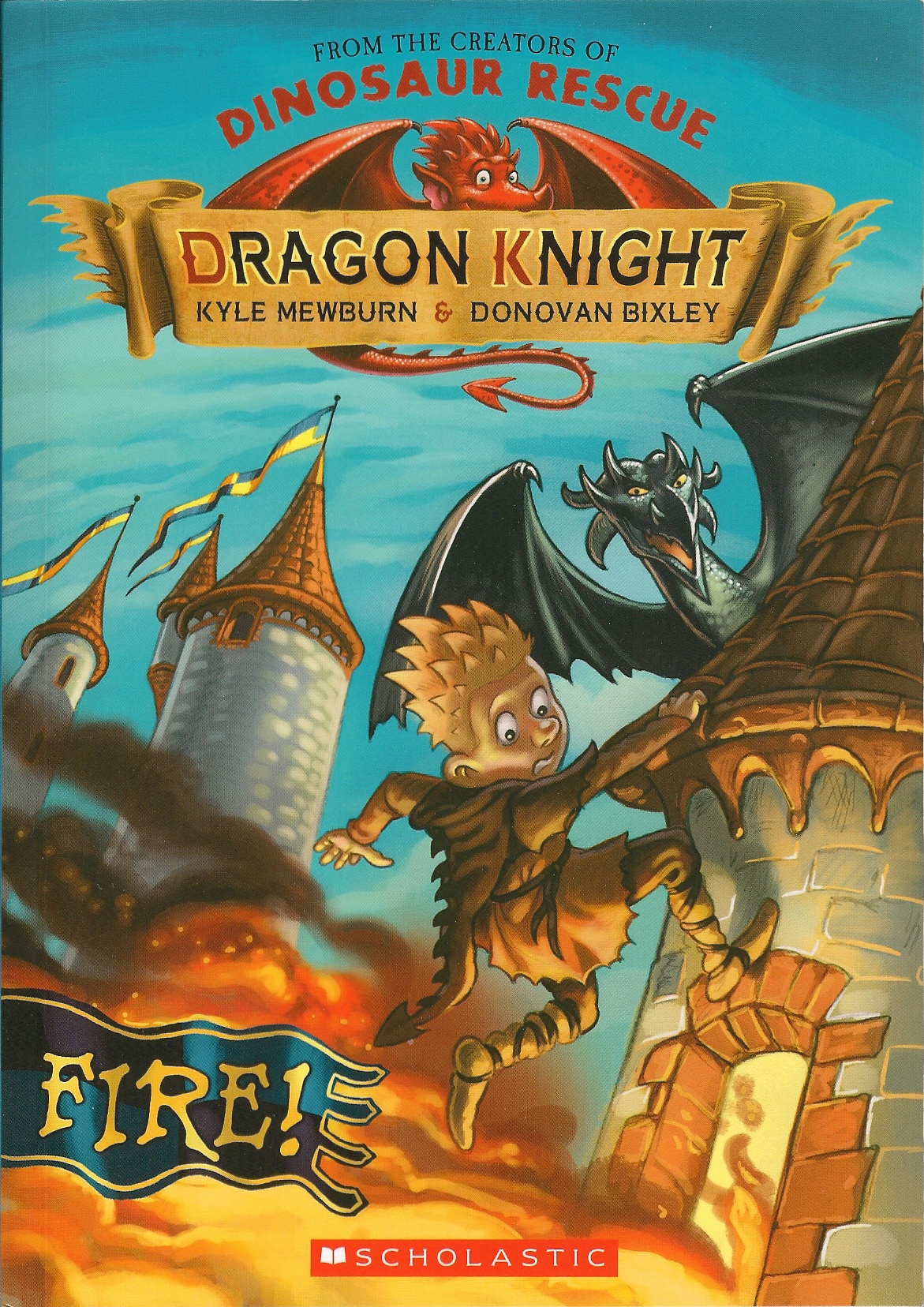
Kyle Mewburn is the author of over fifty titles including two bestselling junior fiction series. Dinosaur Rescue – about the only evolved boy in a neanderthal tribe who joins a talking T-rex on a mission to save the dinosaurs from extinction. And Dragon Knight – about a shape-shifting dragon boy who wants to go to Knight School. Originally from Brisbane, he now lives in a grass-roofed house in the deep south of New Zealand.

I met Kyle in person a couple of years ago, at the ASA Writers’ Congress–Kyle and I are both on the Boards of our respective authors’ organisations in Australia and New Zealand–and we’ve kept in touch ever since. On Facebook recently, he made some observations about boys’ reading which I found interesting, so I asked if he might like to write a guest post on the subject.

Welcome, Kyle!

DSC01530 (950x1280)Of dragons and dinosaurs and boys who don’t read

by Kyle Mewburn

Boys don’t like reading! Boys are falling behind! The sky is falling! Almost every day there’s another gloomy study, one more grim report and another grand theory on what we might do to avert catastrophe. Yet, when I recall my own childhood and the reading experiences of my peers, it always begs the question – was it ever any different? For some boys, reading was always a struggle. While for those like me, it was a wondrous escape – a delight.

As a writer of two successful junior fiction series broadly targeted at so-called reluctant readers, I think engaging this readership is akin to getting them to eat their vegetables. Take my mother. She was no Masterchef. She used to boil almost everything. For hours, sometimes. My lasting impression of broccoli was a slightly sulphuric-smelling mush with the consistency of gravel. She nearly put me off vegetables for life. If I hadn’t fallen in love with a talented, enthusiastic cook, I may never have recovered.

For lots of kids, especially boys, reading can quickly become something comparable to eating badly cooked vegetables. It’s something they’re supposed to do because it’s good for them. When I visit schools I’m regularly appalled by the diet on offer. Too often they are the literary equivalent of boiled-to-death cabbage.

In my experience, reluctant or struggling readers are by no means slow. And they’re certainly not dumb. More often than not the reverse is true – there’s a hell of a lot going on in their heads and their lives. If they only read under duress it’s often because they’ve got way more interesting things to do. Offering up trite, dumbed-down stories will turn them off reading for life.

Writing for this readership isn’t rocket science. Though a few rockets and some science never go astray. But nor is it as simple as some people think. Ever since my series Dinosaur Rescue came out, Dinosaur Rescue 1I’ve had lots of offhand comments saying basically – “If you want to appeal to boys all you have to do is add some fart jokes. They lap that stuff up.” Or “boys love anything with dinosaurs in it” – as though that explains everything.

That attitude really annoys me. For one, it suggests writing successfully for that readership is simple. Worse, it implies that readership, especially boys, are one-dimensional and an easy target.

All my stories are seat-of-your-pants stuff. I don’t actually have any idea what’s going to happen until I start writing. I think it’s important to retain a sense of spontaneity. My general theory is if I don’t know what’s happening next, then the readers can’t guess what’s going to happen either. That’s what keeps them turning the page – which is vitally important at that age. If they lose that momentum, their attentions can quickly wander off in other directions.

The series DOES contain a degree of scatological humour and some pretty gross stuff besides. I don’t make any apologies for that. It’s something most kids, especially boys, find funny. But stories with complex inter-personal relationships, especially friendships, are equally, if not more important.

Dragon Knight - Fire!In the end, re-readability is the key. The story has to be complex enough to sustain multiple readings. And it can only do that if it uses complex language, has multi-dimensional storylines, and various layers of meaning. A kid will only re-read a story if there is something new to discover with each reading. There needs to be thoughts and ideas which challenge them, with comprehension the reward for the effort of re-reading. If I can make them wet their pants laughing in the process, all the better.


The first Australian blockbuster: an interview with Lucy Sussex

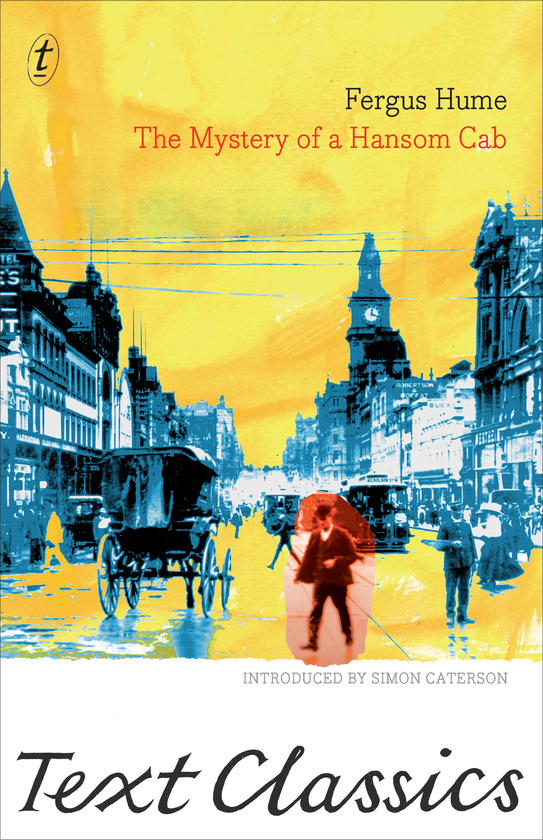
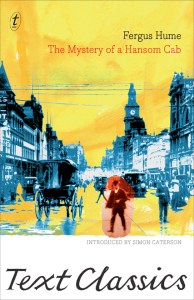
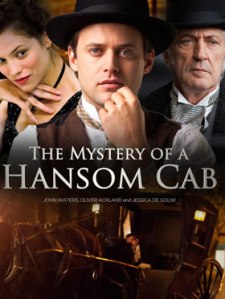
blockbuster lucy sussexThe Mystery of a Hansom Cab, by Fergus Hume, was Australia’s first blockbuster, selling out its first run almost at once, and in world terms too was a massive success, predating the Sherlock Holmes phenomenon and writing itself into the annals of detective fiction. Well over a hundred years after its first publication in 1886, it’s still in print–in many different editions, including worldwide–and the subject of a very successful ABC TV series. But its author, who due to an unfortunate decision, did not get to enjoy the fruits of his book’s success, is less well-known–until now, when Lucy Sussex’s new book, Blockbuster: Fergus Hume and the Mystery of a Hansom Cab (Text) lifts the veil on the untold story of both author and novel. The book is released next week, and as a great fan of Hume’s novel, I caught up with Lucy recently to ask her about it.

Lucy Sussex was born in New Zealand. She has edited four anthologies, including She’s Fantastical, shortlisted for the World Fantasy Award. Her award-winning fiction includes books for younger readers and the novel The Scarlet Rider. Lucy has five short-story collections, including My Lady Tongue, A Tour Guide in Utopia, Absolute Uncertainty and Matilda Told Such Dreadful Lies. Her latest book is Blockbuster! Fergus Hume and The Mystery of a Hansom Cab. She lives in Melbourne.

What first drew your interest to the story of Fergus Hume and his bestselling novel?

Hume said he ‘belonged to New Zealand’ but when I grew up there I never heard of him. That happened when I worked as a researcher for Stephen Knight’s history of Australian crime fiction. But I read the book then, and was intrigued—not least in the resonance it still had, and how people responded to it. For instance the 2012 telemovie was sparked by a Radio National program on the book, for which I was one of those interviewed. John Barnett of South Pacific Productions heard the program, bought a copy, read it on the way back across the Tasman, and decided to film it (with Ewan lucy sussexBurnett of Burberry Productions). Clearly there was life in the old Hansom Cab.

It happened I was working with Meg Tasker at Federation University on a research project about Australian and NZ writers and journalists in London at the turn of last century. We had a file on Hume, who moved to England in 1888, in the wake of Hansom Cab’s success. One day I started following digitised links re Hume across the web. It became very clear there was a book to be written on the Hansom Cab alone.

How did you go about researching the book?

The problem with Hume is that he left no diaries, there are few letters and the most relevant publishers’ records do not survive. Those who knew him are all dead now. I did use some archives, mainly in Dunedin, where his father ran the madhouse. But there was more than enough material using digitised newspapers—Papers Past in New Zealand and Trove in Australia, mainly. What was unclear in one source could be explained in another, across the Tasman.

And was there anything you discovered that surprised you?

Well, the people who kept asking me if Hume was gay! Which led me to queer theory, the history of rent boys in Sydney, and Little Buttercup from Gilbert and Sullivan, as performed in drag.

Another surprise was the rarity and value of first editions of Hansom Cab: only four survive, and even imperfect they go for five-figure sums. Go investigate your Granny’s attic!

The Mystery of A Hansom Cab predated the first Sherlock Holmes story, A Study in Scarlet, and some mystery of hansom cab bookcritics have said that Doyle was influenced by Hume’s book. Does your research support that? 
A Study in Scarlet was not published until after Hansom Cab’s great English success in late 1887. Doyle read Hume’s book, and jealously wrote to his mother “What a swindle ‘The Mystery of a Hansom Cab’ is. One of the weakest tales I have ever read, and simply sold by puffing.” [hype]. The evidence is that he and Hume had been submitting to the same publishers, around the same time, and both suffered rejections. What happened was probably synchronicity, not uncommon in crime fiction: a literary idea whose time has come. But the Hansom Cab helped create the market for Sherlock Holmes. Without it the Sherlock story might have ended with A Study in Scarlet.

I have read that Hume was inspired to write his book by the success of Emile Gaboriau’s novels–but was he also inspired by Wilkie Collins’ groundbreaking The Moonstone, published nearly 20 years previously?

He certainly read Wilkie Collins, but a bigger influence is Mary Braddon, Collins’ great rival and contemporary. She, not Collins, is cited in the Hansom Cab.

What happened to Hume and his book makes for salutary reading. Can you describe the process that led to his selling his copyright? 
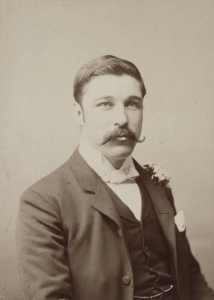
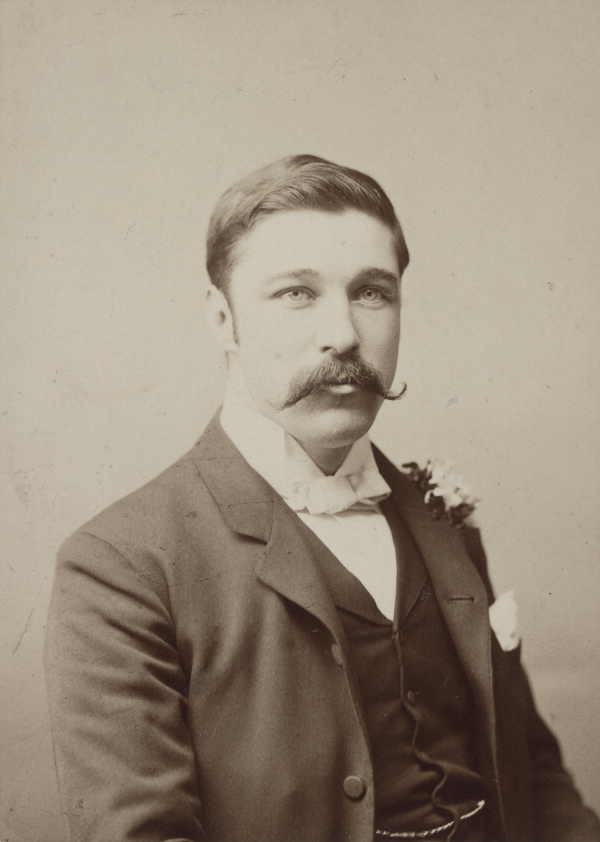
Fergus Hume

Hume wrote the book to draw attention to himself as a playwright. Although he wrote it with care and flair, he didn’t really take it seriously, career-wise. So he only registered the copyright months after the Australian success. Whether we believe the sales figures cited—25,000 copies in the Austral colonies alone, a huge figure for that time and market—the Hansom Cab was drawing attention from overseas. Thus the Hansom Cab Co. was formed to publish the book in England, and at that point Hume sold the copyright, disbelieving it would be successful outside Australia. He had taken the cultural cringe too much to heart. What he did hold onto was the dramatic rights, because that was what he thought would be more important. And yes, the play of the Hansom Cab was successful, but not in the phenomenal way of the book

Not much has previously been known about Hume and his personal life. What was your impression of Hume himself, based on your research?

I said to my initial Text editor, Mandy Brett, that he would have been fun to know. Apart from him being so utterly on the make, she replied. From various accounts he was witty good company. He liked women, supported their rights, wrote often for actresses, but there was never any suggestion of romance.

And the Melbourne–and global–literary/publishing scene at the time?

Melbourne was a major centre for reading, with high literacy, numerous bookshops, and a population with disposal income and an appetite for fiction, particularly crime. Hume networked furiously, but couldn’t establish himself as a literary man until after the Hansom Cab. When he got to London he was a literary lion, in social demand. It would have been very difficult for him not to meet Oscar Wilde, for instance. But to his annoyance people wouldn’t take him seriously as a writer because he was associated with pulp.

Do you think that the odyssey of the book’s publication, from semi-self publication onwards, has parallels in today’s changing publishing climate?

Not really. At the time you could publish in three ways, firstly by subscription, getting money from friends and the well-connected and going to a printer. Vanity publishing in our terms. The book publishers themselves used two business models. Commission was where the author paid for initial printing costs and the advertisements. If the book was a success, any profits would be shared with the publisher. Jane Austen’s first novel Sense and Sensibility was published in this fashion. The alternate model had the publisher buy the copyright, taking the risk, but also, if the book sold well, all the profits. Such was the publishing fate of Pride and Prejudice and Arthur Conan Doyle’s A Study in Scarlet.

For the first Australian edition Hume didn’t have subscribers, not for a book with disreputable crime content. 5000 copies were allegedly printed, a huge amount, when most colonial books had print runs of 200 or less. He needed a large amount of money to do so, thousands in our terms. It came from playing the stock market, with advice from a friend, Alice Cornwell, a budding gold mining magnate, the C19th equivalent of Gina Rinehart.

But Hume didn’t really self-publish. Frederick Trischler, who had worked in publishing in Australia and the US, had the business initiative and nous, and ran the Hansom Cab operation, using a Melbourne printer, Kemp & Boyce. After he and Hume quarrelled Hume wrote him out of the book’s history. But Hansom Cab couldn’t have succeeded without Trischler, who was an advertising and marketing genius.

Trischler saw the overseas potential of the Hansom Cab, and formed the Hansom Cab Publishing Co, with some enterprising but also dodgy local capitalists. Financier Jessie Taylor bought the copyright from Hume. In London the company did spectacular business: 25,000 copies a month were printed and sold for fourteen months. But it wasn’t crowd-funded—more like bank robbery!mystery of hansom cab tv
What do you believe is the place of The Mystery of A Hansom Cab, in Australian literary history–and in that of the English-speaking world?

It was the first book from Australasia to become a global publishing phenomenon. It awoke English publishers to the potential of local writing. It also showed them the gold in detective fiction, and helped consolidate crime writing as a major publishing category.

The translations were worldwide, and still happen, with a recent Chinese edition. Hume was among the first Australasian writers to be translated into Chinese.

I might add, to finish off, that THE HANSOM CAB, in its initial Melbourne appearance, shows how an author can get everything right: researching his market, writing a very good and commercial book, encountering someone who believed in it enough to hazard a large print run, producing a good-looking product, timing its appearance carefully, and conducting an effective word-of-mouth campaign. They had very little money for advertising, but they did what they could, ie hiring a hansom cab to deliver the books to bookshops.

The subsequent story shows how an author can get things VERY wrong.