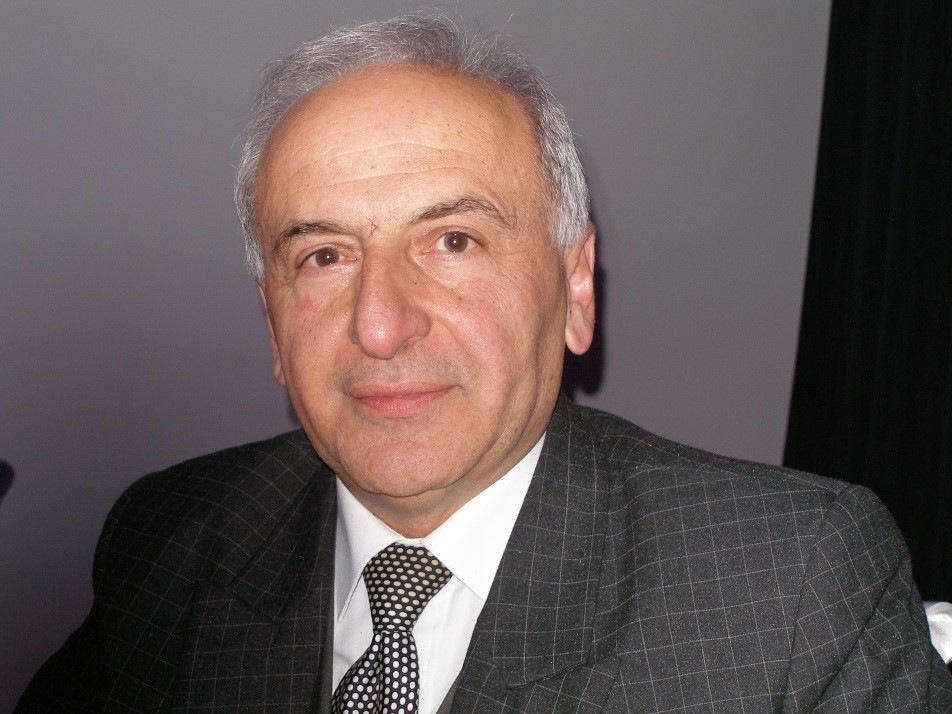
An essential book link: an interview with Dennis Jones, distributor

WP_20151130_025

Inside the DJA warehouse

The book industry is a complex mosaic, made up of many interlocking parts and links. People outside it can usually name at least some of the professions involved: authors, publishers, agents, booksellers, libraries..But anyone inside it knows there are many other professionals involved–professionals who also provide essential links between a book and its readers. And one of the most important of those links are the people who make sure books get to bookshops, whether bricks-and-mortar or online, and to libraries: distributors. Without distribution, whether handled inhouse as with many big publishers, or co-operatively between publishing houses, as with others, or with independent operators, no book would get to its intended readership. Or at least very few people would know about it. And yet, despite the importance of distributors, many authors aren’t clear on what is involved in the business of distribution, and of course most people outside the industry have no idea about it at all.

Distribution is also one of the main issues crucial to the success or otherwise of small publishers and self-publishers(or independent authors). Without good distribution, books published by small presses and self-publishers can easily get lost, unnoticed in the tsunami of publications distributed by the big operators. And to try and distribute your own books nationally, outside of your own local area, is both

Christmas Press books in DJA warehouse

Christmas Press books in DJA warehouse

very complex and prohibitively expensive. So when we started Christmas Press in 2013, distribution was very much on our minds–and on the recommendation of many bookshops, we contacted the major independent distributor, Dennis Jones and Associates, and have worked with them ever since.

So today I’m publishing an interview I did recently with Dennis Jones himself, co-founder with his wife Lea of DJA, which gives a fascinating picture not only of how distribution works, but also of a long career in the Australian book industry.

Dennis, you had a long experience in the Australian publishing industry before you set up DJA. Can you tell us about that?

I was very fortunate to be employed by William Collins in 1970 as an executive trainee working from the Melbourne office. One of 150 or so applicants, I worked initially under John Cody who was one of the directors.

By 1972 and due to William Collins purchasing the Leutenegger / Ungar owned Forlib national wholesale businesses, I became responsible for the State office of William Collins. This acquisition gave William Collins the strongest book distribution structure in Australia as well as stock holding warehouses across Australia, including one in Launceston and one in Hobart. From 1972 to 1991 I was in various management roles in both Melbourne and Sydney. The work was both breathtaking and exhausting, and it taught me the value of working with a team – some of whom you openly disagreed with and those who are still my friends today. My first Managing Director was Ken Wilder who together with Stephen Dearnley, Anne Bower-Ingram and Sir William Collins were at the cradle of Australian publishing (even though it was a foreign-owned business).
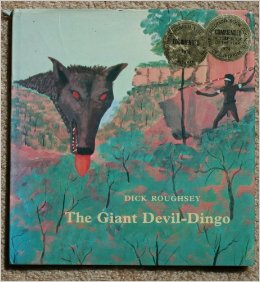
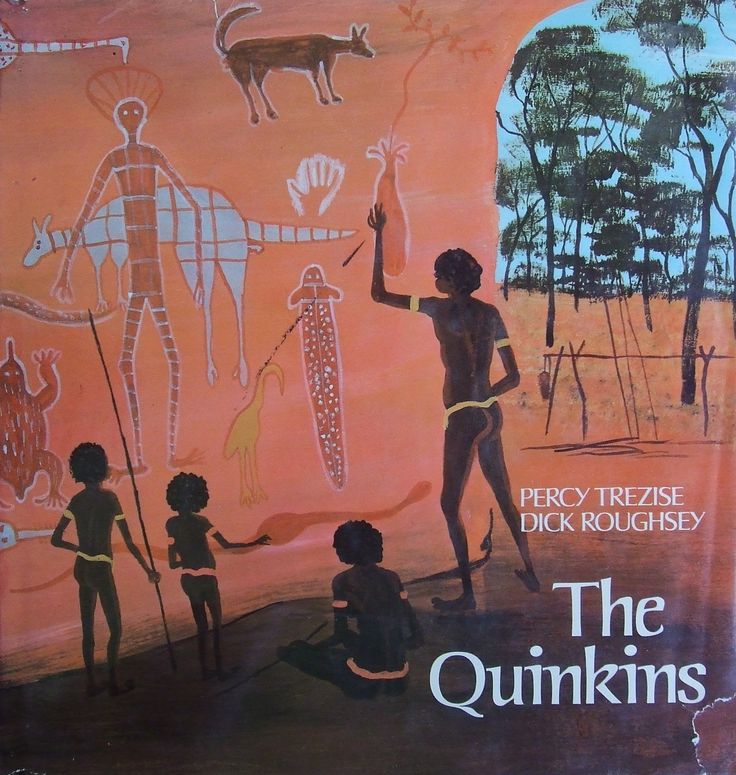
giant devil dingoTo meet and work with the likes of Dick (Goobalathaldin) Roughsey & Percy Trezise, Xavier Herbert, Graham Pizzey and so many more was amazing! It enabled me to know the Oldmeadow family, Albert Ullin, and booksellers who were as strong on stewardship then as their contemporaries today. I was also fortunate to work with Judy Taylor (The Bodley Head) when she visited Australia. Whilst Collins had the Commonwealth- rights mass market content like the Dr Seuss brand, the Bodley Head had wonderful authors and illustrators like Maurice Sendak, Tomi Ungerer and Pat Hutchins and so on. It was while I was with  Collins that I quinkinsmet memorable authors like Sir David Attenborough, Jackie Collins, David Kossoff. Theodor Geisel (Dr Seuss), Michael Bond (Paddington): there were so many it was a time to really test the strength of the business and our interest in books and reading. We also had amazing in-house publicists who were engaged with our peak book objectives intrinsically. The other side of working in a large organisation was the organisation! We had about 350 employees across distribution, marketing, sales, publishing, and the usual corporate structure. So many of my work colleagues went on to be leaders in the industry in the years that followed.
How and why did you set up DJA?

I was midway through a Grad Dip at Swinburne when I became immersed in a group of aspiring people who in a way tempted me to make some of my own career decisions; I also had a young family and was preparing to uplift them again to return to Sydney living for a second time… This return for one reason or another did not eventuate and so we stayed in Melbourne. Something happens to you when you are in your early 40’s, you do have brain snaps and enhanced vision of your future importance and relevance! At this time (late 1991) there was Gordon & Gotch as a book distributor and very few privately owned distribution businesses. So I envisaged resigning and starting a national book distribution business with my wife, $6000 in cash and complete ownership of our domestic home. In retrospect a real act of brain fade!

HarperCollins as it had become farewelled me in the style that a major business can for one of its sons, and we gave up many things in order to survive in our new venture. We had no marquee imprint or author to start off with, other than the Walshe family’s Australian Large Print list. Still if you can take pain you can grow a business! I was fortunate as over these early years I made continual representations to Ingram in US and eventually they retained me for representation in ANZ in 1993. The business with Ingram over the years grew 20 fold and enabled us to grow a business working only with a mix of Australian and imported physical books as well as representation via Ingram. We quickly dropped the foreign books stocked locally as  by then there were so many businesses queuing up to collect foreign lists I thought we should go the other way and solely focus on Australian works. I also figured we could live frugally for many years on the meagre profits (or losses) if we controlled our overheads. Sometime in the mid 1990’s we shifted into our first warehouse.

book dja 1How does distribution work for both small press and self-published authors?

The authors / publishers lists are made available to any outlet via our daily onix files, our monthly new title order forms (available in print, ipad version, or electronically). The books are also offered to the booksellers across Australia by actual sales people who are either employees or sales agents. The publisher / authors deal with us either in a timely structured manner or not. The books are taken on a consignment basis and we pay on net sales. Sounds simple or does it? A small percentage of suppliers do not have commercial interests at the centre of the works they offer.

Across print, eBook, Print on Demand we have about 5000 Australian titles – some are across all three of our “platforms” We have no issue with size of publisher big, small, book dja 2specialized, digital only or the lot. As go into 2016 and with the arrival of global destination online vendors we can literally supply anyone, anywhere. Our eBook aggregation is something we have grown for 5 years. We now outrank all of the foreign eBook aggregators because of a good blend of local and global customers.

It also helps if you enjoy reading and talking about books!

As I write this I am aware that our key times for 2016 positioning of new releases are almost on our doorstep. The behemoths are already manouvering for the end of year sales; we frankly struggle with being  that organised as it is the nature of meeting the needs of publishers and authors as they choose to manage their output.

What are the challenges and pleasures for you and your team in the relationships with bookstores and libraries?

The pleasure comes from the challenge of success and the implications of containing opportunity. It is not an inexpensive experience funding a business like this.

lion rampantI remember the word “disintermediation” from some year ago and it terrified me. Well, we still are not members of TitlePage, nor are we members of any industry body as they simply don’t cater for a business working with all comers.

And we have not been “disinter mediated”!

Pleasure – look at those daily orders from the Library Suppliers, the online businesses – each morning the frenzy on the floor of the business to fill those orders where we are supplying actual demand and not speculative placement of books in a sale or return sense.

One challenge is also putting a monthly range to the market place in a hybrid situation of curating foreign published works as well locally authored works by Australian publishers. To retain credibility we do have be driven by the commerciality of our books to the booksellers, otherwise we are simply guilty of failing the time given to us by the booksellers.

I will extend the question to include our eBook booksellers.

We have very good relations with the eBook booksellers – this allows us to market, promote and price with consumers in mind.  The pleasures are to see our content consumed in a multiple platform sense; print, eBook and Print on Demand to consumers globally. a-bitter-harvest

How do you decide whether to take on a publisher, whether small press or independent author?

Because of our Australian-only policy we have a commercial demand for more content, providing we know where the demand will come from as well as being at a price consumers will meet in the format they determine for  that content. If it was an Engineering list we would have no idea who our principal resellers would be, if the price exceeds typical selling prices we won’t be able to get the booksellers to be moved top stock and sell. Then if it is something that is best suited to reflowable style – do we have eBook rights; providing we have global eBook rights.

new kind of deathWe find it difficult to work with creators who have chosen some of the foreign publish for profit businesses as our model requires mostly global agreements.

One of the major buying sectors is the library sector in Australia and they like fiction, providing the price, format, and subject is within their profile areas.

DJA carries a very large range of titles in many different genres and niches.

Are there areas that are easier to sell than others? Are there any titles that stand out for you, over the years?

A snapshot of the years would list three titles; Fat or Fiction (weight loss) where we sold over 50,000, Surfers Travel Guide (An Australian Surfing Book) sold over 50,000, Secret Girls Business (for young girls) continue to be a standout year after year. Weed Foragers Handbook – continual demand and publisher reprints, and time will tell as I feel Arthur Upfield will be on this list as well. The Upfield (Bony Series) have had extraordinary global success over the last 18 months as eBook, and the next “platform” for them will be short-run print, either via POD, or short run offset.secret girls

And the Tony Melvin / Ed Chan series on How to Legally Pay less Tax in Australia: so successful that Harper bought the rights from the authors!

Maybe the right answer is that where we have generous authors, publishers and publicists we can have a common passion which is always the right starting point; providing we have the right price and we know the place where the consumer demand can be satisfied.

How do you view the changes in the Australian book industry over the time DJA has been operating? And–wearing your prophet’s hat!– what further changes do you think might be coming?
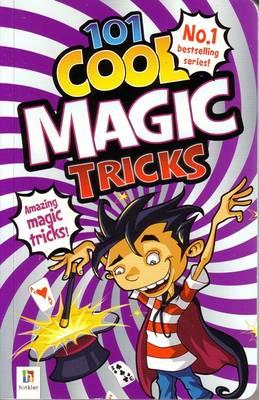
cool magic tricksThe changes have been mostly  beneficial to consumers, no longer do you have to wait for the boat to dock from UK, no longer do you have to be at the behest of local list balancing by the majors, you can take your content in more than one form and the internet tells all. Whilst I would not use the internet to self diagnose illness it provides the location and availability answers for all book needs.

On the horizon?

*Government revenue building and the basic unfairness of local costs to support Government expense mayhem.

*We “the taxpayers” own Australia Post – so why is it cheaper to deliver from a foreign business to a consumer or bookstore in Australia than it is for me to deliver to the next suburb?

*Our local on costs are going to rise  more quickly than business on costs in other parts of the world making us more expensive in an ongoing sense.

*Consumers decided years ago whether to buy local or buy foreign – this won’t change.

*The calibration of what is occurring with process of people writing, publishing and selling. We really have very little understanding of that change that occurred visibly overseas 10 to 15 years ago that wicked-wizards-and-leaping-lizardshas be largely ignored in Australia – this process of what is branded “self-publishing” will continue to grow.

At the core is: Read lots and sell more!
Double Act 6: Raghid Nahhas

raghid picI first met writer, publisher, editor and translator Dr Raghid Nahhas some years ago when he was editor and publisher of a bilingual Arabic/English literary magazine, Kalimat. But publishing a magazine certainly isn’t the full extent of Raghid’s work, as readers will discover from this very interesting interview.

Raghid, for a number of years, you were the publisher and editor of a unique literary magazine, Kalimat, a bilingual Arabic/English production. Can you tell us how it started, what your aims for it were, and whether you felt those aims were achieved? And how was the magazine received, both in Australia and Lebanon? What are some of the scenes, that stand out, for you, in the time Kalimat was published?

I come originally from Syria, born to a Syrian father and a Lebanese mother. About 1998, a group of enthusiastic well-educated Australian-Syrians wanted me to group them in some sort of an organisation where they would feel useful to society. However, I was more inclined to reject any sort of another “ethnic” organisation added to the multitude of societies and even “political party groups” that are irrelevant to Australia (there are tens of such groups that carry the names of militias and political parties that have been active in the Lebanese civil war and its consequences. I find this very odd). I mentioned to those people that I would be interested in presiding over such a group if I had something meaningful to offer to Australian society at large, and that the group should be inclusive of any Australian who shares our aspirations.

Two years later, I felt I could realise an idea that was with me since I arrived in Australia in 1988. Back then, my scientific career and my occupation with supporting my family did not leave me much time for literary activities.

Perhaps the best answer to your question about the “aims” can be found in my first editorial titled Kalimat:Creativity, the Joy of the Word and Cultural Access (Kalimat 1, March 2000). Here are some excerpts:


Kalimat’ is the Arabic for ‘words’. It is the plural of ‘kalima’. We believe in the power and the beauty of words. We believe that the word is the gate of cultural heritage, and that writing is the key to its permanence. This is what the Arabic words on the back cover of this issue say.

Kalimat seeks to expose the beauty of words and explore their creative dimensions in poetry and prose, in any form or style. Kalimat will seek quality, without being too academic.

Kalimat, an Australian-Arabic Literary Quarterly, is produced alternately in English and Arabic. It seeks creativity in both languages, and fosters access between English-speaking and Arabic-speaking individuals and the worlds and cultures they represent. In doing so, Kalimat aims at providing direct enjoyment of the written word in either languages, or in both for those who are bilingual. Those who have one of the languages only, can have access to other ideas through translations and commentary. Kalimat’s mission is to provide a medium for cultural access and enhanced creative communications between writers from diverse communities, who are united by their quest to have their words read, heard and felt by everyone.

Kalimat will focus on Australian-Arab access by being representative of the widest possible contemporary writings in each culture. It will also attempt to promote Australian and Arabic writings throughout the migrant communities around the World.

We have already begun establishing links with major literary bodies and individuals in the Middle East and among migrant communities. The fruits of these contacts will start appearing in subsequent issues, ripe for everyone to enjoy.

We are very clear about what access means. A very dear friend who comes from a different background, holds some contrasting views to mine. We both believe that ‘boundaries’ are inevitable, or at least necessary or healthy. We believe that we are such good and close friends because we recognise each other’s boundaries. We are also able to cross those boundaries, move freely, enjoy their essence and move out again without undermining the integrity of the core.

The overwhelming response we have received indicates a great interest in the goal Kalimat is pursuing. It also indicates that there is a need for a new outlet for all those talents.

We would like to see more spontaneous, creative and emerging talents knocking on our door. To this end, we say that Kalimat is your words. And my word! Without you and your contributions to this exercise, it becomes null and void.


kalimat last issue

The last issue of Kalimat, in 2006

I would say that the aims were partially achieved, because they were limited to an elite group. This is due to two reasons in my opinion. One is the quality of the magazine. Another is our inability to market it on a wider scale. The latter was mainly due to severe financial difficulties at an era when digital printing was non-existent, making it costly to print. You see, my real aspiration was to make such a magazine popular without compromising its standards. In this way, I was hoping to engage the common reader with material of a more literary value than the one this reader was used to. I felt there was a need to make creative writing more accessible. I don’t think that we succeeded in that.

The magazine was received well in Australia, Canada, USA and England. It was also received well in some European countries, mainly by organisations and individuals with links to Arabic.

In the Middle East, it was received well by individuals and by one organisation in Syria that has links with Syrian migrants abroad. The Ministry for Culture in Syria subscribed to the magazine. Major Arab well-funded literary organisations never bothered to answer my mail despite sending them full sets and despite that some of their employees had material published in Kalimat.

I was interviewed by TV and radio whenever I visited Syria and Lebanon and the reception was excellent, but this was based on some individual initiatives by prominent people who appreciated the work.

Kalimat was published between 2000 and 2006. These years, and indeed the decade, will be remembered in history as truly fundamental in laying the foundation for a different world.

The year 2000 was prominent as the start of the 21st Century. It was preceded by a lot of anxiety about the “Millennium Bug” and the usual superstitions associated with “landmarks”. The real anxieties during that year were related to more real-world issues, mainly matters related to al-Qaeda and to Iraq. Between 2001 and 2006, the situation worsened with USA leading the war on Afghanistan after the 9/11 attacks, George W. Bush became president, a blast in Bali killed many Australians, the USA invaded Iraq with devastating consequence for years to come, a tsunami in south east Asia killed thousands of people, terrorism struck the heart of London, Syria withdrew its forces from Lebanon and the Lebanese prime minister was assassinated, Saddam Hussein was executed, Islamists captured the Somalian capital and Hamas won the elections in Gaza.

There were some bright moments. For example, the euro started circulation and a European spacecraft landed on Titan (a moon of Saturn). Add to this scientific discoveries and literary achievements, many of which might go unnoticed.

You are an author as well as a publisher. Tell us something about that. How did you start writing? What genres do you write in? And is your work mainly in Arabic or English?

raghid dew and sparks

Dew and Sparks, a collection of writing by Raghid Nahhas


My main literary work is mainly in Arabic, but with Kalimat my English writings had a boost. I started writing at a very young age and I was known at school for my abilities in Arabic and English, despite my scientific choice of courses. I contributed to the school magazine in Damascus when I was in primary school and afterwards. Our school had a distinguished publication that was taken seriously. My first article in a leading Lebanese magazine was published in the sixties when I was fourteen. In England, whilst I was undertaking my PhD in Experimental Zoology, I met another Syrian who was undertaking a PhD in English literature. We became close friends and he showed me an issue of al-Adaab, the leading literary magazine in the Arab world at that time, with a short story of his published in it. This encouraged me to show him a short story I had written. He dismissed it as unpublishable by that magazine. Nevertheless, I did send it for publication and it was accepted. Ironically, it was my friend who broke the news to me, because he was a subscriber to the magazine.

I write short stories, prose, essays and socio-political articles. My work is full of social critique, sarcasm, humour and some dramatic sad stories from the start of the civil war in Lebanon where I lived for a while and escaped tragic circumstances on a few occasions. There is also a lot of happiness and love stories from Beirut between 1970 and 1975, a period during which I considered Beirut my darling city and the best place on earth.

In any piece I write, I mostly tend to include all the above elements. Although some of my work is a complete fiction, it is based on real experiences or understanding of real events. I believe in an integral approach to life: things are more related to each other than we think.

You come from a  well-read family, I believe. As a child, and a young person growing up, what books and writers inspired you? And what books and writers inspire you now?

My maternal grandfather was a distinguished journalist and a pioneer reformist in south Lebanon for the first half of the twentieth century until his death in 1960. Interestingly, my paternal grandfather was a business man and so was my father. My father, who only finished year five at school, was a devoted reader. I remember when TV was introduced to our household about 1960, the whole family would spend every evening watching, except for my father who would retire to bed and read for hours. We had many books, but mostly classical and traditional material and definitely nothing progressive, leftist or atheist. These I had to pursue myself. No one stopped me from doing that.raghid translation 2

My mother had a collection of Shakespeare’s plays translated into Arabic. I read it all with fascination, particularly “Midsummer Night’s Dream”. I read translations of works by most of the renowned Russian novelists. War & Peace by Tolstoy comes to mind. Les Misérables by Victor Hugo was greatly admired by almost everyone. I loved it! I read Mariana Pineda by Federico Garcia Lorca.

One of the very first Arabic novels I read was Dua’ al-Karawan (The Call of the Curlew), by Taha Hussein, considered the most important literary figure in Arabic literature. He was not a novelist. His writings, however, are of a great literary integrity. Later (still a teenager) I read all of Naguib Mahfouz’ novels. One day, after class, a group of my classmates and I (four of us who were the best achievers) were discussing various issues as we always did during recess. I remember telling them that Naguib Mahfouz was soon going to get the Nobel Prize. Little had I known that politics would delay him the honour for twenty-five years!

Although I am not a poet, my main reading interest was poetry. I read a lot of the classical Arab poets, but I was more attracted to the modern ones, particularly Nizar Qabbany, a Damascene like me. I was born in the same locality where he was and in an architecturally Arabic house similar to his. I am very familiar with the Environment where he lived as a child and adult. Like him, I also lived in Beirut for a while.

In my twenties and until now, my major readings have been focused on science and philosophy. Examples of thinkers I admired over the years are (at no particular order): Rachel Carson, Bertrand Russell, Charles Darwin, Nizar Qabbani, Mahmoud Darwish, Adunis, Sadiq Jalal al-Azm, Simone de Beauvoir, Carl Sagan, Stephen Hawking, AC Grayling, Paul Davies, David Attenborough, Salman Rushdie, Noam Chomsky, Sigmund Freud and Albert Einstein.

raghid translation 3My favourite person in history is Hypatia of Alexandria (died 415 AD), a philosopher, mathematician and astronomer. She was an advocate of the value of science and stood for her principles. She paid for this with her life when a Christian mob, including monks, tore her to death.

What’s the publishing scene like, not only in Lebanon but other Arabic-speaking countries?

Before the Lebanese civil war that started in 1975, Beirut had been the cultural centre of the Arab world due to the freedom of press and the relative democracy enjoyed. Many Arab intellectuals used Beirut to publish and some prominent ones moved there and established their own publishing houses, such as Nizar Qabbani and Ghada Samman.

Beirut still enjoys a lot of freedom in that respect, but it no longer occupies the same status as before. Dealing with publishers there would now cost you an arm and a leg. Not only do they want to sell you the number of copies you require, but also they force you to buy some 1000 copies and to forfeit any rights for a period of five years. I wanted to publish my recent Arabic books there (a logical thing to do), but aside from the few who never respond to you, some leading ones were difficult to deal with. I can see now why even some of the greatest of Arab writers opted to self-publish.

raghid verses across tasman

Verses across the Tasman, contemporary poetry from Australia and New Zealand, translated by Raghid Nahhas, 2015

raghid translation 5

I don’t feel that the situation in other Arabic-speaking countries would be any different, but I am no expert on that except to say that some of the Gulf states have managed to publish literary magazines of a very high quality and they ought to be congratulated on their efforts. One example is the monthly Arrafid (published by the government of Sharjah, UAE). With every issue there are three extra little books, and each deals with a certain genre. The problem, of course, is whether they will be open minded about publishing material that does not meet their values. The problem I have with them is that so far I was not able to deal with them, because they don’t answer my emails or letters.

You have translated many works, from English to Arabic and vice versa. How do you view translation? What are its challenges and pleasures?

Unlike other literary translators who feel that once they put the work into the target language they possess it and it becomes their creative work, I consider myself a “trustee” of the work. The work is not mine and it can or should never be mine. I believe that a translation is a responsibility.

Integrity and honesty mean that a true translation should reflect the original work and never be better or worse. In the literary word, an accurate translation does not mean “a true copy of the original”. However, it should be a true reflection of the spirit of the original and as much as possible of the original style. This can never be achieved, particularly in poetry where the metre and musicality are very much dictated by how each language is established.

Creativity in translations is thus limited to how the translator is able to adapt the target language in order to meaningfully and structurally express the original work. Translators should remember that the most vital part of any piece is the ideas. Everything else is the “clothing”, and of course it can be as important as the ideas in creative terms. However, translators should not unnecessarily devise a different garment simply to stretch their linguistic muscle. What they should be doing, to re-introduce the original work, is to find equivalent phrases from the target language that match – in meaning – those of the original. I am stressing this because it is wrong to assume that the lexical meaning of a raghid translationword is going to convey the actual meaning of a phrase. This is a major issue in translations and a trap translators fall into very easily. As a simple example, in English you can say to someone you love, ‘You are my cup of tea!’ You can’t say the same in Arabic to convey the same meaning. You could say, ‘You are as tasty as a cup of tea!’ This, however, diminishes the power of the English phrase in my opinion. In Arabic, I would use something like, ‘You are my flower!’ Another example is one verse in Arabic I had to translate. It starts by ‘A citizen whose profession is to write…’ The Arabic version sounds great and seems acceptable, possibly because of its musicality. Left as it is, it sounds bizarre in English. It should simply be ‘A writer…’

As well as your work as a publisher, editor, author and translator, you also worked as a scientist for many years. Do you think all of these strands complemented each other, or did you have to struggle to fit them all together?

I don’t believe it is a question of “fitting together” or “complementing each other”. Some people, like me, have varied interests. As such, the “struggle” is to find time to achieve in every case. No, I did not have to struggle, because for twenty-five years my involvement was with research and consulting. It did not leave me much time to consider my other main hobby in writing. This remained dormant and I was happy doing what I was doing. As soon as I had the opportunity, I embarked on a more serious literary path by publishing Kalimat.

raghid thirty four tales

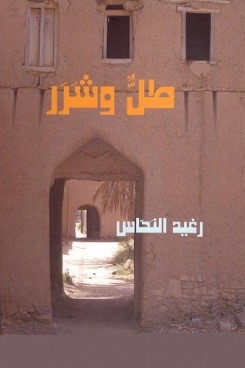
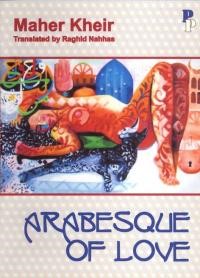
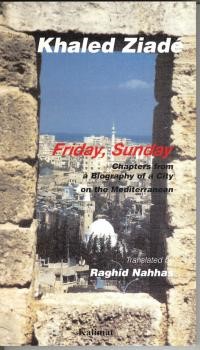
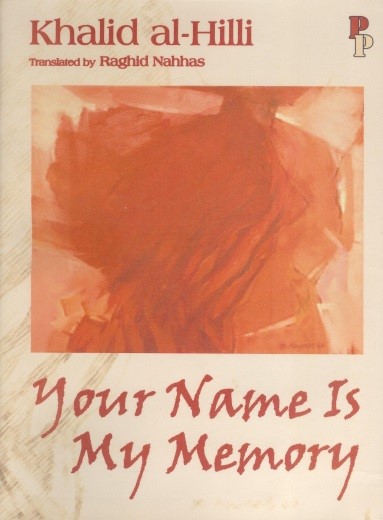
Thirty-four tales from Australia, translated by Raghid Nahhas, published 2015

My philosophy in life is very much dominated by “integration of disciplines”. I believe that we can specialise in certain fields and this is necessary for achieving specific goals and targets. Specialists, however, must not lose sight of the total picture if they want their achievements to be better and more accessible. For example, a geneticist must be conversed in the ethics associated with the consequences of genetic engineering.

What are your current publishing and writing projects?

This year I published three translation works: two into Arabic (short stories, poetry) and one into English (poetry). From now on, I hope to have the time to complete two novels, one in English and one in Arabic.

Anything else you’d like to add?

I would like to express my appreciation of a number of writers, poets and academics who stood by me when I published Kalimat. This was the best reward I received, because it meant that those people appreciated the value of what I was doing. I am saddened, however, by the fact that since Kalimat ceased publication, only a handful kept in touch.


Creative pleasures: an interview with Beattie Alvarez

Beattie AlvarezToday it’s my great pleasure to feature an interview with Beattie Alvarez, a brilliantly creative and dynamic young woman whose talents lie in many different directions. Beattie and I work together at Christmas Press, but she’s also juggling many other creative and professional roles, as you’ll soon discover in this fascinating interview.  (Oh and by the way, she’s also the mother of two young and very lively daughters!)

Beattie, you are involved in many creative pursuits–writing, illustration and toymaking. How did it all begin?

SONY DSC

There are actually a few answers to this! I have always loved all of the above; my parents (Mum, Dad, and Carl, my stepdad) are all talented artists. I grew up at Julian Ashton’s art school, entertaining myself by shoving rolled up tissue paper in my nose while they drew naked people.

When I was four… or five… I saw Coppélia performed at the Opera House. I went home and wrote, illustrated and ‘published’ my own version of it while Mum sewed toys. By the time I was ten I had a whole shelf of self-published books!

I started writing as an adult when my favourite TV show ended abruptly, with a very dissatisfying ending. I was heartbroken! So I went out, sold my soul for a loan to get my first computer, and wrote my own ending. Then I discovered that it was actually called Fan Fiction and there was a website I could upload it to! The response from other fans was overwhelming. As of 2015 those stories have been read almost 100,000 times!

After that I was hooked!

Tell us about your writing. What have you had published, and what are you working on now? Do you write in particular genres only or do you like to try your hand at many things?

I’m new to being published and it’s so exciting! My first published story was in Reader’s Digest magazine… and it paid! Almost $1 per word! I thought I’d be rich in no time.

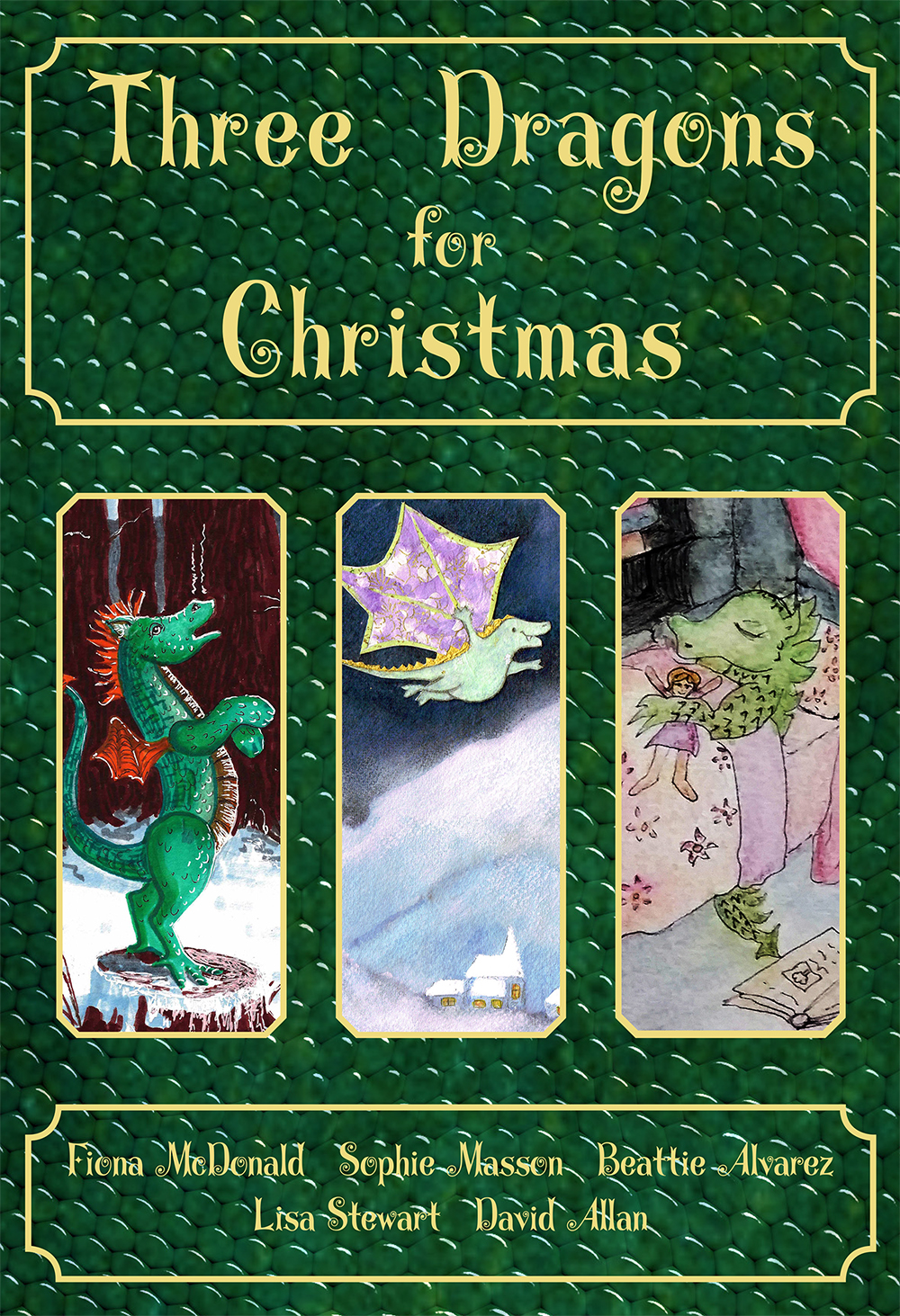
Since then I’ve had a few short stories, poems and illustrations published in anthologies and in November I was one of three authors with a story in ‘Three Dragons for Christmas’ by Christmas Press Picture Dragons Front Cover MediumBooks — I got to fully illustrate my story as well, which was a lot of fun.

I write anything and everything! Fantasy is my preferred genre, having lived in a fantasy world for most of my life. I’ve got one fantasy novel about the Queen of the Universe that will probably take the rest of my life to finish. I keep going back to add or change or edit.

When my brain is being stubborn I write, what I call, ‘mini murders’.  I write them to kick-start my brain — or when I’m in a particularly bad mood! They’re short stories where one — or many — people are murdered, ranging from twenty words to five thousand! One day I hope to be able to publish them in a book called ‘Murder on the Run’, the idea being that you can read one on your lunch break or between train/bus stops.

Then there’s the series of picture books I’ve written about Marguerite MacDougall… and my ‘magical murder’ novel that I’m working on!  I’m also waiting for responses from agents and publishers over a non magical, non fantasy YA novel that I finished earlier this year. It was my first attempt at something with no murder and no magic.

You are also an experienced editor of other people’s work. What effect do you think this has had on your own writing?

It gets me writing! I like editing for two reasons: the first is to help other writers out there polish their work and get the best manuscript they possibly can. The other is because sometimes it’s a hard job and I all I want to do is write my own stuff after weeks of writer’s block! Working on someone else’s manuscript that really needed a good edit BEFORE they sent it to me is the best way to get over an imagination blockage.

Tell us about your illustration work, and who has influenced you as an artist.

dragons beattie Christmas-Day-Brighter

From Three Dragons for Christmas

For years and years I refused to do art. Partly due to growing up at gallery openings and falling asleep under the food table when they went on too long and partly due to school. I hated art — and English — in high school. They tried to force me to see things that weren’t there and make assumptions about the artist. A curtain is allowed to just be blue! It doesn’t have to mean that the artist was depressed and in an unhappy marriage. It MIGHT mean that blue looked best there or that they wanted to open a new bottle of paint. So I butted heads with both my art teachers and my English teacher (who didn’t pass me once, for the record in year 12!) a few times over that. I became really disheartened when people with talent got lower grades than those who put a black spot on white canvas, twelve dancing princessesbut wrote an essay over why that was a real piece of art.

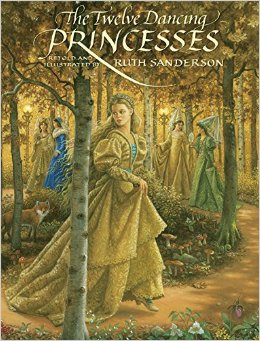
My parents, obviously, all influenced me when it comes to art and brambly hedgeillustration. But so did books! I love Ruth Sanderson’s ‘Twelve Dancing Princesses’ and the ‘Brambly Hedge’ books by Jill Barklem, where you can see the full story in the pictures, but there are also other side stories going on, only visible in the illustrations.

As well as being a writer, editor and illustrator, you have also worked as a book designer and lay-out artist. How did you learn those crafts, and what are the challenges in those aspects of book production?

It turns out that I LOVE book designing! Carefully choosing where the words go to make the pictures stand out (and vice-versa!) is very therapeutic and rewarding.

I learnt on the job with David Allan from Christmas Press Picture Books when we were working on ‘Once Upon a Christmas’. Thankfully I picked it up quickly or we might have been in front of the computer UNTIL Christmas! Since then I’ve helped design several books for Christmas Press and can’t wait for the next book so I can do it again!

Mikhail Strogoff Cover Front Medium

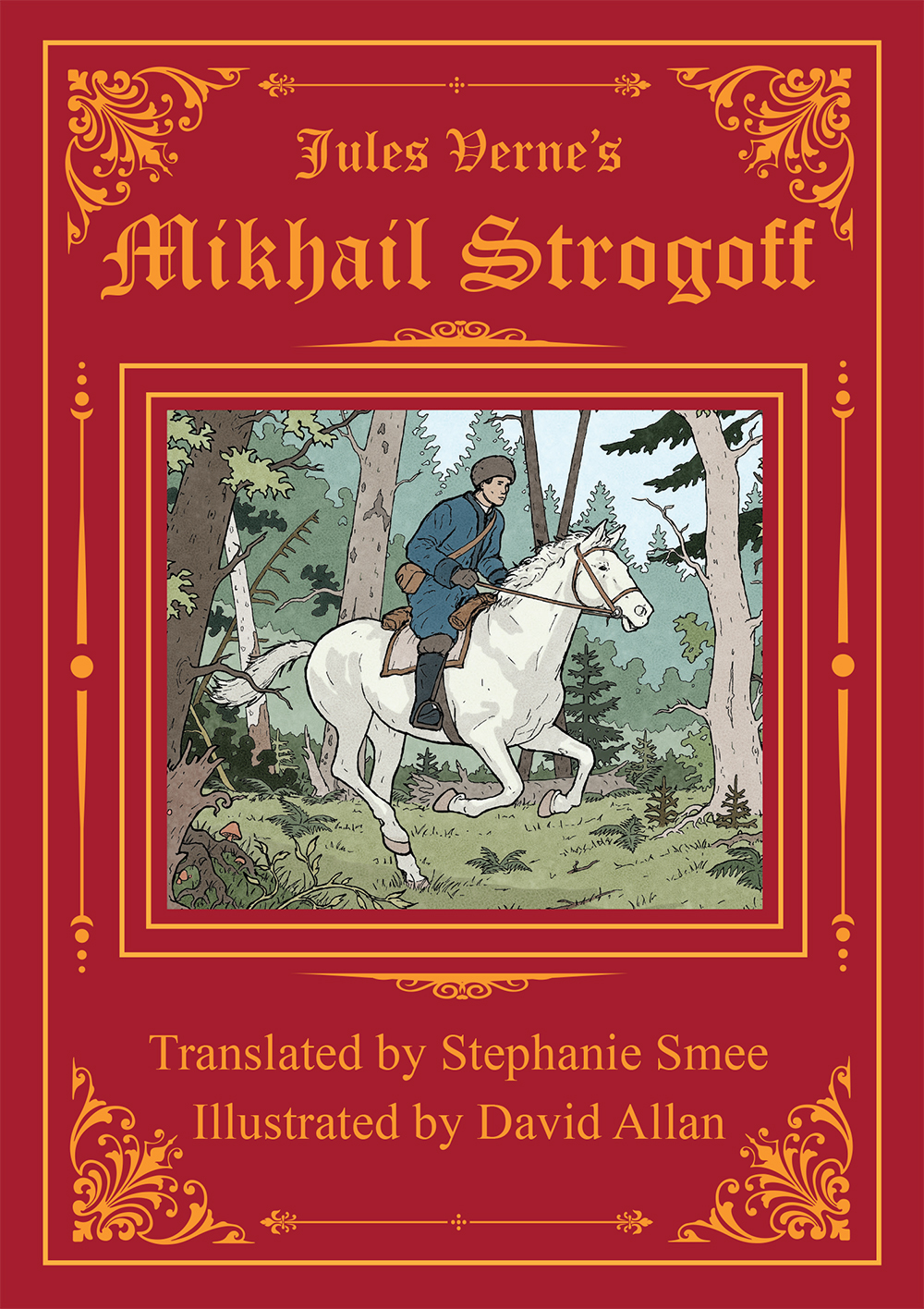
A forthcoming book co-designed by Beattie Alvarez and David Allan

Seeing the finished book is the best part of that and knowing that I had a hand in bringing someone’s words to life is very satisfying.

That said, it requires a fair bit of coffee and chocolate, and maybe some naughty words slip out when Adobe and I disagree!

You also run a number of Facebook pages for businesses and organisations, including the New England Writers’ Centre, for which you also run the website. What is your key advice for businesses and organisations wanting to get the most out of social media and the Internet?

Do it! That’s my main piece of advice. So many creative types out there don’t use social media and I don’t know why! They say they don’t know how and what’s the point? There’s a saying from before the digital age ‘any publicity is good publicity’. Social media is free (unless you choose to pay for their ads). Your friends see it and like it. Then their friends see it and like it… etc! It’s about getting your work/business/organisation seen, the more people who see it, then the more sales/contacts you make. It’s simple!

The other piece of advice I have is to keep with the times. A website made ten years ago will probably not look as professional as one built now. There are a lot more options for web design now than there used to be. Buttons so that the user can interact with you and your business, so they can buy things, so that the site is user friendly. People are busy these days! They don’t bother with hard-to-use sites, they’ll just go somewhere easier and faster. So much is digital in this world that you have to keep up.

You are the deputy Chair of the New England Writers’ Centre, a non profit arts organisation. How do you view the issue of successfully steering a small arts organisation through challenging times?

Being willing to change with the times!  It’s very similar to what I wrote above, in that you have to keep up with what people want and need. This year the New England Writers’ Centre branched out and tried some new things, updated their website and Facebook pages and we did brilliantly! We’ve received several grants (yay!) this year to ensure that we can keep operating. That’s because we’ve had great grant writers, but also because we’ve changed and can prove that we’re willing to try new things.


You work with your mother, Fiona McDonald, to create unique hand made soft toys. Can you tell us something about that? beattie with toys

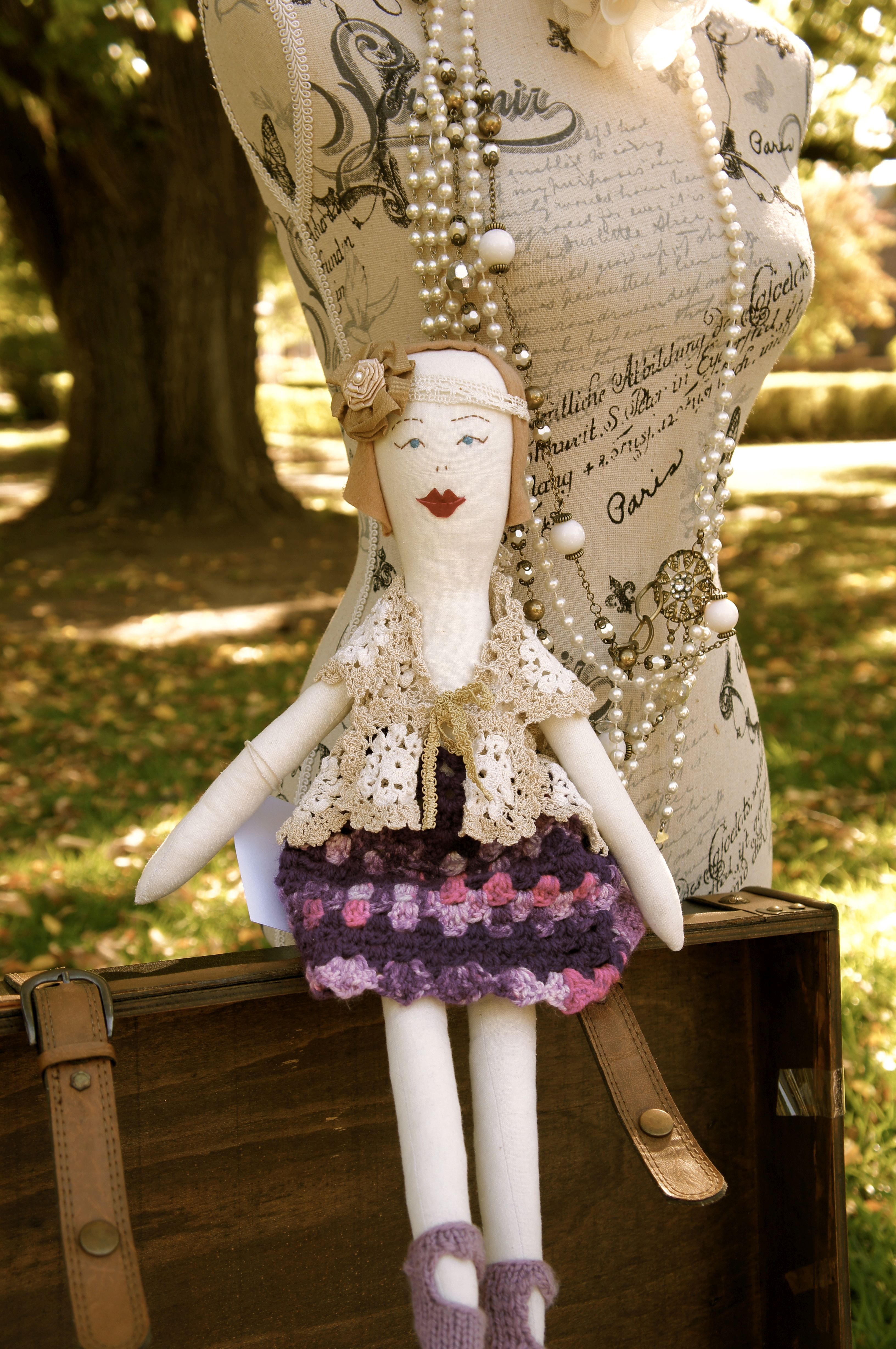
Mum and I work at everything together! And we work well. She decided to open a toy shop a few years ago and so we did! I didn’t really do any sewing before that, but now I do a lot! We felt there was a gap in the market for good quality toys that aren’t just for playing with, but for being companions for life. We like toys that can go into battle with you, have tea parties, sit quietly and read a book on a rainy day, toys that inspire play and friendship.

SONY DSC

And we’re doing so well that I’ve got calluses on my fingers from sewing so much!

You also help to run the shop, Granny Fi’s Toy Cupboard. What are the challenges and pleasures of running such a unique business in a regional town?

The pleasures far outweigh the challenges! Having a shop filled with beautiful, handcrafted toys, books, hats and all the like make going to work a treat! We’ve also branched out into some merchandise, having spotted yet another gap in the local market. We are now known as either ‘the dragon shop’ or ‘the nerd shop’! We have a great selection of Harry Potter, Doctor Who and Star Wars (to name a few!) merchandise that appeals to the ‘grown ups’ that come into the shop. Although, to be fair, those ‘grown ups’ also buy the toys!granny-fi-toy-cupboard-logo

It is hard in a small town to get a lot of walk by trade. The main pedestrian mall is sadly very empty of shops, mainly due to the exorbitant rents that the landlords are asking. Words that I don’t completely understand have been thrown around like ‘negative gearing’. Places like Centro, which was built off the main drag, have severely damaged the shopping strip due to its air-conditioning and under cover parking. People like the ‘one stop shop’.

And of course, there are people who just don’t understand us. We get questions like ‘but you just made this yourself, shouldn’t it be cheaper?’ and ‘but it’s not a real toy, it has no packaging’. Times like that are disheartening, but (after the first few times!) I no longer want to cry when people like that come in. Our toys deserve to go to homes that will love

SONY DSC

them!

What I have found very interesting is the response from tourists. Those that come from cities really DO understand us and our toys! They can’t believe how cheap our prices are and suggest that we open a shop in Melbourne or Newtown in Sydney.

But for all the hard times there are always more people that love what we’re trying to do in Armidale. They love our toys and the fact that 90% of what we stock is handmade in the area and that their money is going to support the local economy.


Maybe one day we will open shops in cities, but we will always be based in Armidale. It is our home and we love it.

Beattie's older daughter Isobel, with a hand-made friend!

Beattie’s older daughter Isobel, with a hand-made friend!

Double Act 5: Kathy and Peter Creamer

pink dog Choc LogoA new interview in my Double Act series of interviews with author/publishers, this time with Kathy Creamer, who with her husband Peter has just launched into the creation of their second publishing house, but first in Australia, Little Pink Dog Books. Some years earlier, while living in Singapore, Kathy and Peter had started their first publishing house, Creative Characters Partnership, and continued with that later in the UK, before coming to Australia. It’s a fascinating story Kathy has to tell. Read on!

How did you get into publishing?

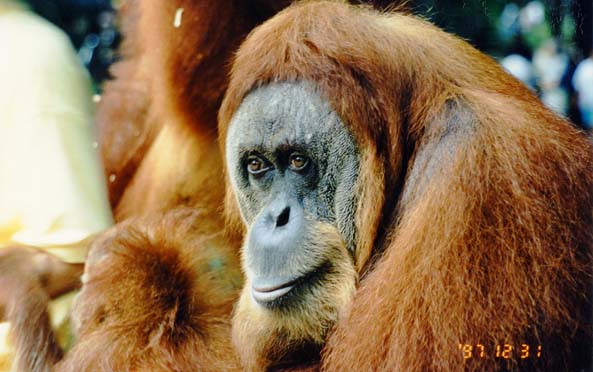
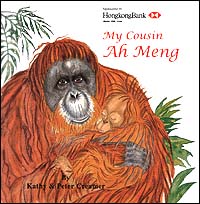
My first venture into publishing came about in 1998, when I was working as an illustrator and writer for Oxford University Press and Reed International in Singapore. At that time, I had become concerned about the massive fires in Indonesia, and the destruction of the rainforest to Ah Meng Launchmake way for palm oil crops. Together with Singapore Zoological Gardens and sponsorship from HSBC, I produced a picture book about orangutans and their diminishing habitat. It sold over thirty thousand copies and raised funds for orangutan Ah Mengconservation. Unfortunately,  the star of the book, the zoo’s much-loved Ah Meng, died a few years later at the grand old age of forty-eight. A good innings for an orangutan!

Shortly after the success of the book, My Cousin, Ah Meng, I set up Creative Characters Partnership with my husband, Peter. It began as a children’s book publishing business to help raise awareness, and funding for animal conservation projects. We enjoyed the whole end to end creative ahmengprocess and felt that it was something we could both work on as a team as follows:

*Peter: upfront Marketing, Research, Negotiation and contract management.

*Kathy: all the creative elements of concept, storyboards, layout, words and illustration.

*Peter: preparing all materials for production, sourcing and negotiating with printers, proofing copy with Kathy, taking delivery of stock, and final delivery of the stock to the client.

We published over twenty children’s picture book titles for zoos, nature reserves, country clubs and historic houses, to hopefully interest children in conservation, heritage and history.

Parrots, Pythons and Pots of Paint for Longleat House, was our first picture book in England, and meeting Lord Bath, who is such an interesting and charmingly eccentric character, was quite the highlight of this project.Lord Bath001

 Have your aims and strategies as a publisher changed from the beginning? How?

We have always concentrated on high quality, small to medium volume book production. As a two person business we feel that we need to bring more resources to help deliver the products, and with people who are comfortable working within the business model – as there are no royalties, just a flat fee payment for work done. With Little Pink Dog Books, however, we hope to eventually to be able to pay royalties some day.

Has working as a publisher impacted on your own career as an author and illustrator-whether that be positive or negative?

Working as a publisher did, unfortunately, have a negative impact on my career as a children’s illustrator and author, as running the end-to-end production process, with just two people, there wasn’t much time to be innovative, especially with the artwork. Once you have your working model it was too tempting to continue with the same, rather than experiment. My artwork and writing suffered, so we decided to close Creative Characters Partnership in order to refresh my work by studying for a Masters in children’s illustration, together with a BA degree, and some other courses in literature and creative writing at Dinosaur Discovery001university.

Little Pink Dog Books came into being when we moved to Armidale from Melbourne. We had been meaning to restart our children’s publishing business for some time, as we both enjoyed the challenge. It will be a different model than before, in that we are not looking to publish for clients or any organizations, but will be self funded. We also want to help new writers and illustrators to get their work published and will be actively looking for new picture book manuscripts and illustration.

We have three picture book titles on our list for 2016; a refresh of Mr Mr Ming001Ming and the Mooncake Dragon, one of my first ever picture books; a new fairy story, and a rather naughty rhyming tale from a very talented emerging writer.

The new website for Little Pink Dog Books (www.littlepinkdogbooks.com) will be up shortly.

How do you market your books-do you sell direct to booksellers and readers, or do you have a distributor?

The marketing component for Creative Characters Partnership was about finding someone or some organisation where our concept worked for the client and fulfilled their need.

This concept is based around niche market publication and holding zero stock i.e. the client commits to take all stock and pays in full upfront.

In addition small quantities were offered for sale either directly or through online companies such as Amazon etc.Rear End Papers v2

We may now change the model for Little Pink Dog Books, and go to direct marketing, but keeping full end-to-end production under our direct control.

What are the challenges and pleasures of small-press publishing, in your experience so far? Any memorable anecdotes?

The challenges have been mainly financial ones, in that the cost of colour printing and other production costs require careful management to ensure you end up with a surplus to re-invest in the business. In the Namecard Picturebeginning we learned the hard way, but soon made adjustments to our own pricing and then eventually we began to make a profit.

kathy creamer 2Managing a reasonable workload can also be challenging and very stressful.

Contracts for books did not come on a regular basis or cycle – the client wants the product when they want the product, and hence there can be very high workload pressure when multiple contracts arrive simultaneously, with only two people in the partnership.

 Any advice for aspiring author-publishers?

Start small; build a reputation for online delivery and a high quality product. Ensure all contracts are tight and don’t be afraid to resort to legal means to protect your work and enforce any contracts.

Make sure you have time to be creative.The Bad Tooth Fairy by Kathy Creamer

Recognize that there are many types of skills in the whole end-to-end book production process and an individual is unlikely to be good at all of them.

Some skills are creative, some technical, some legal, and always work with partners who look after their part of the workload and are committed to work to the deadlines required by the clients.

Ensure that it remains fun and enjoyable and does not become over burdening.

Be brave and just do it! Whether you choose to publish hard copy or ebook, it’s all about editing, attention to detail, an eye for design, clever marketing, working all hours, but having fun and enjoying what you do. Learn by your mistakes, but most of all, believe in yourself.


Kathy PhotoMore about Kathy

As a toddler, I first started drawing pictures as soon as I could hold a crayon, and I quickly learned that bedroom walls were much more fun to draw on than paper.

I’ve always been interested in conservation and decided that I would try writing and illustrating books for children about conservation issues related to animals and historical buildings.

My first four children’s books were published by Oxford University Press in Singapore, and I went on to illustrate over 70 books for OUP and a few written by Joy Cowley, for Reed International.

Since that time I have written and illustrated over 20 books for a variety of clients and have published these via our own company – Creative Characters Partnership, now known as Little Pink Dog Books.

I work mostly in watercolor, colour pencil and ink.

Website: http://kathycreamer.com/

Facebook: https://www.facebook.com/kathycreamerillustration/

Peter Creamer APU1More about Peter 

I was trained as a mechanical engineer in aerospace and admit that until I met Kathy I had never even thought about children’s books, let alone running a publishing business.

As Kathy began her work in Children’s book creation, I found that I had an interest in the production of creating a book from a process point of view.

I have always been interested in computers since my early days and enjoyed learning to use tools such as Pagemaker, Photoshop and InDesign, and I found it natural to help Kathy create books. We then naturally worked in our own areas as a team, and found it both enjoyable and rewarding, but also quite stressful in terms of meeting client demands and having the overall responsibility for the quality of the final product.

We now look forward to restarting the business as Little Pink Dog Books and to seeing the excitement such books bring to children who read them.kathy creamer 3

Stories Inc: A new way with children’s fiction series

stories incRecently, well-known Australian children’s authors and publishers, Susannah McFarlane and Louise Park, announced the launch of Stories Inc., a unique new consultancy service for children’s book publishers, helping them to create new fiction series.  Intrigued by the concept, I got in touch with Susannah and Louise, and asked them a few questions.

First of all, Susannah and Louise, congratulations on the launch of Stories Inc – such a bold and innovative venture! Can you tell us about the concept, and how you came up with it?

Thank you! Stories Inc has been created to cater to what we see as an opportunity and a demand to work with publishers in a more flexible, creative way to produce great book series for kids developed especially to sit within the publisher’s list. Stories Inc isn’t PARKjust a packaging service that a publisher can buy into: we offer a strategic and creative partnership to publishers that allows them to leverage our quite different but complementary skills to make a series for them. Louise brings years of senior educational and editorial experience and Susannah the same in trade publishing and marketing. It means we can help them make books that kids can and want to read.

We each have our own companies, (Susannah, Lemonfizz Media and Louise, Paddlepop Press) and through these we have independently worked with most of Australia’s major publishers – and each other! Five years ago we formed Pop & Fizz to create the Boy vs Beast series with Scholastic, a series that has now sold nearly half a million copies. We developed the concept, co-wrote the series and worked with independent illustrators and designers to deliver print-ready files. Working closely with the wonderful team at Scholastic was critical: not just to leverage their own and considerable in-house expertise, but also to ensure the series SMCFworked for them and their list needs. It was a very successful and fun project – and now we want to do more like it!

What has it been like bringing Stories Inc from idea to reality? What were the challenges and discoveries?

Stories Inc is really a natural progression, a development of what we are already doing. It spins off the reputation and success of body of work that we each have generated over the combined 50 years of our industry experience and achievements. A lot of the hard structural work was done when we established Pop & Fizz and the decisions and business structure that we already have in place will continue for Stories Inc. While we will continue to work independently as well, it’s incredibly exciting to be developing a partnership that has been both fun and successful.

What do you offer publishers with Stories Inc?

We offer them a suite of services that they can choose from. They may just want an external audit of their list, pure consultancy with recommendations, or they may want us to then work with them to develop those recommendations. And with that, we can deliver anything from a fleshed-out concept that they then develop internally to  the print-ready files for a whole series with marketing plan. The collaboration can be as small or large as the publisher wants or the opportunity suggests.

What about authors? Will you be working with other authors, as creators of individual books in series? 

Yes, absolutely, and illustrators and designers. We are continuing to conceptualise series and package to print ready files but we now looking to commission authors to write within these concepts, rather than writing everything ourselves. This will allow us to offer a diversity of voice and meet the increasing demand. It’s probably worth pointing out however that we can’t accept unsolicited manuscripts: our model is not about trying to fit existing stories and concepts into lists but develop them specifically for those lists.

What kinds of series are you aiming to create? 

That will be driven by what our publishing partners need but our age range covers first chapter books through to young adult fiction

 You have both had very successful careers as authors of series. Can you tell us something about your backgrounds and how you came to be writing series yourselves? 

Louise:

In my last year at Scholastic Australia I was both Publisher and General Manager, heading up the Education division. At that time I had conceptualized, written and ghost written hundreds titles for extensive reading programs such as Reading Discovery, Reconciliation, Bookshelf and more, along with many Trade titles. But it was mostly my extensive work with reluctant readers and indigenous children that had sparked a long love affair with writing for this group as well as the general primary school-aged reader. So, when I left in 2005 I decided to start my own company offering conceptualizing, writing and packaging services that catered for the primary school child.

When Susannah and I joined forces in 2010, the working partnership added a new dimension to conceptualisng and packaging. The era of the truly hilarious 3-hour Skype planning and scoping meetings, and the wonderfully lengthy working lunches had begun. It was evident fairly early on that the way we worked together and what we produced was a successful recipe worth continuing. 10 years later, series created by me or co-created by Susannah and I include Zac Power Test Drives—a massively successful global-best-seller, Boy vs Beast— a series that sold over 250,000 titles in its first 6 months of selling in its home territory, Star Girl—a series currently being adapted for television, SmartyCat, Bella Dancerella and Harriet Clare.

Susannah: 

At Hardie Grant Egmont when I was conceiving the world of Zac Power, I realized how much fun it was on ‘the other side of the fence’. After I sold my share in the company, I had some time away from publishing. I started writing a story for my daughter, Emma, then 9. I wanted to write her a story that might show her that she, girls, could do anything they wanted so I hijacked the boy spy genre and created Emma Jacks, EJ12 Girl Hero and it kind of went on from there. I think being a publisher you are perhaps better able to trouble-shoot some of the issues in your own writing – but I would never fly solo without an independent editor! Equally as a writer yourself, I think it makes it easier to work with other writers: it’s not surprising that an increasing number of people are wearing two hats!

You have also worked as publishers, and in the educational sector. What insights do you think you bring from those experiences? And what’s your view of the children’s book publishing industry in Australia currently? 

Our partnership rests on a unique blend of Trade and Education publishing experience. This allows us to create high-end trade series’ that we know our target audience want to read and can  read. Our years of experience driving publishing lists also means we are old hands at reading the market, finding gaps and understanding what will fill those gaps. And it’s fun to work with different people – very hard to call it work really!

We think the Australian children’s book industry is very buoyant with lots of committed professionals all looking for new ways to bring great stories to kids. Yes, the printed word story –in all formats – has some intense competition from other entertainment options but we think we are meeting that challenge with real energy and innovation, just as we need to. Part of that is looking at different ways to work and harness the talents of people outside a company. Publishers have always been good at that with authors, illustrators and designers and Stories Inc now extends the resources they can draw on.

Storiesinc.org

Paddlepopress.com.au

Susannahmcfarlane.com

More about Susannah McFarlane:

Series conceived and published by Susannah McFarlane have now sold over 3 million copies in Australia alone. EJ12 Girl Hero, Go Girl!, Zac Power and Boy vs Beast have provided Australian kids with scores of books they love and their parents trust.

A leading figure in Australian children’s publishing, Susannah works on both sides of the publishing fence combining over twenty years of senior publishing experience in both Australia and the UK with her ‘other job’ as a bestselling author with combined sales in excess of half a million copies.

Susannah held a number of editorial and marketing positions before becoming the Marketing Director of Reed for Kids in Melbourne in 1994. She then moved to London in 1996 to become Licensing Director of Reed Children’s Books working and subsequently Publishing Director and then Managing Director of Egmont Books UK and vice-president of the Egmont Group.

Susannah returned home to Australia in 2002, when her children confused Hyde Park with nature, and co-founded Hardie Grant Egmont where was she was co‐owner, managing director and publisher until 2008.  In 2009 she founded Lemonfizz Media, a boutique children’s publisher that focuses on developing a small number of projects with major publishing and media partners.

She is the creator and writer of the awarding-winning EJ12 Girl Hero series which has now sold over half a million copies, the creator and co-author of the popular series for reluctant-reading boys, Boy vs Beast, and the author of the Little Mates series of alphabet books for under fives. EJ12 Girl Hero was shortlisted for the Australian Children’s Choice Awards in 2010 and 2011, with Book 4 Rocky Road being awarded a KOALA Award Honour Book in 2011

Susannah was also a member of the Children’s Publishing Committee of the Australian Publishers’ Association from 2005-2008 and Convenor of the CPC and Board Director of the Australian Publishers’ Association 2010-2012. A former contributor to the UK trade journal Publishing News, Susannah also talked annually on children’s publishing to the RMIT Editing and Publishing course in Melbourne from 2007- 2012.

She lives in Melbourne with her husband and two children: her son Edvard (whose lack of reading inspired the Zac Power series) and her daughter Emma (who inspired the EJ12 Girl Hero series). Her husband is relieved that she has no plans for a series for or about him ….

More about Louise Park: 

Louise has been involved in education and publishing for over 25 years. Today, she continues to combine her knowledge of literacy and reading acquisition with children’s publishing whilst running her own publishing company.

Louise began in schools as a primary school classroom teacher and then moved into teaching literacy and English to new arrival students in primary schools across Sydney, NSW.

Louise began training primary teachers in literacy teaching in the late 80s when she became a literacy advisor to schools and she continued in this role for 6 years. She has spent more than two decades running training courses, seminars and lectures for teachers in the teaching of guided reading, guided writing and literacy acquisition.

As part of her role as seminar presenter and advisor Louise has written numerous training modules, literacy guides and early literacy acquisition programs that are still implemented in primary schools today. In the early 90s she combined her love of literacy with a publishing career and has since moved through a wide variety of publishing roles within the industry including author, editorial, production, project management and Publisher.

In these roles she has been heavily involved in the creation of a large number of popular primary school and trade reading programs, Trade titles and multi-media resources. She has scoped and created and collaborated on some of the biggest reading programs sold worldwide today including Bookshelf and Reading Discovery.

Louise’s last position inside a large publishing house was as general manager and publisher at Scholastic Australia. She left Scholastic to start her own publishing company, Paddlepop Press, in 2005 where she continues to write, package, produce and create children’s books and resources for several prominent publishers including Scholastic, Pan Macmillan, Macmillan Education, ABC books, HarperCollins, Hinkler Books, Lemonfizz Media and more.

Louise continues to deliver seminars to librarians, teachers and parents on literacy and reading.

As an Author

Louise’s work with reluctant readers sparked a long love affair with writing for this group as well as the general reader. Her series successes include Zac Power Test Drives—a massively successful global-best-seller, Boy vs Beast— a series that sold over 250,000 titles in its first 6 months of selling in its home territory, Star Girl—a series currently being adapted for television, SmartyCat, Bella Dancerella and her latest series,  Harriet Clare.

In 2013 Louise had a title make it onto the prestigious list: 10 best selling books of all time in Australia (adults, children’s, fiction and nonfiction) with the Sydney Morning Herald reporting it at no.9. She also held 8 of the top 10 slots on the children’s charts for almost two months during February and March 2013.

‘No.9 on a list which includes Jamie Oliver, Jodi Picoult and Nora Roberts. Nielsen BookScan’s general manager Shaun Symonds believes it is the first time such a title has ever made it to the top 10. (May 9, 2013)

Louise writes under the following pseudonyms:

I. Larry

Mac Park

Poppy Rose


From publisher to author: An interview with Margaret Hamilton

Last week, in the Double Act series, I featured several authors who had also become publishers. Today, I’m featuring someone who went the opposite journey, from publisher to author, and in between also took on many other roles in the industry.

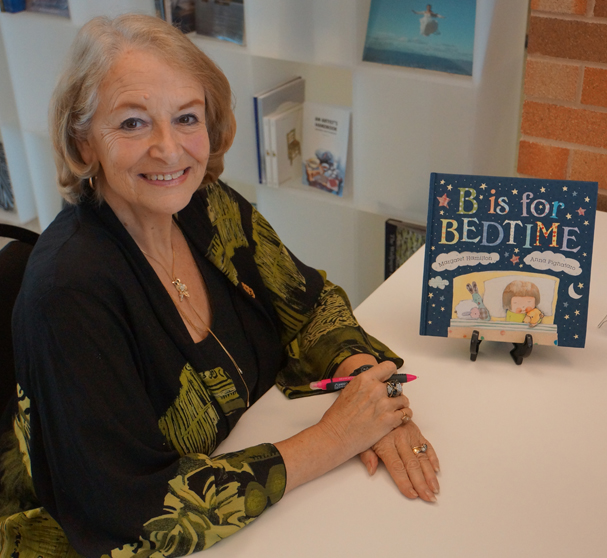
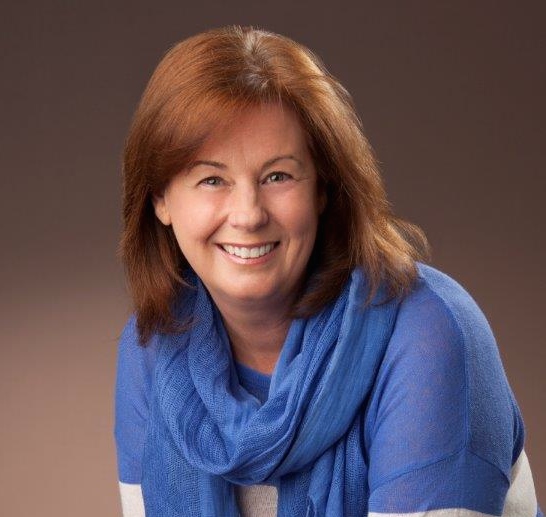
MargaretHamiltonBisforBedtimeWMargaret Hamilton AM is one of the most respected and versatile figures in the Australian children’s books world. She has been involved in children’s literature as a librarian (at Parramatta City Library), as a bookseller, a publisher and a parent. In 1987 she left her position as a director at Hodder & Stoughton Australia to begin Margaret Hamilton Books with her husband Max. The company built up a reputation for high quality children’s books and was dedicated to the philosophy ‘that children have a right to the best of everything, especially books’. Margaret Hamilton Books won many awards and had considerable success on the world market. It became a Division of Scholastic Australia in 1996, where the imprint remains. Margaret’s passion for picture books, her enthusiasm for the world of Australian illustrators, and her recognition of the need for wider promotion of picture books, have led her to Pinerolo, the Children’s Book Cottage at Blackheath. She has been involved with the Children’s Book Council of Australia for many years and is currently on the National Board. Her Order of Australia Medal was received in 2008 – ‘for service to the arts through the promotion of children’s literature and literacy and through support for authors and illustrators’. She has also received the Lady Cutler Award, the Dromkeen Medal, and the Nan Chauncy Award, amongst other honours.

Margaret, you’ve had an amazing and varied career in the children’s books industry. How did you get your start?
When I left school I began work at Parramatta City Library. Although I wasn’t a reader as a child, I discovered I liked the books and relating to the children. One of my lecturers when I studied Librarianship was the legendary Maurice Saxby. He turned me on to children’s books and they became a lifelong passion. When I left the library I worked for a while in a bookshop, experiencing the commercial side of books.
As a publisher, you worked for a big company–Hodder–and then later started your own publishing company, Margaret Hamilton Books. What prompted you to do so? And was it like, going from the corporate publishing world  to the small-press world?
At Hodders I was Director in charge of publishing – the only female on the board! I was responsible for Hodders entire list, but children’s books were my favourites. It was after I had my daughter and my husband had extended the house that we started our own company. It meant I could be home for my daughter and concentrate on children’s books. As with being the only female on the Hodder board, I knew that our small company was up against the big boys. We had to be as good as them, if not better. So I continued to attend the Bologna children’s book fair and promoting our books everywhere. After ten years in publishing we became a division of Scholastic with a five-year employment contract. So working for a UK based company then for a multi-national based in New York were both very interesting insights into world publishing.
You have written and edited several non-fiction books about the children’s books scene, but last year your first picture book, B is for Bedtime, illustrated by Anna Pignataro, came out, garnering much acclaim. And there’s another picture book on the way. How did you make the transition? Have you always had ideas for picture books, or is this a new direction altogether for you? And what was it like, working with an illustrator on your own book?
The publication of B IS FOR BEDTIME was an absolute thrill for me – after over 30 years of publishing other people’s books, I was now an author of a published picture book myself! It’s very exciting how b is for bedtimewell it’s doing in the US – up to its third printing. I had always been very shy of showing publishers my work but plucked up courage and sent that to Little Hare. They will be publishing the next book COUNTING THROUGH THE DAY next year. Anna is illustrating that as well, and doing a magnificent job. I suppose being around and working with the best of Australian picture book creators, some of it has sunk in.
You’ve always been a strong supporter of picture books, and illustrators as well as authors. Which picture-book creators have most impressed or inspired you, over the years? 
That’s like asking me for the favourite book I published! I used to say that I didn’t have favourites, that all the books we published were our babies and we hoped they’d grow into award winners! I’ve worked with many of Australia’s picture book creators and am very proud of them. I’m also proud to have published books which are now classics and still available today – like THERE’S A HIPPOPOTAMUS ON OUR ROOF EATING CAKE by Hazel Edwards and The GRUG series by Ted Prior. I’m also extremely proud of the books Margaret Hamilton Books published: several by Patricia Mullins, THE VERY BEST OF FRIENDS by Margaret Wild & Julie Vivas (winner of the Picture Book of the Year Award), MY DOG by John Heffernan & Andrew McLean (multi award-winner), WHERE DOES THURSDAY GO? by Janeen Brian & Stephen Michael King and publishing Glenda Millard’s first book UNPLUGGED! illustrated by Dee Huxley. Glenda has gone on to become one of Australia’s most successful authors. All of these people are still creating superb books and continue to inspire me.

Pinerolo Cottage in winter

Pinerolo Cottage in winter

You are a founder of the lovely children’s book centre in the Blue Mountains, Pinerolo Cottage. Can you tell readers about the Cottage, and what happens there?
Pinerolo the Children’s Book Cottage (www.pinerolo.com.au) has the largest collection of original artwork from picture books in NSW, also a collection of picture books and reference books. We run one-day courses in creating picture books. I’m usually joined for the day by an award-winning author or illustrator. Recently the fabulous writer Glenda Millard was here for a record number of participants. I also love talking to groups of school children and to groups of adults, some of whom have come on a bus trip to Blackheath. The Illustrator in Residence program provides inspiration and mentorships for illustrators working on a project. I enjoy mentoring authors and illustrators, helping them in the development of their ideas. Most notable success recently is Lesley Gibbes, with her first picture book SCARY NIGHT, illustrated by Stephen Michael King, which was a CBCA 2015 Honour Book.

Pinerolo Cottage in spring

Pinerolo Cottage in spring

You’ve won many awards for your significant contribution to the children’s book world, including the Dromkeen Medal, the Nan Chauncy Award, the Lady Cutler Award, and Order of Australia, and more. And you’ve seen the children’s books scene evolving over many years. What are some things you’ve observed, in terms of trends, over those years?
I believe I’ve been extremely fortunate to have stumbled into a career in publishing. It’s been very stimulating and demanding but also very satisfying and fulfilling. That’s probably why I can’t retire! There’s always another wonderful writer or illustrator coming along and I love seeing them succeed. The Australian publishing industry is now recognised throughout the world. There was some nervousness a few years ago as publishers felt the threat of ebooks. However, they have come through this and are continuing to publish beautiful picture books. Sharing a picture book with a child, or a child reading it themselves, is a tactile experience that cannot be replicated on a tablet. Children especially are returning to real books and it’s such a pleasure to see so many beautiful Australian picture books being produced. Authors like Andy Griffiths are saving the book trade. His treehouse books have been number one on the bestseller lists. Top of the list for all genres. That’s a huge achievement.
I’ve also been involved with the Children’s Book Council of Australia for many years. It has undergone a change in the last few years and is now run by a National Board. I am Deputy Chair of the CBCA National Board and am finding it challenging. I’m also very hard at work with the Committee for the CBCA 12th National Conference which will be held in Sydney in May 2016 (http://cbca.org.au/NatConference.html). Also next year the 70th Children’s Book of the Year Awards will be presented in Sydney – where it all began in 1945. Maybe after that I might think about retiring!
 

A brand-new model: interview with Lou Johnson, of The Author People

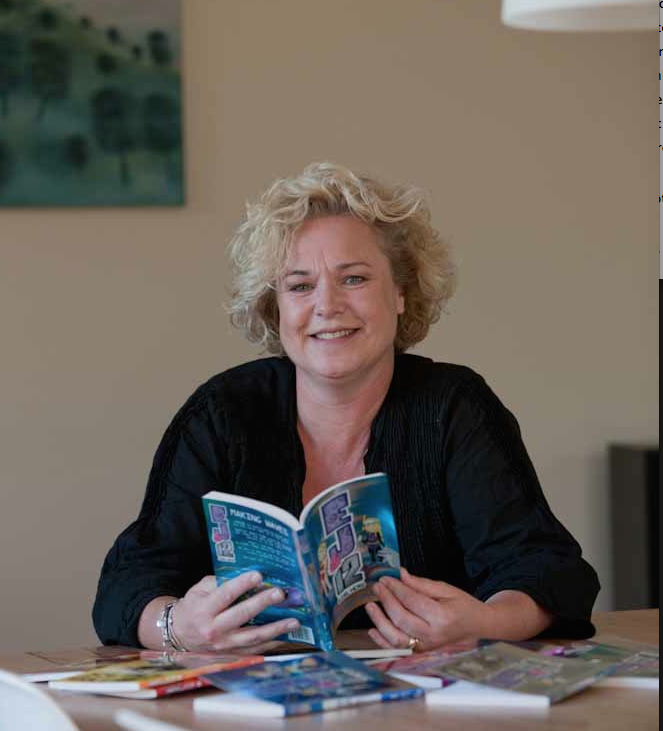
Lou JohnsonThe whole business of being an author today has changed a great deal, in a time when the publishing industry is going through rapid transformations. And so today I’m very pleased to present an interview with Lou Johnson, one of the founders and directors of The Author People, a brand new kind of business which aims to help authors negotiate these tricky times.

Lou is highly regarded within the international publishing industry. She has over twenty five years of publishing experience, including senior roles at Random House, Allen & Unwin and Simon & Schuster Australia where she was Managing Director between 2010–2014, overseeing a period of transformative change and the establishment of an Australian publishing division. She is also currently on the board of The Stella Prize. Her book industry representation includes Joint Vice-Presidency of the Australian Publisher’s Association (2012–2014) and membership of the Book Industry Collaborative Council (BICC) established by The Dept of Industry & Innovation (Dec 2012–June 2013). She is a regular panelist and speaker and has judged, chaired and developed numerous industry awards and initiatives.

Lou, the Author People is a very different concept to what’s around now in terms of publishing and author services. Can you tell us about it? What can an author who signs up with you expect?

We know that people’s love affair with authors and their books is as strong as ever but the way in which they discover, share, buy and interact with them is changing, driven by technology and the rise in social networking and online member communities.  As a result we have found that authors are now looking for an alternative and more collaborative approach from their publishers.

The Author People is author and people centric and we want to give people meaningful and direct ways in which to engage with authors and also pave the way for authors and people to interact in the future in ways yet to be imagined.

We see the relationship between authors and people transcending individual books, book format types and geographical borders.We really want to streamline the connection between authors and people by providing a different type of publishing approach, really relevant promotional support and a direct global transactional capability. We view our relationship with authors as one of co-producers and are very clear that there isn’t necessarily a one size fits all approach. If we are also representing authors we will be looking for opportunities beyond books like licensing, brand partnerships, content sales and events.

In terms of the audience, the whole focus is on making it easy for them to engage with and access authors and their work and we are working on the premise that we and the authors we represent will be responsible for creating that interest and demand, rather than the traditional reliance on retailers to do that.

Our promotional strategy is focussed on outreach so we can help bridge a connection between authors and the people who may be interested in them. This is largely driven via social media but we can also incorporate more traditional PR activities. Ultimately what we are trying to do is enhance or amplify authors’ own connection with people.  Our website is also a key component of this as it serves as an easy portal  for people to get to know a bit more about individual authors and purchase their books. In addition to our own shopping cart, we will have a number of local and global retail partners links on our site.  Our paper books are also available for any bookseller who would like to stock them via Ingram Content Group and ebooks available to multiple retailers globally via a third party distributor.

Apart from a different outlook, another key difference between us and other publishers is that we have an entirely different business model and structure and have also re-engineered the supply chain to support a more direct author/people link as well as flexibility, condensed production timelines and a lower cost base that we can pass the benefits of onto authors and their audiences. We also differ from traditional publishers in that we don’t provide advances, though we underwrite the development and promotional costs and still work with a royalty structure. Royalties are calculated on a case by case basis depending on scope, though in the majority of cases we would be offering higher than industry average royalties – especially for ebooks. In instances where we also represent authors we retain a commission on any additional revenue opportunities we source for them.

How did you and co-founder and director Tom Galletta first come up with the idea?Tom Galletta

The idea was borne out of the insights I gained through many years working in publishing. There is so much value that traditional publishers still offer but I felt there was a need for a disruptive approach to conventional publishing in order to be relevant in a continually changing environment and could see that authors were increasingly questioning the value of the traditional publishing approach. My thinking was further refined during my time as part of the Book Industry Collaborative Council and the final gap we identified was very much influenced by the findings of the Do You Love Your Publisher? survey research project conducted earlier this year, co-produced by authors Harry Bingham (in the UK) and Jane Friedman (in the US) http://www.thebookseller.com/news/authors-call-better-communication-publishers which has just been reinforced by the Macquarie University research.

I had been thinking about my own venture for some time and finally resigned from my role at Simon & Schuster last year to give myself the space the develop my thinking. Tom doesn’t have any background in publishing which was really important to me as I felt that I needed the input from someone external to industry. I approached Tom to help me with the business modelling and we worked out very quickly that it made sense to become partners.

What has it been like bringing the concept from idea to reality? What were the challenges and discoveries?

Exhilarating and terrifying in equal measure, though my time in the industry and specifically my role as MD at Simon & Schuster served as a very good apprenticeship. Having said that, there has been an enormous amount to learn along the way and a huge amount of multi-tasking so one key challenge is managing our own work processes and resourcing and staying calm and focussed. Getting the right partners is also crucial.

You were a publisher for many years. What insights do you think you bring from that side of the industry? What about Tom?

During my time in publishing I developed a deep understanding about the functions and value publishers can provide but also what can be done differently if you approach things through a different lens.  I also participated in enormous change and it’s not slowing down. I feel that in order to be successful in this environment its critical to be open minded and adaptable and that the exisiting industry paradigms don’t really support that. Given I have a really detailed understanding of the areas that I feel are getting in the way of that I thought we’d create a new paradigm.

Tom brings a really refreshing external and impartial view which further serves to challenge exisiting industry thinking. He also worked previously in artist management and digital so he brings a lot of insight, experience and capability from his previous roles.

You also have access to a team of partners with extensive knowledge of the industry. Can you tell us something about them and their roles?

Tom and I are the nucleus of The Author People and work with an international network of partners and providers. We’ve featured our founding partners on the website but none of them are employed by us or work exclusively with us and we will continue to build our network. We are a proverbial “lean startup”. That is an integral element of our business DNA. Our leanness, efficiency and expertise enables us to pass on all the value and benefits to authors and audiences.

The first books you’ve helped to bring into being have just come out. Tell us about them, and their authors.

Our first author was Adrian Simon. There is a big backstory to the relationship between the two of us. Adrian really liked the concept of The Author People and wanted to work with me so bringing his book to the world was another driving force behind bringing the vision behind The Author People to life. Adrian is the son of Warren Fellows, the infamous heroin smuggler who was imprisoned in Bangkwang Prison in Bangkok and later wrote the best-selling book The Damage Done. Adrian’s own story is extraordinary and its very exciting seeing him able to finally tell the other side of the story in his memoir Milk-Blood: Growing Up The Son Of A Convicted Drug Trafficker. However, Adrian’s book is just one way for Adrian to tell his story and connect with people so we are working with Adrian to develop other mediums like speaking events, partnerships and other content forms.

Our second author is ABC Northern Tasmania’s radio host and start up guru Polly McGee. Polly and her debut novel Dogs of India are a perfect fit for The Author People. Polly is an innovator and a natural connector, and Dogs of India also comes from her own “lived experience,” which is one of our key content areas. She originally crowd funded Dogs through Indiegogo, which served as a brilliant proving ground for her and the novel (as well as raising $8,500 for Vets Without Borders). Dogs of India is my favourite kind of book. It’s an enormously entertaining, warm and witty novel that packs a powerful message into a velvet glove. It is quite likely that Polly’s next book will be entirely different and may not even be fiction and our model completely support that.

What has been the response so far from booksellers and readers?

Authors love it, booksellers are supportive of it, especially our affiliate partners and it’s too soon to comment on the reader response but the early signs are good.

Where are you hoping The Author People will be, five years from now?

Thriving!

Seriously, we expect the business to continue evolving just like the external landscape. Our vision is to have the capability and flexibility to continue to diversify to ensure an ongoing deep relationship between authors and people as technology continues to develop and book forms continuing to evolve along with the ways people can interact with them and their creators.

Double Act 4: Dianne Bates and About Kids Books

In the fourth of my series on author-publishers, I’m interviewing Dianne Bates, who is in the early stages of setting up her own publishing company, About Kids Books.

Author of 130+ books, Dianne (Di) Bates is a full-time freelance writer. Di has worked as a newspaper and magazine editor and manuscript assessor. She founded Buzz Words  in 2006. Di is a recipient of The Lady Cutler Award for distinguished services to children’s Literature. Her website is http://www.enterprisingwords.com.au

Dianne-Bates

First of all congratulations on starting About Kids Books! What motivated you to start your own publishing company?

For many years I aspired to setting up a national children’s magazine; (I’d worked on Puffinalia and NSW Department of Education School Magazine). When I landed a job as editor of the national magazine Little Ears and saw how the owners went broke very quickly after investing a lot of time and money, I changed my mind, especially as I didn’t have any contacts (such as distributors) in that industry. More recently I’ve been inspired by self-publishers who have managed to set up their own book imprints so I’ve been able to ask a number of them of their experiences. All have given me valuable advice so I feel confident now of some degree of success.

What are your plans for the list? What will you be concentrating on?

I intend to publish quality children’s books for readers up to 12 years (excluding picture books). At the moment I would like to publish three books a year, assuming I find manuscripts which fit my brief. I have a personal preference for social realism, but am open to publishing all genres.

What are the challenges and pleasures so far?

I am constantly challenged by a lack of skill in computing so I need to invest money in employing people who are proficient in this area. At the moment I have someone designing a website for About Kids Books. Meanwhile, I am reading and assessing manuscripts which writers have sent me.

You have been a publisher before–of magazines and websites. How do you think this new direction will differ?

Hopefully I will discover and nurture new authors and illustrators, and help productive authors to extend their lists. Since 2006 I’ve offered numerous writing and illustrating competitions and have discovered talent through my publication of Buzz Words, a magazine for those in the Australian children’s book industry.

What do you think being a long-published author can bring to your new career as a book publisher?

Certainly over the past 30 and more years I’ve made many contacts in the industry, which as anyone can tell you is filled with generous people. My ‘name’ might result in people wanting to purchase the books I’ll be publishing and thus help defray costs.

Any advice for aspiring author-publishers?

Like any new venture, you need to do your homework: for example, check out printers, designers, distributors, book clubs and library suppliers before you take the first step. Having some capital behind you is also a must!

PS: Di Bates contributed a guest post earlier this year to my blog about her magazine, Buzz Words. You can read it here. 

Double Act 3: Michael Wagner and Billy Goat Books

In the third of my series on author-publishers, I’m interviewing Michael Wagner.

wagnerMichael Wagner is the author of more than 70 books for children which include the much loved, 20-book Maxx Rumble series (still in print after 11 years); a collection of delightfully silly and warm-hearted stories about a family called The Undys; the best-selling picture bookWhy I Love Footy; and many more.

Prior to becoming a children’s author, Michael worked for ten years as radio broadcaster with the ABC, wrote and produced award-winning television animations, and wrote everything from copy to songs and comedy. His latest challenge is starting his own micro-publisher called Billy Goat Books, with the first book, Pig Dude: He Can Do Anything! published in late August this year.

First of all congratulations on starting Billy Goat Books! What motivated you to start your own publishing company?

Thanks Sophie. Well, to be honest I was motivated by two things: fear of rejection and the desire to, sometimes, just sometimes, have total creative control over my work.

By ‘fear of rejection’ I mean that I’ve recently discovered that some of my writing just doesn’t appeal to many publishers, even though it has widespread appeal to kids in schools. I speak in schools a lot and often test stories out. In 2014, I wrote a book called Pig Dude: He Can Do ANYTHING! When it felt ready to read, I tested it in a dozen different schools, and I was thrilled by how it went. It received an overwhelmingly positive, and very spontaneous reaction, maybe the best reaction I’ve ever received for any of my books. I felt like I was onto something.

But, when I sent it to a couple of publishers, it was fairly flatly rejected. Feeling a bit taken aback, I took it back into schools and tested it again. Once again, it got that big, positive reaction. But something told me sending it to more publishers was likely to be a time-consuming and, most likely, fruitless exercise. (I may have been wrong, but that’s what my instincts told me) And I didn’t really want to face a string of rejections with something that seemed particularly viable to me.

Now, having something of an entrepreneurial streak, I decided to publish it myself. It was a relief not to have to go through the submission process and I felt excited about being able to get started straightaway and about having so much more creative control over one of my books. Something about that really appealed. So I formed Billy Goat Books and published Pig Dude: He Can Do ANYTHING!Pig-Dude-Cover

What inspired the name of your press?

That’s actually a tough question. I tried about a million names, including Chilli Pepper Books (too suggestive of erotic fiction, apparently), Sparky Pepper Books (too random), Rocket Boy Books (too nothing), Bugle Books and Toot-Toot Books (both of which have flatulence connotations), etc, etc, and finally settled on Billy Goat Books. I like the playfulness of the name and the slight masculinity. My books are often quite boysie, so it felt right to me. And it hadn’t already been taken, which was a surprise, so I grabbed it.

What are your plans for the list? What will you be concentrating on?

As it costs quite a lot of money to created illustrated, printed books, I’ve decided to grow quite slowly – probably by only a book or two a year for the first few years. And, as I have a stockpile of my own stories ready to go, I plan to learn the business with books I’ve written.

I think, in a way, that’s fairer on other authors, because after a couple of years of learning how to create and sell books, I’ll be much better placed to provide a valuable service for others.

So, for now, it’ll just be my writing, but with the help of various illustrators, depending on who suit the different titles I have lined up.

What are the challenges and pleasures so far?

For me, there was an enormous learning curve. To minimise costs, I taught myself to design both the cover of a book and the interior pages – something I’ll have to learn all over again with each book, unless I employ a proper designer. That meant teaching myself software programs like InDesign and Photoshop – not easy!

And there are jobs like writing a contract for an illustrator, working out printing specifications, setting up distribution, creating Billy Goat Books, its brand and website, organising publicity, etc, etc, etc.

It’s a big job and probably best entered into completely naively, because knowing too much would be quite a disincentive. It’s best just to take it one job at a time.

On the other hand, if you’re creating a text-only ebook, the job is MUCH smaller. Printed books with illustrations are at the more difficult end of the publishing process, ebooks with only text are quite straightforward by comparison.

But, for me, learning new skills is exciting and having control over the product is extremely creatively satisfying. And when you hold what you’ve made in your hands for the first time, you know you did it yourself. So, on balance, I’ve enjoyed it immensely.

What do you think being an author can bring to your new career as a book publisher?

I think the big advantage many authors have is that they can test their material on their target audience. That takes a lot of the guesswork out of the publishing process.

Of course it’s not definitive. There are many successful books that would be incredibly difficult to read to an audience – like Goodnight Moon, for example. Really intimate books like that one are perfect for reading one-on-one, but might not work well with an audience. So not all fantastic books would test well. But when a book feels wonderful when it’s being read to an audience, chances are it’s worth publishing.

Being in front of kids many days a year allows authors to road test and refine some of their material and I think that’s a huge advantage. You really get the hang of what your audience likes when they’re sitting in front of you.

Any advice for aspiring author-publishers?

Hmm? Beware. If you’re printing illustrated books, it’s a lot of work and not cheap. But it’s very handy if you’ve been unable to land a publishing deal with something you truly believe in (having tested it with audiences), to be able to publish it yourself. Self-publishing or micro-publishing is a bit of a safety net, meaning you don’t have to simply shelve a manuscript you really feel is good enough (as far as any of us can tell that about our own work). It’s a fallback position, and that’s something authors have never really had before.


Double Act 2: Julian Davies and Finlay Lloyd

Julian Davies

In the second of my series on author-publishers, I’m interviewing Julian Davies, one of the owners and founders of Finlay Lloyd, a non-profit publisher which has been going for nine years.  Julian describes himself as jack of a number of trades – writer, potter, painter and front-man for a non profit art gallery, The Left Hand. As well as publisher of course! He has lived in the mountains near Braidwood, New South Wales, for much of his adult life. The author of five novels, he has also written various stories and essays.

When and how did Finlay Lloyd start? What motivated you in the first place to start your own publishing company?

Finlay Lloyd was begun by four people – Phil Day, Ingeborg Hansen, Robin Wallace-Crabbe and me – all with somewhat varied interests in making books, but joining together to form a press with different values from mainstream publishers. Phil and Ingeborg had a background in producing inventive, beautifully set and designed handmade books, and had an interest in publishing fiction and poetry. Robin, a well-known writer and artist, had also designed books in his youth. I wanted to offer a counter-model, however modest, to commercial publishing. Our aim was to make

Phil Day

Phil Day

well-designed paper books while encouraging and supporting the sort of inventive writing that the big presses were too risk averse to back. It was important to me that FL was non-profit – we do not pay ourselves at all – in contradiction of the dominant paradigm.

How did you initially persuade booksellers to stock your books?

I simply got on the phone and called every bookshop I could locate, explaining what our intentions were. I made it plain that we were supplying firm sale, but that we didn’t want shops to buy books they couldn’t sell.

Have your aims and strategies as a publisher changed from the beginning? How?

Through the nine years since the establishment of the press our values and methods have remained consistent, but with the departure of Ingeborg and Robin from Finlay Lloyd, Phil and I have settled into a pattern where we discuss everything but he sets and designs the books while I act as editor and deal with publicity and sales. Our partnership has become closer and more interactive (hence his doing almost 400 drawings for my novel Crow Mellow). We envisage the press evolving to mainly undertake collaborative projects, whether between us or with others.

Crow Mellow cover 2Has working as a publisher impacted on your own career as an author–whether that be positive or negative?

I’ve found helping other writers realise their projects as well as possible an intriguing and valuable experience. It has given me a greater perspective on writing, publishing, and bookselling. Although this was not my intention in starting the press, Finlay Lloyd has finally provided a means to publish my own books in an inventive, unconstrained way, free from the commercial imperatives of the big presses.

What are the challenges and pleasures of small-press publishing, in your experience? Any memorable anecdotes?

I’ve found the many aspects of making books both rewarding and challenging – the demands on my time have been considerable. I’ve often wished I could clone myself in order to cope better, but my family likes to remind me that one of me is quite enough. Perhaps the keenest pleasure has been learning at close quarters how other writers think as they respond to editorial input.

flsmallsAny advice for aspiring author-publishers?

Because the book industry has been in such flux in recent decades more room has opened up for small presses. With their business model under threat, the big presses have withdrawn from some aspects of publishing. Furthermore, computer setting and the reduced cost of printing have made the process far more accessible. With these factors in mind, I’d suggest that anyone entering publishing may be brave but not necessarily as foolish as it might appear. I’d also suggest that having a broad and perceptive curiosity about all aspects of writing, typography, design and book production is a prerequisite as rare as it is obvious and valuable. I can’t stress that enough. There is a plethora of badly made books out there in the world. Small publishers should be self-critical and nimble enough to reinvent what they do imaginatively