
New books
Who can she trust?

The hidden city..

An unexpected encounter turning to something far more sinister.

Revenge is a powerful motive..

Delighted to be part of this fantastic new anthology
 Sneak peek–with the permission of Paul Collins at Ford Street Publishing–at a fantastic new YA anthology, Rich and Rare, coming out in October. The anthology features an amazing roll-call of some of Australia’s best writers and illustrators for young people, and I was honoured to be chosen to write the foreword. Don’t you just love the fabulous cover, created by the great Shaun Tan?
Interview with Peter Higgins about the Wolfhound Century series
One of the discoveries–and pleasures–of my recent reading life has been the extraordinary, genre-busting Wolfhound Century series, by British author Peter Higgins. Set in the Vlast, an alternative world inspired by the history and culture of Russia, where dying angels, giants, rusalki and forest spirits exist alongside revolutionary terrorists, mad scientists, rocket ships, spies and secret police, this magnificent trilogy(made up of Wolfhound Century; Truth and Fear; and Radiant State) is breathtaking in its ambition, scope, dazzling and sensual use of language, gripping and twisty plot–and sub-plots!–and wonderfully depicted array of characters. With its mix of thriller, alternative history and fantasy–both urban and quest–it’s simply the most exciting, assured and original debut I have read in a long time and in fact ranks high amongst the very best speculative fiction full stop. I’m not the only one who thinks so incidentally, as this review in The Guardian indicates!
The trilogy has recently concluded with Radiant State, and after finishing it I contacted the author and had the good fortune to interview him.
Interview with Peter Higgins

The Wolfhound Century trilogy is your first published work, is that right? Can you tell me a bit about your background and how you first came up with the idea for the books?
I had some short stories published before I started on Wolfhound Century, but these are my first novels. I was always a reader and wanted to write but for a long time I didn’t know how. Then I happened on a book in a junk shop by Joan Aiken (whose stories I love) called The Way To Write For Children and it was a revelation. She didn’t just tell you what a good story needed, she told you, quite simply, how practically to go about writing one. How to collect and store material, ask questions of your ideas, build them up bit by bit. Some people write a different way, or they just naturally fall into the process, but I didn’t. I needed that book.
Even then it took me years to work out what kind of stories I could write: I love the freedom and energy of fantasy, but I also love researching and evoking the atmosphere of historical periods and other places. It finally came together when I started building a fantasy world out of the materials of history. It’s very much the kind of thing that Guy Gavriel Kay or G R R Martin do, I guess, but I decided to use the twentieth century, and draw on that dark and strange and luminous and cruel experience in Europe and Russia, rather than look to some more distant period. And that’s how the Wolfhound Century series started to come together.
The series immerses the reader in a richly dark, complex and layered world of magical alter reality. I am not at all surprised you chose the extraordinary history, folklore and culture of Russia as the inspiration of the Vlast, imaginative world you created, but can you tell me how you went about bringing it to life?
When I’m writing I work on two parallel tracks. On the one hand, I immerse myself in the materials I want to work with: twentieth century history, spy novels, Russian literature and art and film and folklore, anything that grabs my attention. And on the other hand, at the same time, I’m planning the story, building characters, working out the plot, the themes, what’s at stake. And out of all that, basically, I grab what I want. Sometimes I come across something in my ‘research’ that really excites me, and I try to figure out how to bring it in to the story. Sometimes the story needs something – a setting, a particular kind of character – and I look around for what would be good.
If I take something from my research, I usually twist it, change it, mix it with something else, make it magical or fantastical, to bring out what I think is important. It’s about building an interesting, different world with compelling characters and situations, a world that has a kind of atmospheric resonance. It’s a very instinctive process.
 I’m struck by how seamlessly you have managed to evoke different periods of Russian history–from the late Tsarist period through the anarchist and Bolshevik period and full blown Stalinism–yet have telescoped it within the world of the series in a way that feels coherent. How difficult was that to achieve?
One way I found of making the whole thing hold together as a coherent story was to make it a thriller. Writing a thriller is a fantastic discipline: it cranks up the narrative pace, brings in mystery and conflict and danger, and makes you keep the characters moving. The story has to stay focused on the main event. As a writer, I found the thriller form very liberating, because there are clear principles and rules about plot and structure that other writers have worked out before you, which actually work. It gives you a solid framework that you can use to support the weirder and the wilder flights of imagination without losing the reader or yourself. Also, I’m a huge thriller fan, from John Buchan to Lee Child and Martin Cruz Smith.
Alongside the thriller plot, the telescoping comes from the sense, which becomes increasingly apparent as the trilogy unfolds, that time is subjective and moves at different speeds for different people and in different places. The presences from the forest, for example, the giants and so on, live long, slow lives. And the capital city of the Vlast, Mirgorod, is layered with traces of different times; it’s a kind of haunting. When Josef Kantor becomes the dictator Papa Rizhin, he’s able by sheer force of will to drive the Vlast to great social and technological changes very rapidly, but where his influence is weak time passes more slowly: people get caught in the past, trapped by memories or resentments, their lives get out of kilter, sometimes the dead wake and walk. I think the twentieth century was like that: huge and often disastrous advances driven fast by urgent necessity (the Manhattan project; Stalin’s industrial transformation of the Soviet Union; Mao’s Great Leap Forward) but people and places left stranded, trapped by history, recycling traumas, or simply refusing to share the common story.
I love the way too that you have used Russian myth, folklore and language to conjure a world that feels both strongly rooted yet wonderfully strange. Can you expand on that?
I grew up with the idea that Russia was a very strange, fascinating, dangerous place. During the Cold War the Soviet Union was, for me, a huge imaginative presence – inaccessible, threatening, vast, oppressive, but also the place where fantastic art and literature and folklore came from; the place of endless forests and oddly fairy-tale architecture alongside prison camps and concrete tower blocks. I felt it was the scary looking-glass world that was really there, behind the iron curtain. That’s the kind of feeling I wanted to capture in the Wolfhound Century series.
One of the many things I loved about the series too was the feeling that it was influenced by many other books and writers–Russians, of course, principally, but also I wondered if Joseph Conrad’s The Secret Agent, Alan Garner’s The Owl Service and Robert Holdstock’s The Hollowing had been influences? Any others as well?
That’s uncanny. Those are three of my favourite authors. The collision between Conrad’s murky, compromised city of anarchists and policemen and Holdstock’s ancient, endless, subconscious-made-real forest is in a way the starting point for the Wolfhound Century trilogy. And Alan Garner was my first really exciting private reading discovery: I found The Weirdstone of Brisingamen and The Moon of Gomrath in the library, and read them both over and over. I haven’t thought about The  Owl Service for years, but now you’ve mentioned it, I see there’s certainly a connection to my books: the electric, mysterious, mythic presences in the natural world reaching out and entangling the characters in a dark story larger than themselves. We did it at school and I remember seeing it on TV, and it spooked me a lot both times. I haven’t been back to it since but it seems to have been working away, below the surface.
 Another huge influence for me is Gene Wolfe’s The Book of the New Sun. I don’t think I write particularly like him, or about the same things, but I discovered The Book of the New Sun at a time when I really didn’t know what I was trying to do, and it hit me right between the eyes. That book opened up for me just how ambitious and adventurous and unlimited fantasy writing could be: the endless inventiveness, the ambition and the seriousness of his writing were a revelation. I realized I needed to try and write something that at least entertained the possibility of being that good.
 Your characters aren’t only human but also superhuman and non-human–angels, giants, forest spirits and more. You have poignantly and grippingly evoked their steadily-diminishing world. How did you go about it?
It’s about looking at everything that the Russian and central European imagination has produced – the folklore, the forest, the visionary paintings of an artist like Chagall, golems and rusalkas and talking wolves, as well as the revolutionaries and the state police and the prison camps and the mass hunger – and taking it as if it was all equally real and tangible and actually happening. The driving idea of the series is that an over-dominant state – any such state, it doesn’t have to be the Soviet Union particularly, the one in these books is called the Vlast – wants to impose a single way of thinking, wants to make everybody see the world the same way and be part of the one collective story, and uses its oppressive power to drive out and silence anything that doesn’t fit with that. But everywhere in the Wolfhound Century world things are alive and percipient – sentient rain, thinking rivers – and there are giants and spirits and intelligent shape-shifting wolves. For the characters this generates a lot of tension: how much reality do you accept? what do you close your mind to? It’s not ‘good natural world’ versus ‘bad government’: the wider, deeper world, like the individual human psyche, isn’t particularly morally good, it’s just unavoidably there; and much richer and more alive than any one way of organizing things will allow.
Josef Kantor, later Papa Rizhin, feels like a mix of Lenin and Stalin by way of the People’s Will anarchists. Is that a fair comment?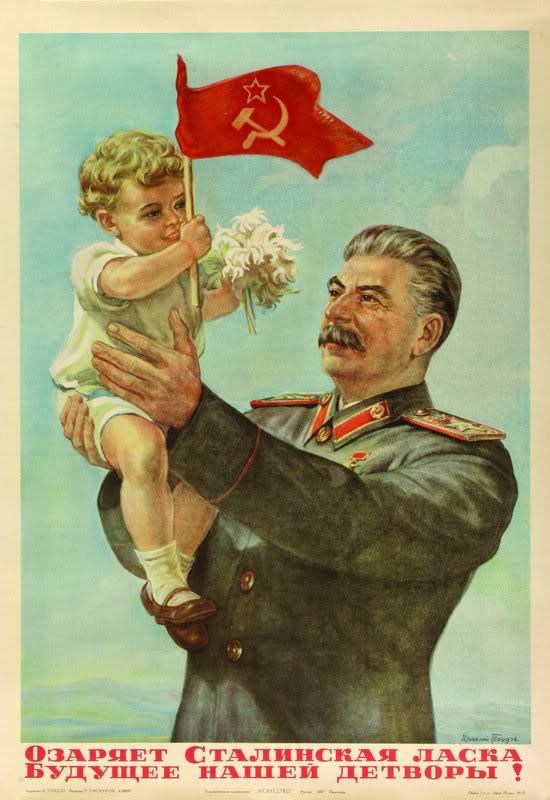
Yes, Stalin in particular. Kantor isn’t a portrait of Stalin, any more than the Vlast is a portrait of the Soviet Union, and some of the events surrounding him and the things he says and does are drawn from Lenin and other revolutionary writers and activists, but Kantor’s character and story – which in some ways is the spine of the whole trilogy – is largely built from aspects of Stalin that I think are particularly compelling.
Stalin’s journey from being Josef Djugashvili, revolutionary, poet, bank robber to being Stalin the Steel Man, terrorisor of the people and even his own supporters, then victorious war leader, then hugely-dominant avuncular dictator, is strange and oddly gripping. You can see in early photographs of him that he was very alive and engaged, very human, someone who might have been a good person. It’s as if something alien and appalling got into the machine, or something dark came out of the psyche.
Vissarion Lom and Maroussia Shaumian, the two heroes of the series, grow and change a great deal during the course of the three books. Can you expand a little on that?
Lom starts as an investigator in the political police, serving the Vlast in an obscure provincial town, and when we first meet Maroussia she’s working in a factory making uniforms. Both of them get unseated from those niches and driven to embark on a kind of exploratory journey/quest. Maroussia is the main ‘quester’, the driven Frodo-figure: Lom has to work hard to keep up with her and figure out what’s going on, what the bigger picture is. And there’s something magical, perhaps not entirely conventionally human, about Lom, which he doesn’t himself understand but grows into. That’s the spine of it. But a large part of what I was trying to do is to show them both unfolding under the  pressure of what happens to them and what they discover, opening up more and more to the world around them, becoming increasingly perceptive, connecting with what’s coming out of the endless forest, unlocking closed areas of the unconscious, extending the capacity of what people can do and perceive.
I felt that the ending of the third book, Radiant State, is left a little open–is there going to be more exploration of the world of the Vlast, or are you looking in other directions now?
Part of what I love about fantasy and science fiction is the feeling that the worlds the books build don’t stop when the books end. The particular struggle has come to a conclusion, the characters have changed in some fundamental way and so has their world, but nevertheless the world continues. It’s still there, somewhere. That’s the feeling I wanted to leave at the end of the trilogy. Maybe, possibly, I’ll revisit the Vlast one day, though I’m working on something else now. When I look back at the trilogy as a whole, I feel there’s a completeness to it, that I’ve done what I wanted to do and if I added more it wouldn’t be better.
Peter Higgins’ website is at http://www.wolfhoundcentury.com/
Three great new reviews of Hunter’s Moon
Lovely to come back from holidays overseas and see three excellent new reviews of Hunter’s Moon! Here they are:
http://www.buzzwordsmagazine.com/2015/07/hunters-moon.html
http://suebursztynski.blogspot.com.au/2015/08/just-finished-readinghunter-moon-by.html
http://victorianfairytalering.blogspot.com.au/2015/07/fairy-blog-post-10-report-of-great.html
The first Australian blockbuster: an interview with Lucy Sussex
 The Mystery of a Hansom Cab, by Fergus Hume, was Australia’s first blockbuster, selling out its first run almost at once, and in world terms too was a massive success, predating the Sherlock Holmes phenomenon and writing itself into the annals of detective fiction. Well over a hundred years after its first publication in 1886, it’s still in print–in many different editions, including worldwide–and the subject of a very successful ABC TV series. But its author, who due to an unfortunate decision, did not get to enjoy the fruits of his book’s success, is less well-known–until now, when Lucy Sussex’s new book, Blockbuster: Fergus Hume and the Mystery of a Hansom Cab (Text) lifts the veil on the untold story of both author and novel. The book is released next week, and as a great fan of Hume’s novel, I caught up with Lucy recently to ask her about it.
Lucy Sussex was born in New Zealand. She has edited four anthologies, including She’s Fantastical, shortlisted for the World Fantasy Award. Her award-winning fiction includes books for younger readers and the novel The Scarlet Rider. Lucy has five short-story collections, including My Lady Tongue, A Tour Guide in Utopia, Absolute Uncertainty and Matilda Told Such Dreadful Lies. Her latest book is Blockbuster! Fergus Hume and The Mystery of a Hansom Cab. She lives in Melbourne.
What first drew your interest to the story of Fergus Hume and his bestselling novel?
Hume said he ‘belonged to New Zealand’ but when I grew up there I never heard of him. That happened when I worked as a researcher for Stephen Knight’s history of Australian crime fiction. But I read the book then, and was intrigued—not least in the resonance it still had, and how people responded to it. For instance the 2012 telemovie was sparked by a Radio National program on the book, for which I was one of those interviewed. John Barnett of South Pacific Productions heard the program, bought a copy, read it on the way back across the Tasman, and decided to film it (with Ewan 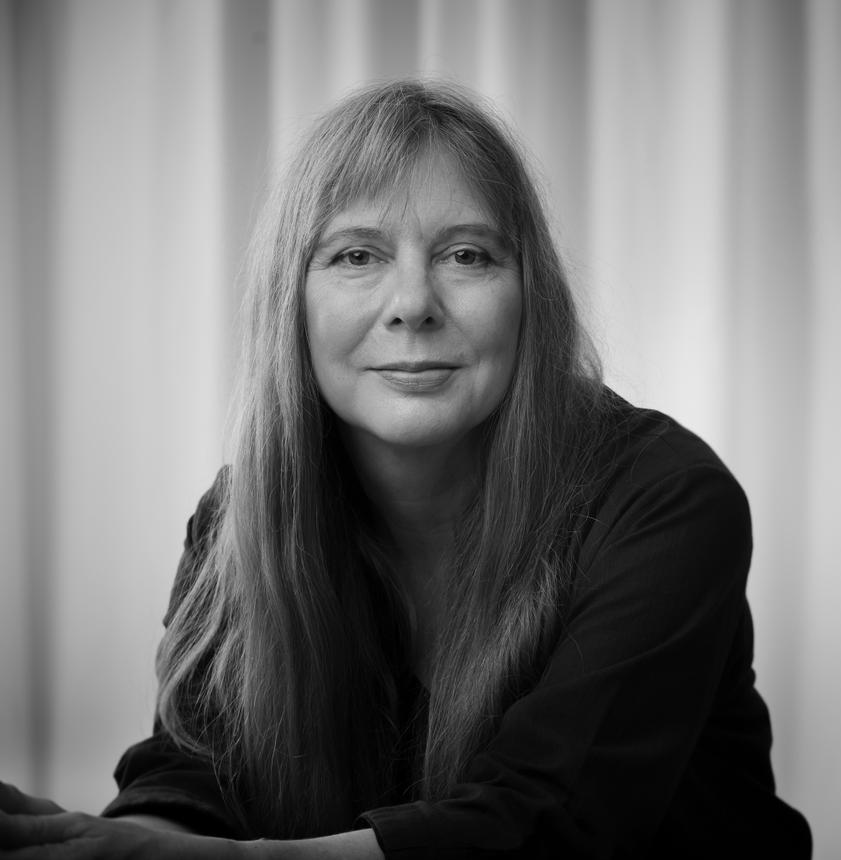 Burnett of Burberry Productions). Clearly there was life in the old Hansom Cab.
It happened I was working with Meg Tasker at Federation University on a research project about Australian and NZ writers and journalists in London at the turn of last century. We had a file on Hume, who moved to England in 1888, in the wake of Hansom Cab’s success. One day I started following digitised links re Hume across the web. It became very clear there was a book to be written on the Hansom Cab alone.
How did you go about researching the book?
The problem with Hume is that he left no diaries, there are few letters and the most relevant publishers’ records do not survive. Those who knew him are all dead now. I did use some archives, mainly in Dunedin, where his father ran the madhouse. But there was more than enough material using digitised newspapers—Papers Past in New Zealand and Trove in Australia, mainly. What was unclear in one source could be explained in another, across the Tasman.
And was there anything you discovered that surprised you?
Well, the people who kept asking me if Hume was gay! Which led me to queer theory, the history of rent boys in Sydney, and Little Buttercup from Gilbert and Sullivan, as performed in drag.
Another surprise was the rarity and value of first editions of Hansom Cab: only four survive, and even imperfect they go for five-figure sums. Go investigate your Granny’s attic!
The Mystery of A Hansom Cab predated the first Sherlock Holmes story, A Study in Scarlet, and some 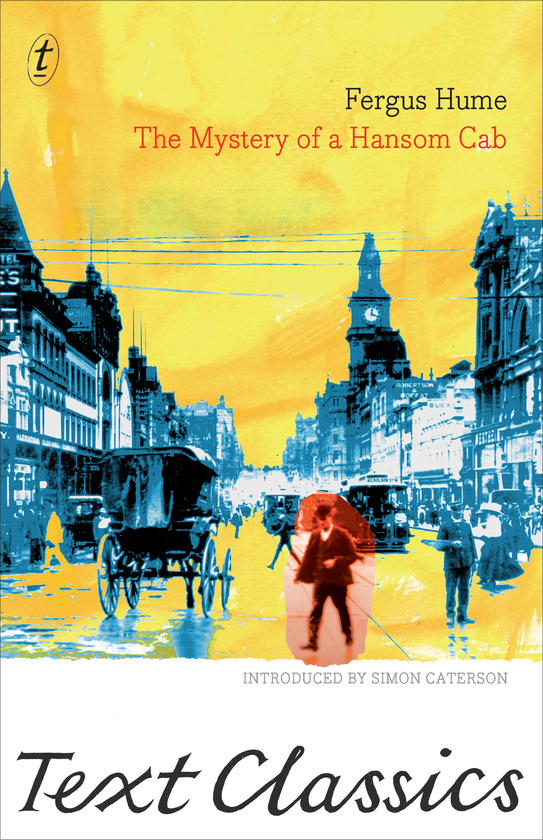 critics have said that Doyle was influenced by Hume’s book. Does your research support that?
A Study in Scarlet was not published until after Hansom Cab’s great English success in late 1887. Doyle read Hume’s book, and jealously wrote to his mother “What a swindle ‘The Mystery of a Hansom Cab’ is. One of the weakest tales I have ever read, and simply sold by puffing.” [hype]. The evidence is that he and Hume had been submitting to the same publishers, around the same time, and both suffered rejections. What happened was probably synchronicity, not uncommon in crime fiction: a literary idea whose time has come. But the Hansom Cab helped create the market for Sherlock Holmes. Without it the Sherlock story might have ended with A Study in Scarlet.
I have read that Hume was inspired to write his book by the success of Emile Gaboriau’s novels–but was he also inspired by Wilkie Collins’ groundbreaking The Moonstone, published nearly 20 years previously?
He certainly read Wilkie Collins, but a bigger influence is Mary Braddon, Collins’ great rival and contemporary. She, not Collins, is cited in the Hansom Cab.
What happened to Hume and his book makes for salutary reading. Can you describe the process that led to his selling his copyright?
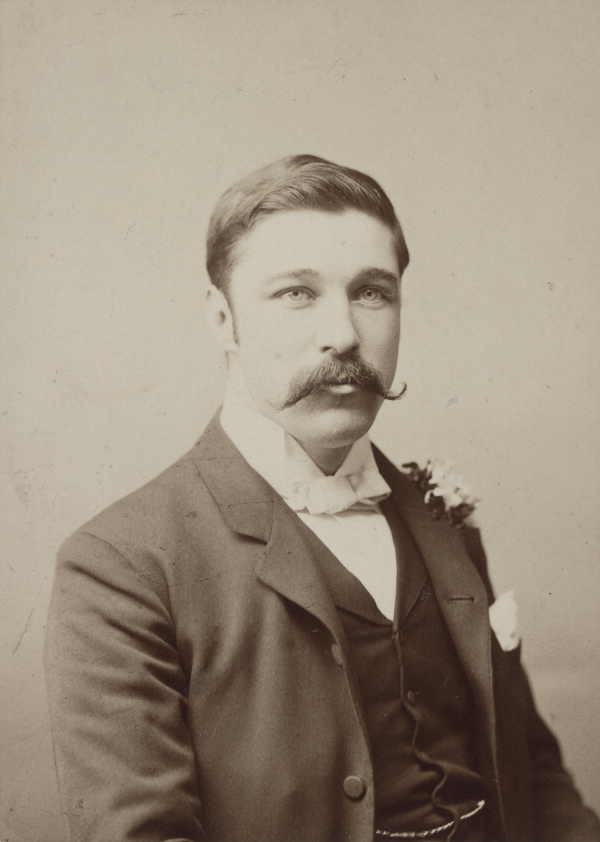
Fergus Hume
Hume wrote the book to draw attention to himself as a playwright. Although he wrote it with care and flair, he didn’t really take it seriously, career-wise. So he only registered the copyright months after the Australian success. Whether we believe the sales figures cited—25,000 copies in the Austral colonies alone, a huge figure for that time and market—the Hansom Cab was drawing attention from overseas. Thus the Hansom Cab Co. was formed to publish the book in England, and at that point Hume sold the copyright, disbelieving it would be successful outside Australia. He had taken the cultural cringe too much to heart. What he did hold onto was the dramatic rights, because that was what he thought would be more important. And yes, the play of the Hansom Cab was successful, but not in the phenomenal way of the book
Not much has previously been known about Hume and his personal life. What was your impression of Hume himself, based on your research?
I said to my initial Text editor, Mandy Brett, that he would have been fun to know. Apart from him being so utterly on the make, she replied. From various accounts he was witty good company. He liked women, supported their rights, wrote often for actresses, but there was never any suggestion of romance.
And the Melbourne–and global–literary/publishing scene at the time?
Melbourne was a major centre for reading, with high literacy, numerous bookshops, and a population with disposal income and an appetite for fiction, particularly crime. Hume networked furiously, but couldn’t establish himself as a literary man until after the Hansom Cab. When he got to London he was a literary lion, in social demand. It would have been very difficult for him not to meet Oscar Wilde, for instance. But to his annoyance people wouldn’t take him seriously as a writer because he was associated with pulp.
Do you think that the odyssey of the book’s publication, from semi-self publication onwards, has parallels in today’s changing publishing climate?
Not really. At the time you could publish in three ways, firstly by subscription, getting money from friends and the well-connected and going to a printer. Vanity publishing in our terms. The book publishers themselves used two business models. Commission was where the author paid for initial printing costs and the advertisements. If the book was a success, any profits would be shared with the publisher. Jane Austen’s first novel Sense and Sensibility was published in this fashion. The alternate model had the publisher buy the copyright, taking the risk, but also, if the book sold well, all the profits. Such was the publishing fate of Pride and Prejudice and Arthur Conan Doyle’s A Study in Scarlet.
For the first Australian edition Hume didn’t have subscribers, not for a book with disreputable crime content. 5000 copies were allegedly printed, a huge amount, when most colonial books had print runs of 200 or less. He needed a large amount of money to do so, thousands in our terms. It came from playing the stock market, with advice from a friend, Alice Cornwell, a budding gold mining magnate, the C19th equivalent of Gina Rinehart.
But Hume didn’t really self-publish. Frederick Trischler, who had worked in publishing in Australia and the US, had the business initiative and nous, and ran the Hansom Cab operation, using a Melbourne printer, Kemp & Boyce. After he and Hume quarrelled Hume wrote him out of the book’s history. But Hansom Cab couldn’t have succeeded without Trischler, who was an advertising and marketing genius.
Trischler saw the overseas potential of the Hansom Cab, and formed the Hansom Cab Publishing Co, with some enterprising but also dodgy local capitalists. Financier Jessie Taylor bought the copyright from Hume. In London the company did spectacular business: 25,000 copies a month were printed and sold for fourteen months. But it wasn’t crowd-funded—more like bank robbery!
What do you believe is the place of The Mystery of A Hansom Cab, in Australian literary history–and in that of the English-speaking world?
It was the first book from Australasia to become a global publishing phenomenon. It awoke English publishers to the potential of local writing. It also showed them the gold in detective fiction, and helped consolidate crime writing as a major publishing category.
The translations were worldwide, and still happen, with a recent Chinese edition. Hume was among the first Australasian writers to be translated into Chinese.
I might add, to finish off, that THE HANSOM CAB, in its initial Melbourne appearance, shows how an author can get everything right: researching his market, writing a very good and commercial book, encountering someone who believed in it enough to hazard a large print run, producing a good-looking product, timing its appearance carefully, and conducting an effective word-of-mouth campaign. They had very little money for advertising, but they did what they could, ie hiring a hansom cab to deliver the books to bookshops.
The subsequent story shows how an author can get things VERY wrong.
The inspiration behind Hunter’s Moon
 As this week saw the official release of my new novel, Hunter’s Moon, and next week sees the first of the launches celebrating the book, I thought I’d feature a piece I wrote about the inspirations behind Hunter’s Moon. I first wrote this for the excellent Teachers’ Notes my publisher, Random House Australia, have created for the book, which feature discussion points, ideas for activities etc. If you’re interested, you can download the full set of notes from the Random House website, here.
Inspirations of Hunter’s Moon
by Sophie Masson
The main inspiration behind Hunter’s Moon is of course the classic fairy tale of Snow White. This Germanic fairy tale is one of my favourites, with its blend of suspense, drama, romance, dark magic and dark secrets. It’s also become one of the world’s favourite stories, and has been told and retold many times over in novels, poems, films and even TV series.
First written down in the form we know it by Jakob and Wilhelm Grimm in 1812, the story was told to them by people who had passed it down throughout the ages. Some people think it may possibly have been partly inspired by the real-life story of the 16th century beauty Margaretha von Waldeck, whose jealous stepmother forced her out of her home to live abroad, only to die poisoned at the age of 21. It’s said that the dwarves could be inspired by the fact that Margaretha’s father Count Philip owned
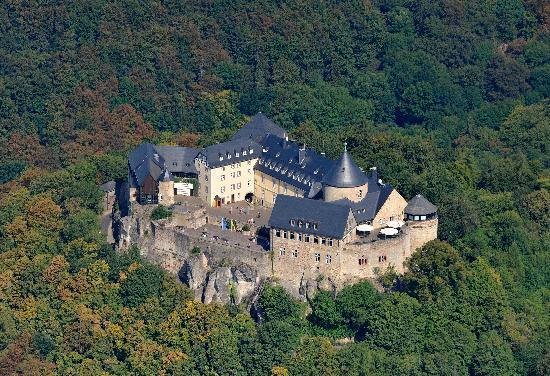
Schloss Waldeck, home of the Waldeck family
several copper mines, where miners worked from an early age, becoming hunched from working in such confined quarters. Others say that the story derived from sources much earlier than that, and point to variations of the Snow White story to be found in many other traditions, such as in France, Albania, Armenia, Russia and as far afield as Malaysia. Like most fairy tales, in fact, the inspiration for the story probably derived from a whole mix of things, leading to the form we know and love today.
As with most fairy tales, there are many things behind the surface of the magical action and extraordinary characters in Snow White: intriguing motifs such as a magic mirror, a poisoned apple, a glass coffin, a huntsman who takes pity on the girl he’s supposed to kill. And there are many contrasting themes, too: betrayal and friendship; beauty and cruelty; appearance and reality. When as a novelist you are working with traditional stories, it’s important to find ways in which you can mine this rich material in an original way yet also respect the themes at its heart. And for me that lay principally in reinventing Snow White herself, to make her a more complex and interesting character.
In the fairy tale, poor Snow White has to learn the hard way that nothing is what it seems and that it is a grave mistake to trust to a fair face and honeyed words. And yet she is still trusting enough to blunder into the home of strangers in the shape of dwarves, and later accepting apples from someone who just turns up at the door; her essential innocence is untouched by the painful revelation of her stepmother’s treachery and cruelty. She is also quite passive: aside from her flight into the woods when the huntsman spares her life, she doesn’t do a great deal for herself.
My Snow White character, Bianca Dalmatin, isn’t like that though she certainly starts in a similar way. Just like Snow White, Bianca has been lulled into a sense of false security by the apparent kindness of her beautiful stepmother Belladonna; like Snow White, she learns the hard way that appearances aren’t reality. Her heart is broken by the revelation; but instead of just hiding and accepting her fate, she wants to kick against it, to change things, even if it is very dangerous. And she is full of hatred for the woman who has destroyed her world. And yet like Snow White in the fairy tale, she doesn’t altogether lose her trust in others. It leads her to make mistakes—but also means that she will not turn into someone like Belladonna. Similarly, I worked with other aspects of the Snow White story, such as the seven dwarves, the truth-telling mirror, the huntsman and the glass coffin, to transform the original material whilst keeping its powerful impact.
As with my other fairy tale novels (Moonlight and Ashes; Scarlet in the Snow; The Crystal Heart) Hunter’s Moon is set in a magical alternative world, a world inspired by Europe in the late 19th century, but where ancient magic exists side by side with modern technology. In terms of specific setting, Hunter’s Moon takes the reader back to the Faustine Empire, which first appeared in Moonlight and Ashes. However Hunter’s Moon is set in a different province of the Empire: in Noricia, rather than Ashberg. Just as Ashberg in the earlier novel was based on Prague and the Czech countryside beyond, so Noricia in Hunter’s Moon is based on Austria, and its main city, Lepmest, is based on Vienna. And the inspiration for the Ladies’ Fair department store empire owned by Bianca’s father came from the gorgeous 19th century department stores that you can still find in cities such as Vienna, Paris, Moscow and London—glittering palaces of fashion and beauty housed in elegant old buildings.
And finally, Hunter’s Moon also has influences and elements from those earlier fairy tale novels of mine, including a recurring minor character who in this book takes on a bit more of a role!

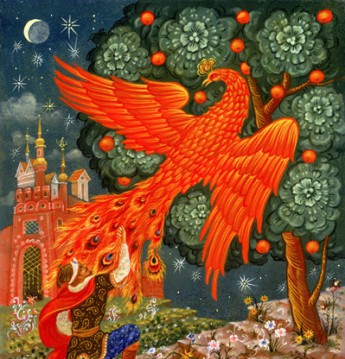
 Feathers of the Firebird