Childhood Christmas/Noels d’enfance: a bilingual memoir piece

Today I’m republishing a piece of mine, in English and in French (separately), which I posted on my blog a few years ago, but which had first appeared in a lovely (but now defunct) magazine called French Living a few years before that. It’s about our childhood Christmasses, which we celebrated very much in the French tradition. And rereading it recently, I thought it was worth bringing it back to readers’ attention—sand as a bonus, at the end, there’s a recipe for the very simple and delicious Christmas log (Bûche de Noël) I describe my mother making in the piece, and which has stayed in our family as a staple of the Christmas table.

The English-language version is first, the French-language version immediately after it.

Merry Christmas, Joyeux Noël, season’s greetings, happy holidays, and a wonderful New Year to you all!

Childhood Christmas

Christmas! Even the letters of the word to me glitter like the candles that shone on the festive tables of my childhood. My parents arranged our lives to the rhythm of traditional festivals: Easter, Mardi Gras, the Assumption, All Saints: but Christmas was by far the most important festival in our family. It was an enchanting time, a time when fairytales and religious stories seemed to come together in a warm and joyful atmosphere.

In Australia as in France, our parents gave us Christmases both extraordinary and traditional; something that later, as a mother myself, I took enormous pleasure in continuing. Some things my husband and I changed; we didn’t do the ‘réveillon’, for example—but the memory of wonderful childhood Christmases was something I was determined to give our children.

As a child, I would wait for Christmas in a kind of dreamy impatience; every year it was the same and every year I would wait for each predictable yet surprising stage of the great festival. In Sydney, that would start the week before Christmas, on a Saturday, when my father would take my sister Camille and I to David Jones in the city. (We also went with Maman to see Santa with the little ones during the week). First we looked in delight at the beautiful windows with their traditionally festive themes; then we would go onside the shop to choose the beautiful dress that would be one of our presents—the only one not from Father Christmas. Usually, it was with my mother that we went shopping, but here it was my father who enjoyed taking us with him. (Later, our brothers and little sister were taken too before it all ended when we were teenagers.) Lace, ribbons, fine lawns, velvets, vivid colours, it would all be paraded before us then, once the dress was chosen(my father of course had the last word!) we went to the store’s restaurant for lunch, an unusual treat!
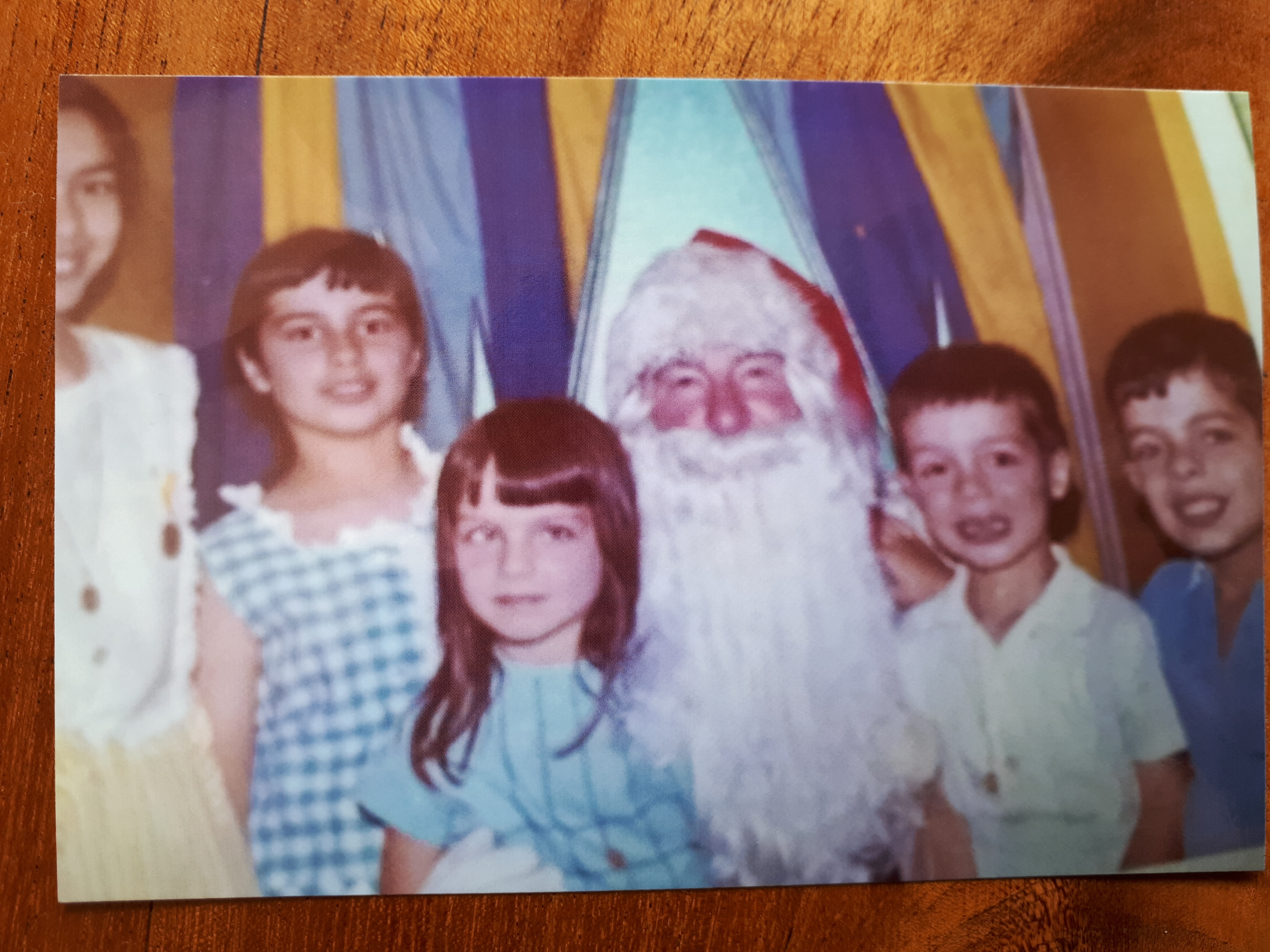
Me and my younger siblings with the David Jones Santa one Christmas: I’m at far left in yellow dress, Camille next to me, Gabrielle on Santa’s knee, Bertrand also on Santa’s knee, Louis-Xavier at far right.

The Christmas tree was ordered that week but would only be bought home two days before Christmas. But even before that you had to get out the boxes of decorations, the crystal balls, the satin stars, the little wooden figurines, the little birds with silky feathers and sequinned eyes, etc, to make sure nothing was broken. There again it was my father who was the master of ceremonies—we were allowed to look with wide eyes but not touch. But we were allowed to hand him, if we were very careful, the lovely clay figures for the Nativity scene. That would be prepared a day or two before the arrival of the Christmas tree. First my father would choose large pebbles or rather small rocks, which he arranged in the form of a grotto—his theory being that was what the Biblical stable had been. The whole was placed on the mantelpiece and then twigs and dried leaves were arranged artfully around it to represent the landscape. Mary and Joseph were placed at one end of the mantelpiece, to represent the fact they were journeying towards Bethlehem; at the opposite end of the mantelpiece were placed the three kings or wise men, as they’d be studying the skies before the birth of Jesus, and a little closer, the shepherds would be minding their flocks on a rock which represented a hillside near Bethlehem. Every day, May and Joseph got closer to the grotto; but baby Jesus stayed in tissue-paper in the box till very late on Christmas Eve when he would appear between his parents, now firmly settled in the grotto. At this moment too the shepherds had come close, two angels appeared above the grotto, and in their Oriental corner the three kings began their long journey which would only end at Twelfth Night, Epiphany, January 6, when they would arrive before the grotto to give their gifts of gold and perfumes to baby Jesus. (A day we celebrated with le Gateau des Rois, the King-cake, where there was always a broad bean hidden—whoever found the broad bean was king or queen for the day, and excused from chores such as the washing-up!)

In Sydney, my father worked for a big French construction firm, and several years running, the company director and his wife threw a Christmas party at their gorgeous harbourside home in Point Piper for the children of employees, the week before Christmas. They stopped doing that when I was around 10 (no doubt because of the large expense involved!), but they were wonderful parties. Not only was there a huge and delicious afternoon tea, a gigantic Christmas tree, exciting games with great prizes, and a Disney film to watch in the home theatre, but happiness of happiness, each child had been allowed to request from Father Christmas whatever he or she wanted. One year stood out for me in particular: I’d asked for a bride doll; my younger sister Camille a baby doll. Alas! When she set eyes on my doll, resplendent in her white lace, she was furiously jealous, grabbed it out of my hands and decapitated it, from sheer spite! My beautiful doll Isabelle had to spend Christmas headless and had to go quickly to the doll hospital at New Year…
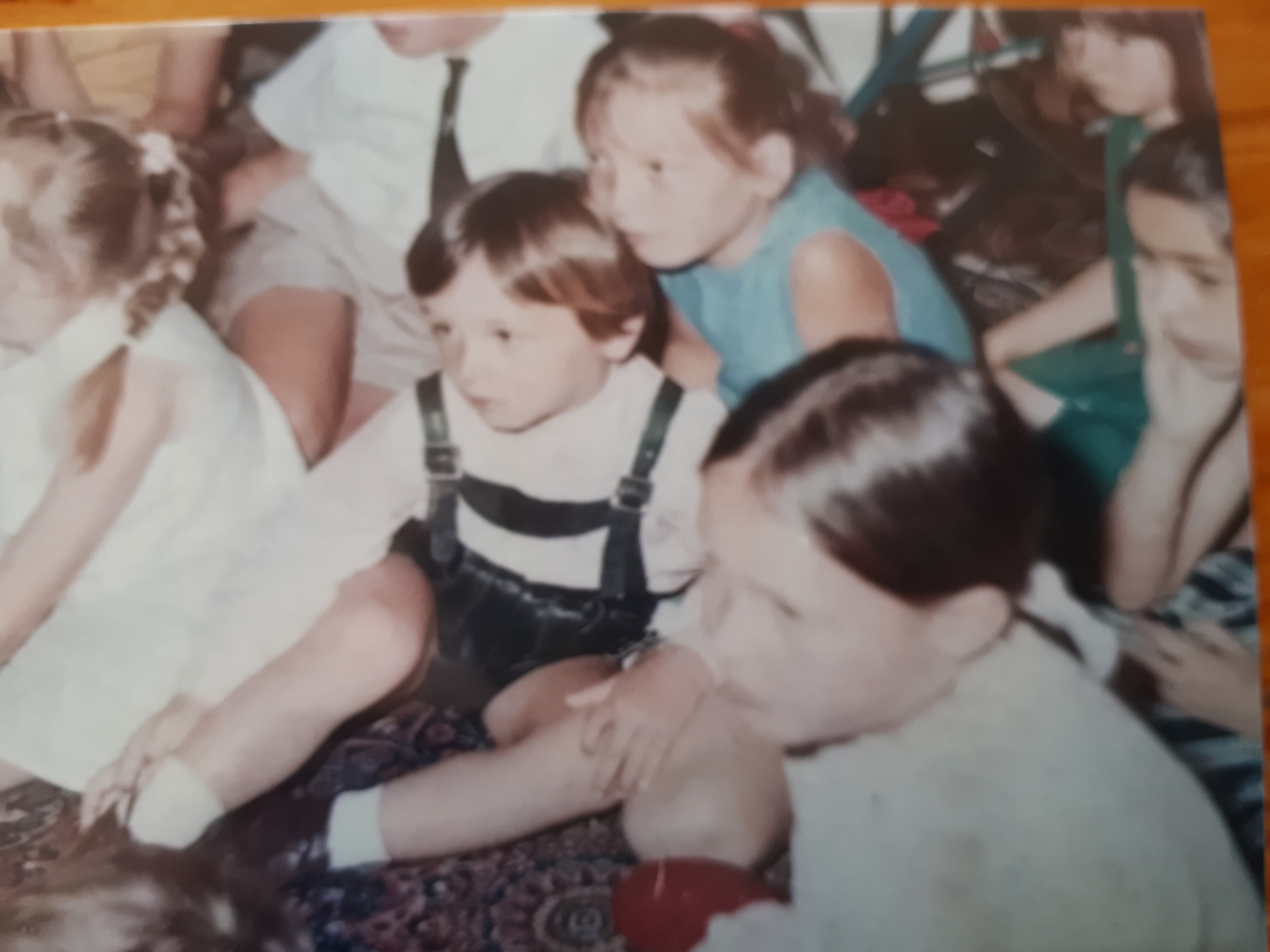
Watching a film at the company kids’ Christmas party, aged around 8: I’m at far right of pic, with chin on hands; with me in pic are other company kids

Noëls d’enfance

Noël! Les lettres même de ce mot brillent pour moi sur la page, comme les bougies qui brillaient sur la table de fête de mon enfance. Mes parents ont fait vivre notre enfance aux rythmes des fêtes traditionelles; de Pâques, de Mardi Gras, de l’Assomption, de la Toussaint, mais Noël etait de loin la plus importante fête dans notre famille. C’était une période d’enchantement, un moment où le conte de fées et l’histoire sainte se réunissaient merveilleusement dans une ambiance chaleureuse et joyeuse.

En Australie comme en France, nos parents nous ont offert des Noëls à la fois extraordinaires et traditionnels; chose que plus tard, mère moi-meme, j’ai pris énormement de plaisir à continuer. Certaines choses mon mari et moi ont changé; nous ne faisons pas le réveillon, par exemple; mais le souvenir de Noëls enfantins merveilleux est quelque chose que je tenais absolument à donner à nos enfants.

Enfant, j’attendais Noël avec une sorte d’impatience rêveuse; tous les ans c’était la même chose et tous les ans j’attendais les étapes prévisibles mais surprenantes de la grande fête. A Sydney, ça commencait le samedi avant Noël quand notre père nous amenaient, ma soeur Camille et moi, chez David Jones, à ‘la city’. (Nous allions avec Maman aussi avec les petits pendant la semaine voir le Père Noël) Nous nous extasions devant les belles vitrines avec leurs thèmes traditionnels de fêtes et puis nous rentrions dans le grand magasin pour choisir les belles tenues que nos parents nous offraient chaque année —le seul cadeau que nous savions n’était pas apporté par le Père Noël. D’habitude, c’était avec notre mère que nous allions faire les magasins—mais là c’était mon père qui se faisait une joie de nous accompagner. (Plus tard, les garçons et ma petite soeur y sont allés aussi.) Dentelles, rubans, tissus fins, velours, couleurs chatoyantes: tout le matin ça défilait devant nous et puis une fois la robe choisie(mon père ayant bien sûr le dernier mot!), nous déjeunions au restaurant du magasin, chose exceptionelle!

Le sapin de Noël lui-même avait déjà été commandé, mais n’arriverait à la maison que deux jours avant le grand jour; mais il fallait quand même sortir auparavant les boites pleines de décorations: des boulles en cristal, d’étoiles en satin, de petits bonhommes en bois, de petits oiseaux au plumage en soie et aux yeux faits de sequins, etc, pour être bien sur qu’il n’y avait rien de cassé. Là encore c’était mon père qui était maitre de cérémonie—nous avions le droit de regarder( avec nos yeux bien ronds!) mais pas de toucher. Mais nous avions le droit de lui passer, si nous faisions trés attention, les ravissants personnages en argile pour la crèche.
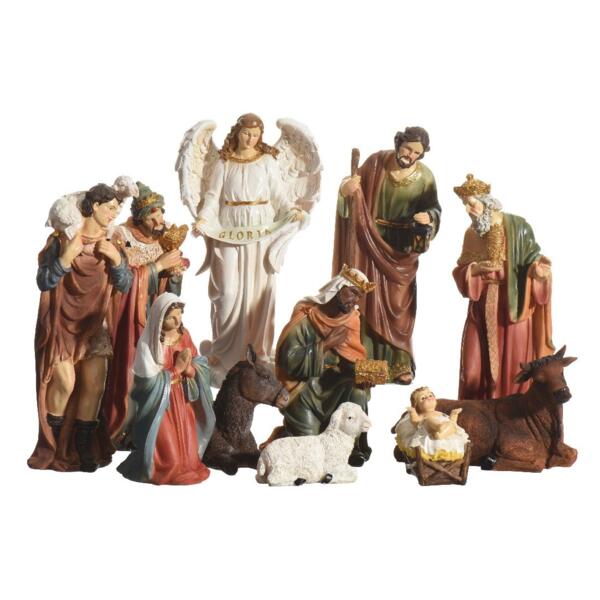
La crèche, elle, se préparait un jour ou deux avant l’arrivée du sapin. D’abord mon père choisissait des gros cailloux dans le jardin, qui, mis l’un sur l’autre, ferait fonction de crèche, ou plutot de grotte, endroit où, mon pere théorisait, l’étable de la Bible se serait plutot trouvée. Le tout était placé sur la cheminée, et puis on arrangeait des feuilles mortes et des petites branches, pour représenter le paysage. Marie et Joseph étaient placés à un bout de la cheminée, pour représenter le fait qu’ils eéaient en route pour Bethlehem; au point opposé, les rois-mages etaient placés, car eux étudaient les cieux avant la naissance de Jesus, et un peu plus prés, les bergers et leurs moutons etaient placés sur une roche qui representait une des collines prés de Bethlehem. Chaque jour, Marie et Joseph s’approchait de la grotte, mais le petit Jesus restait dans sa boite jusqu’a trés tard la veille de Noel, quand il apparaissait entre ses parents, maintenant bien établis dans la grotte. A ce moment là aussi se rapprochaient les bergers, deux anges apparaissaient au dessus de la grotte, et dans leur coin d’Orient au fin fond de la cheminée, les rois-mages commençaient leur long voyage qui ne s’achèverait que le jour de l’Epiphanie, le 6 janvier, quand ils arriveraient devant la grotte pour donner leurs cadeaux d’or et de parfums au petit Jesus. (Jour ou nous célébrons leur arrivée avec le Gâteau des Rois, ou il y avait toujours une fève cachée—celui ou celle qui trouverait la fève serait le roi ou la reine pour la journée, et dispense/ée des corvées telles que la vaisselle!)

Mon père travaillait pour une grande compagnie française de construction, et plusieurs années, le directeur de la compagnie a offert une fête pour tous les enfants d’employés, la semaine avant Noël; cela a cessé quand j’étais encotre trés jeune, vers 10 ans, et je m’en souviens que d’une de ces fêtes somptueuses, et cela à cause d’un évenement particulier. Non seulement y a t’il eu un goûter merveilleux, un arbre de Noël gigantesque, des jeux passionants, et un film de Mickey a visionner, mais comble de bonheur, chaque enfant avait pu demander au Père Noël ce qu’il ou elle voulait (c’était la compagnie qui payait).J’avais demandé une poupée habillée en robe de mariée; ma soeur Camille une poupée-bébé. Hélas! Quand elle a vu la mienne, superbe dans sa robe en dentelle blanche, elle est devenue jalouse furieuse, s’en est emparée et l’a decapitée, de pur depit! Ma belle poupée a du passer Noël sans tête et aller dare-dare à l’hopital des poupées au Nouvel An..

Mais la plupart de temps dans mon enfance, il n y avait pas de fête de Noël hors de la maison. Un jour avant la veille de Noël, le sapin arrivait chez nous. Ce soir-la, mon père décorait l’arbre et là encore les plus grands avaient le droit de lui passer les précieux bibelots; les plus petits pouvaient regarder mais surtout pas toucher! Une fois le sapin chargé de son beau fardeau étincelant, nous restions là tous à le regarder avec émerveillement; n’entendant presque pas Maman qui nous appelait pour venir chercher une paire de chaussures chacun pour mettre sous l’arbre, prêts pour le Père Noël le lendemain.

Mais si ce jour la etait passionant, le lendemain, la veille de Noël , était le jour qu’on attendait avec le plus d’impatience. Car ce jour là était le jour des cadeaux, et du réveillon, certaines années. On ne faisait pas toujours le réveillon; ça dependait de l’année(et de la fatigue de nos parents!), mais c’est celui-la que je vais évoquer maintenant.

Toute la journée, Maman faisait la cuisine pour le repas du réveillon, et nous l’aidions, ou plutot, nous nous empressions de jouer à la mouche du coche. Si on était à Sydney pour Noël (ce qui était le plus souvent le cas) Maman adaptait les plats traditionnels pour un Noël estival plutot qu’hivernal. Elle évitait de chauffer la maison déjà assez chaude avec des plats qui doivent aller trop longtemps au four: donc pas de dinde ou d’oie rotie par exemple, mais un rôti de boeuf cuit trés vite ou autre viande rapidement cuite(le plat principal changeait tous les ans)pas d’entrées chaudes, mais des bons produits de la mer tous frais, huitres, moules, crevettes, langoustines. Et quoique nous avions toujours une Bûche de Noël elle etait un peu différente des bûches traditionellement servies sur les tables de Noël françaises; celle-ci ne se cuit même pas, mais est faite de biscuits à la cuillère reduits en poudre, mélangés avec du beurre fondu, du sucre, un oeuf et du café fort, le mélange arrangé en forme de bûche, mis au frigo, puis plus tard recouvert de chocolat fondu et remis au frigo jusqu’au dessert du réveillon. Cette Bûche facon australe a fait partie aussi de tous les Noëls de mes enfants, car j’ai gardé cette tradition pratique et delicieuse de ma mère.

Donc, la journée de la veille de Noël se passait en cuisine et pour nous enfants en tout cas en théories fièvreuses sur ce qu’on trouverait prés de nos chaussures dans quelques heures. Quant à moi, qui a cru fermement au Père Noël,comme aux fées, d’ailleurs, jusqu’a l’âge d’onze ou douze ans, je me faisais du souci au cas où le Père Noël nous oublierait, ou tomberait malade, ou aurait un accident, car, me disais-je, il y a déjà tellement d’avions qui sillonnent les cieux..Je me disais que je ne m’endormirais pas, ce soir là, que j’attendrais son arrivée; mais chaque fois, c’était la même chose. Nous, les enfants, étaient au lit à six heures du soir; d’abord je n’arrivais pas à fermer les yeux; mais arrivé onze heures et demie du soir, quand nos parents nous reveillaient pour aller à la messe de minuit, j’etais toujours surprise de decouvrir qu’en fait j’avais bel et bien dormi! Nous avions droit, avant de partir à la messe, de jeter un coup d’oeil dans le salon ou le sapin, étincelant de bougies, de cristal et de guirlandes, et sentant bon la forêt, tronait magnifiquement avec, à ses pieds, un déversement ruisselant de cadeaux. Pas de question de les ouvrir avant la messe; mais quelle joie de les voir là, et quelle douce tourmente, l’attente!

Dehors, il faisait noir, car il était presque minuit, mais l’église etait pleine de lumière, le choeur chantait des cantiques joyeux, le petit Jesus souriait entre ses parents ravis, et puis bientôt ce serait le temps ou on pourrait ouvrir nos cadeaux et manger le magnifique repas que Maman avait preparé et qui, dans la lumière des bougies, ressemblait à des festins de cour royale. C’etait Noël,  vraiment Noël ; un jour que nous préférions même à nos propres anniversaires—car non seulement durait-il plus longtemps, mais tout le monde semblait rempli de joie de vivre et tout ce qui était ordinaire et ennuyeux avait disparu pour le moment dans une féerie ravissante, chaleureuse et inoubliable.

Super easy Bûche de Noël /Christmas log (needs no baking, can be made Christmas Eve).
As noted above, this was my mother’s invention, we had it every Christmas when we were kids, and I still make it every Christmas.
Ingredients:
1 packet sponge finger biscuits
200 g unsalted butter, melted
1 or 2 eggs(depending on how much mixture you have)
half to 3/4 cup hot strong sweet coffee(a good instant coffee works fine)
Cooking chocolate, melted with a little cream.
Crush all the biscuits, add the hot sweet coffee, the melted butter, and mix well. Add the slightly beaten egg(or two). You need to obtain a good stiff mix that you can easily shape into a log. That’s what you do then–shape it into a log, and then put it in fridge till it is set. Meanwhile melt the chocolate over a low heat with a little cream, stir till all melted and glossy. Spread over the cake, on the top and sides. Put in fridge to set overnight. You can also decorate the top with angelica leaves, almonds, sugar holly, whatever you feel like!

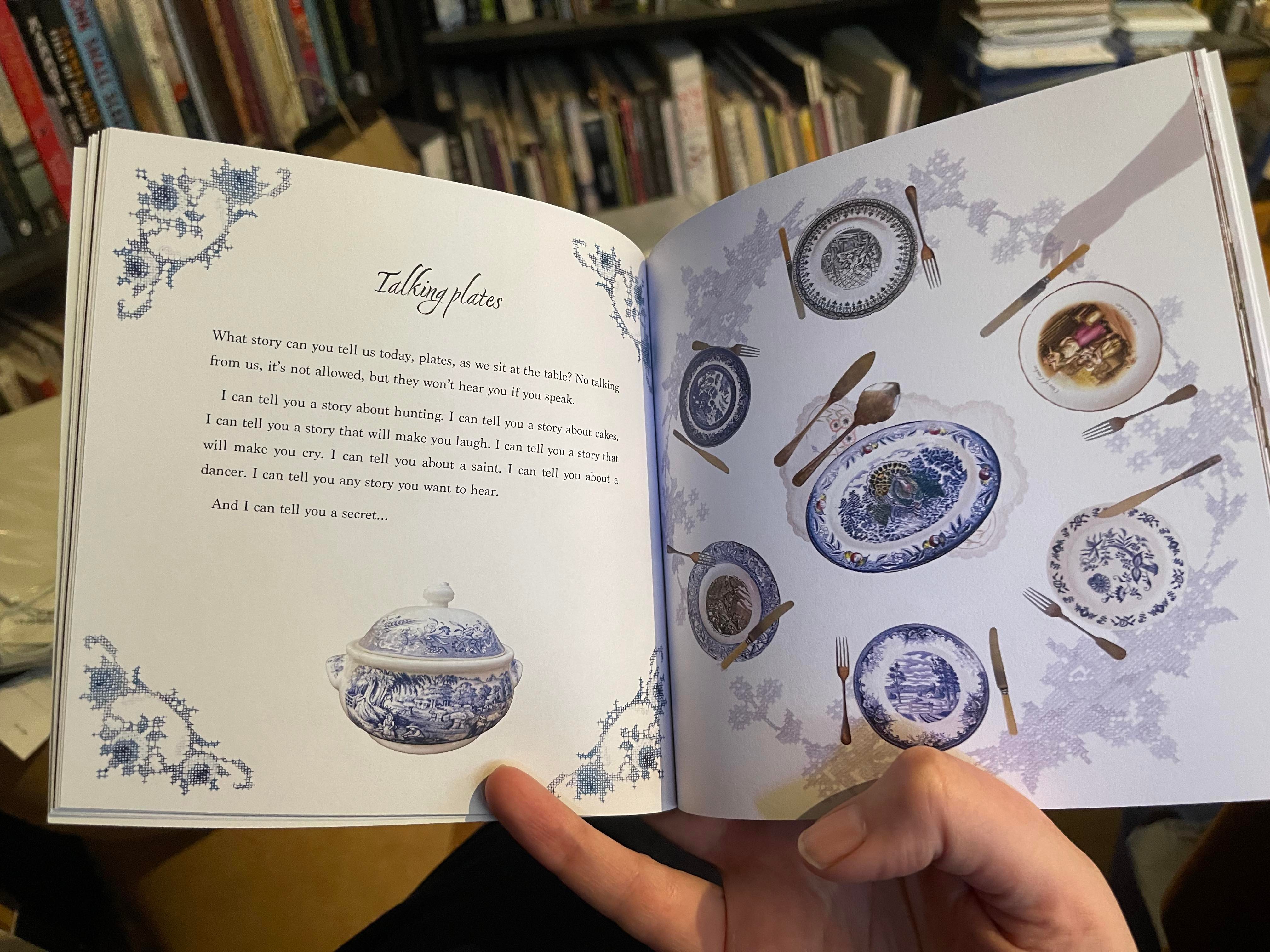
Advance copies of Secrets of the Good Fairy House!

It’s always exciting when you get those first advance copies of a new book–it’s a magic moment when you get to hold the real-life book in your hands! This week, copies of my new book with the wonderful illustrator Lorena Carrington, Secrets of the Good Fairy House, arrived at my place and to say I was delighted with how it looks is an understatement 🙂 It is truly gorgeous, in fact!

Here’s the blurb:

Secrets of the Good Fairy House is a unique exploration of how a beloved childhood house can grant not only a treasury of rich memories, but also spark imaginative childhood adventures, and future creative inspiration. Created by award-winning author Sophie Masson and acclaimed illustrator Lorena Carrington, this beautiful book is an interwoven mix of memoir and fiction in both text and images, taking you on a fascinating journey into a very special magic.

The book is published by our very own ‘tiny press’, Pardalote Press, and distributed nationwide through Peribo, so you can buy or order it from any bookshop. It will be officially out in June.

(by the way, the framed photo in the pic below is of the ‘good fairy house’ of my childhood in France, which was the inspiration for my part of the book)

A unique treasure….

Born in Indonesia(in Jakarta) where my parents were working at the time (my younger sister Camille was also born in Indonesia, but in Surabaya, in East Java), I grew up in France and Australia amidst many reminders of Indonesian(especially Javanese, but also Balinese) culture, which my parents loved. The wayang plays, in their different forms(the puppet ones such as wayang kulit, wayang klitik and wayang golek, and the wayang orang, played by people) was a great love of theirs, along with the haunting music played by the gamelan orchestras.

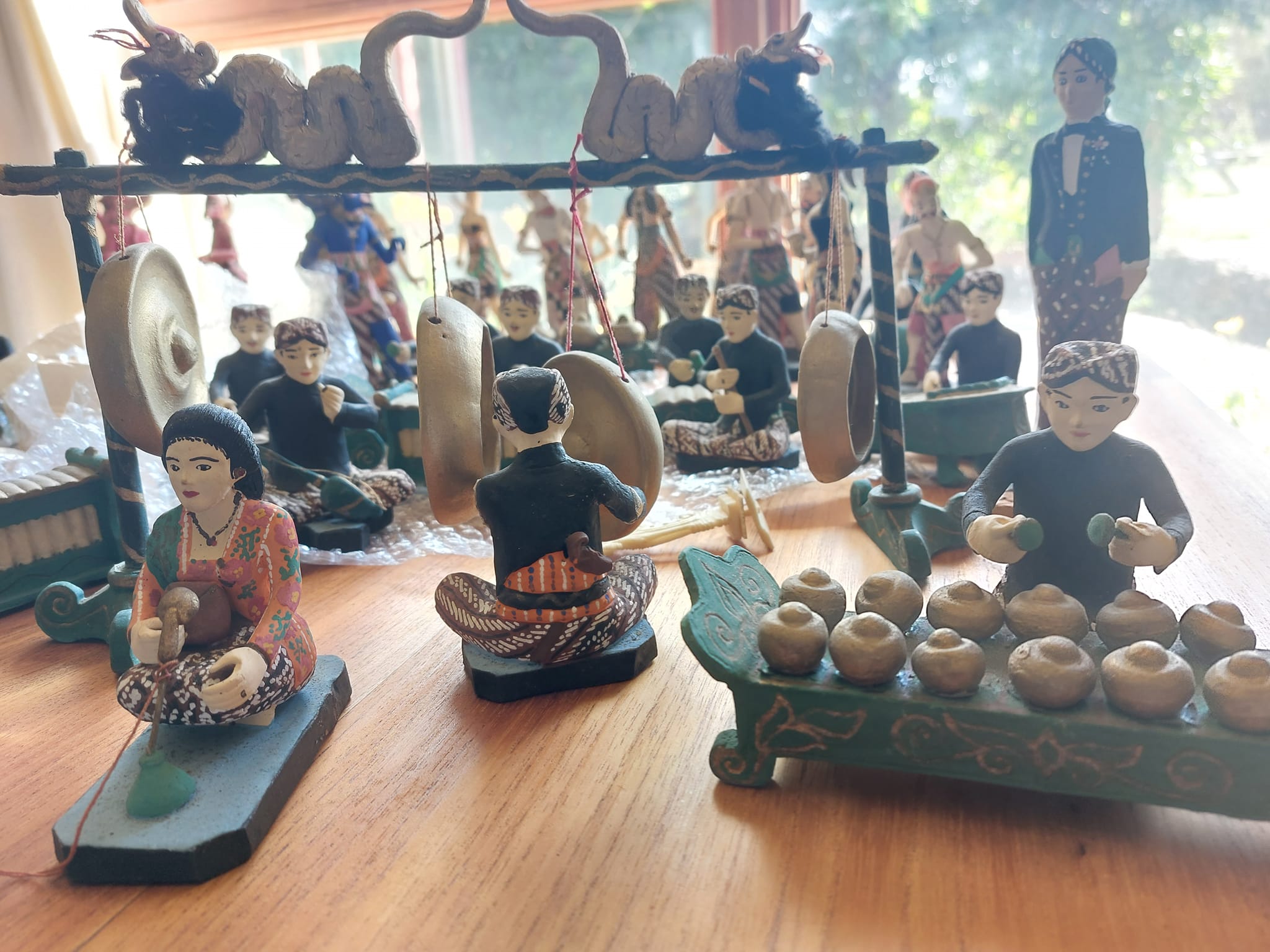
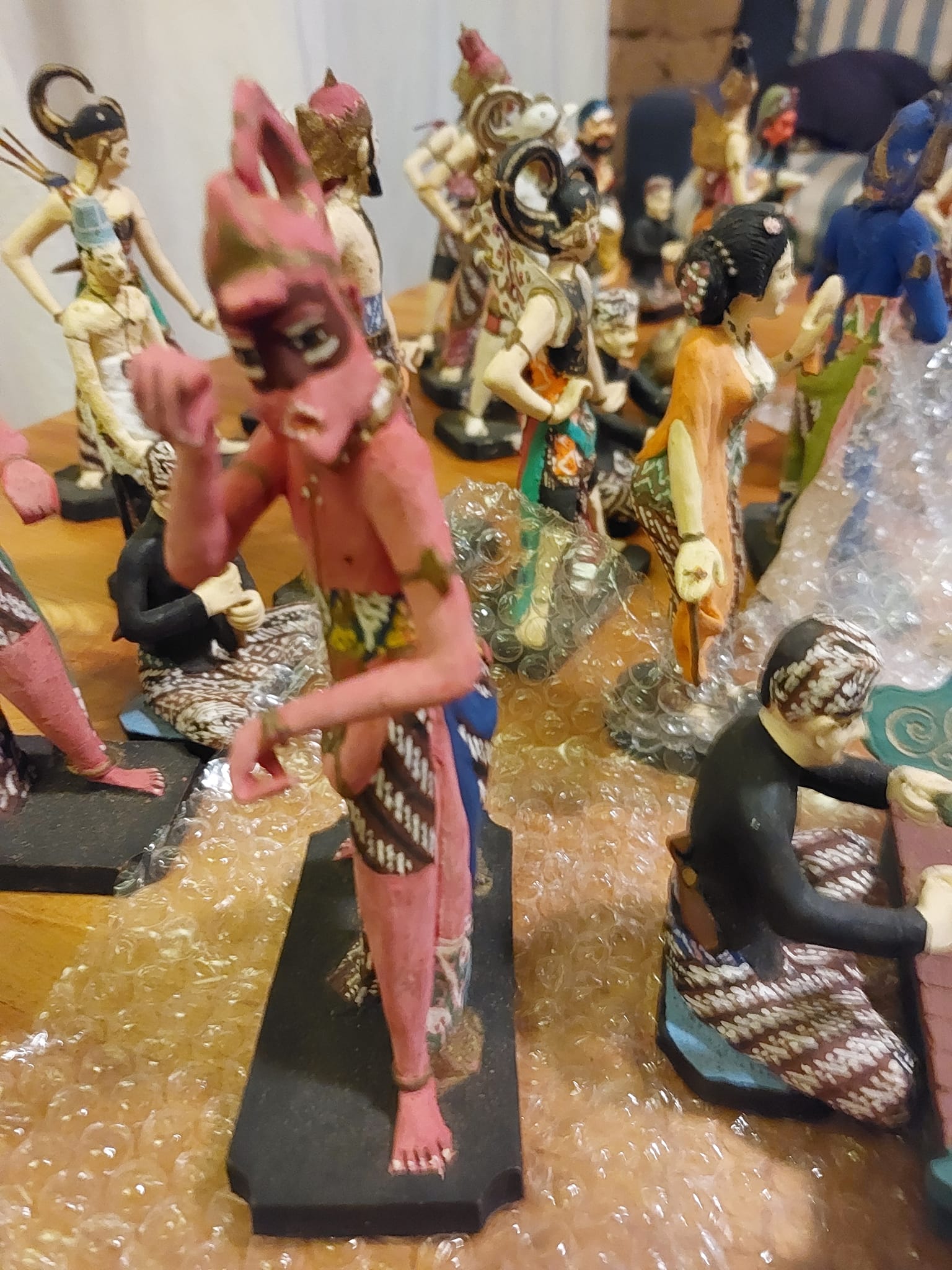
They had already given me one unique treasure: the handwritten script of a particular wayang play, written down by a Javanese dalang(master puppeteer) in Javanese and then translated into modern Indonesian and English(both languages my parents spoke fluently). And now I have another Javanese treasure, gifted by my father and carefully brought here from France by my brother: a totally gorgeous set of exquisitely-painted clay figurines which my parents bought in Yogyakarta many decades ago, depicting a wayang orang performance with a full accompanying gamelan orchestra. They are absolutely unique pieces: I have never seen any other like them–including on the internet 🙂

As a child I was completely enthralled by this beautiful miniature world and would stare at them for ages, imagining their stories, hearing in my mind the music they played, the way the dancers moved…Many years later, as an adult with my own children, ona visit to Central Java, we went to a gorgeous moonlight ‘wayang orang’ performance of the Ramayana Ballet, in the ancient temple complex of Prambanan and it was like watching those figures world come to life…

It is just so wonderful that now this beautiful miniature world has found a new home with us here!

‘Wayang’, by the way, means ‘shadow’, or, metaphorically, ‘imagination’: a fitting name for this most extraordinary of art forms…

Announcing the new Pardalote Press production!

I’m absolutely delighted to announce the forthcoming arrival of the new Pardalote Press production, my latest collaboration with the wonderful Lorena Carrington!

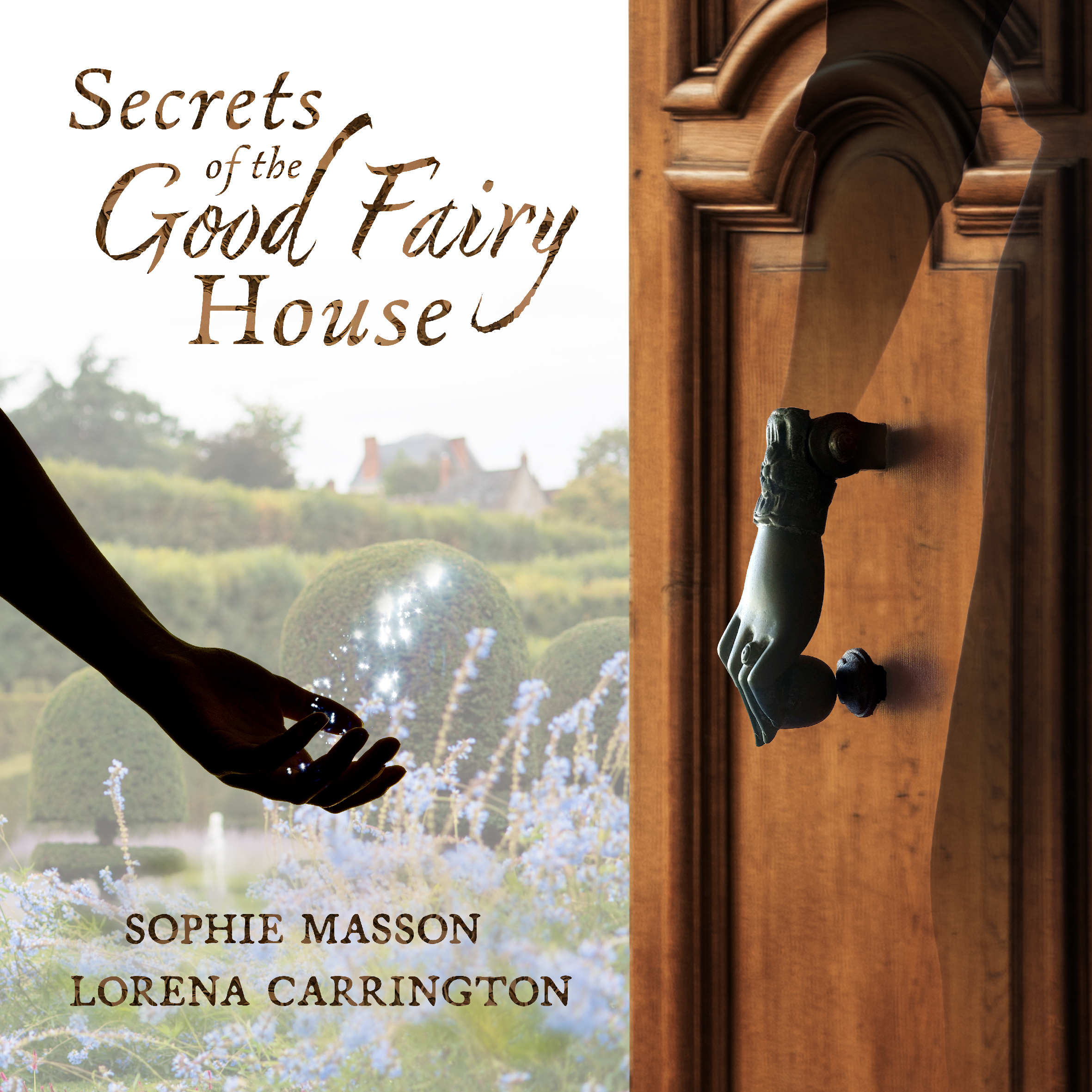
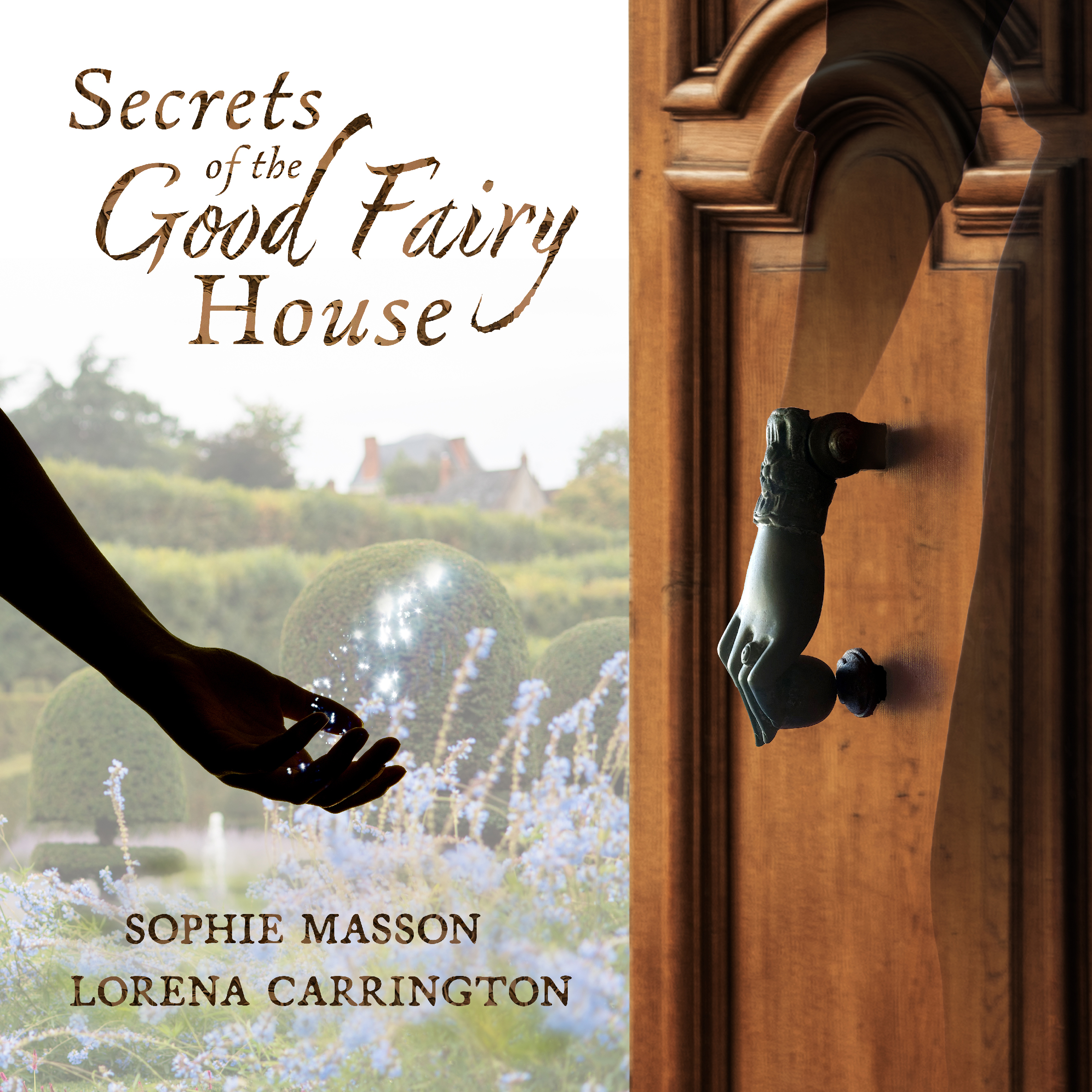
It’s a beautiful little book titled Secrets of the Good Fairy House, which will be out at the beginning of June and distributed nationally through our distributor Peribo. Below you can see the book’s gorgeous front and back covers which Lorena created, as well as the lovely page Peribo have for the book in their June catalogue.

Secrets of the Good Fairy House is a unique exploration in words and images of the magic a beloved childhood home can confer on people, through its sheer atmosphere and the objects in it too. Both in words and images, it’s a mix of memoir–about my childhood home in rural France and Lorena’s in regional Victoria–and fiction, to create what we hope will be an enticing, imaginative blend. Each page features a space or an object or an aspect of the good fairy house, and, as well,  there are interactive elements at the end: an encouragement to create memory maps(with ours as samples), ideas on how to use the ideas and concepts in the book to create your own exploration of your own ‘good fairy house’, and a maze game, for a bit of fun 🙂 We absolutely loved creating this unique little book, and we hope many readers will take it to their hearts too. It’s for a general audience, for adults as well as younger readers, and makes a great gift too.

Secrets of the Good Fairy House is a beautiful small square book of 48 pages, in full colour, retailing at $25.  The ISBN is 9780645563429. It will be available in all good bookshops across Australia, and can also be pre-ordered, via your local bookshop, or directly via our website.

Six weeks on a boat: a childhood ocean voyage

Something a bit different: a little video I made about an ocean voyage, from Australia to France, on a French ship, through the Pacific, Carribbean, Atlantic and then Mediterranean, a voyage which I went on as a child, with my family. It was an amazing trip whose memory still lingers in my mind, and which has inspired scenes in more than one of my books. My dad documented it all with his trusty super8 film camera, my brother-in-law recently converted the films to MP4 files, and I’ve made the video from screenshot stills captured from the films. I hope you might enjoy it!

A foxy tale…

About ten days ago, I was sitting at my computer after lunch, writing, when I happened to glance out of the window which looks out over our front yard–and to my astonishment, saw a long, low, and instantly recognisable shape pass rapidly right in front of the pawlonia tree, right in front of my eyes. The fox was utterly oblivious to my presence behind the glass, utterly intent on one of our hens that was calmly scratching away near the front gate. It was only the flash of an instant that I was transfixed by the sight; and then I cried out ‘Fox!’  to David and rushed outside, yelling my head off. As I barrelled out of the door, the fox hardly deviated in his path, heading straight for the hen that still didn’t move, though the others were flapping around in panic, in my mind crying ‘Oh help! Oh fire! Oh fox!’  (a quote brilliantly expressing chooky panic which I’ve never forgotten, from Patricia Wrightson’s wonderful short novel, A Little Fear.) Then the fox suddenly seemed to clock me and my shouting and yelling, turned smartly, and ran out through the garden gate, splendid tail high, abandoning the chook hunt, and disappearing in a flicker of a moment in the long grass across the road.

All the chooks were safe, if a little nervous, except for the bird that the fox had zeroed on, which hardly even appeared to notice that she had escaped certain death. But if she had no apparent idea what had happened, I found the images from it kept popping into my head. Living in the country as we do, over the years I’d seen more than a few sad aftermaths of fox attacks, including on our own poultry; but I had never seen an attack in progress before. Indeed, I think it is a rare sight, though sometimes foxes are surprised in the middle of a killing spree. And I couldn’t get it out of my mind. Of course I’d not had any time at all to snap an actual photo of him (I say ‘him’ because the fox’s size clearly indicated it was a male), and never even thought of picking up my phone before I rushed out 🙂 . But my mind’s camera was clear and bright and vivid. And it clicked through snapshot after snapshot of those instants: it was simply extraordinary, to see that intentness, power and speed, expressed in one superbly built, supremely healthy and confident red body, ears pricked, tail streaming, sharp eyes fixed on that tempting plump prey. And it was also simply surprising–and reassuring, in a funny sort of way!– to know that my reaction, after that very first flash of stunned astonishment at the bold presence of the fox, was to rush out, without hesitation, to confront him and stop him in his tracks. I might be impressed by the sleek, deadly beauty of the fox, but I was certainly not going to let him get his teeth into our hapless, helpless cluckers.

But the fox thriller wasn’t yet finished; its star was not going to let us have the final word, with the thwarted predator sent packing once and for all. We kept the chooks locked up for several days, thinking that the fox would get tired of waiting and would move on to greener pastures. But the chooks weren’t happy, though their pen is large; they’re used to roaming around the block, eating grass and worms, pecking and scratching and dirt-bathing. Besides, what’s the good of having free-range birds if you keep them locked up like prisoners, even if it’s for their own good? So after a week, David let them out, just for a few hours a day, in the little orchard which is fenced and close to the house, and which he can keep an eye on when he’s working outside. All seemed well for a couple of days, and then one day we both had to go out on separate errands, and didn’t think of locking in the chooks. David got back before me–but the fox had got there before him, climbed the fence into the orchard–and well, one chook wasn’t so lucky as that first one. A young rooster lay dead and half-gnawed (ironically one we’d been raising for our own eventual chicken dinner!); but the carnage wasn’t as great as it might have been, because all the other chooks were unharmed, so the fox must have been spooked by something and taken off before he could add to his predator’s tally. And, oddly, the surviving chooks seemed hardly perturbed, no sign of any post-traumatic reaction, despite the fact they must all have been present when the fox killed their brother. Our own reaction of course was quite different to that first episode when the fox had been successfully routed; shame at forgetting to lock in the chooks added to shame at misreading the capacity both for patience and cunning of our vulpine adversary.

So of course now the chooks were locked up, and they’re still locked up. But the foxy tale hasn’t quite ended; because yesterday afternoon, working at my computer again, I happened to look up–and there he was again, a bit further away than the first time, creeping through the long grass near the pine tree, heading for the chook pen, bold as brass again, clearly still intent on checking out opportunities. The chooks were in no danger, the pen is utterly impregnable, as it is enclosed by netting wire not only on all four sides but on top as well: the only way he could conceivably get in is by digging underneath, a risky and time-consuming process that normally only a desperately hungry animal would take on, and this particular one, with his sleek body and shining fur, looks neither hungry nor desperate, but rather carries the air and the M.O of a boldly opportunist gourmet 🙂 But the sight of him still persisting in his campaign, despite the odds, was a signal to us that this isn’t over, not by a long shot, and that this outwitting–outfoxing!–tale was certainly not complete. And somehow, this episode seemed at last to really rattle the chooks, who last night at a time when they should have been cosily in bed on their perches, were pacing about anxiously outside in the pen, making the disturbed clucks that let you know something’s wrong. We went out to check of course, several times; there was no obvious sign of the fox, this time, but somehow there was a sense of his presence, hidden, watchful–waiting.

So my foxy tale ends there, for the moment, maybe waiting, like the fox, for the final twist. And it made me aware of course of our own conflicted reactions to what happened, and to the fox itself. It’s not exactly uncommon, those mixed feelings. People have always had an ambiguous relationship to foxes: seen both as bloodthirsty adversaries, like wolves, but, unlike wolves, traditionally also admired for their patient guile and effrontery. Fiction and poetry are full of that ambiguous image of the fox, from Roald Dahl’s Fantastic Mr Fox, where the fox is clearly the hero, to the disturbing English folktale, Mr Fox, a version of Bluebeard, where the main character is basically a serial killer. But it is perhaps in medieval French literature that we see the most compelling and extraordinary picture, in the shape of the anonymous episodic novel Le Roman de Renart. This represents its fox anti-hero, Renart as the very epitome of the clever, unscrupulous, risk-taking outlaw who preys on the stupidity and herd mentality of the geese and chicken mainstream, but also outwits, through a combination of hypocritical flattery and daring moves, the much more powerful and dangerous, but much less smart, wolf and bear lords. So hugely popular and influential was this novel–which is still both remarkably entertaining and highly disturbing in equal measure–that it changed the very name of the animal itself in French. In Old French, the word for fox was ‘goupil’, but after Le Roman de Renart, that name changed to the given name of its  main character. And so ‘goupil’ became ‘renard’, which is still what it is today.

A few years ago I wrote a retelling of the classic Russian folktale, The Rooster with the Golden Crest, where the tables are turned on the crafty fox by the nice but stupid rooster’s resourceful friends, the cat and the thrush, which was published in my picture book with David Allan, Two Trickster Tales from Russia; and it’s certainly more than possible that one day some fiction of mine will come out of these recent personal foxy encounters experiences; but right now I’d like to finish with a poem I wrote a couple of years ago, after hearing a fox’s screaming call late one night whilst at my father’s place in France. The poem was published later in The School Magazine. In this poem, it’s a vixen, not a dog fox, that’s prowling…


Honoured to be featured as first story on striking new podcast series

I am honoured to have an interview with me featured as the very first episode of the brand-new Catastrophic podcast series, a project inspired by the recent–and current!–catastrophic bushfires in Australia and the challenges for the future. Created by the fabulous Kel Butler, the hard-hitting series focusses on a different person’s story in each episode. In my case, it was really the first time I have spoken in such a complete way about our recent stressful experiences in our region of not only constant fire threat over several months but really bad drought over more than a year–the recounting of it all drawn out by Kel’s great interviewing skills. And now that the wonderful rains in our region have brought about a relaxing of the extreme anxiety, I found I was able to reflect on it more…

You can find the complete episode with my interview here (10 minutes long).

I hope listeners find it interesting–and do listen out for other episodes of the series!

The Catastrophic podcast series website is here, (you can subscribe to the series there) and the Facebook page is here: Like it to keep up with news of new episodes and other updates.

Childhood markets: two memories

Today I’m doing something different: republishing a couple of short pieces I wrote some years ago about markets I attended with my family in childhood and adolescence.

St Jean Pied de Port, Pays Basque

We dodge a flock of sheep being driven up the steep cobbled street to the stock-selling part of the

On way to St Jean Pied de Port markets, Pays Basque, in adolescence

ancient markets. Up and down the street are stalls of all kinds, and farmers in the large flat berets characteristic of the Basque country and blue overalls. Many of them are speaking the ancient tongue of the region to each other and the stall-holders while a steady stream of incoming tourists like ourselves rubs shoulders with the locals. I’m a teenager on holidays in the Basque country with my paternal grandmother Mamizou and her two daughters, my aunts Betty and Genevieve, and we’ve driven up into the mountains to the famous markets at Saint Jean Pied de Port, deep in the ancient province of Navarra, on the French Basque side of the Pyrenees. St Jean Pied de Port is a gorgeous medieval town, built of local pink and grey rock, set beside the rushing Nive River, and it has a feeling of ancient fastness which percolates into your veins.

On the way up, we’ve seen some amazing sights: rows of beautiful old houses, a team of men in white shirts and trousers and red belts playing pelote, the Basque handball, against village walls built specially for the purpose; and best of all, a pair of patient oxen harnessed to a haycart. Betty takes a photo of me near—but not too near!–them, and I have for ever the exciting proof that a sight right out of the history books was still alive in the late 70’s in the Basque country. I’m delighted; the past and especially the distant past is my obsession. I’m proud of my maternal Basque heritage but I love all romantic ancient tongue-twisting languages—Gaelic, Welsh, Breton, as well as Basque—and I read old sagas and myths and Arthurian romance and to my relatives’ somewhat pained dismay often dress like something out of the Middle Ages or rather a fantasy-reader’s impression of that period, haunting old-clothes markets and junk shops for turn of the century lace camisoles, long satin nighties worn as dresses and gypsy-style coloured skirts and velvet jackets.
Today though I’ve dressed in black and though my grandmother and aunts aren’t keen on that either, because all-black outfits should in their view be reserved for mourning or else for old peasant women—they haven’t said anything, just in case I might take it into my head to wear something really outrageous. But as we trudge up the cobbles to the market, I’m suddenly aware how out of place we look—my elegant grandmother and aunts in their city clothes and patent leather shoes, and me in my toned-down ‘bohemian’ style. We’re so very obviously tourists, and for a while that’s all I can see. But nobody else seems to notice. The locals couldn’t care less if you’re there or not; this is their own gathering, held since time immemorial, and tourists are the least of their concerns. There are one or two stalls catering specially for tourists, with little Basque flags and knickknacks; but to the locals, they might as well not exist. So soon I forget all about my self-conscious preening and just enjoy taking it all in, the sights, the sounds, the smells..

These markets are famous because they are the focus of the region. Hundreds of farmers come from a wide radius to buy and sell stock and poultry and a bewildering range of farm produce, from eggs and honey and sausage and cheeses to vegetables and fruit and preserves. As well there are any number of stallholders selling things bought by locals as much as tourists, such as pottery or the famous stripy Basque linen which makes such striking tablecloths and aprons. We wander up and down, buying bits and pieces but mostly looking, and I remember another time I was here, several years before, with my father and some of my siblings. That time, Dad had bought a vast wheel of cheese cheap from an old Basque lady with deceptively candid blue eyes. Despite Maman’s sardonic comments–her part-Basque heritage not predisposing her to romanticism about the culture–Dad was excited, thinking he’d not only got something truly authentic, but something that was truly a bargain. (When we got it home the next day to our house, La Nouvelle Terrebonne, near Toulouse he cut it open and discovered it was full of worms. Everyone yelled in horror, except for Dad, who gamely asserted that cheese was only improved when it was worm-riddled; everyone except him refused to touch it. Oddly enough not long after he’d defiantly tasted it, the cheese mysteriously disappeared—and he wouldn’t answer Maman’s sarcastic question as to where his ‘bargain’ had gone!)

Today though there’s no wormy cheese to be seen, or if there is, we don’t buy it, though we stock up on sausage and eggs and honey and fresh herbs and more, with my aunt Betty, the (very fine) cook of the family, examining each purchase as carefully as a local, earning the respect of the stallholders who soon discover that elegant city clothes don’t mean she doesn’t know what she’s looking at!
And then comes my favourite part of all: after an hour or two jaunting through the market we repair to a charming little cafe near the river and eat a wonderful meal of chicken a la Basquaise and salad, followed by a big slice of a delicious, fragrantly fresh Gateau Basque, the whole washed down with light local wine and a small nip of Izarra, a herby local liqueur, afterwards. When my grandmother compliments him on a fine meal, the proprietor tells us all the fresh ingredients came out of this very market. ‘There’s no better in the whole of the country,’ he tells us with superb local assurance, and nobody is disposed to argue with him, not with the sun shining on the Nive, and our bellies cheerfully, happily full.

Flemington Markets, Sydney

Flemington markets, eight o’clock one childhood morning. We’ve had a long and enervating drive through slow Saturday traffic from our sedate northern suburb to the ‘wild west’, and now we’re in this vast corrugated iron shed, with people shouting, gimlet-eyed bargain hunters running you over with heavily laden trolleys, vegetables squashing underfoot, kids getting lost in the melee…

Maman and Dad both love this place. For Maman, who can ‘take or leave’ markets when she’s in Europe, this is a place that makes her feel she is at home, here in this country that will never be home to her. For Dad, though, the love is there because it’s a market, because it’s filled with people, with sights, sounds, smells, life to plunge into with gusto, where the colourful noisy swell of multicultural Australia washes over you in a great human wave. For me as a prickly teenager mortified by looking ‘different’ and by the teasing refusal of our parents to talk English to us in public, it’s somewhere that’s both relaxing–because here no-one cares a bit if you ‘speak foreign’ or not but also a bit confronting– for the same reason. This is a very different Australia to the surfie paradise I imagine my school friends inhabit, and I’m soon overtaken by its vivid atmosphere, forgetting I’m supposed to be trying to be cool in the urge to observe and catalogue and file away things in my head for writing in my notebook later.

There are Italian fruit sellers, Greek olive oil merchants, Turkish sweet-sellers, Anglo vegetable sellers, Arabic souvenir sellers, South American churros vendors, Chinese and Vietnamese greengrocers, Eastern European pickle and smallgoods sellers. There’s chickens and ducks and eggs, mounds of fruit and vegetables, carpets and cheap trousers, kebabs and Turkish delight, dried figs and toffee apples. A tiny, very old Chinese woman stops at a stall, prods a vegetable, clucks in annoyance and contempt, while the seller, an enormous brawny fellow with a strong Australian accent calls out indignantly, “Hey, lady! Them’s for selling!” Maman and Dad walk rapidly down each aisle, like people possessed, hunting down bargains, while we children drag along in their wake, anxious lest we lose them in the swirling crowds, liking it in some strange, unarticulate way and yet embarassed, too, for here you have to shout and argue and comment and even make loud jokes. There’s no mask of reserve, no distance. And so we go along, occasionally clutching at a fallen orange, asking ourselves whether our parents will buy us a toffee apple this time, or whether we’ll get an almond biscuit and a sweet black shot of coffee at the Italian cafe, just down the alleyway.

A beautiful and astonishing example of serendipity

Sometimes, life can hand you a beautiful example of serendipity, a gift of simple grace and joy, which makes you feel connections across time and place that are just spine-tingling…Such a thing happened to me just recently, something which connected my childhood scribbling self with my present scribbling self, in the most unexpected of ways. It’s a whole story in itself, so in order to do it justice, I have to start with some context, with some scene-setting, before I move to what happened in the present day…

So, in an entry in my diary, written as a 12 year old (a diary I still have), there’s a mention of a book I was writing, titled The Twins’ Highlands Holiday. Everything in the entry except for that title is written in French (as indeed it is in the rest of the diary); but the English title clearly showed that I had ambitions for a fiction readership beyond my immediate family 🙂  And it also showed clearly the influence of one of my favourite writers at the time, Enid Blyton. I especially loved her mysteries series, the Famous Five and the Secret Seven, but also her story anthologies which could be consumed in bite size pieces(though being a voracious reader, I never stopped at one bite!) My parents rarely bought new English-language books for us(that was reserved for French-language titles, like Tintin, Asterix, Alexandre Dumas, Jules Verne etc); So most of those books I borrowed from the library or occasionally we might find some in second-hand shops, like the legendary White Elephant in Chatswood which my mother took us to during the holidays(we lived in Sydney’s North Shore area) and where we children might be allowed to select books to take home(she also loved rummaging amongst the shop’s astonishing mass of books, records, old china, curios, records, vintage clothes etc).

I had come across the entry in that old diary earlier this year, in preparation for an essay I was writing; and I thought then, I wish I still had that story! But it had vanished long ago, and all that remained was the title, a title straight out of Blyton, though maybe not the Highlands part, for that very English writer. As a twelve year old I had never been to the Highlands, though I loved stories set there(I’d also read and loved Robert Louis Stevenson’s Kidnapped, a very different kettle of fish to Blyton, of course!) So I’d combined twins and holiday–very Blyton–with a whiff of adventure in the heather, a la Robert Louis Stevenson. I don’t recall anything about the story or what happened in it..but seeing it mentioned there in the diary(mentioned in more than one entry actually, as I diligently reported progress on writing it) made me remember the sheer excitement of writing as a child, copying my favourite authors but doing it all in my own way.  And I thought, I know the Highlands bit came from Stevenson, but I wonder which Blyton it was which inspired the rest?  Oh well, probably a mix of several, I thought.

The Twins’ Holiday Holiday went into the essay. And that was it. Except it wasn’t. The astonishment, the serendipity, was still to come. A few weeks ago, I received a direct Facebook message from a fellow author, Pat Simmons. I hadn’t met Pat in person, but I did know her work: and had recently bought her latest lovely picture book, Ziggy’s Zoo(illustrated by Vicky Pratt) for some dear little people in my life. Anyway, Pat had messaged me about something she’d found, quite by chance. A book. An Enid Blyton anthology, called ‘The Holiday Book’, with a name, address, telephone number and date carefully written on the flyleaf, obviously by the proud owner. And here I’ll pass the story over to Pat herself, to explain:

My local ‘op shop’ sits close to the bus stop in Thirroul. A bus stop I frequently use when travelling home to Scarborough. As the buses almost always run late, I often have time to browse the ‘op shop’ and seek out treasures.

A few weeks ago, I spied a book of Enid Blyton short stories, sitting all by itself on a high shelf. Inside the book I read a name and address. Definitely not a local address and, seemingly, written some years ago. The name was ‘Sophie Masson.’

Could it be THE Sophie Masson I wondered? I took a photo of the inscription and messaged it to Sophie. She confirmed that the book had indeed belonged to her some years ago.

It was great to return the book to its original owner and to ponder on the book’s journey.

I could hardly believe it as I looked at the photos Pat had sent. It was definitely my handwriting as a 12 year old (just the same as in the diary!) and it carefully noted my name, address, phone number(which I still remembered by heart as we’d had it drummed into us by our parents, in case we ever got lost!) as well as the place and date we’d bought it–the W.E., Chatswood, the White Elephant of course, and in May, only a few days after my twelfth birthday. So it was already second-hand when we bought it, but I had clearly loved it and put my mark on it.

I was so excited! And even more so when Pat very kindly sent the book to me, and opening it, I was suddenly plunged back into the world of my childhood, not only because of the stories, the pictures, and my owner’s inscription–I was sure now that this was the book that had inspired the Blytonesque part of that story I’d written as a twelve year old–but also  because of something else written on the page facing the flyleaf. ‘Taken out By’ it read in my writing: and underneath a stamp somewhat shakily reading L M. I knew at once who LM was of course; my younger brother, Louis. And he, along with my other siblings, had been one of the visitors at the ‘library’ I ran with attempted firmness at home, acting the part of the librarian, complete with stamp (I just loved those stamps!). Very likely that my cheeky rebel of a brother broke every library rule I attempted to impose, but he had clearly meekly submitted to being stamped into Enid Blyton’s Holiday Book (I showed it to him next time I saw him of course, much to his amazed amusement!)

What a journey indeed that book must have gone on over the decades since I had first held it in my hands and officiously stamped it! It had not followed me from childhood into adolescence; my mother must have got rid of it, along with other books we had outgrown, when we left home, or when she and my father left Australia to go back to France. She would have given it to another secondhand shop, no doubt, but in northern Sydney somewhere–but how it had ended up on the South Coast, in Pat’s neighbourhood op shop in Thirroul, a little battered but still in remarkably good shape, considering, is a mystery. I presume other children along the way, maybe several other children, had enjoyed and loved it, or it would not have stayed intact. As to me, I had forgotten it, until that moment when I read Pat’s message. Yet I had written my name and contact in it so carefully, obviously fearing that I might lose it, and trying to ensure that it would find its way back to me.

Which of course, eventually, it did….

And I’m still feeling that rush of pure, simple pleasure about the lovely serendipity of it all.


The Bluebell Club: a memoir-story

Today I’m republishing a story based on memories of a literary episode in primary school.

The Bluebell Club

by Sophie Masson

Towards the end of my Enid Blyton phase, in late primary school, I founded a wrhiting club, which I called the Bluebell Club, and managed to inveigle some of my friends into it. My younger sister Camille also hung around it sometimes. The name of the club came straight out of Enid Blyton, of course. And I was the President, also of course!

We would sit, we the Bluebell Club, under the trees at the end of the playground, ignoring the bands of boys who sometimes marched past us, arms linked, chanting, ‘We hate girls! We hate girls!’ We knew they were just craving attention, and were jealous of us as we sat there, telling each other calmly the stories we had made up, which was the ritual of the Club. Each member had to bring a story to the week’s meeting; we read them, admired them, and then it was my job to say which was best, and which would be entered in the exercise book that served as the Club’s record.

I loved the Club. It was the perfect venue for recounting the adventures of my favourite creation, Princess Alicia of the rippling blond hair, the wise mind, clever tongue and magic finger. Alicia featured in dozens of adventures I wrote, each profusely illustrated with curly pictures. The Club members listened to the Alicia stories with respect, but then seemed to want to tell their own and to vote for others, not just Alicia. Secretely, I thought that Alicia should win every week, but not even being President could save me from the fate of knowing what would happen, then.

All the other girls, except for my younger sister Camille of course, were real Aussies—they had vegemite, not salami, sandwiches at lunchtime and glamorous parties for their birthdays, with fairy bread and pink cakes and balloons. I never had a party. I wanted one, so badly–and yet I feared that Maman would probably not know the right ‘form’-she’d make a pâté, and real lemonade with lemons, and her cake would be iced just with melted chocolate, not with ‘proper’ icing. I was not yet at the teenage shamed stage–yet I knew, somehow that those things I loved within the four walls of my home would be misunderstood outside them. The Bluebell Club was my way of integrating, of showing that I knew about what I imagined marked out the ‘mainstream’, knowing, despite the lack of a TV in our house, and the fact Maman never bought processed food, about TV programmes and frozen chips. In my stories Alicia always watched Bewitched and Dr Who, and loved frozen chips and green GI cordial.

I talked to Maman about the Bluebell Club, and was amazed when she suggested that we run a proper competition. She would donate a prize for it, she said. My joy at this unexpected offer was tinged with suspicion–would she know what was the right thing to do? I kept dropping hints, saying, well I think a good prize would be a book, hoping that she wouldn’t get it into her head to bake a cake which would look home-made, with dense, delicious yellow flesh and pockmarked brown skin.

She did buy a book–done up in blue tissue, it sat in my bag, innocent and weighty. She hadn’t told me what it was–couldn’t remember, she said, mischievously. But a book was safe. Sure. I took it to school in anticipation, having last week announced the competition. I’d written a story, Alicia’s latest adventure, in which, sheathed in gold brocade and silk hair nets, our heroic princess went to do battle with an alien. I’d had trouble drawing the alien–it looked rather like Maman’s vacuum cleaner. But the story was good drama. I’d rehearsed it to myself, last night in bed.

One of the other girls’ mother had kindly baked a cake for us, as celebration, and we ate it as a preliminary. There it sat, neat as a house on its plate, its walls straight and pale, its roof prettily frosted with white icing, dusted with multi-coloured sprinkles. It looked like a proper shop cake, and I was awed by its beauty. ‘Mum always buys the good packet mixes,’ the girl said, and I gasped with longing. I’d seen those packets in the supermarket—they had names like Snow Vanilla; Royal Chocolate; Pink Marble. Cakes for a Princess Alicia, to eat off golden plates.

When the cake was cut, it proved to have white flesh inside. It must have been a Snow Vanilla. I couldn’t get my eyes off that snowy colour; it was like no cake we ever had, at home. There was none of the sweet denseness of the French butter cake known as quatre-quarts which Maman made a lot; instead, you closed your mouth on an airy lightness, as soft as cloud. Privately, I was a little disappointed; it was like barbe à papa (fairy floss or cotton candy) that looked so magically wonderful but disintegrated into a trickle of pink on your tongue. But I was loudest in praise, for you couldn’t admit that pretty words could hide nothing at all. It was the image that was important, the feeling of riches, of magic, of leisure. No hard mixing and stirring and separating here, no messy egg shells, still with yolk adhering, or showers of flour on the floor. Just a packet, a picture, a pretty name, and hey presto–instant cake! It was like a miracle, I thought. And you can’t question miracles.

When the last crumb of Snow Vanilla had gone, I held up a hand for attention. ’And now for the judging of the competition,’ I announced rather pompously. ’I have here a magnificent prize, for the lucky winner.’ The others watched me a little strangely, I thought. Didn’t they want to know the winner? ‘Let’s read all our stories, and then we’ll see.’
I read the latest adventure of Alicia first, my voice rising and falling. I added an episode ad lib, when the Princess feasted on Snow Vanilla. The others listened, then read their stories. Very ordinary, they seemed to me.

‘Now, we’ll decide the winner,’ I began, but then another girl, the cake girl no doubt, stopped me. ’I’ve told my mum about all this,’ she said, ‘And she said it’s not fair, that you get to be the judge. I bet you’d choose your own story!’

‘I’m tired of Princess Alicia, anyway,’ said another girl. ’Why do you always write about her? She’s boring!’

The meeting broke up in disarray. In my bag, still in its blue tissue, was the prize book. I’d had no chance to bring it out, to display it, no chance to choose the winner, no chance to hand the book over, in its secretive blue. I tried to call them back, but the words wouldn’t come. They were off, chattering, their minds on elastics and skipping. They’d had enough of the Club, too. Possibly enough of me. My earnestness frightened them off. Now I was frightened. I’d thought I’d done so well, queening it over them, but now I realised they’d humoured me, for a while, because there was nothing else to do. Camille stayed for a minute, then said, ‘Don’t worry, I like Alicia. You can read it to me, if you like.’
But I didn’t want to read them to my sister. I could do that any day, at home. I wanted to sit under the trees, with the Bluebell Club, being their President, their admired, imitated President. I wanted to fill the exercise book with our work, with our efficient meetings. It felt like real life, quiet, efficient real life, not the chaotic un-Australianness of our home. But I’d just been voted out of office. Permanently. I knew it. And suddenly, Alicia’s curly hair, her huge eyes, filled me with anger. I tore the story across and put it in the bin.

The book stayed in its blue tissue all day. At home, I opened it at last. ‘The members of the Bluebell Club,’ I told Maman, ‘voted my story the best in the competition!’ I could even believe it, as I opened the collection of illustrated poems Maman had bought (it was a lovely book). Yes, I could even hear their clapping as one by one, the members of the Bluebell Club agreed that Princess Alicia and the Aliens was the best story they had ever heard, and deserving of the first prize. I looked across at Camille. But she said nothing. Her mouth was full of cake. Quatre-quarts, not Vanilla Snow.