On fairytale inspirations: an interview with Kate Forsyth

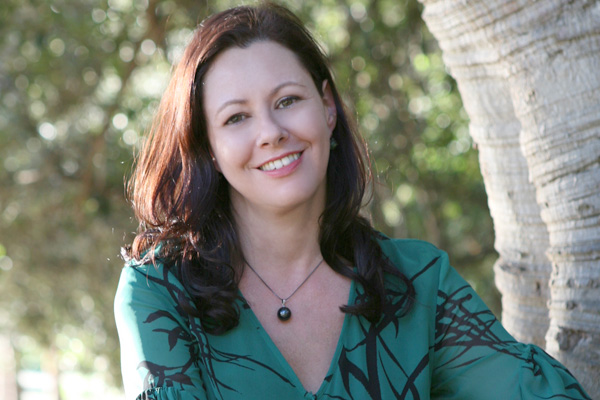
kateforsyth_0Kate Forsyth is not only one of Australia’s most well-known and popular novelists, but also a recognised expert in the field of fairy tale studies. Today, I’m interviewing her about that central fairy tale inspiration.

Kate, you have long had a great interest in fairy tales, with several of your books taking their inspiration from them, and your contribution to the field recognised in the new edition of the Oxford Companion to Fairy Tales. What is it about these stories that so attracts you?

I like the way these tales are so old, and yet still so powerful and relevant to us now. They are filled with beauty and enchantment and strangeness, taking place in worlds in which anything is possible, and yet on a deeper level they are psychological dramas in which desires and longings and fears oxford companion to fairy taleswhich are universally human are played out and resolved. I also like the way they speak in an archetypal language of symbol and metaphor, like dreams, or poetry, or paintings.

There are quite a number of Australian writers mentioned in the Oxford Companion, including of course yourself and myself too, but also Isobelle Carmody, Margo Lanagan, Garth Nix and Keith Austin (though rather to my dismay, they left out Juliet Marillier). What do you think Australian writers can bring to those traditional tales?

 I find it very interesting that so many Australian writers are drawn to retelling fairy tales. Perhaps it is because these stories are very old, and have never been confined by geographical borders. Perhaps it is because fairy tales connect us to a universal subconscious that speaks across cultural and ethnic divides. I don’t know why – I do know that I think they do it wonderfully well!

You recently completed a PHD which had both a creative component–the novel Bitter Greens, which was published a couple of years ago–and an academic exegesis on the theme of bitter greensRapunzel, which will also soon be published. How did you find it, combining the creative and the academic? What were the challenges along the way?

I wrote Bitter Greens first, and focused all my energies on discovering and writing the story. Bitter Greens retells the Rapunzel fairy tale in a Renaissance Venice setting, interwoven with the true life story of the woman who wrote the tale as it is best known, the 17th century French writer Charlotte-Rose de la Force. Told from the point of view of three very different women, who lived in three different times, it took a huge amount of research – particularly when trying to discover the life of Charlotte-Rose de la Force, who was largely forgotten by history.

While I was researching and writing the novel, I took careful notes and kept my bibliography in order, to make it easier once I began my exegesis. Then it was just a matter of systematically working on successive drafts of the exegesis, turning all my raw data into something readable. It was fascinating but exhausting, particularly since I had a very heavy publishing schedule as well (I also wrote my The Wild Girl, about the Grimm brothers, while working on my doctoral exegesis.) However, I loved every minute of it again, and would love to do it again – it’s a wonderful opportunity to really delve deeply into a subject that fascinates.

You have used Beauty and the Beast as a core inspiration in your most recent novel, The Beast’s Garden. Can you tell us a bit about how you worked in those fairytale elements into the midst of the darkness of the Nazi era?beasts garden

In The Beast’s Garden, I took the Grimm Brothers’ version of the ‘Beauty & the Beast’ fairy tale (which is an astonishingly beautiful tale called ‘The Singing, Springing Lark’), and used its structures and symbols to inspire and inform my own story, which is set in the German underground resistance to the Nazis in Berlin. The use of the fairy tale is subtle and oblique; it provides the symbolic scaffolding of my novel. I am interested in new ways of using old tales.

What are you working on at the moment?

I am working on a new fairytale-infused historical novel, set in the passions, scandals and tragedies of the Pre-Raphaelite circle of artists and poets. Tentatively called BEAUTY IN THORNS, it’s the story behind the creation of a famous series of paintings called ‘The Legend of Briar Rose’ by Edward Burne-Jones. ‘Briar Rose’ is, of course, the Grimm version of ‘Sleeping Beauty’, and so I am exploring its themes of love, death, and rebirth through the lives of thirteen women intimately connected to the Pre-Raphaelites – it is such a fascinating story I am utterly engrossed at the moment (I’m still writing the first draft so I have a long way to go!)

briar rose 1

briar rose 2

Write what you love best: an interview with Laura Whitcomb

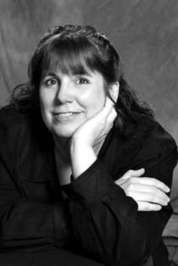
laura whitcombIn the course of my reading for the PHD, I have come across some wonderful books, and one of them is American novelist Laura Whitcomb’s daring, touching and beautiful YA novel, A Certain Slant of Light, which is half ghost story, half romance. The main character, Helen, died over 100 years ago, and since then has existed  in a transitional place between life and death as one of the ‘Light’, haunting the ‘Quick’, living people who are her ‘hosts’ and immersing herself in literature as all her ‘hosts’ are writers of one kind or the other, so that she’s almost like a variety of muse. She’s forgotten most of her life history, and doesn’t understand why she’s stuck in this dimension but is afraid of finding out more, in case she gets moved on into hell. Then one day, in the class of her current host, a literature teacher, she meets a boy called James, who isn’t quite what he seems at first.

That meeting will transform Helen’s afterlife, as she learns more about herself, love, and salvation. The language is intensely poetic, and the compelling story well-integrated with exploration of such things as the intricacies of sexual relationships and the nature of religious hypocrisy. It’s such a gripping, unusual novel that, reading it on the train, I very nearly missed my stop!

The novel, which was Laura Whitcomb’s first, was very successful, and led to others, which have also done very well. Inspired by my reading, I contacted the author, and asked her a few questions.

A Certain Slant of Light was your first novel,but it is remarkably accomplished both in style and story. Can you tell us about  your  writing career before it,and how the novel was published?certain slant of light

In the 20 years before I sold my first novel I wrote 20 drafts of 20 unpublished novels. So I had lots of practice. Most of the time I was not actively trying to land an agent or sell a book. I was just writing because I loved to write.

The novel  is a bold and unique re-visioning of the traditional ghost story,infusing it with the passionate vivacity of romance. How did you first come up with the idea? And how difficult was it to maintain that balance between the wistful dread of the ghost story and the warm recklessness of romance?

I came up with the idea for SLANT while I was listening to an Anne Rice audio book while I did housework. I liked the way her vampire narrator was from an earlier period of history but reflecting on the contemporary world. But, I thought, you don’t have to be a vampire to do that. You could be a ghost. Next I tried to think what might be the strangest thing that could happen to a ghost. I decided it would be being seen. Next I wondered, why can just this one person see her? Let’s say it’s because he is like her–he’s dead but borrowing a human body. And then the story unfolded from there.

Your characters,both the Light and the Quick, are intensely real. How did you go about creating them and their worlds?

I think creating vivid characters and their worlds comes partly from having life experience and writing experience. And partly it comes from real people I’ve met and environments I have experienced. If you love the story you are writing, you will be compelled to craft that story with the heart and details that make it come to life.

under the lightThe novel is infused with the living, necessary,inspirational and consoling presence of literature and words–indeed Helen’s hosts have all been writers in one way or the other. Can you tell us about that?

The hosts in SLANT were similar to Emily Dickinson and other famous authors and Helen clung to them because she was a book lover, like I am.  When a soul is stuck, like the ghost of Helen, literature would be a healing escape, I thought.

You wrote a sequel to the book–Under the Light–quite a while after the publication of A Certain Slant of Light. Was it an unexpected thing,or did you always intend to write a sequel?

For years I thought there would never be a sequel to SLANT, but then I was haunted with the idea of what might have happened after that first story ended, what stories led up to it, and where the spirits of Jenny and Billy went, what they did, while the ghosts of Helen and James were borrowing their bodies. It became too appealing–I had to write it!

The book you wrote between those two,your second novel,The Fetch, was also very successful. Can you tell us about the inspiration behind it?the fetch

I got the idea for The Fetch while walking in a woodsy park along a river on a winter day. The scenery reminded me of Russia. I thought how strange it was that such fascinating real characters were involved in the same adventure: Anastasia and Alexis Romanov, youngest children of Tsar Nicholas II, and Rasputin, the controversial spiritual advisor to the children’s mother, Alexandra. I started to create a supernatural re-imagining of why it was nearly impossible to assassinate Rasputin and why, after the execution of the royal family, the bodies of the two youngest children were the only ones not found.

You have also written two non-fiction books on writing novels. What has been the reception to them?

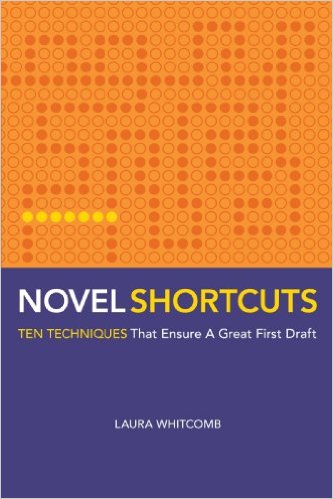
I have gotten lots of great feedback about my “how to” book Novel Shortcuts, but Your First Novel, co-authored with my agent Ann Rittenberg, has been even more popular probably because it not only covers how to write a novel, it includes fabulous insights into the career side of the business. And then there’s the wonderful forward written by another of Ann’s clients, Denis Lehane.

first novelSince your first novel came out ten years ago,there have been quite a few changes in the publishing industry. What’s your take on it, and how do you think authors can best cope with change?

I am not an expert on publishing trends, but my advice to novelists is to avoid chasing them. And write the story you love best. If it doesn’t sell right away, don’t fret, because you’re already working on your next novel and the more you write the better you get. You never know which book will be the one that launches your career.novel shortcuts


Read Laura’s blog here.

Like her Facebook author page.

Follow her on Twitter.


Writing ghost stories: an interview with Benedict Ashforth

When I was a child, we lived in a 1920’s house in Sydney that though not all that old, unlike our ancient house in France, had a kind of elusively sinister atmosphere, complete with creaking woodwork and sudden shadows glimpsed out of the corner of your eye. At night, sometimes, I would lie there and imagine those scary characters in the ghost stories I’d just read coming up the stairs, and pinned to my bedclothes in sheer fright, would tell myself I would never read another ghost story again! But I did, of course, drawn to the form by its addictive combination of sharp precision and high-stakes atmosphere, and stories like WW Jacobs’ The Monkey’s Paw and F.Marion Crawford’s The Upper Berth stayed in my reading memory for good.

As an adult, I still enjoy reading–and very occasionally writing!–ghost stories, but the genre does not allow for mistakes and meandering, and it’s not often that you come across really satisfying modern examples of the genre, accomplished in both story and style: such as the novellas of  the modern doyenne of the ghost story, Susan Hill, and the Gothic-flavoured genre-benders of John Harwood. But recently, on Amazon, I discovered the work of Benedict Ashforth, an English writer whose elegantly creepy, chillingly atmospheric, precisely-told ghost stories and novellas offer an intriguing blend of the classic and the contemporary; the gruesome and the melancholy; the sinister and the sad, allied to a strong sense of place which is characteristic of the well-turned ghost story. Intrigued by the stories, I wanted to know more about the writer behind them, and this fascinating interview is the result.

Benedict AshforthCan you tell us about your writing career? What attracted you to writing ghost stories?

I write about ghosts because I know that they exist. I know because I have seen one. I did not imagine it. Someone else was with me and she witnessed it too. Sceptics would argue that it is possible for two people to imagine the same thing, but I would not. As clearly as I see the page on which I now write, I tell you that we saw another person that night, in that room, who had no absolutely no right to be there. I recognised him immediately – I had known him well, before his sudden death six months earlier. The person with me did not recognise him. She had never met him, but she saw him all the same. How did I know that she had seen him? She was screaming just the same as I was. How do you explain that? There’s an old adage amongst authors that you should write about what you know, and I know ghosts. Whilst I might not always tell the tale exactly how everyone would like it told, at the very least I can tell it with authority because I know that it can happen.  

It was the most terrifying experience of my life, but also the most enlightening. It was no longer a matter of belief or disbelief. It was a matter of certainty and fact. We are not always alone here, however much we like to think that we are.

I have always loved writing. I began with short stories and had some success getting in print in anthologies created by small publishing houses. I began writing Abbot’s Keep around five years ago but then shelved it because I couldn’t make it work. When I revisited the project three years later everything fell into place and I had what I thought was a decent little ghost novella. It seemed to be well received and this encouraged me to write more. 

My latest ghost story is VERONA. It’s about an infertile couple who take a short break to Italy only to discover they have awoken an ancient evil.VERONA COVER 4

You write within the classic tradition of the English ghost story, yet you have placed your stories very firmly in contemporary times, unlike, say Susan Hill or John Harwood, who situate theirs in the past. How do you combine the traditional and contemporary in your work?

I am always trying to drag the classic English ghost story from the past, into a more contemporary world, without breaking the form. I like to write in an era prior to the technological boom that changed the way we communicate. By doing so, I hope to create an ‘old school’ feel to the material before then reaching further back into the ancient past. I especially like the 80’s because this was the era that saw Hammer brighten our screens with wonderful technicolour.

I also try to combine the traditional and contemporary by setting the correct tone in the writing. By emulating a Victorian/early Edwardian prose style, I could write about almost anything but the reader will still know, hopefully, somewhere deep inside, that he or she is reading a ghost story.    

Ghost stories are nearly always short–either novellas or short stories–and yours are no exception. What in your view is the reason for that?

Traditionally, ghost stories are told in an old house in front a glowing fire. Shadows dance and stretch about the walls like wretched souls. The tale cannot overstay its welcome but instead must be factual and to the point, building the atmosphere at the outset before gradually sucking the audience into the darkness. It cannot be too long, else the next person will not have their chance to tell their tale. I believe it is the same on the page. The expectation is that fear must be induced gradually but within a reasonable timescale.

The other factor here is that, as an author, you only have a certain length of time in which to suspend the reader’s disbelief. I might well be wrong about this and I probably am given that some ghost stories are full length novels but, from a personal viewpoint, the best ones that I have read are nearly always the shorter ones.

AK ASHFORTHMost of your stories are set in the English countryside. What is it about those settings that you find particularly inspiring?

The English countryside is brimming with history, both modern and ancient. I’ve always been fascinated with what lies just beneath the surface. Whilst Abbot’s Keep is a fictitious Tudor house nestled deep in Berkshire countryside, the actual setting is real enough. I grew up there. Furthermore, there really is a local legend that gold is buried in that area, hidden by an abbot during the Reformation shortly before he was hung drawn and quartered at King Henry VIII’s request.  And so whilst Abbot’s Keep is predominantly a distant homage to MR James’ The Treasure of Abbot Thomas it is also a story that grew from a local history and geography.

The other element I find inspiring about the English countryside is its loneliness. Whilst it is beautiful and green and unmistakeable, it does bring with it a sense of isolation. Again, hopefully this worked well in Abbot’s Keep. I wanted the bleak and remote location to reflect the main characters loss and loneliness. In my ghost story, VERONA, I wanted Dorset’s Jurassic coast to bring with it a sense of ancient history. There really is evidence of a Roman settlement in that area.

The English ghost story is far and away the most developed in the world. Do you think there’s a reason for that?

The ghost story has a tangible and well deserved place in English literature. Even Dickens couldn’t resist it.  Its form has developed and altered over the years but it always possesses the same emotion and tone. Aside from anything else, I think that the quiet, slightly proper and very English logic, juxta positioned against the, some might say, illogical concept of ghosts creates a unique concoction on the page.

Old sins casting long shadows, buried secrets coming back to haunt and someone hell-bent on finding the truth: the ghost story and the murder mystery have several things in common, yet one major difference of course is that there is no real solution to the central issue in a ghost story, and no order being restored. These days, there’s a lot of murder mysteries but not so many ghost stories published– why, do you think?

In simple terms I believe there is a bigger market for murder mysteries. But it shouldn’t be too much of a leap. As you say, ghost stories and mysteries are inseparably linked. I would love those readers who hardly ever read ghost stories to read more.DARKEST PAST COVER FINAL one-page-001

By bringing the ghost story into a more contemporary world, I hope to achieve this, although I know it is a very long way off. The massive success of Susan Hill’s Woman in Black has helped to bring ghost stories to the fore once again and if I can ever achieve half of what she has I would be forever happy.

What have the reactions of readers been like? And on a practical level, as an independent author, how  challenging–or not!– has it been to get the books noticed?

The reaction of the readers has been incredible. The amount of reviews, both good and bad, means I get a very clear and unbiased opinion of the work. As authors we all like a ‘good’ review, but in reality it’s the critical reviews that have had the biggest impact on my work. I read every single one and take something from it. I think you only get better when people are brutally honest in their views. I encourage every reader to review the work­ – whether it’s positive or negative – I want to hear it.  

It is immensely challenging to get your work noticed but it is rewarding if you get it right. I send paperback copies everywhere I can for review. I find that it’s pointless sending electronic copies. They hardly ever get read. I send something that the reviewer can touch and see. Hopefully, the recipient might just open and start reading and, even more hopefully, he or she might just like it enough to finish the book and even say something about it. 

I was lucky enough to be picked out for Kindle Singles for both VERONA and Abbot’s Keep and that has certainly helped my work to reach a wider audience. I will be looking for an agent shortly, once I’ve finished my debut novel, No Contrition.

Who are your favourite writers, whether classic or contemporary, in this genre? And your favourite stories?

In my view, MR James set the standard for storytelling in this field, using England’s rich history and abundance of ancient locations to best effect. His stories were mysterious and intriguing, building a sense of dread without giving too much information and letting the reader conjure the nightmarish detail in his or her mind.  I especially love Casting the Runes.

Jonathan Aycliffe is also brilliant and has been a great inspiration. My favourite of his stories is Whispers in the Dark. Michelle Paver’s Dark Matter is also superb as is the work of Ramsey Campbell, Roald Dahl, Adam Neville, Susan Hill and Graham Masterton to name just a few. I also loved Paul Torday’s The Girl on the Landing. That is a brilliant book.

Follow Benedict Ashforth on Twitter.

Find Benedict Ashforth’s books on Amazon:

Australia

UK

USA

An interview with Jackie Hosking

pass it onLike many other children’s authors and illustrators in Australia, I’ve subscribed for quite a while to Pass It On, Jackie Hosking’s weekly ezine, which like Di Bates’ fortnightly Buzz Words, is full of useful information, news, interviews and tips. But Jackie is also very busy on many other fronts in the children’s book world, and in this interview, I speak to her about the wide breadth of her talents.

Jackie, you are well-known in the children’s book world for many things, but first, can I ask you about Pass It On, the weekly ezine for children’s authors and illustrators that you edit and publish? How and why did it start, who’s it aimed at, and what have been the challenges and pleasures of running such a publication? 

PASS IT ON was passed to me from the original owner in 2004. Before I ran it, it was only the subscribers who shared industry news that received the ezine each week. Being a newbie writer at the time, I made sure I shared something every week as I found the information invaluable. After 20 weeks the call was put out for someone to take the job over. I put my hand up (after a little trepidation) and ran the ezine on a voluntary basis for 12 months. It wasn’t until subscribers suggested that I should charge for my time that the ezine switched from being voluntary to paid but if you contributed at least once a month I offered a free subscription for the following year. PIO is aimed at anyone interested in the children’s book industry. With so much internet information out there, it acts as a bit of a filter as it only contains information relevant to this industry. So far, not too many challenges have popped up. Some weeks are easier to collate than others. The more subscribers share, the more interesting the ezine becomes. I have a picture of a little red hen at the beginning of the ezine to remind everyone that it takes a group effort to produce a tasty read. Overall PIO is mostly pleasure as I’ve met so many wonderful, generous people through it including your lovely self Sophie!

You are also well-known for your involvement in poetry for children, both as a writer and as a promoter. What attracts you about writing poetry for children? And how important do you think it is for children to read poetry?jackie hosking pic

I love poetry because it’s short. I can see the ending, or the image that I want to portray. I think I might have a short attention span which is possibly why I think children are able to enjoy poetry too. Bite sized pieces of writing, easy to digest. Poetry is painting with words; it’s about communicating an idea, or feeling to your reader in a succinct, yet flowing fashion. No waste. Complete.

You’re also very much a mentor and teacher for authors aspiring to write good children’s poetry. What are some of your top tips for aspiring poets?

While I call myself a poet, I wonder if that really describes me properly. Maybe I’m more of a percussion instrument. I write in rhyme and meter. and while I have written a couple of free verse poems I’m most comfortable rhyming away. So my top tips for aspiring rhyming children’s poets are…

Don’t waste words.

Don’t use boring words.

Use strong verbs.

Use metaphor and simile.

Get others to read your work to you aloud – this will show you where the meter is off.

Understand what meter is and in the beginning be very, very strict with it.

Read people like Seuss, Milne, Carroll, Dennis, Bland, any published children’s poet really.

As an editor, you have worked with authors to improve their work. What in your view are the challenges–and pleasures!–of editing? What does it take to be a good editor?

I love editing. I love reading a great rhyme and tweaking it to make is shine. I also love being able to explain why a rhyme is or isn’t working. It’s taken me a few years to learn how to do this, I used to just say, hmmm this line’s a bit bumpy, which probably wasn’t very helpful. Now I use words like foot and stressed syllables and trochaic tetrameter, much more professional 🙂

jackie hosking bookWith so many different skills, and working on so many different areas, often to help other authors and illustrators, how difficult–or easy!–do you find it to switch the many ‘hats’ you wear? 

What’s nice about wearing different hats is that I never get bored. Also different hats require different moods and once I’m in a mood there’s no stopping me.


Bringing a neglected time to life: an interview with Patricia Bracewell

PB_172-001Back in my late adolescence, driven by historical and linguistic curiosity and by having read Kevin Crossley-Holland’s and Jill Paton Walsh’s wonderful Wordhoard as a child, I studied Anglo-Saxon alongside Middle Welsh and Icelandic sagas as part of an Arts degree. I will never forget the extraordinary sound of Anglo-Saxon as the lecturer read it in such works as Beowulf, The Battle of Maldon and the Exeter Riddles, catching through it a glimpse of a time so long ago, so far away, yet in a sense quite close too. That interest surfaced from time to time even well after that, and I read Sile Rice’s vivid novel The Saxon Tapestry, and used Anglo-Saxon documents myself to create part of the background of one of my own books, The Stone of Oakenfast, part of the LayLines/Forest of Dreams trilogy.

My interest in Anglo-Saxon England was rekindled again late last year, with one of the great discoveries of my recent reading life–the wonderful historical novels of Patricia Bracewell, who has brought the neglected world of early eleventh century Anglo-Saxon England to vivid and memorable life in two books of a planned trilogy set around the extraordinary figure of Emma of Normandy.

And so today I am delighted to feature an interview with Patricia Bracewell herself. Enjoy!

Shadow on the Crown and The Price of Blood are major works of historical fiction about a period that is rarely written about: Anglo-Saxon England in the early eleventh century, before the Norman Conquest, but during a period of great strife, both internal and external. What first drew you to writing about this neglected but important period?

It was Emma of Normandy who piqued my interest in the Anglo-Saxon period. My knowledge of pre-Conquest England was relatively slim until the day about twenty years ago when I ran across an online post that referenced Emma, her royal husbands, and her children. I had never heard of her before that, even though I’d taken a course in English History at university. And when, intrigued, I did a little digging and began to get a glimmer of the role that Emma must have played in the first half of the 11th century, I was hooked. I had to know more and, beyond that, it seemed a crime to me that Queen Emma, who had herself commissioned a book about events that she had witnessed in her lifetime, should be virtually unknown today. I wanted to correct that if I could.

You preface each of the chapters in the novels with a quote from the Anglo-Saxon Chronicle, an invaluable but rather dry history of the time, written at the time. What other research did you have to do to create the rich texture of your books, in terms of cultural and historical background?shadow2

The research was considerable because I truly was starting from square one. My university degrees are in Literature, not Medieval History, so I had to begin by learning everything that I could about the 10th and 11th centuries in England, Normandy and Denmark. It took two years of preliminary research to convince myself that I could learn enough about Emma’s world to even attempt to write her story. In addition to academic books and journals about the period I studied translations of documents written at the time – Emma’s own book of course, the Encomium Emmae Reginae, but also charters, wills, leechbooks and lists of abbey treasures that provide insight into the culture. I made several research trips to Europe beginning with a two-week Anglo-Saxon history course at Cambridge that focused on the period from King Alfred to Edward the Confessor. In Normandy I visited museums, abbeys and the site of the ducal palace at Fécamp. In London, Canterbury, and Winchester, museum displays of archaeological finds – weapons, reliquaries, jewelry, and glassware as well as models and maps of towns – helped me visualize that Anglo-Saxon world. In York and in Denmark I learned about the vikings and their ships. I’m still researching even as I write the third book, and I’ll be back in London this coming summer for that very purpose.

The action of the novels is seen from the viewpoint of four main characters: Emma of Normandy, the young, spirited and intelligent Queen of England; Elgiva, manipulative daughter of English nobleman Aelfhelm;  Aelthelred, the tormented and cruel King of England, and Athelstan, his eldest son from his first marriage, a brave, honourable yet ambitious prince. How did you juggle these different viewpoints, and what were the challenges and pleasures in seeing the story from different pairs of eyes?

In terms of juggling the four viewpoints, the biggest question I asked myself when creating a scene was Who has the most to lose? That decided, I could write the scene from that character’s viewpoint. In order to write a different scene from another point of view I then had to accustom myself to that character’s attitude, voice, opinion, language – a switch that was never easy and usually involved a lot of re-writing. Nevertheless there were distinct advantages to utilizing this shifting third person viewpoint. It broadened my story by allowing me to go places with a second or third character when the main character – Emma – could not go there. The shifting viewpoint also added contours to the various characters because readers could see them through several pairs of eyes. Elgiva, Æthelred and Athelstan, for instance, all regarded Emma quite differently and interpreted her actions in different ways. I think (hope) it added a layer of complexity to the story.

You paint a remarkably compelling and nuanced picture of the many warring cultures of the time–Norman, Anglo-Saxon and Viking, to name just the main ones. How did you go about creating a picture that is engaging for modern readers yet historically authentic in feel?

This may seem simplistic, but I think it comes down to the fact that human beings haven’t changed all that much in a thousand years. It’s my belief that our emotional responses are pretty much the same now as they were in 1002, and it is that emotional charge that readers look for in fiction. So it’s a matter of building that historical and cultural world as accurately as possible, placing actors inside it, and then imagining how they will feel and how they will act in that situation.

Shadow on the Crown was your first novel. Can you tell us something about your career before the novel was published–and how it came to be published?

I wrote two romance novels (unpublished) before I attempted Shadow on the Crown. I think of them as my practice novels because writing them helped me learn my craft. (I’m still learning – with each revision!) Before that I wrote short stories, personal essays, and feature articles for local publications. Before that I was a high school English teacher, so I really have been involved in writing all my life.

I pitched Shadow on the Crown to an agent at a Historical Novel Society Conference in 2009, but for over a year we received nothing but rejections, mostly because editors didn’t believe they could sell a book set in Anglo-Saxon England. We were both determined, though, and after I made a number of pobukjulyrevisions my agent, God bless her, sent it out again. By that time the first season of Game of Thrones had aired. Did that make a difference? I don’t know; but two weeks later we had offers from two different publishers.

How have readers across the world reacted to the books?

I think that a great many readers have been surprised by Emma’s story simply because they’ve never heard of her. She wasn’t a Tudor or a Plantagenet, and readers seem to appreciate discovering not just Emma but the pre-Conquest world in which she lived. The Portuguese language edition of Shadow on the Crown (A Rainha Normanda) has fans in Brazil and one of them, to my delight, has created a Facebook page for it. The German language edition has done well enough that The Price of Blood (Die Königin) will be published this month, and a Russian edition is in the works as well. Given that my goal in writing the trilogy was to pull Emma out of anonymity, the number of foreign editions of the book has been enormously gratifying although completely unexpected.

You’re working on the third book in the Emma of Normandy trilogy. Are you dreading or looking forward to telling the rest of her story? And do you have plans for other novels set in that time?

I am very much looking forward to telling the rest of Emma’s story – at least, as much of her story as I’ve chosen to include in this trilogy. If there is any dread involved, it’s that nagging question of Am I a good enough writer to make a really good job of it? I hope and pray that I am! I’m writing toward a conclusion that I had in mind when I first began this project, but the devil is in the details, and I’ve never written the final book of a trilogy before. I want it to be fantastic, so I’m setting the bar for myself pretty darned high and giving myself all the time I need to do it well.

As for what comes next, I’m too consumed by the conclusion of Emma’s story just now to think about it. Nevertheless, I love the Anglo-Saxon period, and there is a wealth of unexplored material there, so I wouldn’t rule out another pre-Conquest novel.

An essential book link: an interview with Dennis Jones, distributor

WP_20151130_025

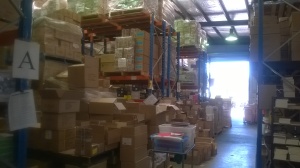
Inside the DJA warehouse

The book industry is a complex mosaic, made up of many interlocking parts and links. People outside it can usually name at least some of the professions involved: authors, publishers, agents, booksellers, libraries..But anyone inside it knows there are many other professionals involved–professionals who also provide essential links between a book and its readers. And one of the most important of those links are the people who make sure books get to bookshops, whether bricks-and-mortar or online, and to libraries: distributors. Without distribution, whether handled inhouse as with many big publishers, or co-operatively between publishing houses, as with others, or with independent operators, no book would get to its intended readership. Or at least very few people would know about it. And yet, despite the importance of distributors, many authors aren’t clear on what is involved in the business of distribution, and of course most people outside the industry have no idea about it at all.

Distribution is also one of the main issues crucial to the success or otherwise of small publishers and self-publishers(or independent authors). Without good distribution, books published by small presses and self-publishers can easily get lost, unnoticed in the tsunami of publications distributed by the big operators. And to try and distribute your own books nationally, outside of your own local area, is both
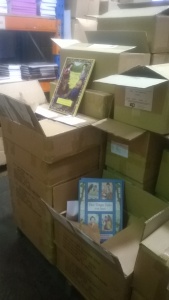
Christmas Press books in DJA warehouse

Christmas Press books in DJA warehouse

very complex and prohibitively expensive. So when we started Christmas Press in 2013, distribution was very much on our minds–and on the recommendation of many bookshops, we contacted the major independent distributor, Dennis Jones and Associates, and have worked with them ever since.

So today I’m publishing an interview I did recently with Dennis Jones himself, co-founder with his wife Lea of DJA, which gives a fascinating picture not only of how distribution works, but also of a long career in the Australian book industry.

Dennis, you had a long experience in the Australian publishing industry before you set up DJA. Can you tell us about that?

I was very fortunate to be employed by William Collins in 1970 as an executive trainee working from the Melbourne office. One of 150 or so applicants, I worked initially under John Cody who was one of the directors.

By 1972 and due to William Collins purchasing the Leutenegger / Ungar owned Forlib national wholesale businesses, I became responsible for the State office of William Collins. This acquisition gave William Collins the strongest book distribution structure in Australia as well as stock holding warehouses across Australia, including one in Launceston and one in Hobart. From 1972 to 1991 I was in various management roles in both Melbourne and Sydney. The work was both breathtaking and exhausting, and it taught me the value of working with a team – some of whom you openly disagreed with and those who are still my friends today. My first Managing Director was Ken Wilder who together with Stephen Dearnley, Anne Bower-Ingram and Sir William Collins were at the cradle of Australian publishing (even though it was a foreign-owned business).
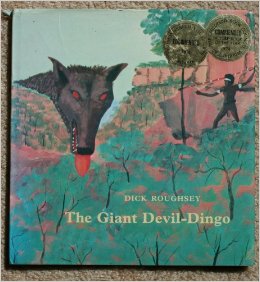
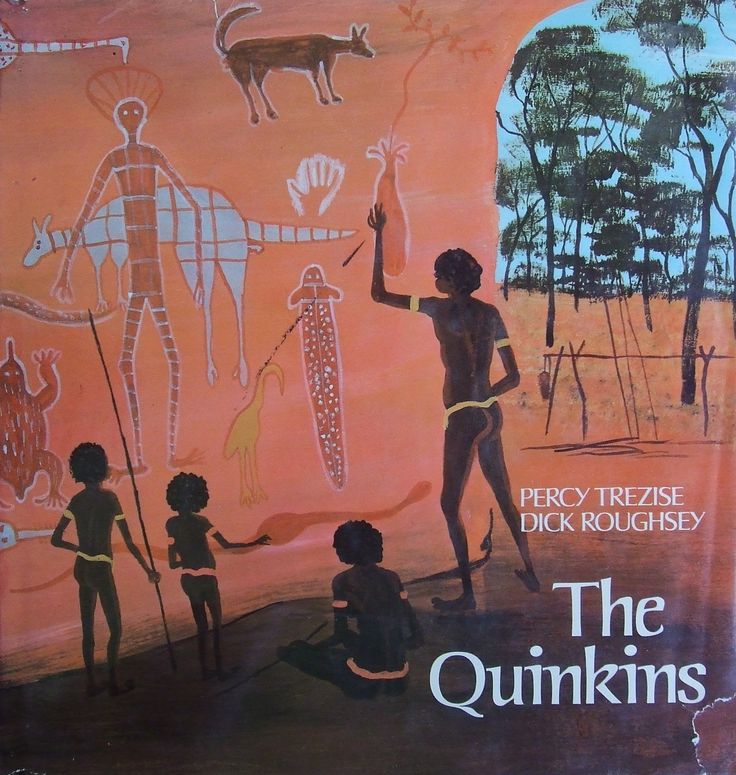
giant devil dingoTo meet and work with the likes of Dick (Goobalathaldin) Roughsey & Percy Trezise, Xavier Herbert, Graham Pizzey and so many more was amazing! It enabled me to know the Oldmeadow family, Albert Ullin, and booksellers who were as strong on stewardship then as their contemporaries today. I was also fortunate to work with Judy Taylor (The Bodley Head) when she visited Australia. Whilst Collins had the Commonwealth- rights mass market content like the Dr Seuss brand, the Bodley Head had wonderful authors and illustrators like Maurice Sendak, Tomi Ungerer and Pat Hutchins and so on. It was while I was with  Collins that I quinkinsmet memorable authors like Sir David Attenborough, Jackie Collins, David Kossoff. Theodor Geisel (Dr Seuss), Michael Bond (Paddington): there were so many it was a time to really test the strength of the business and our interest in books and reading. We also had amazing in-house publicists who were engaged with our peak book objectives intrinsically. The other side of working in a large organisation was the organisation! We had about 350 employees across distribution, marketing, sales, publishing, and the usual corporate structure. So many of my work colleagues went on to be leaders in the industry in the years that followed.

How and why did you set up DJA?

I was midway through a Grad Dip at Swinburne when I became immersed in a group of aspiring people who in a way tempted me to make some of my own career decisions; I also had a young family and was preparing to uplift them again to return to Sydney living for a second time… This return for one reason or another did not eventuate and so we stayed in Melbourne. Something happens to you when you are in your early 40’s, you do have brain snaps and enhanced vision of your future importance and relevance! At this time (late 1991) there was Gordon & Gotch as a book distributor and very few privately owned distribution businesses. So I envisaged resigning and starting a national book distribution business with my wife, $6000 in cash and complete ownership of our domestic home. In retrospect a real act of brain fade!

HarperCollins as it had become farewelled me in the style that a major business can for one of its sons, and we gave up many things in order to survive in our new venture. We had no marquee imprint or author to start off with, other than the Walshe family’s Australian Large Print list. Still if you can take pain you can grow a business! I was fortunate as over these early years I made continual representations to Ingram in US and eventually they retained me for representation in ANZ in 1993. The business with Ingram over the years grew 20 fold and enabled us to grow a business working only with a mix of Australian and imported physical books as well as representation via Ingram. We quickly dropped the foreign books stocked locally as  by then there were so many businesses queuing up to collect foreign lists I thought we should go the other way and solely focus on Australian works. I also figured we could live frugally for many years on the meagre profits (or losses) if we controlled our overheads. Sometime in the mid 1990’s we shifted into our first warehouse.

book dja 1How does distribution work for both small press and self-published authors?

The authors / publishers lists are made available to any outlet via our daily onix files, our monthly new title order forms (available in print, ipad version, or electronically). The books are also offered to the booksellers across Australia by actual sales people who are either employees or sales agents. The publisher / authors deal with us either in a timely structured manner or not. The books are taken on a consignment basis and we pay on net sales. Sounds simple or does it? A small percentage of suppliers do not have commercial interests at the centre of the works they offer.

Across print, eBook, Print on Demand we have about 5000 Australian titles – some are across all three of our “platforms” We have no issue with size of publisher big, small, book dja 2specialized, digital only or the lot. As go into 2016 and with the arrival of global destination online vendors we can literally supply anyone, anywhere. Our eBook aggregation is something we have grown for 5 years. We now outrank all of the foreign eBook aggregators because of a good blend of local and global customers.

It also helps if you enjoy reading and talking about books!

As I write this I am aware that our key times for 2016 positioning of new releases are almost on our doorstep. The behemoths are already manouvering for the end of year sales; we frankly struggle with being  that organised as it is the nature of meeting the needs of publishers and authors as they choose to manage their output.

What are the challenges and pleasures for you and your team in the relationships with bookstores and libraries?

The pleasure comes from the challenge of success and the implications of containing opportunity. It is not an inexpensive experience funding a business like this.

lion rampantI remember the word “disintermediation” from some year ago and it terrified me. Well, we still are not members of TitlePage, nor are we members of any industry body as they simply don’t cater for a business working with all comers.

And we have not been “disinter mediated”!

Pleasure – look at those daily orders from the Library Suppliers, the online businesses – each morning the frenzy on the floor of the business to fill those orders where we are supplying actual demand and not speculative placement of books in a sale or return sense.

One challenge is also putting a monthly range to the market place in a hybrid situation of curating foreign published works as well locally authored works by Australian publishers. To retain credibility we do have be driven by the commerciality of our books to the booksellers, otherwise we are simply guilty of failing the time given to us by the booksellers.

I will extend the question to include our eBook booksellers.

We have very good relations with the eBook booksellers – this allows us to market, promote and price with consumers in mind.  The pleasures are to see our content consumed in a multiple platform sense; print, eBook and Print on Demand to consumers globally. a-bitter-harvest

How do you decide whether to take on a publisher, whether small press or independent author?

Because of our Australian-only policy we have a commercial demand for more content, providing we know where the demand will come from as well as being at a price consumers will meet in the format they determine for  that content. If it was an Engineering list we would have no idea who our principal resellers would be, if the price exceeds typical selling prices we won’t be able to get the booksellers to be moved top stock and sell. Then if it is something that is best suited to reflowable style – do we have eBook rights; providing we have global eBook rights.
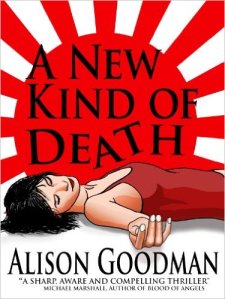
new kind of deathWe find it difficult to work with creators who have chosen some of the foreign publish for profit businesses as our model requires mostly global agreements.

One of the major buying sectors is the library sector in Australia and they like fiction, providing the price, format, and subject is within their profile areas.

DJA carries a very large range of titles in many different genres and niches.

Are there areas that are easier to sell than others? Are there any titles that stand out for you, over the years?

A snapshot of the years would list three titles; Fat or Fiction (weight loss) where we sold over 50,000, Surfers Travel Guide (An Australian Surfing Book) sold over 50,000, Secret Girls Business (for young girls) continue to be a standout year after year. Weed Foragers Handbook – continual demand and publisher reprints, and time will tell as I feel Arthur Upfield will be on this list as well. The Upfield (Bony Series) have had extraordinary global success over the last 18 months as eBook, and the next “platform” for them will be short-run print, either via POD, or short run offset.secret girls

And the Tony Melvin / Ed Chan series on How to Legally Pay less Tax in Australia: so successful that Harper bought the rights from the authors!

Maybe the right answer is that where we have generous authors, publishers and publicists we can have a common passion which is always the right starting point; providing we have the right price and we know the place where the consumer demand can be satisfied.

How do you view the changes in the Australian book industry over the time DJA has been operating? And–wearing your prophet’s hat!– what further changes do you think might be coming?

cool magic tricksThe changes have been mostly  beneficial to consumers, no longer do you have to wait for the boat to dock from UK, no longer do you have to be at the behest of local list balancing by the majors, you can take your content in more than one form and the internet tells all. Whilst I would not use the internet to self diagnose illness it provides the location and availability answers for all book needs.

On the horizon?

*Government revenue building and the basic unfairness of local costs to support Government expense mayhem.

*We “the taxpayers” own Australia Post – so why is it cheaper to deliver from a foreign business to a consumer or bookstore in Australia than it is for me to deliver to the next suburb?

*Our local on costs are going to rise  more quickly than business on costs in other parts of the world making us more expensive in an ongoing sense.

*Consumers decided years ago whether to buy local or buy foreign – this won’t change.

*The calibration of what is occurring with process of people writing, publishing and selling. We really have very little understanding of that change that occurred visibly overseas 10 to 15 years ago that wicked-wizards-and-leaping-lizardshas be largely ignored in Australia – this process of what is branded “self-publishing” will continue to grow.

At the core is: Read lots and sell more!
Paris literary studio 10: Martine Murray

Award-winning children’s author and illustrator Martine Murray was resident at the Keesing Studio with her two year old daughter, and in this interview writes about how that influences the experience.

When were you resident in the Keesing studio? And why did you decide to apply?

I was a resident in 2008. I applied because I could. I was a single mother with a two year old living in the suburbs of Melbourne so the idea of Paris was just exciting and large. It seemed worth making the most of the rather unstable employment that writing is by taking it elsewhere and since I speak a workable French, Paris was a rather appealing elsewhere to be.

What were your first impressions of the studio, and its neighbourhood,and how did that evolve over your residency?

To be honest when I walked into the studio I didn’t swoon. It was a large room with a dark green linoleum floor, a fluorescent light and a single bed–with all the tone, character and proportions of a

Jardin des Plantes

Jardin des Plantes

dormitory! However, the neighbourhood was immediately enthralling and I was instantly uplifted. The room became home and I got used to how it was and we went to the flower market and brought some cyclamen to put on the window sill which means I often think of that room whenever I see cyclamen. I also remember meeting an old woman there at the flower market, with whom I spoke for quite a while and who was very elegant and gentle and represented something very likeable about Paris and its culture.

What were you working on when you were there, and did your original vision for it change over the course of your residency?

I was working on a novel, which has changed considerably since and has spent some time on the shelf while I finished other projects, one of which was a novella for a collection of stories based on fairy tales, Tales from the Tower. Because I was in the studio with my two year old daughter, I was always home in the evenings and often looking out the window onto the dance studio across the narrow street. I was madly wanting to run over and join the tango class. This made me feel sort of trapped, as if I was looking on an outside life that belonged to others. So I adapted The Tin Soldier and turned into a tale of a boy with a limp who is trapped in a tower… Later I turned that into a longer novel.

Were you there alone, or with a partner? In either case, what were your favourite things about living in Paris for six months, and your least favourite things?

I wasn’t alone, I was with a two year old, which was like being both very alone and very fused with another. My least favourite thing was having to negotiate a flimsy pusher over cobblestones, down metro steps, through turnstyles and crowds etc. My favourite thing was just… Can I say Paris? I loved the sense of continual discovery that it offered, the layers of life that had been lived there, the museums, the little exchanges, or the smell when you walk into a boulangerie, the custom of kissing, the habit of drinking an aperitif, the little round tables facing the street….

What was it like as a writing/ideas environment?

For me anyplace in which I am a stranger is good because it makes me see the world anew. In some ways it was hard to write in Paris, because I was always wanting to be out in it, rather than at my desk.  But at the same time there was so much to experience that I was stimulated and full of ideas.

Tell us about your favourite places in Paris–sites, culture,food.

Jardin du Luxembourg

Jardin du Luxembourg

Having a small child meant I got to know the parks pretty well. The very grand and lovely gardens with their green chairs and sandy floors; Jardin de Luxembourg, Jardin des Plantes, Jardin des Tuileries. Also the smaller ones like the playground out the back of Notre Dame which had a swing and was worth it for the horse chestnuts in spring. And the Square du Temple or the Place des Vosges. Other places: Le Marche des enfants rouges, wandering up the rue Vielle de Temple, a small café called Au petit fer au cheval. And the Palais de Tokyo. Centre George Pompidou. L’Orangerie.. for Monet’s lilies. La Palais des Decouvertes…. We spent time watching the buskers on the bridges and eating apple tartes.

cafe parisWhat experiences stand out for you during the residency?

I met a lot of lovely people at the Cité, and because all of them were artists of some sort, often their work too had an impact on me too. Clare Dyson who is a dancer/choreographer from Brisbane made a work that required all of her friends there to stand in front of a camera one by one holding a piece of paper with a word on it that described Paris for them. I don’t know why, but it still moves me every time I see it. Possible because it captures a time and experience of being at the Cité that always has about it both the flavor of Paris and the sense that it and the other artists you meet there, will all be a significant moment in time for you, but not one that continues.

The studio is also next to the Holocaust Museum. On a commemorative day they read out aloud the name of every French Jew who was killed by the holocaust. This list of names is so long that it went all night and I don’t think I slept much through it. It was such a long, steady, sad note, and the relentlessness of it really had an impact on me, as did just the fact of seeing the schools in the Marais

Musee de la Shoah(Holocaust Museum)

Musee de la Shoah(Holocaust Museum)

district which had plaques citing the names of children who were taken from the schools.

On a lighter note, I do remember my daughter waking up and suggesting we go have a crème brulée for breakfast. And then her always running down our street to the heavy steel gate and climbing up on it so that she could go for a ride when it opened. Since we are now living in a small village in France for a year, I took her back there last week, to the same gate, which as a ten year old, did not offer quite the same joy.

Has the residency had a continuing impact on your work, and if so, in what way?
Yes, I imagine so. It was a very enriching experience. That always has a continuing impact.

Paris literary studio 9: Marion Halligan

Today, Marion Halligan, distinguished author of novels, creative non fiction and short stories, recounts her experience of a Keesing Studio residency.

When were you in the Keesing Studio? Why did you decide to apply?

I was there in 1991. I decided to apply because I had lived for several years in Paris, and love it, and wanted to go again. I think I didn’t get offered it, but then somebody pulled out and I did.

What were your first impressions of the studio, and its neighbourhood,and how did that evolve over your residency?

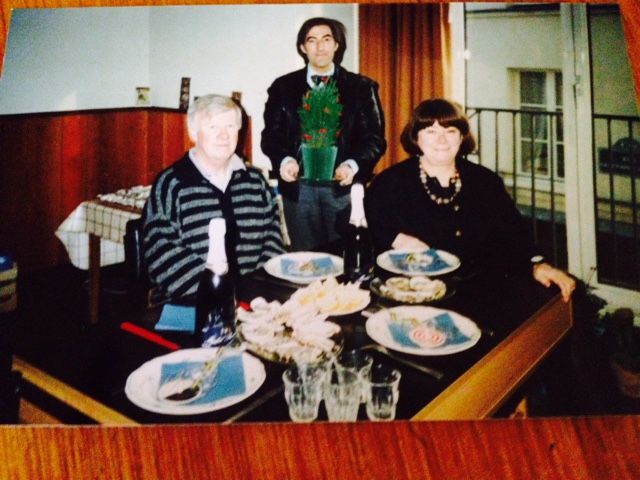
They were wonderful. I understood what a glorious address it was; put your head out the window and there was the Seine, in the other direction was the Marais. The people were a bit grumpy and the space exigent, but that’s Paris. There was only one table for working and meals and I hate having to clear my work away, but Jean-Paul Delamotte lent us a small wooden one which was terrific. In my

Marion, husband Graham, and a friend in the studio, 1991

Marion, husband Graham, and a friend in the studio, 1991

novel I had my heroine tie the two singled beds together with ropes of plastic bags but I didn’t think of that at the time and they had a tendency to skate apart and interleaving the single sized sheets and blankets wasn’t hugely successful. But I never lost my sense of what a fabulous place it was to live.

What were you working on when you were there, and did your original vision for it change over the course of your residency?

I was first of all working on the proofs of Lovers’ Knots. It has the most expensive phrase of any of my books. The editor queried the chronology of ‘hippies in Nimbin’, she was afraid the novel was set too early. It took a number of long distance phone calls to clarify (before the days of Google) and I finally came up with ‘people living on a disused dairy farm near Murwillumbah’. Then I started writing The Golden Dress, which I conceived there and wrote quite a bit of; it began with the clochard (tramp, homeless person, there’s no real good translation) who at that time was sleeping in the underground parking station opposite (the Cîté building hadn’t been started then) and wandering Paris in the day. Jean Kent was there shortly after me and she has some poems on the same subject; an interesting comparison. I found myself torn: if I was home working I thought, I should be out experiencing Paris, if I was out experiencing Paris I thought I should be home working. I got to know a visual artist, Ron McBride, who had none of these worries, he was out and about all day, in galleries and just looking at the city, and I finally did more of that. I worked very well on the book; since I thought of it there it developed out of that and I finished it when I got back.

Were you there alone, or with a partner? In either case, what were your favourite things about living in Paris for six months,and your least favourite things?

My husband was there most of the time. I used to say, the only thing worse than having him there would have been not having him there, which of course was true but simple-minded. He was a French scholar and had his own connections with Paris, he’d been a student at the Ecole Normale Superieure and could work there. And he was on long service leave and didn’t feel a need to work too hard. He did a lot of the housework, the shopping, went to the Laundromat, washed the floor. As it dried you could see that dust already sifting down on to it. We got on well, the space wasn’t really a problem, though I know other people found it so. Tim Winton with wife and two children hated it (see The Riders) and didn’t speak French; it is hard for a writer not to be fluent in the language of his surroundings. I think I turned the perception of the place round; before me people complained a lot. I pointed out that for that address in Paris the space was to be expected, that it was a wonderful area to live. That the whole thing was a fantastic privilege.

In my day you only got the studio, no money to live on. Mme Bruneau the director whose husband had built the place was very fierce; she wouldn’t speak English, made you work on your French. When Brian Matthews who was chair of the Literature Board at the time came to see her he asked Graham along to translate. Wonders: she could speak excellent English. She was trying to persuade him to buy another apartment; the King of Morocco had just acquired a second. I think the Board thought one was enough. She told me I could come and stay anytime if there was a vacancy; I would have to pay rent of course. But when I wrote and asked she didn’t answer.

What was it like as a writing/ideas environment?

Full of stimulus. I looked out of the window and ideas came. So much to see: the clochard, the sculptors welding in the courtyards opposite, people coming for Jewish ceremonies in the centre next door. Music, classical, and haunting delicate Arab songs. And of course none of the usual responsibilities of home, garden, family.

Tell us about your favourite places in Paris–sites, culture,food.

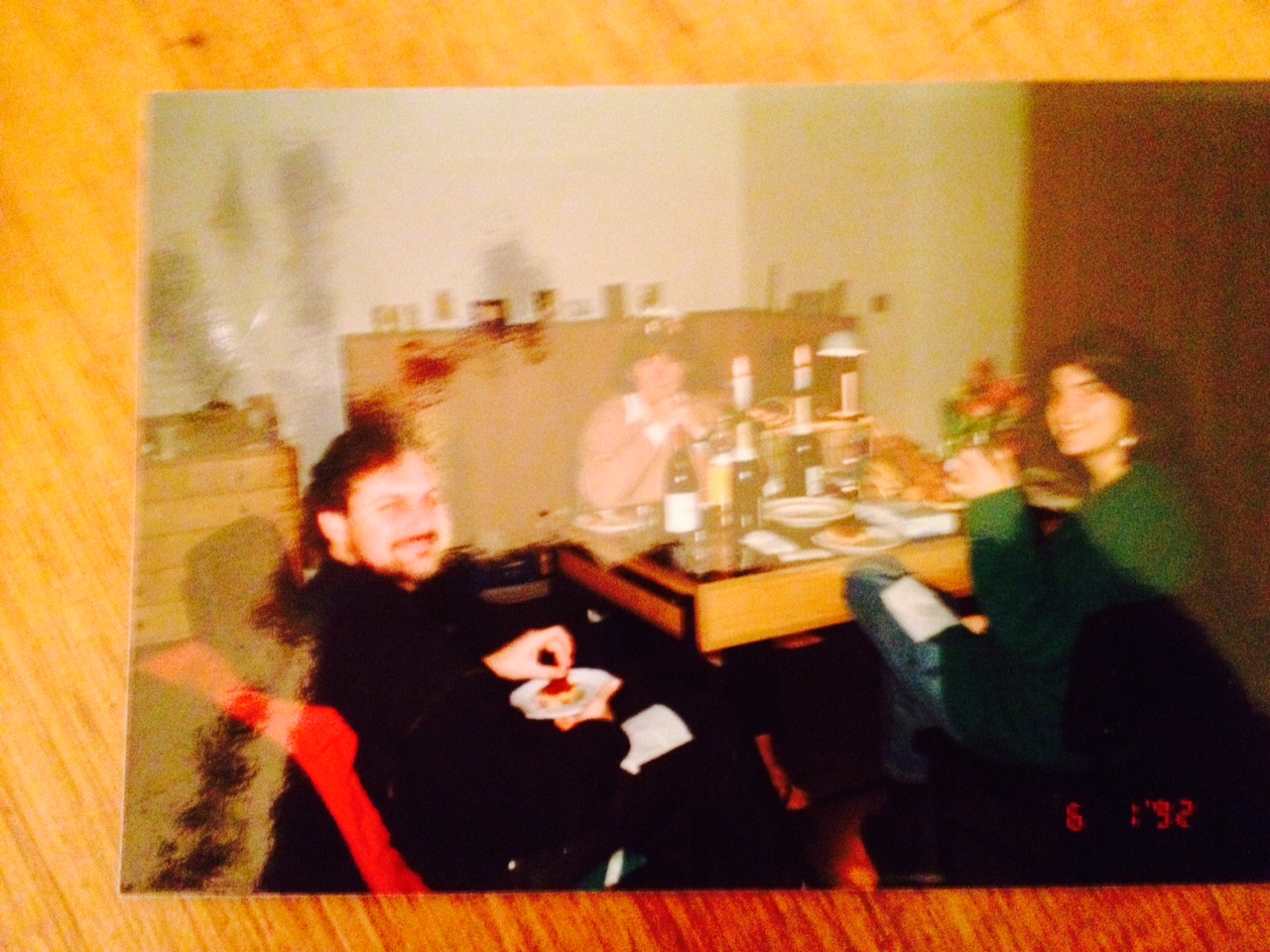
As I say, the address was marvellous. I loved going along the river, crossing the bridge to the Ile St Louis, calling in to Notre Dame, walking down the rue de Rivoli, shopping for food. Sometimes I caught the metro to the rue Monge which had a fabulous market. Shopping and eating in France is a great pleasure to me, and even the skimpy kitchen sort of worked. I made Christmas dinner for five; Graham spent all morning shucking five dozen oysters, friends brought venison which we pot roasted in the lovely le Creuset pot. Slight disaster: I bought a Bertillon ice cream the night before and put it in the freezer. It fitted, and it didn’t occur to me that the freezer didn’t actually freeze. It ended up a runny cream, not very nice, it was so rich it needed to be cold and firm to be palatable. I bought a little tree and covered it with red ribbon bows, and it is still happily growing in a village garden near Fontainebleau.

Twelfth Night celebration at the flat with friends.

Twelfth Night celebration at the flat with friends.

I loved the buses, I mostly went places by bus because of the scenery. On Sundays we went to free music concerts in churches, St Merri, St Louis de l’Isle, the chapel of the Salpetrière Hospital. Loved St Eustache, the market church in Les Halles, and St Gervais-St Proté just at the back. There was a sign on our nearest cross street saying Couperin had lived there. We ate delicious meals in modest restaurants. Called in to cafes for glasses of wine from time to time. Wandered in the Luxembourg Gardens and the Palais Royale. Graham rang up the Louvre every day for a fortnight to find out when the cabinets of Flemish old masters would be open. We’d hired a phone from a shop in the rue de Rivoli which was a very good idea. We had lots of interesting visitors; they couldn’t stay with us of course but we could go out for meals. One night we were walking home from a restaurant with Robert Dessaix and he stood and laughed his head off while I ratted round in a large box full of coathangers put out for the rubbish, on the pavement in front of an elegant dress shop. I got a number of fine wood and metal ones; I wonder are they still there? Robert said, Wait till I get home and tell people about Marion Halligan scavenging in the rubbish in Paris. I used to scavenge a lot, people put out things useful for me, like a stout herring box I used as a bedside table and outside a florist some long twigs very handy for stopping the shower curtain billowing in and clammily embracing the bather. It was all a great adventure.

What experiences stand out for you during the residency?

I think the main thing was simply living there. I have always liked doing that when I travel, living like a local. Walking round the quartier, going into churches and museums (like the Picasso museum) and we had a card to get in free which was wonderful. I like the simple domestic life. We had a Green Guide to Paris and wandered around – I suppose we were flaneurs. Writing for me is a lot about contemplation, and there was space to do that.

Has the residency had a continuing impact on your work, and if so, in what way?
I think so. The Golden Dress (I wanted to call it Shagreen) was an important book for me, short-listed for the Miles Franklin, I learned a lot from writing it which has stayed with me. I have spent quite a lot of time in Paris since, but that time was very special. I was offered an extra month since somebody had to postpone coming but I refused it, I was ready to go home after my allotted time. The thing about being somewhere like Paris for me is the perspective it gives on my own country; the distant view is very useful. The Golden Dress has lots of scenes in Paris but it is a book about Australians and a lot of it is set in Australia. It is not really about the clochard but about an Australian painter who becomes himself the clochard he sees out the window. For me writing about a painter is a way of writing about a writer. Everything a writer does feeds into being a writer; when I was doing my tax I used to say that my whole life should be a tax deduction, since that was where the work came from.

Paris literary studio 8: Matthew Condon

Prize-winning novelist and journalist Matthew Condon looks back on his time at the Keesing studio.
When were you resident in the Keesing studio? And why did you decide to apply?
I was lucky enough to secure the Keesing studio in early 1993, and spent a wonderful seven to eight months there in the Marais. I had applied without a thought that I’d actually secure a spot at the studio, and was stunned when I did. I had published my second novel in 1991 and wasn’t getting any traction on the third, so I had hoped a period in Paris, a completely new environment, might kick-start the book. It did.
 What were your first impressions of the studio, and its neighbourhood,and how did that evolve over your residency?
I loved the sparseness of the studio, stripped down to the bare essentials so that work was the priority. Outside, you stepped straight into the thick of the Marais, or could walk a short distance to the Left Bank. It was so rich outside that the workspace demanded simplicity.
What were you working on when you were there, and did your original vision for it change over the course of your residency?
I was working on a novel, The Ancient Guild of Tycoons, which was a satiric parable about Australia and colonialism and all the rest. The book was set on an island literally built out of the garbage of Empire. The leader of the island was a game show host. It was a spoof on Australian history and contemporary life, and I think that satire was sharpened because I was writing it out of the country.
During my time in Paris, I read through pretty much all of Patrick White. His brilliant eye and sharp tongue, I think, kept me on my toes.
Were you there alone, or with a partner? In either case, what were your favourite things about living in Paris for six months,and your least favourite things?
I had only been married to my first wife for less than a year when I secured the studio, and she left a relatively high-paying position to join me in Paris. I had a book to write and I think she found the experience at times lonely and disempowering, which was fair enough, although in hindsight it was ultimately an extraordinary experience for both of us, both good and bad.
We made a handful or brilliant friends while we were there. Other expatriates. Artists, writers and photographers from all over the world. A quiet dinner might end in a wild car ride around the Arc de Triomphe at 3am.
I loved settling into a routine. Coffee, a baguette and the International Herald Tribune for breakfast. The excellent table wine in litre bottles from the supermarket. And pre-emails, actually finding letters from home tucked into the studio pigeon-hole.
What was it like as a writing/ideas environment?
It was one of the best environments I’ve worked in. I had a strong idea for the book when I arrived, and I worked pretty much seven days a week on it during my time at the studio. My aim was to produce a first draft by the time my tenure came to an end, and I achieved that. I saw the scholarship as a singular opportunity to get the job done.
Tell us about your favourite places in Paris–sites, culture,food.
It was wonderful that the studio was just a relative short walk to the Louvre, the Picasso Museum, the Seine and Notre Dame, and the Left Bank, which we explored as much as we could. We did, quite literally, count our Francs on a daily basis.
At the time, also, Frank Moorhouse was writing Grand Days in Besancon, in southern France, and we visited one weekend and had one of the most memorable times of our lives.
After six months in Paris we’d made friends with locals and shopkeepers in the neighbourhood, had a small network of literary friends, both French and otherwise across the city, were eking out poor but understandable French sentences, and I at least felt I had made another home.
Then we had to return to Australia.
What experiences stand out for you during the residency?
I was only 31 at the time and even though I’d travelled throughout Europe and the United States etc. to that point, and had lived in Germany and the U.K.for my journalism work, I had never had the luxury of writing fiction full time, let alone in one of the world’s great cities.
It gave me a better understanding of the potential life of the writer. It was the first time I had been granted absolute freedom in my writing life, albeit for just six months.
I have never since replicated the excitement, the energy, the eagerness to begin a day’s work writing fiction.
Another thing. I learned very quickly that the French valued, indeed treasured, artistic pursuit, especially writing. No matter how lowly, obscure, or indeed completely unknown you were, they lit up when you told them you were a writer.
The other great experience was befriending a beautiful young French couple with a small child who lived on the Left Bank. They were sophisticated, worldly, sublime. Then  one day, while I went out for a jog, I saw the man in that relationship leaving a hotel arm in arm with another beautiful woman, this time on the Right Bank.
He caught my eye and smiled and winked, and kept walking. The wink said: a wife on the Left bank and a mistress on the Right; this if Paris.
I’m not sure if the marriage lasted.
Has the residency had a continuing impact on your work, and if so, in what way?
Only in the sense that I’ve wondered ever since how my work might have been different through the years if I’d been able to sustain, both financially and creatively, that freedom the studio gifted me.
It also gave me some sort of validation as a writer (something we seem to look for, permanently and forever, form wherever), and that I was on my way. At the time, it was one of the most important things to happen to my career. I still cherish the memories of it.
The book I completed there sold a handful of copies when published in Australia and has never been reprinted, but it remains one of my favourites, if one can have a favourite, because of the extraordinary context in which it was created.
I only need to pull if off the shelf and hold it, and I’m back in the studio, at my desk, looking out onto cobbled streets, watching the yellow street lamps glow at dusk, hearing the street symphonies of Paris, and I’d give almost anything to be back there again, blissful in the knowledge that with just a third novel I still didn’t really know what I was doing, but I was having a hell of a time doing it.

Paris literary studio 7: Emily Maguire

Bestselling novelist and essayist Emily Maguire was the Keesing Studio resident a year ago, and like Ursula Dubosarsky, experienced an event of great sadness to Paris, as she explains in this interview.

When were you resident in the Keesing Studio, and why did you decide to apply?

I was there August 2014 – January 2015. I applied in order to work on what I thought would be my fifth novel, a sprawling, multi-generational story with a strong French thread. As it happened, by the time I arrived I had put that idea aside and was working on a very different novel, An Isolated Incident, which I finished while in residence.

keesing studio 2014

Keesing studio at time of Emily’s visit

What were your first impressions of the studio, and its neighbourhood, and how did that evolve over your residency?
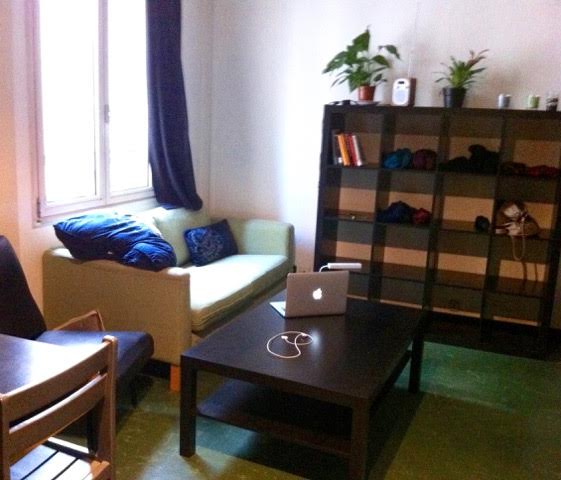
I had low expectations of the studio itself as I’d been warned it was very basic, so on arrival I was pleasantly surprised. Certainly it was basic, but I was delighted with how roomy it was (for central Paris) and how much natural light came through the wall of windows. I unpacked six months’ worth of stuff immediately and with my clothes hanging in the closet space, my books and photos on the shelves and my laptop on the table, the place felt far more welcoming and homey. My attachment to the studio grew powerfully over my time there to the point where I felt quite defensive about it. The exception was the bathroom which I grew to hate more and more with every water-spraying, floor-drenching, slow-draining shower.

emily maguire in paris

Emily in Jardin des Tuileries

My experience of the neighbourhood was similar, I think. I arrived on a sweltering Saturday at the beginning of August. Many locals had already fled for the summer holidays and so on my first walk around the area it seemed to be all red-faced tourists holding maps and shouting in English. Day by day as I walked and walked I discovered the back streets and connecting alleys, got lost and found my way over and over again. By la rentrée when the locals returned to the city and the school next door, the boulangerie on the corner and dozens of tiny shops and cafes that had been dark all month re-opened, I began the process of re-discovering the neighbourhood and soon fell deeply in love with it.

What were you working on when you were there, and did your original vision for it change over the course of your residency?

As mentioned above, I didn’t work on the novel I’d originally planned to write in Paris. I did, however, take copious notes and photos for that project, which I’m using to write the draft of that novel now, almost a year after I left Paris.

Were you there alone, or with a partner? In either case, what were your favourite things about living in Paris for six months, and your least favourite things?

My partner flew in for two short visits over the six months, but I was mostly alone. My favourite thing by far was being able to visit a different gallery, museum or theatre every other day. I spent many hours a week wandering the city’s art spaces and still didn’t see everything I would’ve liked to. There wasn’t anything I disliked about living in Paris, though the daily reminder that the French I had worked so hard on was gibberish to the locals was dispiriting.

What was it like as a writing/ideas environment?

Incredible. The studio itself – the light, the dancers across the lane, the church bells ringing out -the easy access to extraordinary works of art, the life of the streets and cafes where it’s entirely acceptable to spend hours over a single glass of wine and three lines scribbled on a notebook page, the heart-lifting wonder of walking through a city which, with all its history and relics could be a museum, but is instead living, breathing, ever moving. I barely slept, kept wide awake with inspiration and wonder.

Tell us about your favourite places in Paris–sites, culture, food.

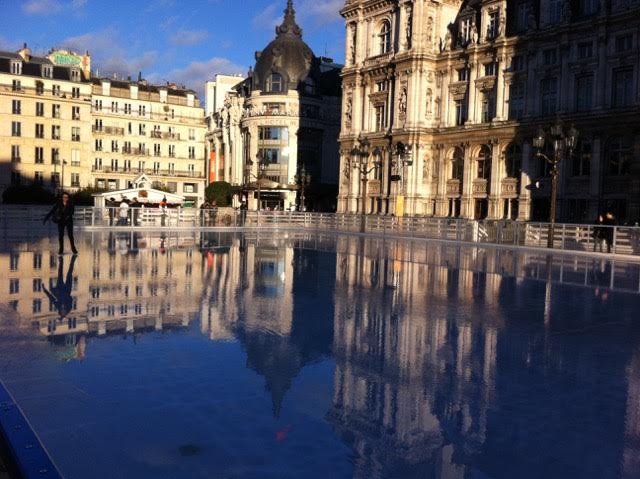
So many! Musée Rodin and Musée de l’Orangerie were museums I returned to throughout my stay. I loved walking along la promenade plantée, which is a long stretch of parkland and path high above the 12th arrondissement. L’ Ebouillante is a sweet little restaurant serving divine galettes, tucked away on rue Barres, very close to the studio. I quickly became a regular there. I also loved just hanging outside the Hôtel de Ville and people watching. When I arrived in August the forecourt had been transformed into a beach volleyball court and I enjoyed drinking

Hotel de Ville skating rink

Hotel de Ville skating rink (Pic: Emily Maguire)

icy cider and watching the action. By my last month, the same space was an ice-skating rink, the cider replaced by mulled wine.

What experiences stand out for you during the residency?

A terribly sad experience, the Charlie Hebdo murders and those at the Jewish supermarket a few days later, stands out, but so does the still sad but immensely heartening show of solidarity and love and peace that occurred the following Sunday. I hadn’t planned to attend as I am anxious in crowds at the best of times and had been deeply shaken by the week’s events. But heading back from the train station I was swept up by the enormous crowd   – there seemed no street, no space in the city, that wasn’t part of the demonstration – and I’m so grateful for that. I’ve never felt so safe and so connected as I did while carried along in that ocean of grief-stricken, defiant humanity.

Impromptu street memorial

Impromptu street memorial (Pic: Emily Maguire)

Has the residency had a continuing impact on your work, and if so, in what way?

Oh, yes. Apart from specific materials relating to the long-planned, finally-started novel I went there to write, the inspiration and comfort to be found in visual art was a revelation to me and something I’m working on incorporating into my practice now I’m home.

It’s not been terribly long since my residency, but I feel certain the impact will be long-lasting. And if not, well, I plan to return as soon as possible for a booster shot.