Guest post: Fiona Price on adapting fairytale settings

0914 Let Down Your Hair_Final Intro from Sophie:

I have always been interested in the use of fairy tales as an inspiration for fiction. Fairy tales are so rich that they can be mined again and again without losing any of their magic; and they are also so full of hidden depths that they can be interpreted in many different kinds of ways. I’ve used them myself repeatedly, in my fiction; and I love reading the work of other fairytale-inspired writers, such as Angela Carter, Tanith Lee, Kate Forsyth, Robin McKinley, Juliet Marillier, and many many more.

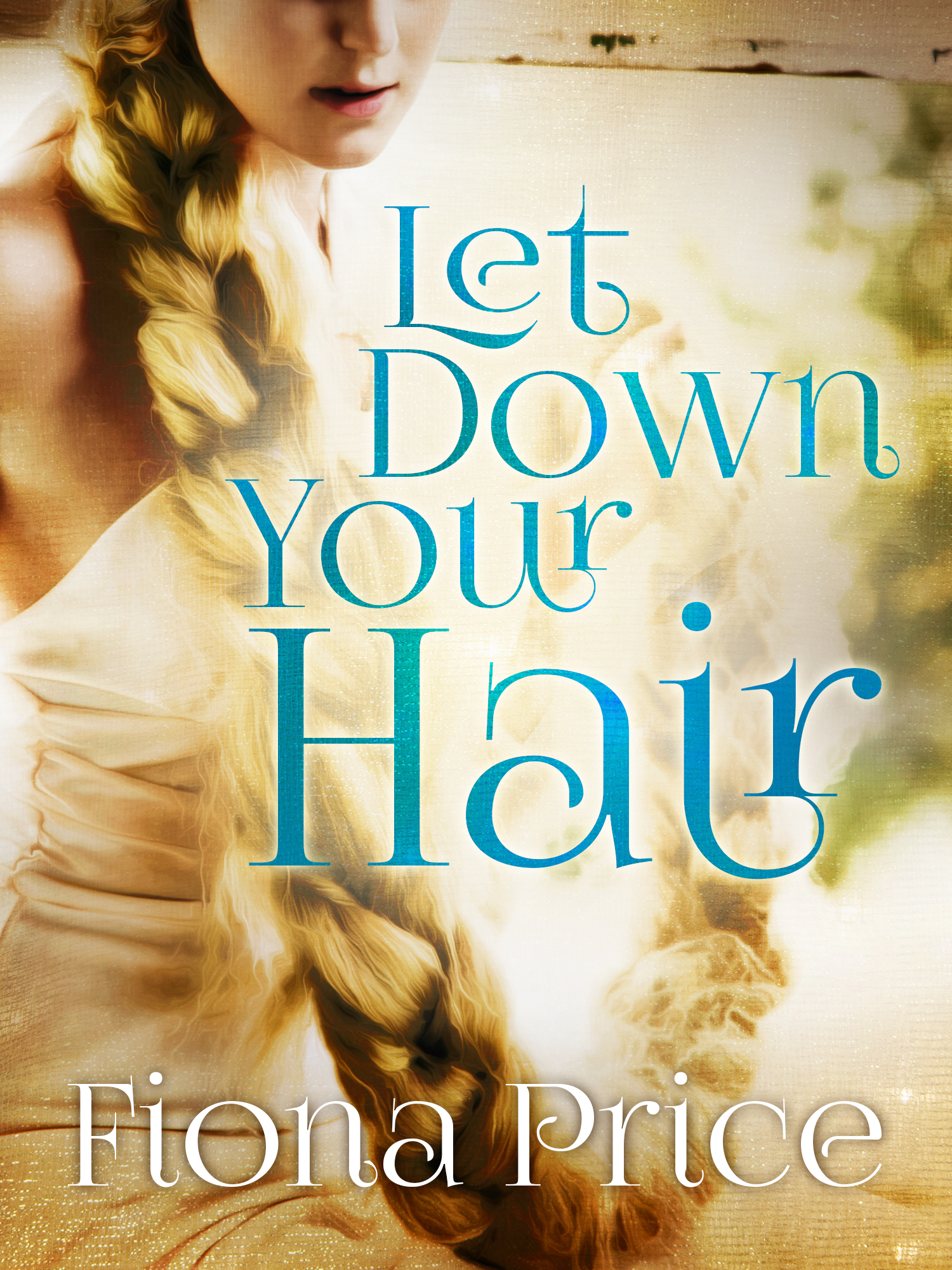
Interestingly, in recent times the theme of Rapunzel has come up several times: in the beautiful historical novel by Kate Forsyth, Bitter Greens; in one of the motifs in my own (YA) fairytale novel, The Crystal Heart; and most recently in a fabulous and clever modern adaptation of the Rapunzel theme, Fiona Price’s Let Down Your Hair. As the blurb for the book has it, it is a timely re-telling of the Rapunzel fairytale in the era of selfies and smartphones. And in this interesting guest post Fiona writes about how the setting she created helped to really focus the novel.

Welcome, Fiona!

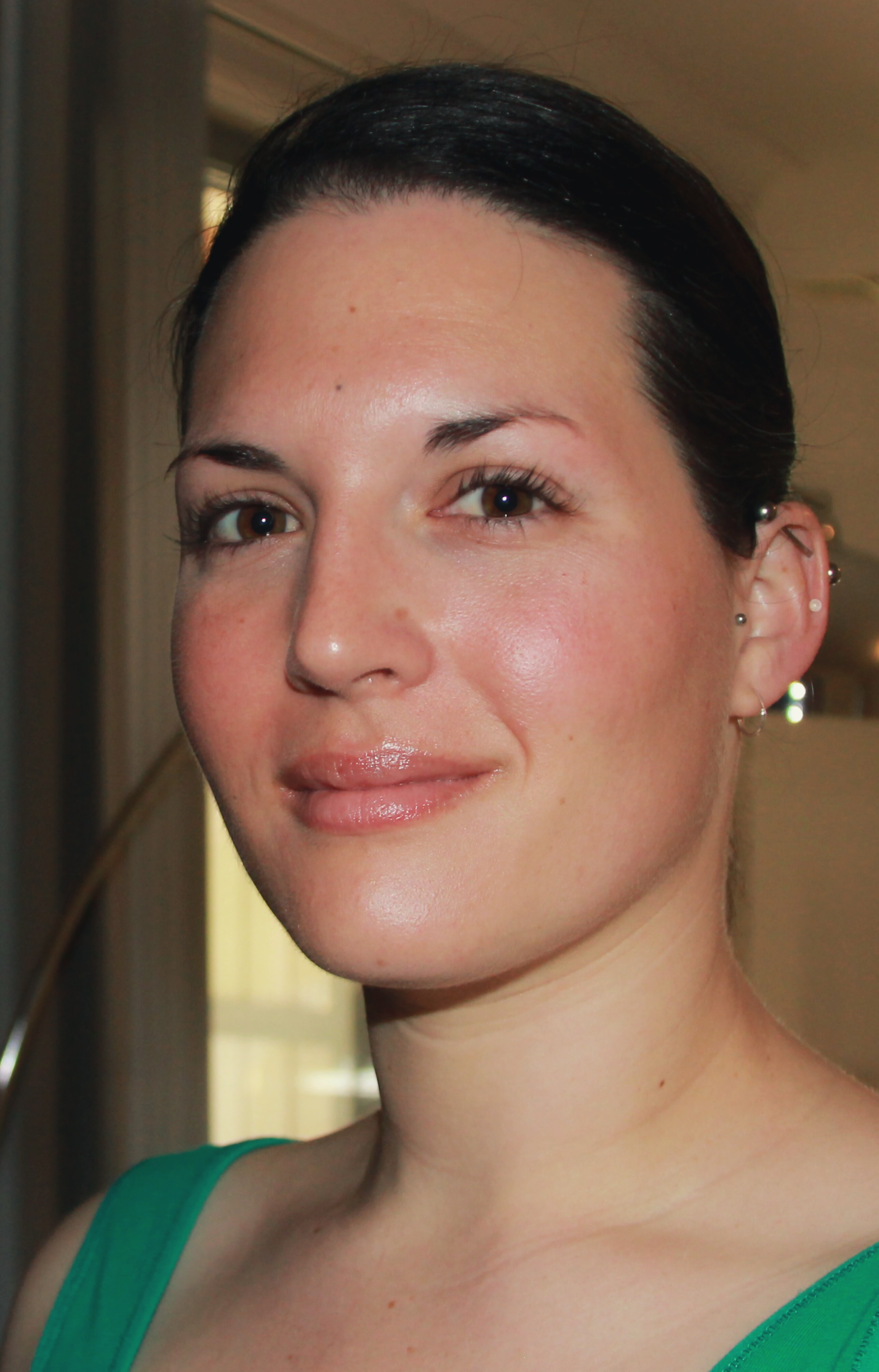
Author pic 3

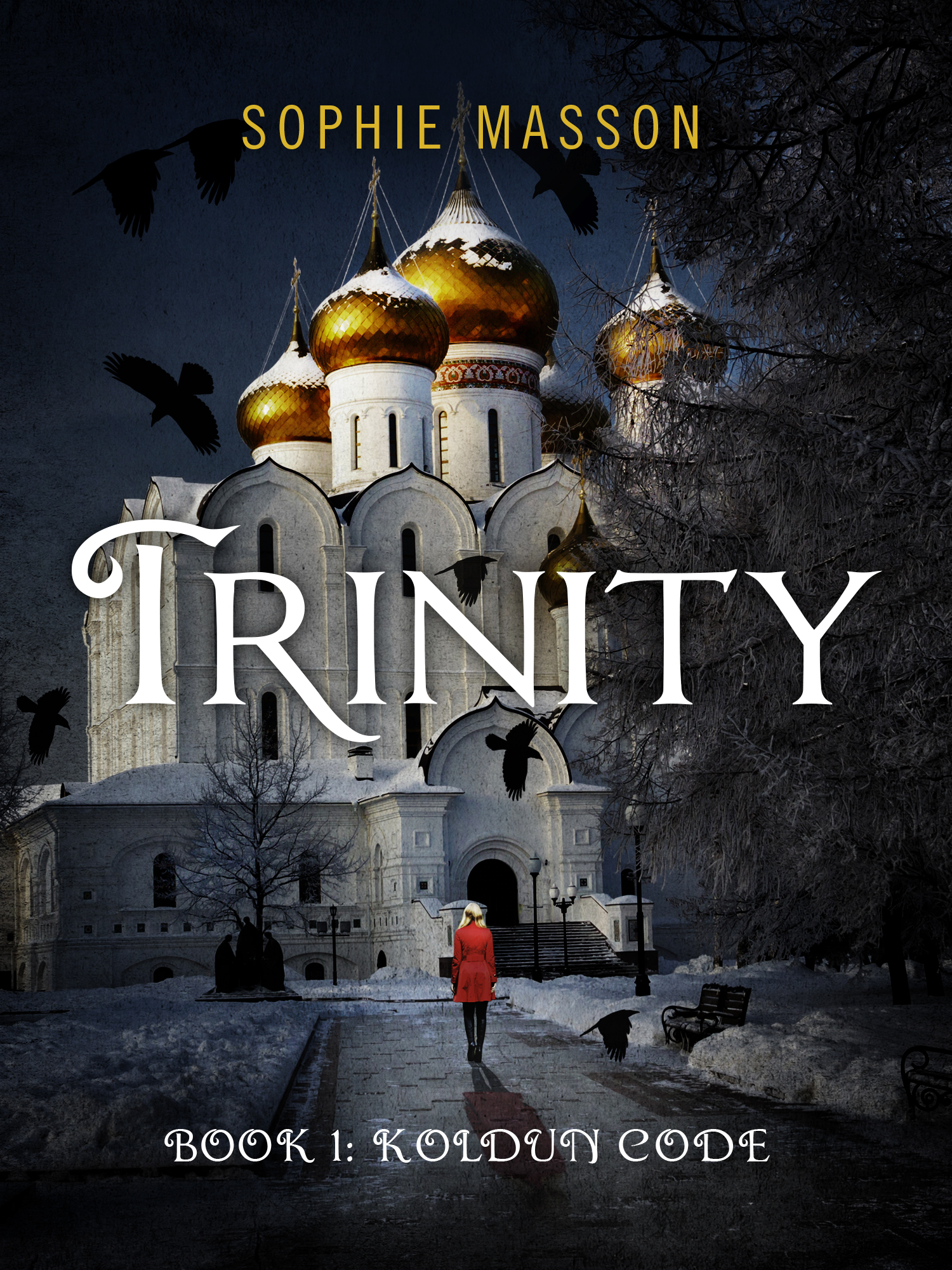
A big thanks to Sophie for inviting me to write a post for her blog. My name’s Fiona Price, and my novel Let Down Your Hair was published last month by Momentum. It’s a coming of age story based on the Rapunzel fairytale and set in the twenty-first century. I was inspired by the beautiful Russian building on the cover of Sophie’s latest book Trinity: The Koldun Code to write about the setting for my book.
When I decided to retell Rapunzel in the present, the first thing I needed was a tower. I considered a range of tall buildings for the job, and even toyed with making it a plane. But when I recalled the phrase “the ivory tower”, I decided I had to set Let Down Your Hair in a university. What better prison for Rapunzel than a place where scholars live lofty lives cut off from the world?
Setting ‘Rapunzel’ in a university worked on a couple of levels. For one thing, old-style prestige universities are built like storybook castles. Their buildings are made from ivy-covered stone, with giant libraries and halls lined with portraits. The other thing I liked was that it gave me an idea of who the witch was going to be. She’d be a senior professor, the type on a mission to change the world one conference at a time. A woman like the witch I created for my novel: Professor Andrea Rampion.
What would make a female professor lock a girl up in a tower? In the fairytale, the witch seems driven by the need to protect Rapunzel’s virginity. She locks Rapunzel up when she hits the age of puberty, and throws her out in a rage when she learns of Rapunzel’s affair with the Prince.
Protecting a girl’s virtue was never going to work as a motivation for Andrea. Most female professors would see dwelling on girls’ sexual behaviour as dated and patriarchal. I worked around this problem by shifting Andrea’s focus to something more progressive and intellectual: protecting her abandoned granddaughter Sage (my Rapunzel) from the sexist messages in the media.
Shielding a girl from all sexist messages wouldn’t be easy today. Sexualised pictures of women are on every smartphone, billboard and TV. Andrea would have to be ruthless about controlling everything Sage watched and read. She’d also have to monitor Sage’s company and movements, so she didn’t hear those messages anywhere else. Doing these things would cut Sage off from the world as surely as locking her in a tower.
What would Sage be like after twenty-two years of Andrea’s regime? With so few distractions and a dedicated teacher, she’d be brilliant at all things academic. Politically aware, with the ability to spot male privilege at seventy paces. But when it came to youth culture, technology and men, she’d be hopelessly ignorant and naïve. And both terrified and thrilled when she looks out a top floor window and a naked young man smiles up at her.
Once I’d found my tower and cast my main characters, I needed to think about the wilderness. In the fairytale, this is where the witch banishes Rapunzel when she learns of her affair with the Prince. When ‘Rapunzel’ was published, the ‘wilderness’ would have meant the forests of northern Europe. Presumably the witch hoped that Rapunzel would be punished for her sins by getting lost or attacked by wolves.
I let myself be guided by Andrea’s obsessions when choosing my modern-day wilderness. For Andrea, this would be a place where women are degraded and exploited by men: the red light district. Which is where Sage eventually finds herself, homeless, lost and surrounded by men on the prowl.
Retelling ‘Rapunzel’ as a present-day novel was a challenge I really enjoyed. If you’d like to take a look at Let Down Your Hair it’s available on all major digital platforms. Thanks again to Sophie, and I’d like to wish her and all of her readers a wonderful 2015!

Thanks, Fiona! And the same to you. (Sophie)

To find out more, check out Fiona’s blog: dressingthesalad.wordpress.com

Follow her on Twitter: @FionaSLPrice

Using dreams in your writing

DSCN21310001 DSCN27170001The other day, I had one of those amazing story-style vivid dreams that when you wake up, you know is going to feature in a novel or story. And that’s exactly what’s happened: it’s gone into the Trinity sequel, and in doing so has pretty much cracked a particular problem I had with part of the plot. Those kinds of dreams are gifts, and they come rarely; but even smaller, less powerful dreams can help to enrich your writing, and so today I thought I’d reproduce on this blog, a workshop piece about how to best make use of those dreamy opportunities for your fiction! I first wrote it as a blog post some time ago, and it’s also been republished in my non-fiction ebook, By the Book: Tips of the Trade for Writers.

A short dream workshop

From time immemorial, human beings have dreamed–every night we go into what one of my sons’ friends once referred to as ‘those brilliant eight hours of free entertainment.’ And from time immemorial, writers have used images or scenes from dreams, or entire dreams, to enrich and expand their creative work in waking life. I’m certainly no exception. My night-imagination has always enriched my day-imagination. Several of my short stories have started directly as dreams, for example, ‘Restless’, a chilling ghost story I wrote not long ago, began as a really creepy and unforgettable nightmare. Another disturbing story, ‘The Spanish Wife’, a vampire story set in the 1930’s, started as a dream in which someone said, very clearly, ‘No-one took any notice of him till he brought home a Spanish wife,’ and that turned into the very first sentence of the short story. Images and scenes from dreams have also gone into my novels, and in one case, a very vivid and intriguing dream inspired an entire six-book children’s fantasy series of mine, the Thomas Trew series. It’s not always fantasy or supernatural stories that have sprung out of dream-compost for me, though; everything from family stories to thrillers to historical novels has benefited from it.
Over the years, I’ve learned quite a few techniques on how to best use vivid, scary, tantalising or intriguing dream sequences in my writing, and how to investigate them for best effects. Here’s a short workshop based on some of the techniques I’ve developed over the years:

*Think of a dream you’ve had. Any dream. It doesn’t have to be anything
exciting or unusual. Go back over the dream-scenes, as if you were a police witness being asked to remember an event. Who was in it? What did they look like? What were they wearing?
Were they people you knew or strangers? Were there any animals in it? What sort? What was the setting like? Indoors, outdoors? What could you see? Smell? Touch? Hear? Taste even? What were you in it—a participant, a helpless observer, a godlike figure?

*If you did something supernatural, like flying, what did it feel like, physically? (I’ve often had flying dreams and in them I feel a strong pull in the chest, arms stretching. Once I even woke up with what felt like an actual slight ache in the arm muscles—very spooky indeed!)
*Were there any machines in your dream? If so, what sort?
*Did anyone speak, and if so what did they say? Many dreams in my experience are like silent movies, with thought-subtitles and maybe some music, but a few have dialogue, even if it’s often minimalistic and quite enigmatic.
* Knowledge: Do you know why you were in that particular place, at that time? If you had some supernatural ability, did you know why? If there are interesting objects or gadgets in the setting of your dream, do you know what they can do, and why, and who made or used them? Backstory is very often missing in dreams, but is very important in a story, even if you only spend a few lines on it.
*Now, once you’ve written down as many descriptive details as you can about what was there in the
dream, think about what wasn’t there, and write that down. While you were dreaming, did you
know for instance why you or other people were doing things(even if it was a kind of weird dream-logic?) Did you understand the sequence of events? Was there a sense the dream was moving towards some conclusion, or just randomly jumping about? Motive, continuity and plot—all very important in actual stories—are often missing from dreams.
*Think of your own self in the dream, however you appeared in it: did you
recognise yourself? Did you feel it was fully you or something that was only partly you, or a stranger? Did characters behave randomly? Character development is usually absent in dreams
too though it very much needs to be present in a story.
*What about the setting? Were there things missing: for instance, if you were in a house, were there doors? Windows? Furniture? If you were outside, was anything odd: for instance trees growing upside down, or a wall of water appearing out of nowhere?
*Now put those two things together—the things that were there, the ones that weren’t—and you have the beginnings of a real story framework, where the wild imagination of the night and the more disciplined one of the day cross-fertilise and turn into something amazing and wonderful.

A short story for the holidays: The Great Deep

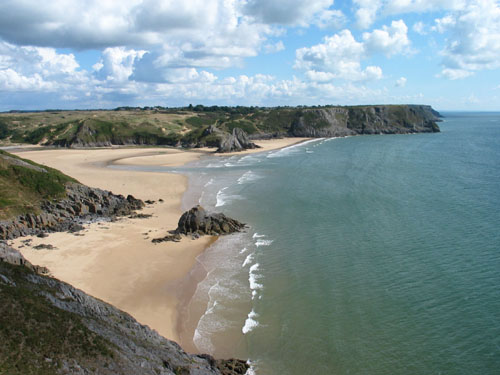
DN-SN-86-00740 welsh cliffs


This story was triggered by something I read during the coverage of the tragedy of the downed Russian submarine ‘Kursk’ in the Barents Sea in 2000. It was noted that there had been other such incidents during Soviet times, and that the few submariners who had survived accidents of this sort reported feeling that when they were going up through the escape hatch through the layers of water above, they were entering a different world, out of time..
It is also very much inspired by traditional stories of selkies, which have fascinated me ever since I was a child.

Originally published in ‘The Mutant Files’ anthology(USA) in 2001, it was also republished in my collection, The Great Deep and Other Tales of the Uncanny. I hope you enjoy it–and a very happy and peaceful festive season to one and all!

Copyright notice: This story is copyright to Sophie Masson. It may be reproduced, with all proper acknowledgements, but may not be used for commercial purposes or adapted without permission. creative commons license


The Great Deep

by Sophie Masson.

Full fathom five thy father lies;
Of his bones are coral made;
Those are pearls that were his eyes;
Nothing of him that does fade
But doth suffer a sea-change
Into something rich and strange.
(from The Tempest, by William Shakespeare)

If it had not been for his son Henry’s broken heart, the Reverend Doctor William Featherstone would never have been on the remote little Welsh beach on that bright, fateful summer morning in the year 1712. If poor naive Henry had understood the nature of the light-footed, light-headed Imogen he had set his heart and soul on, Dr Featherstone would have been comfortably ensconced that day in his lodgings in Oxford, working busily on the notes for the latest chapter of his vast compendium of natural and unnatural history.
Now, a broken heart, despite the sufferer’s perception of it, is not usually fatal. But in Henry’s case, it very nearly was. The night after Imogen had laughed his love to scorn, Henry’s manservant Roley had found his young master insensible in his room, having taken what he presumed to be a lethal dose of laudananum—which fortunately it had not been, only enough to make him very ill indeed.
Henry had shown little gratitude at being pushed back into the world. ‘Why didn’t you leave me to die?’ he had cried out to his father from his sickbed.
‘You could hardly expect me to do that,’ pointed out his father, reasonably. ‘You are my only child, after all.’
Henry sighed bitterly.’Nothing in life has any savour any more, for Imogen will never love me; worse, she despises me.’
‘Why then, return the compliment, with interest,’ said Dr Featherstone, briskly.
‘Oh, father, how can you speak thus! But then, you don’t understand about love, at your age,’ said his son, closing his eyes .
Foolish, commonplace words: but they had stung Dr Featherstone deep inside a place he had thought carapaced long ago. He looked at his son’s face—the skin very pale, the dark, soft, cropped hair, the long, dark eyelashes curving on the hollow cheeks—and for one terrible moment, saw the face of his beloved wife Cristin, Henry’s mother, lying there in her last illness. ‘Water on the lungs,’ some quack doctor had called the strange illness that had made her waste away so quickly. He had not thought of her for years; had blocked her picture away from his mind. But now he spoke quickly, sharply, words he had not thought through, that he had no idea had been in his mind at all.
‘As soon as you are quite well, we will leave for Wales,’ he had said to Henry, making the young man’s eyes fly open again, and dispelling the grievous illusion, for Henry’s eyes were blue as Cristin’s had been dark brown and combative as hers had been gentle.
‘Wales! Why, Father…’ Henry stopped, confusedly. Perhaps he regretted the words he’d uttered; or perhaps he merely thought his father was acting as fathers do, according to their sons: in the way of another alien kind, another, mutant race.
‘I intended to go there this summer, in any case,’ said Dr Featherstone, in a willed return of his earlier briskness. ‘And now is as good a time as any. ‘
‘We will stay at the Red House, like in the old days?’ Henry’s sudden smile was as sweet as Cristin’s had been, and Dr Featherstone’s heart turned over most painfully.
‘Of course..’ Fussily, to hide his feelings, he went on, ‘And I hope that Mistress Llewellyn will have aired it well this spring, or we may look forward to some rather damp evenings.’
‘I am sure she will have done,’ said his son, listlessly, closing his eyes again; and Dr Featherstone saw that though Henry had him fixed again as an old fusspot, at least now the danger—to both of them–was past. Henry had not forgotten Imogen, of course; but he had something to look forward to, again. The Welsh coast; the Red House; and the smells and sights and sounds of a happy childhood. The young can easily start again, thought Dr Featherstone, rather bitterly, as he tiptoed out from the sick-room, leaving the rest of Henry’s recovery in Roley’s capable hands. Not so easy for us older folks, who must forget, for sheer survival’s sake, what it was really like to live for love.

And so it was that both Featherstones, senior and junior, found themselves back in the cliff-top Red House, on the remote south-west coast of Wales, facing the Irish Sea. The house had reputedly been built some two hundred and fifty years previously by Cristin’s legendary ancestor, Morgan Meredith. Sealmen and women, strange and wondrous mutants of the deep, were not unknown on that coast of marvels, and all who knew Morgan had no doubt he was one of them. As a baby, he had been recovered from the sea by the fisherman who became his adoptive father. More, he swam just like a sea-creature, and was always to be found in or near that element.
When he reached manhood, Morgan had taken employ in the King’s navy; and the stories of his bold exploits at sea came home to his own place, and filled the people there with pride. When he returned home, he took a bride from amongst the villagers, and built the Red House on the cliff overlooking the great green deep. None knew exactly when he had died; for one day, in old age, he had simply disappeared, never to be seen again. It was said by all that he had returned to the sea whence he had come.
Despite—or perhaps because of—the strange stories about their legendary ancestor, the Merediths were well-liked and respected in the area. Cristin, last of the Meredith line, had been loved too, and her English husband accepted, for her sake at first; and later for his own. Continue reading

Meet My Character–it’s a blog tour!

Wendy JamesMy friend and fellow author, the wonderful writer Wendy James, has invited me on the Meet My Character blog tour.

Wendy is the author of six books, including The Lost Girls (2013) The Mistake (2012) and Out of the Silence, which won the 2006 Ned Kelly Award for Best First Crime fiction and was shortlisted for the Nita May Dobbie Award for women’s writing. She currently lives in Newcastle, New South Wales with her husband and two of their four children.

I’ve known Wendy for many years, ever since our youngest and her eldest child bonded at school! We met each other first as our sons’ mothers but soon became good friends, and when we were living in the same town, used to meet once a week for a pub lunch, family and literary gossip and much book talk! (I miss those lunches, Wendy!) We also read each other’s first drafts on occasion, and I certainly felt greatly encouraged by Wendy’s wise and thoughtful advice, and her passion for our craft.

And I enjoyed reading about her character Beth Mahoney, aka Dizzy Lizzy, from her forthcoming novel, The Golden Child.

Now it’s my turn to tag about the next two authors on the blog tour, as well as to write about my own character here. So I’ve invited Felicity Pulman and Michael Pryor to take the blog baton after me.

felicity-pulman-2011Felicity Pulman writes fiction for adults, young adults, and children. Her love of history and legend infuses her books, such as I, Morgana, based on Arthurian legend, and the Janna Mysteries, set in the tumultuous Middle Ages at the time of the fierce dynastic struggles of Stephen and Matilda. Felicity, who has won several awards, also writes crime short stories, and her time-slip novel for children, Ghost Boy, is currently being made into a film.


michael-pryor-colour-portrait-150x225Michael Pryor is the author of over twenty novels and many short stories, or adults, young adults and children. His books have been shortlisted for numerous awards, including the Aurealis Awards for Science Fiction and Fantasy and the Ditmar Awards, and several of his titles have also been CBC Notable Books. His love of speculative fiction, the steampunk genre and alternative history led to him creating the extraordinary world of his very popular series, The Laws of Magic, set in the Edwardian period.


Now to my book character!

What is the name of your character?

Maxim Serebrov. He’s one of the main characters in Trinity: The Koldun Code.  I’ve decided to write about him because I’ve already written about the other two main characters, Helen Clement and Alexey Makarov. Maxim is an important character and some of the action is seen from his point of view.

Is he/she fictional or a historic person?

Fictional.

When and where is the story set?

Today, in Russia.

What should we know about him/her?

Maxim is a homicide detective in the Moscow police. He is in his late thirties, has been married but now divorced, has no children. He’s a big, powerful-looking man–some people describe him as ‘bear-like’, he’s very intelligent but has something of a temper. He was brought up in a tough part of Moscow, saw military service in Chechnya, and lives in a rather crummy flat. Honest yet disillusioned, he battles daily to do his job honestly in the midst of danger and corruption.

What is the main conflict? What messes up his or her life?

Maxim’s life has been messed up by his job and the demands it places on him, but in the book, he’s also messed up by the fact his boss has taken him off the Trinity case, which he’s been struggling to try and solve. But Maxim is not a man to back down and so behind his boss’ back, he decides he’s going to try and crack it on his own.

What is the personal goal of the character?

To solve the mystery of the deaths of the three Trinity founders and later also to find out what lies behind the strange events that are happening.

Is there a working title for the novel, and can we read more about it?

It’s called Trinity: The Koldun Case, and it’s the first in the Trinity series. You can read more about it here. It’s available in print and ebook formats.

When can we expect the book to be published or when was it published?

It’s been published–in e book format on November 13, and print book format on December 4. And if you’re quick you might also be able to win a copy at the Goodreads giveaway, which lasts till December 17!

Below is a pic of book cover. And a pic of the actor I’d love to have playing Maxim in a film of the book–Alexander Iskakevich, who on screen has the same combination of strength, intelligence and stoicism.

Trinity Koldun Code coverMaxim serebrov alexander ivaskevich

Guest post: Lauren Dawes, author of the Dark Series

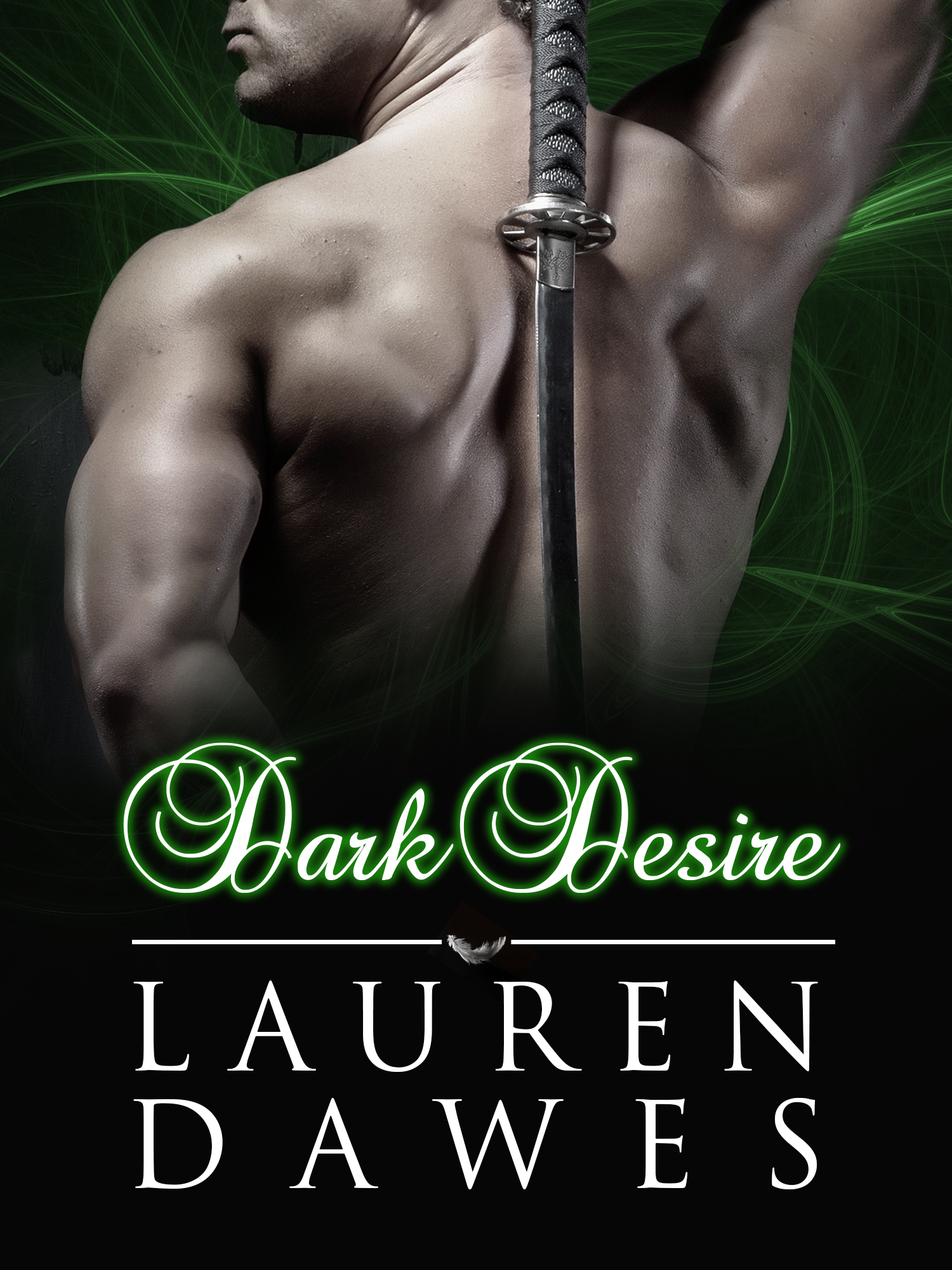
Author Photo (low res) DarkDeceit_Final-768x1024 To those of you who don’t know who I am, my name is Lauren Dawes and I am the author of the Dark Series published by Momentum. Fellow Momentum author Sophie Masson has asked me to be a guest on her blog, and gave me free rein over the topic.
I’ve decided to give you all a little insight into the process I went through in writing the first book in the Dark Series, and also introduce you to a couple of my characters.
Let’s start with why I decided to write this series. First of all, I love Norse mythology. When I was younger, I was fascinated with runes, to the point where I tried to teach myself the runic alphabet and use it on a daily basis. Alas, like my soirée into teaching myself Greek, it only lasted about a week. By the way, the book titled “Learn Greek in 25 years” is completely accurate. In any case, that is where my love for all things Norse has stemmed from.
In December 2012, when the idea for “Dark Deceit” struck, I hastily scribbled down some rough notes about a potential plot and characters. I started off with the basics: protagonists and antagonists. Korvain, one of the protagonists, is the last of the pure-blooded Mares. ‘Mares’ are dark elves and were considered to be horribly evil creatures by the Vikings. According to Norse mythology, dark elves used to sit on a person’s chest while they slept at night, slowly pouring bad dreams into their heads. They gave these ‘spirits’ the name ‘nightmare’. Instead of using that idea, I changed it so my Mares became assassins because of their inherent perceived ‘darkness’.
The other protagonist sharing the limelight with Korvain is Bryn. Odin’s first Valkyrie now runs a successful nightclub in Boston and lives with her other sisters. The Valkyries left Odin’s service, and have been on their own since the 1920s after the All-Father committed an unforgiveable act. Bryn is still the leader of the group, and takes the job of protecting the other Valkyries very seriously.
Once I had my characters set, I had to think about the world I wanted them to live in. I chose Boston as the setting for the Dark Series after I visited the city while on my honeymoon in 2012. I fell in love with the history, and I knew that it would be the perfect city to set my books in. In “Dark Deceit” it’s explained that an event called “The Fall” was the beginning of the end for the gods and goddesses. The Nine Worlds—the worlds for the Aesir and Vanir gods, the light and dark elves, the dwarves and giants—disappeared. The humans had simply forgotten them, and so these beings settled on Midgard (Earth) and have been living side-by-side with the humans for nearly a thousand years.
The hardest part of writing the book was plotting the story. I didn’t have all the answers right away with it. The plot developed with time, and after many revisions. I actually almost threw in the towel completely with this book when I couldn’t quite get past some initial plotting hurdles.
Thankfully, I saw it through, and have ended up with a series that definitely does justice to my love of Norse gods. “Dark Deceit” firmly sits in the realm of dark urban fantasy. The fight scenes are graphic and bloody, and my characters are gritty and raw. I wanted them to be both loved and hated, and I think I’ve achieved that.
If “Dark Deceit” sounds like a book you’d like to read, you can get it on all major platforms. And if you’d like some more information about either books, check out my website: http://www.authorlaurendawes.com

DarkDesire_Final

Dark Deceit Blurb:
The time of Odin is over. The Aesir gods now live among the humans in their bustling modern cities. Their brutal dominion over the other gods and their eradication of the entire dark elf race may have ended, but their actions have not been forgotten.
Korvain is one of the last full-blooded dark elves, and is feared like no other. His ruthlessness and cold heart are legendary, but when he is given the task of killing one of the most fabled goddesses of all time, he is left with an undeniable desire to make her his own. Failure in his task means only one thing: death. Will he follow his orders, or will he follow his heart? Bryn’s whole world crumbled when she left Odin’s service to protect the other valkyries. Now living with the humans, she is the only thing standing between them and total destruction. But her beliefs are about to be shaken to the core when she meets Korvain—a volatile, completely irresistible dark elf who threatens to take away more than just her innocence …

Dark Desire Blurb:
The time of Odin is over. The Aesir gods now live among the humans in their bustling modern cities. Their brutal dominion over the other gods and their eradication of the entire dark elf race may have ended, but their actions have not been forgotten.
With the death of Adrian still haunting Taer’s every waking breath, she dreams of getting revenge on the dark elf responsible for her brother’s murder. But when the one person she’s depending on to train her in the art of weaponry refuses to help, she has no other choice but to get instruction from the most unlikely of people. Driven by an undeniable desire, Taer finds herself learning more than just how to fight.

About Lauren Dawes:
Born in South Africa and raised in Sydney, Lauren Dawes is an urban fantasy/paranormal romance writer and the author of the Dark Series.
In 2009, she quit her full-time Teaching English as a Second Language job to finally begin writing “that book”, letting her over-active imagination pour out onto the digital pages much to everyone’s horror. The catch phrase “I didn’t know you had such a dark imagination” only fuelled her to write more, where her love for Norse mythology and gods finally got the spotlight.
She currently lives with her husband and daughter in whatever city they happen to be posted to, and her cat, Oscar, who has inspired more than one character quirk or scene in her books.
http://www.authorlaurendawes.com
https://www.facebook.com/authorlaurendawes
@officialldawes
http://laurendawes.blogspot.com
https://plus.google.com/+LaurenDawes

Firebirds and talking wolves

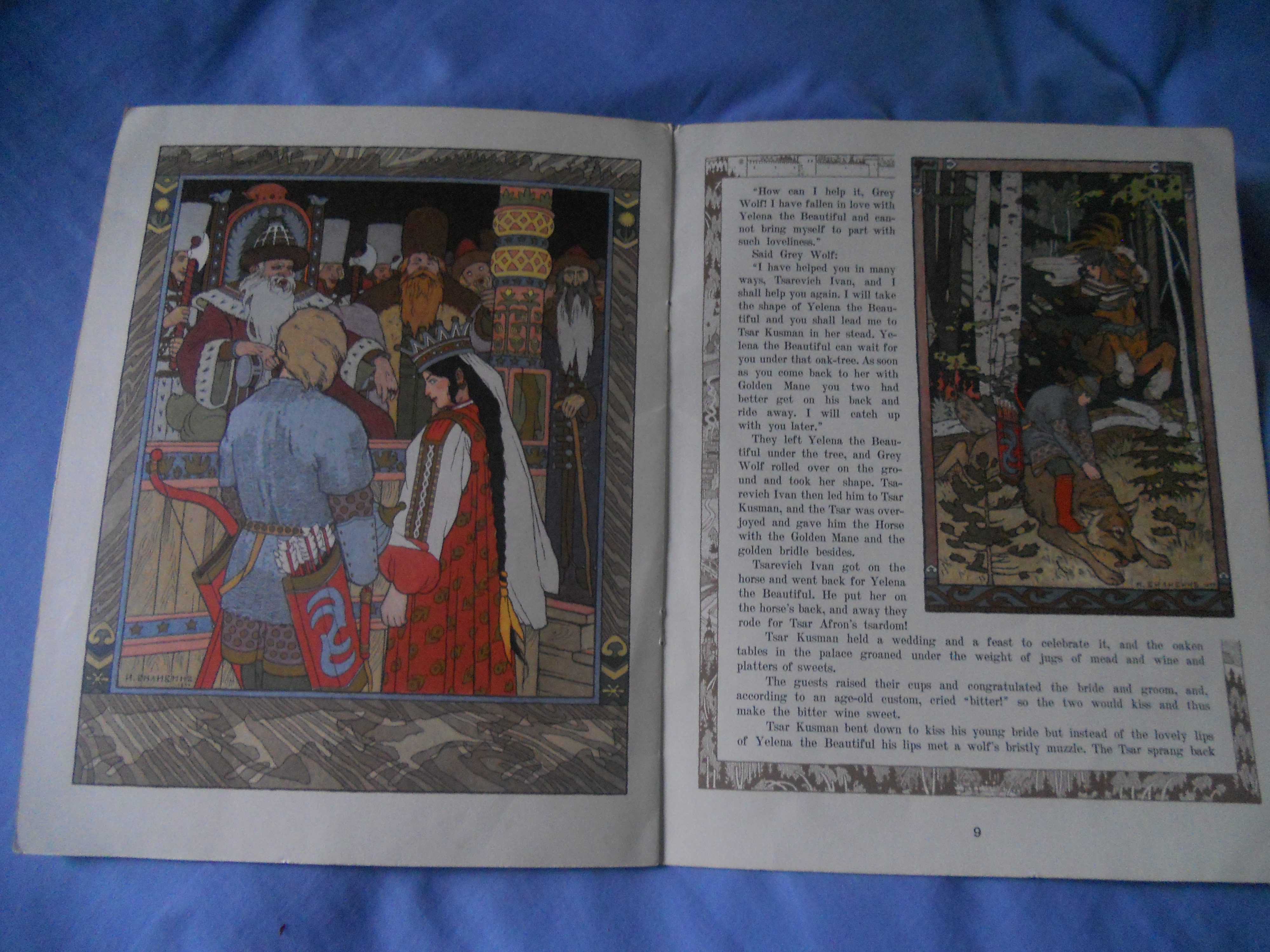
DSCN0095 DSCN0093When Trinity’s heroine, Helen Clement, first arrives in Russia, she’s put in mind of a book she once owned as a child, sent to her by her mother’s Russian-American friend, Professor Bayeva. It’s a beautiful illustrated version of the most famous of all Russian fairy tales, The Tale of Tsarevitch(Prince) Ivan, the Firebird, and Grey Wolf. The story’s an amazing, thrilling blend of adventure, magic, quest and romance, with a good dose of danger and betrayal thrown in, and features vivid characters: not only Ivan, his beautiful beloved Yelena, and his wicked older brothers, but especially the mysterious Firebird and the shape-shifting Grey Wolf who is Ivan’s helper, protector and saviour. Teamed with beautiful illustrations by the great classic Russian artist Ivan Bilibin, it’s a story to stick in the memory of any child.

As it certainly stuck in mine. That classic fairy tale was an important part of my own childhood reading, in its incarnation as a Soviet-era picture book that preserved the great beauty of the illustrations and the straightforward nature of the original 19th century retelling. That edition was one of a series of English-language books of fairy tales, published in Moscow, that introduced to Western children not only wonderful stories like that one, and others such as Fenist the Falcon, Vassilissa the Beautiful, and The Frog Princess, but also the gorgeous illustrations of Ivan Bilibin. And those books have stuck in my imagination ever since, with their rich strands working their way into my writing as an adult, in books such as The Firebird, Scarlet in the Snow, and now the Trinity series.


Trinity inspirations: Old magic and new psychics

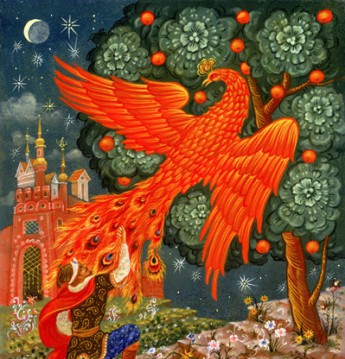
Baba Yaga, by Ivan Bilibin(1876-1942)

DSCN1495

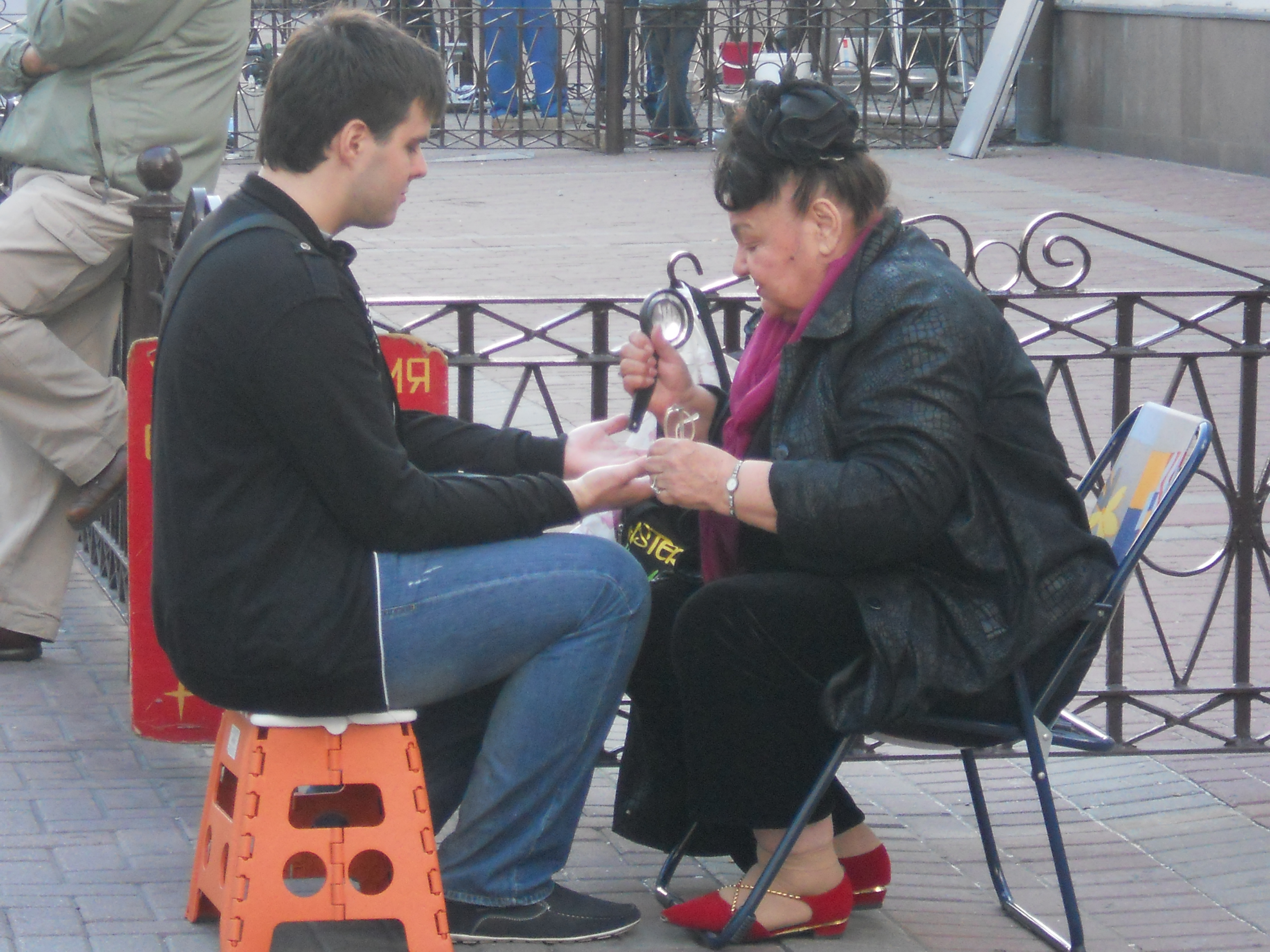
Street fortune-teller, Moscow

One of the strongest inspirations for me in the creation of the world of Trinity is a fact I mentioned in my previous post:  that not only does Russia have a long history of traditional magic, but that history continues to this day, with new strands added to it in more recent times. In the long centuries before the Bolshevik Revolution of 1917, pretty much every village had its resident koldun, sorcerer or wizard, and/or zhanarka, which literally means ‘one who knows’ but could be thought of as a witch. Magic in Russia has always been practised by both sexes, often in different ways–for instance, kolduns were thought to have the power of shapeshifting, while zhanarkas were more skilled in healing. These are not hard and fast rules–and female sorcerers and male healers certainly existed: but in an interesting contrast to the West, the female practitioners generally had a better reputation than the male–kolduns were often accused of unholy practices, and were thought to be damned. This feeling against kolduns and their malefic power was behind some of the popular revulsion against Rasputin, for instance. In contrast, even when they were feared, female witches were often thought to have a good aspect, with even Baba Yaga, the fearsome legendary witch of Russian folklore being seen as a protective figure in some instances–when she took a liking to you, that is! Her opposite number, the legendary wizard Koschei the Deathless, by way of contrast, had no redeeming features!

Some traditional practitioners of magic, male and female,  also specialized in such things as divination, fortune-telling and the like, while in Siberia traditional shamans had a strong following. All classes of society frequented these various kinds of traditional occult practitioners, and from the late 19th century onwards, as well, there began to be interest in ‘Eastern’ philosophies and systems of magic coming from places such as India and China.

However, unlike in the West, for many centuries there was little really organized persecution of witches, whether male or female, though that did not mean individuals didn’t sometimes suffer. Part of the reason for the absence of witch-hunts is that belief in magic was so widespread that ordinary people knew and used a few spells themselves. And the Orthodox Church has always had an uneasy relationship to magic, with some clergy dead against it and many others much more ambiguous, with respect for ‘white’ or sympathetic magic still very common amongst believers, and ‘black’ or malefic magic much feared still. On occasion however the country’s rulers have tried to limit or punish the practice of magic. Continue reading

Trinity’s Russian setting 2: Moscow

DSCN7078In order to really do justice to the writing of Trinity, I knew I had to return to Russia to deepen some of the things I’d experienced that first time, and enrich the sensory texture of the novel, and the series in general, especially as I would be writing some very important scenes in Moscow, which I wanted to know a good deal better than over the two and a half days we’d spent there in 2010. We didn’t want to stay in hotels or go on any organized tours either, this time, but instead wanted to experience daily life in the city, on our own. In order to do that I knew I needed to learn at least basic Russian. Used to slipping from English to French with fluent ease, I had found it frustrating  to be stuck in the role of helpless tin-ear tourist the first time. So before we went the second time in August 2012, I enrolled in an excellent online course called Russian Accelerator, which, with an imaginatively devised combination of video and audio focussed on natural learning plus individual tutor attention, promises to make you fluent in basic conversation in just a few months, as well as to read Cyrillic script—a promise that was kept!
And thus it was that a month after I finished my last Russian Accelerator lesson, we were crawling in heavy Moscow traffic, heading for one of the city’s most central thoroughfares, Tverskaya Ulitsa, or Tverskaya Street, and the apartment we’d rented for two weeks, only a few blocks’ walk away from Red Square and the Kremlin.

Moscow is a great world city but it is also its own world. European but not Western; beautiful and ugly; built for giants yet surprising you with glimpses of cozy neighborhoods on a very human scale. Once the feared seat of the ‘Evil Empire’, it is now the brash symbol of Russian capitalism, buzzing with pushy energy yet also at times surprisingly relaxed. And of course Moscow is most certainly not the be-all and end-all of Russia. But like all great capital cities, it is also a kind of physical microcosm of the nation, of its history, its culture, its people. The shaggy parks mimic the forest; the river winds its way through the city’s heart, like waterways do throughout the land; Red Square, in its exhilerating yet overwhelming spaciousness is a kind of miniature of the sweeping vastness of the Russian landscape; the faces in the street are molded from features that have come from every corner of this enormous country. Continue reading

Trinity’s Russian setting 1: Uglich and the Volga

the beautiful domes of St Dimitri

I’m excitedly awaiting the release on November 13 of my new adult novel, and first book in the Trinity series. Trinity: Book 1, Koldun Code, (published by Momentum) is a gripping, distinctive novel that’s part pulse-pounding conspiracy thriller, part erotically-charged romance, and part supernatural mystery, set in modern Russia. And in this brand-new blog, I want to explore some of the background and inspirations for the book.

Trinity grew out of a very long fascination of mine with Russia and its extraordinary culture. I’ve loved it since I was eleven years old and read and re-read Jules Verne’s thrilling, atmospheric Russian-set adventure story, Michel Strogoff. Progressing rapidly as a teenager from that to the Russian greats—Dostoevsky, Chekhov, Tolstoy, Gogol, Bulgakov, amongst others—with side excursions into the richness of Russian fairytale and folklore, and influenced moreover by my French father’s longtime interest in both Russian icons and Russian music( a good deal of my childhood is set to the soundtrack of the Red Army Choir) I had conceived an idea of an extraordinary country and a culture that went far beyond the alternately dull and scary Cold War headlines we saw in the newspapers every day. Brought up in an anti-Communist family (despite Dad’s love of the Red Army Choir!), I was nevertheless deeply attracted by Russia and her extraordinary cultural and historical paradoxes: grandeur and intimacy, magic and brutal realism, wild romance and complex intellectualism, beauty and terror, warmth and ruthlessness, tenderness and black humour. I loved it both because it was headily unfamiliar, and yet deeply familiar in ways I could hardly articulate, but that struck echoes deep within my being.
But though I dreamed of going to Russia, the Iron Curtain made it seem just that, a dream. As a young person, the idea of going on strictly-supervised tours extolling Soviet ‘achievements’ did not appeal to me in the slightest, and even when the Soviet regime began first to relax its grip, and then in short order to fall to pieces and disappear, the hurly-burly of personal and professional life made the dreamed-of trip seem even less of a reality. The ‘horror stories’ of the 90’s, with the threat of gangs and casual violence as well as discomfort and incompetence, didn’t help either. So for a long time, I just kept thinking about it, watching Russian films, and films about Russia.I wrote a fantasy novel, The Firebird, based on the classic Russian fairytale, and introduced Russian characters into other novels. And I kept reading,(and still do!) discovering in the process wildly diverse modern Russian writers such as Andrei Makine(beautiful meditative novels about the Soviet past), Alexandra Marinina(ex-cop turned writer’s tough crime novels)Sergei Lukyanenko(gripping urban fantasy sagas) Zakhar Prilepin(gritty political fiction) and others. And then, in 2010, finally, I made my first visit to Russia. Continue reading