Double Act 1: Paul Collins and Ford Street Publishing

As director and co-founder of small publisher Christmas Press, as well as being an author, I’ve become very interested in the growing phenomenon I’ve joined: that of well-known and respected Australian authors who are also publishers. Authors who, not being content just to write books, also started their own publishing companies. Initially driven by frustration at seeing a particular text of theirs rejected by conventional publishers, these start-ups often soon expand into something beyond self-publishing, taking on other authors’ and illustrators’ work. And it’s happening more and more, in a time both of big-publisher list contractions, and a blooming of small press due in no small part to the effect that digitising files has had on the cost of printing books, which has come down considerably in recent years.

This is the first in a series of interviews, under the umbrella title of ‘Double Act’, which I’ve conducted recently with author-publishers, whose publishing businesses range from highly experienced and long-standing, to brand new and developing. And to start this series, I’m presenting an interview with an author who was one of the earliest innovators in the area, and whose Ford St Publishing has become one of the ‘heavy-hitters’ in the author-owned small press field : Paul Collins.
paul collins 1

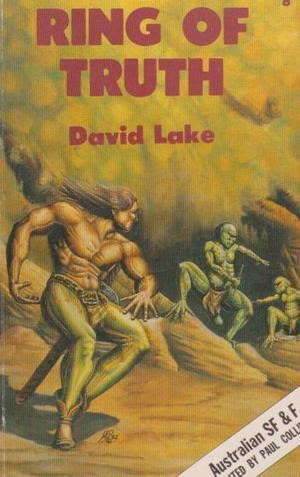
One of Paul’s very early titles as a publisher

Paul Collins portrait


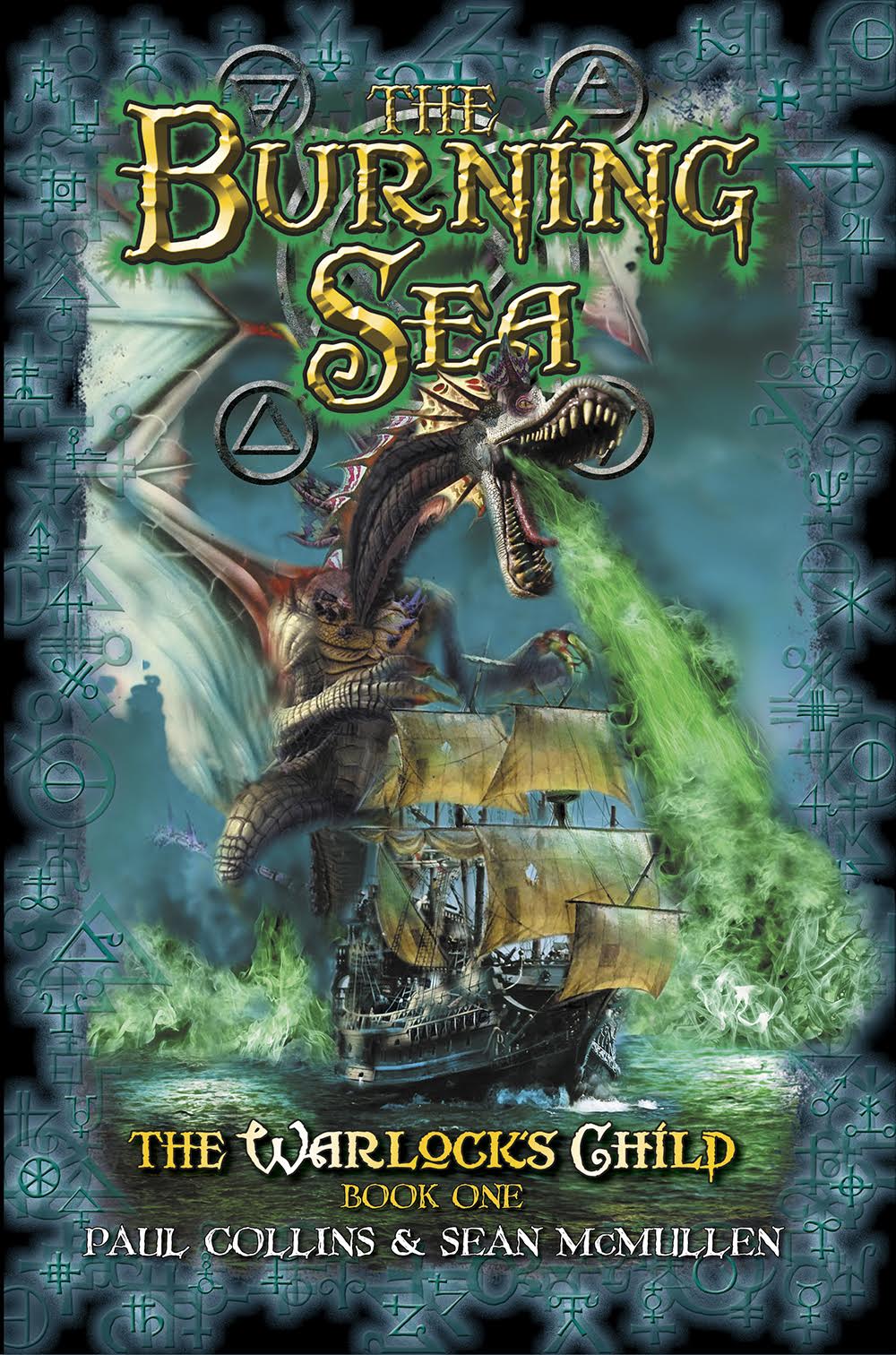
Paul Collins has written over 150 books and 140 short stories. He is best known for The Quentaris Chronicles (The Spell of Undoing is Book #1 in the new series), which he co-edits with Michael Pryor, The Jelindel Chronicles, The Earthborn Wars and The World of Grrym trilogy in collaboration with Danny Willis. Paul’s latest six part series is The Warlock’s Child in collaboration with Sean McMullen, and the anthology, Rich & Rare, which he edited.

Paul has been short-listed for many awards and won the Aurealis, William Atheling and the inaugural Peter McNamara awards. He recently received the A Bertram Chandler Award for lifetime achievement in Australian science fiction. He has had two Notable Books in the Children’s Book Council of Australia Awards.

He has black belts in both ju jitsu and taekwondo – this experience can be seen in The Jelindel Chronicles and The Maximus Black Files.

RIch and Rare FRONT cover

Ford Street is one of the most well-known and successful of author-owned and operated small press publishers. How did it start? What motivated you in the first place to start your own publishing company? And how did you target your list?

I started publishing back in the 70s. First up was a self-published novel called Hot Lead – Cold Sweat. Yes, I know, it was as awful as it sounds. However, it made me realise at the time that I liked the process. So I began a science fiction magazine called Void. It was the only Australian SF magazine at the time. I moved into publishing fantasy and science fiction back when the major publishers had no interest in either of those genres. In fact, I was the first Australian publisher to publish mainstream fantasy novels for adults. Distribution was really hard to get in those days and finally when a distributor called Buddy Reed disappeared with both my stock and the money he owed I decided to stick to writing short stories. In 2007 I decided to get back into publishing because I could see many things had changed. Distribution was easier – Macmillan took me on – book clubs had sprung up, and the Internet provided many avenues to reach an audience without cost. I’m discounting “time”, that is!

How did you initially persuade booksellers and other retailers, such as the schools distributors, to stock your books?

That’s really Macmillan’s job. I also have an educational distributor called INT Books. Together, they do quite a good job. I also send everyone I know media releases, just in case the distributors drop the ball on any given book. At the end of the day, if a school has a library, they need books. If you provide books that they like, the school librarian will gladly purchase.

Have your aims and strategies as a publisher changed from those early days? How?

I used to publish books for adults only. That’s an entirely different market from children’s to young adult. It’s a niche market when you’re publishing in just two genres. The main outlet in those days was minimal distribution to shops, and then going into municipal libraries and selling direct. The science fiction conferences were another avenue for sales. Today I have distributors who do all that for me.

Has working as a publisher impacted on your own career as an author – whether that be positive or negative?paul collins 3

I don’t think so. I can publish my own work if I wish. All modesty aside, my titles are among Ford Street’s best-selling books. Trust Me!, which I edited, is our #1 top seller. Wardragon (fourth of the Jelindel books) comes in at second. I wouldn’t be publishing my own books if they weren’t selling. I think that’s a trap for beginners. Publishing your own books works if they’re selling, but if they’re not, you risk bringing down your brand, and appearing like a vanity press. So far, I think I’ve avoided that label. And I can think of several editors who work for major publishers who have their own books published by their workplace.

I still write for other publishers. In the past year I’ve had six books in the Legends in their Own Lunchbox series (Macmillan) and next year two short story collections in collaboration with Meredith Costain Paul Collins 4(Scholastic) and three plays (Pearson), due.

What are the challenges and pleasures of small-press publishing, in your experience? Any memorable anecdotes?

Challenges are time, money, finding suitable books, getting authors/illustrators to promote their own books. Pleasures are creating books, working for myself, thereby having very flexible working hours (I work seven days a week, but that’s my choice), the joy of knowing a book is selling really well, or selling overseas rights, taking on books that major publishers have rejected and seeing sales go paul collins 5through the roof. One example is my own The Glasshouse. It was rejected by a great many publishers, some, like Penguin – my own publisher at the time, didn’t even respond to the submission. Ford Street published it and I sent it to a book club. They purchased 4000 copies. It went on to sell another 1200+. They’re not bad sales figures for a small press. It went on to be chosen by International IBBY as an Outstanding Book (only two other Australian books received this) and was short-listed for the CBCA’s Crichton Award.

Any tips for aspiring author-publishers?

As I’ve just mentioned, be careful about publishing your own work. If you do, ensure you get it professionally edited. Make it the best you can. Ensure you have distribution. Without this, you’ll wind up with boxloads of books in a garage. On this note, don’t print too many copies. I know the more you print the cheaper the unit cost, but if you wind up with 2000 books in storage, it doesn’t matter how little they cost you – you’re still stuck with 2000 books (and hopefully not paying for storage!).

Think about getting trailers produced, get bookmarks, posters of the covers – anything to help promote your books. A website is essential. I know authors and illustrators who still don’t have websites and this is just craziness in today’s climate.

Covers are important. Don’t settle for second-best. The more professionally you can present your books, the better your brand name will be. I’ll always remember a librarian telling me that she would always order McPhee-Gribble YA books, because they rarely if ever published a dud book. That’s a recommendation that a small press should strive for.

Visit Paul’s websites: www.paulcollins.com.au, www.quentaris.com and www.fordstreetpublishing.com.
burning sea


Thunderbolt Prize winners: P.S. Cottier, winner of the Poetry prize

Penelope Cottier

The New England Thunderbolt Prize for Crime Writing is a respected national award for unpublished short-form crime writing in three Open categories: Fiction, sponsored by the School of Arts, University of New England; Non-Fiction, sponsored by The Armidale Express; and Poetry, sponsored this year by the New England Writers’ Centre and the Armidale Dumaresq Memorial Library. There are also three special awards: the New England Award for a writer resident in New England, sponsored by Reader’s Companion bookshop, Armidale; the Emerging Author Award, for an unpublished writer over 18, sponsored by Friends of Tamworth Libraries; and this year, the inaugural Youth Award, for writers under 18, sponsored by Granny Fi’s Toy Cupboard, Armidale.

The Prize, which in 2015 is in its third year, is run by the New England Writers’ Centre, of which I’m Chair, and as the results of the 2015 Prize have just been announced, I thought it would be interesting to interview each of the winning authors, and ask them about their stories, their writing careers, and what they hope winning an award within the Prize will do for them.

Here’s the first of the interviews, with P.S. (Penelope) Cottier, winner of the Poetry category in the Thunderbolt Prize.

First of all, Penelope, congratulations on your win! How did you come up with the idea of your winning poem, Criminals who are no longer criminals?

Thanks Sophie.  I was thinking about the way we incarcerate asylum seekers offshore, including children, and whether this would be classed as a crime in the future (it may already be in breach of various agreements, and lead to inarguable crimes such as murder and rape).  From that I started thinking about laws that had once seemed necessary, at least to some, and which later seemed cruel, pathetic, or simply very odd, and which are now repealed.  These laws include those against homosexuality, witchcraft, eavesdropping, and laws about found treasure which I vaguely remembered from studies in first year law.  Finding out that just walking around at night was once a crime was a total bonus, so far as the poem was concerned. I had a vivid image of all those who had been subject to these laws meeting, as ghosts, outside a court room.

The poetry judge, Les Murray, commented on the evocative nature of your descriptions. How did you go about creating that texture?

I try to put aside too much thought when writing a poem.  I like to have a fairly strong idea of what I will be doing before I start, but when I am writing my best work it is as if I am taking dictation from someone unseen.  Not automatic so much as going through the gears in a manual car without thinking about it.  You only become conscious if you miss a gear.

This intense cruising was more difficult here because of the law lurking around like a bore at a party.  (The sort of bore who wears a ‘funny’ bowtie and can’t wait to assail you with stories of his most awesome success.)  But the poem contains more than a whiff of smell, has some sounds I like, word play, and an element of surprise, co-existing with a strong sense of sorrow.  I think I avoided being too preachy or tedious, despite the research wedged in there.

I’m glad that Les liked it!

Have you written poetry themed around crime before? What attracted you to do so?

I was about to say ‘no’, and then I remembered that a poem that was the joint winner of the Arts ACT David Campbell Prize dealt with a father who had murdered his children.  Again it had a element of the dreamlike to it, while dealing with an unfortunately real situation.  It was called ‘Visitation’ and the dead children appear to the mother in her dreams.

Can you tell us a bit about your background and writing career?

I was born in England, raised in Melbourne and live in Canberra, a place I now love, after a long and intense struggle.  My latest publication is a pocket book called Paths Into Inner Canberra, which is an essay with two poems, looking at notions of nature and the way that wild animals can be found a few kilometres from Parliament House.  (Insert politician joke here.)  It gives me great joy that a piece of writing can be produced and sold for as little as $4, and that Ginninderra Press produces this type of publication.  This book can be ordered here.

Of relevance to this award is the fact that I have a law degree.  I go months without remembering that!  I also have a PhD in Literature from the ANU, written on images of animals in the works of Charles Dickens.

I write as P.S. Cottier, which sometimes stands for Post Script, as I started seriously seeking publication relatively late. (I almost forgot.)  I have had three books of poetry published, co-edited an anthology of poems, and have even stooped to prose fictional and non-fictional, as noted above.

What do you hope winning the Poetry prize will do for you as a writer?

This may sound a little cute, but writing poetry is an end in itself, particularly when someone gets to read it.  I am pleased that the poem is being published, and that I managed to write a poem about law reform and the cruelties of the past (and by extension, the current limitations of the law).

I try my hardest not to think in terms of a writing career.  That probably means my view of poetry is hopelessly romantic.  If I want to have a poem I have finished read, I will post it on my blog at pscottier.com as often as submitting to a journal.

But I will certainly buy something cool with the prize money.

As a reader of poetry, what do you look for in a poem? Which poets have influenced your own work?

Invention and surprise are my favourite aspects of poetry.  I like unexpected combinations of words and play.  Huge slabs of self reflection, or emotions thrown at the reader like sodden hankies, are not my favourite things.

I love Emily Dickinson because she avoids easy translation into a single message.

Byron is a favourite because he lurches between tenderness and sarcasm.

I read as widely as possible in contemporary poetry written in Australia and elsewhere.

On inspiration: interview on Elisabeth Storrs’ blog

An interview looking at the sources of inspiration for me as a writer is up now on historical novelist Elisabeth Storrs‘ blog.

Here’s a short extract:

What is the inspiration for your current book?

I’d like to answer this for two books: my YA novel Hunter’s Moon, which came out in June; and my adult novel Trinity: The False Prince, coming out in October (e-book) and November (print). The first book, set in an alternative world-version of the late 19th century, is inspired by the fairy tale of Snow White, the second, which is also second in my Trinity series, and is set in modern Russia, was inspired by not only the earlier novel (Trinity: The Koldun Code) but also by the enigmatic figure of Rasputin, and also the history of magic in Russia.

Is there a particular theme you wish to explore in this book?

Well both books in a sense—and isn’t that funny, I hadn’t thought of it till now!—are about betrayal, and false appearances.

You can read the whole interview here.

Joint ticket: An interview with Archie Fusillo and Josie Montano

Archie Fusillo Archie Fusillo and Josie Montano are two fabulous Italian-Australian authors of books for children and young adults. Separately, they’ve published many great books, but very recently they teamed up on a collaborative YA novel, Veiled Secrets. I met these two lively and engaging authors at the 2015 Story Arts festival in Ipswich, Queensland last month, and later asked them for an interview on the subject of their collaboration. Here it is–enjoy!Josie Montano

You’ve recently collaborated on a novel, Veiled Secrets, which tells the story of two Italian-Australian teenagers from two different families, Nick and Lia, who on a trip back to Italy with their grandparents, meet each other and discover they have a lot more in common than they could have imagined. How did you come up with the idea for the book?

When we first met we discovered that our families come from villages in Italy 10 kilometres apart, we grew up with similar traditions, culture, dialect and life-styles as first generation Aussies. We had a brainstorming session and strangely came up with the same idea! A story about teens going back to Italy with their grandparents. We knew we had a story to tell! One that no other writer in Australia has told, one that our 1st generation of Italian migrants needed to share.

How did two authors who describe themselves as fiercely independent manage to work together with the harmony required for successful story-telling?

We just found that from the very beginning we meshed quite well. Actually the ‘fiercely independent’ writing styles came in handy as we took on a character each and were able to write independently as Archie and Josie with Veiled Secretsour own character and their world.

Tell us about the process of constructing your novel. Did you plan it carefully beforehand, or was it more organic?

Although Josie is an over-planner and Archie just get’s into it and writes, we were still able to put together an initial plot line and main characters (to keep Josie happy!) Archie started as his character in chapter 1, emailed to Josie and Josie wrote chapter 2, etc. It was like one of those patchwork quilts where various people work on it, but the end result is a beautiful creation. The story did progress organically but also strangely in a way that both of us had with plot ideas and scenarios in our minds.

What were the challenges, and the pleasures, of joint creation? Did your find your writing voice was different in this to that in your own sole-authored books?

The only challenge we may have had was getting it published in the Australian market. One of the major publishers was very keen, we were wined and dined by their editor but in the end marketing felt it wasn’t the right time. So Josie sent it to her US fiction publishers and the next day a contract was emailed!

Re voice, actually a few times it happened that we would write something about each other’s characters that would spin the other off into revenge writing where eg: Archie wrote that Josie’s character had dimples and Josie was like ‘oh does she now!?’ and then she wrote that Archie’s character had a big nose! It was great having someone else to share the experience with and to cast a different editing eye over the manuscript.

Josie and Archie StoryartsAre you planning on more writing collaborations? And would you recommend the experience to other authors?

Josie has co-written fiction and non-fiction with other authors but admits this was the easiest collaboration thus far. As writing can be a lonely occupation, co-writing can at times bring a shared experience allowing for learnings and growth. And we are chatting about possible future collaborations on other projects!


Josie’s Facebook author page.

Josie’s Twitter.

Josie’s website: www.booksbyjosie.com.au

Archie’s website: www.archimedefusillo.com

Veiled Secrets Facebook page.