On writers: Anya Seton and Katherine

Katherine,_Anya_Seton_2006_edition_novelThis, the third of my republished articles on writers and classic works, focusses on the great American historical novelist Anya Seton, in particular her most famous and beloved book, Katherine. In the article, I also looked at Anya Seton’s fascinating family history. My article was first published in the Summer 2006 issue of the lovely UK books magazine Slightly Foxed.

A Grand Passion:
Anya Seton’s Katherine

by Sophie Masson

It was in the school library on a somnolent Sydney summer afternoon that I first met her. A passionate, but bookish and rather inarticulate child, I had recently discovered romantic novels—devouring Charlotte Bronte, Daphne du Maurier, Georgette Heyer, Jean Plaidy/Victoria Holt, and Mary Stewart, swept up into their worlds, loving them all. But meeting Anya Seton’s Katherine, as she set out on that ‘tender green time of April’, on a journey that was to take her from sheltered convent girl to controversial great lady, was the most wonderful delight of all.
Though Katherine de Roet, later Swynford, was, I was sure, infinitely more beautiful and gifted than me, though she lived in such a different time and place, I clicked instantly with her, and with the gorgeous book in which she lived and breathed with such intensity.
I was just about Katherine’s age–nearly sixteen–and I too had spent years in a convent—a convent school, in my case– and I was itching to go out into the world, and especially, fall in love. The separation between us—a gap of some six hundred years—seemed meaningless. I was with Katherine every step of the way, from her first introduction to the royal court, where she meets the man who will forever change her life, though she does not know it yet—John of Gaunt, Duke of Lancaster, the King’s dazzling third son. It is not love at first sight. But love is kindled between them, it is a passion as unstoppable as it is overwhelming, one that will bring in its train not just delight, but murder, madness, and exile. And the evocation of that grand passion by Anya Seton—particularly in the early stages of the affair, when Katherine and John spend several enchanted days in the remote castle of La Teste, in Les Landes, in Gascony (a region of France I knew well, as part of my family comes from there) was so thrilling to my adolescent self that I must have worn out those pages re-reading them, savouring each time that intoxicating mixture of languor and excitement, of sex and romance, of poetry and passion. This is not an uncommon reaction; lots of readers, and not only female readers, have felt this way—my husband tells me that as a 15 year old in England, he read Katherine twice, especially lingering on those passages! katherine 2
But though passionate love forms its incandescent centre, Katherine isn’t just about love. It is also an exceptionally rich, detailed, and utterly believable evocation of a tumultuous time—the mid to late 14th century, dominated by war, the Black Death, and religious and political rebellions. In its pages we meet not only Katherine and her royal lover, who are masterfully brought to life in all their complexity, but also a whole host of exquisitely-drawn characters: Katherine’s swinish, tormented husband, Sir Hugh Swynford; their daughter Blanchette, who will grow up to condemn her mother; John of Gaunt’s strange little Gascon squire Nirac, who takes it upon himself to perform a terrible service for his beloved master; Katherine’s brother in law, that brilliant observer of his time, Geoffrey Chaucer; John’s lovely, serene first wife Lady Blanche and his odd, spiky second wife, the Castilian princess Costanza; the English mystic Lady Julian of Norwich, who comforts Katherine in a period of extreme suffering—and many, many more. It’s not only characterisation at which the author excels, however; the historical setting, the background of major events, such as plague, war, and rebellion, as well as the innumerable details of ordinary life, are flawlessly recreated.
katherine 4Katherine not only enthralled me and made me interested in that time: it totally changed my idea of Chaucer. We had to study ‘The Knight’s Tale’ the year after I read the book, and it made the whole thing much easier, because rightly or wrongly I could visualise Geoffrey as a person. As well, it made the experience of Katherine even more real—reading the work of a man who had actually known her in life was exciting, a kind of reflected glory that quite reconciled me to the funny spellings!knights tale
Reading Katherine again now, not only as an adult, but as a writer myself, I am struck by how very good, even brilliant, it still is. There is nothing dated about it, either in style or in character or in essence. In certain ways, it reminds me of that other magnificent novel of fourteenth-century life, Sigrid Undset’s 1920’s trilogy Kristin Lavransdatter—in the rich evocation of a woman’s emotional, spiritual and intellectual journey as much as that of the time—and it is quite possible Seton was influenced by Undset’s work. But Katherine is also very much its own thing, distinctively beautiful, perfectly pitched, Seton’s masterpiece, and one of the great twentieth-century historical novels in English.

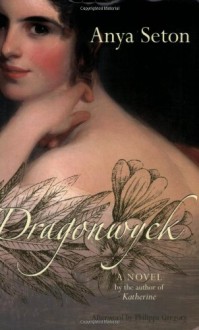
Back in my teens, after reading Katherine several times, I rushed off to look for other Anya Seton titles. Though none quite had the stunning impact of Katherine, I enjoyed them all. Two especially I still remember with great fondness, and have had much pleasure in re-reading: Green Darkness, a part-historical, part-fantasy novel, shuttling between the 20th and 16th centuries; and Dragonwyck, a rather Rebecca-like novel set in 1840’s upstate New York, centred around the haunted New York Dutch family, the Van Ryns, and their mansion, Dragonwyck. Though there are several editions of Seton novels still in print, it is those three—Katherine, Green Darkness and Dragonwyck—which have just(2006) been reprinted in beautiful new editions by Chicago Review Press in the US. Both Katherine and Dragonwyck feature forewords by the popular modern historical novelist, Philippa Gregory.dragonwyck
katherine 3It is only recently that I have learnt just who Anya Seton was, and realised that her life was as extraordinary as her fiction. Born in New York in 1906, she was christened Ann, the only child of two wealthy, prominent writers: Ernest Thompson Seton, and Grace Gallatin Thompson Seton. Ernest, who was born in Northumberland but migrated with his family to Canada as a child, was a world-famous naturalist and anthropologist, as well as an adventurer, an artist and writer. From an early age, he was fascinated by both the natural world and the world of the Native Americans, and as an adult, he spent a long time travelling, living in the wilderness of Manitoba, tracking animals and learning skills from the Cree Indians.
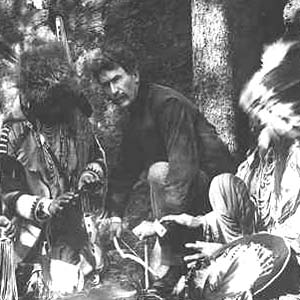
SetonANBA gifted artist who had exhibited in Europe and America, he had written and illustrated several natural history books before publishing the book that made both his fame and fortune: Wild Animals I have Known, published in 1898, and never out of print since. As well as publishing several books, he was a famous lecturer, was co-founder of the Boy Scouts of ernest thompson setonAmerica—an organisation he resigned from in protest against its militaristic stance when World War I broke out—as well as founder of the Woodcraft League, which he set up in opposition to the Scouts, and which was based on a respect for the natural world and also for Native American culture and knowledge. Ernest Thompson Seton is still well-known in America, and there is even an Institute dedicated to him, while his Woodcraft League continues to flourish.
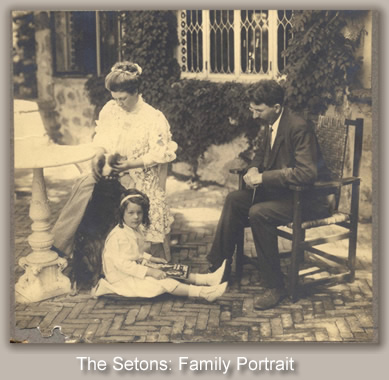
setonsHis wife Grace, daughter of a beautiful Californian socialite who, after her divorce, had come to live in New York, was no slouch either. She wrote several very popular and highly-regarded ‘personal travel’ books, recounting her own adventures in all kinds of wild and foreign parts.
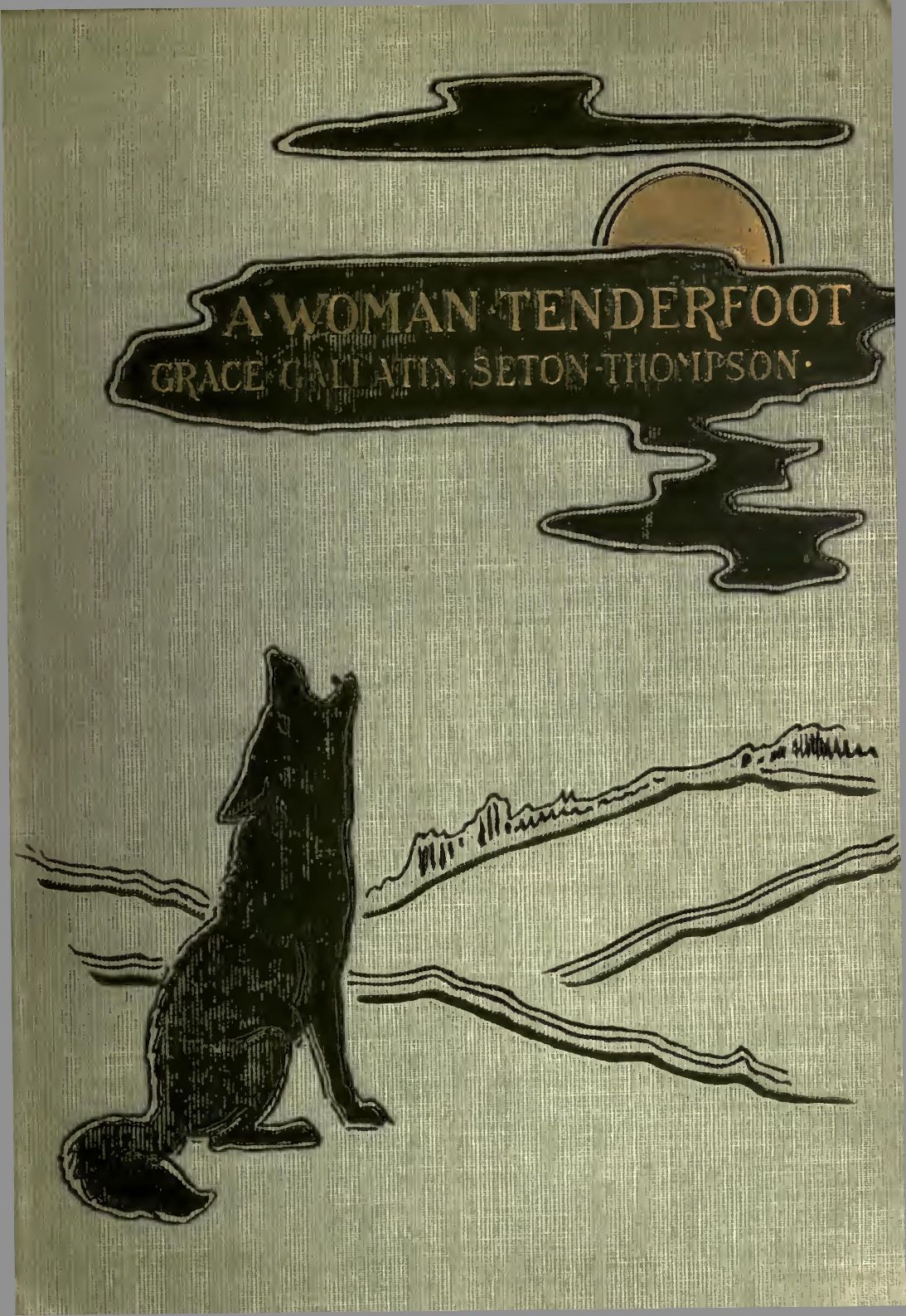
grace setonShe was also president of the Connecticut Women’s Suffrage League, served two terms as president of the National League of American Pen Women, and organised, and later, commanded, a women’s mobile relief unit in France in World War I! Ann was brought up in the family mansion, under the care of a nanny, and later went to boarding school, but she also travelled a great deal with her parents. She was apparently a hauntingly beautiful and very intelligent child, but though she did well at school, did not go to college. Instead she got married at nineteen and ran away to Oxford with her new husband. Perhaps the artistic hothouse that was home was just a little too much for her! (As was perhaps not surprising given the strong wills and personalities of Ernest and Grace, they divorced in 1934).
anya seton weddingIt was not until Ann was in her early thirties, and herself already divorced, remarried, and with three children from those two marriages, that she fulfilled a long-held dream of becoming a writer. As Anya Seton, she published her first novel, My Theodosia, in 1941. She obviously had her father’s golden touch: the novel was an immediate bestseller. More successful novels followed, some of which, like Dragonwyck, were made into Hollywood films in the 40’s and 50’s. Over a 34-year career, which included many long periods travelling and researching, she wrote twelve novels, some of them ‘straight’ historical novels, like Katherine, others mixtures of fantasy, the supernatural, and history, like Green Darkness. Her last novel, Smouldering Fires, was published in 1975; the author herself lived for another fifteen years after that. Though all her novels were popular worldwide, it is definitely Katherine which to both critics and readers alike represents the high point of her considerable gifts, and which will live forever in the minds and hearts of thousands of once-were-teenagers, now grown men and women.

anya_setonkatherine 5


Picture That: Illustrators on food, 2: Beattie Alvarez

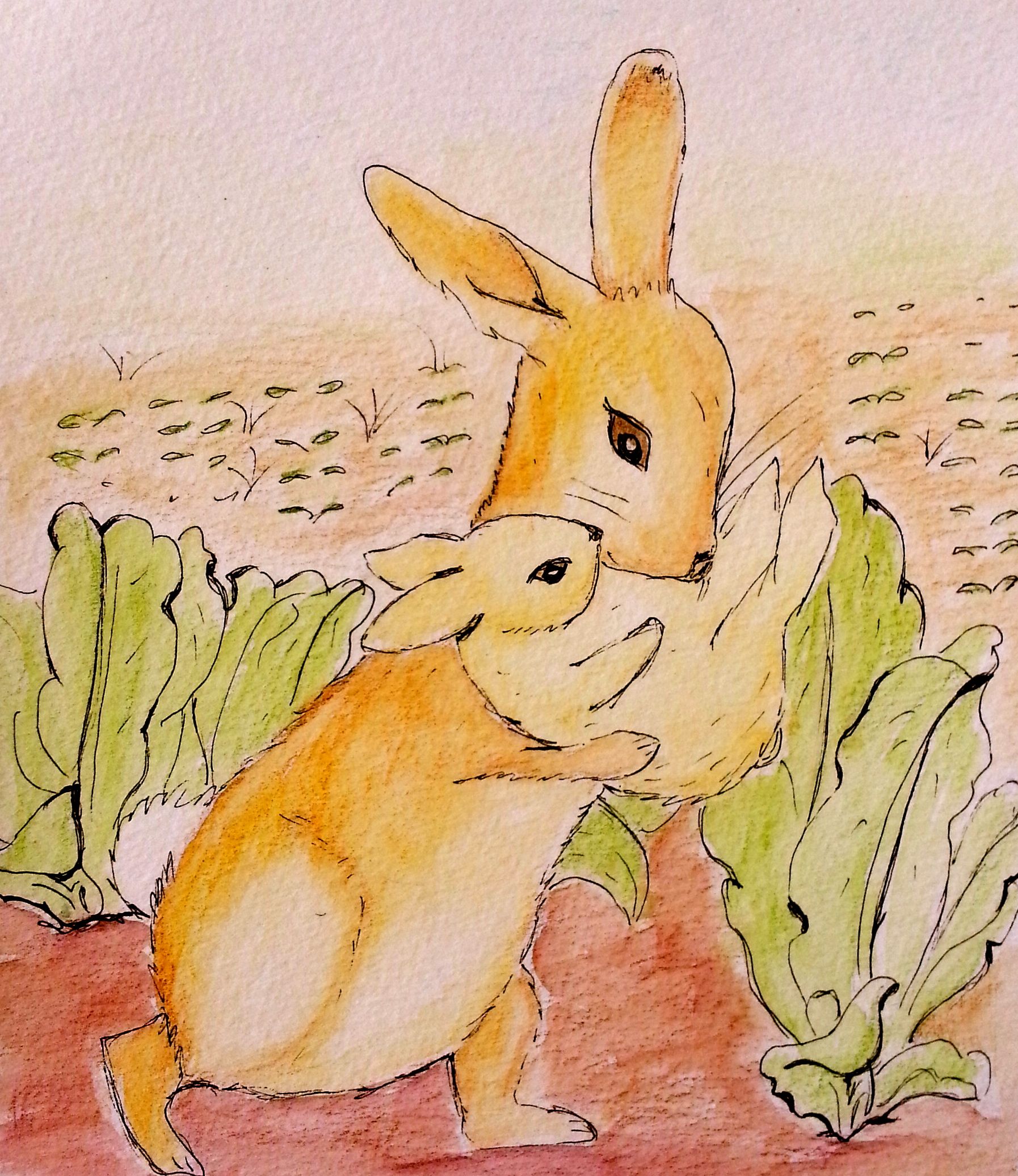
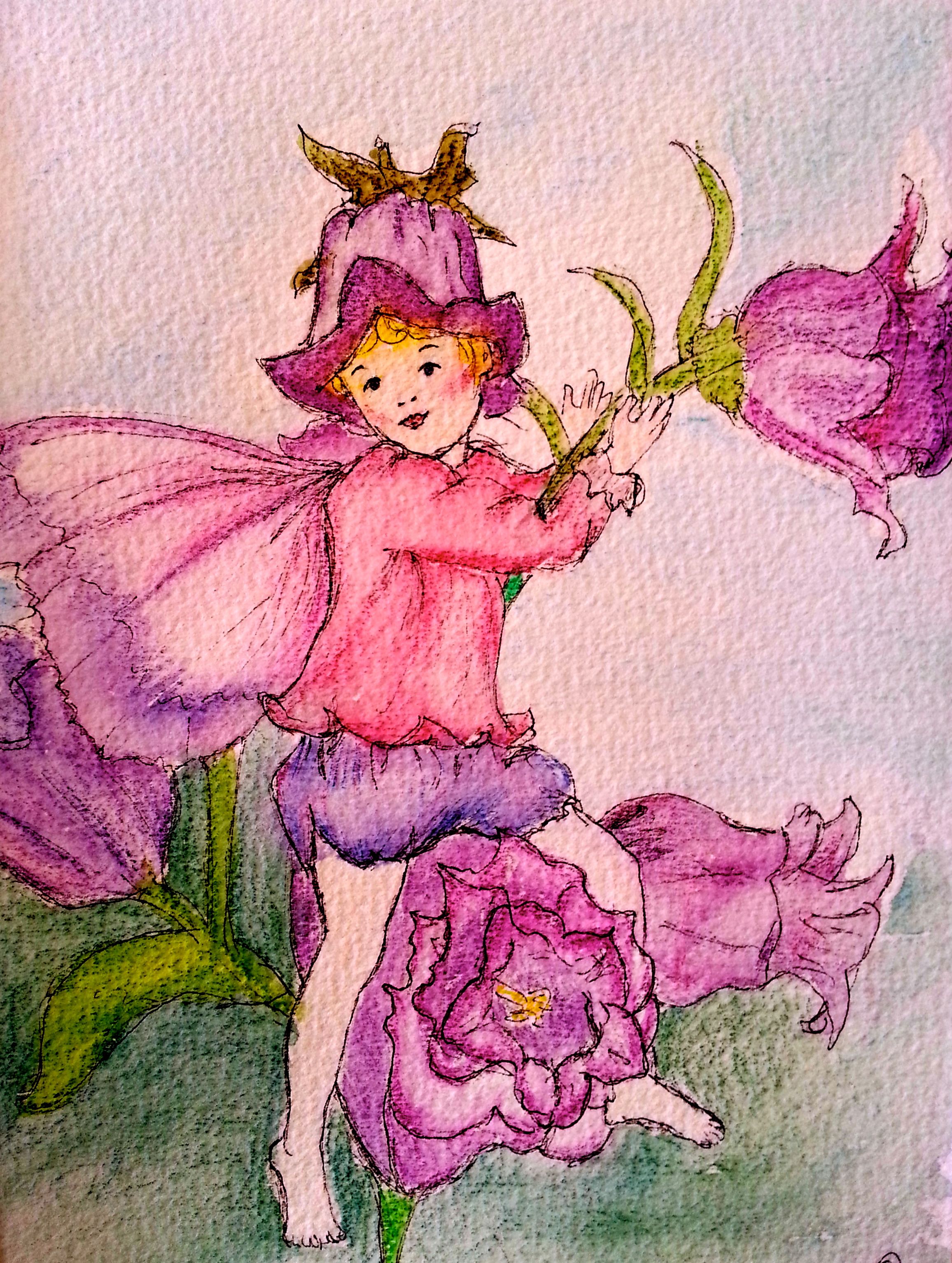
Beattie's rabbit familyCross-posted from my food blog.Beattie's flower fairy 1

Today I’m featuring gorgeous illustrations and a yummy easy recipe by Beattie Alvarez, young multi-talented illustrator, author, editor, toymaker, mother of two lively children, and passionate reader! She is also one of the team at Christmas Press Picture Books and at the beautiful toyshop, Granny Fi’s Toy Cupboard.

Beattie portrait

Mi Goreng for the busy reader

by Beattie Alvarez

Too busy reading a book to do the shopping? Just got to the exciting part and don’t want to stop for long, but your tummy is grumbling? Want something hot, simple, and delicious to eat while you’re reading your book?
I have the perfect recipe for you!
Mi Goreng!
Most people have had this delicious noodle concoction, a favourite with students and people on a budget. They’re cheap, quick, and yummy. Most people have also gone to the cupboard in their hour of hunger only to discover that they have RUN OUT! Oh, the horror!
This happened to me yesterday.
It was a quiet afternoon and I was happily reading Harry Potter in the sun when I realised that I was drooling on it as I read about the fantastic feasts. NOT GOOD. Being the day before payday, my pantry was looking sad. What could I make that was warm and cosy and QUICK? I didn’t want to put down Harry for too long.
I found two sad looking spring onions, half a Spanish onion, tomato sauce, and manis (sweet soy sauce). And a ten pack of dry two-minute noodles.
Five minutes later (I kid you not!) Harry was safely tucked under the edge of my bowl as I wolfed down my meal. To be fair, mi goreng is not ideal for eating with Harry Potter. What you need with Harry are pies and puddings, cakes and sweets, hot chocolate, baked potatoes, and all those other fabulously English things. However, my meal was perfectly adequate and (with the right book) would have been perfect!  Beattie's mi goreng

Ingredients:
1 tbsp sweet soy sauce (manis – available from most supermarkets in the Asian food aisle).
1 tbsp tomato sauce
pepper – I used a lot, but some people would prefer less. Start with half a teaspoon and go from there.
Onions of some description
3 packets of dry noodles
soy sauce to taste
oil
egg (optional)

Beattie's goblinMethod:
1. Pick your favourite book. Get it ready for later.
2. Mix tomato sauce, pepper, and sweet soy sauce in a bowl.
3. Boil and drain your noodles
4. Finely chop, and then fry your onions in the oil until they are nice and crispy, but not burnt.
5. (optional) poach or fry your egg
6. Turn the heat off, throw everything into the frying pan and mix, adding soy sauce to taste.
7. (optional, but advised) transfer to plate or bowl.
8. Open your book and read while eating.
9. Go back for seconds if necessary.
NB. All quantities are approximate and to my taste. I don’t like things very saucy (read want you will into that statement!), so I used three packets of noodles. Some people would only use two. I also like quite sweet savoury dishes. If you prefer salty, then add more soy sauce or lessen the amounts of Manis and tomato sauce. And if you aren’t kissing someone later, fried garlic works well too.

Beattie's mushroom

Beattie's strawberry fairy

On writers: Nicholas Stuart Gray and The Stone Cage

The Stone Cage 001This is the second in a series of republished articles of mine on writers. This one is about the wonderful, influential yet shamefully neglected British children’s author, Nicholas Stuart Gray, whose lively, magical fantasy novels and short stories kept me spellbound as a child, and whose work I still love. This article is particularly focussed on my favourite novel of his, The Stone Cage, which is an absolutely wonderful riff on the fairytale of Rapunzel through the eyes of the witch’s familiars, a cat named Tomlyn and a raven named Marshall.

The article was first published under the title ‘A Cat’s Life’ in the lovely British books magazine Slightly Foxed in their summer 2008 edition.


Nicholas Stuart Gray

by Sophie Masson

If you were a bookworm as a child, your memories are measured not only in family or school or public events, but in stories you read. You remember vividly the smell, the touch, the sight of certain books. You clearly remember picking them up from the shelf—an ordinary act—and then the extraordinary happening, as you open the book and fall straight into another world. The pure pleasure of it, the immediate liberation. For me, who loved fairytales and fantasy, who longed to go through the looking-glass, the wardrobe, stepping through the borders into another world, where anything might happen, it was also a blessed escape from the confusing, disturbing and tumultuous family dramas that dominated my childhood. In those stories of other worlds, I found pleasure and consolation, transformation and possibility. And I found my own calling as a writer.
It can be dangerous revisiting those important, beloved stories, as an adult, for it’s not just a book that might be found wanting, but memory itself. And yet, when it works, when the barriers of time dissolve before the sheer magic of a real storyteller, it is probably the most thrilling experience a reader can have.

The Stone Cage, by Nicholas Stuart Gray, was one of those books that I remember clearly not only because they were so good to read, but because they were also so influential on me as a developing writer. Picking it up again after a gap of more than three decades was one of those magical moments that made me rediscover not only my childhood self, but also the reason why the book stands out in my memory. For from the very first sentence, you are plunged into a briskly unsentimental fairytale world, tartly guided by Tomlyn the witch’s cat:

Ever heard of a ‘dog’s life’? I’ll bet you have. Everyone has. Means a low, miserable kind of life. Full of kicks and curses, and nothing much to eat. I don’t know, I’m sure—what about a cat’s life, then? There’s not much said about that, is there? Nine lives, yes—but what sort of lives are these supposed to be? I’ll tell you the sort I had—a dog’s life.
I have to admit it isn’t every cat who lives with a witch, though.
And what a witch! Bad-tempered old —! No, it’s not fair to a cat or she-dog, to liken her to one of them. Let’s say she was a bad-tempered old beldam, and leave it at that. She hated people. She hated Marshall, her raven. She hated her bats and her toads. She hated me. Sometimes I think she even hated herself. A great old hater, was madam.   Tomlyn 001

A naïve young stranger intrudes on this loveless, isolated mini-dictatorship, and is forced to pay a terrible price for his presumption, as he must give up his only child to the witch. And so the poor child is taken from her parents and put into a world where no-one trusts anyone else, love isn’t allowed to exist, and bitterness and cruelty reign. But all is not lost, for this is a very special child indeed, who will achieve an extraordinary miracle, greater than the greatest of spells, greater even than the most malevolent hatred.

As I read, I was swept along, just as in childhood, on the irresistible tide of a gripping story that for all its wit, humour, accessibility and clarity is also a compassionate, tender and complex evocation of the transforming power of love. But it’s certainly not all sweetness and light. Going way beyond a mere retelling of the fairytale of Rapunzel, on which it’s based, The Stone Cage reaches deep into the darkest, most painful aspects of life, as well as its most beautiful and joyous. In the way of the best children’s literature, it attains a profundity that’s all the more remarkable because of its sheer lucidity and unpretentiousness.

I finished The Stone Cage exactly as I’d done all those years ago: with tears in my eyes, and a thrilling heart, for the book also ends in one of the most perfectly judged, moving yet unsentimental scenes of its kind. Allied to my renewed love was a keenly increased admiration for the artistry of the author, which had easily stood the test of time. The characterisation is superb, the dialogue crisp, the pace good, the combination of light and dark subtly achieved. And the beauty of the style! Fluid, graceful, it is humble—in that it doesn’t draw attention to itself—and yet it’s fresh, distinctive, individual. The Stone Cage had been so important to me because everything in it worked. It was all so natural, so flowing, so multi-layered, its world richly imagined, yet delicately evoked. It was a real masterpiece, a novel just about perfect both in concept and execution, and timeless in its appeal, a novel that should have just as many young readers now as it did back then.

nicholas stuart grayAye, there’s the rub. For The Stone Cage is out of print, and has been for a long time. In fact, and rather astonishingly, in a culture like Britain’s that generally does value its children’s literature, all of Nicholas Stuart Gray’s books are presently out of print. Beautiful, original and accessible though The Stone Cage, Mainly in Moonlight, Grimbold’s Other World, Down in the Cellar, The Seventh Swan, and his other works are, they are unobtainable except through second-hand shops and the Internet, although some are still in libraries. It’s not as if modern children don’t like them, or don’t understand them, either; I know of lots of young readers who, introduced to Gray’s books by their parents, have loved them just as much, and have found them just as easy to read. It’s not as if there’s anything dated or offensive in them, no obvious or hidden misogyny or racism or class stuff or anything like that. There is nothing really to properly explain this puzzling situation, other than that they’ve simply been overlooked.

And yet, Gray’s work has deeply influenced many of today’s writers working in the fields of children’s literature and of fantasy—Garth Nix and Neil Gaiman and Cecila Dart-Thornton, for instance. I’m certainly not the only reader-turned-writer to remember Gray’s books with great love and respect. Australian children’s novelist Cassandra Golds, author of the acclaimed Clair de Lune, wrote to me about the huge impact on her of one of Gray’s books, Down in the Cellar :’I will never forget the Sunday afternoon on which I finished reading it. I remember feeling a kind of mysterious desolation, partly because I’d finished reading it and would never be able to read it for the first time again, but partly also because I KNEW I had now read the best book I was ever going to read. And I felt, then and still, that the only possible response to that experience was to become a children’s author myself.’ As an eighteen year old, Cassandra had written the author a fan letter, and she still treasures his modest, graceful reply, in which he said, amongst other things: ‘As all my books and plays are only written for myself and not for any imagined audiences, readers, age-groups, publishers, etc, it is always a delightful surprise to get proof that anyone BUT myself ever reads or sees them..’ nicholas stuart gray 2

Perhaps that answer gives a clue as to why Gray’s work is not recognised as it should be. This was not a man who blew his own trumpet, not a writer who sought publicity, but one who loved his work and felt privileged to be doing it, and who was too humble to thrust himself forward. Who was perhaps also at heart a rather private, reserved, even secretive person, despite his long association with theatre, which many people would consider the home of trumpet-blowing, egotistical extroverts. Certainly, when I went to research his life, I found precious little information.

Nicholas Stuart Gray was a Highland Scot, born in 1922, the eldest of four children. As a child, he wrote stories and plays for his siblings. Not one to bend easily to the routines of school, he left at the age of fifteen, to become an actor. He kept writing as well, and his first play was produced two years later. His first children’s play to be published was Beauty and the Beast(1951), and from then, he wrote and produced a good many plays for children, before turning his hand to novels and short stories(where I think his true gifts flowered). Some of his novels, like The Stone Cage (1963), he also adapted for the stage: he told Cassandra Golds that he himself played Tomlyn in the play’s premiere at the Edinburgh Festival and its subsequent successful seasons in London and on tour. (That would have been something to see! ) He never married or had children. His plays fell out of fashion, but his novels and short stories continued to be published until his untimely death from cancer in 1980, and right into the late 80’s, we were still seeing frequent reprintings of his books.

nicholas stuart gray 3But in the last fifteen years or so, there have been no more new editions. In this new Golden Age of children’s literature, it’s more than time to bring his books back so that a whole new generation can fall under their spell. Any publishers out there listening?nicholas stuart gray 4

Guest post: Duncan Lay on the reality of fantasy

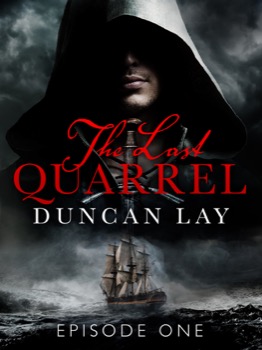
duncan lay Last-Quarrel-Episode-1_cover1An interview with legendary US fantasy author Raymond E Feist inspired Duncan Lay to begin writing fantasy. He is the author of two best-selling Australian fantasy series, the Dragon Sword Histories and the Empire Of Bones. He writes on the train, to and from his job as production editor of The Sunday Telegraph, Australia’s biggest-selling newspaper. He lives on the Central Coast of NSW with his wife and two children.

In this fabulous guest post, Duncan explores how he created the world of his new series, by inspiring himself from the real world.

When you begin to read a fantasy story, the author is asking you to put aside your disbelief when you crack open the front cover. What lies inside could include fantastical creatures, magic, non-human characters – really, it could be anything.
Personally I think fantasy is best when it comes with a layer of reality, as it gives the reader something to hold on to, something familiar to ground all the fantastic, amazing other things they are reading.
Part of that comes from the characters, making them as real as possible but I also think part of it needs to come from the world they are from.
I know that some authors lovingly construct a world from scratch and good on them, I say. Personally, I think that a touch of the real world in a fantasy story gives the reader something recognisable and allows them to more easily believe what else is happening.
In my new series, The Last Quarrel, there are two lands. Gaelland, which is based on Ireland and the Kotterman Empire, which is loosely based on the Ottoman (Turkish) Empire. In real life, these two countries had nothing to do with each other but this is fantasy, so anything can happen!
The beauty of basing your fantasy country on a real country is you instantly have no problem with character names. Those baby name websites not only offer you endless options but also helpfully say what the name means, which allows you to pick names that offer a hidden side to the character. Place names are also a breeze, although you can also mix those up a little so as not to represent actual places. Thus I have Lagway (Galway), Lunster (Munster), Meinster (Leinster), Londegal (Donegal) and so on.
Best of all, it allows you to learn from history. After all, people survived and thrived in those conditions, in that weather, through war, disease and famine. How they did it gives you an insight into how your characters might live, what they might wear and eat. It can influence their speech, their mannerisms and their history. Of course, being fantasy, you can pick and choose which aspects you keep and which you discard and replace with your own!
I loved the idea of Ireland for many reasons. The thought of a small, proud country that, through no fault of its own, is next to a larger more powerful one is obvious. How it deals with that larger country’s ambition is a matter of history. Ireland has a proud warrior tradition, its own songs and legends and a powerful national character. One of the main characters, Fallon, even uses the shillelagh, the traditional Irish fighting stick. Plus I was fascinated with the story of the sack of Baltimore, an Irish village that was stripped bare by Arab slavers. Putting the two together gave me a strong base for my story.
The Ottoman Empire also interested me. The way it was seen as the “sick man of Europe” during World War I, which led to the battle of Gallipoli and the forging of the Anzac legend, makes it instantly fascinating to anyone in Australia. The idea of a mishmash of an Empire, cobbled together from a variety of countries and held together by willpower and a steel fist, made it an obvious choice for me. Naturally there are heroes and villains on both sides!
History books are a great help with research but I also find books such as the Horrible Histories series are even more helpful, offering a really gritty view of life in different times.
And the best thing is, you can always mix and match things, as well as make them up if it comes to it. After all, it is fantasy and it only needs a little reality!

Duncan’s website: http://www.duncanlay.com/

Facebook: https://www.facebook.com/duncan.lay

Twitter: https://twitter.com/DuncanLay

About The Last Quarrel:

The Last Quarrel is a series in 5 episodes, the first of which came out on January 22, and further episodes will be released at fortnightly inteervals in February and March, with Episode 2 coming out this week! Keep an eye on Duncan’s Momentum page for more information as episodes are released.

Episode 1:(out now)

Gaelland is a nation gripped by fear.

In the country, fishing boats return with their crews mysteriously vanished, while farms are left empty, their owners gone into the night, meals still on the table. In the cities, children disappear from the streets or even out of their own beds. The King tells his people that it is the work of selkies, mythical creatures who can turn from seals into men and back again and witches. But no matter how many women he burns at the stake, the children are still being taken.

Fallon is a man who has always dreamed of being a hero. His wife Bridgit just wants to live in peace and quiet, and to escape the tragedies that have filled her life. His greatest wish and her worst nightmare are about to collide.

When an empty ship sails into their village, he begins to follow the trail towards the truth behind the evil stalking their land. But it is a journey that will take them both into a dark, dark place and nobody can tell them where it might end…

Episode2:

Prince Cavan is sure his younger brother, Swane, is behind the children going missing in the city. But his father refuses to listen and sends him away to investigate reports of selkies stealing people from the countryside. A furious Cavan fears this is part of a conspiracy. But then he meets Fallon, a simple country sergeant who has his own theories about the attacks on Gaelland. And what they cannot achieve apart, they must just do together …

Guest post: Michael E.Rose on a great place to set a spy thriller

The new Burma

Photo by Michael E.Rose

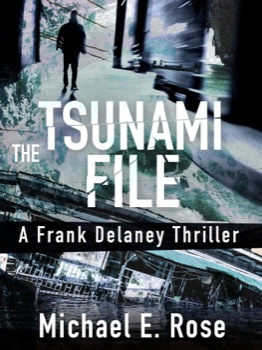
Michael RoseToday’s fascinating guest post is from thriller writer Michael E. Rose, author of the Frank Delaney series—The Mazovia Legacy, The Burma Effect and The Tsunami File–now being published by Momentum Books. Michael is the former Chief of Communications for Interpol and a former journalist, broadcaster and foreign correspondent. He draws on his years of experience in exotic locations around the world for his stories and characters. He’s recently back from a trip to Myanmar, where he set one of his books, and he reflects on the changes there.
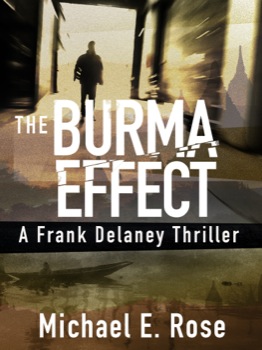
When I sat down to write The Burma Effect some years ago, the place the military junta had decided would be called Myanmar, not Burma (just because they felt like it) was truly in a bad way. The generals held literally everything in an iron grip: opposition activists suffered appalling conditions in Insein Prison (great name for a bad prison); media censorship was absolute, the economy was in ruins, foreign journalists were not welcome, and Aung San Suu Kyi was under house arrest.
A great place to set a spy thriller, yes? And so it was. I had a great time researching and writing “The Burma Effect” and readers seemed to like it. So I was pleased and my agent was pleased and my publisher at the time was pleased. All was right with the world – except that conditions in Burma were still terrible and nobody was getting out of jail.
Now, over the past few years, there has been a breathtaking series of changes in Burma; sorry, “Myanmar”. I decided (once a journalist, always a journalist) that I would go up and see what was happening. Were the generals serious about moving toward democracy? Would they really be able to tolerate Aung San Suu Kyi now that she was a free woman again? Could people say what they liked there, at long last? Could a thriller writer find a good story there anymore?
Well, the answers are not simple. Yes, things are opening up. Tourists are pouring through Rangoon (sorry, Yangon) airport. Yes, journalists are allowed in and they can ask some tough questions and not get thrown out of the country like the bad old days. There’s a lot of new investment. You can even use credit cards now; some places, sometimes, and only if the power is on and there is a solid Internet connection.
But you still get a strong sense that just behind the new façade that is being constructed, there are very, very deep shadows.
The generals have rigged the new Constitution so they have 25 percent of members of Parliament, and it takes a vote of more than 75 percent to make any meaningful constitutional changes. Aung San Suu Kyi, clearly the most popular person in the country, bar none, is still forbidden from running for president because she has a couple of children who were born overseas. The generals, or their cronies, own just about all of the truly lucrative enterprises: mining, logging, airlines, hotels, key industrials.
They are also said to still have strong lines into the drug trade and other very shady goings-on. (Am I allowed to say that, about the new Myanmar? We’ll have to see.)
So, people on the streets of shabby, wonderful Yangon, or in a small market somewhere up-country in Shan state, or on a boat on the river near Mandalay, will tell you they are optimistic about the future. Elections are coming this year, there are more jobs around, the lights stay on longer than they used to, and fewer dissidents are in jail.
But people may still talk about such things with an almost imperceptible glance over their shoulder, to see who is listening. They may still choose carefully who they want to have a real conversation with. They aren’t going to rock the boat too much, for a while longer. They clearly know that things are still going to be rough, on a lot of levels, for quite a few years yet.
But there is hope, and that was in very short supply in the Burma where I put my series main character Frank Delaney a few years back. And there is hope there for thriller writers, because even the new Myanmar has a dark side and no-go areas and spies and guns and drugs and political chicanery.
A great place to set a spy thriller, yes?

Michael’s website: http://michaelrosemedia.com/

Twitter: @mrose_writer

About the Frank Delaney thrillers by Michael E.Rose, all now available through Momentum:

Mazovia

The Mazovia Legacy
The snow in a Montreal winter covers a multitude of sins …
In the icy depths of a Quebec winter, a harmless old Polish man dies in mysterious circumstances. His suspicious niece draws in Montreal investigative journalist, Frank Delaney, to help her find the truth behind the death, a story the authorities seem to want covered up.
The search for answers sweeps them into a dangerous web involving Canadian, Polish and Vatican agents who will use any means, even murder, to stop them. The catalyst for this international intrigue is the true story of Polish national art treasures secretly shipped to Canada to be hidden from the Nazis in the opening days of World War Two. This classic thriller combines fascinating history, deft storytelling and psychological depth.
The Mazovia Legacy was shortlisted for the Arthur Ellis Award for Best First Crime Novel, 2004.

BurmaThe Burma Effect
Sometimes an obsession can become a death wish …
In the second Frank Delaney thriller, the Montreal-based investigative journalist and sometime spy is assigned by the Canadian Security Intelligence Service to locate one of their agents gone missing in Bangkok.
The search for Nathan Kellner, a bohemian bon vivant with a taste for young women and a variety of illicit substances, brings Delaney first to London, then to Thailand and Burma, where evidence points to an elaborate plot to destabilize the Burmese military regime. Untangling that plot thrusts Delaney directly into the line of fire between the generals at the head of Burma’s all-powerful junta and those who would use any means to see them overthrown.


TsunamiThe Tsunami File
Not every victim is found to be innocent …
Frank Delaney, investigative journalist and sometime spy, is on assignment in Phuket, Thailand, in the aftermath of the tsunami that killed thousands of people, foreigners and locals alike. Disaster victim identification teams from police forces across the globe have descended on this idyllic holiday location to carry out their gruesome work.
Delaney discovers that, against all logic, someone is trying to prevent identification of one of the bodies lying in makeshift beachside morgues. His search for the reason follows a trail through Thailand’s seedy child sex trade to an elaborate cover-up in Germany and France, where those with everything to lose use increasingly desperate measures to stop him dead.
The Tsunami File was shortlisted for the Arthur Ellis Award for Best Crime Novel, 2008.


On writers: Leon Garfield

Over the next few weeks, I’m going to be republishing on my blog a number of articles I’ve written over the years, about writers, especially writers for young people, whose work I’ve loved and been inspired by, both as a child and into adulthood. These articles have been first published in a number of different places. The first of these I’m republishing, is on Leon Garfield and first appeared in Magpies Magazine some years ago.

leon_garfield black_jackLeon Garfield,

By Sophie Masson

I remember the first time I met Leon Garfield’s work. It was a Friday afternoon, I was about twelve or thirteen, and I was looking for something juicy to read at the local library for the weekend. The Garners I’d wanted were out; but browsing idly on the same shelf, I came across a title that looked good. Black Jack. By Leon Garfield. The cover was evocatively spooky, the blurb tasty, and as I ever judged books by their covers and blurbs at that age–I was willing to give it a go.
From the first sardonic, intriguing sentences, I was hooked:

There are many queer ways of earning a living; but none so quaint as Mrs Gorgandy’s. She was a Tyburn widow. Early and black on a Monday morning, she was up at the Tree, all in a tragical flutter, waiting to be bereaved.

Flung headlong into the strange, funny, terrifying, vivid world of seedy 18th century London from those first sentences, I could not put the book down all that night, even after stern paternal injunctions to turn the light off, this instant! I begged Mum to take me back to the library on Saturday, and snapped up Devil in the Fog, the only other Garfield that hadn’t been taken out, and read it too within a few hours, heart racing. As soon as I got back to school on Monday, I went to look in the library, to see if there were any other books by this extraordinary author. In the space of a few weeks, I managed to gobble up Jack Holborn, and Smith, and Mr Corbett’s Ghost, and The Drummer Boy, and The Strange Affair of Adelaide Harris. And then started again, with Black Jack, which even to this day remains my absolute favourite. I think that I must have read some of Garfield’s books five or six times over those years, and pounced on any new ones that came into the library.
Brought up on the strong meat of 19th century French picaresque adventure novels, I had taken to Garfield like a duck to water, amazed and delighted and whirled along with the inventive plots, wild casts of always believable though larger than life characters, skeins of mystery to unravel, bloodthirstiness and gruesomeness yet also humour, and the glorious language. Though his main characters were nearly always children or young people, they were never hived off into separation from the adult world; this is the opposite of the cosy boarding-school bubble. No; they had to fight, love, hold their own somehow in a harsh yet not completely unloving adult world, a world of tragedy and villainy, yet also compassion and joy and humour. The books, with their evocative illustrations by Anthony Maitland, became an indispensable part not only of my reading life, but of my writing life too, later.

Continue reading