Guest post: Charlotte McConaghy on educating writers

Celebrity_photographers_sydney_glamour_nudes_art_photography_SeductiveToday, I’m delighted to be hosting the fabulous young author Charlotte McConaghy to my blog, as the last stop on her blog tour for her new novel with Momentum, Melancholy, book 2 of the Cure, released today!

I’ve known Charlotte for quite a while, ever since she was in high school in fact–we come from the same town and she’s a school friend of my middle child, Xavier (they are still good friends, incidentally!)

From her early teenage years, Charlotte was a keen and dedicated writer, and her first novel was published when she was only 17! I’m proud to reveal that when she was in Year 12, she came to me for some advice on a piece of writing–fantasy fiction–which she was creating for an Extension English major work. I was really impressed with her work and felt it also showed great promise–which was clearly the case, as though she’s still only in her twenties, Charlotte has since gone on to publish several more books, including Descent, The Shadows, Avery(first in the Chronicles of Kaya)and now The Cure series. It’s been such a joy to watch the progress of her career. And what’s more, as well as being a novelist, Charlotte also holds a Masters in Screenwriting, so maybe one day she can even be 9781760082567_Melancholy_coverinvolved in bringing one of those great novels of hers to the screen!
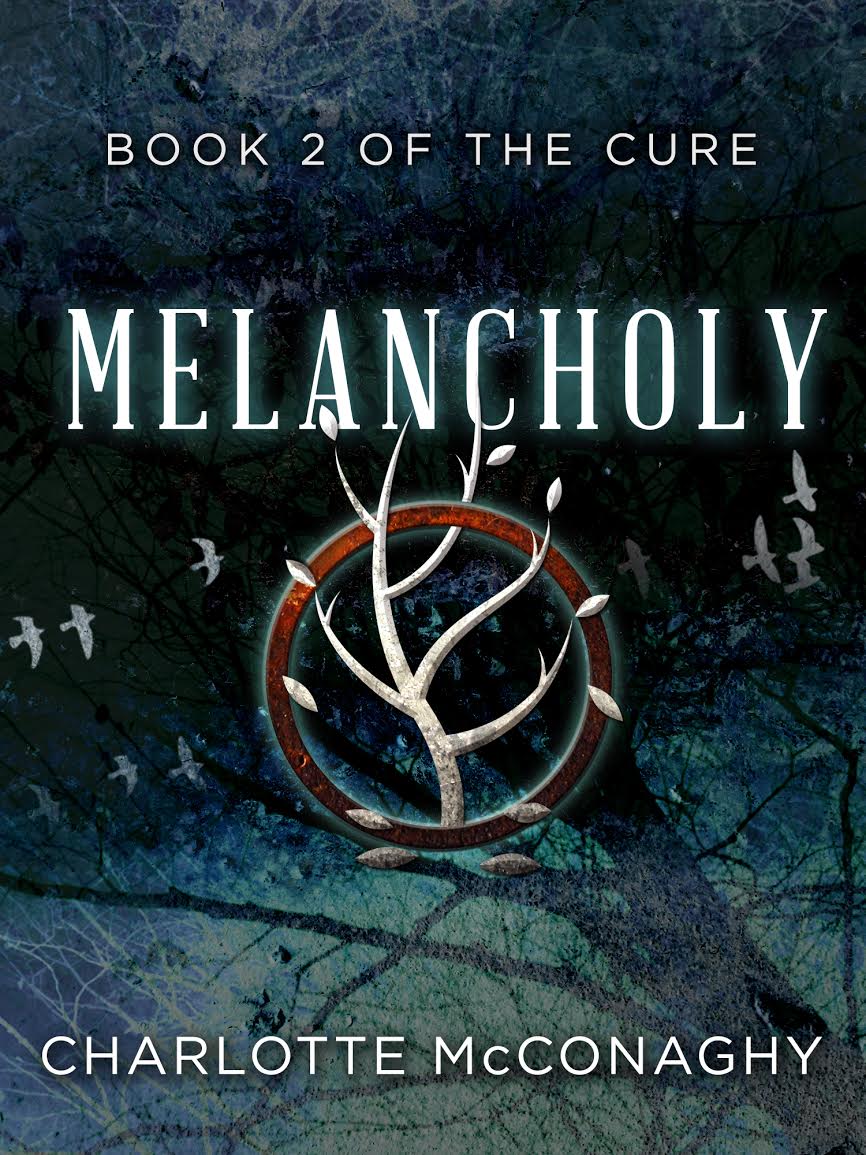
Congratulations on the release of the new book, Charlotte, and welcome to my blog!


The Importance of Education in Perfecting Your Craft
Whether it be advanced degrees, continuing education, or workshops, how important is it to continue to learn and grow in your writing?
By Charlotte McConaghy

Thanks for having me on the blog today! To celebrate the release of my new novel Melancholy – Book Two of The Cure series, I thought I’d talk about something I get asked about a lot by aspiring writers: the importance of education in perfecting your craft.

A lot of new writers are keen to get opinions and perspectives on the education of writing – and whether or not you really need it. This is a tricky subject because many people will tell you not to go anywhere near creative writing courses, and I sort of agree with this. The reason people say it is because these sorts of courses can really mess with your voice, and as we all know, this is arguably the most important aspect of writing. Voice is essentially the personality in your writing, the style and tone and the way it feels for someone to read your work. When you start to play with the finer details of prose – grammar, punctuation, sentence structure, syntax etc – sometimes a writer will lose confidence in their original, natural style, and their voice can be lost.

There’s also a culture of negativity imbued in a lot of degrees, because in essence, education is about teaching people to critique works in order to learn frameworks for distinguishing quality versus non-quality. It’s an aesthetic at the end of the day. What often isn’t taken into account is the fact that there are other frameworks, including emotional connection and engagement, which are difficult to formulate or identify – these are instinctive, and they tie back in with voice.
furySO, we understand that voice is hard to quantify – we can’t learn this, except through practicing getting to the heart of ourselves in our work, and allowing the essence of who we are to infuse our writing. Being true to what we love is the most important thing in any creative field.

HOWEVER, I do believe that in order to elevate our work from something that is more private – a piece of ourselves, in our voice, written for ourselves – we have to understand craft principles. After all, a novel is designed to be read, so you must take into account your audience, and using tried and tested tools will help you to engage your audience on an emotional level.

Early in my career (I say that like I’m a seasoned and wise old expert at 26 – ha!) I avoided creative avery-the-chronicles-of-kaya-1-by-charlotte-mcconaghywriting courses, but I did do a Masters degree in screenwriting, which improved my writing enormously. It taught me the tools for understanding things like character development and transformation, story structure, genre, setting, world-building and POV.

So in summary, I guess what I’m trying to say here is I believe that in terms of the larger- scale aspects of writing, education is absolutely necessary to improve your work. Certain degrees, as well as workshops and courses, will keep you in touch with these tools, and remind you to be mindful of craft principles when you write. Keep learning – you can never learn too much, or hear too many personal opinions that might trigger an epiphany of your own. Go to workshops, readings, festivals etc. Connect in with your people. But I also believe that in terms of your prose, the best thing you can do is to read daily and write daily. Reading will develop your taste and teach you what inspires you, and writing will develop your own personal style. Practice, practice, practice – and you will never stop improving.  arrival


More about Melancholy and buy links here.

Visit Charlotte’s website here.

Follow Charlotte on Twitter.

Charlotte’s Facebook author page here.

Guest post: Goldie Alexander on fictionalising history

Last week, I featured a guest post by Wendy J.Dunn, about how she creates her historical fiction. Today, I’m presenting a guest post from Goldie Alexander on a related subject–the importance of fictionalising history.

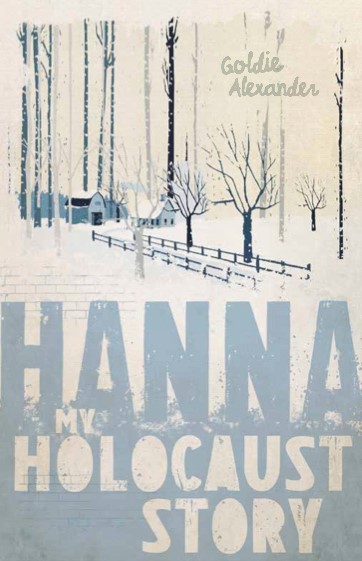
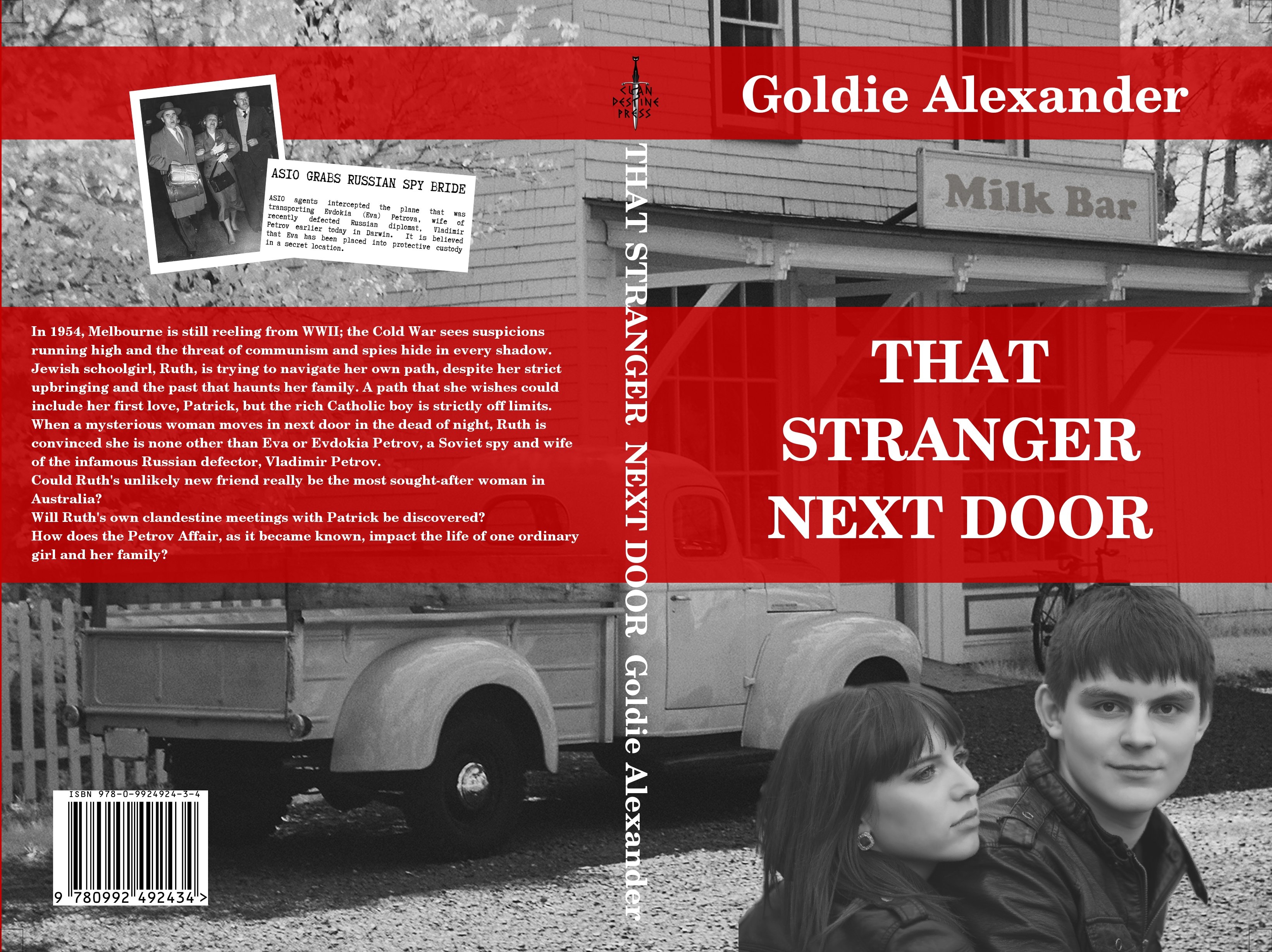
Goldie Alexander writes award winning short stories, articles, radio scripts, plays and books. Her novels are published both in Australia and overseas for readers of all ages. Her books for adults include: ‘The Grevillea Murder Mysteries’ ‘Lilbet’s Romance’,  Dessi’s Romance’,Penelope’s Ghostmentoring your memoir and ‘Mentoring Your Memoir’. Her first YA novel ‘Mavis Road Medley’ was a Notable CBCA, was shortlisted for by the Office of Multi-Cultural Affairs and is listed as one of the best YA books in the Victorian State Library. Her best known book for children is: ‘My Australian Story: Surviving Sydney Cove’. Her fiction for children includes three collections of short stories and several mysteries, fantasies and science fictions. Her other historical fictions include: ‘The Youngest Cameleer’, ‘That Stranger Next Door’, My Holocaust Story: Hanna’ and the verse novel ‘In Hades’. She has also co-authored a non-fiction book, The Business of Writing for Young People, with fellow writer Hazel Edwards.

Welcome, Goldie!Goldie%20A1

Fictionalising history

by Goldie Alexander

Back in the dark ages the history I was taught when very young consisted of memorising facts and dates. I could recite all the kings and queens of England, though I knew almost nothing of our own history. I recall with wry amusement a first year university British History course made up entirely of 16th Century documents, but with no explanation as to why I was required to understand them.
In a way fictionalizing history is writing about time. Time is the element in which we all live much like fish in water and yet the realisation that time flows on and on and never flows backward is one of the most stunning of childhood discoveries. Time is what makes discovering history so important, because time is the narrative of mankind. It provides answers as to how people lived in the past as well as the roots of contemporary laws, customs, and political ideas. The accuracy of that old adage, “you can’t know where you are going unless you know where you have been” holds true. Historians realize history does repeat itself, though with different permutations. This repetition has importance in all societies. It teaches younger generations the value of certain social attitudes, it helps social change and gives sound governmental policies. A good example is the Aborigines of Australia who managed to hang onto their history for 40,000 years by word of mouth. A knowledge of history clearly proves early man’s love of the arts and demonstrates that once a civilisation is able to maintain a steady food supply that their creative ideas flowed whether the evidence appeared on rock walls, papyrus, or cedar bark.
A child immersed in facebook, twitter, instagram, or playing the latest computer game, might ask, why lilbets-romance1bother with those old stories? So the challenge for us authors who write historical fiction is to make these stories as relevant and exciting as any Hunger Game or Vampire novel and to write what our youngsters will enjoy, and incidentally learn a lot. I think this can happen if the author is able to turn the story into a compelling ‘here and now’ narrative. The best historical fiction works on the premise of “What if you were there at the time?”
It goes without saying that all historical fiction in whichever medium it appears (film, TV, or novel) must be based on careful research. My favourite faux pas is Elizabeth Taylor’s ‘Cleopatra costume’ with its frontal zip and the extra wearing a watch. Does anyone here recall that? Nothing is more irritating coming across a glaring error such as dialogue set well in the past in the past using a contemporary idiom.

There are certain rules we authors keep. We know that good historical fiction has a strong internal logic and is easy for young readers to follow. If the story darts too quickly between ‘times’, unless this is carefully stated, this can confuse even a sophisticated adult. And the story must contain some kind of quest. The characters must have a clear idea of what they desire or fear. They must be wholly rounded, and as three dimensional as if living in the present. The reader must be able to identify with these characters and feel empathy or compassion for their situation.
Some writers worry that readers might not like characters who exhibit typical prejudices of their time. But flawed characters who gain the readers’ sympathy and understanding despite their flaws are a key element of good fiction. Good historical fiction balances a characters’ flaws with qualities we can respect and admire, and gains sympathy for them without excusing prejudice, cruelty and the like.

surviving sydney coveI have written a number of historical novels for young readers. As an Aussie author, I mostly stick to our own history. I fictionalised the lives of our First Fleet in “My Australian Story Surviving Sydney Cove”; wrote about life during the Great Depression in “Mavis Road Medley”; wrote about the little known non-indigenous discovery of Uluru in “The Youngest Cameleer”; explored the First World War for very young readers in “Gallipoli Medals”; and imagined life in Melbourne just before World War Two in “Lilbet’s Romance”. One of my recent novels ‘That Stranger Next Door’ centres on the Australian equivalent of the mid-fifties McCarthy Senate inquiries and can be compared to the Children Overboard incident as both have political overtones. I believe the events I use as my settings have helped shape my country as to what it is now. My most recent novel ‘My Holocaust Story: Hanna’, my only historical novel set in the Warsaw Ghetto, partly shaped what I am now,
Browsing, I came across this comment in Good Reads; “Historical fiction gives me the opportunity to engage with what it would be like to live in those times. It is always great when you find a good source and even more so if that source confirms what you have already imagined. There is so much to learn from the past, it would be waste to just write about our day to day Holocaust Cover Smallpresence.

Writers are often chastised for writing about the past – as if only 21st Century problems are relevant, as if writing fantasy is the only way we will persuade youngsters to read. Certainly there are vogues involving vampires, zombies, super- adventurous girls, and a heap of Tolkien-style fantasy. In the end I doubt they will have a long life. These novels are often commercially driven and may only last until something new takes over. On the other hand history is never out of fashion and fictionalising it, is the best way of ensuring that some understanding of past mistakes might prevent them happening again.

www.goldiealexander.com

www.goldiealexander.com/blog

twitter.com/goldiealexander

facebook.com/goldiealexander

petrov large cover

Guest post: Wendy J. Dunn on writing historical fiction

Today I’m delighted to welcome historical novelist Wendy J. Dunn to my blog, with an intriguing guest post about how she approaches creating the imaginative landscape of her books, whilst also recreating a very particular historical period.

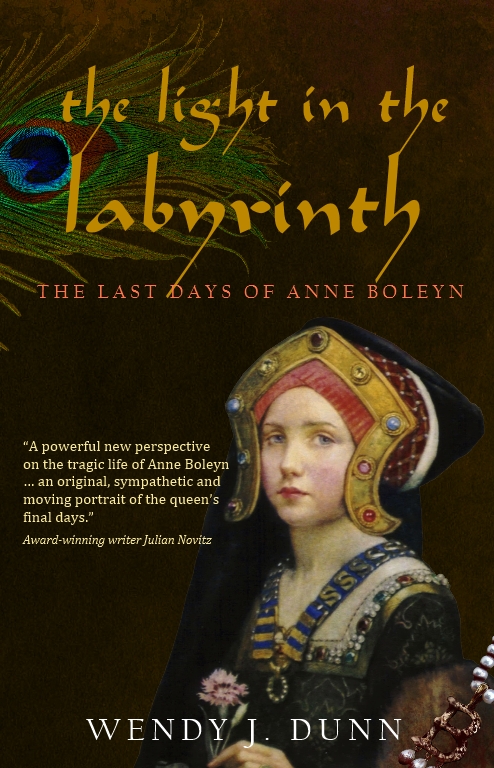
Wendy is an Australian writer who has been obsessed by Anne Boleyn and Tudor History since she was ten years old. She is the author of two Tudor novels: Dear Heart, How Like You This?, the winner of the 2003 Glyph Fiction Award and 2004 runner up in the Eric Hoffer Award for Commercial Fiction, and The Light in the Labyrinth, her first young adult novel.

While she continues to have a very close and spooky relationship with Sir Thomas Wyatt, the elder (Tom told the story of Anne Boleyn in Dear Heart, How Like You This?), serendipity of life now leaves her no longer wondering if she has been channeling Anne Boleyn and Sir Tom for years in her writing, but considering the possibility of ancestral memory. Her own family tree reveals the intriguing fact that her ancestors – possibly over three generations – had purchased land from both the Boleyn and Wyatt families to build up their own holdings. It seems very likely Wendy’s ancestors knew the Wyatts and Boleyns personally.

Born in Melbourne, Australia, Wendy is married and the mother of three sons and one daughter—named after a certain Tudor queen, surprisingly, not Anne.

After successfully completing her MA (Writing) at Swinburne University Wendy became a tutor for the same course. She gained her PhD (Human Society) in 2014.

As a committee member of the Historical Novel Society of Australasia, Wendy was also part of the team who put together the very successful inaugural HNSA conference of historical fiction writers and readers, recently held in Sydney.

Welcome, Wendy!wendy dunn

Some Thoughts about Writing Historical Fiction.

by Wendy J.Dunn

I have now written two novels inspired by the story of Anne Boleyn. My first published novel, Dear Heart, How Like You This? tells her story through the voice of Sir Thomas Wyatt, the Elder. A real historical person, he was not only a Tudor diplomat, but also a very gifted and important Tudor poet. Reconstructing him in fiction became my means to explore the nature and cost of love, as well as how Tudor women’s lives were controlled by their gender. The Light in the Labyrinth, my first young adult novel, as well as being a coming of age story, also casts a light upon women’s lives.

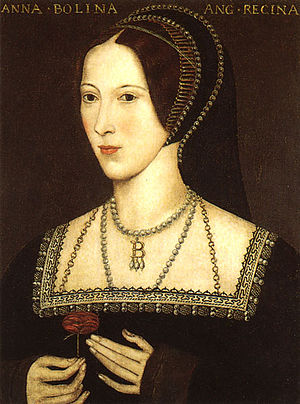
Why two novels about Anne Boleyn? Well, she has fascinated me since childhood, from the moment I first watched the movie Anne of The Thousand Days, and came away inspired by its construction of a strong, intelligent and very brave woman. By the movie’s end, Anne had become my hero, alongside my very first hero, her daughter, Elizabeth Tudor.anne boleyn

In my teenage and early adult years, I immersed myself in novels to do with the Tudor period. I also immersed myself in history books to help me learn more about the context that shaped the people of this era. These non-fiction books made it very clear that women in this period had very little ownership of their own lives. Even their identities came from their fathers, and then their husbands. More and more, Anne Boleyn stood out as a woman who was able to claim a true identity. While years of research have helped me to recognise her imperfections, it has also increased my reasons to love and respect her. Through my research, I now believe Anne’s insistence of her right to own and use her voice resulted in her death. This is the woman who lives in my imagination.

And this is the thing. Whilst my characters are birthed through research, and the knowledge I gain by research, I am a writer of fiction. Research is the key that opens the door to my imagination, when I begin typing up my daydream of another time and place. A time and place where my characters step forward and tell their story. For me, doing historical research has four main purposes: it deepens my well of historical knowledge; it gives me ideas turn into fiction; it takes me from the threshold of conceiving my first idea to the actual task of constructing historical fiction, when I build a world through imagination, and, finally, it continually fuels my imagination in the act of writing. It is my response to research that produces an imaginative reaction that takes me deeper into the process of story writing.dear heart

Writing The Light in the Labyrinth, a young adult novel, brought with it particular challenges. Young adult novels tend to be written in first person, and I tried to do this with Kate’s story. However, I decided to challenge myself by switching to third person limited. While the story was still revealed through Kate’s perspective, it was a very different structure to my usual way of writing.
Another challenge was giving voice to a 14-year-old girl from the Tudor period, a time very different from our own times. 14-year-old girls in Tudor England were considered old enough to be married and have children. The life of Catherine Willoughby, the Duchess of Suffolk, provides an example of this. Some historians claim Catherine was as young as fourteen when she married Charles Brandon, a man close to fifty. Kate’s experiences had to evoke that of a Tudor girl, yet also speak to girls today.
History seems to know very little about Katherine Carey’s early years. Like her aunt, Anne Boleyn, even her birth year is the subject of debate. This historical ‘silence’ allowed me imagine, at the start of The Light in the Labyrinth, Kate living with her mother at Rochford, a property owned by the Boleyns, and at least two days of riding from London. My research suggested this property was not well liked by the Boleyns (in the 16th century, it was situated in a very unhealthy area). Yet Mary lived there with her second husband, William Stafford, rather than be too close to her immediate family. I don’t believe it was simply because Mary had disgraced her family by her choice of a second husband – a man without wealth or title. While she seems to have married for love, her marriage could also be also be seen as an act of defiance, the claiming of her own life and identity.
I wondered what kind of mother she could have been for Kate – imagining that Kate saw her as a soft mother, but really Mary was not soft, rather too aware of the hardness of life. Through my knowledge of the lives of Mary and Anne Boleyn, I was able to imagine my Kate Carey, a girl influenced by admiration for her aunt, Anne Boleyn, and rebellious against what she saw represented by her mother.
the-light-in-the-labyrinth-coverThe silences of history offer historical fiction writers those vital gaps to enter by use of their imagination; a time they can use “historical circumstances with the greatest economy” (Kundera 2003, p. 36). In my own practice, I also deepen my understanding of what William Styron means when he writes: “while it may be satisfying and advantageous for historians to feast on rich archival material, the writer of historical fiction is better off when past events have left him with short rations” (2010: 428).
By this I mean I know have done my research about the Tudors and their period. This research has had time to soak into the depths of my unconsciousness. These gaps in historical record are my invitation to allow my imagination free rein, when I can let my characters speak, and re-construct their lives.
This is why the “curious, alluring space between fact and fiction” (Parini 1998, p. B4) is vitally important for me as a writer: it gestates imagination. It takes me “back then” (Thom, 2010, p. 26). And if I am taken “back then”, as a writer, I believe it also follows I have the possibility of taking back my reader through the construction of my text.

Works cited:
Kundera, M, 2003, The Art of the Novel, Harper Perennial Modern Classics.
Parini, J 1998, ‘Delving into the World of Drewww.wendyjdunn.comams by Blending Fact and Fiction’, The Chronicle of Higher Education, February 27, p. B4.

Styron, W, 2010, The Confessions of Nat Turner, Kindle edition: Open Road.

Thom, J. A. 2010, The art and craft of writing historical fiction, Writer’s Digest Books, Cincinnati, Ohio.

Wendy’s website: www.wendyjdunn.com/
Like Wendy on Facebook: www.facebook.com/authorwendyjdunn
Goodreads author page: www.goodreads.com/author/show/197156.Wendy_J_Dunn

Follow on Twitter: @wendyjdunn

Guest post about Jules Verne’s Mikhail Strogoff, on Great Raven blog

sergei prokudin river boat

Photo of Russian riverboat by Sergei Prokudin-Gorsky, circa 1910.

I have a guest post on fellow author Sue Bursztynski’s Great Raven blog, about the impact on me of Jules Verne’s Mikhail Strogoff, and about being involved in bringing it back to English-speaking readers. Here’s a short extract:

I read the novel I don’t know how many times, swept away by the grandeur of the story, the fantastic adventure, with its wolves, bears, mountain storms, bandits, iced-up rivers, cruel torturers and traitors. I thoroughly enjoyed  the funny  rivalry and repartee between Alcide Jolivet and Harry Blount,  I thrilled to the love I could see developing between Nadia and Michel, both equally tough and brave. And I was swept away too by the description of the journey, which starts in Moscow and ends in Siberia — a journey over water, through forest and mountain and cities and villages: you get a real sense of the vastness and amazing diversity, both human and environmental, of Russia.  Basically, it’s a chase novel, and it has the breakneck pace of that, and lots of twists and turns, culminating in an especially unexpected and satisfyingly resolved one. But it is also beautifully written, as tight and clever and witty as Around the World in Eighty Days, and much more passionate and exciting. 

You can read the whole post here.

A menu from Jules Verne’s Mikhail Strogoff

Eagle Books logoI’ve cross-posted this short, appetising extract from Jules Verne’s Mikhail Strogoff on my food blog. Appropriately, it features a description of food, from a fantastic, colourful chapter where our hero stops for the night at the town of Nizhny Novgorod, where a massive multinational fair is taking place.

Translation copyright Stephanie Smee. Edition copyright Eagle Books.

And thus Mikhail Strogoff found himself wandering through the town, not unduly troubled, on the lookout for some form of accommodation where he might spend the night. But he was not trying very hard and, had it not been for his gnawing hunger, he would probably have wandered the streets of Nizhny Novgorod until morning. For he was more interested in a meal than a bed. And he found both under the shingle of the Town of Constantinople.russian wooden house

The innkeeper there offered him a perfectly satisfactory room, sparsely furnished, but equipped with both an image of the Virgin and portraits of various saints, for which some golden fabric served as frames. He was promptly served up some duck stuffed with spiced mince, drowning in a heavy cream sauce, some barley bread, some curds, some cinnamon-flavoured sugar and a mug of kvass – a type of beer very common in Russia. He would have been satisfied with less. So, he ate his fill; more so than his neighbour at the dining table, who, being an adherent of the ‘Old Believers’ movement of the Raskolniks and having taken a vow of abstinence, left the potatoes on his plate and was careful not to add sugar to his tea. kvas

Having finished his supper, instead of going up to his room, Mikhail Strogoff headed automatically back out to resume his walk around town. But though the long twilight was still drawing on, the crowd was already dissipating, and little by little the streets were emptying as everybody headed for home.


The Green Prince play lives!

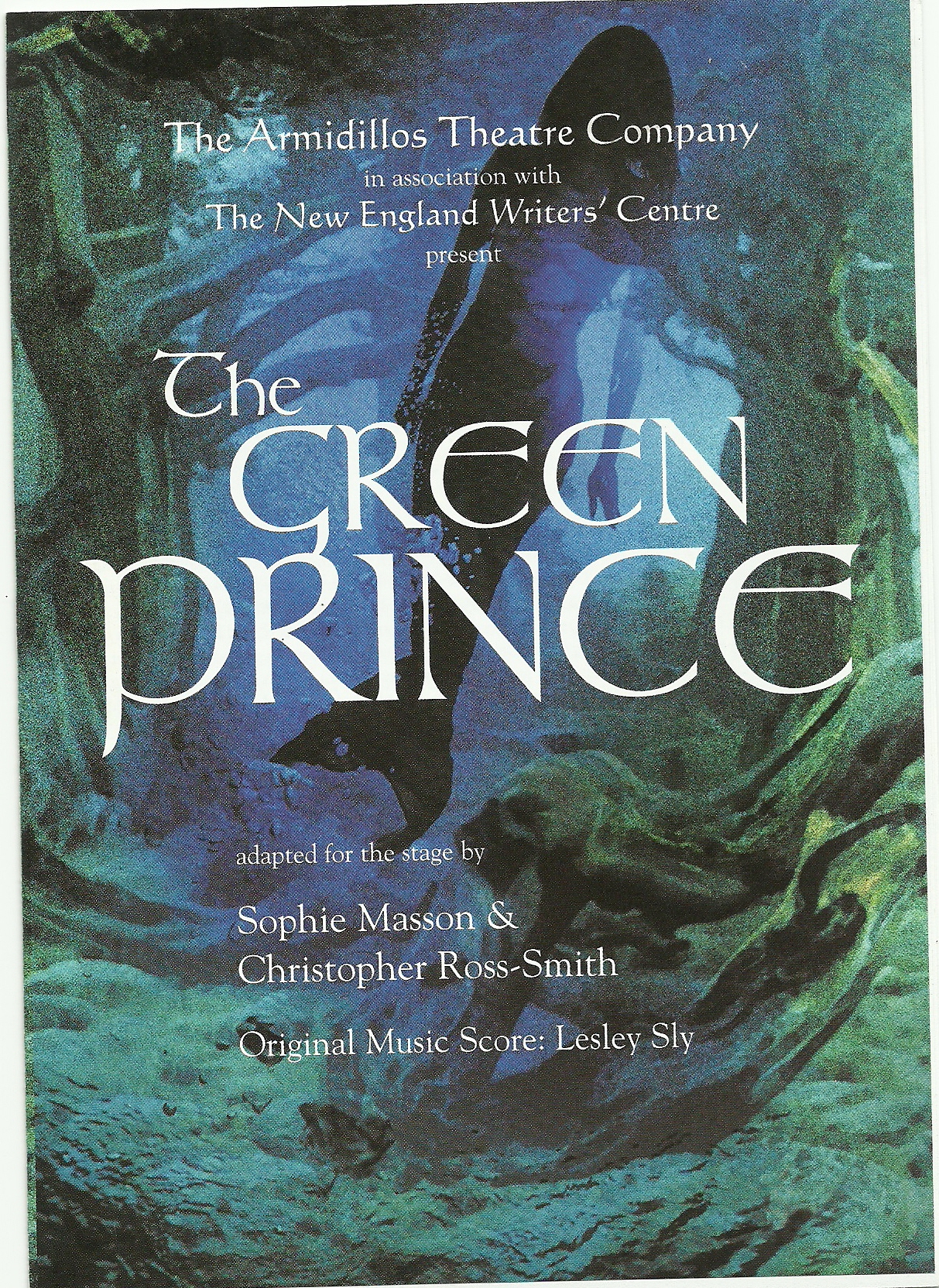
green prince play0001Some nice news this week from the Australian Script Centre, which is a wonderful digital repository and shopfront for plays from all over Australia: The Green Prince, the play I co-wrote in 2001 with Christopher Ross-Smith, based on my fantasy novel of the same name, made a few sales in 2014, enough to earn some small but unexpected royalties! It was so much fun and yet such a challenge to write that play, and it was such a wonderful experience to see it in production back then! I’m so pleased that it continues to have a life.

Producers and directors whether professional or amateur are most welcome to go over to the Australian Script Centre and take a look at the play! Would work well as a film too. 🙂 Just sayin’.

Here’s the blurb:

Jack Fisher, an orphan growing up in a small riverside village, is feared and hated because of his DSCN5188webbed limbs and his talent for singing fish out of the water. When he is beaten and left for dead on the riverbank, he is rescued by a strange, puckish creature, Shellycoat, and the merman Vagan. They tell Jack that he has been chosen as the Champion of the Green Kingdom, destined to fight Grimlow, Lord of the Abyss. And thus begins Jack’s enchanted, terrifying, action-packed journey into the lands under the water.

And if you’re interested in checking out the tribute page on Facebook to the original production of the Green Prince, back in 2001, take a look here.

On writers 4: in loving memory and celebration of Lloyd Alexander

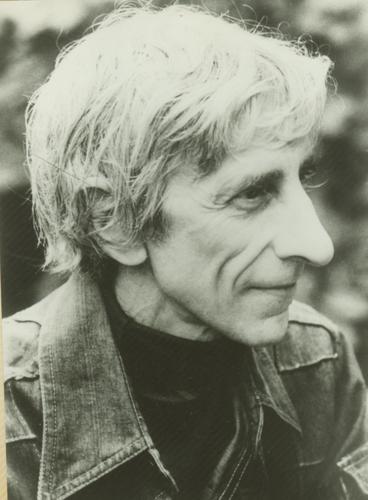
Lloyd_famous_pub_photo_gray_hairThis fourth republished article about writers I’ve been inspired by is a very personal one, because not only did I love the work of the great American children’s writer Lloyd Alexander, but I also knew him personally, at least by letter, as we corresponded over many years. This article was written after he died in 2007, and was originally published in Magpies magazine.

Vale Lloyd Alexander, 1924-2007

The world of children’s literature has lost a great light. On May 17, 2007, the American writer of many classic children’s novels, Lloyd Alexander, died of cancer at his home in Philadelphia, only two weeks after the death of his beloved wife Janine, with whom he’d shared sixty years. Beloved of readers and critics alike, his work spanned more than forty years, and more than forty books, and as a fantasy writer, he is reckoned to be in the ranks of such as JRR Tolkien, CS Lewis, TH White, and JK Rowling.
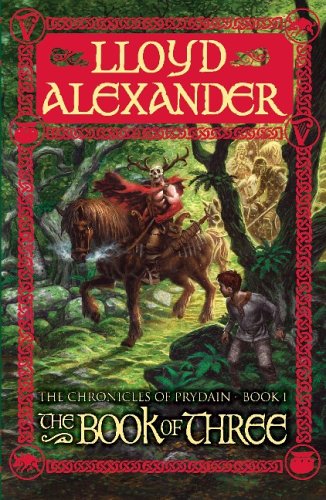
In fact, I’d go so far as to call him the greatest American writer of children’s fantasy of modern times. Many people would agree with me. He has a huge, devoted worldwide audience. His six-volume Chronicles of Prydain have been continuously in print since 1963, with the first two, The Book of Three and The Black Cauldron, made into the 1985 Disney movie, The Black Cauldron, which has always had a mixed reputation—many readers being disappointed by the fact that too many of the events of the books were shortened, and too many characters dropped.   book of three
The books themselves however have had no such mixed reviews. Who can resist Taran, assistant pig-keeper’, and his oracular pig, Hen Wen? The feisty Princess Eilonwy? The bard Fflewdur Fflam? And the noisy, messy creature, Gurgi? It’s not only the characters, though, or the action of the books—which is considerable—or the exciting plots, or the scary villains and mythological richness of the background that readers take to their hearts: it’s a warmth, a humour, a wit, a love of language, a lightness of touch and a playfulness, which is all too often lacking in fantasy. Yet he also doesn’t shirk the darker side of life, and of people. There’s an extraordinary honesty, yet a compassion, in all his work, which is immensely attractive. Readers love the Prydain books, and dearly: to the extent that I know of at least two people who so loved them as children that they were inspired to name their children after them. One friend named her first-born son Lloyd Alexander; another named her youngest son Taran, after the hero of the Chronicles.
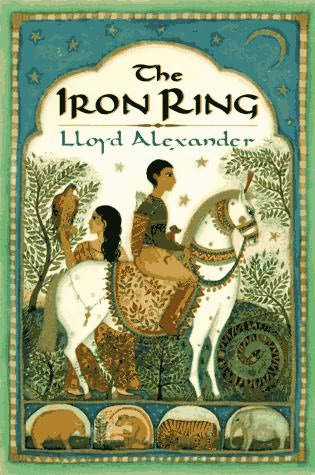
alexanderironringBut it’s not just the Chronicles of Prydain, with their earthy yet mystical Celtic mythological background, that Alexander is famous for. He wrote a large number of wonderful, versatile fantasy adventure novels, set against all kinds of backgrounds and inspired by all kinds of fairytale and mythological sources.
Long before it was fashionable, Lloyd Alexander delved into all sorts of multicultural influences. There’s The Iron Ring, for instance, inspired by Indian myth; The Remarkable Journey of Prince Jen, based on Chinese sources; The Marvellous Misadventures of Sebastian, with its Central European flavour; The First Two Lives of Lukas-Kasha, with its roots in the Arabian Nights; The Arkadians, with its source in Greek myth. And many, many more. There are certain recurring motifs in his books: cats, music, the quest for true courage and love. And fun. Pure, unadulterated fun. He is such a fun writer, in all sorts of ways: pure pleasure to read, beautiful to read, because everything is so well put together, so deft and exciting and funny and warm and moving and intelligent. And his considerable learning and experience are worn lightly. A man who had travelled very widely and was interested in all kinds of cultures and always curious and intrigued by the amazing richness of the human experience throughout the world, he was also very much a homebody, who dearly loved his city of Philadelphia, where he was born and bred, and where he lived with his family for most of his life, apart from a few years away in Europe.
That deep knowledge of ‘Philly’ as well as of other places shows up very strongly in his marvellous comic adventure series, set around determined 19th century Philadelphia schoolgirl detective Vesper Holly, and told in the rather flustered, fussy tones of her guardian Professor Brinton Garrett, known as illyrian adventure‘Brinnie’: these include The Illyrian Adventure, The El Dorado Adventure, The Drackenberg Adventure, and more. He also wrote a historical adventure series, The Westmark Trilogy, set in a world that rather ressembles Revolutionary France. He wrote several books that weren’t strictly speaking fantasy, including the delightful semi-autobiographical The Boy and the Gawgon. And he also wrote for adults, for the first few years of his career, until he switched to children’s books in 1963.
His first book, an autobiographical novel called And Let The Credit Go, was published in 1955. A fluent French speaker (his wife Janine, whom he met at university in Paris after World War Two, after a stint in the Army and in counterintelligence, was French) he is also the author of several translations of important French philosophical and poetic works, including Nausea, by Jean-Paul Sartre, Uninterrupted Poetry, by Paul Eluard, The Sea Rose by Paul Vialar.
golden dreamYes, the world of children’s literature has lost a great light. Readers everywhere have lost a great writer, though there is that wonderful backlist to enjoy. And his last book, The Golden Dream of Carlo Chuchio, will be published in August. But it’s more than that for me. I feel like I’ve lost a real friend, as well, because for the last ten years, I’ve been corresponding frequently with Lloyd, exchanging letters and cards(he didn’t like computers, and never used email)and swapping books with him. The bright row of Lloyd Alexander books on my bookshelf, all inscribed by him in his characteristically warm and friendly style, will be doubly precious to me now.
It’s not always true that a great writer is a great person, but when the two coincide, it’s pure magic. That was certainly the case with Lloyd. From the very first letter he sent me, in January 1997, in response to the enthusiastic missive I’d sent via Cricket magazine(with whom he was associated), after my children and I had finished reading The Chronicles of Prydain, you could tell that here was a generous, warm, intelligent and modest person, a real gentleman in the very best sense of the term. Finding we had a good deal in common—writing, France, music, Celtic myth, travel, and much more—we continued to correspond fairly often over the years, and sent each other signed copies of our recently-published books. Lloyd always replied to letters promptly, typing or handwriting on his own distinctive pale yellow letter-paper, with the drawing of a cat playing the violin(thereby combining two of his great loves, as well as indulging his sense of humour). The elegant envelopes postmarked ‘Drexel Hill, Pennsylvania’ were always welcome arrivals in our mailbox!
Lloyd was always ready with a kind word and a friendly remark, and his generous and perceptive understanding of my own books heartened me enormously, and meant a huge amount to me, as did the warm and intelligent quotes he provided for my publishers when my books started to be published in the USA. Over the years, we shared snippets of information, and exchanged news of family and of friends(he was tickled pink by the knowledge that two of our friends had been inspired to name their kids after him and his characters!) And we exchanged Christmas cards—his featured his own delightful coloured drawings of a fantasy cat world, from the poshest drawing-rooms to the rumbustious tavern, with each year a new scene.. WP_20150327_001[1]
It may surprise non-writers(or perhaps not!), but not all writers are as supportive or as friendly and generous towards other writers as Lloyd was. In a competitive industry where egos can be as big as houses, there is all too often an urge to ‘do down’ or at least ignore other writers. Even when it’s not as bad as that, there can be a sense that really, what do you have in common except that you both write books? But when you do connect on a real level—the personal as well as the artistic—it is a very special friendship, even if that is conducted long-distance, as ours was, for we never met in person. And so I grieve for a good friend and a good writer, a good man and one who will be sorely missed, but whose books will live for ever.

The years have passed, but we still miss you very much, Lloyd.

Guest post: Amanda Pillar on heroines

Today, I’m welcoming the fabulous Amanda Pillar to the blog, to talk about a most important subject: the creation of heroines readers will care about!

Amanda is an award-winning editor and author who lives in Victoria, Australia, with her husband and two cats, Saxon and Lilith.
Amanda has had numerous short stories published and has co-edited the fiction anthologies Voices (2008), Grants Pass (2009), The Phantom Queen Awakes (2010), Scenes from the Second Storey (2010), Ishtar (2011) and Damnation and Dames (2012). Her first solo anthology was published by Ticonderoga Publications, titled Bloodstones (2012). Amanda is currently working on the sequel, Bloodlines, due for publication in 2015.
Amanda’s first novel, Graced, was published by Momentum in February 2015.
In her day job, she works as an archaeologist.
Amanda_small-1

Heroines

by Amanda Pillar
Writing female characters – as a woman – should be a piece of cake. Supposedly. But like any character (male, female, transgender, agender, young, old) you need to really get to know the person you’re creating/writing. Some women are strong and overbearing, some are soft with spines of steel. No one person is the same; even identical twins are different when it comes to their personalities.
So how do you create a female character that people can relate to?
Well, in my experience, you create a person. Someone who is sympathetic to the reader. Their gender, while important in forming identity, should be a part of a whole, rather than a defining characteristic. If a reader were to discard a book simply because the main character is a woman…well, it speaks of a few things: inability to relate, inability to try and experience new ways of thinking, and well, perhaps some deeper personal issues. Of course, it could just represent bad writing or poor character development.
In Graced, I have four main characters: three male and one female. There was no deliberate choice in that representation, although as the author, I guess you could say it is all deliberate. But I am a character driven novelist; characters form in my mind and I try to be true to them as individuals. So while I could have had two male and two female characters, that wouldn’t have been representative of how the characters should be. And so there was one female lead. Graced Ebook High Res
Elle Brown.
Elle is complex; she’s tough but vulnerable, pig-headed but able to learn new ways, individual yet part of a team. She’s also a badass with a steel baton and has no problem bashing heads when the circumstances call for it. All in all, I wanted to make Elle very human. In a universe where there are four different races of people (weres, vampires, Graceds and humans), Elle was to be relatable. She was never going to be a woman who just stood by and let life happen to her, because in the Graced universe, that could mean dying young. Mental strength is something that is important in survival, and if Elle is anything, she’s a survivor.
And so Elle was almost as tough as can be; she works as a city guard, cleaning up the more unsavoury parts of her home town, Pinton. But she’s also just a person – frightened of her powerful and over-bearing grandmother, and desperate to protect her little sister, who she treats more like a daughter due to their 20 year age difference.
All in all, to create a sympathetic heroine, you want someone who is likeable (although not always necessary), relatable, and believable. As a reader, you don’t always have to agree with everything the heroine thinks or does – because in reality, people rarely do what they should, more what they want – but someone whose reasons can be understood.

More about Graced:

Life, however, doesn’t always go to plan, and when Elle meets Clay, everything she thought about her world is thrown into turmoil. Everything, that is, but protecting Emmie, who is Graced with teal-colored eyes and an unknown power that could change their very existence. But being different is dangerous in their home city of Pinton, and it’s Elle’s very own differences that capture the attention of the Honorable Dante Kipling, a vampire with a bone-deep fascination for a special type of human.

Dante is convinced that humans with eye colors other than brown are unique, but he has no proof. The answers may exist in the enigmatic hazel eyes of Elle Brown, and he’s determined to uncover their secrets no matter the cost…or the lives lost.

Buy here.

Visit Amanda’s website.

Amanda’s Facebook author page is here.

Follow her on Twitter.

Interview with Jane Routley

JaneRoutleyToday it is my great pleasure to feature a really interesting interview I did recently with Jane Routley, multi-award-winning author of haunting and gripping fantasy novels, whose earlier books, I’m delighted to see, are enjoying a deserved comeback through ClanDestine Press, but who’s also hard at work on several new fantasy novel projects. And she’s also continuing with another wonderful side to her writing–Station Stories, intriguing non-fiction vignettes inspired by her day job. Read on!

Your new ebook, The Three Sisters, has just been released by ClanDestine Press. It was first published in 2004 under the pseudonym of Rebecca Locksley, and received fantastic reviews, including one from the great fantasy author Sara Douglass, who deemed it a ‘captivating read’. Can you tell us a bit about the book’s journey from its initial publication to its new release now? Did you make any changes to the original book, and how did you approach the question of pseudonyms for this new release?

The pseudonym Rebecca Locksley was an attempt to re-launch me for marketing reasons. At that time big bookshops like Borders were only ordering numbers of books on the strength of previous sales. Harper Collins had enough faith in me to think it might be worth re-launching me and making a big marketing push with posters and dump bins etc… In The Three Sisters I had wanted to write a three sistersprequel to my Dion Chronicles, to deal with the history of the Klementari and their contact with the Aramayans. The name change came when I was too deep in the book to change the story. To be honest even though I understood the reasoning, I wasn’t very happy about it. I changed the names and some of the geography, but the magic system and the characters – everything that mattered -remained the same.
Since the name change didn’t achieve what Harper Collins had hoped and publishing has changed enormously with the advent of ebooks, I thought I might as well consolidate and change my name back for the re-issue.
Oddly enough when Clan Destine offered to re-releaseThe Three Sisters under my own name,I started out changing the world back to that of the Dion Chronicles. Somehow it just felt wrong so I must have changed more than it seemed at the time. Also I was worried people would think I was setting out to deceive.
The Three Sisters has been re-copy edited and I’ve smoothed out some stylistic edges that seem rough to me now but otherwise it’s much the same book that was released in print.
There is a sequel to The Three Sisters which has never been in print, which I spent a lot of time writing and which people still write and ask me about. Fingers crossed Clan Destine will bring it out some time next year.

In both your earlier Dion Chronicles and this book, you have created vivid and intriguing characters, acting in richly-depicted fantasy settings. How do you go about creating the world of your books?

I usually start out with an idea or a character. I’ve always loved the vividness of Angela Carter and Vernon Lee and I’ve tried to emulate it. Fairy tale and history fuel my world building. I tend to imagine my self living in my worlds. I imagine daily life, the smell of fresh bread and the feel of velvet robes. Hence there must always be the sense that there are bakers and seamstresses in the back ground even if they are not described. You need to make sure that everything follows logically.
For instance, your characters need ways to earn livings, which leads to ideas about social structure and economies.
The Three Sisters is set in a kind of medieval world but one in which a country is being colonized. I’ve plundered a lot of my history reading for that. For instance the local women are regarded as valuable slaves because of their skill at weaving. The women captured after the fall of Troy were used in just such a way. Later in Medieval times the work of weavers was the basis of much of the wealth of the Medici’s and the English Monarchy. Hence my history reading fuelled that piece of world building.
On the other hand fairytales are the back ground for a lot of my writing about the Tari. But even though they are magical they still have to eat! And they are human enough to need something to do during the day. I always notice in fantasy books when someone is just sitting round in their castle/cottage/flat waiting for the plot to catch up with them and it always irritates me. Real people,even magical real people, get bored with nothing to do. Even if you never mention it, at least have an idea in your head for what they do every day.

As a writer, are you a plotter or a gambler’? Do you plan your journey into a book, or do you just set out and see what happens?

As a writer I’m more of a gambler than a plotter. I know what I’m interested in writing about and I usually have some idea of where I want to go, but I never have much idea of how I’m going to get there. Every book I start I try to be more of a plotter. It must save so much time and angst. I always get to a point where the book goes dead and I’ve learned that that’s because I’m trying to make the characters do something that doesn’t work. Gee it’s miserable when it happens! I wish I didn’t have to go through it. On the other hand I get bored easily, so perhaps it’s best if I don’t know how things are going to go.
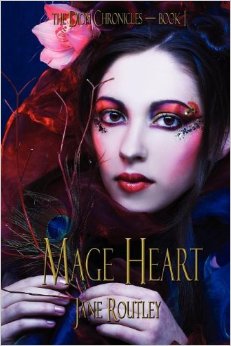
As a gambler, I know I write stories and books to see what’s going to happen if… For instance I’m interested in female roles in fantasy. In The Three Sisters I wanted to subvert the idea of the beautiful woman everyone desires. My suspicion would be that it would be horrible to be so desired. Sort of like that famous photo by Ruth Orkin of an American girl in Italy 1951 running the gauntlet of leering men. Elena’s quality of fatal beauty deprives her of much of her chance for agency and forces her to make a horrible sacrifice that many women in history have had to make. And I wanted to portray what it mage heartwould be like to occupied by a colonizing force, which is an important theme in Australian History. So I keep asking what happens next when these conditions apply and over time I dig into the story and get closer and closer to the story that feels right for me. It’s a bit like being an archaeologist or painting an oil painting.

Are you working on a new novel now? If so, can you tell us about it?
My current project Shadow in the Empire of Light, is an example of the way I work. I was tired of reading traditional patriarchal gender roles and especially tired of the nice girls don’t have love affairs trope that is so much a part of traditional fantasy. It’s Fantasy for heaven’s sake!! Let’s live a little!! So I tried to design a world in which women are men’s equal and gender is less of an issue. At first it came out a bit dull. I hadn’t realized how much the sex war supplied tensions.
So I added the element of class. In the Empire of Light wealth is passed down the female line and all mages become nobles. Those without magic are peasants.
My heroine Shine Lucheyart is well born but she has no magic and no mother to leave her an inheritance. She works as a poor relation in the house of powerful sorcerer relatives. But she’s smart and feisty and in the first book she spends a lot of time getting sorcerer cousins out of trouble.
Her main aim is the cut loose from her family and, with her telepathic cat for company, make her fortune. I had a lot of fun with gendered language and also fun making it a sexy silky kind of book. I’m looking for a publisher now.

You are a multi-award winning, internationally-published author. How do you think the genre of fantasy fiction has changed over the years since you were first published?

The introduction of sparkly vampires and the growth of urban fantasy is one major new part of the genre. Fairy tales seems to have left nature and have become more and more entwined with our grungy urban settings. I’m not sure the type of historical fantasy I write has changed all that much. A lot of it seems just as sexist and humourless as it was when I started out. There are a lot of women centred fantasy novels nibbling away at the edges, but the mainstream….? Women are still being married off to save their brothers from ruination or in constant danger of being ravished by every man they meet. On the other hand there is the Game of Thrones phenomenon which can only be good for all fantasy writers simply because it’s gone so mainstream. Looking at G o T is a great way of looking at gender roles in Fantasy. A lot of women say that G o T is too rapey. That’s true. It’s set in a war and that’s what happens in the chaos of war. But there are a lot of strong women in the book. You have Aya, Danerys and even the appalling Cerci just to name the main ones. On the other hand you could accuse it of exceptionalism since all these ladies are exceptional and not the norm and the rapeiness is a drag to read if you’re a woman. Still compared with Tolkien we are definitely making progress. I guess one should be happy for small steps.fire angels

Separately to your fiction, you have created a wonderful compendium of non-fiction ‘Station Stories’ of vignettes and micro-stories inspired by your work as a station host at a Melbourne station host. How did ‘Station Stories’ start, and how do you see it as developing? Can you share with us one or two stories that stand out?

As a writer I’ve always wanted to celebrate everyday life – to make little photographs of it but with scents and sounds. Because everyday life is full of tiny transcendent jewel-like moments of delight and sorrow and interest. Fantasy writing doesn’t give you much scope for this. When I first started to work at a railway station (unfortunately my writing doesn’t pay the bills)I was delighted by all the little stories that played out on station platforms and kept a diary so that they wouldn’t be lost. Over time and with my discovery of social media these have metamorphosed into ‘Station Stories’. I really wrote them for my own pleasure. People tell me to look for a publisher for them and perhaps I will. But I already think of it as a small weekly column and I try to post one every weekend. I’d love to build up a following for them so that lots of people get this little story maybe on their mobiles maybe on Monday mornings as a bit of a sweetener. Without really planning it that seems to be what I’m working towards.
Here are two of my favourites.
A regular
G, one of our regulars is extremely disabled. He drives his wheelchair with a stick mounted on his head and communicates by tapping out words on a communicator. Were I so disabled, I think I’d be scared to leave the house, but G goes out to his job most days and has a busy social life. Recently I was tasteless enough to tease him about checking out the pretty girls. The way he tapped out “I’m engaged” and the dignified way he looked at me as it sounded out, made me feel rather small. Serves me right!
Yesterday he was waiting for a friend at the barriers and we got chatting. Hundreds of people headed for the Soundwave festival were going past and my task was to call out “Soundwave passengers – buses to the left!” at regular intervals.
I was startled to hear a little mechanical voice repeating my words. G had typed the words into his communicator and helpfully kept pressing the button at regular intervals until his friend arrived and he shot off in his wheel chair to greet him.

Station Heroics
Today the Crystal lady was in great distress (although not willing to miss her train) because she had dropped a container of freshly made organic peanut butter on the train tracks. I leapt in to help like the hero station host I am. Although these days railway employees are forbidden to enter the Pit (this is the evocative name we rail types use for the area of train track between the platforms) I do have a Scoopy Thing. This thing, created by some great hero station officer of times past,is a plastic milk bottle cut in half and attached to a pole. It enables me to fish all kinds of things – mostly mobile phones safely out of the Pit.
The ST performed admirably but to be honest, I’m not sure the Crystal Lady will want the peanut butter as the jar has a big germ emitting crack in it. Still that’s her decision for tomorrow.

Station Stories can be followed at www.janeroutley.com
https://janeroutley.wordpress.com/
https://www.goodreads.com/author/show/333390.Jane_Routley
http://www.linkedin.com/today/post/author/posts#published
https://www.facebook.com/jane.routley.5

Firebird way station on Amanda Bridgeman’s Aurora: Centralis blog tour!

AuroraCentralis BTFBDelighted to announce that today my blog’s a way station on bestselling science-fiction author Amanda Bridgeman’s  official blog tour celebrating the release of Aurora: Centralis, fourth instalment in the Aurora series, published by Momentum. Aurora_centralis_FA

Born and raised in the seaside/country town of Geraldton, Western Australia, Amanda hails from fishing and farming stock. The youngest of four children, her three brothers raised her on a diet of Rocky, Rambo, Muhammad Ali and AC/DC. Naturally, she grew up somewhat of a tomboy, preferring to watch action/sci-fi films over the standard rom-com, and liking her music rock hard. But that said, she can swoon with the best of them and is really not a fan of bugs! 

The three earlier books in the Aurora series: Darwin, Pegasus, Meridian have been bestsellers and received rave reviews, and just recently, the third book in the series, Aurora: Meridian, was shortlisted in  the science fiction category of the prestigious Aurealis Awards.

Congratulations, and welcome, Amanda!

_MG_0298_Compressed

Living with The Afterlife

by Amanda Bridgeman
The afterlife, or what happens to us once we die, plays a part in the Aurora series. A hint of it appears in Aurora: Darwin and as the series progresses, more and more light is shed upon it, until finally it comes to the forefront in Aurora: Centralis. This particular plot thread weaves is way through Harris’ story. He dreams of his deceased grandmother and great-grandmother, and feels their ‘presence’ during his waking hours. This particular part of Harris’ story was inspired by tales and experiences relating to my own grandmother and great-grandmother.
My first true experience of the death of a loved one came at the age of 15 when my grandmother, my mother’s mother, passed away in her sleep in the early hours of the morning. My grandfather was up early that day, readying for a planned trip to the Abrolhos Islands with his son. He went to shake my grandmother awake to tell her he was leaving, but alas she never awoke. Upon receiving the news, my parents had stolen away to their house to see my grandmother, and then they came back to the house to wake me and tell me the news. I remember being in shock and jumping out of bed to make my mother a coffee. I had spent much time with my grandmother and her passing was a loss to all.
Strangely enough, that night when I went to sleep I had a dream. It was a strange dream, but a nice one none-the-less. I stood in a car park and some distance away I saw my grandmother standing with my pop. They were about to get into a car and drive away somewhere. I called out to her but my voice didn’t carry. Somehow she heard me though. She looked over to me, smiled, and raised her hand to wave at me. It was very much a goodbye wave. I smiled and waved back, and then they drove away. And I remember thinking at the time that that wasn’t just a dream. I truly believed it was my grandmother making contact from ‘the other side’ to say goodbye to me.
But wait, there’s more. There’s a lot more.
When my father was young he contracted polio. He was living on a farm in the small country town of Northampton and had to be transferred to a hospital in Perth, some 5-6 hours away by car. His father had to manage their farm and his mother had to take care of his 4 siblings, so they couldn’t visit with my father all the time. My father’s grandmother (his mother’s mother) however, lived in what was then an outer suburb of Perth and she made it her business to catch the train in every Sunday to visit him in hospital. He was only 6 years old at the time, and the two become close. Years later, when I was about 9 years old, his grandmother passed away, but it would seem she did not leave him.
One night my father was in the local pub in Geraldton, and the man – let’s call him Ron – who had recently bought and moved into our old house called him over to his table to speak with him. Ron said to my father that he was probably going to think him crazy, but he asked if our house had been haunted. My father told him no, that we had never experienced anything. Ron said that his wife – let’s call her Kelly – kept telling him she had seen the ghost of an old woman, standing by the fridge as though looking inside. Whenever Kelly entered the room, she would see this old lady look up and smile, then just fade away. Kelly said she never felt threatened by this apparition – it was just an old woman with gentle smile. Ron thought her crazy until one night, in the middle of the night, he awoke to see an image of an old woman standing beside the bed and leaning over Kelly who lay beside him. Ron said he wasn’t afraid, just shocked, as this old woman seemed to checking on them, looking for someone. And the way Ron described the woman to my father, it was the spitting image of his grandmother: she wore a quaker style of dress, round glasses, her hair was pulled into a bun, and she had a shawl pulled across her shoulders. And the funny thing is, my father’s grandmother was known for her appetite – even in her 90’s – so visions of her standing by the fridge are rather hilariously on the mark!
So, although she had passed, my great-grandmother was still checking on my father. But alas he had moved house, and she was obviously wondering where he’d gone.
Now my mother eventually told me this story years later when I was an early-mid teen. My brother, Ross, had been there at the time as well and I remember us looking at each other wide-eyed and, to be honest, a little freaked out. I distinctly remember my brother saying ‘I wish you hadn’t told us that!’. Of course for the next little while we found ourselves scouring every room we entered for her presence – you know, just in case she found our new address…
Now, however, I look back on that story with warmth. The fact that a love, a family bond could be so strong as to hold through different worlds, different realms, is really quite phenomenal. If I hadn’t dreamed that dream of my own grandmother, or heard this story of my father’s grandmother, I probably wouldn’t have believed in ghosts or the afterlife. But now I have, I find it hard to ignore.
Are ghosts real? Does the afterlife exist? Or is it simply that they live on in our hearts and minds and that is how we see them – that is what becomes the true place of the afterlife: within us. Based on my real life experiences, this is what I explore in the Aurora series with the character of Captain Saul Harris – whether or not that doorway exists.

Amanda’s website: http://amandabridgeman.com.au/

Facebook page: https://www.facebook.com/AmandaBridgemanAuthor

Twitter: https://twitter.com/bridgeman_books