Paris literary studio 7: Emily Maguire

Bestselling novelist and essayist Emily Maguire was the Keesing Studio resident a year ago, and like Ursula Dubosarsky, experienced an event of great sadness to Paris, as she explains in this interview.

When were you resident in the Keesing Studio, and why did you decide to apply?

I was there August 2014 – January 2015. I applied in order to work on what I thought would be my fifth novel, a sprawling, multi-generational story with a strong French thread. As it happened, by the time I arrived I had put that idea aside and was working on a very different novel, An Isolated Incident, which I finished while in residence.

keesing studio 2014

Keesing studio at time of Emily’s visit

What were your first impressions of the studio, and its neighbourhood, and how did that evolve over your residency?
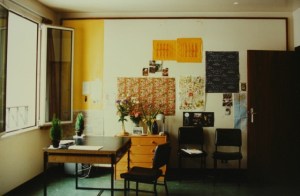
I had low expectations of the studio itself as I’d been warned it was very basic, so on arrival I was pleasantly surprised. Certainly it was basic, but I was delighted with how roomy it was (for central Paris) and how much natural light came through the wall of windows. I unpacked six months’ worth of stuff immediately and with my clothes hanging in the closet space, my books and photos on the shelves and my laptop on the table, the place felt far more welcoming and homey. My attachment to the studio grew powerfully over my time there to the point where I felt quite defensive about it. The exception was the bathroom which I grew to hate more and more with every water-spraying, floor-drenching, slow-draining shower.

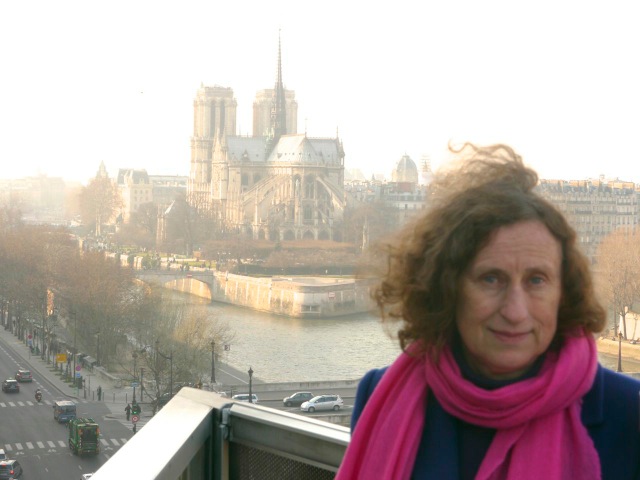
emily maguire in paris

Emily in Jardin des Tuileries

My experience of the neighbourhood was similar, I think. I arrived on a sweltering Saturday at the beginning of August. Many locals had already fled for the summer holidays and so on my first walk around the area it seemed to be all red-faced tourists holding maps and shouting in English. Day by day as I walked and walked I discovered the back streets and connecting alleys, got lost and found my way over and over again. By la rentrée when the locals returned to the city and the school next door, the boulangerie on the corner and dozens of tiny shops and cafes that had been dark all month re-opened, I began the process of re-discovering the neighbourhood and soon fell deeply in love with it.

What were you working on when you were there, and did your original vision for it change over the course of your residency?

As mentioned above, I didn’t work on the novel I’d originally planned to write in Paris. I did, however, take copious notes and photos for that project, which I’m using to write the draft of that novel now, almost a year after I left Paris.

Were you there alone, or with a partner? In either case, what were your favourite things about living in Paris for six months, and your least favourite things?

My partner flew in for two short visits over the six months, but I was mostly alone. My favourite thing by far was being able to visit a different gallery, museum or theatre every other day. I spent many hours a week wandering the city’s art spaces and still didn’t see everything I would’ve liked to. There wasn’t anything I disliked about living in Paris, though the daily reminder that the French I had worked so hard on was gibberish to the locals was dispiriting.

What was it like as a writing/ideas environment?

Incredible. The studio itself – the light, the dancers across the lane, the church bells ringing out -the easy access to extraordinary works of art, the life of the streets and cafes where it’s entirely acceptable to spend hours over a single glass of wine and three lines scribbled on a notebook page, the heart-lifting wonder of walking through a city which, with all its history and relics could be a museum, but is instead living, breathing, ever moving. I barely slept, kept wide awake with inspiration and wonder.

Tell us about your favourite places in Paris–sites, culture, food.

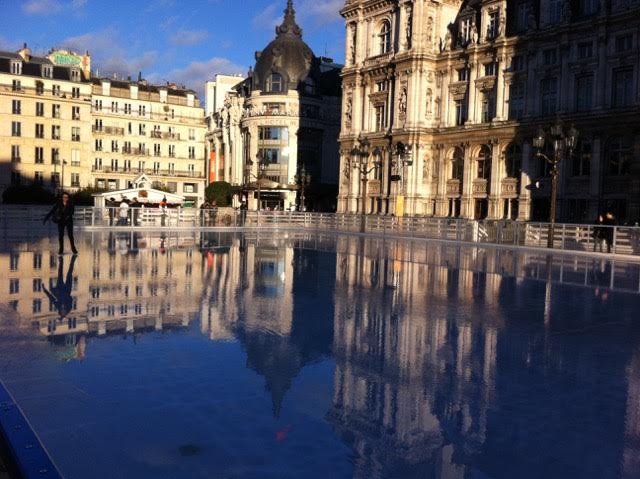
So many! Musée Rodin and Musée de l’Orangerie were museums I returned to throughout my stay. I loved walking along la promenade plantée, which is a long stretch of parkland and path high above the 12th arrondissement. L’ Ebouillante is a sweet little restaurant serving divine galettes, tucked away on rue Barres, very close to the studio. I quickly became a regular there. I also loved just hanging outside the Hôtel de Ville and people watching. When I arrived in August the forecourt had been transformed into a beach volleyball court and I enjoyed drinking

Hotel de Ville skating rink

Hotel de Ville skating rink (Pic: Emily Maguire)

icy cider and watching the action. By my last month, the same space was an ice-skating rink, the cider replaced by mulled wine.

What experiences stand out for you during the residency?

A terribly sad experience, the Charlie Hebdo murders and those at the Jewish supermarket a few days later, stands out, but so does the still sad but immensely heartening show of solidarity and love and peace that occurred the following Sunday. I hadn’t planned to attend as I am anxious in crowds at the best of times and had been deeply shaken by the week’s events. But heading back from the train station I was swept up by the enormous crowd   – there seemed no street, no space in the city, that wasn’t part of the demonstration – and I’m so grateful for that. I’ve never felt so safe and so connected as I did while carried along in that ocean of grief-stricken, defiant humanity.

Impromptu street memorial

Impromptu street memorial (Pic: Emily Maguire)

Has the residency had a continuing impact on your work, and if so, in what way?

Oh, yes. Apart from specific materials relating to the long-planned, finally-started novel I went there to write, the inspiration and comfort to be found in visual art was a revelation to me and something I’m working on incorporating into my practice now I’m home.

It’s not been terribly long since my residency, but I feel certain the impact will be long-lasting. And if not, well, I plan to return as soon as possible for a booster shot.

Paris literary studio 6: Susan Johnson

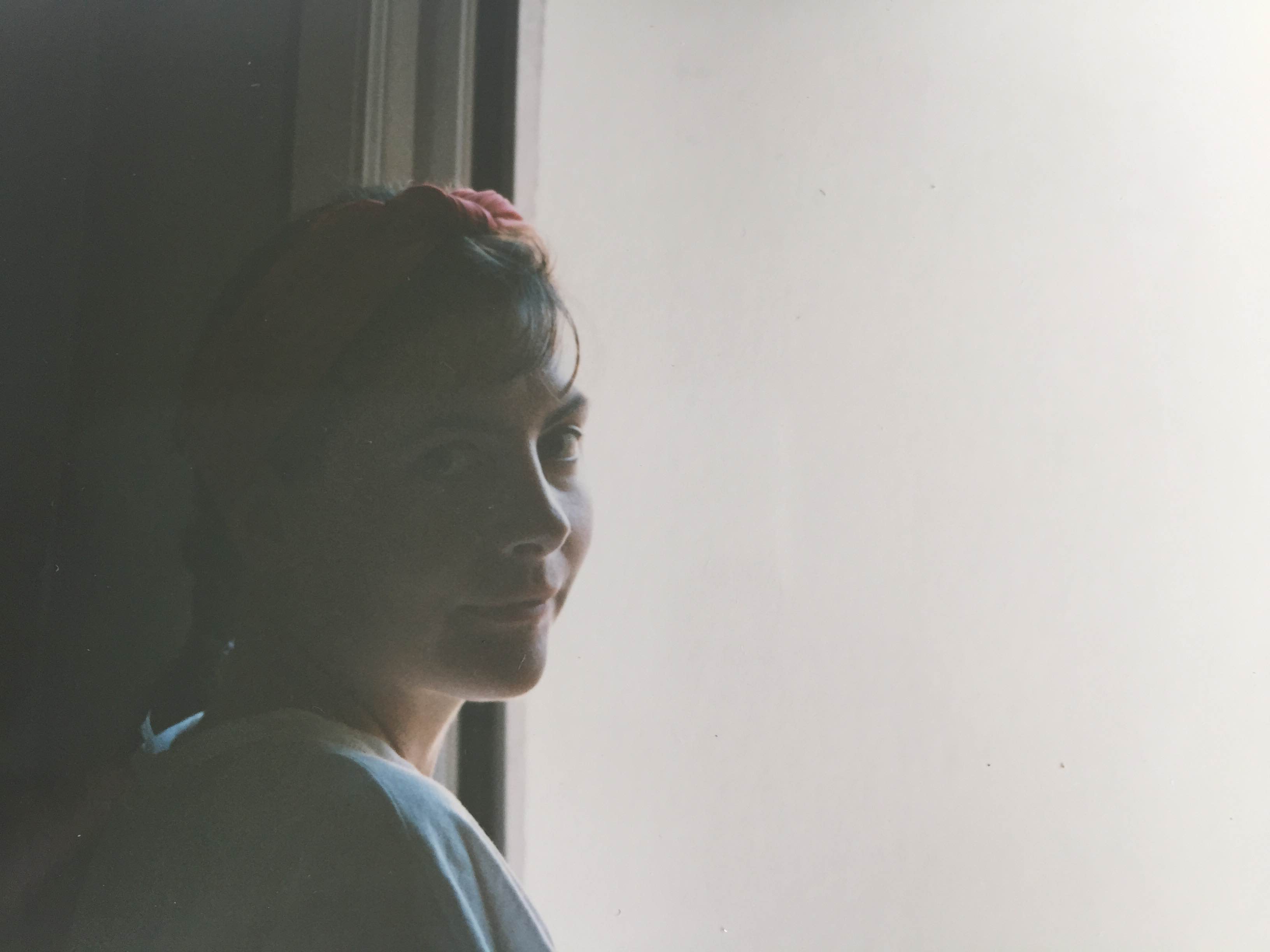
Susan at the window of the studio, 1989

Susan at the window of the studio, 1989

Like Jean Kent, acclaimed novelist and journalist Susan Johnson was fortunate enough to be awarded two residencies at the Keesing Studio: in her case, as she explains in her interview, through sheer serendipity.

When were you the Keesing Studio resident? And why did you decide to apply for it?

I was the Keesing Studio resident twice – once in 1989, from June or July I think – and once again in 1991, when someone unexpectedly dropped out and I happened to be in Europe anyway, so the Australia Council didn’t have to pay for an airfare, and popped me in as a sort of emergency replacement. The first time, in 1989, I followed my ex-boyfriend, the writer Tony Maniaty, into the studio, so it was a bit like old-home week (we were amicably separated and remain good friends).

What did you work on when you were there, and did it change from your original vision as a result of the residency?

I decided to apply for the residency all sorts of reasons, not just one. I was a relatively new writer then, with a first novel published (Messages From Chaos, first edition Harper and Row, Sydney, 1987) and editing my second (Flying Lessons, Heinemann, Australia, 1990; Faber and Faber, UK and US, 1990 and in translation, Actes de Sud, 1992). Being published by Faber was like a dream to me – the publisher of Hughes and Plath and Eliot and every literary giant I had long revered. Honestly, that year – winning the residency and being published by Faber – was like heaven. All year I felt blessed, and very, very grateful.

What were your first impressions of the Keesing studio itself, and its neighbourhood, and how did that evolve over the course of your residency?

I knew from Tony (via a letter! No email back then, no Facebook, no Twitter) pretty much what to expect. I knew it was a relatively ugly new building in the midst of much beauty (the Marais), and Tony was still in situ when I arrived, so I saw the lino, the unadorned windows, the narrow cot for a bed. But I also saw beauty and freedom and a wonderful, wonderful gift. I adored it – the way Tony (in his Greek-Australian fashion) had built shelving in the kitchen and divided the room, and everything looked clean and bright and shining. I could lean out the window and find Paris at my feet. I was breathless.IMG_0871

Funnily enough, only last year, Christmas 2014, I was in Paris again (editing my eighth novel, The Landing, Allen and Unwin, 2015) and a writer I knew then only in passing but who was in residence at the studio, Emily Maguire, invited me over to see it. I was pretty shocked at how run down it had become in the 20-odd years since I lived there. It looked very old and tired – but I could see that to Emily it was still glorious.

When I was there, I loved the Marais at once. I loved Paris too – my only other experience had been my first trip to Europe, aged 18. I was a young journalist then, what was known as a cadet reporter, a school-leaver who was supported by my employer to undertake an arts degree at the University of Queensland at the same time. I had never studied French and couldn’t speak a word, and was with another young woman who also couldn’t speak French. Back then, no-one wanted to speak English (this would have been 1976) and we couldn’t even work out how to negotiate the metro. We didn’t know “sortie” meant exit, that’s how bad it was, and when we tried to ask anyone for help, they walked straight past, possibly assuming we were beggars. That experience was seared into my brain, so I had studiously attended Alliance Francaise classes, in Brisbane and Sydney before I left, but I was pretty nervous about what I would find. It was such a relief to find that even a bit of French made a difference: either the French had changed, or I had. Everyone was lovely.

I feel completely in love with France – and the idea of France shall we say – and I have never fallen out of love since.

What were your favourite things about living in Paris for six months, and your least favourite things?

My favourite things were everything: the air, the sky, the trees, the food, the people, the stones, the way manners acted as a form of civilization itself, civilization made visible. The way that being a writer was an actual thing, it had a meaning, a value, indeed it was admired – unlike in Australia, where – arguably, still – being a writer equals being a wanker, or someone who has tickets on themselves, or someone who thinks he or she can get away with something – or does get away with something. Arguably, there is still hostility in Australia to anyone engaged with the weird, invisible practice of writing. I wrote an essay – or rather gave a lecture – on this very subject to the National Library of Australia on this very subject – here http://www.nla.gov.au/ray-mathew-lecture/2011

Only now, from a great distance of more than twenty years, can I speak about my least favourite things – but they are not specifically about Paris, more about France. And that is the elitism and possible racism against Pied Noir, Algerians and latterly Muslims, and France’s tendency towards xenophobia – but I also believe this tendency is overwhelmed by France’s greater love for liberte, egalite, fraternite…..I was there for the Charlie Hebdo marches, and there were Muslims, Jews, Christians, secular non-believers. I lived in the UK for ten years and the class system there is far more rigid than it is in France – I would still rather be a poor person in France than a poor one in England. I remember living in a flat in the 13th once, when a building site was across the road. All the workers – if they didn’t go to a restaurant at lunch time – would sit down with a fresh baguette, a cheese, a half bottle of wine and eat and talk. In England they would eat working class food – at least in France food is equal, and that to me is symbolic of so much more.

What did you think about it as a writing/ideas environment?

Perfect. Unlike others, who went to cafes, I like best a plain simple room without distractions. No views, nothing. But I had a view out the open window, the beautiful curling old building across the street, the tips of buildings. It was heaven – quiet, cell-like, magnificent.

Tell us about your favourite Paris places–sites, culture, food.

See above. But what I also got to love was the American Library and the American bookstore (I found the three volumes of Margaret Anderson’s extraordinary memoir there – she started The Little Review and was Joyce’s first publisher and France was her spiritual home). I made friends – French friends – who became my friends for life and through knowing Simone and Jacqueline and Maica and the rest I was lead into a richer and fuller life in France – into Monterlot (near Fontainebleau) and Fitou in the south, and Corsica where Simone climbed mountains in the winter and where her friend died in summer on the beach – Corsica, possibly the most beautiful place on earth – and I found myself searching for cep mushrooms in the forests in autumn, where the Italian in our group wanted to fry them in oil and garlic and Jacqueline, the Frenchwoman in our group, regarded this as a tragedy. A mushroom! A piece of fruit from God’s earth, the fate of which could be debated with such fire! I loved France for this – for caring about the fate of a mushroom.

What experiences stand out for you in the time you spent in Paris?

Once I sat at an open window of Chez Julien with the man who would become my first husband. You could still smoke in restaurants then and I leant on my elbows and looked up into the Paris sky: right then, I had everything. Love, a full belly, a head ringing with ideas. I would write everything! I would eat up existence! I was full to bursting.

Do you think the residency has had a lasting impact on your work, and if so in what way?

Yes, yes, and yes. That year in Paris changed everything: I burst free. I had jumped off – into love, into my work, into my real life, at last. From there I spent years away from Australia – in Hong Kong, in Boston, New York, ten years in London. I learn who I was in the world. I learn to reach the limits of myself, in that, at last, I learnt my limitations. But those initial months in Paris were the key to everything that followed. The studio residency was my open door.

Authors’ pick special edition: Angela Slatter

wolfwinterOkay, so I know I said that Matthew Thompson’s Authors’ Pick was the final in the series, but I’ve just received this fabulous review by Angela Slatter of her favourite book of 2015, and so here it is, in special edition!


“It’s the kind of winter that will remind us we are mortal,” he said. “Mortal and alone.”

One of the books that stuck with me from my 2015 reading pile was Wolf Winter by Cecilia Ekbäck (Hodder and Stoughton). http://www.ceciliaekback.com/

 Set in 1717 in Swedish Lapland Wolf Winter seamlessly blends history, mystery, and speculative elements. Recent settler Maija and her daughters Frederika and Dorotea are left alone on Blackåsen Mountain when Maija’s husband leaves to find work. The women must face a dreadful winter, roaming wolves, and, perhaps most terrifyingly, the other folk who live on Blackåsen.

 Life as outsiders is difficult enough, but when Frederika discovers one of the other settlers, Eriksson, murdered things become more complicated. Not only is Maija stubborn, refusing to let the mystery of Eriksson’s death go unsolved, but Frederika begins to manifest eldritch powers; worse still, Eriksson has returned as a ‘heavy’ ghost and only she can see him. He was not a nice man in life − death hasn’t improved him − and he insists that Frederika solve his murder. It’s the only way she can be free of him, but there’s more than one secret on the mountain and their keepers will do anything to ensure they remain hidden.

 There is a wonderful clarity to Ekbäck’s prose; it is stripped back to its essentials but still lovely. It never feels sparse or lacking or cold, the landscape and its characters come through strongly and always seem real and relatable. She covers the historical detail with a light hand so you never feel as if the writer’s going, “Look at all the research I did! Look at it!”, but rather it’s woven beautifully into the fabric of the tale. Highly recommended.

Angela Slatter is: the author of six short story collections and a debut novel that’s coming out in 2016; a PhD survivor; an occasional award-winner; a lover of coffee; http://www.angelaslatter.com/; @AngelaSlatter.

angela slatter


Paris literary studio 5: Jean Kent

Jean Kent, Paris 1995

Jean Kent, Paris 1995

Award-winning poet Jean Kent has been lucky enough to have been awarded two residencies at the Keesing Studio, and in this interview, she looks at both experiences.

When were you resident in the Keesing studio? And why did you decide to apply?

I’ve had the extraordinary good fortune of being in the Keesing Studio twice. The first time was in 1994, from the beginning of August, to the end of January, 1995. Then, the second time, I was there in 2011, for the six months from February till July.

Apart from the fact that I’d always wanted to live in Paris, there were several reasons related to my writing that prompted me to apply. I’d fallen in love with the French language when I was first learning it as a teenager in rural Queensland, and that was when my love of so much about French culture also began … the impressionist painters … composers like Debussy and Satie … and French style generally …

But suddenly, twenty-five years had passed, and that dream of living in Paris hadn’t happened! I think I was rather hoping to find the ghost of my younger self back in Paris, and perhaps to also understand better why a girl growing up in semi-tropical Queensland would imagine that Paris could be another home for her.

As well, I’d married into a family with a very different cultural background from my own Australian one. My husband’s father was Lithuanian and his mother came from Germany. I’d started trying to write about their experiences as migrants here after the Second World War. Going to Paris struck me as a possible way of understanding better what that might have been like for them. It would be a temporary reverse migration, albeit a short one.

After the 1994 residency, I brought home kilos and kilos of notes, which I hoped would eventually turn into poems or some other writing. I did finish a lot of that, but I also had a great deal of unfinished work which had become quite foreign to me, and I hoped that being back in Paris would re-immerse me in the sensual and emotional environments where the poems had begun, so that I’d be able to work on them in a less forced way. I also had another project in a very early stage that I wanted to research, retracing the steps of my grandmother, who had been in Paris in 1916.

What were your first impressions of the studio, and its neighbourhood, and how did that evolve over your residency?

Keesing Studio Sept 1994

Keesing Studio Sept 1994

In 1994, my first sight of the studio was of an utterly bare, green linoleumed space, with only one single bed jammed against the far wall, one big table and two chairs. The administrative staff at the Cité Internationale des Arts were not very welcoming either! There were jackhammers going full blast at the construction site opposite, and I have to admit that after travelling for thirty-six hours to reach this, I did have a momentary desire to turn around and fly straight home again. By the time we’d sorted out another bed for my husband and ventured down to the local shopping area for baguette and pate and brie and vodka, it was a warm, velvety twilight, the street outside was relatively quiet, and everything started to feel a lot better. The fact that we were right in the centre of Paris, with so many little shops and galleries and fascinating buildings just outside our door, plus the beauty of the islands and the open sky over the Seine so close by, was a great compensation for any hardships of the studio.

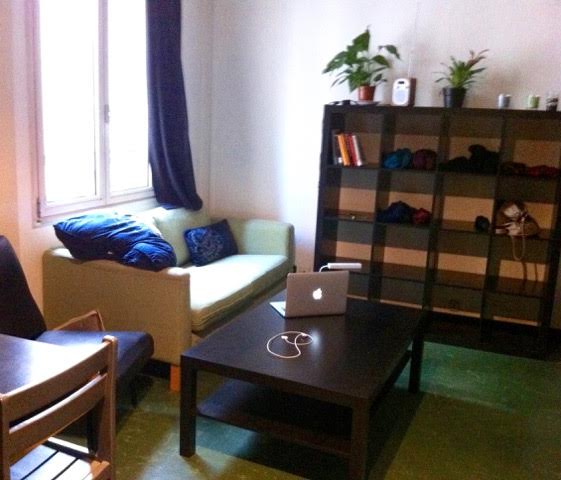
By 2011, there had been great improvements in the attitudes of the Cité des Arts to its residents. It was a much friendlier place, and the studio was more comfortable as well. We’d bought bedspreads and potted plants and pictures and some extra things for the kitchen to try to make it cheerier in 1994, but we were sternly advised that any of these things could not be left there, so they were all passed on to other residents before we left. This regulation had apparently gone by 2011, which meant that within a day or so of unpacking all the goodies left by previous residents in the storeroom, the studio was pleasantly homey. It was better equipped, with two tables, chairs, and oh yes, the sofa … the envy of everyone else at the Cité  who visited … The noise of the builders had been replaced by the noise of the Dance Studio they’d been constructing on the other side of the street, back in 1994 … it did feel more claustrophobic without the view that used to be there, through to the fairy tale sight of the Hotel de Sens, but the Studio itself was much more pleasant.

The biggest shock in 2011 was the number of homeless people who called the area outside the main building ‘home’. There had been occasional lost souls walking nearby in 1994, but mostly they’d stayed in the shopping area around rue St-Antoine.

Jean at Keesing Studio 2011

Jean at Keesing Studio 2011

Because this was my second time there, I was familiar with the local neighbourhood, and in fact it felt like home. I loved to walk around the network of little streets each afternoon (just as I’d do back at Lake Macquarie) seeing what was flowering in people’s window boxes and in the little parks tucked between the apartment blocks. I was always being surprised by the details, and by what changed even over six months – shops and cafes gutted and rebuilt, for instance. There were some things I never quite got used to: e.g. the regular appearance of armed police (often because of events at the Shoah Memorial next door), but I was aware that there was a need for surveillance at those times, and for every disturbing event there were other surprise disruptions that were wonderful, like film crews in the street and sudden invasions of dignitaries and guards on horses.

What were you working on when you were there, and did your original vision for it change over the course of your residency?

In 1994, I took a manuscript of poems I was already working on, as well as my notebooks for future projects. The work-in-progress was based on a sequence of poems set in a fictional Hunter Valley town, and I always thought of it as a back-up project rather than something I’d be focused on in Paris. I quickly realized that I couldn’t think about it at all. I started doing drafts of poems in response to being in Paris instead, and although I managed to get some of them close to a finished state, I also eventually realized that there was just too much I wanted to record about my daily Paris life, so I concentrated on that, and waited until I was home in Australia again to try to make sense of the work for a book. My vision for all my writing changed while I was there, I think – I became more acutely aware of how differently we live in Australia and the shock of coming back to our different landscape and climate also had a huge impact on my work.

In 2011, it worked the other way round. I took the Ms of Travelling with the Wrong Phrasebooks, which had been in a very nearly finished state for a few years. These were poems which had begun as notes in Paris – they were full of the experiences of my time at the residency in 1994, and although most of them had been published in magazines and some had even won prizes, I wasn’t really happy with them, and I could not work out how to assemble them into a coherent collection. After being back in the studio for a month, all the niggling parts of the poems that I thought were wrong became very obvious. I sat at the table overlooking rue Geoffroy l’Asnier, with the sounds of the bells of Notre Dame coming in the window and just that narrow slice of sky over the attic roofs, and Paris seeped back into the poems.

Were you there alone, or with a partner? In either case, what were your favourite things about living in Paris for six months, and your least favourite things?

I was there with my husband, Martin. He is a very visual person, and passionate about painting, so that made for good connections with other residents at the Cité  who were artists. He also spoke no French at all … which led to some interesting times, especially with the Cité  admin staff who refused to admit in 1994 that they knew any English, and with a dentist who was needed urgently after Martin lost a crown.
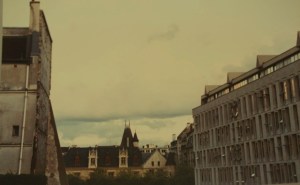
August 94 View from Keesing Studio

View from Keesing Studio, August 1994

My favourite things? I will probably be writing books for the rest of my life about this! I love the beauty of Paris – the light, the architecture, the parks and gardens (large and small), the constant surprises and stimulation.  The food, even from the supermarket, was fantastic … the breads, cheeses and terrines and pates …  and we liked to go to the market near Hotel de Ville every week for fruit and vegetables and flowers (gorgeous flowers, especially the peonies), and roast pork. As for the cakes … I think we had a different one (shared between us) nearly every day we were there (both times) and we still didn’t get through all the possibilities or stop marveling at how delicious and exquisitely constructed they were.

My least favourite things were the noise, the crowds and French bureaucracy. Getting visas for the six months was a nightmare.

I live in a very bushy suburb of Lake Macquarie, with trees all around the house and a large garden made noisy by birds rather than traffic, so although I relished the inner-city experience of Paris while I was there, I doubt that I could survive it fulltime. I did miss silence … and a big sky full of stars at night.

What was it like as a writing/ideas environment?

As a place for actual daily writing, the studio was a challenge. I did find the noise from the builders in 1994 and the Dance Studio opposite in 2011 difficult and when I needed more quiet for good concentrated work rather than just doing diary or journal jottings, eventually I sought refuge in the little storeroom, where I set up a mini office closed off from the rest of the world. But as an environment for gathering ideas and stimulation, Paris was brilliant.  Just being there was a sensory tonic, and also stirred up memories and ideas for me. Apart from Paris itself, I found the Cité des Arts a very beneficial place for creative excitement as well. I loved the regular concerts and open studios and exhibitions of work done by the other artists in residence. There was one other writer there in 2011, Rolf Hermann, a poet from Switzerland, and we collaborated on some translations of one another’s poems. I made good friends with other residents, including some Australians, and those connections continue to be very important to me.

Tell us about your favourite places in Paris–sites, culture,food.

One of my absolute favourite places in all the world is the Orangerie, with its two rooms of Monet’s waterlily paintings curved around the walls. I loved to go there for the paintings, but also to watch the other people, who would just stop and sit there for ages, looking.

I’d make a very long list if I mentioned all the other places that are very special to me, so here are just a few.

For its extraordinary contemporary architecture, including a wall of metal irises that open and close according to the sunlight, making lacy patterns of shadows over the floors inside, as well as for its

Jean at Institut du monde Arabe, March 2011

Jean at Institut du monde Arabe, March 2011

Arabian food and views over Paris from the roof: the Institut du Monde Arabe.

For its art (especially the impressionists and Art Nouveau), as well as its restaurant with over-the-top gilt, relaxed waiters and easy to order meals: the Musée d’Orsay.

For their stained glass cupolas and Art Nouveau style balconies and their theatrical certainty that fashion and shopping matter (even if I’m too overwhelmed by how much merchandise they have to actually buy anything), les grands magasins, especially Printemps and Galeries Lafayette.

For its ethereal atmosphere: Sainte Chapelle. I went to a sunset concert of mediaeval music here on my 35th birthday (during my very first two-day visit to Paris), and the voices of the singers seemed to hang in the air with the lozenges of coloured light through the stained glass windows. It was so magical I’ve never dared go back there.

For the fact that they were always there, beside the river and I walked over to them so often under the great stretch of Paris sky: Ile St-Louis and Ile de la Cité . I loved their little holes-in-wall for icecream and sorbet, the musicians playing there on the bridges in the summer twilight, and the view of the Eiffel Tower, lit up and sparkling on the hour.

What experiences stand out for you during the residency?

I’ve sometimes described my times in Paris as a mixture of bliss and horror, with those two extremes regularly happening several times on the same day.

One afternoon in 1994 we went to visit the Luxembourg Gardens. It was August, late summer, deep shade under the horse chestnut trees, big beds of flowers everywhere – marigolds and salvias and cosmos and dahlias … old men playing chess, children sailing boats, tourists everywhere, the statues white in the sun. Utterly idyllic. We spent hours there, until our cameras ran out of film, then walked home happily across the Left Bank.

When we reached Notre Dame, we discovered the entire area between there and the studio was blocked by police guards. Huge crowds were queueing along the footpaths and no one was being allowed through. I saw other people from the Cité des Arts showing their passports and the police shaking their heads. It looked hopeless. In hesitant French, I said, as politely as I could, that we lived ‘in that building over there’.  The policeman remained absolutely silent and stern, but he did open the barricade a fraction and let us through.

The celebrations for the fiftieth anniversary of the Liberation of Paris were on that night, just around the block at Hotel de Ville. That was why security was so tight. Shortly afterwards, there was a cavalcade of official cars along Quai de l’Hotel de Ville, and later that night there was much rumbling of tanks and army vehicles – sounds that were frightening even in their celebratory context – but also the music of Jean-Michel Jarre booming out and young people dressed as Resistance Fighters or liberating Americans dancing along the same route, followed by a display of fireworks. We were able to go to a window on the first floor of the old part of the Cité des Arts and look out at the spectacle.

It was so typical of the collision of the everyday and the extraordinary that I came to regard as normal in Paris. There were reminders of history everywhere, and so many celebrations with Paris itself as a beautiful backdrop. We never knew what would happen each day, and although that could be unnerving, it was also fantastically exciting.

Another experience which affected me greatly was being ill with shingles. This meant that I was confined to the studio for most of my time over a few weeks, and perversely, I could do nothing except sleep, look out the window at the world passing by, think about Paris, read books, write a little, and watch children’s TV. We had been cramming so much into our time there that I probably did need a rest! It was good to just slow down and let some of what I’d already seen and felt about Paris settle.

Has the residency had a continuing impact on your work, and if so, in what way?

Since my residency in 1994, I tend to think of my life as Before Paris and After Paris. That applies to my writing as well. There was a much greater respect for literature, and poetry especially, in Paris, than I’ve ever been aware of in Australia, and that has helped me to persevere with what has sometimes felt like an odd way of life.

I came home that first time believing that I would continue to write about the experience for ten years at least …I was certainly still haunted by it nearly twenty years later, when I went back the second time. And now I have another store of experiences to write about …

So far, there have been poems for a third of one book, The Satin Bowerbird, and for another complete collection, Travelling with the Wrong Phrasebooks.  After coming home from Paris each time I’ve felt as if I were seeing my usual environment with my eyes peeled, and that is been a huge influence on the poems for my most recent book, The Hour of Silvered Mullet. Even though it’s mostly about Australia, and especially the Hunter Valley, I think that experience of being jolted away from my usual home and then returning with a slightly more European sensibility was crucial to the writing. There are more new Paris poems based on my notebooks in 2011 in progress too, as well as a memoir … so I feel sure my residencies are going to remain a very dominant presence in everything I write for a long while.
Paris literary studio 4: John Foulcher

John at work in the studio

John at work in the studio

Today I am featuring an interview with distinguished poet John Foulcher, who was the Keesing Studio resident right after me.

When were you the Keesing studio resident? And why did you decide to apply for the residency?

I was resident in the Keesing studio in the latter part of 2010 and the January of 2011. I applied for the studio because I felt my writing was stagnating a little and I felt I needed some time and stimulus to give it a kick start. I couldn’t imagine a better place for this than Paris, which is my favourite city. I also didn’t think I had a hope of getting it; I was over the moon when I did.

What did you work on while you were there, and did it change from your original conception as a result of the residency?

This sounds terribly pretentious, but I wanted to write poems about the relationship between the physical and the spiritual while I was in Paris – a sort of dialogue between body and soul. Also, I’d been reading a lot about French history, particularly the revolutionary past of Paris. So many of our roots are there, and I wanted to see this up close. I remember standing in the Pere Lachaise cemetery at the wall when the last communards were lined up and shot in 1870. The bullet holes are still there. I remember finding Robespierre’s last residence on the rue St Honore, a very chic clothing shop now. There were many other such times.

The concept didn’t change much but the way I explored it did. I realised when I got to Paris that I really didn’t know much. The final book of poetry, called The Sunset Assumption was very different to the one I thought I’d write.

What were your first impressions of the Keesing studio and its neighbourhood, and how did that evolve over the course of your residency?

I loved the studio and the neighbourhood from the moment I arrived. Yes, the studio is only small and very basic, but it’s in such a good spot and the rue Geoffroy L’Asnier is wonderful. As soon as we arrived, I went for a walk by myself – within five minutes I found myself on the Ile de la Cite standing in front of Notre Dame de Paris. In the coming months, that became our nightly walk – I had to keep reminding myself to be astonished! I loved the Ile St Louis, and the Marais is terrific. And there are three Metro stops which will take you just about anywhere in Paris.

Walking to the local boulangerie, summer

Walking to the local boulangerie, summer

Through the course of the residency, I explored the area deeper and deeper. I found the best days weren’t the ones where you were going to the Louvre and so on, but the ones where you were just ‘hanging around’ buying groceries, having a coffee in a street café or wandering down to the Seine with a book.

A close friend once said to me that, of all the cities he’d visited, Paris is the one which makes you feel most alive. I found that to be true.

Your wife Jane came with you on the residency. Thinking of it in terms of both of you, what were your favourite things about living in Paris for six months–and your least favourite things?

Strange as it may sound, I loved the churches of Paris most. Not just Notre Dame, but others as well – St Severin in the 5th, for example, or St Eustache in the 3rd. No matter what one believes, Paris wouldn’t be the same without its churches. They take you back into history and beyond into another space. I hate it when people call barbaric practices ‘medieval’; ‘Go and spend some time in Notre Dame,’ I feel like saying, ‘or Chartres Cathedral – then tell me things were barbaric in medieval times.’ We’re too fond of caricaturing the past, of pretending our age is superior.

StGervais_Fassade

St Gervais-St Protais

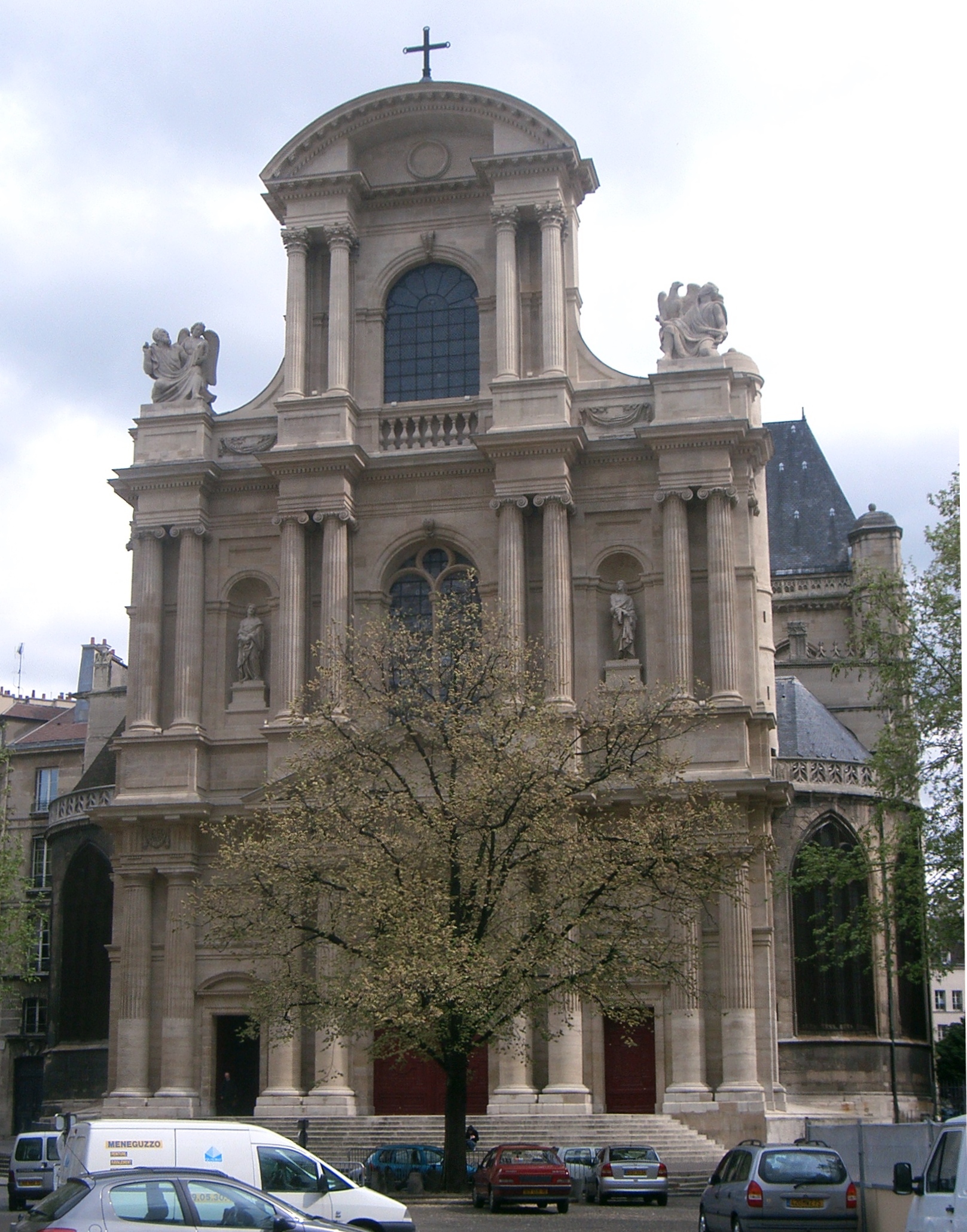
As the residency went on, we found ourselves going to vespers at St Gervais-St Protais, just around the corner from the Cite, every night. There was a working community of nuns and monks there called the Fraternities of Jerusalem, most of them quite young, and their chanting and the almost physical silences there were among the most deeply moving experiences of my life. The last time I went there on a cold January evening, I left in tears. It’s left a gap in my life I haven’t been able to fill. I often say, since then, that I believe all church services should be conducted in a language the congregation doesn’t understand; words, in the end, just get in the way.

Evening strolls by the Seine were also sublime, as is the Place des Vosges.

My least favourite things were my own inadequacies – I have a very good French accent and I would practise interactions with shop-keepers and so on, but they talked so fast in return I found myself completely lost. I felt like such a fool. Even ordering a coffee was a traumatic experience. By the time the residency was coming to an end, though, Jane and I remarked that Parisians were starting to speak a lot slower. How considerate of them!

The number of homeless people and refugees in the centre of Paris was also deeply unsettling. In his novel, The City & the City, British author China Mieville explores the notion of interlocking cities and the idea of perception. In that novel, the premise is that two cities are built on precisely the same spot but one chooses to ‘unsee’ the other. There are many cities in Paris, and we choose daily to see only one of them, the ‘prettiest’ one.

What did you think of it as a writing/ideas environment?

My publisher said to me on my return that if one can’t be inspired to write in Paris, one can’t be inspired anywhere. Every day poems would come tumbling in the window in Paris. It rejuvenated my writing at a time when I thought I was about to stop. It’s all sensory and intellectual overload.

Tell us about some of your favourite places in Paris–sites, culture, food.

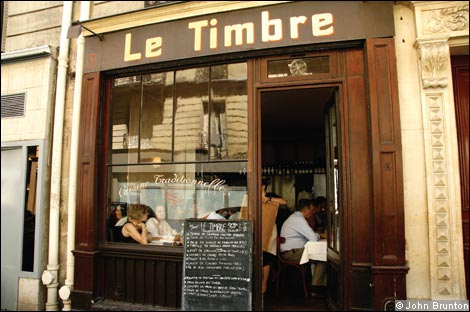
Too many to mention. As I said before, I loved the churches, the Place des Vosges. There were other places – the Rodin Museum, the George Pompidou centre, the Albert Khan gardens in the 16th, the Luxembourg Gardens, which William Faulkner described as the most civilised natural space in the world. I loved a wonderful little restaurant we found in the 7th called Le Timbre. The markets were terrific as well, and the boulangeries.

walking to the local boulangerie, winter

walking to the local boulangerie, winter

What experiences stand out for you in those six months in Paris?

I think I’ve just about covered that. The only thing I’d say, finally, is that I thought my stay in Paris would be quite a solitary one, like a retreat. It wasn’t. I met so many people, particularly through the Cite – I met people at French lessons and in the laundromat. Not many of them were French, mind you, but I met artists and writers from all over the world. I made good friends with a Swiss artist, Judit Villiger, who did the illustrations for the hardcover edition of The Sunset Assumption.

The most significant single event for me was 2010 New Year’s Eve – we went for drinks on the Ile de la Cite with Judit and her husband Cristophe, then we all went to midnight mass at St Gervais (it went for two hours; it was fabulous – but it was also freezing!) and then we drank champagne in our studio with them until 3.30 in the morning. One December morning, also, I woke to find it snowing heavily – I rushed up to the Place des Vosges, which was deserted. In the snow, it was breathtaking.

I also found Parisians, by and large, to be helpful and friendly, if a little brusque and formal. It’s a cliché, I know, but if you try to communicate to them in French rather than expecting them to decipher your English, they were always so much warmer. I would be too.le timbre

Do you think the residency has had a lasting impact on your work? In what way?

Yes, I think it’s had a huge impact on my work. I think I’m now writing better than I ever have. As well as simply the visceral, vivid nature of the experience, I think that operating in a culture where you struggle with language is good your writing poetry – it forces you to think about the nature of language in quite a minute way. Words become particular things –  wonderful, intricate things.

I’m so grateful for the residency. It was one of the most richly fulfilling experiences of my life.

I remember walking by the Seine one morning, absorbed in it all. I remember thinking: ‘Someone is paying me to be a writer in Paris. Could it get any better than this?’

Paris literary studio 3: Tony Maniaty

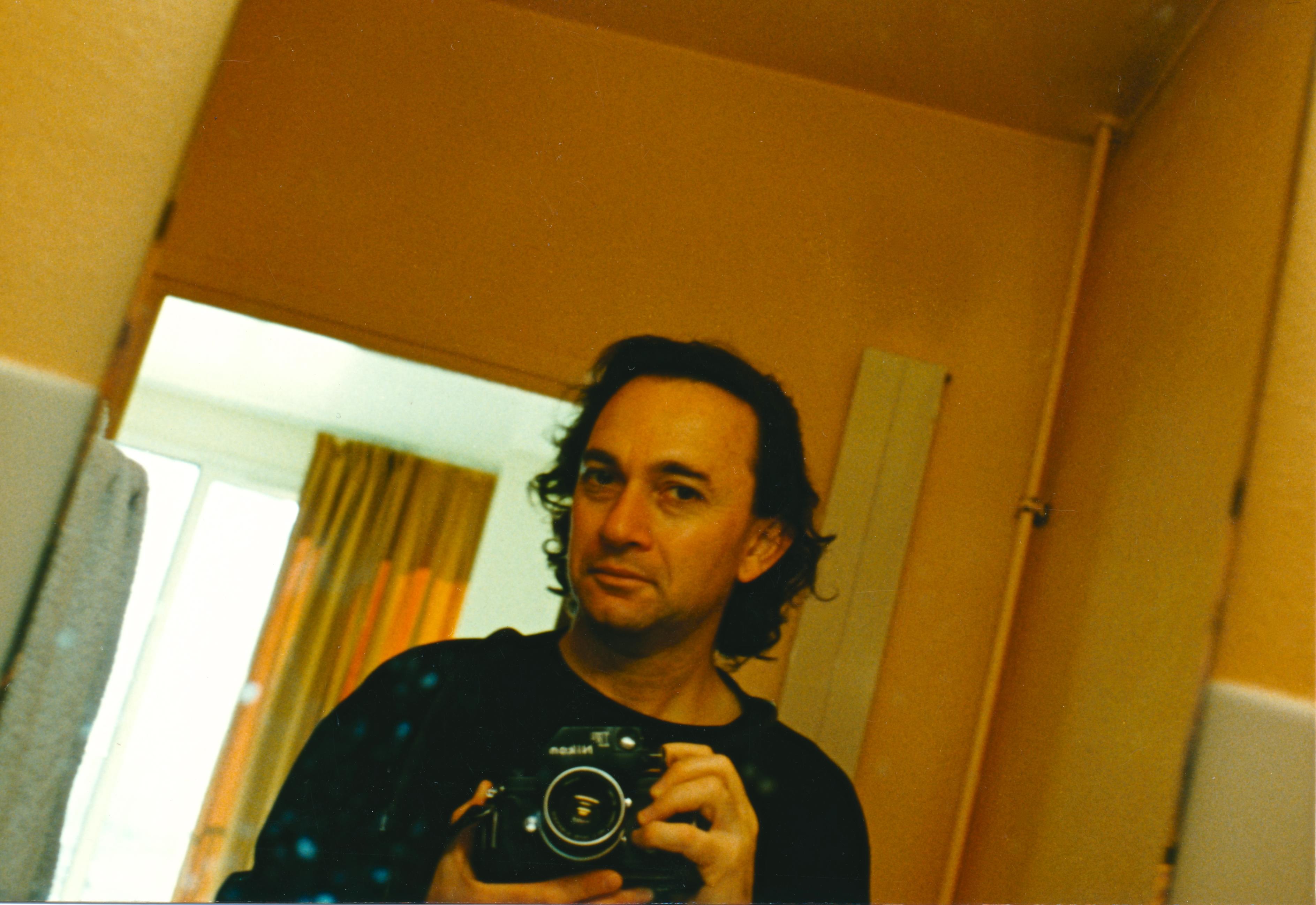
Tony Maniaty in Keesing Studio Photo © Tony Maniaty 2015

Tony Maniaty in Keesing Studio Photo © Tony Maniaty 2015

Today I’m interviewing award-winning author, journalist, reviewer and screenwriter Tony Maniaty, who was resident at the Keesing Studio only four years after its lease was gifted to the Australia Council’s Literature Board by Nancy Keesing. (All photos © Tony Maniaty 2015)

When were you the Keesing Studio resident? And why did you decide to apply for it?

I was the Keesing Studio occupant for the first six months of 1989. I wanted to spend some time in Paris writing a novel, a long-held dream, so I figured six months would cure me. As it happened, I ended up staying in Paris for three years. I actually didn’t get the residency first time around, I applied but missed out – and then the person who was to go pulled out, and the Australia Council rang me and said, ‘Can you go?’ I was pretty much on the next plane, although the flight itself turned into a nightmare. As we approached Europe, the captain informed us that violent snowstorms were blanketing all major airports. We would have to divert to either Brussels or London; in line with French democracy, the passengers all took a vote, and Brussels won. We then took a bus through blizzard conditions down to Paris, where I discovered my luggage was lost. So I spent the first two days in Paris running around buying fresh underwear. But I was in Paris and that was all that mattered.

What did you work on when you were there, and did it change from your original vision as a result of the residency?

I had two projects. I was editing my second novel ‘Smyrna’, so had the very enjoyable task of sitting with my Penguin editor Bruce Sims in the studio fixing the book line by line. Since it was Paris, we also consumed a fair amount of wine. (I maintain the novel was the better for it, and I’m sure Bruce agrees.) Then I moved onto what was to be my third novel, titled ‘The Conduct of Arrows’, set in Brazil in the early 1960s. I’d been to Brazil for research in 1986 and brought copious notes and files to Paris, ready to crack ‘the big one’, the one that would really launch my career. I started writing about the tropics of Brazil in the depths of a miserable European winter, and by spring I had a first draft. Penguin wanted to publish but I wasn’t happy with it. My six months was up, and, out of cash, I returned to Sydney to work as a producer on the SBS World News desk, which quickly saw me turned around and sent back to Paris as ‘Dateline’s’ European correspondent, a gig that lasted until 1992. Paris again had me in its wonderful grip. Little did I know that the Brazilian novel would sit in a drawer for another twenty years or more before I tackled it again, with a new title, ‘The Fish Will Swim in Thy Dark Streets’. I’m just polishing what I hope will be the final draft now, but you never know…

What were your first impressions of the Keesing studio itself, and its neighbourhood, and how did that evolve over the course of your residency?

Kitchen, Keesing Studio 1989

Kitchen, Keesing Studio 1989 Photo © Tony Maniaty 2015

When I walked into the studio it was pretty bare, there was virtually no kitchen bench space, and being of a practical bent, I immediately took the Metro to  the nearest timber yard, bought some wooden planks, discovered the location of the BHV store (a kind of Parisian Bunnings) and bought nails and cheap tools and got to work. For the first day or so I was building, not writing. I prowled the surrounding Marais streets by night and found some leftover furniture and set myself up in the studio like a second-hand king. I built a kind of folding screen to make a separate office space. The only thing that irked me was the single bed (since I was single) but the notorious Madame Bruneau – fierce moral guardian of the Cite des Arts – would not countenance swapping it for a double. There was a tiny TV set, black and white. Once I’d set up the kitchen I was cooking my beloved pasta and happy as Larry.
Did you go alone, or with a partner? In either case, what were your favourite things about living in Paris for six months, and your least favourite things?

I went alone but a strange thing happened: I met a French woman. This turned into a torrid affair, complicated by the fact that (a) she was married to an Englishman, and (b) she had an 18-month-old daughter. It was further complicated by the fact that their best friends in Australia had asked me to deliver a present for the girl, which I duly did. One thing led to another and I had to write back to my Australian friends to inform them that not only had I delivered the present for the baby girl but that I had run off with the mother. (The husband, I discovered to my relief, had recently left her.) So my Paris sojourn began to resemble a Feydeau farce. As spring came, Paris turned into the great outdoor city it is, and I came to love almost everything about it. The food, the markets, the bookstores, the art stores, the cafes,

Tony's desk, Keesing Studio 1989

Tony’s desk, Keesing Studio 1989 Photo © Tony Maniaty 2015

even now I struggle to think of anything I didn’t like in that city.

What did you think about it as a writing/ideas environment?

The Keesing studio was a good place to work at night, but by day I found it gloomy; it was a relatively new concrete building in a wonderful old neighbourhood, the worst combination, and whenever I could I escaped to write in libraries and cafes, or along the quays if the weather was fine. But I wasn’t complaining; the studio was in perhaps the best location in Paris, it was clean and rat-free, and best of all, it was free. I did all my manuscript typing there. (This was in an era where typewriters were still considered practical tools, not curiosities.) I should mention that when I was awarded the residency, there was no living stipend attached; I explained to the Australia Council that I couldn’t live in Paris on love alone, and they agreed and came up with $10,000 for the six months, which thereafter became a fixture of the residency.

Tell us about your favourite Paris places–sites, culture, food.

I loved the Jewish restaurants in the Marais, which back then was not trendy by any means; there were still plenty of trades and working class people around, and the odd derro lying on the footpath, although by the time I returned to Paris, it was already starting to show signs of gentrification, and now I find the area insufferably self-conscious. Bars and cafes: my regular haunts were the La Tartine on rue de Rivoli in the Marais, said to be where Trotsky had written his radical texts (and where the toilets had not been renovated since) and La Palette on rue de Seine, filled with the bartered artworks of students from the the Beaux-Arts across the street. Food: my favourite restaurant when I could afford it was the Balzar, in rue des Ecoles near the Sorbonne, where the dry old waiter got to know my order: cold lamb with green salad and fresh mayonnaise, and a glass of Morgon rouge. I loved the Metro too, and prided myself on knowing the shortest ‘correspondences’ between stations. Notre Dame did nothing at all for me, nor the Louvre very much, but the Musee Quay d’Osay housed possibly my favourite painting in all the world, Van Gogh’s ‘Portrait of Doctor Gachet’. It was always incredible to see it hanging there.

What experiences stand out for you in the time you spent in Paris?

I was invited by a new-found friend to her parent’s place one afternoon, they were ‘having a few people over’ for drinks. The ‘place’ turned out to be the entire top floor of a building in Saint Germain du Pres, an apartment of about twenty rooms, and the 200 or so people there quaffing Bollinger were attending the Paris Air Show, and were aircraft dealers, i.e. people who bought and sold Jumbos to airlines and fighter planes to African dictatorships. For a boy from Brisbane, even for a journalist and author from Sydney, this was a heavy crowd. Paris, behind its charming facades and lanes, was home to some of the richest people on the planet. At the other end of the spectrum, I loved sharpening my HB pencils in the Cafe Select and drinking my coffee and being left alone to create for hours on end. The fact that everyone in Paris saw this as normal adult behaviour was enlightening.

Do you think the residency has had a lasting impact on your work,and in what way?

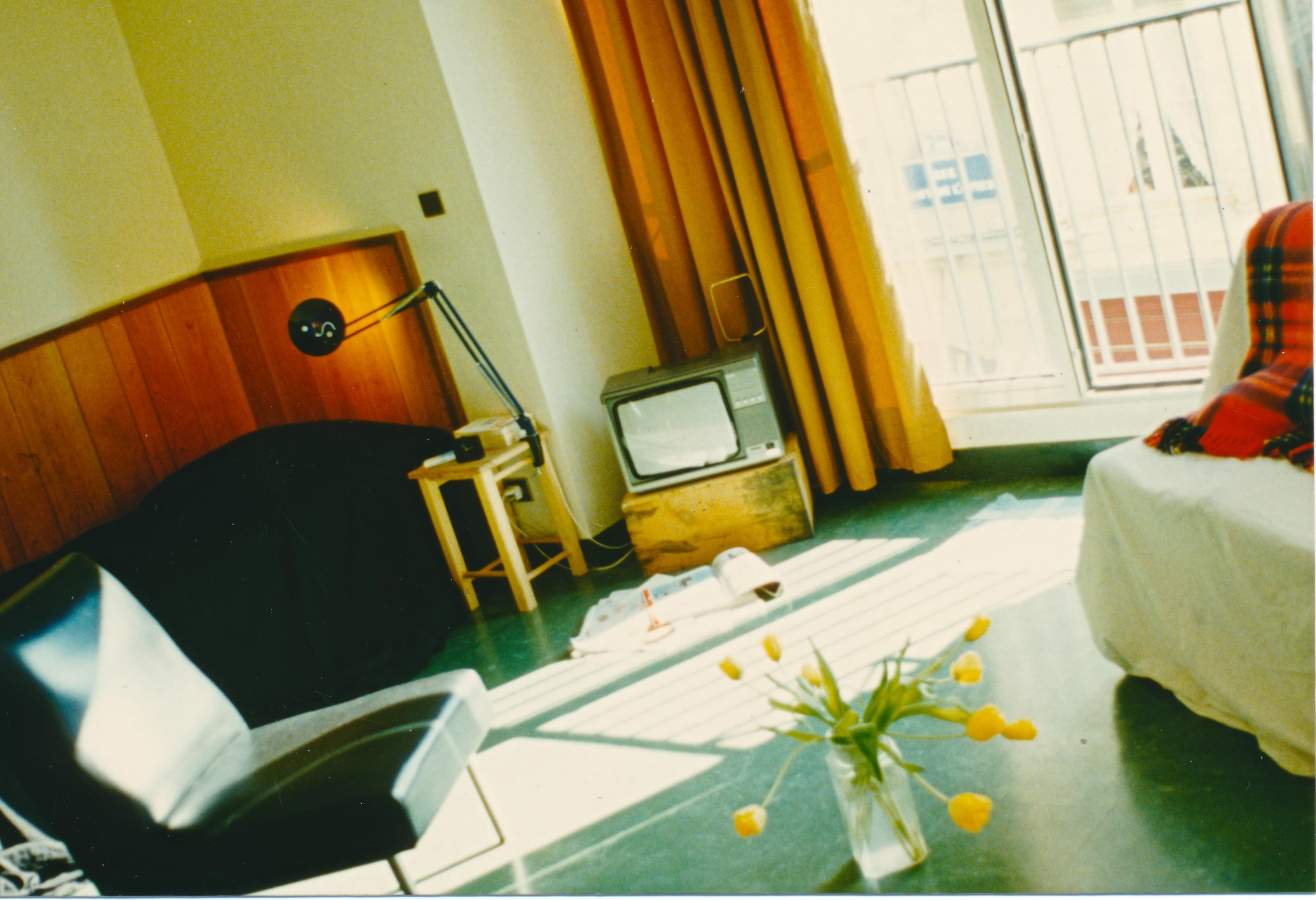
Keesing Studio, 1989

Keesing Studio, 1989 Photo © Tony Maniaty 2015

Paris taught me the value of literature, and its social standing in a civilised society. I had in early 1989 had only one novel published by Penguin, and another about to be released, but the words ‘Penguin’ and ‘novel’ seemed to create some magical ether that opened doors at all levels. I met the head of the French equivalent of the Literature Board, and asked him if they had negative front-page stories in France about writers getting grants from the taxpayers funds – as we did at the time in Australia. He looked at me, just a little baffled, and asked how much money was involved. I had no idea, but I think I said something wildly extravagant like $5 million a year, hoping at least to impress him. He shook his head, unbelieving. ‘But merde,’ he said, searching for a metaphor. ‘That’s just… that’s just… the wing tip of a fighter plane!’ My time among the Parisians gave me enormous respect for French cultural values, not to mention their sense of theatre.

Paris literary studio 2: Ursula Dubosarsky

The street outside the studio--Rue Geoffrey l'Asnier, looking towards the Seine

The street outside studio–Rue Geoffrey l’Asnier, looking towards the Seine, December 2015

Well-known children’s author Ursula Dubosarsky is the current resident of the Keesing Studio in Paris, having started her residency in August 2015, and finishing in February 2016. Today, I’m featuring an interview with her about her experiences and observations during her stay so far.

Ursula, what made you decide to apply for the Paris residency?

Once I heard about it many years ago I guess it was always there in the back of my mind – a flat in Paris! What a wonderful thought, why wouldn’t I apply? But I had to wait for my children to grow up (you can only have one child under seven in the flat) and then they did grow up and one of them (daughter Maisie) moved to Paris. Then we noticed my husband Avi was owed six months long service leave, I had an idea for a novel brewing – so it all made sense and I applied.

​​What were your first impressions of the Keesing studio and its neighbourhood,and what are your impressions now?

The impression of the neighbourhood is – marvellous historic area, minutes’ walk across the bridge to Notre Dame – beautiful old streets, houses, museums, galleries, churches, cakes, tourists, restaurants, wine, traffic, soldiers, sirens, graffiti, rain and sun, beautiful clouds, street music, dogs, late nights and late starting mornings.  These impressions have remained from the beginning – I suppose now obviously I know the streets a little better and am a tiny bit more aware of all the depths beneath the surface.

20151211_190532

Part of main living area, Keesing Studio, 2015

Our impression of the Keesing studio is also the same as at the beginning – clean, warm and functional. (more about the Cité itself at the end)

What are you working on there? And have you found your plans for it have changed since you arrived?

20151211_190330

Keesing Studio kitchen, 2015

I’m working on a novel – I don’t know if my plans have exactly changed, but you can’t help but being changed by what you see and hear. I would find it hard to put into words though (hopefully in the book!)

Both for yourself and for Avi, what are your favourite things so far about living in Paris for six months–and the least favourite?

Well there’s no getting away from it, Paris is astonishing. The amount of cultural activity is staggering. Museums, galleries, parks, gardens, theatre, music – there is just so so so much, all the time. The beauty of Paris too is ceaselessly impressive. Avi roams around Paris on his motor scooter, whereas I prefer to walk. I walk for miles. Most of Paris is flat, you can walk anywhere with little physical effort.

 Because we know we are only here for a short time, there is an undercurrent of urgency about seeing and doing as much as we can and there is so so so very very much. So daily life is quite exhausting. But I find it hard to think of negatives about Paris, obviously they exist, but the positives are just so brilliantly shiny…

What do you think of it in terms of a writing/ideas environment? What are the pleasures, and the challenges? What influence do you think  you think your residency will have on your writing?

Ursula and daughter Maisie on Truffaut rail in Paris

Ursula and daughter Maisie on Truffaut trail in Paris

I have been writing, although perhaps not as much as I thought I would. The flat has a certain sterility, which makes you want to go out. People write in cafes, but I find it hard to sit still. I’m constantly walking and writing in my head, constantly thinking. The experiences here will persist all my life and inevitably influence what I write.

Tell us about some of your favourite places  in Paris–sites, culture, food, places,etc.

I think most of all I have loved going to the theatre. There is just SO much. So many small (indeed tiny) independent theatres as well as the larger theatres. You could go to something different every night of the week, classic and contemporary – in fact you could go to several different things every night of the week if only it were possible. It’s like being at a non-stop theatrical festival. The theatre is also very affordable – you can get tickets to most things for about 15 euros.  

Petit Palais

Petit Palais

Other things?  I love the church that is only a few minutes from the flat, St Gervais. Beautiful mysterious and so old. I love the Petit Palais. I love the Rue des Rosiers. I love Notre Dame especially at night.  I loved going out to Giverny, and the Orangerie. The weekend of the “patriomoine” (in September) was absolutely fantastic, when they open up hundreds of culturally significant buildings for you to wander into, with fantastic guides.  Talking of guided

Rue des Rosiers

Rue des Rosiers

tours, they can be so good too, accept every offer. I recently went on a a brilliant one of Truffaut’s Paris for example.

I love the cemeteries of Paris. Completely beautiful. 

There’s just so many things. Too many. I loved the squares and the gardens. The architecture. The cafe life. The sense of things constantly being created and recreated.

I have also loved improving my French. That has been a real and deep pleasure. 

Now you are heading towards the end of your residency, what stands out for you in what you have experienced?

Well our daughter Maisie got married while we were here (not anticipated when I applied for the residency) – that was obviously a wonderful thing for us to be there. On the down side were the November terrorist attacks which were a couple of kilometres from the flat. 

Ursula in Paris Salon du LivreI went to a very memorable and exciting annual festival of children’s books in Montreuil, the Salon du Livre de la Jeunesse. Met some great people – writers, illustrators, publishers, and foreign rights agents etc.

 It has also been such a pleasure having people we know from Australia and elsewhere drop by to visit, wandering, talking, eating and drinking together.

What are your top tips for writers and illustrators planning to apply for the residency?

That’s a hard one! I can only say, apply apply!

 I would learn as much French as you can before you come – then you can enjoy so many more things, like the theatre, guided tours, television, newspapers, public talks etc etc  as well as enjoying yourself more in shops and restaurants. The Cité (the institution where the flat is) does offer French lessons twice a week for a charge, but the class is so composite (complete beginners to advanced all in the same large class) we did not find it very helpful. We both found other places for French classes – Avi goes to the local council which have very good almost free classes and he also goes to a private college. I go to a small private group on Boulevard St Germain.

Ursula at pet cemetery in Paris(grave of Rin Tin Tin)

Ursula at pet cemetery in Paris(grave of Rin Tin Tin, canine star of many films!)

Finally, just a word about the Cité Internationale des Arts:  I think it’s important to be aware that the institution itself is not a community, but rather a building full of artists and musicians (very few writers), most of whom you will never see.

There is no common room or library, or outdoor area for people to gather and meet informally. The hallways are long, dark and empty and without decoration. (There is also a strange absence of a sense of history – hundreds, perhaps thousands of artists have lived here since the 1970s but they seem to leave not a single trace.) There is some communication between residents via email etc, alerting you to performances or invitations to visit their work in progress in their studio, and there is an occasional free lunch party in the car park for all residents, but these are fairly sticky occasions. So it is not an artists’ community as might be imagined, but more an accommodation facility. Worth remembering before you go

Paris literary studio 1: Introduction

DSCN4836

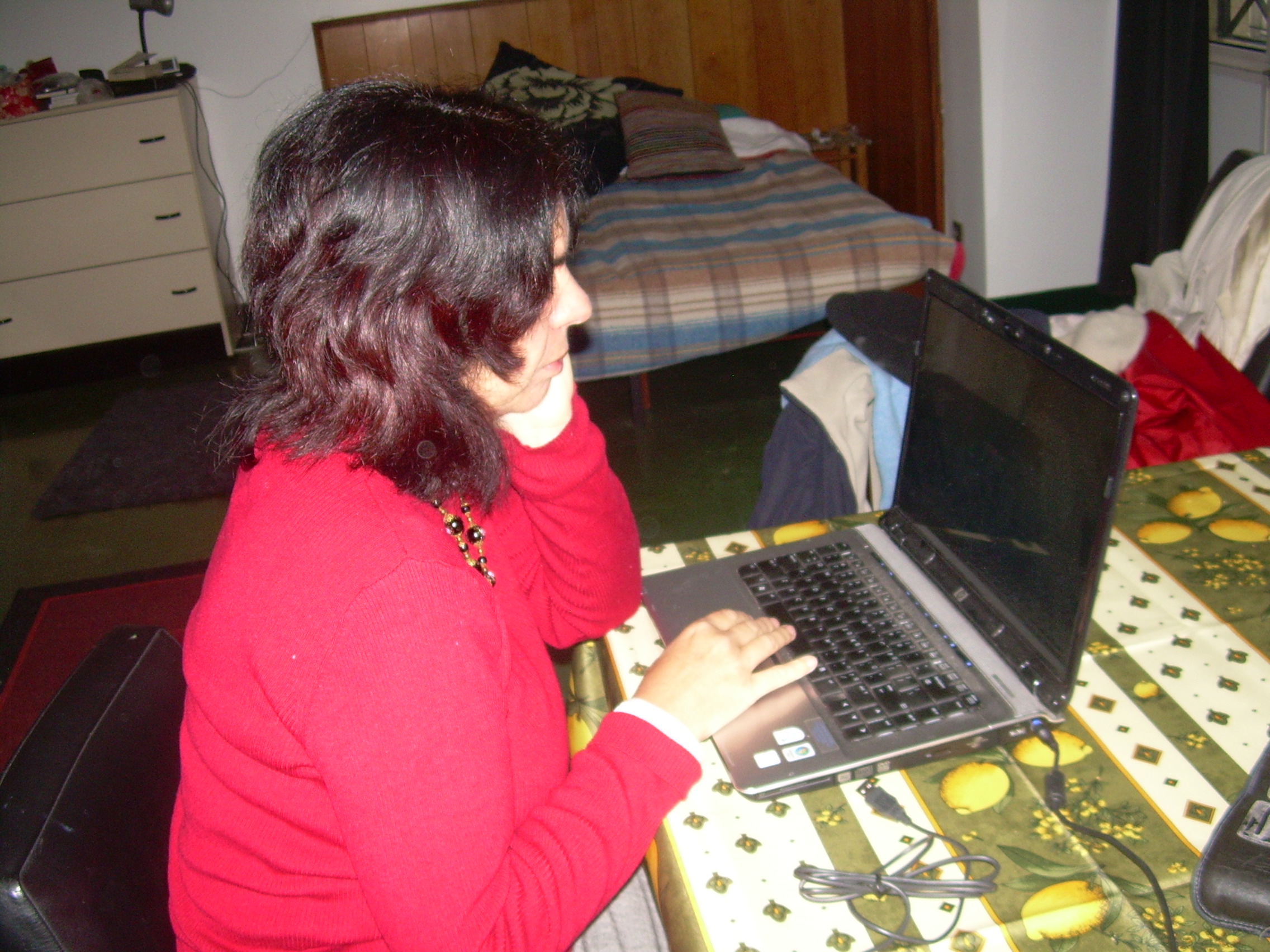
Working in the Keesing Studio, February 2010

One of the most wonderful experiences of my writing life was when I was awarded a six-month residency at the Keesing Studio in Paris from February-August 2010. The Keesing Studio is a flat whose residencies are administered by the Australia Council, but which is part of the Cité Internationale des Arts in Paris, a massive complex housing lots of studios where artists from all disciplines from across the world can live and work for residencies of specific time limits. (Incidentally, the Keesing Studio and other artist residency locations, including in the Cité, feature in some interesting research done by the Australia Council recently, which you can read here.)

As the Australia Council’s website indicates, the Keesing Studio was generously leased in 1985 for 75 years by the late author Nancy Keesing ‘to provide Australian writers with the opportunity to live and write in a new and stimulating environment.’ It’s certainly that!  The flat itself is small (40 sq m altogether, comprising of one main room–living, sleeping and working space–with separate but very small kitchen, bathroom and store-room) but it’s clean, warm and functional, and set in an unbeatable location, in the buzzy, bustling Marais neighbourhood on the Right Bank, full of interesting little shops and restaurants. It’s only a few steps away from the Seine, and very close to Notre Dame and many other places.

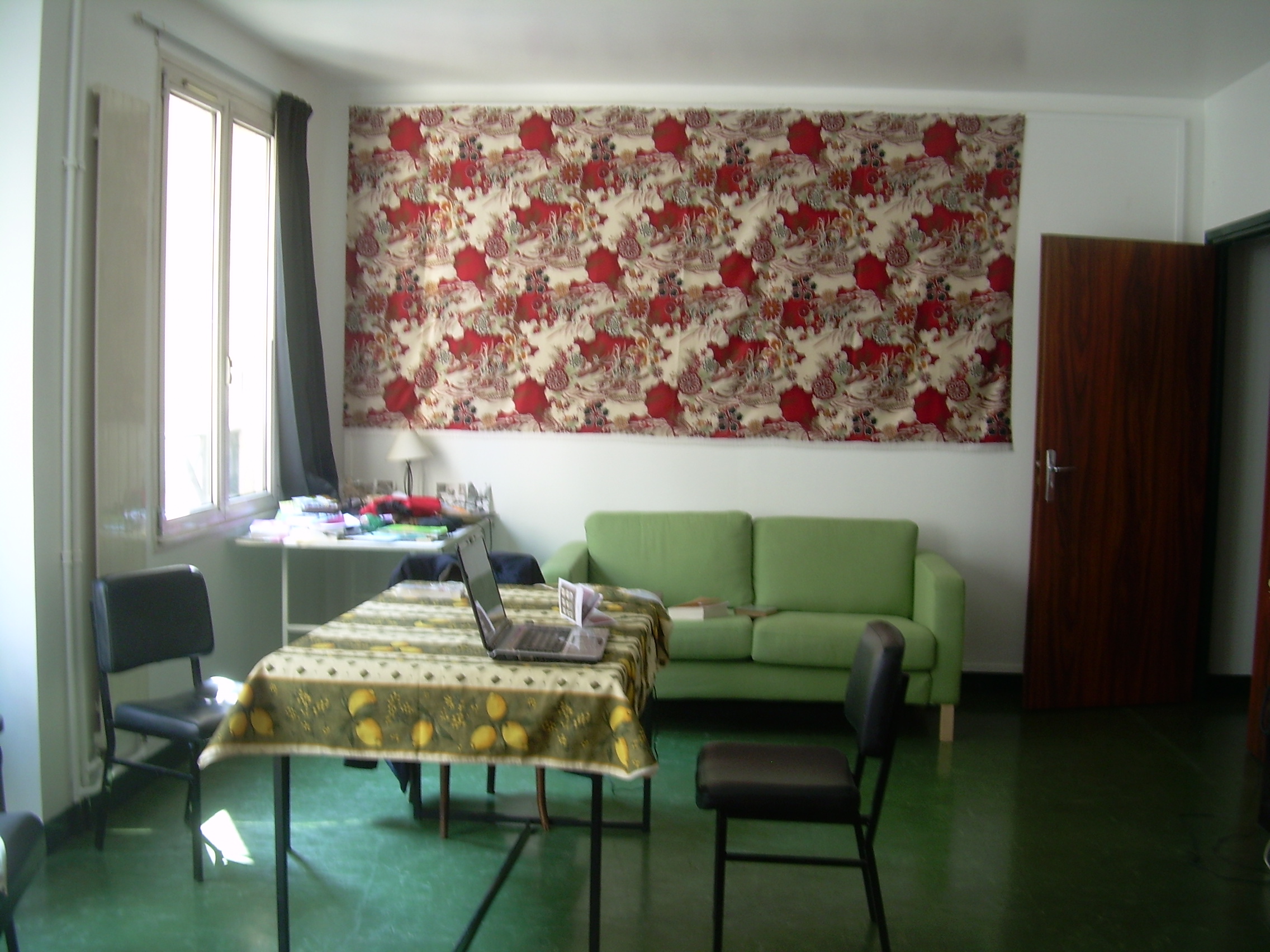
Living area in 2010(our decorations!)

Living area in 2010(our decorations!)

I went with my husband David (you pay a minimal monthly fee to the Cité for partners to stay) and we both had the best time there, getting to know Paris really well, walking kilometres across it, looking at everything, shopping in local shops and markets, eating wonderful food, both at home and in little local restaurants, going to the theatre, visiting friends and family and feeling like we were really part of life there, not just passing tourists.

our favourite local restaurant, the Louis-Philippe

our favourite local restaurant, the Louis-Philippe

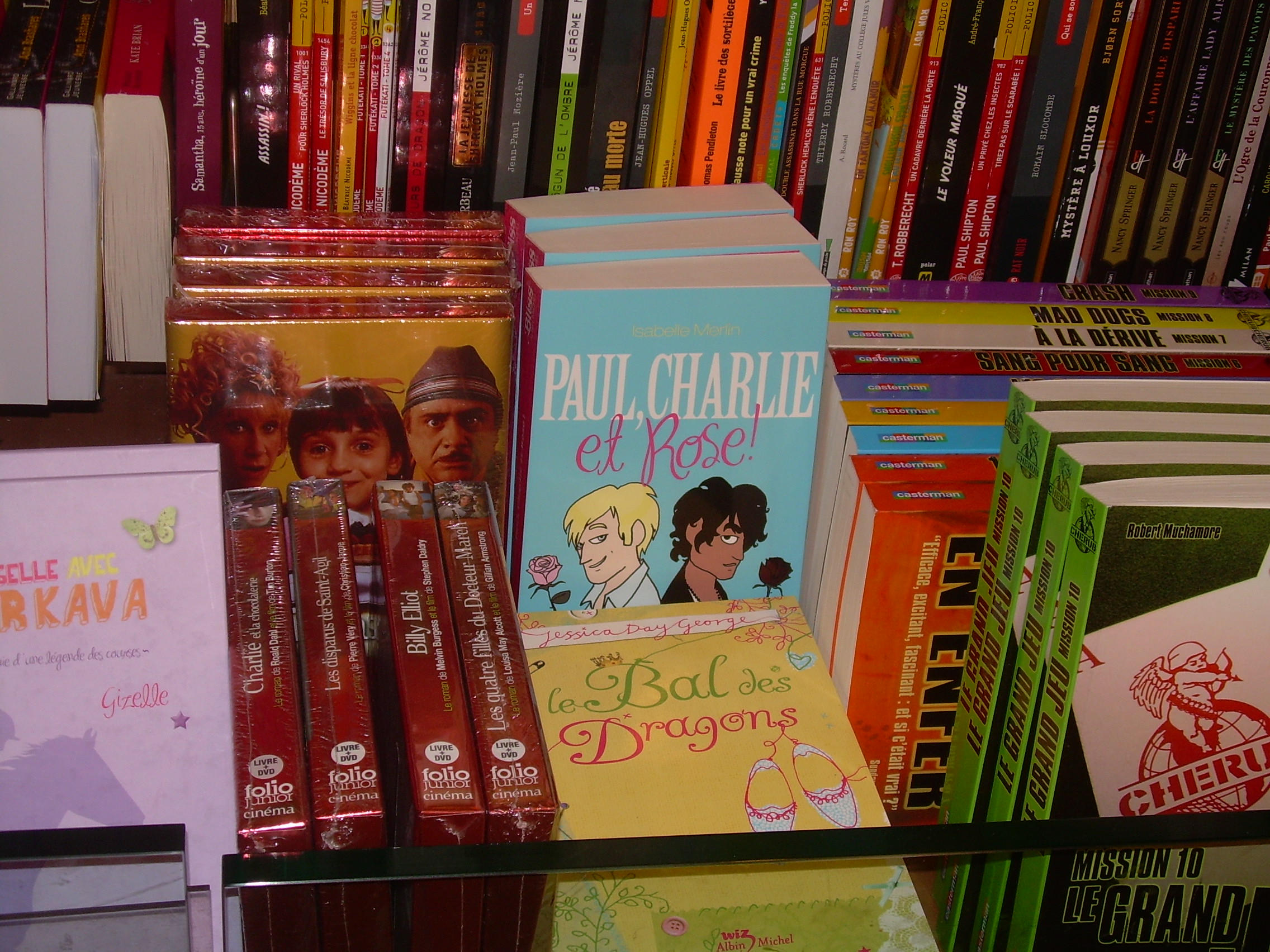
The residency was also intensely inspirational: at least three books came out of that six-month stay, though my actual time there was taken up not so much with writing manuscripts as soaking up atmosphere, doing heaps of research, visiting lots of museums, galleries, and sites of interest in Paris, but also outside of it including not only other parts of France, but also Russia, Malta and Italy! And what was more, during the time I was there, the first–yes, the first of my books to be published in French–Three Wishes, written under the pen-name of Isabelle Merlin, and retitled in France as ‘Paul, Charlie et Rose’– was actually released in March 2010 and I got to see it in Paris bookshops and at the wonderful Salon Du Livre(a huge event which is a combination of book trade expo, literary festival and rights fair), as well as having to meet the lovely publishers at Albin Michel.

My book in a Paris bookshop

It was an absolutely wonderful time whose influence continues to inspire me. And I’m not the only writer to feel that.  So I thought I’d start this new year with a new series, Paris literary studio, interviewing Australian writers who have been residents in the Keesing Studio, and finding out what their experiences have been. Later in the week I’ll be interviewing the current resident, Ursula Dubosarsky, and later still authors who were there at various times over the years, but today, I’d like to post a short extract from a piece I wrote after coming back from the residency, which was published in Australian Author, back in December 2010. You can get the full article here. (Free to ASA members, tiny price to non-members!)

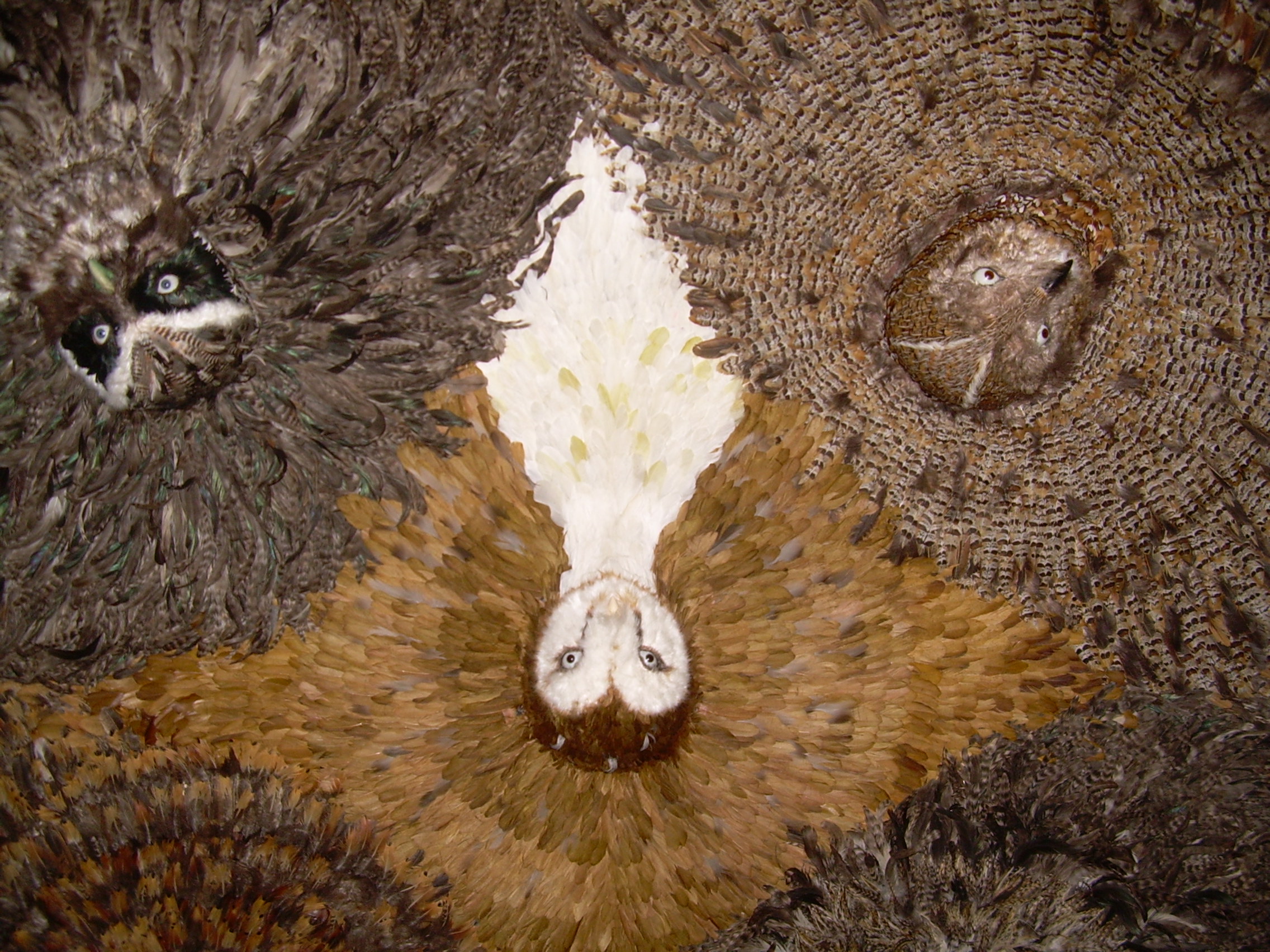
amazing ceiling in my favourite Paris museum--Musee de la Chasse et Nature

amazing ceiling in my favourite Paris museum–Musee de la Chasse et Nature

Despite my French background I did not set foot in Paris till adulthood, because of my father’s Southern dislike of it. Whenever we were back in France, Dad would delight in saying, as our flight circled over Paris on its way to Toulouse, ‘That’s exactly where it belongs—under us.’

DSCN6296

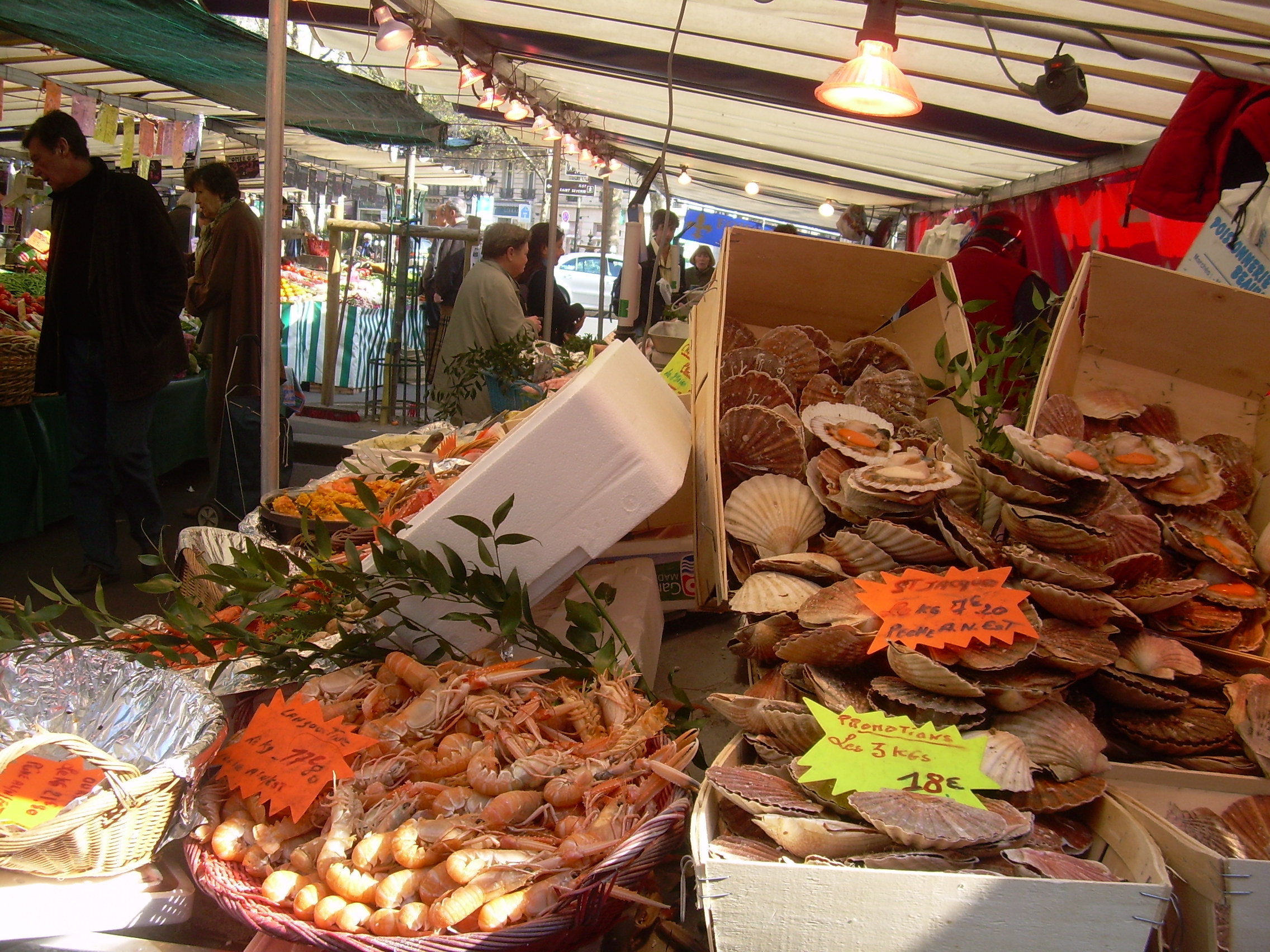
Seafood display, markets 2010


‘Parisien, tete de chien’ (Parisians are dogs) has always been the vengeful, wounded cry of provincials. For of course Paris adds insult to injury by ignoring the feelings of the innumerable ‘ploucs’  who have converged on it, whether eagerly or resentfully, from all corners of France over the centuries. Plouc is a bogan, a hick, an unsophisticated person–and shorthand for a provincial, as far as Parisians are concerned—an attitude with a very long lineage, for plouc derives from an ancient Gaulish word meaning someone outside the territory of the Parisii, the tribe which ended up giving the city its name.

Paris street art(by Nemo) Belleville, Paris

Paris street art(by Nemo) Belleville, Paris

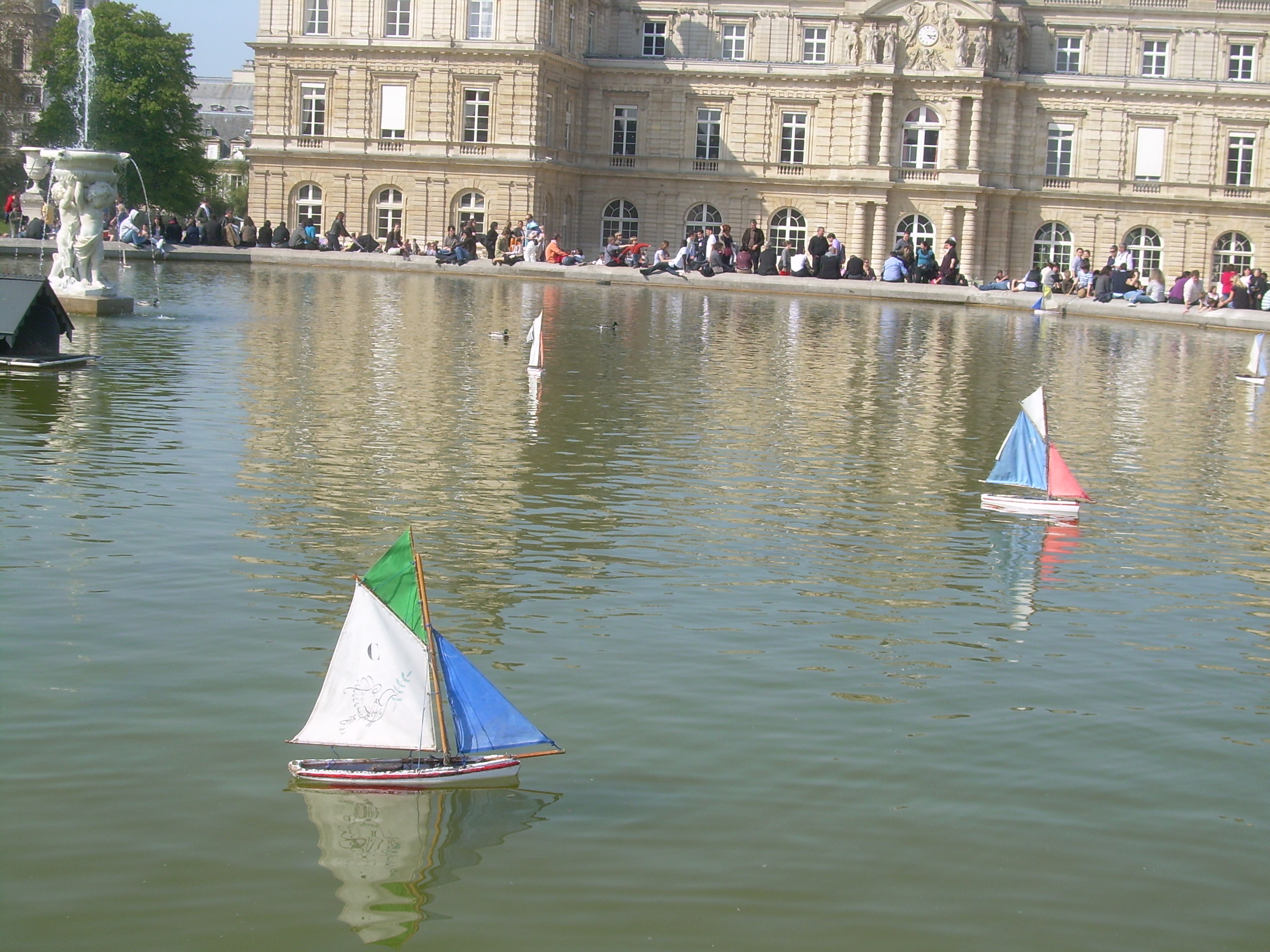
Luxembourg Gardens, spring 2010

Luxembourg Gardens, spring 2010


But I’m Australian, too. I might carry the ingrained Southern prickliness in my genes, but I’ve been brought up in a culture which still regards the City of Light as a romantic dream, witness the many ‘I was in Paris and fell in love’ memoirs which have populated bestseller lists. So the opportunity to cast off my double plouc-ness as Australian and Southern French and immerse myself in Paris living and writing there for six months was irresistible, even though part of me was scared, wondering if I wouldn’t just end up hating the place. Months into my time here, I was still discovering just how disconcertingly wrong I’d been.

Thing is, nobody, not even a vengeful plouc, told me that the big city of big cities is actually not that at all, but rather a collection of villages….

Night walk, 2010

Night walk, 2010

Authors’ pick 24: Matthew Thompson

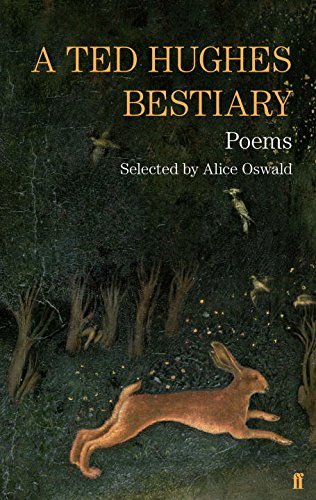
Ted Hughes Bestiary coverToday’s authors’ pick–and the final one in this series–has been chosen by Matthew Thompson.

A Ted Hughes Bestiary, poems selected by Alice Oswald.

The revelation of Ted Hughes and his exquisitely poised and powerful animal poetry was a long time coming. For decades a clear, open-hearted view appreciation of the crow poems and other work was not possible for me, due to the grip of Sylvia Plath’s fierce and tragic legend.

I did glance at Hughes’ poems now and then but my sight was displaced and distorted by the mythos of sadistic, maddening selfishness – even more so when I learned of how the woman that displaced Plath in Hughes’ affections, AssiaWevill, murdered their daughter and killed herself (and how quadruply weird to consider that Hughes and Plath’s son, Nicholas, eventually hanged himself in Alaska).

Age has taught me to let complexity be, even complexity of torment, instead of pruning it back to ready-understandability or by gripping isolated strands of it in order to haul oneself up to a fake height of mind.

So, a few months ago, decades after first reading Hughes, and while in Melbourne researching the life of a long-term recidivist prisoner for a book I’m writing, I slid from a bookstore shelf the slim hardback of A Ted Hughes Bestiary, Alice Oswald’s selection of Hughes’ animal poems.

Amidst the stark and ruthless crowscapes sat “The Jaguar”, a glimpse of a zoo-held beast seething with itself. I couldn’t help but think of my writing subject, a man who in his younger years could not be tamed, could not be contained, whose will was harder than the bars and walls around him.

…there’s no cage to him

His stride is wildernesses of freedom:

The world rolls under the long thrust of his heel.

Over the cage floor the horizons come.

But the prisoner’s jaguar days are gone.Sentenced again, this time to so long in isolation that even the judge said it would damage his mind, the man now sits spiritually detached from, but physically within spitting distance of, the predatory world of crime and jail. So attuned, he can sense when someone who, unlike battered old him, still hungers for prey: someone whosegrimacing face has not yet been smoothed. A blood-thirsty hunter in a moment that brings to mind the opening of Hughes’ “And Owl”:

Floats, a masked soul listening for death.

Death listening for a soul.

Yet it would be too limiting to keep relating these poems to men, to humans. Their centre is not anthropomorphic and in reading them, in handling them, DH Lawrence’s poem, “Fish”, comes to mind: specifically, its message that other beings inhabit their own universes, have not gods or not the same gods, are sometimes older and more purpose-made than we can comprehend. Lawrence’s narrator marvels at his witnessing of fish:

Loveless, and so lively!
Born before God was love,
Or life knew loving.
Beautifully beforehand with it all.

Joyce Carol Oates uses that line about a time “before God was love” to describe the severe and profound world of boxing, a world for its enthusiasts that remains beautifully before today’s widespread cringing avoidance of harm. The animals are not emotional about their pain or plight. They are clarity of instinct.

And over it all, unblinking in their exactitude, are not just Hughes’ famous crows but his hawk, who in “Hawk Roosting”, flies up to:

…revolve it all slowly –

I kill where I please because it is all mine.

Of course, there is so much more, including tales of animals lower on the food chain, but you’ll have to read them yourself. I have too much work to do.


Based in the small NSW town of Dungog, Matthew Thompson is the author of Running with the Blood God and My Colombian Death and a journalist whose recent work has focused on the violent intrigues of the Sulu Archipelago in the southern Philippines. For more information, see www.matthewthompsonwriting.com

Matthew Thompson

Authors’ pick 23: Sharon Rundle

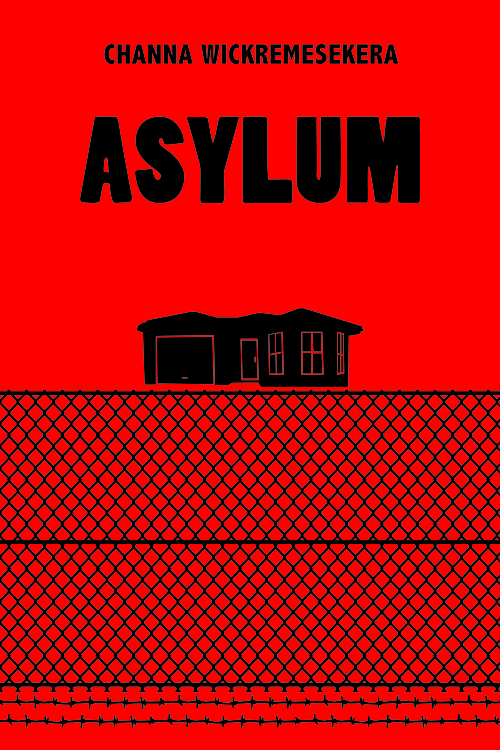
asylum palaverToday’s authors’ pick has been chosen by Sharon Rundle.

Asylum,  Channa Wickremesekera, Published by Palaver.

For the purpose of my research, I’ve been reading a lot of novels by South Asian-Australian authors with ties to Afghanistan, Bhutan, India, Nepal, Pakistan and Sri Lanka. I’ve read marvellous narratives from established and emerging writers. To choose one novel from this amazing array of fiction, is an enormous challenge. After long and difficult deliberation, I plumped for one that provided a new perspective, was surprisingly enjoyable, beautifully structured and written in a page-turning style.

Sometimes the best way to encourage discussion and provoke deeper thinking is through humour. Ideas that may seem simple on the surface havewider ripples and deeper currents than appear at first. So it is with Asylum by Channa Wickremesekera.

A young prison escapee decides to break into a home and take hostages,after the news that he is on the run with a gun is broadcast through media and police reports. The house he chooses is the home of Afghanis of Muslim faith. The mother wears a niqab, while her sometimes sullen, sometimes giggling young daughter, Aisha,wears a hijab. The mother understands English but prefers to speak in her Dari language.Through her family, she is the main negotiator with their captor. Khalid, the male teenage narrator with typical ‘attitude’, “I’ve seen bigger guns than that in Afghanistan with kids half his size” (p 23), is the perfect choice as the cynical observer. He is also a main player in the drama that unfolds as police surround the house. Negotiators are brought in to help, with mixed and sometimes hilarious results.

What could be a disaster turns into a tragi-comedy as the actions of the police and young man on the run with a gun become farcical when faced with this unexpected turn of events.

The Afghani family face another even deeper dilemma. Should they offer asylum to this person seeking refuge, as they believe they should? Should they lie to the police for the greater good? Which would give lesser offence to God? What to do in such an impossible situation? He is only a scared, tired, hungry, delinquent boy, after all. Khalid has heard it all before, “How you should look after people who take refuge with you, even if they are your worst enemies. Even if they had killed your own mother and father. I always thought that sort of thing happened only a long time ago and if it happened now it was only in the movies. Never thought we will have to practise it.”(p 40).

While the family debate the best plan, mum keeps cooking and feeding them all, including their captor Rusty.

This novel has impact and lingers in the mind long after it’s read. To my mind, ‘Asylum” should be on the HSC reading list. Suitable for both adults and young adults, the deceptively simple style and endearing narrator in “Asylum” allow for serious ideas to be discussed without polarising the audience. Many may be surprised by such a fresh perspective and by what they learn through humour.


Channa Wickremesekera is a Sri Lankan-Australian who has published three other novels, “Tracks” (published Sri Lanka, 2015), “Walls (Wasala, Sri Lanka, 2001)” and a novella “In the Same Boat” (Bay Owl Press, 2010).

A fun novel written in a jaunty teen voice—a novel that tries to tip our assumptions on their heads and succeeds.” —Anna Funder, author of Stasiland and All That I Am

“This is a timely novel, written with daring and imagination. It deals with themes that we urgently need to engage with and reflect upon, challenges that cry out for a long-overdue national conversation.” —Arnold Zable, author of Cafe ScheherazadeThe Fig Tree, and Violin Lessons

Asylum Wickremesekera, Channa. Published by Palaver.

ISBN 10: 0994343108 ISBN 13: 9780994343109


Sharon Rundle has researched novels by South-Asian Australian authors published in Australia for a Doctorate of Creative Arts thesis. She is co-editor of Indo-Australian anthologies of stories published by Picador Pan Macmillan (2009 & 2010 India, Australia & UK), Rupa Publishing in India (2014) and Brass Monkey Books in Australia (2012 & 2014).

20151212_114715