Source: Fantastic news: we have won a small business grant from Australia Post!
Thunderbolt Prize Winners: Tony Sevil, winner of the New England Award
 Today, I’m speaking to Tony Sevil, winner of the New England Award in the Thunderbolt Prize for his short story, The Disappearance of Buck. As well, the story received a Highly Commended citation in the Fiction category.
First of all, Tony, congratulations on your win! How did you come up with the idea of your winning story, The Disappearance of Buck?
Thank you! Back in 2011 I did an online creative writing course with the NSW Writers Centre. I found the course invaluable and the tutor, Laurine Croasdale, very encouraging.
One of the exercises in the course was to write a personals advertisement for an invented character. I invented the character of Alf Buccal, a competition brickthrower. He was looking for a ‘missus’, someone to settle down with. The exercise was designed to create a character’s voice. I got a bit carried away with the character and the story finished up longer than the guideline wordage.
Who knows where the character came from, but I have always been attracted to people who are passionate about what they do, no matter what that might be. I am a country boy whose family is still on the same property they selected in the 1840’s. I expect I am a bit of an observer and a listener, so I have probably picked up on the patterns of speech and mannerisms of people in rural Australia.
The tutor’s response was very encouraging:
“I laughed so much I nearly fell off my chair. It’s a hilarious piece! Love it!”
So I thought,”Well I think I will hang onto this character, store him away in the back of my mind.”

Tony Sevil’s studio
Then earlier this year I saw the promo for the Thunderbolt Crime Writing Competition, and I started to think whether I might be able to weave my character, Alf Buccal, into a crime story. I decided to base the story around his favourite, precious brick, which is stolen. Then it is his search to try and find the culprit.
What attracts you to writing crime fiction?
This is my first attempt at writing crime fiction. It excited me. One part of the plot seemed to lead to the other rather seamlessly. It’s fun to write a mystery story where the reader might wonder “where in the hell is this story going”, especially when it’s just a story about a brickthrower whose special brick is stolen! It is fun to weave the story. Not giving too much away. Perhaps I am a bit of a trickster. I like telling verbally a story in a roundabout way so that people will listen to me! And perhaps wonder what is coming next.
Crime fiction may not be where my writing future lies, but humour certainly will.
Can you tell us a bit about your background and writing career?
I studied Economics in the early 1960’s. Much later I did a Diploma of Social Science. I have worked in Market Research, Economic Research, public relations. I have been in selling. I have driven a cab and worked in restaurants. Coming from a farming background I have tried my hand at that. I worked and travelled in Europe and Africa for nearly three years. One of the more interesting jobs was taking livestock to South Africa. I was working on a Hereford stud farm in Hereford on the Welsh border. I heard that you could get a job as a stockman on a cargo ship taking animals to south Africa. An opportunity came up and for a couple of weeks I looked after 13 head of cattle, 3 horses and four dogs that were being exported to South Africa. The cargo ship dropped off cargo at the Canary Islands, Ascencion Island and Napoleon’s exile Island of St Helena on the way. Then I worked as a shunter on Rhodesian Railways for around 6 months. There were a number of other non economic jobs I took on.
When I returned to Australia I felt lost and found it hard to settle. Where do I go now? What work do I do? I felt mates from my school and Uni days were getting ahead with their careers, and I was floundering.
I eventually got a job as a public relations officer for a mining company at Gove on the north eastern tip of Arnhem Land. It was an escape for a couple of years. Just another job. Not really a career path.
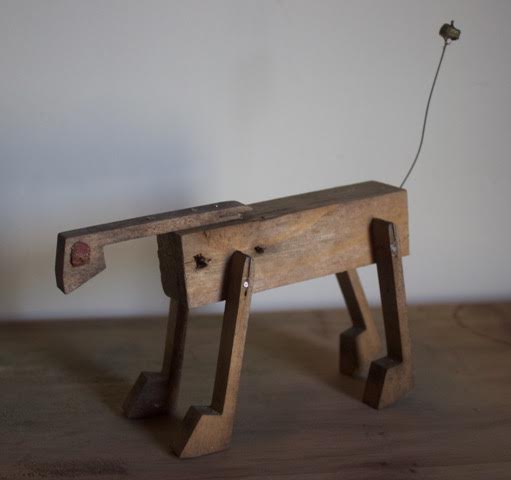 In more recent times I worked as a care worker for what was then The Challenge Foundation in Armidale, which was the most rewarding wage work I have ever done. During this time I was also progressing with my art making things out of found objects. This eventually became a passion. I have exhibited in commercial galleries and also been in group exhibitions and a solo exhibition at NERAM. I have an exhibition coming up at Gallery 126 in Armidale in November and another solo exhibition at NERAM in September 2016.
All the way through I have written or tried to write. I have had stories and articles published, but I have never , until now, had any fiction published. I tried writing fiction but my stories seemed embarrassingly naïve and stilted. I think I got caught up too much in structure and not enough in letting a story flow. The Disappearance of Buck story seemed to flow rather seamlessly so I feel I may have found my voice in writing humorous fiction.
What do you hope winning the New England Award will do for you as a writer?
I know I will be writing with a lot more confidence now. I will certainly be more confident about writing  more humour. I will probably go back over my life and expand on humorous incidents in my life. And drag out half done stories from my drawers and maybe re work them. Perhaps a collection of humorous stories some day. Who knows. The prize has opened up so many possibilities.
I have a rather interesting project going at the moment. I love Facebook-Seeing the art and reading the thoughts of friends from around the world. It is a wonderful way to test the water with my artwork.
I noticed drawings of cute fat cats that I really liked by an Iranian artist from Tehran (who has not been published). I suggested to her that we try and write a children’s book together on cat behavior. She liked the idea and for the last year we have been sending emails backwards and forwards with drawings and text. I wanted a Persian name for the cat. So I asked Bahare if she could come up with some Persian names for me to chose from. I chose a name. But she said it was a female name and she thought the cat was male. So we have chosen the name Homayoun. I asked Bahare to pronounce it so I could possibly work out a rhyme for it. Her husband sent me an audio with the correct pronunciation. With my regular correspondence with Bahare I always now ask her to say g’day to the man with the lovely voice.
There are two aspects of this that appeal to me. Firstly is it possible to collaborate in this way and produce a book? Secondly I like the idea of reaching out to someone on a personal level who is from a different culture and nation to mine.
You are an artist too as well as a writer. How do those two practices work with each other?
I think making art and writing can go well together, especially with the way I operate. With my art I like to have several, sometimes many, projects going at the same time. I like to move freely between projects. If I get to a point in a project that requires more thought I will move to another project and then return to the other one with a fresh eye. Writing seems to fit ok into this ‘routine’. I often write  early in the mornings. I don’t really sit down and slog away at a plot on the computer. I usually have quite a lot worked out in my head before I tap things into the computer. And these ideas for stories often come when I am working away on an artwork.
The trouble is my mind can get a bit full sometimes and I can get a bit ratty. That’s when I walk or do a little meditation. I always take a break, read the newspaper, start the crossword and have a nap after lunch.
As a reader, what do you look for in a good story or novel?
I am not an avid reader at all. I do read the newspaper from cover to cover. However some wonderful writers have sort of landed in my lap at important times in my life. Back in my school days I remember being mesmerized analyzing some of the set texts. One was Silas Marner, the other two were Shakespeare’s Julius Caesar and Macbeth. I thought English was up there with my best subject at school but did a bad leaving certificate exam, even though my English teacher in the then 4th year asked me if I was going to study English when I left school. I only got a B. That threw me a bit. So I 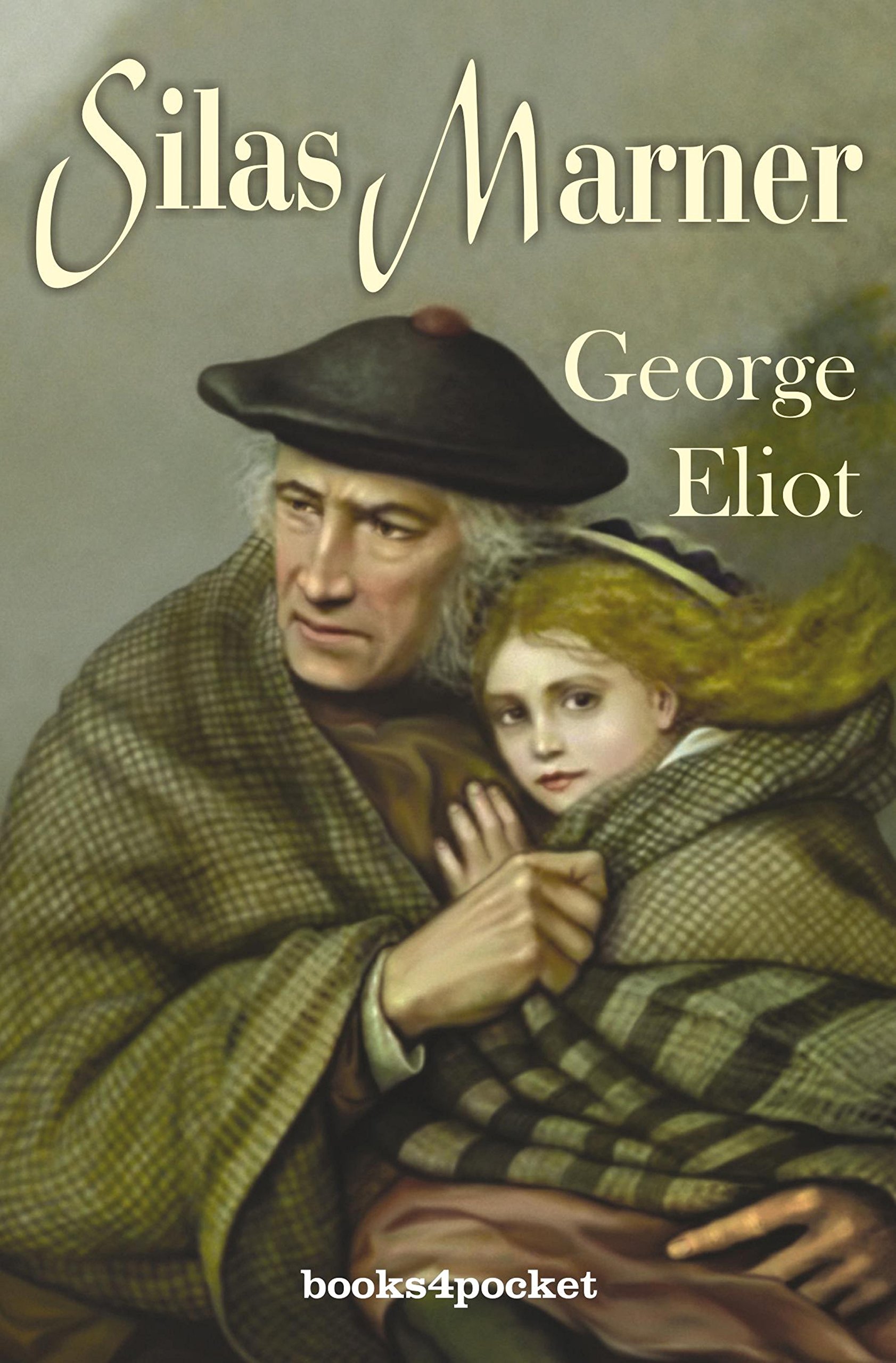 studied Economics. I got an A in that 🙂
After high school and for a number of years, I cannot recall reading much at all other than the newspaper from cover to cover starting at the back page, the sport page. After 11 years at boarding school I just wanted to party. I did not do much study at UNE but I had some very bright mates. Come essay and exam time I would visit them, pick their brains and often borrow their lecture notes. They didn’t seem to mind.
I don’t like saying it but I don’t seem to have a lot of time to read novels. I cannot read during the day. Perhaps it is my farming background. The day was for physical work. I read at night in bed…sometimes. I usually fall asleep after a few pages. I tend to wind down in bed at night with the Herald crossword. Not the cryptic…
Sometimes I find my mind is working overtime on new ideas for an artwork, working out how I will put something together. I cannot seem to concentrate on reading. My partner suggested we should read your books, Sophie. I said to her perhaps you could read them and tell me all about them! 🙂
However I would like to mention a few books and authors that have made a huge impression on me. Books seem to have landed on my lap at the right time in my life. I loved The Snow Leopard by Peter  Mathiessen. Other writers I cannot put down include John Steinbeck, and more recent writers, Annie Proulx and Barbara Kingsolver. I love their characters. I love being immersed in the environment of the word pictures they paint. I love their characters.
I was hugely inspired by Nelson Mandala’ autobiography, Long Walk to Freedom. Years ago I read a historical novel on Ghandi, Freedom at Midnight, by Dominique Lapierre and Larry Collins, which I really enjoyed. It perhaps canonized Ghandi a bit. But he deserved it.
Tony’s website is here.
Thunderbolt Prize winners: P.S. Cottier, winner of the Poetry prize
The New England Thunderbolt Prize for Crime Writing is a respected national award for unpublished short-form crime writing in three Open categories: Fiction, sponsored by the School of Arts, University of New England; Non-Fiction, sponsored by The Armidale Express; and Poetry, sponsored this year by the New England Writers’ Centre and the Armidale Dumaresq Memorial Library. There are also three special awards: the New England Award for a writer resident in New England, sponsored by Reader’s Companion bookshop, Armidale; the Emerging Author Award, for an unpublished writer over 18, sponsored by Friends of Tamworth Libraries; and this year, the inaugural Youth Award, for writers under 18, sponsored by Granny Fi’s Toy Cupboard, Armidale.
The Prize, which in 2015 is in its third year, is run by the New England Writers’ Centre, of which I’m Chair, and as the results of the 2015 Prize have just been announced, I thought it would be interesting to interview each of the winning authors, and ask them about their stories, their writing careers, and what they hope winning an award within the Prize will do for them.
Here’s the first of the interviews, with P.S. (Penelope) Cottier, winner of the Poetry category in the Thunderbolt Prize.
First of all, Penelope, congratulations on your win! How did you come up with the idea of your winning poem, Criminals who are no longer criminals?
Thanks Sophie. I was thinking about the way we incarcerate asylum seekers offshore, including children, and whether this would be classed as a crime in the future (it may already be in breach of various agreements, and lead to inarguable crimes such as murder and rape). From that I started thinking about laws that had once seemed necessary, at least to some, and which later seemed cruel, pathetic, or simply very odd, and which are now repealed. These laws include those against homosexuality, witchcraft, eavesdropping, and laws about found treasure which I vaguely remembered from studies in first year law. Finding out that just walking around at night was once a crime was a total bonus, so far as the poem was concerned. I had a vivid image of all those who had been subject to these laws meeting, as ghosts, outside a court room.
The poetry judge, Les Murray, commented on the evocative nature of your descriptions. How did you go about creating that texture?
I try to put aside too much thought when writing a poem. I like to have a fairly strong idea of what I will be doing before I start, but when I am writing my best work it is as if I am taking dictation from someone unseen. Not automatic so much as going through the gears in a manual car without thinking about it. You only become conscious if you miss a gear.
This intense cruising was more difficult here because of the law lurking around like a bore at a party. (The sort of bore who wears a ‘funny’ bowtie and can’t wait to assail you with stories of his most awesome success.) But the poem contains more than a whiff of smell, has some sounds I like, word play, and an element of surprise, co-existing with a strong sense of sorrow. I think I avoided being too preachy or tedious, despite the research wedged in there.
I’m glad that Les liked it!
Have you written poetry themed around crime before? What attracted you to do so?
I was about to say ‘no’, and then I remembered that a poem that was the joint winner of the Arts ACT David Campbell Prize dealt with a father who had murdered his children. Again it had a element of the dreamlike to it, while dealing with an unfortunately real situation. It was called ‘Visitation’ and the dead children appear to the mother in her dreams.
Can you tell us a bit about your background and writing career?
I was born in England, raised in Melbourne and live in Canberra, a place I now love, after a long and intense struggle. My latest publication is a pocket book called Paths Into Inner Canberra, which is an essay with two poems, looking at notions of nature and the way that wild animals can be found a few kilometres from Parliament House. (Insert politician joke here.) It gives me great joy that a piece of writing can be produced and sold for as little as $4, and that Ginninderra Press produces this type of publication. This book can be ordered here.
Of relevance to this award is the fact that I have a law degree. I go months without remembering that! I also have a PhD in Literature from the ANU, written on images of animals in the works of Charles Dickens.
I write as P.S. Cottier, which sometimes stands for Post Script, as I started seriously seeking publication relatively late. (I almost forgot.) I have had three books of poetry published, co-edited an anthology of poems, and have even stooped to prose fictional and non-fictional, as noted above.
What do you hope winning the Poetry prize will do for you as a writer?
This may sound a little cute, but writing poetry is an end in itself, particularly when someone gets to read it. I am pleased that the poem is being published, and that I managed to write a poem about law reform and the cruelties of the past (and by extension, the current limitations of the law).
I try my hardest not to think in terms of a writing career. That probably means my view of poetry is hopelessly romantic. If I want to have a poem I have finished read, I will post it on my blog at pscottier.com as often as submitting to a journal.
But I will certainly buy something cool with the prize money.
As a reader of poetry, what do you look for in a poem? Which poets have influenced your own work?
Invention and surprise are my favourite aspects of poetry. I like unexpected combinations of words and play. Huge slabs of self reflection, or emotions thrown at the reader like sodden hankies, are not my favourite things.
I love Emily Dickinson because she avoids easy translation into a single message.
Byron is a favourite because he lurches between tenderness and sarcasm.
I read as widely as possible in contemporary poetry written in Australia and elsewhere.
Poem of the Day
My poem Bath Time is the Australian Children’s Poetry website’s Poem of the Day.
Source: Poem of the Day
Authors in a changing world
A major survey of Australian authors in a changing publishing climate was published this week by Macquarie University, and it makes for very interesting reading. I was asked by the Sydney Review of Books to write a piece commenting on the findings. It’s here. Would be very interested to know what readers think.
On inspiration: interview on Elisabeth Storrs’ blog
An interview looking at the sources of inspiration for me as a writer is up now on historical novelist Elisabeth Storrs‘ blog.
Here’s a short extract:
What is the inspiration for your current book?
I’d like to answer this for two books: my YA novel Hunter’s Moon, which came out in June; and my adult novel Trinity: The False Prince, coming out in October (e-book) and November (print). The first book, set in an alternative world-version of the late 19th century, is inspired by the fairy tale of Snow White, the second, which is also second in my Trinity series, and is set in modern Russia, was inspired by not only the earlier novel (Trinity: The Koldun Code) but also by the enigmatic figure of Rasputin, and also the history of magic in Russia.
Is there a particular theme you wish to explore in this book?
Well both books in a sense—and isn’t that funny, I hadn’t thought of it till now!—are about betrayal, and false appearances.
You can read the whole interview here.
Yay! It’s publication day!
Thrilled to announce the publication today of the e-book edition of Trinity: The False Prince. Raise a virtual glass of champagne with me and head over to the Momentum site to find out more!

The false prince..

Joint ticket: An interview with Archie Fusillo and Josie Montano
 Archie Fusillo and Josie Montano are two fabulous Italian-Australian authors of books for children and young adults. Separately, they’ve published many great books, but very recently they teamed up on a collaborative YA novel, Veiled Secrets. I met these two lively and engaging authors at the 2015 Story Arts festival in Ipswich, Queensland last month, and later asked them for an interview on the subject of their collaboration. Here it is–enjoy!
You’ve recently collaborated on a novel, Veiled Secrets, which tells the story of two Italian-Australian teenagers from two different families, Nick and Lia, who on a trip back to Italy with their grandparents, meet each other and discover they have a lot more in common than they could have imagined. How did you come up with the idea for the book?
When we first met we discovered that our families come from villages in Italy 10 kilometres apart, we grew up with similar traditions, culture, dialect and life-styles as first generation Aussies. We had a brainstorming session and strangely came up with the same idea! A story about teens going back to Italy with their grandparents. We knew we had a story to tell! One that no other writer in Australia has told, one that our 1st generation of Italian migrants needed to share.
How did two authors who describe themselves as fiercely independent manage to work together with the harmony required for successful story-telling?
We just found that from the very beginning we meshed quite well. Actually the ‘fiercely independent’ writing styles came in handy as we took on a character each and were able to write independently as  our own character and their world.
Tell us about the process of constructing your novel. Did you plan it carefully beforehand, or was it more organic?
Although Josie is an over-planner and Archie just get’s into it and writes, we were still able to put together an initial plot line and main characters (to keep Josie happy!) Archie started as his character in chapter 1, emailed to Josie and Josie wrote chapter 2, etc. It was like one of those patchwork quilts where various people work on it, but the end result is a beautiful creation. The story did progress organically but also strangely in a way that both of us had with plot ideas and scenarios in our minds.
What were the challenges, and the pleasures, of joint creation? Did your find your writing voice was different in this to that in your own sole-authored books?
The only challenge we may have had was getting it published in the Australian market. One of the major publishers was very keen, we were wined and dined by their editor but in the end marketing felt it wasn’t the right time. So Josie sent it to her US fiction publishers and the next day a contract was emailed!
Re voice, actually a few times it happened that we would write something about each other’s characters that would spin the other off into revenge writing where eg: Archie wrote that Josie’s character had dimples and Josie was like ‘oh does she now!?’ and then she wrote that Archie’s character had a big nose! It was great having someone else to share the experience with and to cast a different editing eye over the manuscript.
 Are you planning on more writing collaborations? And would you recommend the experience to other authors?
Josie has co-written fiction and non-fiction with other authors but admits this was the easiest collaboration thus far. As writing can be a lonely occupation, co-writing can at times bring a shared experience allowing for learnings and growth. And we are chatting about possible future collaborations on other projects!
Josie’s Facebook author page.
Josie’s Twitter.
Josie’s website: www.booksbyjosie.com.au
Archie’s website: www.archimedefusillo.com
Veiled Secrets Facebook page.
Face to face with Rasputin..
 My new adult novel, Trinity: The False Prince, comes out very soon, as you might have realised from all the enigmatic clips I’ve been posting, with quotes from the book! And now, a piece of mine about a spooky visit I made to the scene of Rasputin’s murder, in St Petersburg, has been published on the Momentum blog.
Here’s an extract:
It’s in one of the grand gilded living rooms of the palace that you get the first glimpse of the horrible events of December 30, 1916. A group of rather creepy waxworks representing some of the conspirators is huddled around an old phonograph. ‘Waiting for Rasputin,’ the guide says, ‘they listened to the same record over and over.’ They were nervous. Rasputin was a favourite of the Tsar and his family and they could not be sure how he would react over his death.’ But it wasn’t here this room that Rasputin was lured to his death; oh no, though the prince, pretending friendship, had invited Rasputin to come and take tea at the palace, he had no intention of letting this ‘dirty peasant’ set foot in the fine rooms of the palace. No, Rasputin was to come to the basement.
You can read the whole thing here.
 Feathers of the Firebird