Today Lizzie Horne selects her five favourites.
The story about Ping
Today Lizzie Horne selects her five favourites.
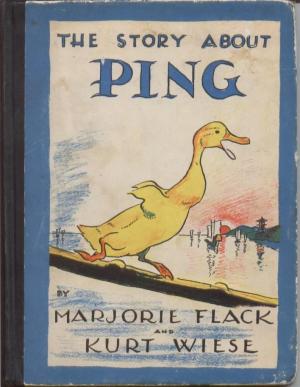
The story about Ping
Today Liz Anelli writes about her five favourites.
Sweethallow Valley by Elleston Trevor (1951) is a bit like Wind in the Willows but with less happening. A group of animal friends live in cosy houses nestled within an English wood. A book I loved because it smelt of my grandparents’ house. I read it so many times they eventually gave me the copy to keep and I still have it, complete with its hot chocolate drink stains and biscuit crumbs.
Winter Holiday by Arthur Ransome (written back in1933) is my favourite of all the Swallows and Amazons series for its magic balance of everyday-life believability and audacious mis-adventure. Three families make friends during a Christmas holiday in the English Lake District. The weather prevents their usual camping and sailing activities but they throw themselves into astronomy and skating instead, culminating in a mistimed re-enactment of a famous North polar expedition. Determined that being stuck in bed with mumps throughout the book will not ruin the fun for the rest of the group, natural leader, Nancy Blackett shows her strengths and weaknesses to such an extent that it actually makes me cry every time.
Silly Verse for Kids by Spike Milligan (1968). I know most of these funny poems by heart. They make me laugh but also have a strong dash of his black comedy and sense of the bizarre, plus his fantastic illustrations. I remember buying this through my UK Primary School’s Scholastic Book Club back in the early 1970’s and can remember how exciting it was to order books myself from a catalogue.
Moominland Midwinter by Tove Jansson (1957). Tove Jansson’s world was so real to me as a child that I could not limit myself to just one from the Moomin series. This book is full of the passions and loneliness of being the only one awake in your family … for the whole winter… and trying to make friends with that you do not know – both living creatures and nature.
The Exploits of Moominpappa by Tove Jansson (1950) I was recently fascinated by reading the revised version of this (Moominpappa’s Memoirs – published 1968). I love this book because it’s all about fathers, their blunder, pomposity and their fragility. You get to know the dads of all the main characters’ from the other books too, and at the end they all meet each other … for the very first time.
Today Linda Newbery shares her five favourites.
Today, Pamela Freeman (who also writes under the name of Pamela Hart) is writing about her five favourites.
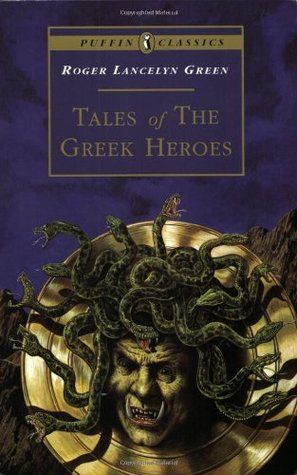
Roger Lancelyn Green’s Myths of Greece and Rome.
I also loved his other books about Norse Myths, Dragons, Witches, etc. Green basically set me on the path to read (and write) fantasy and science fiction, and I have found the knowledge of the classical myths which he told with such flair VERY helpful in later life.
Year’s Best Science Fiction and Fantasy stories.
Our librarian, Mrs Ward, bought these anthologies every year and for some unknown reason put them in the kids’ section. So I read all the classic SF authors as they were published in the 60s and 70s, which cemented my interest in this genre. Probably some of the stories were ‘too old’ for me, but I didn’t care!
The Anne of Green Gables books.
Nuff said. (Although, as I am writing my current novel, I realised yesterday that the heroine’s best friend bears a curious resemblance to Diana, Anne’s best friend…)
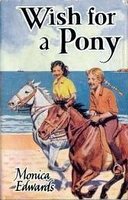
Monica Edwards’ Wish for a Pony
The first of a long series. Oh, I loved these books! Not just because of the ponies, but because of the setting on the Romney Marsh and the adventure elements of the later books in the series (and I loved the main character’s little brother Diccon).
Anne and Peter Go To…
There was a whole series of these, Anne and Peter go to France, Anne and Peter go to Germany… To someone stuck in Western Sydney, this was real escapist reading! Much of my understanding of Europe and its relationship to Britain came out of these books.
Of course, I could add in Narnia, Alice, Milly-Molly-Mandy, Rosemary Sutcliffe, Seven Little Australians, Famous Five, all the girls’ school stories, and many, many others. But who can pick just five?
Today’s five favourites have been selected by Natalie Jane Prior.
I had so many favourite books when I was a child that it is very hard to pick just five. The ones I owned, I read to shreds. Most of the titles on this list I knew practically by heart. So here are some sentimental favourites:
The Tree that Sat Down/The Stream that Stood Still, by Beverley Nichols
This bindup of two fantasy novels by Beverley Nichols (who is today chiefly remembered for his garden writing) is the book which inspired (at least in part), my recently published picture book, Lucy’s Book (Lothian, illustrated by Cheryl Orsini). Lucy’s Book tells the story of a little girl who loves a book so much that she borrows it from the library every time she goes, until at last the book wears out. My mother was very difficult about re-borrowing books; her own practice was to go to the library to find things she hadn’t read before, and she did not seem to understand that I should feel a sense of ownership in a library book. I suffered much anguish over this book, because I wanted to own it so badly. It resonated with me on practically every level. Though I could not have explained why this was so at the time, I think now that it was my first experience of a profound aesthetic synchronicity with another writer. I can’t explain it: I only know that when, at the age of 18 or so, I managed to buy a Lion paperback edition, I was devastated to find out that Nichols’s philosophical musings on beauty and morality had been cut out, presumably as not interesting to children. The effect was as if the chapter “The Piper at the Gates of Dawn” had been cut out of The Wind in the WIllows, or Aslan out of The Chronicles of Narnia: the heart of the book had gone. I am happy to report that I now own an early hardback with these sections intact, but the experience put me off abridgements for life.
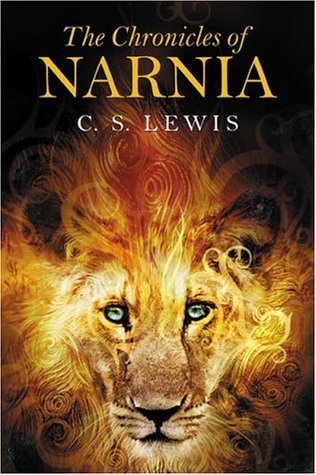
The Chronicles of Narnia by C.S. Lewis
No doubt I’m cheating putting them all down here, but again, these universal favourites resonated at every level, and still do. As a reader, I adore them, as a writer, I admire them (the full impact of Lewis’s casual erudition on the texts did not hit me until I did Middle English at university), as a Christian, I am still pulling insight out of them over forty years after I first read them. The end of The Last Battle still reduces me to a blubbering wreck every time I read it. There are not many books you meet in life that you can say that about.
A year or two back, I read an extremely insightful study which I would like to recommend to anyone who loves these books: Planet Narnia, by the academic Michael Ward (OUP, 2008), radically re-examines the structure of the series. Having dimly grasped a lot of what he suggests myself, without putting it all together, I am convinced he is correct in his conclusions. You can find the Kindle edition here: it’s a really stimulating read: https://www.amazon.com.au/Planet-Narnia-Seven-Heavens-Imagination-Lewis-Michael/dp/B000SKMOMY/ref=sr_1_1?ie=UTF8&qid=1493002048&sr=8-1&keywords=planet+narnia
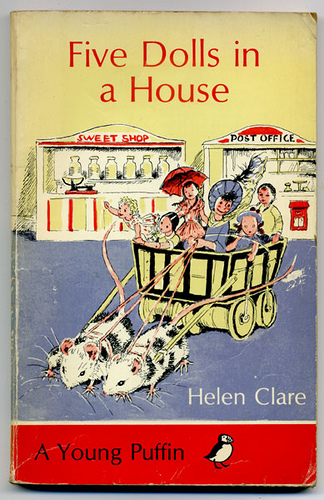
Five Dolls in a House by Helen Clare
Often books which we love as children are not classics: they just speak to us at a profound and necessary level. The 1970s must have been the great age of the library omnibus edition, as these were another book I borrowed again and again as bindups. (There were, from recollection, five in the series, and they were published in two omnibus editions.) I was passionate about my dolls as a child. They were, like books, an outlet for stories and adventure, and I loved making things for them (I still do). These simple stories about a little girl called Elizabeth Small, who is able to miniaturise herself and actually enter her dolls’ house and interact with her dolls in all sorts of eccentric situations, was the ultimate wish-fulfillment for a child who desperately wanted a dolls’ house and never got one. The dolls, ranging from a soi-disant duke’s daughter whose hair kept falling off, to a French paying guest who hogged the bathroom and refused to speak English when work was required of her, were all screams. Unfortunately, it was never quite explained how Elizabeth cracked the secret of miniaturising herself, but I lived in hope for many years.
Seven Little Australians by Ethel Turner
I was of the generation that first encountered this book via the landmark ABC serial in the mid 70s. Until then, it must have been out of print, because I remember the moment it started on the TV my mother went out and bought me a TV-tie in; it had been one of her own childhood favourites, and until then she had been frustrated that she could not get me a copy.
The model for Ethel Turner’s book is clearly What Katy Did (which was another favourite of mine—I used to lie in bed at night and recite it), but Seven Little Australians bit down far deeper into my consciousness. As a child, I never questioned the peculiar psychology behind free-spirited girls like Katy Carr and Judy Woolcott getting to puberty and immediately being crippled or flattened by trees; I just inhabited the stories they featured in, and I loved the Woolcotts passionately, every single one of them. Judy’s death scene in the slab hut (“…and with a little shudder, she slipped away”) is one of the most iconic moments in Australian literature, and I want it read at my funeral.
The TV serial, faithful to the story and clearly made with love, still holds up pretty well, too.
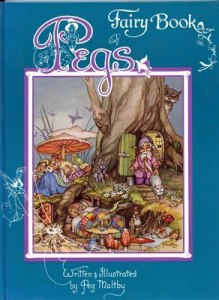
Peg’s Fairy Book by Peg Maltby
This is a book I inherited from my mother. Our copy (which my sister snaffled when our library was broken up, drat her) was given to Mum for Christmas in the late 40s, by a favourite aunt and uncle, so it’s also strongly associated in my mind with our darling Auntie Maisie, surely one of the kindest people I have ever known. I’ve included it in my list, because while it was dated even when I was a child in the 1970s, (it was published in 1944), it was one of the few books where I can honestly say I was profoundly affected by the illustrations. (I did not have many picture books; I had comics like Teddy Bear and assorted Little Golden Books, but as I progressed very rapidly to chapter books, the great picture books of the fifties and sixties sadly made very little impact on me.)
Peg Maltby’s stories of fairies and goblins in Australian setting were probably influenced by May Gibbs (I was also a great fan of Snugglepot and Cuddlepie), but are done with less subtlety and skill; the stories themselves are certainly nothing special. However the bright colours and Art Deco sensibility of her illustrations are still charming, as is her sepia linework (you can see Peg’s Fairy Book on the National Library’s website, here http://nla.gov.au/nla.obj-2600932/view?partId=nla.obj-2662970#page/n-1/mode/2up). As a child what I was particularly drawn to was their incredible detail; this detail is something that I also love about the work of my own illustrative collaborator, Cheryl Orsini. I particularly loved the goblin market, and the fairy houses, and still do. I’m sad this book is today more or less forgotten; it gave me such pleasure that for all the limitations of the stories themselves, I would love to see it come back into print.
Today Felicity Pulman is sharing her five favourites with us.
It’s interesting looking back with an adult eye to the stories you loved as a child. Growing up in Africa a long time ago, as I did, the choice was limited. With the exception of the Just So stories, the books I read in primary school were all by British authors and published in England. Thus I was imbued with a love of all things English, but I realise that those books also reflected many of the themes that now inspire me as a writer, along with the desire to write my own riveting and page-turning stories!
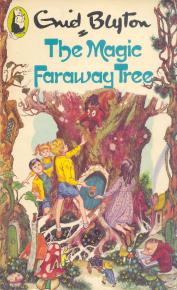
#1 The Magic Faraway Tree by Enid Blyton kept me on the edge of my chair, wishing that just for once the children would make it safely back to the tree instead of being swept away to a new (and usually awful) magical land. These books taught me about the power of fantasy and magic, the desire for adventure and independence from grownups, about friendship and also the quest to find a safe return home.
#2 I loved the magical series about Pookie, the rabbit with wings, by Ivy L. Wallace. When Pookie is taken in and cared for by Belinda the woodcutter’s daughter, his wings grow, enabling him to have lots of exciting adventures with the woodland creatures. But when things go wrong and he’s sad and frightened, as in Pookie and the Gypsies in which he’s captured and put into a circus, his wings shrink and he becomes just an ordinary rabbit once more. From these books I learned about the redemptive power of love and friendship and of belonging somewhere, and at the same time discovered the delights of rural England.
#3 I loved the stories of Pooh Bear and Christopher Robin by A.A. Milne, and am still able to recite numerous rhymes from When We Were Very Young and Now We Are Six – my first introduction to poetry!
#4 The hilarious boarding school stories featuring Jennings and his klutzy friend Darbishire by Anthony Buckeridge kept me laughing all the way through each ridiculous scenario. They taught me about the power of humour in story-telling – something I wish I could duplicate in my own work!
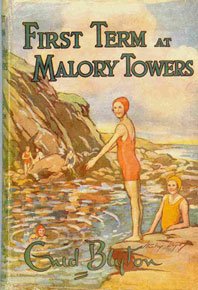
#5 I also enjoyed the boarding school series by Enid Blyton – St Clare’s and Malory Towers. I enjoyed reading about the midnight feasts and the friendship and support shown each other by the girls, and by their understanding teachers. By then I was writing my own stories, including my own versions of boarding school novels. But when I went off to boarding school, aged 12, I discovered that Enid Blyton had lied. My boarding school experience was horrific in every way. While I still kept on reading, I stopped writing stories for years after that – something I still regret to this day. I realise now that the lesson I learned is that while you can let your imagination run wild when writing fantasy, reality involves the warts and all of life. And so now I try to be honest in my own work; not gloss over the worst aspects of the human condition but tell the truth as I see it.
Today Margrete Lamond remembers her five favourites from childhood.
This is the first book I remember poring over, around the age of three or four, before I could even read. The pictures fascinated me: they were friendly but also slightly weird and a little bit scary. I had to leave the book behind in Norway when we emigrated, and I only recently tracked down a first edition copy to pore over again.
My mother used to read to us from this book, and when I was a better reader I read and re-read it for myself. It gave me a powerful sense of cheerful poverty in mid-20th-century London. I can barely remember what it was about, but laundry and steam in the kitchen is a strong image I seem to have retained. Still have the book. Must reread!
A Norwegian classic, given to me on the day of our departure for Australia to remind me of the Old Country. A romanticised but also somewhat realistic account of remote mountain life in early 20th century Norway, again deeply impoverished families making do and finding joy in small things. Memories of this book are redolent with the scent of warm pine needles. Still have this book.
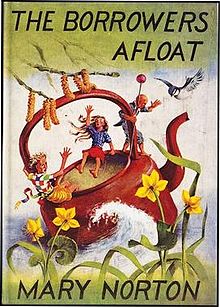
There was just something fascinating about their tininess, and about the inverted view of the human world that the story presented. I loved how they made do with all sorts of ‘borrowed’ items, including their funny names. ‘Homily’ sticks fast in the mind.
Continuing the theme of being enamoured of stories about families struggling to make ends meet under harsh circumstances … my love affair with the Blue Mountains and the (unrealistic) romance of remote rural country life began with this book. I adored the Victor Ambrus illustrations, too. (So exciting to recently see his artwork on Time Team!)
I’m delighted to announce that I’ve signed a contract with Little Pink Dog Books for my picture-book text, See Monkey. It’s a fun text for very young children, focussed on the hectic day of a toddler’s favourite toy. I’m thrilled that it will be illustrated by the fantastic Kathy Creamer, gifted and experienced illustrator who along with her husband Peter is one of the principals of Little Pink Dog Books. It was lovely to be able to sign the contract yesterday in person with Peter and Kathy, in the very conducive surroundings of Granny Fi’s Toy Cupboard in Armidale!
Today, it’s the turn of Adèle Geras to tell us about her five favourites.
Is there a woman writer of a certain age who won’t have LITTLE WOMEN by Louisa May Alcott among her favourites? I don’t think so. They generally love the book because of Jo, and her burning ambition to be a writer, but for me the attraction was more the four sisters living together through good times and bad and getting irritated with one another but still remaining loving throughout. I am an only child and this book paints a portrait of life with siblings that felt magical to me when I was very young and still does.