An interview with Rebecca Lang of the Alliance of Independent Authors

74121_462951207350_6316793_nThe book industry has changed a great deal over the last ten years or so, and self-publishing, or going it alone as an independent author, is something that has grown phenomenally during that time. It certainly no longer has the stigma once associated with it. It’s not only debut authors who go the independent route: many established authors, including, in Australia, such well-known writers as Isobelle Carmody, Steven Herrick and Hazel Edwards have all experimented with it for various projects, as indeed I have, with a couple of ebooks of short pieces produced with my micro-press Sixteen Press. But some writers choose to go the independent route not just for an experiment, but because they prefer it. And now there’s an organisation to support them: The Alliance of Independent Authors, or ALLI, which started and is based in the USA but which has chapters in several countries, including Australia.

I first came across it as one does, through a glancing mention in an internet article on publishing, and, intrigued, wanted to find out more. And so today I’m speaking to author Rebecca Lang, the Australian representative of ALLI, about the organisation and what it does.

The Alliance of Independent Authors (ALLi) is a fairly new organisation, isn’t it? Can you tell us a bit about how and why it started? And how long have you personally been involved?

ALLi was founded in 2012, I have been a member since the organisation’s inception, but I have personally been self-publishing since 2010.

I spent several years writing a book with my partner on Australian folklore – a niche interest area at the best of time – and shopped it around to a couple of Australian publishers, receiving a somewhat lukewarm response. As I used to work in newspapers as a journalist and editor, I decided to have a go at creating and project managing my own publication, and co-opted another friend into designing the book cover. I was really pleased with the end result. To date, I have produced three books and have another two in the pipeline this year, including my first foray into fiction.

I have also worked with other authors to guide and advise them on their own publishing journeys, editing books, refining book ‘blurbs’, assessing the quality of book covers, and creating successful marketing strategies.

As a writer and self-publisher I think my ALLi membership is one of the best investments I have ever made. Through ALLi I have been inspired, supported and most importantly connected to a community that by its very nature is ‘disruptive’ – it’s all about shaking up the publishing model to allow fresh and diverse voices to be heard.

Self-publishing – actually, ‘author-publishing’ is probably a better term given the number of hybrid and traditional authors who have now adopted the model (including successful children’s authors Cornelia Funke, and J.K. Rowling – the latter selling her Harry Potter ebooks exclusively through her Pottermore.com website) – tends to attract dynamic and energetic people who have a strong creative drive. I think it’s this passion to succeed that authors need to get their work into print and into the hands and minds of readers. After all, it’s a highly competitive industry.

What does membership of ALLi offer to authors? 

ALLi offers authors an unrivalled peer-to-peer author-publishing experience, allowing seasoned and first-timers alike to interact, share their expertise and network to promote each other’s work.

There’s a real esprit de corps, and its membership is highly informed about all the latest publishing developments in business and technology.

And it’s quite a diverse crowd – you have romance and fantasy writers rubbing shoulders, and authors of non-fiction and fiction keeping company and swapping marketing advice. And it’s not just writers. ALLi also counts graphic designers, editors, copywriters and publicists among its members.

I would go so far as to say an ALLi membership is almost compulsory if you’re going to strike out on your own and navigate the publishing trail. Why wouldn’t you tap into the best author-publishing network in the world?

What are ALLi’s relationships with other author organisations, such as, in Australia, the Australian Society of Authors (ASA), the Society of Children’s Book Writers and Illustrators (SCBWI) and others, such as the Writers’ Centres? 

There have been some early discussions with some of these groups, but author-publishing is still in many ways in its infancy in Australia, despite being a successful pathway for many now ‘traditional’ authors including the likes of thriller writer Matthew Reilly (Contest), sci-fi author Simon Haynes (his first three Hal Spacejock novels), cookbook authors Rachel Bermingham and Kim McCosker (of 4 Ingredients fame), Frank Hardy (Power Without Glory), and Patrick White (Flaws In The Glass).

ALLi is very much about encouraging its membership to not only produce quality, professional products but to use the channels open to them to more effectively market their books. ALLi welcomes professional partnerships with likeminded organisations.

Over the years I have been a member of the NSW Writers’ Centre, the NSW Society of Editors and the Society of Women Writers, and have attended countless writing festivals around Australia. I see real value in writers coming together to seriously tackle the business of writing – not just mastering it, celebrating it and sharing it, but actually coming to grips with the nuts and bolts of marketing it, selling it (into foreign markets and on multiple platforms), and navigating the world of digital publishing. This is where ALLi excels.

I’d love to see more Australian author-centric organisations embrace, include and work with ALLi members and the author-publishing model.

As the Australian representative for what is an international grouping of independent authors, how do you see your role? And what kinds of things have you participated in? 

Being a regional representative involves raising awareness about ALLi’s services and getting involved in Australian publishing life. Most importantly, it’s about helping to build a network of writers and author-publishers to share knowledge and champion each other’s work.

I have been involved with quite a few online conferences and blogs, but I would welcome the opportunity to speak with Australian writing groups, centres and organisations about the benefits of ALLi membership, the role of author-publishing, and the business of being an author.

What’s planned for ALLi in the future?

ALLi has quite a few irons in the fire for 2016, chief among them the free Indie Author Fringe events, featuring some of the world’s most successful self-published authors.
Indie Author Fringe (formerly known as IndieReCon) offers FREE online one-day conferences for any authors interested in self-publishing.

Over the course of 2016, ALLi will take authors through the entire indie author journey, from writing to promotion and beyond. There are three planned online international events in 2016 on the heels of London Book Fair (April 12th-14th 2016), Book Expo America (May 11th-13th 2016) and Frankfurt Book Fair (19th-23rd October 2016). But it doesn’t matter where you are in the world, if you have an internet connection you can join in.

Thanks Sophie for the chance to share what ALLI does. It’s a really exciting time to be a writer involved in self-publishing!

From publisher to author: an interview with Michael Johnson

Michael Johnson headshotToday, I’m interviewing Michael Johnson, publisher turned author.
Michael Johnson has lived in Bundeena for the last eighteen years. He graduated M.A. (Law Tripos) Trinity College Cambridge followed by four tumultuous, exciting years in Nigeria with British American Tobacco followed by then thirty years in book publishing & book selling in the U.K, Asia and Australia after moving to  Sydney in 1968 with his wife and three children. Retirement has seen him assume a variety of interests including book reviewer, slush pile reader, columnist with the late lamented Village Noise and now a published novelist, with a second novel in progress.
Michael, your first novel, Noah’s Park, has just been published. Can you tell us about it?
The trigger for Noah’s Park was a drive past a Circus setting up the Big Top. It looked bedraggled. The posters showing lions, tigers, and horses were plastered on every telegraph pole. Returning home through the National Park I started to muse about the feasibility of transporting those animals at night and releasing them. The ammunition was my twenty years living in a quiet seaside village at the heart of Australia’s oldest National Park. The lives, feuds, passions, friendships, pecadillos were a powerful incentive to create what one kind friend called ‘a beautiful example of magic realism…comparable with The Life Of Pi’. A faithful fan group know it as ‘That dirty book about Bundeena’! Perhaps due to some fairly explicit lesbian sex scenes, which caused several people to query my research. My many gay women friends are far more understanding. I stress that it is fiction, of my imagining. I pursue the effect of the Circus animals on the village, the Park Rangers, the State Government and the wider public. It is a light brush I use, gentle satire, hopefully perceptive of the human condition.
What was the journey to publication like? What challenges and discoveries did you make along the way? And what have the reactions of readers been like?
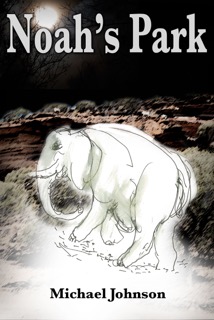
It took about a year to write. An agent showed interest but finally felt ‘it was not commercial enough’. Experienced in the use of the notorious ‘slush pile’ I made a decision to go the eBooks route, the Fifty Shades of Grey highway. My artist friend Garry Shead offered cover artwork and we settled on Rosie the elephant, the heroine of the plot.
 It was a good decision. Sales on Amazon and iBooks are steady. Friends of Bundeena Library launched Noah’s Park and more than 100 people seemed to enjoy the evening, listening to my stories about the book and my publishing/bookselling life. There may be a paperback edition on the horizon.noahs-park-cover
Before becoming a published novelist, you’ve had a long career in the book industry, as a publisher. Is writing something you’ve always wanted to do? Or something you have only recently been inspired to take up? And how does it feel, being on ‘the other side of the fence’, as it were?
I have always loved to write. In the 1970’s I wrote a cover story for Richard Walsh’s Nation Review, under a pseudonym. Titled The Sensuous Politician, modelled on the bestseller The Sensuous Woman. My piece is still scarily relevant today. I reviewed books for SMH, ABR, Herald Sun and had a regular ABR column. In retirement I, with like minds, ran a newspaper The Village Noise

There are no fences. For me publishing, bookselling, authors, readers, should be a seamless holistic experience.

I believe that over your many years in publishing, you met some extraordinary people. Can you tell us about some of them, and about some of your experiences over that time?
My memories?
*Being interviewed by Allen Lane, founder, with his brothers, of Penguin Books. I still have his signed letter of appointment to the Management Group in the U.K in 1964. ‘ 2000 pounds sterling p.a and an interest free loan to purchase a car’!

 I was entranced by the Albert Tucker painting on his wall which was the cover of The Lucky Country. He seemed intrigued by my sales technique in Nigeria with British American Tobacco, which involved standing on the roof of my Landrover, in some remote village market, blowing a hunting horn!

*My first appointment at Penguin as Export Manager for the World outside Europe.

*Setting up Granada Publishing here in Sydney.

* Key memories from this time include buying paperback rights for Frank Hardy’s Power Without Glory from Sphere and capitalising on the ABC TV series. Those unforgettable lunches with Frank

And

the-female-eunuch1In 1970 we published the Paladin edition with the iconic John Holmes cover of Germaine Greer’s The Female Eunuch.  The promotional tour I set up included events in Sydney, Brisbane, Melbourne and Adelaide (she taught me to love oysters), and I witnessed her literally change womens’ lives.

*Don Chipp phoning to tell me that he was releasing our Henry Miller titles from the prohibited import list. Griffin Press started printing two days later.

*Selling 500 copies of the hardback edition of Robert Ludlum’s first book The Scarlatti Inheritance firm sale to Hedley Jefferies at A&R.

*The great booksellers. Hedley, Ron & Eve Abbey, Jim Thorburn, Norma Chapman, Nan Jacka, Wattie Thompson, Cedric Pearce, Charley Dickens, Mark Rubbo, David Gaunt, Peter Milne, and those long lunches.

Do you think publishing has changed over the time you were a publisher, till now? In what way? How do you see the book industry at the moment–both from a publisher’s and an author’s points of view?
Publishing, bookselling, authors are a fluid formula in times of constant change and challenge. Existing models of distribution, retailing and the shibboleth of ‘sale or return’ need forensic examination. If, with honourable exceptions, the acceptance of a manuscript is wholly dependent on how many copies Big W is likely to take then a disruptive approach to the art, science and soul of publishing, that indescribable ‘gut’ feel, the awareness of the reader (o.k consumer), the awareness of a global revolution in the carriage of the written word become mandatory. In this the author should be an equal partner, dovetailing with his or her publisher in a symbiotic relationship. My daughter Lou Johnson, co-founder of The Author People is one face of this new thinking.
TAP_logo_pos (small)(ED Note: An interview with Lou was published on this blog a few months ago.)
What are you working on now?

I am writing another novel drawing on my experiences in Nigeria, linking the conquest and imposition of fundamental Islam in Northern Nigeria 200 years ago and the terrorism of today’s Boko Haram. It’s an ambitious project and I have dedicated 2016 to it.

An interview with Sue Woolfe and Bem Le Hunte of Wuthering Ink

logo_wutheringToday I am interviewing well-known authors Bem Le Hunte and Sue Woolfe, who are two of the founding partners in a new author-centred publishing enterprise, Wuthering Ink, which after several years of hard work, was launched in Sydney recently.

First of all, Bem and Sue, congratulations on the recent launch of Wuthering Ink! It’s been a massive undertaking, I know. Can you tell us about how it all started? 

It all started on a balcony in Sydney where we gathered one candlelit evening – a group of writers with unchecked revolutionary tendencies – all good at inventing worlds and thinking differently about possibilities. We were writers of novels, plays, poetry and children’s books, but on this occasion we gathered to write a manifesto…

I imagine it must have been quite a steep learning curve for you! What were the challenges you faced during the set-up? And what discoveries did you make along the way?

(BEM) In my other life I run a world-first, transdisciplinary, future-facing degree called the Bachelor of Creative Intelligence and Innovation at UTS – where students meet the challenges of a fully disrupted, open, complex, dynamic networked society, responding with creative interventions in a constantly evolving innovation ecosystem. (Phew, that sounded long-winded!)

bem le hunte

Bem Le Hunte

Anyway, one of the things we do is human-centred design, and then human-centred everything – that is, everything beyond design. In publishing that means an author-centric vision of what’s possible. It occurred to us that this had never been done before, and yet we were at a threshold moment when we could re-invent the system. The new, transformed digital publishing environment gave us that opportunity to create a portal that really put the writer at the centre of the deal, not at the end of a long system that allots a slot on a September list for your ‘title.’

So you can see, this is a re-vision of what publishing could be, from an author’s perspective. The only problem was that the world was already organising too-fast around the new intermediaries – giants like Amazon, who presented a new system for authors to slot into, on what is often described as a ‘long tail’ model of publishing. (The long tail is the million plus self-published authors selling no more than a hundred dollars worth of books, but still making money for Amazon.)

The only problem was to create a partnership with a company that could build us the portal – the back-end. For that, I approached Macmillan Publishing Solutions, in India, who have been incredibly supportive over this period of time. Not only did they understand our vision, they interpreted it through clever technology. For example, we didn’t want to just dump books on our site and leave them there to rot. We wanted to give authors the option to upload videos. And we wanted to be able to promote books to Wuthering Ink readers, which we will be doing through a regular newsletter. And we wanted to make it easy for authors to upload their books and liberate their backlists. Macmillan Publishing Solutions have helped Wuthering Ink to do all this and more.

Can you explain exactly what Wuthering Ink can do for authors? What can people expect if they sign up with you? And what are your criteria–if any–for works featured on Wuthering Ink?

*Higher royalties – 80% on your book. (When we began we rather cheekily called ourselves ‘The Royalties’ for this very reason.)

*A chance to be published in perpetuity – and possibly the chance to earn a living from your work, over time.

*A ‘book in a bag’ service, which allows authors with backlisted titles to easily and cheaply convert their titles through Macmillan Publishing Solutions in India.

*A truly international market with no barriers to overseas publication. (We know we’re as good as the best of American and British writers, but here’s a chance to prove it with sales!)

*The ability to publish outside the strictly commercial demands of traditional publishing. (A chance to experiment and take risks – the thrill of any creative practice.)

*More control over the production and promotion of work. (Long past the time allocated by publicists in publishing houses.)

How do you feel Wuthering Ink differs from similar services such as, for instance, the ASA’s Authors Unlimited?

We offer higher royalties than Amazon, and more generally an exclusive list of published authors – writers who all bring their readers with them. We also offer authors the ability to promote their work directly to readers who sign up for our regular newsletters. Traditional publishers, or even digital intermediaries, rarely allow this type of direct contact between writers and readers as it undermines their role and financial advantage in holding the ‘list’ of buyers. Our goal is to make the contact between readers and writers far more fluid and enriching for writers and readers. What we’re after is intimacy, and we need a community for this, which is why we are so keen to talk to other people in the community of readers – including your readers, Sophie!

Having said all this, we’re not exclusive. Wuthering Ink authors can have their book on any number of sites. We believe that this type of promiscuity promotes a thriving publishing ecosystem!

What have the reactions of authors been so far? And have you had any comments from publishers too?

Sue Woolfe

Sue Woolfe

 (SUE) Tom Keneally said it was “a grand concept”. Stephen Sewell said ‘we’re changing the world, one book at a time”. Our family of authors, who we’ve tested it all out on, who’ve been patiently waiting for our launch, sometimes for years – are delighted.

(BEM) I’ve had so many writers thank Sue and I for creating Wuthering Ink – especially since the launch. Time will tell how their responses develop – we’re still so new. I’d be very interested in what your readers think of it, and would really encourage them to get on board, test it out and join our push to transform the world of publishing!

What are you hoping Wuthering Ink might do, in the short and long term, for Australian authors and Australian literature?

 Well it’s a world first and it’s an Australian innovation, so Aussie writers are well-placed to benefit from this social enterprise from the word go. However, we’re hoping it will begin a worldwide phenomenon. If Wuthering Ink can help publish the work of established authors around the world – of every ilk – we’d love that. So if there’s a biography of a Tuareg Chief, a philosophy book that will help us understand how to survive capitalism, or a book of hand-written poems that have been dug up from the 16th Century, we’d welcome all these additions and more on our site! Please join us – check it out – upload your books and connect with your favourite authors.

Write what you love best: an interview with Laura Whitcomb

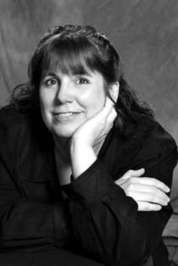
laura whitcombIn the course of my reading for the PHD, I have come across some wonderful books, and one of them is American novelist Laura Whitcomb’s daring, touching and beautiful YA novel, A Certain Slant of Light, which is half ghost story, half romance. The main character, Helen, died over 100 years ago, and since then has existed  in a transitional place between life and death as one of the ‘Light’, haunting the ‘Quick’, living people who are her ‘hosts’ and immersing herself in literature as all her ‘hosts’ are writers of one kind or the other, so that she’s almost like a variety of muse. She’s forgotten most of her life history, and doesn’t understand why she’s stuck in this dimension but is afraid of finding out more, in case she gets moved on into hell. Then one day, in the class of her current host, a literature teacher, she meets a boy called James, who isn’t quite what he seems at first.

That meeting will transform Helen’s afterlife, as she learns more about herself, love, and salvation. The language is intensely poetic, and the compelling story well-integrated with exploration of such things as the intricacies of sexual relationships and the nature of religious hypocrisy. It’s such a gripping, unusual novel that, reading it on the train, I very nearly missed my stop!

The novel, which was Laura Whitcomb’s first, was very successful, and led to others, which have also done very well. Inspired by my reading, I contacted the author, and asked her a few questions.

A Certain Slant of Light was your first novel,but it is remarkably accomplished both in style and story. Can you tell us about  your  writing career before it,and how the novel was published?certain slant of light

In the 20 years before I sold my first novel I wrote 20 drafts of 20 unpublished novels. So I had lots of practice. Most of the time I was not actively trying to land an agent or sell a book. I was just writing because I loved to write.

The novel  is a bold and unique re-visioning of the traditional ghost story,infusing it with the passionate vivacity of romance. How did you first come up with the idea? And how difficult was it to maintain that balance between the wistful dread of the ghost story and the warm recklessness of romance?

I came up with the idea for SLANT while I was listening to an Anne Rice audio book while I did housework. I liked the way her vampire narrator was from an earlier period of history but reflecting on the contemporary world. But, I thought, you don’t have to be a vampire to do that. You could be a ghost. Next I tried to think what might be the strangest thing that could happen to a ghost. I decided it would be being seen. Next I wondered, why can just this one person see her? Let’s say it’s because he is like her–he’s dead but borrowing a human body. And then the story unfolded from there.

Your characters,both the Light and the Quick, are intensely real. How did you go about creating them and their worlds?

I think creating vivid characters and their worlds comes partly from having life experience and writing experience. And partly it comes from real people I’ve met and environments I have experienced. If you love the story you are writing, you will be compelled to craft that story with the heart and details that make it come to life.

under the lightThe novel is infused with the living, necessary,inspirational and consoling presence of literature and words–indeed Helen’s hosts have all been writers in one way or the other. Can you tell us about that?

The hosts in SLANT were similar to Emily Dickinson and other famous authors and Helen clung to them because she was a book lover, like I am.  When a soul is stuck, like the ghost of Helen, literature would be a healing escape, I thought.

You wrote a sequel to the book–Under the Light–quite a while after the publication of A Certain Slant of Light. Was it an unexpected thing,or did you always intend to write a sequel?

For years I thought there would never be a sequel to SLANT, but then I was haunted with the idea of what might have happened after that first story ended, what stories led up to it, and where the spirits of Jenny and Billy went, what they did, while the ghosts of Helen and James were borrowing their bodies. It became too appealing–I had to write it!

The book you wrote between those two,your second novel,The Fetch, was also very successful. Can you tell us about the inspiration behind it?the fetch

I got the idea for The Fetch while walking in a woodsy park along a river on a winter day. The scenery reminded me of Russia. I thought how strange it was that such fascinating real characters were involved in the same adventure: Anastasia and Alexis Romanov, youngest children of Tsar Nicholas II, and Rasputin, the controversial spiritual advisor to the children’s mother, Alexandra. I started to create a supernatural re-imagining of why it was nearly impossible to assassinate Rasputin and why, after the execution of the royal family, the bodies of the two youngest children were the only ones not found.

You have also written two non-fiction books on writing novels. What has been the reception to them?

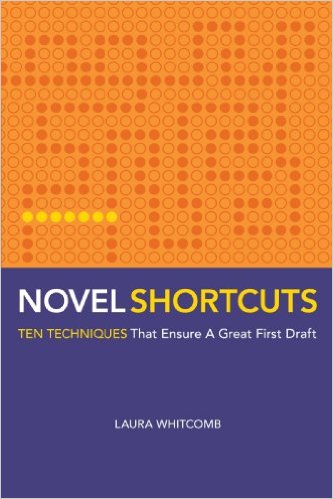
I have gotten lots of great feedback about my “how to” book Novel Shortcuts, but Your First Novel, co-authored with my agent Ann Rittenberg, has been even more popular probably because it not only covers how to write a novel, it includes fabulous insights into the career side of the business. And then there’s the wonderful forward written by another of Ann’s clients, Denis Lehane.

first novelSince your first novel came out ten years ago,there have been quite a few changes in the publishing industry. What’s your take on it, and how do you think authors can best cope with change?

I am not an expert on publishing trends, but my advice to novelists is to avoid chasing them. And write the story you love best. If it doesn’t sell right away, don’t fret, because you’re already working on your next novel and the more you write the better you get. You never know which book will be the one that launches your career.novel shortcuts


Read Laura’s blog here.

Like her Facebook author page.

Follow her on Twitter.


Paris literary studio 10: Martine Murray

Award-winning children’s author and illustrator Martine Murray was resident at the Keesing Studio with her two year old daughter, and in this interview writes about how that influences the experience.

When were you resident in the Keesing studio? And why did you decide to apply?

I was a resident in 2008. I applied because I could. I was a single mother with a two year old living in the suburbs of Melbourne so the idea of Paris was just exciting and large. It seemed worth making the most of the rather unstable employment that writing is by taking it elsewhere and since I speak a workable French, Paris was a rather appealing elsewhere to be.

What were your first impressions of the studio, and its neighbourhood,and how did that evolve over your residency?

To be honest when I walked into the studio I didn’t swoon. It was a large room with a dark green linoleum floor, a fluorescent light and a single bed–with all the tone, character and proportions of a

Jardin des Plantes

Jardin des Plantes

dormitory! However, the neighbourhood was immediately enthralling and I was instantly uplifted. The room became home and I got used to how it was and we went to the flower market and brought some cyclamen to put on the window sill which means I often think of that room whenever I see cyclamen. I also remember meeting an old woman there at the flower market, with whom I spoke for quite a while and who was very elegant and gentle and represented something very likeable about Paris and its culture.

What were you working on when you were there, and did your original vision for it change over the course of your residency?

I was working on a novel, which has changed considerably since and has spent some time on the shelf while I finished other projects, one of which was a novella for a collection of stories based on fairy tales, Tales from the Tower. Because I was in the studio with my two year old daughter, I was always home in the evenings and often looking out the window onto the dance studio across the narrow street. I was madly wanting to run over and join the tango class. This made me feel sort of trapped, as if I was looking on an outside life that belonged to others. So I adapted The Tin Soldier and turned into a tale of a boy with a limp who is trapped in a tower… Later I turned that into a longer novel.

Were you there alone, or with a partner? In either case, what were your favourite things about living in Paris for six months, and your least favourite things?

I wasn’t alone, I was with a two year old, which was like being both very alone and very fused with another. My least favourite thing was having to negotiate a flimsy pusher over cobblestones, down metro steps, through turnstyles and crowds etc. My favourite thing was just… Can I say Paris? I loved the sense of continual discovery that it offered, the layers of life that had been lived there, the museums, the little exchanges, or the smell when you walk into a boulangerie, the custom of kissing, the habit of drinking an aperitif, the little round tables facing the street….

What was it like as a writing/ideas environment?

For me anyplace in which I am a stranger is good because it makes me see the world anew. In some ways it was hard to write in Paris, because I was always wanting to be out in it, rather than at my desk.  But at the same time there was so much to experience that I was stimulated and full of ideas.

Tell us about your favourite places in Paris–sites, culture,food.

Jardin du Luxembourg

Jardin du Luxembourg

Having a small child meant I got to know the parks pretty well. The very grand and lovely gardens with their green chairs and sandy floors; Jardin de Luxembourg, Jardin des Plantes, Jardin des Tuileries. Also the smaller ones like the playground out the back of Notre Dame which had a swing and was worth it for the horse chestnuts in spring. And the Square du Temple or the Place des Vosges. Other places: Le Marche des enfants rouges, wandering up the rue Vielle de Temple, a small café called Au petit fer au cheval. And the Palais de Tokyo. Centre George Pompidou. L’Orangerie.. for Monet’s lilies. La Palais des Decouvertes…. We spent time watching the buskers on the bridges and eating apple tartes.

cafe parisWhat experiences stand out for you during the residency?

I met a lot of lovely people at the Cité, and because all of them were artists of some sort, often their work too had an impact on me too. Clare Dyson who is a dancer/choreographer from Brisbane made a work that required all of her friends there to stand in front of a camera one by one holding a piece of paper with a word on it that described Paris for them. I don’t know why, but it still moves me every time I see it. Possible because it captures a time and experience of being at the Cité that always has about it both the flavor of Paris and the sense that it and the other artists you meet there, will all be a significant moment in time for you, but not one that continues.

The studio is also next to the Holocaust Museum. On a commemorative day they read out aloud the name of every French Jew who was killed by the holocaust. This list of names is so long that it went all night and I don’t think I slept much through it. It was such a long, steady, sad note, and the relentlessness of it really had an impact on me, as did just the fact of seeing the schools in the Marais

Musee de la Shoah(Holocaust Museum)

Musee de la Shoah(Holocaust Museum)

district which had plaques citing the names of children who were taken from the schools.

On a lighter note, I do remember my daughter waking up and suggesting we go have a crème brulée for breakfast. And then her always running down our street to the heavy steel gate and climbing up on it so that she could go for a ride when it opened. Since we are now living in a small village in France for a year, I took her back there last week, to the same gate, which as a ten year old, did not offer quite the same joy.

Has the residency had a continuing impact on your work, and if so, in what way?

Yes, I imagine so. It was a very enriching experience. That always has a continuing impact.

Paris literary studio 9: Marion Halligan

Today, Marion Halligan, distinguished author of novels, creative non fiction and short stories, recounts her experience of a Keesing Studio residency.

When were you in the Keesing Studio? Why did you decide to apply?

I was there in 1991. I decided to apply because I had lived for several years in Paris, and love it, and wanted to go again. I think I didn’t get offered it, but then somebody pulled out and I did.

What were your first impressions of the studio, and its neighbourhood,and how did that evolve over your residency?

They were wonderful. I understood what a glorious address it was; put your head out the window and there was the Seine, in the other direction was the Marais. The people were a bit grumpy and the space exigent, but that’s Paris. There was only one table for working and meals and I hate having to clear my work away, but Jean-Paul Delamotte lent us a small wooden one which was terrific. In my

Marion, husband Graham, and a friend in the studio, 1991

Marion, husband Graham, and a friend in the studio, 1991

novel I had my heroine tie the two singled beds together with ropes of plastic bags but I didn’t think of that at the time and they had a tendency to skate apart and interleaving the single sized sheets and blankets wasn’t hugely successful. But I never lost my sense of what a fabulous place it was to live.

What were you working on when you were there, and did your original vision for it change over the course of your residency?

I was first of all working on the proofs of Lovers’ Knots. It has the most expensive phrase of any of my books. The editor queried the chronology of ‘hippies in Nimbin’, she was afraid the novel was set too early. It took a number of long distance phone calls to clarify (before the days of Google) and I finally came up with ‘people living on a disused dairy farm near Murwillumbah’. Then I started writing The Golden Dress, which I conceived there and wrote quite a bit of; it began with the clochard (tramp, homeless person, there’s no real good translation) who at that time was sleeping in the underground parking station opposite (the Cîté building hadn’t been started then) and wandering Paris in the day. Jean Kent was there shortly after me and she has some poems on the same subject; an interesting comparison. I found myself torn: if I was home working I thought, I should be out experiencing Paris, if I was out experiencing Paris I thought I should be home working. I got to know a visual artist, Ron McBride, who had none of these worries, he was out and about all day, in galleries and just looking at the city, and I finally did more of that. I worked very well on the book; since I thought of it there it developed out of that and I finished it when I got back.

Were you there alone, or with a partner? In either case, what were your favourite things about living in Paris for six months,and your least favourite things?

My husband was there most of the time. I used to say, the only thing worse than having him there would have been not having him there, which of course was true but simple-minded. He was a French scholar and had his own connections with Paris, he’d been a student at the Ecole Normale Superieure and could work there. And he was on long service leave and didn’t feel a need to work too hard. He did a lot of the housework, the shopping, went to the Laundromat, washed the floor. As it dried you could see that dust already sifting down on to it. We got on well, the space wasn’t really a problem, though I know other people found it so. Tim Winton with wife and two children hated it (see The Riders) and didn’t speak French; it is hard for a writer not to be fluent in the language of his surroundings. I think I turned the perception of the place round; before me people complained a lot. I pointed out that for that address in Paris the space was to be expected, that it was a wonderful area to live. That the whole thing was a fantastic privilege.

In my day you only got the studio, no money to live on. Mme Bruneau the director whose husband had built the place was very fierce; she wouldn’t speak English, made you work on your French. When Brian Matthews who was chair of the Literature Board at the time came to see her he asked Graham along to translate. Wonders: she could speak excellent English. She was trying to persuade him to buy another apartment; the King of Morocco had just acquired a second. I think the Board thought one was enough. She told me I could come and stay anytime if there was a vacancy; I would have to pay rent of course. But when I wrote and asked she didn’t answer.

What was it like as a writing/ideas environment?

Full of stimulus. I looked out of the window and ideas came. So much to see: the clochard, the sculptors welding in the courtyards opposite, people coming for Jewish ceremonies in the centre next door. Music, classical, and haunting delicate Arab songs. And of course none of the usual responsibilities of home, garden, family.

Tell us about your favourite places in Paris–sites, culture,food.

As I say, the address was marvellous. I loved going along the river, crossing the bridge to the Ile St Louis, calling in to Notre Dame, walking down the rue de Rivoli, shopping for food. Sometimes I caught the metro to the rue Monge which had a fabulous market. Shopping and eating in France is a great pleasure to me, and even the skimpy kitchen sort of worked. I made Christmas dinner for five; Graham spent all morning shucking five dozen oysters, friends brought venison which we pot roasted in the lovely le Creuset pot. Slight disaster: I bought a Bertillon ice cream the night before and put it in the freezer. It fitted, and it didn’t occur to me that the freezer didn’t actually freeze. It ended up a runny cream, not very nice, it was so rich it needed to be cold and firm to be palatable. I bought a little tree and covered it with red ribbon bows, and it is still happily growing in a village garden near Fontainebleau.

Twelfth Night celebration at the flat with friends.

Twelfth Night celebration at the flat with friends.

I loved the buses, I mostly went places by bus because of the scenery. On Sundays we went to free music concerts in churches, St Merri, St Louis de l’Isle, the chapel of the Salpetrière Hospital. Loved St Eustache, the market church in Les Halles, and St Gervais-St Proté just at the back. There was a sign on our nearest cross street saying Couperin had lived there. We ate delicious meals in modest restaurants. Called in to cafes for glasses of wine from time to time. Wandered in the Luxembourg Gardens and the Palais Royale. Graham rang up the Louvre every day for a fortnight to find out when the cabinets of Flemish old masters would be open. We’d hired a phone from a shop in the rue de Rivoli which was a very good idea. We had lots of interesting visitors; they couldn’t stay with us of course but we could go out for meals. One night we were walking home from a restaurant with Robert Dessaix and he stood and laughed his head off while I ratted round in a large box full of coathangers put out for the rubbish, on the pavement in front of an elegant dress shop. I got a number of fine wood and metal ones; I wonder are they still there? Robert said, Wait till I get home and tell people about Marion Halligan scavenging in the rubbish in Paris. I used to scavenge a lot, people put out things useful for me, like a stout herring box I used as a bedside table and outside a florist some long twigs very handy for stopping the shower curtain billowing in and clammily embracing the bather. It was all a great adventure.

What experiences stand out for you during the residency?

I think the main thing was simply living there. I have always liked doing that when I travel, living like a local. Walking round the quartier, going into churches and museums (like the Picasso museum) and we had a card to get in free which was wonderful. I like the simple domestic life. We had a Green Guide to Paris and wandered around – I suppose we were flaneurs. Writing for me is a lot about contemplation, and there was space to do that.

Has the residency had a continuing impact on your work, and if so, in what way?

I think so. The Golden Dress (I wanted to call it Shagreen) was an important book for me, short-listed for the Miles Franklin, I learned a lot from writing it which has stayed with me. I have spent quite a lot of time in Paris since, but that time was very special. I was offered an extra month since somebody had to postpone coming but I refused it, I was ready to go home after my allotted time. The thing about being somewhere like Paris for me is the perspective it gives on my own country; the distant view is very useful. The Golden Dress has lots of scenes in Paris but it is a book about Australians and a lot of it is set in Australia. It is not really about the clochard but about an Australian painter who becomes himself the clochard he sees out the window. For me writing about a painter is a way of writing about a writer. Everything a writer does feeds into being a writer; when I was doing my tax I used to say that my whole life should be a tax deduction, since that was where the work came from.

Paris literary studio 8: Matthew Condon

Prize-winning novelist and journalist Matthew Condon looks back on his time at the Keesing studio.
When were you resident in the Keesing studio? And why did you decide to apply?
I was lucky enough to secure the Keesing studio in early 1993, and spent a wonderful seven to eight months there in the Marais. I had applied without a thought that I’d actually secure a spot at the studio, and was stunned when I did. I had published my second novel in 1991 and wasn’t getting any traction on the third, so I had hoped a period in Paris, a completely new environment, might kick-start the book. It did.
 What were your first impressions of the studio, and its neighbourhood,and how did that evolve over your residency?
I loved the sparseness of the studio, stripped down to the bare essentials so that work was the priority. Outside, you stepped straight into the thick of the Marais, or could walk a short distance to the Left Bank. It was so rich outside that the workspace demanded simplicity.
What were you working on when you were there, and did your original vision for it change over the course of your residency?
I was working on a novel, The Ancient Guild of Tycoons, which was a satiric parable about Australia and colonialism and all the rest. The book was set on an island literally built out of the garbage of Empire. The leader of the island was a game show host. It was a spoof on Australian history and contemporary life, and I think that satire was sharpened because I was writing it out of the country.
During my time in Paris, I read through pretty much all of Patrick White. His brilliant eye and sharp tongue, I think, kept me on my toes.
Were you there alone, or with a partner? In either case, what were your favourite things about living in Paris for six months,and your least favourite things?
I had only been married to my first wife for less than a year when I secured the studio, and she left a relatively high-paying position to join me in Paris. I had a book to write and I think she found the experience at times lonely and disempowering, which was fair enough, although in hindsight it was ultimately an extraordinary experience for both of us, both good and bad.
We made a handful or brilliant friends while we were there. Other expatriates. Artists, writers and photographers from all over the world. A quiet dinner might end in a wild car ride around the Arc de Triomphe at 3am.
I loved settling into a routine. Coffee, a baguette and the International Herald Tribune for breakfast. The excellent table wine in litre bottles from the supermarket. And pre-emails, actually finding letters from home tucked into the studio pigeon-hole.
What was it like as a writing/ideas environment?
It was one of the best environments I’ve worked in. I had a strong idea for the book when I arrived, and I worked pretty much seven days a week on it during my time at the studio. My aim was to produce a first draft by the time my tenure came to an end, and I achieved that. I saw the scholarship as a singular opportunity to get the job done.
Tell us about your favourite places in Paris–sites, culture,food.
It was wonderful that the studio was just a relative short walk to the Louvre, the Picasso Museum, the Seine and Notre Dame, and the Left Bank, which we explored as much as we could. We did, quite literally, count our Francs on a daily basis.
At the time, also, Frank Moorhouse was writing Grand Days in Besancon, in southern France, and we visited one weekend and had one of the most memorable times of our lives.
After six months in Paris we’d made friends with locals and shopkeepers in the neighbourhood, had a small network of literary friends, both French and otherwise across the city, were eking out poor but understandable French sentences, and I at least felt I had made another home.
Then we had to return to Australia.
What experiences stand out for you during the residency?
I was only 31 at the time and even though I’d travelled throughout Europe and the United States etc. to that point, and had lived in Germany and the U.K.for my journalism work, I had never had the luxury of writing fiction full time, let alone in one of the world’s great cities.
It gave me a better understanding of the potential life of the writer. It was the first time I had been granted absolute freedom in my writing life, albeit for just six months.
I have never since replicated the excitement, the energy, the eagerness to begin a day’s work writing fiction.
Another thing. I learned very quickly that the French valued, indeed treasured, artistic pursuit, especially writing. No matter how lowly, obscure, or indeed completely unknown you were, they lit up when you told them you were a writer.
The other great experience was befriending a beautiful young French couple with a small child who lived on the Left Bank. They were sophisticated, worldly, sublime. Then  one day, while I went out for a jog, I saw the man in that relationship leaving a hotel arm in arm with another beautiful woman, this time on the Right Bank.
He caught my eye and smiled and winked, and kept walking. The wink said: a wife on the Left bank and a mistress on the Right; this if Paris.
I’m not sure if the marriage lasted.
Has the residency had a continuing impact on your work, and if so, in what way?
Only in the sense that I’ve wondered ever since how my work might have been different through the years if I’d been able to sustain, both financially and creatively, that freedom the studio gifted me.
It also gave me some sort of validation as a writer (something we seem to look for, permanently and forever, form wherever), and that I was on my way. At the time, it was one of the most important things to happen to my career. I still cherish the memories of it.
The book I completed there sold a handful of copies when published in Australia and has never been reprinted, but it remains one of my favourites, if one can have a favourite, because of the extraordinary context in which it was created.
I only need to pull if off the shelf and hold it, and I’m back in the studio, at my desk, looking out onto cobbled streets, watching the yellow street lamps glow at dusk, hearing the street symphonies of Paris, and I’d give almost anything to be back there again, blissful in the knowledge that with just a third novel I still didn’t really know what I was doing, but I was having a hell of a time doing it.

Paris literary studio 7: Emily Maguire

Bestselling novelist and essayist Emily Maguire was the Keesing Studio resident a year ago, and like Ursula Dubosarsky, experienced an event of great sadness to Paris, as she explains in this interview.

When were you resident in the Keesing Studio, and why did you decide to apply?

I was there August 2014 – January 2015. I applied in order to work on what I thought would be my fifth novel, a sprawling, multi-generational story with a strong French thread. As it happened, by the time I arrived I had put that idea aside and was working on a very different novel, An Isolated Incident, which I finished while in residence.

keesing studio 2014

Keesing studio at time of Emily’s visit

What were your first impressions of the studio, and its neighbourhood, and how did that evolve over your residency?
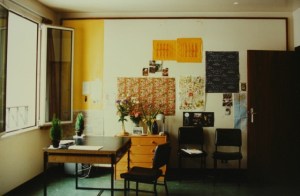
I had low expectations of the studio itself as I’d been warned it was very basic, so on arrival I was pleasantly surprised. Certainly it was basic, but I was delighted with how roomy it was (for central Paris) and how much natural light came through the wall of windows. I unpacked six months’ worth of stuff immediately and with my clothes hanging in the closet space, my books and photos on the shelves and my laptop on the table, the place felt far more welcoming and homey. My attachment to the studio grew powerfully over my time there to the point where I felt quite defensive about it. The exception was the bathroom which I grew to hate more and more with every water-spraying, floor-drenching, slow-draining shower.

emily maguire in paris

Emily in Jardin des Tuileries

My experience of the neighbourhood was similar, I think. I arrived on a sweltering Saturday at the beginning of August. Many locals had already fled for the summer holidays and so on my first walk around the area it seemed to be all red-faced tourists holding maps and shouting in English. Day by day as I walked and walked I discovered the back streets and connecting alleys, got lost and found my way over and over again. By la rentrée when the locals returned to the city and the school next door, the boulangerie on the corner and dozens of tiny shops and cafes that had been dark all month re-opened, I began the process of re-discovering the neighbourhood and soon fell deeply in love with it.

What were you working on when you were there, and did your original vision for it change over the course of your residency?

As mentioned above, I didn’t work on the novel I’d originally planned to write in Paris. I did, however, take copious notes and photos for that project, which I’m using to write the draft of that novel now, almost a year after I left Paris.

Were you there alone, or with a partner? In either case, what were your favourite things about living in Paris for six months, and your least favourite things?

My partner flew in for two short visits over the six months, but I was mostly alone. My favourite thing by far was being able to visit a different gallery, museum or theatre every other day. I spent many hours a week wandering the city’s art spaces and still didn’t see everything I would’ve liked to. There wasn’t anything I disliked about living in Paris, though the daily reminder that the French I had worked so hard on was gibberish to the locals was dispiriting.

What was it like as a writing/ideas environment?

Incredible. The studio itself – the light, the dancers across the lane, the church bells ringing out -the easy access to extraordinary works of art, the life of the streets and cafes where it’s entirely acceptable to spend hours over a single glass of wine and three lines scribbled on a notebook page, the heart-lifting wonder of walking through a city which, with all its history and relics could be a museum, but is instead living, breathing, ever moving. I barely slept, kept wide awake with inspiration and wonder.

Tell us about your favourite places in Paris–sites, culture, food.

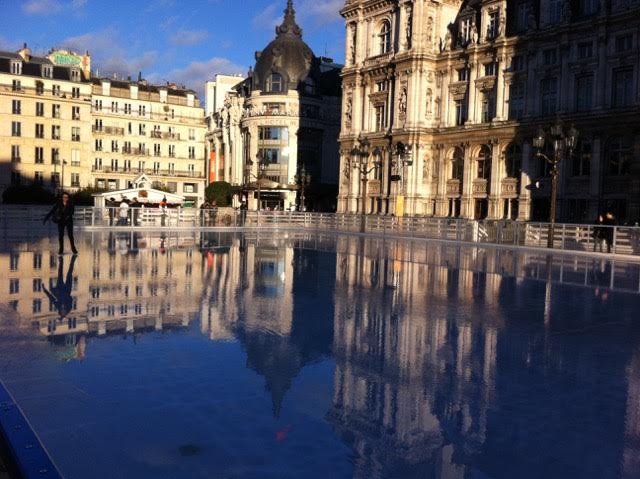
So many! Musée Rodin and Musée de l’Orangerie were museums I returned to throughout my stay. I loved walking along la promenade plantée, which is a long stretch of parkland and path high above the 12th arrondissement. L’ Ebouillante is a sweet little restaurant serving divine galettes, tucked away on rue Barres, very close to the studio. I quickly became a regular there. I also loved just hanging outside the Hôtel de Ville and people watching. When I arrived in August the forecourt had been transformed into a beach volleyball court and I enjoyed drinking

Hotel de Ville skating rink

Hotel de Ville skating rink (Pic: Emily Maguire)

icy cider and watching the action. By my last month, the same space was an ice-skating rink, the cider replaced by mulled wine.

What experiences stand out for you during the residency?

A terribly sad experience, the Charlie Hebdo murders and those at the Jewish supermarket a few days later, stands out, but so does the still sad but immensely heartening show of solidarity and love and peace that occurred the following Sunday. I hadn’t planned to attend as I am anxious in crowds at the best of times and had been deeply shaken by the week’s events. But heading back from the train station I was swept up by the enormous crowd   – there seemed no street, no space in the city, that wasn’t part of the demonstration – and I’m so grateful for that. I’ve never felt so safe and so connected as I did while carried along in that ocean of grief-stricken, defiant humanity.

Impromptu street memorial

Impromptu street memorial (Pic: Emily Maguire)

Has the residency had a continuing impact on your work, and if so, in what way?

Oh, yes. Apart from specific materials relating to the long-planned, finally-started novel I went there to write, the inspiration and comfort to be found in visual art was a revelation to me and something I’m working on incorporating into my practice now I’m home.

It’s not been terribly long since my residency, but I feel certain the impact will be long-lasting. And if not, well, I plan to return as soon as possible for a booster shot.

Paris literary studio 6: Susan Johnson

Susan at the window of the studio, 1989

Susan at the window of the studio, 1989

Like Jean Kent, acclaimed novelist and journalist Susan Johnson was fortunate enough to be awarded two residencies at the Keesing Studio: in her case, as she explains in her interview, through sheer serendipity.

When were you the Keesing Studio resident? And why did you decide to apply for it?

I was the Keesing Studio resident twice – once in 1989, from June or July I think – and once again in 1991, when someone unexpectedly dropped out and I happened to be in Europe anyway, so the Australia Council didn’t have to pay for an airfare, and popped me in as a sort of emergency replacement. The first time, in 1989, I followed my ex-boyfriend, the writer Tony Maniaty, into the studio, so it was a bit like old-home week (we were amicably separated and remain good friends).

What did you work on when you were there, and did it change from your original vision as a result of the residency?

I decided to apply for the residency all sorts of reasons, not just one. I was a relatively new writer then, with a first novel published (Messages From Chaos, first edition Harper and Row, Sydney, 1987) and editing my second (Flying Lessons, Heinemann, Australia, 1990; Faber and Faber, UK and US, 1990 and in translation, Actes de Sud, 1992). Being published by Faber was like a dream to me – the publisher of Hughes and Plath and Eliot and every literary giant I had long revered. Honestly, that year – winning the residency and being published by Faber – was like heaven. All year I felt blessed, and very, very grateful.

What were your first impressions of the Keesing studio itself, and its neighbourhood, and how did that evolve over the course of your residency?

I knew from Tony (via a letter! No email back then, no Facebook, no Twitter) pretty much what to expect. I knew it was a relatively ugly new building in the midst of much beauty (the Marais), and Tony was still in situ when I arrived, so I saw the lino, the unadorned windows, the narrow cot for a bed. But I also saw beauty and freedom and a wonderful, wonderful gift. I adored it – the way Tony (in his Greek-Australian fashion) had built shelving in the kitchen and divided the room, and everything looked clean and bright and shining. I could lean out the window and find Paris at my feet. I was breathless.IMG_0871

Funnily enough, only last year, Christmas 2014, I was in Paris again (editing my eighth novel, The Landing, Allen and Unwin, 2015) and a writer I knew then only in passing but who was in residence at the studio, Emily Maguire, invited me over to see it. I was pretty shocked at how run down it had become in the 20-odd years since I lived there. It looked very old and tired – but I could see that to Emily it was still glorious.

When I was there, I loved the Marais at once. I loved Paris too – my only other experience had been my first trip to Europe, aged 18. I was a young journalist then, what was known as a cadet reporter, a school-leaver who was supported by my employer to undertake an arts degree at the University of Queensland at the same time. I had never studied French and couldn’t speak a word, and was with another young woman who also couldn’t speak French. Back then, no-one wanted to speak English (this would have been 1976) and we couldn’t even work out how to negotiate the metro. We didn’t know “sortie” meant exit, that’s how bad it was, and when we tried to ask anyone for help, they walked straight past, possibly assuming we were beggars. That experience was seared into my brain, so I had studiously attended Alliance Francaise classes, in Brisbane and Sydney before I left, but I was pretty nervous about what I would find. It was such a relief to find that even a bit of French made a difference: either the French had changed, or I had. Everyone was lovely.

I feel completely in love with France – and the idea of France shall we say – and I have never fallen out of love since.

What were your favourite things about living in Paris for six months, and your least favourite things?

My favourite things were everything: the air, the sky, the trees, the food, the people, the stones, the way manners acted as a form of civilization itself, civilization made visible. The way that being a writer was an actual thing, it had a meaning, a value, indeed it was admired – unlike in Australia, where – arguably, still – being a writer equals being a wanker, or someone who has tickets on themselves, or someone who thinks he or she can get away with something – or does get away with something. Arguably, there is still hostility in Australia to anyone engaged with the weird, invisible practice of writing. I wrote an essay – or rather gave a lecture – on this very subject to the National Library of Australia on this very subject – here http://www.nla.gov.au/ray-mathew-lecture/2011

Only now, from a great distance of more than twenty years, can I speak about my least favourite things – but they are not specifically about Paris, more about France. And that is the elitism and possible racism against Pied Noir, Algerians and latterly Muslims, and France’s tendency towards xenophobia – but I also believe this tendency is overwhelmed by France’s greater love for liberte, egalite, fraternite…..I was there for the Charlie Hebdo marches, and there were Muslims, Jews, Christians, secular non-believers. I lived in the UK for ten years and the class system there is far more rigid than it is in France – I would still rather be a poor person in France than a poor one in England. I remember living in a flat in the 13th once, when a building site was across the road. All the workers – if they didn’t go to a restaurant at lunch time – would sit down with a fresh baguette, a cheese, a half bottle of wine and eat and talk. In England they would eat working class food – at least in France food is equal, and that to me is symbolic of so much more.

What did you think about it as a writing/ideas environment?

Perfect. Unlike others, who went to cafes, I like best a plain simple room without distractions. No views, nothing. But I had a view out the open window, the beautiful curling old building across the street, the tips of buildings. It was heaven – quiet, cell-like, magnificent.

Tell us about your favourite Paris places–sites, culture, food.

See above. But what I also got to love was the American Library and the American bookstore (I found the three volumes of Margaret Anderson’s extraordinary memoir there – she started The Little Review and was Joyce’s first publisher and France was her spiritual home). I made friends – French friends – who became my friends for life and through knowing Simone and Jacqueline and Maica and the rest I was lead into a richer and fuller life in France – into Monterlot (near Fontainebleau) and Fitou in the south, and Corsica where Simone climbed mountains in the winter and where her friend died in summer on the beach – Corsica, possibly the most beautiful place on earth – and I found myself searching for cep mushrooms in the forests in autumn, where the Italian in our group wanted to fry them in oil and garlic and Jacqueline, the Frenchwoman in our group, regarded this as a tragedy. A mushroom! A piece of fruit from God’s earth, the fate of which could be debated with such fire! I loved France for this – for caring about the fate of a mushroom.

What experiences stand out for you in the time you spent in Paris?

Once I sat at an open window of Chez Julien with the man who would become my first husband. You could still smoke in restaurants then and I leant on my elbows and looked up into the Paris sky: right then, I had everything. Love, a full belly, a head ringing with ideas. I would write everything! I would eat up existence! I was full to bursting.

Do you think the residency has had a lasting impact on your work, and if so in what way?

Yes, yes, and yes. That year in Paris changed everything: I burst free. I had jumped off – into love, into my work, into my real life, at last. From there I spent years away from Australia – in Hong Kong, in Boston, New York, ten years in London. I learn who I was in the world. I learn to reach the limits of myself, in that, at last, I learnt my limitations. But those initial months in Paris were the key to everything that followed. The studio residency was my open door.

Paris literary studio 5: Jean Kent

Jean Kent, Paris 1995

Jean Kent, Paris 1995

Award-winning poet Jean Kent has been lucky enough to have been awarded two residencies at the Keesing Studio, and in this interview, she looks at both experiences.

When were you resident in the Keesing studio? And why did you decide to apply?

I’ve had the extraordinary good fortune of being in the Keesing Studio twice. The first time was in 1994, from the beginning of August, to the end of January, 1995. Then, the second time, I was there in 2011, for the six months from February till July.

Apart from the fact that I’d always wanted to live in Paris, there were several reasons related to my writing that prompted me to apply. I’d fallen in love with the French language when I was first learning it as a teenager in rural Queensland, and that was when my love of so much about French culture also began … the impressionist painters … composers like Debussy and Satie … and French style generally …

But suddenly, twenty-five years had passed, and that dream of living in Paris hadn’t happened! I think I was rather hoping to find the ghost of my younger self back in Paris, and perhaps to also understand better why a girl growing up in semi-tropical Queensland would imagine that Paris could be another home for her.

As well, I’d married into a family with a very different cultural background from my own Australian one. My husband’s father was Lithuanian and his mother came from Germany. I’d started trying to write about their experiences as migrants here after the Second World War. Going to Paris struck me as a possible way of understanding better what that might have been like for them. It would be a temporary reverse migration, albeit a short one.

After the 1994 residency, I brought home kilos and kilos of notes, which I hoped would eventually turn into poems or some other writing. I did finish a lot of that, but I also had a great deal of unfinished work which had become quite foreign to me, and I hoped that being back in Paris would re-immerse me in the sensual and emotional environments where the poems had begun, so that I’d be able to work on them in a less forced way. I also had another project in a very early stage that I wanted to research, retracing the steps of my grandmother, who had been in Paris in 1916.

What were your first impressions of the studio, and its neighbourhood, and how did that evolve over your residency?

Keesing Studio Sept 1994

Keesing Studio Sept 1994

In 1994, my first sight of the studio was of an utterly bare, green linoleumed space, with only one single bed jammed against the far wall, one big table and two chairs. The administrative staff at the Cité Internationale des Arts were not very welcoming either! There were jackhammers going full blast at the construction site opposite, and I have to admit that after travelling for thirty-six hours to reach this, I did have a momentary desire to turn around and fly straight home again. By the time we’d sorted out another bed for my husband and ventured down to the local shopping area for baguette and pate and brie and vodka, it was a warm, velvety twilight, the street outside was relatively quiet, and everything started to feel a lot better. The fact that we were right in the centre of Paris, with so many little shops and galleries and fascinating buildings just outside our door, plus the beauty of the islands and the open sky over the Seine so close by, was a great compensation for any hardships of the studio.

By 2011, there had been great improvements in the attitudes of the Cité des Arts to its residents. It was a much friendlier place, and the studio was more comfortable as well. We’d bought bedspreads and potted plants and pictures and some extra things for the kitchen to try to make it cheerier in 1994, but we were sternly advised that any of these things could not be left there, so they were all passed on to other residents before we left. This regulation had apparently gone by 2011, which meant that within a day or so of unpacking all the goodies left by previous residents in the storeroom, the studio was pleasantly homey. It was better equipped, with two tables, chairs, and oh yes, the sofa … the envy of everyone else at the Cité  who visited … The noise of the builders had been replaced by the noise of the Dance Studio they’d been constructing on the other side of the street, back in 1994 … it did feel more claustrophobic without the view that used to be there, through to the fairy tale sight of the Hotel de Sens, but the Studio itself was much more pleasant.

The biggest shock in 2011 was the number of homeless people who called the area outside the main building ‘home’. There had been occasional lost souls walking nearby in 1994, but mostly they’d stayed in the shopping area around rue St-Antoine.

Jean at Keesing Studio 2011

Jean at Keesing Studio 2011

Because this was my second time there, I was familiar with the local neighbourhood, and in fact it felt like home. I loved to walk around the network of little streets each afternoon (just as I’d do back at Lake Macquarie) seeing what was flowering in people’s window boxes and in the little parks tucked between the apartment blocks. I was always being surprised by the details, and by what changed even over six months – shops and cafes gutted and rebuilt, for instance. There were some things I never quite got used to: e.g. the regular appearance of armed police (often because of events at the Shoah Memorial next door), but I was aware that there was a need for surveillance at those times, and for every disturbing event there were other surprise disruptions that were wonderful, like film crews in the street and sudden invasions of dignitaries and guards on horses.

What were you working on when you were there, and did your original vision for it change over the course of your residency?

In 1994, I took a manuscript of poems I was already working on, as well as my notebooks for future projects. The work-in-progress was based on a sequence of poems set in a fictional Hunter Valley town, and I always thought of it as a back-up project rather than something I’d be focused on in Paris. I quickly realized that I couldn’t think about it at all. I started doing drafts of poems in response to being in Paris instead, and although I managed to get some of them close to a finished state, I also eventually realized that there was just too much I wanted to record about my daily Paris life, so I concentrated on that, and waited until I was home in Australia again to try to make sense of the work for a book. My vision for all my writing changed while I was there, I think – I became more acutely aware of how differently we live in Australia and the shock of coming back to our different landscape and climate also had a huge impact on my work.

In 2011, it worked the other way round. I took the Ms of Travelling with the Wrong Phrasebooks, which had been in a very nearly finished state for a few years. These were poems which had begun as notes in Paris – they were full of the experiences of my time at the residency in 1994, and although most of them had been published in magazines and some had even won prizes, I wasn’t really happy with them, and I could not work out how to assemble them into a coherent collection. After being back in the studio for a month, all the niggling parts of the poems that I thought were wrong became very obvious. I sat at the table overlooking rue Geoffroy l’Asnier, with the sounds of the bells of Notre Dame coming in the window and just that narrow slice of sky over the attic roofs, and Paris seeped back into the poems.

Were you there alone, or with a partner? In either case, what were your favourite things about living in Paris for six months, and your least favourite things?

I was there with my husband, Martin. He is a very visual person, and passionate about painting, so that made for good connections with other residents at the Cité  who were artists. He also spoke no French at all … which led to some interesting times, especially with the Cité  admin staff who refused to admit in 1994 that they knew any English, and with a dentist who was needed urgently after Martin lost a crown.
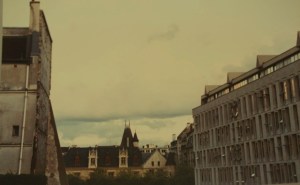
August 94 View from Keesing Studio

View from Keesing Studio, August 1994

My favourite things? I will probably be writing books for the rest of my life about this! I love the beauty of Paris – the light, the architecture, the parks and gardens (large and small), the constant surprises and stimulation.  The food, even from the supermarket, was fantastic … the breads, cheeses and terrines and pates …  and we liked to go to the market near Hotel de Ville every week for fruit and vegetables and flowers (gorgeous flowers, especially the peonies), and roast pork. As for the cakes … I think we had a different one (shared between us) nearly every day we were there (both times) and we still didn’t get through all the possibilities or stop marveling at how delicious and exquisitely constructed they were.

My least favourite things were the noise, the crowds and French bureaucracy. Getting visas for the six months was a nightmare.

I live in a very bushy suburb of Lake Macquarie, with trees all around the house and a large garden made noisy by birds rather than traffic, so although I relished the inner-city experience of Paris while I was there, I doubt that I could survive it fulltime. I did miss silence … and a big sky full of stars at night.

What was it like as a writing/ideas environment?

As a place for actual daily writing, the studio was a challenge. I did find the noise from the builders in 1994 and the Dance Studio opposite in 2011 difficult and when I needed more quiet for good concentrated work rather than just doing diary or journal jottings, eventually I sought refuge in the little storeroom, where I set up a mini office closed off from the rest of the world. But as an environment for gathering ideas and stimulation, Paris was brilliant.  Just being there was a sensory tonic, and also stirred up memories and ideas for me. Apart from Paris itself, I found the Cité des Arts a very beneficial place for creative excitement as well. I loved the regular concerts and open studios and exhibitions of work done by the other artists in residence. There was one other writer there in 2011, Rolf Hermann, a poet from Switzerland, and we collaborated on some translations of one another’s poems. I made good friends with other residents, including some Australians, and those connections continue to be very important to me.

Tell us about your favourite places in Paris–sites, culture,food.

One of my absolute favourite places in all the world is the Orangerie, with its two rooms of Monet’s waterlily paintings curved around the walls. I loved to go there for the paintings, but also to watch the other people, who would just stop and sit there for ages, looking.

I’d make a very long list if I mentioned all the other places that are very special to me, so here are just a few.

For its extraordinary contemporary architecture, including a wall of metal irises that open and close according to the sunlight, making lacy patterns of shadows over the floors inside, as well as for its

Jean at Institut du monde Arabe, March 2011

Jean at Institut du monde Arabe, March 2011

Arabian food and views over Paris from the roof: the Institut du Monde Arabe.

For its art (especially the impressionists and Art Nouveau), as well as its restaurant with over-the-top gilt, relaxed waiters and easy to order meals: the Musée d’Orsay.

For their stained glass cupolas and Art Nouveau style balconies and their theatrical certainty that fashion and shopping matter (even if I’m too overwhelmed by how much merchandise they have to actually buy anything), les grands magasins, especially Printemps and Galeries Lafayette.

For its ethereal atmosphere: Sainte Chapelle. I went to a sunset concert of mediaeval music here on my 35th birthday (during my very first two-day visit to Paris), and the voices of the singers seemed to hang in the air with the lozenges of coloured light through the stained glass windows. It was so magical I’ve never dared go back there.

For the fact that they were always there, beside the river and I walked over to them so often under the great stretch of Paris sky: Ile St-Louis and Ile de la Cité . I loved their little holes-in-wall for icecream and sorbet, the musicians playing there on the bridges in the summer twilight, and the view of the Eiffel Tower, lit up and sparkling on the hour.

What experiences stand out for you during the residency?

I’ve sometimes described my times in Paris as a mixture of bliss and horror, with those two extremes regularly happening several times on the same day.

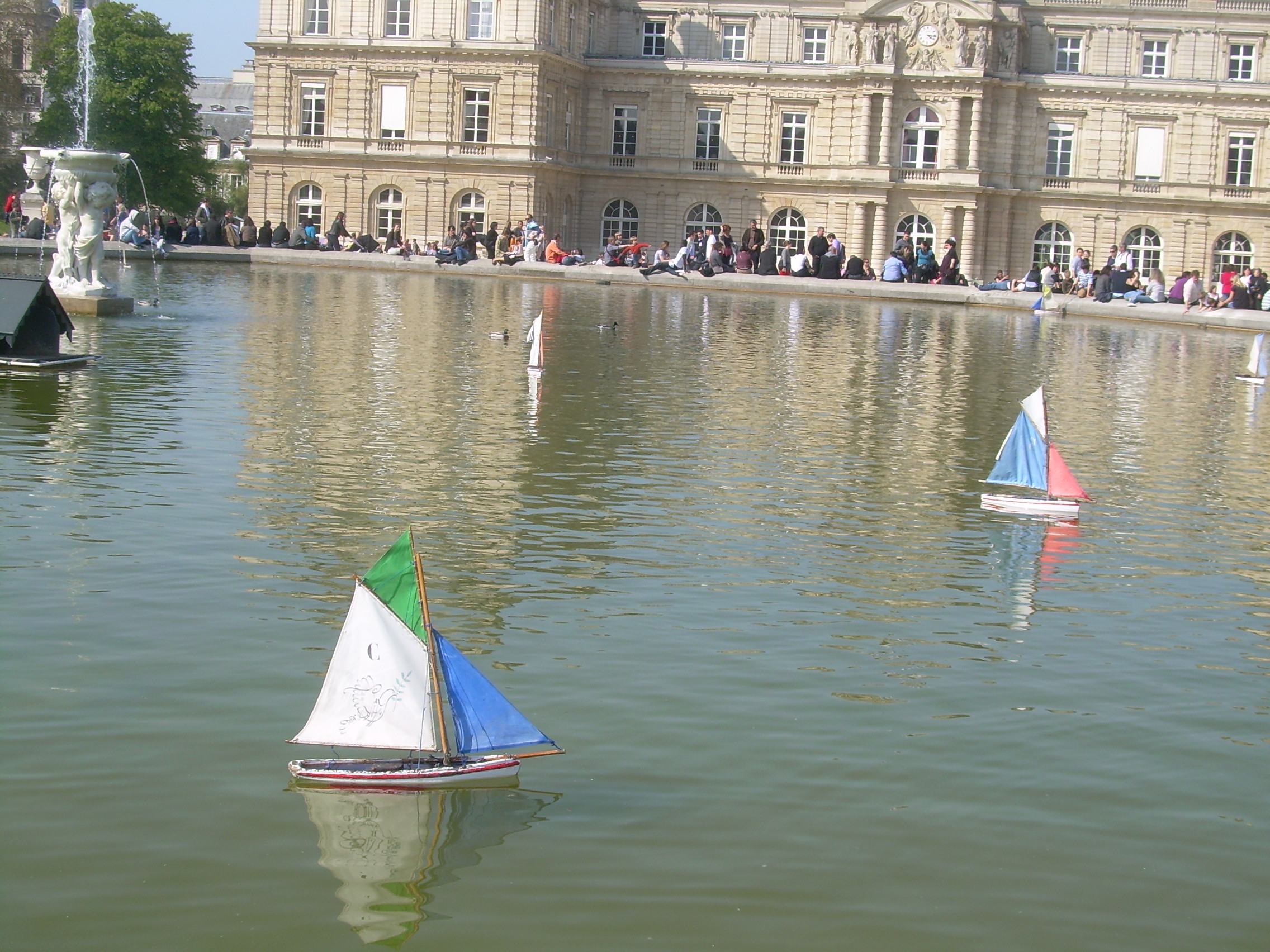
One afternoon in 1994 we went to visit the Luxembourg Gardens. It was August, late summer, deep shade under the horse chestnut trees, big beds of flowers everywhere – marigolds and salvias and cosmos and dahlias … old men playing chess, children sailing boats, tourists everywhere, the statues white in the sun. Utterly idyllic. We spent hours there, until our cameras ran out of film, then walked home happily across the Left Bank.

When we reached Notre Dame, we discovered the entire area between there and the studio was blocked by police guards. Huge crowds were queueing along the footpaths and no one was being allowed through. I saw other people from the Cité des Arts showing their passports and the police shaking their heads. It looked hopeless. In hesitant French, I said, as politely as I could, that we lived ‘in that building over there’.  The policeman remained absolutely silent and stern, but he did open the barricade a fraction and let us through.

The celebrations for the fiftieth anniversary of the Liberation of Paris were on that night, just around the block at Hotel de Ville. That was why security was so tight. Shortly afterwards, there was a cavalcade of official cars along Quai de l’Hotel de Ville, and later that night there was much rumbling of tanks and army vehicles – sounds that were frightening even in their celebratory context – but also the music of Jean-Michel Jarre booming out and young people dressed as Resistance Fighters or liberating Americans dancing along the same route, followed by a display of fireworks. We were able to go to a window on the first floor of the old part of the Cité des Arts and look out at the spectacle.

It was so typical of the collision of the everyday and the extraordinary that I came to regard as normal in Paris. There were reminders of history everywhere, and so many celebrations with Paris itself as a beautiful backdrop. We never knew what would happen each day, and although that could be unnerving, it was also fantastically exciting.

Another experience which affected me greatly was being ill with shingles. This meant that I was confined to the studio for most of my time over a few weeks, and perversely, I could do nothing except sleep, look out the window at the world passing by, think about Paris, read books, write a little, and watch children’s TV. We had been cramming so much into our time there that I probably did need a rest! It was good to just slow down and let some of what I’d already seen and felt about Paris settle.

Has the residency had a continuing impact on your work, and if so, in what way?

Since my residency in 1994, I tend to think of my life as Before Paris and After Paris. That applies to my writing as well. There was a much greater respect for literature, and poetry especially, in Paris, than I’ve ever been aware of in Australia, and that has helped me to persevere with what has sometimes felt like an odd way of life.

I came home that first time believing that I would continue to write about the experience for ten years at least …I was certainly still haunted by it nearly twenty years later, when I went back the second time. And now I have another store of experiences to write about …

So far, there have been poems for a third of one book, The Satin Bowerbird, and for another complete collection, Travelling with the Wrong Phrasebooks.  After coming home from Paris each time I’ve felt as if I were seeing my usual environment with my eyes peeled, and that is been a huge influence on the poems for my most recent book, The Hour of Silvered Mullet. Even though it’s mostly about Australia, and especially the Hunter Valley, I think that experience of being jolted away from my usual home and then returning with a slightly more European sensibility was crucial to the writing. There are more new Paris poems based on my notebooks in 2011 in progress too, as well as a memoir … so I feel sure my residencies are going to remain a very dominant presence in everything I write for a long while.